
 A SCHOLARLY BOOK REPOSITORY
Other books have dealt with how police and prosecutors bend and break the law in their zeal to prevail. This one focuses instead on how the gravest injustice can be committed with the best of intentions, and how one woman’s bravery and persistence finally triumphed.
An intensely dramatic true story, Forsaking All Others recounts the fascinating case of an interracial couple who attempted, in defiance of
society’s laws and conventions, to formalize their relationship in the post-Reconstruction South. It was an affair with tragic consequences, one that entangled the protagonists in a miscegenation trial and, ultimately, a desperate act of revenge.
From the mid-1870s to the early 1880s, Isaac Bankston was the proud sheriff of Desha County, Arkansas, a man so prominent and popular that he won five consecutive terms in office. Although he was married with two children, around 1881 he entered into a relationship with Missouri Bradford, an African American woman who bore his child. Some two years later, Missouri and Isaac absconded
to Memphis, hoping to begin a new life there together. Although Tennessee lawmakers had made miscegenation a felony, Isaac’s dark complexion enabled the couple to apply successfully for a marriage license and take their vows. Word of the marriage quickly spread, however, and Missouri and Isaac were charged with unlawful cohabitation. An attorney from Desha County, James Coates, came to Memphis to act as special prosecutor in the case. Events then took a surprising turn as Isaac chose to deny his white heritage in order to escape conviction. Despite this victory in court, however, Isaac had been publicly disgraced, and his sense of honor propelled him into a violent confrontation with Coates, the man he considered most responsible for his downfall. Charles F. Robinson uses Missouri and Isaac’s story to examine key aspects of post-Reconstruction society, from the rise of miscegenation laws and the particular burdens they placed on anyone who chose to circumvent them, to the southern codes of honor that governed both social and individual behavior, especially among white men. But most of all, the book offers a compelling personal narrative with important implications for our supposedly more
tolerant times.

Vivacious, unconventional, candid, and straight, Helen Branson operated a gay bar in Los Angeles in the 1950s—America’s most anti-gay decade. After years of fending off drunken passes as an entertainer in cocktail bars, this divorced grandmother preferred the wit, variety, and fun she found among homosexual men. Enjoying their companionship and deploring their plight, she gave her gay friends a place to socialize. Though at the time California statutes prohibited homosexuals from gathering in bars, Helen’s place was relaxed, suave, and remarkably safe from police raids and other anti-homosexual hazards. In 1957 she published her extraordinary memoir Gay Bar, the first book by a heterosexual to depict the lives of homosexuals with admiration, respect, and love.
In this new edition of Gay Bar, Will Fellows interweaves Branson’s chapters with historical perspective provided through his own insightful commentary and excerpts gleaned from letters and essays appearing in gay publications of the period. Also included is the original introduction to the book by maverick 1950s psychiatrist Blanche Baker. The eclectic selection of voices gives the flavor of American life in that extraordinary age of anxiety, revealing how gay men saw themselves and their circumstances, and how others perceived them.
Outstanding Book, selected by the Public Library Association
Best Books for High Schools, selected by the American Association of School Libraries
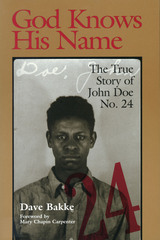
Police found John Doe No. 24 in the early morning hours of October 11, 1945, in Jacksonville, Illinois. Unable to communicate, the deaf and mute teenager was labeled “feeble minded” and sentenced by a judge to the nightmarish jumble of the Lincoln State School and Colony in Jacksonville. He remained in the Illinois mental health care system for over thirty years and died at the Sharon Oaks Nursing Home in Peoria on November 28, 1993.
Deaf, mute, and later blind, the young black man survived institutionalized hell: beatings, hunger, overcrowding, and the dehumanizing treatment that characterized state institutions through the 1950s. In spite of his environment, he made friends, took on responsibilities, and developed a sense of humor. People who knew him found him remarkable.
Award-winning journalist Dave Bakke reconstructs the life of John Doe No. 24 through research into a half-century of the state mental health system, personal interviews with people who knew him at various points during his life, and sixteen black-and-white illustrations. After reading a story about John Doe in the New York Times, acclaimed singer-songwriter Mary Chapin Carpenter wrote and recorded “John Doe No. 24” and purchased a headstone for his unmarked grave. She contributes a foreword to this book.
As death approached for the man known only as John Doe No. 24, his one-time nurse Donna Romine reflected sadly on his mystery. “Ah, well,” she said, “God knows his name.”
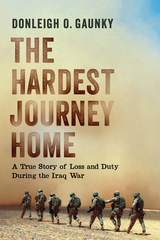
“Sergeant Donleigh Gaunky’s moving memoir speaks to everyone who has lost a loved one in defense of our great nation. It serves as a reminder that freedom is not free, and it is our responsibility to continue to care for our service members, veterans, and their families. I am touched that Fisher House provided a refuge for Sergeant Gaunky during such a difficult journey.”—Ken Fisher, Chairman and CEO, Fisher House Foundation
“Fewer and fewer Americans have any close association with anyone serving in the Armed Forces. Donleigh Gaunky offers a heart-rending glimpse into his family as he, and they, grapple with the loss of Donleigh’s brother on a battlefield in Iraq. Every American should read this and, in so doing, learn what “Thank You for Your Service” really means.”
—Gen. Carter F. Ham, USA, Ret., President and CEO, Association of the United States Army
In November 2005, while analyzing live action reports at his base in Baghdad, Iraq, Donleigh O. Gaunky froze. His younger brother Alex’s unit had been hit by the enemy. Almost immediately, arrangements were made for Donleigh to meet his wounded brother in Germany, but Alex succumbed to his injuries before he arrived. Instead, Donleigh was asked to assume the role of remains escort. Most of the time a remains escort is picked at random from the appropriate branch of service or is someone with a relationship to the deceased, most often from the soldier’s own unit. Rarely—if ever in modern times—is the escort a family member. In The Hardest Journey Home: A True Story of Loss and Duty During the Iraq War, Donleigh O. Gaunky describes the events that unfolded over the course of a few days, from the front line in Iraq to the Landstuhl military hospital in Germany to their small town in Wisconsin, where he arrived with his brother’s body on Thanksgiving Day. In an effort to keep his mind off the tragedy and remain focused on his task, the author describes the protocol for escorting a body home—paperwork, appropriate attire, the proper use of the flag, when and where to salute—as well as how his divorced parents coped with the loss of one of their four sons serving in the military. Relying on commercial flights to bring Alex home, there was no military reception when they first landed in the United States and the author learned how little his brother’s sacrifice meant on a national level. But he was uplifted by his town’s response to his family’s loss when they unexpectedly lined the streets to pay their respects to one of their own. An important and moving story, The Hardest Journey Home reveals the human cost of a long, seemingly invisible war.
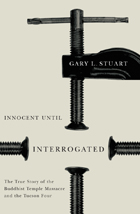
Soon after, all five men recanted, saying their confessions had been coerced. One was freed after providing an alibi, but the remaining suspects—dubbed “The Tucson Four” by the media—remained in custody even though no physical evidence linked them to the crime.
Seven weeks later, investigators discovered—almost by chance—physical evidence that implicated two entirely new suspects. The Tucson Four were finally freed on November 22 after two teenage boys confessed to the crime, yet troubling questions remained. Why were confessions forced out of innocent suspects? Why and how did legal authorities build a case without evidence? And, ultimately, how did so much go so wrong?
In this first book-length treatment of the Buddhist Temple Massacre, Gary L. Stuart explores the unspeakable crime, the inexplicable confessions, and the troubling behavior of police officials. Stuart’s impeccable research for the book included a review of the complete legal records of the case, an examination of all the physical evidence, a survey of three years of print and broadcast news, and more than fifty personal interviews related to the case. Like In Cold Blood, and The Executioner’s Song, Innocent Until Interrogated is a riveting read that provides not only a striking account of the crime and the investigation but also a disturbing look at the American justice system at its very worst.
With an insightful introduction from translator Dean Krouk, My Father’s War is a contemporary classic of war literature. Committed to genuine understanding without falling into undue sympathizing, this sober and reflective book presents an eye-opening, moving, intense, and necessary account of the allure of fascism in a world at war—and its personal costs.
In 1913, Russian imperial marines stormed an Orthodox monastery at Mt. Athos, Greece, to haul off monks engaged in a dangerously heretical practice known as Name Worshipping. Exiled to remote Russian outposts, the monks and their mystical movement went underground. Ultimately, they came across Russian intellectuals who embraced Name Worshipping—and who would achieve one of the biggest mathematical breakthroughs of the twentieth century, going beyond recent French achievements.
Loren Graham and Jean-Michel Kantor take us on an exciting mathematical mystery tour as they unravel a bizarre tale of political struggles, psychological crises, sexual complexities, and ethical dilemmas. At the core of this book is the contest between French and Russian mathematicians who sought new answers to one of the oldest puzzles in math: the nature of infinity. The French school chased rationalist solutions. The Russian mathematicians, notably Dmitri Egorov and Nikolai Luzin—who founded the famous Moscow School of Mathematics—were inspired by mystical insights attained during Name Worshipping. Their religious practice appears to have opened to them visions into the infinite—and led to the founding of descriptive set theory.
The men and women of the leading French and Russian mathematical schools are central characters in this absorbing tale that could not be told until now. Naming Infinity is a poignant human interest story that raises provocative questions about science and religion, intuition and creativity.
An actress visiting from Paris casually proposed to some Afghan actors in Kabul: Why not put on a play? The challenges were huge. It had been thirty years since men and women had appeared on stage together in Afghanistan. Was the country ready for it? Few Afghan actors had ever done theater. Did they even know how? They had performed only in films and television dramas.
Still, a company of actors gathered—among them a housewife, a policewoman, and a street kid turned film star. With no certainty of its outcome, they set out on a journey that would have life-changing consequences for all of them, and along the way lead to A Night in the Emperor’s Garden.
The story of Old Abe, the bald eagle that became the mascot of the Eighth Regiment of Wisconsin Volunteer Infantry. It is also the story of the men among whom Old Abe lived: the farmers, loggers, clerks, and immigrants who flocked to the colors in 1861.
Reissued in 2012 with a new cover.
At once deeply intimate and terrifyingly universal, One Hour in Paris weaves together Freedman’s personal experience with the latest philosophical, neuroscientific, and psychological insights on what it means to live in a body that has been traumatized. Using her background as a philosopher, she looks at the history of psychological trauma and draws on recent theories of posttraumatic stress disorder and neuroplasticity to show how recovery from horrific experiences is possible. Through frank discussions of sex and intimacy, she explores the consequences of sexual violence for love and relationships, and she illustrates the steep personal cost of sexual violence and the obstacles faced by individual survivors in its aftermath. Freedman’s book is an urgent call to face this fundamental social problem head-on, arguing that we cannot continue to ignore the fact that sexual violence against women is rooted in gender inequalities that exist worldwide—and must be addressed.
One Hour in Paris is essential reading for survivors of sexual violence as well as an invaluable resource for therapists, mental health professionals, and family members and friends of victims.

On a moonlit night in 1889, Iowa farmer John Elkins and his young wife, Hattie, were brutally murdered in their bed. Eight days later, their son, eleven-year-old Wesley Elkins, was arrested and charged with murder. The community reeled with shock by both the gruesome details of the homicides and the knowledge of the accused perpetrator—a small, quiet boy weighing just 75 pounds.
Accessible and fast-moving, The Plea delivers a complete, complex, and nuanced narrative of this horrific crime, while shedding light on the legal, social, and political environment of Iowa and the country in the late 1800s and early 1900s.
As Cady reveals, this event triggered a succession crisis in the Pratt-family ranks as Jesse’s wife fostered her son Jesse Junior’s rise to power and spurned other heirs presumptive to the Church. Jesse Junior turned out to be a tormented leader who drove his followers to the brink of poverty with an uncompromising demand that they give their all to God—and to him. The church’s fortune squandered and its future under threat, Jesse Junior’s mother was finally forced to have her favored son removed and defrocked. For all its troubling twists and turns, Cady’s chronicle ends with a minor miracle, as Jesse’s younger brother, Charlie T. Pratt III, takes over leadership and manages to expel the oppressive air of authoritarianism from the body of the Church and hold the community together in the process.
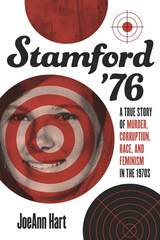
Looking back at what might have happened in 1976, the author discovers a Bicentennial year steeped in recession, racism, and unrelenting violence. It was also a time of flourishing second-wave feminism, when young women were encouraged to do anything, if only they knew how. Stamford was in the midst of urban renewal, destroying historically black neighborhoods to create space for corporations escaping a bankrupt and dangerous New York City, just forty miles away. Organized crime followed the money, infiltrating Stamford at all levels. The author reveals how racism, misogyny, the economy, and corruption affected the young people’s daily lives, and helped lead Margo and Howie to their deaths.
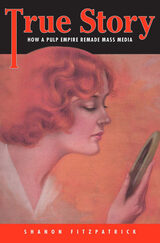
The larger-than-life story of Bernarr Macfadden, a bodybuilder who turned his obsession with muscles, celebrity, and confession into a publishing empire that transformed global media.
In True Story, Shanon Fitzpatrick tells the unlikely story of an orphan from the Ozarks who became one of history’s most powerful media moguls. Born in 1868 in Mill Spring, Missouri, Bernarr Macfadden turned to bodybuilding to transform himself from a sickly “boy” into a creature of masculine perfection. He then channeled his passion into the magazine Physical Culture, capitalizing on the wider turn-of-the-century mania for fitness. Macfadden Publications soon become a pioneer in mass media, helping to inaugurate our sensational, confessional, and body-obsessed global marketplace.
With publications like True Story, a magazine purportedly written and edited by its own readers, as well as scores of romance, crime, and fan magazines, Macfadden specialized in titles that targeted women, immigrants, and the working class. Although derided as pulp by critics of the time, Macfadden’s publications were not merely profitable. They were also influential. They championed reader engagement and interactivity long before these were buzzwords in the media industry, breaking down barriers between producers and consumers of culture. At the same time, Macfadden Publications inspired key elements of modern media strategy by privileging rapid production of new content and equally rapid disintegration and reconfiguration of properties in the face of shifting market conditions.
No less than the kings of Hollywood and Madison Avenue, Macfadden was a crucial player in shaping American consumer culture and selling it to the world at large. Though the Macfadden media empire is overlooked today, its legacies are everywhere, from true-crime journalism to celebrity gossip rags and fifteen-minute abs.
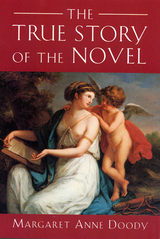
Twentieth-century historians and critics defending the novel have emphasized its role as superseding something else, as a sort of legitimate usurper that deposed the Epic, a replacement of myth, or religious narrative. To say that the Age of Early Christianity was really also the Age of the Novel rumples such historical tidiness––but so it was. From the outset of her discussion, Doody rejects the conventional Anglo-Saxon distinction between Romance and Novel. This eighteenth-century distinction, she maintains, served both to keep the foreign––dark-skinned peoples, strange speakers, Muslims, and others––largely out of literature, and to obscure the diverse nature of the novel itself.
This deeply informed and truly comparative work is staggering in its breadth. Doody treats not only recognized classics, but also works of usually unacknowledged subgenres––new readings of novels like The Pickwick Papers, Puddn’head Wilson, L’Assommoir, Death in Venice, and Beloved are accompanied by insights into Death on the Nile or The Wind in the Willows. Non-Western writers like Chinua Achebe and Witi Ihimaera are also included. In her last section, Doody goes on to show that Chinese and Japanese novels, early and late, bear a strong and not incidental affinity to their Western counterparts. Collectively, these readings offer the basis for a serious reassessment of the history and the nature of the novel.
The True Story of the Novel marks the beginning of the twenty-first century’s understanding of fiction and of culture. It is essential reading for anyone with an interest in literature.
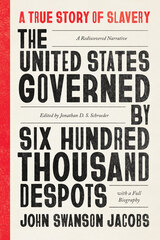
For one hundred and sixty-nine years, a first-person slave narrative written by John Swanson Jacobs—brother of Harriet Jacobs—was buried in a pile of newspapers in Australia. Jacobs’s long-lost narrative, The United States Governed by Six Hundred Thousand Despots, is a startling and revolutionary discovery. A document like this—written by an ex-slave and ex-American, in language charged with all that can be said about America outside America, untampered with and unedited by white abolitionists—has never been seen before. A radical abolitionist, sailor, and miner, John Jacobs has a life story that is as global as it is American. Born into slavery, by 1855, he had fled both the South and the United States altogether, becoming a stateless citizen of the world and its waters. That year, he published his life story in an Australian newspaper, far from American power and its threats. Unsentimental and unapologetic, Jacobs radically denounced slavery and the state, calling out politicians and slaveowners by their names, critiquing America’s founding documents, and indicting all citizens who maintained the racist and intolerable status quo.
Reproduced in full, this narrative—which entwines with that of his sister and with the life of their friend Frederick Douglass—here opens new horizons for how we understand slavery, race, and migration, and all that they entailed in nineteenth-century America and the world at large. The second half of the book contains a full-length, nine-generation biography of Jacobs and his family by literary historian Jonathan Schroeder. This new guide to the world of John Jacobs will transform our sense of it—and of the forces and prejudices built into the American project. To truly reckon with the lives of John Jacobs is to see with new clarity that in 1776, America embarked on two experiments at once: one in democracy, the other in tyranny.
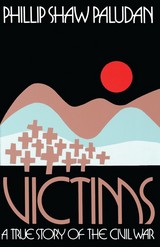
". . . the definitive history of the Shelton Laurel Massacre, but more important it is a pathbreaking study of a principal theater of the guerrilla aspect of the Civil War. Paludan has succeeded admirably in rooting a historically neglected topic in the lives of ordinary people."—Frank L. Byrne, American Historical Review
"The questions Paludan asks about Shelton Laurel in 1863 are appropriate to My Lai in 1968 and Auschwitz in 1944. Victims is not only a good book; it is also an important book. And it is a profoundly disturbing book."—Emory M. Thomas, Georgia Historical Quarterly
"Outwardly a superb analysis of the impact of war and war-time atrocity on the life of a remote mountain community, this slim volume harbors far-reaching implications for the study of class conflict and the modernization process in the Appalachian region."—Ron Eller, Appalachian Journal
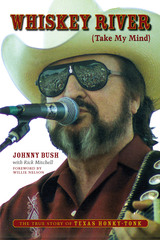
When it comes to Texas honky-tonk, nobody knows the music or the scene better than Johnny Bush. Author of Willie Nelson's classic concert anthem "Whiskey River," and singer of hits such as "You Gave Me a Mountain," "Undo the Right," "Jim, Jack and Rose," and "I'll Be There," Johnny Bush is a legend in country music, a singer-songwriter who has lived the cheatin', hurtin', hard-drinkin' life and recorded some of the most heart-wrenching songs about it. He has one of the purest honky-tonk voices ever to come out of Texas. And Bush's career has been just as dramatic as his songs—on the verge of achieving superstardom in the early 1970s, he was sidelined by a rare vocal disorder that he combated for thirty years. But, survivor that he is, Bush is once again filling dance halls across Texas and inspiring a new generation of musicians who crave the authenticity—the "pure D" country—that Johnny Bush has always had and that Nashville country music has lost.
In Whiskey River (Take My Mind), Johnny Bush tells the twin stories of his life and of Texas honky-tonk music. He recalls growing up poor in Houston's Kashmere Gardens neighborhood and learning his chops in honky-tonks around Houston and San Antonio—places where chicken wire protected the bandstand and deadly fights broke out regularly. Bush vividly describes life on the road in the 1960s as a band member for Ray Price and Willie Nelson, including the booze, drugs, and one-night stands that fueled his songs but destroyed his first three marriages. He remembers the time in the early 1970s when he was hotter than Willie and on the fast track to superstardom—until spasmodic dysphonia forced his career into the slow lane. Bush describes his agonizing, but ultimately successful struggle to keep performing and rebuild his fan base, as well as the hard-won happiness he has found in his personal life.
Woven throughout Bush's autobiography is the never-before-told story of Texas honky-tonk music, from Bob Wills and Floyd Tillman to Junior Brown and Pat Green. Johnny Bush has known almost all the great musicians, past and present, and he has wonderful stories to tell. Likewise, he offers shrewd observations on how the music business has changed since he started performing in the 1950s—and pulls no punches in saying how Nashville music has lost its country soul. For everyone who loves genuine country music, Johnny Bush, Willie Nelson, and stories of triumph against all odds, Whiskey River (Take My Mind) is a must-read.

In detailing the events leading to the 1927 World Series, Leo Trachtenberg weaves players’ profiles and histories along with those of the Yankee owner, management, coaches, scouts, trainer, and batboy/mascot. Also included are 1927 statistics and photos from Yankee archives.
READERS
Browse our collection.
PUBLISHERS
See BiblioVault's publisher services.
STUDENT SERVICES
Files for college accessibility offices.
RECENTLY PUBLISHED



UChicago Accessibility Resources
home | accessibility | search | about | contact us
BiblioVault ® 2001 - 2024
The University of Chicago Press