
 A SCHOLARLY BOOK REPOSITORY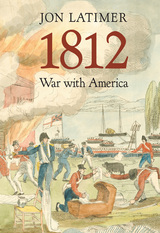
Listen to a short interview with Jon LatimerHost: Chris Gondek | Producer: Heron & Crane
In the first complete history of the War of 1812 written from a British perspective, Jon Latimer offers an authoritative and compelling account that places the conflict in its strategic context within the Napoleonic wars. The British viewed the War of 1812 as an ill-fated attempt by the young American republic to annex Canada. For British Canada, populated by many loyalists who had fled the American Revolution, this was a war for survival. The Americans aimed both to assert their nationhood on the global stage and to expand their territory northward and westward.
Americans would later find in this war many iconic moments in their national story--the bombardment of Fort McHenry (the inspiration for Francis Scott Key's "Star Spangled Banner"); the Battle of Lake Erie; the burning of Washington; the death of Tecumseh; Andrew Jackson's victory at New Orleans--but their war of conquest was ultimately a failure. Even the issues of neutrality and impressment that had triggered the war were not resolved in the peace treaty. For Britain, the war was subsumed under a long conflict to stop Napoleon and to preserve the empire. The one lasting result of the war was in Canada, where the British victory eliminated the threat of American conquest, and set Canadians on the road toward confederation.
Latimer describes events not merely through the eyes of generals, admirals, and politicians but through those of the soldiers, sailors, and ordinary people who were directly affected. Drawing on personal letters, diaries, and memoirs, he crafts an intimate narrative that marches the reader into the heat of battle.
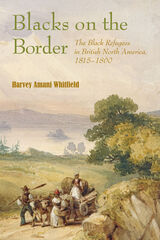

A fur trader in the Michigan Territory and confidant of both the U.S. government and local Indian tribes, Jacob Smith could have stepped out of a James Fenimore Cooper novel. Controversial, mysterious, and bold during his lifetime, in death Smith has not, until now, received the attention he deserves as a pivotal figure in Michigan’s American period and the War of 1812. This is the exciting and unlikely story of a man at the frontier’s edge, whose missions during both war and peace laid the groundwork for Michigan to accommodate settlers and farmers moving west. The book investigates Smith’s many pursuits, including his role as an advisor to the Indians, from whom the federal government would gradually gain millions of acres of land, due in large part to Smith’s work as an agent of influence. Crawford paints a colorful portrait of a complicated man during a dynamic period of change in Michigan’s history.
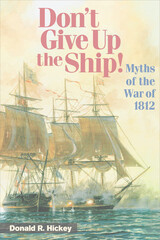
No longer willing to accept naval blockades, the impressment of American seamen, and seizures of American ships and cargos, the United States declared war on Great Britain. The aim was to frighten Britain into concessions and, if that failed, to bring the war to a swift conclusion with a quick strike at Canada. But the British refused to cave in to American demands, the Canadian campaign ended in disaster, and the U.S. government had to flee Washington, D.C., when it was invaded and burned by a British army.
By all objective measures, the War of 1812 was a debacle for the young republic, and yet it was celebrated as a great military triumph. The American people believed they had won the war and expelled the invader. Oliver H. Perry became a military hero, Francis Scott Key composed what became the national anthem and commenced a national reverence for the flag, and the U.S.S. Constitution, "Old Ironsides," became a symbol of American invincibility. Every aspect of the war, from its causes to its conclusion, was refashioned to heighten the successes, obscure the mistakes, and blur embarrassing distinctions, long before there were mass media or public relations officers in the Pentagon.
In this entertaining and meticulously researched book by America's leading authority on the War of 1812, Donald R. Hickey dispels the many misconcep-tions that distort our view of America's second war with Great Britain. Embracing military, naval, political, economic, and diplomatic analyses, Hickey looks carefully at how the war was fought between 1812 and 1815, and how it was remembered thereafter. Was the original declaration of war a bluff? What were the real roles of Canadian traitor Joseph Willcocks, Mohawk leader John Norton, pirate Jean Laffite, and American naval hero Lucy Baker? Who killed the Shawnee chief Tecumseh and who shot the British general Isaac Brock? Who actually won the war, and what is its lasting legacy? Hickey peels away fantasies and embellishments to explore why cer-tain myths gained currency and how they contributed to the way that the United States and Canada view themselves and each other.
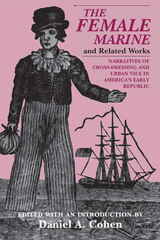
The alternately racy and moralistic narrative recounts the adventures of a young woman from rural Massachusetts who is seduced by a false-hearted lover, flees to Boston, and is entrapped in a brothel. She eventually escapes by disguising herself as a man and serves with distinction on board the U.S. frigate Constitution during the War of 1812. After subsequent onshore adventures in and out of male dress, she is happily married to a wealthy New York gentleman.
In his introduction, Daniel A. Cohen situates the story in both its literary and historical contexts. He explains how the tale draws upon a number of popular Anglo-American literary genres, including the female warrior narrative, the sentimental novel, and the urban exposé. He then explores how The Female Marine reflects early-nineteenth-century anxieties concerning changing gender norms, the expansion of urban prostitution, the growth of Boston's African American community, and feelings of guilt aroused by New England's notoriously unpatriotic activities during the War of 1812.
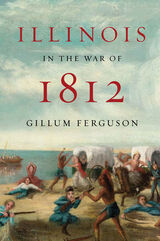
Russell P. Strange "Book of the Year" Award from the Illinois State Historical Society, 2012.

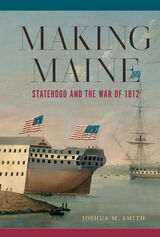
Honorable mention for U.S. Maritime History, John Lyman Book Awards
After the Revolutionary War ended, the new American nation grappled with a question about its identity: Were the states sovereign entities or subordinates to a powerful federal government? The War of 1812 brought this vexing issue into sharp relief, as a national government intent on waging an unpopular war confronted a populace in Massachusetts that was vigorously opposed to it. Maine, which at the time was part of Massachusetts, served as the battleground in this political struggle.
Joshua M. Smith recounts an innovative history of the war, focusing on how it specifically affected what was then called the District of Maine. Drawing on archival materials from the United States, Britain, and Canada, Smith exposes the bitter experience of Maine’s citizens during that conflict as they endured multiple hardships, including starvation, burdensome taxation, smuggling, treason, and enemy occupation. War’s inherent miseries, along with a changing relationship between regional and national identities, gave rise to a statehood movement that rejected a Boston-centric worldview in favor of a broadly American identity.
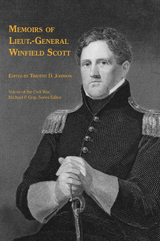
Scott joined the army in 1808, earned the rank of brigadier general in 1814, and was promoted to commanding general in 1841. During the Mexican-American War, he commanded one of the most brilliant military campaigns in American history and mentored the generation of officers who fought the Civil War, including Generals Grant, Lee, Longstreet, Beauregard, Jackson, and Meade. As a young general, he wrote the first comprehensive set of regulations to govern the army and pushed for the professionalization of the U.S. officer corps. Yet, he was ridiculed at the beginning of the war for his prescient prediction that the Civil War would be a prolonged conflict requiring extensive planning and superior strategic thinking.
With this edition, Johnson has merged Scott’s large two-volume memoir into a single, manageable volume without losing any of the original 1864 text. Extensive new annotations update Scott’s outdated notes and provide valuable illumination and context. Covering a wide range of events—from the famous 1804 duel between Aaron Burr and Alexander Hamilton through the end of the Civil War—Scott’s extraordinary account reveals the general as a sometimes
egocentric but always astute witness to the early American republic.

“[Fanis] demonstrates an impressive ability to travel nimbly between abstract theoretical concepts and a messy reality. In each one of the case study chapters, her analysis is rich, thoughtful, and imaginative.”
—Ido Oren, University of Florida
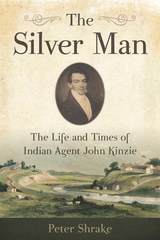
In The Silver Man: The Life and Times of John Kinzie, readers witness the dramatic changes that swept the Wisconsin frontier in the early and mid-1800s, through the life of Indian agent John Harris Kinzie. From the War of 1812 and the monopoly of the American Fur Company, to the Black Hawk War and the forced removal of thousands of Ho-Chunk people from their native lands—John Kinzie’s experience gives us a front-row seat to a pivotal time in the history of the American Midwest.
As an Indian agent at Fort Winnebago—in what is now Portage, Wisconsin—John Kinzie served the Ho-Chunk people during a time of turbulent change, as the tribe faced increasing attacks on its cultural existence and very sovereignty, and struggled to come to terms with American advancement into the upper Midwest. The story of the Ho-Chunk Nation continues today, as the tribe continues to rebuild its cultural presence in its native homeland.
Through John Kinzie’s story, we gain a broader view of the world in which he lived—a world that, in no small part, forms a foundation for the world in which we live today.
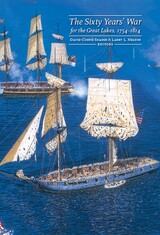
The Sixty Years' War for the Great Lakes contains twenty essays concerning not only military and naval operations, but also the political, economic, social, and cultural interactions of individuals and groups during the struggle to control the great freshwater lakes and rivers between the Ohio Valley and the Canadian Shield. Contributing scholars represent a wide variety of disciplines and institutional affiliations from the United States, Canada, and Great Britain.
Collectively, these important essays delineate the common thread, weaving together the series of wars for the North American heartland that stretched from 1754 to 1814. The war for the Great Lakes was not merely a sideshow in a broader, worldwide struggle for empire, independence, self-determination, and territory. Rather, it was a single war, a regional conflict waged to establish hegemony within the area, forcing interactions that divided the Great Lakes nationally and ethnically for the two centuries that followed.
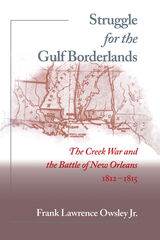
Using American, British, and Spanish documents, many previously unknown, Frank Owsley’s study establishes the Creek War and the struggle to control the Gulf borderlands as integral parts of the War of 1812. The war between the United States and a large part of the Creek nation is usually studied as local or regional history. These documentary sources, however, show the larger picture. They show Spain to have been a major influence in the Creek War and indicate the extent to which the British were aiding the Indians and using them to redirect American troops. On the other hand, Andrew Jackson, in charge of the American forces on the Gulf Coast, emerged from the conflict as a first-rate military commander. His victories on the Gulf gave the West a leader and aided in shifting political power from the eastern seaboard to the South and West.
Owsley concludes that the victories in the Gulf region were of sufficient magnitude to justify the claim that the War of 1812 was not a draw but a decisive American victory and that had there been a general of Jackson's caliber on the northern frontier, the United States might have had a clear-cut victory there.
As a result of the war, the United States held its claim on Louisiana, annexed the Mobile district, forced Spain out of Florida, and broke the power of the southern Indians, thus opening vast lands for settlement from the new nation on the eastern seaboard.
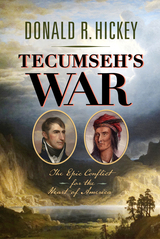
The Shawnee leader Tecumseh came to prominence in a war against the United States waged from 1811 to 1815. In 1805, Tecumseh’s younger brother Lalawethika (soon to be known as “the Prophet”) had a vision for an Indian revitalization movement that would restore Native culture and resist American expansion. Tecumseh organized the growing support for this movement, which came from Indigenous peoples across the Old Northwest and parts of the Great Plains, into a loose but powerful military alliance.
In late 1811, while Tecumseh was away on a recruiting mission in the South, General William Henry Harrison led an army to the center of Native resistance at Prophetstown in present-day Indiana. In the early morning hours of November 7, in what came to be known as the Battle of Tippecanoe, Harrison’s men fought off an Indian attack, which marked the beginning of Tecumseh’s War. Seven months later, when the United States declared war on Britain, thus initiating the War of 1812, the British and Tecumseh forged an alliance against the United States. Initially, the Anglo-Indian alliance enjoyed considerable success at Detroit, Chicago, Mackinac, and elsewhere, exposing much of the Old Northwest to border warfare, but the tide turned in 1813 when Harrison invaded Canada. On October 5 the American army defeated a much smaller Anglo-Indian force in the climactic Battle of the Thames. Tecumseh was killed in this battle, and although his confederacy disintegrated, British support ensured that the Indian war would continue for another two years with the Sauk chief Black Hawk now providing the inspiration and leadership. Tecumseh’s War ended only in late 1815 after the British made peace with the United States and abandoned their native allies.
Tecumseh’s War: The Epic Conflict for the Heart of America is the first complete story of this major conflict. Distinguished historian Donald R. Hickey detaches it from the War of 1812, moving Tecumseh’s confederation to center stage to tell the sweeping and engrossing story of this last great Indian War—the last time that Indigenous Peoples had a powerful European ally to oppose United States expansion and thus the lastchance they had of shaping the future of the continent.
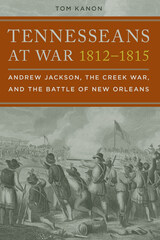
Although frequently discussed as separate military conflicts, the War of 1812 against Great Britain and the Creek War against Native Americans in the territory that would become Alabama were part of the same forceful projection of growing American power. Success in both wars won for America security against attack from abroad and vast tracks of new land in “the Old Southwest.” In Tennesseans at War, 1812–1815, Tom Kanon explains the role Tennesseans played in these changes and how they remade the south.
Because it was a landlocked frontier state, Tennessee’s economy and security depended heavily upon the river systems that traversed the region; some, like the Tennessee River, flowed south out of the state and into Native American lands. Tennesseans of the period perceived that gaining mastery of these waterways formed an urgent part of their economic survival and stability.
The culmination of fifteen years’ research, Kanon’s work draws on state archives, primary sources, and eyewitness accounts, bringing the information in these materials together for first time. Not only does he narrate the military campaigns at the heart of the young nation’s expansion, but he also deftly recalls the economic and social pressures and opportunities that encouraged large numbers of Tennesseans to leave home and fight. He expertly weaves these themes into a cohesive narrative that culminates in the vivid military victories of the War of 1812, the Creek War, and the legendary Battle of New Orleans—the victory that catapulted Tennessee’s citizen-soldier Andrew Jackson to the presidency.
Expounding on the social roles and conditions of women, slaves, minorities, and Native Americans in Tennessee, Kanon also brings into focus the key idea of the “home front” in the minds of Tennesseans doing battle in Alabama and beyond. Kanon shows how the goal of creating, strengthening, and maintaining an ordered society permeated the choices and actions of the American elites on the frontiers of the young nation.
Much more than a history of Tennesseans or the battles they fought in Alabama, Tennesseans at War, 1812–1815, is the gripping story of a pivotal turning point in the history of the young American republic.

Through meticulous archival research, close readings of Apess's key works, and informed and imaginative speculation about his largely enigmatic life, Drew Lopenzina provides a vivid portrait of this singular Native American figure. This new biography will sit alongside Apess's own writing as vital reading for those interested in early America and indigeneity.
New attention to material culture and documentary and archaeological records fills in details, adds new information, and helps disabuse the reader of outdated interpretations.
Susan M. Abram / Kathryn E. Holland Braund/Robert P. Collins / Gregory Evans Dowd /
This two-volume work by historian Robert Quimby presents a comprehensive and detailed analysis of military strategy, operations, and management during one of America’s most neglected and least understood military campaigns, the War of 1812. With causes that can be traced to the epic contest against Napoleon in Europe beginning in 1803, the war itself was the first conducted by the young Constitutional government of the United States. Quimby demonstrates that failed American initiatives at the beginning of hostilities shattered the unrealistic optimism of the war’s staunchest advocates; and while initial failures were followed by military success in 1813, whatever advantage might have been gained was soon lost to incompetent leadership. Major exceptions occurred in the Old Northwest, and in what was then the Southwest, where U.S. forces finally broke the strength of the long-successful Indian-British alliance.
In retrospect, what occurred during the War of 1812 demonstrated the necessity for gaining citizen support before committing the nation to armed conflict; it also provided a series of object lessons on how not to conduct a military campaign. Finally Quimby argues that, notwithstanding several victories at war’s end, including the fabled Battle of New Orleans, American perceptions that the United States "won" the war are erroneous; at best the struggle ended in a draw. The United States Army in the War of 1812 is an up-to-date and long overdue reassessment of military actions conducted during a pivotal conflict in American history, one that shaped U.S. military doctrine for a half century.
"A balanced analysis of tactics and strategy, this book also summarizes succinctly and clearly recent scholarship on causes and describes briefly the war's military, economic, and political consequences. Coles has surveyed thoroughly the existing literature but arrives at a number of independent judgments. It is the best single-volume account of the war in all its aspects. In recounting sea battles, Coles puts aside the patriotic blinders that have for so long prevented a sensible understanding of American capabilities and strategic necessities; thus American naval victories are put in a proper perspective. And in dealing with land engagements, he has shunned the mocking and amused attitude which has so often passed for historical judgment. Undergraduates will be stimulated by the hints of modern parallels and will find useful the excellent annotated bibliography and simple maps."—Choice
Book-of-the-Month Club and History Book Club selections and received one of the two 1990 "Best Book Awards" from the American Military Institute.
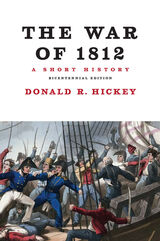
This abridged edition of Donald R. Hickey's comprehensive and authoritative The War of 1812: A Forgotten Conflict has been thoroughly revised for the 200th anniversary of the historic conflict. A myth-shattering study that will inform and entertain students and general readers alike, The War of 1812: A Short History explores the military, diplomatic, and domestic history of our second war with Great Britain, bringing the study up to date with recent scholarship on all aspects of the war, from the Gulf of Mexico to Canada.
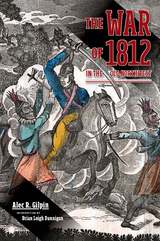
This engaging narrative history deftly illustrates the War of 1812 as it played out in the Old Northwest — Ohio, Indiana, Illinois, Michigan, and bordering parts of Canada. From the stirrings of conflict in the area beginning as early as the 1760s, through the Battle of Tippecanoe, and to Michigan Territory’s role as a focal point in prewar preparation, the book examines the lead-up to the war before delving into key battles in the region. In this accessible text, Gilpin explores key figures, dates, and wartime developments, shedding considerable light on the strategic and logistical issues raised by the region’s unique geography, culture, economy, and political temperament. Battles covered include the Surrender of Detroit, the Siege of Fort Meigs, and the battles of River Raisin, Lake Erie, the Thames, and Mackinac Island.

The spring of 1812 found the young American republic on edge. The British Navy was impressing American seamen with impunity at an alarming rate while vicious attacks on frontier settlements by American Indians armed with British weapons had left a trail of fear and outrage. As calls for a military response increased, Kentucky, the first state west of the Appalachians, urged that only by defeating the British could the nation achieve security. The very thought conjured up embellished memories of the American Revolution, and once war was declared, many soldiers believed that the “Spirit of 76” would lead them to victory. But the conflict quickly transformed from a patriotic parade to a desperate attempt to survive against a major military power. While the War of 1812 is known mostly for later events, including the burning of Washington and the siege of Fort McHenry, much of the first two years of the war was fought in the west, with the British Army and their Indian allies nearly overrunning the Old Northwest and threatening the borders of the original colonies.
In The War of 1812 in the West: From Fort Detroit to New Orleans, David Kirkpatrick chronicles the near catastrophic loss of the Ohio, Indiana, and Illinois Territories, the bitter fight against both Tecumseh’s Confederation and the Creek Nation, and the slow recovery and ultimate victory of American forces—a large portion of which was supplied by Kentucky—from Canada to the Gulf of Mexico. Battles such as River Raisin, Thames River, Fort Meigs, and New Orleans are placed in context to show how they secured America’s frontier and opened territory to the west to new settlement following the war.

In The War of 1812 in Wisconsin, author Mary Elise Antoine brings a little-known corner of Wisconsin’s history to life. Prairie du Chien, located just above mouth of the Wisconsin River, was the key to trade on the upper Mississippi. Whoever controlled the prairie commanded the immense territory inhabited by thousands of American Indians—and the fur they traded. When war broke out between the United States and Great Britain in 1812, British and Americans fought to maintain the ever-shifting alliance of the tribes.
This is the story of the battle for the control of Prairie du Chien and the western country, which began many years before the three-day siege in July of 1814 for which the Battle of Prairie du Chien is named. It is also the tale of the people, Euro-American and Native, who lived in pre-territorial Wisconsin and how the contest for control of the region affected their lives and livelihoods. The outcome of the War of 1812 would determine what "manifest destiny" would mean to all who called these lands home.
—Thomas Jefferson
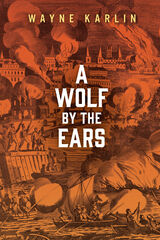
During the War of 1812, thousands of enslaved people from plantations across the Tidewater rallied to the British side, turning against an American republic that had barred them from the promises of freedom and democracy. Set against the backdrop of rebellion and war, Wayne Karlin's A Wolf by the Ears follows the interconnected stories of Towerhill and Sarai, two African slaves, and their master, Jacob Hallam. Educated side-by-side and inseparable as children, the three come of age as they are forced to grapple with—and break free of—the fraught linkage of black and white Americans and how differently each defines what it means to fight for freedom. Sarai and Jacob are caught in the tension between the dream of equality, the reality of slavery, and their own hearts, while Towerhill sits at the head of a company of black marines that is part of the force that takes Washington and watches the White House burn.
READERS
Browse our collection.
PUBLISHERS
See BiblioVault's publisher services.
STUDENT SERVICES
Files for college accessibility offices.
RECENTLY PUBLISHED





UChicago Accessibility Resources
home | accessibility | search | about | contact us
BiblioVault ® 2001 - 2024
The University of Chicago Press