Results by title
4531 books match the query 'Cultural & Ethnic Studies' and 33 start with a non-letter

"A Truthful Impression of the Country"
British and American Travel Writing in China, 1880-1949Nicholas R. Clifford
University of Michigan Press, 2001
Nicholas R. Clifford argues that, for a variety of reasons, travel accounts during this time claimed a particular kind of veracity that distinguished them from the work of other writers--scholars, journalists, diplomats, policymakers, or memoir-writing expatriates--who also sought to represent an unfamiliar China to the West. Yet even as the genre claims to be a "truthful impression," it contains an implicit warning that the traveler's own sensibility enters into the account and into the representation of the unfamiliar and the exotic.
"A Truthful Impression of the Country" will appeal not only to those interested in the broad phenomenon of imperialism but also to those interested in cultural studies and post-colonialism. It will likewise prove accessible to the general reader exploring Sino-Western interactions or in travel writing as a particular genre.
Nicholas R. Clifford is College Professor Emeritus, Middlebury College. He is also the author of the novel The House of Memory and of the monographs Shanghai, 1925: Urban Nationalism and the Defense of Foreign Privilege and Spoilt Children of Empire: Westerners in Shanghai and the Chinese Revolution of 1925--1927.
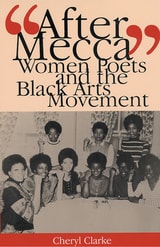
"After Mecca"
Women Poets and the Black Arts MovementClarke, Cheryl
Rutgers University Press, 2004
In "After Mecca," Cheryl Clarke explores the relationship between the Black Arts Movement and black women writers of the period. Poems by Gwendolyn Brooks, Ntozake Shange, Audre Lorde, Nikki Giovanni, Sonia Sanchez, Jayne Cortez, Alice Walker, and others chart the emergence of a new and distinct black poetry and its relationship to the black community's struggle for rights and liberation. Clarke also traces the contributions of these poets to the development of feminism and lesbian-feminism, and the legacy they left for others to build on.
She argues that whether black women poets of the time were writing from within the movement or writing against it, virtually all were responding to it. Using the trope of "Mecca," she explores the ways in which these writers were turning away from white, western society to create a new literacy of blackness.
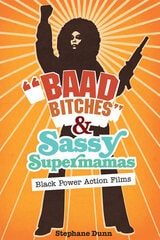
"Baad Bitches" and Sassy Supermamas
Black Power Action FilmsStephane Dunn
University of Illinois Press, 2008
Blaxploitation action narratives as well as politically radical films like Sweet Sweetback's Baadasssss Song typically portrayed black women as trifling "bitches" compared to the supermacho black male heroes. But starting in 1973, the emergence of "baad bitches" and "sassy supermamas" reversed the trend as self-assured, empowered, and tough black women took the lead in the films Cleopatra Jones, Coffy, and Foxy Brown.
Stephane Dunn unpacks the intersecting racial, sexual, and gender politics underlying the representations of racialized bodies, masculinities, and femininities in early 1970s black action films, with particular focus on the representation of black femininity. Recognizing a distinct moment in the history of African American representation in popular cinema, Dunn analyzes how it emerged from a radical political era influenced by the Black Power movement and feminism. Dunn also engages blaxploitation's legacy in contemporary hip-hop culture, as suggested by the music’s disturbing gender politics and the "baad bitch daughters" of Foxy Brown and Cleopatra Jones, rappers Foxy Brown and Lil' Kim.
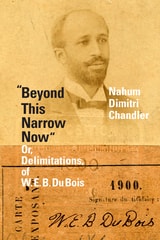
"Beyond This Narrow Now"
Or, Delimitations, of W. E. B. Du BoisNadhum Dimitri Chandler
Duke University Press, 2022
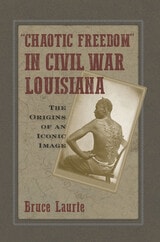
"Chaotic Freedom" in Civil War Louisiana
The Origins of an Iconic ImageBruce Laurie
University of Massachusetts Press, 2021
Bruce Laurie uncovers the people and events that created this seminal image, telling the tale of three men, two Yankee soldiers from western Massachusetts who were serving the Union Army in Louisiana and a man named Peter whose scarred back horrified all who saw it. The two soldiers were so shocked by what had been done to Peter, they sought to capture the image and document slavery's cruelty, the likes of which was all too common among those fleeing bondage in Louisiana. Meticulously researched and briskly told, this short volume unearths the story behind an iconic image.
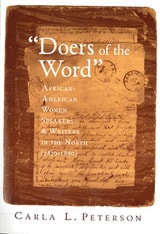
"Doers of the Word"
African-American Women Speakers and Writers in the North (1830-1880)Peterson, Carla L
Rutgers University Press, 1998
In situating these women within the emerging African-American urban communities of the free North, Doers of the Word provides an important counterweight to the vast scholarship on Southern slavery and argues that black "Civil Rights movements" cannot be seen as a purely modern phenomenon. In particular, the book examines the ways in which this Northern black population, despite its heterogeneity, came together and established social organizations that would facilitate community empowerment; yet Peterson's analysis also acknowledges, and seeks to explain, the highly complex relationship of black women to these institutions, a relationship that rendered their stance as public intellectuals all the more bold and defiant.
Peterson begins her study in the 1830s, when a substantial body of oratory and writing by black women first emerged, and traces the development of this writing through the shifting political climate up to the end of Reconstruction. She builds her analyses upon Foucault's interdisciplinary model of discourse with an explicitly feminist approach, drawing upon sermons, spiritual autobiographies, travel and slave narratives, journalism, essays, poetry, speeches, and fiction. From these, Peterson is able to answer several key questions. First, what empowered these women to act, to speak out, and to write? Why, and in what ways, were they marginalized within both the African-American and larger American communities? Where did they act, speak, and write from?
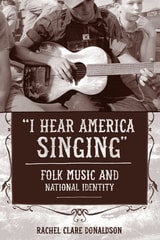
"I Hear America Singing"
Folk Music and National IdentityRachel Clare Donaldson
Temple University Press, 2014
In "I Hear America Singing," Rachel Donaldson traces the vibrant history of the twentieth-century folk music revival from its origins in the 1930s through its end in the late 1960s. She investigates the relationship between the revival and concepts of nationalism, showing how key figures in the revival--including Pete Seeger , Alan Lomax, Moses Asch, and Ralph Rinzler--used songs to influence the ways in which Americans understood the values, the culture, and the people of their own nation.
As Donaldson chronicles how cultural norms were shaped over the course of the mid-twentieth century, she underscores how various groups within the revival and their views shifted over time. "I Hear America Singing" provides a stirring account of how and why the revivalists sustained their culturally pluralist and politically democratic Americanism over this tumultuous period in American history.
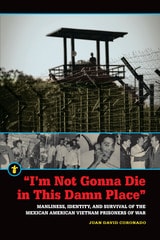
"I'm Not Gonna Die in This Damn Place"
Manliness, Identity, and Survival of the Mexican American Vietnam Prisoners of WarJuan David Coronado
Michigan State University Press, 2018

"Other Sheep I Have" The Autobiography of Father Paul M. Washington
Paul Washington
Temple University Press, 1994
Father Paul M. Washington rose to local and nation prominence as an unflagging supporter of civil and women's rights. One of a handful of black priests in a traditionally white church, he fought for understanding among all people, eventually serving twenty-five years as the Rector of the Episcopal Church of the Advocate in an inner-city Philadelphia neighborhood. Though his ideas about equality often went against the views of the Episcopal church leadership, he rejected threats of withdrawn funding or retaliation to follow his heart and his theology.
Father Washington's story is a window of insight into the struggles for justice and dignity in the latter half of the twentieth century. In the tumultuous 1960s he supported the Black Power movement, the Black Panther Party, and many other groups working for peace and justice, providing meeting places and guidance. He often found himself in the midst of racial disturbances—the riots on Susquehanna Avenue in 1963 and on Columbia Avenue in 1964, in front of the Board of Education where high school students protested the Eurocentric curriculum, and outside the walls of Girard College where citizens and civic leaders demonstrated against the school's exclusion of black children. In the 1980s, he helped Philadelphia city officials negotiate with MOVE members and was a vocal supporter of Ramona Africa, fighting for her release from prison. It was in his church on the corner of 18th and Diamond Streets that women were first ordained a priests in the Episcopal church. And it was one of his congregation, Barbara Harris, who became the first female Episcopal bishop.
In his evocative voice, Father Washington describes the pivotal events of his life and how each impacted upon his evolving ideas of the relationship between religion and justice. Spanning seven decades, his account is at once an insightful and unique historical account of political action, of the reformation of the church, of the changing urban landscape, and of a life graced by leadership and spiritual enlightenment.
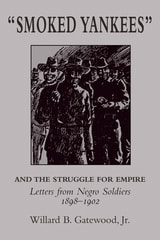
"Smoked Yankees" and the Struggle for Empire
Letters from Negro Soldiers, 1898–1902Willard Gatewood
University of Arkansas Press, 1987
Called upon for the first time to render military service outside the States, Negro soldiers (called Smoked Yankees by the Spaniards) were eager to improve their status at home by fighting for the white man in the Spanish-American War. Their story is told through countless letters sent to black U.S. newspapers that lacked resources to field their own reporters. The collection constitutes a remarkably complete and otherwise undisclosed amount of the black man’s role in—and attitude toward—America’s struggle for empire.
In first-hand reports of battles in the Philippine Islands and Cuba, Negro soldiers wrote from the perspective of dispossessed citizens struggling to obtain a larger share of the rights and privileges of Americans.
These letters provide a fuller understanding of the exploits of black troops through their reports of military activities and accounts of foreign peoples and its cultures.
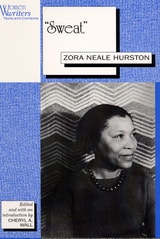
"Sweat"
Written by Zora Neale HurstonWall, Cheryl A
Rutgers University Press, 1997
Now frequently anthologized, Zora Neale Hurston's short story "Sweat" was first published in Firell, a legendary literary magazine of the Harlem Renaissance, whose sole issue appeared in November 1926. Among contributions by Gwendolyn Bennett, Countee Cullen, Langston Hughes, and Wallace Thurman, "Sweat" stood out both for its artistic accomplishment and its exploration of rural Southern black life. In "Sweat" Hurston claimed the voice that animates her mature fiction, notably the 1937 novel Their Eyes Were Watching God; the themes of marital conflict and the development of spiritual consciousness were introduced as well. "Sweat" exemplifies Hurston's lifelong concern with women's relation to language and the literary possibilities of black vernacular.
This casebook for the story includes an introduction by the editor, a chronology of the author's life, the authoritative text of "Sweat," and a second story, "The Gilded Six-Bits." Published in 1932, this second story was written after Hurston had spent years conducting fieldwork in the Southern United States. The volume also includes Hurston's groundbreaking 1934 essay, "Characteristics of Negro Expression," and excerpts from her autobiography, Dust Tracks on a Road. An article by folklorist Roger Abrahams provides additional cultural contexts for the story, as do selected blues and spirituals. Critical commentary comes from Alice Walker, who led the recovery of Hurston's work in the 1970s, Robert Hemenway, Henry Louis Gates, Gayl Jones, John Lowe, Kathryn Seidel, and Mary Helen Washington.
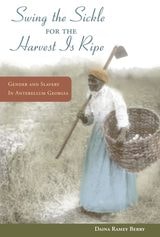
"Swing the Sickle for the Harvest is Ripe"
Gender and Slavery in Antebellum GeorgiaDaina Ramey Berry
University of Illinois Press, 2010
"Swing the Sickle for the Harvest Is Ripe" compares the work, family, and economic experiences of enslaved women and men in upcountry and lowland Georgia during the nineteenth century. Mining planters' daybooks, plantation records, and a wealth of other sources, Daina Ramey Berry shows how slaves' experiences on large plantations, which were essentially self-contained, closed communities, contrasted with those on small plantations, where planters' interests in sharing their workforce allowed slaves more open, fluid communications. By inviting readers into slaves' internal lives through her detailed examination of domestic violence, separation and sale, and forced breeding, Berry also reveals important new ways of understanding what it meant to be a female or male slave, as well as how public and private aspects of slave life influenced each other on the plantation.
A volume in the series Women in American History, edited by Anne Firor Scott, Susan Armitage, Susan K. Cahn, and Deborah Gray White
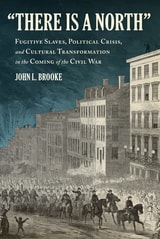
"There Is a North"
Fugitive Slaves, Political Crisis, and Cultural Transformation in the Coming of the Civil WarJohn L. Brooke
University of Massachusetts Press, 2019
How does political change take hold? In the 1850s, politicians and abolitionists despaired, complaining that the "North, the poor timid, mercenary, driveling North" offered no forceful opposition to the power of the slaveholding South. And yet, as John L. Brooke proves, the North did change. Inspired by brave fugitives who escaped slavery and the cultural craze that was Uncle Tom's Cabin, the North rose up to battle slavery, ultimately waging the bloody Civil War.
While Lincoln's alleged quip about the little woman who started the big war has been oft-repeated, scholars have not fully explained the dynamics between politics and culture in the decades leading up to 1861. Rather than simply viewing the events of the 1850s through the lens of party politics, “There Is a North” is the first book to explore how cultural action—including minstrelsy, theater, and popular literature—transformed public opinion and political structures. Taking the North's rallying cry as his title, Brooke shows how the course of history was forever changed.
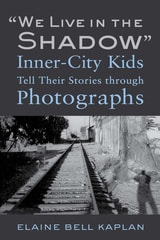
"We Live in the Shadow"
Inner-City Kids Tell Their Stories through PhotographsElaine Bell Kaplan
Temple University Press, 2013
Looking at their photo of railroad tracks, a group of preteen students in South Central Los Angeles see either "a way out of the ghetto," or a "dirty, bad environment." Such are the impressions expressed in the poignant "We Live in the Shadow": Inner-City Kids Tell Their Stories through Photographs.
In Elaine Bell Kaplan's perceptive book, at-risk youth were given five-dollar cameras to tell stories about their world. Their photos and stories show us their response to negative inner-city teen images. We follow them into their schools, and we hear about their creative coping strategies. While these kids see South Central as dangerous, they also see themselves as confident enough to not let the inner city take them down. They refuse to be labeled as "ghetto thugs," as outsiders sometimes do. These outsiders include police, teachers, and other groups representing the institutional voices governing their daily lives.
The kids in "We Live in the Shadow": Inner-City Kids Tell Their Stories through Photographs have developed a multilayered view of society. This impressive book gives voice to their resilience.
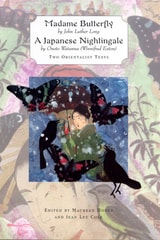
'Madame Butterfly' and 'A Japanese Nightingale'
Two Orientalist TextsCole, Jean Lee
Rutgers University Press, 2002
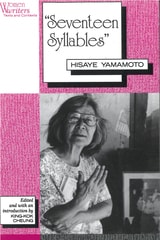
'Seventeen Syllables'
Hisaye YamamotoEdited by King-Kok Cheung
Rutgers University Press, 1994
Yamamoto's disarming style matches the verbal economy of haiku, in which all meaning is contained within seventeen syllables. Her deft characterizations and her delineations of sexuality create a haunting story of a young girl's transformation from innocence to adulthood.
This casebook includes an introduction and an essay by the editor, an interview with the author, a chronology, authoritative texts of "Seventeen Syllables" (1949) and "Yoneko's Earthquake" (1951), critical essays, and a bibliography. The contributors are Charles L. Crow, Donald C. Goellnicht, Elaine H. Kim, Dorothy Ritsuko McDonald, Zenobia Baxter Mistri, Katharine Newman, Robert M. Payne, Robert T. Rolf, and Stan Yogi.
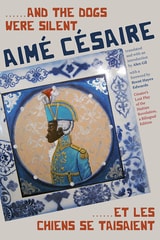
......And the Dogs Were Silent/......Et les chiens se taisaient
Aimé Césaire. Translated and with an introduction by Alex Gil. With a foreword by Brent Hayes Edwards.
Duke University Press, 2024
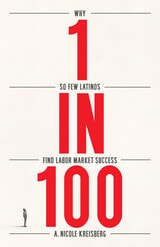
1 in 100
Why So Few Latinos Find Labor Market SuccessA. Nicole Kreisberg
University of Chicago Press, 2027
A behind-the-scenes look at why Latinos—the largest immigrant group in the United States—make up a staggeringly low percentage of the elite US labor force.
Carla, Douglas, and Isabel each migrated to the United States from Latin American countries before they were teenagers. Each had big dreams—in medicine, business, and government—and each did what they were told to do to achieve their goals: work hard, stay in school, and follow the rules. Yet none of them reached the top of the labor market, and they are far from alone. Only one out of one hundred Latino immigrants who arrives in the United States as children will ever secure a job that requires a college degree and pays high wages.
In 1 in 100, sociologist A. Nicole Kreisberg explains why Latinos are more likely to have difficulty finding success in the labor market. Despite increasing access to higher education, Latino immigrant youth seldom land high-paying jobs, but not because of individual failure. Instead, these slim odds are the result of immigration laws, schools, and workplaces that interact in ways that systematically disadvantage so many Latinos. Kreisberg finds that stereotypes about Latino immigrants are activated in US schools, exacerbated in US colleges, and reinforced by employers’ hiring decisions. And because most Americans cannot tell who is and who isn’t an immigrant, the stereotypes harming immigrants often spill over to the 68 million Latinos living in the United States, including those who are US citizens.
By tracing the school-to-work trajectories of child-arriving Latino immigrants and native-born Latinos, alongside the gatekeepers who structure their opportunities, 1 in 100 shows that the 99 who struggle are not the exception—they are the unfortunate norm.
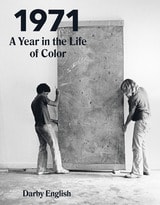
1971
A Year in the Life of ColorDarby English
University of Chicago Press, 2016
1971: A Year in the Life of Color looks at many black artists’ desire to gain freedom from overt racial representation, as well as their efforts—and those of their advocates—to further that aim through public exhibition. Amid calls to define a “black aesthetic,” these experiments with modernist art prioritized cultural interaction and instability. Contemporary Black Artists in America highlighted abstraction as a stance against normative approaches, while The DeLuxe Show positioned abstraction in a center of urban blight. The importance of these experiments, English argues, came partly from color’s special status as a cultural symbol and partly from investigations of color already under way in late modern art and criticism. With their supporters, black modernists—among them Peter Bradley, Frederick Eversley, Alvin Loving, Raymond Saunders, and Alma Thomas—rose above the demand to represent or be represented, compromising nothing in their appeals for interracial collaboration and, above all, responding with optimism rather than cynicism to the surrounding culture’s preoccupation with color.
50 Concepts for a Critical Phenomenology
Edited by Gail Weiss, Ann V. Murphy, and Gayle Salamon
Northwestern University Press, 2020
Phenomenology, the philosophical method that seeks to uncover the taken-for-granted presuppositions, habits, and norms that structure everyday experience, is increasingly framed by ethical and political concerns. Critical phenomenology foregrounds experiences of marginalization, oppression, and power in order to identify and transform common experiences of injustice that render “the familiar” a site of oppression for many. In Fifty Concepts for a Critical Phenomenology, leading scholars present fresh readings of classic phenomenological topics and introduce newer concepts developed by feminist theorists, critical race theorists, disability theorists, and queer and trans theorists that capture aspects of lived experience that have traditionally been neglected. By centering historically marginalized perspectives, the chapters in this book breathe new life into the phenomenological tradition and reveal its ethical, social, and political promise. This volume will be an invaluable resource for teaching and research in continental philosophy; feminist, gender, and sexuality studies; critical race theory; disability studies; cultural studies; and critical theory more generally.
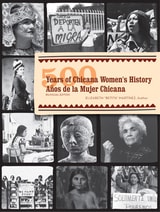
500 Years of Chicana Women's History / 500 Años de la Mujer Chicana
Bilingual EditionMartínez, Elizabeth "
Rutgers University Press, 2008
The history of Mexican Americans spans more than five centuries and varies from region to region across the United States. Yet most of our history books devote at most a chapter to Chicano history, with even less attention to the story of Chicanas.
500 Years of Chicana Women’s History offers a powerful antidote to this omission with a vivid, pictorial account of struggle and survival, resilience and achievement, discrimination and identity. The bilingual text, along with hundreds of photos and other images, ranges from female-centered stories of pre-Columbian Mexico to profiles of contemporary social justice activists, labor leaders, youth organizers, artists, and environmentalists, among others. With a distinguished, seventeen-member advisory board, the book presents a remarkable combination of scholarship and youthful appeal.
In the section on jobs held by Mexicanas under U.S. rule in the 1800s, for example, readers learn about flamboyant Doña Tules, who owned a popular gambling saloon in Santa Fe, and Eulalia Arrilla de Pérez, a respected curandera (healer) in the San Diego area. Also covered are the “repatriation” campaigns” of the Midwest during the Depression that deported both adults and children, 75 percent of whom were U.S.–born and knew nothing of Mexico. Other stories include those of the garment, laundry, and cannery worker strikes, told from the perspective of Chicanas on the ground.
From the women who fought and died in the Mexican Revolution to those marching with their young children today for immigrant rights, every story draws inspiration. Like the editor’s previous book, 500 Years of Chicano History (still in print after 30 years), this thoroughly enriching view of Chicana women’s history promises to become a classic.
9226 Kercheval
The Storefront that Did Not Burn, With a New PrefaceNancy Milio
University of Michigan Press, 2000
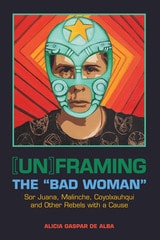
[Un]framing the "Bad Woman"
Sor Juana, Malinche, Coyolxauhqui, and Other Rebels with a CauseBy Alicia Gaspar de Alba
University of Texas Press, 2014
“What the women I write about have in common is that they are all rebels with a cause, and I see myself represented in their mirror,” asserts Alicia Gaspar de Alba. Looking back across a career in which she has written novels, poems, and scholarly works about Sor Juana Inés de la Cruz, la Malinche, Coyolxauhqui, the murdered women of Juárez, the Salem witches, and Chicana lesbian feminists, Gaspar de Alba realized that what links these historically and socially diverse figures is that they all fall into the category of “bad women,” as defined by their place, culture, and time, and all have been punished as well as remembered for rebelling against the “frames” imposed on them by capitalist patriarchal discourses.
In [Un]Framing the “Bad Woman,” Gaspar de Alba revisits and expands several of her published articles and presents three new essays to analyze how specific brown/female bodies have been framed by racial, social, cultural, sexual, national/regional, historical, and religious discourses of identity—as well as how Chicanas can be liberated from these frames. Employing interdisciplinary methodologies of activist scholarship that draw from art, literature, history, politics, popular culture, and feminist theory, she shows how the “bad women” who interest her are transgressive bodies that refuse to cooperate with patriarchal dictates about what constitutes a “good woman” and that queer/alter the male-centric and heteronormative history, politics, and consciousness of Chicano/Mexicano culture. By “unframing” these bad women and rewriting their stories within a revolutionary frame, Gaspar de Alba offers her compañeras and fellow luchadoras empowering models of struggle, resistance, and rebirth.
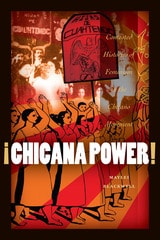
¡Chicana Power!
Contested Histories of Feminism in the Chicano MovementBy Maylei Blackwell
University of Texas Press, 2011
The first book-length study of women's involvement in the Chicano Movement of the late 1960s and 1970s, ¡Chicana Power! tells the powerful story of the emergence of Chicana feminism within student and community-based organizations throughout southern California and the Southwest. As Chicanos engaged in widespread protest in their struggle for social justice, civil rights, and self-determination, women in el movimiento became increasingly militant about the gap between the rhetoric of equality and the organizational culture that suppressed women's leadership and subjected women to chauvinism, discrimination, and sexual harassment. Based on rich oral histories and extensive archival research, Maylei Blackwell analyzes the struggles over gender and sexuality within the Chicano Movement and illustrates how those struggles produced new forms of racial consciousness, gender awareness, and political identities.
¡Chicana Power! provides a critical genealogy of pioneering Chicana activist and theorist Anna NietoGomez and the Hijas de Cuauhtémoc, one of the first Latina feminist organizations, who together with other Chicana activists forged an autonomous space for women's political participation and challenged the gendered confines of Chicano nationalism in the movement and in the formation of the field of Chicana studies. She uncovers the multifaceted vision of liberation that continues to reverberate today as contemporary activists, artists, and intellectuals, both grassroots and academic, struggle for, revise, and rework the political legacy of Chicana feminism.
¡Presente!
The Politics of PresenceDiana Taylor
Duke University Press, 2020
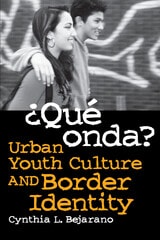
¿Qué Onda?
Urban Youth Culture and Border IdentityCynthia L. Bejarano
University of Arizona Press, 2005
For Latina/o adolescents who already find life challenging, the borderland is a place that presents continual affirmations of and contradictions about identity—questions of who is more Mexican than American or vice versa. This book analyzes the construction of Mexicana/o and Chicana/o identities through a four-year ethnographic study in a representative American high school. It reveals how identity politics impacts young people’s forms of communication and the cultural spaces they occupy in the school setting. By showing how identities are created and directly influenced by the complexities of geopolitics and sociocultural influences, it stresses the largely unexplored divisions among youths whose identities are located along a wide continuum of “Mexicanness.”
Through in-depth interviews and focus groups with both Mexicana/o and Chicana/o students, Cynthia Bejarano explores such topics as the creation of distinct styles that reinforce differences between the two groups; the use of language to further distinguish themselves from one another; and social stratification perpetuated by internal colonialism and the “Othering” process. These and other issues are shown to complicate how Latinas/os ethnically identify as Mexicanas/os or Chicanas/os and help explain how they get to this point.
In contrast to research that views identity as a reflection of immigration or educational experiences, this study embraces border theory to frame the complex and conflicted relations of adolescents as a result of their identity-making processes. This intimate glimpse into their lives provides valuable information about the diversity among youths and their constant efforts to create, define, and shape their identities according to cultural and social structures.
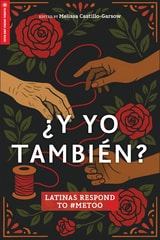
¿Y Yo También?
Latinas Respond to #MeTooMelissa Castillo-Garsow
Rutgers University Press, 2027
¿Y Yo También? brings together a diverse range of Latina voices to address the under-representation of Latinx voices in the #MeToo movement and discussions of sexual violence. Through scholarly analysis of literature, media, podcasting, film, art, and testimonio alongside memoir, poetry, a short play, and personal essays, the authors address varied Latina experiences of sexual assault and harassment. These authors grapple with these traumas alongside their intersectional contexts, including U.S. imperialism in Puerto Rico, race, sexuality, indigeneity, religion, the publication landscape, and more. Ultimately, each contribution sheds light on the lack of scholarly and media attention to the realities of Latinas and sexual assault but also chart pathways toward individual and community healing. This is a volume that is intellectually rigorous yet deeply accessible—suited for academics, college-level students, creatives, performers, practitioners, activists, and general readers alike.

“A Great Wall”
A Learning GuideJing-heng Ma
University of Michigan Press, 1993
“At Middle Age”
A Learning GuideJing-heng Ma
University of Michigan Press, 1991
“Proletarian Hegemony” in the Chinese Revolution and the Canton Commune of 1927
S. Bernard Thomas
University of Michigan Press, 1975

“Strange Friends”
A Learning GuideJing-heng Ma
University of Michigan Press, 1991
“The Sting of Death” and Other Stories
Shimao Toshio; Translated with an Introduction and Interpretive Comments by Kathryn Sparling
University of Michigan Press, 1985
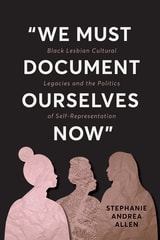
“We Must Document Ourselves Now”
Black Lesbian Cultural Legacies and the Politics of Self-RepresentationStephanie Andrea Allen
The Ohio State University Press, 2026
A long-overdue analysis of how Black lesbians have asserted their lived experience through creative practice, pushing back against heteropatriarchal systems that deny them visibility.
“We Must Document Ourselves Now” examines the essential but oft-ignored importance of Black lesbian literature and film in queer literary and film histories, arguing that Black lesbian cultural texts reflect creators’ lived experiences and resist the heteropatriarchal systems that deny Black lesbians visibility in popular culture. Stephanie Andrea Allen contends that these texts have three goals: to lay bare the experiences of Black lesbians in a raced, gendered, classed, and homophobic society; to challenge the notion that claiming Black lesbian identity is marginal or forbidden; and to take care of Black lesbians by bearing witness to their experiences through creative practice.
Insisting that Black feminist creative practice is an integral form of self and community care, Allen weaves analysis of cultural output spanning key sociocultural moments from 1974 to 2020 with interviews with Black lesbian cultural workers. “We Must Document Ourselves Now” examines the Black Arts / Black Power movement, the “boom” in lesbian and gay publishing, the so-called golden era of Black film, and twenty-first-century visual media to demonstrate how representations of Black lesbians, or lack thereof, were vital to constructing a cultural canon that focused on illuminating Black lesbian experiences in the United States.