Results by title
28164 books match the query 'History' and 150 start with a non-letter
1650-1850
Ideas, Aesthetics, and Inquiries in the Early Modern Era (Volume 30)Kevin L. Cope
Bucknell University Press, 2025
The contributors to volume 30 join with Enlightenment thinkers in pulling, pushing, and stretching the elastic boundaries of human experience. Essays on comical apocalypticism, the evolution of satire, and the Asian periphery of English literature open a volume that offers two special features on extreme aspects of a modernizing world. The first probes the undiscovered world of last wills and testaments, while the second explores the soaring world of eighteenth-century birds. As always, 1650–1850 culminates in a bevy of book reviews critiquing the latest scholarship on long-established specialties, unusual subjects, and broad reevaluations of the period.
Published by Bucknell University Press. Distributed worldwide by Rutgers University Press.
ISSN: 1065-3112
1650–1850
Ideas, Aesthetics, and Inquiries in the Early Modern Era (Volume 24)Kevin L. Cope
Bucknell University Press, 2019
About the annual journal 1650-1850
1650-1850 publishes essays and reviews from and about a wide range of academic disciplines—literature (both in English and other languages), philosophy, art history, history, religion, and science. Interdisciplinary in scope and approach, 1650-1850 emphasizes aesthetic manifestations and applications of ideas, and encourages studies that move between the arts and the sciences—between the “hard” and the “humane” disciplines. The editors encourage proposals for “special features” that bring together five to seven essays on focused themes within its historical range, from the Interregnum to the end of the first generation of Romantic writers. While also being open to more specialized or particular studies that match up with the general themes and goals of the journal, 1650-1850 is in the first instance a journal about the artful presentation of ideas that welcomes good writing from its contributors.
First published in 1994, 1650-1850 is currently in its 24th volume.
ISSN 1065-3112.
1764—The First Year of the American Revolution
Ken Shumate
Westholme Publishing, 2021
The year 1764 is of extraordinary importance to the history of the American Revolution. It was a watershed year in the relationship between Great Britain and its North American colonies.
In 1763, the British began to strictly enforce the laws of trade in order to advance a newly formulated colonial policy that included use of customs duties as a means of drawing revenue from the colonies. Americans early in 1764 protested that the laws being enforced were economically unsound and would be destructive to the trade of the colonies. Despite knowing of the American discontent, British officials moved forward with their new colonial policy. Resolutions made by the House of Commons in March 1764 not only codified a more restrictive trade policy, but revealed a plan to impose direct parliamentary taxation. A resolution to levy stamp duties brought forth a storm of American petitions and essays in late 1764 that constitute the beginning of what has become known as the Stamp Act Crisis.
In 1764: The First Year of the American Revolution, Ken Shumate presents the American arguments against the new British policy. The most prominent protests against direct parliamentary taxation were made by New York, Massachusetts, Virginia, Connecticut, and Rhode Island. Supporting the petitions were thoughtful essays by James Otis, Oxenbridge Thacher, Richard Bland, Thomas Fitch, and Stephen Hopkins. Shumate demonstrates the importance of these petitions and essays, written before the passage of the Stamp Act in 1765, as establishing the constitutional basis for the heated protests of that year and the following decade. The British interpretation of these writings as rejecting the supremacy of Parliament—even the sovereignty of Great Britain—further motivated the need for the Stamp Act as a demonstration of the fundamental right of Parliament to levy such taxes.
1777
The Year of the HangmanJohn S. Pancake
University of Alabama Press, 1977
No one who has read the history of the War of Independence can fail to be fascinated by the campaign of Gentleman Johnny Burgoyne. The story evokes pictures in the mind's eye: scarlet-coated Englishmen; the green and blue uniforms of the German mercenaries; the flash of brass and silver and steel accoutrements; the swarms of Indians in their war paint; the whole moving through the green forests or sailing the blue waters of lakes and rivers. Even the names have a lyrical tone: Richelieu, Champlain, Oriskany, Ticonderoga, and La Chine.
Part of this fascination is the fact that the fate of the expedition marked a turning point in the history of the war. It is not surprising that there has been a host of chroniclers, scholars, and novelists, and those who fall in a category somewhere between because their artistry bridges the gaps that footnoted facts cannot, and so allows some scope for imagination (and may teach more history than the rest).
This fascination was partly responsible for Pancake’s exploration of this particular part of the history of the war. There was also the fact that no scholar since Hoffman Nickerson in his Turning Point of the Revolution (1926) has attempted a detailed study of the British invasion from Canada, although there has been a vast amount of literature on specific aspects of the campaign. No study to date has attempted to link the Canadian expedition to the concurrent operation of General Sir William Howe in Pennsylvania in such a way as to present a complete story of the campaign of 1777. From the point of its inception and launching by the American Secretary, Lord George Germain, to the point where it was reduced to a shambles at the end of the year.
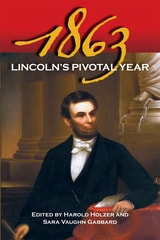
1863
Lincoln's Pivotal YearEdited by Harold Holzer and Sara Vaughn Gabbard
Southern Illinois University Press, 2013
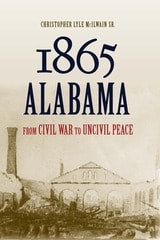
1865 Alabama
From Civil War to Uncivil PeaceChristopher Lyle McIlwain Sr.
University of Alabama Press, 2017
Unraveling the twelve months that forged modern Alabama.
To understand Alabama today, it's necessary to understand what happened in 1865. In 1865 Alabama: From Civil War to Uncivil Peace Christopher McIlwain examines the end of the Civil War and the early days of Reconstruction, tracing how the action—and inaction—of leaders in the state during those twelve months shaped the decades that followed as well as state politics today. McIlwain focuses on four factors: the immediate and unconditional emancipation of enslaved people, the destruction of Alabama’s industrial economy, significant broadening of northern support for suffrage rights for freedmen, and a long scarcity of investment capital. Each element proves important to understanding aspects of Alabama today.
Relevant events outside Alabama are woven into the narrative, including McIlwain’s controversial argument regarding the effect of Lincoln’s assassination. Most historians assume that Lincoln favored black suffrage and that he would have led the fight to impose that on the South. But he made it clear to his cabinet members that granting suffrage rights was a matter to be decided by the southern states, not the federal government. Thus, according to McIlwain, if Lincoln had lived, black suffrage would not have been the issue it became in Alabama.
In his fresh analysis of what really happened in Alabama in 1865 and why—McIlwain illuminates that Alabama's challenges were neither entirely the fault of northern or southern policies but rather the complex interaction between the two.
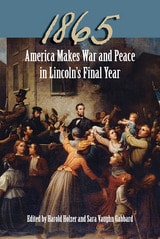
1865
America Makes War and Peace in Lincoln’s Final YearEdited by Harold Holzer and Sara Vaughn Gabbard
Southern Illinois University Press, 2015
In 1865 Americans faced some of the most important issues in the nation’s history: the final battles of the Civil War, the struggle to pass the Thirteenth Amendment, the peace process, reconstruction, the role of freed slaves, the tragedy of Abraham Lincoln's assassination, and the trials of the conspirators. In this illuminating collection, prominent historians of nineteenth-century America offer insightful overviews of the individuals, events, and issues on 1865 that shaped the future of the United States.
Following an introduction by renowned Lincoln scholar Harold Holzer, nine new essays explore the end of the Civil War, Lincoln’s death, and the start of the tentative peace in 1865. Michael Vorenberg discusses how Lincoln shepherded through the House of Representatives the resolution sending the Thirteenth Amendment to the states for ratification, John F. Marszalek and Michael B. Ballard examine the partnership of Lincoln’s war management and General Ulysses S. Grant’s crucial last thrusts against Robert E. Lee, and Richard Striner recounts how Lincoln faced down Confederate emissaries who proposed immediate armistice if Lincoln were to reverse the Emancipation Proclamation. Ronald C. White Jr. offers a fresh look at Lincoln’s second inaugural address, and Richard Wightman Fox provides a vivid narrative of Lincoln’s dramatic walk through Richmond after the Confederates abandoned their capital.
Turning to Lincoln’s assassination, Edward Steers Jr. relates the story of Booth’s organizational efforts that resulted in the events of that fateful day, and Frank J. Williams explains the conspirators’ trial and whether they should have faced military or civilian tribunals. Addressing the issue of black suffrage, Edna Greene Medford focuses on the African American experience in the final year of the war. Finally, Holzer examines the use of visual arts to preserve the life and legacy of the martyred president.
Rounding out the volume are a chronology of national and international events during 1865, a close look at Lincoln’s activities and writings from January 1 through April 14, and other pertinent materials. This thoughtful collection provides an engaging evaluation of one of the most crucial years in America’s evolution.
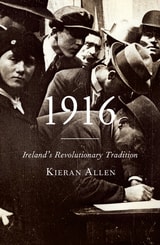
1916
Ireland's Revolutionary TraditionKieran Allen
Pluto Press, 2016
In 1916, Kieran Allen argues that this pivotal moment in Irish history has been obscured by those who see it only as a prelude for a war of independence. Emphasizing an often ignored social and political radicalism at the heart of the rebellion, he shows that it gave birth to a revolutionary tradition that continues to haunt the Irish elite. Socialist aspirations mixed, and sometimes clashed, with the republican current, but both were crushed in a counterrevolution that accompanied the Anglo-Irish treaty of 1921. The result today is a partitioned Ireland that acts as a neoliberal tax haven for multinational corporations—a state of affairs quite alien to both Connolly’s and Pearse’s vision.
Published to coincide with the Rising’s centennial, 1916: Ireland’s Revolutionary Tradition re-establishes the political role of socialist republican figures, offers a highly accessible history of the Easter Rising, and explores the militancy and radicalism that continues to haunt the Irish elite one hundred years later.
1960s Gay Pulp Fiction
The Misplaced HeritageDrewey Wayne Gunn
University of Massachusetts Press, 2013
As a result of a series of court cases, by the mid-1960s the U.S. post office could no longer interdict books that contained homosexuality. Gay writers were eager to take advantage of this new freedom, but the only houses poised to capitalize on the outpouring of manuscripts were “adult” paperback publishers who marketed their products with salacious covers. Gay critics, unlike their lesbian counterparts, have for the most part declined to take these works seriously, even though they cover an enormous range of genres: adventures, blue-collar and gray-flannel novels, coming-out stories, detective fiction, gothic novels, historical romances, military stories, political novels, prison fiction, romances, satires, sports stories, and spy thrillers—with far more short story collections than is generally realized. Twelve scholars have now banded together to begin a recovery of this largely forgotten explosion of gay writing that occurred in the 1960s.
Descriptions of these pulps have often been inadequate and misinforming, the result of misleading covers, unrepresentative sampling of texts, and a political blindness that refuses to grant worth to pre-Stonewall writing. This volume charts the broader implications of this state of affairs before examining some of the more significant pulp writers from the period. It brings together a diverse range of scholars, methodologies, and reading strategies. The evidence that these essays amass clearly demonstrates the significance of gay pulps for gay literary history, queer cultural studies, and book history.
1968 Mexico
Constellations of Freedom and DemocracySusana Draper
Duke University Press, 2018
1971
A Year in the Life of ColorDarby English
University of Chicago Press, 2016
1971: A Year in the Life of Color looks at many black artists’ desire to gain freedom from overt racial representation, as well as their efforts—and those of their advocates—to further that aim through public exhibition. Amid calls to define a “black aesthetic,” these experiments with modernist art prioritized cultural interaction and instability. Contemporary Black Artists in America highlighted abstraction as a stance against normative approaches, while The DeLuxe Show positioned abstraction in a center of urban blight. The importance of these experiments, English argues, came partly from color’s special status as a cultural symbol and partly from investigations of color already under way in late modern art and criticism. With their supporters, black modernists—among them Peter Bradley, Frederick Eversley, Alvin Loving, Raymond Saunders, and Alma Thomas—rose above the demand to represent or be represented, compromising nothing in their appeals for interracial collaboration and, above all, responding with optimism rather than cynicism to the surrounding culture’s preoccupation with color.
1980
America's Pivotal YearJim Cullen
Rutgers University Press, 2023
1980 was a turning point in American history. When the year began, it was still very much the 1970s, with Jimmy Carter in the White House, a sluggish economy marked by high inflation, and the disco still riding the airwaves. When it ended, Ronald Reagan won the presidency in a landslide, inaugurating a rightward turn in American politics and culture. We still feel the effects of this tectonic shift today, as even subsequent Democratic administrations have offered neoliberal economic and social policies that owe more to Reagan than to FDR or LBJ. To understand what the American public was thinking during this pivotal year, we need to examine what they were reading, listening to, and watching.
1980: America's Pivotal Year puts the news events of the era—everything from the Iran hostage crisis to the rise of televangelism—into conversation with the year’s popular culture. Separate chapters focus on the movies, television shows, songs, and books that Americans were talking about that year, including both the biggest hits and some notable flops that failed to capture the shifting zeitgeist. As he looks at the events that had Americans glued to their screens, from the Miracle on Ice to the mystery of Who Shot J.R., cultural historian Jim Cullen garners surprising insights about how Americans’ attitudes were changing as they entered the 1980s.
Praise for Jim Cullen's previous Rutgers University Press books:
"Informed and perceptive" —Norman Lear on Those Were the Days: Why All in the Family Still Matters
"Jim Cullen is one of the most acute cultural historians writing today." —Louis P. Masur, author of The Sum of Our Dreams on Martin Scorsese and the American Dream
"This is a terrific book, fun and learned and provocative....Cullen provides an entertaining and thoughtful account of the ways that we remember and how this is influenced and directed by what we watch." —Jerome de Groot, author of Consuming History on From Memory to History
1989
Revolutionary Ideas and IdealsKrishan Kumar
University of Minnesota Press, 2001
In 1989, from East Berlin to Budapest and Bucharest to Moscow, communism was falling. The walls were coming down and the world was being changed in ways that seemed entirely new. The conflict of ideas and ideals that began with the French Revolution of 1789 culminated in these revolutions, which raised the prospects of the "return to Europe" of East and Central European nations, the "restarting of their history," even, for some, the "end of history." What such assertions and aspirations meant, and what the larger events that inspired them mean-not just for the world of history and politics, but for our very understanding of that world-are the questions Krishan Kumar explores in 1989.
A well-known and widely respected scholar, Kumar places these revolutions of 1989 in the broadest framework of political and social thought, helping us see how certain ideas, traditions, and ideological developments influenced or accompanied these movements-and how they might continue to play out. Asking questions about some of the central dilemmas facing modern society in the new century, Kumar offers critical insight into how these questions might be answered and how political, social, and historical ideas and ideals can shape our destiny.
Contradictions Series, volume 12

2002 Guide to the History of Science
Edited by Roger Turner
University of Chicago Press, 2002

20th-Century Italian Women Writers
The Feminine ExperienceAlba Amoia
Southern Illinois University Press, 1996
As an international scholar and resident of Italy who has observed and shared the experiences of Italian women for the past twenty years, Alba Amoia has positioned herself perfectly to report to English-speaking audiences the great range and variety of writing produced by twentieth-century Italian women. Her personal contact with many of the authors she discusses lends further immediacy to her study.
Rather than focusing exclusively on contemporary living authors, Amoia discusses writers from the early part of the twentieth century as well, linking them with later writers spanning twentieth-century Italy’s literary movements and political, social, and economic developments. Yet the connections and contradictions that bind and divide these women are only beginning to be established because Italy is still a splintered country in which perceptions of Italian women as a historical group have only begun to crystallize. While feminine voices resound on the Italian literary scene, only recently has feminine authority made itself felt in the professional and institutional worlds.
The eleven writers in this volume criticize the female role in Italian society, externalize women’s unconscious needs, and offer unusual examples of feminine creativity. Amoia provides a critical treatment of each author, incorporating the accepted opinion of Italian and other critics. She isolates recurrent and fundamental themes in each author’s literary career: linguistic repression by males, personal frustration in the realm of "householditude," and disorientation within Italy’s unbalanced institutions and hierarchies still strongly anchored in archaic structures.
Amoia begins her discussion with two illustrious predecessors of Italy’s contemporary women writers: the 1926 Nobel Prize winner Grazia Deledda and the premier literary feminist Sibilla Aleramo. Continuing in chronological order, Amoia discusses Gianna Manzini, Lalla Romano, Elsa Morante, Natalia Ginzburg, Rosetta Loy, and Dacia Maraini. Amoia concludes her exploration of Italian women writers with three journalists: Matilde Serao, Oriana Fallaci, and Camilla Cederna.
Essentially, Amoia has provided a collection of succinct and accessible monographs featuring pertinent biographical information and extensive bibliographies. She discusses each author’s most representative works, seeking to give readers both a sense of these women as writers and an understanding of their significance in the male-dominated literary scene.
21st-Century Hollywood
Movies in the Era of TransformationDixon, Wheeler Winston
Rutgers University Press, 2011
They are shot on high-definition digital cameras—with computer-generated effects added in postproduction—and transmitted to theaters, websites, and video-on-demand networks worldwide. They are viewed on laptop, iPod, and cell phone screens. They are movies in the 21st century—the product of digital technologies that have revolutionized media production, content distribution, and the experience of moviegoing itself.
21st-Century Hollywood introduces readers to these global transformations and describes the decisive roles that Hollywood is playing in determining the digital future for world cinema. It offers clear, concise explanations of a major paradigm shift that continues to reshape our relationship to the moving image. Filled with numerous detailed examples, the book will both educate and entertain film students and movie fans alike.
25 Women
Essays on Their ArtDave Hickey
University of Chicago Press, 2015
25 Women will not disappoint. The book collects Hickey’s best and most important writing about female artists from the past twenty years. But this is far more than a compilation: Hickey has revised each essay, bringing them up to date and drawing out common themes. Written in Hickey’s trademark style—accessible, witty, and powerfully illuminating—25 Women analyzes the work of Joan Mitchell, Bridget Riley, Fiona Rae, Lynda Benglis, Karen Carson, and many others. Hickey discusses their work as work, bringing politics and gender into the discussion only where it seems warranted by the art itself. The resulting book is not only a deep engagement with some of the most influential and innovative contemporary artists, but also a reflection on the life and role of the critic: the decisions, judgments, politics, and ethics that critics negotiate throughout their careers in the art world.
Always engaging, often controversial, and never dull, Dave Hickey is a writer who gets people excited—and talking—about art. 25 Women will thrill his many fans, and make him plenty of new ones.
25th Street Confidential
Drama, Decadence, and Dissipation along Ogden's Rowdiest RoadVal Holley
University of Utah Press, 2013
25th Street Confidential traces Ogden’s transformation from quiet hamlet to chaotic transcontinental railroad junction as waves of non-Mormon fortune seekers swelled the city’s population. The street’s outsized role in Ogden annals illuminates larger themes in Utah and U.S. history. Most significantly, 25th Street was a crucible of Mormon-Gentile conflict, especially after the non-Mormon Liberal Party deprived its rival, the People’s Party, of long-standing control of Ogden’s municipal government in 1889. In the early twentieth-century the street was targeted in statewide Progressive Era reform efforts, and during Prohibition it would come to epitomize the futility of liquor abatement programs.
This first full-length treatment of Ogden’s rowdiest road spotlights larger-than-life figures whose careers were entwined with the street: Mayor Harman Ward Peery, who unabashedly filled the city treasury with fees and fines from vicious establishments; Belle London, the most successful madam in Utah history; and Rosetta Ducinnie Davie, the heiress to London’s legacy who became a celebrity on the street, in the courts, and in the press. Material from previously unexploited archives and more than one hundred historic photos enrich this narrative of a turbulent but unforgettable street.
Winner of the Utah Book Award in Nonfiction.
Chosen by Foreword as a finalist in the regional category for their IndieFab Book of the Year Award.
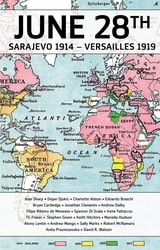
28 June
Sarajevo 1914 - Versailles 1919: The War and Peace That Made the Modern WorldEdited by Alan Sharp
Haus Publishing, 2014
Following on from Haus’s monumental thirty-two Volume series on the signatories of the Versailles peace treaty, The Makers of the Modern World, 28 June looks in greater depth at the smaller nations that are often ignored in general histories, and in doing so seeks to understand the conflict from a global perspective, asking not only how each of the signatories came to join the conflict but also giving an overview of the long-term consequences of their having done so.
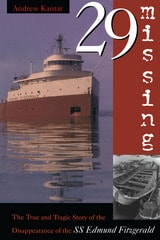
29 Missing
The True and Tragic Story of the Disappearance of the SS Edmund FitzgeraldAndrew Kantar
Michigan State University Press, 1998
On November 10, 1975, SS Edmund Fitzgerald, a giant freighter, sank with its entire crew of 29 aboard, in one of the most violent storms ever witnessed on Lake Superior. In 29 Missing, Kantar tells the "Fitz's" story from the christening in 1958 as the largest ship on the Great Lakes to the expedition in 1995 to recover the ship's bell in what proved to be a moving memorial to the lost crew. Using information from government investigative reports, the book provides a dramatic hour-by-hour account of what transpired during that terrible voyage, including dialogue from actual radio transmissions between the Fitzgerald and the Arthur Anderson, the freighter that followed behind the Fitz.
In his passionate retelling of the story, designed primarily for young adults, Kantar provides the facts leading up to the disappearance, detailing the subsequent expeditions to the wreck site as well as the leading theories about the sinking that have been debated by maritime experts.
32 Counties
The Failure of Partition and the Case for a United IrelandKieran Allen
Pluto Press, 2021
'This is Irish history seen anew, from below, bristling with practical lessons for working-class struggle today' - Eamonn McCann
The 32 counties of Ireland were divided through imperial terror and gerrymandering. Partition was borne from a Tory strategy to defend the British Empire and has spawned a 'carnival of reaction' in Irish politics ever since. Over the last 100 years, conservative forces have dominated both states offering religious identity as a diversion from economic failures and inequality.
Through a sharp analysis of the history of partition, Kieran Allen rejects the view that the 'two cultures' of Catholic and Protestant communities lock people into permanent antagonism. Instead, the sectarian states have kept its citizens divided through political and economic measures like austerity, competition for reduced services and low wages.
Overturning conventional narratives, 32 Counties evokes the tradition of James Connolly and calls for an Irish unity movement from below to forge the North and the Republic into a secular, socialist and united Ireland.
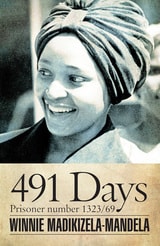
491 Days
Prisoner Number 1323/69Winnie Madikizela-Mandela
Ohio University Press, 2014
On a freezing winter’s night, a few hours before dawn on May 12, 1969, South African security police stormed the Soweto home of Winnie Madikizela-Mandela, activist and wife of the imprisoned Nelson Mandela, and arrested her in the presence of her two young daughters, then aged nine and ten.
Rounded up in a group of other antiapartheid activists under Section 6 of the Terrorism Act, designed for the security police to hold and interrogate people for as long as they wanted, she was taken away. She had no idea where they were taking her or what would happen to her children. For Winnie Mandela, this was the start of 491 days of detention and two trials.
Forty-one years after Winnie Mandela’s release on September 14, 1970, Greta Soggot, the widow of one of the defense attorneys from the 1969–70 trials, handed her a stack of papers that included a journal and notes she had written while in detention, most of the time in solitary confinement. Their reappearance brought back to Winnie vivid and horrifying memories and uncovered for the rest of us a unique and personal slice of South Africa’s history.
491 Days: Prisoner Number 1323/69 shares with the world Winnie Mandela’s moving and compelling journal along with some of the letters written between several affected parties at the time, including Winnie and Nelson Mandela, himself then a prisoner on Robben Island for nearly seven years.
Readers will gain insight into the brutality she experienced and her depths of despair, as well as her resilience and defiance under extreme pressure. This young wife and mother emerged after 491 days in detention unbowed and determined to continue the struggle for freedom.
4QInstruction
Matthew J. Goff
SBL Press, 2013

50 Classic Hikes In Nevada
From The Ruby Mountains To Red Rock CanyonMike White
University of Nevada Press, 2006
50 Maps That Can't Explain the World
A Cartographic Tour from Ptolemy to TrumpNicholas Danforth
University of Chicago Press, 0
An eye-opening journey through fifty maps that ask what, exactly, the people who made our world were thinking, and what that says about our past and future.
Everyone loves a good map. As writer Nicholas Danforth is keen to remind us, maps tell stories about the world and its history—but not always the ones their makers intend. In 50 Maps That Can't Explain the World, Danforth gives us a whirlwind tour of a wide variety of maps, illustrating what they can—and can't—teach us about the world.
Witty and irreverent, the pieces take on many cartographic topics of current political interest, including Russian imperialism, the misunderstood appeal of Greenland, and where Canada came from. Others concern mapmaking itself, exploring why north is “up” and how to map time. In doing so, these pieces show that places as varied as Khiva, Atlantis, and even Arkansas matter for addressing big questions, including the best way to draw borders or the future of America’s foreign policy. Featuring a wide array of unique and forgotten maps, all these pieces regale readers with their interesting tales, such as how the Near East became the Middle East or what the US would look like if it lost World War I.
Throughout, Danforth’s entertaining, thoughtful commentary reveals that while maps may not solve all the world’s woes, they can show us where we’ve been and point us to where we’re trying to go.
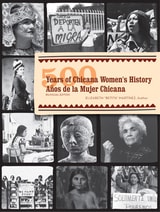
500 Years of Chicana Women's History / 500 Años de la Mujer Chicana
Bilingual EditionMartínez, Elizabeth "
Rutgers University Press, 2008
The history of Mexican Americans spans more than five centuries and varies from region to region across the United States. Yet most of our history books devote at most a chapter to Chicano history, with even less attention to the story of Chicanas.
500 Years of Chicana Women’s History offers a powerful antidote to this omission with a vivid, pictorial account of struggle and survival, resilience and achievement, discrimination and identity. The bilingual text, along with hundreds of photos and other images, ranges from female-centered stories of pre-Columbian Mexico to profiles of contemporary social justice activists, labor leaders, youth organizers, artists, and environmentalists, among others. With a distinguished, seventeen-member advisory board, the book presents a remarkable combination of scholarship and youthful appeal.
In the section on jobs held by Mexicanas under U.S. rule in the 1800s, for example, readers learn about flamboyant Doña Tules, who owned a popular gambling saloon in Santa Fe, and Eulalia Arrilla de Pérez, a respected curandera (healer) in the San Diego area. Also covered are the “repatriation” campaigns” of the Midwest during the Depression that deported both adults and children, 75 percent of whom were U.S.–born and knew nothing of Mexico. Other stories include those of the garment, laundry, and cannery worker strikes, told from the perspective of Chicanas on the ground.
From the women who fought and died in the Mexican Revolution to those marching with their young children today for immigrant rights, every story draws inspiration. Like the editor’s previous book, 500 Years of Chicano History (still in print after 30 years), this thoroughly enriching view of Chicana women’s history promises to become a classic.

5000 Years of Popular Culture
Popular Culture before PrintingFred E.H. Schroeder
University of Wisconsin Press, 1980
Its first purpose is to broaden the study of popular culture which is too often regarded in the academic world as the entertainment and leisure time activities of the 20th century. Second, the collection gives recognition to the fact that a number of disciplines have been investigating popular phenomena on different fronts, and it is designed to bring examples of these disciplines together under the common rubric of “popular culture.” Related to this is a third purpose of providing instances of original and innovative interdisciplinary approaches. Last, the collection should be a worthwhile contribution to the component disciplines as well as to the study of popular culture.

55 WEST VIRGINIA
A GUIDE TO THE STATE'S COUNTIESE. LEE NORTH
West Virginia University Press, 1998

6000 Miles of Fence
By Cordia Sloan Duke
University of Texas Press, 1961
The fabulous XIT Ranch has been celebrated in song, story, and serious history. This book of reminiscences of old XIT cowmen puts on record the everyday life of the individuals who made the ranch run. Their forthright, yet picturesque, discussion of ranching hardships and dangers dissipates Hollywood and TV glamorizing. They relate in honest cowboy language what actually happened inside the XIT's 6,000 miles of fence.
Cordia Sloan Duke, wife of an XIT division manager, Robert L. Duke, many years ago realized that only those who had experienced ranch life could depict it with deep understanding. As the young wife of a rising young ranch hand, she kept in her apron pocket a notebook and pencil, recording all manner of interesting details as they caught her attention. This diary was the nucleus for the present book. Conceiving of an account of life on the XIT as presented by XIT cowboys, Mrs. Duke set about drawing from reticent, sometimes reluctant, ranch hands the impressions of the XIT (occasionally written down by their more literate wives or daughters) which they had retained through the years. Cordia Sloan Duke and Joe B. Frantz have organized the reminiscences around key aspects of ranch life, retaining the language of the cow hands.
9/11
The Culture of CommemorationDavid Simpson
University of Chicago Press, 2006
In 9/11, Simpson argues that elements of the conventional culture of mourning and remembrance—grieving the dead, summarizing their lives in obituaries, and erecting monuments in their memory—have been co-opted for political advantage. He also confronts those who labeled the event an “apocalypse,” condemning their exploitation of 9/11 for the defense of torture and war.
In four elegant chapters—two of which expand on essays originally published in the London Review of Books to great acclaim—Simpson analyzes the response to 9/11: the nationally syndicated “Portraits of Grief” obituaries in the New York Times; the debates over the rebuilding of the World Trade Center towers and the memorial design; the representation of American and Iraqi dead after the invasion of March 2003, along with the worldwide circulation of the Abu Ghraib torture photographs; and the urgent and largely ignored critique of homeland rhetoric from the domain of critical theory.
Calling for a sustained cultural and theoretical analysis, 9/11 is the first book of its kind to consider the events of that tragic day with a perspective so firmly grounded in the humanities and so persuasive about the contribution they can make to our understanding of its consequences.
900 Miles on the Butterfield Trail
A. C. Greene
University of North Texas Press, 1994
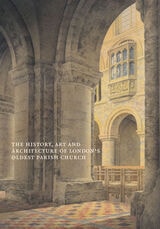
900 Years of St Bartholomew the Great
The History, Art and Architecture of London's Oldest Parish ChurchEdited by Charlotte Gauthier
Paul Holberton Publishing, 2022
The most comprehensive, updated history of St. Bartholomew the Great, the oldest parish church in London, as it celebrates its nine-hundred-year anniversary.
At the heart of the Smithfield area, with its pubs, restaurants, and market, is a church built when Henry I was King of England. Overlooking the fields where kings confronted rebellions, knights jousted, and heretics were burnt, St. Bartholomew’s Priory and Hospital played a central role in the history of medieval London.
The tale of St. Bartholomew’s is one of survival and renewal. Not only has the priory hosted many of London’s most famous (such as a young Benjamin Franklin), but it has also miraculously survived the tumults of the Reformation, the Civil War, the Great Fire of 1666, and the bomb raids of World Wars I and II.
Richly illustrated, 900 Years of St Bartholomew’s surveys the art, architecture, and deep historical significance of this enduring landmark.

911 A Public Emergency?, Volume 20
Ella Shohat, Brent Edwards, Stefano Harney, Randy Martin, Timothy Mitchell, and Fred Moten, eds.
Duke University Press, 0
Examining the strengths and shortcomings of area, race, and gender studies in the search for understanding, this issue considers cross-cultural feminism as a means of combating terrorism; racial profiling of Muslims in the context of other racist logics; and the homogenization of dissent. The issue includes poetry, photographic work, and an article by Judith Butler on the discursive space surrounding the attacks of September 11. This impressive range of contributions questions the meaning and implications of the events of September 11 and their aftermath.
Contributors. Muneer Ahmad, Meena Alexander, Lopamudra Basu, Judith Butler, Zillah Eisenstein, Stefano Harney, Randy Martin, Rosalind C. Morris, Fred Moten, Sandrine Nicoletta, Yigal Nizri, Jasbir K. Puar, Amit S. Rai, Ella Shohat, Ban Wang

9XM Talking
WHA Radio and the Wisconsin IdeaRandall Davidson
University of Wisconsin Press, 2017

[...After the Media]
News from the Slow-Fading Twentieth CenturySiegfried Zielinski
University of Minnesota Press, 2013
The media are now redundant. In an overview of developments spanning the past seventy years, Siegfried Zielinski’s [ . . . After the Media] discusses how the means of technology-based communication assumed a systemic character and how theory, art, and criticism were operative in this process. Media-explicit thinking is contrasted with media-implicit thought. Points of contact with an arts perspective include a reinterpretation of the artist Nam June Paik and an introduction to the work of Jake and Dinos Chapman. The essay ends with two appeals. In an outline of a precise philology of exact things, Zielinski suggests possibilities of how things could proceed after the media. With a vade mecum against psychopathia medialis in the form of a manifesto, the book advocates for a distinction to be made between online existence and offline being.
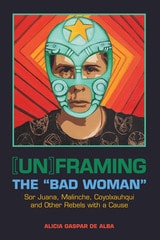
[Un]framing the "Bad Woman"
Sor Juana, Malinche, Coyolxauhqui, and Other Rebels with a CauseBy Alicia Gaspar de Alba
University of Texas Press, 2014
“What the women I write about have in common is that they are all rebels with a cause, and I see myself represented in their mirror,” asserts Alicia Gaspar de Alba. Looking back across a career in which she has written novels, poems, and scholarly works about Sor Juana Inés de la Cruz, la Malinche, Coyolxauhqui, the murdered women of Juárez, the Salem witches, and Chicana lesbian feminists, Gaspar de Alba realized that what links these historically and socially diverse figures is that they all fall into the category of “bad women,” as defined by their place, culture, and time, and all have been punished as well as remembered for rebelling against the “frames” imposed on them by capitalist patriarchal discourses.
In [Un]Framing the “Bad Woman,” Gaspar de Alba revisits and expands several of her published articles and presents three new essays to analyze how specific brown/female bodies have been framed by racial, social, cultural, sexual, national/regional, historical, and religious discourses of identity—as well as how Chicanas can be liberated from these frames. Employing interdisciplinary methodologies of activist scholarship that draw from art, literature, history, politics, popular culture, and feminist theory, she shows how the “bad women” who interest her are transgressive bodies that refuse to cooperate with patriarchal dictates about what constitutes a “good woman” and that queer/alter the male-centric and heteronormative history, politics, and consciousness of Chicano/Mexicano culture. By “unframing” these bad women and rewriting their stories within a revolutionary frame, Gaspar de Alba offers her compañeras and fellow luchadoras empowering models of struggle, resistance, and rebirth.
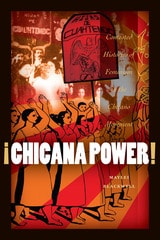
¡Chicana Power!
Contested Histories of Feminism in the Chicano MovementBy Maylei Blackwell
University of Texas Press, 2011
The first book-length study of women's involvement in the Chicano Movement of the late 1960s and 1970s, ¡Chicana Power! tells the powerful story of the emergence of Chicana feminism within student and community-based organizations throughout southern California and the Southwest. As Chicanos engaged in widespread protest in their struggle for social justice, civil rights, and self-determination, women in el movimiento became increasingly militant about the gap between the rhetoric of equality and the organizational culture that suppressed women's leadership and subjected women to chauvinism, discrimination, and sexual harassment. Based on rich oral histories and extensive archival research, Maylei Blackwell analyzes the struggles over gender and sexuality within the Chicano Movement and illustrates how those struggles produced new forms of racial consciousness, gender awareness, and political identities.
¡Chicana Power! provides a critical genealogy of pioneering Chicana activist and theorist Anna NietoGomez and the Hijas de Cuauhtémoc, one of the first Latina feminist organizations, who together with other Chicana activists forged an autonomous space for women's political participation and challenged the gendered confines of Chicano nationalism in the movement and in the formation of the field of Chicana studies. She uncovers the multifaceted vision of liberation that continues to reverberate today as contemporary activists, artists, and intellectuals, both grassroots and academic, struggle for, revise, and rework the political legacy of Chicana feminism.
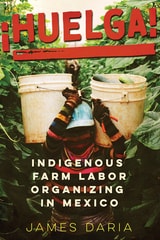
¡Huelga!
Indigenous Farm Labor Organizing in MexicoJames Daria
University of Arizona Press, 2026
On March 17, 2015, tens of thousands of Mexican farmworkers went on strike in San Quintin, Baja California, to protest horrible working conditions on the farms that produce most of the fresh fruits and vegetables you consume. Calling themselves the “slaves of the twenty-first century,” these mostly Indigenous men, women, and children rose up in defiance of the conditions of modern slavery, forced labor, sexual harassment, and “hunger wages.” This ethnography provides an in-depth look into how Indigenous farmworkers organize in the fields and their communities to improve wages and working conditions.
Since the strike, the farmworkers have organized a union to fight for justice in the fields. In this work, author James Daria accompanies these farmworkers as they struggle for dignity. Daria also charts the tensions inside the farmworker movement as women struggle to gain greater power in the home as well as at work. In an era of complex global integration, Daria shows us how what we eat is tied to the suffering of those who produce our food.
This book highlights and centers the Indigenous workers who struggle for justice in a global food system that connects us all.
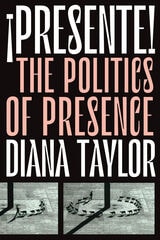
¡Presente!
The Politics of PresenceDiana Taylor
Duke University Press, 2020
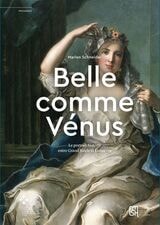
« Belle comme Vénus »
Le portrait historié entre Grand Siècle et LumièresMarlen Schneider
Diaphanes, 2020
Ces portraits dits « historiés », dans lesquels l’effigie d’une personne vivante s’enrichit d’attributs mythologiques comme dans un tableau d’histoire, sont un genre pictural à part entière. D’abord prérogative masculine adoptée par les grands pour célébrer leurs vertus, il devient vers 1680 l’apanage des modèles féminins : le langage allégorique les pare de qualités à connotation spécifiquement féminine et galante, comme la beauté, la jeunesse, la grâce, qui, bien comprises, pouvaient aussi être un moyen de manier le pouvoir. Dès les années 1740, ces peintures font cependant l’objet de critiques répétées et le genre perd peu à peu sa légitimité à la fin de l’Ancien Régime, avant que ce procédé de distinction aristocratique suscite la méfiance des historiens de l’art, qui n’y verront que l’expression d’un amusement futile de milieux oisifs.
Le présent ouvrage remet à leur juste place ces travestissements : à la fois œuvre d’art, objet culturel et pratique sociale, le portrait historié est un phénomène de goût révélateur d’une culture de cour en pleine transformation. Marlen Schneider met ici en lumière les fonctions, les propriétés formelles, la réception et la portée historique d’un type de représentation trop longtemps déconsidéré.
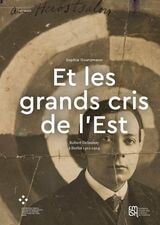
« Et les grands cris de l’Est »
Robert Delaunay à Berlin, 1912–1914Sophie Goetzmann
Diaphanes, 2021
Dans un premier temps, ce livre retrace en détail ce qui a été alors lu et vu de l’œuvre de Delaunay dans la capitale allemande. Ensuite, à travers l’étude de la réception critique du peinte français par trois figures majeures de la scène artistique berlinoise, il revient sur l’idée que le contexte culturel national entraverait la compréhension d’une œuvre ou en influencerait systématiquement les interprétations. En dépassant ainsi les préjugés nationaux qui nourrissent les débats esthétiques au début du XXe siècle et continuent d’imprégner aujourd’hui encore l’histoire de l’art, Sophie Goetzmann nous révèle les liens inattendus qui unissent, par-delà les frontières, les avant-gardes désignées sous les termes d’orphisme et d’expressionnisme.
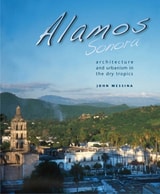
Álamos, Sonora
Architecture and Urbanism in the Dry TropicsJohn Messina
University of Arizona Press, 2008
Until now, there has never been a book about the architecture and urban form of Álamos. In this much-needed work, John Messina, who teaches architecture and is a practicing architect, provides a well-informed history and interpretive description of the town. He also examines building materials and construction techniques, as well as issues of building preservation and restoration. At the same time, the author considers what other cities might learn from Álamos. Particularly for cities in the American Southwest that are struggling to reduce sprawl and increase density without compromising their quality of life, Álamos offers a range of possible solutions.
Thoroughly illustrated and designed for lay readers and professionals alike, this engaging book captures the essence and the uniqueness of Álamos while asking what lessons can be drawn by architects and planners who are attempting to reshape our own cities and towns into more livable, viable, and people-friendly environments.
Éléments pour une histoire de l'informatique
Donald E. Knuth
CSLI, 2011
This translation focuses on publications by Donald E. Knuth, one of the world’s leading computer programmers, that were addressed primarily to a general audience rather than to specialists. These fifteen papers discuss the history of computer science from ancient Babylon to modern times and survey the field of computer science and the nature of algorithms.
Òrìsà Devotion as World Religion
The Globalization of Yorùbá Religious CultureEdited by Jacob K. Olupona and Terry Rey
University of Wisconsin Press, 2008
The African spirit proved remarkably resilient in the face of the transatlantic slave trade, inspiring the perseverance of African religion wherever its adherents settled in the New World. Among the most significant manifestations of this spirit, Yorùbá religious culture persisted, adapted, and even flourished in the Americas, especially in Brazil and Cuba, where it thrives as Candomblé and Lukumi/Santería, respectively. After the end of slavery in the Americas, the free migrations of Latin American and African practitioners has further spread the religion to places like New York City and Miami. Thousands of African Americans have turned to the religion of their ancestors, as have many other spiritual seekers who are not themselves of African descent.
Ifá divination in Nigeria, Candomblé funerary chants in Brazil, the role of music in Yorùbá revivalism in the United States, gender and representational authority in Yorùbá religious culture—these are among the many subjects discussed here by experts from around the world. Approaching Òrìsà devotion from diverse vantage points, their collective effort makes this one of the most authoritative texts on Yorùbá religion and a groundbreaking book that heralds this rich, complex, and variegated tradition as one of the world’s great religions.
‘Am I Less British?’
Racism, Belonging, and the Children of Refugees and Immigrants in North LondonDogus Simsek
University College London, 2024
‘Am I Less British?’ focuses on the children of refugees and immigrants from Turkey in North London. Providing a rich ethnography of the lives of the children, the book studies their sense of identity and belonging, and their transnational experiences. It aims to understand how the children position themselves within a range of locations (London, North London, and Turkey), where they face class hierarchy, racism, and discrimination. Dogus Simsek explores how these children think about their sense of belonging within the contemporary political context in Britain and Turkey. De-identifying themselves from national identities and holding onto their oppressed identities appear as new forms of resistance in response to racism and exclusion.
The experiences of the young people reflect the complexity of their lives in changing political and social circumstances across the borders of nation-states, as well as the importance of other categories of identity, including local identities. Overall, the book argues that the intersections of local, national, and transnational approaches, the political context through which the lives of young people are framed, and their sophisticated engagement with ideas of race, class, ethnicity, and gender, are crucial to understanding their identity formation.

“A Good Poor Man’s Wife”
Being a Chronicle of Harriet Hanson Robinson and Her Family in Nineteenth-Century New EnglandClaudia L. Bushman
University Press of New England, 1998
“Proletarian Hegemony” in the Chinese Revolution and the Canton Commune of 1927
S. Bernard Thomas
University of Michigan Press, 1975
“Sing for the Pro-Palestinian Student Activists.” A Commencement Speech and the Fight to Protect the Freedom of Expression
Rebekah Modrak
Disobedience Press, 2026
Sing for the pro-Palestinian student activists who have, over these past two years, opened our hearts to the injustice and inhumanity of Israel’s war in Gaza.
This single sentence, concluding a brief commencement address by the University of Michigan’s Faculty Senate Chair, ignited a controversy that simmered for weeks. Professor Derek Peterson had praised the work of female, Jewish, and Black activists who had fought for inclusion, ending with a shoutout to students who protested the university’s financial ties to Israel’s war on Gaza.
Hours later, U-M President Domenico Grasso publicly apologized, calling the remarks “hurtful and insensitive.” Peterson faced a barrage of threatening hate mail, alongside demands that he be fired and the university defunded. Conversely, a chorus of passionate dissent argued that a college education should equip students for, not shield them from, sharp controversies.
This volume collects commentary from students, alumni, labor organizers, and faculty. Most, but not all, defend Peterson’s right to say what he said, reflecting on questions of academic freedom, repressive notions of what is “appropriate,” the institution’s traditions of moral courage, the danger of assuming a monolithic “Jewish community,” and the Palestine exception to free speech.
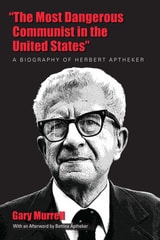
“The Most Dangerous Communist in the United States”
A Biography of Herbert ApthekerGary Murrell
University of Massachusetts Press, 2015
When J. Edgar Hoover declared Herbert Aptheker “the most dangerous Communist in the United States,” the notorious FBI director misconstrued his true significance. In this first book-length biography of Aptheker (1915–2003), Gary Murrell provides a balanced yet unflinching assessment of the controversial figure who was at once a leading historian of African America, radical political activist, literary executor of W. E. B. Du Bois, and lifelong member of the American Communist Party. Although blacklisted at U.S. universities, Aptheker published dozens of books, including the groundbreaking American Negro Slave Revolts (1943) and the monumental seven-volume Documentary History of the Negro People (1951–1994). He also edited four volumes of the correspondence and unpublished writings of Du Bois, an achievement that Eric Foner, writing in the New York Times Book Review, called “a milestone in the coming of age of Afro-American history.”
As Murrell shows, Aptheker the historian was inseparable from Aptheker the leading Communist Party intellectual, polemicist, and agitator. During the 1960s, his ability to rouse and inspire both black and white student radicals made him one of the few Old Leftists accepted by the New Left. Aptheker had joined the CPUSA during its heyday in the 1930s, convinced that only through the party's leadership could fascism be defeated and true liberation be achieved: he ended his affiliation five decades later in 1991 after the collapse of socialism in the Soviet Union and Eastern Europe.
In an afterword, Bettina Aptheker adds to Murrell's narrative by illuminating her mother Fay's vital contributions to her father's work and by affirming the particularly devastating challenges of life in a family dedicated to radical political and social change.
“These Are Our Roots”
The History of the K’iche’ People as Told by Lords of the Tamub’ and Ilokab’transcription, translation, and commentary by Allen J. Christenson
University Press of Colorado, 2026
In “These Are Our Roots”, Allen J. Christenson translates and analyzes historical documents composed by Tamub’ and Ilokab’ nobles of the K’iche’ Maya, who ruled much of the Guatemalan highlands until their lands were invaded by Spanish conquistadors in 1524. Complete original English translations of three Tamub’ texts and a new translation of the “Title of the Ilokab’” reveal how K’iche’ nobility strategically appropriated Christian elements from Dominican missionary texts while maintaining their Indigenous worldview. These documents served multiple purposes: legally establishing land rights, asserting nobility status, preserving cultural identity, and claiming religious legitimacy by positioning themselves as descendants of biblical figures—a sophisticated response to Spanish colonization that balanced accommodation and resistance through literacy, which had become a crucial tool for Indigenous elites navigating the colonial system.
The Tamub’ and Ilokab’ branches of the K’iche’ people have generally been overshadowed by their well-known Kaweq brethren, who wrote such literature masterpieces as the Popol Vuh and the Title of Totonicapán. But it is the voices relegated to the shadows of history that share views of events from different perspectives and whisper about what really happened behind the scenes—family jealousies, political rivalries, and delicious gossip about the great and the good who tend to focus on their own self-aggrandizing stories. “These Are Our Roots” is a valuable scholarly contribution to Maya studies and ethnohistory that makes these important primary sources more accessible to students and scholars.