Results by title
324 books match the query 'Comparative literature' and 23 start with a
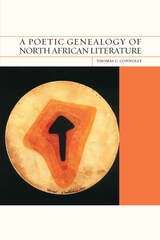
A Poetic Genealogy of North African Literature
Thomas C. Connolly
Northwestern University Press, 2025
Engaging the poetic to expand our imagination of Maghrebi literature in French
Poetry, as the Moroccan writer Abdelkébir Khatibi describes it, is a form of dissymmetry that exposes readers to the unexpected, and to the possibility of a transformative encounter with the text. Drawing on literary, philosophical, theoretical, and theological texts in multiple languages and scripts, as well as on the visual arts, Thomas C. Connolly delves into the poetic works of Khatibi and six other major Maghrebi authors—Jean Amrouche, Tahar Djaout, Nabile Farès, Mohammed Khaïr-Eddine, Abdelwahab Meddeb, and Jean Sénac—as well as the French poet Arthur Rimbaud, to think anew about the origins and legacy of Francophone poetry in the Maghreb. Instead of turning away from the poetic when it becomes indecipherable, A Poetic Genealogy of North African Literature engages poetic texts on their own terms, allowing them to dictate the search for meaning, thereby expanding our understanding of what Maghrebi literature in French was, is, and might become.
A Poetics of Plot for the Twenty-First Century
Theorizing Unruly NarrativesBrian Richardson
The Ohio State University Press, 2019
Story, in the largest sense of the term, is arguably the single most important aspect of narrative. But with the proliferation of antimimetic writing, traditional narrative theory has been inadequate for conceptualizing and theorizing a vast body of innovative narratives. In A Poetics of Plot for the Twenty-First Century: Theorizing Unruly Narratives, Brian Richardson proposes a new model for evaluating literature—returning to the basis of narrative theory to illuminate how authors play with and help clarify the boundaries of narrative theory. While he focuses on late modernist, postmodern, and contemporary narratives, the study also includes many earlier works, spanning from Aristophanes and Shakespeare through James Joyce and Virginia Woolf to Salman Rushdie and Angela Carter.
By exploring fundamental questions about narrative, Richardson provides a detailed, nuanced, and comprehensive theory that includes neglected categories of storytelling and significantly enhances our treatment of traditional areas of analysis. Ultimately, this book promises to transform and expand the study of story and plot.
A Power to Translate the World
New Essays on Emerson and International CultureEdited by David LaRocca and Ricardo Miguel-Alfonso
Dartmouth College Press, 2016
A Taste for the Foreign
Worldly Knowledge and Literary Pleasure in Early Modern French FictionEllen R. Welch
University of Delaware Press, 2011
A Taste for the Foreign examines foreignness as a crucial aesthetic category for the development of prose fiction from Jacques Amyot’s 1547 translation of The Ethiopian Story to Antoine Galland’s early eighteenth-century version of The Thousand and One Nights. While fantastic storylines and elements of magic were increasingly shunned by a neo-classicist literary culture that valued verisimilitude above all else, writers and critics surmised that the depiction of exotic lands could offer a superior source for the novelty, variety, and marvelousness that constituted fiction’s appeal. In this sense, early modern fiction presents itself as privileged site for thinking through the literary and cultural stakes of exoticism, or the taste for the foreign. Long before the term exoticism came into common parlance in France, fiction writers thus demonstrated their understanding of the special kinds of aesthetic pleasure produced by evocations of foreignness, developing techniques to simulate those delights through imitations of the exotic. As early modern readers eagerly consumed travel narratives, maps, and international newsletters, novelists discovered ways to blur the distinction between true and imaginary representations of the foreign, tantalizing readers with an illusion of learning about the faraway lands that captured their imaginations.
This book analyzes the creative appropriations of those scientific or documentary forms of writing that claimed to inform the French public about exotic places. Concentrating on the most successful examples of some of the most important sub-genres of prose fiction in the long seventeenth century—heroic romances, shorter urban novels, fictional memoirs, and extraordinary voyages—the book examines how these types of fiction creatively appropriate the scientific or documentary forms of writing that claimed to inform the French public about exotic places.
Published by University of Delaware Press. Distributed worldwide by Rutgers University Press.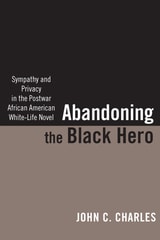
Abandoning the Black Hero
Sympathy and Privacy in the Postwar African American White-Life NovelCharles, John C
Rutgers University Press, 2012
Abandoning the Black Hero is the first book to examine the postwar African American white-life novel—novels with white protagonists written by African Americans. These fascinating works have been understudied despite having been written by such defining figures in the tradition as Richard Wright, Zora Neale Hurston, James Baldwin, Ann Petry, and Chester Himes, as well as lesser known but formerly best-selling authors Willard Motley and Frank Yerby.
John C. Charles argues that these fictions have been overlooked because they deviate from two critical suppositions: that black literature is always about black life and that when it represents whiteness, it must attack white supremacy. The authors are, however, quite sympathetic in the treatment of their white protagonists, which Charles contends should be read not as a failure of racial pride but instead as a strategy for claiming creative freedom, expansive moral authority, and critical agency.
In an era when “Negro writers” were expected to protest, their sympathetic treatment of white suffering grants these authors a degree of racial privacy previously unavailable to them. White writers, after all, have the privilege of racial privacy because they are never pressured to write only about white life. Charles reveals that the freedom to abandon the “Negro problem” encouraged these authors to explore a range of new genres and themes, generating a strikingly diverse body of novels that significantly revise our understanding of mid-twentieth-century black writing.
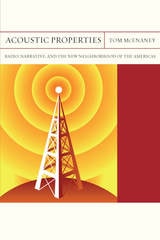
Acoustic Properties
Radio, Narrative, and the New Neighborhood of the AmericasTom McEnaney
Northwestern University Press, 2017
Based on original archival research in Buenos Aires, Havana, Paris, and the United States, the book develops a literary media theory that understands sound as a transmedial phenomenon and radio as a transnational medium. Analyzing the construction of new social and political relations in the wake of the United States’ 1930s Good Neighbor Policy, Acoustic Properties challenges standard narratives of hemispheric influence through new readings of Richard Wright’s cinematic work in Argentina, Severo Sarduy’s radio plays in France, and novels by John Dos Passos, Manuel Puig, Raymond Chandler, and Carson McCullers. Alongside these writers, the book also explores Che Guevara and Fidel Castro’s Radio Rebelde, FDR’s fireside chats, Félix Caignet’s invention of the radionovela in Cuba, Evita Perón’s populist melodramas in Argentina, Orson Welles’s experimental New Deal radio, Cuban and U.S. “radio wars,” and the 1960s African American activist Robert F. Williams’s proto–black power Radio Free Dixie.
From the doldrums of the Great Depression to the tumult of the Cuban Revolution, Acoustic Properties illuminates how novelists in the radio age converted writing into a practice of listening, transforming realism as they struggled to channel and shape popular power.
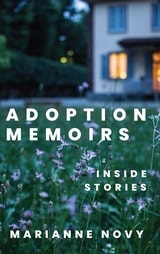
Adoption Memoirs
Inside StoriesMarianne Novy
Temple University Press, 2024
Novy considers 45 memoirs, mostly from the twenty-first century, by birthmothers, adoptees, and adoptive parents, about same-race and transracial adoption. These adoptees, she recounts, wanted to learn about their ancestry and appreciated adoptive parents who helped. Birthmother Amy Seek shows why open adoption is not simple, and many other memoirs tell stories that continue past reunion.
Adoption Memoirs will enlighten readers who lack experience with adoption and help those looking for a shared experience to also understand adoption from a different standpoint.
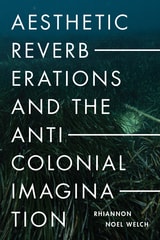
Aesthetic Reverberations and the Anticolonial Imagination
Rhiannon Noel Welch
Northwestern University Press, 2027
Offering a unique critical approach to understanding historical violence in the present
Colonial histories and their racializing assemblages persist in reconfigured forms, shaping conditions of life today. Rhiannon Noel Welch offers reverberation as an expansive concept with which to think about how aesthetics—etymologically, perception by the senses—hold, transmit, and resist colonialism’s many entangled afterlives. Though reverberation is commonly understood as an acoustic phenomenon similar to echo and resonance, Welch borrows from philosophy, philology, and physics to stretch conventional meanings of the term and emphasize its distinction from other sonic effects and metaphors. The archive assembled here includes works by artists and thinkers who reach for aesthetics (words, images, music) to contest empire’s longue durée—from early European colonialism in the Western Hemisphere to the transshipping of Africans across the Atlantic, Fascist Italy’s occupation of Ethiopia, and contemporary Mediterranean border regimes. In a series of close and interlinked readings of theory, poetry, film, and other media by Sylvia Wynter, Giacomo Leopardi, and Garrett Bradley, among others, Welch proposes reverberation as a material metaphor for how aesthetic works hit us as sentient participants in social worlds that are at once asymmetrical and inextricably linked.
Affective Crisis and the Possibility of Attachment
A Comparative Study of Contemporary Fiction in Neoliberal RuinsHans Demeyer and Sven Vitse
University College London, 2026
An in-depth study of contemporary novels through the lens of affect theory and ideology critique.
Affective Crisis and the Possibility of Attachment offers a comparative critical study of contemporary fiction. It intervenes in discussions about contemporary fiction in its literary-historical relationship to postmodernism and in its socio-historical relationship to neoliberalism, arguing that contemporary literature is dominated by affective questions that are rooted in neoliberalism. Whereas previous research focused on either a literary-historical or a socio-historical approach, this study examines eighteen novels from various parts of the world in both their diachronic relation to postmodernism and in their synchronic relation to neoliberal society.
Agony for Others
On Literature and PainJessica Colangelo
University of Michigan Press, 2026
Agony for Others investigates the phenomenological, rhetorical, and political challenges of representing pain in literature. Pain cries vary between cultural and linguistic groups, and pain expression (such as grimacing or crying) can likewise vary in quality and intensity from person to person, affected by disability, temperament, and past experiences with pain, as well as the experiencer’s own understanding of what that pain is and what it means. Jessica Colangelo explores pain's role as a subjective indication of objective damage; that, contrary to claims of its subjective privacy, the feeling of pain is always felt in terms of an objectively existing entity (one’s physical body) which is perceivable by others. Thus, pain enters into intersubjectivity through the physical body—one's expressions, words, actions, presence—which then mediates between the self and the other.
Drawing on disability studies, phenomenology, philosophy, and literary studies, Colangelo examines works by Virginia Woolf, James Baldwin, Sarah Kane, Elie Wiesel, and Margaret Edson to argue that the belief that pain is incommunicable and thought-destroying obscures its central role in relationships and community formation. Agony for Others demonstrates that pain is not excluded from, but rather constitutive of, intersubjectivity, and argues that the aesthetic dimension of interpretation is essential to understanding the ethical and political role of pain.
American Mediterraneans
A Study in Geography, History, and RaceSusan Gillman
University of Chicago Press, 2022
The naturalist Alexander von Humboldt, visiting the Gulf-Caribbean in the early nineteenth century, called it America’s Mediterranean. Almost a century later, Southern California was hailed as “Our Mediterranean, Our Italy!” Although “American Mediterranean” is not a household phrase in the United States today, it once circulated widely in French, Spanish, and English as a term of art and folk idiom. In this book, Susan Gillman asks what cultural work is done by this kind of unsystematic, open-ended comparative thinking.
American Mediterraneans tracks two centuries of this geohistorical concept, from Humboldt in the early 1800s, to writers of the 1890s reflecting on the Pacific world of the California coast, to writers of the 1930s and 40s speculating on the political past and future of the Caribbean. Following the term through its travels across disciplines and borders, American Mediterraneans reveals a little-known racialized history, one that paradoxically appealed to a range of race-neutral ideas and ideals.
Amphion
Lyre, Poetry, and Politics in ModernityLeah Middlebrook
University of Chicago Press, 2024
Amphion is the figure in Greek mythology who played so skillfully on a lyre that stones moved of their own accord to build walls for Thebes. While Amphion still presides over music and architecture, he was once fundamental to the concept of lyric poetry. Amphion figured the human power to inspire action, creating and undoing polities by means of language. In contrast to the individual inspiration we associate with the better-known Orpheus, Amphion represents the relentless, often violent, play of harmony and disorder in human social life.
In this wide-ranging study, Leah Middlebrook introduces readers to Amphion-inspired poetics and lyrics and traces the tradition of the Amphionic from the Renaissance through modernist and postmodern poetry and translation from the Hispanic, Anglophone, French, Italian, and ancient Roman worlds. Amphion makes a significant contribution to scholarship on the connection between poetry and politics and the history of the lyric, offering an account well-suited to our times.
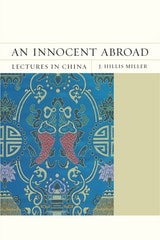
An Innocent Abroad
Lectures in ChinaJ. Hillis Miller
Northwestern University Press, 2015
Since 1988, J. Hillis Miller has traveled to China to lecture on literary theory, especially the role of globalization in literary theory. Over time, he has assisted in the development of distinctively Chinese forms of literary theory, Comparative Literature, and World Literature. The fifteen lectures gathered in An Innocent Abroad span both time and geographic location, reflecting his work at universities across China for more than twenty-five years. More important, they reflect the evolution of Miller’s thinking and of the lectures’ contexts in China as these have markedly changed over the years, especially on either side of Tiananmen Square and in light of China’s economic growth and technological change. A foreword by the leading theorist Fredric Jameson provides additional context.
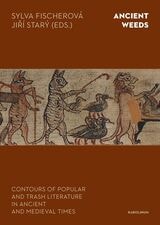
Ancient Weeds
Contours of Popular and Trash Literature in Ancient and Medieval TimesEdited by Sylva Fischerová and Jirí Starý
Karolinum Press, 2023
The common story in literary studies is that the emergence of popular and junk literature is related to the emergence of modern society due to the rise of literacy and the shortening of workdays. Ancient Weeds upends this misconception by demonstrating that antiquity had its fair share of literary pieces that fit the definition of popular, trivial, and junk literature. The authors analyze artifacts such as the ancient Egyptian Turin Papyrus, ancient love novels, Christian hagiographies and passion plays, lives of Jesus and Marian hymns, Old Norse tales and lying sagas, and Spanish blind romances. Through numerous excerpts, it becomes clear that the line between junk and high literature is thinner than it seems. They reveal how seemingly low themes such as sex and violence often overlap with the themes of high literature. In many cases, low literature is more imaginative and subversive than canonical texts, and bizarreness and non-conformity do not necessarily equate to the ephemerality of a work. As Ancient Weeds shows, thousands of years after it was written, low literature can still be a great source of entertainment today.
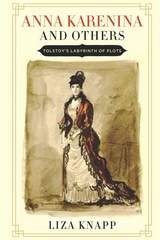
Anna Karenina and Others
Liza Knapp
University of Wisconsin Press, 2018
Knapp provides a series of readings of Anna Karenina that draw on other works that were critical to Tolstoy’s understanding of the interconnectedness of human lives. Among the texts she considers are The Scarlet Letter, a novel of adultery with a divided plot; Middlemarch, a multiplot novel with neighborly love as its ideal; and Blaise Pascal’s Pensées, which fascinated Tolstoy during his own religious crisis. She concludes with a tour-de-force reading of Mrs. Dalloway that shows Virginia Woolf constructing this novel in response to Tolstoy’s treatment of Anna Karenina and others.
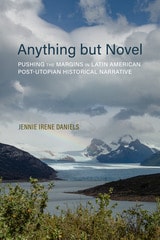
Anything but Novel
Pushing the Margins in Latin American Post-Utopian Historical NarrativeJennie Irene Daniels
University of Alabama Press, 2024
The first in-depth study in English to analyze post-utopian historical novels written during and in the wake of brutal Latin American dictatorships and authoritarian regimes
During neoliberal reforms in the 1980s and 1990s, murder, repression, and exile had reduced the number of intellectuals and Leftists, and many succumbed to or were coopted by market forces and ideologies. The opposition to the economic violence of neoliberal projects lacked a united front, and feasible alternatives to the contemporary order no longer seemed to exist. In this context, some Latin American literary intellectuals penned post-utopian historical novels as a means to reconstruct memory of significant moments in national history. Through the distortion and superimposition of distinct genres within the narratives, authors of post-utopian historical novels incorporated literary, cultural, and political traditions to expose contemporary challenges that were rooted in unresolved past conflicts.
In Anything but Novel, Jennie Irene Daniels closely examines four post-utopian novels—César Aira’s Ema, la cautiva, Rubem Fonseca’s O Selvagem da Ópera, José Miguel Varas’s El correo de Bagdad, and Santiago Páez’s Crónicas del Breve Reino—to make their contributions more accessible and to synthesize and highlight the literary and social interventions they make. Although the countries the novels focus on (Argentina, Brazil, Chile, and Ecuador) differ widely in politics, regime changes, historical precedents, geography, and demographics, the development of a shared subgenre among the literary elite suggests a common experience and interpretation of contemporary events across Latin America. These novels complement one another, extending shared themes and critiques.
Daniels argues the novels demonstrate that alternatives exist to neoliberalism even in times when it appears there are none. Another contribution of these novels is their repositioning of the Latin American literary intellectuals who have advocated for the marginalized in their societies. Their work has opened new avenues and developed previous lines of research in feminist, queer, and ethnic studies and for nonwhite, nonmale writers.
Aphrodite's Daughters
Three Modernist Poets of the Harlem RenaissanceHoney, Maureen
Rutgers University Press, 2016
Architexts of Memory
Literature, Science, and AutobiographyEvelyne Ender
University of Michigan Press, 2005
"An important, cogently argued, subtle and rich study of a topic of great interest."
--Mieke Bal, University of Amsterdam
"A work of literary studies positioned at the intersection of tradition and innovation. Evelyne Ender's book brings fashionable cultural concerns to bear on traditional literary texts-her superb pedagogical skills lure and guide the reader through the most difficult psychoanalytical concepts."
--Nelly Furman, Cornell University
Evelyne Ender is Professor of French Studies, University of Washington. She is the author of Sexing the Mind: Nineteenth-Century Fictions of Hysteria.
Artificial Humanities
A Fictional Perspective on Language in AINina Beguš
University of Michigan Press, 2025
Highlighting the impact of human-like AI design, from gendered virtual assistants to romanticized social robots, the book shows how these technologies intersect with longstanding humanistic questions about the concepts of creativity and language as well as the relations between humans and machines. Additionally, the book explores AI’s applications in medical fields, particularly psychiatry and neurotechnology, including how AI interacts with the human body and mind to address conditions like paralysis. By emphasizing the philosophical and cultural implications of these technologies, Beguš highlights the need for responsible innovation that prioritizes human well-being as well as machine potential outside of human imitation. Accessible and thought-provoking, Artificial Humanities offers tools for analyzing and assessing technologies while they are being developed and invites readers to see how the humanities can guide us toward a more thoughtful future for AI.
At the Pivot of East and West
Ethnographic, Literary, and Filmic ArtsMichael M. J. Fischer
Duke University Press, 2023
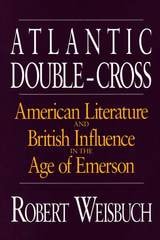
Atlantic Double-Cross
American Literature and British Influence in the Age of EmersonRobert Weisbuch
University of Chicago Press, 1987
Describing the transatlantic "double-cross" of literary influence, Weisbuch documents both the American desire to create a literature distinctly different from English models and the English insistence that any such attempt could only fail. The American response, as he demonstrates, was to make strengths out of national disadvantages by rethinking history, time, and traditional concepts of the self, and by reinterpreting and ridiculing major British texts in mocking allusions and scornful parodies.
Weisbuch approaches a precise characterization of this "double-cross" by focusing on paired sets of English and American texts. Investigations of the causes, motives, and literary results of the struggle alternate with detailed analyses of several test cases. Weisbuch considers Melville's challenge to Dickens, Thoreau's response to Coleridge and Wordsworth, Hawthorne's adaptation of Keats and influence on Eliot, Whitman's competition with Arnold, and Poe's reshaping of Shelley. Adding a new dimension to the exploration of an emerging aesthetic consciousness, Atlantic Double-Cross provides important insights into the creation of the American literary canon.

Autobiography and Postmodernism
Kathleen Ashley
University of Massachusetts Press, 1994
In contrast to those critics of postmodernism who fear the dissolution of the active subject, the contributors here demonstrate that autobiography gives postmodernism a discourse through which to theorize human agency. The autobiographical subject that emerges is not the decentered human agent of so many versions of postmodernism but the producer of texts that call attention to the contradictions in dominant modes of self-representation and demonstrate the possibilities of writing from from other locations.
Contributors are Betty Bergland, Andrei Codrescu, Michael M. J. Fischer, Leigh Gilmore, David P. Haney, Paul Jay, Shirley Neuman, Christopher Ortiz, Sidonie Smith, Kirsten Wasson, and Hertha D. Wong.
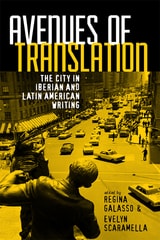
Avenues of Translation
The City in Iberian and Latin American WritingGalasso, Regina
Bucknell University Press, 2019
Cities both near and far communicate in a variety of ways. Travel between, through, and among urban centers initiates contact, and cities themselves are sites of ever-changing cultural and historical encounters. Predictable and surprising challenges and opportunities arise when city borders are crossed, voices meet, and artistic traditions find their counterparts. Using the Latin word for “translation,” translatio, or “to carry across,” as a point of departure, Avenues of Translation explores how translation perpetuates, diversifies, deepens, and expands the literary production of cities in their greater cultural context, and how translation shapes an understanding of and access to a city's past and present literary and cultural practices. Thinking about translation and the city is a way to tell the backstories of the cities, texts, and authors that are united by acts of translation.
Published by Bucknell University Press. Distributed worldwide by Rutgers University Press.