Results by title
347 books match the query 'Early works to 1800' and 38 start with a
A Brief Life of Aquinas
The Theologian in His ContextJean-Pierre Torrell
Catholic University of America Press, 2024
A Byzantine Monastic Office, A.D. 1105
Jeffrey C. Anderson
Catholic University of America Press, 2016
A Commentary on Cicero, De Divinatione I
Celia E. Schultz
University of Michigan Press, 2014
A Commentary on Cicero, De Divinatione II
Andrew R. Dyck
University of Michigan Press, 2020
Celia Schultz’s earlier volume in this series presented the text and commentary for De Divinatione I. With Andrew Dyck’s companion volume on the second book of De Divinatione, students and teachers are well served with crucial texts from one of Rome’s most famous philosophers, as he considers important Roman practices and beliefs.

A Friendly Companion to Plato's Gorgias
George Kimball Plochmann and Franklin E. Robinson
Southern Illinois University Press, 1987
A comprehensive study of “one of the most elusive and subtle” of all the Platonic dialogues.
The Gorgias begins with a discussion of the nature and value of rhetoric and develops into an impassioned argument for the primacy of absolute right (as expressed by conscience) in the regulation of both public and private life. Plochmann and Robinson closely analyze this great dialogue in the first two-thirds of their book, turning in the final four chapters to a broader discussion of its unity, sweep, and philosophic implications.
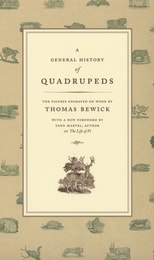
A General History of Quadrupeds
The Figures Engraved on WoodThomas Bewick
University of Chicago Press, 2009
In the late eighteenth century, the British took greater interest than ever before in observing and recording all aspects of the natural world. Travelers and colonists returning from far-flung lands provided dazzling accounts of such exotic creatures as elephants, baboons, and kangaroos. The engraver Thomas Bewick (1753–1828) harnessed this newfound interest by assembling the most comprehensive illustrated guide to nature of his day.
A General History of Quadrupeds, first published in 1790, showcases Bewick’s groundbreaking engraving techniques that allowed text and images to be published on the same page. From anteaters to zebras, armadillos to wolverines, this delightful volume features engravings of over four hundred animals alongside descriptions of their characteristics as scientifically understood at the time. Quadrupeds reaffirms Bewick’s place in history as an incomparable illustrator, one whose influence on natural history and book printing still endures today.
A Key into the Language of America
The Tomaquag Museum EditionRoger Williams
Westholme Publishing, 2019
Roger Williams’s Key into the Language of America, first published in 1643, is one of the most important artifacts of early Indigenous American culture. In it, Williams recorded the day-to-day experience of the Narragansett people of Rhode Island in their own words, the first documentation of an American Indian language in English. Williams’s Key can be read at many levels because of its historical, literary, political, and religious significance. Its greatest value, though, is its intimate portrait of the Narragansett and their linguistic neighbors in the early years of European colonial settlement, before disease, dislocation, warfare—in particular, King Philip’s War—and colonial interference had diminished their population and power in the region. An extraordinary achievement, Williams’s Key gives us a contemporary account of Narragansett family life, of their sociability and skill in business, their dress, foodways, and the farming, fishing, and hunting that formed the basis of their sustenance practices.
This new Tomaquag Museum edition includes for the first time cultural commentary provided by the Narragansett Tribe as well as modern linguistic information provided by a leading authority in the study of American Indian languages.
The Tomaquag Museum, located in Exeter, Rhode Island, is an Indigenous nonprofit organization dedicated to sharing the culture, arts, and history of the Narragansett and other tribal communities of southern New England.
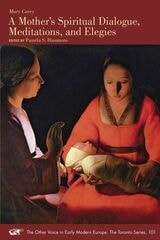
A Mother’s Spiritual Dialogue, Meditations, and Elegies
Mary Carey
Iter Press, 2023
Lady Mary Carey (c. 1609–c. 1680) was a noblewoman who examined her life and expressed her views in a handwritten manuscript that she intended for self-reflection and for sharing with restricted audiences of family and friends, rather than for print publication. Her poetry and prose, composed and revised between 1650 and 1658, were important enough to her inner circle, however, that her autograph manuscript was carefully copied by another hand in 1681. In addition to providing us with key insights into women’s multidimensional roles as wives, widows, and mothers during the seventeenth century in England, Carey’s work teaches us a great deal about a woman’s deepest emotional and spiritual states while confronting the hardships of life—from the fears of childbearing to the sorrows over child loss to the terrors of war.
A Student Commentary on Pausanias Book 1
Patrick Paul Hogan
University of Michigan Press, 2014
A Student Commentary on Pausanias Book 2
Patrick Paul Hogan
University of Michigan Press, 2018
A Study of Dialectic in Plato's Parmenides
Eric Sanday
Northwestern University Press, 2014
A View of Venice
Portrait of a Renaissance CityKristin Love Huffman, editor
Duke University Press, 2024
Contributors. Karen-edis Barzman, Andrea Bellieni, Patricia Fortini Brown, Valeria Cafà, Stanley Chojnacki, Tracy E. Cooper, Giada Damen, Julia A. DeLancey, Piero Falchetta, Ludovica Galeazzo, Maartje van Gelder, Jonathan Glixon, Richard Goy, Anna Christine Swartwood House, Kristin Love Huffman, Holly Hurlburt, Claire Judde de Larivière, Blake de Maria, Martina Massaro, Cosimo Monteleone, Monique O’Connell, Mary Pardo, Giorgio Tagliaferro, Saundra Weddle, Bronwen Wilson, Rangsook Yoon
A Woman Who Defends All the Persons of Her Sex
Selected Philosophical and Moral WritingsGabrielle Suchon
University of Chicago Press, 2010
During the oppressive reign of Louis XIV, Gabrielle Suchon (1632–1703) was the most forceful female voice in France, advocating women’s freedom and self-determination, access to knowledge, and assertion of authority. This volume collects Suchon’s writing from two works—Treatise on Ethics and Politics (1693) and On the Celibate Life Freely Chosen; or, Life without Commitments (1700)—and demonstrates her to be an original philosophical and moral thinker and writer.
Suchon argues that both women and men have inherently similar intellectual, corporeal, and spiritual capacities, which entitle them equally to essentially human prerogatives, and she displays her breadth of knowledge as she harnesses evidence from biblical, classical, patristic, and contemporary secular sources to bolster her claim. Forgotten over the centuries, these writings have been gaining increasing attention from feminist historians, students of philosophy, and scholars of seventeenth-century French literature and culture. This translation, from Domna C. Stanton and Rebecca M. Wilkin, marks the first time these works will appear in English.
Against Julian
Saint Augustine
Catholic University of America Press, 1957
Against Marcellus and On Ecclesiastical History
Kelly Eusebius of Caesarea
Catholic University of America Press, 2018
On Ecclesiastical Theology, composed circa 338/339 just before Eusebius’s death, and perhaps in response to the amnesty for deposed bishops enacted by Constantius after the death of Constantine in 377 and the possibility of Marcellus’s return to his see, continues to lay out the criticisms initially put forward in Against Marcellus, again utilizing quotations from Marcellus’s book against Asterius. However, we see in this text a much more systematic explanation of Eusebius’s objections to the various elements of Marcellus’s theology and what he sees as the proper orthodox articulation of those elements.
Long overlooked for statements at odds with later orthodoxy, even written off as heretical because allegedly “semi-Arian,” recent scholarship has demonstrated the tremendous influence these texts had on the Greek theological tradition in the fourth century, especially on the orthodox understanding of the Trinity. In addition to their influence, they are some of the few complete texts that we have from Greek theologians in the immediate period following the Council of Nicea in 325, thus filling a gap in the materials available for research and teaching in this critical phase of theological development.
Against the Inveterate Obduracy of the Jews
Irven M. Peter the Venerable
Catholic University of America Press, 2013
Al-Ghazali's "Moderation in Belief"
Al-Ghazali
University of Chicago Press, 2013
The first complete English-language edition of Moderation in Belief, this new annotated translation by Aladdin M. Yaqub draws on the most esteemed critical editions of the Arabic texts and offers detailed commentary that analyzes and reconstructs the arguments found in the work’s four treatises. Explanations of the historical and intellectual background of the texts also enable readers with a limited knowledge of classical Arabic to fully explore al-Ghazali and this foundational text for the first time.
With the recent resurgence of interest in Islamic philosophy and the conflict between philosophy and religion, this new translation will be a welcome addition to the scholarship.
Albertus Magnus On Animals V1 2
A Medieval Summa Zoologica Revised EditionKenneth F. Kitchell Jr.and Irven Michael Resnick
The Ohio State University Press, 2018
In his work De animalibus, Albert integrated the vast amount of information on nature that had come down to him in previous centuries: the exposition of Michael Scotus’s translation from the Arabic of Aristotle’s books on the natural world (Books 1–19), Albert’s own revisions to Aristotle’s teachings (Books 20–21), and a “dictionary” of animals appropriated largely from the De natura rerum of Thomas of Cantimpré (Books 22–26). Albert’s comprehensive treatise on living things was acknowledged as the reputable authority in biology for almost five hundred years.
In this translated and annotated edition, Kenneth F. Kitchell Jr. and Irven Michael Resnick illuminate the importance of this work, allowing Albert’s magnum opus to be better understood and more widely appreciated than ever before. Broken into two volumes (Books 1–10 and 11–26),Albertus Magnus On Animals is a veritable medieval scientific encyclopedia, ranging in topics from medicine, embryology, and comparative anatomy to women, hunting and everyday life, commerce, and much more—an essential work for historians, medievalists, scientists, and philosophers alike.
Ambrosiaster's Commentary on the Pauline Epistles
RomansTheodore S. de Bruyn
SBL Press, 2017
A new translation for scholars and students of biblical interpretation and ancient Christianity
The ancient writer dubbed Ambrosiaster was a pioneer in the revival of interest in the Pauline Epistles in the later fourth century. He was read by Latin writers, including Pelagius and Augustine, and his writings, passed on pseudonymously, had a long afterlife in the biblical commentaries, theological treatises, and canonical literature of the medieval and the early modern periods. In addition to his importance as an interpreter of scripture, Ambrosiaster provides unique perspectives on many facets of Christian life in Rome, from the emergence of clerical celibacy to the development of liturgical practices to the subordination of women.
Features
- An up-to-date overview of what is known about Ambrosiaster, the transmission of his commentary on the Pauline Epistles, his exegetical method, his theological orientation, and aspects of Christianity in Rome in the fourth century
- A scholarly translation of the final version of the commentary, along with notes that identify significant variants from prior versions of the commentary
- Bibliography thatincludes a comprehensive list of the scholarly literature on Ambrosiaster
Ancoratus
Epiphanius of Cyprus
Catholic University of America Press, 2014
Anglicanus ortus
A Verse Herbal of the Twelfth CenturyHenry of Huntingdon
Bodleian Library Publishing, 2012
Anonymus and Master Roger
Martyn Rady
Central European University Press, 2010
Anselm's Pursuit of Joy
A Commentary on the ProslogionGavin R. Ortlund
Catholic University of America Press, 2020
Apologist
Saint John Chrysostom
Catholic University of America Press, 1985
Apology for Origen; On the Falsification of the Books of Origen
Catholic University of America Press, 2010
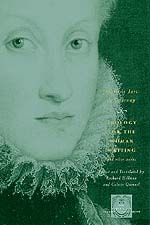
Apology for the Woman Writing and Other Works
Marie le Jars de Gournay
University of Chicago Press, 2002
This volume presents translations of four of Gournay's works that address feminist issues. Two of these appear here in English for the first time—The Promenade of Monsieur de Montaigne and The Apology for the Woman Writing. One of the first modern psychological novels, the best-selling Promenade was also the first to explore female sexual feeling. With the autobiographical Apology, Gournay defended every aspect of her life, from her moral conduct to her household management. The book also includes Gournay's last revisions (1641) of her two best-known feminist treatises, The Equality of Men and Women and The Ladies' Complaint. The editors provide a general overview of Gournay's career, as well as individual introductions and extensive annotations for each work.
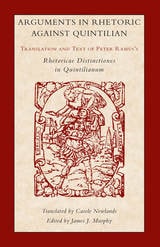
Arguments in Rhetoric Against Quintilian
Translation and Text of Peter Ramus's Rhetoricae Distinctiones in QuintilianumPeter Ramus, Translated by Carole Newlands, Edited by James J. Murphy,
Southern Illinois University Press, 2010
First published in 1986, this book offers the Latin text and English translation of a pivotal work by one of the most influential and controversial writers of early modern times. Pierre de la Ramée, better known as Peter Ramus, was a college instructor in Paris who published a number of books attacking and attempting to refute foundational texts in philosophy and rhetoric. He began in the early 1540s with books on Aristotle—which were later banned and burned—and Cicero, and later, in 1549, he published Rhetoricae Distinctiones in Quintilianum. The purpose of Ramus’s book is announced in the opening paragraph of its dedication to Charles of Lorraine: “I have a single argument, a single subject matter, that the arts of dialectic and rhetoric have been confused by Aristotle, Cicero, and Quintilian. I have previously argued against Aristotle and Cicero. What objection then is there against calling Quintilian to the same account?”
Carole Newlands’s excellent translation—the first in modern English—remains the standard English version. This volume also provides the original Latin text for comparative purposes. In addition, James J. Murphy’s insightful introduction places the text in historical perspective by discussing Ramus’s life and career, the development of his ideas, and the milieu in which his writings were produced. This edition includes an updated bibliography of works concerning Ramus, rhetoric, and related topics.
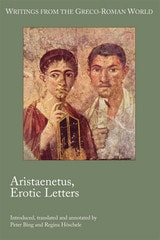
Aristaenetus, Erotic Letters
Peter Bing
SBL Press, 2014
The first complete English translation of Aristaenetus in nearly three centuries
Through allusion and adaption of earlier authors, Aristaenetus recounts tales that are the stuff of comedy, erotic poetry, and ancient novel. Here we read of lovers who use every trope of erotic literature to praise their beloveds in over-the-top speeches. Aristaenetus amazes us with tales of paramours hatching complicated schemes to achieve their desires, while wily go-betweens help smooth their way. He presents us with accounts of unfaithful spouses who barely avoid capture in the midst of hair-raising and amusing infidelities. This sixth century collection is perfect for anyone interested in classical and postclassical literature.
Features:
- English translation and Greek text on facing pages
- Introduction with history of the text
- Discussion of intertextual connections with Greco-Roman authors
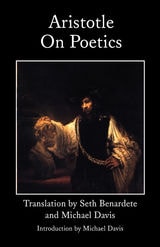
Aristotle On Poetics
Seth Benardete
St. Augustine's Press, 2002
Aristotle’s much-translated On Poetics is the earliest and arguably the best treatment that we possess of tragedy as a literary form. The late Seth Benardete and Michael Davis have translated it anew with a view to rendering Aristotle’s text into English as precisely as possible. A literal translation has long been needed, for in order to excavate the argument of On Poetics one has to attend not simply to what is said on the surface but also to the various puzzles, questions, and peculiarities that emerge only on the level of how Aristotle says what he says and thereby leads one to revise and deepen one’s initial understanding of the intent of the argument. As On Poetics is about how tragedy ought to be composed, it should not be surprising that it turns out to be a rather artful piece of literature in its own right.
Benardete and Davis supplement their edition of On Poetics with extensive notes and appendices. They explain nuances of the original that elude translation, and they provide translations of passages found elsewhere in Aristotle’s works as well as in those of other ancient authors that prove useful in thinking through the argument of On Poetics both in terms of its treatment of tragedy and in terms of its broader concerns. By following the connections Aristotle plots between On Poetics and his other works, readers will be in a position to appreciate the centrality of this little book for his thought on the whole.
In an introduction that sketches the overall interpretation of On Poetics, Davis argues that, while On Poetics is certainly about tragedy, it has a further concern extending beyond poetry to the very structure of the human soul in its relation to what is, and that Aristotle reveals in the form of his argument the true character of human action.
Aristotle's "Art of Rhetoric"
Aristotle
University of Chicago Press, 2019
Here Robert C. Bartlett offers a literal, yet easily readable, new translation of Aristotle’s “Art of Rhetoric,” one that takes into account important alternatives in the manuscript and is fully annotated to explain historical, literary, and other allusions. Bartlett’s translation is also accompanied by an outline of the argument of each book; copious indexes, including subjects, proper names, and literary citations; a glossary of key terms; and a substantial interpretive essay.
Aristotle's "Politics"
Second EditionAristotle
University of Chicago Press, 2013
Aristotle's Nicomachean Ethics
Aristotle
University of Chicago Press, 2011
The most precise and authoritative translation of one of the founding works of Western culture, in an edition supported by helpful, effective notes
The Nicomachean Ethics is one of Aristotle’s most widely read and influential works. Ideas central to ethics—that happiness is the end of human endeavor, that moral virtue is formed through action and habituation, and that good action requires prudence—found their most powerful proponent in the person medieval scholars simply called “the Philosopher.” Drawing on their intimate knowledge of Aristotle’s thought, Robert C. Bartlett and Susan D. Collins have produced here an English-language translation of the Ethics that is as remarkably faithful to the original as it is graceful in its rendering.
Aristotle is well known for the precision with which he chooses his words, and in this elegant translation his work has found its ideal match. Bartlett and Collins provide copious notes and a glossary providing context and further explanation for students, as well as an introduction and a substantial interpretive essay that sketch central arguments of the work and the seminal place of Aristotle’s Ethics in his political philosophy as a whole.
The Nicomachean Ethics has engaged the serious interest of readers across centuries and civilizations—of peoples ancient, medieval, and modern; pagan, Christian, Muslim, and Jewish—and this new edition will take its place as the standard English-language translation.
Aristotle's Physics
A Guided StudyAritotle
Rutgers University Press, 1995
This is a new translation, with introduction, commentary, and an explanatory glossary.
"Sachs's translation and commentary rescue Aristotle's text from the rigid, pedantic, and misleading versions that have until now obscured his thought. Thanks to Sachs's superb guidance, the Physics comes alive as a profound dialectical inquiry whose insights into the enduring questions about nature, cause, change, time, and the 'infinite' are still pertinent today. Using such guided studies in class has been exhilarating both for myself and my students." ––Leon R. Kass, The Committee on Social Thought, University of Chicago
Aristotle’s Physics is the only complete and coherent book we have from the ancient world in which a thinker of the first rank seeks to say something about nature as a whole. For centuries, Aristotle’s inquiry into the causes and conditions of motion and rest dominated science and philosophy. To understand the intellectual assumptions of a powerful world view—and the roots of the Scientific Revolution—reading Aristotle is critical. Yet existing translations of Aristotle’s Physics have made it difficult to understand either Aristotle’s originality or the lasting value of his work.
In this volume in the Masterworks of Discovery series, Joe Sachs provides a new plain-spoken English translation of all of Aristotle’s classic treatise and accompanies it with a long interpretive introduction, a running explication of the text, and a helpful glossary. He succeeds brilliantly in fulfilling the aim of this innovative series: to give the general reader the tools to read and understand a masterwork of scientific discovery.
Art of War
Niccolò Machiavelli
University of Chicago Press, 2003
Machiavelli scholar Christopher Lynch offers a sensitive and entirely new translation of the Art of War, faithful to the original but rendered in modern, idiomatic English. Lynch's fluid translation helps readers appreciate anew Machiavelli's brilliant treatments of the relationships between war and politics, civilians and the military, and technology and tactics. Clearly laying out the fundamentals of military organization and strategy, Machiavelli marshals a veritable armory of precepts, prescriptions, and examples about such topics as how to motivate your soldiers and demoralize the enemy's, avoid ambushes, and gain the tactical and strategic advantage in countless circumstances.
To help readers better appreciate the Art of War, Lynch provides an insightful introduction that covers its historical and political context, sources, influence, and contemporary relevance. He also includes a substantial interpretive essay discussing the military, political, and philosophical aspects of the work, as well as maps, an index of names, and a glossary.
At the Crossroads of the Scientific Revolution
Two French Seventeenth-Century Women of ScienceMartine de Bertereau and Marie Meurdrac
Iter Press, 2026
The writings of mineralogist and hydrogeologist Martine de Bertereau (ca. 1584–ca. 1643) and alchemist and chemist Marie Meurdrac (ca. 1610–80) stand at the crossroads of the Scientific Revolution, a significant period between Copernicus and Newton that oversaw a new ferment in both the theoretical and empirical investigation of the natural world. Bertereau’s writings appear at the interface of a negotiation between an older form of knowledge, dating back to Aristotle, and a new scientific empiricism. She brilliantly addresses the relationship between knowledge and mining applications, as well as the roles of the king, the state, the market, and the public. Meurdrac published the first so-called chemistry book by a woman, which contributed to the various areas of scientific knowledge generally associated with alchemy in its development into chemistry, particularly medical cookery, botany, pharmacology, and cosmetology.
Bertereau’s and Meurdrac’s works illustrate this age of transition, a spectacular time of growth in ideas and discoveries for both men and women. This first-time translation of their works is an important step in restoring the voices of these early modern French women scientists.
Augustine in His Own Words
William Harmless
Catholic University of America Press, 2010
Averroes' Middle Commentary on Aristotle's Poetics
St. Augustine's Press, 1999
Averroes’ Middle Commentary on Aristotle’s Rhetoric
Arabic-English Translation, with Notes and IntroductionLahcen El Yazghi Ezzaher
Southern Illinois University Press, 2023
Abū al-Walīd Muḥammad ibn Aḥmad ibn Rushd (d. 1198 AD), known as Averroes in the West, wrote one of the most significant medieval Arabic commentaries on Aristotle’s famous treatise, Rhetoric. Averroes worked within a tradition that included the Muslim philosophers Al-Farabi (d. 950) and Avicenna (d. 1037), who together built an early canon introducing Aristotle’s writings to the academies of medieval Europe. Here, for the first time, Lahcen El Yazghi Ezzaher translates Averroes’ Middle Commentary into English, with analysis highlighting its shaping of philosophical thought.
Ibn Rushd was born into a prominent family living in Córdoba and Seville during the reign of the Almoḥad dynasty in the Maghreb and al-Andalus. At court, he received support to write a body of rhetorical commentaries extending the work of his Arabic-Muslim predecessors, a critical step in fostering Aristotle’s influence on European scholasticism and Western education. Ezzaher’s meticulous translation of Averroes’ Middle Commentary reflects the depth and breadth of this engagement, incorporating a discussion of the Arabic-Muslim commentary tradition and Averroes’ contribution to it. His research illuminates the complexity of Averroes’ position, articulating the challenges Muslim scholars faced in making non-Muslim texts available to their community. Through his work, we see how people at different historical moments have adapted intellectual concepts to preserve rhetoric’s vitality and relevance in new contexts.
Averroes’ Middle Commentary exemplifies the close connections between ancient Greece and medieval Muslim scholarship and the ways Muslim scholars navigated an appreciation for Aristotelian philosophy alongside a commitment to their cultural and religious systems.