Results by title
728 books match the query 'Economic aspects' and 50 start with a
A Civil Economy
Transforming the Marketplace in the Twenty-First CenturySeveryn T. Bruyn
University of Michigan Press, 2000

A Contest without Winners
How Students Experience Competitive School ChoiceKate Phillippo
University of Minnesota Press, 2019
Seeing the consequences of competitive school choice policy through students’ eyes
While policymakers often justify school choice as a means to alleviate opportunity and achievement gaps, an unanticipated effect is increased competition over access to coveted, high-performing schools. In A Contest without Winners, Kate Phillippo follows a diverse group of Chicago students through the processes of researching, applying to, and enrolling in public high school. Throughout this journey, students prove themselves powerful policy actors who carry out and redefine competitive choice.
Phillippo’s work amplifies the voices of students—rather than the parents, educators, public intellectuals, and policymakers who so often inform school choice research—and investigates how students interact with and emerge from competitive choice academically, developmentally, and civically. Through students’ experiences, she shows how competitive choice legitimates and exacerbates existing social inequalities; collides with students’ developmental vulnerability to messages about their ability, merit, and potential; and encourages young people’s individualistic actions as they come to feel that they must earn their educational rights. From urban infrastructure to income inequality to racial segregation, Phillippo examines the factors that shape students’ policy enactment and interpretation, as policymakers and educators ask students to compete for access to public resources.
With competitive choice, even the winners—the lucky few admitted to their dream schools—don’t outright win. A Contest without Winners challenges meritocratic and market-driven notions of opportunity creation for young people and raises critical questions about the goals we have for public schooling.

A Games Changer
The International Olympic Committee, Tokyo 2020, and COVID-19Stephen R. Wenn
University of Arkansas Press, 2025
From the emergence of the COVID pandemic in early 2020 through the delayed staging of the Tokyo Olympic games in summer 2021, A Games Changer takes the reader behind the scenes to explore the myriad challenges the International Olympic Committee (IOC) and Japanese officials faced during the months of uncertainty leading up not only to the postponement of the Games but also to their delayed.
Drawing on a thorough review of contemporary newspaper and magazine coverage as well as personal interviews with current and former IOC officials, Stephen R. Wenn and Robert K. Barney examine Japan’s rising excitement in 2019 as preparations for the Games accelerated; whispers of a mysterious disease spreading first in China, then worldwide; organizers’ initial resolve to press forward with the Games; the tumultuous discussions that ultimately resulted in the joint March 2020 decision by Japanese Prime Minister Shinzo Abe and IOC President Thomas Bach to postpone the Games; and the numerous negotiations with venues, media, and sponsors required to extend contracts and protect all parties’ health. Wenn and Barney reveal how human relationships—among planners, politicians, competitors, and vaccine researchers—were vital to presenting an Olympics where, in July and August 2021, world records were set, deferred dreams were achieved, and fears of a superspreader event went unrealized.
While tracing the struggles of multiple athletes who had to pause their Olympic hopes and training as COVID-19 closed the world, Wenn and Barney focus on the journey of Canadian decathlete Damian Warner and his coach, Gar Leyshon. Denied his usual training venues, he prepared for the rescheduled Games with ingenuity, determination, and adaptability, reflective of the resilience demonstrated by Tokyo’s Olympians around the globe. The authors’ close account of Warner’s two days in Tokyo recaptures the excitement and drama of sport that home viewers sorely needed amid pandemic lockdowns and incalculable personal loss.
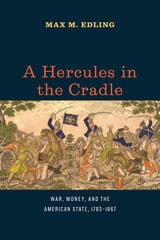
A Hercules in the Cradle
War, Money, and the American State, 1783–1867Max M. Edling
University of Chicago Press, 2014
Two and a half centuries after the American Revolution the United States stands as one of the greatest powers on earth and the undoubted leader of the western hemisphere. This stupendous evolution was far from a foregone conclusion at independence. The conquest of the North American continent required violence, suffering, and bloodshed. It also required the creation of a national government strong enough to go to war against, and acquire territory from, its North American rivals.
In A Hercules in the Cradle, Max M. Edling argues that the federal government’s abilities to tax and borrow money, developed in the early years of the republic, were critical to the young nation’s ability to wage war and expand its territory. He traces the growth of this capacity from the time of the founding to the aftermath of the Civil War, including the funding of the War of 1812 and the Mexican War. Edling maintains that the Founding Fathers clearly understood the connection between public finance and power: a well-managed public debt was a key part of every modern state. Creating a debt would always be a delicate and contentious matter in the American context, however, and statesmen of all persuasions tried to pay down the national debt in times of peace.

A History of Trust in Ancient Greece
Steven Johnstone
University of Chicago Press, 2011

A Land of Milk and Butter
How Elites Created the Modern Danish Dairy IndustryMarkus Lampe and Paul Sharp
University of Chicago Press, 2018
This book presents a radical retelling of this story, placing (largely German-speaking) landed elites—rather than the Danish peasantry—at center stage. After acquiring estates in Denmark, these elites imported and adapted new practices from outside the kingdom, thus embarking on an ambitious program of agricultural reform and sparking a chain of events that eventually led to the emergence of Denmark’s famous peasant cooperatives in 1882. A Land of Milk and Butter presents a new interpretation of the origin of these cooperatives with striking implications for developing countries today.

A Long, Deep Furrow
Three Centuries of Farming in New EnglandHoward S. Russell
Brandeis University Press, 1982
A Political Economy of Justice
Edited by Danielle Allen, Yochai Benkler, Leah Downey, Rebecca Henderson, and Josh Simons
University of Chicago Press, 2022
If we can agree that our current social-political moment is tenuous and unsustainable—and indeed, that may be the only thing we can agree on right now—then how do markets, governments, and people interact in this next era of the world? A Political Economy of Justice considers the strained state of our political economy in terms of where it can go from here. The contributors to this timely and essential volume look squarely at how normative and positive questions about political economy interact with each other—and from that beginning, how to chart a way forward to a just economy.
A Political Economy of Justice collects fourteen essays from prominent scholars across the social sciences, each writing in one of three lanes: the measures of a just political economy; the role of firms; and the roles of institutions and governments. The result is a wholly original and urgent new benchmark for the next stage of our democracy.
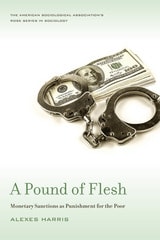
A Pound of Flesh
Monetary Sanctions as Punishment for the PoorAlexes Harris
Russell Sage Foundation, 2016
Over seven million Americans are either incarcerated, on probation, or on parole, with their criminal records often following them for life and affecting access to higher education, jobs, and housing. Court-ordered monetary sanctions that compel criminal defendants to pay fines, fees, surcharges, and restitution further inhibit their ability to reenter society. In A Pound of Flesh, sociologist Alexes Harris analyzes the rise of monetary sanctions in the criminal justice system and shows how they permanently penalize and marginalize the poor. She exposes the damaging effects of a little-understood component of criminal sentencing and shows how it further perpetuates racial and economic inequality.
Harris draws from extensive sentencing data, legal documents, observations of court hearings, and interviews with defendants, judges, prosecutors, and other court officials. She documents how low-income defendants are affected by monetary sanctions, which include fees for public defenders and a variety of processing charges. Until these debts are paid in full, individuals remain under judicial supervision, subject to court summons, warrants, and jail stays. As a result of interest and surcharges that accumulate on unpaid financial penalties, these monetary sanctions often become insurmountable legal debts which many offenders carry for the remainder of their lives. Harris finds that such fiscal sentences, which are imposed disproportionately on low-income minorities, help create a permanent economic underclass and deepen social stratification.
A Pound of Flesh delves into the court practices of five counties in Washington State to illustrate the ways in which subjective sentencing shapes the practice of monetary sanctions. Judges and court clerks hold a considerable degree of discretion in the sentencing and monitoring of monetary sanctions and rely on individual values—such as personal responsibility, meritocracy, and paternalism—to determine how much and when offenders should pay. Harris shows that monetary sanctions are imposed at different rates across jurisdictions, with little or no state government oversight. Local officials’ reliance on their own values and beliefs can also push offenders further into debt—for example, when judges charge defendants who lack the means to pay their fines with contempt of court and penalize them with additional fines or jail time.
A Pound of Flesh provides a timely examination of how monetary sanctions permanently bind poor offenders to the judicial system. Harris concludes that in letting monetary sanctions go unchecked, we have created a two-tiered legal system that imposes additional burdens on already-marginalized groups.
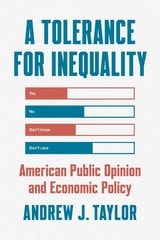
A Tolerance for Inequality
American Public Opinion and Economic PolicyAndrew J. Taylor
University of Chicago Press, 2025
A nuanced reassessment of US democratic responsiveness and public opinion on economic policy that explores the real reasons government does not do more to mitigate inequality.
Many believe that the United States’ growing economic inequality is the result of a political system that has been captured by wealthy elites. But is economic capture actually the problem? In A Tolerance for Inequality, Andrew J. Taylor examines this question from multiple angles, drawing on public opinion data and analyses of representation in Congress. Taylor finds that economic policy outcomes are more reflective of public opinion than the common wisdom suggests.
Broadly, less-affluent Americans’ policy preferences are not meaningfully different from the preferences of other Americans, and Washington is responsive to these preferences. Although politicians are more affluent, on average, than most Americans, this does not prevent them from representing the economic views of their poorer constituents. Today’s Democratic Party is more interested in regulation and supplying public goods than redistributing wealth downwards, and political reforms designed to provide more equal outcomes are largely misguided. In short, Americans get the kind of economy they at least say they want.
A Watershed Moment
The American West in the Age of LimitsEdited by Robert Frodeman, Evelyn Brister, and Luther Propst
University of Utah Press, 2024
The volume presents practical approaches to land use, land management, and community planning that are motivated by philosophical views on justice, quality of life, and sustainability in the American West. The contributors are policymakers, government employees, land and water managers, urban planners, biologists, tribal members, writers, and academics from a variety of backgrounds and perspectives. The result is a compelling vision of place-based, policy-oriented sustainability across the West.
Accelerating Energy Innovation
Insights from Multiple SectorsEdited by Rebecca M. Henderson and Richard G. Newell
University of Chicago Press, 2011
Accelerating energy innovation could be an important part of an effective response to the threat of climate change. Written by a stellar group of experts in the field, this book complements existing research on the subject with an exploration of the role that public and private policy have played in enabling—and sustaining—swift innovation in a variety of industries, from agriculture and the life sciences to information technology. Chapters highlight the factors that have determined the impact of past policies, and suggest that effectively managed federal funding, strategies to increase customer demand, and the enabling of aggressive competition from new firms are important ingredients for policies that affect innovative activity.

Adapting to the Land
A History of Agriculture in ColoradoJohn F. Freeman
University Press of Colorado, 2021
Ancestral Puebloans farmed and grazed within the limits of nature. Early settlers adjusted their cultivation methods through trial and error, while later agriculturists relied on research and technical advice from the Colorado Agricultural College. As part of wartime mobilization, the federal government prompted farmers to efficiently increase yields. To meet the demand for food and fiber scientific and technical innovations led to the development of new plant cultivars and livestock breeds, advances in mechanization, and widespread use of synthetic amendments. Increasing concern over soil fertility and the loss of irrigation water to urbanization contributed to more changes. Despite, or perhaps because of, what we see today along the Front Range, Colorado may still have a chance to slow or even reverse its seemingly unrestrained growth, creating a more vibrant, earth-friendly society in which agriculture plays an increasingly significant part. Scientific discoveries and innovations in regenerative cultivation are clearing the path to a more sustainable future.
Adapting to the Land adds an ecological and horticultural perspective to historical interpretations of recurring agricultural issues in the state and tracks the concept of stewardship, suggesting that spiritual beliefs continue to contribute to debates over acceptable agricultural practices and the effects of urbanization upon the land. This book will be a key resource for students, scholars, and general readers interested in agricultural and Colorado history, sustainability, and rural sociology.
Advances in the Economics of Aging
Edited by David A. Wise
University of Chicago Press, 1996
Specific topics include the effect of labor market rigidities on the employment of older workers; the effect on retirement of the availability of continuation coverage benefits; and the influence of the prospective payment system (PPS) on rising Medicare costs. Also considered are the effects of health and wealth on living arrangement decisions; the incentive effects of employer-provided pension plans; the degree of substitution between 401(k) plans and other employer-provided retirement saving arrangements; and the extent to which housing wealth determines how much the elderly save and consume.
Two final studies use simulations that describe the implications of stylized economic models of behavior among the elderly. This timely volume will be of interest to anyone concerned with the economics of aging.

African Entrepreneurship
Muslim Fula Merchants in Sierra LeoneAlusine Jalloh
Ohio University Press, 1999
Departing from the prevailing scholarship, Jalloh characterizes the Fula businesses as independent, rather than appendages of Western expatriate commerce. In addition to establishing successful businesses, Fula merchants established Islamic educational institutions for propogating the Muslim faith and promoting Islamic scholarship.
This study also examines the evolution of Fula chieftaincy from the colonial era to the postcolonial period and documents the importance of mercantile wealth and networks in the election of Fula chiefs in Freetown. African Entrepreneurship makes an important contribution to the understudied role of African business in Sierra Leone.
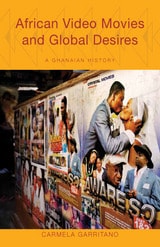
African Video Movies and Global Desires
A Ghanaian HistoryCarmela Garritano
Ohio University Press, 2013

After a California Earthquake
Attitude and Behavior ChangeRisa Palm and Michael E. Hodgson
University of Chicago Press, 1992
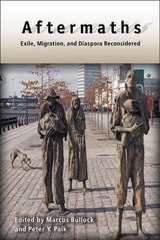
Aftermaths
Exile, Migration, and Diaspora ReconsideredBullock, Marcus
Rutgers University Press, 2008
Marcus Bullock and Peter Y. Paik, in bringing this collection together, show we have reached a moment in history when it is imperative to question prevailing intellectual models. The interconnectedness of the world's economies, the contributors argue, can exacerbate existing antagonisms or create new ones. With essays by Ihab Hassan, Paul Brodwin, and Helen Fehervary, among others, Aftermaths engages not only with important academic topics but also with the leading political issues of the day.
Aging Issues in the United States and Japan
Edited by Seiritsu Ogura, Toshiaki Tachibanaki, and David A. Wise
University of Chicago Press, 2001
Given the undeniable global importance of the Japanese and U.S. economies, these innovative essays shed welcome new light on the complex correlations between aging and economic behavior. This insightful work not only deepens our understanding of the Japanese and American economic landscapes but, through careful examination of the comparative social and economic data, clarifies the complex relation between aging societies, public policies, and economic outcomes.
Aging and Old Age
Richard A. Posner
University of Chicago Press, 1995
Aging and Old Age offers fresh insight into a wide range of social and political issues relating to the elderly, such as health care, crime, social security, and discrimination. From the dread of death to the inordinate law-abidingness of the old, from their loquacity to their penny-pinching, Posner paints a surprisingly rich, revealing, and unsentimental portrait of the millions of elderly people in the United States. He explores issues such as age discrimination in employment, creativity and leadership as functions of age, and the changing social status of the elderly. Why are old people, presumably with less to lose, more unwilling to take risks than young people? Why don't the elderly in the United States command the respect and affection they once did and still do in other countries? How does aging affect driving and criminal records? And how does aging relate to creativity across different careers?
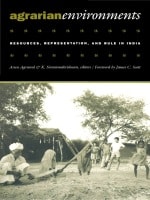
Agrarian Environments
Resources, Representations, and Rule in IndiaArun Agrawal, ed.
Duke University Press, 2000
Editors Arun Agrawal and K. Sivaramakrishnan claim that rural social change in India cannot be understood without exploring how environmental changes articulate major aspects of agrarian transformations—technological, cultural, and political—in the last two centuries. In order to examine these issues, they have reached beyond the confines of single disciplinary allegiances or methodological loyalties to bring together anthropologists, historians, political scientists, geographers, and environmental scientists who are significantly informed by interdisciplinary research. Drawing on extensive field and archival research, the contributors demonstrate the powerful political implications of blurring the boundaries between dichotomous cultural representations, combine conceptual analyses with specific case studies, and look at why competing powers chose to emphasize particular representations of land use or social relations. By providing a more textured analysis of how categories emerge and change, this work offers the possibility of creating crucial alliances across populations that have historically been assumed to lack mutual goals.
Agrarian Environments will be valuable to those in political science, Asian studies, and environmental studies.
Contributors. Arun Agrawal, Mark Baker, Molly Chattopadhyaya, Vinay Gidwani, Sumit Guha, Shubhra Gururani, Cecile Jackson, David Ludden, Haripriya Rangan, Paul Robbins, Vasant Saberwal, James C. Scott, K. Sivaramakrishnan, Ajay Skaria, Jennifer Springer, Darren Zook
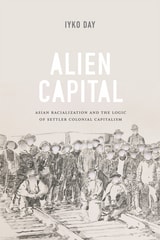
Alien Capital
Asian Racialization and the Logic of Settler Colonial CapitalismIyko Day
Duke University Press, 2016
All the Boats on the Ocean
How Government Subsidies Led to Global OverfishingCarmel Finley
University of Chicago Press, 2017
In this transnational, interdisciplinary history, Carmel Finley answers these questions and more as she explores how government subsidies propelled the expansion of fishing from a coastal, in-shore activity into a global industry. While nation states struggling for ocean supremacy have long used fishing as an imperial strategy, the Cold War brought a new emphasis: fishing became a means for nations to make distinct territorial claims. A network of trade policies and tariffs allowed cod from Iceland and tuna canned in Japan into the American market, destabilizing fisheries in New England and Southern California. With the subsequent establishment of tuna canneries in American Samoa and Puerto Rico, Japanese and American tuna boats moved from the Pacific into the Atlantic and Indian Oceans after bluefin. At the same time, government subsidies in nations such as Spain and the Soviet Union fueled fishery expansion on an industrial scale, with the Soviet fleet utterly depleting the stock of rosefish (or Pacific ocean perch) and other groundfish from British Columbia to California. This massive global explosion in fishing power led nations to expand their territorial limits in the 1970s, forever changing the seas.
Looking across politics, economics, and biology, All the Boats on the Ocean casts a wide net to reveal how the subsidy-driven expansion of fisheries in the Pacific during the Cold War led to the growth of fisheries science and the creation of international fisheries management. Nevertheless, the seas are far from calm: in a world where this technologically advanced industry has enabled nations to colonize the oceans, fish literally have no place left to hide, and the future of the seas and their fish stocks is uncertain.
Allocation of Income within the Household
Edward P. Lazear and Robert T. Michael
University of Chicago Press, 1988
Lazear and Michael also explore the implications their study may hold for the process of determining child support payments in households that dissolve. They argue that, unless the spending of every dollar can be monitored, alimony cannot be disentangled from child support. They also develop several criteria by which income might be distributed among family members, and, using one of those criteria, they present a series of tables that suggest the appropriate payment from one parent to another given family size, structure, and income level. Their model is particularly useful because it takes account of the ways other family members who were not part of the original household may contribute income to the new household. Other issues considered include the appropriate way to deal with children with special needs and the timing of transfer payments.
America's Inequality Trap
Nathan J. Kelly
University of Chicago Press, 2019
Nathan J. Kelly argues that a key reason for this is that rising concentrations of wealth create a politics that makes reducing economic inequality more difficult. Kelly convincingly shows that, when a small fraction of the people control most of the economic resources, they also hold a disproportionate amount of political power, hurtling us toward a self-perpetuating plutocracy, or an “inequality trap.” Among other things, the rich support a broad political campaign that convinces voters that policies to reduce inequality are unwise and not in the average voter’s interest, regardless of the real economic impact. They also take advantage of interest groups they generously support to influence Congress and the president, as well as state governments, in ways that stop or slow down reform. One of the key implications of this book is that social policies designed to combat inequality should work hand-in-hand with political reforms that enhance democratic governance and efforts to fight racism, and a coordinated effort on all of these fronts will be needed to reverse the decades-long trend.
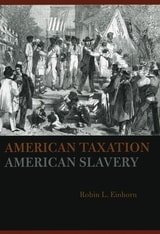
American Taxation, American Slavery
Robin L. Einhorn
University of Chicago Press, 2006
For all the recent attention to the slaveholding of the founding fathers, we still know remarkably little about the influence of slavery on American politics. American Taxation, American Slavery tackles this problem in a new way. Rather than parsing the ideological pronouncements of charismatic slaveholders, it examines the concrete policy decisions that slaveholders and non-slaveholders made in the critical realm of taxation. The result is surprising—that the enduring power of antigovernment rhetoric in the United States stems from the nation’s history of slavery rather than its history of liberty.
We are all familiar with the states’ rights arguments of proslavery politicians who wanted to keep the federal government weak and decentralized. But here Robin Einhorn shows the deep, broad, and continuous influence of slavery on this idea in American politics. From the earliest colonial times right up to the Civil War, slaveholding elites feared strong democratic government as a threat to the institution of slavery. American Taxation, American Slavery shows how their heated battles over taxation, the power to tax, and the distribution of tax burdens were rooted not in debates over personal liberty but rather in the rights of slaveholders to hold human beings as property. Along the way, Einhorn exposes the antidemocratic origins of the popular Jeffersonian rhetoric about weak government by showing that governments were actually more democratic—and stronger—where most people were free.
A strikingly original look at the role of slavery in the making of the United States, American Taxation, American Slavery will prove essential to anyone interested in the history of American government and politics.
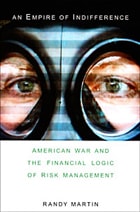
An Empire of Indifference
American War and the Financial Logic of Risk ManagementRandy Martin
Duke University Press, 2007
Drawing on theorists including Michel Foucault, Giorgio Agamben, Michael Hardt, Antonio Negri, and Achille Mbembe, Martin illuminates a frightening financial logic that must be understood in order to be countered. Martin maintains that finance divides the world between those able to avail themselves of wealth opportunities through risk taking (investors) and those who cannot do so, who are considered “at risk.” He contends that modern-day American imperialism differs from previous models of imperialism, in which the occupiers engaged with the occupied to “civilize” them, siphon off wealth, or both. American imperialism, by contrast, is an empire of indifference: a massive flight from engagement. The United States urges an embrace of risk and self-management on the occupied and then ignores or dispossesses those who cannot make the grade.
Analyses in the Economics of Aging
Edited by David A. Wise
University of Chicago Press, 2005
The volume begins with a discussion of the risks and merits of 401(k) plans. Subsequent chapters present recent analysis of the growth of Medicare costs; the different aspects of disability; and the evolution of health, wealth, and living arrangements over the life course. Keeping with the global tradition of previous volumes, Analyses in the Economics of Aging also includes comparative studies on savings behavior in Italy, the Netherlands, and the United States; an examination of household savings among different age groups in Germany; and a chapter devoted to population aging and the plight of widows in India.
Carefully compiled and containing some of the most cutting-edge research and analysis available, this volume should be of interest to any specialist or policymaker concerned with ongoing changes in savings and retirement behaviors.
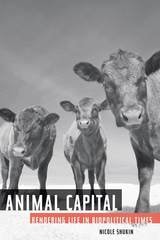
Animal Capital
Rendering Life in Biopolitical TimesNicole Shukin
University of Minnesota Press, 2009
Illuminates the profound contingency of market life on animal figures and flesh
The juxtaposition of biopolitical critique and animal studies—two subjects seldom theorized together—signals the double-edged intervention of Animal Capital. Nicole Shukin pursues a resolutely materialist engagement with the “question of the animal,” challenging the philosophical idealism that has dogged the question by tracing how the politics of capital and of animal life impinge on one another in market cultures of the twentieth and early twenty-first centuries.
Shukin argues that an analysis of capital’s incarnations in animal figures and flesh is pivotal to extending the examination of biopower beyond its effects on humans. “Rendering” refers simultaneously to cultural technologies and economies of mimesis and to the carnal business of boiling down and recycling animal remains. Rendering’s accommodation of these discrepant logics, she contends, suggests a rubric for the critical task of tracking the biopolitical conditions and contradictions of animal capital across the spaces of culture and economy.From the animal capital of abattoirs and automobiles, films and mobile phones, to pandemic fear of species-leaping diseases such as avian influenza and mad cow, Shukin makes startling linkages between visceral and virtual currencies in animal life, illuminating entanglements of species, race, and labor in the conditions of capitalism. In reckoning with the violent histories and intensifying contradictions of animal rendering, Animal Capital raises provocative and pressing questions about the cultural politics of nature.
Animal Traffic
Lively Capital in the Global Exotic Pet TradeRosemary-Claire Collard
Duke University Press, 2020

Another Arabesque
Syrian-Lebanese Ethnicity in Neoliberal BrazilJohn Tofik Karam
Temple University Press, 2006
Apartheid’s Leviathan
Electricity and the Power of Technological AmbivalenceFaeeza Ballim
Ohio University Press, 2023

Apollo and Vulcan
The Art Markets in Italy, 1400-1700Guido Guerzoni
Michigan State University Press, 2011
Appropriately Indian
Gender and Culture in a New Transnational ClassSmitha Radhakrishnan
Duke University Press, 2011
Radhakrishnan explains how this transnational class creates an Indian culture that is self-consciously distinct from Western culture, yet compatible with Western cosmopolitan lifestyles. She describes the material and symbolic privileges that accrue to India’s high-tech workers, who often claim ordinary middle-class backgrounds, but are overwhelmingly urban and upper caste. They are also distinctly apolitical and individualistic. Members of this elite class practice a decontextualized version of Hinduism, and they absorb the ideas and values that circulate through both Indian and non-Indian multinational corporations. Ultimately, though, global Indianness is rooted and configured in the gendered sphere of home and family.
Archaeology of Large-Scale Manipulation of Prey
The Economic and Social Dynamics of Mass HuntingKristen A. Carlson
University Press of Colorado, 2018
The Archaeology of Large-Scale Manipulation of Prey explores the social and functional aspects of large-scale hunting adaptations in the archaeological record. Mass-kill hunting strategies are ubiquitous in human prehistory and exhibit culturally specific economic, social, environmental, and demographic markers. Here, seven case studies—primarily from the Americas and spanning from the Folsom period on the Great Plains to the ethnographic present in Australia—expand the understanding of large-scale hunting methods beyond the customary role of subsistence and survival to include the social and political realms within which large-scale hunting adaptations evolved.
Addressing a diverse assortment of archaeological issues relating to the archaeological signatures and interpretation of mass-kill sites, The Archaeology of Large-Scale Manipulation of Prey reevaluates and rephrases the deep-time development of hunting and the themes of subsistence to provide a foundation for the future study of hunting adaptations around the globe. Authors illustrate various perspectives and avenues of investigation, making this an important contribution to the field of zooarchaeology and the study of hunter-gatherer societies throughout history. The book will appeal to archaeologists, ethnologists, and ecologists alike.
Contributors: Jane Balme, Jonathan Driver, Adam C. Graves, David Maxwell, Ulla Odgaard, John D. Speth, María Nieves Zedeño
Art & Money
Marc Shell
University of Chicago Press, 1995
Unlike traditional approaches to the topic, Art & Money is not a study of money and exchange as an artistic "theme." It is also not a study of economics as a context for the history of art. Rather, it is a path-breaking exploration of the internal logic—the set of meanings and values—common to both money and art.
Art & Money provides striking insight into current matters of art collection, counterfeiting, and problems of attribution, into the general relation between word and image, and into controversies over taxation and crises or scandals in the financial world. Shell's historical range is immense, and he fills this study with amusing anecdotes and insights ranging from the relic of the Holy Foreskin to the state's arrest of J. S. G. Boggs, a conceptual artist who draws money. Illustrated with over one hundred halftones and eight color plates, this stunning volume will force a rethinking of our old presumptions about where money ends and art begins.
Art Management
Entrepreneurial StyleGiep Hagoort
Eburon Academic Publishers, 2003

Art Systems
Brazil and the 1970sBy Elena Shtromberg
University of Texas Press, 2016
From currency and maps to heavily censored newspapers and television programming, Art Systems explores visual forms of critique and subversion during the height of Brazilian dictatorship, drawing sometimes surprising connections between artistic production and broader processes of social exchange during a period of authoritarian modernization. Positioning the works beyond the prism of politics, Elena Shtromberg reveals subtle forms of subversion and critique that reinvented the artists’ political terrain.
Analyzing key examples from Cildo Meireles, Antonio Manuel, Artur Barrio, Anna Bella Geiger, Sonia Andrade, Geraldo Mello, and others, the book offers a new framework for theorizing artistic practice. By focusing on the core economic, media, technological, and geographic conditions that circumscribed artistic production during this pivotal era, Shtromberg excavates an array of art systems that played a role in the everyday lives of Brazilians. An examination of the specific historical details of the social systems that were integrated into artistic production, this unique study showcases works that were accessed by audiences far outside the confines of artistic institutions. Proliferating during one of Brazil’s most socially and politically fraught decades, the works—spanning cartography to video art—do not conform to an easily identifiable style, form, material use, or medium. As a result of this breadth, Art Systems gives voice to the multifaceted forces at play in a unique chapter of Latin American cultural history.
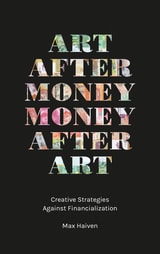
Art after Money, Money after Art
Creative Strategies Against FinancializationMax Haiven
Pluto Press, 2018
Even as he shows how imaginary money and the so-called “creative economy” extract an artist’s potential, Haiven identifies and assesses a range of creative strategies for mocking, decrypting, hacking, sabotaging, and exiting capitalism through art. Focusing on the ways contemporary artists understand, imagine, and contend with material and immaterial forms of cash, debt, and credit, Haiven reveals the potential for creativity and resistance in a world dominated by financialization.
Written for artists, activists, and scholars, this book takes seriously the need to understand and resist capitalism in an age of corporate abuse and exploitation.
Art and Postcapitalism
Aesthetic Labour, Automation and Value ProductionDave Beech
Pluto Press, 2019
Art and Postcapitalism
Aesthetic Labour, Automation and Value ProductionDave Beech
Pluto Press, 2019
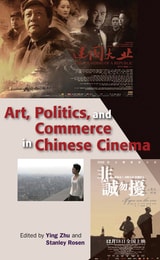
Art, Politics, and Commerce in Chinese Cinema
Edited by Ying Zhu and Stanley Rosen
Hong Kong University Press, 2010

Artery
Racial Ecologies on Colombia's Magdalena RiverAustin Zeiderman
Duke University Press, 2025

Artwash
Big Oil and the ArtsMel Evans
Pluto Press, 2015
Reflecting on the role and function of art galleries, Artwash considers how the association with oil money might impede these institutions in their cultural endeavors. Outside the gallery space, Mel Evans examines how corporate sponsorship of the arts can obscure the strategies of corporate executives to maintain brand identity and promote their public image through cultural philanthropy. Ultimately, Evans sounds a note of hope, presenting ways artists themselves have challenged the ethics of contemporary art galleries and examining how cultural institutions might change.

Assembly Codes
The Logistics of MediaMatthew Hockenberry, Nicole Starosielski, and Susan Zieger, editors
Duke University Press, 2021
Contributors
Ebony Coletu, Kay Dickinson, Stefano Harney, Matthew Hockenberry, Tung-Hui Hu, Shannon Mattern, Fred Moten, Michael Palm, Ned Rossiter, Nicole Starosielski, Liam Cole Young, Susan Zieger
Assessing the Value of Law in Transition Economies
Peter Murrell, Editor
University of Michigan Press, 2001

Assuring Child Support
An Extension of Social SecurityIrwin Garfinkel
Russell Sage Foundation, 1992

Audiences and Publics
When Cultural Engagement Matters for the Public SphereEdited by Sonia Livingstone
Intellect Books, 2005

Autonomy
The Social Ontology of Art under CapitalismNicholas Brown
Duke University Press, 2019

Avocado Dreams
Remaking Salvadoran Life and Art in the Washington, D.C. Metro AreaAna Patricia Rodríguez
University of Arizona Press, 2025
In Avocado Dreams, Ana Patricia Rodríguez draws from her own positionality as a Salvadoran transplant to examine the construction of the unique Salvadoran cultural imaginary made in the greater D.C. area. Through a careful reading of the creative works of local writers, performers, artists, and artivists, Rodríguez demonstrates how the people have remade themselves in relation to the cultural, ethnoracial, and sociolinguistic diversity of the area. She discusses how Salvadoran people have developed unique, intergenerational Salvadoreñidades, manifested in particular speech and symbolic acts, ethnoracial embodiments, and local identity formations in relation to the diverse communities, most notably Black Washingtonians, who co-inhabit the region.
This timely and relevant work not only enriches our understanding of Salvadoran diasporic experiences but also contributes significantly to broader discussions on migration, identity, and cultural production in the United States.