Results by title
501 books match the query 'South' and 48 start with a

A Bed Called Home
Life In The Migrant Labour Hostels of Cape TownMamphela Ramphele
Ohio University Press, 1993
In this challenging study, Dr. Mamphela Ramphele documents the life of the hostel dwellers of Cape Town, for whom a bed is literally a home for both themselves and their families. Elaborating the concept of space in its many dimensions—not just physical, but political, ideological, social, and economic as well—she emphasizes the constraints exerted on hostel dwellers by the limited spaces they inhabit. At the same time, she argues that within these constraints people have managed to find room for manoeuvre, and in her book explores the emancipatory possibilities of their environment.
The text is illustrated with a number of black-and-white photographs taken by Roger Meintjes in the townships and hostels.
A Bold Profession
African Nurses in Rural Apartheid South AfricaLeslie Anne Hadfield
University of Wisconsin Press, 2023
Leslie Anne Hadfield compellingly demonstrates how these women were able to successfully carve out their own professional space and reshape notions of health and healing in the Eastern Cape. Bringing forth the stories of these nurses in their own voices, A Bold Profession is an homage to their dedication to the well-being of their communities. Hadfield sheds light on the struggles of balancing commitment to career and family lives during an oppressive apartheid. The volume fills an important gap for scholars studying the history of women, nursing, and health care in South Africa, illuminating the humanity of health care workers.
A Burning Hunger
One Family’s Struggle Against ApartheidLynda Schuster
Ohio University Press, 2006
Reissued for the 50th anniversary of the Soweto Uprising, A Burning Hunger reveals how one family’s courage ignited resistance and forever changed South Africa.
If the Mandelas were the generals in the fight for black liberation, the Mashininis were the foot soldiers. Theirs is a story of exile, imprisonment, torture, and loss, but also of dignity, courage, and strength in the face of appalling adversity. Originally published in Great Britain to critical acclaim, A Burning Hunger: One Family’s Struggle Against Apartheid tells a deeply moving human story and is one of the seminal books about the struggle against apartheid.
This family, Joseph and Nomkhitha Mashinini and their thirteen children, became immersed in almost every facet of the liberation struggle—from guerrilla warfare to urban insurrection. Although Joseph and Nomkhitha were peaceful citizens who had never been involved in politics, five of their sons became leaders in the antiapartheid movement. When the students of Soweto rose up in 1976 to protest a new rule making Afrikaans the language of instruction, they were led by charismatic young Tsietsi Mashinini. Scores of students were shot down and hundreds were injured. Tsietsi’s actions on that day set in motion a chain of events that would forever change South Africa, define his family, and transform their lives.
A Burning Hunger shows the human catastrophe that plagued generations of black Africans in the powerful story of one religious and law-abiding Soweto family. Basing her narrative on extensive research and interviews, Lynda Schuster richly portrays this remarkable family and in so doing reveals black South Africa during a time of momentous change.
A Historical Atlas of Tibet
Karl E. Ryavec
University of Chicago Press, 2015
Cradled among the world’s highest mountains—and sheltering one of its most devout religious communities—Tibet is, for many of us, an ultimate destination, a place that touches the heavens, a place only barely in our world, at its very end. In recent decades Western fascination with Tibet has soared, from the rise of Tibetan studies in academia to the rock concerts aimed at supporting its independence to the simple fact that most of us—far from any base camp—know exactly what a sherpa is. And yet any sustained look into Tibet as a place, any attempt to find one’s way around its high plateaus and through its deep history, will yield this surprising fact: we have barely mapped it. With this atlas, Karl E. Ryavec rights that wrong, sweeping aside the image of Tibet as Shangri-La and putting in its place a comprehensive vision of the region as it really is, a civilization in its own right. And the results are absolutely stunning.
The product of twelve years of research and eight more of mapmaking, A Historical Atlas of Tibet documents cultural and religious sites across the Tibetan Plateau and its bordering regions from the Paleolithic and Neolithic times all the way up to today. It ranges through the five main periods in Tibetan history, offering introductory maps of each followed by details of western, central, and eastern regions. It beautifully visualizes the history of Tibetan Buddhism, tracing its spread throughout Asia, with thousands of temples mapped, both within Tibet and across North China and Mongolia, all the way to Beijing. There are maps of major polities and their territorial administrations, as well as of the kingdoms of Guge and Purang in western Tibet, and of Derge and Nangchen in Kham. There are town plans of Lhasa and maps that focus on history and language, on population, natural resources, and contemporary politics.
Extraordinarily comprehensive and absolutely gorgeous, this overdue volume will be a cornerstone in cartography, Asian studies, Buddhist studies, and in the libraries or on the coffee tables of anyone who has ever felt the draw of the landscapes, people, and cultures of the highest place on Earth.

A Latin American Music Reader
Views from the SouthJavier F Leon
University of Illinois Press, 2016
Contributors include Marina Alonso Bolaños, Gonzalo Camacho Díaz, José Jorge de Carvalho, Claudio F. Díaz, Rodrigo Cantos Savelli Gomes, Juan Pablo González, Rubén López-Cano, Angela Lühning, Jorge Martínez Ulloa, Maria Ignêz Cruz Mello, Julio Mendívil, Carlos Miñana Blasco, Raúl R. Romero, Iñigo Sánchez Fuarros, Carlos Sandroni, Carolina Santamaría-Delgado, Rodrigo Torres Alvarado, and Alejandro Vera.
A Matter of Rats
A Short Biography of PatnaAmitava Kumar
Duke University Press, 2014
Kumar's ruminations on one of the world's oldest cities, the capital of India's poorest province, are also a meditation on how to write about place. His memory is partial. All he has going for him is his attentiveness. He carefully observes everything that surrounds him in Patna: rats and poets, artists and politicians, a girl's picture in a historian's study, and a sheet of paper on his mother's desk. The result is this unique book, as cutting as it is honest.
A Nervous State
Violence, Remedies, and Reverie in Colonial CongoNancy Rose Hunt
Duke University Press, 2016
A Paler Shade of Red
The 2008 Presidential Election in the SouthBranwell DuBose Kapeluck
University of Arkansas Press, 2009
A Place That Matters Yet
John Gubbins's MuseumAfrica in the Postcolonial WorldSara Byala
University of Chicago Press, 2013
A Primer for Teaching Indian Ocean World History
Ten Design PrinciplesEdward A. Alpers and Thomas F. McDow
Duke University Press, 2024

A Prodigy's Calling
The Early Musical Biography of Cosmas Magaya, Zimbabwean Mbira MasterPaul F. Berliner
University of Chicago Press, 2024
Ethnomusicologist Paul F. Berliner has been studying Zimbabwean mbira for more than fifty years. When he first arrived in what was then Rhodesia after the nation declared independence from the United Kingdom, he met Cosmas Magaya, a mbira player who would become his teacher and lifelong collaborator. A Prodigy’s Calling chronicles the early years of Magaya’s life, documenting the master mbira player’s journey from child prodigy to established expert. As a child, Magaya was immersed in mbira music through his father’s work as a healer and spirit medium. As Magaya grew, so too did his world; his performances extended beyond the family compound as his skill and knowledge increased, bringing him into contact with a society fraught with decolonial conflict.
Following Magaya’s childhood, readers will learn how his upbringing guided his journey through the community’s social networks and how his early sensibilities, proclivities, and talents shaped his development. At the same time, his deepening engagement with music and the ancestors was affected by overlapping tensions between Shona cosmology and Christian ideology, rural and urban lifestyles, and the escalating African nationalist struggle and the white supremacist state. While Magaya’s story reflects profound social changes in the nation, it is also a story of musical apprenticeship. Readers following Magaya’s discovery of ever finer details in the music’s richly layered patterns will enhance their ability to hear mbira music’s forms, variations, and sonic qualities. Linocut illustrations by South African artist Lucas Bambo bring the narrative to life, and Berliner’s spirited storytelling is accompanied by QR codes that take readers directly to recordings of music as Magaya learns it. Appendices for musicians interested in learning or improving their mbira playing complement the story of Magaya’s early life. Inviting the reader into the very tradition it recounts, the book offers intimate insights into the relationships among music, Shona cosmology, and colonial politics in everyday life.
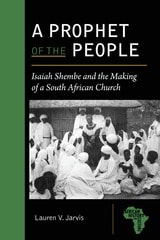
A Prophet of the People
Isaiah Shembe and the Making of a South African ChurchLauren V. Jarvis
Michigan State University Press, 2024

A Rock Garden in the South
Elizabeth A. Lawrence
Duke University Press, 1990
Lawrence, in her usual exquisite prose, deals with the full range of rock gardening topics in this work. She addresses the unique problem of cultivating rock gardens in the South, where the growing season is prolonged and humidity and heat are not conducive to such planting. She describes her own experiences in making a rock garden, with excellent advice on placing stones, constructing steps, ordering plants, and making cuttings.
At the same time, what she writes about here is in large part of interest to gardeners everywhere and for gardens with or without rocks. As always, she thoroughly discusses the plants she has tried—recommending bulbs and other perennials of all sorts, annuals, and woody plants—with poetic descriptions of the plants themselves as well as specific and useful cultural advice. A Rock Garden in the South includes an encyclopedia of plants alphabetized by genus and species and divided into two parts: wood and non-woody plants.

A Rule of Property for Bengal
An Essay on the Idea of Permanent SettlementRanajit Guha
Duke University Press, 1996
By proclaiming the Permanent Settlement in 1793, the British hoped to promote a prosperous capitalist agriculture of the kind that had developed in England. The act renounced for all time the state’s right to raise the assessment already made upon landowners and thus sought to establish a system of property that was, in the British view, necessary for the creation of a stable government. Guha traces the origins of the Permanent Settlement to the anti-feudal ideas of Phillip Francis and the critique of feudalism provided by physiocratic thought, the precursor of political economy. The central question the book asks is how the Permanent Settlement, founded in anti-feudalism and grafted onto India by the most advanced capitalist power of the day became instrumental in the development of a neo-feudal organization of landed property and in the absorption and reproduction of precapitalist elements in a colonial regime.
Guha’s examination of the British attempt to mold Bengal to the contours of its own society without an understanding of the traditions and obligations upon which the Indian agrarian system was based is a truly pioneering work. The implications of A Rule of Property for Bengal remain rich for the current discussions from the postcolonialist perspective on the meaning of modernity and enlightenment.
A Selection of Modernized Recipes from Food in the Civil War
The SouthJennifer Billock
Michigan State University Press, 2015
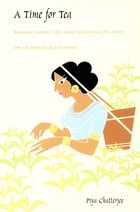
A Time for Tea
Women, Labor, and Post/Colonial Politics on an Indian PlantationPiya Chatterjee
Duke University Press, 2001
Allowing personal, scholarly, and artistic voices to speak in turn and in tandem, Chatterjee discusses the fetishization of women who labor under colonial, postcolonial, and now neofeudal conditions. In telling the overarching story of commodity and empire, A Time for Tea demonstrates that at the heart of these narratives of travel, conquest, and settlement are compelling stories of women workers. While exploring the global and political dimensions of local practices of gendered labor, Chatterjee also reflects on the privileges and paradoxes of her own “decolonization” as a Third World feminist anthropologist. The book concludes with an extended reflection on the cultures of hierarchy, power, and difference in the plantation’s villages. It explores the overlapping processes by which gender, caste, and ethnicity constitute the interlocked patronage system of villages and their fields of labor. The tropes of coercion, consent, and resistance are threaded through the discussion.
A Time for Tea will appeal to anthropologists and historians, South Asianists, and those interested in colonialism, postcolonialism, labor studies, and comparative or international feminism.
Designated a John Hope Franklin Center book by the John Hope Franklin Seminar Group on Race, Religion, and Globalization.

A Will for the Machine
Computerization, Automation, and the Arts in South AfricaMark Sanders
University of Chicago Press, 2026
There are many books about the history and discourses of computerization in the United States but relatively little about these phenomena anywhere in the Global South. In A Will for the Machine, Mark Sanders outlines South Africa’s entry into the computer age in the 1960s and ’70s and explains how it coincided with the high point of apartheid. South Africa’s government viewed automation and computerization as one way of barring Black Africans from skilled work and reserving it for whites. Sanders unpacks this peculiar history, relates it to early twentieth-century struggles around mechanization in mining and telephony in South Africa, and analyzes responses to it by the writers Miriam Tlali and J. M. Coetzee, the artist William Kentridge, and Handspring Puppet Company. Showing how the arts realize ideas about the ethics and politics of automation, Sanders contributes to debates about locally divergent understandings of computer technology and human-computer interaction.
Abiding by Sri Lanka
On Peace, Place, and PostcolonialityQadri Ismail
University of Minnesota Press, 2005
Abiding by Sri Lanka examines how the disciplines of anthropology, history, and literature treat the Sri Lankan ethnic conflict. Anthropology, Ismail contends, approaches Sri Lanka as an object from an “outside” and western point of view. History, addressing the conflict from the “inside,” abides by the place and so promotes change that is nationalist and exclusive. Neither of these fields imagines an inclusive community. Literature, Ismail argues, can.
With close readings of texts that “abide” by Sri Lanka, texts that have a commitment to it, Ismail demonstrates that the problems in Sri Lanka raise fundamental concerns for us all regarding the relationship between democracies and minorities. Recognizing the structural as well as political tendencies of representative democracies to suppress minorities, Ismail rethinks democracy by redefining the concept of the minority perspective, not as a subject-position of numerical insignificance, but as a conceptual space that opens up the possibility for distinction without domination and, ultimately, peace.
Qadri Ismail is associate professor of English at the University of Minnesota. He has also been a journalist in Sri Lanka.
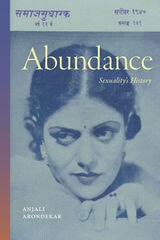
Abundance
Sexuality’s HistoryAnjali Arondekar
Duke University Press, 2023
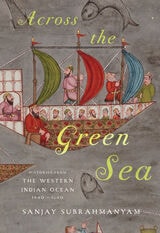
Across the Green Sea
Histories from the Western Indian Ocean, 1440-1640Sanjay Subrahmanyam
University of Texas Press, 2024
A history of two centuries of interactions among the areas bordering the western Indian Ocean, including India, Iran, and Africa.
Beginning in the mid-fifteenth century, the regions bordering the western Indian Ocean—“the green sea,” as it was known to Arabic speakers—had increasing contact through commerce, including a slave trade, and underwent cultural exchange and transformation. Using a variety of texts and documents in multiple Asian and European languages, Across the Green Sea looks at the history of the ocean from a variety of shifting viewpoints: western India; the Red Sea and Mecca; the Persian Gulf; East Africa; and Kerala.
Sanjay Subrahmanyam sets the scene for this region starting with the withdrawal of China's Ming Dynasty and explores how the western Indian Ocean was transformed by the growth and increasing prominence of the Ottoman Empire and the continued spread of Islam into East Africa. He examines how several cities, including Mecca and the vital Indian port of Surat, grew and changed during these centuries, when various powers interacted until famines and other disturbances upended the region in the seventeenth century. Rather than proposing an artificial model of a dominant center and its dominated peripheries, Across the Green Sea demonstrates the complexity of a truly dynamic and polycentric system through the use of connected histories, a method pioneered by Subrahmanyam himself.
Advocacy after Bhopal
Environmentalism, Disaster, New Global OrdersKim Fortun
University of Chicago Press, 2001
Kim Fortun explores these claims by focusing on the dynamics and paradoxes of advocacy in competing power domains. She moves from hospitals in India to meetings with lawyers, corporate executives, and environmental justice activists in the United States to show how the disaster and its effects remain with us. Spiraling outward from the victims' stories, the innovative narrative sheds light on the way advocacy works within a complex global system, calling into question conventional notions of responsibility and ethical conduct. Revealing the hopes and frustrations of advocacy, this moving work also counters the tendency to think of Bhopal as an isolated incident that "can't happen here."
Africa South
Harm J. de Blij
Northwestern University Press, 1962
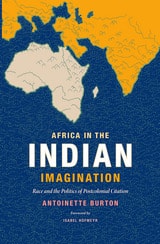
Africa in the Indian Imagination
Race and the Politics of Postcolonial CitationAntoinette Burton
Duke University Press, 2016

Africa's World Cup
Critical Reflections on Play, Patriotism, Spectatorship, and SpaceEdited by Peter Alegi and Chris Bolsmann
University of Michigan Press, 2013
Africa’s World Cup: Critical Reflections on Play, Patriotism, Spectatorship, and Spacefocuses on a remarkable month in the modern history of Africa and in the global history of football. Peter Alegi and Chris Bolsmann are well-known experts on South African football, and they have assembled an impressive team of local and international journalists, academics, and football experts to reflect on the 2010 World Cup and its broader significance, its meanings, complexities, and contradictions.
The World Cup’s sounds, sights, and aesthetics are explored, along with questions of patriotism, nationalism, and spectatorship in Africa and around the world. Experts on urban design and communities write on how the presence of the World Cup worked to refashion urban spaces and negotiate the local struggles in the hosting cities. The volume is richly illustrated by authors’ photographs, and the essays in this volume feature chronicles of match day experiences; travelogues; ethnographies of fan cultures; analyses of print, broadcast, and electronic media coverage of the tournament; reflections on the World Cup’s private and public spaces; football exhibits in South African museums; and critiques of the World Cup’s processes of inclusion and exclusion, as well as its political and economic legacies.
The volume concludes with a forum on the World Cup, including Thabo Dladla, Director of Soccer at the University of KwaZulu-Natal, Mohlomi Kekeletso Maubane, a well-known Soweto-based writer and a soccer researcher, and Rodney Reiners, former professional footballer and current chief soccer writer for the Cape Argus newspaper in Cape Town. This collection will appeal to students, scholars, journalists, and fans.
Cover illustration: South African fan blowing his vuvuzela at South Africa vs. France, Free State Stadium, Bloemfontein, June 22, 2010. Photo by Chris Bolsmann.
African Apocalypse
The Story of Nontetha Nkwenkwe, a Twentieth-Century South African ProphetRobert R. Edgar; Hilary SapireRobert R.
Ohio University Press, 1999

After Yorktown
The Final Struggle for American IndependenceDon Glickstein
Westholme Publishing, 2016
Although most people think the American Revolution ended with the British surrender at Yorktown, Virginia, on October 19, 1781, it did not. The war spread around the world, and exhausted men kept fighting—from the Arctic to Arkansas, from India and Ceylon to Schenectady and South America—while others labored to achieve a final diplomatic resolution.
After Cornwallis’s unexpected loss, George III vowed revenge, while Washington planned his next campaign. Spain, which France had lured into the war, insisted there would be no peace without seizing British-held Gibraltar. Yet the war had spun out of control long before Yorktown. Native Americans and Loyalists continued joint operations against land-hungry rebel settlers from New York to the Mississippi Valley. African American slaves sought freedom with the British. Soon, Britain seized the initiative again with a decisive naval victory in the Caribbean against the Comte de Grasse, the French hero of Yorktown.
In After Yorktown: The Final Struggle for American Independence, Don Glickstein tells the engrossing story of this uncertain and violent time, from the remarkable American and French success in Virginia to the conclusion of the fighting—in India—and then to the last British soldiers leaving America more than two years after Yorktown. Readers will learn about the people—their humor, frustration, fatigue, incredulity, worries; their shock at the savage terrorism each side inflicted; and their surprise at unexpected grace and generosity. Based on an extraordinary range of primary sources, the story encompasses a fascinating cast of characters: a French captain who destroyed a British trading post, but left supplies for Indians to help them through a harsh winter, an American Loyalist releasing a captured Spanish woman in hopes that his act of kindness will result in a prisoner exchange, a Native American leader caught “between two hells” of a fickle ally and a greedy enemy, and the only general to surrender to both George Washington and Napoleon Bonaparte. Finally, the author asks the question we face today: How do you end a war that doesn’t want to end?
After the TRC
Reflections on Truth and ReconciliationWilmot James
Ohio University Press, 2001
Has South Africa dealt effectively with the past, and is the country ready to face the future? What are the challenges facing both government and civil society in the years ahead? These and other questions are explored in this collection of essays by international and local commentators on the Truth and Reconciliation Commission.
A range of perspectives on whether the TRC met its objectives of truth and reconciliation is presented. The areas of particular contention-the payment of reparation, the granting of amnesty, and memorialization-are also examined.
Finally, the major challenges facing South Africa are identified, and ways of meeting these challenges and developing the assets of the nation are explored.
Contributors: Haribert Adam, Kanya Adam, Alex Boraine, Colin Bundy, Mary Burton, John de Gruchy, Richard Goldstone, Willem Heath, Wilmot James, Jeffrey Lever, Mahmood Mamdani, Gary Minkley, Njabulo Ndebele, Dumisa Ntsebeza, Kaizer Nyatsumba, Grace Naledi Pandor, Mamphela Ramphele, Ciraj Rassool, Albie Sachs, Patricia Valdez, Linda van de Vijver, Jan van Eck, Frederik Van Zyl Slabbert, Charles Villa-Vicencio, Francis Wilson, and Leslie Witz
After the Thrill Is Gone
A Decade of Post-Apartheid South Africa, Volume 103Grant Farred and Rita Barnard, eds.
Duke University Press, 0
In a range of politically inflected essays by philosophers, community activists, political scientists, sociologists, literary scholars, and cultural and postcolonial theorists—many of whom are diasporic or resident South Africans—this special issue of SAQ provides a critical look at the realities of black majority governance, at the African National Congress, and at the costs of ANC rule to the populace. One essay draws a condemning sketch of poverty and violence in the townships and the growing communities of squatters that continue despite the emergence of democracy. A philosophical piece contemplates the practice of human rights in a South African society grappling with the memory of apartheid abuses. The fiction and poetry in the collection explore sexual identity, including issues created by the AIDS epidemic, and offer critiques of government policies. Using comic strips, another contributor demonstrates the ability of South African popular culture to satirize the nation’s political status quo. Taken together, the essays in After the Thrill Is Gone open a sobering perspective on South Africa’s recent history, its present, and its future.
Contributors. Rita Barnard, Patrick Bond, Ashwin Desai, Emmanuel Chukwudi Eze, Grant Fared, Michiel Heyns, Shaun Irlam, Neil Lazarus, Michael MacDonald, Zine Magubane, Richard Pithouse, Lesego Rampolokeng, Adam Sitze
Agricultural Reason in the Shadow of Subsistence Capitalism
A Rural Ontology from Western IndiaArjun Appadurai
HAU, 2024
This collection of essays by Arjun Appadurai based on his fieldwork in rural Maharashtra, India, in the early 1980s is one of the few anthropological treatments of agricultural reasoning. In conversation with agronomists, economists, and development anthropologists, the essays explore the ways agricultural technologies, changes in how surface wells are dug and managed, the provision and sharing of food and management of time, issues of scale in studying rural lives, and how local knowledge is formed and transformed reveal the distinctive character of rural Indian sociality. Locating these features in the context of “subsistence capitalism,” Appadurai draws our attention to the importance of relational practices and the pull of autonomy. These essays offer a close look at an agrarian society at the pivotal moment of its encounter with capitalist transformation and study ideas of measurement, sociality, and independence.

Air Castle of the South
WSM and the Making of Music CityCraig Havighurst
University of Illinois Press, 2013
Started by the National Life and Accident Insurance Company in 1925, WSM became one of the most influential and exceptional radio stations in the history of broadcasting and country music. WSM gave Nashville the moniker “Music City USA” as well as a rich tradition of music, news, and broad-based entertainment. With the rise of country music broadcasting and recording between the 1920s and ‘50s, WSM, Nashville, and country music became inseparable, stemming from WSM’s launch of the Grand Ole Opry, popular daily shows like Noontime Neighbors, and early morning artist-driven shows such as Hank Williams on Mother’s Best Flour.
Sparked by public outcry following a proposal to pull country music and the Opry from WSM-AM in 2002, Craig Havighurst scoured new and existing sources to document the station’s profound effect on the character and self-image of Nashville. Introducing the reader to colorful artists and businessmen from the station’s history, including Owen Bradley, Minnie Pearl, Jim Denny, Edwin Craig, and Dinah Shore, the volume invites the reader to reflect on the status of Nashville, radio, and country music in American culture.

Alabama Canoe Rides and Float Trips
John Foshee
University of Alabama Press, 1986
A detailed guide to 102 canoe trips on the Cahaba River and 40 other creeks and rivers within the state.
John H. Foshee’s popular and informative Alabama Canoe Rides and Float Trips has been a favorite of canoeing enthusiasts since 1975, providing a detailed guide to 102 canoe trips on the Cahaba River and 40 other creeks and rivers within the state. The trips highlighted in the book range from 3½ to 14 miles in length, with difficulty factors varying from leisurely float trips to Class 4 rapids.
This handy guide will assist beginning and expert canoeists in the selection of and preparation for a variety of float experiences. The author gives suggestions for river safety and makes recommendations for equipment. In addition, he points out major danger areas and obstacles that may be encountered and includes information on river access and use of topographical maps. An appendix contains brief descriptions of the rides, including their put-ins and take-outs, and follows the general format of the individual trip descriptions.

Alabama's Civil Rights Trail
An Illustrated Guide to the Cradle of FreedomFrye Gaillard
University of Alabama Press, 2009
Alabama’s great civil rights events in a compact and accessible narrative, paired with a practical guide to Alabama’s preserved civil rights sites and monuments
No other state has embraced and preserved its civil rights history more thoroughly than Alabama. Nor is there a place where that history is richer. Alabama’s Civil Rights Trail tells of Alabama’s great civil rights events, as well as its lesser-known moments, in a compact and accessible narrative, paired with a practical guide to Alabama’s preserved civil rights sites and monuments.
In this history of Alabama’s civil rights movement, Cradle of Freedom (University of Alabama Press, 2004), Frye Gaillard contends that Alabama played the lead role in a historic movement that made all citizens of the nation, black and white, more free. This book, geared toward the casual traveler and the serious student alike, showcases in a vividly illustrated and compelling manner, valuable and rich details. It provides a user-friendly, graphic tool for the growing number of travelers, students, and civil rights pilgrims who visit the state annually.
The story of the civil rights movement in Alabama is told city by city, region by region, and town by town, with entries on Montgomery, Birmingham, Selma, Tuscaloosa, Tuskegee, and Mobile, as well as chapters on the Black Belt and the Alabama hill country. Smaller but important locales such as Greensboro, Monroeville, and Scottsboro are included, as are more obscure sites like Hale County’s Safe House Black History Museum and the birthplace of the Black Panther Party in Lowndes County.
Alimentary Tracts
Appetites, Aversions, and the PostcolonialParama Roy
Duke University Press, 2010
Interpreting texts that have addressed cooking, dining, taste, hungers, excesses, and aversions in South Asia and its diaspora since the mid-nineteenth century, Roy relates historical events and literary figures to tropes of disgust, abstention, dearth, and appetite. She analyzes the fears of pollution and deprivation conveyed in British accounts of the so-called Mutiny of 1857, complicates understandings of Mohandas K. Gandhi’s vegetarianism, examines the “famine fictions” of the novelist-actor Mahasweta Devi, and reflects on the diasporic cookbooks and screen performances of Madhur Jaffrey. This account of richly visceral global modernity furnishes readers with a new idiom for understanding historical action and cultural transformation.
Allies In Adversity
The Frontline States In SouthernGilbert M. Khadiagala
Ohio University Press, 1994

American Audacity
Literary Essays North and SouthChristopher Benfey
University of Michigan Press, 2010
---William H. Pritchard

An Illustrated Guide to Virginia's Confederate Monuments
Timothy S. Sedore
Southern Illinois University Press, 2011
From well-known battlefields, such as Manassas, Fredericksburg, and Appomattox, to lesser-known sites, such as Sinking Spring Cemetery and Rude’s Hill, Sedore leads readers on a vivid journey through Virginia’s Confederate history. Tablets, monoliths, courthouses, cemeteries, town squares, battlefields, and more are cataloged in detail and accompanied by photographs and meticulous commentary. Each entry contains descriptions, fascinating historical information, and location, providing a complete portrait of each site.
Much more than a visual tapestry or a tourist’s handbook, An Illustrated Guide to Virginia’s Confederate Monuments draws on scholarly and field research to reveal these sites as public efforts to reconcile mourning with Southern postwar ideologies. Sedore analyzes in depth the nature of these attempts to publicly explain Virginia’s sense of grief after the war, delving deep into the psychology of a traumatized area. From commemorations of famous generals to memories of unknown soldiers, the dead speak from the pages of this sweeping companion to history.
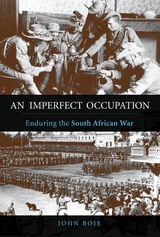
An Imperfect Occupation
Enduring the South African WarJohn Boje
University of Illinois Press, 2015

Animal Labor and Colonial Warfare
James L. Hevia
University of Chicago Press, 2018
In Animal Labor and Colonial Warfare, James Hevia examines the use of camels, mules, and donkeys in colonial campaigns of conquest and pacification, starting with the Second Afghan War—during which an astonishing 50,000 to 60,000 camels perished—and ending in the early twentieth century. Hevia explains how during the nineteenth and twentieth centuries a new set of human-animal relations were created as European powers and the United States expanded their colonial possessions and attempted to put both local economies and ecologies in the service of resource extraction. The results were devastating to animals and human communities alike, disrupting centuries-old ecological and economic relationships. And those effects were lasting: Hevia shows how a number of the key issues faced by the postcolonial nation-state of Pakistan—such as shortages of clean water for agriculture, humans, and animals, and limited resources for dealing with infectious diseases—can be directly traced to decisions made in the colonial past. An innovative study of an underexplored historical moment, Animal Labor and Colonial Warfare opens up the animal studies to non-Western contexts and provides an empirically rich contribution to the emerging field of multispecies historical ecology.

Apartheid Remains
Sharad Chari
Duke University Press, 2024

Apartheid’s Black Soldiers
Un-national Wars and Militaries in Southern AfricaLennart Bolliger
Ohio University Press, 2021
New oral histories from Black Namibian and Angolan troops who fought in apartheid South Africa’s security forces reveal their involvement, and its impact on their lives, to be far more complicated than most historical scholarship has acknowledged.
In anticolonial struggles across the African continent, tens of thousands of African soldiers served in the militaries of colonial and settler states. In southern Africa, they often made up the bulk of these militaries and, in some contexts, far outnumbered those who fought in the liberation movements’ armed wings. Despite these soldiers' significant impact on the region’s military and political history, this dimension of southern Africa’s anticolonial struggles has been almost entirely ignored in previous scholarship.
Black troops from Namibia and Angola spearheaded apartheid South Africa’s military intervention in their countries’ respective anticolonial war and postindependence civil war. Drawing from oral history interviews and archival sources, Lennart Bolliger challenges the common framing of these wars as struggles of national liberation fought by and for Africans against White colonial and settler-state armies.
Focusing on three case studies of predominantly Black units commanded by White officers, Bolliger investigates how and why these soldiers participated in South Africa’s security forces and considers the legacies of that involvement. In tackling these questions, he rejects the common tendency to categorize the soldiers as “collaborators” and “traitors” and reveals the un-national facets of anticolonial struggles.
Finally, the book’s unique analysis of apartheid military culture shows how South Africa’s military units were far from monolithic and instead developed distinctive institutional practices, mythologies, and concepts of militarized masculinity.
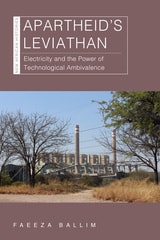
Apartheid’s Leviathan
Electricity and the Power of Technological AmbivalenceFaeeza Ballim
Ohio University Press, 2023
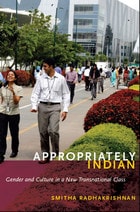
Appropriately Indian
Gender and Culture in a New Transnational ClassSmitha Radhakrishnan
Duke University Press, 2011
Radhakrishnan explains how this transnational class creates an Indian culture that is self-consciously distinct from Western culture, yet compatible with Western cosmopolitan lifestyles. She describes the material and symbolic privileges that accrue to India’s high-tech workers, who often claim ordinary middle-class backgrounds, but are overwhelmingly urban and upper caste. They are also distinctly apolitical and individualistic. Members of this elite class practice a decontextualized version of Hinduism, and they absorb the ideas and values that circulate through both Indian and non-Indian multinational corporations. Ultimately, though, global Indianness is rooted and configured in the gendered sphere of home and family.

Archives and Justice
Verne Harris
Society of American Archivists, 2007
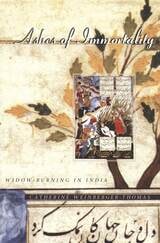
Ashes of Immortality
Widow-Burning in IndiaCatherine Weinberger-Thomas
University of Chicago Press, 1999
Ashes of Immortality attempts to see the satis through Hindu eyes, providing an extensive experiential and psychoanalytic account of ritual self-sacrifice and self-mutilation in South Asia. Based on fifteen years of fieldwork in northern India, where the state-banned practice of sati reemerged in the 1970s, as well as extensive textual analysis, Weinberger-Thomas constructs a radically new interpretation of satis. She shows that their self-immolation transcends gender, caste and class, region and history, representing for the Hindus a path to immortality.

Asian Americans in Dixie
Race and Migration in the SouthEdited by Jigna Desai and Khyati Y. Joshi
University of Illinois Press, 2013

At the Limits of Cure
Bharat Jayram Venkat
Duke University Press, 2021

Available Light
Omar Badsha and the Struggle for Change in South AfricaDaniel Magaziner
Ohio University Press, 2024
Averting the Apocalypse
Social Movements in India TodayArthur Bonner
Duke University Press, 1990
Bonner finds that India’s inability or refusal to address its debilitating social structure may be the precursor to an apocalyptic social upheaval unless heed is paid to the social movements that his first-hand investigation reveals.