Results by title
246 books match the query 'Violence in Society' and 22 start with a
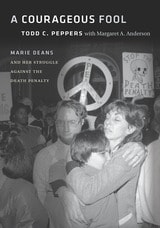
A Courageous Fool
Marie Deans and Her Struggle against the Death PenaltyTodd C. Peppers
Vanderbilt University Press, 2017
Marie found herself fighting to bring justice to the legal process and to bring humanity not only to prisoners on death row but to the guards and wardens as well. During Marie's time as a death penalty opponent in South Carolina and Virginia, she experienced the highs of helping exonerate the innocent and the lows of standing death watch in the death house with thirty-four condemned men.
A Feminist Theory of Violence
A Decolonial PerspectiveFrançoise Vergès
Pluto Press, 2022
***Winner of an English PEN Award 2022***
The mainstream conversation surrounding gender equality is a repertoire of violence: harassment, rape, abuse, femicide. These words suggest a cruel reality. But they also hide another reality: that of gendered violence committed with the complicity of the State.
In this book, Françoise Vergès denounces the carceral turn in the fight against sexism. By focusing on 'violent men', we fail to question the sources of their violence. There is no doubt as to the underlying causes: racial capitalism, ultra-conservative populism, the crushing of the Global South by wars and imperialist looting, the exile of millions and the proliferation of prisons - these all put masculinity in the service of a policy of death.
Against the spirit of the times, Françoise Vergès refuses the punitive obsession of the State in favour of restorative justice.
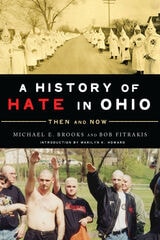
A History of Hate in Ohio
Then and NowMichael E. Brooks and Bob Fitrakis with an introduction by Marilyn K. Howard
The Ohio State University Press, 2021
A Moral Military
Sidney Axinn
Temple University Press, 2008
In this new edition of the classic book on the moral conduct of war, Sidney Axinn provides a full-length treatment of the military conventions from a philosophical point of view. Axinn considers these basic ethical questions within the context of the laws of warfare: Should a good soldier ever disobey a direct military order? Are there restrictions on how we fight a war? What is meant by “military honor,” and does it really affect the contemporary soldier? Is human dignity possible under battlefield conditions?
Axinn answers “yes” to these questions. His objective in A Moral Military is to establish a basic framework for moral military action and to assist in analyzing military professional ethics. He argues for the seriousness of the concept of military honor but limits honorable military activity by a strict interpretation of the notion of war crime.
With revisions and expansions throughout, including a new chapter on torture, A Moral Military is an essential guide on the nature of war during a time when the limits of acceptable behavior are being stretched in new directions.
A Rhetorical Crime
Genocide in the Geopolitical Discourse of the Cold WarWeiss-Wendt, Anton
Rutgers University Press, 2018
A Rhetorical Crime shows how genocide morphed from a legal concept into a political discourse used in propaganda battles between the United States and the Soviet Union. Over the course of the Cold War era, nearly eighty countries were accused of genocide, and yet there were few real-time interventions to stop the atrocities committed by genocidal regimes like the Cambodian Khmer Rouge.
Renowned genocide scholar Anton Weiss-Wendt employs a unique comparative approach, analyzing the statements of Soviet and American politicians, historians, and legal scholars in order to deduce why their moral posturing far exceeded their humanitarian action.
A War that Can’t Be Won
Binational Perspectives on the War on DrugsEdited by Tony Payan, Kathleen Staudt, and Z. Anthony Kruszewski
University of Arizona Press, 2013
A War that Can’t Be Won is the first book to include contributions from scholars on both sides of the US–Mexico border. It provides a unique breadth of perspective on the many dimensions of the societal crisis that affects residents of both nations—particularly those who live and work in the borderlands. It also proposes practical steps toward solving a crisis that shows no signs of abating under current policies. Each chapter is based on well-documented data, including previously unavailable evidence that was obtained through freedom-of-information inquiries in Mexico. By bringing together views from both sides of the border, as well as from various academic disciplines, this volume offers a much wider view of a complex problem—and possible solutions.
Abbie Hoffman
American RebelJezer, Marty
Rutgers University Press, 1993
"... Abbie, more than any other radical, showed potheads how to demonstrate and radicals how to dance." -- Chicago Tribune
"... deeply sympathetic and scrupulously detached-a triumph of judicious empathy." -- MARTIN DUBERMAN, Distinguished Professor of History, Lehman/The Graduate School, C.U.N.Y.
"... details Hoffman's humor, manic energy, depressive spells, political skills, and above all, his Incurable and still contagious optimism." -- Entertainment Weekly
"Here's the Abbie I knew and loved! Marty Jezer has captured him in all his complexity, dedication, humor, and heart." -- ANITA HOFFMAN
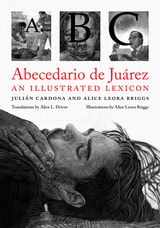
Abecedario de Juárez
An Illustrated LexiconJulián Cardona and Alice Leora Briggs, with translations by Alice L. Driver; illustrations by Alice Leora Briggs
University of Texas Press, 2022
Uses key words and striking images to explore violence and everyday life in Juárez, Mexico.
Juárez, Mexico, is known for violence. The femicides of the 1990s, and the cartel mayhem that followed, made it one of the world's most dangerous cities. Along with the violence came a new lexicon that traveled from person to person, across rivers and borders—wherever it was needed to explain the horrors taking place. From personal interviews, media accounts, and conversations on the street, Julián Cardona and Alice Leora Briggs have collected the words and slang that make up the brutal language of Juárez, creating a glossary that serves as a linguistic portrait of the city and its violence. Organized alphabetically, the entries consist of Spanish and Spanglish, accompanied by short English definitions. Some also feature a longer narrative drawn from interviews—stories that put the terms in context and provide a personal counterpoint to media reports of the same events. Letters, and many of the entries, are supplemented with Briggs’s evocative illustrations, which are reminiscent of Hans Holbein’s famous Alphabet of Death. Together, the words, drawings, and descriptions in ABCedario de Juárez both document and interpret the everyday violence of this vital border city.
After the Bloodbath
Is Healing Possible in the Wake of Rampage Shootings?James D. Diamond
Michigan State University Press, 2019
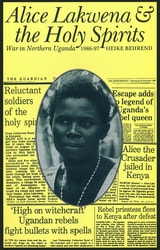
Alice Lakwena and the Holy Spirits
War in Northern Uganda, 1985–97Heike Behrend
Ohio University Press, 1999
In August 1986, Alice Auma, a young Acholi woman in northern Uganda, proclaiming herself under the orders of a Christian spirit named Lakwena, raised an army called the “Holy Spirit Mobile Forces.” With it she waged a war against perceived evil, not only an external enemy represented by the National Resistance Army of the government, but internal enemies in the form of “impure” soldiers, witches, and sorcerers. She came very close to her goal of overthrowing the government but was defeated and fled to Kenya.
This book provides a unique view of Alice’s movement, based on interviews with its members and including their own writings, examining their perceptions of the threat of external and internal evil. It concludes with an account of the successor movements into which Alice’s forces fragmented and which still are active in the civil wars of the Sudan and Uganda.
All-American Massacre
The Tragic Role of American Culture and Society in Mass ShootingsEdited by Eric Madfis and Adam Lankford
Temple University Press, 2023
With a specific focus on exploring how American culture, institutions, and social structures influence the circumstances, frequency, and severity of mass shootings in the United States, All-American Massacre advances emerging theoretical perspectives and forges fresh approaches, new research questions, and innovative data and conclusions.
Bringing together pioneering scholars, this groundbreaking compilation of research and analysis identifies the social roots of this insidious threat and prompts new reflections on how we can stop the seemingly endless cycle of horror and death.All-American Massacre helps clarify the unique nature and salience of mass shootings in American life.
Contributors: Melanie Brazzell, Tristan Bridges, Ryan Broll, F. Chris Curran, Sarah E. Daly, Salvatore D’Angelo, James Densley, Tom Diaz, Scott Duxbury, Benjamin W. Fisher, Betsy Friauf, Emma E. Fridel, Celene Fuller, Daniel Gascón, Patrick J. Gauding, Brooke Miller Gialopsos, Simon Gottschalk, Donald P. Haider-Markel, Stephanie Howells, Cheryl Lero Jonson, Mark R. Joslyn, Jessie Klein, Aaron Kupchik, Alison J. Marganski, Melissa M. Moon, Kristen J. Neville, Jaimee Nix, Daniel Okamura, Patrick F. Parnaby, Jillian Peterson, Michael Phillips, Paul Reeping, Jason R. Silva, William A. Stadler, Lindsay Steenberg, Tara Leigh Tober, Jillian J. Turanovic, Abigail Vegter, Stanislav Vysotsky, Lacey N. Wallace and the editors
American Atrocity
The Types of Violence in LynchingGuy Lancaster
University of Arkansas Press, 2021
Lynching is often viewed as a narrow form of violence: either the spontaneous act of an angry mob against accused individuals, or a demonstration of white supremacy against an entire population considered subhuman. However, in this new treatise, historian Guy Lancaster exposes the multiple forms of violence hidden beneath the singular label of lynching.
Lancaster, who has written extensively on racial violence, details several lynchings of Blacks by white posses in post-Reconstruction Arkansas. Drawing from the fields of history, philosophy, cognitive science, sociology, and literary theory, and quoting chilling contemporary accounts, he argues that the act of lynching encompasses five distinct but overlapping types of violence. This new framework reveals lynching to be even more of an atrocity than previously understood: that mobs did not disregard the humanity of their victims but rather reveled in it; that they were not simply enacting personal vengeance but manifesting an elite project of subjugation. Lancaster thus clarifies and connects the motives and goals of seemingly isolated lynch mobs, embedding the practice in the ongoing enforcement of white supremacy. By interrogating the substance of lynching, American Atrocity shines new light on both past anti-Black violence and the historical underpinnings of our present moment.
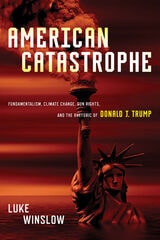
American Catastrophe
Fundamentalism, Climate Change, Gun Rights, and the Rhetoric of Donald J. TrumpLuke Winslow
The Ohio State University Press, 2020
Luke Winslow introduces the rhetorical homology as a critical tool useful for understanding how catastrophic appeals unite Americans across disparate religious, ecological, cultural, and political spheres. More specifically, the four case study chapters examining Christian fundamentalism, anti-environmentalism, gun rights messaging, and the administration of Donald Trump reveal a consistent formal pattern oriented toward catastrophe. In teasing out this orientation toward catastrophe, Winslow offers a fresh, provocative, and insightful contribution to our most pressing social challenges.
American Fantastic
Myths of Violence and RedemptionDerek J. Thiess
University of Wisconsin Press, 2025
Thiess’s interdisciplinary study examines America’s past and present imperial projects, from the Hawaiian Islands to the Eastern Seaboard, as they proliferate in popular story forms. By interrogating American myths, legends, and fantastic narratives across an impressive array of genres, including folk narratives, science fiction, movies, and more, Thiess exposes how the “myth of redemptive violence” manifests in contemporary constructions of America’s fantastic imaginaries.
American Infanticide
Sexism, Science, and the Politics of SympathyClara S. Lewis
Rutgers University Press, 2025
Emboldened by fear, the sorority sisters investigated. In the driveway next to the kitchen door, they found Emile’s newborn baby girl dead inside a garbage bag. Emile’s crime seemed senseless and left her family and friends with an aching question: what happened?
American Infanticide situates Emile's tragic act in a long intellectual, social, and legal history, uncovering disturbing missing chapters in our national history that undercut myths that have shaped public reactions to so-called monster moms and dumpster babies since the colonial era. Ultimately, the book uncovers how bias and inconsistency dictate how women accused of infant homicide are perceived and punished and sheds new light on how and why our legal responses to infanticide are so deeply misguided.
American War Stories
Brenda M. Boyle
Rutgers University Press, 2021
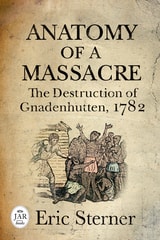
Anatomy of a Massacre
The Destruction of Gnadenhutten, 1782Eric Sterner
Westholme Publishing, 2027
On March 8, 1782, a group of western settlers killed nearly one hundred unarmed and peaceful Indians who had converted to Christianity under the tutelage of missionaries from the Church of the United Brethren. The murders were cold-blooded and heartless; roughly two-thirds of those executed were women and children. Its brutality stunned Benjamin Franklin in far-away France. He wrote: “the abominable Murders committed by some of the frontier People on the poor Moravian Indians, has given me infinite Pain and Vexation. The Dispensations of Providence in this World puzzle my weak Reason. I cannot comprehend why cruel Men should have been permitted thus to destroy their Fellow Creatures.” Since that maelstrom of violence struck the small Indian village of Gnadenhutten, history has treated the episode as a simple morality tale. While there were ample incidents of good and evil on March 8, that summation does not explain what brought murderers and victims together on the banks of the Muskingum River in today’s Ohio. It was actually the culmination of a series of events among different Indian tribes, the British, Congressional authorities at Pittsburgh, the Pennsylvania militia, and key individuals, all of which are lost in contemporary explanations of the massacre.
Anatomy of a Massacre: The Destruction of Gnadenhutten, 1782 fills that void by examining the political maneuvering among white settlers, Continental officials, British officers, western Indian tribes, missionaries, and the Indians practicing Christianity that culminated in the massacre. Uniquely, it follows the developing story from each perspective, using first-person accounts from each group to understand how they saw and experienced the changes on the American frontier. Along the way it profiles some of the key individuals responsible for the way the war unfolded. It is a fresh look at an often mentioned, but seldom understood, episode in the American Revolution.
Apocalypse Never
Forging the Path to a Nuclear Weapon-Free WorldDaley, Tad
Rutgers University Press, 2012
Apocalypse Never maintains that the abolition of nuclear weapons is both essential and achievable, and reveals in fine detail what we need to do--both governments and movements--to make it a reality. Daley insists that while global climate change poses the single greatest long-term peril to the human race, the nuclear challenge in its many incarnation--nuclear terror, nuclear accident, a nuclear crisis spinning out of control--poses the single most immediate peril. Daley launches a wholesale assault on the nuclear double standard--the notion that the United States permits itself thousands of these weapons but forbids others from aspiring to even one--insisting that it is militarily unnecessary, morally indefensible, and politically unsustainable. He conclusively repudiates the most frequent objection to nuclear disarmament, "the breakout scenario"--the possibility that after abolition someone might whip back the curtain, reveal a dozen nuclear warheads, and proceed to "rule the world."
On the wings of a brand new era in American history, Apocalypse Never makes the case that a comprehensive nuclear policy agenda from President Obama, one that fully integrates nonproliferation with disarmament, can both eliminate immediate nuclear dangers and set us irreversibly on the road to abolition. In jargon-free language, Daley explores the possible verification measures, enforcement mechanisms, and governance structures of a nuclear weapon-free world. Most importantly, he decisively argues that universal nuclear disarmament is something we can transform from a utopian fantasy into a concrete political goal.
Artifact
Encounters with the Campus Shooting ArchivesJulija Šukys
West Virginia University Press, 2025
2026 IPPY Awards Bronze Medal Winner, Current Events - Social Issues/Humanitarian
2026 PROSE Award Finalist, Humanities: Literature
Artifact is about the stories we tell ourselves after mass shootings. Each college campus shooting leaves a record: archival collections, monuments to the dead, government-led inquiries, internal university investigations, and lawsuits. Artifact: Encounters with the Campus Shooting Archives seeks to understand university and college campus shootings that involve students and faculty of those institutions. The book examines the aftermaths of such attacks by moving between university archives, memorials to victims, conversations with survivors, and beyond.
Julija Šukys examines a series of five North American university and college campus shootings between 1966 and 2015: the École Polytechnique in Montreal, Concordia University in Montreal, Virginia Tech, University of Alabama–Huntsville, and Umpqua Community College in Roseburg, Oregon. These attacks involved students and faculty as both victims and perpetrators—that is, all the shooters were either faculty members or (in one case, would-be) students of the institution where the killings took place.
Šukys arrives at each site long after the killings have taken place: by now, the teddy bears, flowers, and crosses have been cleared away. Prying journalists are long gone. She sorts through myriad objects left at makeshift memorial sites. She talks for hours with a professor who survived an attack only because her colleague’s gun jammed as it was pointed at her head. She wanders and documents the reconfigured buildings made unrecognizable after the horrors that occurred within them. She reads tedious court transcripts, officious government-commissioned reports, and a troubling memoir written by a shooter’s mother and sifts through the mathematics papers that one campus shooter publishes from his prison cell.
Artifact weighs what it means to live in a place where students and their teachers are gunned down on a seemingly regular basis. It asks how we can continue to learn, teach, and live when nothing changes in response to these deaths. It attempts to speak into silence, to look at the pain of those who have come through trauma, and to meet their gazes without platitudes or triumphalism. The result is a searching book about care, memory, forgiveness, and survival.
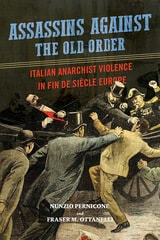
Assassins against the Old Order
Italian Anarchist Violence in Fin de Siecle EuropeNunzio Pernicone, Fraser Ottanelli
University of Illinois Press, 2018
Nunzio Pernicone and Fraser M. Ottanelli dig into the transnational experiences and the historical, social, cultural, and political conditions behind the phenomenon of anarchist violence in Italy. Looking at political assassinations in the 1890s, they illuminate the public effort to equate anarchy's goals with violent overthrow. Throughout, Pernicone and Ottanelli combine a cutting-edge synthesis of the intellectual origins, milieu, and nature of Italian anarchist violence with vivid portraits of its major players and their still-misunderstood movement.
A bold challenge to conventional thinking, Assassins against the Old Order demolishes a century of myths surrounding anarchist violence and its practitioners.
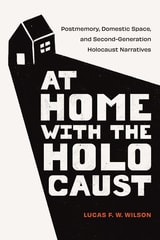
At Home with the Holocaust
Postmemory, Domestic Space, and Second-Generation Holocaust NarrativesLucas F. W. Wilson
Rutgers University Press, 2025
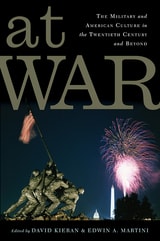
At War
The Military and American Culture in the Twentieth Century and BeyondKieran, David
Rutgers University Press, 2018
At War offers short, accessible essays addressing the central issues in the new military history—ranging from diplomacy and the history of imperialism to the environmental issues that war raises and the ways that war shapes and is shaped by discourses of identity, to questions of who serves in the U.S. military and why and how U.S. wars have been represented in the media and in popular culture.