Results by title
5550 books match the query 'Biography & Autobiography' and 577 start with a
Anarchy’s Brief Summer
The Life and Death of Buenaventura DurrutiHans Magnus Enzensberger
Seagull Books, 2018
Northern Spain is the only part of Western Europe where anarchism played a significant role in the political life of the twentieth century. Enjoying wide-ranging support among both the urban and rural working class, its importance peaked during its “brief summer”—the civil war between the Republic and General Franco’s Falangists, during which anarchists even participated in the government of Catalonia.
Anarchy’s Brief Summer brings anarchism to life by focusing on the charismatic leader Buenaventura Durruti (1896–1936), who became a key figure in the Spanish Civil War after a militant and adventurous youth. The basis of the book is a compilation of texts: personal testimony, interviews with survivors, contemporary documents, memoirs, and academic assessments. They are all linked by Enzenberger’s own assessment in a series of glosses—a literary form that is somewhere between retelling and reconstruction—with the contradiction between fiction and fact reflecting the political contradictions of the Spanish Revolution.
Anchoress and Abbess in Ninth-Century Saxony
The Lives of Liutbirga of Wendhausen and Hathumoda of GandersheimFrederick S. Paxton
Catholic University of America Press, 2009
And Bid Him Sing
A Biography of Countée CullenCharles Molesworth
University of Chicago Press, 2012
And No Birds Sing
Pauline Leader
Gallaudet University Press, 2016
This edition is accompanied by a new introduction and afterword that provide a scholarly framework for understanding Leader and her times. She persevered and became a published poet and novelist, often drawing on the experiences offered up here. Compelling and evocative, And No Birds Sing deftly reveals a complex, intelligent spirit toiling in a brutal world.
From the book:
I insisted to myself that I could still hear. I heard in my mind the sounds of streams as I passed them. I knew the sound the river made, that river that I had known always, the river by the marble house. In my mind the river washed with a low intimate sound. I had no need to hear as the people heard. True intimacy needs no ears. I knew the sound of birds; I heard them as they hopped about. I knew the sound of words also. It was words that I most intensely heard. I had not always the river and the birds—they appeared far away at times. I did not always want river and birds, but I always wanted words, and I always had them. I would have been terribly lonely without them. With them always in my mind, I could not be truly lonely. I played with them; I set them to music; I achieved endless variations with them. They were never weary, as other things could sometimes be weary.
And Sadly Teach
Teacher Education and Professionalization in American CultureJurgen Herbst
University of Wisconsin Press, 1991
To lend weight to his charge that the public school teacher has been betrayed and gravity to his indictment of the educational establishment for that betrayal, Jurgen Herbst goes back to the beginnings of teacher education in America in the 1830s and traces its evolution up to the 1920s, by which time the essential damage had been done.
Initially, attempts were made to upgrade public school teaching to a genuine profession, but that ideal was gradually abandoned. In its stead, with the advent of newly emerging graduate schools of education in the early decades of the twentieth century, came the so-called professionalization of public education. At the expense of the training of elementary school teachers (mostly women), teacher educators shifted their attention to the turning out of educational "specialists" (mostly men)—administrators, faculty members at normal schools and teachers colleges, adult education teachers, and educational researchers.
Ultimately a history of the neglect of the American public school teacher, And Sadly Teach ends with a plea and a message that ring loud and clear. The plea: that the current reform proposals for American teacher education—the Carnegie and the Holmes reports—be heeded. The message: that the key to successful school reform lies in educating teacher’s true professionals and in acknowledging them as such in their classrooms.
And Yet I Still Have Dreams
A Story of Certain LonelinessJoanna Wiszniewicz
Northwestern University Press, 2004
The book provides a connection to seldom discussed aspects of the Holocaust: the gulf between rich and poor Jews and how this translated into everyday survival; the refusal by Alex to see himself or Jews in general as heroes or victims; his own self-absorption as a teen in the ghetto; and his "priviliged" family's near-indifference to the suffering of those around them. Alex paints a picture of complex and diverse Jewish society in prewar Poland, revealing how, many years later and despite his determine to leave it in the past, the burdens of memory--and the dreams--linger.
And Yet, I Am Here!
Halina Nelken
University of Massachusetts Press, 1999
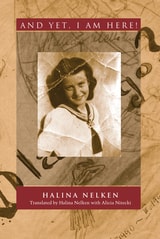
When Germany invaded Poland in 1939, Halina Nelken was a precocious fifteen-year-old, living a middle-class life in Krakow. Like other girls her age, she recorded her personal observations and feelings in a diary. As conditions in Krakow deteriorated and her family was forced into the Jewish ghetto, she continued to write, eventually smuggling her diary out with a Catholic friend. This remarkable book tells the story of Nelken's experiences in the ghetto and later in eight Nazi concentration camps, including Plaszow, Auschwitz, and Ravensbrück. Her diary entries, written between 1938 and 1943, form the core of the volume and are supplemented by recollections written shortly after the war, and by later commentaries and explanatory notes which she added in the mid-1980s. Although there exist numerous published and unpublished memoirs by Holocaust survivors, Nelken's book presents one of the few extant diaries written at the time. Already released in Polish and German editions, it has been hailed as one of the finest works of its kind. Now it is available in English for the first time.

André Gorz
A LifeWilly Gianinazzi
Seagull Books, 2022
Recognized as one of the most lucid and innovative critics of contemporary capitalism, André Gorz (1923–2007) was known for asking fundamental questions regarding the meaning of life and work. This first biography of a unique figure operating at the confluence of literature, philosophy, and journalism revisits half a century of intellectual and political life.
Born Gerhart Hirsch in Vienna, he studied in Switzerland before opting to live and work in France. A self-taught existentialist thinker, he was constantly revising his view of the world, unafraid to break new theoretical ground in doing so. Influenced by Marx, Husserl, Sartre, and Illich, he had very close affinities with the new thinking on the Left that was coming out of Italy in the 1960s and 70s. He was also one of the first thinkers to shape political ecology and to advocate de-growth. The intellectual on the editorial board of Sartre’s journal Les Temps Modernes, Gorz was also a mainstream journalist. He wrote in L’Express under the sobriquet Michel Bosquet before joining others in the creation of Le Nouvel Observateur.
Through Gorz’s life journey, we meet not only Sartre and de Beauvoir, but also Herbert Marcuse, Fidel Castro, Daniel Cohn-Bendit, Ivan Illich, Félix Guattari, Antonio Negri, and many others. Beyond his poignant autobiographical narratives, The Traitor and Letter to D, which attest to his deep humanity, Gorz remains a precious guide for all who believe that another world is still possible.

André Michaux in North America
Journals and Letters, 1785–1797Translated from the French, Edited, and Annotated by Charlie Williams, Eliane M. Norman, and Walter Kingsley Taylor
University of Alabama Press, 2020
Tracing the roots of American botany through the journals of an eighteenth-century explorer.
Known to today’s biologists primarily as the “Michx.” at the end of more than 700 plant names, André Michaux was an intrepid French naturalist. Under the directive of King Louis XVI, he was commissioned to search out and grow new, rare, and never-before-described plant species and ship them back to his homeland in order to improve French forestry, agriculture, and horticulture. He made major botanical discoveries and published them in his two landmark books, Histoire des chênes de l’Amérique (1801), a compendium of all oak species recognized from eastern North America, and Flora Boreali-Americana (1803), the first account of all plants known in eastern North America.
Straddling the fields of documentary editing, history of the early republic, history of science, botany, and American studies, André Michaux in North America: Journals and Letters, 1785–1797 is the first complete English edition of Michaux’s American journals. This copiously annotated translation includes important excerpts from his little-known correspondence as well as a substantial introduction situating Michaux and his work in the larger scientific context of the day.
To carry out his mission, Michaux traveled from the Bahamas to Hudson Bay and west to the Mississippi River on nine separate journeys, all indicated on a finely rendered, color-coded map in this volume. His writings detail the many hardships—debilitating disease, robberies, dangerous wild animals, even shipwreck—that Michaux endured on the North American frontier and on his return home. But they also convey the soaring joys of exploration in a new world where nature still reigned supreme, a paradise of plants never before known to Western science. The thrill of discovery drove Michaux ever onward, even ultimately to his untimely death in 1802 on the remote island of Madagascar.
Andy Warhol, Poetry, and Gossip in the 1960s
Reva Wolf
University of Chicago Press, 1997
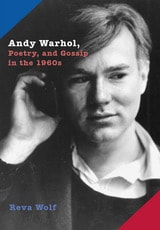
Wolf investigates the underground culture of poets, artists, and filmmakers who interacted with Warhol regularly. She claims that Warhol understood the literary imagination of his generation and that recognizing Warhol's literary activities is essential to understanding his art. Drawing on a wealth of unpublished material, including interviews, personal and public archives, tape recordings, documentary photographs, and works of art, Wolf offers dramatic evidence that Warhol's interactions with writers functioned like an extended conversation and details how this process impacted his work. This highly original and fascinating study gives us fresh insight into Warhol's art as practice and reformulates the myth that surrounds this popular American artist.

Angela Gheorghiu
A Life for ArtAngela Gheorghiu
University Press of New England, 2018
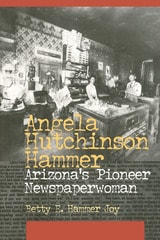
Angela Hutchinson Hammer
Arizona's Pioneer NewspaperwomanBetty E. Hammer Joy
University of Arizona Press, 2005
A true daughter of the West, Angela, born in a tiny mining hamlet in Nevada, came to the Territory of Arizona at the age of twelve. Betty Hammer Joy weaves together the lively story of her grandmother's life by drawing upon Angela's own prodigious writing and correspondence, newspaper archives, and the recollections of family members. Her book recounts the stories Angela told of growing up in mining camps, teaching in territorial schools, courtship, marriage, and a twenty-eight-year career in publishing and printing. During this time, Angela managed to raise three sons, run for public office before women in the nation had the right to vote, serve as Immigration Commissioner in Pinal County, homestead, and mature into an activist for populist agendas and water conservation. As questionable deals took place both within and outside the halls of government, the crusading Angela encountered many duplicitous characters who believed that women belonged at home darning socks, not running a newspaper.
Although Angela's independent papers brought personal hardship and little if any financial reward, after her death in 1952 the newspaper industry paid tribute to this courageous woman by selecting her as the first woman to enter the Arizona Newspaper Hall of Fame. In 1983 she was honored posthumously with another award for women who contributed to Arizona's progress—induction into the Arizona Women's Hall of Fame.
Angelhead
My Brother's Descent into MadnessGreg Bottoms
University of Chicago Press, 2005
A taut, powerful memoir of madness, Angelhead documents the violent, drug-addled descent of the author's brother, Michael, into schizophrenia. Beginning with Michael's first psychotic break—seeing God in his suburban bedroom window while high on LSD—Greg Bottoms recounts, in gripping, dramatic prose, the bizarre disappearances, suicide attempts, and the shocking crime that land Michael in the psychiatric wing of a maximum security prison. A work of nonfiction with the form and imagery of a novel, Angelhead enables the reader to witness not only the fragmenting of a mind, but of a family as well.
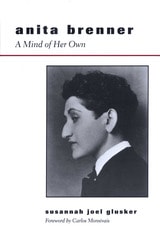
Anita Brenner
A Mind of Her OwnBy Susannah Joel Glusker
University of Texas Press, 1998
Journalist, historian, anthropologist, art critic, and creative writer, Anita Brenner was one of Mexico's most discerning interpreters. Born to a Jewish immigrant family in Mexico a few years before the Revolution of 1910, she matured into an independent liberal who defended Mexico, workers, and all those who were treated unfairly, whatever their origin or nationality.
In this book, her daughter, Susannah Glusker, traces Brenner's intellectual growth and achievements from the 1920s through the 1940s. Drawing on Brenner's unpublished journals and autobiographical novel, as well as on her published writing, Glusker describes the origin and impact of Brenner's three major books, Idols Behind Altars,Your Mexican Holiday, and The Wind That Swept Mexico.
Along the way, Glusker traces Brenner's support of many liberal causes, including her championship of Mexico as a haven for Jewish immigrants in the early 1920s. This intellectual biography brings to light a complex, fascinating woman who bridged many worlds—the United States and Mexico, art and politics, professional work and family life.
Anna Akhmatova and Her Circle
Konstantin Polivanov
University of Arkansas Press, 2016
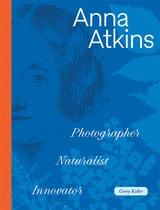
Anna Atkins
Photographer, Naturalist, InnovatorCorey Keller
J. Paul Getty Trust, The, 0
Step into the world of Anna Atkins (1799–1871), perhaps the world’s first female photographer and a pioneer of the medium. She lived an existence full of heartache and triumph, from her mother’s death when Atkins was an infant to her publication of multiple photographic books as an adult. After the passing of her mother, Atkins was raised primarily by her father and grandfather, who placed an emphasis on both her emotional and intellectual growth. As a result, she spent her life surrounded by some of the brightest minds of Victorian England during the Industrial Revolution.
Despite societal gender norms of the time, which typically limited women to a life within the home, Atkins gained the respect of the scientific community with her ambitious multivolume album Photographs of British Algae: Cyanotype Impressions, now recognized as the world’s first photographically illustrated book. Her cyanotypes, in addition to their scientific accuracy, lent artistic beauty to her publications, setting the stage for new uses of this experimental technology. In an era replete with state-of-the-art inventions and innovative ideas, Atkins pushed photography forward in its earliest days with courage, creativity, and brilliance.
Ages thirteen and up.
Please note that this title is sold and distributed in North America by ABRAMS, New York.
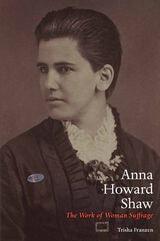
Anna Howard Shaw
The Work of Woman SuffrageTrisha Franzen
University of Illinois Press, 2014
With this first scholarly biography of Anna Howard Shaw (1847-1919), Trisha Franzen sheds new light on an important woman suffrage leader who has too often been overlooked and misunderstood.
An immigrant from a poor family, Shaw grew up in an economic reality that encouraged the adoption of non-traditional gender roles. Challenging traditional gender boundaries throughout her life, she put herself through college, worked as an ordained minister and a doctor, and built a tightly-knit family with her secretary and longtime companion Lucy E. Anthony.
Drawing on unprecedented research, Franzen shows how these circumstances and choices both impacted Shaw's role in the woman suffrage movement and set her apart from her native-born, middle- and upper-class colleagues. Franzen also rehabilitates Shaw's years as president of the National American Woman Suffrage Association, arguing that Shaw's much-belittled tenure actually marked a renaissance of both NAWSA and the suffrage movement as a whole.
Anna Howard Shaw: The Work of Woman Suffrage presents a clear and compelling portrait of a woman whose significance has too long been misinterpreted and misunderstood.
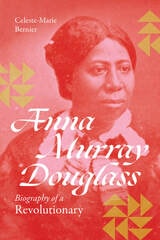
Anna Murray Douglass
Biography of a RevolutionaryCeleste-Marie Bernier
Duke University Press, 2026
Working with family descendants and based on thirty years of research digging through public and private archives, Celeste-Marie Bernier presents the first standalone biography of Anna Murray Douglass, wife and co-revolutionary of Frederick Douglass, honoring her history-making role as a campaigner, liberator, and freedom-fighter.
Anna Murray Douglass was born legally free in Maryland to Mary and Bambarra Murray. From working with her future husband, Frederick Douglass, to secure his self-liberation from enslavement to converting her family homes to command centers for the Underground Railroad, she dedicated her entire life to the fight for all freedoms and to supporting loved ones and strangers alike in their fight for equal, independent lives. Her deeds have long gone unsung until now.
In this first-ever standalone biography of the wife and co-revolutionary of Frederick Douglass, Celeste-Marie Bernier provides a detailed and illustrated history of Anna Murray Douglass’s leadership roles in fighting against the injustices of enslavement, racism, and white supremacy, as well as how she laid the foundation for her family to follow in her and her husband’s footsteps. After over three decades of archival research, Bernier presents a wide-ranging collection of stories, writings, letters, and photographs in a comprehensive and illuminating biography of Anna Murray Douglass’s life and work as an educator, activist, intellectual, orator, political thinker, artist, philosopher, and strategist. Ultimately, Bernier aims to combat the widespread misrepresentation that the liberation movement bearing the Douglass name was the work of one individual when it was, in reality, a family institution. Anna Murray Douglass is the first book in a ten-volume collection detailing the life and work of the entire Douglass family including their children, Rosetta, Lewis Henry, Frederick, Jr., Charles Remond and Annie Douglass, all freedom-fighters in their own right.
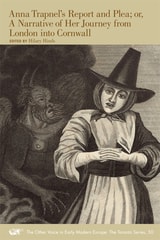
Anna Trapnel’s Report and Plea; or, A Narrative of Her Journey from London into Cornwall
Anna Trapnel
Iter Press, 2016
In 1654, Anna Trapnel — a Baptist, Fifth Monarchist, millenarian, and visionary from London — fell into a trance during which she prophesied passionately and at length against Oliver Cromwell and his government. The prophecies attracted widespread public attention, and resulted in an invitation to travel to Cornwall. Her Report and Plea, republished here for the first time, is a lively and engaging firsthand account of the visit, which concluded in her arrest, a court hearing, and imprisonment. Part memoir, part travelogue, and part impassioned defense of her beliefs and actions, the Report and Plea offers vivid and fascinating insight into the life and times of an early modern woman claiming her place at the center of the tumultuous political events of mid-seventeenth-century England.
Anna's Shtetl
Lawrence A. Coben
University of Alabama Press, 2007
Anne Tyler as Novelist
Dale Salwak
University of Iowa Press, 1994

Annie Adams Fields
Woman of LettersRita Gollin
University of Massachusetts Press, 0
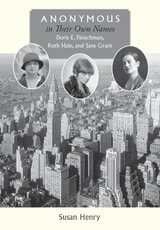
Anonymous in Their Own Names
Doris E. Fleischman, Ruth Hale, and Jane GrantSusan Henry
Vanderbilt University Press, 2012
Yet these women's achievements have been invisible to countless authors who have written about their husbands. This invisibility is especially ironic given that all three were feminists who kept their birth names when they married as a sign of their equality with their husbands, then battled the government and societal norms to retain their names. Hale and Grant so believed in this cause that in 1921 they founded the Lucy Stone League to help other women keep their names, and Grant and Fleischman revived the league in 1950. This was the same year Grant and her second husband, William Harris, founded White Flower Farm, pioneering at that time and today one of the country's most celebrated commercial nurseries.
Despite strikingly different personalities, the three women were friends and lived in overlapping, immensely stimulating New York City circles. Susan Henry explores their pivotal roles in their husbands' extraordinary success and much more, including their problematic marriages and their strategies for overcoming barriers that thwarted many of their contemporaries.
Another Appalachia
Coming Up Queer and Indian in a Mountain PlaceNeema Avashia
West Virginia University Press, 2022
When Neema Avashia tells people where she’s from, their response is nearly always a disbelieving “There are Indian people in West Virginia?” A queer Asian American teacher and writer, Avashia fits few Appalachian stereotypes. But the lessons she learned in childhood about race and class, gender and sexuality continue to inform the way she moves through the world today: how she loves, how she teaches, how she advocates, how she struggles.
Another Appalachia examines both the roots and the resonance of Avashia’s identity as a queer desi Appalachian woman, while encouraging readers to envision more complex versions of both Appalachia and the nation as a whole. With lyric and narrative explorations of foodways, religion, sports, standards of beauty, social media, gun culture, and more, Another Appalachia mixes nostalgia and humor, sadness and sweetness, personal reflection and universal questions.
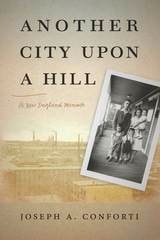
Another City upon a Hill
A New England MemoirJoseph A. Conforti
Tagus Press, 2013

Another Eve
Shame and Desire on the Oregon CoastElissa Minor
Oregon State University Press, 2026
When she walks away from the Mormon church and a twenty-five-year marriage, Elissa Minor abandons the only life she’s ever known to embrace her identity as a queer woman. In this intimate memoir, she explores shame, desire, beauty, and acceptance. Minor realizes that her desire isn’t the problem but the solution. Finding solace outside of the church in the wilderness that surrounds her, she eventually begins to understand what it really means to be pure and worthy.
On the rugged terrain of the northern Oregon coast, Minor discovers passion and harmony in the grip of nature and in the arms of a lover who will become her wife. In the salty sea air, she learns that her own queerness—though less-charted territory—is like her love of backwoods hiking and that to accept her sexuality, she must take full pleasure in the wild that encompasses her. Poignant and powerful, Another Eve re-examines past truths and celebrates honoring oneself and living authentically. For Minor, the end of her transformation is only the beginning.
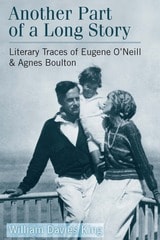
Another Part of a Long Story
Literary Traces of Eugene O'Neill and Agnes BoultonWilliam Davies King
University of Michigan Press, 2010
---Stephen Wilmer, Trinity College, Dublin
Biographers of American playwright Eugene O'Neill have been quick to label his marriage to actress Carlotta Monterey as the defining relationship of his illustrious career. But in doing so, they overlook the woman whom Monterey replaced---Agnes Boulton, O'Neill's wife of over a decade and mother to two of his children. O'Neill and Boulton were wed in 1918---a time when she was a successful pulp novelist and he was still a little-known writer of one-act plays. During the decade of their marriage, he gained fame as a Broadway dramatist who rejected commercial compromise, while she mapped that contentious territory known as the literary marriage. His writing reflected her, and hers reflected him, as they tried to realize progressive ideas about what a marriage should be. But after O'Neill left the marriage, he and new love Carlotta Monterey worked diligently to put Boulton out of sight and mind---and most O'Neill biographers have been quick to follow suit.
William Davies King has brought Agnes Boulton to light again, providing new perspectives on America's foremost dramatist, the dynamics of a literary marriage, and the story of a woman struggling to define herself in the early twentieth century. King shows how the configuration of O'Neill and Boulton's marriage helps unlock many of O'Neill's plays. Drawing on more than sixty of Boulton's published and unpublished writings, including her 1958 memoir, Part of a Long Story, and an extensive correspondence, King rescues Boulton from literary oblivion while offering the most radical revisionary reading of the work of Eugene O'Neill in a generation.
William Davies King is Professor of Theater at the University of California, Santa Barbara, and author of several books, most recently Collections of Nothing, chosen by Amazon.com as one of the Best Books of 2008.
Illustration: Eugene O'Neill, Shane O'Neill, and Agnes Boulton ca. 1923. Eugene O'Neill Collection, Beinecke Rare Book and Manuscript Library, Yale University.
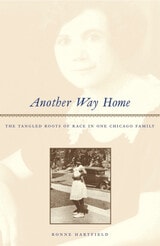
Another Way Home
The Tangled Roots of Race in One Chicago FamilyRonne Hartfield
University of Chicago Press, 2004
Hartfield begins with the early life of her mother, Day Shepherd. Born to a wealthy British plantation owner and the mixed-race daughter of a former slave, Day negotiates the complicated circumstances of plantation life in the border country of Louisiana and Mississippi and, as she enters womanhood, the quadroon and octoroon societies of New Orleans. Equally a tale of the Great Migration, Another Way Home traces Day's journey to Bronzeville, the epicenter of black Chicago during the first half of the twentieth century. Here, through the eyes of Day and, ultimately, her daughter, we witness the bustling city streets and vibrant middle-class culture of this iconic black neighborhood. We also relive crucial moments in African American history as they are experienced by the author's family and others in Chicago's South Side black community, from the race riots of 1919 and the Great Depression to the murder of Emmett Till and the dawn of the civil rights movement.
Throughout her book, Hartfield portrays mixed-race Americans navigating the challenges of their lives with resilience and grace, making Another Way Home an intimate and compelling encounter with one family's response to our racially charged culture.
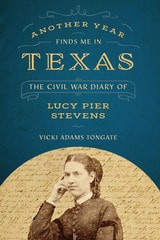
Another Year Finds Me in Texas
The Civil War Diary of Lucy Pier StevensBy Vicki Adams Tongate
University of Texas Press, 2016
Lucy Pier Stevens, a twenty-one-year-old woman from Ohio, began a visit to her aunt’s family near Bellville, Texas, on Christmas Day, 1859. Little did she know how drastically her life would change on April 4, 1861, when the outbreak of the Civil War made returning home impossible. Stranded in enemy territory for the duration of the war, how would she reconcile her Northern upbringing with the Southern sentiments surrounding her?
Lucy Stevens’s diary—one of few women’s diaries from Civil War–era Texas and the only one written by a Northerner—offers a unique perspective on daily life at the fringes of America’s bloodiest conflict. An articulate, educated, and keen observer, Stevens took note seemingly of everything—the weather, illnesses, food shortages, parties, church attendance, chores, schools, childbirth, death, the family’s slaves, and political and military news. As she confided her private thoughts to her journal, she unwittingly revealed how her love for her Texas family and the Confederate soldier boys she came to care for blurred her loyalties, even as she continued to long for her home in Ohio. Showing how the ties of heritage, kinship, friendship, and community transcended the sharpest division in US history, this rare diary and Vicki Adams Tongate’s insightful historical commentary on it provide a trove of information on women’s history, Texas history, and Civil War history.
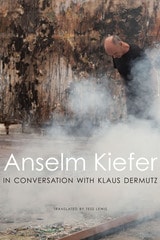
Anselm Kiefer in Conversation with Klaus Dermutz
Anselm Kiefer and Klaus Dermutz
Seagull Books, 2018
The only visual artist to have won the Peace Prize of the German Book Trade, Anselm Kiefer is a profoundly literary painter. In these conversations, Kiefer describes how the central materials of his art—lead, sand, water, fire, ashes, plants, clothing, oil paint, watercolor, and ink—influence the act of creation. No less decisive are his intellectual and artistic touchstones: the sixteenth-century Jewish mystic Isaac Luria, the German Romantic poet Novalis, Ingeborg Bachmann, Paul Celan, Martin Heidegger, Marcel Proust, Adalbert Stifter, the operas of Richard Wagner, the Catholic liturgy, and the innovative theater director and artist Tadeusz Kantor. Kiefer and Dermutz discuss all of these influential thinkers, as well as Kiefer’s own status as a controversial figure. His relentless examination of German history, the themes of guilt, suffering, communal memory, and the seductions of destruction have earned him equal amounts of criticism and praise. The conversations in this book offer a rare insight into the mind of a gifted creator, appealing to artists, critics, art historians, cultural journalists, and anyone interested in the visual arts and the literature and history of the twentieth century.
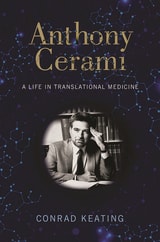
Anthony Cerami
A Life in Translational MedicineConrad Keating
Rutgers University Press, 2021
Anthropological Lives
An Introduction to the Profession of AnthropologyVirginia R Dominguez
Rutgers University Press, 2020
Anthropologists profiled: Leslie Aiello, Lee Baker, João Biehl, Tom Boellstorff, Jacqueline Comito, Shannon Dawdy, Virginia R. Dominguez, T.J. Ferguson, Brigittine French, Agustín Fuentes, Amy Goldenberg, Mary Gray, Sarah Green, Monica Heller, Douglas Hertzler, Ed Liebow, Mariano Perelman, Jeremy Sabloff, Carolyn Sargent, Marilyn Strathern, Nandini Sundar, Alaka Wali.
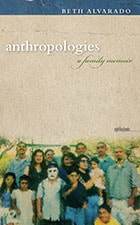
Anthropologies
A Family MemoirBeth Alvarado
University of Iowa Press, 2011
A vivid archive of memories, Beth Alvarado’s Anthropologies layers scenes, portraits, dreams, and narratives in a dynamic cross-cultural mosaic. Bringing her lyrical tenor to bear on stories as diverse as harboring teen runaways, gunfights with federales, and improbable love, Alvarado unveils the ways in which seemingly separate moments coalesce to forge a communal truth. Woven from the threads of distinct family histories and ethnic identities, Anthropologies creates a heightened understanding of how individual experiences are part of a larger shared fabric of lives.

Antiboy
Valentijn Hoogenkamp
Seagull Books, 2024
When Valentijn must undergo a mastectomy because of a gene defect, he makes the decision not to have implants and adopts an in-between gender identity that feels more natural. He shaves his head and discards his wardrobe of women’s clothes, even the perfect dress his mother was so fond of. But all of this causes friction: not only are Valentijn’s doctors stumped, but friends, family, and lovers too. His trans ex helps him feel more comfortable in his new guise—not a girl, not a boy, but an antiboy—while his boyfriend draws away from the relationship. Encircled by grief and loss, Valentijn searches for the ultimate freedom to be allowed to be himself and tries to rebuild the relationships with those around him.
A refined, poetic autobiographical essay about adopting a new and truer identity, Antiboy is poignant without ever being sentimental. Valentijn finds new emotional depth and complexity in his personal relationships, providing readers with a rich and empathetic reading experience. Antiboy goes beyond the author’s own journey, becoming a nuanced exploration of human connections amid transformation.

Antisubmarine Warrior in the Pacific
Six Subs Sunk in Twelve DaysJohn A. Williamson
University of Alabama Press, 2005
A commanding firsthand account of the most successful antisubmarine campaign in U.S. Naval History.
The USS England was a 1200-ton, 306-foot, long-hull destroyer escort. Commissioned into service in late 1943 and dispatched to the Pacific the following February, the England and its crew, in one 12-day period in 1944, sank more submarines than any other ship in U.S. naval history: of the six targets attacked, all six were destroyed. For this distinction, legendary in the annals of antisubmarine warfare, the ship and her crew were honored with the Presidential Unit Citation.
After convoying in the Atlantic, John A. Williamson was assigned to the England—first as its executive officer, then as its commanding officer—from the time of her commissioning until she was dry-docked for battle damage repairs in the Philadelphia Naval Yard fifteen months later. Besides being a key participant in the remarkable antisubmarine actions, Williamson commanded the England in the battle of Okinawa, where she was attacked by kamikaze planes.
Williamson narrates his memoir with authority and authenticity, describes naval tactics and weaponry precisely, and provides information gleaned from translations of the orders from the Japanese high command to Submarine Squadron 7. The author details the challenges of communal life aboard ship and explains the intense loyalty that bonds crew members for life. Ultimately, Williamson offers a compelling portrait of himself, an inexperienced naval officer who, having come of age in Alabama during the Depression, rose to become the most successful World War II antisubmarine warfare officer in the Pacific.

AntoloGaia
Queering the Seventies, A Radical Trans MemoirPorpora Marcasciano
Rutgers University Press, 2024
In this stirring memoir by a member of the first generation of LGBTQ+ activists in Italy, Porpora Marcasciano tells her story and shares the struggles and accomplishments of her fellow activists who achieved so much in the 1970s yet suffered devastating losses during the AIDS epidemic of the 1980s. AntoloGaia offers an insider’s look at the beginnings of the gay liberation movement in Italy and reveals how it was intimately intertwined with other forms of left-wing activism. At the same time, it powerfully conveys the queer joy of a young person from a small village first encountering the vibrant sexual minority communities of Naples, Bologna, and Rome. As Marcasciano starts to embrace her trans identity, she meets the famous anthropologist Pino Simonelli, who introduces her to Naples’s unique femminielli subculture and gives her the name Porporino, which she later shortens to Porpora. In keeping with this story of gender, sexual, and political discovery, AntoloGaia is the first piece of Italian life-writing to use gender-neutral and mixed-gender language.
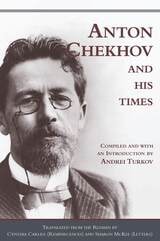
Anton Chekhov and his Times
Andrei Turkov
University of Arkansas Press, 1995
This anthology comprises reminiscences by a number of Anton Pavlovich Chekhov’s contemporaries, including the artist Konstantin Korovin, the writer Maxim Gorky, and Chekhov’s wife, Olga Knipper-Chekhova, and numerous letters written by Chekhov to his fellow writers and artists, family, publishers, and others.
Now available for the first time in English in America, these sixty-eight letters and ten essay-length reminiscences trace the development of Chekhov’s personality and talent, opening a window into the life and times of one of the world’s greatest short-story writers and playwrights. These perspectives on his family life and marriage, his early works, the stage productions of his plays, his literary successes, and the philosophies behind his writing create a rich biography of Chekhov that will reward writers, scholars, and all lovers of literature.
Anton Chekhov's Life and Thought
Selected Letters and CommentariesAnton Chekhov
Northwestern University Press, 1996
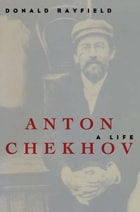
Anton Chekhov
A LifeDonald Rayfield
Northwestern University Press, 2000

Antonin Artaud
Man of VisionBettina L. Knapp
Ohio University Press, 1969
The extraordinary actor–director–writer who developed his talent for self-torture into art to become one of the most vital creative forces of the century.
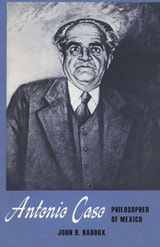
Antonio Caso
Philosopher of MexicoBy John H. Haddox
University of Texas Press, 1971
Few men have had as much cultural and educational influence on their own countries as the philosopher and educator Antonio Caso (1883-1946). He was above all a patriot of his beloved Mexico, and he sought to deliver his humanitarian message to his countrymen.
In his youth, after the revolt against Díaz, he was a member of the Ateneo de la Juventud, a group that sought to bring Mexico, spiritually and economically, back to the Mexicans. Caso realized that this effort involved the forming of a national consciousness among his people, whom he saw divided by their private and public interests.
As an educator of Mexican youth for more than thirty years, Caso sought to imbue in his students the desire to search and to question. He saw education as a perpetual search for truth, and his own life and philosophy reflect this search. He rejected any system that proposed to describe all of reality, and he despised all dogmas—official or unofficial. He particularly fought against positivism and Marxism, systems current in his youth.
The first part of this book is an introduction to the philosophical and educational ideas of Caso, as well as to the intellectual and political ideas in his life. Mr. Haddox skillfully shows the development of Caso's ideas and how they took shape from his own reading as well as from the experiences of his age and of his country. The second part contains Mr. Haddox's translations of selections from Caso's writings. They give a moving picture of Caso's hopes for Mexico and for humanitiy.

Antonio Salieri and Viennese Opera
John A. Rice
University of Chicago Press, 1999
Bringing Salieri, his operas, and eighteenth-century Viennese theater vividly to life, Rice places Salieri where he belongs: no longer lurking in Mozart's shadow, but standing proudly among the leading opera composers of his age. Rice's research in the archives of Vienna and close study of his scores reveal Salieri to have been a prolific, versatile, and adventurous composer for the stage. Within the extraordinary variety of Salieri's approaches to musical dramaturgy, Rice identifies certain habits of orchestration, melodic style, and form as distinctively "Salierian"; others are typical of Viennese opera in general. A generous selection of excerpts from Salieri's works, most previously unpublished, will give readers a fuller appreciation for his musical style—and its influence on Mozart—than was previously possible.
Aphrodite's Daughters
Three Modernist Poets of the Harlem RenaissanceHoney, Maureen
Rutgers University Press, 2016

Apocalypse, Darling
Barrie Jean Borich
The Ohio State University Press, 2018
From award-winning author Barrie Jean Borich comes Apocalypse, Darling, a narrative, lyric exploration of the clash between old and new. Set in the steel mill regions of Chicago and in Northwest Indiana, the story centers on Borich’s return to a decimated landscape for a misbegotten wedding in which her spouse’s father marries his high school sweetheart. The book is a lilting journey into an ill-fated moment, where families attempt to find communion in tense gathering spaces and across their most formative disappointments. Borich tells the story of the industrial heartland that produced the steel that made American cities, but also one of the most toxic environmental sites in the world.
As concise as a poem and as sweeping as an epic novel, Apocalypse, Darling explores the intersection of American traditional and self-invented social identities and the destruction and re-greening of industrial cityscapes. Borich asks: can toxic landscapes actually be remediated and can patriarchal fathers ever really be forgiven? In a political climate where Borich is forced to daily re-enter the toxic wastelands she thought she’d long left behind, Apocalypse, Darling is an urgent collision of broken spaces, dysfunctional affections, and the reach toward familial and environmental repair.
Apostles of Equality
The Birneys, the Republicans, and the Civil WarD. Laurence Rogers
Michigan State University Press, 2011
The first biographical account of the life of James Gillespie Birney in more than fifty years, this fabulously insightful history illuminates and elevates an all-but-forgotten figure whose political career contributed mightily to the American political fabric. Birney was a southern-born politician at the heart of the antislavery movement, with two southern-born sons who were major generals involved in key Union Army activities, including the leadership of the black troops. The interaction of the Birneys with historical figures (Abraham Lincoln, Harriet Beecher Stowe, and Henry Clay) highlights the significance of the family’s activities in politics and war. D. Laurence Rogers offers a unique historiography of the abolition movement, the Civil War, and Reconstruction through the experiences of one family navigating momentous developments from the founding of the Republic until the late 19th century.
Appalachia North
A MemoirMatthew Ferrence
West Virginia University Press, 2018
Appalachia North is the first book-length treatment of the cultural position of northern Appalachia—roughly the portion of the official Appalachian Regional Commission zone that lies above the Mason-Dixon line. For Matthew Ferrence this region fits into a tight space of not-quite: not quite “regular” America and yet not quite Appalachia.
Ferrence’s sense of geographic ambiguity is compounded when he learns that his birthplace in western Pennsylvania is technically not a mountain but, instead, a dissected plateau shaped by the slow, deep cuts of erosion. That discovery is followed by the diagnosis of a brain tumor, setting Ferrence on a journey that is part memoir, part exploration of geology and place. Appalachia North is an investigation of how the labels of Appalachia have been drawn and written, and also a reckoning with how a body always in recovery can, like a region viewed always as a site of extraction, find new territories of growth.
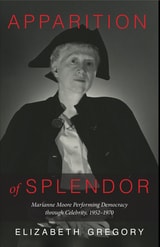
Apparition of Splendor
Marianne Moore Performing Democracy through Celebrity, 1952–1970Elizabeth Gregory
University of Delaware Press, 2021
While the later work of the great Modernist poet Marianne Moore was hugely popular during her final two decades, since her death critics have condemned it as trivial. This book challenges that assessment: with fresh readings of many of the late poems and of the iconic, cross-dressing public persona Moore developed to deliver them, Apparition of Splendor demonstrates that Moore used her late-life celebrity in daring and innovative ways to activate egalitarian principles that had long animated her poetry. Dressed as George Washington in cape and tricorn and writing about accessible topics like sports, TV shows, holidays, love, activism, mortality and celebrity itself, she reached a wide cross-section of Americans, encouraging them to consider what democracy means in their daily lives, particularly around issues of gender, sexuality, racial integration, class, age, and immigration. Moore actively sought out publication in popular venues (like Vogue, The New Yorker, and the Saturday Evening Post, etc.) and wrote on material chosen to directly appeal to the audiences there, influencing younger contemporaries, including poets like Ashbery, O’Hara, and Bishop, and artists like Warhol, Yoko Ono, and Ray Johnson.
Published by the University of Delaware Press. Distributed worldwide by Rutgers University Press.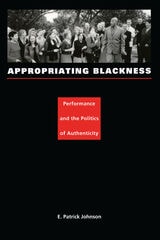
Appropriating Blackness
Performance and the Politics of AuthenticityE. Patrick Johnson
Duke University Press, 2003
Johnson looks at various sites of performed blackness, including Marlon Riggs’s influential documentary Black Is . . . Black Ain’t and comedic routines by Eddie Murphy, David Alan Grier, and Damon Wayans. He analyzes nationalist writings by Amiri Baraka and Eldridge Cleaver, the vernacular of black gay culture, an oral history of his grandmother’s experience as a domestic worker in the South, gospel music as performed by a white Australian choir, and pedagogy in a performance studies classroom. By exploring the divergent aims and effects of these performances—ranging from resisting racism, sexism, and homophobia to excluding sexual dissidents from the black community—Johnson deftly analyzes the multiple significations of blackness and their myriad political implications. His reflexive account considers his own complicity, as ethnographer and teacher, in authenticating narratives of blackness.
Aquamarine Blue 5
Personal Stories of College Students with AutismDawn Prince-Hughes
Ohio University Press, 2002
Rated Outstanding by the American Association of School Libraries
This is the first book to be written by autistic college students about the challenges they face. Aquamarine Blue 5 details the struggle of these highly sensitive students and shows that there are gifts specific to autistic students that enrich the university system, scholarship, and the world as a whole.
Dawn Prince-Hughes presents an array of writings by students who have been diagnosed with Asperger’s Syndrome or High-Functioning Autism, showing their unique ways of looking at and solving problems. In their own words, they portray how their divergent thinking skills could be put to great use if they were given an opportunity. Many such students never get the chance because the same sensitivity that gives them these insights makes the flicker of fluorescent lights and the sound of chalk on the board unbearable For simple—and easily remedied—reasons, we lose these students, who are as gifted as they are challenged.
Aquamarine Blue 5 is a showcase of the strength and resilient character of individuals with Asperger’s Syndrome. It will be an invaluable resource for those touched by this syndrome, their friends and families, and school administrators.
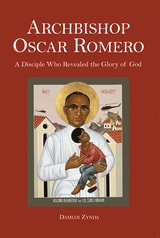
Archbishop Oscar Romero
A Disciple Who Revealed the Glory of GodDamian Zynda
University of Scranton Press, 2010
During his lifetime, Archbishop Oscar Romero chose to live the Christian Gospel in a radical way, defending, supporting, and serving the poor, and confronting the oppressive and murderous violence of the Salvadoran dictatorship. As a result, in March 1980, while celebrating Mass in a small chapel in El Salvador, he was assassinated.
With Archbishop Oscar Romero, Damian Zynda offers a compelling examination of the bishop’s eventful life. Zynda delves into the psychological and spiritual depths of Romero’s faith, tracing its progression from age thirteen up to the episcopacy and his prophetic stand against the government.