Results by title
18284 books match the query 'United States' and 1653 start with a

ALSC's Popular Picks for Young Readers
Diane Foote
American Library Association, 2014

AMBASSADORIAL DIARIES
THE COURT OF ST. JAMES'S 1918-1921JULIA DAVIS
West Virginia University Press, 1993
John W. Davis (1873-1955) was the most important national politician to call West Virginia home. Nominated for president by the Democratic Party in 1924, Davis lost to the incumbent Calvin Coolidge. This diary is an engaging day-by-day account of Davis's service as U.S. ambassador to England at a pivotal point in modern history. The recent World War and Russian Revolution, the new thirst for oil, the old strife in Ireland, and the final days of the Wilson presidency fill this diary with enduring significance. Davis also offers a look at the personalities which shaped the post-war world and describes the pageantry and social life of America's most coveted ambassadorial assignment.
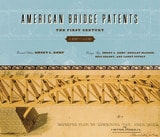
AMERICAN BRIDGE PATENTS
"THE FIRST CENTURY, 1790-1890"EMORY L. KEMP
West Virginia University Press, 2005
American Bridge Patents: The First Century (1790-1890), thoroughly illustrated with dozens of photographs and reproductions, presents the findings of a two-decade long study of several thousand pages of patent documents collected from the U.S. Patent Office. The essays in this volume offer readers tremendous insight into the creativity that characterized the evolution of bridge patents during this important and formative period of American engineering history. Of particular interest to the authors is the great variety of innovative and unusual designs that were accommodated by the then ambiguous patent law. Alongside these case studies, authors also address the Patent Office itself, whose processes regarding permissions were reformed in 1836, linking the evolution of patent law to the technology it managed.

AMERICAN PUBLIC FINANCE 1700 1815
EDWIN PERKINS
The Ohio State University Press, 1997
ANY FRIEND OF THE MOVEMENT
NETWORKING FOR BIRTH CONTROL 1920-1940JIMMY ELAINE WILKINS MEYER
The Ohio State University Press, 2004
AUTHORIZING POLICY
Thad Hall
The Ohio State University Press, 2004

Aaron Copland
The Life and Work of an Uncommon ManHoward Pollack
University of Illinois Press, 1999
Howard Pollack's expansive biography examines Copland's long list of accomplishments while also telling the story of the composer's musical development, political sympathies, personal life, relationships as an openly gay man, and tireless encouragement of younger composers. A winner of the Pulitzer Prize and an Academy Award, Copland played a vital role in the Yaddo Festival and as a beloved teacher at Tanglewood, Harvard, and the New School for Social Research. He turned to conducting later in life and via tours promoted American classical music overseas while taking it to appreciative audiences across the United States.
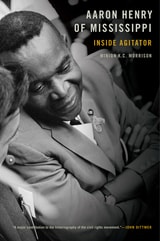
Aaron Henry of Mississippi
Inside AgitatorMinion K. C. Morrison
University of Arkansas Press, 2015
When Aaron Henry returned home to Mississippi from World War II service in 1946, he was part of wave of black servicemen who challenged the racial status quo. He became a pharmacist through the GI Bill, and as a prominent citizen, he organized a hometown chapter of the NAACP and relatively quickly became leader of the state chapter.
From that launching pad he joined and helped lead an ensemble of activists who fundamentally challenged the system of segregation and the almost total exclusion of African Americans from the political structure. These efforts were most clearly evident in his leadership of the integrated Mississippi Freedom Democratic Party delegation, which, after an unsuccessful effort to unseat the lily-white Democratic delegation at the Democratic National Convention in 1964, won recognition from the national party in 1968.
The man who the New York Times described as being “at the forefront of every significant boycott, sit-in, protest march, rally, voter registration drive and court case” eventually became a rare example of a social-movement leader who successfully moved into political office. Aaron Henry of Mississippi covers the life of this remarkable leader, from his humble beginnings in a sharecropping family to his election to the Mississippi house of representatives in 1979, all the while maintaining the social-change ideology that prompted him to improve his native state, and thereby the nation.
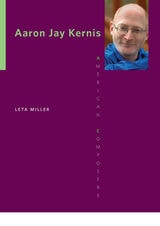
Aaron Jay Kernis
Leta E. Miller
University of Illinois Press, 2014
The first full-length biography of the Pulitzer Prize-winning composer
Winner of both the Pulitzer Prize and the Grawemeyer Award, Aaron Jay Kernis achieved recognition as one of the leading composers of his generation while still in his thirties. Since then his eloquent yet accessible style, emphasis on melody, and willingness to engage popular as well as classical forms has brought him widespread acclaim and admiring audiences.
Leta Miller's biography offers the first survey of the composer's life and work. Immersed in music by middle school, and later training under Theodore Antoniou, John Adams, Jacob Druckman, and others, Kernis rejected the idea of distancing his work from worldly concerns and composed on political themes. His Second Symphony, from 1991, engaged with the first Gulf War; 1993's Still Moment with Hymn was a reaction to the Bosnian Genocide; and the next year's Colored Field and 1995's Lament and Prayer dealt with the Holocaust. Yet Kernis also used sources as disparate as futurist agitprop and children's games to display humor in his work. Miller's analysis addresses not only Kernis's wide range of subjects but also the eclecticism that has baffled critics, analyzing his dedication to synthesis and the themes consistent in his work. Informed and engaging, Aaron Jay Kernis gives a rare mid-career portrait of a major American cultural figure.
Abandoned Families
Social Isolation in the Twenty-First CenturyKristin S. Seefeldt
Russell Sage Foundation, 2016
Vasquez-Tokos finds that their experiences in childhood, adolescence, and young adulthood shape their perceptions of race, which in turn influence their romantic expectations. Most Latinos marry other Latinos, but those who intermarry tend to marry whites. She finds that some Latina women who had domineering fathers assumed that most Latino men shared this trait and gravitated toward white men who differed from their fathers. Other Latina respondents who married white men fused ideas of race and class and perceived whites as higher status and considered themselves to be “marrying up.” Latinos who married non-Latino minorities—African Americans, Asian Americans, and Native Americans—often sought out non-white partners because they shared similar experiences of racial marginalization. Latinos who married Latinos of a different national origin expressed a desire for shared cultural commonalities with their partners, but—like those who married whites—often associated their own national-origin groups with oppressive gender roles.
Vasquez-Tokos also investigates how racial and cultural identities are maintained or altered for the respondents’ children. Within Latino-white marriages, biculturalism—in contrast with Latinos adopting a white “American” identity—is likely to emerge. For instance, white women who married Latino men often embraced aspects of Latino culture and passed it along to their children. Yet, for these children, upholding Latino cultural ties depended on their proximity to other Latinos, particularly extended family members. Both location and family relationships shape how parents and children from interracial families understand themselves culturally.
As interracial marriages become more common, Marriage Vows and Racial Choices shows how race, gender, and class influence our marital choices and personal lives.
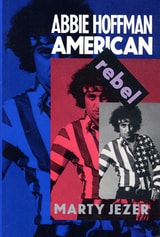
Abbie Hoffman
American RebelJezer, Marty
Rutgers University Press, 1993
"... Abbie, more than any other radical, showed potheads how to demonstrate and radicals how to dance." -- Chicago Tribune
"... deeply sympathetic and scrupulously detached-a triumph of judicious empathy." -- MARTIN DUBERMAN, Distinguished Professor of History, Lehman/The Graduate School, C.U.N.Y.
"... details Hoffman's humor, manic energy, depressive spells, political skills, and above all, his Incurable and still contagious optimism." -- Entertainment Weekly
"Here's the Abbie I knew and loved! Marty Jezer has captured him in all his complexity, dedication, humor, and heart." -- ANITA HOFFMAN
Aberrations In Black
Toward a Queer of Color CritiqueRoderick A. Ferguson
University of Minnesota Press, 2003
A hard-hitting look at the regulation of sexual difference and its role in circumscribing African American culture
The sociology of race relations in America typically describes an intersection of poverty, race, and economic discrimination. But what is missing from the picture—sexual difference—can be as instructive as what is present. In this ambitious work, Roderick A. Ferguson reveals how the discourses of sexuality are used to articulate theories of racial difference in the field of sociology. He shows how canonical sociology—Gunnar Myrdal, Ernest Burgess, Robert Park, Daniel Patrick Moynihan, and William Julius Wilson—has measured African Americans’s unsuitability for a liberal capitalist order in terms of their adherence to the norms of a heterosexual and patriarchal nuclear family model. In short, to the extent that African Americans’s culture and behavior deviated from those norms, they would not achieve economic and racial equality.
Aberrations in Black tells the story of canonical sociology’s regulation of sexual difference as part of its general regulation of African American culture. Ferguson places this story within other stories—the narrative of capital’s emergence and development, the histories of Marxism and revolutionary nationalism, and the novels that depict the gendered and sexual idiosyncrasies of African American culture—works by Richard Wright, Ralph Ellison, James Baldwin, Audre Lorde, and Toni Morrison. In turn, this book tries to present another story—one in which people who presumably manifest the dysfunctions of capitalism are reconsidered as indictments of the norms of state, capital, and social science. Ferguson includes the first-ever discussion of a new archival discovery—a never-published chapter of Invisible Man that deals with a gay character in a way that complicates and illuminates Ellison’s project.
Unique in the way it situates critiques of race, gender, and sexuality within analyses of cultural, economic, and epistemological formations, Ferguson’s work introduces a new mode of discourse—which Ferguson calls queer of color analysis—that helps to lay bare the mutual distortions of racial, economic, and sexual portrayals within sociology.
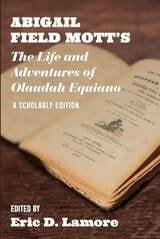
Abigail Field Mott's The Life and Adventures of Olaudah Equiano
A Scholarly EditionEric D. Lamore
West Virginia University Press, 2023
An adaptation of Olaudah Equiano’s Interesting Narrative published for Black children in 1829, now given new life in a major scholarly edition.
In 1829, Samuel Wood and Sons, a New York publisher of children’s literature, printed and sold the Quaker Abigail Field Mott’s Life and Adventures of Olaudah Equiano. Mott adapted Olaudah Equiano’s Interesting Narrative, a bestselling autobiography first published in London in 1789, for Black children studying at New York African Free Schools, one of the first educational systems to teach individuals of African descent in the United States.
By reissuing Mott’s neglected adaptation with contextualizing scholarly apparatus, Eric D. Lamore disrupts the editorial tradition of selecting a London edition of Equiano’s Interesting Narrative, and positions Equiano in the United States instead of Great Britain. Lamore’s volume contains Mott’s children’s book, which includes a series of illustrations, in a facsimile edition; instructive notes on Life and Adventures; a provocative essay on the adaptation; and selections from relevant texts on the New York African Free Schools and other related topics. With its focus on the intersections of early Black Atlantic and American studies, children’s literature, history of education, life writing, and book history, this edition offers a fresh take on Equiano and his autobiography for a variety of twenty-first-century audiences.
Abigail Field Mott’s The Life and Adventures of Olaudah Equiano
A Scholarly EditionEric D. Lamore
University of Delaware Press, 0
By reissuing Mott’s neglected adaptation with contextualizing scholarly apparatus, Eric D. Lamore disrupts the editorial tradition of selecting a London edition of Equiano’s Interesting Narrative, and positions Equiano in the United States instead of Great Britain. Lamore’s volume contains Mott’s children’s book, which includes a series of illustrations, in a facsimile edition; instructive notes on Life and Adventures; a provocative essay on the adaptation; and selections from relevant texts on the New York African Free Schools and other related topics. With its focus on the intersections of early Black Atlantic and American studies, children’s literature, history of education, life writing, and book history, this edition offers a fresh take on Equiano and his autobiography for a variety of twenty-first-century audiences.
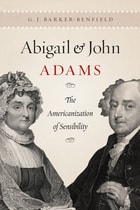
Abigail and John Adams
The Americanization of SensibilityG. J. Barker-Benfield
University of Chicago Press, 2010
During the many years that they were separated by the perils of the American Revolution, John and Abigail Adams exchanged hundreds of letters. Writing to each other of public events and private feelings, loyalty and love, revolution and parenting, they wove a tapestry of correspondence that has become a cherished part of American history and literature.
With Abigail and John Adams, historian G. J. Barker-Benfield mines those familiar letters to a new purpose: teasing out the ways in which they reflected—and helped transform—a language of sensibility, inherited from Britain but, amid the revolutionary fervor, becoming Americanized. Sensibility—a heightened moral consciousness of feeling, rooted in the theories of such thinkers as Descartes, Locke, and Adam Smith and including a “moral sense” akin to the physical senses—threads throughout these letters. As Barker-Benfield makes clear, sensibility was the fertile, humanizing ground on which the Adamses not only founded their marriage, but also the “abhorrence of injustice and inhumanity” they and their contemporaries hoped to plant at the heart of the new nation. Bringing together their correspondence with a wealth of fascinating detail about life and thought, courtship and sex, gender and parenting, and class and politics in the revolutionary generation and beyond, Abigail and John Adams draws a lively, convincing portrait of a marriage endangered by separation, yet surviving by the same ideas and idealism that drove the revolution itself.
A feast of ideas that never neglects the real lives of the man and woman at its center, Abigail and John Adams takes readers into the heart of an unforgettable union in order to illuminate the first days of our nation—and explore our earliest understandings of what it might mean to be an American.
Abolition Archives, Feminist Futures
Kathi Weeks
Duke University Press, 2026
Abolition Of White Democracy
Joel Olson
University of Minnesota Press, 2004
Offers a new way of understanding the tortured relationship between race and democracy in the United States
Racial discrimination embodies inequality, exclusion, and injustice and as such has no place in a democratic society. And yet racial matters pervade nearly every aspect of American life, influencing where we live, what schools we attend, the friends we make, the votes we cast, the opportunities we enjoy, and even the television shows we watch.
Joel Olson contends that, given the history of slavery and segregation in the United States, American citizenship is a form of racial privilege in which whites are equal to each other but superior to everyone else. In Olson’s analysis we see how the tension in this equation produces a passive form of democracy that discourages extensive participation in politics because it treats citizenship as an identity to possess rather than as a source of empowerment. Olson traces this tension and its disenfranchising effects from the colonial era to our own, demonstrating how, after the civil rights movement, whiteness has become less a form of standing and more a norm that cements white advantages in the ordinary operations of modern society. To break this pattern, Olson suggests an “abolitionist-democratic” political theory that makes the fight against racial discrimination a prerequisite for expanding democratic participation.
Abolition and the Press
The Moral Struggle Against SlaveryFord Risley
Northwestern University Press, 2008
This examination of nineteenth-century journalism explores the specific actions and practices of the publications that provided a true picture of slavery to the general public. From Boston's strident <i>Liberator</i> to Frederick Douglass' <i>North Star</i>, the decades before the Civil War saw more than forty newspapers founded with the specific aim of promoting emancipation. Not only did these sheets provide a platform for discourse, but they also gave slavery a face for a wider audience. The reach of the abolitionist press only grew as the fiery publications became objects of controversy and targets of violence in both South and North. These works kept the issue of slavery in the public eye even as mainstream publications took up the call for emancipation, as the nation went to war, up to the end of slavery. Their legacy has endured, as dedicated reform writers and editors continue to view the press as a vital tool in the fight for equality.
Abolitionist Intimacies
Queer and Trans Migrants against the Deportation StateEithne Luibheid
Duke University Press, 2025
Abolitionist Politics and the Coming of the Civil War
James Brewer Stewart
University of Massachusetts Press, 2008
Before the Civil War, slaveholders made themselves into the most powerful, most deeply rooted, and best organized private interest group within the United States. Not only did slavery represent the national economy's second largest capital investment, exceeded only by investment in real estate, but guarantees of its perpetuation were studded throughout the U.S. Constitution. The vast majority of white Americans, in North and South, accepted the institution, and pro-slavery presidents and congressmen consistently promoted its interests.
In Abolitionist Politics and the Coming of the Civil War, James Brewer Stewart explains how a small group of radical activists, the abolitionist movement, played a pivotal role in turning American politics against this formidable system. He examines what influence the movement had in creating the political crises that led to civil war and evaluates the extent to which a small number of zealous reformers made a truly significant political difference when demanding that their nation face up to its most excruciating moral problem. In making these assessments, Stewart addresses a series of more specific questions: What were the abolitionists actually up against when seeking the overthrow of slavery and white supremacy? What motivated and sustained them during their long and difficult struggles? What larger historical contexts (religious, social, economic, cultural, and political) influenced their choices and determined their behavior? What roles did extraordinary leaders play in shaping the movement, and what were the contributions of abolitionism's unheralded “foot soldiers”? What factors ultimately determined, for better or worse, the abolitionists' impact on American politics and the realization of their equalitarian goals?
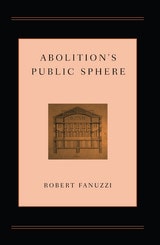
Abolition’s Public Sphere
Robert Fanuzzi
University of Minnesota Press, 2003
An innovative analysis of the Enlightenment’s effects on the anti-slavery movement
Echoes of Thomas Paine and Enlightenment thought resonate throughout the abolitionist movement and in the efforts of its leaders to create an antislavery reading public. In Abolition’s Public Sphere Robert Fanuzzi critically examines the writings of William Lloyd Garrison, Frederick Douglass, Henry David Thoreau, and Sarah and Angelina Grimke, and their massive abolition publicity campaign—pamphlets, newspapers, petitions, and public gatherings—geared to an audience of white male citizens, free black noncitizens, women, and the enslaved. Including provocative readings of Thoreau’s Walden and of the symbolic space of Boston’s Faneuil Hall, Abolition’s Public Sphere demonstrates how abolitionist public discourse sought to reenact eighteenth-century scenarios of revolution and democracy in the antebellum era.
Fanuzzi illustrates how the dissemination of abolitionist tracts served to create an “imaginary public” that promoted and provoked the discussion of slavery. However, by embracing Enlightenment abstractions of liberty, reason, and progress, Fanuzzi argues, abolitionist strategy introduced aesthetic concerns that challenged political institutions of the public sphere and prevailing notions of citizenship. Insightful and thought-provoking, Abolition’s Public Sphere questions standard versions of abolitionist history and, in the process, our understanding of democracy itself.
Aboriginal Relationships between Culture and Plant Life in the Upper Great Lakes Region
Richard Asa Yarnell
University of Michigan Press, 1964
Abortion Rights as Religious Freedom
Peter S. Wenz
Temple University Press, 1992

Abortion at Work
Ideology and Practice in a Feminist ClinicSimonds, Wendy
Rutgers University Press, 1996
These are the questions that drive Wendy Simonds' Abortion at Work. Simonds documents the ways in which workers at a feminist clinic construct compelling feminist visions, and also watch their ideals fall short in practice. Simonds interprets these women's narratives to get at how abortion works on feminism, and to show what feminism can gain by rethinking abortion utilizing these activists' terms. In thoroughly engaging prose, Simonds frames her analysis with a moving account of her own personal understanding of the issues.

About Religion
Economies of Faith in Virtual CultureMark C. Taylor
University of Chicago Press, 1999
Traveling from high culture to pop culture and back again, About Religion approaches cyberspace and Las Vegas through Hegel and Kant and reads Melville's The Confidence-Man through the film Wall Street. As astonishing juxtapositions and associations proliferate, formerly uncharted territories of virtual culture disclose theological vestiges, showing that faith in contemporary culture is as unavoidable as it is elusive.
The most accessible presentation of Taylor's revolutionary ideas to date, About Religion gives us a dazzling and disturbing vision of life at the end of the old and beginning of the new millennium.
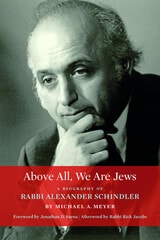
Above All, We Are Jews
A Biography of Rabbi Alexander SchindlerMichael A. Meyer
Central Conference of American Rabbis, 2025
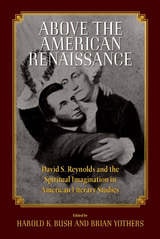
Above the American Renaissance
David S. Reynolds and the Spiritual Imagination in American Literary StudiesHarold K. Bush
University of Massachusetts Press, 2018
In addition to the editors and David S. Reynolds, contributors include Jeffrey Bilbro, Dawn Coleman, Jonathan A. Cook, Tracy Fessenden, Zachary Hutchins, Richard Kopley, Mason I. Lowance Jr., John Matteson, Christopher N. Phillips, Vivian Pollak, Michael Robertson, Gail K. Smith, Claudia Stokes, and Timothy Sweet.
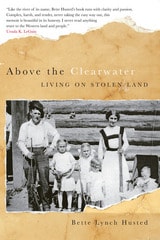
Above the Clearwater
Living on Stolen LandBette Lynch Husted
Oregon State University Press, 2004
Like her father before her, Bette Husted grew up on stolen land. The bench land above the Clearwater River in north-central Idaho had been a home for the Nez Perce Indians until the Dawes Act opened their reservation to settlement in 1895. As a child on the family homestead, Husted felt the presence of the Nez Perce: "But they were always just out of sight, like a smoky shadow behind me that I couldn't quite turn around quickly enough to catch."
Above the Clearwater chronicles her family's history on the land, revealing their joys and sorrows, their triumphs and tragedies. In a series of graceful and moving essays, Husted traces this intimate history, from her Cold War childhood to her struggles as a parent and finally to her life as a woman and teacher in the rural West. Her family's stories echo those of countless other families in the American West: the conflicts with guns, the struggles over land ownership and water rights, the isolation of women, the separations by race and class, the family secrets of mental illness and suicide.
With a powerful, poetic voice, Husted illuminates the tangled relationship between the history of a particular place and the history of the families who inhabit that place over time. As Above the Clearwater explores one family's search for a home on land taken from its original inhabitants, it quietly asks all readers to examine their own homes in the same light.
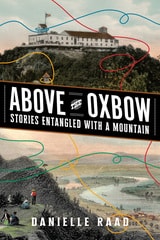
Above the Oxbow
Stories Entangled with a MountainDanielle R. Raad
West Virginia University Press, 2026
Above the Oxbow is a journey through the tangle of rich narratives surrounding Mount Holyoke, a locally cherished mountain in Western Massachusetts. It explores how visitors have forged connections with the mountain through various activities over the past two centuries. In an accessible blend of storytelling and scholarly analysis, Danielle Raad shows the significance of the landscape, historic sites, and material culture, revealing how cultural perspectives, community activism, collective memory, and personal experiences shape our understanding of a place. Situated at the intersection of public history and environmental history, this ethnography of place also discloses the curious stories of the Summit House, an erstwhile tramway, an airplane crash, and the local fight to conserve Mount Holyoke as a natural space and celebrates its myriad uses today.
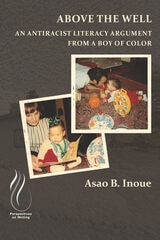
Above the Well
An Antiracist Literacy Argument from a Boy of ColorAsao B. Inoue
University Press of Colorado, 2021
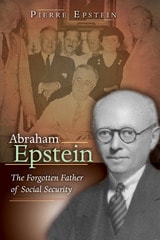
Abraham Epstein
The Forgotten Father of Social SecurityPierre Epstein
University of Missouri Press, 2006
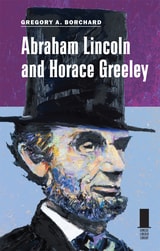
Abraham Lincoln and Horace Greeley
Gregory A. Borchard
Southern Illinois University Press, 2011
Borchard begins with an overview of the lives of both Lincoln and Greeley, delving particularly into their mutual belief in Henry Clay’s much-debated American System, and investigating the myriad similarities between the two political giants, including their comparable paths to power and their statuses as self-made men, their reputations as committed reformers, and their shared dedication to social order and developing a national infrastructure. Also detailed are Lincoln’s and Greeley’s personal quests to end slavery in the United States, as well as their staunch support of free-soil homesteads in the West.
Yet despite their ability to work together productively, both men periodically found themselves on opposite ends of the political spectrum. Their by turns harmonious and antagonistic relationship often played out on the front pages of Greeley’s influential newspaper, the New York Tribune. Drawing upon historical gems from the Tribune, as well as the personal papers of both Lincoln and Greeley, Borchard explores in depth the impact the two men had on their times and on each other, and how, as Lincoln’s and Greeley’s paths often crossed—and sometimes diverged—they personified the complexities, virtues, contradictions, and faults of their eras.
Abraham Lincoln and Horace Greeley goes beyond tracing each man’s personal and political evolution to offer a new perspective on the history-changing events of the times, including the decline of the Whig Party and the rise of the Republicans, the drive to extend American borders into the West; and the bloody years of the Civil War. Borchard finishes with reflections on the deaths of Lincoln and Greeley and how the two men have been remembered by subsequent generations.
Sure to become an essential volume in the annals of political history and journalism, Abraham Lincoln and Horace Greeley is a compelling testament to the indelible mark these men left on both their contemporaries and the face of America’s future.
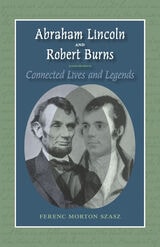
Abraham Lincoln and Robert Burns
Connected Lives and LegendsFerenc Morton Szasz
Southern Illinois University Press, 2008
Today the images of Robert Burns and Abraham Lincoln are recognized worldwide, yet few are aware of the connection between the two. In Abraham Lincoln and Robert Burns: Connected Lives and Legends, author Ferenc Morton Szasz reveals how famed Scots poet Robert Burns—and Scotland in general—influenced the life and thought of one of the most beloved and important U.S. presidents and how the legends of the two men became intertwined after their deaths. This is the first extensive work to link the influence, philosophy, and artistry of these two larger-than-life figures.
Lacking a major national poet of their own in the early nineteenth century, Americans in the fledgling frontier country ardently adopted the poignant verses and songs of Scotland’s Robert Burns. Lincoln, too, was fascinated by Scotland’s favorite son and enthusiastically quoted the Scottish bard from his teenage years to the end of his life. Szasz explores the ways in which Burns’s portrayal of the foibles of human nature, his scorn for religious hypocrisy, his plea for nonjudgmental tolerance, and his commitment to social equality helped shape Lincoln’s own philosophy of life. The volume also traces how Burns’s lyrics helped Lincoln develop his own powerful sense of oratorical rhythm, from his casual anecdotal stories to his major state addresses.
Abraham Lincoln and Robert Burns connects the poor-farm-boy upbringings, the quasi-deistic religious views, the shared senses of destiny, the extraordinary gifts for words, and the quests for social equality of two respected and beloved world figures. This book is enhanced by twelve illustrations and two appendixes, which include Burns poems Lincoln particularly admired and Lincoln writings especially admired in Scotland.
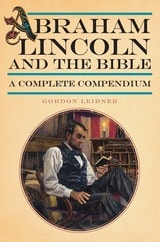
Abraham Lincoln and the Bible
A Complete CompendiumGordon Leidner
Southern Illinois University Press, 2023
How did Abraham Lincoln’s lifelong study of scripture influence him as a man and, ultimately, as president? Historian Gordon Leidner believes the impact was profound—more than previously recognized—and has investigated all the known writings of Abraham Lincoln to identify, catalog, and study every instance in which Lincoln quoted from or alluded to the Bible. Rather than dwelling on the never-ending debate about Lincoln’s religious beliefs, Leidner shows how scripture affected Lincoln personally, professionally, and politically.
Leidner offers first a short biography that focuses on Lincoln’s use of the Bible, how it shaped him as a person, how its influence changed over time, and how biblical quotations peppered his letters, speeches, and conversations. The book concludes with an unparalleled appendix that tabulates nearly 200 instances of Lincoln’s quoting from or alluding to scripture, giving locators for the Bible and Roy P. Basler’s nine volume Collected Works of Abraham Lincoln and quotations from both sources. The appendix also includes when and where Lincoln used each quote, providing valuable context, whether the use was in personal letters such as one to Queen Victoria after the death of Prince Albert, political speeches such as the Gettysburg Address, or state addresses such as the Second Inaugural Address.
By showcasing Lincoln’s specific biblical references and influences, Leidner reframes the question of Lincoln’s religious beliefs so that readers may evaluate for themselves what solace and guidance the Bible afforded the sixteenth president.
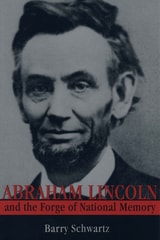
Abraham Lincoln and the Forge of National Memory
Barry Schwartz
University of Chicago Press, 2000
Schwartz draws on a wide array of materials—painting and sculpture, popular magazines and school textbooks, newspapers and oratory—to examine the role that Lincoln's memory has played in American life. He explains, for example, how dramatic funeral rites elevated Lincoln's reputation even while funeral eulogists questioned his presidential actions, and how his reputation diminished and grew over the next four decades. Schwartz links transformations of Lincoln's image to changes in the society. Commemorating Lincoln helped Americans to think about their country's development from a rural republic to an industrial democracy and to articulate the way economic and political reform, military power, ethnic and race relations, and nationalism enhanced their conception of themselves as one people.
Lincoln's memory assumed a double aspect of "mirror" and "lamp," acting at once as a reflection of the nation's concerns and an illumination of its ideals, and Schwartz offers a fascinating view of these two functions as they were realized in the commemorative symbols of an ever-widening circle of ethnic, religious, political, and regional communities. The first part of a study that will continue through the present, Abraham Lincoln and the Forge of National Memory is the story of how America has shaped its past selectively and imaginatively around images rooted in a real person whose character and achievements helped shape his country's future.
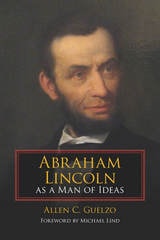
Abraham Lincoln as a Man of Ideas
Allen C. Guelzo, with a Foreword by Michael Lind
Southern Illinois University Press, 2009
Despite the most meager of formal educations, Lincoln had a tremendous intellectual curiosity that drove him into the circle of Enlightenment philosophy and democratic political ideology. And from these, Lincoln developed a set of political convictions that guided him throughout his life and his presidency. This compilation of ten essays from Lincoln scholar Allen C. Guelzo uncovers the hidden sources of Lincoln’s ideas and examines the beliefs that directed his career and brought an end to slavery and the Civil War.
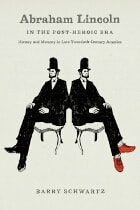
Abraham Lincoln in the Post-Heroic Era
History and Memory in Late Twentieth-Century AmericaBarry Schwartz
University of Chicago Press, 2008
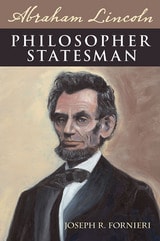
Abraham Lincoln, Philosopher Statesman
Joseph R. Fornieri
Southern Illinois University Press, 2014
2015 ISHS Superior Achievement Award
What constitutes Lincoln’s political greatness as a statesman? As a great leader, he saved the Union, presided over the end of slavery, and helped to pave the way for an interracial democracy. His great speeches provide enduring wisdom about human equality, democracy, free labor, and free society. Joseph R. Fornieri contends that Lincoln’s political genius is best understood in terms of a philosophical statesmanship that united greatness of thought and action, one that combined theory and practice. This philosophical statesmanship, Fornieri argues, can best be understood in terms of six dimensions of political leadership: wisdom, prudence, duty, magnanimity, rhetoric, and patriotism. Drawing on insights from history, politics, and philosophy, Fornieri tackles the question of how Lincoln’s statesmanship displayed each of these crucial elements.
Providing an accessible framework for understanding Lincoln’s statesmanship, this thoughtful study examines the sixteenth president’s political leadership in terms of the traditional moral vision of statecraft as understood by epic political philosophers such as Aristotle and St. Thomas Aquinas. Fornieri contends that Lincoln’s character is best understood in terms of Aquinas’s understanding of magnanimity or greatness of soul, the crowning virtue of statesmanship. True political greatness, as embodied by Lincoln, involves both humility and sacrificial service for the common good. The enduring wisdom and timeless teachings of these great thinkers, Fornieri shows, can lead to a deeper appreciation of statesmanship and of its embodiment in Abraham Lincoln.
With the great philosophers and books of western civilization as his guide, Fornieri demonstrates the important contribution of normative political philosophy to an understanding of our sixteenth president. Informed by political theory that draws on the classics in revealing the timelessness of Lincoln’s example, his interdisciplinary study offers profound insights for anyone interested in the nature of leadership, statesmanship, political philosophy, political ethics, political history, and constitutional law.
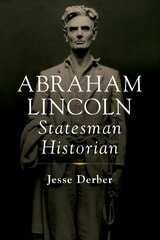
Abraham Lincoln, Statesman Historian
Jesse Derber
University of Illinois Press, 2024
Abraham Lincoln drew upon history in his political career and particularly when crafting the rhetorical masterpieces that still resonate in the present day. Jesse Derber explores how Lincoln’s views of the limits of human understanding drove a belief in--and untiring pursuit of--historical truth.
Lincoln embraced the traditional ideas that good history made good statesmanship and that an understanding of the past informed decision-making in the present. Seeing history as a source of wisdom, Lincoln strove for accuracy through a combination of research, reasoning ability, emotional maturity, and a willingness to admit his mistakes and challenge his biases. His philosophy flowed from an idea that authentic history could enlighten people about human nature. Though he revered precedents, Lincoln understood the past could be imperfect, and that progress through change was an ineffable part of building a better nation.
Perceptive and revealing, Abraham Lincoln, Statesman Historian looks at how the Lincoln practiced history and applied its lessons to politics and leadership.
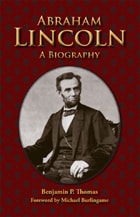
Abraham Lincoln
A BiographyBenjamin P. Thomas. Foreword by Michael Burlingame
Southern Illinois University Press, 1952
Long considered a classic, Benjamin P. Thomas's Abraham Lincoln: A Biography takes an incisive look at one of American history's greatest figures. Originally published in 1952 to wide acclaim, this eloquent account rises above previously romanticized depictions of the sixteenth president to reveal the real Lincoln: a complex, shrewd, and dynamic individual whose exceptional life has long intrigued the public.
Thomas traces the president from his hardscrabble beginnings and early political career, through his years as an Illinois lawyer and his presidency during the Civil War. Although Lincoln is appropriately placed against the backdrop of the dramatic times in which he lived, the author's true focus is on Lincoln the man and his intricate personality. While Thomas pays tribute to Lincoln's many virtues and accomplishments, he is careful not to dramatize a persona already larger than life in the American imagination. Instead he presents a candid and balanced representation that provides compelling insight into Lincoln's true character and the elements that forged him into an extraordinary leader. Thomas portrays Lincoln as a man whose conviction, resourcefulness, and inner strength enabled him to lead the nation through the most violent crossroads in its history.
Thomas's direct, readable narrative is concise while losing none of the crucial details of Lincoln's remarkable life. The volume's clarity of style makes it accessible to beginners, but it is complex and nuanced enough to interest longtime Lincoln scholars. After more than half a century, Abraham Lincoln: A Biography is still an essential source for anyone interested in learning more about the many facets of the sixteenth president, and it remains the definitive single-volume work on the life of an American legend.
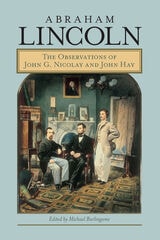
Abraham Lincoln
The Observations of John G. Nicolay and John HayEdited by Michael Burlingame
Southern Illinois University Press, 2007
Editor Michael Burlingame sifted through the original forty-seven-hundred-page work and selected only the personal observations of the secretaries during the Lincoln presidency, placing ten excerpts in chronological order in Abraham Lincoln: The Observations of John G. Nicolay and John Hay. The result is an important collection of Nicolay and Hay’s interpretations of Lincoln’s character, actions, and reputation, framed by Burlingame’s compelling preface, introduction, chapter introductions, and notes. The volume provides vivid descriptions of such events as Election Day in 1860, the crisis at Fort Sumter, the first major battle of the war at Bull Run, and Lincoln’s relationship with Edwin Stanton and George McClellan.
In this clear and captivating new work, Burlingame has made key portions of Nicolay and Hay’s immense biography available to a wide audience of today’s readers.
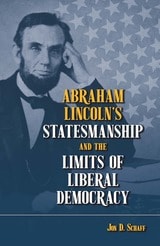
Abraham Lincoln’s Statesmanship and the Limits of Liberal Democracy
Jon D. Schaff
Southern Illinois University Press, 2019
Though Lincoln’s presidency is inextricably linked to the Civil War, and he is best known for his defense of the Union and executive wartime leadership, Lincoln believed that Congress should be at the helm of public policy making. Likewise, Lincoln may have embraced limited government in vague terms, but he strongly supported effective rule of law and distribution of income and wealth. Placing the Lincoln presidency within a deeper and more meaningful historical context, Abraham Lincoln’s Statesmanship and the Limits of Liberal Democracy highlights Lincoln’s significance in the development of American power institutions and social movement politics.
Using Lincoln’s prepresidential and presidential words and actions, this book argues that decent government demands a balance of competing goods and the strong statesmanship that Lincoln exemplified. Instead of relying too heavily on the will of the people and institutional solutions to help prevent tyranny, Jon D. Schaff proposes that American democracy would be better served by a moderate and prudential statesmanship such as Lincoln’s, which would help limit democratic excesses.
Schaff explains how Lincoln’s views on prudence, moderation, natural rights, and economics contain the notion of limits, then views Lincoln’s political and presidential leadership through the same lens. He compares Lincoln’s views on governmental powers with the defense of unlimited government by twentieth-century progressives and shows how Lincoln’s theory of labor anticipated twentieth-century distributist economic thought. Schaff’s unique exploration falls squarely between historians who consider Lincoln a protoprogressive and those who say his presidency was a harbinger of industrialized, corporatized America.
In analyzing Lincoln’s approach, Abraham Lincoln’s Statesmanship and the Limits of Liberal Democracy rejects the idea he was a revolutionary statesman and instead lifts up Lincoln’s own affinity for limited presidential power, making the case for a modest approach to presidential power today based on this understanding of Lincoln’s statesmanship. As a counterpoint to the contemporary landscape of bitter, uncivil politics, Schaff points to Lincoln’s statesmanship as a model for better ways of engaging in politics in a democracy.
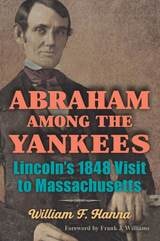
Abraham among the Yankees
Lincoln's 1848 Visit to MassachusettsWilliam F. Hanna
Southern Illinois University Press, 1983
Hanna provides excellent context on the politics of the era, particularly the question of slavery, both in Massachusetts and nationwide, and he features the people Lincoln met and the cities or towns in which he spoke. Lincoln stumped for Taylor in Worcester, New Bedford, Boston, Lowell, Dorchester, Chelsea, Dedham, Cambridge, and Taunton. He gave twelve speeches in eleven days to audiences who responded with everything from catcalls to laughter to applause. Whatever they thought of Lincoln’s arguments, those who saw him were impressed by his unusual western style and remembered his style more than the substance of his talks.
Meticulously researched, Abraham among the Yankees invites readers to take an East Coast journey with a thirty-nine-year-old Lincoln during election season in 1848 to see how Massachusetts audiences responded to the humorous, informal approach that served Lincoln well during the rest of his political career.
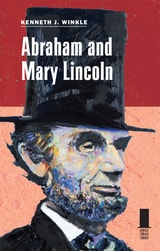
Abraham and Mary Lincoln
Kenneth J. Winkle
Southern Illinois University Press, 2011
When the awkward but ambitious Lincoln landed Mary Todd, people were surprised by their seeming incompatibility. Lincoln, lacking in formal education and social graces, came from the world of hardscrabble farmers on the American frontier. Mary, by contrast, received years of schooling and came from an established, wealthy, slave-owning family. Yet despite the social gulf between them, these two formidable personalities forged a bond that proved unshakable during the years to come. Mary provided Lincoln with the perfect partner in ambition—one with connections, political instincts, and polish. For Mary, Lincoln was her “diamond in the rough,” a man whose ungainly appearance and background belied a political acumen to match her own.
While each played their role in the marriage perfectly— Lincoln doggedly pursuing success and Mary hosting lavish political soirées—their partnership was not without contention. Mary—once described as “the wildcat of her age”—frequently expressed frustration with the limitations placed on her by Victorian social strictures, exhibiting behavior that sometimes led to public friction between the couple. Abraham’s work would at times keep him away from home for weeks, leaving Mary alone in Springfield.
The true test of the Lincolns’ dedication to each other began in the White House, as personal tragedy struck their family and civil war erupted on American soil. The couple faced controversy and heartbreak as the death of their young son left Mary grief-stricken and dependent upon séances and spiritualists; as charges of disloyalty hounded the couple regarding Mary’s young sister, a Confederate widow; and as public demands grew strenuous that their son Robert join the war. The loss of all privacy and the constant threat of kidnapping and assassination took its toll on the entire family. Yet until a fateful night in the Ford Theatre in 1865, Abraham and Mary Lincoln stood firmly together—he as commander-in-chief during America’s gravest military crisis, and she as First Lady of a divided country that needed the White House to emerge as a respected symbol of national unity and power.
Despite the challenges they faced, the Lincolns’ life together fully embodied the maxim engraved on their wedding bands: love is eternal. Abraham and Mary Lincoln is a testament to the power of a stormy union that held steady through the roughest of seas.
Absence And Light
Meditations From The Klamath MarshesJohn R. Campbell
University of Nevada Press, 2002
Abstract Barrios
The Crises of Latinx Visibility in CitiesJohana Londoño
Duke University Press, 2020
Abstract Expressionism
The International ContextMarter, Joan
Rutgers University Press, 2007
Bringing together fifteen original and path-breaking essays by world-class authorities on Abstract Expressionism as well as by younger scholars, this anthology looks beyond the canonical painters to explore the broader connections among abstract artists of the post–World War II era. Moving from the margins to the center, the essays recognize the contributions of artists working far beyond New York City. Topics include Jackson Pollock’s contact with Mexican muralists and the legacy of Abstract Expressionism for leftist artists in Latin America, the relevance of Jean-Paul Sartre and Samuel Beckett as sources of philosophical thought, the significance of northern European CoBrA painters such as Asger Jorn, the impact of Japanese Gutai artists, and connections with the revolutionary art of Italy, Belgium, and France. Abstract Expressionism is also described as a model for contemporaneous developments in the former Soviet Union.
As the first book to consider the movement in relation to post–World War II abstraction on four continents, this book brings a fresh perspective to this widely studied school of painting. Scholars and students alike will find this anthology essential reading in creating a more complete and nuanced understanding of Abstract Expressionism.

Abundant Light
Short FictionValerie Miner
Michigan State University Press, 2004
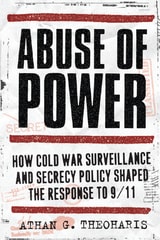
Abuse of Power
How Cold War Surveillance and Secrecy Policy Shaped the Response to 9/11Authored by Athan Theoharis
Temple University Press, 2011
Athan Theoharis, long a respected authority on surveillance and secrecy, established his reputation for meticulous scholarship with his work on the loyalty security program developed under Truman and McCarthy. In Abuse of Power, Theoharis continues his investigation of U.S. government surveillance and historicizes the 9/11 response.
Criticizing the U.S. government's secret activities and policies during periods of "unprecedented crisis," he recounts how presidents and FBI officials exploited concerns about foreign-based internal security threats.
Drawing on information sequestered until recently in FBI records, Theoharis shows how these secret activities in the World War II and Cold War eras expanded FBI surveillance powers and, in the process, eroded civil liberties without substantially advancing legitimate security interests.
Passionately argued, this timely book speaks to the costs and consequences of still-secret post-9/11 surveillance programs and counterintelligence failures. Ultimately, Abuse of Power makes the case that the abusive surveillance policies of the Cold War years were repeated in the government's responses to the September 11 attacks.
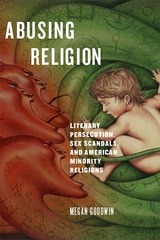
Abusing Religion
Literary Persecution, Sex Scandals, and American Minority ReligionsMegan Goodwin
Rutgers University Press, 2020