Results by title
18284 books match the query 'United States' and 1653 start with a
Activist Media
Documenting Movements and Networked SolidarityGino Canella
Rutgers University Press, 2022
Now more than ever, activists are using media to document injustice and promote social and political change. Yet with so many media platforms available, activists sometimes fail to have a coherent media and communication strategy.
Drawing from his experiences as a documentary filmmaker with Black Lives Matter 5280 and Service Employees International Union (SEIU) Local 105 in Denver, Colorado, Gino Canella argues that activist media create opportunities for activists to navigate conflict and embrace their political and ideological differences. Canella details how activist media practices—interviewing organizers, script writing, video editing, posting on social media, and hosting community screenings—foster solidarity among grassroots organizers.
Informed by media theory, this book explores how activists are using media to mobilize supporters, communicate their values, and reject anti-union rhetoric. Furthermore, it demonstrates how collaborative media projects can help activists build broad-based coalitions and amplify their vision for a more equitable and just society.
Activist Rhetorics and American Higher Education, 1885-1937
Susan Kates
Southern Illinois University Press, 2000
In this study of the history of rhetoric education, Susan Kates focuses on the writing and speaking instruction developed at three academic institutions founded to serve three groups of students most often excluded from traditional institutions of higher education in late-nineteenth-and early-twentieth-century America: white middle-class women, African Americans, and members of the working class.
Kates provides a detailed look at the work of those students and teachers ostracized from rhetorical study at traditional colleges and universities. She explores the pedagogies of educators Mary Augusta Jordan of Smith College in Northhampton, Massachusetts; Hallie Quinn Brown of Wilberforce University in Wilberforce, Ohio; and Josephine Colby, Helen Norton, and Louise Budenz of Brookwood Labor College in Katonah, New York.
These teachers sought to enact forms of writing and speaking instruction incorporating social and political concerns in the very essence of their pedagogies. They designed rhetoric courses characterized by three important pedagogical features: a profound respect for and awareness of the relationship between language and identity and a desire to integrate this awareness into the curriculum; politicized writing and speaking assignments designed to help students interrogate their marginalized standing within the larger culture in terms of their gender, race, or social class; and an emphasis on service and social responsibility.
Activist Sentiments
Reading Black Women in the Nineteenth CenturyP. Gabrielle Foreman
University of Illinois Press, 2009
Activist Sentiments takes as its subject women who in fewer than fifty years moved from near literary invisibility to prolific productivity. Grounded in primary research and paying close attention to the historical archive, this book offers against-the-grain readings of the literary and activist work of Harriet Jacobs, Harriet Wilson, Frances E. W. Harper, Victoria Earle Matthews and Amelia E. Johnson.
Part literary criticism and part cultural history, Activist Sentiments examines nineteenth-century social, political, and representational literacies and reading practices. P. Gabrielle Foreman reveals how Black women's complex and confrontational commentary–often expressed directly in their journalistic prose and organizational involvement--emerges in their sentimental, and simultaneously political, literary production.
Actors and American Culture, 1880-1920
Benjamin Mcarthur
University of Iowa Press, 2000

Actors, Athletes, and Astronauts
Political Amateurs in the United States CongressDavid T. Canon
University of Chicago Press, 1990
Written in a lucid style accessible to the nonspecialist, David T. Canon's Actors, Athletes, and Astronauts is a definitive study of political amateurs in elections and in Congress. Canon examines the political conditions that prompt amateurs to run for office, why they win or lose, and whether elected amateurs behave differently from their experienced counterparts. Challenging previous work which presumed stable career structures and progressively ambitious candidates, his study reveals that amateurs are disproportionately elected in periods of high political opportunity, such as the 1930s for Democrats and 1980s for Republicans.
Canon's detailed findings call for significant revision of our prevailing understanding of ambition theory and disarm monolithic interpretations of political amateurs. His unique typology of amateurism differentiates among policy-oriented, "hopeless," or ambitious amateurs. The latter resemble their professional counterparts; "hopeless" amateurs are swept into office by strong partisan motivations and decision-making styles of each type vary, affecting their degree of success, but each type of amateur provides a necessary electoral balance by defeating entrenched incumbents rarely challenged by more experienced politicians.
Acts of Conspicuous Compassion
Performance Culture and American Charity PracticesSheila C. Moeschen
University of Michigan Press, 2016
Sheila C. Moeschen sheds new light on the legacy and involvement of disabled people within charity—specifically, the articulation of performance culture as a vital theoretical framework for discussing issues of embodiment and identity, a framework that dislodges previously held notions of the disabled existing as passive “objects” of pity. This work gives rise to a more complicated and nuanced discussion of the participation of the disabled community in the charity industry, of the opportunities afforded by performance culture for disabled people to act as critical agents of charity, and of the new ethical and political issues that arise from employing performance methodology in a culture with increased appetites for voyeurism, display, and complex spectacle.

Acts of Gaiety
LGBT Performance and the Politics of PleasureSara Warner
University of Michigan Press, 2013
Acts of Gaiety explores the mirthful modes of political performance by LGBT artists, activists, and collectives that have inspired and sustained deadly serious struggles for revolutionary change. The book explores antics such as camp, kitsch, drag, guerrilla theater, zap actions, rallies, manifestos, pageants, and parades alongside more familiar forms of "legitimate theater." Against queer theory's long-suffering romance with mourning and melancholia and a national agenda that urges homosexuals to renounce pleasure if they want to be taken seriously by mainstream society, Acts of Gaiety seeks to reanimate notions of "gaiety" as a political value for LGBT activism.
The book mines the archives of lesbian-feminist activism of the 1960s-70s, highlighting the outrageous gaiety that lay at the center of the social and theatrical performances of the era and uncovering original documents long thought to be lost. Juxtaposing historical figures such as Valerie Solanas and Jill Johnston with more recent performers and activists (including Hothead Paisan, Bitch & Animal, and the Five Lesbian Brothers), Warner shows how reclaiming this largely discarded and disavowed past elucidates possibilities for being and belonging. Acts of Gaiety explores the mutually informing histories of gayness as politics and as joie de vivre, along with the centrality of liveliness to queer performance and protest.
Acts of Poetry
American Poets' Theater and the Politics of PerformanceHeidi R. Bean
University of Michigan Press, 2019
American poets’ theater emerged in the postwar period alongside the rich, performance-oriented poetry and theater scenes that proliferated on the makeshift stages of urban coffee houses, shared apartments, and underground theaters, yet its significance has been largely overlooked by critics. Acts of Poetry shines a spotlight on poets’ theater’s key groups, practitioners, influencers, and inheritors, such as the Poets’ Theatre, the Living Theatre, Gertrude Stein, Bunny Lang, Frank O’Hara, Amiri Baraka, Carla Harryman, and Suzan-Lori Parks. Heidi R. Bean demonstrates the importance of poets’ theater in the development of twentieth-century theater and performance poetry, and especially evolving notions of the audience’s role in performance, and in narratives of the relationship between performance and everyday life. Drawing on an extensive archive of scripts, production materials, personal correspondence, theater records, interviews, manifestoes, editorials, and reviews, the book captures critical assessments and behind-the-scenes discussions that enrich our understanding of the intertwined histories of American theater and American poetry in the twentieth century.

Acts of Possession
Collecting in AmericaDilworth, Leah
Rutgers University Press, 2003
Drawing upon the body of theoretical work on collecting and focusing on individual as opposed to museum collections, the contributors investigate how, what, and why Americans have collected and explore the inherent meanings behind systems of organization and display. Essays consider the meanings of Thomas Jefferson's Indian Hall at Monticello; the pedagogical theories behind nineteenth-century children's curiosity cabinets; collections of Native American artifacts; and the ability of the owners of doll houses to construct meaning within the context of traditional ideals of domesticity.
The authors also consider some darker aspects of collecting-hoarding, fetishism, and compulsive behavior-scrutinizing collections of racist memorabilia and fascist propaganda. The final essay posits the serial killer as a collector, an investigation into the dangerous objectification of humans themselves.
By bringing fresh, interdisciplinary critical perspectives to bear on these questions, Dilworth and her coauthors weave a fascinating cultural history of collecting in America.

Acts of Resistance
Antibiotic Use and Prescribing Culture in the United StatesKatharina Rynkiewich
Vanderbilt University Press, 2026
In Acts of Resistance, Katharina Rynkiewich explores the fight to save the utility of antibiotic medicines amid global antimicrobial resistance. This engaging ethnography follows bacteria, patients, and practitioners as they weave in and out of North American medical institutions. Through an examination of the social dynamics and ethical challenges of everyday antibiotic use, the author expands on the limitations of good intentions in current antibiotic stewardship policy. Her ethnographic account shows the lived experience of multiple central figures as she shifts setting and tone, ultimately deepening our understanding of the global antimicrobial resistance crisis as emergency.
Due to the global scale of impact related to antimicrobial resistance, holding industries and institutions accountable is difficult but essential. With new and reemerging multidrug-resistant organisms making their homes within institutions and in the community, tracing the origins of an infection can be an insurmountable challenge. Rynkiewich demonstrates how “microbial highways” coexist along human highways, providing an apt example of how multidrug-resistant organisms spread across hospitals, communities, and entire regions.

Adapting to the Land
A History of Agriculture in ColoradoJohn F. Freeman
University Press of Colorado, 2021
Ancestral Puebloans farmed and grazed within the limits of nature. Early settlers adjusted their cultivation methods through trial and error, while later agriculturists relied on research and technical advice from the Colorado Agricultural College. As part of wartime mobilization, the federal government prompted farmers to efficiently increase yields. To meet the demand for food and fiber scientific and technical innovations led to the development of new plant cultivars and livestock breeds, advances in mechanization, and widespread use of synthetic amendments. Increasing concern over soil fertility and the loss of irrigation water to urbanization contributed to more changes. Despite, or perhaps because of, what we see today along the Front Range, Colorado may still have a chance to slow or even reverse its seemingly unrestrained growth, creating a more vibrant, earth-friendly society in which agriculture plays an increasingly significant part. Scientific discoveries and innovations in regenerative cultivation are clearing the path to a more sustainable future.
Adapting to the Land adds an ecological and horticultural perspective to historical interpretations of recurring agricultural issues in the state and tracks the concept of stewardship, suggesting that spiritual beliefs continue to contribute to debates over acceptable agricultural practices and the effects of urbanization upon the land. This book will be a key resource for students, scholars, and general readers interested in agricultural and Colorado history, sustainability, and rural sociology.

Addicted to Rehab
Race, Gender, and Drugs in the Era of Mass IncarcerationMcKim, Allison
Rutgers University Press, 2017
Winner of the 2018 Book of the Year Award from the American Society of Criminology's Division on Women and Crime
After decades of the American “war on drugs” and relentless prison expansion, political officials are finally challenging mass incarceration. Many point to an apparently promising solution to reduce the prison population: addiction treatment.
In Addicted to Rehab, Bard College sociologist Allison McKim gives an in-depth and innovative ethnographic account of two such rehab programs for women, one located in the criminal justice system and one located in the private healthcare system—two very different ways of defining and treating addiction. McKim’s book shows how addiction rehab reflects the race, class, and gender politics of the punitive turn. As a result, addiction has become a racialized category that has reorganized the link between punishment and welfare provision. While reformers hope that treatment will offer an alternative to punishment and help women, McKim argues that the framework of addiction further stigmatizes criminalized women and undermines our capacity to challenge gendered subordination. Her study ultimately reveals a two-tiered system, bifurcated by race and class.

Addiction, Inc.
Medication-Assisted Treatment and America's Forgotten War on DrugsEmily Dufton
University of Chicago Press, 2026
How the war on drugs created the gold standard treatment for addiction—until America’s opioid crisis got privatized for profit, to the detriment of patients.
Despite epidemic levels of overdoses in the United States, by 2020, only twenty percent of Americans suffering from opioid use disorder (OUD) received medication-assisted treatment (MAT), the gold standard of addiction treatment, which uses methadone, buprenorphine, or naltrexone to reduce illicit drug use and curb the symptoms of withdrawal. While MAT is the most effective treatment available for OUD, it’s also the most controversial, the most expensive, and the most difficult to access. And yet, the medications at the center of this treatment—and the private industries that distribute them—generate roughly sixteen billion dollars each year, on par with national sales of coffee and pet food.
In Addiction, Inc., historian Emily Dufton explains how this promising avenue of treatment emerged during President Richard Nixon’s war on drugs in 1971 as a radical experiment in public health, when hundreds of federally-funded treatment clinics opened nationwide. Dufton then explores how these nationalized clinics gave way to an immensely profitable private industry that offers poor care at high costs to an insufficient number of people. Drawing on original research and over a hundred interviews with policymakers, medical experts, pharmaceutical lobbyists, and patients and their families, she tells a gripping story of squandered potential and missed opportunities, as MAT transformed from a revolutionary political project launched from the White House itself into a commercial success—and a public health disaster.
Urgent, eye-opening, and deeply human, Addiction, Inc. reveals how, over the past fifty years, the United States built an addiction treatment system that made recovery harder instead of easier, and what it will take to change its course.
Addiction, Inc.
Medication-Assisted Treatment and America’s Forgotten War on DrugsEmily Dufton
University of Chicago Press, 2026
Despite epidemic levels of overdoses in the United States, by 2020, only twenty percent of Americans suffering from opioid use disorder (OUD) received medication-assisted treatment (MAT), the gold standard of addiction treatment, which uses methadone, buprenorphine, or naltrexone to reduce illicit drug use and curb the symptoms of withdrawal. While MAT is the most effective treatment available for OUD, it’s also the most controversial, the most expensive, and the most difficult to access. And yet, the medications at the center of this treatment—and the private industries that distribute them—generate roughly sixteen billion dollars each year, on par with national sales of coffee and pet food.
In Addiction, Inc., historian Emily Dufton explains how this promising avenue of treatment emerged during President Richard Nixon’s war on drugs in 1971 as a radical experiment in public health, when hundreds of federally-funded treatment clinics opened nationwide. Dufton then explores how these nationalized clinics gave way to an immensely profitable private industry that offers poor care at high costs to an insufficient number of people. Drawing on original research and over a hundred interviews with policymakers, medical experts, pharmaceutical lobbyists, and patients and their families, she tells a gripping story of squandered potential and missed opportunities, as MAT transformed from a revolutionary political project launched from the White House itself into a commercial success—and a public health disaster.
Urgent, eye-opening, and deeply human, Addiction, Inc. reveals how, over the past fifty years, the United States built an addiction treatment system that made recovery harder instead of easier, and what it will take to change its course.
Addressing Violence Against Women on College Campuses
Catherine Kaukinen
Temple University Press, 2017
Violence against women on college campuses has remained underreported and often under addressed by both campus security and local law enforcement, as well as campus administrators. The researchers, practitioners, and activists who contribute to this pertinent volume Addressing Violence Against Women on College Campuses examine the extent, nature, dynamic and contexts of violence against women at institutions of higher education.
This book is designed to facilitate an ongoing discussion and provide direction on how best to prevent and investigate violence against women, and intervene to assist victims while reducing the impact of these crimes. Chapters detail the necessary changes and implications that are part of Title IX and other federal legislation and initiatives as well as the effect these changes have had for higher education actors, including campus administrators, victim advocates, and student activists. The contributors also explore the importance of campus efforts to estimate the extent of violence against women; educating young men and women on the nature of sexual and dating violence; and shifting efforts to both make offenders accountable for their crimes and prompt all bystanders to act.
Addressing Violence Against Women on College Campuses urgently argues to make violence prevention is not separate from but rather an integral part of the student experience.
Contributors include: Antonia Abbey, Joanne Belknap, Ava Blustein, Stephanie Bonnes, Alesha Cameron, Sarah L. Cook, Walter S. DeKeseredy. Helen Eigenberg, Kate Fox, Christopher P. Krebs, Jennifer Leili, Christine Lindquist, Sarah McMahon, Caitlyn Meade, Christine Mouton, Matt R. Nobles, Callie Marie Rennison, Meredith M. Smith, Carmen Suarez, and the editors.

Adeline & Julia
Growing Up in Michigan and on the Kansas Frontier: Diaries from 19th-Century AmericaJanet C. Coryell
Michigan State University Press, 2000
The keeping of journals and diaries became an almost everyday pastime for many Americans in the nineteenth century. Adeline and Julia Graham, two young women from Berrien Springs, Michigan, were both drawn to this activity, writing about the daily events in their lives, as well as their 'grand adventures.' These are fascinating, deeply personal accounts that provide an insight into the thoughts and motivation of two sisters who lived more than a century ago. Adeline began keeping a diary when she was sixteen, from mid-1880 through mid-1884; through it we see a young woman coming of age in this small community in western Michigan. Paired with Adeline's account is her sister Julia's diary, which begins in 1885 when she sets out with three other young women to homestead in Greeley County, Kansas, just east of the Colorado border. It is a vivid and colorful narrative of a young woman's journey into America's western landscape.

Administering Justice
Placing the Chief Justice in American State PoliticsRichard L. Vining Jr. and Teena Wilhelm
University of Michigan Press, 2023
Administering Justice examines the leadership role of chief justices in the American states, including how those duties require chief justices to be part of the broader state political environment. Vining and Wilhelm focus extensively on the power of chief justices as public spokespersons, legislative liaisons, and reform leaders. In contrast to much existing research on chief justices in the states, this study weighs their extrajudicial responsibilities rather than intracourt leadership. By assessing the content of State of the Judiciary remarks delivered over a period of sixty years, Vining and Wilhelm are able to analyze the reform agendas advanced by chief justices and determine what factors influence the likelihood of success. These analyses confirm that chief justices engage with state politics in meaningful ways and that reactions to their proposals are influenced by ideological congruence with other political elites and the scope of their requests. Administering Justice also examines the chief justice position as an institution, provides a collective profile of its occupants, and surveys growing diversity among court leaders.
Administrative Aspects of Investment-Based Social Security Reform
Edited by John B. Shoven
University of Chicago Press, 2000

Administrative Burden
Policymaking by Other MeansPamela Herd
Russell Sage Foundation, 2018
Winner of the 2020 Outstanding Book Award Presented by the Public and Nonprofit Section of the National Academy of Management
Winner of the 2019 Louis Brownlow Book Award from the National Academy of Public Administration
Through in-depth case studies of federal programs and controversial legislation, the authors show that administrative burdens are the nuts-and-bolts of policy design. Regarding controversial issues such as voter enfranchisement or abortion rights, lawmakers often use administrative burdens to limit access to rights or services they oppose. For instance, legislators have implemented administrative burdens such as complicated registration requirements and strict voter-identification laws to suppress turnout of African American voters. Similarly, the right to an abortion is legally protected, but many states require women seeking abortions to comply with burdens such as mandatory waiting periods, ultrasounds, and scripted counseling. As Herd and Moynihan demonstrate, administrative burdens often disproportionately affect the disadvantaged who lack the resources to deal with the financial and psychological costs of navigating these obstacles.
However, policymakers have sometimes reduced administrative burdens or shifted them away from citizens and onto the government. One example is Social Security, which early administrators of the program implemented in the 1930s with the goal of minimizing burdens for beneficiaries. As a result, the take-up rate is about 100 percent because the Social Security Administration keeps track of peoples’ earnings for them, automatically calculates benefits and eligibility, and simply requires an easy online enrollment or visiting one of 1,200 field offices. Making more programs and public services operate this efficiently, the authors argue, requires adoption of a nonpartisan, evidence-based metric for determining when and how to institute administrative burdens, with a bias toward reducing them. By ensuring that the public’s interaction with government is no more onerous than it need be, policymakers and administrators can reduce inequality, boost civic engagement, and build an efficient state that works for all citizens.

Administrative Implementation of Civil Rights
By Joseph Parker Witherspoon
University of Texas Press, 1968
The civil rights problem of the mid-twentieth century was one of the greatest challenges to the American social fabric since the Civil War. Riots in scores of cities, and serious intergroup tensions and conflicts in thousands more, underlined the seriousness of the problem.
Administrative Implementation of Civil Rights examines the role, operation, and contribution of the device most often relied on by local and state governments for dealing with intergroup problems—the human- relations commission. First used in the early 1940s to deal with discrimination against blacks, this commission was later often charged with implementing the civil rights of other minority groups and of women, the elderly, the handicapped, and the poor. It is Joseph Parker Witherspoon’s thesis that the human-relations commission was not used effectively, that an agency of this type has great strengths that most local and state governments did not utilize, and that its weaknesses are susceptible of remedy and must be eliminated. He explains these weaknesses and develops proposals for correcting them.
Witherspoon examines the roles of the local, state, and federal governments in solving this country’s complicated and serious civil rights problem and demonstrates that a program that carefully coordinates action by the federal government with action by local and state governments could be made to work effectively. As a part of this demonstration he proposes the enactment of a new form of comprehensive civil rights legislation at local, state, and national levels, and presents a series of four model statutes—the Alpha Model Acts—for effectuating his proposals. The approach emphasized in these statutes greatly strengthens the role of the human-relations commission as a law-enforcement agency and, in particular, focuses the operation of federal and state action upon life in the individual community.
The book concludes with a group of appendices listing all state and many local commissions and agencies handling human-relations problems at that time, and summarizing the type of authority, the jurisdiction, the operating budget, and the legislative basis for each. This list will be of interest to those studying the history of civil rights and public policy in the United States.

Adolphe Gouhenant
French Revolutionary, Utopian Leader, and Texas Frontier PhotographerPaula Selzer
University of North Texas Press, 2019

Adopted Territory
Transnational Korean Adoptees and the Politics of BelongingEleana J. Kim
Duke University Press, 2010

Adoption across Race and Nation
US Histories and LegaciesEdited by Silke Hackenesch
The Ohio State University Press, 2022

Adoption in America
Historical PerspectivesE. Wayne Carp, Editor
University of Michigan Press, 2004
---Choice
"Sheds new light on the roots of this complex and fascinating institution."
---Library Journal
"Well-written and accessible . . . showcases the wide-ranging scholarship underway on the history of adoption."
---Adoptive Families
"[T]his volume is a significant contribution to the literature and can serve as a catalyst for further research."
---Social Service Review
Adoption affects an estimated 60 percent of Americans, but despite its pervasiveness, this social institution has been little examined and poorly understood. Adoption in America gathers essays on the history of adoptions and orphanages in the United States. Offering provocative interpretations of a variety of issues, including antebellum adoption and orphanages; changing conceptions of adoption in late-nineteenth-century novels; Progressive Era reform and adoptive mothers; the politics of "matching" adoptive parents with children; the radical effect of World War II on adoption practices; religion and the reform of adoption; and the construction of birth mother and adoptee identities, the essays in Adoption in America will be debated for many years to come.

Adoption, Memory, and Cold War Greece
Kid pro quo?Gonda Van Steen
University of Michigan Press, 2019
This book presents a committed quest to unravel and document the postwar adoption networks that placed more than 3,000 Greek children in the United States, in a movement accelerated by the aftermath of the Greek Civil War and by the new conditions of the global Cold War. Greek-to-American adoptions and, regrettably, also their transactions and transgressions, provided the blueprint for the first large-scale international adoptions, well before these became a mass phenomenon typically associated with Asian children. The story of these Greek postwar and Cold War adoptions, whose procedures ranged from legal to highly irregular, has never been told or analyzed before. Adoption, Memory, and Cold War Greece answers the important questions: How did these adoptions from Greece happen? Was there any money involved? Humanitarian rescue or kid pro quo? Or both? With sympathy and perseverance, Gonda Van Steen has filled a decades-long gap in our understanding, and provided essential information to the hundreds of adoptees and their descendants whose lives are still affected today.
Adoptive Families in a Diverse Society
Wegar, Katarina
Rutgers University Press, 2006
In recent years, different family types have begun demanding recognition to an unprecedented extent. Despite notable changes to our cultural and academic landscapes, however, adoptive families remain overlooked. According to census data, about two and a half percent of children in the United States are adopted. But mere numbers do not begin to indicate the profound impact that these families have on cultural definitions of kinship.
Adoptive Families in a Diverse Society brings together twenty-one prominent scholars to explore the experience, practice, and policy of adoption in North America. While much existing literature tends to stress the potential problems inherent in non-biological kinship, the essays in this volume consider adoptive family life in a broad and balanced context.
Essays explore our current fascination with genetics, showing how our intense belief that we are produced, shaped, and controlled by our genes has affected the authenticity and value that we credit to adoptive parent/child relations. Other essays look at identity development, community attitudes toward adoption, gay adoptive fathers’ experiences, the ways in which single mother adoptive families create kinship, and the ways in which cultural assumptions about race and class operate in the system.
Bringing new perspectives to the topics of kinship, identity, and belonging, this path-breaking book expands more than our understandings of adoptive family life; it urges us to rethink the limits and possibilities of diversity and assimilation in American society.

Adult Programs in the Library
Brett W. Lear
American Library Association, 2013
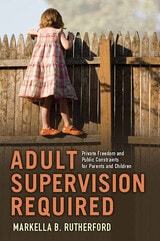
Adult Supervision Required
Private Freedom and Public Constraints for Parents and ChildrenRutherford, Markella B
Rutgers University Press, 2011
Adult Supervision Required considers the contradictory ways in which contemporary American culture has imagined individual autonomy for parents and children. In many ways, today’s parents and children have more freedom than ever before. There is widespread respect for children’s autonomy as distinct individuals, and a broad range of parenting styles are flourishing. Yet it may also be fair to say that there is an unprecedented fear of children’s and parents’ freedom. Dread about Amber Alerts and “stranger danger” have put an end to the unsupervised outdoor play enjoyed by earlier generations of suburban kids. Similarly, fear of bad parenting has not only given rise to a cottage industry of advice books for anxious parents, but has also granted state agencies greater power to police the family.
Using popular parenting advice literature as a springboard for a broader sociological analysis of the American family, Markella B. Rutherford explores how our increasingly psychological conception of the family might be jeopardizing our appreciation for parents’ and children’s public lives and civil liberties.

Adulthood in Britain and the United States from 1350 to Generation Z
Edited by Maria Cannon and Laura Tisdall
University of London Press, 2024
Who gets to be an adult—and who decides? This book argues that consideration of age is a crucial element in scholarship that addresses power and inequality. Exploring how concepts of adulthood have changed over time in Britain and the United States from 1350 to the present day, the essays collected here engage with the intersectional identities of gender, race, class, sexuality, and disability, and ask how these affect understandings of adulthood.
Adults Just Wanna Have Fun
Programs for Emerging AdultsAudrey Barbakoff
American Library Association, 2016
Advances in Teaching Sign Language Interpreters
Cynthia B. Roy
Gallaudet University Press, 2005
Picking up where Innovative Practices in Teaching Sign Language Interpreters left off, this new collection presents the best new interpreter teaching techniques proven in action by the eminent contributors assembled here. In the first chapter, Dennis Cokely discusses revising curricula in the new century based upon experiences at Northeastern University. Jeffrey E. Davis delineates how to teach observation techniques to interpreters, while Elizabeth Winston and Christine Monikowski suggest how discourse mapping can be considered the Global Positioning System of translation.
In other chapters, Laurie Swabey proposes ways to handle the challenge of referring expressions for interpreting students, and Melanie Metzger describes how to learn and recognize what interpreters do in interaction. Jemina Napier contributes information on training interpreting students to identify omission potential. Robert G. Lee explains how to make the interpreting process come alive in the classroom. Mieke Van Herreweghe discusses turn-taking and turn-yielding in meetings with Deaf and hearing participants in her contribution. Anna-Lena Nilsson defines “false friends,” or how contextually incorrect use of facial expressions with certain signs in Swedish Sign Language can be detrimental influences on interpreters. The final chapter by Kyra Pollitt and Claire Haddon recommends retraining interpreters in the art of telephone interpreting, completing Advances in Teaching Sign Language Interpreters as the new authoritative volume in this vital communication profession.
Advances in the Economics of Aging
Edited by David A. Wise
University of Chicago Press, 1996
Specific topics include the effect of labor market rigidities on the employment of older workers; the effect on retirement of the availability of continuation coverage benefits; and the influence of the prospective payment system (PPS) on rising Medicare costs. Also considered are the effects of health and wealth on living arrangement decisions; the incentive effects of employer-provided pension plans; the degree of substitution between 401(k) plans and other employer-provided retirement saving arrangements; and the extent to which housing wealth determines how much the elderly save and consume.
Two final studies use simulations that describe the implications of stylized economic models of behavior among the elderly. This timely volume will be of interest to anyone concerned with the economics of aging.

Advancing Immigrant Rights in Houston
Els de Graauw and Shannon Gleeson
Temple University Press, 2024
In Advancing Immigrant Rights in Houston, Els de Graauw and Shannon Gleeson recount how local and multi-level contexts shape the creation, contestation, and implementation of immigrant rights policies and practices in the city. They examine the development of a city immigrant affairs office, interactions between local law enforcement and federal immigration enforcement officials, local public-private partnerships around federal immigration benefits, and collaborations between labor, immigrant rights, faith, and business leaders to combat wage theft.
The case study of Houston provides a bellwether for how other U.S. cities will deal with their growing immigrant populations and underscores the importance of public-private collaborations to advance immigrant rights.
Adventures in Shondaland
Identity Politics and the Power of RepresentationGriffin, Rachel Alicia
Rutgers University Press, 2018
Shonda Rhimes is one of the most powerful players in contemporary American network television. Beginning with her break-out hit series Grey’s Anatomy, she has successfully debuted Private Practice, Scandal, How to Get Away with Murder, The Catch, For The People, and Station 19. Rhimes’s work is attentive to identity politics, “post-” identity politics, power, and representation, addressing innumerable societal issues. Rhimes intentionally addresses these issues with diverse characters and story lines that center, for example, on interracial friendships and relationships, LGBTIQ relationships and parenting, the impact of disability on familial and work dynamics, and complex representations of womanhood. This volume serves as a means to theorize Rhimes’s contributions and influence by inspiring provocative conversations about television as a deeply politicized institution and exploring how Rhimes fits into the implications of twenty-first century television.

Adventures of a Ballad Hunter
By John A. Lomax, foreword by John Lomax III, John Nova Lomax, and Anna Lomax Wood
University of Texas Press, 2017
Growing up beside the Chisholm Trail, captivated by the songs of passing cowboys and his bosom friend, an African American farmhand, John A. Lomax developed a passion for American folk songs that ultimately made him one of the foremost authorities on this fundamental aspect of Americana. Across many decades and throughout the country, Lomax and his informants created over five thousand recordings of America’s musical heritage, including ballads, blues, children’s songs, fiddle tunes, field hollers, lullabies, play-party songs, religious dramas, spirituals, and work songs. He acted as honorary curator of the Archive of American Folk Song at the Library of Congress, directed the Slave Narrative Project of the WPA, and cofounded the Texas Folklore Society. Lomax’s books include Cowboy Songs and Other Frontier Ballads, American Ballads and Folk Songs, Negro Folk Songs as Sung by Leadbelly, and Our Singing Country, the last three coauthored with his son Alan Lomax.
Adventures of a Ballad Hunter is a memoir of Lomax’s eventful life. It recalls his early years and the fruitful decades he spent on the road collecting folk songs, on his own and later with son Alan and second wife Ruby Terrill Lomax. Vibrant, amusing, often haunting stories of the people he met and recorded are the gems of this book, which also gives lyrics for dozens of songs. Adventures of a Ballad Hunter illuminates vital traditions in American popular culture and the labor that has gone into their preservation.
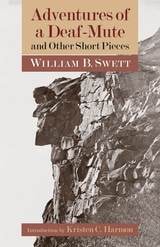
Adventures of a Deaf-Mute and Other Short Pieces
William B. Swett
Gallaudet University Press, 2017
Confident in his identity as a Deaf “mute,” he notes with wry humor the varied perceptions of deafness that he encounters. As a signing Deaf person from a prominent multigenerational Deaf family, he counters negative stereotypes with generosity and a smart wit. He takes pride in his physical abilities, which he showcases through various stunts and arduous treks in the wilderness. However, Swett’s writing also reveals a deep awareness of the fragility and precariousness of life. This is a portrait of a man testing his physical and emotional limits, written from the vantage point of someone who is no longer a young man but is still very much in the prime of his life.
This collection also includes “Mr. Swett and His Diorama,” an article from 1859 in which Swett describes his miniature recreation of the Battle of Lexington, as well as Manual Alphabets, a pamphlet published in 1875 on the history of manual alphabets that includes short biographies of Thomas Hopkins Gallaudet and Laurent Clerc, two pioneers of Deaf education in the United States. The work is accompanied by a new introduction that offers a reflection on Swett’s life and the time in which he lived.

Adventuring in Arizona
John Annerino
University of Arizona Press, 2003
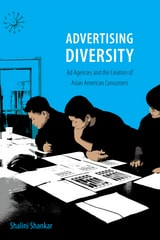
Advertising Diversity
Ad Agencies and the Creation of Asian American ConsumersShalini Shankar
Duke University Press, 2015

Advertising Revolutionary
The Life and Work of Tom BurrellJason P. Chambers
University of Illinois Press, 2024
Over a forty-year career, Chicagoan Tom Burrell changed the face of advertising and revolutionized the industry’s approach to African Americans as human beings and consumers. Jason P. Chambers offers a biography of the groundbreaking creator and entrepreneur that explores Burrell’s role in building brands like McDonald’s and Coca-Cola within a deeply felt vision of folding positive images of Black people into mainstream American life. While detailing Burrell’s successes, Chambers tells a parallel story of what Burrell tried to do that sheds light on the motivations of advertising creators who viewed their work as being about more than just selling. Chambers also highlights how Burrell used his entrepreneurial gifts to build an agency that opened the door for Black artists, copywriters, directors, and other professionals to earn livings, build careers, and become leaders within the industry.
Compelling and multidimensional, Advertising Revolutionary combines archival research and interviews with Burrell and his colleagues to provide a long overdue portrait of an advertising industry legend and his times.
Advertising and Popular Culture
Studies in Variety and VersatilitySammy R. Danna
University of Wisconsin Press, 1992
Advertising at War
Business, Consumers, and Government in the 1940sInger L. Stole
University of Illinois Press, 2012
Using archival sources, newspapers accounts, and trade publications, Stole demonstrates that the war elevated and magnified the seeming contradictions of advertising and allowed critics of these practices one final opportunity to corral and regulate the institution of advertising. Exploring how New Dealers and consumer advocates such as the Consumers Union battled the advertising industry, Advertising at War traces the debate over two basic policy questions: whether advertising should continue to be a tax-deductible business expense during the war, and whether the government should require effective standards and labeling for consumer products, which would render most advertising irrelevant. Ultimately the postwar climate of political intolerance and reverence for free enterprise quashed critical investigations into the advertising industry. While advertising could be criticized or lampooned, the institution itself became inviolable.
Advertising on Trial
Consumer Activism and Corporate Public Relations in the 1930sInger L. Stole
University of Illinois Press, 2006
Inger L. Stole examines how consumer activists sought to limit corporate influence by rallying popular support to moderate and change advertising. Stole weaves the story through the extensive use of primary sources, including archival research done with consumer and trade group records, as well as trade journals and engagement with the existing literature. Her account of the struggle also demonstrates how public relations developed in order to justify laissez-faire corporate advertising in light of a growing consumer rights movement, and how the failure to rein in advertising was significant not just for civic life in the 1930s but for our era as well.
Advice and Consent
The Development of the Policy SciencesPeter DeLeon
Russell Sage Foundation, 1988

Affectionately Yours
The Civil War Home-Front Letters of the Ovid Butler FamilyBarbara Butler Davis
Indiana Historical Society Press, 2004
Affirmative Action and Minority Enrollments in Medical and Law Schools
Susan Welch and John Gruhl
University of Michigan Press, 1998
Affirmative Action and the Stalled Quest for Black Progress
W. Avon Drake and Robert D. Holsworth
University of Illinois Press, 1996
Insightful and path-breaking, Affirmative Action and the Stalled Quest for Black Progress examines the accomplishments and limitations of the set-aside programs once at the center of political debates about affirmative action in the United States.
Affirmative Action and the University
A Philosophical Inquiryedited by Steven M. Cahn
Temple University Press, 1995

Affirmative Action in Medicine
Improving Health Care for EveryoneJames L. Curtis, M.D.
University of Michigan Press, 2003
Affirmative Advocacy
Race, Class, and Gender in Interest Group PoliticsDara Z. Strolovitch
University of Chicago Press, 2007
The United States boasts scores of organizations that offer crucial representation for groups that are marginalized in national politics, from women to racial minorities to the poor. Here, in the first systematic study of these organizations, Dara Z. Strolovitch explores the challenges and opportunities they face in the new millennium, as waning legal discrimination coincides with increasing political and economic inequalities within the populations they represent.
Drawing on rich new data from a survey of 286 organizations and interviews with forty officials, Strolovitch finds that groups too often prioritize the interests of their most advantaged members: male rather than female racial minorities, for example, or affluent rather than poor women. But Strolovitch also finds that many organizations try to remedy this inequity, and she concludes by distilling their best practices into a set of principles that she calls affirmative advocacy—a form of representation that aims to overcome the entrenched but often subtle biases against people at the intersection of more than one marginalized group. Intelligently combining political theory with sophisticated empirical methods, Affirmative Advocacy will be required reading for students and scholars of American politics.

Affirmative Reaction
New Formations of White MasculinityHamilton Carroll
Duke University Press, 2011
Throughout Affirmative Reaction, Carroll examines the kinds of difference white masculinity claims for itself as it attempts to hold onto or maintain majority privilege. Whether these are traditional sites of minority difference—such as Irishness, white trash, or domestic melodrama—or reworked sites of masculinist investment—including laboring bodies, public-sphere politics, and vigilantism—the outcome is the same: the foregrounding of white masculinity over and against women, people of color, and the non-heteronormative. By revealing the strategies through which white masculinity is produced as a formal difference, Carroll sheds new light on the ways that privilege is accrued and maintained.