Results by title
4531 books match the query 'Cultural & Ethnic Studies' and 364 start with a
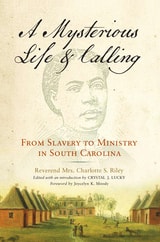
A Mysterious Life and Calling
From Slavery to Ministry in South CarolinaReverend Mrs. Charlotte S. Riley, Edited with an introduction by Crystal J. Lucky, Foreword by Joycelyn K. Moody
University of Wisconsin Press, 2016
Born in 1839 in Charleston, South Carolina, Riley was taught to read, write, and sew despite laws forbidding black literacy. Raised a Presbyterian, she writes of her conversion at age fourteen to the African Methodist Episcopal (AME) church, embracing its ecstatic worship and led by her own spiritual visions. Her memoir is revelatory on many counts, including life in urban Charleston before and after emancipation, her work as a preacher at multiracial revivals, the rise of African American civil servants in the Reconstruction era, and her education and development as a licensed female minister in a patriarchal church.
Crystal J. Lucky, who discovered Riley’s forgotten book in the library archives at Wilberforce University in Ohio, provides an introduction and notes on events, society, and religious practice in the antebellum era and during the Civil War and Reconstruction, and places A Mysterious Life and Calling in the context of other spiritual autobiographies and slave narratives.
A Nation of Family and Friends?
Sport and the Leisure Cultures of British Asian Girls and WomenAarti Ratna
Rutgers University Press, 2024
Ratna also examines two key cultural objects - the popular films "Bend it Like Beckham" and “Dhan Dhana Dhan Goal” - to examine in detail the gendered representation of South Asian soccer players’ engagement in amateur and elite levels of the sport. She critiques studies of women’s football fandom and sport that fail to acknowledge social differences relating to race, class, age, disability, and sexuality. By linking the social forces (across time and space) that differentially affect their sporting choices and leisure lifestyles, Ratna portrays the women of the South Asian diaspora as active agents in the shaping of their life courses and as skilled navigators of the complexities affecting their own identities. Ultimately Ratna examines the intersections of class, caste, age, generation, gender, and sexuality, to provide a rich and critical exploration of British Asian women's sport and leisure choices, pleasures, and lived realities.
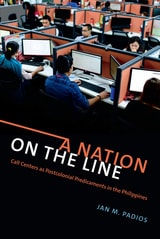
A Nation on the Line
Call Centers as Postcolonial Predicaments in the PhilippinesJan M. Padios
Duke University Press, 2018
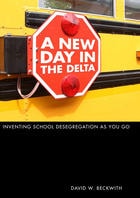
A New Day in the Delta
Inventing School Desegregation As You GoDavid W. Beckwith
University of Alabama Press, 2009
Explores Mississippi’s school desegregation from the viewpoint of a white teacher
A New Day in the Delta is a fresh and appealing memoir of the experience of a young white college graduate in need of a job as the Vietnam War reached its zenith. David Beckwith applied and was accepted for a teaching position in the Mississippi Delta in the summer of 1969. Although it seemed to him a bit strange that he was accepted so quickly for this job while his other applications went nowhere, he was grateful for the opportunity. Beckwith reported for work to learn that he was to be assigned to an all-black school as the first step in Mississippi’s long-deferred school desegregation.
The nation and Mississippi alike were being transformed by war and evolving racial relations, and Beckwith found himself on the cutting edge of the transformation of American education and society in one of the most resistant (and poor) corners of the country. Beckwith’s revealing and often amusing story of the year of mutual incomprehension between an inexperienced white teacher and a classroom full of black children who had had minimal contact with any whites. This is history as it was experienced by those who were thrust into another sort of “front line.”
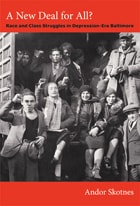
A New Deal for All?
Race and Class Struggles in Depression-Era BaltimoreAndor Skotnes
Duke University Press, 2012
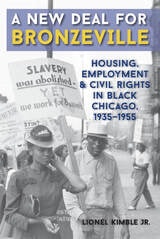
A New Deal for Bronzeville
Housing, Employment, and Civil Rights in Black Chicago, 1935-1955Lionel Kimble Jr.
Southern Illinois University Press, 2015
During the Great Migration of the 1920s and 1930s, southern African Americans flocked to the South Side Chicago community of Bronzeville, the cultural, political, social, and economic hub of African American life in the city, if not the Midwest. The area soon became the epicenter of community activism as working-class African Americans struggled for equality in housing and employment. In this study, Lionel Kimble Jr. demonstrates how these struggles led to much of the civil rights activism that occurred from 1935 to 1955 in Chicago and shows how this working-class activism and culture helped to ground the early civil rights movement. Despite the obstacles posed by the Depression, blue-collar African Americans worked with leftist organizations to counter job discrimination and made strong appeals to New Deal allies for access to public housing. Kimble details how growing federal intervention in local issues during World War II helped African Americans make significant inroads into Chicago’s war economy and how returning African American World War II veterans helped to continue the fight against discrimination in housing and employment after the war. The activism that appeared in Bronzeville was not simply motivated by the “class consciousness” rhetoric of the organized labor movement but instead grew out of everyday struggles for racial justice, citizenship rights, and improved economic and material conditions. With its focus on the role of working-class African Americans—as opposed to the middle-class leaders who have received the most attention from civil rights historians in the past—A New Deal for Bronzeville makes a significant contribution to the study of civil rights work in the Windy City and enriches our understanding of African American life in mid-twentieth-century Chicago.
This publication is partially funded by a grant from Furthermore: a program of the J.M. Kaplan fund.

A New History of Black Pittsburgh
Advancing the Case for Reparatory JusticeJoe William Trotter, Jr., Esther Bush, Laurence Glasco, Benjamin Houston, Patricia Pugh Mitchell, Tony Norman, Rob Ruck, and Carla Young
University of Michigan Press, 2027
A rising chorus of voices have called for redress and compensation to level the playing field for African Americans across all walks of life. A New History of Black Pittsburgh brings together humanities scholars, social service and social justice activists, and community residents to document multigenerational patterns of class and racial inequality and forge a comprehensive case for reparatory justice.
Focusing on industry’s “first city,” the authors draw on oral histories, archival research, and scholarship to examine more than two centuries of Pittsburgh’s history. By featuring a city home to professional Negro League baseball teams, jazz artists, the Pittsburgh Courier, and acclaimed writers and playwrights, the authors show that recognizing ongoing creativity and community-building activities is just as vital for the case for reparations as documenting persistent forms of inequality. A New History of Black Pittsburgh offers insights and policy recommendations to inspire activists, educators, historians, and policymakers working to repair the damage of racial inequality around the globe.

A Nimble Arc
James Van Der Zee and PhotographyEmilie Boone
Duke University Press, 2023
A Noble Fight
African American Freemasonry and the Struggle for Democracy in AmericaCorey D. B. Walker
University of Illinois Press, 2008
With great care and detail, Walker argues that African American freemasonry provides a critical theoretical lens for understanding the distinctive ways African Americans have constructed a radically democratic political imaginary through racial solidarity and political nationalism, forcing us to reconsider much more circumspectly the complex relationship between voluntary associations and democratic politics.
Mapping the discursive logics of the language of freemasonry as a metaphoric rendering of American democracy, this study interrogates the concrete forms of an associational culture, revealing how paradoxical aspects of freemasonry such as secrecy and public association inform the production of particular ideas and expressions of democracy in America.
A Page of Madness
Cinema and Modernity in 1920s JapanAaron Gerow
University of Michigan Press, 2008

A Part, Yet Apart
South Asians in Asian AmericaLavina Shankar
Temple University Press, 1998
This construction process parallels the gradual acceptance of the term "Asian American" by peoples primarily of East and Southeast Asian ancestry who found abundant reason to claim a shared identity in dealing with officialdom and an apparently intractable racism in this country. In time, "Asian American" has become a designation of collective pride for a wide range of peoples. In academic institutions and society generally, there are vexed questions about the term's inclusiveness and the dominance of established groups over more recent ones.
A Part, Yet Apart: South Asians in Asian America concerns itself with the extent to which South Asian American are and ought to be included within Asian America -- as that term is applied to academic programs and admission policies; grassroots community organizing and politics more broadly; and critical analyses of cultural products. Taken together these essays form a spirited dialogue on the dilemmas of identity politics, coalition building, and diasporics.
A Patchwork Shawl
Chronicles of South Asian Women in AmericaDas Dasgupta, Shamita
Rutgers University Press, 1998
A Patchwork Shawl sheds light on the lives of a segment of the U.S. immigrant population that has long been relegated to the margins. It focuses on women's lives that span different worlds: Bangladesh, India, Pakistan, and the United States. This collection of essays by and about South Asian women in America challenges stereotypes by allowing women to speak in their own words. Together they provide discerning insights into the reconstruction of immigrant patriarchy in a new world, and the development of women's resistance to that reconstruction. Shamita Das DasGupta's introduction also acquaints readers with the psychological topography of the South Asian community.
A Patchwork Shawl considers topics from re-negotiation of identity to sexuality, violence to intimacy, occupations to organizing within the community. The essays bear witness to women's negotiations for independent identities, their claim to their own bodies, and the right to choose relationships based on their own histories and truths. They bring new understanding to the intersection of gender, ethnicity, race, sexuality, and class.
A Peculiar Imbalance
The Fall and Rise of Racial Equality in Minnesota, 1837–1869William D. Green
University of Minnesota Press, 2015
A Peculiar Imbalance is the little-known history of the black experience in Minnesota in the mid-1800s, a time of dramatic change in the region. William D. Green explains how, as white progressive politicians pushed for statehood, black men who had been integrated members of the community, owning businesses and maintaining good relationships with their neighbors, found themselves denied the right to vote or to run for office in those same communities.
As Minnesota was transformed from a wilderness territory to a state, the concepts of race and ethnicity and the distinctions among them made by Anglo-Americans grew more rigid and arbitrary. A black man might enjoy economic success and a middle-class lifestyle but was not considered a citizen under the law. In contrast, an Irish Catholic man was able to vote—as could a mixed-blood Indian—but might find himself struggling to build a business because of the ethnic and religious prejudices of the Anglo-American community. A Peculiar Imbalance examines these disparities, reflecting on the political, social, and legal experiences of black men from 1837 to 1869, the year of black suffrage.
A People's History of Detroit
Mark Jay and Philip Conklin
Duke University Press, 2020
A Place at the Multicultural Table
The Development of an American HinduismKurien, Prema
Rutgers University Press, 2007
In A Place at the Multicultural Table, Prema A. Kurien shows how various Hindu American organizations--religious, cultural, and political--are attempting to answer the puzzling questions of identity outside their homeland. Drawing on the experiences of both immigrant and American-born Hindu Americans, Kurien demonstrates how religious ideas and practices are being imported, exported, and reshaped in the process. The result of this transnational movement is an American Hinduism--an organized, politicized, and standardized version of that which is found in India.
This first in-depth look at Hinduism in the United States and the Hindu Indian American community helps readers to understand the private devotions, practices, and beliefs of Hindu Indian Americans as well as their political mobilization and activism. It explains the differences between immigrant and American-born Hindu Americans, how both understand their religion and their identity, and it emphasizes the importance of the social and cultural context of the United States in influencing the development of an American Hinduism.
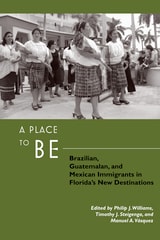
A Place to Be
Brazilian, Guatemalan, and Mexican Immigrants in Florida's New DestinationsEdited by Philip J. Williams, Timothy J. Steigenga, and Manuel A. Vásquez
Rutgers University Press, 2009
Contributors to this volume include Patricia Fortuny Loret de Mola, Carol Girón Solórzano, Silvia Irene Palma, Lúcia Ribeiro, Mirian Solfs Lizama, José Claúdio Souza Alves, Timothy J. Steigenga, Manuel A. Vásquez, and Philip J. Williams.

A Political Theology of Negative Sovereignty
Claudio Lomnitz
Duke University Press, 2027
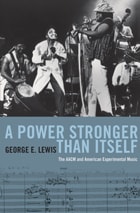
A Power Stronger Than Itself
The AACM and American Experimental MusicGeorge E. Lewis
University of Chicago Press, 2008
Founded in 1965 and still active today, the Association for the Advancement of Creative Musicians (AACM) is an American institution with an international reputation. George E. Lewis, who joined the collective as a teenager in 1971, establishes the full importance and vitality of the AACM with this communal history, written with a symphonic sweep that draws on a cross-generational chorus of voices and a rich collection of rare images.
Moving from Chicago to New York to Paris, and from founding member Steve McCall’s kitchen table to Carnegie Hall, A Power Stronger Than Itself uncovers a vibrant, multicultural universe and brings to light a major piece of the history of avant-garde music and art.
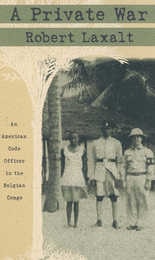
A Private War
An American Code Officer in the Belgian CongoRobert Laxalt
University of Nevada Press, 1998
In this vivid memoir, Laxalt recalls his service during WWII as a code officer in the Belgian Congo. In this remote jungle outpost, a secret war was being fought for control of the world’s future. Deep in the Congo lay a mine that produced a little-known substance called uranium, and for reasons no one then understood, the Allies and the Germans were struggling ferociously to control this mine and its ore. The cloth edition is a limited numbered, signed edition.
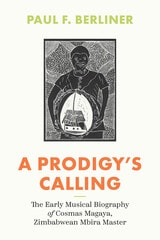
A Prodigy's Calling
The Early Musical Biography of Cosmas Magaya, Zimbabwean Mbira MasterPaul F. Berliner
University of Chicago Press, 2024
Ethnomusicologist Paul F. Berliner has been studying Zimbabwean mbira for more than fifty years. When he first arrived in what was then Rhodesia after the nation declared independence from the United Kingdom, he met Cosmas Magaya, a mbira player who would become his teacher and lifelong collaborator. A Prodigy’s Calling chronicles the early years of Magaya’s life, documenting the master mbira player’s journey from child prodigy to established expert. As a child, Magaya was immersed in mbira music through his father’s work as a healer and spirit medium. As Magaya grew, so too did his world; his performances extended beyond the family compound as his skill and knowledge increased, bringing him into contact with a society fraught with decolonial conflict.
Following Magaya’s childhood, readers will learn how his upbringing guided his journey through the community’s social networks and how his early sensibilities, proclivities, and talents shaped his development. At the same time, his deepening engagement with music and the ancestors was affected by overlapping tensions between Shona cosmology and Christian ideology, rural and urban lifestyles, and the escalating African nationalist struggle and the white supremacist state. While Magaya’s story reflects profound social changes in the nation, it is also a story of musical apprenticeship. Readers following Magaya’s discovery of ever finer details in the music’s richly layered patterns will enhance their ability to hear mbira music’s forms, variations, and sonic qualities. Linocut illustrations by South African artist Lucas Bambo bring the narrative to life, and Berliner’s spirited storytelling is accompanied by QR codes that take readers directly to recordings of music as Magaya learns it. Appendices for musicians interested in learning or improving their mbira playing complement the story of Magaya’s early life. Inviting the reader into the very tradition it recounts, the book offers intimate insights into the relationships among music, Shona cosmology, and colonial politics in everyday life.

A Promising Problem
The New Chicana/o HistoryEdited by Carlos Kevin Blanton
University of Texas Press, 2016
Chicana/o history has reached an intriguing juncture. While academic and intellectual studies are embracing new, highly nuanced perspectives on race, class, gender, education, identity, and community, the field itself continues to be viewed as a battleground, subject to attacks from outside academia by those who claim that the discipline promotes racial hatred and anti-Americanism. Against a backdrop of deportations and voter suppression targeting Latinos, A Promising Problem presents the optimistic voices of scholars who call for sophisticated solutions while embracing transnationalism and the reality of multiple, overlapping identities.
Showcasing a variety of new directions, this anthology spans topics such as growth and reassessment in Chicana/o history manifested in a disruption of nationalism and geographic essentialism, the impact of legal history, interracial relations and the experiences of Latino subpopulations in the US South, race and the politics of religious history, transborder feminism in the early twentieth century, and aspirations for a field that increasingly demonstrates the relational dynamics of cultural production. As they reflect on the state of their field, the contributors offer significant insights into sociology, psychology, anthropology, political science, education, and literature, while tracing the history of activism throughout the last century and debating the very concepts of “Chicano” and “Chicano history.” Although the political landscape is fraught with closed-off rhetoric, A Promising Problem encourages diversity of thought and opens the possibilities of historical imagination.
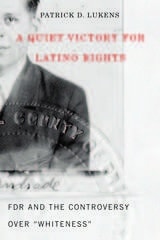
A Quiet Victory for Latino Rights
FDR and the Controversy Over "Whiteness"Patrick D. Lukens
University of Arizona Press, 2012
In 1935 a federal court judge handed down a ruling that could have been disastrous for Mexicans, Mexican Americans, and all Latinos in the United States. However, in an unprecedented move, the Roosevelt administration wielded the power of "administrative law" to neutralize the decision and thereby dealt a severe blow to the nativist movement. A Quiet Victory for Latino Rights recounts this important but little-known story.
To the dismay of some nativist groups, the Immigration Act of 1924, which limited the number of immigrants who could be admitted annually, did not apply to immigrants from Latin America. In response to nativist legal maneuverings, the 1935 decision said that the act could be applied to Mexican immigrants. That decision, which ruled that the Mexican petitioners were not "free white person[s]," might have paved the road to segregation for all Latinos.
The League of United Latin American Citizens (LULAC), founded in 1929, had worked to sensitize the Roosevelt administration to the tenuous position of Latinos in the United States. Advised by LULAC, the Mexican government, and the US State Department, the administration used its authority under administrative law to have all Mexican immigrants—and Mexican Americans—classified as "white." It implemented the policy when the federal judiciary "acquiesced" to the New Deal, which in effect prevented further rulings.
In recounting this story, complete with colorful characters and unlikely bedfellows, Patrick D. Lukens adds a significant chapter to the racial history of the United States.
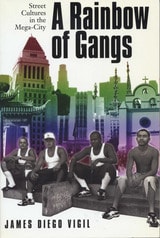
A Rainbow of Gangs
Street Cultures in the Mega-CityBy James Diego Vigil
University of Texas Press, 2002
Winner, Best Book on Ethnic and Racial Politics in a Local or Urban Setting , Organized Section on Race, Ethnicity, and Politics of the American Political Science Association, 2002
This cross-cultural study of Los Angeles gangs identifies the social and economic factors that lead to gang membership and underscores their commonality across four ethnic groups--Chicano, African American, Vietnamese, and Salvadorian.
With nearly 1,000 gangs and 200,000 gang members, Los Angeles holds the dubious distinction of being the youth gang capital of the United States. The process of street socialization that leads to gang membership now cuts across all ethnic groups, as evidenced by the growing numbers of gangs among recent immigrants from Asia and Latin America.
This cross-cultural study of Los Angeles gangs identifies the social and economic factors that lead to gang membership and underscores their commonality across four ethnic groups—Chicano, African American, Vietnamese, and Salvadorian. James Diego Vigil begins at the community level, examining how destabilizing forces and marginalizing changes have disrupted the normal structures of parenting, schooling, and policing, thereby compelling many youths to grow up on the streets. He then turns to gang members' life stories to show how societal forces play out in individual lives. His findings provide a wealth of comparative data for scholars, policymakers, and law enforcement personnel seeking to respond to the complex problems associated with gangs.
A Rainbow of Gangs
Street Cultures in the Mega-CityBy James Diego Vigil
University of Texas Press, 2002
Winner, Best Book on Ethnic and Racial Politics in a Local or Urban Setting , Organized Section on Race, Ethnicity, and Politics of the American Political Science Association, 2002
This cross-cultural study of Los Angeles gangs identifies the social and economic factors that lead to gang membership and underscores their commonality across four ethnic groups--Chicano, African American, Vietnamese, and Salvadorian.
With nearly 1,000 gangs and 200,000 gang members, Los Angeles holds the dubious distinction of being the youth gang capital of the United States. The process of street socialization that leads to gang membership now cuts across all ethnic groups, as evidenced by the growing numbers of gangs among recent immigrants from Asia and Latin America.
This cross-cultural study of Los Angeles gangs identifies the social and economic factors that lead to gang membership and underscores their commonality across four ethnic groups—Chicano, African American, Vietnamese, and Salvadorian. James Diego Vigil begins at the community level, examining how destabilizing forces and marginalizing changes have disrupted the normal structures of parenting, schooling, and policing, thereby compelling many youths to grow up on the streets. He then turns to gang members' life stories to show how societal forces play out in individual lives. His findings provide a wealth of comparative data for scholars, policymakers, and law enforcement personnel seeking to respond to the complex problems associated with gangs.
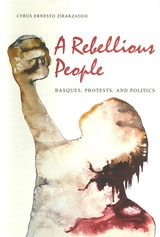
A Rebellious People
Basques, Protests, And PoliticsCyrus Ernesto Zirakzadeh
University of Nevada Press, 1991
In this scholarly work, Zirakzadeh argues that there is a calculated reasoning behind ETA's political violence that is often overlooked by researchers. His book is a comprehensive account of the Basque region's grassroots politics.
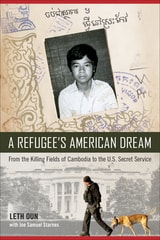
A Refugee's American Dream
From the Killing Fields of Cambodia to the U.S. Secret ServiceLeth Oun with Joe Samuel Starnes
Temple University Press, 2023
“I saw many killed. I almost starved. But I escaped to refugee camps in Thailand and eventually made it to the U.S.” Thus begins Leth Oun’s poignant and vivid memoir. A survivor of the Cambodian Killing Fields—having spent a torturous three years, eight months, and ten days imprisoned by the Khmer Rouge—Oun thrived in America, learning English, becoming a citizen, and working as an officer in the United States Secret Service Uniformed Division.
In A Refugee’s American Dream, Oun shares hard memories of Cambodia, where his father was executed, and his family enslaved in labor camps.
Following the fall of the Khmer Rouge, Oun survived a year of homelessness then nearly four years in refugee camps. Arriving in America, 17 and penniless, Oun struggled, washing dishes at a Chinese restaurant for $3.15 an hour. Still, he persevered, graduating from Widener University and completing thousands of hours of training to pursue a career in the Secret Service.
While on President Obama’s protection team, he returns to Cambodia after 32 years, reunites with family, and bonds with Reik, the Secret Service dog he handles. Through his most difficult moments, Oun displays truly inspiring resilience that ultimately leads to great achievements.
The authors’ proceeds will go to help Cambodians in need
A Renegade Union
Interracial Organizing and Labor RadicalismLisa Phillips
University of Illinois Press, 2013
A Respectable Spell
Transformations of Samba in Rio de JaneiroCarlos Sandroni
University of Illinois Press, 2021
Incisive and comprehensive, A Respectable Spell tells the compelling story of an iconic Brazilian musical genre.
A Rift in the Clouds
Race and the Southern Federal Judiciary, 1900-1910Brent J. Aucoin
University of Arkansas Press, 2007

A Rumor of Revolt
The "Great Negro Plot" in Colonial New YorkT. J. Davis
University of Massachusetts Press, 1990
This groundbreaking historical examination analyzes the 1741 New York Conspiracy trials: a pivotal moment in colonial American history when the city's legal system prosecuted an alleged slave conspiracy with severe and controversial consequences. Thomas J. Davis meticulously reconstructs the trials and executions that resulted from this supposed uprising, providing crucial insights into the intersection of race, ethnicity, legal practice, and social control in colonial New York.
During the spring and summer of 1741, New York authorities conducted dramatic trials in response to fears of a coordinated slave rebellion. Between May 11 and August 29, 1741, the city executed 35 individuals: thirteen Black men were burned at the stake, seventeen Black men were hanged, and two white men and two white women were also executed. These brutal punishments reflected the city's intense fear and the racialized nature of colonial justice.
Davis's analysis examines the primary source material to investigate what this historical episode reveals about colonial New York's racial hierarchies, ethnic tensions, and legal systems. The work scrutinizes the trials themselves, asking critical questions: Was there truly a conspiracy, or was the event primarily a product of hysteria and rumor? How did racial prejudices, economic anxieties, and the structure of colonial authority shape legal proceedings?
Beyond the courtroom drama, Davis explores the broader implications of these trials for understanding slavery in northern colonies, where enslaved people were not as visible but equally integral to colonial society. The book demonstrates how fear, whether grounded in reality or stoked by rumor, could mobilize entire communities and transform legal systems into instruments of racialized control. This work has become essential reading for understanding how colonial societies constructed narratives of racial threat and employed legal mechanisms to enforce racial subordination.
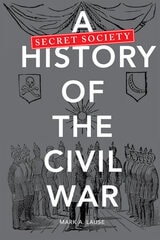
A Secret Society History of the Civil War
Mark A. Lause
University of Illinois Press, 2014
Antebellum secret societies ranged politically from those with progressive or even revolutionary agendas to those that pursued conservative or oppressive goals. This book shows how, in the years leading up to the Civil War, these clandestine organizations exacerbated existing sectional tensions in the United States. Lause's research indicates that the pervasive influence of secret societies may have played a part in key events such as the Freesoil movement, the beginning of the Republican party, John Brown's raid on Harpers Ferry, Lincoln's election, and the Southern secession process of 1860-1861.
This exceptional study encompasses both white and African American secret society involvement, revealing the black fraternal experience in antebellum America as well as the clandestine operations that provided assistance to escaped slaves via the Underground Railroad. Unraveling these pervasive and extensive networks of power and influence, A Secret Society History of the Civil War demonstrates that antebellum secret societies played a greater role in affecting Civil War-era politics than has been previously acknowledged.
A Sense of Arrival
Kevin Adonis Browne
Duke University Press, 2024
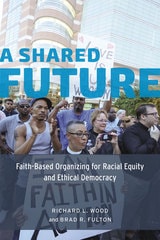
A Shared Future
Faith-Based Organizing for Racial Equity and Ethical DemocracyRichard L. Wood and Brad R. Fulton
University of Chicago Press, 2015
In A Shared Future, Richard L. Wood and Brad R. Fulton draw on a new national study of community organizing coalitions and in-depth interviews of key leaders in this field to show how faith-based organizing is creatively navigating the competing aspirations of America’s universalist and multiculturalist democratic ideals, even as it confronts three demons bedeviling American politics: economic inequality, federal policy paralysis, and racial inequity. With a broad view of the entire field and a distinct empirical focus on the PICO National Network, Wood and Fulton’s analysis illuminates the tensions, struggles, and deep rewards that come with pursuing racial equity within a social change organization and in society. Ultimately, A Shared Future offers a vision for how we might build a future that embodies the ethical democracy of the best American dreams.
An interview of the authors on the subject of faith leaders organizing for justice (Peace Talks Radio, copyright Good Radio Shows, Inc.) can be heard at this link: https://beta.prx.org/stories/190030

A Short History of the Nigerian Civil War
Douglas A. Anthony
Ohio University Press, 2027
A Short History of the Nigerian Civil War is an accessible and balanced scholarly account of the 1967–70 conflict (also remembered as the Nigeria-Biafra War or simply the Biafran War). More than a seminal event in the history of Africa’s most populous country, the war marked a tragic milestone in the narrative of African decolonization. It also helped shape both international humanitarianism and media coverage of conflicts in developing countries, and offers an interesting, counterintuitive footnote to Cold War history. Interest in the war remains high, though recent book-length treatments have gravitated to memoir and specialized accounts. This book offers readers a concise, evenhanded introduction to the war’s causes, major events, and consequences, presented with a balance of narrative and analysis.
Author Douglas A. Anthony begins by explaining the influence of British imperialism on the country’s historical trajectory. Colonial geography and governance presented the leaders of newly independent Nigeria a template for ongoing polarization and suspicion, and when a military coup toppled the country’s short-lived First Republic (1960–66), existing geopolitical, economic, and ethnic tensions reached unprecedented levels. A second coup, accompanied by lethal coordinated attacks by civilians and soldiers on members of the Igbo ethnic group, triggered the return of most Igbos to their home region in southeastern Nigeria. Here, in May 1967, they declared independence as the Republic of Biafra, led by Chukwuemeka Odumegwu Ojukwu.
The war that followed, which Nigerian military leader Yakubu Gowon had promised would be a brief police action, lasted thirty months. During that time, Biafra, blockaded and diplomatically isolated, confronted larger and better-supplied Nigerian forces, an economic embargo, and escalating starvation. What the Nigerian government described as a war of unification was for most Biafrans a defensive war against a genocidal threat. By most accounts one million people died, the vast majority Biafran civilians.
With the war’s end in 1970, Biafra’s people and greatly diminished territory rejoined Nigeria. But behind formal declarations of “No victor, no vanquished” lingered the war’s enormous human, economic, and political consequences, felt most acutely by Igbos, many of whom continue to contend with a legacy of marginalization.
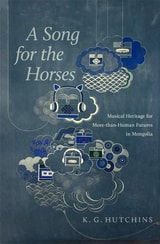
A Song for the Horses
Musical Heritage for More-than-Human Futures in MongoliaK. G. Hutchins
University of Arizona Press, 2025
Hutchins’s ethnographic research, spanning more than a decade, provides a vivid and intimate portrayal of Mongolian life. Musicians use the morin khuur, or ‘horse fiddle,’ to engage with the subjectivities and agencies of nonhuman animals and other beings. This work is a significant contribution to the posthuman turn in social sciences, engaging with theories from prominent scholars such as Donna Haraway and Anna Tsing .
As climate change continues to impact communities worldwide, this book offers a unique perspective on how cultural heritage can be mobilized to address environmental challenges, providing valuable lessons for global efforts to build sustainable and resilient futures. At the intersection of music, environment, and posthumanism, A Song for the Horses shows how Mongolian musicians use cultural traditions to imagine and build toward alternative futures beyond climate change and neoliberalism.
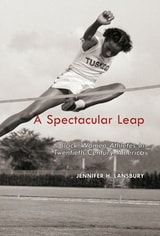
A Spectacular Leap
Black Women Athletes in Twentieth-Century AmericaJennifer H. Lansbury
University of Arkansas Press, 2014
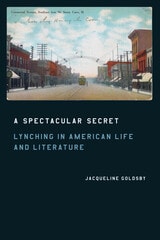
A Spectacular Secret
Lynching in American Life and LiteratureJacqueline Goldsby
University of Chicago Press, 2006
To pursue this argument, Goldsby traces lynching's history by taking up select mob murders and studying them together with key literary works. She focuses on three prominent authors—Ida B. Wells-Barnett, Stephen Crane, and James Weldon Johnson—and shows how their own encounters with lynching influenced their analyses of it. She also examines a recently assembled archive of evidence—lynching photographs—to show how photography structured the nation's perception of lynching violence before World War I. Finally, Goldsby considers the way lynching persisted into the twentieth century, discussing the lynching of Emmett Till in 1955 and the ballad-elegies of Gwendolyn Brooks to which his murder gave rise.
An empathic and perceptive work, A Spectacular Secret will make an important contribution to the study of American history and literature.
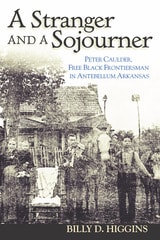
A Stranger and a Sojourner
Peter Caulder, Free Black Frontiersman in Antebellum ArkansasBilly D. Higgins
University of Arkansas Press, 2004
A Study of Crisis
Michael Brecher and Jonathan Wilkenfeld
University of Michigan Press, 2000
The culmination of more than twenty years of research by Michael Brecher and Jonathan Wilkenfeld, the book analyzes crucial themes about crisis, conflict, and war and presents systematic knowledge about more than 400 crises, thirty-one protracted conflicts and almost 900 state participants. The authors explore many aspects of conflict, including the ethnic dimension, the effect of different kinds of political regimes--notably the question whether democracies are more peaceful than authoritarian regimes, and the role of violence in crisis management. They employ both case studies and aggregate data analysis in a Unified Model of Crisis to focus on two levels of analysis--hostile interactions among states, and the behavior of decision-makers who must cope with the challenge posed by a threat to values, time pressure, and the increased likelihood that military hostilities will engulf them.
This book will appeal to scholars in history, political science, sociology, and economics as well as policy makers interested in the causes and effects of crises in international relations. The rich data sets will serve researchers for years to come as they probe additional aspects of crisis, conflict and war in international relations.
Michael Brecher is R. B. Angus Professor of Political Science, McGill University. Jonathan Wilkenfeld is Professor and Chair of the Department of Government and Politics, University of Maryland. They are the coauthors of Crises in the Twentieth Century: A Handbook of International Crisis, among other books and articles.

A Tanizaki Feast
The International Symposium in VeniceAdriana Boscaro and Anthony Hood Chambers, Editors
University of Michigan Press, 1998
A Taste for Brown Sugar
Black Women in PornographyMireille Miller-Young
Duke University Press, 2014
A Thousand Paper Cuts
US Empire and the Bureaucratic Life of WarAnjali Nath
Duke University Press, 2025
A Touch of Innocence
A Memoir of ChildhoodKatherine Dunham
University of Chicago Press, 1994
In stark prose, she tells of growing up in both black and white households and of the divisions of race and class in Chicago that become the harsh realities of her young life. A riveting narrative of one girl's struggle to transcend the painful confusions of a family and culture in turmoil, Dunham's story is full of the clarity, candor, and intelligence that lifted her above her troubled beginnings.
"A Touch of Innocence is an absorbing family chronicle written with a gift for physical detail sometimes too real for comfort. In quietly graphic prose the growing girl, the slightly older brother, the ambitious father and the kind stepmother are pictured in such human terms that when their lives get tied into harder and harder knots beyond their undoing, one can only continue to read helplessly as doom closes in upon the household."—Langston Hughes, New York Herald Tribune
"A Touch of Innocence is one of the most extraordinary life stories I have ever read . . . . The content of this book is so heartbreaking that only the strongest artistic skills can keep it from leaking out into sobbing self-pity, but Katherine Dunham's art contains it, understands it and refuses to be overwhelmed by its terrors."—Elizabeth Janeway, New York Times
"The first eighteen years of the famous dancer and choreographer's life are brought vividly to the reader in this first volume of her autobiography. She writes of what it is like to be a special, gifted young woman growing up in a racially mixed family in the American Middle West. A beautiful, touching and sometimes discomforting book."—Publishers Weekly
"As writing it is honest, searing, graphic and touching, giving us a rather heartbreaking early view of the young American Negro who was later to make a name for herself as a dancer and choreographer."—Arthur Todd, Saturday Review
A Translation of Lao-tzu’s Tao Te Ching and Wang Pi’s Commentary
Translated by Paul J. Lin
University of Michigan Press, 1977
A Travel Guide To Basque America
Families, Feasts, and Festivals, 2nd EditionNancy Zubiri
University of Nevada Press, 2006
A Travel Guide to Basque America—the first-ever guide to America’s Basque-American communities, their history, culture, and festivals—has been a best-seller since it first appeared in 1998. This new edition lists dozens of new restaurants, Basque cultural clubs and cultural events, and hundreds of Basque-related Internet sites that have appeared since 1998. It also includes new information about recent events in the Basque Country, their impact on Basque-Americans, and new cultural and community efforts to preserve Basque culture in America. This is the essential guide for Basque-Americans seeking links to their ancient culture and its homeland and their counterparts in the U.S., as well as for any traveler interested in exploring one of this country’s most vibrant and fascinating ethnic minorities.
A View from the Bottom
Asian American Masculinity and Sexual RepresentationNguyen Tan Hoang
Duke University Press, 2014

A Vital Frontier
Water Insurgencies in EuropeAndrea Muehlebach
Duke University Press, 2023

A Voice of Thunder
A BLACK SOLDIER'S CIVIL WAREdited by Donald Yacovone
University of Illinois Press, 1997
important African-American war correspondent of his era, served in the
famed black Fifty-fourth Massachusetts Regiment, subject of the film Glory.
His letters from the front, published in the New York Weekly Anglo-African,
brilliantly detail two wars: one against the Confederacy and one against
the brutal, debilitating racism within his own Union Army. Together with
Donald Yacovone's biographical introduction detailing Stephens's life
and times, they provide a singular perspective on the greatest crisis
in the history of the United States.
Stephens chronicled the African-American
quest for freedom in reports from southern Maryland and eastern Virginia
in 1861 and 1862 that detailed, among other issues of the day, the Army
of the Potomac's initial encounter with slavery, the heroism of fugitive
slaves, and the brutality both Southerners and Union troops inflicted
on them.
From the inception of the
Fifty-fourth early in 1863 Stephens was the unit's voice, telling of its
struggle against slavery and its quest to win the pay it had been promised.
His description of the July 18, 1863, assault on Battery Wagner near Charleston,
South Carolina, and his writings on the unit's eighteen-month campaign
to be paid as much as white troops are gripping accounts of continued
heroism in the face of persistent insult.
The Weekly Anglo-African
was the preeminent African-American newspaper of its time. Stephens's
correspondence, intimate and authoritative, takes in an expansive array
of issues and anticipates nearly all modern assessments of the black role
in the Civil War. His commentary on the Lincoln administration's wartime
policy and his conviction that the issues of race and slavery were central
to nineteenth-century American life mark him as a major American social
critic.

A White Side of Black Britain
Interracial Intimacy and Racial LiteracyFrance Winddance Twine
Duke University Press, 2010

A Wide Net of Solidarity
Antiracism and Anti-Imperialism from the Americas to the GlobeAnne Garland Mahler
Duke University Press, 2025