Results by title
1787 books match the query 'Literary Collections' and 169 start with a
A Sinister Assassin
Last Writings, Ivry-Sur-Seine, September 1947 to March 1948Antonin Artaud
Diaphanes, 2022
A Sinister Assassin presents translations of Antonin Artaud’s largely unknown final work of 1947–48, revealing new insights into his obsessions with human anatomy, sexuality, societal power, creativity, and ill-will—notably, preoccupations of the contemporary world.
Artaud’s last conception of performance is that of a dance-propelled act of autopsy, generating a ”body without organs” which negates malevolent microbial epidemics. This book assembles Artaud’s crucial writings and press interviews from September 1947 to March 1948, undertaken at a decrepit pavilion in the grounds of a convalescence clinic in Ivry-sur-Seine, on the southern edge of Paris, as well as in-transit through Paris’s streets. It also draws extensively on Artaud’s manuscripts and original interviews with his friends, collaborators, and doctors throughout the 1940s, illuminating the many manifestations of Artaud’s final writings: the contents of his last, death-interrupted notebook; his letters; his two final key texts; his glossolalia; the magazine issue which collected his last fragments; and the two extraordinary interviews he gave to national newspaper journalists in the final days of his life, in which he denounces and refuses both his work’s recent censorship and his imminent death.
Edited, translated, and with an introduction by Stephen Barber, A Sinister Assassin illuminates Artaud’s last, most intensive, and terminal work for the first time.
A Social Edition of the Devonshire Manuscript (BL MS Add 17,492)
Edited by Raymond Siemens, Karin Armstrong, and Constance Crompton
Iter Press, 2015

A Spy in the House of Love
Anaïs Nin
Ohio University Press, 2014
Although Anaïs Nin found in her diaries a profound mode of self-creation and confession, she could not reveal this intimate record of her experiences during her lifetime. Instead, she turned to literary fiction, transforming her private writings into artfully crafted novels that explore female desire, identity, and emotional complexity.
A Spy in the House of Love is a classic of psychological and women’s fiction, centered on Sabina, a woman torn between her longing for artistic freedom, romantic adventure, and sensual fulfillment, and the social expectations that constrain her. Moving through a bohemian, Parisian-inspired world, Sabina navigates multiple relationships in her search for passion, meaning, and self-understanding.
Written at a time when Nin’s own life was shaped by conflicting loyalties and intense relationships, the novel offers a deeply introspective exploration of love, infidelity, erotic longing, and self-discovery. As Sabina confronts her inner divisions, she asks a timeless question: can one indulge the fantasies and restless pursuit of desire without facing profound emotional consequences?
A landmark of modernist literature and feminist writing, A Spy in the House of Love remains a powerful, evocative portrait of a woman’s inner life—ideal for readers of classic literary fiction, experimental narrative, and character-driven novels about relationships and desire.
A Story Larger than My Own
Women Writers Look Back on Their Lives and CareersEdited by Janet Burroway
University of Chicago Press, 2014
Kumin, who went on to win the Pulitzer Prize for poetry, was part of a groundbreaking generation of women writers who came of age during the midcentury feminist movement. By challenging the status quo and ultimately finding success for themselves, they paved the way for future generations of writers. In A Story Larger than My Own, Janet Burroway brings together Kumin, Julia Alvarez, Jane Smiley, Erica Jong, and fifteen other accomplished women of this generation to reflect on their writing lives.
The essays and poems featured in this collection illustrate that even writers who achieve critical and commercial success experience a familiar pattern of highs and lows over the course of their careers. Along with success comes the pressure to sustain it, as well as a constant search for subject matter, all too frequent crises of confidence, the challenges of a changing publishing scene, and the difficulty of combining writing with the ordinary stuff of life—family, marriage, jobs. The contributors, all now over the age of sixty, also confront the effects of aging, with its paradoxical duality of new limitations and newfound freedom.
Taken together, these stories offer advice from experience to writers at all stages of their careers and serve as a collective memoir of a truly remarkable generation of women.
A Tale of Two Capitalisms
Sacred Economics in Nineteenth-Century BritainSupritha Rajan
University of Michigan Press, 2015
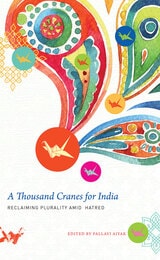
A Thousand Cranes for India
Reclaiming Plurality Amid HatredEdited by Pallavi Aiyar
Seagull Books, 2020
This anthology uses origami cranes as a way for some of India’s best-known writers, poets, and artists to form a shared civic space for a conversation about the fault lines in India at a time of darkness. The twenty-three pieces collected here encompass reportage, stories, poems, memoir, and polemic—the kind of complex and enriching diversity that India demands and deserves. The paper crane becomes a motif of connection, beauty, and reclamation in an otherwise degraded country, enabling those who fight with words to become the best army they can be.
A Thousand and One Afternoons in Chicago
Ben Hecht
University of Chicago Press, 1992
“The hardboiled audacity and wit that became Hecht’s signature as Hollywood’s most celebrated screen-writer are conspicuous in these vignettes. Most of them are comic and sardonic, some strike muted tragic or somber atmospheric notes. . . . The best are timeless character sketches that have taken on an added interest as shards of social history.”—L. S. Klepp, Voice Literary Supplement
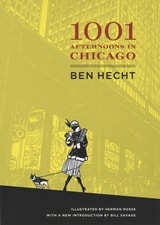
A Thousand and One Afternoons in Chicago
Ben Hecht
University of Chicago Press, 2009
“The hardboiled audacity and wit that became Hecht’s signature as Hollywood’s most celebrated screen-writer are conspicuous in these vignettes. Most of them are comic and sardonic, some strike muted tragic or somber atmospheric notes. . . . The best are timeless character sketches that have taken on an added interest as shards of social history.”—L. S. Klepp, Voice Literary Supplement
A Winter's Journal
Emmanuel Bove, translated by Nathalie Favre-Gilly and with an afterword by Keith Botsford
Northwestern University Press, 1997
Every few days for one winter, Louis writes down the details of his unhappy marriage. Although his wife, Madeleine, is the focal point of his journal, his painstakingly rendered analyses of her behavior tell us more about him than her, and about the harm two people can do to one another. Unsparing and insightful, A Winter's Journal remains one of the most devastating novels ever written on the self-destructive impulse present in all marriages.
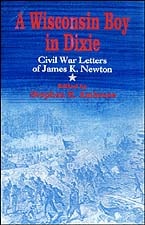
A Wisconsin Boy in Dixie
Civil War Letters of James K. NewtonSelected and Edited by Stephen E. Ambrose
University of Wisconsin Press, 1995
“When I wrote to you last I was at Madison with no prospect of leaving very soon, but I got away sooner than I expected to.” So wrote James Newton upon leaving Camp Randall for Vicksburg in 1863 with the Fourteenth Wisconsin Volunteer Infantry. Newton, who had been a rural schoolteacher before he joined the Union army in 1861, wrote to his parents of his experiences at Shiloh, Corinth, Vicksburg, on the Red River, in Missouri, at Nashville, at Mobile, and as a prisoner of war. His letters, selected and edited by noted historian Stephen E. Ambrose, reveal Newton as a young man who matured in the war, rising in rank from private to lieutenant.
A Wisconsin Boy in Dixie reveals Newton as a young man who grew to maturity through his Civil War experience, rising in rank from private to lieutenant. Writing soberly about the less attractive aspects of army life, Newton's comments on fraternizing with the Rebs, on officers, and on discipline are touched with a sense of humor—"a soldier's best friend," he claimed. He also became sensitive to the importance of political choices. After giving Lincoln the first vote he had ever cast, Newton wrote: "In doing so I felt that I was doing my country as much service as I have ever done on the field of battle."

A Woman Speaks
The Lectures, Seminars, and Interviews of Anaïs NinEvelyn J. Hinz
Ohio University Press, 1975
In this book Anaïs Nin speaks with warmth and urgency on those themes which have always been closest to her: relationships, creativity, the struggle for wholeness, the unveiling of woman, the artist as magician, women reconstructing the world, moving from the dream outward, and experiencing our lives to the fullest possible extent.
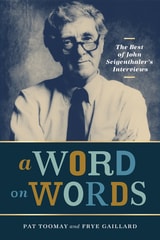
A Word on Words
The Best of John Seigenthaler's InterviewsEdited by Pat Toomay and Frye Gaillard; Epilogue by Andrew Maraniss
Vanderbilt University Press, 2023
Featuring interviews with:
Arna Bontemps • Marshall Chapman • Pat Conroy • Rodney Crowell • John Egerton • Jesse Hill Ford • Charles Fountain • William Price Fox • Kinky Friedman • Frye Gaillard • Nikki Giovanni • Doris Kearns Goodwin • David Halberstam • Waylon Jennings • John Lewis • David Maraniss • William Marshall • Jon Meacham • Ann Patchett • Alice Randall • Dori Sanders • John Seigenthaler Sr. • Marty Stuart • Pat Toomay
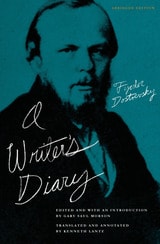
A Writer's Diary
Fydor Dostoevsky
Northwestern University Press, 2009
The essential entries from Dostoevsky's complete Diary, called his boldest experiment in literary form, are now available in this abridged edition; it is a uniquely encyclopedic forum of fictional and nonfictional genres. A Writer's Diary began as a column in a literary journal, but by 1876 Dostoevsky was able to bring it out as a complete monthly publication with himself as an editor, publisher, and sole contributor, suspending work on The Brothers Karamazov to do so.
The Diary's radical format was matched by the extreme range of its contents. In a single frame it incorporated an astonishing variety of material: short stories; humorous sketches; reports on sensational crimes; historical predictions; portraits of famous people; autobiographical pieces; and plans for stories, some of which were never written while others appeared later in the Diary itself. A range of authorial and narrative voices and stances and an elaborate scheme of allusions and cross-references preserve and present Dostoevsky's conception of his work as a literary whole.
Selected from the two-volume set, this abridged edition of A Writer's Diary appears in a single paperback volume, along with a new condensed introduction by editor Gary Saul Morson.

A Year In Place
W Scott Olsen
University of Utah Press, 2001
W. Scott Olsen and Bret Lott invited a dozen friends to consider one particular calendar month in the place they call home. The result is A Year in Place, a captivating collection of new writing by twelve eminent American writers.
More than a montage of voices and experiences, A Year in Place illustrates, as Olsen and Lott explain in their introduction, the trends in American thinking about who we are and what we care about. Rick Bass takes us to the Yaak Valley of Montana in June, where fawns are arriving, "newly-emerged, knocked-legged and groggy, legs still unfolding from that long sleeping passage." Peggy Shumaker explores the special social and cultural time that is March in Fairbanks, Alaska, where a long winter has whetted the psychic despair of inhabitants who find in the "sky’s unbearable brightness . . . a waking pain beyond endurance." Michael Martone transports us through memory to Indiana in the 1950s where each May a blimp "yawed and floated up," wallowing above a suburban neighborhood on its way to the Indianapolis 500.
These and nine other contributions yield an unforgettable book about "the places we find ourselves blessed enough to be."
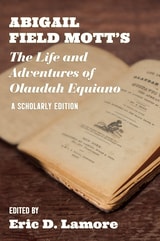
Abigail Field Mott’s The Life and Adventures of Olaudah Equiano
A Scholarly EditionEric D. Lamore
University of Delaware Press, 0
By reissuing Mott’s neglected adaptation with contextualizing scholarly apparatus, Eric D. Lamore disrupts the editorial tradition of selecting a London edition of Equiano’s Interesting Narrative, and positions Equiano in the United States instead of Great Britain. Lamore’s volume contains Mott’s children’s book, which includes a series of illustrations, in a facsimile edition; instructive notes on Life and Adventures; a provocative essay on the adaptation; and selections from relevant texts on the New York African Free Schools and other related topics. With its focus on the intersections of early Black Atlantic and American studies, children’s literature, history of education, life writing, and book history, this edition offers a fresh take on Equiano and his autobiography for a variety of twenty-first-century audiences.

Absinthe
World Literature in Translation: The Islamicate in TranslationJaideep Pandey
Michigan Publishing Services, 2025
Guest-edited by Razieh Araghi and Jaideep Pandey, this special issue explores the rich, multilingual, and transregional literary worlds shaped by and within the Islamicate sphere.
From the Mughal court to Metro Detroit, from Malayalam ghazals to Kurdish-inflected Persian prison poetry, this issue brings together literary translations and critical reflections that unsettle assumptions about language, identity, and belonging. Rather than framing the Islamicate as a fixed geography or religious category, Absinthe 31 approaches it as a set of fluid crossings—linguistic, cultural, historical, and affective.
The issue features work in and from an expansive range of languages, including Persian, Arabic, Malayalam, Kurdish, Assamese, Amazigh, Armeno-Turkish, Dari, and Urdu—foregrounding both canonical and marginalized voices. It includes new English translations of ghazals, sīrahs, biographies, and poems originally written by poets and thinkers working across sectarian, linguistic, and national boundaries, and often negotiating minority or diasporic positionalities.
In addition to the translated works, many contributions are accompanied by translator commentaries that reflect on the ethics, politics, and poetics of translating from within the Islamicate literary landscape. Together, they suggest that translation is not just a means of access, but a mode of thinking—a method native to the Islamicate tradition itself. Spanning from the premodern courts of empire to contemporary diasporic communities, Absinthe 31 offers readers a vibrant and pluralistic vision of the Islamicate as a dynamic literary terrain shaped by continual movement, negotiation, and transformation.
Absinthe
World Literature in Translation: Volume 27: Through German: Contemporary Literature in TranslationLauren Beck
Michigan Publishing Services, 2021
Absinthe
World Literature in Translation: Volume 28: Orphaned of Light: Translating Arab and Arabophone MigrationGraham Liddell
Michigan Publishing Services, 2022
Absinthe 28: Orphaned of Light features contemporary literature of migration translated from and to Arabic. In short stories, creative nonfiction essays, poetry, and selections from novels, a multiplicity of migration experiences is brought to the fore: life in diaspora, undocumented labor, refugeehood, human trafficking, internal displacement, exile.
This issue brings together names familiar to readers of Arabic literature in translation, such as Ghassan Kanafani and Saadi Youssef, with writers making their English-language debuts, such as Dearborn, MI-based Kurdish Iraqi poet Gulala Nouri and Libyan novelist Mohamad Alasfar. Likewise, the issue includes veteran translators Marilyn Booth, Nancy Roberts, and Khaled Mattawa alongside newcomers, several of them graduate students at the University of Michigan.
Each piece is accompanied by a translator’s reflection that meditates on the work’s themes as well as the creative process of translation, and the issue’s poetry is presented in a side-by-side Arabic-English format.
Absinthe 28 comes to us at a time when, according to the UN, one in every 78 people on earth is displaced. This collection serves as a reminder that translation and migration are inextricably linked.
Absinthe
World Literature in Translation: Volume 29: Translating Jewish MultilingualismMarina Mayorski
Michigan Publishing Services, 2023
Absinthe 29: Translating Jewish Multilingualism showcases the variety of languages and genres in which modern Jewish writers have expressed themselves. Spanning short stories, essays, poetry, and selections from novels, the selection of literary works featured in this issue of Absinthe cuts across distinctions between European and non-European literary traditions and addresses diverse themes, including social class, gender, immigration, religious traditions, love and marriage, and the act of writing itself.
Rather than consider disparate Jewish languages and histories in isolation, we bring them into conversation within an open-ended framework that explores Jewish multilingualism in the modern world. The multilingual narrative of Jewish modernity told through them, in seven languages, spans from the 1880s to the 2020s.
Its wide geographical distribution ranges from Tel Aviv to São Paulo through Buenos Aires, Istanbul, Thessaloniki, Livorno, Warsaw, Prague, and Chicago. Each text and context exhibits different aspects of the Jewish encounter with the conditions of modern society, exemplifying the ways in which Jewish writing engages and negotiates different cultures and traditions.
The new volume of Absinthe foregrounds the multilingual legacy of Jewish migration and diasporic life that has become ubiquitous in modern Jewish writing, and it is evident in the enriching and disruptive presence of multiple languages and literary traditions in each of these texts. The title of this volume, Translating Jewish Multilingualism, refers both to the English translations of these texts and to the processes of translation, mediation, and hybridization encapsulated in the works themselves.
Absinthe
World Literature in Translation: Volume 30: Brazil with an SEdited by Julia Irion Martins
Michigan Publishing Services, 2024
The 2024 issue of Absinthe: World Literature in Translation is a celebration of contemporary Brazilian literature, including short fiction and poetry, as well as excerpts from novels and sections from a recently published—but never produced—cinema novo screenplay.
Absinthe 30: Brazil with an ‘S' features English-language translations of work by several acclaimed Brazilian writers, including the likes of Caio Fernando Abreu, Joaquim Pedro de Andrade, Maria Valéria Rezende, and Clarah Averbuck, as well as that of more emergent voices in the Brazilian literary scene, such as Natalia Timerman, Natércia Pontes, and Maria Esther Maciel, among others. Each contribution follows a critical reflection written by its translator, and many of the contributions are accompanied by an original illustration by São Paulo-based artist Thereza Nardelli.
Guest-edited by Júlia Irion Martins, Absinthe 30 sheds light on Brazil’s regional diversity, presenting an image of Brazil beyond samba and soccer. The contents of this issue run the gamut, from deals with the capital-D Devil to encounters with lowercase-d devils on dating apps, from reflections on everyday malaise and COVID-era anxieties to snapshots of life during the AIDS crisis. The issue broadly confronts questions of belonging, mourning, family, gender, and sexuality, with many of its pieces—written between the early-20th century and as recently as 2024—demonstrating a preoccupation with formal experimentation, genre, and literary style.
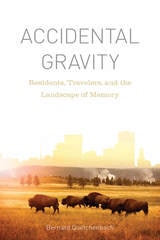
Accidental Gravity
Residents, Travelers, and the Landscape of MemoryBernard Quetchenbach
Oregon State University Press, 2017
Accidental Gravity negotiates the difficult edge between a naive belief in an enduring, unassailable natural world and the equally naive belief that human life takes place in some unnatural, more mediated context. The title refers to the accidental but nonetheless meaningful nexus where the personal meets and combines with the universal—those serendipitous moments when the individual life connects to the larger rhythms of time and planet.
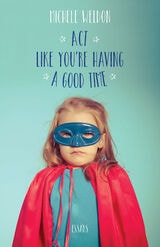
Act Like You're Having a Good Time
EssaysMichele Weldon
Northwestern University Press, 2020
Winner, 2021 Gilda Women's Book Award
In this honest and tender collection of essays, award-winning memoirist Michele Weldon asks what it means to be a mature woman seeking a life of purpose and meaning through work, family, and relationships. Facing ageism and invisibility within popular culture, Weldon examines the effects of raising children, striving for applause, failing expectations, forming new friendships, reconciling lost dreams, and restoring one’s faith. With sincerity and humor, she unwraps family traditions, painting classes, lap swimming, dress codes, and career disappointments. She addresses white privilege and her evolving understanding of racism. And she asks crucial questions about mortality, finding connection in writing and stories.
Frank, eloquent, and daring, Weldon dissects the intricacies of life, journeying toward self-discovery as a mother, daughter, sister, and friend. Readers of any age or gender will recognize the universal experience of learning to accept oneself and asking essential questions—even if there are no easy answers.
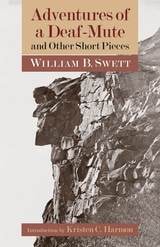
Adventures of a Deaf-Mute and Other Short Pieces
William B. Swett
Gallaudet University Press, 2017
Confident in his identity as a Deaf “mute,” he notes with wry humor the varied perceptions of deafness that he encounters. As a signing Deaf person from a prominent multigenerational Deaf family, he counters negative stereotypes with generosity and a smart wit. He takes pride in his physical abilities, which he showcases through various stunts and arduous treks in the wilderness. However, Swett’s writing also reveals a deep awareness of the fragility and precariousness of life. This is a portrait of a man testing his physical and emotional limits, written from the vantage point of someone who is no longer a young man but is still very much in the prime of his life.
This collection also includes “Mr. Swett and His Diorama,” an article from 1859 in which Swett describes his miniature recreation of the Battle of Lexington, as well as Manual Alphabets, a pamphlet published in 1875 on the history of manual alphabets that includes short biographies of Thomas Hopkins Gallaudet and Laurent Clerc, two pioneers of Deaf education in the United States. The work is accompanied by a new introduction that offers a reflection on Swett’s life and the time in which he lived.
Aeschylus I
The Persians, The Seven Against Thebes, The Suppliant Maidens, Prometheus BoundEdited and Translated by David Grene, Richmond Lattimore, Mark Griffith, and Glenn W. Most
University of Chicago Press, 2013
The most engaging and authoritative translation of some of the foundational works of Western culture
This volume collects careful, readable translations of some of the key works of Aeschylus by experts in the language and culture of the ancient Greek world in which he lived and wrote. Aeschylus I contains “The Persians,” translated by Seth Benardete; “The Seven Against Thebes,” translated by David Grene; “The Suppliant Maidens,” translated by Seth Benardete; and “Prometheus Bound,” translated by David Grene.
For this edition, series editors Mark Griffith and Glenn W. Most have carefully updated the translations to bring them even closer to the ancient Greek while retaining the vibrancy for which our English versions are famous.New introductions for each play offer essential information about its first production, plot, and reception in antiquity and beyond. In addition, each volume includes an introduction to the life and work of its tragedian, as well as notes addressing textual uncertainties and a glossary of names and places mentioned in the plays.
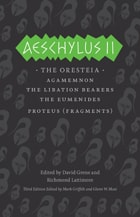
Aeschylus II
The OresteiaEdited and Translated by David Grene, Richmond Lattimore, Mark Griffith, and Glenn W. Most
University of Chicago Press, 2013
Aeschylus II contains “The Oresteia,” translated by Richmond Lattimore, and fragments of “Proteus,” translated by Mark Griffith.
Many years ago, the University of Chicago Press undertook a momentous project: a new translation of the Greek tragedies that would be the ultimate resource for teachers, students, and readers. They succeeded. Under the expert management of eminent classicists David Grene and Richmond Lattimore, those translations combined accuracy, poetic immediacy, and clarity of presentation to render the surviving masterpieces of Aeschylus, Sophocles, and Euripides in an English so lively and compelling that they remain the standard translations. The updated third editions of these classic works were designed to ensure that our Greek tragedies remain the leading English-language versions throughout the twenty-first century.
In this highly anticipated third edition, Mark Griffith and Glenn W. Most have carefully updated the translations to bring them even closer to the ancient Greek while retaining the vibrancy for which our English versions are famous. This edition also includes brand-new translations of Euripides’ Medea, The Children of Heracles, Andromache, and Iphigenia among the Taurians, fragments of lost plays by Aeschylus, and the surviving portion of Sophocles’s satyr-drama The Trackers. New introductions for each play offer essential information about its first production, plot, and reception in antiquity and beyond. In addition, each volume includes an introduction to the life and work of its tragedian, as well as notes addressing textual uncertainties and a glossary of names and places mentioned in the plays.
In addition to the new content, the volumes have been reorganized both within and between volumes to reflect the most up-to-date scholarship on the order in which the plays were originally written. The result is a set of handsome paperbacks destined to introduce new generations of readers to these foundational works of Western drama, art, and life.
Aesopica
A Series of Texts Relating to Aesop or Ascribed to HimEdited by Ben Edwin Perry
University of Illinois Press, 1952
Ben Edwin Perry's Aesopica remains the definitive edition of all fables reputed to be by Aesop. The volume begins traditionally with a life of Aesop, but in two different and previously unedited Greek versions, with collations that record variations in the major recensions. It includes 179 proverbs attributed to Aesop and 725 carefully organized fables, for which Perry also provides their eldest known sources. To better evaluate the place of Aesop in literary history, Perry includes testimonies about Aesop made by Greek and Latin authors, from Herodotus to Maximus Planudes.
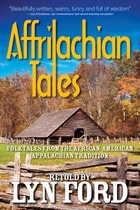
Affrilachian Tales
Folktales from the African-American Appalachian TraditionLynette Ford
Parkhurst Brothers, Inc., 2012
Folktales from the African American Appalachian tradition. Told by Lyn Ford, one of America’s busiest touring storytellers. The power of Lyn's storytelling comes straight out of her family heritage, which is the content of this, her first book. Here she tells how she learned stories from her father and grandfather—and she includes many of the stories they told her.
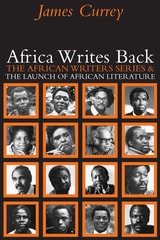
Africa Writes Back
The African Writers Series and the Launch of African LiteratureJames Currey
Ohio University Press, 2008
June 17, 2008, is the fiftieth anniversary of the publication of Chinua Achebe’s Things Fall Apart by Heinemann. This publication provided the impetus for the foundation of the African Writers Series in 1962 with Chinua Achebe as the editorial adviser.
Africa Writes Back: The African Writers Series and the Launch of African Literature captures the energy of literary publishing in a new and undefined field. Portraits of the leading characters and the many consultants and readers providing reports and advice to new and established writers make Africa Writes Back a stand-out book. James Currey’s voice and insights are an added bonus.
CONTENTS
Publishing and selling the African Writers Series
The African Writers Series Portfolio & George Hallett’s covers
Main dates for the African Writers Series
INTRODUCTION: The establishment of African Literature
Publishing Chinua Achebe
1. WRITERS FROM WEST AFRICA
Nigeria: The country where so much started
Negritude from Senegal to Cameroun
Magic & realism from Ghana, The Gambia & Sierra Leone
2. WRITERS FROM EASTERN AFRICA
Towards the oral & the popular in Kenya, Uganda & Tanzania
Publishing Ngugi
3. WRITERS FROM THE HORN & NORTH-EASTERN AFRICA
Emperors in Ethiopia
Publishing Nuruddin Farah
Arab authors in Egypt & Sudan
4. WRITERS FROM SOUTH AFRICA
Resistance in South Africa
Publishing Alex la Guma
Publishing Dennis Brutus
Publishing Bessie Head
Publishing Masizi Kunene
5. WRITERS FROM SOUTHERN AFRICAN
Guns & Guerrillas in Mozambique &Angola
Zambia Shall be Free
Death & detention in Malawi
The struggle to become Zimbabwe
Publishing Dambudzo Marechera
CONCLUSION: Is there still a role for the African Writers Series?
African Tales
Compiled by Harold Scheub
University of Wisconsin Press, 2005
African Women Writing Resistance
An Anthology of Contemporary VoicesJennifer Browdy de Hernandez
University of Wisconsin Press, 2010
Contributors include internationally recognized authors and activists such as Wangari Maathai and Nawal El Saadawi, as well as a host of vibrant new voices from all over the African continent and from the African diaspora. Interdisciplinary in scope, this collection provides an excellent introduction to contemporary African women’s literature and highlights social issues that are particular to Africa but are also of worldwide concern. It is an essential reference for students of African studies, world literature, anthropology, cultural studies, postcolonial studies, and women’s studies.
Outstanding Book, selected by the Public Library Association
Best Books for High Schools, Best Books for Special Interests, and Best Books for Professional Use, selected by the American Association of School Libraries
Afro Orientalism
Bill V. Mullen
University of Minnesota Press, 2004
Reveals a century of political solidarity uniting Asians and African Americans
As early as 1914, in his pivotal essay “The World Problem of the Color Line,” W. E. B. Du Bois was charting a search for Afro-Asian solidarity and for an international anticolonialism. In Afro-Orientalism, Bill Mullen traces the tradition of revolutionary thought and writing developed by African American and Asian American artists and intellectuals in response to Du Bois’s challenge.
Afro-Orientalism unfolds here as a distinctive strand of cultural and political work that contests the longstanding, dominant discourse about race and nation first fully named in Edward Said’s Orientalism. Mullen tracks Afro-Asian engagement with U.S. imperialism—including writings by Richard Wright, Grace and James Boggs, Robert F. Williams, and Fred Ho—and companion struggles against racism and capitalism around the globe. To this end, he offers Afro-Orientalism as an antidote to essentialist, race-based, or narrow conceptions of ethnic studies and postcolonial studies, calling on scholars in these fields to re-imagine their critical enterprises as mutually constituting and politically interdependent.
After Frost
An Anthology of Poetry from New EnglandHenry Lyman
University of Massachusetts Press, 1996
After Frost is published in association with the New England Foundation for the Humanities, which has sponsored a program of reading and discussion groups with poets across the region using this anthology.
After Tears
Niq Mhlongo
Ohio University Press, 2011
After the Bell
Contemporary American Prose about SchoolMaggie Anderson
University of Iowa Press, 2007
The essays are by emerging as well as established fiction writers, poets, social commentators, and educational theorists. Told from the point of view of students, teachers, parents, and administrators through the multiple perspectives or race, class, physical and intellectual abilities, and sexually, the stories reveal how memories of our school days haunt and sustain us.
After the Nobel Prize 1989-1994
The Non-fiction Writing of Naguib Mahfouz, Volume IVNaguib Mahfouz
Gingko, 2015
In carefully crafted short texts, his social conscience is revealed as he highlights political shortcomings, economic injustice, and corruption in Egypt and the wider Arab world. His philosophical sensitivity comes to the fore as he contemplates the meaning of a historic events, contributions of an influential people, and what is required to lead a good life. The collapse of the Soviet Union, the Oslo peace accords, the spread of terrorism, the Cairo earthquake, the passing of Louis Awad, Yusuf Idris, Yahya Hakki, the third term of Hosni Mubarak, climate change, and more come under Naguib Mahfouz’s fine scrutiny. For any fan of Mahfouz’s fiction, this collection opens a window on a different side of his intellect, and it offers insights from one of the region’s greatest modern minds.
AfterWord
Conjuring the Literary DeadDale Salwak
University of Iowa Press, 2011
Afterlives of Indigenous Archives
Edited by Ivy Schweitzer and Gordon Henry
Dartmouth College Press, 2019
Against Art
(The Notebooks)Tomas Espedal
Seagull Books, 2010
In contemporary Norwegian fiction Tomas Espedal’s work stands out as uniquely personal; it can be difficult to separate the fiction from Espedal’s own experiences. In that vein, his novel Against Art is not just the story of a boy growing up to be a writer, but it is also the story of writing. Specifically, it is about the profession of writing—the routines, responsibility, and obstacles. Yet, Against Art is also about being a father, a son, and a grandson; about a family and a family’s tales, and about how preceding generations mark their successors. It is at once about choices and changes, about motion and rest, about moving to a new place, and about living.
Against a Darkening Sky
Janet Lewis
Ohio University Press, 1985
Against a Darkening Sky was originally published in 1943. Set in a semirural community south of San Francisco, it is the story of an American mother of the mid-1930s and the sustaining influence she brings, through her own profound strength and faith, to the lives of her four growing children.
Scottish by birth, but long a resident of America, Mary Perrault is married to a Swiss-French gardener. Their life in South Encina, though anything but lavish, is gay, serene, and friendly. As their children mature and the world outside, less peaceful and secure than the Perrault home, begins to threaten the equilibrium of their tranquil lives, Mrs. Perrault becomes increasingly aware of a moral wilderness rising from the physical wilderness which her generation has barely conquered.
Her struggle to influence, while not invading the lives of her children, is the focus of this novel of family life during the Depression years.
Against the Closet
Black Political Longing and the Erotics of RaceAliyyah I. Abdur-Rahman
Duke University Press, 2012
Abdur-Rahman brings black feminist, psychoanalytic, critical race, and poststructuralist theories to bear on literary genres from slave narratives to science fiction. Analyzing works by African American writers, including Frederick Douglass, Pauline Hopkins, Harriet Jacobs, James Baldwin, and Octavia Butler, she shows how literary representations of transgressive sexuality expressed the longings of African Americans for individual and collective freedom. Abdur-Rahman contends that those representations were fundamental to the development of African American forms of literary expression and modes of political intervention and cultural self-fashioning.
Alabama Afternoons
Profiles and ConversationsRoy Hoffman
University of Alabama Press, 2011
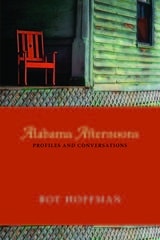
Alabama Afternoons is a collection of portraits of many notable Alabamians, famous and obscure, profiled by award-winning journalist and novelist Roy Hoffman. Written as Sunday feature stories for the Mobile Press-Register with additional pieces from the New York Times, Preservation, and Garden & Gun, these profiles preserve the individual stories—and the individual voices within the stories—that help to define one of the most distinctive states in the union.
Hoffman recounts his personal visits with writer Mary Ward Brown in her library in Hamburg, with photographer William Christenberry in a field in Newbern, and with storyteller Kathryn Tucker Windham and folk artist Charlie “Tin Man” Lucas at their neighboring houses in Selma. Also highlighted are the lives of numerous alumni of The University of Alabama—among them Mel Allen, the “Voice of the Yankees” from 1939 to 1964; Forrest Gump author Winston Groom; and Vivian Malone and James Hood, the two students who entered the schoolhouse door in 1963. Hoffman profiles distinguished Auburn University alumni as well, including Eugene Sledge, renowned World War II veteran and memoirist, and Neil Davis, the outspoken, nationally visible editor of the Lee County Bulletin.
Hoffman also profiles major and minor players in the civil rights movement, from Johnnie Carr, raised in segregated Montgomery and later president of the Montgomery Improvement Association; and George Wallace Jr., son of the four-time governor; to Theresa Burroughs, a Greensboro beautician trampled in the march over the Edmund Pettus Bridge; and Diane McWhorter, whose award- winning book explores the trouble- filled Birmingham civil rights experience. Juxtaposed with these are accounts of lesser-known individuals, such as Sarah Hamm, who attempts to preserve the fading Jewish culture in Eufaula; Edward Carl, who was butler and chauffeur to Bellingrath Gardens founder Walter Bellingrath in Theodore; and cousins William Bolton and Herbert Henson, caretakers of the coon dog cemetery in Russellville.
Hoffman’s compilation of life stories creates an engaging and compelling look into what it means to be from, and shaped by, Alabama. “Alabama Afternoons,” he writes in the introduction, “is a small part of the even bigger question of what it means to be an American.”
Read an article about domestic lives by Roy Hoffman in the New York Times here: http://www.nytimes.com/2010/11/25/garden/25Domestic.html
Albertus Magnus On Animals V1 2
A Medieval Summa Zoologica Revised EditionKenneth F. Kitchell Jr.and Irven Michael Resnick
The Ohio State University Press, 2018
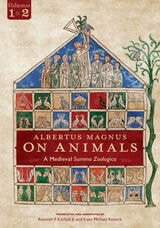
In his work De animalibus, Albert integrated the vast amount of information on nature that had come down to him in previous centuries: the exposition of Michael Scotus’s translation from the Arabic of Aristotle’s books on the natural world (Books 1–19), Albert’s own revisions to Aristotle’s teachings (Books 20–21), and a “dictionary” of animals appropriated largely from the De natura rerum of Thomas of Cantimpré (Books 22–26). Albert’s comprehensive treatise on living things was acknowledged as the reputable authority in biology for almost five hundred years.
In this translated and annotated edition, Kenneth F. Kitchell Jr. and Irven Michael Resnick illuminate the importance of this work, allowing Albert’s magnum opus to be better understood and more widely appreciated than ever before. Broken into two volumes (Books 1–10 and 11–26),Albertus Magnus On Animals is a veritable medieval scientific encyclopedia, ranging in topics from medicine, embryology, and comparative anatomy to women, hunting and everyday life, commerce, and much more—an essential work for historians, medievalists, scientists, and philosophers alike.
Albertus Magnus On Animals V1
A Medieval Summa Zoologica Revised EditionAlbertus Magnus, Edited by Kenneth F. Kitchell Jr.and Irven Michael Resnick
The Ohio State University Press, 2018
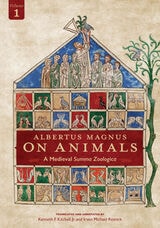
In his work De animalibus, Albert integrated the vast amount of information on nature that had come down to him in previous centuries: the exposition of Michael Scotus’s translation from the Arabic of Aristotle’s books on the natural world (Books 1–19), Albert’s own revisions to Aristotle’s teachings (Books 20–21), and a “dictionary” of animals appropriated largely from the De natura rerum of Thomas of Cantimpré (Books 22–26). Albert’s comprehensive treatise on living things was acknowledged as the reputable authority in biology for almost five hundred years.
In this translated and annotated edition, Kenneth F. Kitchell Jr. and Irven Michael Resnick illuminate the importance of this work, allowing Albert’s magnum opus to be better understood and more widely appreciated than ever before. Broken into two volumes (Books 1–10 and 11–26),Albertus Magnus On Animals is a veritable medieval scientific encyclopedia, ranging in topics from medicine, embryology, and comparative anatomy to women, hunting and everyday life, commerce, and much more—an essential work for historians, medievalists, scientists, and philosophers alike.
Albertus Magnus On Animals V2
A Medieval Summa Zoologica Revised EditionAlbertus Magnus, Edited by Kenneth F. Kitchell Jr.and Irven Michael Resnick
The Ohio State University Press, 2019
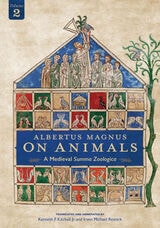
In his work De animalibus, Albert integrated the vast amount of information on nature that had come down to him in previous centuries: the exposition of Michael Scotus’s translation from the Arabic of Aristotle’s books on the natural world (Books 1–19), Albert’s own revisions to Aristotle’s teachings (Books 20–21), and a “dictionary” of animals appropriated largely from the De natura rerum of Thomas of Cantimpré (Books 22–26). Albert’s comprehensive treatise on living things was acknowledged as the reputable authority in biology for almost five hundred years.
In this translated and annotated edition, Kenneth F. Kitchell Jr. and Irven Michael Resnick illuminate the importance of this work, allowing Albert’s magnum opus to be better understood and more widely appreciated than ever before. Broken into two volumes (Books 1–10 and 11–26),Albertus Magnus On Animals is a veritable medieval scientific encyclopedia, ranging in topics from medicine, embryology, and comparative anatomy to women, hunting and everyday life, commerce, and much more—an essential work for historians, medievalists, scientists, and philosophers alike.
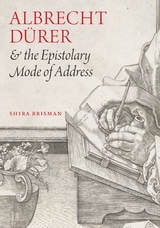
Albrecht Dürer and the Epistolary Mode of Address
Shira Brisman
University of Chicago Press, 2016
In the early modern period, before the establishment of a reliable postal system, letters faced risks of interception and delay. During the Reformation, the printing press threatened to expose intimate exchanges and blur the line between public and private life. Exploring the complex travel patterns of sixteenth-century missives, Brisman explains how these issues of sending and receiving informed Dürer’s artistic practices. His success, she contends, was due in large part to his development of pictorial strategies—an epistolary mode of address—marked by a direct, intimate appeal to the viewer, an appeal that also acknowledged the distance and delay that defers the message before it can reach its recipient. As images, often in the form of prints, coursed through an open market, and artists lost direct control over the sale and reception of their work, Germany’s chief printmaker navigated the new terrain by creating in his images a balance between legibility and concealment, intimacy and public address.
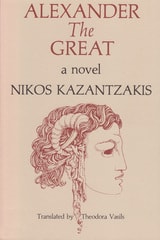
Alexander The Great
A NovelNikos Kazantzakis
Ohio University Press, 1982
Nikos Kazantzakis is no stranger to the heroes of Greek antiquity. In this historical novel based on the life of Alexander the Great, Kazantzakis has drawn on both the rich tradition of Greek legend and the documented manuscripts from the archives of history to recreate an Alexander in all his many-faceted images—Alexander the god; Alexander the descendant of Heracles performing the twelve labors; Alexander the mystic, the daring visionary destined to carry out a divine mission; Alexander the flesh-and-blood mortal who, on occasion, is not above the common soldier’s brawling and drinking.
The novel, which resists the temptation to portray Alexander in the mantle of purely romantic legend, covers his life from age fifteen to his death at age thirty-two. It opens with Alexander’s first exploit, the taming of the horse, Bucephalas, and is seen in great part through the eyes of his young neighbor who eventually becomes an officer in his army and follows him on his campaign to conquer the world.
The book, which was written primarily as an educational adjunct for young readers, is intended for the adult mind as well, and like the legends of old, is entertaining as well as instructive for readers of all ages. It was originally published in Greece in serial form in 1940, and was republished in a complete volume in 1979.
Alfonso Reyes and Spain
His Dialogue with Unamuno, Valle-Inclán, Ortega y Gasset, Jiménez, and Gómez de la SernaBy Barbara Bockus Aponte
University of Texas Press, 1972
Alfonso Reyes, the great humanist and man of letters of contemporary Spanish America, began his literary career just before the outbreak of the Mexican Revolution of 1910. He spearheaded the radical shift in Mexico's cultural and philosophical orientation as a leading member of the famous "Athenaeum Generation."
The crucial years of his literary formation, however, were those he spent in Spain (1914-1924). He arrived in Madrid unknown and unsure of his future. When he left, he had achieved both professional maturity and wide acclaim as a writer. This book has, as its basis, the remarkable correspondence between Reyes and some of the leading spirits of the Spanish intellectual world, covering not only his years in Spain but also later exchanges of letters.
Although Reyes always made it clear that he was a Mexican and a Spanish American, he became a full-fledged member of the closed aristocracy of Spanish literature. It was the most brilliant period in Spain's cultural history since the Golden Age, and it is richly represented here by Reyes' association with five of its most important figures: Miguel de Unamuno and Ramón del Valle-Inclán were of the great "Generation of 98"; among the younger writers were José Ortega y Gasset, essayist and philosopher; the Nobel poet Juan Ramón Jiménez; and Ramón Gómez de la Serna, a precursor of surrealism.
Alfonso Reyes maintained lifelong friendships with these men, and their exchanges of letters are of a dual significance. They reveal how the years in Spain allowed Reyes to pursue his vocation independently, thereby prompting him to seek universal values. Coincidentally, they provide a unique glimpse into the inner world of those friends—and their dreams of a new Spain.

All My Days Are Saturdays
Sam Pickering
University of Missouri Press, 2014
All Night Movie
Alicia Borinsky
Northwestern University Press, 2002
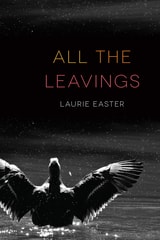
All the Leavings
Laurie Easter
Oregon State University Press, 2021
Whether recounting the home birth of her second child, encounters with cougars, the fraught dynamics of mother-daughter relationships, the destructive power of wildfires, or the community bonds challenged by a tragic suicide, Easter’s writing is firmly grounded in place. She takes readers deep into the heart of a still-wild Oregon, perilous yet rich with natural beauty.
Written from one woman’s perspective as a mother, wife, and friend, All the Leavings is ultimately a book about love—for the child who faces a health crisis, for the friend dying of AIDS, for the one entangled by addiction who then disappears. Long after the final page is turned, it will resonate with readers interested in essays, memoir, alternative lifestyles, and the literature of the West.