Results by title
1947 books match the query 'Music' and 127 start with a
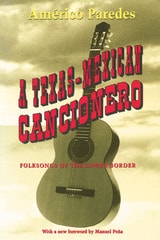
A Texas-Mexican Cancionero
Folksongs of the Lower BorderBy Américo Paredes
University of Texas Press, 1995
The folksongs of Texas's Mexican population pulsate with the lives of folk heroes, gringos, smugglers, generals, jailbirds, and beautiful women. In his cancionero, or songbook, Américo Paredes presents sixty-six of these songs in bilingual text—along with their music, notes on tempo and performance, and discography. Manuel Peña's new foreword situates these songs within the main currents of Mexican American music.
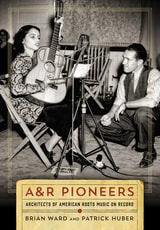
A&R Pioneers
Architects of American Roots Music on RecordBrian Ward
Vanderbilt University Press, 2018
A&R Pioneers offers the first comprehensive account of the diverse group of men and women who pioneered artists-and-repertoire (A&R) work in the early US recording industry. In the process, they helped create much of what we now think of as American roots music. Resourceful, innovative, and, at times, shockingly unscrupulous, they scouted and signed many of the singers and musicians who came to define American roots music between the two world wars. They also shaped the repertoires and musical styles of their discoveries, supervised recording sessions, and then devised marketing campaigns to sell the resulting records. By World War II, they had helped redefine the canons of American popular music and established the basic structure and practices of the modern recording industry. Moreover, though their musical interests, talents, and sensibilities varied enormously, these A&R pioneers created the template for the job that would subsequently become known as "record producer."
Without Ralph Peer, Art Satherley, Frank Walker, Polk C. Brockman, Eli Oberstein, Don Law, Lester Melrose, J. Mayo Williams, John Hammond, Helen Oakley Dance, and a whole army of lesser known but often hugely influential A&R representatives, the music of Bessie Smith and Bob Wills, of the Carter Family and Count Basie, of Robert Johnson and Jimmie Rodgers may never have found its way onto commercial records and into the heart of America's musical heritage. This is their story.

ADVERSARIES OF DANCE
FROM THE PURITANS TO THE PRESENTAnn Wagner
University of Illinois Press, 1997
Whether in the private parlor, public hall, commercial "dance palace," or sleazy dive, dance has long been opposed by those who viewed it as immoral--more precisely as being a danger to the purity of those who practiced it, particularly women. In Adversaries of Dance, Ann Wagner presents a major study of opposition to dance over a period of four centuries in what is now the United States.
Wagner bases her work on the thesis that the tradition of opposition to dance "derived from white, male, Protestant clergy and evangelists who argued from a narrow and selective interpretation of biblical passages," and that the opposition thrived when denominational dogma held greater power over people's lives and when women's social roles were strictly limited.
Central to Wagner's work, which will be welcomed by scholars of both religion and dance, are issues of gender, race, and socioeconomic status.
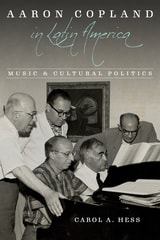
Aaron Copland in Latin America
Music and Cultural PoliticsCarol A. Hess
University of Illinois Press, 2023
Aaron Copland
The Life and Work of an Uncommon ManHoward Pollack
University of Illinois Press, 1999
Howard Pollack's expansive biography examines Copland's long list of accomplishments while also telling the story of the composer's musical development, political sympathies, personal life, relationships as an openly gay man, and tireless encouragement of younger composers. A winner of the Pulitzer Prize and an Academy Award, Copland played a vital role in the Yaddo Festival and as a beloved teacher at Tanglewood, Harvard, and the New School for Social Research. He turned to conducting later in life and via tours promoted American classical music overseas while taking it to appreciative audiences across the United States.

Aaron Jay Kernis
Leta E. Miller
University of Illinois Press, 2014
The first full-length biography of the Pulitzer Prize-winning composer
Winner of both the Pulitzer Prize and the Grawemeyer Award, Aaron Jay Kernis achieved recognition as one of the leading composers of his generation while still in his thirties. Since then his eloquent yet accessible style, emphasis on melody, and willingness to engage popular as well as classical forms has brought him widespread acclaim and admiring audiences.
Leta Miller's biography offers the first survey of the composer's life and work. Immersed in music by middle school, and later training under Theodore Antoniou, John Adams, Jacob Druckman, and others, Kernis rejected the idea of distancing his work from worldly concerns and composed on political themes. His Second Symphony, from 1991, engaged with the first Gulf War; 1993's Still Moment with Hymn was a reaction to the Bosnian Genocide; and the next year's Colored Field and 1995's Lament and Prayer dealt with the Holocaust. Yet Kernis also used sources as disparate as futurist agitprop and children's games to display humor in his work. Miller's analysis addresses not only Kernis's wide range of subjects but also the eclecticism that has baffled critics, analyzing his dedication to synthesis and the themes consistent in his work. Informed and engaging, Aaron Jay Kernis gives a rare mid-career portrait of a major American cultural figure.
About Bach
Edited by Gregory Butler, George Stauffer, and Mary Dalton Greer
University of Illinois Press, 2007
Contributors are Gregory G. Butler, Jen-Yen Chen, Alexander J. Fisher, Mary Dalton Greer, Robert Hill, Ton Koopman, Daniel R. Melamed, Michael Ochs, Mark Risinger, William H. Scheide, Hans-Joachim Schulze, Douglass Seaton, George B. Stauffer, Andrew Talle, and Kathryn Welter.
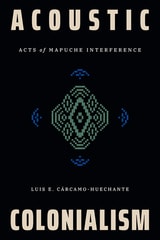
Acoustic Colonialism
Acts of Mapuche InterferenceLuis E. Cárcamo-Huechante
Duke University Press, 2025

Across the Art/Life Divide
Performance, Subjectivity, and Social Practice in Contemporary ArtMartin Patrick
Intellect Books, 2018
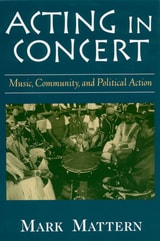
Acting in Concert
Music, Community, and Political ActionMattern, Mark
Rutgers University Press, 1998
More than just entertainment, Mattern argues that popular music can serve as a social glue for bringing together a multitude of voices that might otherwise remain silent, and that political action through music can increase the potential for relatively marginalized people to choose and determine their own fate.
Adina
Farsa in One Act by Gherardo Bevilacqua AldobrandiniGioachino Rossini
University of Chicago Press, 2001
The critical edition, the first publication in full score, draws on the autograph of Sigismondo and Rossini's drafts for setting the new texts as well as the autograph of Adina. In his preface discussing Adina's uncertain genesis and successive history, Fabrizio Della Seta examines the documents extant in Portugal and Italy and considers hypotheses about the identity of the commissioner, the dedicatee, and the collaborator.

Adolf Hitler
A Psychological Interpretation of His Views on Architecture, Art, and MusicSherree Owens Zalampas
University of Wisconsin Press, 1990

Adorno and Music
Critical VariationsPeter E. Gordon and Alexander Rehding, special issue editors
Duke University Press, 0
Contributors
Daniel K. L. Chua, Lydia Goehr, Peter E. Gordon, Martin Jay, Brian Kane, Max Paddison, Alexander Rehding, Fred Rush, Martin Scherzinger
Adventures in Kate Bush and Theory
Deborah M. Withers
Intellect Books, 2010
Adventures in Kate Bush and Theory presents Kate Bush as you have never seen her before. Encounter the polymorphously perverse Kate, the witchy Kate, the queer Kate; the Kate who moves beyond the mime.
Through in-depth readings of the often critically neglected works of Bush’s career (The Kick Inside, Lionheart, The Dreaming, The Red Shoes and her film The Line, the Cross and the Curve), Withers guides the reader through the complexity of Bush’s art and how it transformed popular culture.
Not just another book about Kate Bush.
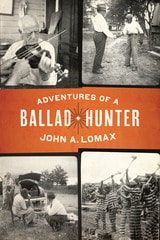
Adventures of a Ballad Hunter
By John A. Lomax, foreword by John Lomax III, John Nova Lomax, and Anna Lomax Wood
University of Texas Press, 2017
Growing up beside the Chisholm Trail, captivated by the songs of passing cowboys and his bosom friend, an African American farmhand, John A. Lomax developed a passion for American folk songs that ultimately made him one of the foremost authorities on this fundamental aspect of Americana. Across many decades and throughout the country, Lomax and his informants created over five thousand recordings of America’s musical heritage, including ballads, blues, children’s songs, fiddle tunes, field hollers, lullabies, play-party songs, religious dramas, spirituals, and work songs. He acted as honorary curator of the Archive of American Folk Song at the Library of Congress, directed the Slave Narrative Project of the WPA, and cofounded the Texas Folklore Society. Lomax’s books include Cowboy Songs and Other Frontier Ballads, American Ballads and Folk Songs, Negro Folk Songs as Sung by Leadbelly, and Our Singing Country, the last three coauthored with his son Alan Lomax.
Adventures of a Ballad Hunter is a memoir of Lomax’s eventful life. It recalls his early years and the fruitful decades he spent on the road collecting folk songs, on his own and later with son Alan and second wife Ruby Terrill Lomax. Vibrant, amusing, often haunting stories of the people he met and recorded are the gems of this book, which also gives lyrics for dozens of songs. Adventures of a Ballad Hunter illuminates vital traditions in American popular culture and the labor that has gone into their preservation.
African Music on LP
An Annotated DiscographyAlan P. Merriam
Northwestern University Press, 1972
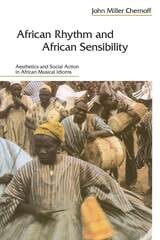
African Rhythm and African Sensibility
Aesthetics and Social Action in African Musical IdiomsJohn M. Chernoff
University of Chicago Press, 1981
"John Miller Chernoff, who spent 10 years studying African drumming, has a flair for descriptive writing, and his first-person narratives should be easily understood by any reader, while ringing unmistakably true for the reader who has also been to West Africa."—Roderick Knight, Washington Post Book World
"Ethnomusicologists must be proud that their discipline has produced a book that will, beyond doubt, rank as a classic of African studies."—Peter Fryer, Research in Literatures
"A marvelous book. . . . Not many scholars will ever be able to achieve the kind of synthesis of 'doing' and 'writing about' their subject matter that Chernoff has achieved, but he has given us an excellent illustration of what is possible."—Chet Creider, Culture
"Chernoff develops a brilliant and penetrating musicological essay that is, at the same time, an intensely personal and even touching account of musical and cultural discovery that anyone with an interest in Africa can and should read. . . . No other writing comes close to approaching Chernoff's ability to convey a feeling of how African music 'works'"—James Koetting, Africana Journal
"Four stars. One of the few books I know of that talks of the political, social, and spiritual meanings of music. I was moved. It was so nice I read it twice."—David Byrne of "Talking Heads"
The companion cassette tape has 44 examples of the music discussed in the book. It consists of field recordings illustrating cross-rhythms, multiple meters, call and response forms, etc.
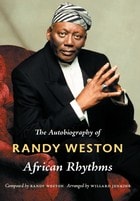
African Rhythms
The Autobiography of Randy WestonRandy Weston
Duke University Press, 2010
Africa is at the core of Weston’s music and spirituality. He has traversed the continent on a continuous quest to learn about its musical traditions, produced its first major jazz festival, and lived for years in Morocco, where he opened a popular jazz club, the African Rhythms Club, in Tangier. Weston’s narrative is replete with tales of the people he has met and befriended, and with whom he has worked. He describes his unique partnerships with Langston Hughes, the musician and arranger Melba Liston, and the jazz scholar Marshall Stearns, as well as his friendships and collaborations with Duke Ellington, Dizzy Gillespie, Coleman Hawkins, Thelonious Monk, Billy Strayhorn, Max Roach, Charlie Parker, Miles Davis, the novelist Paul Bowles, the Cuban percussionist Candido Camero, the Ghanaian jazz artist Kofi Ghanaba, the Gnawa musicians of Morocco, and many others. With African Rhythms, an international jazz virtuoso continues to create cultural history.
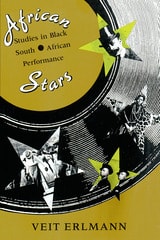
African Stars
Studies in Black South African PerformanceVeit Erlmann
University of Chicago Press, 1991
become ever more popular in the West, where they are now
widely celebrated as expressions of opposition to
discrimination and repression. Less well known is the
rich history of these arts, which were shaped by several
generations of black artists and performers whose
struggles, visions, and aspirations did not differ fundamentally
from those of their present-day counterparts.
In five detailed case studies Veit Erlmann digs deep to expose the roots of the most important of these performance traditions. He relates the early history of isicathamiya, the a cappella vocal style made famous by Ladysmith Black Mambazo.
In two chapters on Durban between the World Wars he charts the evolution of Zulu music and dance, studying in depth the transformation of ingoma, a dance form popular among migrant workers since the 1930s. He goes on to
record the colorful life and influential work of Reuben T. Caluza,
South Africa's first black ragtime composer. And Erlmann's reconstruction of the 1890s concert tours of an Afro-American vocal group, Orpheus M. McAdoo and the Virginia Jubilee Singers, documents the earliest link between the African and American performance traditions.
Numerous eyewitness reports, musicians' personal testimonies, and song texts enrich Erlmann's narratives and demonstrate that black performance evolved in response to the growing economic and racial segmentation of South African
society. Early ragtime, ingoma, and isicathamiya enabled the black urban population to comment on their precarious social position and to symbolically construct a secure space within a rapidly changing political world.
Today, South African workers, artists, and youth continue to build upon this performance tradition in their struggle for freedom and democracy. The early performers portrayed by Erlmann were guiding lights—African stars—by which the present and future course of South Africa is being determined.
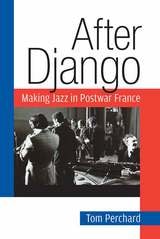
After Django
Making Jazz in Postwar FranceTom Perchard
University of Michigan Press, 2015
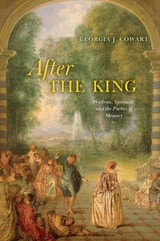
After the King
Watteau, Spectacle, and the Poetics of MemoryGeorgia J. Cowart
University of Chicago Press, 2026
Musicologist Georgia J. Cowart explores how Antoine Watteau’s late paintings reimagine the symbolic order of absolutism in the wake of Louis XIV’s death.
Antoine Watteau has long been known for the theatricality of his paintings, but what that theatricality signifies has remained elusive. In After the King, Georgia Cowart contends that this mode of painting takes shape in response to the spectacle of Louis XIV’s absolutism, which the painter’s late works transform into a new aesthetic language.
The king’s death marked a turning point in Watteau’s art. In the six years that followed, his paintings turned more decisively toward the musical stage. Evoking theatrical plots, frontispieces, and costume types, they conjured a world in which the legacy of absolutist culture lingered as stylized memory—its rituals, emblems, and pleasures recast through theatrical illusion and ironic distance.
Rather than treating Watteau as a painter of nostalgic reverie or Rococo charm, Cowart situates his art within the immersive performance culture of Versailles and the vibrant Parisian stage, at a time when the opéra-ballet, popular opera, and the commedia dell’arte were charting new theatrical landscapes. Drawing on art history, musicology, theater studies, and Pierre Nora’s theory of lieux de mémoire, she proposes a new framework that understands Watteau’s paintings as acts of theatrical memory and cultural recomposition.
Elegantly written and conceptually ambitious, After the King reveals how Watteau recoded the symbols of monarchy to stage a post-absolutist cultural imagination shaped by irony, sensuality, and poetic transformation.
Ain't But a Few of Us
Black Music Writers Tell Their StoryWillard Jenkins, editor
Duke University Press, 2022
Contributors
Eric Arnold, Bridget Arnwine, Angelika Beener, Playthell Benjamin, Herb Boyd, Bill Brower, Jo Ann Cheatham, Karen Chilton, Janine Coveney, Marc Crawford, Stanley Crouch, Anthony Dean-Harris, Jordannah Elizabeth, Lofton Emenari III, Bill Francis, Barbara Gardner, Farah Jasmine Griffin, Jim Harrison, Eugene Holley Jr., Haybert Houston, Robin James, Willard Jenkins, Martin Johnson, LeRoi Jones, Robin D. G. Kelley, Tammy Kernodle, Steve Monroe, Rahsaan Clark Morris, John Murph, Herbie Nichols, Don Palmer, Bill Quinn, Guthrie P. Ramsey Jr., Ron Scott, Gene Seymour, Archie Shepp, Wayne Shorter, A. B. Spellman, Rex Stewart, Greg Tate, Billy Taylor, Greg Thomas, Robin Washington, Ron Welburn, Hollie West, K. Leander Williams, Ron Wynn
Air Castle of the South
WSM and the Making of Music CityCraig Havighurst
University of Illinois Press, 2013
Started by the National Life and Accident Insurance Company in 1925, WSM became one of the most influential and exceptional radio stations in the history of broadcasting and country music. WSM gave Nashville the moniker “Music City USA” as well as a rich tradition of music, news, and broad-based entertainment. With the rise of country music broadcasting and recording between the 1920s and ‘50s, WSM, Nashville, and country music became inseparable, stemming from WSM’s launch of the Grand Ole Opry, popular daily shows like Noontime Neighbors, and early morning artist-driven shows such as Hank Williams on Mother’s Best Flour.
Sparked by public outcry following a proposal to pull country music and the Opry from WSM-AM in 2002, Craig Havighurst scoured new and existing sources to document the station’s profound effect on the character and self-image of Nashville. Introducing the reader to colorful artists and businessmen from the station’s history, including Owen Bradley, Minnie Pearl, Jim Denny, Edwin Craig, and Dinah Shore, the volume invites the reader to reflect on the status of Nashville, radio, and country music in American culture.
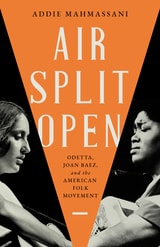
Air Split Open
Odetta, Joan Baez, and the American Folk MovementMahmassani, Addie
University of Iowa Press, 2026
Nearly a decade ago, Bob Dylan fan Addie Mahmassani took a look at her large collection of books on the 1960s folk revival and asked what was missing. The answer was obvious: There was scarce feminist analysis of the scene. Air Split Open takes an important step in filling this gap.
Deploying her background in cultural history, gender, sexuality, and performance studies, Mahmassani tracks the interwoven careers of Odetta and Joan Baez, creating a new story of the folk revival that is at once incisive and entertaining, while also grappling with broader questions of the way male-centered historical narratives take shape in the context of American popular culture. A feminist take on the music scene that defined an era, Air Split Open is fueled by deep respect for the American folk tradition and all those, known and unknown, who have carried it forward.
Album francais--Morceaux reserves
Gioachino Rossini
University of Chicago Press, 1989
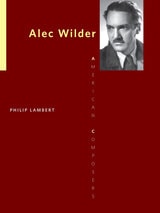
Alec Wilder
Philip Lambert
University of Illinois Press, 2013
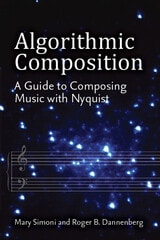
Algorithmic Composition
A Guide to Composing Music with NyquistMary Simoni and Roger B. Dannenberg
University of Michigan Press, 2013
Composers have used formalized procedures to create music throughout history. With the advent of the computer, algorithmic composition allows composers not only to create and experiment with different formalisms, but to hear and evaluate results quickly. Often in algorithmic composition, the composer has only a vague idea how the output will sound, but because the input is highly automated, the composer can make adjustments to take advantage of happy accidents, program bugs, and other creative sources of sound.
Algorithmic Composition: A Guide to Composing Music with Nyquistprovides an overview of procedural approaches to music generation. It introduces programming concepts through many examples written using the Nyquist system for music composition and sound synthesis. Nyquist is freely available software, and over 100 program examples from this book are available in electronic form. Readers will be well equipped to develop their own algorithms for composition.
Music students who are learning about computer music and electronic music will all be interested in this innovative book, as generative music becomes an important part of the future of the discipline. Students and scholars in computer science will also find much to interest them, in a straightforward and fun way.
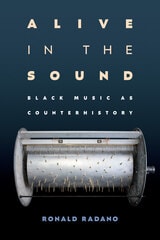
Alive in the Sound
Black Music as CounterhistoryRonald Radano
Duke University Press, 2025

All I Ever Wanted
A Rock 'n' Roll MemoirBy Kathy Valentine
University of Texas Press, 2021
Runner-up, Carr P. Collins Award for Best Book of Non-Fiction, 2021
Go-Go’s bassist Kathy Valentine’s story is a roller coaster of sex, drugs, and of course, music; it’s also a story of what it takes to find success and find yourself, even when it all comes crashing down.
At twenty-one, Kathy Valentine was at the Whisky in Los Angeles when she met a guitarist from a fledgling band called the Go-Go’s—and the band needed a bassist. The Go-Go’s became the first multi-platinum-selling, all-female band to play instruments themselves, write their own songs, and have a number one album. Their debut, Beauty and the Beat, spent six weeks at the top of the Billboard 200 and featured the hit songs “We Got the Beat” and “Our Lips Are Sealed.” The record's success brought the pressures of a relentless workload and schedule culminating in a wild, hazy, substance-fueled tour that took the band from the club circuit to arenas, where fans, promoters, and crew were more than ready to keep the party going.
For Valentine, the band's success was the fulfillment of a lifelong dream—but it’s only part of her story. All I Ever Wanted traces the path that took her from her childhood in Texas—where she all but raised herself—to the height of rock n’ roll stardom, devastation after the collapse of the band that had come to define her, and the quest to regain her sense of self after its end. Valentine also speaks candidly about the lasting effects of parental betrayal, abortion, rape, and her struggles with drugs and alcohol—and the music that saved her every step of the way. Populated with vivid portraits of Valentine’s interactions during the 1980s with musicians and actors from the Police and Rod Stewart to John Belushi and Rob Lowe, All I Ever Wanted is a deeply personal reflection on a life spent in music.
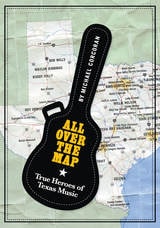
All Over the Map
True Heroes of Texas MusicMichael Corcoran
University of North Texas Press, 2017

All Over the Map
True Heroes of Texas MusicBy Michael Corcoran
University of Texas Press, 2005
From country and blues to rap and punk, Texas music is all over the map, figuratively and literally. Texas musicians have pioneered new musical genres, instruments, and playing styles, proving themselves to be daring innovators who often call the tune for musicians around the country and even abroad. To introduce some of these trailblazing Texas musicians to a wider audience and pay tribute to their accomplishments, Michael Corcoran profiles thirty-two of them in All Over the Map: True Heroes of Texas Music.
Corcoran covers musicians who work in a wide range of musical genres, including blues, gospel, country, rap, indie rock, pop, Cajun, Tejano, conjunto, funk, honky-tonk, rockabilly, rhythm and blues, and Western swing. His focus is on underappreciated artists, pioneers who haven't fully received their due. He also includes well-known musicians who've been underrated, such as Stevie Ray Vaughan and Selena, and invites us to take a closer look at the unique talents of these artists. Corcoran's profiles come from articles he wrote for the Dallas Morning News, Austin American-Statesman, Houston Press, and other publications, which have been expanded and updated for this volume. His musical detective work even uncovers a case of mistaken identity (Washington Phillips) and corrects much misinformation on Blind Willie Johnson and Arizona Dranes. Corcoran closes the book with lively pieces on the Austin music scene and its most famous, if no longer extant, clubs, as well as his personal lists of the forty greatest Texas songs of all time and the twenty-five essential CDs for Texas music fans.
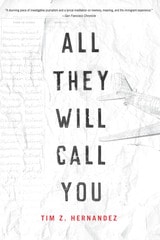
All They Will Call You
Tim Z. Hernandez
University of Arizona Press, 2017
All They Will Call You is the harrowing account of “the worst airplane disaster in California’s history,” which claimed the lives of thirty-two passengers, including twenty-eight Mexican citizens—farmworkers who were being deported by the U.S. government. Outraged that media reports omitted only the names of the Mexican passengers, American folk icon Woody Guthrie penned a poem that went on to become one of the most important protest songs of the twentieth century, “Plane Wreck at Los Gatos (Deportee).” It was an attempt to restore the dignity of the anonymous lives whose unidentified remains were buried in an unmarked mass grave in California’s Central Valley. For nearly seven decades, the song’s message would be carried on by the greatest artists of our time, including Pete Seeger, Dolly Parton, Bruce Springsteen, Bob Dylan, and Joan Baez, yet the question posed in Guthrie’s lyrics, “Who are these friends all scattered like dry leaves?” would remain unanswered—until now.
Combining years of painstaking investigative research and masterful storytelling, award-winning author Tim Z. Hernandez weaves a captivating narrative from testimony, historical records, and eyewitness accounts, reconstructing the incident and the lives behind the legendary song. This singularly original account pushes narrative boundaries, while challenging perceptions of what it means to be an immigrant in America, but more importantly, it renders intimate portraits of the individual souls who, despite social status, race, or nationality, shared a common fate one frigid morning in January 1948.
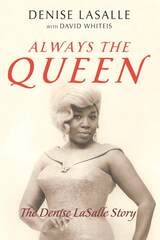
Always the Queen
The Denise LaSalle StoryDenise LaSalle, with David Whiteis
University of Illinois Press, 2020
As honest and no-nonsense as the artist herself, Always the Queen is LaSalle's in-her-own-words story of a lifetime in music. Moving to Chicago as a teen, LaSalle launched a career in gospel and blues that eventually led to the chart-topping 1971 smash ”Trapped by a Thing Called Love” and a string of R&B hits. She reinvented herself as a soul-blues artist as tastes changed and became a headliner on the revitalized southern soul circuit and at festivals nationwide and overseas. Revered for a tireless dedication to her music and fans, LaSalle continued to tour and record until shortly before her death.
Alzira
Tragedia lirica in Three Acts by Salvadore CammaranoGiuseppe Verdi
University of Chicago Press, 1995
Because the success of the premiere was not repeated, Alzira fell out of the repertory and no orchestral score was ever published. The critical edition, based on Verdi's autograph score and important secondary sources, provides the first reliable full score of the work. It is complemented by an introduction tracing the opera's genesis, sources and performance history and practices. Together with the detailed critical commentary, discussing problems and ambiguities in the sources, the edition provides scholars and performers alike with unequalled means for interpretation and study of this poorly known work.
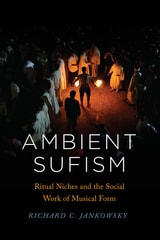
Ambient Sufism
Ritual Niches and the Social Work of Musical FormRichard C. Jankowsky
University of Chicago Press, 2021
America's Music
From the Pilgrims to the PresentGilbert Chase
University of Illinois Press, 1987
Completely rewritten, the updated third edition of American Music broadens the scope of the classic text. Gilbert Chase devotes greater attention to modern forms like jazz, folk, and popular music, while expanding existing scholarship. Chase's musical tour begins with the various religious movements that dominated our musical expression for over two centuries. From there, he explores the rapid changes and artistic flowerings of the twentieth century—a series of musical revolutions that saw the development of "serious" instrumental music and an influential avant-garde alongside the birth of ragtime, jazz, and a far-reaching constellation of popular forms.
Written by the leading expert of his era, American Music is a long-standing classroom perennial and an indispensable guide to anyone interested in the United States and its musical heritage.
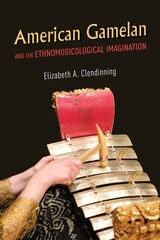
American Gamelan and the Ethnomusicological Imagination
Elizabeth A. Clendinning
University of Illinois Press, 2020
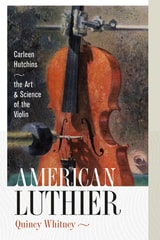
American Luthier
Carleen Hutchins—the Art and Science of the ViolinQuincy Whitney
University Press of New England, 2016
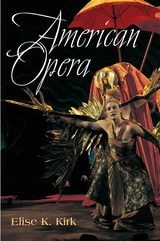
American Opera
Elise K. Kirk
University of Illinois Press, 2001
Tired of Tannhäuser? Bored with Bohème? Open your imagination to boundless creativity and wide-ranging repertory of American opera. Elise K. Kirk provides a treasure trove of information that fills in the long-neglected history of opera in the United States. Looking at more than 100 works, Kirk sketches the musical traits, provides plot summaries, describes sets and stagings, and offers in-depth profiles of performers, composers, and librettists.
Beginning with the English-influenced harle-quinade of the revolutionary period, Kirk follows the development of comic opera, the rise of melodramatic romanticism, the emergence of American grand opera and verismo, and the explosion of eclectic forms that characterized American opera in the twentieth century. Devoting particular attention to women and African American composers and librettists, Kirk explores how American operas incorporated indigenous elements such as jazz, popular song, folk music, Native American motifs, and Hollywood's cinematic techniques. She also discusses radio and television's impact, the advent of opera workshops in universities, the integration of multimedia effects into productions, and the ways innovations such as co-commissioning and joint staging have helped sustain the genre in the face of declining federal support.
American Orchestras in the Nineteenth Century
Edited by John Spitzer
University of Chicago Press, 2012
Studies of concert life in nineteenth-century America have generally been limited to large orchestras and the programs we are familiar with today. But as this book reveals, audiences of that era enjoyed far more diverse musical experiences than this focus would suggest. To hear an orchestra, people were more likely to head to a beer garden, restaurant, or summer resort than to a concert hall. And what they heard weren’t just symphonic works—programs also included opera excerpts and arrangements, instrumental showpieces, comic numbers, and medleys of patriotic tunes.
American Popular Music
New Approaches to the Twentieth CenturyRachel Rubin
University of Massachusetts Press, 2001
Designed as a broad introductory survey, and written by experts in the field, this book examines the rise of American music over the past hundred years — the period in which that music came into its own and achieved unprecedented popularity. Beginning with a look at music as a business, eleven essays explore a variety of popular musical genres, including Tin Pan Alley, blues, jazz, country, gospel, rhythm and blues, rock and roll, folk, rap, and Mexican American corridos. Reading these essays, we come to see that the forms created by one group often appeal to, and are in turn influenced by, other groups—across lines of race, ethnicity, class, gender, region, and age. The chapters speak to one another, arguing for the primacy of such concepts as minstrelsy, urbanization, hybridity, and crossover as the most powerful tools for understanding American popular music. Moving beyond outdated music-industry categories and misleading genre labels, while acknowledging the complexities of the market, the book recovers and reinforces the essential blackness of much popular music—even a presumably white form like country and western. In addition to Rachel Rubin and Jeffrey Melnick, contributors include Reebee Garofalo, Geoffrey Jacques, Kip Lornell, Mark Anthony Neal, Millie Rahn, David Sanjek, James Smethurst, Elijah Wald, and Gail Hilson Woldu.
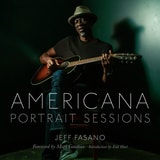
Americana Portrait Sessions
Jeff Fasano
Vanderbilt University Press, 2023
Fasano's unparalleled access to Americana artists like Sheryl Crow, Rhiannon Giddens, Vince Gill, Keb' Mo', Judy Collins, John Oates, The Avett Brothers, The McCrary Sisters, Lucinda Williams, Margo Price, Blind Boys of Alabama, and Kris Kristofferson gives Americana Portrait Sessions the kind of authority that comes from true reach into the breadth of the genre. But this collection is as important for the artists few fans know as for the ones with successful careers behind them. While the book champions the diversity of race, gender, sexuality, and age inherent in Americana music, it also spans career arcs to bring lesser-known acts into the spotlight.
Americana Portrait Sessions brings you backstage to the greenrooms and quiet corners where artists like The War and Treaty, Jewel, Jason Isbell, and The Wooten Brothers aren't just artists performing, but people hanging out.
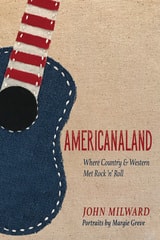
Americanaland
Where Country & Western Met Rock 'n' RollJohn Milward
University of Illinois Press, 2021
With a claim on artists from Jimmie Rodgers to Jason Isbell, Americana can be hard to define, but you know it when you hear it. John Milward’s Americanaland is filled with the enduring performers and vivid stories that are at the heart of Americana. At base a hybrid of rock and country, Americana is also infused with folk, blues, R&B, bluegrass, and other types of roots music. Performers like Bob Dylan, Johnny Cash, Ray Charles, and Gram Parsons used these ingredients to create influential music that took well-established genres down exciting new roads. The name Americana was coined in the 1990s to describe similarly inclined artists like Emmylou Harris, Steve Earle, and Wilco. Today, Brandi Carlile and I’m With Her are among the musicians carrying the genre into the twenty-first century.
Essential and engaging, Americanaland chronicles the evolution and resonance of this ever-changing amalgam of American music. Margie Greve’s hand-embroidered color portraits offer a portfolio of the pioneers and contemporary practitioners of Americana.
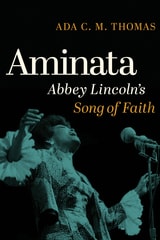
Aminata
Abbey Lincoln’s Song of FaithAda C.M. Thomas
Rutgers University Press, 2026
Abbey Lincoln (1930–2010), one of the greatest jazz vocalists of the twentieth century, was also an acclaimed composer, poet, playwright, actress, and activist and a towering figure within the African American intellectual tradition. Through constant reinvention, she resisted easy stereotyping and helped open a space for Black women artists to invoke their whole selves. Here, with meticulous research and insightful analysis, Ada C. M. Thomas contemplates Lincoln’s music alongside her poetry, plays, and reflections, revealing a multifaceted artist whose philosophical inquiries resonate deeply with the Black experience.
Thomas places Lincoln's albums in the context of both the female jazz and blues singers who influenced her and the male composers she collaborated with, including John Coltrane, Thelonious Monk, and Max Roach. Highlighting Lincoln’s central position within a vibrant global community of Black artists, activists, and writers, it also puts her work into conversation with that of contemporaries and close friends like Maya Angelou, Miriam Makeba, and Toni Morrison. Above all, it traces Lincoln’s extraordinary spiritual and intellectual journey, from her early life in Michigan to her rebirth in the 1970s as Aminata Moseka, meaning “faithful goddess of love,” and her ultimate resurgence in the 1990s as a critically acclaimed jazz artist and composer. With reverence and rigor, Thomas invites readers to rediscover Abbey Lincoln and embrace the transformative power of her words.
Amplifications of Black Sound from Colonial Mexico
Vocality and BeyondSarah Finley
Vanderbilt University Press, 2024
Amplifications of Black Sound from Colonial Mexico is the first extensive study of Afro-descendant sonorities in New Spain or elsewhere in colonial Latin America. In this context, it attends to Black sounds through a framework that remixes Jacques Derrida’s reading of the ear’s anatomy with theories like Gilroy’s lower frequencies or Fred Moten’s phonic materiality. Sarah Finley’s aim is to unsettle the divide between self and other so the auditory archive might emerge as a polyphonic record that exceeds dichotomies of sounding object / listening subject. Through sampling the Afro-descendant sounds of this archive, this book recovers and rearticulates Black voices and auditory practices in New Spain.
Amplifying Power
The Shaping of the Jamaican Sound SystemJulian Henriques
Duke University Press, 2027
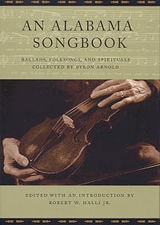
An Alabama Songbook
Ballads, Folksongs, and Spirituals Collected by Byron ArnoldRobert W. Halli Jr.
University of Alabama Press, 2004
Alabama is a state rich in folksong tradition, from old English ballads sung along the Tennessee River to children’s game songs played in Mobile, from the rhythmic work songs of the railroad gandy dancers of Gadsden to the spirituals of the Black Belt. The musical heritage of blacks and whites, rich and poor, hill folk and cotton farmers, these songs endure as a living part of the state’s varied past.
In the mid 1940s Byron Arnold, an eager young music professor from The University of Alabama, set out to find and record as many of these songs as he could and was rewarded by unstinting cooperation from many informants. Mrs. Julia Greer Marechal of Mobile, for example, was 90 years old, blind, and a semi-invalid, but she sang for Arnold for three hours, allowing the recording of 33 songs and exhausting Arnold and his technician. Helped by such living repositories as Mrs. Marechal, the Arnold collection grew to well over 500 songs, augmented by field notes and remarkable biographical information on the singers.
An Alabama Songbook is the result of Arnold’s efforts and those of his informants across the state and has been shaped by Robert W. Halli Jr. into a narrative enriched by more than 200 significant songs-lullabies, Civil War anthems, African-American gospel and secular songs, fiddle tunes, temperance songs, love ballads, play-party rhymes, and work songs. In the tradition of Alan Lomax’s The Folk Songs of North America and Vance Randolph’s Ozark Folksongs, this volume will appeal to general audiences, folklorists, ethnomusicologists, preservationists, traditional musicians, and historians.

An Artist's Journey
Lettres d'un bachelier es musique, 1835-1841Franz Liszt
University of Chicago Press, 1989
An Illini Place
Building the University of Illinois CampusIncoronata Inserra
University of Illinois Press, 2017

An Introduction to Richard Wagner’s Der Ring des Nibelungen
A HandbookWilliam O. Cord
Ohio University Press, 1995
Today, more than a century after its first performance, Richard Wagner’s The Ring of Nibelung endures as one of the most significant artistic creations in the history of opera. This monumental work not only altered previously accepted concepts of music and drama but also inspired creative and intellectual efforts far beyond the field of opera.
Previous studies of the Ring have appealed only to those already acquainted in some way with the Wagnerian art. For the uninitiated, Wagner and his landmark creation have seemed forbidding, and those eager to learn about the masterpiece have faced a vast and frequently esoteric body of commentary. Professor Cord addresses the interests of the non-specialist by taking the reader first into Wagner’s unique intent, and then through the complete history of the Ring.
Cord, who has attended forty performances of the Ring, considers the conception of the poem, its development into a music-drama exemplifying Wagnerian thought, its introduction to the world, and the reactions and interpretation it elicits.