Results by title
8812 books match the query 'Political Science' and 626 start with a
A Fire Bell in the Past
The Missouri Crisis at 200, Volume II: “The Missouri Question” and Its AnswersJeffrey L. Pasley
University of Missouri Press, 2021
Drawn from the of participants in two landmark conferences held at the University of Missouri and the City University of New York, those who contributed original essays to this second of two volumes—a group that includes young scholars and foremost authorities in the field—answer the Missouri “Question,” in bold fashion, challenging assumptions both old and new in the long historiography by approaching the event on its own terms, rather than as the inevitable sequel of the flawed founding of the republic or a prequel to its near destruction.
This second volume of A Fire Bell in the Past features a foreword by Daive Dunkley. Contributors include Dianne Mutti Burke, Christopher Childers, Edward P. Green, Zachary Dowdle, David J. Gary, Peter Kastor, Miriam Liebman, Matthew Mason, Kate Masur, Mike McManus, Richard Newman, and Nicholas Wood.
A Fire You Can't Put Out
The Civil Rights Life of Birmingham's Reverend Fred ShuttlesworthAndrew M. Manis
University of Alabama Press, 2001
WINNER, LILLIAN SMITH AWARD
WINNER, JAMES F. SULZBY, JR. AWARD
The fire of freedom that changed Birmingham—and America.
When Fred Shuttlesworth suffered only a bump on the head in the 1956 bombing of his home, members of his church called it a miracle. Shuttlesworth took it as a sign that God would protect him on the mission that had made him a target that night. Standing in front of his demolished home, Shuttlesworth vigorously renewed his commitment to integrate Birmingham's buses, lunch counters, police force, and parks. The incident transformed him, in the eyes of Birmingham's blacks, from an up-and-coming young minister to a virtual folk hero and, in the view of white Birmingham, from obscurity to rabble-rouser extraordinaire.
From his 1956 founding of the Alabama Christian Movement for Human Rights through the historic demonstrations of 1963, driven by a sense of divine mission, Shuttlesworth pressured Jim Crow restrictions in Birmingham with radically confrontational acts of courage. His intensive campaign pitted him against the staunchly segregationist police commissioner Eugene "Bull" Connor and ultimately brought him to the side of Martin Luther King Jr. and to the inner chambers of the Kennedy White House.
First published in 1999, Andrew Manis's award-winning biography of "one of the nation's most courageous freedom fighters" demonstrates compellingly that Shuttleworth's brand of fiery, outspoken confrontation derived from his prophetic understanding of the pastoral role. Civil rights activism was tantamount to salvation in his understanding of the role of Christian minister.
A Foreign Policy in Transition
Moscow's Retreat from Central America and the Carribbean, 1985-1992Jan S. Adams
Duke University Press, 1992
Jan S. Adams analyzes the factors shaping Gorbachev's foreign policy in Central America by surveying Soviet political views old and new, by describing Gorbachev's bold restructuring of the Soviet foreign policy establishment, and by assessing the implications of his policy of perestroika. A series of country studies demonstrates how changes in Soviet policies and domestic and economic circumstances contributed to significant shifts in the internal conditions and external relations of the Central American and Caribbean nations. Adams discusses in detail such topics as the reduction of Soviet military and economic aid to the region and pressures exerted by Moscow on client states to effect the settlement of regional conflicts by political rather than military means.
The author concludes by speculating about which trends in foreign policy by Russia and other Soviet-successor states toward Central America and the Caribbean may persist in the post-Soviet period, discussing as the implications of these changes for future U.S. policy in the region.

A Foreigner Carrying in the Crook of His Arm a Tiny Bomb
Amitava Kumar
Duke University Press, 2010
A Free and Responsible Press
A General Report on Mass Communication: Newspapers, Radio, Motion Pictures, Magazines, and BooksEdited by Robert D. Leigh
University of Chicago Press, 1974
The Commission on Freedom of the Press began with the premise that freedom of the press is essential to political liberty; it is unique among the freedoms, for it promotes and protects all the rest. At the same time, the commission feared the concentration of media control into fewer and fewer hands, stating, "It [is] imperative that the great agencies of mass communication show hospitality to ideas which their owners do not share." The commission concluded that any regulation of the media must come from within, not from the government.

A Friendly Companion to Plato's Gorgias
George Kimball Plochmann and Franklin E. Robinson
Southern Illinois University Press, 1987
A comprehensive study of “one of the most elusive and subtle” of all the Platonic dialogues.
The Gorgias begins with a discussion of the nature and value of rhetoric and develops into an impassioned argument for the primacy of absolute right (as expressed by conscience) in the regulation of both public and private life. Plochmann and Robinson closely analyze this great dialogue in the first two-thirds of their book, turning in the final four chapters to a broader discussion of its unity, sweep, and philosophic implications.

A Friendship That Lasted a Lifetime
The Correspondence Between Alfred Schutz and Eric VoegelinEdited by Gerhard Wagner and Gilbert Weiss, Translated by William Petropulos
University of Missouri Press, 2011

A Future for Marxism?
Althusser, the Analytical Turn and the Revival of Socialist TheoryAndrew Levine
Pluto Press, 2003
To do this, Andrew Levine examines two recent departures in Marxist thought -- Althusserian and Analytical Marxism. The former is currently defunct; the latter, very nearly so. He assesses the shortcomings of each, while emphasising their considerable, and still timely, merits. The discussion is framed against an analysis of socialism's place in the political life of the past two centuries. Levine assesses the apparent historical defeat of the Left generally since the consolidation of the Reagan-Thatcher era and speculates on current signs of renewal.
He argues that both Althusserian and analytical Marxism represent new and deeply important philosophical departures within the Marxist tradition as they force a rethinking of Marxism's scientific and political project. For all their differences in style and substance, these strains of Marxist thought share important thematic and sociological features and Levine concludes that both traditions provide a legacy upon which a revived Left can build.

A Good Position for Birth
Pregnancy, Risk, and Development in Southern BelizeAminata Maraesa
Vanderbilt University Press, 2018
Fear and shame are prominent affective tropes that Maraesa uses to understand women's attitudes toward reproduction that are at times contrary to development discourse but that make sense in the lived experiences of the women of southern Belize.

A Government of Laws
Political Theory, Religion, and the American FoundingEllis Sandoz
University of Missouri Press, 2001
In A Government of Laws, which includes a new preface, Ellis Sandoz re-evaluates the traditional understanding of the philosophic and intellectual background of the American founding. Through an exhaustive assessment of Renaissance, medieval, and ancient political philosophy, he shows that the founding fathers were consciously and explicitly seeking to create a political order that would meet the demands of human nature and society. This rigorous and searching analysis of the sources of political and constitutional theory generates an original and provocative approach to American thought and experience.
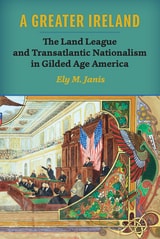
A Greater Ireland
The Land League and Transatlantic Nationalism in Gilded Age AmericaEly M. Janis
University of Wisconsin Press, 2014
As this "Greater Ireland" flourished, new opportunities arose for women and working-class men to contribute within Irish-American society. Exploring the complex interplay of ethnicity, class, and gender, Janis demonstrates the broad range of ideological, social, and political opinion held by Irish Americans in the 1880s. Participation in the Land League deeply influenced a generation that replaced their old county and class allegiances with a common cause, shaping the future of Irish-American nationalism.

A Guerrilla Guide to Refusal
Andrew Culp
University of Minnesota Press, 2022
A field guide to a nonfascist life at the end of the world as we know it
A Guerrilla Guide to Refusal is an unexpected approach to philosophy from a guerrilla-logic point of view. Harnessing critical theory to creatively reimagine counterinsurgency, guerrilla warfare, and interventions beyond the political mainstream, it takes us on a journey through anarchist infowar, queer outlaws, and black insurgency—through a subterranean network of communiques, military documents, contemporary art, political slogans, adversarial blogs, and captive media. In doing so, it provides powerful new insight into contemporary political movements that pose no demands, refuse labels, and offer no solutions.
Written to both inspire and provoke, A Guerrilla Guide to Refusal urges us to think through the refusal to participate in politics as usual. Author Andrew Culp demonstrates how evasion can combatively deny the existing order its power. Focusing on punk cinema, anarchist pamphlets, feminist art projects, hacker manifestos, and guerrilla manuals, he foregrounds invisibility as a novel force of disruption. He draws on concepts of criminality, fugitivity, and anonymity to bring a more nuanced understanding of how power makes things—and people—visible.
The book’s unique format is that of a theoretical manual, comprising freestanding segments instead of blueprints. Poised to reach beyond the academy into activist circles, this potent theory-in-action intervention forces us to reconsider the terrain upon which our struggles against patriarchy, anti-Blackness, capitalism, and the state operate.

A Guide to America's Sex Laws
Richard A. Posner and Katharine B. Silbaugh
University of Chicago Press, 1996
"It takes only a few minutes with A Guide to [America's] Sex to realize that the nation's laws governing what two consenting adults can do with one another are an odd jumble."—Eric Fidler, San Diego Commerce
"Especially noteworthy is how laws governing various sexual activities vary from state to state."—Library Journal
"Fascinating and often surprising facts are concisely documented and conveniently organized in A Guide."—Carlin Meyer, New York Law Journal

A Guide to Eric Voegelin's Political Reality
Montgomery Erfourth
St. Augustine's Press, 2014
A Guilted Age
Apologies for the PastAshraf A. H. Rushdy
Temple University Press, 2015
Public apologies have become increasingly common scenes and representative moments in what appears to be a global process of forgiveness. The apology-forgiveness dynamic is familiar to all of us, but what do these rituals of atonement mean when they are applied to political and historical events?
In his timely, topical, and incisive book A Guilted Age, Ashraf Rushdy argues that the proliferation of apologies by politicians, nations, and churches for past events—such as American slavery or the Holocaust—can be understood as a historical phenomenon. In our post–World War II world, Rushdy claims that we live in a “guilted age.”
A Guilted Age identifies the two major forms of apologies—political and historical—and Rushdy defines the dynamics and strategies of each, showing how the evolution of one led to the other. In doing so, he reveals what apology and forgiveness do to the past events they respectively apologize for and forgive—and what happens when they fail.
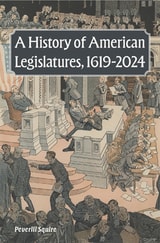
A History of American Legislatures, 1619-2024
Peverill Squire
University of Missouri Press, 2026
What might the members of the first Virginia assembly think if they could visit today’s Virginia House of Delegates? The air-conditioning and diversity of the current membership surely would surprise them, but would the legislative process itself strike them as odd?
In his latest work, Peverill Squire demonstrates that the way the modern legislature goes about its work would seem familiar to visitors from the past. Squire traces a nearly uninterrupted path from that first assembly in Virginia in 1619 to the contemporary Virginia General Assembly, and to the U.S. Congress and the other forty-nine state legislatures.
Each chapter examines discrete topics rather than historical eras, distinguishing the book from other studies of American legislatures. Topics covered include the fundamentals of legislative structure and operation, how qualification standards for legislative service became more inclusive, and how legislative professionalization unfolded at both congressional and state levels.
Though covering more than 400 years, Squire manages to present a comprehensive and accessible history of American legislatures that both scholars and students will find valuable.
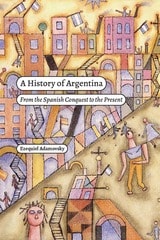
A History of Argentina
From the Spanish Conquest to the PresentEzequiel Adamovsky
Duke University Press, 2024
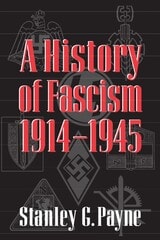
A History of Fascism, 1914–1945
Stanley G. Payne
University of Wisconsin Press, 1996
“A History of Fascism is an invaluable sourcebook, offering a rare combination of detailed information and thoughtful analysis. It is a masterpiece of comparative history, for the comparisons enhance our understanding of each part of the whole. The term ‘fascist,’ used so freely these days as a pejorative epithet that has nearly lost its meaning, is precisely defined, carefully applied and skillfully explained. The analysis effectively restores the dimension of evil.”—Susan Zuccotti, The Nation
“A magisterial, wholly accessible, engaging study. . . . Payne defines fascism as a form of ultranationalism espousing a myth of national rebirth and marked by extreme elitism, mobilization of the masses, exaltation of hierarchy and subordination, oppression of women and an embrace of violence and war as virtues.”—Publishers Weekly
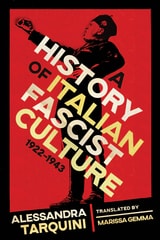
A History of Italian Fascist Culture, 1922–1943
Alessandra Tarquini, Translated by Marissa Gemma
University of Wisconsin Press, 2022
Tarquini sketches the universe of Italian fascism in three broad directions: the regime’s cultural policies, the condition of various art forms and scholarly disciplines, and the ideology underpinning the totalitarian state. She details the choices the ruling class made between 1922 and 1943, revealing how cultural policies shaped the country and how intellectuals and artists contributed to those decisions. The result is a view of fascist ideology as a system of visions, ideals, and, above all, myths capable of orienting political action and promoting a precise worldview.
Building on George L. Mosse’s foundational research, Tarquini provides the best single-volume work available to fully understand a complex and challenging subject. It reveals how the fascists used culture—art, cinema, music, theater, and literature—to build a conservative revolution that purported to protect the traditional social fabric while presenting itself as maximally oriented toward the future.
A History of Trust in Ancient Greece
Steven Johnstone
University of Chicago Press, 2011
A History of the People’s Action Party, 1985-2021
Shashi Jayakumar
National University of Singapore Press, 2020
This narrative history of the PAP follows the story through decisions made by party leaders as they sought to respond to the changing demands and expectations of the Singapore electorate over a thirty-year period that saw Singapore enter the ranks of developed nations. The focus is on change in four dimensions: in the communications methods and styles the party adopted, the mechanisms it developed for managing institutional change, the sometimes vexed question of party renewal, and the evolution of economic and social policy. Drawing on internal party documents and multiple interviews with key leaders over the course of a decade, this book provides a detailed portrait of a robust political institution and establishes a distinctive new narrative of Singapore politics.

A Home for All Jews
Citizenship, Rights, and National Identity in the New Israeli StateOrit Rozin
Brandeis University Press, 2016
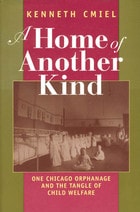
A Home of Another Kind
One Chicago Orphanage and the Tangle of Child WelfareKenneth Cmiel
University of Chicago Press, 1995
The book begins with the fascinating history of the Chicago Nursery and Half-Orphan Asylum from 1860 through 1984, when it became a full-time research institute. Founded by a group of wealthy volunteers, the asylum was a Protestant institution for Protestant children—one of dozens around the country designed as places where single parents could leave their children if they were temporarily unable to care for them.
But the asylum, which later became known as Chapin Hall, changed dramatically over the years as it tried to respond to changing policies, priorities, regulations, and theories concerning child welfare. Cmiel offers a vivid portrait of how these changes affected the day-to-day realities of group living. How did the kind of care given to the children change? What did the staff and management hope to accomplish? How did they define "family"? Who were the children who lived in the asylum? What brought them there? What were their needs? How did outside forces change what went on inside Chapin Hall?
This is much more than a richly detailed account of one institution. Cmiel shatters a number of popular myths about orphanages. Few realize that almost all children living in nineteenth-century orphanages had at least one living parent. And the austere living conditions so characteristic of the orphanage were prompted as much by health concerns as by strict Victorian morals.
A Horizon of (Im)possibilities
A Chronicle of Brazil’s Conservative TurnEdited by Katerina Hatzikidi and Eduardo Dullo
University of London Press, 2021
Since the shocking 2018 presidential election in Brazil, a growing body of scholarship has attempted to understand the country’s so-called “conservative turn.” A gripping in-depth account of politics and society in Brazil today, this new volume brings together a myriad of different perspectives to help us better understand the political events that have shaken the country in recent years.
Combining ethnographic insights with political science, history, sociology, and anthropology, the interdisciplinary analyses included in A Horizon of (Im)possibilities offer a panoramic view on social and political change in Brazil, spanning temporal and spatial dimensions. Starting with the 2018 presidential election, the contributors discuss the country’s recent—and more distant—past in relation to the present. Pointing to the continuities and disruptions during those years, this volume is an invaluable guide to understanding the limits of political democracy.

A Jewish Woman of Distinction
The Life and Diaries of Zinaida PoliakovaChaeRan Y. Freeze
Brandeis University Press, 2019
For more than seventy-five years, Poliakova kept detailed diaries of her world, giving us a rare look into the exclusive world of Jewish elites in Moscow and St. Petersburg. These rare documents reveal how Jews successfully integrated into Russian aristocratic society through their intimate friendships and patronage of the arts and philanthropy. And they did it all without converting—in fact, while staunchly demonstrating their Jewishness.
Poliakova’s life was marked by her dual identity as a Russian and a Jew. She cultivated aristocratic sensibilities and lived an extraordinarily lifestyle, and yet she was limited by the confessional laws of the empire and religious laws that governed her household. She brought her Russian tastes, habits, and sociability to France following her marriage to Reuben Gubbay (the grandson of Sir Albert Abdullah Sassoon). And she had to face the loss of almost all her family members and friends during the Holocaust.
Women’s voices are often lost in the sweep of history, and so A Jewish Women of Distinction is an exceptional, much-needed collection. These newly discovered primary sources will change the way we understand the full breadth of the Russian Jewish experience.
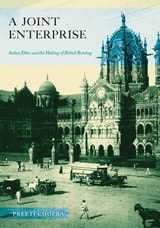
A Joint Enterprise
Indian Elites and the Making of British BombayPreeti Chopra
University of Minnesota Press, 2010
Chopra shows how the European and Indian engineers, architects, and artists worked with each other to design a city—its infrastructure, architecture, public sculpture—that was literally constructed by Indian laborers and craftsmen. Beyond the built environment, Indian philanthropists entered into partnerships with the colonial regime to found and finance institutions for the general public. Too often thought to be the product of the singular vision of a founding colonial regime, British Bombay is revealed by Chopra as an expression of native traditions meshing in complex ways with European ideas of urban planning and progress.
The result, she argues, was the creation of a new shared landscape for Bombay’s citizens that ensured that neither the colonial government nor the native elite could entirely control the city’s future.
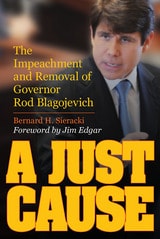
A Just Cause
The Impeachment and Removal of Governor Rod BlagojevichBernard H. Sieracki. Foreword by Jim Edgar
Southern Illinois University Press, 2016
During the predawn hours of December 9, 2008, an FBI team swarmed the home of Illinois governor Rod Blagojevich and took him away in handcuffs. The shocking arrest, based on allegations of corruption and extortion, launched a chain of political events never before seen in Illinois. In A Just Cause, Bernard H. Sieracki delivers a dynamic firsthand account of this eight-week political crisis, beginning with Blagojevich’s arrest, continuing through his impeachment and trial, and culminating in his conviction and removal from office. Drawing on his own eyewitness observations of the hearings and trial, the comments of interviewees, trial transcripts, and knowledge gained from decades of work with the Illinois legislature, Sieracki tells the compelling story of the first impeachment and removal from office of an Illinois governor, while providing a close look at the people involved.
A Just Cause depicts Blagojevich as a master of political gamesmanship, a circus ringmaster driven by personal ambition and obsessed with private gain. Sieracki examines in depth the governor’s unethical behavior while in office, detailing a litany of partisan and personal hostilities that spanned years. He thoroughly covers the events leading to Blagojevich’s downfall and the reactions of the governor’s cohorts. The author discusses the numerous allegations against Blagojevich, including attempts to “sell” appointments, jobs, and contracts in exchange for financial contributions. Sieracki then exhaustively recounts Blagojevich’s senate trial and the governor’s removal from office.
This engrossing volume is both a richly detailed case study of the American checks-and-balances system and an eyewitness account of unprecedented events. It will appeal to anyone interested in the stunning, true tale of a state upholding the maxim “The welfare of the people is the supreme law.”

A Kinder, Gentler America
Melancholia and the Mythical 1950sMary Caputi
University of Minnesota Press, 2005
Analyzing these competing uses of the past, A Kinder, Gentler America reveals how longing for the era of “the greatest generation” actually exposes a disillusionment with the present. Caputi draws on the theoretical frameworks of Julia Kristeva and Walter Benjamin to look at how the decade has been portrayed in movies such as Pleasantville and Far from Heaven and delves further to investigate our disenchantment’s lost origins in early modernity through a reading of the poetry of Baudelaire. What emerges is a stark contrast between the depictions of a melancholic present and a cheerful, shiny past. In the right’s invocation of the mythical 1950s and the left’s criticism of the same, Caputi recognizes a common unfulfilled desire, and proposes that by understanding this loss both sides can begin to accept that American identity, despite chaos and confusion, lies in the here and now.
Mary Caputi is professor of political science at California State University, Long Beach, and is author of Voluptuous Yearnings: A Feminist Theory of the Obscene.

A Laboratory of Transnational History
Ukraine and Recent Ukrainian HistoriographyGeorgiy Kasianov
Central European University Press, 2009
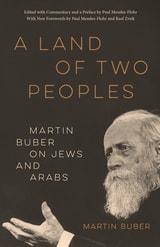
A Land of Two Peoples
Martin Buber on Jews and ArabsMartin Buber
University of Chicago Press, 2025
The theologian and philosopher Martin Buber (1878–1965) was committed to radical socioeconomic reconstruction in pursuit of international peace. His voluminous writings on Arab-Jewish relations in Palestine interweave his religious and philosophical teachings with his politics, each essential to Buber’s vision of democratic and religious life.
A Land of Two Peoples collects the letters, talks, and essays in which Buber advocated for a binationalism that reconciled Arabs and Jews as a solution to the conflict in the Middle East. As relevant today as when it was first published nearly fifty years ago, this edition of A Land of Two Peoples includes two forewords from the preeminent Jewish and Palestinian scholars Paul Mendes-Flohr and Raef Zreik.

A Leftist Ontology
Beyond Relativism and Identity PoliticsCarsten Strathausen
University of Minnesota Press, 2009
A new ontology for a globalized world
Rich with analyses of concepts from deconstruction, systems theory, and post-Marxism, with critiques of fundamentalist thought and the war on terror, this volume argues for developing a philosophy of being in order to overcome the quandary of postmodern relativism. Undergirding the contributions are the premises that ontology is a vital concept for philosophy today, that an acceptable leftist ontology must avoid the kind of identity politics that has dominated recent cultural studies, and that a new ontology must be situated within global capitalism.
A Leftist Ontology offers a timely intervention in political philosophy, featuring some of the leading voices of our time.Contributors: Bruno Bosteels, Cornell U; Christopher Breu, Illinois State U; Nicholas Brown, U of Illinois at Chicago; Sorin Radu Cucu, Manhattan College; George Edmondson, Dartmouth College; Eva Geulen, U of Bonn; Philip Goldstein, U of Delaware; Klaus Mladek, Dartmouth College; Alberto Moreiras, U of Aberdeen; Jeffrey T. Nealon, Pennsylvania State U; William Rasch, Indiana U; Ben Robinson, Indiana U; Imre Szeman, McMaster U; Roland Vegso, U of Tennessee, Knoxville.
A Life for Belarus
The Fall and Postmortal Rise of the USSRStanislau Shushkevich
Central European University Press, 2025
This memoir of the first president of an independent Belarus (1991-1994) tells about the revival of independent Belarus, the difficulties in establishing a democracy and a market economy, a hardened Soviet mentality, and the political immaturity of the intelligentsia and obduracy of the old nomenklatura.
Stanislau Shushkevich, born in 1934, narrates his path from a son of an “enemy of the people” to a doctorate in physics, and then to be the first head of independent Belarus. A series of entertaining essays discuss some major events as well as some minor ones that are barely known. The book describes Shushkevich’s role in hosting the Belavezha Accords, which brought about the end of the Soviet Union, and explores the motivation behind the decision for the de jure dissolution of the empire at a time when the major world leaders were categorically against the division of the USSR into independent states. The author draws particular attention to the role of the Baltic States in the late perestroika period. He also addresses the political passivity of the Soviet intelligentsia and the reasons for the revival of the Soviet Union in Russia and Belarus.
Shushkevich, who lives in Minsk, also provides valuable insights into contemporary Belarus, including an assessment of Lukashenka’s controversial role in recent events.
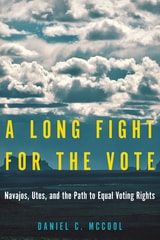
A Long Fight for the Vote
Navajos, Utes, and the Path to Equal Voting RightsDaniel C. McCool
University of Arizona Press, 2027
In A Long Fight for the Vote, Daniel C. McCool offers a deeply researched and compelling account of the fight for equal voting rights in San Juan County, Utah—homeland to the Navajo and Ute peoples and a flashpoint of persistent Anglo–Native conflict.
Centering on landmark voting rights cases that culminated in the historic election of two Navajo county commissioners, McCool situates these legal battles within a broader history of discrimination, shifting federal Indian policy, and the gradual political empowerment of Native communities across the American West. Through meticulous analysis, the book reveals how local elections became a crucible for national debates over citizenship, sovereignty, and democracy.
Drawing on court records, expert testimony, and decades of engagement with voting rights litigation, McCool demonstrates that Native peoples have never been passive victims of disenfranchisement but active protagonists in a sustained struggle for political equality. Richly contextualized and powerfully argued, A Long Fight for the Vote speaks to scholars and students of law, politics, and Western history, as well as legal professionals and engaged readers seeking to understand how race, power, and the ballot box intersect in Indian Country—and why these struggles continue to shape American democracy today.
A Long, Deep Furrow
Three Centuries of Farming in New EnglandHoward S. Russell
Brandeis University Press, 1982
A Love Affair with Europe
The Case for a European FutureGiles Radice
Haus Publishing, 2018
A Mandarin and the Making of Public Policy
ReflectionsTong Dow Ngiam
National University of Singapore Press, 2001

A Map of Hope
Women's Writing on Human Rights—An International Literary AnthologyAgosín, Marjorie
Rutgers University Press, 1999
The first international anthology to explore women’s human rights from a literary perspective.
More than half a century after the United Nations Declaration of Human Rights, women throughout the world still struggle for social and political justice. Many fight back with the only tools of resistance they possess—words. A Map of Hope presents a collection of 77 extraordinary literary works documenting the ways women writers have spoken out about human rights issues.
Writers young and old, known and unknown, explore the dimensions of terror, the unspeakable atrocities of war, and the possibilities of resistance and refusal against all odds. Their poems, essays, memoirs, and brief histories examine issues that affect the condition of women in war, prison camps, exile, and as victims of domestic and political violence.
A Map of Hope presents diverse women writers who have created a literature of global consciousness and justice. Their works give a face, an image, and a human dimension to the dehumanization of human rights violations. The collection allows readers to hear voices that have decided to make a difference. It goes beyond geography and ethnic groups; writers from around the globe are united by the universal dimensions of horror and deprivation, as well as the unique common struggle for justice and solidarity.
A Master on the Periphery of Capitalism
Machado de AssisRoberto Schwarz
Duke University Press, 2001
Widely acknowledged as the most important novelist to have written in Latin America before 1940, Machado had a surprisingly modern style. Schwarz notes that the unprecedented wit, sarcasm, structural inventiveness, and mercurial changes of tone and subject matter found in The Posthumous Memoirs of Brás Cubas marked a crucial moment in the history of Latin American literature. He argues that Machado’s vanguard narrative reflects the Brazilian owner class and its peculiar status in both national and international contexts, and shows why this novel’s success was no accident. The author was able to confront some of the most prestigious ideologies of the nineteenth century with some uncomfortable truths, not the least of which was that slavery remained the basis of the Brazilian economy.
A Master on the Periphery of Capitalism will appeal to those with interests in Latin American literature, nineteenth century history, and Marxist literary theory.
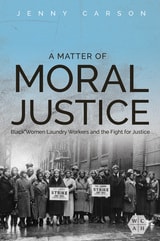
A Matter of Moral Justice
Black Women Laundry Workers and the Fight for JusticeJenny Carson
University of Illinois Press, 2021
Like thousands of African American women, Charlotte Adelmond and Dollie Robinson worked in New York’s power laundry industry in the 1930s. Jenny Carson tells the story of how substandard working conditions, racial and gender discrimination, and poor pay drove them to help unionize the city’s laundry workers. Laundry work opened a door for African American women to enter industry, and their numbers allowed women like Adelmond and Robinson to join the vanguard of a successful unionization effort. But an affiliation with the powerful Congress of Industrial Organizations (CIO) transformed the union from a radical, community-based institution into a bureaucratic organization led by men. It also launched a difficult battle to secure economic and social justice for the mostly women and people of color in the plants. As Carson shows, this local struggle highlighted how race and gender shaped worker conditions, labor organizing, and union politics across the country in the twentieth century.
Meticulous and engaging, A Matter of Moral Justice examines the role of African American and radical women activists and their collisions with labor organizing and union politics.
A Mayor for All the People
Kenneth Gibson's NewarkRobert C. Holmes
Rutgers University Press, 2020
In 1970, Kenneth Gibson was elected as Newark, New Jersey’s first African-American mayor, a position he held for an impressive sixteen years. Yet even as Gibson served as a trailblazer for black politicians, he presided over a troubled time in the city’s history, as Newark’s industries declined and its crime and unemployment rates soared.
This book offers a balanced assessment of Gibson’s leadership and his legacy, from the perspectives of the people most deeply immersed in 1970s and 1980s Newark politics: city employees, politicians, activists, journalists, educators, and even fellow big-city mayors like David Dinkins. The contributors include many of Gibson’s harshest critics, as well as some of his closest supporters, friends, and family members—culminating in an exclusive interview with Gibson himself, reflecting on his time in office.
Together, these accounts provide readers with a compelling inside look at a city in crisis, a city that had been rocked by riots three years before Gibson took office and one that Harper’s magazine named “America’s worst city” at the start of his second term. At its heart, it raises a question that is still relevant today: how should we evaluate a leader who faced major structural and economic challenges, but never delivered all the hope and change he promised voters?
A Midwestern Mosaic
Immigration and Political Socialization in Rural AmericaJ. Celeste Lay
Temple University Press, 2012
Drawn by low-skilled work and the safety and security of rural life, increasing numbers of families from Latin America and Southeast Asia have migrated to the American heartland. In the path-breaking book A Midwestern Mosaic, J. Celeste Lay examines the effects of political socialization on native white youth growing up in small towns.
Lay studies five Iowa towns to investigate how the political attitudes and inclinations of native adolescents change as a result of rapid ethnic diversification. Using surveys and interviews, she discovers that native adolescents adapt very well to foreign-born citizens, and that over time, gaps diminish between diverse populations and youth in all-white/Anglo towns in regard to tolerance, political knowledge, efficacy, and school participation.
A Midwestern Mosaic looks at the next generation to show how exposure to ethnic and cultural diversity during formative years can shape political behavior and will influence politics in the future.

A Million Miles
My Peace Corps JourneyJody Olsen
University of Utah Press, 2024
Olsen’s captivating memoir, A Million Miles, reveals the personal and professional challenges she faced throughout her career, which spanned the Reagan era, 9/11, and the Trump administration. She writes candidly about her struggles as a woman in leadership, as well as personal hardships such as the
sudden death of her brother and her emotionally difficult divorce after her husband’s coming out. This memoir is a sharp, vulnerable portrait, a testament to the transformative power of leadership and self-discovery.

A Milwaukee Woman's Life on the Left
The Autobiography of Meta BergerMeta Berger
Wisconsin Historical Society Press, 2001
A Miracle, A Universe
Settling Accounts with TorturersLawrence Weschler
University of Chicago Press, 1998
"Disturbing and often enthralling."—New York Times Book Review
"Extraordinarily moving. . . . Weschler writes brilliantly."—Newsday
"Implausible, intricate and dazzling."—Times Literary Supplement
"As Weschler's interviewees told their tales, I paced agitatedly, choked back tears. . . . Weschler narrates these two episodes with skill and tact. . . . An inspiring book."—George Scialabba, Los Angeles Weekly
A More Conservative Place
Intellectual Culture in the Bush EraPaul A. Bové
Dartmouth College Press, 2013
A Most Promising Weed
A History of Tobacco Farming and Labor in Colonial Zimbabwe, 1890–1945Steven C. Rubert
Ohio University Press, 1998
A Mother's Cry
A Memoir of Politics, Prison, and Torture under the Brazilian Military DictatorshipLina Penna Sattamini
Duke University Press, 2010
Lina Penna Sattamini describes her son’s tribulations through letters exchanged among family members, including Marcos, during the year that he was imprisoned. Her narrative is enhanced by Marcos’s account of his arrest, imprisonment, and torture. James N. Green’s introduction provides an overview of the political situation in Brazil, and Latin America more broadly, during that tumultuous era. In the 1990s, some Brazilians began to suggest that it would be best to forget the trauma of that era and move on. Lina Penna Sattamini wrote her memoir as a protest against historical amnesia. First published in Brazil in 2000, A Mother’s Cry is testimonial literature at its best. It conveys the experiences of a family united by love and determination during years of political repression.

A Motorcycle on Hell Run
Tanzania, Black Power, and the Uncertain Future of Pan-Africanism, 1964–1974Seth M. Markle
Michigan State University Press, 2017
A Nation Fragmented
The Public Agenda in the Information AgeJill Edy
Temple University Press, 2019
The transformation from an undifferentiated public to a surfeit of interest groups has become yet another distinguishing feature of the increasing polarization of American politics. Jill Edy and Patrick Meirick contend that the media has played a key role in this splintering. A Nation Fragmented reveals how the content and character of the public agenda has transformed as the media environment evolved from network television and daily newspapers in the late 1960s to today’s saturated social media world with 200 cable channels.
The authors seek to understand what happened as the public’s sense of shared priorities deteriorated. They consider to what extent our public agenda has “fallen apart” as attention to news has declined, and to what extent we have been “driven apart” by changes in the issue agendas of news. Edy and Meirick also show how public attention is limited and spread too thin except in cases where a highly consistent news agenda can provoke a more focused public agenda.
A Nation Fragmented explores the media’s influence and political power and, ultimately, how contemporary democracy works.
A Nation Wholly Free
The Elimination of the National Debt in the Age of JacksonCarl Lane
Westholme Publishing, 2014
“An engaging treatment of a topic of perennial concern and frequent misunderstanding, this lucid tale of the brief moment when the United States was debt-free should be on every Congress member’s bedside table.”—Peter J.Woolley, Professor of Comparative Politics, Fairleigh Dickinson University
When President James Monroe announced in his 1824 message to Congress that, barring an emergency, the large public debt inherited from the War for Independence, the Louisiana Purchase, and the War of 1812 would be extinguished on January 1, 1835, Congress responded by crafting legislation to transform that prediction into reality. Yet John Quincy Adams,Monroe’s successor, seemed not to share the commitment to debt freedom, resulting in the rise of opposition to his administration and his defeat for reelection in the bitter presidential campaign of 1828. The new president, Andrew Jackson, was thoroughly committed to debt freedom, and when it was achieved, it became the only time in American history when the country carried no national debt. In A Nation Wholly Free: The Elimination of the National Debt in the Age of Jackson, award-winning economic historian Carl Lane shows that the great and disparate issues that confronted Jackson, such as internal improvements, the “war” against the Second Bank of the United States, and the crisis surrounding South Carolina’s refusal to pay federal tariffs, become unified when debt freedom is understood as a core element of Jacksonian Democracy.
The era of debt freedom lasted only two years and ten months. As the government accumulated a surplus, a fully developed opposition party emerged—the beginning of our familiar two-party system—over rancor about how to allocate the newfound money. Not only did government move into an oppositional party system at this time, the debate about the size and role of government distinguished the parties in a pattern that has become familiar to Americans. The partisan debate over national debt and expenditures led to poorly thought out legislation, forcing the government to resume borrowing. As a result, after Jackson left office in 1837, the country fell into a major depression. Today we confront a debt that exceeds $17 trillion. Indeed, we have been borrowing ever since that brief time we freed ourselves from an oversized debt. A thoughtful, engaging account with strong relevance to today, A Nation Wholly Free is the fascinating story of an achievement that now seems fanciful.