Results by title
22279 books match the query 'Social Science' and 1819 start with a

American Anatomies
Theorizing Race and GenderRobyn Wiegman
Duke University Press, 1995
American Anatomies takes the long view: What epistemological frameworks allowed the West, from the Renaissance forward, to schematize racial and gender differences and to create social hierarchies based on these differences? How have those epistemological regimes changed—and not changed—over time? Where are we now? With painstaking care, political passion, and intellectual daring, Wiegman analyzes the biological and cultural bases of racial and gender bias in order to reinvigorate the discussion of identity politics. She concludes that, for very different reasons, identity proves to be dangerous to minority and majority alike.
American Atrocity
The Types of Violence in LynchingGuy Lancaster
University of Arkansas Press, 2021
Lynching is often viewed as a narrow form of violence: either the spontaneous act of an angry mob against accused individuals, or a demonstration of white supremacy against an entire population considered subhuman. However, in this new treatise, historian Guy Lancaster exposes the multiple forms of violence hidden beneath the singular label of lynching.
Lancaster, who has written extensively on racial violence, details several lynchings of Blacks by white posses in post-Reconstruction Arkansas. Drawing from the fields of history, philosophy, cognitive science, sociology, and literary theory, and quoting chilling contemporary accounts, he argues that the act of lynching encompasses five distinct but overlapping types of violence. This new framework reveals lynching to be even more of an atrocity than previously understood: that mobs did not disregard the humanity of their victims but rather reveled in it; that they were not simply enacting personal vengeance but manifesting an elite project of subjugation. Lancaster thus clarifies and connects the motives and goals of seemingly isolated lynch mobs, embedding the practice in the ongoing enforcement of white supremacy. By interrogating the substance of lynching, American Atrocity shines new light on both past anti-Black violence and the historical underpinnings of our present moment.
American Autobiography after 9/11
Megan Brown
University of Wisconsin Press, 2017
This lively and theoretically grounded book analyzes twenty-first-century memoirs from Three Cups of Tea to Fun Home, emphasizing the ways in which they reinforce and circulate ideologies, becoming guides or models for living. Brown expands her inquiry beyond books to the autobiographical narratives in reality television and political speeches. She offers a persuasive explanation for the memoir boom: the genre as a response to an era of uncertainty and struggle.

American Beginnings
The Prehistory and Palaeoecology of BeringiaEdited by Frederick Hadleigh West
University of Chicago Press, 1996
"An invaluable resource. . . . It will no doubt remain the key reference book for Beringia for many years to come."—Steven Mithen, Journal of Human Evolution
"Extraordinary. The fifty-six contributors . . . represent the most prominent American and Russian researchers in the region."—Choice
"Publication of this well-illustrated compendium is a great service to early American and especially Siberian Upper Paleolithic archaeology."—Nicholas Saunders, New Scientist
"This is a great book . . . perhaps the greatest contribution to the archaeology of Beringia that has yet been published. . . . This is the kind of book to which archaeology should aspire."—Herbert D.G. Maschner, Antiquity

American Beliefs About Intelligence
Orville G., Jr. Brim
Russell Sage Foundation, 1969
American Blockbuster
Movies, Technology, and WonderCharles R. Acland
Duke University Press, 2020

American Bloodlands
Race and the Making of the Plasma EconomyKelsey Johnson
Duke University Press, 2027
American Catastrophe
Fundamentalism, Climate Change, Gun Rights, and the Rhetoric of Donald J. TrumpLuke Winslow
The Ohio State University Press, 2020
Luke Winslow introduces the rhetorical homology as a critical tool useful for understanding how catastrophic appeals unite Americans across disparate religious, ecological, cultural, and political spheres. More specifically, the four case study chapters examining Christian fundamentalism, anti-environmentalism, gun rights messaging, and the administration of Donald Trump reveal a consistent formal pattern oriented toward catastrophe. In teasing out this orientation toward catastrophe, Winslow offers a fresh, provocative, and insightful contribution to our most pressing social challenges.
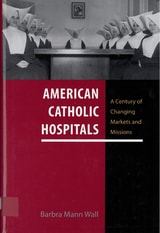
American Catholic Hospitals
A Century of Changing Markets and MissionsWall, Barbra Mann
Rutgers University Press, 2016
In American Catholic Hospitals, Barbra Mann Wall chronicles changes in Catholic hospitals during the twentieth century, many of which are emblematic of trends in the American healthcare system.
Wall explores the Church's struggle to safeguard its religious values. As hospital leaders reacted to increased political, economic, and societal secularization, they extended their religious principles in the areas of universal health care and adherence to the Ethical and Religious Values in Catholic Hospitals, leading to tensions between the Church, government, and society. The book also examines the power of women--as administrators, Catholic sisters wielded significant authority--as well as the gender disparity in these institutions which came to be run, for the most part, by men. Wall also situates these critical transformations within the context of the changing Church policy during the 1960s. She undertakes unprecedented analyses of the gendered politics of post-Second Vatican Council Catholic hospitals, as well as the effect of social movements on the practice of medicine.
American Childhood
Risks and RealitiesSchneider, Dona
Rutgers University Press, 1995
To show how the statistics can both disguise and highlight problems, Schneider alternates a discussion of the numbers with vivid encounters with individual children and adults: the middle-class black high school student's offhand explanation about how to get a gun; a vital statistics bureau worker's astonishment at his own classification as Hispanic; a young woman's pleasure in holding down a job after teachers dismissed her as learning disabled; and a latchkey child's nightmare of coming home from school to an empty house when she was sick.
This book guides us through the morass of numbers bandied about to describe the state of America's children—what the numbers tell us and what they don't—and it offers a call for action. Comprehensive in its treatment of all groups of children and accessible in style, this book is essential for anyone concerned about children in American society.

American Cinema of the 2010s
Themes and VariationsDennis Bingham
Rutgers University Press, 2022
The newest installment in the Screen Decades series, American Cinema in the 2010s takes a close look at the memorable movies, visionary filmmakers, and behind-the-scenes drama that made this decade such an exciting time to be a moviegoer. Each chapter offers an in-depth examination of a specific year, covering a wide variety of films, from blockbuster superhero movies like Black Panther and animated films like Frozen to smaller-budget biopics like I, Tonya and horror films like Hereditary. This volume introduces readers to a decade in which established auteurs like Quentin Tarantino were joined by an exceptionally diverse set of new talents, taking American cinema in new directions.
American Cities in Post-Apocalyptic Science Fiction
Robert Yeates
University College London, 2021
American Cities in Post-Apocalyptic Science Fiction traces the image of urban ruins across twentieth- and twenty-first-century American media. Surveying pulp magazines, radio dramas, films, video games, and the transmedia franchise, Robert Yeates explores how the synergy of technological innovation and artistic vision created an increasingly immersive space to reimagine the urban future. Through a series of medium-specific case studies, Yeates offers provocative new readings of familiar works such as Blade Runner and The Walking Dead situated against a fresh history of ruined cities in American literature.
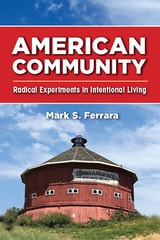
American Community
Radical Experiments in Intentional LivingMark S. Ferrara
Rutgers University Press, 2020
American Community takes us inside forty of the most interesting intentional communities in the nation’s history, from the colonial era to the present day. You will learn about such little-known experiments in cooperative living as the Icarian communities, which took the utopian ideas expounded in a 1840 French novel and put them into practice, ultimately spreading to five states over fifty years. Plus, it covers more recent communities such as Arizona’s Arcosanti, designed by architect Paolo Soleri as a model for ecologically sustainable living.
In this provocative and engaging book, Mark Ferrara guides readers through an array of intentional communities that boldly challenged capitalist economic arrangements in order to attain ideals of harmony, equality, and social justice. By shining a light on these forgotten histories, it shows that far from being foreign concepts, communitarianism and socialism have always been vital parts of the American experience.
American Conservatism
Thinking It, Teaching ItPaul Lyons
Vanderbilt University Press, 2009
Lyons begins with the premise that most universities have been negligent in helping undergraduates understand a movement that has shaped the political landscape for half a century. In addition, in a series of essays that frame the teaching log, he makes the case that conservatives have too often failed to adhere to basic, Burkean principles, and that the best of conservatism has often appeared as a form of liberalism from thinkers such as Hannah Arendt, Reinhold Niebuhr, and George Kennan. The essays also cover the history of conservatism, conservative use of the city-on-a-hill metaphor, and an examination of how the promise of Camelot sophistication was subverted by a resurgence of right-wing populism.
American Conversations
Ellen Bigler
Temple University Press, 1999
The impassioned debate that erupted between long-time white ethnic residents and more recently arrived Puerto Rican citizens in the de-industrialized city the author calls "Arnhem" was initially sparked by one school board member's disparaging comments about Latinos. The conflict led to an investigation by the attempts to implement multicultural reforms in the city's schools. American Conversations follows the ensuing conflict, looks at the history of racial formation in the United States, and considers the specific economic and labor histories of the groups comprising the community in opposition. Including interviews with students, teachers, parents, and community leaders, as well as her own observations of exchanges among them inside and outside the classroom, Bigler's book explores the social positions, diverging constructions of history, and polarized understandings of contemporary racial/ethnic dynamics in Arnhem. Through her retelling of one community's crisis, Bigler illuminates the nature of racial politics in the United States and how both sides in the debate over multicultural education struggle to find a common language.
American Conversations will appeal to anyone invested in education and multiculturalism in the United States as well as those interested in anthropology, sociology, racial and ethnic studies, educational institutions, migration and settlement, the effects of industrial restructuring, and broad issues of community formation and conflict.
American Cosmos
Globes and the Global Imagination in Early AmericaTamara Plakins Thornton
University of Chicago Press, 2027
The first book to explore the forgotten terrestrial and celestial globes of early America—and the global imagination they shaped.
Ranging from early modern Europe to the modern United States, American Cosmos introduces the objects, people, practices, and ideas that constituted the long-forgotten world of globes. As Tamara Plakins Thornton shows, paired terrestrial and celestial globes were important components of early American social, cultural, and intellectual life. They served as markers of learnedness and social status, provided a material vision of a human-centered cosmos, and as 3-D problem-solving devices, offered distinctive imaginative perspectives on global connections and human difference. Only some had access to these globes—including genteel families, men of science, navigators, and students in colleges, academies, and missionary schools—but in the nineteenth century, many more encountered mass-produced, stripped-down globes in common school classrooms and parlors. Yet with new cultural concerns taking root, these modern globes assumed a much-diminished role in American life and thought, and an older world of globes, rich with meaning and possibility, disappeared.
As we increasingly encounter global-scale experience—climate change, pandemics, human migrations, the economy—and as American historians strive to look beyond national borders, we can learn about the origins of American global thinking by looking at globes themselves and the people who used them.
American Creed
Philanthropy and the Rise of Civil Society, 1700-1865Kathleen D. McCarthy
University of Chicago Press, 2003
The market revolution, participatory democracy, and voluntary associations have all been closely linked since the birth of the United States. American Creed explores the relationships among these three institutions, showing how charities and reform associations forged partnerships with government, provided important safety valves for popular discontent, and sparked much-needed economic development. McCarthy also demonstrates how the idea of philanthropy became crucially wedded to social activism during the Jacksonian era. She explores how acts of volunteerism and charity became involved with the abolitionist movement, educational patronage, the struggle against racism, and female social justice campaigns. What resulted, she contends, were heated political battles over the extent to which women and African Americans would occupy the public stage.
Tracing, then, the evolution of civil society and the pivotal role of philanthropy in the search for and exercise of political and economic power, this book will prove essential to anyone interested in American history and government.
American Disgust
Racism, Microbial Medicine, and the Colony WithinMatthew J. Wolf-Meyer
University of Minnesota Press, 2024
Examining the racial underpinnings of food, microbial medicine, and disgust in America
American Disgust shows how perceptions of disgust and fears of contamination are rooted in the country’s history of colonialism and racism. Drawing on colonial, corporate, and medical archives, Matthew J. Wolf-Meyer argues that microbial medicine is closely entwined with changing cultural experiences of digestion, excrement, and disgust that are inextricably tied to the creation of whiteness.
Ranging from nineteenth-century colonial encounters with Native people to John Harvey Kellogg’s ideas around civilization and bowel movements to mid-twentieth-century diet and parenting advice books, Wolf-Meyer analyzes how embedded racist histories of digestion and disgust permeate contemporary debates around fecal microbial transplants and other bacteriotherapeutic treatments for gastrointestinal disease.
At its core, American Disgust wrestles with how changing cultural notions of digestion—what goes into the body and what comes out of it—create and impose racial categories motivated by feelings of disgust rooted in American settler-colonial racism. It shows how disgust is a changing, yet fundamental, aspect of American subjectivity and that engaging with it—personally, politically, and theoretically—opens up possibilities for conceptualizing health at the individual, societal, and planetary levels.
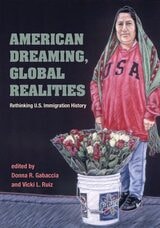
American Dreaming, Global Realities
Rethinking U.S. Immigration HistoryEdited by Donna R. Gabaccia and Vicki L. Ruiz
University of Illinois Press, 2006
An introduction to the best from the new directions in U.S. immigration history
Representing a selection of the finest new research on immigration, American Dreaming, Global Realities explores the ways in which immigrant lives and those of their children are shaped by transnational bonds, globalization, family ties, and personal choice, and the ways in which they engender a sense of belonging and a sense of themselves as “Americans.”
American Dreaming, Global Realities considers a plurality of very specific historical, economic, regional, familial, and cultural contexts. This history reveals resistance and accommodation, both persistent older traditions and Americanization, plus the creation of new cultural forms blending old and new. The twenty-two interdisciplinary essays included in this collection explore the intricate overlapping of race, class, and gender on ethnic identity and on American citizenship.

American Dunkirk
The Waterborne Evacuation of Manhattan on 9/11James M Kendra
Temple University Press, 2016
When the terrorist attacks struck New York City on September 11, 2001, boat operators and waterfront workers quickly realized that they had the skills, the equipment, and the opportunity to take definite, immediate action in responding to the most significant destructive event in the United States in decades. For many of them, they were “doing what needed to be done.”
American Dunkirk shows how people, many of whom were volunteers, mobilized rescue efforts in various improvised and spontaneous ways on that fateful date. Disaster experts James Kendra and Tricia Wachtendorf examine the efforts through fieldwork and interviews with many of the participants to understand the evacuation and its larger implications for the entire practice of disaster management.
The authors ultimately explore how people—as individuals, groups, and formal organizations—pull together to respond to and recover from startling, destructive events. American Dunkirk asks, What can these people and lessons teach us about not only surviving but thriving in the face of calamity?
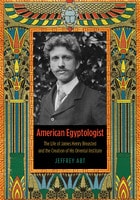
American Egyptologist
The Life of James Henry Breasted and the Creation of His Oriental InstituteJeffrey Abt
University of Chicago Press, 2011
James Henry Breasted (1865–1935) had a career that epitomizes our popular image of the archaeologist. Daring, handsome, and charismatic, he traveled on expeditions to remote and politically unstable corners of the Middle East, helped identify the tomb of King Tut, and was on the cover of Time magazine. But Breasted was more than an Indiana Jones—he was an accomplished scholar, academic entrepreneur, and talented author who brought ancient history to life not just for students but for such notables as Teddy Roosevelt and Sigmund Freud.
American Eldercide
How It Happened, How to Prevent ItMargaret Morganroth Gullette
University of Chicago Press, 2024
A bracing spotlight on the avoidable causes of the COVID-19 Eldercide in the United States.
Twenty percent of the Americans who have died of COVID since 2020 have been older and disabled adults residing in nursing homes—even though they make up fewer than 1 percent of the US population. Something about this catastrophic loss of life in government-monitored facilities has never added up.
Until now. In American Eldercide, activist and scholar Margaret Morganroth Gullette investigates this tragic public health crisis with a passionate voice and razor-sharp attention to detail, showing us that nothing about it was inevitable. By unpacking the decisions that led to discrimination against nursing home residents, revealing how governments, doctors, and media reinforced ageist or ableist biases, and collecting the previously little-heard voices of the residents who survived, Gullette helps us understand the workings of what she persuasively calls an eldercide.
Gullette argues that it was our collective indifference, fueled by the heightened ageism of the COVID-19 era, that prematurely killed this vulnerable population. Compounding that deadly indifference is our own panic about aging and a social bias in favor of youth-based decisions about lifesaving care. The compassion this country failed to muster for the residents of our nursing facilities motivated Gullette to pen an act of remembrance, issuing a call for pro-aging changes in policy and culture that would improve long-term care for everyone.
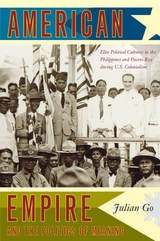
American Empire and the Politics of Meaning
Elite Political Cultures in the Philippines and Puerto Rico during U.S. ColonialismJulian Go
Duke University Press, 2007
American Empire and the Politics of Meaning is an examination of how these efforts to provide the elite of Puerto Rico and the Philippines a practical education in self-government played out on the ground in the early years of American colonial rule, from 1898 until 1912. It is the first systematic comparative analysis of these early exercises in American imperial power. The sociologist Julian Go unravels how American authorities used “culture” as both a tool and a target of rule, and how the Puerto Rican and Philippine elite received, creatively engaged, and sometimes silently subverted the Americans’ ostensibly benign intentions. Rather than finding that the attempt to transplant American-style democracy led to incommensurable “culture clashes,” Go assesses complex processes of cultural accommodation and transformation. By combining rich historical detail with broader theories of meaning, culture, and colonialism, he provides an innovative study of the hidden intersections of political power and cultural meaning-making in America’s earliest overseas empire.
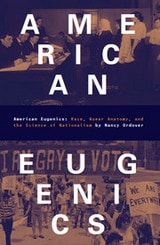
American Eugenics
Race, Queer Anatomy, and the Science of NationalismNancy Ordover
University of Minnesota Press, 2003
Traces the history of eugenics ideology in the United States and its ongoing presence in contemporary life
The Nazis may have given eugenics its negative connotations, but the practice—and the “science” that supports it—is still disturbingly alive in America in anti-immigration initiatives, the quest for a “gay gene,” and theories of collective intelligence. Tracing the historical roots and persistence of eugenics in the United States, Nancy Ordover explores the political and cultural climate that has endowed these campaigns with mass appeal and scientific legitimacy.
American Eugenics demonstrates how biological theories of race, gender, and sexuality are crucially linked through a concern with regulating the “unfit.” These links emerge in Ordover’s examination of three separate but ultimately related American eugenics campaigns: early twentieth-century anti-immigration crusades; medical models and interventions imposed on (and sometimes embraced by) lesbians, gays, transgendered people, and bisexuals; and the compulsory sterilization of poor women and women of color. Throughout, her work reveals how constructed notions of race, gender, sexuality, and nation are put to ideological uses and how “faith in science” can undermine progressive social movements, drawing liberals and conservatives alike into eugenics-based discourse and policies.
American Evangelicalism
Embattled and ThrivingChristian Smith
University of Chicago Press, 1998
Based on a national telephone survey and more than three hundred personal interviews with evangelicals and other churchgoing Protestants, this study provides a detailed analysis of the commitments, beliefs, concerns, and practices of this thriving group. Examining how evangelicals interact with and attempt to influence secular society, this book argues that traditional, orthodox evangelicalism endures not despite, but precisely because of, the challenges and structures of our modern pluralistic environment. This work also looks beyond evangelicalism to explore more broadly the problems of traditional religious belief and practice in the modern world.
With its impressive empirical evidence, innovative theory, and substantive conclusions, American Evangelicalism will provoke lively debate over the state of religious practice in contemporary America.
American Examples, Vol 2
New Conversations about ReligionEdited by Samah Choudhury, Prea Persaud, and Michael J. Altman
University of Alabama Press, 2022
Fresh new perspectives on the study of religion, ranging from SoulCycle to Mark Twain
American Examples: New Conversations about Religion, Volume Two, is the second in a series of annual anthologies produced by the American Examples workshop hosted by the Department of Religious Studies at The University of Alabama. In the latest volume from this dynamic academic project, nine scholars with diverse topics and methodologies vividly reimagine the meaning of all three words in the phrase “American religious history.” The essays use case studies from America, broadly conceived, to ask trenchant theoretical questions that are of interest to scholars and students beyond the subfield of American religious history.
Cody Musselman uses a Weberian analysis to explore questions of identity, authority, and authenticity in the world of SoulCycle while Zachary T. Smith finds commonality between the rhetoric and practices of scholarship and mixed martial arts. Erik Kline provides a new perspective on the psychedelic mysticism of the 1960s, and Brook Wilensky-Lanford takes stock of the cultural power of parody in Mark Twain’s last work of fiction. Christopher Cannon Jones examines the reciprocal relationship between religious texts and cultural contexts by comparing early Mormon missions to Hawai‘i and Jamaica and Lindsey Jackson explores what debates over circumcision can tell us about gender stereotypes and motherhood. Dana Lloyd uses the 1988 Supreme Court decision in Lyng v. Northwest Indian Cemetery Protective Association as a case study in order to consider how Indigenous religion and sovereignty have been understood and adjudicated in the American legal system. Matt Sheedy studies the identity categories of “atheist” and “ex-Muslim” and Brad Stoddard uses ethnographic fieldwork to evaluate the role of religious pluralism in regulating and policing correctional institutions. Editors Samah Choudhury and Prea Persaud provide an introduction that reconsiders the trajectory of the American Examples project in light of the siege on the US Capitol in January 2021 and the continuing COVID pandemic.
Visit americanexamples.ua.edu for more information on upcoming workshop dates and future projects.
CONTRIBUTORS
Michael J. Altman / Samah Choudhury / Lindsey Jackson / Christopher Cannon Jones / / Erik Kline / Dana Lloyd / Cody Musselman / Prea Persaud / Matt Sheedy / Zachary T. Smith / Brad Stoddard / Brook Wilensky-Lanford
American Examples, Vol 4
New Conversations about ReligionEdited by Candace Lukasik, Joshua Urich, and Michael J. Altman
University of Alabama Press, 2025
Case studies that vividly reimagine the meaning and applications of American religious history
American Examples: New Conversations about Religion, Volume Four, continues the annual anthology series produced by the American Examples workshop at the University of Alabama’s Department of Religious Studies. The goal of American Examples is to examine examples of “something someone called religious, somewhere someone called America” by asking theoretical questions that exceed the boundaries of American religion or American religious history. This volume features seven essays exploring examples ranging from American Muslim headwear to online pickup artists to the connections between Dutch immigrants and Japanese students. This collection offers valuable insights for scholars and students within and beyond the field of American religious history.
Visit americanexamples.ua.edu for more information on upcoming workshop dates and future projects
American Families Past and Present
Social Perspectives on TransformationsRoss, Susan
Rutgers University Press, 2006
American families today are noted for their wide variety of guises. Among the mix are single-parent families, childless-by-choice marriages, nuclear families, multigenerational families, and same-sex couples. Although this diversity has come under the scrutiny of everyone from politicians to the media, family diversity is not a recent development of contemporary culture. While nuclear families with a mother, a father, and children are the presumed historical norm, people have always resided in an assortment of family formations.
Bringing together essays by twenty-one distinguished scholars who have helped shape the field of family sociology in the last decade, this interdisciplinary anthology examines variation within family experience, especially as it has evolved across racial, ethnic, social, gender, and generational lines. The essays place historical and institutional frameworks at the center of the discussion.
The first part of the book focuses on the development of socially constructed dominant ideologies, demographic shifts in family composition, and historical perspectives on family rituals and mythmaking. Essays in the second part provide a historical perspective on the interdependence between the family as a social institution and other institutions. Selections highlight changes in women’s roles, the impact of economic, racial, and social inequalities on household labor and child care, the effects of war and military service, and the implications of the political climate for family welfare policy.
In-depth chapter introductions along with critical questions to spark class discussion make this an ideal text for courses focusing on family composition, trends, and controversies in the United States.
American Families and Households
James A. Sweet
Russell Sage Foundation, 1987
American Fantastic
Myths of Violence and RedemptionDerek J. Thiess
University of Wisconsin Press, 2025
Thiess’s interdisciplinary study examines America’s past and present imperial projects, from the Hawaiian Islands to the Eastern Seaboard, as they proliferate in popular story forms. By interrogating American myths, legends, and fantastic narratives across an impressive array of genres, including folk narratives, science fiction, movies, and more, Thiess exposes how the “myth of redemptive violence” manifests in contemporary constructions of America’s fantastic imaginaries.
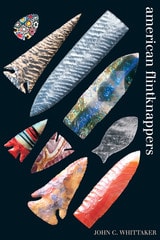
American Flintknappers
Stone Age Art in the Age of ComputersBy John C. Whittaker
University of Texas Press, 2004
Making arrowheads, blades, and other stone tools was once a survival skill and is still a craft practiced by thousands of flintknappers around the world. In the United States, knappers gather at regional "knap-ins" to socialize, exchange ideas and material, buy and sell both equipment and knapped art, and make stone tools in the company of others. In between these gatherings, the knapping community stays connected through newsletters and the Internet.
In this book, avid knapper and professional anthropologist John Whittaker offers an insider's view of the knapping community. He explores why stone tools attract modern people and what making them means to those who pursue this art. He describes how new members are incorporated into the knapping community, how novices learn the techniques of knapping and find their roles within the group, how the community is structured, and how ethics, rules, and beliefs about knapping are developed and transmitted. He also explains how the practice of knapping relates to professional archaeology, the trade in modern replicas of stone tools, and the forgery of artifacts. Whittaker's book thus documents a fascinating subculture of American life and introduces the wider public to an ancient and still rewarding craft.
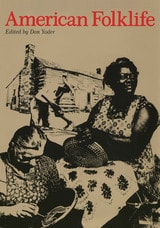
American Folklife
Edited by Don Yoder
University of Texas Press, 1976
Knowledge of folk custom and folk belief can help to explain ways of thought and behavior in modern America. American Folklife, a unique collection of essays dedicated to the presentation of American tradition, broadens our understanding of the regional differences and ethnic folkways that color American life.
Folklife research examines the entire context of everyday life in past and present. It includes every aspect of traditional life, from regional architecture through the full range of material culture into spiritual culture, folk religion, witchcraft, and other forms of folk belief. This collection is especially useful in its application to American society, where countless influences from European, American Indian, and African cultural backgrounds merge. American Folklife relates folklife research to history, anthropology, cultural geography, architectural history, ethnographic film, folk technology, folk belief, and ethnic tensions in American society. It documents the folk-cultural background that is the root of our society.
American Foreign Policy and the Utopian Imagination
Susan M. Matarese
University of Massachusetts Press, 2010
However U.S. policymakers may resolve such issues, their thinking will be influenced by assumptions deeply embedded in American culture. Some of those beliefs derive from the nation's distinctive history, geography, and resources. But others are rooted in what Susan M. Matarese calls the "national image"--a set of emotionally charged, relatively coherent ideas about the special qualities of the United States and its place in the world.
Building on a long tradition of scholarship that looks to works of literature for insights into national myths and symbols, Matarese examines a rich trove of utopian fiction written by Americans during the late nineteenth century. Such writings, she shows, provide a useful window into the popular imagination, revealing widely shared notions about the foreign policy of an idealized America--notions that have proven remarkably resilient in the twentieth century as well. Indeed, even in the post-Cold War era, one can find striking similarities between the foreign policy goals of the Bush and Clinton administrations and the dreams of America's utopian architects a century earlier.
The author concludes with an appeal for greater humility and realism in the formation of U.S. foreign policy, and a recognition of the limits of American power in what is likely to be an increasingly fluid, fragmented, and multipolar world.
American Gay
Stephen O. Murray
University of Chicago Press, 1996
Murray's erudite scholarship challenges prevailing assumptions about gay history and society. He questions conventional wisdom about the importance of World War II and the Stonewall riots for conceiving and challenging shared oppression. He reviews gay complicity in the repathologizing of homosexuality during the early years of the AIDS epidemic. Discussing recent demands for inclusion in the "straight" institutions of marriage and the US military, he concludes that these are new forms of resistance, not attempts to assimilate. Finally, Murray examines racial and ethnic differences in self-representation and identification.
Drawing on two decades of studying gay life in North America, this tour de force of empirical documentation and social theory critically reviews what is known about the emergence, growth, and internal diversity of communities of openly gay men and lesbians. American Gay thus deepens our understanding of the ways individuals construct sexualities through working and living together.
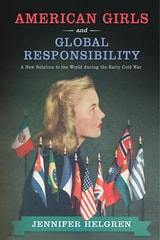
American Girls and Global Responsibility
A New Relation to the World during the Early Cold WarHelgren, Jennifer
Rutgers University Press, 2017
Jennifer Helgren argues that a new internationalist girl citizenship took root in the country in the years following World War II in youth organizations such as Camp Fire Girls, Girl Scouts, YWCA Y-Teens, schools, and even magazines like Seventeen. She shows the particular ways that girls’ identities and roles were configured, and reveals the links between internationalist youth culture, mainstream U.S. educational goals, and the U.S. government in creating and marketing that internationalist girl, thus shaping the girls’ sense of responsibilities as citizens.
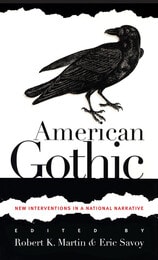
American Gothic
New Interventions in a National NarrativeRobert K. Martin
University of Iowa Press, 1998
In America as in Britain, the rise of the Gothic represented the other—the fearful shadows cast upon Enlightenment philosophies of common sense, democratic positivism, and optimistic futurity. Many critics have recognized the centrality of these shadows to American culture and self-identification. American Gothic, however, remaps the field by offering a series of revisionist essays associated with a common theme: the range and variety of Gothic manifestations in high and popular art from the roots of American culture to the present.
The thirteen essayists approach the persistence of the Gothic in American culture by providing a composite of interventions that focus on specific issues—the histories of gender and race, the cultures of cities and scandals and sensations—in order to advance distinct theoretical paradigms. Each essay sustains a connection between a particular theoretical field and a central problem in the Gothic tradition.
Drawing widely on contemporary theory—particularly revisionist views of Freud such as those offered by Lacan and Kristeva—this volume ranges from the well-known Gothic horrors of Edgar Allan Poe and Nathaniel Hawthorne to the popular fantasies of Stephen King and the postmodern visions of Kathy Acker. Special attention is paid to the issues of slavery and race in both black and white texts, including those by Ralph Ellison and William Faulkner. In the view of the editors and contributors, the Gothic is not so much a historical category as a mode of thought haunted by history, a part of suburban life and the lifeblood of films such as The Exorcist and Fatal Attraction.
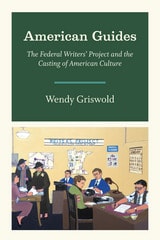
American Guides
The Federal Writers’ Project and the Casting of American CultureWendy Griswold
University of Chicago Press, 2016
Griswold’s subject here is the Project’s American Guides, an impressively produced series that set out not only to direct travelers on which routes to take and what to see throughout the country, but also to celebrate the distinctive characteristics of each individual state. Griswold finds that the series unintentionally diversified American literary culture’s cast of characters—promoting women, minority, and rural writers—while it also institutionalized the innovative idea that American culture comes in state-shaped boxes. Griswold’s story alters our customary ideas about cultural change as a gradual process, revealing how diversity is often the result of politically strategic decisions and bureaucratic logic, as well as of the conflicts between snobbish metropolitan intellectuals and stubborn locals. American Guides reveals the significance of cultural federalism and the indelible impact that the Federal Writers’ Project continues to have on the American literary landscape.
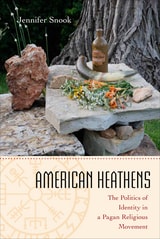
American Heathens
The Politics of Identity in a Pagan Religious MovementJennifer Snook
Temple University Press, 2015
Snook explores the complexities of pagan reconstruction and racial, ethnic and gender identity in today’s divisive political climate. She considers the impact of social media on Heathen collectivities, and offers a glimpse of the world of Heathen meanings, rituals, and philosophy.
In American Heathens, Snook presents the stories and perspectives of modern practitioners in engaging detail. She treats Heathens as members of a religious movement, rather than simply a subculture reenacting myths and stories of enchantment. Her book shrewdly addresses how people construct ethnicity in a reconstructionist (historically-minded) faith system with no central authority.
American Idle
Late-Career Job Loss in a Neoliberal EraAnnette Nierobisz
Rutgers University Press, 2025
American Immigration
Maldwyn Allen Jones
University of Chicago Press, 1992
In this new edition, Jones brings his history of immigration to the United States up to 1990. His new chapter covers the major changes in immigration patterns caused by changes in legislation, such as the Immigration and Nationality Act of 1965.
"It is done with a grasp of regional, chronological, national and racial information, plus that 'feel' for the situation which can come only from the vast resources and a gift for interpretation."—A. T. DeGroot, Christian Century
"A scholarly contribution, based on a thorough mastery of the subject."—Carl Wittke, Journal of Southern History

American Indian Activism
ALCATRAZ TO THE LONGEST WALKEdited by Troy Johnson; Joane Nagel; and Duane Champagne
University of Illinois Press, 1997
In this volume, some of the dominant scholars in the field chronicle and analyze Native American activism of the 1960s and 1970s. Much of what is included here began as a special issue of the American Indian Culture and Research Journal; the introduction has been extensively modified and one chapter deleted. Importantly, the new first chapter provides extended background and historical analysis of the Alcatraz takeover and discusses its place in contemporary Indian activism.
Contributors include: Karren Baird-Olson, LaNada Boyer, Edward D. Castillo, Duane Champagne, Ward Churchill, Vine Deloria, Jr., Tim Findley, Jack D. Forbes, Adam (Nordwall) Fortunate Eagle, Lenny Foster, John Garvey, George P. Horse Capture, Troy Johnson, Luis S. Kemnitzer, Woody Kipp, Joane Nagel, Robert A. Rundstrom, Steve Talbot
American Indian Constitutional Reform and the Rebuilding of Native Nations
Edited by Eric D. Lemont
University of Texas Press, 2006
Since 1975, when the U.S. government adopted a policy of self-determination for American Indian nations, a large number of the 562 federally recognized nations have seized the opportunity to govern themselves and determine their own economic, political, and cultural futures. As a first and crucial step in this process, many nations are revising constitutions originally developed by the U.S. government to create governmental structures more attuned to native people's unique cultural and political values. These new constitutions and the governing institutions they create are fostering greater governmental stability and accountability, increasing citizen support of government, and providing a firmer foundation for economic and political development.
This book brings together for the first time the writings of tribal reform leaders, academics, and legal practitioners to offer a comprehensive overview of American Indian nations' constitutional reform processes and the rebuilding of native nations. The book is organized in three sections. The first part investigates the historical, cultural, economic, and political motivations behind American Indian nations' recent reform efforts. The second part examines the most significant areas of reform, including criteria for tribal membership/citizenship and the reform of governmental institutions. The book concludes with a discussion of how American Indian nations are navigating the process of reform, including overcoming the politics of reform, maximizing citizen participation, and developing short-term and long-term programs of civic education.
American Indian Educators in Reservation Schools
Terry Huffman
University of Nevada Press, 2014
American Indian English
William L Leap
University of Utah Press, 1993
A distillation of over twenty years’ experience, William Leap’s pioneering work on the varieties of American Indian English explores the linguistic and sociolinguistic characteristics of language use among Navajo, Hopi, Mojave, Ute, Tsimshian, Kotzebue, Ponca, Chilcotin, Seminole, Cherokee, and other American Indian tribes.
Unlike contemporary studies on schooling, ethnicity, empowerment, and educational failure, American Indian English avoids postmodernist jargon and discourse strategies in favor of direct description and commentary. Data are derived from real-life conditions faced by speakers of Indian English in various English-speaking settings. This practical focus enhances the book’s accessibility to Indian educators and community-based teachers, as well as non-Indian academics.

American Indian History on Trial
Historical Expertise in Tribal LitigationE. Richard Hart
University of Utah Press, 2017
Hart, a historian who has testified in cases that have resulted in roughly a billion dollars in judgments, uses specific cases to explain at length what kind of historical research and documentation is necessary for tribes seeking to protect and claim their rights under United States law. He demonstrates the legal questions that Native Americans face by exploring the cultural history and legal struggles of six Indian nations. He recounts how these were addressed by expert testimony grounded in thorough historical understanding, research, and argumentation. The case studies focus on the Wenatchi, Coeur d’Alene, Hualapai, Amah Mutsun, Klamath, and Zuni peoples but address issues relevant to many American tribes.
American Indian Languages
Cultural and Social ContextsShirley Silver and Wick R. Miller
University of Arizona Press, 1997
Authors Silver and Miller demonstrate the complexity and diversity of these languages while dispelling popular misconceptions. Their text reveals the linguistic richness of languages found throughout the Americas, emphasizing those located in the western United States and Mexico, while drawing on a wide range of other examples found from Canada to the Andes. It introduces readers to such varied aspects of communicating as directionals and counting systems, storytelling, expressive speech, Mexican Kickapoo whistle speech, and Plains sign language.
The authors have included basics of grammar and historical linguistics, while emphasizing such issues as speech genres and other sociolinguistic issues and the relation between language and worldview. They have incorporated a variety of data that have rarely or never received attention in nontechnical literature in order to underscore the linguistic diversity of the Americas, and have provided more extensive language classification lists than are found in most other texts.
American Indian Languages: Cultural and Social Contexts is a comprehensive resource that will serve as a text in undergraduate and lower-level graduate courses on Native American languages and provide a useful reference for students of American Indian literature or general linguistics. It also introduces general readers interested in Native Americans to the amazing diversity and richness of indigenous American languages.
Coverage includes:
Achumawi, Acoma, Algonquin, Apache, Araucanian, Arawakan, Athapascan, Atsugewi, Ayamara, Bacairi, Bella Coola, Beothuk, Biloxi, Blackfoot, Caddoan, Cahto, Cahuilla, Cakchiquel, Carib, Cayuga, Chemehuevi, Cherokee, Chibchan, Chichimec, Chimakuan, Chimariko, Chinook, Chipewyan, Choctaw-Chickasaw, Chol, Cocopa, Coeur d'Alene, Comanche, Coos, Cora, Cree, Creek, Crow, Cubeo, Cupeño, Dakota, Delaware, Diegueño, Eskimo-Aleut, Esselen, Eyak, Fox, Gros Ventre, Guaraní, Guarijío, Haida, Havasupai, Hill Patwin, Hopi, Huastec, Huave, Hupa, Inuit-Inupiaq, Iroquois, Jaqaru, Je, Jicaque, Kalapuyan, Kamia, Karankawas, Karuk, Kashaya, Keres, Kickapoo, Kiliwa, Kiowa-Tanoan, Koasati, Konkow, Kuna, Kwakiutl, Kwalhioqua-Tlatskanai, Lakota, Lenca, Luiseño, Maidu, Mapuche, Markoosie, Mayan, Mazahua, Mazatec, Métis, Mexica, Micmac, Misumalpan, Mitchif, Miwok, Mixe-Zoquean, Mixtec, Mobilian, Mohave, Mohawk, Muskogean, Nahuatl, Natchez, Navajo, Nez Perce, Nheengatú, Nicola, Nomlaki, Nootka, Ojibwa, Oneida, O'odham, Otomí, Paiute, Palaihnihan, Panamint, Panoan, Paya, Pima, Pipil, Pomo, Poplocan, Pueblo, Puquina, Purpecha, Quechua, Quiché, Quileute, Sahaptian, Salish, Seneca, Sequoyah, Seri, Serrano, Shasta, Shoshoni, Sioux, Sirenikski, Slavey, Subtiaba-Tlapanec, Taíno, Takelma, Tanaina, Tarahumara, Tequistlatecan, Tewa, Tlingit, Toba, Toltec, Totonac, Tsimshian, Tubatulabal, Tukano, Tunica, Tupí, Ute, Uto-Aztecan, Vaupés, Venture¤o, Wakashan, Walapai, Wappo, Washo, Wintu, Wiyot, Xinca, Yahi, Yana, Yokuts, Yucatec, Yuchi, Yuki, Yuma, Yurok, Zapotec, Zoquean, and Zuni.
American Indian Life Skills Development Curriculum
Teresa D. LaFromboise
University of Wisconsin Press, 1996
Suicide is a significant problem for many adolescents in Native American Indian populations. American Indian Life Skills Development Curriculum is a course for high school students and some middle school students that is designed to drastically reduce suicidal thinking and behavior.
Created in collaboration with students and community members from the Zuni Pueblo and the Cherokee Nation of Oklahoma, this curriculum addresses key issues in Native American Indian adolescents’ lives and teaches such life skills as communication, problem solving, depression and stress management, anger regulation, and goal setting. The course is unique in its skills-based approach. After first increasing awareness and knowledge of suicide, it then teaches students specific methods to help a peer turn away from suicidal thinking and seek help from an appropriate help-giver.
The skills-based approach of this curriculum follows well-established teaching methods to develop social skills. Teachers and peers inform students of the rationale and components of a particular skill, model and demonstrate the skill for them, and later provide feedback on individual skill performance.
American Indian Literature, Environmental Justice, and Ecocriticism
The Middle PlaceJoni Adamson
University of Arizona Press, 2001
This powerful book is one of the first to examine the intersections between literature and the environment from the perspective of the oppressions of race, class, gender, and nature, and the first to review American Indian literature from the standpoint of environmental justice and ecocriticism. By examining such texts as Sherman Alexie's short stories and Leslie Marmon Silko's novel Almanac of the Dead, Adamson contends that these works, in addition to being literary, are examples of ecological criticism that expand Euro-American concepts of nature and place.
Adamson shows that when we begin exploring the differences that shape diverse cultural and literary representations of nature, we discover the challenge they present to mainstream American culture, environmentalism, and literature. By comparing the work of Native authors such as Simon Ortiz with that of environmental writers such as Edward Abbey, she reveals opportunities for more multicultural conceptions of nature and the environment.
More than a work of literary criticism, this is a book about the search to find ways to understand our cultural and historical differences and similarities in order to arrive at a better agreement of what the human role in nature is and should be. It exposes the blind spots in early ecocriticism and shows the possibilities for building common ground— a middle place— where writers, scholars, teachers, and environmentalists might come together to work for social and environmental change.
American Indian Medicine Ways
Spiritual Power, Prophets, and HealingEdited by Clifford E. Trafzer
University of Arizona Press, 2017
This groundbreaking collection provides fascinating stories of wisdom, spiritual power, and forces within tribal communities that have influenced the past and may influence the future. Through discussions of omens, prophecies, war, peace, ceremony, ritual, and cultural items such as masks, prayer sticks, sweat lodges, and peyote, this volume offers examples of the ways in which Native American beliefs in spirits have been and remain a fundamental aspect of history and culture. Drawing from written and oral sources, the book offers readers a greater understanding of creation narratives, oral histories, and songs that speak of healers, spirits, and power from tribes across the North American continent.
American Indian medicine ways and spiritual power remain vital today. With the help of spirits, people can heal the sick, protect communities from natural disasters, and mediate power of many kinds between the spiritual and corporeal worlds. As the contributors to this volume illustrate, healers are the connective cloth between the ancient past and the present, and their influence is significant for future generations.
CONTRIBUTORS
R. David Edmunds
Joseph B. Herring
Benjamin Jenkins
Troy R. Johnson
Michelle Lorimer
L. G. Moses
Richard D. Scheuerman
Al Logan Slagle
Clifford E. Trafzer
American Indian Persistence and Resurgence
Karl Kroeber
Duke University Press, 1994
Diverse commentators, including literary critics, anthropologists, ethnohistorians, poets and a novelist address persistent issues facing Native Americans and Native American studies today. The future of White-Indian relation, the viability of Pan-Indianism, tensions between Native Americans and North American anthropologists, and new devlopments in ethnohistory are among the topics discussed. The survival of Native Americans as recorded in this collection, an expanded edition of a special issue of boundary 2, brings into focus the dynamically adaptive values of Native American culture. Native Americans’ persistence in U.S. culture—not disappearing under the pressure to assimilate or through genocidal warfare—reminds us of the extent to which any living culture is defined by the process of transformation.
Contributors. Linda Ainsworth, Jonathan Boyarin, Raymomd J. DeMallie, Elaine Jahner, Karl Kroeber, William Overstreet, Douglas R. Parks, Katharine Pearce, Jarold Ramsey, Wendy Rose, Edward H. Spicer, Gerald Vizenor, Priscilla Wald