Results by title
18284 books match the query 'United States' and 1653 start with a
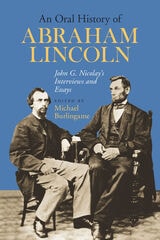
An Oral History of Abraham Lincoln
John G. Nicolay's Interviews and EssaysEdited by Michael Burlingame
Southern Illinois University Press, 2006
John C. Nicolay, who had known Lincoln in Springfield, Illinois, served as chief White House secretary from 1861 to 1865. Trained as a journalist, Nicolay had hoped to write a campaign biography of Lincoln in 1860, a desire that was thwarted when an obscure young writer named William Dean Howells got the job. Years later, however, Nicolay fulfilled his ambition; with John Hay, he spent the years from 1872 to 1890 writing a monumental ten-volume biography of Lincoln.
In preparation for this task, Nicolay interviewed men who had known Lincoln both during his years in Springfield and later when he became the president of the United States. "When it came time to write their massive biography, however," Burlingame notes, "he and Hay made sparing use of the interviews" because they had become "skeptical about human memory." Nicolay and Hay also feared that Robert Todd Lincoln might censor material that reflected "poorly on Lincoln or his wife."
Nicolay had interviewed such Springfield friends as Lincoln’s first two law partners, John Todd Stuart and Stephen T. Logan. At the Illinois capital in June and July 1875, he talked to a number of others including Orville H. Browning, U.S. senator and Lincoln’s close friend and adviser for over thirty-five years, and Ozias M. Hatch, Lincoln’s political ally and Springfield neighbor. Four years later he returned briefly and spoke with John W. Bunn, a young political "insider" from Springfield at the time Lincoln was elected president, and once again with Hatch.
Browning shed new light on Lincoln’s courtship and marriage, telling Nicolay that Lincoln often told him "that he was constantly under great apprehension lest his wife should do something which would bring him into disgrace" while in the White House. During their research, Nicolay and Hay also learned of Lincoln’s despondency and erratic behavior following his rejection by Matilda Edwards, and they were subsequently criticized by friends for suppressing the information. Burlingame argues that this open discussion of Lincoln’s depression of January 1841 is "perhaps the most startling new information in the Springfield interviews."
Briefer and more narrowly focused than the Springfield interviews, the Washington interviews deal with the formation of Lincoln’s cabinet, his relations with Congress, his behavior during the war, his humor, and his grief. In a reminiscence by Robert Todd Lincoln, for example, we learn of Lincoln’s despair at General Lee's escape after the Battle of Gettysburg: "I went into my father’s office ... and found him in [much] distress, his head leaning upon the desk in front of him, and when he raised his head there were evidences of tears upon his face. Upon my asking the cause of his distress he told me that he had just received the information that Gen. Lee had succeeded in escaping across the Potomac river. . ."
To supplement these interviews, Burlingame has included Nicolay’s unpublished essays on Lincoln during the 1860 campaign and on Lincoln’s journey from Springfield to Washington in 1861, essay’s based on firsthand testimony.
An Organ of Murder
Crime, Violence, and Phrenology in Nineteenth-Century AmericaCourtney E. Thompson
Rutgers University Press, 2021
An Organ of Murder explores the origins of both popular and elite theories of criminality in the nineteenth-century United States, focusing in particular on the influence of phrenology. In the United States, phrenology shaped the production of medico-legal knowledge around crime, the treatment of the criminal within prisons and in public discourse, and sociocultural expectations about the causes of crime. The criminal was phrenology’s ideal research and demonstration subject, and the courtroom and the prison were essential spaces for the staging of scientific expertise. In particular, phrenology constructed ways of looking as well as a language for identifying, understanding, and analyzing criminals and their actions. This work traces the long-lasting influence of phrenological visual culture and language in American culture, law, and medicine, as well as the practical uses of phrenology in courts, prisons, and daily life.

An Outdoor Journal
Adventures and ReflectionsJimmy Carter
University of Arkansas Press, 1994
An Ugly Word
Rethinking Race in Italy and the United StatesAnn Morning
Russell Sage Foundation, 2022
Morning and Maneri interviewed over 150 people across the two countries about differences among what they refer to as “descent-based groups.” Using this concept allowed them to sidestep the language of “race” and “ethnicity,” which can be unnecessarily narrow, poorly defined, or even offensive to some. Drawing on these interviews, the authors find that while ways of speaking about group difference vary considerably across the Atlantic, underlying beliefs about it do not. The similarity in American and Italian understandings of difference was particularly evident when discussing sports. Both groups relied heavily on traditional stereotypes of Black physicality to explain Black athletes’ overrepresentation in sports like U.S. football and their underrepresentation in sports like swimming – contradicting the claims that a biological notion of race is a distinctly American phenomenon.
While American and Italian concepts of difference may overlap extensively, they are not identical. Interviews in Italy were more likely to reveal beliefs about groups’ innate, unchangeable temperaments, such as friendly Senegalese and dishonest Roma. And where physical difference was seen by Italians as superficial and unimportant, cultural difference was perceived as deeply meaningful and consequential. In contrast, U.S. interviewees saw cultural difference as supremely malleable—and often ascribed the same fluidity to racial identity, which they believed stemmed from culture as well as biology. In light of their findings, Morning and Maneri propose a new approach to understanding cross-cultural beliefs about descent-based difference that includes identifying the traits people believe differentiate groups, how they believe those traits are acquired, and whether they believe these traits can change.
An Ugly Word is an illuminating, cross-national examination of the ways in which people around the world make sense of race and difference.

An Unassuming Heroism
The Life of Robert Russa MotonBrian McGovern and Kevin McGovern
University of Alabama Press, 2026
The story of a Tuskegee Institute visionary who advised US presidents and led unprecedented advances in American Civil Rights
An Unassuming Heroism: The Life of Robert Russa Moton is a landmark biography that reveals the previously overlooked story of one of the most influential African American leaders of the twentieth century. Brian and Kevin McGovern trace Robert Moton’s life: from his birth as the son of freed people through his tenure as the leader of Tuskegee Institute directly after Booker T. Washington. Moton guided Tuskegee to new levels of excellence and international prominence, became an advisor to seven US presidents, and won their cooperation in the establishment of greater minority rights.
Rejecting conventional portrayals of Moton as a mere follower of Washington, the authors reveal an astute and increasingly independent leader who worked to bridge competing visions of Black advancement while championing broader African American rights, educational opportunities, and social justice. Through his investigations of issues such as racial discrimination in World War I, inequitable minority treatment during the Mississippi River flood of 1927, and Black people’s struggles to access healthcare and public accommodation, Moton helped shape national conversations on race and equality and advanced many arguments utilized by later Civil Rights leaders.
This biography offers a compelling reassessment of a courageous and visionary civic pioneer whose historical impact calls for renewed recognition. It is essential reading for scholars, students, and any reader interested in African American history, education, or progressive political leadership.
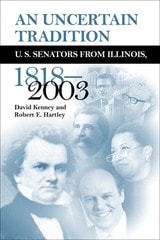
An Uncertain Tradition
David Kenney and Robert E. Hartley
Southern Illinois University Press, 2003
This sweeping survey constitutes the first comprehensive treatment of the forty-seven individuals—forty-six white males and one African American female—who have been chosen to represent Illinois in the United States Senate from 1818 to 2003. David Kenney and Robert E. Hartley underscore nearly two centuries of Illinois history with these biographical and political portraits, compiling an incomparably rich resource for students, scholars, teachers, journalists, historians, politicians, and any Illinoisan interested in the state’s heritage.
An Uncertain Tradition:U. S. Senators from Illinois, 1818–2003 is a fresh and careful study of the shifting set of political issues occurring over time and illuminated by the lives of participants in the politics of choice and service in the Senate. Kenney and Hartley plot the course of the state’s varied senatorial leadership, from the state’s founding and the appearance of political parties, through the Civil War and its aftermath, and into the diverse political climate of the twenty-first century. From the notorious to the heroic, the popular to the pioneering, the senatorial roster includes such luminaries as “The Little Giant” Stephen A. Douglas; Lyman Trumbull, who served three terms in the Civil War era; “Uncle Dick” and “Black Jack,” also known as Richard Oglesby and John A. Logan; the “Wizard of Ooze” Everett Dirksen; and modern leaders such as Adlai Stevenson III, Paul Simon, and Carol Moseley-Braun.
Kenney and Hartley offer incisive commentary on the quality of senate service in each case, as well as timeline graphs relating to the succession of individuals in each of the two sequences of service, the geographical distribution of senators within the state, and the variations in party voting for senate candidates. Rigorously documented and supremely readable, this convenient reference volume is enhanced by portraits of many of the senators.
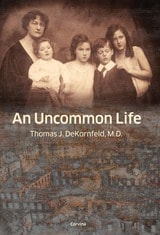
An Uncommon Life
Thomas J. DeKornfeld
Central European University Press, 2015
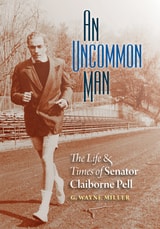
An Uncommon Man
The Life and Times of Senator Claiborne PellG. Wayne Miller
University Press of New England, 2011
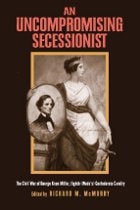
An Uncompromising Secessionist
The Civil War of George Knox Miller, Eighth (Wade's) Confederate CavalryGeorge Knox Miller, edited by Richard M. McMurry
University of Alabama Press, 2006
Offers significant insight into the life, heart, mind, and attitudes of an intelligent, educated, young mid-19th-century white Southerner
This book contains the letters of George Knox Miller who served as a line officer in the Confederate cavalry and participated in almost all of the major campaigns of the Army of Tennessee. He was, clearly, a very well-educated young man. Born in 1836 in Talladega, Alabama, he developed a great love for reading and the theater and set his sights upon getting an education that would lead to a career in law or medicine; meanwhile he worked as an apprentice in a painting firm to earn tuition. Miller then enrolled in the University of Virginia, where he excelled in his studies.
Eloquent, bordering on the lyrical, the letters provide riveting first-hand accounts of cavalry raids, the monotony of camp life, and the horror of battlefield carnage. Miller gives detailed descriptions of military uniforms, cavalry tactics, and prison conditions. He conveys a deep commitment to the Confederacy, but he was also critical of Confederate policies that he felt hindered the army's efforts. Dispersed among these war-related topics is the story of Miller's budding relationship with Celestine “Cellie” McCann, the love of his life, whom he would eventually marry.

An Unexpected Minority
White Kids in an Urban SchoolMorris, Edward
Rutgers University Press, 2005
In An Unexpected Minority, sociologist Edward Morris addresses these far-reaching questions by exploring attitudes about white identity in a Texas middle school composed predominantly of African Americans, Latinos, and Asians. Based on his ethnographic research, Morris argues that lower-income white students in urban schools do not necessarily maintain the sort of white privilege documented in other settings. Within the student body, African American students were more frequently the "cool" kids, and white students adopted elements of black culture-including dress, hairstyle, and language-to gain acceptance. Morris observes, however, that racial inequalities were not always reversed. Stereotypes that cast white students as better behaved and more academically gifted were often reinforced, even by African American teachers.
Providing a new and timely perspective to the significant role that non-whites play in the construction of attitudes about whiteness, this book takes an important step in advancing the discussion of racial inequality and its future in this country.
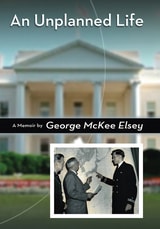
An Unplanned Life
A MemoirGeorge McKee Elsey
University of Missouri Press, 2005
Elsey’s duties continued with Harry Truman’s succession to the presidency. He decoded the famous message from Secretary of War Henry Stimson reporting the dropping of the atomic bomb on Hiroshima and carried it to President Truman. In 1947, he shed his Naval Reserve uniform and joined the White House’s civilian staff as assistant to the special counsel to the president. In 1949, he became administrative assistant to the president, and, in 1952, he became a member of the Mutual Security Agency staff. During those years, he grew very close to Harry Truman, and thus, a major portion of An Unplanned Life relates to his experiences then.
In the first postwar winter, Elsey was frequently the only staff member who accompanied President Truman on the USS Williamsburg. In September 1946, Elsey submitted a report to Truman on U.S.-Soviet relations, which came to be well known as the “Clifford-Elsey Report.” Providing Truman with notes for some two hundred of his “back-of-the-train” informal talks, Elsey played a part in the best remembered feature of the “Whistle-Stop Campaign” that resulted in “the political upset of the century.” In addition to his years at the White House, Elsey also touches on his post–White House years—his time in private industry, his months with Clark Clifford when Clifford was trying unsuccessfully to extricate America from Vietnam, and his long association with the American Red Cross.
An Unplanned Life is a fascinating look at the life of an extraordinary individual who played an important and unprecedented part in two different presidents’ decisions and affected the course of our nation. Anyone with an interest in history will find this memoir fascinating and invaluable.
An Unseen Unheard Minority
Asian American Students at the University of IllinoisSharon S. Lee
Rutgers University Press, 2022
Anaconda
Labor, Community, and Culture in Montana's Smelter CityLaurie Mercier
University of Illinois Press, 2001
Laurie Mercier's look at "community unionism" examines the distinctive culture of cooperation and activism fostered by residents in Anaconda, Montana, home to the world's largest copper smelter and the namesake of the Anaconda Copper Mining Company.
Mercier depicts the vibrant life of the smelter city at full steam, incorporating the candid commentary of the locals ("the company furnished three pair of leather gloves . . . and all the arsenic [dust] you could eat"). During five decades of devoted unionism, locals embraced an "alternative Americanism" that championed improved living standards for working people as the best defense against communism. Mercier also explores how gender limits on women's political, economic, and social roles shaped the nature and outcome of labor struggles, and traces how union rivalries, environmental concerns, and the 1980 closing of the Anaconda smelter transformed the town.
A fascinating portrait of how community molds working class consciousness, Anaconda offers important insights about the changing nature of working class culture and collective action.
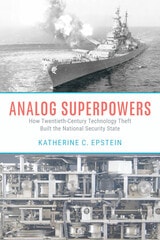
Analog Superpowers
How Twentieth-Century Technology Theft Built the National Security StateKatherine C. Epstein
University of Chicago Press, 2024
At the beginning of the twentieth century, two British inventors, Arthur Pollen and Harold Isherwood, became fascinated by a major military question: how to aim the big guns of battleships. These warships—of enormous geopolitical import before the advent of intercontinental missiles or drones—had to shoot in poor light and choppy seas at distant moving targets, conditions that impeded accurate gunfire. Seeing the need to account for a plethora of variables, Pollen and Isherwood built an integrated system for gathering data, calculating predictions, and transmitting the results to the gunners. At the heart of their invention was the most advanced analog computer of the day, a technological breakthrough that anticipated the famous Norden bombsight of World War II, the inertial guidance systems of nuclear missiles, and the networked “smart” systems that dominate combat today. Recognizing the value of Pollen and Isherwood’s invention, the British Royal Navy and the United States Navy pirated it, one after the other. When the inventors sued, both the British and US governments invoked secrecy, citing national security concerns.
Drawing on a wealth of archival evidence, Analog Superpowers analyzes these and related legal battles over naval technology, exploring how national defense tested the two countries’ commitment to individual rights and the free market. Katherine C. Epstein deftly sets out Pollen’s and Isherwood’s pioneering achievements, the patent questions raised, the geopolitical rivalry between Britain and the United States, and the legal precedents each country developed to control military tools built by private contractors.
Epstein’s account reveals that long before the US national security state sought to restrict information about atomic energy, it was already embroiled in another contest between innovation and secrecy. The America portrayed in this sweeping and accessible history isn’t yet a global hegemon but a rising superpower ready to acquire foreign technology by fair means or foul—much as it accuses China of doing today.
Analogical Thinking
Post-Enlightenment Understanding in Language, Collaboration, and InterpretationRonald Schleifer
University of Michigan Press, 2001
The book traces this mode of thinking in linguistics, collaborative intellectual work in the arts and sciences, and interpretations of literary and sacred texts, concluding with a reading of the concept of Enlightenment in a comparison of Descartes and Foucault. The book examines the poststructuralism of Derrida; the collaborations of information theory and modern science as opposed to the individualism of Adam Smith and others, and analogical interpretations of Yeats, Dinesen, the Bible, Dreiser, and Mailer. Its overall aim is to present an interdisciplinary examination of a particular kind of understanding that responds to the experiences of our time.
Ronald Schleifer is Professor of English, University of Oklahoma. His books include Rhetoric and Death: The Language of Modernism and Postmodern Discourse Theory, Criticism and Culture; and Culture and Cognition: The Boundaries of Literary and Scientific Inquiry.

Analyses in the Economics of Aging
Edited by David A. Wise
University of Chicago Press, 2005
The volume begins with a discussion of the risks and merits of 401(k) plans. Subsequent chapters present recent analysis of the growth of Medicare costs; the different aspects of disability; and the evolution of health, wealth, and living arrangements over the life course. Keeping with the global tradition of previous volumes, Analyses in the Economics of Aging also includes comparative studies on savings behavior in Italy, the Netherlands, and the United States; an examination of household savings among different age groups in Germany; and a chapter devoted to population aging and the plight of widows in India.
Carefully compiled and containing some of the most cutting-edge research and analysis available, this volume should be of interest to any specialist or policymaker concerned with ongoing changes in savings and retirement behaviors.
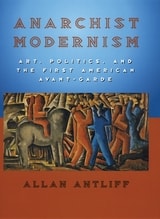
Anarchist Modernism
Art, Politics, and the First American Avant-GardeAllan Antliff
University of Chicago Press, 2001
By situating American art's evolution in the progressive politics of the time, Antliff offers a richly illustrated chronicle of the anarchist movement and also revives the creative agency of those who shaped and implemented modernism for radical ends.

Anatomy of a Massacre
The Destruction of Gnadenhutten, 1782Eric Sterner
Westholme Publishing, 2027
On March 8, 1782, a group of western settlers killed nearly one hundred unarmed and peaceful Indians who had converted to Christianity under the tutelage of missionaries from the Church of the United Brethren. The murders were cold-blooded and heartless; roughly two-thirds of those executed were women and children. Its brutality stunned Benjamin Franklin in far-away France. He wrote: “the abominable Murders committed by some of the frontier People on the poor Moravian Indians, has given me infinite Pain and Vexation. The Dispensations of Providence in this World puzzle my weak Reason. I cannot comprehend why cruel Men should have been permitted thus to destroy their Fellow Creatures.” Since that maelstrom of violence struck the small Indian village of Gnadenhutten, history has treated the episode as a simple morality tale. While there were ample incidents of good and evil on March 8, that summation does not explain what brought murderers and victims together on the banks of the Muskingum River in today’s Ohio. It was actually the culmination of a series of events among different Indian tribes, the British, Congressional authorities at Pittsburgh, the Pennsylvania militia, and key individuals, all of which are lost in contemporary explanations of the massacre.
Anatomy of a Massacre: The Destruction of Gnadenhutten, 1782 fills that void by examining the political maneuvering among white settlers, Continental officials, British officers, western Indian tribes, missionaries, and the Indians practicing Christianity that culminated in the massacre. Uniquely, it follows the developing story from each perspective, using first-person accounts from each group to understand how they saw and experienced the changes on the American frontier. Along the way it profiles some of the key individuals responsible for the way the war unfolded. It is a fresh look at an often mentioned, but seldom understood, episode in the American Revolution.

Ancient Chiefdoms of the Tombigbee
John H. Blitz
University of Alabama Press, 1993
Focuses on both the small- and large-scale Mississippian societies in the Tombigbee-Black Warrior River region of Alabama and Mississippi
Within the last 50 years archaeologists have discovered that around the 10th century AD, native southeastern peoples began a process of cultural change far more complex than anything that had occurred previously. These late prehistoric societies—known as Mississippian—have come to be regarded as chiefdoms. The chiefdoms are of great anthropological interest because in these kinds of societies social hierarchies or rank and status were first institutionalized.
Ancient Chiefdoms of the Tombigbee focuses on both the small- and large-scale Mississippian societies in the Tombigbee-Black Warrior River region of Alabama and Mississippi. Exploring the relationships involving polity size, degree of social ranking, and resource control provides insights into cycles of chiefdom development and fragmentation. Blitz concludes that the sanctified, security maintenance roles of communal food storage management and war leadership were a sufficient basis for formal chiefly authority but insufficient for economically based social stratification.
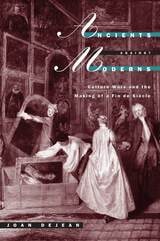
Ancients against Moderns
Culture Wars and the Making of a Fin de SiecleJoan DeJean
University of Chicago Press, 1996
DeJean brilliantly reassesses our current culture wars from the perspective of that earlier fin de siècle (the first to think of itself as such), and rereads the seventeenth-century Quarrel from the vantage of our own warring "ancients" and "moderns." In so doing, DeJean shows that a fin de siècle taking place in the shadow of culture wars can be more a source of constructive cultural revolution than of apocalyptic gloom and doom. Just as the first fin de siècle's battle of the books served as the spark that set off the Enlightenment, introducing radically new sexual and social politics that laid the groundwork for modernity, so can our current culture wars result in radical, liberating changes—if we take an active stand against our own "ancients" who seek to stifle such reforms.
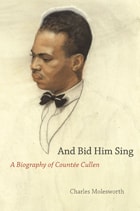
And Bid Him Sing
A Biography of Countée CullenCharles Molesworth
University of Chicago Press, 2012
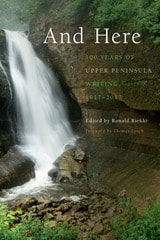
And Here
100 Years of Upper Peninsula Writing, 1917–2017Ronald Riekki
Michigan State University Press, 2017
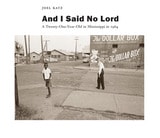
And I Said No Lord
A Twenty-One-Year-Old in Mississippi in 1964Joel Katz
University of Alabama Press, 2014
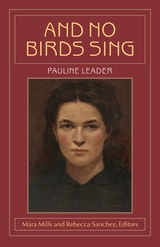
And No Birds Sing
Pauline Leader
Gallaudet University Press, 2016
This edition is accompanied by a new introduction and afterword that provide a scholarly framework for understanding Leader and her times. She persevered and became a published poet and novelist, often drawing on the experiences offered up here. Compelling and evocative, And No Birds Sing deftly reveals a complex, intelligent spirit toiling in a brutal world.
From the book:
I insisted to myself that I could still hear. I heard in my mind the sounds of streams as I passed them. I knew the sound the river made, that river that I had known always, the river by the marble house. In my mind the river washed with a low intimate sound. I had no need to hear as the people heard. True intimacy needs no ears. I knew the sound of birds; I heard them as they hopped about. I knew the sound of words also. It was words that I most intensely heard. I had not always the river and the birds—they appeared far away at times. I did not always want river and birds, but I always wanted words, and I always had them. I would have been terribly lonely without them. With them always in my mind, I could not be truly lonely. I played with them; I set them to music; I achieved endless variations with them. They were never weary, as other things could sometimes be weary.

And Other Neighborly Names
Social Process and Cultural Image in Texas FolkloreEdited by Richard Bauman and Roger D. Abrahams
University of Texas Press, 1981
"And Other Neighborly Names"—the title is from a study by Americo Paredes of the names, complimentary and otherwise, exchanged across cultural boundaries by Anglos and Mexicans—is a collection of essays devoted to various aspects of folk tradition in Texas. The approach builds on the work of the folklorists who have helped give the study of folklore in Texas such high standing in the field-Mody Boatright, J. Frank Dobie, John Mason Brewer, the Lomaxes, and of course Paredes himself, to whom this book is dedicated.
Focusing on the ways in which traditions arise and are maintained where diverse peoples come together, the editors and other essayists—John Holmes McDowell, Joe Graham, Alicia María González, Beverly J. Stoeltje, Archie Green, José E. Limón, Thomas A. Green, Rosan A. Jordan, Patrick B. Mullen, and Manuel H. Peña—examine conjunto music, the corrido, Gulf fishermen's stories, rodeo traditions, dog trading and dog-trading tales, Mexican bakers' lore, Austin's "cosmic cowboy" scene, and other fascinating aspects of folklore in Texas. Their emphasis is on the creative reaction to socially and culturally pluralistic situations, and in this they represent a distinctively Texan way of studying folklore, especially as illustrated in the performance-centered approach of Paredes, Boatright, and others who taught at the University of Texas at Austin. As an overview of this approach—its past, present, and future—"And Other Neighborly Names" makes a valuable contribution both to Texas folklore and to the discipline as a whole.
And Sadly Teach
Teacher Education and Professionalization in American CultureJurgen Herbst
University of Wisconsin Press, 1991
To lend weight to his charge that the public school teacher has been betrayed and gravity to his indictment of the educational establishment for that betrayal, Jurgen Herbst goes back to the beginnings of teacher education in America in the 1830s and traces its evolution up to the 1920s, by which time the essential damage had been done.
Initially, attempts were made to upgrade public school teaching to a genuine profession, but that ideal was gradually abandoned. In its stead, with the advent of newly emerging graduate schools of education in the early decades of the twentieth century, came the so-called professionalization of public education. At the expense of the training of elementary school teachers (mostly women), teacher educators shifted their attention to the turning out of educational "specialists" (mostly men)—administrators, faculty members at normal schools and teachers colleges, adult education teachers, and educational researchers.
Ultimately a history of the neglect of the American public school teacher, And Sadly Teach ends with a plea and a message that ring loud and clear. The plea: that the current reform proposals for American teacher education—the Carnegie and the Holmes reports—be heeded. The message: that the key to successful school reform lies in educating teacher’s true professionals and in acknowledging them as such in their classrooms.
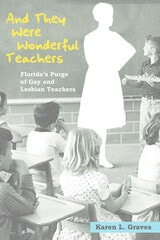
And They Were Wonderful Teachers
Florida's Purge of Gay and Lesbian TeachersKaren L. Graves
University of Illinois Press, 2008
Karen L. Graves details how teachers were targeted, interrogated, and stripped of their professional credentials, and she examines the extent to which these teachers resisted the invasion of their personal lives. She contrasts the experience of three groups--civil rights activists, gay and lesbian teachers, and University of South Florida personnel--called before the committee and looks at the range of response and resistance to the investigations. Based on archival research conducted on a recently opened series of Investigation Committee records in the State Archives of Florida, this work highlights the importance of sexuality in American and education history and argues that Florida's attempt to govern sexuality in schools implies that educators are distinctly positioned to transform dominant ideology in American society.

And a Time to Die
How American Hospitals Shape the End of LifeSharon R. Kaufman
University of Chicago Press, 2006
“An act of courage and a public service.”—San Francisco Chronicle
“This beautifully synthesized and disquieting account of how hospital patients die melds disciplined description with acute analysis, incorporating the voices of doctors, nurses, social workers, and patients in a provocative analysis of the modern American quest for a ‘good death.’”—Publishers Weekly
“Kaufman exposes the bureaucratic and ethical quandaries that hover over the modern deathbed.”—Psychology Today
“Kaufman’s analysis illuminates the complexity of the care of critically ill and dying patients [and] the ambiguity of slogans such as ‘death with dignity,’ ‘quality of life,’ and ‘stopping life support.’ . . . Thought-provoking reading for everyone contemplating the fate of us all.”—New England Journal of Medicine
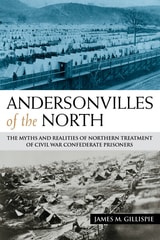
Andersonvilles of the North
The Myths and Realities of Northern Treatment of Civil War Confederate PrisonersJames M. Gillispie
University of North Texas Press, 2008

Andrew Jackson Donelson
Jacksonian and UnionistRichard Douglas Spence
Vanderbilt University Press, 2017
As his uncle's secretary, he weathered Old Hickory's tumultuous presidency, including the notorious "Petticoat War." Building his own political career, he served as US chargé d'affaires to the Republic of Texas, where he struggled against an enigmatic President Sam Houston, British and French intrigues, and the threat of war by Mexico, to achieve annexation. As minister to Prussia, Donelson enjoyed a ringside seat to the revolutions of 1848 and the first attempts at German unification. A firm Unionist in the mold of his uncle, Donelson denounced the secessionists at the Nashville Convention of 1850. He attempted as editor of the Washington Union to reunite the Democratic party, and, when he failed, he was nominated as Millard Fillmore's vice-presidential running mate on the Know-Nothing party ticket in 1856. He lived to see the Civil War wreck the Union he loved, devastate his farms, and take the lives of two of his sons.

André Michaux in North America
Journals and Letters, 1785–1797Translated from the French, Edited, and Annotated by Charlie Williams, Eliane M. Norman, and Walter Kingsley Taylor
University of Alabama Press, 2020
Tracing the roots of American botany through the journals of an eighteenth-century explorer.
Known to today’s biologists primarily as the “Michx.” at the end of more than 700 plant names, André Michaux was an intrepid French naturalist. Under the directive of King Louis XVI, he was commissioned to search out and grow new, rare, and never-before-described plant species and ship them back to his homeland in order to improve French forestry, agriculture, and horticulture. He made major botanical discoveries and published them in his two landmark books, Histoire des chênes de l’Amérique (1801), a compendium of all oak species recognized from eastern North America, and Flora Boreali-Americana (1803), the first account of all plants known in eastern North America.
Straddling the fields of documentary editing, history of the early republic, history of science, botany, and American studies, André Michaux in North America: Journals and Letters, 1785–1797 is the first complete English edition of Michaux’s American journals. This copiously annotated translation includes important excerpts from his little-known correspondence as well as a substantial introduction situating Michaux and his work in the larger scientific context of the day.
To carry out his mission, Michaux traveled from the Bahamas to Hudson Bay and west to the Mississippi River on nine separate journeys, all indicated on a finely rendered, color-coded map in this volume. His writings detail the many hardships—debilitating disease, robberies, dangerous wild animals, even shipwreck—that Michaux endured on the North American frontier and on his return home. But they also convey the soaring joys of exploration in a new world where nature still reigned supreme, a paradise of plants never before known to Western science. The thrill of discovery drove Michaux ever onward, even ultimately to his untimely death in 1802 on the remote island of Madagascar.

Andy Warhol'S Blow Job
Roy Grundmann
Temple University Press, 2003
Grundmann draws on discourses of art history, film theory, queer studies, and cultural studies to situate Warhol's work at the nexus of Pop art, portrait painting, avant-garde film, and mainstream cinema. His close textual analysis of the film probes into its ambiguities and the ways in which viewers respond to what is and what is not on screen. Presenting rarely reproduced Warhol art and previously unpublished Ed Wallowitch photographs along with now iconic publicity shots of James Dean, Grundmann establishes Blow Job as a consummate example of Warhol's highly insightful engagement with a broad range of representational codes of gender and sexuality.
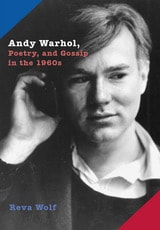
Andy Warhol, Poetry, and Gossip in the 1960s
Reva Wolf
University of Chicago Press, 1997
Wolf investigates the underground culture of poets, artists, and filmmakers who interacted with Warhol regularly. She claims that Warhol understood the literary imagination of his generation and that recognizing Warhol's literary activities is essential to understanding his art. Drawing on a wealth of unpublished material, including interviews, personal and public archives, tape recordings, documentary photographs, and works of art, Wolf offers dramatic evidence that Warhol's interactions with writers functioned like an extended conversation and details how this process impacted his work. This highly original and fascinating study gives us fresh insight into Warhol's art as practice and reformulates the myth that surrounds this popular American artist.

Andy Warhol, Publisher
Lucy Mulroney
University of Chicago Press, 2018
Journeying from the 1950s, when Warhol was starting to make his way through the New York advertising world, through the height of his career in the 1960s, to the last years of his life in the 1980s, Andy Warhol, Publisher unearths fresh archival material that reveals Warhol’s publications as complex projects involving a tantalizing cast of collaborators, shifting technologies, and a wide array of fervent readers.
Lucy Mulroney shows that whether Warhol was creating children’s books, his infamous “boy book” for gay readers, writing works for established houses like Grove Press and Random House, helping found Interview magazine, or compiling a compendium of photography that he worked on to his death, he readily used the elements of publishing to further and disseminate his art. Warhol not only highlighted the impressive variety in our printed culture but also demonstrated how publishing can cement an artistic legacy.
Anecdotal Theory
Jane Gallop
Duke University Press, 2002
Published during the 1990s, these essays are united through a common methodological engagement—writing that recounts a personal anecdote and then attempts to read that anecdote for the theoretical insights it affords. Gallop addresses many of the major questions of feminist theory, regularly revisiting not only ‘70s feminism, but also poststructuralism and the academy, for, as Gallop explains, the practice of anecdotal theory derives from psychoanalysis, deconstruction, and feminism. Whether addressing issues of pedagogy, the sexual position one occupies when on the academic job-market, bad-girl feminists, or the notion of sisterhood, these essays exemplify theory grappling with its own erotics, theory connected to the real. They are bold, illuminating, and—dare we say—fun.
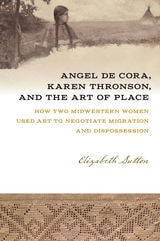
Angel De Cora, Karen Thronson, and the Art of Place
How Two Midwestern Women Used Art to Negotiate Migration and DispossessionElizabeth Sutton
University of Iowa Press, 2020
Angel De Cora (c. 1870–1919) was a Native Ho-Chunk artist who received relative acclaim during her lifetime. Karen Thronson (1850–1929) was a Norwegian settler housewife who created crafts and folk art in obscurity along with the other women of her small immigrant community. The immigration of Thronson and her family literally maps over the De Cora family’s forced migration across Wisconsin, Iowa, and onto the plains of Nebraska and Kansas. Tracing the parallel lives of these two women artists at the turn of the twentieth century, art historian Elizabeth Sutton reveals how their stories intersected and diverged in the American Midwest.
By examining the creations of these two artists, Sutton shows how each woman produced art or handicrafts that linked her new home to her homeland. Both women had to navigate and negotiate between asserting their authentic self and the expectations placed on them by others in their new locations. The result is a fascinating story of two women that speaks to universal themes of Native displacement, settler conquest, and the connection between art and place.
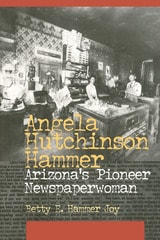
Angela Hutchinson Hammer
Arizona's Pioneer NewspaperwomanBetty E. Hammer Joy
University of Arizona Press, 2005
A true daughter of the West, Angela, born in a tiny mining hamlet in Nevada, came to the Territory of Arizona at the age of twelve. Betty Hammer Joy weaves together the lively story of her grandmother's life by drawing upon Angela's own prodigious writing and correspondence, newspaper archives, and the recollections of family members. Her book recounts the stories Angela told of growing up in mining camps, teaching in territorial schools, courtship, marriage, and a twenty-eight-year career in publishing and printing. During this time, Angela managed to raise three sons, run for public office before women in the nation had the right to vote, serve as Immigration Commissioner in Pinal County, homestead, and mature into an activist for populist agendas and water conservation. As questionable deals took place both within and outside the halls of government, the crusading Angela encountered many duplicitous characters who believed that women belonged at home darning socks, not running a newspaper.
Although Angela's independent papers brought personal hardship and little if any financial reward, after her death in 1952 the newspaper industry paid tribute to this courageous woman by selecting her as the first woman to enter the Arizona Newspaper Hall of Fame. In 1983 she was honored posthumously with another award for women who contributed to Arizona's progress—induction into the Arizona Women's Hall of Fame.
Angelhead
My Brother's Descent into MadnessGreg Bottoms
University of Chicago Press, 2005
A taut, powerful memoir of madness, Angelhead documents the violent, drug-addled descent of the author's brother, Michael, into schizophrenia. Beginning with Michael's first psychotic break—seeing God in his suburban bedroom window while high on LSD—Greg Bottoms recounts, in gripping, dramatic prose, the bizarre disappearances, suicide attempts, and the shocking crime that land Michael in the psychiatric wing of a maximum security prison. A work of nonfiction with the form and imagery of a novel, Angelhead enables the reader to witness not only the fragmenting of a mind, but of a family as well.
Angelina Grimke
Rhetoric, Identity, and the Radical ImaginationStephen H. Browne
Michigan State University Press, 1999
Abolitionist, women's rights activist, and social reformer, Angelina Grimké (1805-79) was among the first women in American history to seize the public stage in pursuit of radical social reform. "I will lift up my voice like a trumpet," she proclaimed, "and show this people their transgressions." And when she did lift her voice in public, on behalf of the public, she found that, in creating herself, she might transform the world. In the process, Grimké crossed the wires of race, gender, and power, and produced explosions that lit up the world of antebellum reform. Among the most remarkable features of Angelina Grimké's rhetorical career was her ability to stage public contests for the soul of America—bringing opposing ideas together to give them voice, depth, and range to create new and more compelling visions of social change.
Angelina Grimké: Rhetoric, Identity, and the Radical Imagination is the first full-length study to explore the rhetorical legacy of this most unusual advocate for human rights. Stephen Browne examines her epistolary and oratorical art and argues that rhetoric gave Grimké a means to fashion not only her message but her very identity as a moral force.
Angels in the American Theater
Patrons, Patronage, and PhilanthropyEdited by Robert A. Schanke
Southern Illinois University Press, 2007

Anger
The Struggle for Emotional Control in America's HistoryCarol Zisowitz Stearns and Peter N. Stearns
University of Chicago Press, 1986
Anglo-American Feminist Challenges to the Rhetorical Traditions
Virginia Woolf, Mary Daly, Adrienne RichKrista Ratcliffe
Southern Illinois University Press, 1996
Although women and men have different relationships to language and to each other, traditional theories of rhetoric do not foreground such gender differences. Krista Ratcliffe argues that because feminists generally have not conceptualized their language theories from the perspective of rhetoric and composition studies, rhetoric and composition scholars must construct feminist theories of rhetoric by employing a variety of interwoven strategies: recovering lost or marginalized texts; rereading traditional rhetoric texts; extrapolating rhetorical theories from such nonrhetoric texts as letters, diaries, essays, cookbooks, and other sources; and constructing their own theories of rhetoric.
Focusing on the third option, Ratcliffe explores ways in which the rhetorical theories of Virginia Woolf, Mary Daly, and Adrienne Rich may be extrapolated from their Anglo-American feminist texts through examination of the interrelationship between what these authors write and how they write. In other words, she extrapolates feminist theories of rhetoric from interwoven claims and textual strategies. By inviting Woolf, Daly, and Rich into the rhetorical traditions and by modeling the extrapolation strategy/methodology on their writings, Ratcliffe shows how feminist texts about women, language, and culture may be reread from the vantage point of rhetoric to construct feminist theories of rhetoric. She also outlines the pedagogical implications of these three feminist theories of rhetoric, thus contributing to ongoing discussions of feminist pedagogies.
Traditional rhetorical theories are gender-blind, ignoring the reality that women and men occupy different cultural spaces and that these spaces are further complicated by race and class, Ratcliffe explains. Arguing that issues such as who can talk, where one can talk, and how one can talk emerge in daily life but are often disregarded in rhetorical theories, Ratcliffe rereads Roland Barthes’ "The Old Rhetoric" to show the limitations of classical rhetorical theories for women and feminists. Discovering spaces for feminist theories of rhetoric in the rhetorical traditions, Ratcliffe invites readers not only to question how women have been located as a part of— and apart from—these traditions but also to explore the implications for rhetorical history, theory, and pedagogy.
Anglophilia
Deference, Devotion, and Antebellum AmericaElisa Tamarkin
University of Chicago Press, 2008
Anglos and Mexicans in the Making of Texas, 1836-1986
By David Montejano
University of Texas Press, 1987
Winner, Frederick Jackson Turner Award, Organization Of American Historians, 1988
American Historical Association, Pacific Branch Book Award, 1989
Texas Institute of Letters Friends Of The Dallas Public Library Award, 1987
Texas Historical Commission T. R. Fehrenbach Award, Best Ethnic, Minority, And Women's History Publication, 1987
Anguyiim Nalliini/Time of Warring
The History of Bow-and-Arrow Warfare in Southwest AlaskaAnn Fienup-Riordan and Alice Rearden
University of Alaska Press, 2016
The book is presented in bilingual format, with facing-page translations, and it will be hailed as a landmark work in the study of Alaska Native history and anthropology.

Animal Shenanigans
Rob Reid
American Library Association, 2015
Animal Traffic
Lively Capital in the Global Exotic Pet TradeRosemary-Claire Collard
Duke University Press, 2020

Animals Property & The Law
Gary Francione
Temple University Press, 1995
"Pain is pain, irrespective of the race, sex, or species of the victim," states William Kunstler in his foreword. This moral concern for the suffering of animals and their legal status is the basis for Gary L. Francione's profound book, which asks, Why has the law failed to protect animals from exploitation?
Francione argues that the current legal standard of animal welfare does not and cannot establish fights for animals. As long as they are viewed as property, animals will be subject to suffering for the social and economic benefit of human beings.
Exploring every facet of this heated issue, Francione discusses the history of the treatment of animals, anticruelty statutes, vivisection, the Federal Animal Welfare Act, and specific cases such as the controversial injury of anaesthetized baboons at the University of Pennsylvania. He thoroughly documents the paradoxical gap between our professed concern with humane treatment of animals and the overriding practice of abuse permitted by U.S. law.
Animate Literacies
Literature, Affect, and the Politics of HumanismNathan Snaza
Duke University Press, 2019
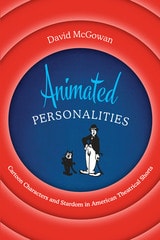
Animated Personalities
Cartoon Characters and Stardom in American Theatrical ShortsBy David McGowan
University of Texas Press, 2019
A CHOICE Outstanding Academic Title, 2019
Mickey Mouse, Betty Boop, Donald Duck, Bugs Bunny, Felix the Cat, and other beloved cartoon characters have entertained media audiences for almost a century, outliving the human stars who were once their contemporaries in studio-era Hollywood. In Animated Personalities, David McGowan asserts that iconic American theatrical short cartoon characters should be legitimately regarded as stars, equal to their live-action counterparts, not only because they have enjoyed long careers, but also because their star personas have been created and marketed in ways also used for cinematic celebrities.
Drawing on detailed archival research, McGowan analyzes how Hollywood studios constructed and manipulated the star personas of the animated characters they owned. He shows how cartoon actors frequently kept pace with their human counterparts, granting “interviews,” allowing “candid” photographs, endorsing products, and generally behaving as actual actors did—for example, Donald Duck served his country during World War II, and Mickey Mouse was even embroiled in scandal. Challenging the notion that studios needed actors with physical bodies and real off-screen lives to create stars, McGowan demonstrates that media texts have successfully articulated an off-screen existence for animated characters. Following cartoon stars from silent movies to contemporary film and television, this groundbreaking book broadens the scope of star studies to include animation, concluding with provocative questions about the nature of stardom in an age of digitally enhanced filmmaking technologies.