Results by title
28167 books match the query 'History' and 2536 start with a
Alliterative Proverbs in Medieval England
Language Choice and Literary MeaningSusan E. Deskis
The Ohio State University Press, 2016
The proverb has been an underutilized resource in tracing the linguistic and intellectual cultures of the past. Making the fullest use of this material, this study, by Susan E. Deskis, is complex in its combination of philology, paroemiology, literary history, and sociolinguistics, ultimately reaching conclusions that are enlightening for both the literary and linguistic histories of medieval England. In the language ecology of England from about 1100 to about 1500, where English, French, and Latin compete for use, alliterative proverbs are marked not only by the choice of English as the language of expression but also because alliteration in Middle English connotes a conscious connection to the past. Alliterative Proverbs in Medieval England: Language Choice and Literary Meaning explores how that connection is exploited in various literary genres from school texts and sermons to romances and cycle plays.
Allotment Stories
Indigenous Land Relations under Settler SiegeDaniel Heath Justice
University of Minnesota Press, 2021
More than two dozen stories of Indigenous resistance to the privatization and allotment of Indigenous lands
Land privatization has been a longstanding and ongoing settler colonial process separating Indigenous peoples from their traditional homelands, with devastating consequences. Allotment Stories delves into this conflict, creating a complex conversation out of narratives of Indigenous communities resisting allotment and other dispossessive land schemes.
From the use of homesteading by nineteenth-century Anishinaabe women to maintain their independence to the role that roads have played in expropriating Guam’s Indigenous heritage to the links between land loss and genocide in California, Allotment Stories collects more than two dozen chronicles of white imperialism and Indigenous resistance. Ranging from the historical to the contemporary and grappling with Indigenous land struggles around the globe, these narratives showcase both scholarly and creative forms of expression, constructing a multifaceted book of diverse disciplinary perspectives. Allotment Stories highlights how Indigenous peoples have consistently used creativity to sustain collective ties, kinship relations, and cultural commitments in the face of privatization. At once informing readers while provoking them toward further research into Indigenous resilience, this collection pieces back together some of what the forces of allotment have tried to tear apart.
Contributors: Jennifer Adese, U of Toronto Mississauga; Megan Baker, U of California, Los Angeles; William Bauer Jr., U of Nevada, Las Vegas; Christine Taitano DeLisle, U of Minnesota–Twin Cities; Vicente M. Diaz, U of Minnesota–Twin Cities; Sarah Biscarra Dilley, U of California, Davis; Marilyn Dumont, U of Alberta; Munir Fakher Eldin, Birzeit U, Palestine; Nick Estes, U of New Mexico; Pauliina Feodoroff; Susan E. Gray, Arizona State U; J. Kēhaulani Kauanui, Wesleyan U; Rauna Kuokkanen, U of Lapland and U of Toronto; Sheryl R. Lightfoot, U of British Columbia; Kelly McDonough, U of Texas at Austin; Ruby Hansen Murray; Tero Mustonen, U of Eastern Finland; Darren O’Toole, U of Ottawa; Shiri Pasternak, Ryerson U; Dione Payne, Te Whare Wānaka o Aoraki–Lincoln U; Joseph M. Pierce, Stony Brook U; Khal Schneider, California State U, Sacramento; Argelia Segovia Liga, Colegio de Michoacán; Leanne Betasamosake Simpson; Jameson R. Sweet, Rutgers U; Michael P. Taylor, Brigham Young U; Candessa Tehee, Northeastern State U; Benjamin Hugh Velaise, Google American Indian Network.
Alluvium and Empire
The Archaeology of Colonial Resettlement and Indigenous Persistence on Peru’s North CoastParker VanValkenburgh
University of Arizona Press, 2021
The volume draws on nearly ten years of field and archival research to craft a nuanced account of the Reducción General and its aftermath. Written at the intersections of history and archaeology, Alluvium and Empire at once bears witness to the violence of Spanish colonization and highlights Indigenous resilience in the aftermath of resettlement. In the process, VanValkenburgh critiques previous approaches to the study of empire and models a genealogical approach that attends to the open-ended—and often unpredictable—ways in which empires take shape.
Alma Mater
Design and Experience in the Women's Colleges from Their Nineteenth-Century Beginnings to the 1930sHelen Lefkowitz Horowitz
University of Massachusetts Press, 1993
An examination of the founding and development of the Seven Sisters colleges—Mount Holyoke, Vassar, Wellesley, Smith, Radcliffe, Bryn Mawr, and Barnard—Alma Mater focuses on the ideas behind their establishment and the colleges' architectural, academic, and social histories, as well as those of their twentieth-century successors—Sarah Lawrence, Bennington, and Scripps.
Alma Richards
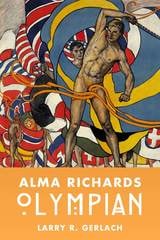
OlympianLarry R. Gerlach
University of Utah Press, 2016
The book traces Richards from his boyhood in rural Parowan, Utah, to Cornell and through his service as an officer in World War I and his teaching career in Los Angeles. His story is that of a remarkable athlete, but also that of a man struggling for personal fulfillment while endeavoring to retain his Mormon heritage amid his changing religious circumstances and participation. More than a century has passed since Alma Richards won an Olympic gold medal, yet this story about man and sport—the drive to excel, victory as validation of hard work, the quest for public recognition and, ultimately, the achievement of self-identity and self-satisfaction—still resonates today.

Almost Heaven
How Bobby Bowden's Ten Years at West Virginia University Helped Him Become One of the Winningest Coaches in College Football HistoryJohn Antonik
West Virginia University Press, 2025
Sports journalist John Antonik covers Bowden’s entire WVU tenure from 1966–75 and the circumstances, issues, difficulties, and obstacles that he had to overcome that were unique to this period in Mountaineer sports history. Additionally, Almost Heaven examines what transpired on WVU’s campus and in its athletic programs as well as nationally during the Vietnam War, campus protests, desegregation, and the complexities of the shifting NCAA landscape. Antonik paints a vivid picture of how Bowden’s time at WVU enriched him personally and professionally while putting athletics on a path toward the much greater successes that it enjoyed in the 1980s when Don Nehlen arrived. By the time he left Morgantown in the winter of 1976, following the Mountaineers’ 13–10 Peach Bowl victory over North Carolina State, which culminated in an outstanding 9–3 season, he was a far wiser and much better-prepared football coach. Those difficult lessons that Bowden learned at West Virginia led him down a path to greatness at Florida State.
Almost Heaven draws from an impressive array of primary sources, including newspaper articles; football team rosters; internal documents on recruiting; and interviews with former players, assistants, staffers, sports reporters, Bowden’s sons Tommy and Terry, and Bowden himself, prior to his passing in 2021. The year 2025 represents the 50th anniversary of his final season coaching the Mountaineers, and many of his players are now entering their golden years, making this the optimal time to tell this story.

Almost Nothing
Reclaiming Edith FarnsworthNora Wendl
University of Illinois Press, 2025
Nora Wendl’s audacious work of creative nonfiction explodes the sex-and-real-estate myth surrounding the Edith Farnsworth House and its two central figures. An eminent physician and woman of letters, Farnsworth left a rich trove of correspondence, memoirs, and photographs that Wendl uses to reconstruct her voice. Farnsworth’s memories and experiences alternate with Wendl’s thoughts on topics like misogyny and professional ambition to fashion a lyrical examination of love, loneliness, beauty, and the search for the divine.
Eloquent and confessional, Almost Nothing restores Edith Farnsworth to her place in architectural history and the masterpiece that bears her name.
Almost a Revolution
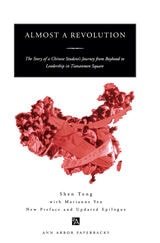
The Story of a Chinese Student's Journey from Boyhood to Leadership in Tiananmen SquareShen Tong
University of Michigan Press, 1998
Now nearly ten years later as our fascination with post-Deng China continues to develop, Shen's story and the updated material he provides are weighted with increasing significance. Coupled with much of the recent analysis, Shen's firsthand account vividly contextualizes the Chinese government's opposition to democracy and offers meaningful insight into a country that promises to occupy an increasingly prominent position in the world.
"A cause for celebration . . . an important contribution to China's newly discovered historical memory." --New York Times Book Review
Shen Tong is a doctoral student in political sociology at Boston University and the founder of the Democracy for China Fund, which aims to support and publicize dissent networks in China. Marianne Yen is a former New York correspondent for the Washington Post.
Aloha America
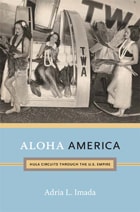
Hula Circuits through the U.S. EmpireAdria L. Imada
Duke University Press, 2012
At vaudeville theaters, international expositions, commercial nightclubs, and military bases, Hawaiian women acted as ambassadors of aloha, enabling Americans to imagine Hawai'i as feminine and benign, and the relation between colonizer and colonized as mutually desired. By the 1930s, Hawaiian culture, particularly its music and hula, had enormous promotional value. In the 1940s, thousands of U.S. soldiers and military personnel in Hawai'i were entertained by hula performances, many of which were filmed by military photographers. Yet, as Adria L. Imada shows, Hawaiians also used hula as a means of cultural survival and countercolonial political praxis. In Aloha America, Imada focuses on the years between the 1890s and the 1960s, examining little-known performances and films before turning to the present-day reappropriation of hula by the Hawaiian self-determination movement.
Aloha Betrayed
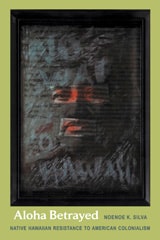
Native Hawaiian Resistance to American ColonialismNoenoe K. Silva
Duke University Press, 2004

Aloha Compadre
Latinxs in Hawai'iRudy P. Guevarra
Rutgers University Press, 2023
Aloha Compadre: Latinxs in Hawaiʻi is the first book to examine the collective history and contemporary experiences of the Latinx population of Hawaiʻi. This study reveals that contrary to popular discourse, Latinx migration to Hawaiʻi is not a recent event. In the national memory of the United States, for example, the Latinx population of Hawaiʻi is often portrayed as recent arrivals and not as long-term historical communities with a presence that precedes the formation of statehood itself. Historically speaking, Latinxs have been voyaging to the Hawaiian Islands for over one hundred and ninety years. From the early 1830s to the present, they continue to help shape Hawaiʻi’s history, yet their contributions are often overlooked. Latinxs have been a part of the cultural landscape of Hawaiʻi prior to annexation, territorial status, and statehood in 1959. Aloha Compadre also explores the expanding boundaries of Latinx migration beyond the western hemisphere and into Oceania.
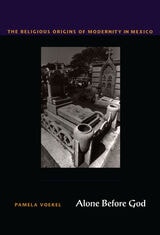
Alone Before God
The Religious Origins of Modernity in MexicoPamela Voekel
Duke University Press, 2002
Drawing on the archival research of wills, public documents, and other texts from late-colonial and early-republican Mexico, Voekel describes the marked scaling-down of the pomp and display that had characterized baroque Catholic burials and the various devices through which citizens sought to safeguard their souls in the afterlife. In lieu of these baroque practices, the new enlightened Catholics, claims Voekel, expressed a spiritually and hygienically motivated preference for extremely simple burial ceremonies, for burial outside the confines of the church building, and for leaving their earthly goods to charity. Claiming that these changes mirrored a larger shift from an external, corporate Catholicism to a more interior piety, she demonstrates how this new form of Catholicism helped to initiate a cultural and epistemic shift that placed the individual at the center of knowledge.
Breaking with the traditional historiography to argue that Mexican liberalism had deeply religious roots, Alone Before God will be of interest to specialists in Latin American history, modernity, and religion.
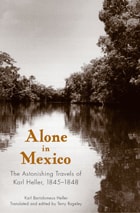
Alone in Mexico
The Astonishing Travels of Karl Heller, 1845–1848Karl Bartolomeus Heller, and translated and edited by Terry Rugeley
University of Alabama Press, 2007
This volume is the first-ever English translation of the memoirs of Karl Heller, a twenty-year-old aspiring Austrian botanist who traveled to Mexico in 1845 to collect specimens. He passed through the Caribbean, lived for a time in the mountains of Veracruz, and journeyed to Mexico City through the cities of Puebla and Cholula. After a brief residence in the capital, Heller moved westward to examine the volcanoes and silver mines near Toluca. When the United States invaded Mexico in 1846–47 conditions became chaotic, and the enterprising botanist was forced to flee to Yucatán. Heller lived in the port city of Campeche, but visited Mèrida, the ruins of Uxmal, and the remote southern area of the Champotòn River. From there Heller, traveling by canoe, journeyed through southern Tabasco and northern Chiapas and finally returned to Vienna through Cuba and the United States bringing back thousands of samples of Mexican plants and animals.
Heller's account is one of the few documents we have from travelers who visited Mexico in this period, and it is particularly useful in describing conditions outside the capital of Mexico City. In 1853 Heller published his German-language account as Reisen in Mexiko, but the work has remained virtually unknown to English or Spanish readers. This edition now provides a complete, annotated, and highly readable translation.
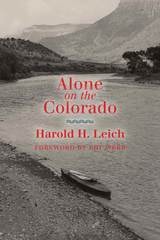
Alone on the Colorado
Harold H. Leich
University of Utah Press, 2019
Alone on the Colorado takes readers on the adventure of running rivers and riding the rails, while painting a unique and optimistic portrait of Depression-era America.
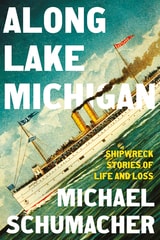
Along Lake Michigan
Shipwreck Stories of Life and LossMichael Schumacher
University of Minnesota Press, 2025
Notable shipwrecks of Lake Michigan throughout a century of enterprise, industry, heroism, and disaster on the Great Lakes
The Great Lakes are graveyards of a vast number of shipwrecks (30,000 by some estimates), and Lake Michigan has more than the other four lakes combined. The stories of those wrecks tell the history of that mighty lake in its endless, mercurial challenge to human endeavor.
Surveying the wreckage throughout the decades, from the fiery end of the twin propeller–driven Phoenix in 1847 to the failure of the Anna Minch to outrun the infamous 1940 Armistice Day storm, Michael Schumacher charts the course of shipping disasters great and small on Lake Michigan. He illuminates the details of maritime weather and shipcraft, the lives devoted to and lost on the water, and the mistakes and monumental failures that led to these ships’ watery ends.
Schumacher’s deft storytelling, drawing from deep research and comprehensive knowledge, brings forth the vivid details of the last minutes of these doomed ships, along with the circumstances surrounding their voyages. Here are tragic tales like that of the Eastland, the deadliest shipwreck in Great Lakes history, lost while docked in the Chicago River; the Rouse Simmons, a wooden schooner loaded with Christmas trees; the train ferry Milwaukee and the Wisconsin, a package freighter, gone within one week of each other in October 1929; and the passenger vessel the Lady Elgin, a devastating loss met with incredible heroism.
Liberally illustrated with historical photographs, the stories of these shipwrecks, spanning a full century of commercial traffic on Lake Michigan, document the myriad forms of bravery and misfortune that mark our encounters with the Great Lakes.
Along Navajo Trails
Recollections of a Trader 1898-1948Will Evans edited by Susan E. Woods and Robert McPherson
Utah State University Press, 2005
Along Ukraine's River
A Social and Environmental History of the DniproRoman Adrian Cybriwsky
Central European University Press, 2018
The River Dnipro (formerly better known by the Russian name of Dnieper) is intimately linked to the history and identity of Ukraine. Cybriwsky discusses the history of the river, from when it was formed and its many uses and modifications by human agencies from ancient times to the present.
From key vantage points along the river’s course—its source in western Russia, through Belarus and Ukraine, to the Black Sea—interesting stories shed light on past and present life in Ukraine. Scenes set along the river from Russian and Ukrainian literature are evoked, as well as musical compositions and works of art. Topics include the legacy of the region’s cultural ancestors as the Kyivan Rus, the period of Cossack dominion, the epic battles for the river’s bridges in World War II, the building of dams and huge reservoirs by the Soviet Union, and the crisis of Chornobyl (Chernobyl). The author argues that the Dnipro and the farmlands along it are Ukraine’s chief natural resources, and that the country's future depends on putting both to good use.
Written without academic pretence in an informal style with dashes of humor, Along Ukraine's River is illustrated with original line drawings, maps, and photographs.
Along the Ramparts of the Tetons
The Saga of Jackson Hole, WyomingRobert B. Betts
University Press of Colorado, 1991
In these pages, the reader will witness the dramatic creation of the Tetons; the arrival of the first humans, bands of fur-clad Early Hunters who ventured into the valley some 10,000 years ago; the coming and going of the later Indian tribes; and the nearly incredible journey of John Colter, who back in 1807 is said to have been the first white man to have found his way through the wilderness and into Jackson Hole.
Here, too, the reader will meet the boisterous mountain men, trappers such as Jim Bridger and the former slave, Jim Beckwourth, who roamed the Rockies when St. Louis was still a frontier village; a little Mormon boy who ran away from home and lived with the Indians before becoming a Pony Express rider; a most unusual Englishman who describes a terrible tragedy that befell his Indian wife and half-breed children; a glory-seeking lieutenant who led six cavalrymen on a foolhardy expedition that almost cost them their lives; and a nineteenth-century president of the United States who took a pack trip through Jackson Hole, allegedly leaving a trail of empty bottles behind.
And there is more, much more--the story of the pioneers, those hardy few who dared to settle in this high and inhospitable land; the story of outlaws, a shoot-out, vigilance committees and an Indian "massacre" that embarrassed the New York Times; the story of the deliverance of the world's largest elk herd from the many perils that threatened it with extinction; and, finally, the story of the long and angry controversy over the preservation of the Tetons and Jackson Hole as a national park, a struggle called "one of the most remarkable conservation fights of the twentieth century."
All these and still other episodes in the long and colorful cavalcade of Jackson Hole are woven together to form a work of Western Americana rich in anecdotes and portraits of delightfully eccentric characters.
Along the Streets of Bronzeville
Black Chicago's Literary LandscapeElizabeth Schroeder Schlabach
University of Illinois Press, 2017
In this significant recovery project, Elizabeth Schroeder Schlabach investigates the institutions and streetscapes of Black Chicago that fueled an entire literary and artistic movement. She argues that African American authors and artists--such as Gwendolyn Brooks, Richard Wright, Langston Hughes, painter Archibald Motley, and many others--viewed and presented black reality from a specific geographic vantage point: the view along the streets of Bronzeville. Schlabach explores how the particular rhythms and scenes of daily life in Bronzeville locations, such as the State Street "Stroll" district or the bustling intersection of 47th Street and South Parkway, figured into the creative works and experiences of the artists and writers of the Black Chicago Renaissance. She also covers in detail the South Side Community Art Center and the South Side Writers' Group, two institutions of art and literature that engendered a unique aesthetic consciousness and political ideology for which the Black Chicago Renaissance would garner much fame.
Life in Bronzeville also involved economic hardship and social injustice, themes that resonated throughout the flourishing arts scene. Schlabach explores Bronzeville's harsh living conditions, exemplified in the cramped one-bedroom kitchenette apartments that housed many of the migrants drawn to the city's promises of opportunity and freedom. Many struggled with the precariousness of urban life, and Schlabach shows how the once vibrant neighborhood eventually succumbed to the pressures of segregation and economic disparity. Providing a virtual tour South Side African American urban life at street level, Along the Streets of Bronzeville charts the complex interplay and intersection of race, geography, and cultural criticism during the Black Chicago Renaissance's rise and fall.
Altarity
Mark C. Taylor
University of Chicago Press, 1987
In Altarity, Taylor develops a genealogy of otherness and difference that is based on the principle of creative juxtaposition. Rather than relying on a historical or chronological survey of crucial moments in modern philosophical thinking, he explores the complex question of difference through the strategies of contrast, resonance, and design. Taylor brings together the work of thinkers as diverse as Hegel, Heidegger, Merleau-Ponty, Lacan, Bataille, Kristeva, Levinas, Blanchot, Derrida, and Kierkegaard to fashion a broad intellectual scheme.
Situated in an interdisciplinary discourse, Altarity signifies a harnessing of continental and American habits of intellectual thought and illustrates the singularity that emerges from such a configuration. As such, the book functions as a mirror of our intellectual moment and offers the academy a rigorous way of acknowledging the limitations of its own interpretive practices.
Alter-Nations
Nationalisms, Terror, and the State in Nineteenth-Century Britain and IrelandAmy E. Martin
The Ohio State University Press, 2012
Altered Pasts
Counterfactuals in HistoryRichard J. Evans
Brandeis University Press, 2014
Altered Reading
Levinas and LiteratureJill Robbins
University of Chicago Press, 1999
With an attitude at once respectful and interrogative, closely attentive to Levinas's texts while in dialogue with readings by Derrida, Blanchot, and Bataille, Altered Reading shows how the thread of the literary leads directly to the internal tensions of Levinas's ethical discourse. Jill Robbins provides a comprehensive critical account of Levinas's early and mature philosophy as well as later key transitional essays. In an invaluable appendix, she includes her own translation of an important, previously untranslated essay by Bataille on Levinas.
Altered Reading will interest philosophers, literary critics, scholars of religion, and others drawn to Levinas's work.
Altering American Consciousness
The History of Alcohol and Drug Use in the United States, 1800-2000Sarah W. Tracy
University of Massachusetts Press, 2004
Virtually every American alive has at some point consumed at least one, and very likely more, consciousness altering drug. Even those who actively eschew alcohol, tobacco, and coffee cannot easily avoid the full range of psychoactive substances pervading the culture. With many children now taking Ritalin for Attention Deficit Hyperactivity Disorder, professional athletes relying on androstenidione to bulk up, and the chronically depressed resorting to selective serotonin reuptake inhibitors such as Prozac, the early twenty-first century appears no less rife with drugs than previous periods.
Yet, if the use of drugs is a constant in American history, the way they have been perceived has varied extensively. Just as the corrupting cigarettes of the early twentieth century ("coffin nails" to contemporaries) became the glamorous accessory of Hollywood stars and American GIs in the 1940s, only to fall into public disfavor later as an unhealthy and irresponsible habit, the social significance of every drug changes over time.
The essays in this volume explore these changes, showing how the identity of any psychoactive substance—from alcohol and nicotine to cocaine and heroin—owes as much to its users, their patterns of use, and the cultural context in which the drug is taken, as it owes to the drug's documented physiological effects. Rather than seeing licit drugs and illicit drugs, recreational drugs and medicinal drugs, “hard” drugs and “soft” drugs as mutually exclusive categories, the book challenges readers to consider the ways in which drugs have shifted historically from one category to another.
In addition to the editors, contributors include Jim Baumohl, Allan M. Brandt, Katherine Chavigny, Timothy Hickman, Peter Mancall, Michelle McClellan, Steven J. Novak, Ron Roizen, Lori Rotskoff, Susan L. Speaker, Nicholas Weiss, and William White.

Alternative Maternities
Bodies, Death, and Argentine Citizenship Since 1820Madison Felman-Panagotacos
Rutgers University Press, 2026
Alternative Maternities: Bodies, Death, and Argentine Citizenship Since 1820 interrogates the intimate and symbolic relationship between maternity and nationhood in Argentina through the lens of post-mortem maternal bodies. This interdisciplinary study brings together literary analysis, archival research, visual culture, and political history to examine how cultural productions deploy the image of the dead mother to define — and challenge — the boundaries of Argentine citizenship, especially for women, trans/travesti individuals, and those of Indigenous heritage. It focuses on the 200-year period between independence in 1820, when Argentine identity began to be defined, until the legalization of abortion at the end of 2020, which codified the right to non-maternity.
By tracing hagiographic and sacrificial depictions of figures like La Difunta Correa and Eva Perón across poetry, literature, visual art, and contemporary protest culture, the book reveals how narratives of Republican Motherhood continue to structure political and social belonging. Ultimately, this work shows how contemporary artists and authors are reconfiguring these maternal myths to queer, expand, and decolonize national identity.
Alternatives to Assimilation
The Response of Reform Judaism to American Culture, 1840–1930Alan Silverstein
Brandeis University Press, 1995
Alternatives to Democracy in Twentieth-Century Europe
Collectivist Visions of ModernitySabrina P. Ramet
Central European University Press, 2019

Althusser and Feminism
Alison Assiter
Pluto Press, 1990
Alutiiq Villages under Russian and U.S. Rule
Sonja Luehrmann
University of Alaska Press, 2009
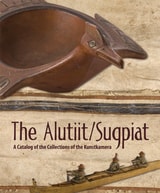
Alutiit/Sugpiat
A Catalog of the Collections of the KunstkameraEdited by Yuri E. Berezkin
University of Alaska Press, 2012
This beautifully photographed book catalogs the collection of nearly five hundred Alutiiq cultural items held by the Peter the Great Museum of Anthropology and Ethnography, or the Kunstkamera, in St. Petersburg, Russia. Gathered between 1780 and 1867, many of the artifacts are composed of fur, feathers, gut, hair, and other delicate materials, which prevent their transport for display or study.
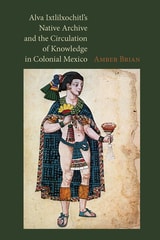
Alva Ixtlilxochitl's Native Archive and the Circulation of Knowledge in Colonial Mexico
Amber Brian
Vanderbilt University Press, 2016
Born between 1568 and 1580, Alva Ixtlilxochitl was a direct descendant of Ixtlilxochitl I and Ixtlilxochitl II, who had been rulers of Texcoco, one of the major city-states in pre-Conquest Mesoamerica. After a distinguished education and introduction into the life of the empire of New Spain in Mexico, Ixtlilxochitl was employed by the viceroy to write histories of the indigenous peoples in Mexico. Engaging with this history and delving deep into the resultant archives of this life's work, Amber Brian addresses the question of how knowledge and history came to be crafted in this era.
Brian takes the reader through not only the history of the archives itself, but explores how its inheritors played as crucial a role in shaping this indigenous history as the author. The archive helped inspire an emerging nationalism at a crucial juncture in Latin American history, as Creoles and indigenous peoples appropriated the history to give rise to a belief in Mexican exceptionalism. This belief, ultimately, shaped the modern state and impacted the course of history in the Americas. Without the work of Ixtlilxochitl, that history would look very different today.

Always Leading, Forever Valiant
Stories of the University of Michigan, 1817–2017Edited by Kim Clarke
University of Michigan Press, 2017
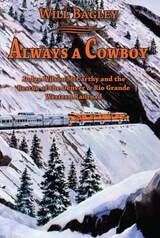
Always a Cowboy
Judge Wilson McCarthy and the Rescue of the Denver & Rio Grande Western RailroadWill Bagley
Utah State University Press, 2008
Cowboy, judge, federal official, then business executive, Wilson McCarthy mirrored change and growth in the twentieth-century West. Leading the Denver & Rio Grande back from the brink saved a vital link in the national transportation system. The D&RGW ran over and through the scenic Rockies, developing mineral resources, fighting corporate wars, and helping build communities. The Depression brought it to its knees. Accepting federal assignment to save the line, McCarthy turned it into a paragon of mid-century railroading, represented by the streamlined, Vista-Domed California Zephyr, although success hauling freight was of more economic importance. Prior to that, McCarthy’s life had taken him from driving livestock in Canada to trying to drive the national economy as a director of the Reconstruction Finance Corporation, the first line of federal attack on the Depression. Always a Cowboy positions McCarthy’s story in a rich historical panorama..
Will Bagley is the author of Blood of the Prophets: Brigham Young and the Massacre at Mountain Meadows
Always for the Underdog
Leather Britches Smith and the Grabow WarKeagan LeJeune
University of North Texas Press, 2010
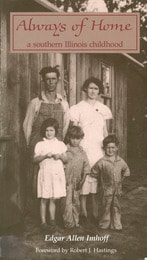
Always of Home
A Southern Illinois ChildhoodEdgar Allen Imhoff. Foreword by Robert J. Hastings
Southern Illinois University Press, 1992
Edgar Allen Imhoff renders a series of touching, colorful vignettes about growing up in southern Illinois during the Great Depression. He writes poignantly of his family and their struggles (including his father’s exhausting but successful effort at self-education) as he revisits his early childhood years in the country and his eventual move to the town of Murphysboro, where he encountered school bullies, outstanding teachers, first love, World War II, and adolescence.
Imhoff contrasts these memories of his youth with events, incidents, and thoughts from his more recent past. While writing a government check with six figures to the left of the decimal, he remembers how his mother once scrounged together thirty cents so Imhoff and his brother and sister could go to the circus with their classmates. Listening to President Carter give a speech in the Rose Garden reminds him of the contrasting elocutionary style of the Reverend William Boatman, the pastor at his country church, which was built by Imhoff’s great-great-grandfather and others.
Through such contrasts, Imhoff not only paints a loving picture of his past, he also comments on the alienation and emptiness that mark many lives in the United States, especially those of modern nomads. Imhoff has himself become a nomad, living far from the land of his birth, enjoying a successful and rewarding career. Yet he is drawn repeatedly to his past, his family, his childhood home, and the intricate combination of events, attitudes, values, and loyalties that influenced and molded him.
Am I That Name
Feminism And The Category Of Women In HistoryDenise Riley
University of Minnesota Press, 2003
Writing about changes in the notion of womanhood, Denise Riley examines, in the manner of Foucault, shifting historical constructions of the category of “women” in relation to other categories central to concepts of personhood: the soul, the mind, the body, nature, the social.
Feminist movements, Riley argues, have had no choice but to play out this indeterminacy of women. This is made plain in their oscillations, since the 1790s, between concepts of equality and of difference. To fully recognize the ambiguity of the category of “women” is, she contends, a necessary condition for an effective feminist political philosophy.
Amakomiti
Grassroots Democracy in South African Shack SettlementsTrevor Ngwane
Pluto Press, 2021
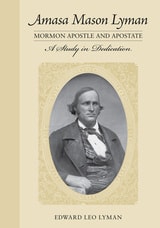
Amasa Mason Lyman, Mormon Apostle and Apostate
A Study in DedicationEdward Leo Lyman
University of Utah Press, 2009
Having spent more than thirty years in the service of his church, Lyman began to move away from its teachings after a series of conflicts with its second leader, Brigham Young. Lyman was one of the first Mormons to criticize the Mountain Meadows Massacre, which led to his dismissal as an apostle. He was excommunicated in 1870 and became one of the foremost spokesmen of the Godbeite Church of Zion movement before his death in 1877. Author Edward Leo Lyman chronicles Amasa Lyman’s life and interactions with Mormon history with an honesty true to his ancestor’s freethinking spirit.
Winner of the Francis Armstrong Madsen Best Utah History Book Award from the Utah Division of State History.

Amateurs, Photography, and the Mid-Victorian Imagination
Grace Seiberling
University of Chicago Press, 1986
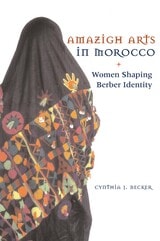
Amazigh Arts in Morocco
Women Shaping Berber IdentityBy Cynthia Becker
University of Texas Press, 2006
In southeastern Morocco, around the oasis of Tafilalet, the Ait Khabbash people weave brightly colored carpets, embroider indigo head coverings, paint their faces with saffron, and wear ornate jewelry. Their extraordinarily detailed arts are rich in cultural symbolism; they are always breathtakingly beautiful—and they are typically made by women. Like other Amazigh (Berber) groups (but in contrast to the Arab societies of North Africa), the Ait Khabbash have entrusted their artistic responsibilities to women. Cynthia Becker spent years in Morocco living among these women and, through family connections and female fellowship, achieved unprecedented access to the artistic rituals of the Ait Khabbash. The result is more than a stunning examination of the arts themselves, it is also an illumination of women's roles in Islamic North Africa and the many ways in which women negotiate complex social and religious issues.
One of the reasons Amazigh women are artists is that the arts are expressions of ethnic identity, and it follows that the guardians of Amazigh identity ought to be those who literally ensure its continuation from generation to generation, the Amazigh women. Not surprisingly, the arts are visual expressions of womanhood, and fertility symbols are prevalent. Controlling the visual symbols of Amazigh identity has given these women power and prestige. Their clothing, tattoos, and jewelry are public identity statements; such public artistic expressions contrast with the stereotype that women in the Islamic world are secluded and veiled. But their role as public identity symbols can also be restrictive, and history (French colonialism, the subsequent rise of an Arab-dominated government in Morocco, and the recent emergence of a transnational Berber movement) has forced Ait Khabbash women to adapt their arts as their people adapt to the contemporary world. By framing Amazigh arts with historical and cultural context, Cynthia Becker allows the reader to see the full measure of these fascinating artworks.

Amazigh Politics in the Wake of the Arab Spring
Bruce Maddy-Weitzman
University of Texas Press, 2022
On television, the Arab Spring took place in Cairo, Tunis, and the city-states of the Persian Gulf. Yet the drama of 2010, and the decade of subsequent activism, extended beyond the cities—indeed, beyond Arabs. Bruce Maddy-Weitzman brings to light the sustained post–Arab Spring political movement of North Africa’s Amazigh people.
The Amazigh movement did not begin with the Arab Spring, but it has changed significantly since then. Amazigh Politics in the Wake of the Arab Spring details the increasingly material goals of Amazigh activism, as protest has shifted from the arena of ethnocultural recognition to that of legal and socioeconomic equality. Amazigh communities responded to the struggles for freedom around them by pressing territorial and constitutional claims while rejecting official discrimination and neglect. Arab activists, steeped in postcolonial nationalism and protective of their hegemonic position, largely refused their support, yet flailing regimes were forced to respond to sharpening Amazigh demands or else jeopardize their threadbare legitimacy. Today the Amazigh question looms larger than ever, as North African governments find they can no longer ignore the movement’s interests.
Amazon Town TV
An Audience Ethnography in Gurupá, BrazilBy Richard Pace and Brian P. Hinote
University of Texas Press, 2013
In 1983, anthropologist Richard Pace began his fieldwork in the Amazonian community of Gurupá one year after the first few television sets arrived. On a nightly basis, as the community’s electricity was turned on, he observed crowds of people lining up outside open windows or doors of the few homes possessing TV sets, intent on catching a glimpse of this fascinating novelty. Stoic, mute, and completely absorbed, they stood for hours contemplating every message and image presented. So begins the cultural turning point that is the basis of Amazon Town TV, a rich analysis of Gurupá in the decades during and following the spread of television.
Pace worked with sociologist Brian Hinote to explore the sociocultural implications of television’s introduction in this community long isolated by geographic and communication barriers. They explore how viewers change their daily routines to watch the medium; how viewers accept, miss, ignore, negotiate, and resist media messages; and how television’s influence works within the local cultural context to modify social identities, consumption patterns, and worldviews.
Amazonian Indians from Prehistory to the Present
Anthropological PerspectivesAnna Roosevelt
University of Arizona Press, 1994
CONTENTS
Amazonian Anthropology: Strategy for a New Synthesis, Anna C. Roosevelt
The Ancient Amerindian Polities of the Amazon, Orinoco and Atlantic Coast: A Preliminary Analysis of Their Passage from Antiquity to Extinction, Neil Lancelot Whitehead
The Impact of Conquest on Contemporary Indigenous Peoples of the Guiana Shield: The System of Orinoco Regional Interdependence, Nelly Arvelo-Jiménez and Horacio Biord
Social Organization and Political Power in the Amazon Floodplain: The Ethnohistorical Sources, Antonio Porro
The Evidence for the Nature of the Process of Indigenous Deculturation and Destabilization in the Amazon Region in the Last 300 Years: Preliminary Data, Adélia Engrácia de Oliveira
Health and Demography of Native Amazonians: Historical Perspective and Current Status, Warren M. Hern
Diet and Nutritional Status of Amazonian Peoples, Darna L. Dufour
Hunting and Fishing in Amazonia: Hold the Answers, What are the Questions?, Stephen Beckerman
Homeostasis as a Cultural System: The Jivaro Case, Philippe Descola
Farming, Feuding, and Female Status: The Achuara Case, Pita Kelekna
Subsistence Strategy, Social Organization, and Warfare in Central Brazil in the Context of European Penetration, Nancy M. Flowers
Environmental and Social Implications of Pre- and Post-Contact Situations on Brazilian Indians: The Kayapo and a New Amazonian Synthesis, Darrell Addison Posey
Beyond Resistance: A Comparative Study of Utopian Renewal in Amazonia, Michael F. Brown
The Eastern Bororo Seen from an Archaeological Perspective, Irmhilde Wüst
Genetic Relatedness and Language Distributions in Amazonia, Harriet E. Manelis Klein
Language, Culture, and Environment: Tup¡-Guaran¡ Plant Names Over Time, William Balée and Denny Moore
Becoming Indian: The Politics of Tukanoan Ethnicity, Jean E. Jackson

Amazons of the Huk Rebellion
Gender, Sex, and Revolution in the PhilippinesVina A. Lanzona
University of Wisconsin Press, 2009
Drawing on interviews with over one hundred veterans of the movement, Vina A. Lanzona explores the Huk rebellion from the intimate and collective experiences of its female participants, demonstrating how their presence, and the complex questions of gender, family, and sexuality they provoked, ultimately shaped the nature of the revolutionary struggle.
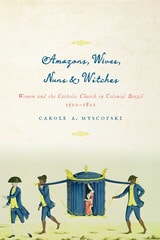
Amazons, Wives, Nuns, and Witches
Women and the Catholic Church in Colonial Brazil, 1500-1822By Carole A. Myscofski
University of Texas Press, 2013
The Roman Catholic church played a dominant role in colonial Brazil, so that women’s lives in the colony were shaped and constrained by the Church’s ideals for pure women, as well as by parallel concepts in the Iberian honor code for women. Records left by Jesuit missionaries, Roman Catholic church officials, and Portuguese Inquisitors make clear that women’s daily lives and their opportunities for marriage, education, and religious practice were sharply circumscribed throughout the colonial period. Yet these same documents also provide evocative glimpses of the religious beliefs and practices that were especially cherished or independently developed by women for their own use, constituting a separate world for wives, mothers, concubines, nuns, and witches.
Drawing on extensive original research in primary manuscript and printed sources from Brazilian libraries and archives, as well as secondary Brazilian historical works, Carole Myscofski proposes to write Brazilian women back into history, to understand how they lived their lives within the society created by the Portuguese imperial government and Luso-Catholic ecclesiastical institutions. Myscofski offers detailed explorations of the Catholic colonial views of the ideal woman, the patterns in women’s education, the religious views on marriage and sexuality, the history of women’s convents and retreat houses, and the development of magical practices among women in that era. One of the few wide-ranging histories of women in colonial Latin America, this book makes a crucial contribution to our knowledge of the early modern Atlantic World.
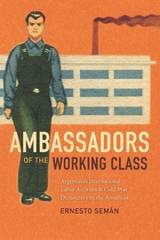
Ambassadors of the Working Class
Argentina's International Labor Activists and Cold War Democracy in the AmericasErnesto Semán
Duke University Press, 2017

Amber Waves
The Extraordinary Biography of Wheat, from Wild Grass to World MegacropCatherine Zabinski
University of Chicago Press, 2020
At breakfast tables and bakeries, we take for granted a grain that has made human civilization possible, a cereal whose humble origins belie its world-shaping power: wheat. Amber Waves tells the story of a group of grass species that first grew in scattered stands in the foothills of the Middle East until our ancestors discovered their value as a source of food. Over thousands of years, we moved their seeds to all but the polar regions of Earth, slowly cultivating what we now know as wheat, and in the process creating a world of cuisines that uses wheat seeds as a staple food. Wheat spread across the globe, but as ecologist Catherine Zabinski shows us, a biography of wheat is not only the story of how plants ensure their own success: from the earliest bread to the most mouthwatering pasta, it is also a story of human ingenuity in producing enough food for ourselves and our communities.
Since the first harvest of the ancient grain, we have perfected our farming systems to grow massive quantities of food, producing one of our species’ global mega crops—but at a great cost to ecological systems. And despite our vast capacity to grow food, we face problems with undernourishment both close to home and around the world. Weaving together history, evolution, and ecology, Zabinski’s tale explores much more than the wild roots and rise of a now-ubiquitous grain: it illuminates our complex relationship with our crops, both how we have transformed the plant species we use as food, and how our society—our culture—has changed in response to the need to secure food sources. From the origins of agriculture to gluten sensitivities, from our first selection of the largest seeds from wheat’s wild progenitors to the sequencing of the wheat genome and genetic engineering, Amber Waves sheds new light on how we grow the food that sustains so much human life.
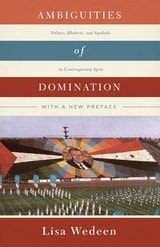
Ambiguities of Domination
Politics, Rhetoric, and Symbols in Contemporary SyriaLisa Wedeen
University of Chicago Press, 2015
Wedeen shows how such flagrantly fictitious claims were able to produce a politics of public dissimulation in which citizens acted as if they revered the leader. By inundating daily life with tired symbolism, the regime exercised a subtle, yet effective form of power. The cult worked to enforce obedience, induce complicity, isolate Syrians from one another, and set guidelines for public speech and behavior. Wedeen‘s ethnographic research demonstrates how Syrians recognized the disciplinary aspects of the cult and sought to undermine them. In a new preface, Wedeen discusses the uprising against the Syrian regime that began in 2011 and questions the usefulness of the concept of legitimacy in trying to analyze and understand authoritarian regimes.

Ambiguity and Gender in the New Novel of Brazil and Spanish America
A Comparative AssessmentPayne, Judith A.
University of Iowa Press, 1993
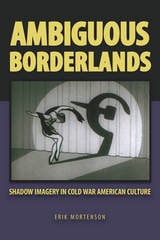
Ambiguous Borderlands
Shadow Imagery in Cold War American CultureErik Mortenson
Southern Illinois University Press, 2016
After contextualizing the postwar use of shadow imagery in the wake of the atomic bomb, Ambiguous Borderlands looks at shadows in print works, detailing the reemergence of the pulp fiction crime fighter the Shadow in the late-1950s writings of Sylvia Plath, Amiri Baraka, and Jack Kerouac. Using Freudian and Jungian conceptions of the unconscious, Mortenson then discusses Kerouac’s and Allen Ginsberg’s shared dream of a “shrouded stranger” and how it shaped their Beat aesthetic. Turning to the visual, Mortenson examines the dehumanizing effect of shadow imagery in the Cold War photography of Robert Frank, William Klein, and Ralph Eugene Meatyard. Mortenson concludes with an investigation of the use of chiaroscuro in 1950s film noir and the popular television series The Twilight Zone, further detailing how the complexities of Cold War society were mirrored across these media in the ubiquitous imagery of light and dark.
From comics to movies, Beats to bombs, Ambiguous Borderlands provides a novel understanding of the Cold War cultural context through its analysis of the image of the shadow in midcentury media. Its interdisciplinary approach, ambitious subject matter, and diverse theoretical framing make it essential reading for anyone interested in American literary and popular culture during the fifties and sixties.