1116 books match the query 'Africa' and 141 start with a
cover of Al Qaeda Declares War: The African Embassy Bombings and America’s Search for Justice

Al Qaeda Declares War

The African Embassy Bombings and America’s Search for Justice

Tod Hoffman

University Press of New England, 2014
Three years before the events of 9/11, Osama bin Laden sent al Qaeda suicide bombers on a coordinated attack to destroy the U.S. embassies in Nairobi, Kenya, and Dar es Salaam, Tanzania. That day, August 7, 1998, more than two hundred people were killed and thousands were wounded. Responding immediately, the FBI launched the largest international investigation in its history. Within months, suspects were arrested in six countries. The U.S. Attorney for the Southern District of New York indicted twenty-two individuals, including the elusive bin Laden. In February 2001 a landmark trial of four of the accused was held in Manhattan in the shadow of the World Trade Center. Al Qaeda Declares War: The African Embassy Bombings and America’s Search for Justice explores the step-by-step procedures the United States employed in analyzing these attacks, identifying the suspects, tracking down and apprehending them, building a case, and prosecuting them. It is this case that established the legal basis for hunting down bin Laden, and the trial makes for a gripping courtroom drama, in which the robust principles of American justice confront the fanaticism of true believers. Tod Hoffman argues forcefully that the process after the 1998 incident stands in marked contrast to the illegal detention, torture, and abrogation of rights that followed 9/11. Indeed, reverberations from the African embassy bombings continue in the ongoing hunt for perpetrators still at large, and in targeted killings by drones. Al Qaeda Declares War dramatically recounts the terror and bloodshed of that day in Africa and shows that America’s search for justice afterward offers important lessons for today.
[more]
cover of Albert Luthuli

Albert Luthuli

Robert Trent Vinson

Ohio University Press, 2018

In an excellent addition to the Ohio Short Histories of Africa series, Robert Trent Vinson recovers the important but largely forgotten story of Albert Luthuli, Africa’s first Nobel Peace Prize winner and president of the African National Congress from 1952 to 1967. One of the most respected African leaders, Luthuli linked South African antiapartheid politics with other movements, becoming South Africa’s leading advocate of Mahatma Gandhi’s nonviolent civil disobedience techniques. He also framed apartheid as a crime against humanity and thus linked South African antiapartheid struggles with international human rights campaigns.

Unlike previous studies, this book places Luthuli and the South African antiapartheid struggle in new global contexts, and aspects of Luthuli’s leadership that were not previously publicly known: Vinson is the first to use new archival evidence, numerous oral interviews, and personal memoirs to reveal that Luthuli privately supported sabotage as an additional strategy to end apartheid. This multifaceted portrait will be indispensable to students of African history and politics and nonviolence movements worldwide.

[more]
cover of Algerian Diary: Frank Kearns and the "Impossible Assignment" for CBS News

Algerian Diary

Frank Kearns and the "Impossible Assignment" for CBS News

Gerald Davis

West Virginia University Press, 2016

Frank Kearns was the go-to guy at CBS News for danger- ous stories in Africa and the Middle East in the 1950s, ‘60s, and early ‘70s. By his own account, he was nearly killed 114 times. He took stories that nobody else wanted to cover and was challenged to get them on the air when nobody cared about this part of the world. But his stories were warning shots for conflicts that play out in the headlines today.

In 1957, Senator John Kennedy described America’s view of the Algerian war for independence as the Eisenhower Administration’s “head in the sand policy.” So CBS News decided to find out what was really happening there and to determine where Algeria’s war for independence fit into the game plan for the Cold War. They sent Frank Kearns to find out.

Kearns took with him cameraman Yousef (“Joe”) Masraff and 400 pounds of gear, some of which they shed, and they hiked with FLN escorts from Tunisia, across a wide “no-man’s land,” and into the Aures Mountains of eastern Algeria, where the war was bloodiest. They carried no passports or visas. They dressed as Algerians. They refused to bear weapons. And they knew that if captured, they would be executed and left in unmarked graves. But their job as journalists was to seek the truth whatever it might turn out to be.

This is Frank Kearns’s diary. 
 
[more]
cover of Alice Lakwena and the Holy Spirits: War in Northern Uganda, 1985–97

Alice Lakwena and the Holy Spirits

War in Northern Uganda, 1985–97

Heike Behrend

Ohio University Press, 1999

In August 1986, Alice Auma, a young Acholi woman in northern Uganda, proclaiming herself under the orders of a Christian spirit named Lakwena, raised an army called the “Holy Spirit Mobile Forces.” With it she waged a war against perceived evil, not only an external enemy represented by the National Resistance Army of the government, but internal enemies in the form of “impure” soldiers, witches, and sorcerers. She came very close to her goal of overthrowing the government but was defeated and fled to Kenya.

This book provides a unique view of Alice’s movement, based on interviews with its members and including their own writings, examining their perceptions of the threat of external and internal evil. It concludes with an account of the successor movements into which Alice’s forces fragmented and which still are active in the civil wars of the Sudan and Uganda.

[more]
cover of All the Roads Are Open: The Afghan Journey

All the Roads Are Open

The Afghan Journey

Annemarie Schwarzenbach

Seagull Books, 2011

In June 1939 Annemarie Schwarzenbach and fellow writer Ella Maillart set out from Geneva in a Ford, heading for Afghanistan. The first women to travel Afghanistan’s Northern Road, they fled the storm brewing in Europe to seek a place untouched by what they considered to be Western neuroses.
 
The Afghan journey documented in All the Roads Are Open is one of the most important episodes of Schwarzenbach’s turbulent life. Her incisive, lyrical essays offer a unique glimpse of an Afghanistan already touched by the “fateful laws known as progress,” a remote yet “sensitive nerve centre of world politics” caught amid great powers in upheaval. In her writings, Schwarzenbach conjures up the desolate beauty of landscapes both internal and external, reflecting on the longings and loneliness of travel as well as its grace.
 
Maillart’s account of their trip, The Cruel Way, stands as a classic of travel literature, and, now available for the first time in English, Schwarzenbach’s memoir rounds out the story of the adventure.
 
Praise for the German Edition
 “Above all, [Schwarzenbach’s] discovery of the Orient was a personal one. But the author never loses sight of the historical and social context. . . . She shows no trace of colonialist arrogance. In fact, the pieces also reflect the experience of crisis, the loss of confidence which, in that decade, seized the long-arrogant culture of the West.”—Süddeutsche Zeitung
[more]
cover of Allies In Adversity: The Frontline States In Southern

Allies In Adversity

The Frontline States In Southern

Gilbert M. Khadiagala

Ohio University Press, 1994
[more]
cover of Amakomiti: Grassroots Democracy in South African Shack Settlements

Amakomiti

Grassroots Democracy in South African Shack Settlements

Trevor Ngwane

Pluto Press, 2021

Can people who live in shantytowns, shacks and favelas teach us anything about democracy? About how to govern society in a way that is inclusive, participatory and addresses popular needs? This book argues that they can. In a study conducted in dozens of South Africa's shack settlements, where more than 9 million people live, Trevor Ngwane finds thriving shack dwellers' committees that govern local life, are responsive to popular needs and provide a voice for the community. These committees, called 'amakomiti' in the Zulu language, organize the provision of basic services such as water, sanitation, public works and crime prevention. Democracy on the Margins argues that, contrary to common perception, slum dwellers are in fact an essential part of the urban population, whose political agency must be recognized and respected. In a world searching for democratic alternatives that serve the many and not the few, it is to the shantytowns, rather than the seats of political power, that we should turn.
[more]
cover of Ambition and Adjustment: The Making and Unmaking of Postcolonial Development in Africa

Ambition and Adjustment

The Making and Unmaking of Postcolonial Development in Africa

Priya Lal

University of Chicago Press, 2026

How the best intentions of African socialism became the useful tools of capitalism.

In the mid-twentieth century, skilled labor was seen as the key to national development. For newly independent African countries, this posed a formidable challenge: to build thriving economies, they needed to rapidly educate workers. As it turns out, that wasn’t their only obstacle.

Ambition and Adjustment reveals how responses to this human capital problem from the political left and right converged in unlikely ways to block Africa’s postcolonial progress. Focusing on nation-building projects in Zambia and Tanzania, Priya Lal recounts how the first generations of Africa’s professional class faced pressures on all sides—from foreign planners prioritizing economic growth and from local socialists decrying higher education and professionalization as wasteful and elitist. When African development stalled, international institutions like the World Bank took up parts of both approaches, justifying structural adjustment programs that defunded African universities and hospitals in the name of social equity. Indeed, Lal shows that neoliberal austerity in the 1990s was packaged in Africa’s socialist narratives from the 1960s.

By unearthing this forgotten history, Ambition and Adjustment upends traditional accounts of postcolonial development, exposing how socialism and capitalism both conflicted and overlapped to shape Africa’s trajectory since independence.
[more]
cover of Ambivalent: Photography and Visibility in African History

Ambivalent

Photography and Visibility in African History

Patricia Hayes

Ohio University Press, 2019

Going beyond photography as an isolated medium to engage larger questions and interlocking forms of expression and historical analysis, Ambivalent gathers a new generation of scholars based on the continent to offer an expansive frame for thinking about questions of photography and visibility in Africa. The volume presents African relationships with photography—and with visibility more generally—in ways that engage and disrupt the easy categories and genres that have characterized the field to date. Contributors pose new questions concerning the instability of the identity photograph in South Africa; ethnographic photographs as potential history; humanitarian discourse from the perspective of photographic survivors of atrocity photojournalism; the nuanced passage from studio to screen in postcolonial digital portraiture; and the burgeoning visual activism in West Africa.

As the contributors show, photography is itself a historical subject: it involves arrangement, financing, posture, positioning, and other kinds of work that are otherwise invisible. By moving us outside the frame of the photograph itself, by refusing to accept the photograph as the last word, this book makes photography an engaging and important subject of historical investigation. Ambivalent‘s contributors bring photography into conversation with orality, travel writing, ritual, psychoanalysis, and politics, with new approaches to questions of race, time, and postcolonial and decolonial histories.

Contributors: George Emeka Agbo, Isabelle de Rezende, Jung Ran Forte, Ingrid Masondo, Phindi Mnyaka, Okechukwu Nwafor, Vilho Shigwedha, Napandulwe Shiweda, Drew Thompson
[more]
cover of American Imperialist: Cruelty and Consequence in the Scramble for Africa

American Imperialist

Cruelty and Consequence in the Scramble for Africa

Arwen P. Mohun

University of Chicago Press, 2023

This biography of “African explorer” Richard Dorsey Mohun, written by one of his descendants, reveals how American greed and state power helped shape the new imperial order in Africa.
 
Richard Dorsey Mohun spent his career circulating among the eastern United States, the cities and courts of Europe, and the African continent, as he served the US State Department at some points and King Leopold of Belgium at others. A freelance imperialist, he implemented the schemes of American investors and the Congo Free State alike. Without men like him, Africa’s history might have unfolded very differently. How did an ordinary son of a Washington bookseller become the agent of American corporate greed and European imperial ambition? Why did he choose to act in ways that ranged from thoughtless and amoral to criminal and unforgivable?
 
With unblinking clarity and precision, historian Arwen P. Mohun interrogates the life and actions of her great-grandfather in American Imperialist. She seeks not to excuse the man known as Dorsey but to understand how individual ambition and imperial lust fueled each other, to catastrophic ends. Ultimately, she offers a nuanced portrait of how her great-grandfather’s pursuit of career success and financial security for his family came at a tragic cost to countless Africans.
[more]
cover of Amkoullel, the Fula Boy

Amkoullel, the Fula Boy

Amadou Hampâté Bâ

Duke University Press, 2021

Born in 1900 in French West Africa, Malian writer Amadou Hampâté Bâ was one of the towering figures in the literature of twentieth-century Francophone Africa. In Amkoullel, the Fula Boy, Bâ tells in striking detail the story of his youth, which was set against the aftermath of war between the Fula and Toucouleur peoples and the installation of French colonialism. A master storyteller, Bâ recounts pivotal moments of his life, and the lives of his powerful and large family, from his first encounter with the white commandant through the torturous imprisonment of his stepfather and to his forced attendance at French school. He also charts a larger story of life prior to and at the height of French colonialism: interethnic conflicts, the clash between colonial schools and Islamic education, and the central role indigenous African intermediaries and interpreters played in the functioning of the colonial administration. Engrossing and novelistic, Amkoullel, the Fula Boy is an unparalleled rendering of an individual and society under transition as they face the upheavals of colonialism.
[more]
cover of Amy Biehl’s Last Home: A Bright Life, a Tragic Death, and a Journey of Reconciliation in South Africa

Amy Biehl’s Last Home

A Bright Life, a Tragic Death, and a Journey of Reconciliation in South Africa

Steven D. Gish

Ohio University Press, 2018

In 1993, white American Fulbright scholar Amy Biehl was killed in a racially motivated attack near Cape Town, after spending months working to promote democracy and women’s rights in South Africa. The ironic circumstances of her death generated enormous international publicity and yielded one of South Africa’s most heralded stories of postapartheid reconciliation. Amy’s parents not only established a humanitarian foundation to serve the black township where she was killed, but supported amnesty for her killers and hired two of the young men to work for the Amy Biehl Foundation. The Biehls were hailed as heroes by Nelson Mandela, Desmond Tutu, and many others in South Africa and the United States—but their path toward healing was neither quick nor easy.

Granted unrestricted access to the Biehl family’s papers, Steven Gish brings Amy and the Foundation to life in ways that have eluded previous authors. He is the first to place Biehl’s story in its full historical context, while also presenting a gripping portrait of this remarkable young woman and the aftermath of her death across two continents.
[more]
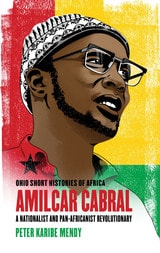
cover of Amílcar Cabral: A Nationalist and Pan-Africanist Revolutionary

Amílcar Cabral

A Nationalist and Pan-Africanist Revolutionary

Peter Karibe Mendy

Ohio University Press, 2019

Amílcar Cabral was an agronomist who led an armed struggle that ended Portuguese colonialism in Guinea-Bissau and Cabo Verde. The uprising contributed significantly to the collapse of a fascist regime in Lisbon and the dismantlement of Portugal’s empire in Africa. Assassinated by a close associate with the deep complicity of the Portuguese colonial authorities, Cabral not only led one of Africa’s most successful liberation movements, but was the voice and face of the anticolonial wars against Portugal.

A brilliant military strategist and astute diplomat, Cabral was an original thinker who wrote innovative and inspirational essays that still resonate today. His charismatic and visionary leadership, his active pan-Africanist solidarity and internationalist commitment to “every just cause in the world,” remain relevant to contemporary struggles for emancipation and self-determination. Peter Karibe Mendy’s compact and accessible biography is an ideal introduction to his life and legacy.
[more]
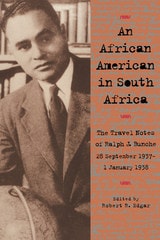
cover of An African American in South Africa: The Travel Notes of Ralph J. Bunche 28 September 1937–1 January 1938

An African American in South Africa

The Travel Notes of Ralph J. Bunche 28 September 1937–1 January 1938

Ralph Bunche

Ohio University Press, 2001

Ralph Bunche, who received the Nobel Peace Prize in 1950, traveled to South Africa for three months in 1937. His notes, which have been skillfully compiled and annotated by historian Robert R. Edgar, provide unique insights on a segregated society.
[more]
cover of An African Perspective on the Thought of Benedict XVI

An African Perspective on the Thought of Benedict XVI

Agbaw-ebai

St. Augustine's Press, 2023
Catholicism continues to experience an exponential growth in Africa. Going by the figures and the intensity of religious practice, Africa can unarguably be described as the new center of the Christianity in general, and Catholicism in particular. With over 236 million Catholics, Africa considers itself as having come of age and capable of making its voice heard on matters pertaining to global Catholicism/Christianity. And if there is a contemporary theologian greatly loved and admired by African scholars, Joseph Ratzinger/Benedict XVI ranks premium on that list. His convening a second synod on Africa on the theme of justice, peace and reconciliation, further endeared him to the African theologians. This book is a testimony to the affection that the Church in Africa has for Benedict XVI. In effect, as Africa finds its voice on the stage of global Catholicism, the theology of Joseph Ratzinger/Benedict XVI provides a fruitful space for Africa's engagement with the wider Church. Benedict XVI described Africa as the spiritual lung of the world. This volume testifies to the vitality and healthiness of that lung, a must read for all interested in African Catholicism and its definite impact on global Christianity as a whole. 
[more]
cover of An African Voice: The Role of the Humanities in African Independence

An African Voice

The Role of the Humanities in African Independence

Robert W. July

Duke University Press, 1987
Through the work of leading African writers, artists, musicians and educators—from Nobel prizewinner Wole Soyinka to names hardly known outside their native lands—An African Voice describes the contributions of the humanities to the achievement of independence for the peoples of black Africa following the Second World War. While concentrating on cultural independence, these leading humanists also demonstrate the intimate connection between cultural freedom and genuine political economic liberty.
[more]
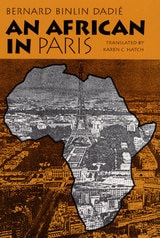
cover of An African in Paris

An African in Paris

Bernard Binlin Dadié; Translated by Karen C. Hatch

University of Illinois Press, 1994

Writing in an informal and episodic style, Bernard Dadié recounts a West African man's first journey to France, from the exhilarating moment when he obtains his ticket through a humorous and fascinating tour across the City of Light.

In 1959, when Un Negre a Paris first appeared, the French still held West Africa under colonial rule. Dadié's subtle parodies draw on intimate knowledge obtained over decades spent observing the colonizers abroad and now, suddenly, on their own home terrain. His remarks on Parisian living conditions, wordplay, manners, and and morals are entertaining and poignant, charming yet profound.
[more]
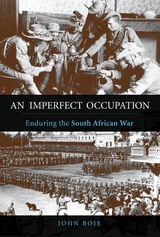
cover of An Imperfect Occupation: Enduring the South African War

An Imperfect Occupation

Enduring the South African War

John Boje

University of Illinois Press, 2015
The South African War (1899–1902), also called the Boer War and Anglo-Boer War, began as a conventional conflict. It escalated into a savage irregular war fought between the two Boer republics and a British imperial force that adopted a scorched-earth policy and used concentration camps to break the will of Afrikaner patriots and Boer guerrillas. In An Imperfect Occupation , John Boje delves into the agonizing choices faced by Winburg district residents during the British occupation. Afrikaner men fought or evaded combat or collaborated; Afrikaner women fled over the veld or submitted to life in the camps; and black Africans weighed the life or death consequences of taking sides. Boje's sensitive analysis showcases the motives, actions, and reactions of Boers and Africans alike as initial British accommodation gave way to ruthlessness. Challenging notions of Boer unity and homogeneity, Boje illustrates the precarious tightrope of resistance, neutrality, and collaboration walked by people on all sides. He also reveals how the repercussions of the war's transformative effect on Afrikaner identity plays out in today's South Africa. Readable and compassionate, An Imperfect Occupation provides a dramatic account of the often overlooked aspects of one of the first "modern" wars.
[more]
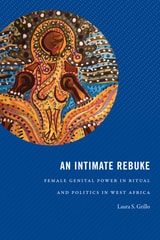
cover of An Intimate Rebuke: Female Genital Power in Ritual and Politics in West Africa

An Intimate Rebuke

Female Genital Power in Ritual and Politics in West Africa

Laura S. Grillo

Duke University Press, 2018
Throughout West African societies, at times of social crises, postmenopausal women—the Mothers—make a ritual appeal to their innate moral authority. The seat of this power is the female genitalia. Wielding branches or pestles, they strip naked and slap their genitals and bare breasts to curse and expel the forces of evil. In An Intimate Rebuke Laura S. Grillo draws on fieldwork in Côte d’Ivoire that spans three decades to illustrate how these rituals of Female Genital Power (FGP) constitute religious and political responses to abuses of power. When deployed in secret, FGP operates as spiritual warfare against witchcraft; in public, it serves as a political activism. During Côte d’Ivoire’s civil wars FGP challenged the immoral forces of both rebels and the state. Grillo shows how the ritual potency of the Mothers’ nudity and the conjuration of their sex embodies a moral power that has been foundational to West African civilization. Highlighting the remarkable continuity of the practice across centuries while foregrounding the timeliness of FGP in contemporary political resistance, Grillo shifts perspectives on West African history, ethnography, comparative religious studies, and postcolonial studies.
[more]
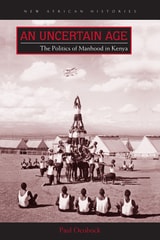
cover of An Uncertain Age: The Politics of Manhood in Kenya

An Uncertain Age

The Politics of Manhood in Kenya

Paul Ocobock

Ohio University Press, 2017

In twentieth-century Kenya, age and gender were powerful cultural and political forces that animated household and generational relationships. They also shaped East Africans’ contact with and influence on emergent colonial and global ideas about age and masculinity. Kenyan men and boys came of age achieving their manhood through changing rites of passage and access to new outlets such as town life, crime, anticolonial violence, and nationalism. And as they did, the colonial government appropriated masculinity and maturity as means of statecraft and control.

In An Uncertain Age, Paul Ocobock positions age and gender at the heart of everyday life and state building in Kenya. He excavates in unprecedented ways how the evolving concept of “youth” motivated and energized colonial power and the movements against it, exploring the masculinities boys and young men debated and performed as they crisscrossed the colony in search of wages or took the Mau Mau oath. Yet he also considers how British officials’ own ideas about masculinity shaped not only young African men’s ideas about manhood but the very nature of colonial rule.

An Uncertain Age joins a growing number of histories that have begun to break down monolithic male identities to push the historiographies of Kenya and empire into new territory.
[more]
cover of An Unformed Map: Geographies of Belonging between Africa and the Caribbean

An Unformed Map

Geographies of Belonging between Africa and the Caribbean

Philip Janzen

Duke University Press, 2025
In An Unformed Map, Philip Janzen traces the intellectual trajectories of Caribbean people who joined the British and French colonial administrations in Africa between 1890 and 1930. Caribbean administrators grew up in colonial societies, saw themselves as British and French, and tended to look down on Africans. Once in Africa, however, they were doubly marginalized—excluded by Europeans and unwelcome among Africans. This marginalization was then reproduced in colonial archives, where their lives appear only in fragments. Drawing on sources beyond the archives of empire, from dictionaries and language exams to a suitcase full of poems, Janzen considers how Caribbean administrators reckoned with the profound effects of assimilation, racism, and dislocation. As they learned African languages, formed relationships with African intellectuals, and engaged with African cultures and histories, they began to rethink their positions in the British and French empires. They also created new geographies of belonging across the Atlantic, foundations from which others imagined new political horizons. Ultimately, Janzen offers a model for reading across sources and writing history in the face of archival fragmentation.
[more]
cover of And Yet, I Am Here!

And Yet, I Am Here!

Halina Nelken

University of Massachusetts Press, 1999

When Germany invaded Poland in 1939, Halina Nelken was a precocious fifteen-year-old, living a middle-class life in Krakow. Like other girls her age, she recorded her personal observations and feelings in a diary. As conditions in Krakow deteriorated and her family was forced into the Jewish ghetto, she continued to write, eventually smuggling her diary out with a Catholic friend. This remarkable book tells the story of Nelken's experiences in the ghetto and later in eight Nazi concentration camps, including Plaszow, Auschwitz, and Ravensbrück. Her diary entries, written between 1938 and 1943, form the core of the volume and are supplemented by recollections written shortly after the war, and by later commentaries and explanatory notes which she added in the mid-1980s. Although there exist numerous published and unpublished memoirs by Holocaust survivors, Nelken's book presents one of the few extant diaries written at the time. Already released in Polish and German editions, it has been hailed as one of the finest works of its kind. Now it is available in English for the first time.
[more]
cover of Animality and Colonial Subjecthood in Africa: The Human and Nonhuman Creatures of Nigeria

Animality and Colonial Subjecthood in Africa

The Human and Nonhuman Creatures of Nigeria

Saheed Aderinto

Ohio University Press, 2022
With this multispecies study of animals as instrumentalities of the colonial state in Nigeria, Saheed Aderinto argues that animals, like humans, were colonial subjects in Africa. Animality and Colonial Subjecthood in Africa broadens the historiography of animal studies by putting a diverse array of species (dogs, horses, livestock, and wildlife) into a single analytical framework for understanding colonialism in Nigeria and Africa as a whole. From his study of animals with unequal political, economic, social, and intellectual capabilities, Aderinto establishes that the core dichotomies of human colonial subjecthood—indispensable yet disposable, good and bad, violent but peaceful, saintly and lawless—were also embedded in the identities of Nigeria’s animal inhabitants. If class, religion, ethnicity, location, and attitude toward imperialism determined the pattern of relations between human Nigerians and the colonial government, then species, habitat, material value, threat, and biological and psychological characteristics (among other traits) shaped imperial perspectives on animal Nigerians. Conceptually sophisticated and intellectually engaging, Aderinto’s thesis challenges readers to rethink what constitutes history and to recognize that human agency and narrative are not the only makers of the past.
[more]
cover of Antecedents to Modern Rwanda: The Nyiginya Kingdom

Antecedents to Modern Rwanda

The Nyiginya Kingdom

Jan Vansina

University of Wisconsin Press, 2004

To understand the genocide and other dramatic events of Rwanda’s recent past, one must understand the history of the earlier realm. Jan Vansina provides a critique of the history recorded by early missionaries and court historians and provides a bottom-up view, drawing on hundreds of grassroots narratives. He describes the genesis of the Hutu and Tutsi identities, their growing social and political differences, their bitter feuds, revolts, and massacres, and the relevance of this dramatic history to the post-genocide Rwanda of today.

2001 French edition, Katharla Publishers
[more]
cover of Antinomies of Modernity: Essays on Race, Orient, Nation

Antinomies of Modernity

Essays on Race, Orient, Nation

Vasant Kaiwar and Sucheta Mazumdar, eds.

Duke University Press, 2003

Antinomies of Modernity asserts that concepts of race, Orient, and nation have been crucial to efforts across the world to create a sense of place, belonging, and solidarity in the midst of the radical discontinuities wrought by global capitalism. Emphasizing the continued salience at the beginning of the twenty-first century of these supposedly nineteenth-century ideas, the essays in this volume stress the importance of tracking the dynamic ways that race, Orient, and nation have been reworked and used over time and in particular geographic locations.

Drawing on archival sources and fieldwork, the contributors explore aspects of modernity within societies of South Asia, the Middle East, and Africa. Whether considering how European ideas of Orientalism became foundational myths of Indian nationalism; how racial caste systems between blacks, South Asians, and whites operate in post-apartheid South Africa; or how Indian immigrants to the United States negotiate their identities, these essays demonstrate that the contours of cultural and identity politics did not simply originate in metropolitan centers and get adopted wholesale in the colonies. Colonial and postcolonial modernisms have emerged via the active appropriation of, or resistance to, far-reaching European ideas. Over time, Orientalism and nationalist and racialized knowledges become indigenized and acquire, for all practical purposes, a completely "Third World" patina. Antinomies of Modernity shows that people do make history, constrained in part by political-economic realities and in part by the categories they marshal in doing so.

Contributors.
Neville Alexander, Andrew Barnes, Vasant Kaiwar, Sucheta Mazumdar, Minoo Moallem, Mohamad Tavakoli-Targhi, A. R. Venkatachalapathy, Michael O. West
[more]
cover of Anxiety in and about Africa: Multidisciplinary Perspectives and Approaches

Anxiety in and about Africa

Multidisciplinary Perspectives and Approaches

Andrea Mariko Grant

Ohio University Press, 2021

How does anxiety impact narratives about African history, culture, and society?

This volume demonstrates the richness of anxiety as an analytical lens within African studies. Contributors call attention to ways of thinking about African spaces—physical, visceral, somatic, and imagined—as well as about time and temporality. Through a multidisciplinary approach, the volume also brings histories of anxiety in colonial settings into conversation with work on the so-called negative emotions in disciplines beyond history. While anxiety has long been acknowledged for its ability to unsettle colonial narratives, to reveal the vulnerability of the colonial enterprise, this volume shows it can equally complicate contemporary narratives, such as those of sustainable development, migration, sexuality, and democracy. These essays therefore highlight the need to take emotions seriously as contemporary realities with particular histories that must be carefully mapped out.

[more]
cover of Apartheid Remains

Apartheid Remains

Sharad Chari

Duke University Press, 2024
In Apartheid Remains, Sharad Chari explores how people handle the remains of segregation and apartheid in South Africa as witnessed through portals in an industrial-residential landscape in the Indian Ocean city of Durban. Through long-term historical and ethnographic research, Chari portrays South Africa’s twentieth century as a palimpsest that conserves the remains of multiple pasts, including attempts by the racial state to remake territory and personhood while instead deepening spatial contradictions and struggles. When South Durban’s denizens collectively mobilized in various ways---through Black Consciousness politics and other attempts at refusing the ruinous articulation of biopolitics, sovereignty, and capital---submerged traditions of the Indian Ocean and the Black Atlantic offered them powerful resources. Of these, Chari reads Black documentary photography as particularly insightful audiovisual blues critique. At the tense interface of Marxism, feminism, and Black study, he offers a method and form of geography attentive to the spatial and embodied remains of history. Apartheid Remains looks out from South Durban to imaginations of abolition of all forms of racial capitalism and environmental suffering that define our planetary predicament.
[more]
cover of Apartheid’s Black Soldiers: Un-national Wars and Militaries in Southern Africa

Apartheid’s Black Soldiers

Un-national Wars and Militaries in Southern Africa

Lennart Bolliger

Ohio University Press, 2021

New oral histories from Black Namibian and Angolan troops who fought in apartheid South Africa’s security forces reveal their involvement, and its impact on their lives, to be far more complicated than most historical scholarship has acknowledged.

In anticolonial struggles across the African continent, tens of thousands of African soldiers served in the militaries of colonial and settler states. In southern Africa, they often made up the bulk of these militaries and, in some contexts, far outnumbered those who fought in the liberation movements’ armed wings. Despite these soldiers' significant impact on the region’s military and political history, this dimension of southern Africa’s anticolonial struggles has been almost entirely ignored in previous scholarship.

Black troops from Namibia and Angola spearheaded apartheid South Africa’s military intervention in their countries’ respective anticolonial war and postindependence civil war. Drawing from oral history interviews and archival sources, Lennart Bolliger challenges the common framing of these wars as struggles of national liberation fought by and for Africans against White colonial and settler-state armies.

Focusing on three case studies of predominantly Black units commanded by White officers, Bolliger investigates how and why these soldiers participated in South Africa’s security forces and considers the legacies of that involvement. In tackling these questions, he rejects the common tendency to categorize the soldiers as “collaborators” and “traitors” and reveals the un-national facets of anticolonial struggles.

Finally, the book’s unique analysis of apartheid military culture shows how South Africa’s military units were far from monolithic and instead developed distinctive institutional practices, mythologies, and concepts of militarized masculinity.
[more]
cover of Apartheid’s Leviathan: Electricity and the Power of Technological Ambivalence

Apartheid’s Leviathan

Electricity and the Power of Technological Ambivalence

Faeeza Ballim

Ohio University Press, 2023
A fascinating study that shows how the intersection of technology and politics has shaped South African history since the 1960s. This book details the development of an interconnected technological system of a coal mine and of the Matimba and Medupi power stations in the Waterberg, a rural region of South Africa near the country’s border with Botswana. South Africa’s state steel manufacturing corporation, Iscor, which has since been privatized, developed a coal mine in the region in the 1970s. This set the stage for the national electricity provider, Eskom, to build coal-fueled power stations in the Waterberg. Faeeza Ballim follows the development of these technological systems from the late 1960s, a period of heightened repression as the apartheid government attempted to realize its vision of racial segregation, to the deeply fraught construction of the Medupi power station in postapartheid South Africa. The Medupi power station was planned toward the end of the first decade of the twenty-first century as a measure to alleviate the country’s electricity shortage, but the continued delay of its completion and the escalation of its costs meant that it failed to realize those ambitions while public frustration and electricity outages grew. By tracing this story, this book highlights the importance of technology to our understanding of South African history. This characterization challenges the idea that the technological state corporations were proxies for the apartheid government and highlights that their activities in the Waterberg did not necessarily accord with the government’s strategic purposes. While a part of the broader national modernization project under apartheid, they also set the stage for worker solidarity and trade union organization in the Waterberg and elsewhere in the country. This book also argues that the state corporations, their technology, and their engineers enjoyed ambivalent relationships with the governments of their time, relationships that can be characterized as both autonomous and immersive. In the era of democracy, while Eskom has been caught up in government corruption—a major scourge to the fortunes of South Africa—it has also retained a degree of organizational autonomy and offered a degree of resistance to those who sought to further corruption. The examination of the workings of these technological systems, and the state corporations responsible for them, complicates conventional understandings of the transition from the authoritarian rule of apartheid to democratic South Africa, which coincided with the transition from state-led development to neoliberalism. This book is an indispensable case study on the workings of industrial and political power in Africa and beyond.
[more]
cover of Apprenticeship in Critical Ethnographic Practice

Apprenticeship in Critical Ethnographic Practice

Jean Lave

University of Chicago Press, 2011

In this extended meditation, Jean Lave interweaves analysis of the process of apprenticeship among the Vai and Gola tailors of Liberia with reflections on the evolution of her research on those tailors in the late 1970s. In so doing, she provides both a detailed account of her apprenticeship in the art of sustained fieldwork and an insightful overview of thirty years of changes in the empirical and theoretical facets of ethnographic practice. Examining the issues she confronted in her own work, Lave shows how the critical questions raised by ethnographic research erode conventional assumptions, altering the direction of the work that follows.

As ethnography takes on increasing significance to an ever widening field of thinkers on topics from education to ecology, this erudite but accessible book will be essential to anyone tackling the question of what it means to undertake critical and conceptually challenging fieldwork. Apprenticeship in Critical Ethnographic Practice explains how to seriously explore what it means to be human in a complex world—and why it is so important.
[more]
cover of Arabs of the Jewish Faith: The Civilizing Mission in Colonial Algeria

Arabs of the Jewish Faith

The Civilizing Mission in Colonial Algeria

Schreier, Joshua

Rutgers University Press, 2010
Exploring how Algerian Jews responded to and appropriated France's newly conceived "civilizing mission" in the mid-nineteenth century, Arabs of the Jewish Faith shows that the ideology, while rooted in French Revolutionary ideals of regeneration, enlightenment, and emancipation, actually developed as a strategic response to the challenges of controlling the unruly and highly diverse populations of Algeria's coastal cities.
[more]
cover of Architecture and Development: Israeli Construction in Sub-Saharan Africa and the Settler Colonial Imagination, 1958-1973

Architecture and Development

Israeli Construction in Sub-Saharan Africa and the Settler Colonial Imagination, 1958-1973

Ayala Levin

Duke University Press, 2022
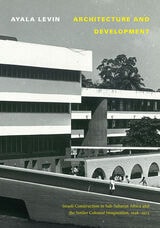
In Architecture and Development Ayala Levin charts the settler colonial imagination and practices that undergirded Israeli architectural development aid in Africa. Focusing on the “golden age” of Israel’s diplomatic relations in and throughout the continent from 1958 to 1973, Levin finds that Israel positioned itself as a developing-nation alternative in the competition over aid and influence between global North and global South. In analyses of the design and construction of prestigious governmental projects in Nigeria, Sierra Leone, and Ethiopia, Levin details how architects, planners, and a trade union--owned construction company staged Israel as a new center of nonaligned expertise. These actors and professionals paradoxically capitalized on their settler colonial experience in Palestine, refashioning it as an alternative to Western colonial expertise. Levin traces how Israel became involved in the modernization of governance, education, and agriculture in Africa, as well as how African leaders chose to work with Israel to forge new South-South connections. In so doing, she offers new ways of understanding the role of architecture as a vehicle of postcolonial development and in the mobilization of development resources.
[more]
cover of Architecture of Migration: The Dadaab Refugee Camps and Humanitarian Settlement

Architecture of Migration

The Dadaab Refugee Camps and Humanitarian Settlement

Anooradha Iyer Siddiqi

Duke University Press, 2024
Environments associated with migration are often seen as provisional, lacking both history and architecture. As Anooradha Iyer Siddiqi demonstrates in Architecture of Migration, a refugee camp’s aesthetic and material landscapes—even if born out of emergency—reveal histories, futures, politics, and rhetorics. She identifies forces of colonial and humanitarian settlement, tracing spatial and racial politics in the Dadaab refugee camps established in 1991 on the Kenya-Somalia border—at once a dense setting that manifests decades of architectural, planning, and design initiatives and a much older constructed environment that reflects its own ways of knowing. She moves beyond ahistorical representations of camps and their inhabitants by constructing a material and visual archive of Dadaab, finding long migratory traditions in the architecture, spatial practices, landscapes, and iconography of refugees and humanitarians. Countering conceptualizations of refugee camps as sites of border transgression, criminality, and placelessness, Siddiqi instead theorizes them as complex settlements, ecologies, and material archives created through histories of partition, sedentarization, domesticity, and migration.
[more]
cover of Archives and Justice

Archives and Justice

Verne Harris

Society of American Archivists, 2007
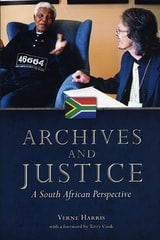
ARCHIVES AND JUSTICE: A SOUTH AFRICAN PERSPECTIVE is collection of Verne Harris's best writing during the first decade of South Africa's post-apartheid democracy. Harris is the project director of the Nelson Mandela Centre of Memory in Johannesburg. While South Africa is his immediate context, Harris always engages wider geographical and conceptual worlds. The volume is organized into five sections. "Discourses" illuminates Harris's engagement with writings and discussions related to archives. "Narratives," the second section, "explores the stories that archivists tell in certain domains of professional work-appraisal, electronic recordmaking, and arrangement and description." The third and fourth sections, "Politics and Ethics" and "Pasts and Secrets," recount and reflect on events and issues with which Harris has wrestled as a South African archivist. The op-eds contained in the final section, "Actualities," provide evidence of Harris's "deliberate endeavors to bring awareness of archive to popular debates in South Africa." Drawing on the energies of Derridean deconstruction, Harris suggests an ethics, and a politics, expressed in the maxim "memory for justice." And he portrays the work of archives as a work of critical importance to the building of democracy.
[more]
cover of Artificial Africas: Colonial Images in the Times of Globalization

Artificial Africas

Colonial Images in the Times of Globalization

Ruth Mayer

Dartmouth College Press, 2002

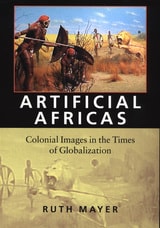
“Africa is an artificial entity,” notes Ruth Mayer, “invented and conceived by colonialism.” In this wide-ranging study, Mayer explores the ways in which Western, and especially American, popular culture has manufactured and deployed various images of “Africa,” and how those changing constructions have reflected Western social and political concerns from the era of colonialism to the age of globalization. Mayer mines an enormous array of sources to expose the diverse images and narrative strategies that have been prominent in Western representations of Africa. She ranges authoritatively from King Solomon’s Mines and Tarzan to Khartoum and Greystoke, from Conrad’s Heart of Darkness to Nicholas Roeg’s film version, from Isak Dinesen and Ernest Hemingway to Ishmael Reed and Charles Johnson, from comic books to hip hop acts. In the process, she shows how seemingly stable cultural stereotypes have actually been transformed to reflect changing attitudes, conditions, and fears in the West, “adjusting the symbolic repertory of yesterday to the conceptual and ideological frameworks of today.” Dividing her work into “African Adventures” and “Alternative Africas,” Mayer not only restores an international context to American cultural history, but also shows the ways in which these images have functioned within both white and African American communities. With a deft command of both cultural source materials and current debates, Mayer explores the complex and powerful roles these “artificial Africas” have played in Western culture.
[more]
cover of As Áreas Importantes de Plantas de Moçambique

As Áreas Importantes de Plantas de Moçambique

Edited by Iain Darbyshire, Sophie Richards, and Jo Osborne

Royal Botanic Gardens, Kew, 2024

The Portuguese-language edition of an assessment of fifty critical sites for plant conservation.

The Important Plant Areas of Mozambique is based on the Mozambique TIPAs project run in collaboration between Royal Botanic Gardens, Kew, Mozambique’s Agricultural Research Institute (Instituto de Investigação Agrária de Moçambique – IIAM), and the University Eduardo Mondlane. Drawing on information from the TIPAs database, The Important Plant Areas of Mozambique includes color maps and photographs, site descriptions, and tables to present information on the botanical significance, habitat, and geology of the region. The book will also address conservation issues and ecosystem services to promote Mozambique’s critical plant sites and inform conservation leaders in government, NGOs, universities, and local communities about Mozambique’s threatened habitats.
[more]
cover of At Penpoint: African Literatures, Postcolonial Studies, and the Cold War

At Penpoint

African Literatures, Postcolonial Studies, and the Cold War

Monica Popescu

Duke University Press, 2020

In At Penpoint Monica Popescu traces the development of African literature during the second half of the twentieth century to address the intertwined effects of the Cold War and decolonization on literary history. Popescu draws on archival materials from the Soviet-sponsored Afro-Asian Writers Association and the CIA-funded Congress for Cultural Freedom alongside considerations of canonical literary works by Ayi Kwei Armah, Ngũgĩ wa Thiong'o, Ousmane Sembène, Pepetela, Nadine Gordimer, and others. She outlines how the tensions between the United States and the Soviet Union played out in the aesthetic and political debates among African writers and intellectuals. These writers decolonized aesthetic canons even as superpowers attempted to shape African cultural production in ways that would advance their ideological and geopolitical goals. Placing African literature at the crossroads of postcolonial theory and studies of the Cold War, Popescu provides a new reassessment of African literature, aesthetics, and knowledge production.
[more]
cover of At the Periphery of a World War?: Urban Experiences of the First World War in Africa, East Asia, Latin America and South Europe

At the Periphery of a World War?

Urban Experiences of the First World War in Africa, East Asia, Latin America and South Europe

Edited by María Inés Tato, Ana Paula Pires, and Jan Schmidt

Campus Verlag, 2024

The first comprehensive analysis of the various ways in which the Great War affected urban life in East Asia, South Europe, Latin America, and Africa.

The First World War and its aftermath were significant events with widespread consequences that impacted everyday people. This book is the first comprehensive analysis of the various ways in which the Great War affected urban life, extending beyond the typically recognized regions such as the European great powers, the United States, and US colonies and spheres of influence. It explores the impacts on peripheral cities in East Asia, South Europe, Latin America, and Africa, which have often been overlooked in the historiography of the 1914 to 1918 conflict. Despite their historical neglect, these urban areas felt the repercussions of the war as it reshaped their structures, rhythms, and daily routines. This transformation influenced both private and public life, highlighting the crucial role these cities played as actors during wartime.
 
[more]
cover of Atlas's Bones: The African Foundations of Europe

Atlas's Bones

The African Foundations of Europe

D. Vance Smith

University of Chicago Press, 2025

A major new look at Africa’s influence on European culture and how colonization remade Africa in the image of a medieval Europe.
  
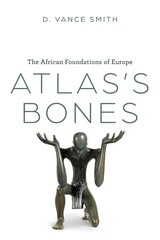
Virgil. Chaucer. Petrarch. These names resonate with many as cornerstones of European culture. Yet, in Atlas’s Bones, D. Vance Smith reveals that much of what is claimed as European culture up to the Middle Ages—its great themes in literature, its sources in political thought, its religious beliefs—originated in the writings of African thinkers like Augustine, Fulgentius, and Martianus Capella, or Europeans who thought extensively about Africa. In fact, a third of Virgil’s Aeneid takes place in Africa. Francis Petrarch believed his most important achievement was his epic Africa; while Geoffrey Chaucer wrote repeatedly about the figures of Scipio Africanus, actually two different men who defeated and destroyed Carthage.
 
Smith tells the story of how Europe created a false “medieval” version of Africa to acquire resources and power during the era of imperialism and colonialism. The first half of the book, “Reading Africa,” traces Egypt’s, Libya’s, and Carthage’s influence on classical and medieval thinking about Africa, highlighting often ignored literary and legendary traditions, for example, that Alexander the Great named himself the son of an African god. The second part, “Writing Africa,” focuses on how the different cultures of the two great African cities—Carthage and Alexandria—shaped modern literary criticism and political theology and examines the cross-influences of modern anthropology, medieval studies, and colonial law.
 
Atlas’s Bones firmly re-establishes the significance of Africa in European intellectual history. It will be essential reading for anyone seeking to understand how much of Africa informs our artistic and cultural world.
[more]
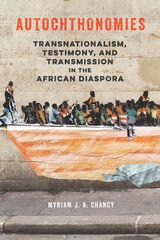
cover of Autochthonomies: Transnationalism, Testimony, and Transmission in the African Diaspora

Autochthonomies

Transnationalism, Testimony, and Transmission in the African Diaspora

Myriam J. A. Chancy

University of Illinois Press, 2020

In Autochthonomies, Myriam J. A. Chancy engages readers in an interpretive journey. She lays out a radical new process that invites readers to see creations by artists of African descent as legible within the context of African diasporic historical and cultural debates. By invoking a transnational African/diasporic lens and negotiating it through a lakou or ”yard space,” we can see such identities transfigured, recognized, and exchanged. Chancy demonstrates how the process can examine the salient features of texts and art that underscore African/diasporic sensibilities and render them legible. What emerges is a potential for richer readings of African diasporic works that also ruptures the Manichean binary dynamics that have dominated previous interpretations of the material. The result: an enriching interpretive mode focused on the transnational connections between subjects of African descent as the central pole for reader investigation.

A bold challenge to established scholarship, Autochthonomies ranges from Africa to Europe and the Americas to provide powerful new tools for charting the transnational interactions between African cultural producers and sites.

[more]
cover of Available Light: Omar Badsha and the Struggle for Change in South Africa

Available Light

Omar Badsha and the Struggle for Change in South Africa

Daniel Magaziner

Ohio University Press, 2024

Available Light tells the story of an activist, an artist, a uniquely South African individual, and his community and family across the second half of the twentieth century. Omar Badsha was born in Durban, on the country’s southeastern coast in 1945. His was the third generation of his Gujarati family to call South Africa home. Before he turned five, the country’s white electorate had voted to institute apartheid to strip the rights and privileges of citizenship from most of the population, including Badsha’s Indian community and especially the country’s Black majority. By the time he turned fifteen, nonviolent protest against apartheid had been quashed; by the time he turned twenty, so too had the armed struggle to dislodge white supremacy within the country. The ongoing, resilient, and oft-rebuffed struggle against apartheid was a definitive factor in Badsha’s life. Furthermore, Badsha was raised in a community where art—painting, carving, music, poetry, theater—was inseparable from other values, whether Islamic and conservative or radical and urgently committed. When Badsha struggled in school, he, like his father, turned to art to express what he otherwise had difficulty conveying. Art brought him into contact with people of disparate backgrounds from far beyond Durban. In time, his friendships with other artists helped him refine his voice, first in drawing and eventually in photography, and capture the political ethic by which he strove to live his life and which he shared with similarly committed artist-activists. Daniel Magaziner chronicles how art and politics became intertwined in South Africa and explains what it takes to maintain a critical aesthetic approach to political crises in the past and present. The book tracks the personal and social costs that commitment can incur, while also appreciating how Badsha and others like him have maintained their vision of an equitable, transformed society even today, when the ideals that once animated the South African struggle are on the back foot worldwide.
[more]