Results by title
3576 books match the query 'American' and 350 start with a
Above the Birch Line
PoemsPia Taavila-Borsheim
Gallaudet University Press, 2021
Across Spoon River
Edgar Lee Masters; Introduction by Ronald Primeau
University of Illinois Press, 1991
The autobiography of the influential American poet
This intimate and provocative autobiography, first published in 1936, reveals the innermost thoughts of a great American poet. Edgar Lee Masters was a transitional figure in American literature with one foot planted in the nineteenth century and the other firmly placed on the path of what we now think of as the modern period.
Masters expounds on his own development as a poet and as a human being; he shares his views on American culture, politics, and the literary criticism of the times. Masters's friends and acquaintances discussed here include some of the most prominent writers and politicians of his age. And he reflects on his life events that shaped, haunted, and inspired his writings of the classic Spoon River Anthology.
Across the Wounded Galaxies
Interviews with Contemporary American Science Fiction WritersConducted and edited by Larry McCaffery
University of Illinois Press, 1990
Act Like a Man
Challenging Masculinities in American DramaRobert Vorlicky
University of Michigan Press, 1995
In the first comprehensive study of plays written for male characters only, Robert Vorlicky offers a new theory that links cultural codes governing gender and the conventions determining dramatic form. Act Like a Manlooks at a range of plays, including those by O'Neill, Albee, Mamet, Baraka, and Rabe as well as new works by Philip Kan Gotanda, Alonzo Lamont, and Robin Swados, to examine how dialogue within these works reflects the social codes of male behavior and inhibits individualization among men.
Plays in which women are absent are often characterized by the location of a male "other"—a female presence who distances himself from the dominant, impersonal masculine ethos and thereby becomes a facilitator of personal communication. The potential authority of this figure is so powerful that its presence becomes the primary determinant of the quality of men's interaction and of the range of male subjectivities possible. This formulation becomes the basis of an alternative theory of American dramatic construction, one that challenges traditional dramaturgical notions of realism.
The book will appeal to scholars and students interested in drama, gender, race, sexuality, and American culture, as well as playwrights, teachers of playwrights, and artistic directors. It includes an extensive bibliography of more than four hundred male-cast plays and monodramas, the first such compilation and one that points to further research into a previously unexplored area.
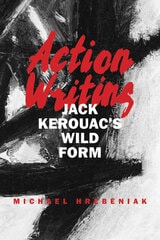
Action Writing
Jack Kerouac's Wild FormMichael Hrebeniak
Southern Illinois University Press, 2008
Action Writing: Jack Kerouac's Wild Form connects the personal and creative development of the Beat generation's famous icon with cultural changes in postwar America. Michael Hrebeniak asserts that Jack Kerouac's "wild form"—self-organizing narratives free of literary, grammatical, and syntactical conventions—moves within an experimental continuum across the arts to generate a Dionysian sense of writing as raw process. Action Writing highlights how Kerouac made concrete his 1952 intimation of "something beyond the novel" by assembling ideas from Beat America, modernist poetics, action painting, bebop, and subterranean oral traditions.
Geared to scholars and students of American literature, Beat studies, and creative writing, Action Writing places Kerouac's writing within the context of the American art scene at midcentury. Reframing the work of Kerouac and the Beat generation within the experimental modernist and postmodernist literary tradition, this probing inquiry offers a direct engagement with the social and cultural history at the foreground of Kerouac's career from the 1940s to the late 1960s.
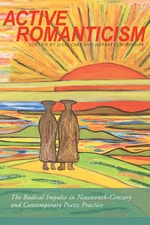
Active Romanticism
The Radical Impulse in Nineteenth-Century and Contemporary Poetic PracticeEdited by Julie Carr and Jeffrey C. Robinson
University of Alabama Press, 2015
A collection of essays highlighting the pervasive, yet often unacknowledged, role of Romantic poetry and poetics on modern and contemporary innovative poetry.
Literary history generally locates the primary movement toward poetic innovation in twentieth-century modernism, an impulse carried out against a supposedly enervated “late-Romantic” poetry of the nineteenth century. The original essays in Active Romanticism challenge this interpretation by tracing the fundamental continuities between Romanticism’s poetic and political radicalism and the experimental movements in poetry from the late nineteenth century to the present day.
According to editors July Carr and Jeffrey C. Robinson, “active romanticism” is a poetic response, direct or indirect, to pressing social issues and an attempt to redress forms of ideological repression; at its core, “active romanticism” champions democratic pluralism and confronts ideologies that suppress the evidence of pluralism. “Poetry fetter’d, fetters the human race,” declared poet William Blake at the beginning of the nineteenth century. No other statement from the era of the French Revolution marks with such terseness the challenge for poetry to participate in the liberation of human society from forms of inequality and invisibility. No other statement insists so vividly that a poetic event pushing for social progress demands the unfettering of traditional, customary poetic form and language.
Bringing together work by well-known writers and critics, ranging from scholarly studies to poets’ testimonials, Active Romanticism shows Romantic poetry not to be the sclerotic corpse against which the avant-garde reacted but rather the wellspring from which it flowed.
Offering a fundamental rethinking of the history of modern poetry, Carr and Robinson have grouped together in this collection a variety of essays that confirm the existence of Romanticism as an ongoing mode of poetic production that is innovative and dynamic, a continuation of the nineteenth-century Romantic tradition, and a form that reacts and renews itself at any given moment of perceived social crisis.
Acts of Mind
Conversations with Contemporary PoetsRichard Jackson
University of Alabama Press, 1984
Acts of Mind grew out of interviews conducted by the author for Poetry Miscellany. The aim of which was to help develop a method for talking about the work of contemporary poets.
The poets whose views appear in this volume represent a fair cross-section of the more important tendencies and impulses to be found in contemporary poetry and poetics.
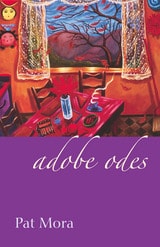
Adobe Odes
Pat Mora
University of Arizona Press, 2006
From family gossip and beauty secrets, to women darning hand-me-downs, to reluctant hands carrying bodies across borders, Mora traverses the tangled threads of culture, community, family, gender, and injustice. Her vivid observations together with her deft handling of symmetry and meter make her poetry uniquely insightful, subtle, and elegant. Sprinkled with Spanish and plenty of spice, each ode is a sensory flurry of mind and body. Together they make a cauldron of flavorful, simmering language. They are meant to be savored as they slowly stir the soul.
Adolf Dehn
Midcentury ManhattanAdolf Dehn
The Artist Book Foundation, 2017
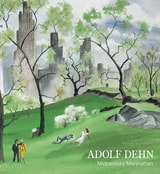
Adolf Dehn (1895–1968), American painter in multimedia and acclaimed master lithographer, left his Minnesota hometown after formal training at the Minneapolis Art Institute to study at the Art Students League in New York. He toured Europe in the early 1920s, quickly acclimating to the continental lifestyle and adeptly depicting its nuances and idiosyncrasies with prolific lithographs and sketches. His critical and satirical renderings of the political movements, social conventions, and governmental policies in post-World War I Europe during "Le Crazy Years" gave the Midwestern artist ample material for his growing body of work.
Sailing back to the United States in 1929, Dehn survived the Great Depression with commercial artwork and contributions to popular magazines such as The New Yorker, Vogue, and Vanity Fair. His clever drawings that reflected the Jazz Age's culture and fashionable society made him a favorite of Frank Crowninshield, Vanity Fair's renowned editor.
During this time, while Dehn captured the heyday of Manhattan's burlesque theaters, lively Harlem nightclubs, impressive skyline, and busy harbor, he was continuously drawn to Central Park—his predilection for the city's magnificent green space was a sustaining source of inspiration and subject matter. Adolf Dehn: Midcentury Manhattan candidly examines the life and work of this exceptional, adventurous, and intrepid artist as he moved skillfully and capably between lithography, ink-wash drawings, gouache, casein painting, and watercolors. Combining numerous vintage photographs with newly discovered, Manhattan-inspired prints and drawings from the collections of, among others, the Whitney Museum of American Art, MoMA, and The Metropolitan Mesuem of Art, Adolf Dehn: Midcentury Manhattan traces how Dehn's art reflected the spirit, pulse, and uniquely American tonalities of The City of Dreams.
Adoption Memoirs
Inside StoriesMarianne Novy
Temple University Press, 2024
Novy considers 45 memoirs, mostly from the twenty-first century, by birthmothers, adoptees, and adoptive parents, about same-race and transracial adoption. These adoptees, she recounts, wanted to learn about their ancestry and appreciated adoptive parents who helped. Birthmother Amy Seek shows why open adoption is not simple, and many other memoirs tell stories that continue past reunion.
Adoption Memoirs will enlighten readers who lack experience with adoption and help those looking for a shared experience to also understand adoption from a different standpoint.
Adoption in America
Historical PerspectivesE. Wayne Carp, Editor
University of Michigan Press, 2004
---Choice
"Sheds new light on the roots of this complex and fascinating institution."
---Library Journal
"Well-written and accessible . . . showcases the wide-ranging scholarship underway on the history of adoption."
---Adoptive Families
"[T]his volume is a significant contribution to the literature and can serve as a catalyst for further research."
---Social Service Review
Adoption affects an estimated 60 percent of Americans, but despite its pervasiveness, this social institution has been little examined and poorly understood. Adoption in America gathers essays on the history of adoptions and orphanages in the United States. Offering provocative interpretations of a variety of issues, including antebellum adoption and orphanages; changing conceptions of adoption in late-nineteenth-century novels; Progressive Era reform and adoptive mothers; the politics of "matching" adoptive parents with children; the radical effect of World War II on adoption practices; religion and the reform of adoption; and the construction of birth mother and adoptee identities, the essays in Adoption in America will be debated for many years to come.
Adrienne Kennedy Reader
Adrienne Kennedy
University of Minnesota Press, 2001
Adrienne Kennedy has been a force in American theatre since the early 1960s, influencing generations of playwrights with her hauntingly fragmentary lyrical dramas. Exploring the violence racism visits upon people’s lives, Kennedy’s plays express poetic alienation, transcending the particulars of character and plot through ritualistic repetition and radical structural experimentation. Frequently produced, read, and taught, they continue to hold a significant place among the most exciting dramas of the past fifty years.
This first comprehensive collection of her most important works traces the development of Kennedy’s unique theatrical oeuvre from her Obie-winning Funnyhouse of a Negro (1964) through significant later works such as A Movie Star Has to Star in Black and White (1976), Ohio State Murders (1992), and June and Jean in Concert, for which she won an Obie in 1996. The entire contents of Kennedy’s groundbreaking collections In One Act and The Alexander Plays are included, as is her earliest work "Because of the King of France" and the play An Evening with Dead Essex (1972). More recent prose writings "Secret Paragraphs about My Brother," "A Letter to Flowers," and "Sisters Etta and Ella" are fascinating refractions of the themes and motifs of her dramatic works, even while they explore new material on teaching and writing. An introduction by Werner Sollors provides a valuable overview of Kennedy’s career and the trajectory of her literary development.
Adrienne Kennedy (b. 1931) is a three-time Obie-award winning playwright whose works have been widely performed and anthologized. Among her many honors are the American Academy of Arts and Letters award and the Guggenheim fellowship. In 1995-6, the Signature Theatre Company dedicated its entire season to presenting her work. She has been commissioned to write works for the Public Theater, Jerome Robbins, the Royal Court Theatre, the Mark Taper Forum, and Juilliard, and she has been a visiting professor at Yale, Princeton, Brown, the University of California at Berkeley, and Harvard. She lives in New York City.
African American Travel Narratives from Abroad
Mobility and Cultural Work in the Age of Jim CrowGary Totten
University of Massachusetts Press, 2015
In this book, Gary Totten examines the global travel narratives of a diverse set of African American writers, including Ida B. Wells, Booker T. Washington, Matthew Henson, Jessie Redmon Fauset, and Zora Neale Hurston. While these writers deal with issues of identity in relation to a reimagined sense of self—in a way that we might expect to find in travel narratives—they also push against the constraints and conventions of the genre, reconsidering discourses of tourism, ethnography, and exploration. This book not only offers new insights about African American writers and mobility, it also charts the ideological distinctions and divergent agendas within this group of writers. Totten demonstrates how these travelers and their writings challenged dominant ideologies about African American experience, expression, and identity in a period of escalating racial violence. By setting these texts in their historical context and within the genre of travel writing, Totten presents a nuanced understanding of both popular and recovered work of the period.
African or American?
Black Identity and Political Activism in New York City, 1784-1861Leslie M. ALexander
University of Illinois Press, 2012
During the early national and antebellum eras, black leaders in New York City confronted the tenuous nature of Northern emancipation. Despite the hope of freedom, black New Yorkers faced a series of sociopolitical issues including the persistence of Southern slavery, the threat of forced removal, racial violence, and the denial of American citizenship. Even efforts to create community space within the urban landscape, such as the African Burial Ground and Seneca Village, were eventually demolished to make way for the city's rapid development. In this illuminating history, Leslie M. Alexander chronicles the growth and development of black activism in New York from the formation of the first black organization, the African Society, in 1784 to the eve of the Civil War in 1861. In this critical period, black activists sought to formulate an effective response to their unequal freedom. Examining black newspapers, speeches, and organizational records, this study documents the creation of mutual relief, religious, and political associations, which black men and women infused with African cultural traditions and values.
As Alexander reveals, conflicts over early black political strategy foreshadowed critical ideological struggles that would bedevil the black leadership for generations to come. Initially, black leaders advocated racial uplift through a sense of communalism and connection to their African heritage. Yet by the antebellum era, black activists struggled to reconcile their African identity with a growing desire to gain American citizenship. Ultimately, this battle resulted in competing agendas; while some leaders argued that the black community should dedicate themselves to moral improvement and American citizenship, others began to consider emigrating to Africa or Haiti. In the end, the black leadership resolved to assert an American identity and to expand their mission for full equality and citizenship in the United States. This decision marked a crucial turning point in black political strategy, for it signaled a new phase in the quest for racial advancement and fostered the creation of a nascent Black Nationalism.
Afro-American Literary Study in the 1990s
Edited by Houston A. Baker Jr. and Patricia Redmond
University of Chicago Press, 1989
"This diverse and inspired collection . . . testifies to the Afro-Am academy's extraordinary vitality."—Voice Literary Supplement
Afrofuturism Rising
The Literary Prehistory of a MovementIsiah Lavender III
The Ohio State University Press, 2019
By engaging with authors as diverse as Phillis Wheatley, David Walker, Frederick Douglass, Harriet Ann Jacobs, Samuel R. Delany Jr., Pauline Hopkins, Zora Neale Hurston, and Richard Wright, Afrofuturism Rising extends existing scholarly conversations about who creates and what is created via science fiction. Through a trans-historical rereading of texts by these authors as science fiction, Lavender highlights the ways black experience in America has always been an experience of spatial and temporal dislocation akin to science fiction. Compelling and ambitious in scope, Afrofuturism Rising redefines both science fiction and literature as a whole.
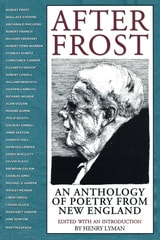
After Frost
An Anthology of Poetry from New EnglandHenry Lyman
University of Massachusetts Press, 1996
After Frost is published in association with the New England Foundation for the Humanities, which has sponsored a program of reading and discussion groups with poets across the region using this anthology.

After The Grapes Of Wrath
Essays On John Steinbeck In Honor of Tetsumaro HayashiDonald V. Coers
Ohio University Press, 1994
Traditionally, the critical reputation of Nobel Prize-winning American novelist John Steinbeck (1902-1968) has rested on his achievements of the 1930s, especially In Dubious Battle (1936), Of Mice and Men (19370, The Long Valley (1938), and, of course, The Grapes of Wrath (1939), one of the most powerful – and arguable on of the greatest – American novels of this century.
Book reviewers and academic critics often turned antagonistic toward Steinbeck when he no longer produced work with the sweeping reach and social consciousness of The Grapes of Wrath. He was accused of selling out, or co-opting his talent, when in fact the inordinate public success of Grapes and especially its attendant notoriety had caused a backlash for Steinbeck. As a result he became self-conscious about his own ability, and suspicious of that “clumsy vehicle,” the novel. The very act of researching and writing Grapes, which occupied him fully for several years and which he had already conceived as his final book on proletarian themes, changed him drastically.
No longer willing to be the chronicler of Depression-era subjects, Steinbeck went afield to find new roots, new sources, new forms. For example, in the six years following the publication of Grapes, Steinbeck completed a suit of love poems; a full-length novel (bastardized by Alfred Hitchcock in his 1943 film, Lifeboat); a nonfiction scientific book, Sea of Cortez: A Leisurely Journal of Travel and Research (with Edward F. Ricketts); a documentary film, The Forgotten Village; a documentary book to help the war effort, Bombs Away: The Story of a Bomber Team; a series of articles he wrote as a war correspondent for the New York Herald Tribune (later collected as Once There Was a War); and two novels, The Moon Is Down and Cannery Row.
Steinbeck came to define himself less as a novelist and more as a man of letters, a restless experimenter with form and subject matter, and a prophetic postmodernist whose key subject for the rest of his career was the dilemma of individual choice and ethical consciousness. Thus, Steinbeck’s later fiction, from The Moon Is Down (1942) through The Winter of Our Discontent (1962), and his later nonfiction, from Sea of Cortez (1941) through Travels with Charley (1962) and America and Americans (1966), often shows a different set of stylistic, thematic, and philosophical bearings from his earlier work and underscores his dramatic shift toward “individual thinking.” A full appreciation of Steinbeck’s mid-career metamorphosis and, consequently, of his later achievement requires a corresponding shift in critical approach – a departure from the traditional New Critical norms. Instead of marginalizing these works, all the contributors to this volume agree that Steinbeck’s later publications merit – indeed, demand – closer scrutiny.
Written especially for this collection in honor of Professor Tetsumaro Hayashi, the distinguished founder and editor-in-chief of the Steinbeck Quarterly, on his retirement from Ball State University and his move to Kwassui Women’s College in Nagasaki, Japan, these essays explore new ways of addressing Steinbeck’s later work and career, and include forays into subjects as diverse as ethnicity and music. They range from treatment of his post-structuralist use of language in Sea of Cortez and his involvement as a speech writer for Franklin Delano Roosevelt’s reelection bid in 1944 to the influence of Charles Darwin’s theories of sexual selection in The Wayward Bus, his revision of the myth of Cain in The Winter of Our Discontent, and his employment of Arthurian quest values in his last book, America and Americans.
For this group of critics – which includes respected veteran Steinbeck scholars Robert DeMott, John Ditsky, Mimi Gladstein, Cliff Lewis, Robert Morsberger, Susan Shillinglaw, and Roy Simmonds, as well as talented new voices Debra Barker, Kevin Hearle, Michael Meyer, Brian Railsback, Eiko Shiraga, and Geralyn Strecker – The Moon is Down and The Wayward Bus loom as significant works in the post 1930s re-evaluation (two essays each appear on these works). The book also includes Donald Coers’s interview with the writer’s widow, Elaine Steinbeck, the first of its kind ever published. After The Grapes of Wrath opens with eminent Americanist Warren French’s appreciation of Professor Hayashi’s distinguished career and his influence in Steinbeck studies; a bibliography of Hayashi’s major publication concludes this honorary gathering.
After and Before the Lightning
Simon J. Ortiz
University of Arizona Press, 1994
Acoma Pueblo poet Ortiz spent a winter in South Dakota, teaching at Sinte Gleska College on the Rosebud Lakota Sioux Reservation. The bitter cold and driving snow of a prairie winter were a reality commanding his attention through its absolute challenge to survival and the meaning of survival.
Ortiz's way of dealing with the hard elements of winter was to write After and Before the Lightning, prose and verse poems that were his response to that long season between the thunderstorms of autumn and spring. "I needed a map of where I was and what I was doing in the cosmos," he writes. In these poems, which he regards as a book-length poetic work, he charts the vast spaces of prairie and time that often seem indistinguishable. As he faces the reality of winter on the South Dakota reservation, he also confronts the harsh political reality for its Native community and culture and for Indian people everywhere.
"Writing this poetry reconnected me to the wonder and awe of life," Ortiz states emphatically. Readers will feel the reality of that wonder and awe—and the cold of that South Dakota winter—through the gentle ferocity of his words.
After the Death of Poetry
Poet and Audience in Contemporary AmericaVernon Shetley
Duke University Press, 1993
In exemplary case studies, Shetley identifies the very different ways in which three postwar poets—Elizabeth Bishop, James Merrill, and John Ashbery—try to restore some of the challenge and risk that characterized modernist poetry's relation to its first readers. Sure to be controversial, this cogent analysis offers poets and readers a clear sense of direction and purpose, and so, the hope of reaching each other again.
After the Digging
Alan Shapiro
University of Chicago Press, 1998
"Powerful. . . . That a young poet can handle this subject so well in a first book is . . . a pleasure in itself."—Robert von Hallberg, Contemporary Literature, 1981
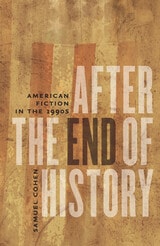
After the End of History
American Fiction in the 1990sCohe, Samuel
University of Iowa Press, 2009
In this bold book, Samuel Cohen asserts the literary and historical importance of the period between the fall of the Berlin wall and that of the Twin Towers in New York. With refreshing clarity, he examines six 1990s novels and two post-9/11 novels that explore the impact of the end of the Cold War: Pynchon's Mason & Dixon, Roth's American Pastoral, Morrison's Paradise, O'Brien's In the Lake of the Woods, Didion's The Last Thing He Wanted, Eugenides's Middlesex, Lethem's Fortress of Solitude, and DeLillo's Underworld. Cohen emphasizes how these works reconnect the past to a present that is ironically keen on denying that connection. Exploring the ways ideas about paradise and pastoral, difference and exclusion, innocence and righteousness, triumph and trauma deform the stories Americans tell themselves about their nation’s past, After the End of History challenges us to reconsider these works in a new light, offering fresh, insightful readings of what are destined to be classic works of literature.
At the same time, Cohen enters into the theoretical discussion about postmodern historical understanding. Throwing his hat in the ring with force and style, he confronts not only Francis Fukuyama’s triumphalist response to the fall of the Soviet Union but also the other literary and political “end of history” claims put forth by such theorists as Fredric Jameson and Walter Benn Michaels. In a straightforward, affecting style, After the End of History offers us a new vision for the capabilities and confines of contemporary fiction.
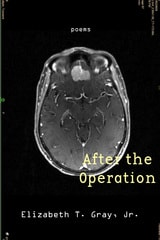
After the Operation
Elizabeth T. Gray
Four Way Books, 2025
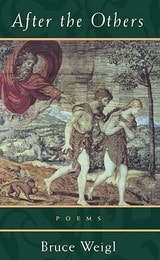
After the Others
PoemsBruce Weigl
Northwestern University Press, 1999
In his twelfth volume of poetry, Bruce Weigl continues his quest for emotional and spiritual enlightenment. Quiet and moving, these poems combine an intimate voice with a searingly direct look at suffering and senseless violence, at human desire and love, and at man's relationship with nature.
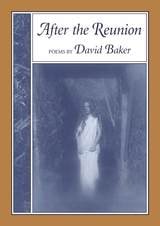
After the Reunion
PoemsDavid Baker
University of Arkansas Press, 1994
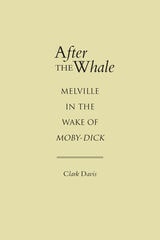
After the Whale
Melville in the Wake of Moby-DickClark Davis
University of Alabama Press, 1995
Beyond Moby-Dick: Reinterpreting Melville's later works through language, embodiment, and literary transformation.
The study focuses on Melville’s vision of the purpose and function of language from Moby-Dick through Billy Budd with a special emphasis on how language—in function and form—follows and depends on the function and form of the body, how Melville’s attitude toward words echoes his attitude toward fish. Davis begins by locating and describing the fundamental dialectic formulated in Moby-Dick in the characters of Ahab and Ishmael. This dialectic produces two visions of bodily reality and two corresponding visions of language: Ahab’s, in which language is both weapon and substitute body, and Ishmael’s, in which language is an extension of the body—a medium of explanation, conversation, and play. These two forms of language provide a key to understanding the difficult relationships and formal changes in Melville’s writings after Moby-Dick.
By following each work’s attitude toward the dialectic, we can see the contours of the later career more clearly and so begin a movement away from weakly contextualized readings of individual novels and short stories to a more complete consideration of Melville’s career. Since the rediscovery of Herman Melville in the early decades of this century, criticism has been limited to the prose in general and to a few major works in particular.
Those who have given significant attention to the short fiction and poetry have done so frequently out of context, that is, in multi-author works devoted exclusively to these genres. The result has been a criticism with large gaps, most especially for works from Melville’s later career. The relative lack of interest in the poetry has left us with little understanding of how Melville’s later voices developed, of how the novels evolved into tales, the tales into poetry, and the poetry back into prose. In short, the development of Melville’s art during the final three decades of his life remains a subject of which we have been afforded only glimpses, rarely a continuous attention. After the Whale provides a new, more comprehensive understanding of Melville’s growth as a writer.
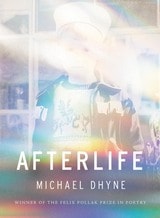
Afterlife
Michael Dhyne
University of Wisconsin Press, 2023
“If I tell the story in reverse, / it still ends with nothing,” he writes. Yet it is in the telling that Dhyne’s story—and the world he creates—is filled. The echoes of his childhood loss reverberate through adolescence and adulthood, his body, the bodies of those he loves, and the world around them—from Bourbon Street to dark and lonely bedrooms, from grief support groups to heartachingly beautiful sunsets.
How we are shaped by our experiences, and how we refuse to be shaped, is at the heart of the poet’s search for memory, meaning, and love—in all its forms and wonders. This bold and tender debut is a rousing reminder that poetry and art can heal.
Can I start with my birth? and I ask her if anything happened
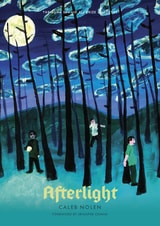
Afterlight
Caleb Nolen
University of Utah Press, 2026
Winner of the Agha Shahid Ali Prize in Poetry
“When I wake I’m in ninth grade again,” begins “Reunion,” the first poem in Caleb Nolen’s debut collection Afterlight. These haunting, tender poems revisit the fraught adolescence of a group of boys growing up in the late 1990s and early 2000s.
Told through the voice of one of the boys who left and is later looking back, Afterlight navigates the silences left by absent fathers, early deaths, and a God who doesn't speak. Interwoven throughout are letters to saints and biblical figures: pleas for intercession and understanding that echo the speaker’s search for grace amid violence and loss. By the book’s end, the lost boys and the saints share the same hallowed space, their stories entwined. Written in plain, unsparing language, these poems reveal the tenderness within troubled masculinity and the ache of trying to love what has already vanished.
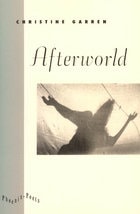
Afterworld
Christine Garren
University of Chicago Press, 1993
"I like Christine Garren's poetry for its fervor and idiosyncrasy. It lives in the common places of daily life but opens into mysterious invisible orders. Afterworld is a strange and compelling book by a gifted visionary artist."—W. S. Di Piero
"In Afterworld, Christine Garren calls up again and again how it feels to be touched by some relatively familiar thing that happens. A cluster of balloons rises from a birthday party, night falls, and it is left for her to sing about the separate moments with remarkable and unforced grace. Her poems confirm that there's as much at stake in evanescences as we've always suspected but not found ways to say."—James McMichael
"The language seems but a shade, a muted rendering of Garren's images, so concrete and ethereal, knowing and innocent. If this reviewer is being abstract it's because these poems do that to you—they create an arrangement of words, so that, for a while, I believed there was none other."—Harvard Review
Against Expression
An Anthology of Conceptual WritingCraig Dworkin and Kenneth Goldsmith
Northwestern University Press, 2011
Charles Bernstein has described conceptual poetry as "poetry pregnant with thought." Against Expression, the premier anthology of conceptual writing, presents work that is by turns thoughtful, funny, provocative, and disturbing. Dworkin and Goldsmith, two of the leading spokespersons and practitioners of conceptual writing, chart the trajectory of the conceptual aesthetic from early precursors including Samuel Beckett and Marcel Duchamp to the most prominent of today’s writers. Nearly all of the major avant-garde groups of the past century are represented here, including Dada, OuLiPo, L=A=N=G=U=A=G=E, and Flarf to name just a few, but all the writers are united in their imaginative appropriation of found and generated texts and their exploration of nonexpressive language. Against Expression is a timely collection and an invaluable resource for readers and writers alike.

Against Heidegger
LM Rivera
Omnidawn, 2019

Against Translation
Alan Shapiro
University of Chicago Press, 2019
Against a Darkening Sky
Janet Lewis
Ohio University Press, 1985
Against a Darkening Sky was originally published in 1943. Set in a semirural community south of San Francisco, it is the story of an American mother of the mid-1930s and the sustaining influence she brings, through her own profound strength and faith, to the lives of her four growing children.
Scottish by birth, but long a resident of America, Mary Perrault is married to a Swiss-French gardener. Their life in South Encina, though anything but lavish, is gay, serene, and friendly. As their children mature and the world outside, less peaceful and secure than the Perrault home, begins to threaten the equilibrium of their tranquil lives, Mrs. Perrault becomes increasingly aware of a moral wilderness rising from the physical wilderness which her generation has barely conquered.
Her struggle to influence, while not invading the lives of her children, is the focus of this novel of family life during the Depression years.
Against the Gallows
Antebellum American Writers and the Movement to Abolish Capital PunishmentPaul C. Jones
University of Iowa Press, 2011
In Against the Gallows, Paul Christian Jones explores the intriguing cooperation of America’s writers—including major figures such as Walt Whitman, John Greenleaf Whittier, E. D. E. N. Southworth, and Herman Melville—with reformers, politicians, clergymen, and periodical editors who attempted to end the practice of capital punishment in the United States during the 1840s and 1850s. In an age of passionate reform efforts, the antigallows movement enjoyed broad popularity, waging its campaign in legislatures, pulpits, newspapers, and literary journals.
Against the Grain
Interviews with Maverick American PublishersRobert Dana
University of Iowa Press, 1986
Against the Grain is a collection of interviews with nine small press publishers, each one characterized by strength of resolve and a dedication to good books. Each press reflects, perhaps more directly than any large trade publisher could, the character of its founder; and each has earned its own place in the select group of important small presses in America.
This collection is the first of its kind to explore with the publishers themselves the historical, aesthetic, practical, and personal impulses behind literary publishing. The publishers included are Harry Duncan (the Cummington Press), Lawrence Ferlinghetti (City Lights), David Godine (David R. Godine), Daniel Halpern (the Ecco Press), Sam Hamill and Tree Swenson (Copper Canyon Press), James Laughlin (New Directions), John Martin (Black Sparrow), and Jonathan Williams (the Jargon Society). Their passion for books, their belief in their individual visions of what publishing is or could be, their inspired mulishness crackle on the page.
Agent of Change
Print Culture Studies after Elizabeth L. EisensteinSabrina Alcorn Baron
University of Massachusetts Press, 2007
Inspiring debate since the early days of its publication, Elizabeth L. Eisenstein's The Printing Press as an Agent of Change: Communications and Cultural Transformations in Early-Modern Europe (1979) has exercised its own force as an agent of change in the world of scholarship. Its path-breaking agenda has played a central role in shaping the study of print culture and “book history”—fields of inquiry that rank among the most exciting and vital areas of scholarly endeavor in recent years.
Joining together leading voices in the field of print scholarship, this collection of twenty essays affirms the catalytic properties of Eisenstein's study as a stimulus to further inquiry across geographic, temporal, and disciplinary boundaries. From early modern marginalia to the use of architectural title pages in Renaissance books, from the press in Spanish colonial America to print in the Islamic world, from the role of the printed word in nation-building to changing histories of reading in the electronic age, this book addresses the legacy of Eisenstein's work in print culture studies today as it suggests future directions for the field.
In addition to a conversation with Elizabeth L. Eisenstein, the book includes contributions by Peng Hwa Ang, Margaret Aston, Tony Ballantyne, Vivek Bhandari, Ann Blair, Barbara A. Brannon, Roger Chartier, Kai-wing Chow, James A. Dewar, Robert A. Gross, David Scott Kastan, Harold Love, Paula McDowell, Jane McRae, Jean-Dominique Mellot, Antonio Rodriguez-Buckingham, Geoffrey Roper, William H. Sherman, Peter Stallybrass, H. Arthur Williamson, and Calhoun Winton.
Aggregate of Disturbances
Michele Glazer
University of Iowa Press, 2004
These taut lyrical poems negotiate between desire for something irrefutable and an uneasy bedrock of paradox. In the interstices, Aggregate of Disturbances breaks open language and experience to offer a glimpse of “the eye on the other side.”
Agrippina the Younger
PoemsDiana Arterian
Northwestern University Press, 2025
A poetic journey through the past of the Roman Empress Agrippina looks toward the future
Agrippina the Younger follows one woman’s study of another, separated by thousands of miles and two millennia but bound by a shared sense of powerlessness. Agrippina was a daughter in a golden political family, destined for greatness—but she hungered for more power than women were allowed. Exhausted by the misogyny of the present, Diana Arterian reaches into the past to try to understand the patriarchal systems of today. In lyric verse and prose poems, she traces Agrippina’s rise, interrogating a life studded with intrigue, sex, murder, and manipulation. Arterian eagerly pursues Agrippina through texts, ruins, and films, exhuming the hidden details of the ancient noblewoman’s life. These poems consider the valences of patriarchy, power, and the archive to try to answer the question: How do we recover a woman erased by history?
Ahab Unbound
Melville and the Materialist TurnMeredith Farmer
University of Minnesota Press, 2021
Why Captain Ahab is worthy of our fear—and our compassion
Herman Melville’s Captain Ahab is perennially seen as the paradigm of a controlling, tyrannical agent. Ahab Unbound leaves his position as a Cold War icon behind, recasting him as a contingent figure, transformed by his environment—by chemistry, electromagnetism, entomology, meteorology, diet, illness, pain, trauma, and neurons firing—in ways that unexpectedly force us to see him as worthy of our empathy and our compassion.
In sixteen essays by leading scholars, Ahab Unbound advances an urgent inquiry into Melville’s emergence as a center of gravity for materialist work, reframing his infamous whaling captain in terms of pressing conversations in animal studies, critical race and ethnic studies, disability studies, environmental humanities, medical humanities, political theory, and posthumanism. By taking Ahab as a focal point, we gather and give shape to the multitude of ways that materialism produces criticism in our current moment. Collectively, these readings challenge our thinking about the boundaries of both persons and nations, along with the racist and environmental violence caused by categories like the person and the human.
Ahab Unbound makes a compelling case for both the vitality of materialist inquiry and the continued resonance of Melville’s work.
Contributors: Branka Arsić, Columbia U; Christopher Castiglia, Pennsylvania State U; Colin Dayan, Vanderbilt U; Christian P. Haines, Pennsylvania State U; Bonnie Honig, Brown U; Jonathan Lamb, Vanderbilt U; Pilar Martínez Benedí, U of L’Aquila, Italy; Steve Mentz, St. John’s College; John Modern, Franklin and Marshall College; Mark D. Noble, Georgia State U; Samuel Otter, U of California, Berkeley; Donald E. Pease, Dartmouth College; Ralph James Savarese, Grinnell College; Russell Sbriglia, Seton Hall U; Michael D. Snediker, U of Houston; Matthew A. Taylor, U of North Carolina at Chapel Hill; Ivy Wilson, Northwestern U.
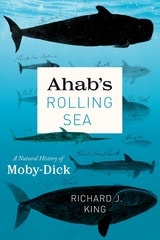
Ahab's Rolling Sea
A Natural History of "Moby-Dick"Richard J. King
University of Chicago Press, 2019
A revelation for Moby-Dick devotees and neophytes alike, Ahab’s Rolling Sea is a chronological journey through the natural history of Melville’s novel. From white whales to whale intelligence, giant squids, barnacles, albatross, and sharks, Richard J. King examines what Melville knew from his own experiences and the sources available to a reader in the mid-1800s, exploring how and why Melville might have twisted what was known to serve his fiction. King then climbs to the crow’s nest, setting Melville in the context of the American perception of the ocean in 1851—at the very start of the Industrial Revolution and just before the publication of On the Origin of Species. King compares Ahab’s and Ishmael’s worldviews to how we see the ocean today: an expanse still immortal and sublime, but also in crisis. And although the concept of stewardship of the sea would have been entirely foreign, if not absurd, to Melville, King argues that Melville’s narrator Ishmael reveals his own tendencies toward what we would now call environmentalism.
Featuring a coffer of illustrations and an array of interviews with contemporary scientists, fishers, and whale watch operators, Ahab’s Rolling Sea offers new insight not only into a cherished masterwork and its author but also into our evolving relationship with the briny deep—from whale hunters to climate refugees.
Airline Highway
A PlayLisa D'Amour
Northwestern University Press, 2016
Airline Highway is a rollicking play that, with great insight, humor, and subtlety, examines a tight knit community of "outsiders" over the course of a single, legendary day. The Hummingbird Hotel is the figurative or literal home for a group of strippers, French Quarter service workers, hustlers, and poets who are bound together by their bad luck, bad decisions, and complete lack of pretense. Presiding over them is Miss Ruby, a beloved former burlesque performer who has requested a funeral before she dies. As the people whose lives she has touched gather to celebrate her, they must face themselves, each other, and the consequences of the choices they have made. Airline Highway shows us the tenuous hold that community, authenticity, and real-time ritual have on a rapidly gentrifying New Orleans.
Airs, Waters, Places
Bin Ramke
University of Iowa Press, 2001
Alabama Creates
200 Years of Art and ArtistsEdited by Elliot A. Knight
University of Alabama Press, 2019
A visually rich survey of two hundred years of Alabama fine arts and artists
Alabama artists have been an integral part of the story of the state, reflecting a wide-ranging and multihued sense of place through images of the land and its people. Quilts, pottery, visionary paintings, sculpture, photography, folk art, and abstract art have all contributed to diverse visions of Alabama’s culture and environment. The works of art included in this volume have all emerged from a distinctive milieu that has nourished the creation of powerful visual expressions, statements that are both universal and indigenous.
Published to coincide with the state’s bicentennial, Alabama Creates: 200 Years of Art and Artists features ninety-four of Alabama’s most accomplished, noteworthy, and influential practitioners of the fine arts from 1819 to the present. The book highlights a broad spectrum of artists who worked in the state, from its early days to its current and contemporary scene, exhibiting the full scope and breadth of Alabama art.
This retrospective volume features biographical sketches and representative examples of each artist’s most masterful works. Alabamians like Gay Burke, William Christenberry, Roger Brown, Thornton Dial, Frank Fleming, the Gee’s Bend Quilters, Lonnie Holley, Dale Kennington, Charlie Lucas, Kerry James Marshall, David Parrish, and Bill Traylor are compared and considered with other nationally significant artists.
Alabama Creates is divided into four historical periods, each spanning roughly fifty years and introduced by editor Elliot A. Knight. Knight contextualizes each era with information about the development of Alabama art museums and institutions and the evolution of college and university art departments. The book also contains an overview of the state’s artistic heritage by Gail C. Andrews, director emerita of the Birmingham Museum of Art. Alabama Creates conveys in a sweeping and captivating way the depth of talent, the range of creativity, and the lasting contributions these artists have made to Alabama’s extraordinarily rich visual and artistic heritage.
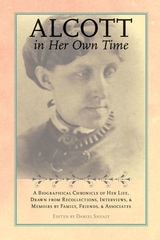
Alcott in Her Own Time
A Biographical Chronicle of Her LIfe, Drawn from Recollections, Interviews, and Memoirs by Family, Friends, and AssociatesShealy, Daniel
University of Iowa Press, 2005
Many of the printed recollections in this book appeared after Alcott became famous and showcase her as a literary lion, but others focus on her teen years, when she was living the life of Jo March; these intimate glimpses into the life of the Alcott family lead the reader to one conclusion: the family was happy, fun, and entertaining, very much like the fictional Marches. The recollections about an older and wealthier Alcott show a kind and generous, albeit outspoken, woman little changed by her money and status.
From Annie Sawyer Downs’s description of life in Concord to Anna Alcott Pratt’s recollections of the Alcott sisters’ acting days to Julian Hawthorne’s neighborly portrait of the Alcotts, the thirty-six recollections in this copiously illustrated volume tell the private and public story of a remarkable life.
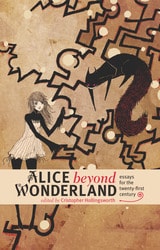
Alice beyond Wonderland
Essays for the Twenty-first CenturyCristopher Hollingsworth
University of Iowa Press, 2008
The scholars in this volume attempt to move beyond the sexually charged permutations of the "Carroll myth," the image of an introverted man fumbling into literary immortality through his love for a prepubescent Alice. Contributions include an essay comparing Dantean and Carrollian underworlds, one investigating child characters as double agents in untamed lands, one placing Wonderland within the geometrical and algebraic “fourth dimension,” one investigating the visual and verbal interplay of hand imagery, and one exploring the influence of Japanese translations of Alice on the Gothic-Lolita subculture of neo-Victorian enthusiasts. This is a bold, capacious, and challenging work.
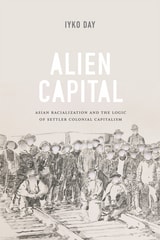
Alien Capital
Asian Racialization and the Logic of Settler Colonial CapitalismIyko Day
Duke University Press, 2016
All Blue So Late
PoemsLaura Swearingen-Steadwell
Northwestern University Press, 2018
The skeleton of this fine collection is a series of direct addresses to the author’s fourteen-year-old self, caught at the moment between girlhood and womanhood, when her perspective on everything suddenly changes. Swearingen-Steadwell’s poetic adventures through worlds within and without reveal the restlessness of the seeker. They offer unabashed tenderness to anyone who reckons with solitude, and chases joy.
All Calm Beyond
Stephen Knauth
Four Way Books, 2025
All Earthly Bodies
Michael Mlekoday
University of Arkansas Press, 2022
Finalist, 2022 Miller Williams Poetry Prize
From cities and cross-country bus rides to swamps and fern forests, Michael Mlekoday’s All Earthly Bodies celebrates the ungentrifiable, ungovernable wildness of life. This is anarchist ecology, nonbinary environmentalism, an earthbound theology against empire in all its forms. These poems ask how our lives and language, our prayers and politics, might evolve if we really listened to the world and its more-than-human songs.
“Sometimes I wish I could / peel myself from myself / without discarding the shell,” Mlekoday writes. Through a kind of lyric dreamwork, Mlekoday sounds the depths—of ancestry and identity, race and gender, earth and self—to track the unbecoming and re-membering of the body.
All My Relatives
Community in Contemporary Ethnic American LiteraturesBonnie TuSmith
University of Michigan Press, 1994
All My Relatives provides a new way of reading popular works such as The Woman Warrior, The Joy Luck Club, The Color Purple and John Edgar Wideman's Sent for You Yesterday. TuSmith's study will appeal to general readers as well as students and scholars of American culture, ethnic studies, and American literature.
"An original contribution to the field. TuSmith's willingness to step over invisible boundaries and to draw parallels between the cultural contexts of several ethnic groups at once is refreshing and important." --Amy Ling, University of Wisconsin, Madison
"Ambitious and timely . . . a significant work that Americanists will want to read. TuSmith does an excellent job of clarifying the meaning and significance of the term "ethnicity" in relation to American literature."--Ramón Saldívar, Stanford University
". . . TuSmith establishes the importance of traditional (usually oral) modes of expression to ethnic texts that are both relational and accessible . . . . [S]hould become a standard point of reference in the emerging field of comparative American literature."--Choice
Bonnie TuSmith is Assistant Professor of English, Bowling Green State University.