Results by title
4413 books match the query 'Anthropology' and 363 start with a
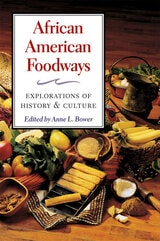
African American Foodways
Explorations of History and CultureEdited by Anne L. Bower
University of Illinois Press, 2006
Ranging from seventeenth-century West African fare to contemporary fusion dishes using soul food ingredients, the essays in this book provide an introduction to many aspects of African American foodways and an antidote to popular misconceptions about soul food. Examining the combination of African, Caribbean, and South American traditions, the volume's contributors offer lively insights from history, literature, sociology, anthropology, and African American studies to demonstrate how food's material and symbolic values have contributed to African Americans' identity for centuries. Individual chapters examine how African foodways survived the passage into slavery, cultural meanings associated with African American foodways, and the contents of African American cookbooks, both early and recent.
Contributors are Anne L. Bower, Robert L. Hall, William C. Whit, Psyche Williams-Forson, Doris Witt, Anne Yentsch, Rafia Zafar.
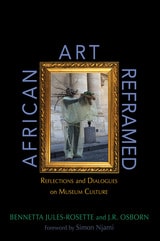
African Art Reframed
Reflections and Dialogues on Museum CultureBennetta Jules-Rosette and J. R. Osborn; Foreword by Simon Njami
University of Illinois Press, 2020
The authors take a three-pronged approach. Part One ranges from curiosity cabinets to virtual websites to offer a history of ethnographic and art museums and look at their organization and methods of reaching out to the public. In the second part, the authors examine museums as ecosystems and communities within communities, and they use semiotic methods to analyze images, signs, and symbols drawn from the experiences of curators and artists. The third part introduces innovative strategies for displaying, disseminating, and reclaiming African art. The authors also propose how to reinterpret the art inside and outside the museum and show ways of remixing the results.
Drawing on extensive conversations with curators, collectors, and artists, African Art Reframed is an essential guide to building new exchanges and connections in the dynamic worlds of African and global art.
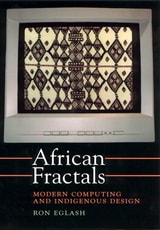
African Fractals
Modern Computing and Indigenous DesignEglash, Ron
Rutgers University Press, 1999
Anthropologists have observed that the patterns produced in different cultures can be characterized by specific design themes. In Europe and America, we often see cities laid out in a grid pattern of straight streets and right-angle corners. In contrast, traditional African settlements tend to use fractal structures-circles of circles of circular dwellings, rectangular walls enclosing ever-smaller rectangles, and streets in which broad avenues branch down to tiny footpaths with striking geometric repetition. These indigenous fractals are not limited to architecture; their recursive patterns echo throughout many disparate African designs and knowledge systems.
Drawing on interviews with African designers, artists, and scientists, Ron Eglash investigates fractals in African architecture, traditional hairstyling, textiles, sculpture, painting, carving, metalwork, religion, games, practical craft, quantitative techniques, and symbolic systems. He also examines the political and social implications of the existence of African fractal geometry. His book makes a unique contribution to the study of mathematics, African culture, anthropology, and computer simulations.
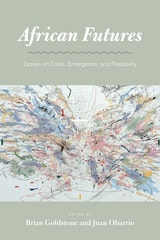
African Futures
Essays on Crisis, Emergence, and PossibilityEdited by Brian Goldstone and Juan Obarrio
University of Chicago Press, 2017
The experts in this book address Africa’s future as it is embedded within various social and cultural forms emerging on the continent today: the reconfiguration of the urban, the efflorescence of signs and wonders and gospels of prosperity, the assorted techniques of legality and illegality, lotteries and Ponzi schemes, apocalyptic visions, a yearning for exile, and many other phenomena. Bringing together social, political, religious, and economic viewpoints, the book reveals not one but multiple prospects for the future of Africa. In doing so, it offers a pathbreaking model of pluralistic and open-ended thinking and a powerful tool for addressing the vexing uncertainties that underlie so many futures around the world.
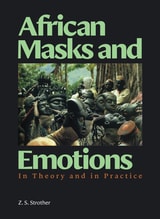
African Masks and Emotions
In Theory and in PracticeZ. S. Strother
J. Paul Getty Trust, The, 0
In this groundbreaking book, Z. S. Strother, inspired by dialogues with African masquerade patrons and performers, disputes assumptions that masks universally hide, reveal, or transform.
In Western European languages, the word mask exerts a powerful presence as a figure of speech. To masquerade is to pretend to be someone or something one is not. By extension, unmasking is a heroic metaphor for exposing a hidden truth. In this volume, art historian Z. S. Strother counters that narrative, using African case studies to offer an alternative vision of masquerading. She explores the aesthetic emotions aroused by masks, or more precisely, by “dances of masks”: joy, wonder, awe, fear, and the release of laughing out loud. She also investigates the uncanny—a sensation of “delicious shiveriness” triggered when familiar spaces and individuals become strange and changeable. Inspired by Strother’s studies in DR Congo, African Masks and Emotions takes a comparative perspective and moves emotion from the periphery to the center of analysis.
Reflecting Getty's commitment to open content, African Masks and Emotions is available for free download in ePub and PDF formats at: https://www.getty.edu/publications-reports/item/2F27A4. This paperback edition is available for sale for readers who wish to have a bound reference copy.
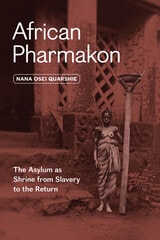
African Pharmakon
The Asylum as Shrine from Slavery to the ReturnNana Osei Quarshie
University of Chicago Press, 2025
For centuries, mental distress in West Africa has been subject to a mix of healing, harming, ritual, and regulation. In African Pharmakon, Nana Osei Quarshie questions conventional narratives about colonial psychiatry. Instead of displacing African therapeutic traditions, he argues, European psychiatric institutions in fact built upon them, adapting long-standing techniques of social control and healing.
With a focus on Ghana, Quarshie explores the shifting landscape of West African mental health practices, tracking their transformation from shrine-based rituals to colonial asylums and modern psychiatric institutions. Combining extensive archival research and ethnographic fieldwork, including the first scholarly examination of patient records from the Accra Psychiatric Hospital, Quarshie identifies five enduring techniques that have shaped the treatment of mental distress: spiritual pawning, logging, manhunting, mass expulsion, and pharmacotherapy.
Rejecting the simplistic opposition of Indigenous healing versus colonial oppression, African Pharmakon provides a nuanced account of how psychiatric care in Ghana became a tool of empowerment as well as exclusion. This pioneering study reframes our understanding of psychiatry and mental health governance in West Africa, past and present.
African Philosophy, Culture, and Traditional Medicine
MIS AF#53M. Akin Makinde
Ohio University Press, 1988
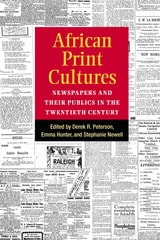
African Print Cultures
Newspapers and Their Publics in the Twentieth CenturyEdited by Derek R. Peterson, Emma Hunter, and Stephanie Newell
University of Michigan Press, 2016
The essays collected in African Print Cultures claim African newspapers as subjects of historical and literary study. Newspapers were not only vehicles for anticolonial nationalism. They were also incubators of literary experimentation and networks by which new solidarities came into being. By focusing on the creative work that African editors and contributors did, this volume brings an infrastructure of African public culture into view.
The first of four thematic sections, “African Newspaper Networks,” considers the work that newspaper editors did to relate events within their locality to happenings in far-off places. This work of correlation and juxtaposition made it possible for distant people to see themselves as fellow travellers. “Experiments with Genre” explores how newspapers nurtured the development of new literary genres, such as poetry, realist fiction, photoplays, and travel writing in African languages and in English. “Newspapers and Their Publics” looks at the ways in which African newspapers fostered the creation of new kinds of communities and served as networks for public interaction, political and otherwise. The final section, “Afterlives, ” is about the longue durée of history that newspapers helped to structure, and how, throughout the twentieth century, print allowed contributors to view their writing as material meant for posterity.
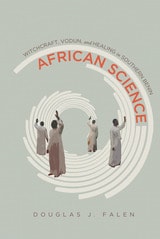
African Science
Witchcraft, Vodun, and Healing in Southern BeninDouglas J. Falen
University of Wisconsin Press, 2020
Although the Beninese understanding of àze reflects positive scientific properties in its use of specialized knowledge to harness nature's energy and realize economic success, its boundless power is inherently ambivalent because it can corrupt its users, who dispense death and destruction. Witches and healers are equivalent to supervillains and superheroes, locked in epic battles over malevolent and benevolent human desires. Beninese people's discourse about such mystical confrontations expresses a philosophy of moral duality and cosmic balance. Falen demonstrates how a deep engagement with another lived reality opens our minds and contributes to understanding across cultural difference.

African-American Pioneers in Anthropology
Edited by Ira E. Harrison and Faye V. Harrison
University of Illinois Press, 1999
Africana Studies
Theoretical FuturesEdited by Grant Farred
Temple University Press, 2022
As Africana Studies celebrates its fiftieth anniversary throughout the United States, this invigor ating collection presents possibilities for the future of the discipline’s theoretical paths. The essays in Africana Studies focus on philosophy, science, and technology; poetry, literature, and music; the crisis of the state; issues of colonialism, globalization, and neoliberalism; and the ever-expanding diaspora. The editor and contributors to this volume open exciting avenues for new narratives, philosophies, vision, and scale in this critical field of study—formed during the 1960s around issues of racial injustice in America—to show what Africana Studies is already in the process of becoming.
Africana Studies recognizes how the discipline has been shaped, changing over the decades as scholars have opened new modes of theoretical engagement such as addressing issues of gender and sexuality, politics, and cultural studies. The essays debate and (re)consider black and diasporic life to sustain, provoke, and cultivate Africana Studies as a singular yet polyvalent mode of thinking.
Contributors: Akin Adeṣọkan, John E. Drabinski, Zeyad El Nabolsy, Pierre-Philippe Fraiture, Kasareka Kavwahirehi, Gregory Pardlo, Radwa Saad, Sarah Then Bergh, and the editor
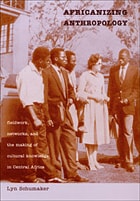
Africanizing Anthropology
Fieldwork, Networks, and the Making of Cultural Knowledge in Central AfricaLyn Schumaker
Duke University Press, 2001
Schumaker shows how local conditions and local ideas about culture and history, as well as previous experience of outsiders’ interest, shape local people’s responses to anthropological fieldwork and help them, in turn, to influence the construction of knowledge about their societies and lives. Bringing to the fore a wide range of actors—missionaries, administrators, settlers, the families of anthropologists—Schumaker emphasizes the daily practices of researchers, demonstrating how these are as centrally implicated in the making of anthropological knowlege as the discipline’s methods. Selecting a prominent group of anthropologists—The Manchester School—she reveals how they achieved the advances in theory and method that made them famous in the 1950s and 1960s.
This book makes important contributions to anthropology, African history, and the history of science.
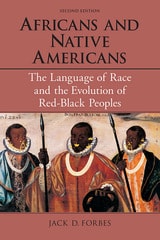
Africans and Native Americans
The Language of Race and the Evolution of Red-Black PeoplesJack D. Forbes
University of Illinois Press, 1993
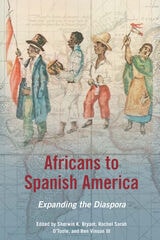
Africans to Spanish America
Expanding the DiasporaEdited by Sherwin K. Bryant, Rachel Sarah O’Toole, & Ben Vinson III
University of Illinois Press, 2014
Contributors are Joan C. Bristol, Nancy E. van Deusen, Leo J. Garofalo, Herbert S. Klein, Charles Beatty-Medina, Karen Y. Morrison, Rachel Sarah O'Toole, Frank "Trey" Proctor III, and Michele Reid-Vazquez.
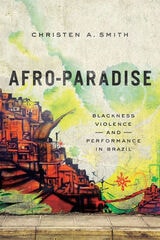
Afro-Paradise
Blackness, Violence, and Performance in BrazilChristen A. Smith
University of Illinois Press, 2016
Christen A. Smith argues that the dialectic of glorified representations of black bodies and subsequent state repression reinforces Brazil's racially hierarchal society. Interpreting the violence as both institutional and performative, Smith follows a grassroots movement and social protest theater troupe in their campaigns against racial violence. As Smith reveals, economies of black pain and suffering form the backdrop for the staged, scripted, and choreographed afro-paradise that dazzles visitors. The work of grassroots organizers exposes this relationship, exploding illusions and asking unwelcome questions about the impact of state violence performed against the still-marginalized mass of Afro-Brazilians.
Based on years of field work, Afro-Paradise is a passionate account of a long-overlooked struggle for life and dignity in contemporary Brazil.
Afro-Sweden
Becoming Black in a Color-Blind CountryRyan Thomas Skinner
University of Minnesota Press, 2022
A compelling examination of Sweden’s African and Black diaspora
Contemporary Sweden is a country with a worldwide progressive reputation, despite an undeniable tradition of racism within its borders. In the face of this contradiction of culture and history, Afro-Swedes have emerged as a vibrant demographic presence, from generations of diasporic movement, migration, and homemaking. In Afro-Sweden, Ryan Thomas Skinner uses oral histories, archival research, ethnography, and textual analysis to explore the history and culture of this diverse and growing Afro-European community.
Skinner employs the conceptual themes of “remembering” and “renaissance” to illuminate the history and culture of the Afro-Swedish community, drawing on the rich theoretical traditions of the African and Black diaspora. Remembering fosters a sustained meditation on Afro-Swedish social history, while Renaissance indexes a thriving Afro-Swedish public culture. Together, these concepts illuminate significant existential modes of Afro-Swedish being and becoming, invested in and contributing to the work of global Black studies.
The first scholarly monograph in English to focus specifically on the African and Black diaspora in Sweden, Afro-Sweden emphasizes the voices, experiences, practices, knowledge, and ideas of these communities. Its rigorously interdisciplinary approach to understanding diasporic communities is essential to contemporary conversations around such issues as the status and identity of racialized populations in Europe and the international impact of Black Lives Matter.
AfroSwedish Places of Belonging
Nana Osei-Kofi
Northwestern University Press, 2024

After Eden
The Evolution of Human DominationKirkpatrick Sale
Duke University Press, 2006
In After Eden, Kirkpatrick Sale answers these questions in a radically new way. Integrating research in paleontology, archaeology, and anthropology, he points to the beginning of big-game hunting as the origin of Homo sapiens’ estrangement from the natural world. Sale contends that a new, recognizably modern human culture based on the hunting of large animals developed in Africa some 70,000 years ago in response to a fierce plunge in worldwide temperature triggered by an enormous volcanic explosion in Asia. Tracing the migration of populations and the development of hunting thousands of years forward in time, he shows that hunting became increasingly adversarial in relation to the environment as people fought over scarce prey during Europe’s glacial period between 35,000 and 10,000 years ago. By the end of that era, humans’ idea that they were the superior species on the planet, free to exploit other species toward their own ends, was well established.
After Eden is a sobering tale, but not one without hope. Sale asserts that Homo erectus, the variation of the hominid species that preceded Homo sapiens and survived for nearly two million years, did not attempt to dominate the environment. He contends that vestiges of this more ecologically sound way of life exist today—in some tribal societies, in the central teachings of Hinduism and Buddhism, and in the core principles of the worldwide environmental movement—offering redemptive possibilities for ourselves and for the planet.
After Ethnos
Tobias Rees
Duke University Press, 2018
After Freedom
A Cultural Study In The Deep SouthHortense Powdermaker
University of Wisconsin Press, 1993

After Jews And Arabs
Remaking Levantine CultureAmmiel Alcalay
University of Minnesota Press, 1992
By exposing the rich and diverse textual and cultural legacy of this time and space, Alcalay reassesses the exclusion of Semitic culture in Europe from the perspective of contemporary Arabic culture and opposing images of the Israeli-Palestinian conflict. This book will compel a revision of Jewish studies by placing contemporary Israeli culture within its Middle Eastern context and the terms of colonial, postcolonial, and multicultural discourse.
After Life
An Ethnographic NovelTobias Hecht
Duke University Press, 2006
Hecht had originally intended to write a biography of Veríssimo. But with interviews ultimately spanning a decade, he couldn't ignore that much of what he had been told wasn’t, strictly speaking, true. In Veríssimo’s recounting of her life, a sister who had never been born died tragically, while the very same rape that shattered the body and mind of an acquaintance occurred a second time, only with a different victim and several years later. At night, with the anthropologist’s tape recorder in hand, she became her own ethnographer, inventing informants, interviewing herself, and answering in distinct voices.
With truth impossible to disentangle from invention, Hecht followed the lead of Veríssimo, his would-be informant, creating characters, rendering a tale that didn’t happen but that might have, probing at what it means to translate a life into words.
A call and response of truth and invention, mental illness and yearning, After Life is a tribute to and reinterpretation of the Latin American testimonio genre. Desire, melancholy, longing, regret, and the hunger to live beyond the confines of past and future meet in this debut novel by Tobias Hecht.
After Love
Queer Intimacy and Erotic Economies in Post-Soviet CubaNoelle Stout
Duke University Press, 2014
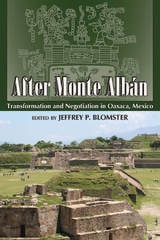
After Monte Albán
Transformation and Negotiation in Oaxaca, MexicoJeffrey P. Blomster
University Press of Colorado, 2016
Contributors synthesize these regional transformations and continuities in the lower Rio Verde Valley, the Valley of Oaxaca, and the Mixteca Alta. They provide data from material culture, architecture, codices, ethnohistoric documents, and ceramics, including a revised ceramic chronology from the Late Classic to the end of the Postclassic that will be crucial to future investigations. After Monte Albán establishes Postclassic Oaxaca's central place in the study of Mesoamerican antiquity.
Contributors include Jeffrey P. Blomster, Bruce E. Byland, Gerardo Gutierrez, Byron Ellsworth Hamann, Arthur A. Joyce, Stacie M. King, Michael D. Lind, Robert Markens, Cira Martínez López, Michel R. Oudijk, and Marcus Winter.
After Spanish Rule
Postcolonial Predicaments of the AmericasMark Thurner and Andrés Guerrero, eds.
Duke University Press, 2003
Challenging the universalizing tendencies of postcolonial theory as it has developed in the Anglophone academy, the contributors are attentive to the crucial ways in which the histories of Latin American countries—with their creole elites, hybrid middle classes, subordinated ethnic groups, and complicated historical relationships with Spain and the United States—differ from those of other former colonies in the southern hemisphere. Yet, while acknowledging such differences, the volume suggests a host of provocative, critical connections to colonial and postcolonial histories around the world.
Contributors
Thomas Abercrombie
Shahid Amin
Jorge Cañizares-Esguerra
Peter Guardino
Andrés Guerrero
Marixa Lasso
Javier Morillo-Alicea
Joanne Rappaport
Mauricio Tenorio-Trillo
Mark Thurner
After The End
Representations Of Post-ApocalypseJames Berger
University of Minnesota Press, 1999
Explores the cultural function of the concept of “the end.”
Apocalyptic thought is hardly unique to the end of the twentieth century; it’s been a fixture of American culture for decades. Currently, the media are rife with omens and signs, and we’re bombarded with warnings that “the end is near.” But as James Berger argues here, the end never comes. There is always something left.
In this study of the cultural pursuit of the end and what follows, Berger contends that every apocalyptic depiction leaves something behind, some mixture of paradise and wasteland. Combining literary, psychoanalytic, and historical methods, Berger mines these depictions for their weight and influence on current culture. He applies wide-ranging evidence-from science fiction to Holocaust literature, from Thomas Pynchon to talk shows, from American politics to the fiction of Toni Morrison-to reveal how representations of apocalyptic endings are indelibly marked by catastrophic histories. These post-apocalyptic visions reveal as much about our perception of the past as they do about conceptions of the future. Berger examines the role of such historical crises as slavery, the Holocaust, and the Vietnam War and describes how these traumas continue to generate cultural symptoms. The shadow of impending apocalypse darkens today’s vision of the future, but it’s a familiar shadow: traumas we have already experienced as a culture are recycled into visions of new endings. Our “endings” are already after the end. Berger demonstrates that post-apocalyptic representations are both symptoms and therapies. Contemporary culture continually draws on these traumatic histories, trying to forget, remember, deny, and recover. After the End puts these visions in context, revealing them in some cases as dangerous evasions, in others as crucial tools for cultural survival. ISBN 0-8166-2932-3 Cloth £00.00 $47.95xxISBN 0-8166-2933-1 Paper £00.00 $18.95x248 Pages 5 7/8 x 9 MarchTranslation Inquiries: University of Minnesota Press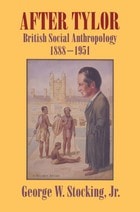
After Tylor
British Social Anthropology, 1888-1951George W. Stocking, Jr.
University of Wisconsin Press, 1998
"The publication of After Tylor, taken together with Victorian Anthropology, represents a milestone in the historiography of the behavioural sciences."—Robert Ackerman, London Review of Books
"After Tylor is thus an effort to reconstruct and understand modes of thought which—though hardly discontinuous—were still rather different from our own. In this, it is utterly and completely successful."—Robert Alun Jones, American Journal of Sociology
"This is magnificent scholarship. Furthermore it proves that a discourse intended to complicate received ideas can also be eminently readable."—Michael Herzfeld, American Scientist
"Formidable as its scope is, this account is also eminently readable. The layering of each character will ensure that it can be read at all levels of anthropological sophistication."—Marilyn Strathern, Times Higher Education Supplement
"There are many reasons that George Stocking is generally recognized as the leading historian of anthropology. His ability to breathe life into the dead is not the least of them." —Henry Munson, Jr., Religion
"Few scholarly books of this considerable length deserve to be read from cover to cover, but Stocking's After Tylor is surely one of them."—Tamara Kohn, Metascience

After War
The Weight of Life at Walter ReedZoë H. Wool
Duke University Press, 2015
After the Coup
An Ethnographic Reframing of Guatemala 1954Edited by Timothy J. Smith and Abigail E. Adams
University of Illinois Press, 2011
Recent research and the release of newly declassified U.S. government documents underscore the importance of reading Guatemala's current history through the lens of 1954. Scholars and researchers who have worked in Guatemala from the 1940s to the present articulate how the coup fits into ethnographic representations of Guatemala. Highlighting the voices of individuals with whom they have lived and worked, the contributors also offer an unmatched understanding of how the events preceding and following the coup played out on the ground.
Contributors are Abigail E. Adams, Richard N. Adams, David Carey Jr., Christa Little-Siebold, Judith M. Maxwell, Victor D. Montejo, June C. Nash, and Timothy J. Smith.
Afterlives of Affect
Science, Religion, and an Edgewalker’s SpiritMatthew C. Watson
Duke University Press, 2020
Aftermaths
Exile, Migration, and Diaspora ReconsideredBullock, Marcus
Rutgers University Press, 2008
Marcus Bullock and Peter Y. Paik, in bringing this collection together, show we have reached a moment in history when it is imperative to question prevailing intellectual models. The interconnectedness of the world's economies, the contributors argue, can exacerbate existing antagonisms or create new ones. With essays by Ihab Hassan, Paul Brodwin, and Helen Fehervary, among others, Aftermaths engages not only with important academic topics but also with the leading political issues of the day.
Aftershocks of the New
Feminism and Film HistoryPetro, Patrice
Rutgers University Press, 2001
The beginning of this century has brought with it a host of assumptions about the newness of our technologies, globalized economies, and transnational media practices. Our own time is a period marked by experiences of fragmentation, sensation, and shock. The essays here are joined by a common concern to chart another side to modernity—precisely after the shock of the new—when the new ceases to be shocking, and when the extraordinary and the sensational become linked to the boring and the everyday. Patrice Petro explores how the mechanisms of modernism, German cinema, and feminist film theory have evolved, and she discusses the directions in which they are headed.
Petro’s essays—some published here for the first time—raise such questions as: What roles do television and other media play in film studies? What is the place of feminist film theory in our conceptions of film history? How is German film theory situated within international film theory?
Rather than continue to sensationalize sensation, Aftershocks of the New aims to lower the volume of debates over the place of cinema within the culture of modernity. And it accomplishes this by locating them within a more complex matrix of contending sensibilities, voices, and impulses.
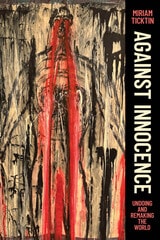
Against Innocence
Undoing and Remaking the WorldMiriam Ticktin
University of Chicago Press, 2025
In this timely and bold book, Miriam Ticktin explores how a concept that consistently appears as a moral good actually ends up creating harm for so many. Claims to innocence protect migrant children, but often at the expense of their parents; claims to the innocence of the fetus work to punish women. Ticktin shows how innocence structures political relationships, focusing on individual victims and saviors, while foreclosing forms of collective responsibility. Ultimately, she wants to understand how the discourse around innocence functions, what gives it such power, and why we are so compelled by it, while showing that alternative political forms already exist. She examines this process across various domains, from migration, science, and environmentalism to racial and reproductive justice.
Throughout the book, Ticktin shows how the concept of innocence intimately shapes why, how, and for whom we should care and whose lives matter—and how this can have devastating consequences when only an exceptional few can qualify as innocent. A politics grounded on innocence justifies a world built on inequality, designating most people—especially the racialized poor—as unworthy, undeserving, and less than human. As an alternative, she explores the aesthetics and politics of “commoning”—a collective regime of living that refuses a liberal politics of individual identity and victimhood.
Aged by Culture
Margaret Morganroth Gullette
University of Chicago Press, 2003
In this illuminating book, Margaret Morganroth Gullette reveals that aging doesn't start in our chromosomes, but in midlife downsizing, the erosion of workplace seniority, threats to Social Security, or media portrayals of "aging Xers" and "greedy" Baby Boomers. To combat the forces aging us prematurely, Gullette invites us to change our attitudes, our life storytelling, and our society. Part intimate autobiography, part startling cultural expose, this book does for age what gender and race studies have done for their categories. Aged by Culture is an impassioned manifesto against the pernicious ideologies that steal hope from every stage of our lives.
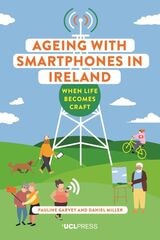
Ageing with Smartphones in Ireland
When Life Becomes CraftPauline Garvey and Daniel Miller
University College London, 2021
This volume documents a radical change in the experience of aging. Based on two ethnographies in Dublin, Ireland, the book illustrates how smartphones enable old people to focus on crafting a new life in retirement. For some, the smartphone is an intimidating burden linked to being on the wrong side of a new digital divide. But for most, however, it has become integral to a new trajectory towards a more sustainable life, both for themselves and their environment. The smartphone has reunited extended family and old friends, helped resolve intergenerational conflicts though new forms of grandparenting, and has become a health resource. This is a book about acknowledging late middle age in contemporary Ireland and examines how older people in Ireland experience life today.
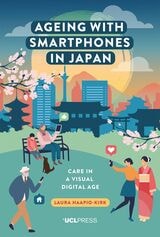
Ageing with Smartphones in Japan
Care in a Visual Digital AgeLaura Haapio-Kirk
University College London, 2024
Ageing with Smartphones in Japan examines sixteen months of ethnographic research following older adults, age fifty and up, in urban Kyoto and rural Kochi Prefecture, Japan as they navigate social and personal shifts post-retirement in the age of the smartphone. It attempts to answer what this transition means for friendship, gendered labor, multigenerational living, internal migration, health, as well as life purpose for older adults. This book closely investigates how the smartphone challenges gender-based norms and how older adults creatively navigate them. Using comics, drawings, and fieldwork sketches it also explores how they use digital visual communication to socialize with friends and family.

Ageing with Smartphones in Uganda
Togetherness in the Dotcom AgeCharlotte Hawkins
University College London, 2023
Ageing with Smartphones in Uganda is based on a sixteen-month ethnography about experiences of aging in a neighborhood in central Kampala, Uganda. Taking a convivial approach, which celebrates multiple ways of knowing about social life, Charlotte Hawkins draws from these expressions about cooperative morality and modernity to consider the everyday mitigation of profound social change. “Dotcom” is understood to encompass everything from the influence of information and communications technologies to urban migration and lifestyles in the city to shifts in ways of knowing and relating. At the same time, dotcom tools such as mobile phones and smartphones facilitate elder care through, for example, regular mobile money remittances.
This book explores how dotcom relates to older people’s health, their care norms, their social standing, their values of respect and relatedness, and their intergenerational relationships—both political and personal. It also re-frames the youth-centricity of research on the city and work, new media and technology, and politics and service provision in Uganda. Through ethnographic consideration of everyday life and self-formation in this context, this monograph seeks to contribute to an ever-incomplete understanding of how we relate to each other and to the world around us.
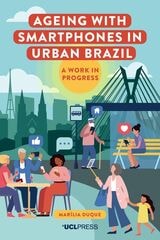
Ageing with Smartphones in Urban Brazil
A Work in ProgessMarília Duque
University College London, 2022
With people living longer all over the world, aging has begun to be framed as a socioeconomic problem. In Brazil, older people are expected to remain healthy and autonomous while actively participating in society. Based on ethnographic research in São Paulo, this book shows how older people in a middle-class neighborhood try to reconcile these expectations with the freedom and pleasures reserved for old age by using smartphones. Smartphones have become of great importance to the residents as they search for and engage in new forms of work and hobbies. Connected by a digital network, they work as content curators, sharing activities that fill their schedules. Managing multiple WhatsApp groups is a job in itself, as well as a source of solidarity and hope. Friendship groups help each to download new apps, search for medical information and guidance, and navigate the city. Together, the author shows, older people are reinventing themselves as volunteers, entrepreneurs, and influencers, or they are finding a new interest that gives their later life a purpose. The smartphone, which enables the residents to share and discuss their busy lives, is also helping them, and us, to rethink aging.
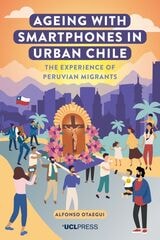
Ageing with Smartphones in Urban Chile
The Experience of Peruvian MigrantsAlfonso Otaegui
University College London, 2023
What does it mean to be aging in Chile as a migrant? Drawing on extensive ethnographic fieldwork, Ageing with Smartphones in Urban Chile analyzes the experience of aging for Peruvian migrants aged around sixty who have lived in Chile for more than twenty years. Their lives, we discover, are informed by a series of experiences of being ‘in between’. They live between two countries, two generations, and two different stages in life, between giving care and not wanting care, and between a continuing legacy and not transmitting legacy. By focusing on the entanglement of aging, migration, and technology, this book is an ethnographic contribution to an unexplored subject in the vast literature on migration studies in Chile.
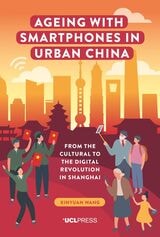
Ageing with Smartphones in Urban China
From the Cultural to the Digital Revolution in ShanghaiXinyuan Wang
University College London, 2023
The current oldest generation in Shanghai was born at a time when the average household could not afford electric lights, but today they can turn their lights off using smartphone apps. Grounded in extensive ethnographic fieldwork in Shanghai, Ageing with Smartphones in Urban China tackles the intersection between the “two revolutions” experienced by the older generation in Shanghai: the contemporary smartphone-based digital revolution and the earlier communist revolutions and argues that we can only understand the smartphone revolution if we first appreciate the long-term consequences of these people’s experiences during the communist revolutions. Supported by detailed ethnographic material, the observations and analysis here provide a panorama view of the social landscape of contemporary China, addressing such topics the digital and everyday life, aging and healthcare, intergenerational relations and family development, community building and grassroots organizations, collective memories, and political attitudes among ordinary Chinese people.
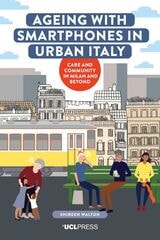
Ageing with Smartphones in Urban Italy
Care and Community in Milan and BeyondShireen Walton
University College London, 2021
This book is an anthropological account of the experience of age and ageing in an inner-city neighborhood in Milan, exploring the relationship between ageing and technology amidst a backdrop of rapid global technological innovation, including the advent of mobile health, smart cities, and a number of wider socioeconomic and technological transformations. Through extensive urban and digital ethnographic research in Milan, Shireen Walton shows how the smartphone has become a “constant companion” in contemporary life, accompanying people throughout the day and through individual and collective experiences. The volume argues that ageing with smartphones in the contemporary urban Italian context is about living with ambiguity, change, and contradiction, as well as developing curiosities about a changing world, our changing selves, and changing relationships with others.
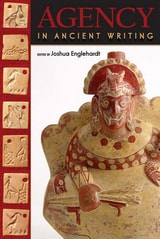
Agency in Ancient Writing
Joshua Englehardt
University Press of Colorado, 2012
Individual agents are frequently evident in early writing and notational systems, yet these systems have rarely been subjected to the concept of agency as it is traceable in archeology. Agency in Ancient Writing addresses this oversight, allowing archeologists to identify and discuss real, observable actors and actions in the archaeological record.
Embracing myriad ways in which agency can be interpreted, ancient writing systems from Mesoamerica, Mesopotamia, Egypt, Crete, China, and Greece are examined from a textual perspective as both archaeological objects and nascent historical documents. This allows for distinction among intentions, consequences, meanings, and motivations, increasing understanding and aiding interpretation of the subjectivity of social actors. Chapters focusing on acts of writing and public recitation overlap with those addressing the materiality of texts, interweaving archaeology, epigraphy, and the study of visual symbol systems.
Agency in Ancient Writing leads to a more thorough and meaningful discussion of agency as an archaeological concept and will be of interest to anyone interested in ancient texts, including archaeologists, historians, linguists, epigraphers, and art historians, as well as scholars studying agency and structuration theory.
Agewise
Fighting the New Ageism in AmericaMargaret Morganroth Gullette
University of Chicago Press, 2011
Let’s face it: almost everyone fears growing older. We worry about losing our looks, our health, our jobs, our self-esteem—and being supplanted in work and love by younger people. It feels like the natural, inevitable consequence of the passing years, But what if it’s not? What if nearly everything that we think of as the “natural” process of aging is anything but?
In Agewise, renowned cultural critic Margaret Morganroth Gullette reveals that much of what we dread about aging is actually the result of ageism—which we can, and should, battle as strongly as we do racism, sexism, and other forms of bigotry. Drawing on provocative and under-reported evidence from biomedicine, literature, economics, and personal stories, Gullette probes the ageism thatdrives discontent with our bodies, our selves, and our accomplishments—and makes us easy prey for marketers who want to sell us an illusory vision of youthful perfection. Even worse, rampant ageism causes society to discount, and at times completely discard, the wisdom and experience acquired by people over the course of adulthood. The costs—both collective and personal—of this culture of decline are almost incalculable, diminishing our workforce, robbing younger people of hope for a decent later life, and eroding the satisfactions and sense of productivity that should animate our later years.
Once we open our eyes to the pervasiveness of ageism, however, we can begin to fight it—and Gullette lays out ambitious plans for the whole life course, from teaching children anti-ageism to fortifying the social safety nets, and thus finally making possible the real pleasures and opportunities promised by the new longevity. A bracing, controversial call to arms, Agewise will surprise, enlighten, and, perhaps most important, bring hope to readers of all ages.
Aggregate Analysis in Chipped Stone
Christopher T Hall
University of Utah Press, 2004
Less than two decades ago, archaeologists considered lithic debitage, the flakes and debris left from the manufacture of stone tools, little more than uninformative waste. Since then, fieldworkers have increasingly recognized that stone flakes can provide information both singly and in aggregate.
Many methods are now available for analyzing lithic debitage, yet no single method is entirely reliable as a vehicle to meaningful interpretation of past behavior. Part of the problem lies in the disparity between tightly controlled experimental conditions and the difficulty of sorting individual sequences out of the masses of stone found in many archaeological sites. Contributors to this volume seek to identify the strengths and weaknesses in the more widespread and competing analytical forms while arguing for the use of multiple lines of evidence. As the title indicates, their primary focus is on mass analysis of aggregates rather than individual flakes. Thus several chapters also address problems of subdividing aggregates to better deal with the “mixed assemblages” generated by multiple factors over time.
Aging and Loss
Mourning and Maturity in Contemporary JapanDanely, Jason
Rutgers University Press, 2015
Based on nearly a decade of research, Aging and Loss examines how the landscape of aging is felt, understood, and embodied by older adults themselves. In detailed portraits, anthropologist Jason Danely delves into the everyday lives of older Japanese adults as they construct narratives through acts of reminiscence, social engagement and ritual practice, and reveals the pervasive cultural aesthetic of loss and of being a burden.
Aging in a Changing World
Older New Zealanders and Contemporary MulticulturalismMolly George
Rutgers University Press, 2022
Agricultural Reason in the Shadow of Subsistence Capitalism
A Rural Ontology from Western IndiaArjun Appadurai
HAU, 2024
This collection of essays by Arjun Appadurai based on his fieldwork in rural Maharashtra, India, in the early 1980s is one of the few anthropological treatments of agricultural reasoning. In conversation with agronomists, economists, and development anthropologists, the essays explore the ways agricultural technologies, changes in how surface wells are dug and managed, the provision and sharing of food and management of time, issues of scale in studying rural lives, and how local knowledge is formed and transformed reveal the distinctive character of rural Indian sociality. Locating these features in the context of “subsistence capitalism,” Appadurai draws our attention to the importance of relational practices and the pull of autonomy. These essays offer a close look at an agrarian society at the pivotal moment of its encounter with capitalist transformation and study ideas of measurement, sociality, and independence.
Ain't I an Anthropologist
Zora Neale Hurston Beyond the Literary IconJennifer L. Freeman Marshall
University of Illinois Press, 2023
Perceptive and original, Ain’t I an Anthropologist is an overdue reassessment of Zora Neale Hurston’s place in American cultural and intellectual life.
Akulmiut Neqait / Fish and Food of the Akulmiut
Ann Fienup-Riordan, Marie Meade, and Alice Rearden
University of Alaska Press, 2019
This bilingual book details the lives of the Akulmiut living in the lake country west of Bethel, Alaska, in the villages of Kasigluk, Nunapitchuk, and Atmautluak. Akulmiut Neqait is based in conversations recorded with the people of these villages as they talk about their uniquely Yup'ik view of the world and how it has weathered periods of immense change in southwest Alaska. While many predicted that globalization would sound the death knoll for many distinctive traditions, these conversations show that Indigenous people all over the planet have sought to appropriate the world in their own terms. For all their new connectedness, the continued relevance of traditional admonitions cannot be denied.

Alchemy in the Rain Forest
Politics, Ecology, and Resilience in a New Guinea Mining AreaJerry K. Jacka
Duke University Press, 2015