Results by title
3258 books match the query 'Performing Arts' and 266 start with a
Adventures in Shondaland
Identity Politics and the Power of RepresentationGriffin, Rachel Alicia
Rutgers University Press, 2018
Shonda Rhimes is one of the most powerful players in contemporary American network television. Beginning with her break-out hit series Grey’s Anatomy, she has successfully debuted Private Practice, Scandal, How to Get Away with Murder, The Catch, For The People, and Station 19. Rhimes’s work is attentive to identity politics, “post-” identity politics, power, and representation, addressing innumerable societal issues. Rhimes intentionally addresses these issues with diverse characters and story lines that center, for example, on interracial friendships and relationships, LGBTIQ relationships and parenting, the impact of disability on familial and work dynamics, and complex representations of womanhood. This volume serves as a means to theorize Rhimes’s contributions and influence by inspiring provocative conversations about television as a deeply politicized institution and exploring how Rhimes fits into the implications of twenty-first century television.
Aesthetic Citizenship
Immigration and Theater in Twenty-First-Century ParisEmine Fisek
Northwestern University Press, 2017
From neighborhood associations and humanitarian alliances to arts organizations both large and small, Fisek traces how theater has emerged as a practice with the perceived capacity to address questions regarding immigrant rights, integration, and experience. In Aesthetic Citizenship, she explores how the stage, one of France’s most evocative cultural spaces, has come to play a role in contemporary questions about immigration, citizenship and national identity. Yet Fişek’s insightful research also illuminates Paris’s broader historical, political, and cultural through-lines that continue to shape the relationship between theater and migration in France.
By focusing on how French public discourses on immigration are not only rendered meaningful but also inhabited and modified in the context of activist and arts practice, Aesthetic Citizenship seeks to answer the fundamental question: is theater a representational act or can it also be a transformative one?
Aesthetic Reverberations and the Anticolonial Imagination
Rhiannon Noel Welch
Northwestern University Press, 2027
Offering a unique critical approach to understanding historical violence in the present
Colonial histories and their racializing assemblages persist in reconfigured forms, shaping conditions of life today. Rhiannon Noel Welch offers reverberation as an expansive concept with which to think about how aesthetics—etymologically, perception by the senses—hold, transmit, and resist colonialism’s many entangled afterlives. Though reverberation is commonly understood as an acoustic phenomenon similar to echo and resonance, Welch borrows from philosophy, philology, and physics to stretch conventional meanings of the term and emphasize its distinction from other sonic effects and metaphors. The archive assembled here includes works by artists and thinkers who reach for aesthetics (words, images, music) to contest empire’s longue durée—from early European colonialism in the Western Hemisphere to the transshipping of Africans across the Atlantic, Fascist Italy’s occupation of Ethiopia, and contemporary Mediterranean border regimes. In a series of close and interlinked readings of theory, poetry, film, and other media by Sylvia Wynter, Giacomo Leopardi, and Garrett Bradley, among others, Welch proposes reverberation as a material metaphor for how aesthetic works hit us as sentient participants in social worlds that are at once asymmetrical and inextricably linked.
Aesthetic Spaces
The Place of Art in FilmBrigitte Peucker
Northwestern University Press, 2019
The films studied in these chapters include those by Abbas Kiarostami, Alfred Hitchcock, Michelangelo Antonioni, Jean-Luc Godard, Carl Th. Dreyer, Peter Greenaway, Rainer Werner Fassbinder, Ingmar Bergman, Jacques Rivette, Fritz Lang, F. W. Murnau, Lars von Trier, Spike Jonze, Éric Rohmer, Lech Majewski, and others. Where two media are in evidence in these films, there is usually a third, and often theater mediates between film and painting. Aesthetic Spaces interrogates issues of cinematic space and mise-en-scène from different but interconnected theoretical perspectives, organizing its chapters around some of the formal principles—space, spectator, frame, color and lighting, props, décor, and actor—that shape films.
Drawing on the older arts to renew cinema, the films examined deploy paintings as material: Poussin and Bruegel, Rembrandt, Hals and Klimt, and medieval illustrations and modernist abstractions are used to expand our notions of cinematic space. Peucker shows that when different media come together in film, they create effects of dissonance out of which new modes of looking may arise.
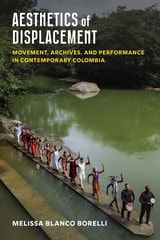
Aesthetics of Displacement
Movement, Archives, and Performance in Contemporary ColombiaMelissa Blanco Borelli
University of Michigan Press, 2026
Aesthetics of Displacement centers the embodied aesthetic practices of Afro-Colombian people and their experiences, asking readers to reassess Colombian national history, legacies of colonialism and racism, politics of memory, and the inheritances of violence related to the Colombian armed conflict. Through a theoretical frame of destierro or “displacement” and an examination of the Afro-Colombian philosophy vivir sabroso or “to live harmoniously,” Aesthetics of Displacement focuses on how theatre-makers, choreographers, filmmakers, activist groups, and photojournalists create an embodied Colombian perspective informed by decolonial practices and thinking that rely on movement as a strategy for existence and that counter European hegemonic aesthetics as the major foundations of taste and value. This approach not only enhances our understanding of contemporary Colombian culture, but also highlights the importance of performance as a means of resistance and identity formation.
Aesthetics of Disturbance
Anti-Art in Avant-Garde DramaDavid Graver
University of Michigan Press, 1995
Aesthetics of Self-Invention
Oscar Wilde To David BowieShelton Waldrep
University of Minnesota Press, 2004
Traces the influence of Oscar Wilde as the precursor of twentieth-century artists of self-performance
By printing the title “Professor of Aesthetics” on his visiting cards, Oscar Wilde announced yet another transformation—and perhaps the most significant of his career, proclaiming his belief that he could redesign not just his image but his very self. Shelton Waldrep explores the cultural influences at play in Wilde’s life and work and his influence on the writing and performance of the twentieth century, particularly on the lives and careers of some of its most aestheticized performers: Truman Capote, Andy Warhol, David Hockney, and David Bowie. As Waldrep reveals, Wilde’s fusing of art with commerce foresaw the coming century’s cultural producers who would blend works of both “high art” and mass-market appeal.
Whether as a gay man or as a postmodern performance artist ahead of his time, Wilde ultimately emerges here as the embodiment of the twentieth-century media-savvy artist who is both subject and object of the aesthetic and economic systems in which he is enmeshed.
Affect, Animals, and Autists
Feeling Around the Edges of the Human in PerformanceMarla Carlson
University of Michigan Press, 2018
By analyzing specific structures of affect with the vocabulary of emotions, Marla Carlson builds upon the conception of affect articulated by psychologist Silvan Tomkins. The book treats a diverse selection of live performance and archival video and analyzes the ways in which they affect their audiences. The range of performances includes commercially successful productions such as The Curious Incident of the Dog in the Night-Time, War Horse, and The Lion King as well as to the more avant-garde and experimental theater created by Robert Wilson and Christopher Knowles, Back to Back Theatre, Elevator Repair Service, Pig Iron Theatre, and performance artist Deke Weaver.
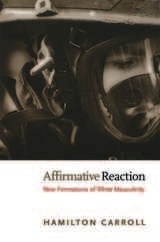
Affirmative Reaction
New Formations of White MasculinityHamilton Carroll
Duke University Press, 2011
Throughout Affirmative Reaction, Carroll examines the kinds of difference white masculinity claims for itself as it attempts to hold onto or maintain majority privilege. Whether these are traditional sites of minority difference—such as Irishness, white trash, or domestic melodrama—or reworked sites of masculinist investment—including laboring bodies, public-sphere politics, and vigilantism—the outcome is the same: the foregrounding of white masculinity over and against women, people of color, and the non-heteronormative. By revealing the strategies through which white masculinity is produced as a formal difference, Carroll sheds new light on the ways that privilege is accrued and maintained.
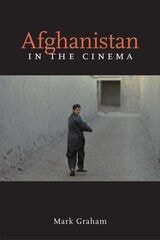
Afghanistan in the Cinema
Mark Graham
University of Illinois Press, 2010
The book considers a range of films, beginning with the 1970s epics The Man Who Would Become King and The Horsemen and following the shifts in representation of the Muslim world during the Russian War in films such as The Beast and Rambo III. Graham then moves on to Taliban-era films such as Kandahar, Osama, and Ellipsis, the first Afghan film directed by a woman. Lastly, the book discusses imperialist nostalgia in films such as Charlie Wilson's War and destabilizing visions represented in contemporary works such as The Kite Runner.
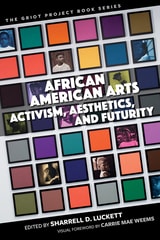
African American Arts
Activism, Aesthetics, and Futurityweems, carrie mae
Bucknell University Press, 2020
Contributors: Carrie Mae Weems, Carmen Gillespie, Rikki Byrd, Amber Lauren Johnson, Doria E. Charlson, Florencia V. Cornet, Daniel McNeil, Lucy Caplan, Genevieve Hyacinthe, Sammantha McCalla, Nettrice R. Gaskins, Abby Dobson, J. Michael Kinsey, Shondrika Moss-Bouldin, Julie B. Johnson, Sharrell D. Luckett, Jasmine Eileen Coles, Tawnya Pettiford-Wates, Rickerby Hinds.
Published by Bucknell University Press. Distributed worldwide by Rutgers University Press.

African Animation
History, Culture, and IndustryBoukary Sawadogo
Rutgers University Press, 2027
Against the backdrop of the rising interest in African stories in mainstream media, African Animation looks at a more than century-old animation practice that remains largely unknown. Carefully organized, this book offers a comprehensive treatment that canvases animation from all over the continent, analyzing its history, socio-political contexts, artistic and technological development, visual cultures, and economic market conditions. African animation also contributes to the broader landscape of animation studies: how does our view of the history of animation change when we add an African perspective to the otherwise dominating perspectives of Hollywood, Japanese, and Korean animation? What does animation look and feel like in other parts of the world? African animation has always been there; this book helps us pay attention to it. This is a must-read for those interested in African animation, including artists, industry insiders, and fans.
African Diasporic Cinema
Aesthetics of ReconstructionDaniela Ricci
Michigan State University Press, 2020
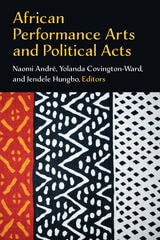
African Performance Arts and Political Acts
Naomi André, Yolanda Covington-Ward, and Jendele Hungbo, Editors
University of Michigan Press, 2021
African Performance Arts and Political Actspresents innovative formulations for how African performance and the arts shape the narratives of cultural history and politics. This collection, edited by Naomi André, Yolanda Covington-Ward, and Jendele Hungbo, engages with a breadth of African countries and art forms, bringing together speech, hip hop, religious healing and gesture, theater and social justice, opera, radio announcements, protest songs, and migrant workers’ dances. The spaces include village communities, city landscapes, prisons, urban hostels, Township theaters, opera houses, and broadcasts through the airwaves on television and radio as well as in cyberspace. Essays focus on case studies from Cameroon, the Democratic Republic of the Congo, Nigeria, Senegal, South Africa, and Tanzania.
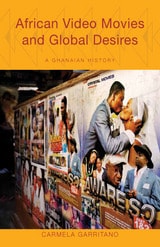
African Video Movies and Global Desires
A Ghanaian HistoryCarmela Garritano
Ohio University Press, 2013
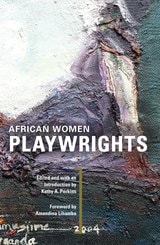
African Women Playwrights
Edited and with an Introduction by Kathy A. Perkins. Foreword by Amandina Lihamb
University of Illinois Press, 2008
This anthology consists of nine plays by a diverse group of women from throughout the African continent. The plays focus on a wide range of issues, such as cultural differences, AIDS, female circumcision, women's rights to higher education, racial and skin color identity, prostitution as a form of survival for young girls, and nonconformist women resisting old traditions. In addition to the plays themselves, this collection includes commentaries by the playwrights on their own plays, and editor Kathy A. Perkins provides additional commentary and a bibliography of published and unpublished plays by African women.
The playwrights featured are Ama Ata Aidoo, Violet R. Barungi, Tsitsi Dangarembga, Nathalie Etoke, Dania Gurira, Andiah Kisia, Sindiwe Magona, Malika Ndlovu (Lueen Conning), Juliana Okoh, and Nikkole Salter.
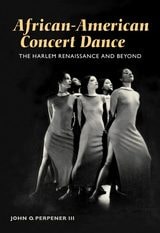
African-American Concert Dance
THE HARLEM RENAISSANCE AND BEYONDJohn O. Perpener III
University of Illinois Press, 2001
Perpener begins with Hemsley Winfield, a versatile performer and director whose company, the New Negro Art Theatre, launched the careers of Edna Guy, Randolph Sawyer, and Ollie Burgoyne, among many others. Also profiled are Charles Williams, who directed the Hampton Creative Dance Group at the Hampton Institute in Virginia, and Asadata Dafora Horton, a native African who established himself as the preeminent purveyor of African dance and culture in America during the 1930s. Dafora's African Dance Troupe, which at one point came under the umbrella of the WPA Federal Theatre Project, was a focal point of the famous "voodoo" Macbeth, an all-black production set in Haiti and directed by the young Orson Welles.
Stepping onto the path cleared by these early innovators, two important artists combined dance with anthropology to expand the reach and scope of African-American dance. Katherine Dunham and Pearl Primus both studied anthropology and engaged in extensive fieldwork that infused their dances with Caribbean and African influences. Dunham founded two ambitious training schools, one in New York and one in East St. Louis, while Primus's projects included an African Arts Center in Monrovia, Liberia, dedicated to collecting dance material, teaching, and organizing professional performances.
Perpener examines the politics of racial and cultural difference and their impact on these early African-American dance leaders. In particular he documents the critical reception of their work, detailing the rigid preconceptions of African-American dance that white critics imposed on black artists. He also surveys important black dancers and choreographers since 1950, including Talley Beatty, Donald McKayle, Alvin Ailey, Eleo Pomare, Rod Rodgers, and Dianne McIntyre, and discusses how they have extended and diverged from traditions established by their predecessors.
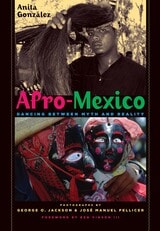
Afro-Mexico
Dancing between Myth and RealityBy Anita González
University of Texas Press, 2010
While Africans and their descendants have lived in Mexico for centuries, many Afro-Mexicans do not consider themselves to be either black or African. For almost a century, Mexico has promoted an ideal of its citizens as having a combination of indigenous and European ancestry. This obscures the presence of African, Asian, and other populations that have contributed to the growth of the nation. However, performance studies—of dance, music, and theatrical events—reveal the influence of African people and their cultural productions on Mexican society.
In this work, Anita González articulates African ethnicity and artistry within the broader panorama of Mexican culture by featuring dance events that are performed either by Afro-Mexicans or by other ethnic Mexican groups about Afro-Mexicans. She illustrates how dance reflects upon social histories and relationships and documents how residents of some sectors of Mexico construct their histories through performance. Festival dances and, sometimes, professional staged dances point to a continuing negotiation among Native American, Spanish, African, and other ethnic identities within the evolving nation of Mexico. These performances embody the mobile histories of ethnic encounters because each dance includes a spectrum of characters based upon local situations and historical memories.
After Authority
Global Art Cinema and Political TransitionKalling Heck
Rutgers University Press, 2020
After Brecht
British Epic TheaterJanelle G. Reinelt
University of Michigan Press, 1996
The book has been enriched by the author's in-depth conversations with the playwrights. The topics covered include contemporary politics and the theater, the National Theatre, the Royal Shakespeare Company, and such well-known fringe companies as Foco Novo, Joint Stock, Portable Theatre, and 7:84. Reinelt examines each playwright within an interpretive frame drawn from an application of Brecht's theories and practice to the historically specific situation of post-war British theater.
The book will appeal to those interested in the relationship between politics and art and contemporary European theater and its antecedents.
"After Brecht represents the best and most detailed engagement with the contemporary British theater scene to date." --Stanton B. Garner, Jr.
"This fine study . . . confronts issues that are important to all students and practitioners of the theater. Sensitive to the uniqueness of each of the playwrights in her study, Reinelt demonstrates that Brechtian theory can be modified in many ways by those who share the belief that 'politics and aesthetics are inseparably linked.'" --Choice
Janelle Reinelt is Chair of the Department of Dramatic Art and Dance, University of California-Davis.
After Hitchcock
Influence, Imitation, and IntertextualityEdited by David Boyd and R. Barton Palmer
University of Texas Press, 2006
Alfred Hitchcock is arguably the most famous director to have ever made a film. Almost single-handedly he turned the suspense thriller into one of the most popular film genres of all time, while his Psycho updated the horror film and inspired two generations of directors to imitate and adapt this most Hitchcockian of movies. Yet while much scholarly and popular attention has focused on the director's oeuvre, until now there has been no extensive study of how Alfred Hitchcock's films and methods have affected and transformed the history of the film medium.
In this book, thirteen original essays by leading film scholars reveal the richness and variety of Alfred Hitchcock's legacy as they trace his shaping influence on particular films, filmmakers, genres, and even on film criticism. Some essays concentrate on films that imitate Hitchcock in diverse ways, including the movies of Brian de Palma and thrillers such as True Lies, The Silence of the Lambs, and Dead Again. Other essays look at genres that have been influenced by Hitchcock's work, including the 1970s paranoid thriller, the Italian giallo film, and the post-Psycho horror film. The remaining essays investigate developments within film culture and academic film study, including the enthusiasm of French New Wave filmmakers for Hitchcock's work, his influence on the filmic representation of violence in the post-studio Hollywood era, and the ways in which his films have become central texts for film theorists.
After Live
Possibility, Potentiality, and the Future of PerformanceDaniel Sack
University of Michigan Press, 2015

Afterimages of Gilles Deleuze’s Film Philosophy
D. N. Rodowick
University of Minnesota Press, 2009
The French philosopher Gilles Deleuze was one of the most innovative and revolutionary thinkers of the twentieth century. Author of more than twenty books on literature, music, and the visual arts, Deleuze published the first volume of his two-volume study of film, Cinema 1: The Movement-Image, in 1983 and the second volume, Cinema 2: The Time-Image, in 1985. Since their publication, these books have had a profound impact on the study of film and philosophy. Film, media, and cultural studies scholars still grapple today with how they can most productively incorporate Deleuze's thought.
The first new collection of critical studies on Deleuze's cinema writings in nearly a decade, Afterimages of Gilles Deleuze's Film Philosophy provides original essays that evaluate the continuing significance of Deleuze's film theories, accounting systematically for the ways in which they have influenced the investigation of contemporary visual culture and offering new directions for research.
Contributors: Raymond Bellour, Centre Nationale de Recherches Scientifiques; Ronald Bogue, U of Georgia; Giuliana Bruno, Harvard U; Ian Buchanan, Cardiff U; James K. Chandler, U of Chicago; Tom Conley, Harvard U; Amy Herzog, CUNY; András Bálint Kovács, Eötvös Loránd U; Patricia MacCormack, Anglia Ruskin U; Timothy Murray, Cornell U; Dorothea Olkowski, U of Colorado; John Rajchman, Columbia U; Marie-Claire Ropars-Wuilleumier, U Paris VIII; Garrett Stewart, U of Iowa; Damian Sutton, Glasgow School of Art; Melinda Szaloky, UC Santa Barbara.
Aftershocks of the New
Feminism and Film HistoryPetro, Patrice
Rutgers University Press, 2001
The beginning of this century has brought with it a host of assumptions about the newness of our technologies, globalized economies, and transnational media practices. Our own time is a period marked by experiences of fragmentation, sensation, and shock. The essays here are joined by a common concern to chart another side to modernity—precisely after the shock of the new—when the new ceases to be shocking, and when the extraordinary and the sensational become linked to the boring and the everyday. Patrice Petro explores how the mechanisms of modernism, German cinema, and feminist film theory have evolved, and she discusses the directions in which they are headed.
Petro’s essays—some published here for the first time—raise such questions as: What roles do television and other media play in film studies? What is the place of feminist film theory in our conceptions of film history? How is German film theory situated within international film theory?
Rather than continue to sensationalize sensation, Aftershocks of the New aims to lower the volume of debates over the place of cinema within the culture of modernity. And it accomplishes this by locating them within a more complex matrix of contending sensibilities, voices, and impulses.
Against the Avant-Garde
Pier Paolo Pasolini, Contemporary Art, and NeocapitalismAra H. Merjian
University of Chicago Press, 2020
Agents of Liberations
Holocaust Memory in Contemporary Art and Documentary FilmZoltán Kékesi
Central European University Press, 2015
Agitated States
Performance in the American Theater of CrueltyAnthony Kubiak
University of Michigan Press, 2002
Beginning with the writings of John Winthrop and others, through the Federalist and "romantic" stages of American cultural life, and into the modern and contemporary periods, Anthony Kubiak finds an America not usually discovered by traditional or materialist approaches to history. He deploys the psychoanalytic theory of Jacques Lacan, the cultural theory of SlavojZizek, and the performance theory of Herbert Blau in an unparalleled reappraisal of dominant American identity, culture, and history.
Anthony Kubiak is Associate Professor of English, University of South Florida. He is also author of Stages of Terror: Terrorism, Ideology, and Coercion as Theatre History.
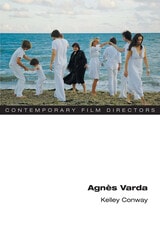
Agnes Varda
Kelley Conway
University of Illinois Press, 2015
Air Castle of the South
WSM and the Making of Music CityCraig Havighurst
University of Illinois Press, 2013
Started by the National Life and Accident Insurance Company in 1925, WSM became one of the most influential and exceptional radio stations in the history of broadcasting and country music. WSM gave Nashville the moniker “Music City USA” as well as a rich tradition of music, news, and broad-based entertainment. With the rise of country music broadcasting and recording between the 1920s and ‘50s, WSM, Nashville, and country music became inseparable, stemming from WSM’s launch of the Grand Ole Opry, popular daily shows like Noontime Neighbors, and early morning artist-driven shows such as Hank Williams on Mother’s Best Flour.
Sparked by public outcry following a proposal to pull country music and the Opry from WSM-AM in 2002, Craig Havighurst scoured new and existing sources to document the station’s profound effect on the character and self-image of Nashville. Introducing the reader to colorful artists and businessmen from the station’s history, including Owen Bradley, Minnie Pearl, Jim Denny, Edwin Craig, and Dinah Shore, the volume invites the reader to reflect on the status of Nashville, radio, and country music in American culture.
Air Force
Edited, with an introduction by Lawrence Suid; Tino T. Balio, Series Editor
University of Wisconsin Press, 1983
Released in 1943, Air Force was immediately hailed as the definitive "patriotic heart-throb in celluloid" that America, engulfed in war and passionately bent on victory, was primed to embrace. Lawrence Suid charts the evolution of this cinematic success in his introduction to the screenplay, tracing the tangled network of artistic, military, and nationalist interests that molded this film and made it, even after the martial fervor had settled, a standard against which all future films about war would be measured.
Throughout the filming, there was tension between the aims of the War Department and those of Howard Hawks. Hawks would ultimately produce more than stilted propaganda: it is the skillfully modulated tension, the ambience of men in war, and the total immersion in action and adventure that make this a Hollywood classic still savored and studied today.
Alan Rudolph's Trouble in Mind
Tampering with MythsCaryl Flinn
University of Michigan Press, 2023
Despite a career spanning over forty years, filmmaker Alan Rudolph has flown largely under the radar of independent film scholars and enthusiasts, often remembered as Robert Altman’s protégé. Through a reading of his 1985 film Trouble in Mind, Caryl Flinn demonstrates that Rudolph is long overdue for critical re-evaluation.
Exploring Trouble in Mind’s influence on indie filmmaking, Rudolph’s dream-like style, and the external political influences of the Reagan era, Flinn effectively conveys the originality of Rudolph’s work through this multifaceted film. Utilizing archival materials and interviews with Rudolph himself and his collaborators, Flinn argues for this career-defining film’s relevance to American independent cinema and the decade of the 1980s. Amply illustrated with frame enlargements and set photographs, this book uncovers new production stories and reception contexts of a film that Flinn argues deserves a place in the limelight.
Albert Maysles
Joe McElhaney
University of Illinois Press, 2008
Alchemies of Theater
Plays, Scores, WritingsDick Higgins
University of Michigan Press, 2024
Alchemies of Theater brings together a broad selection of Higgins’s writings and theater-related work, much of it unpublished or long out of print, including plays and performance scores, drawings, and writings on theater and performance. As this book demonstrates, Higgins deconstructed the drama long before it became a project of theater; undercut the traditional roles of author and director; created what is now considered “devised” theater; pioneered the use of media in theater, writing the first electronic opera; and was a precursor in deconstruction and “postdramatic” avant-garde traditions. His Intermedia manifesto offered a sweeping view of interdisciplinarity—in effect, a new arts ecology.
Alejandro González Iñárritu
Celestino Deleyto and Maria del Mar Azcona
University of Illinois Press, 2010
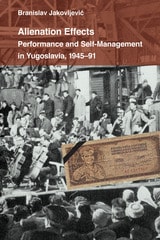
Alienation Effects
Performance and Self-Management in Yugoslavia, 1945-91Branislav Jakovljevic
University of Michigan Press, 2016
The case studies include mass performances organized during state holidays; proto-performance art, such as the 1954 production of Waiting for Godot in a former concentration camp in Belgrade; student demonstrations in 1968; and body art pieces by Gina Pane, Joseph Beuys, Marina Abramovic, and others. Alienation Effects sheds new light on the work of well-known artists and scholars, including early experimental poetry by Slavoj Žižek, as well as performance and conceptual artists that deserve wider, international attention.
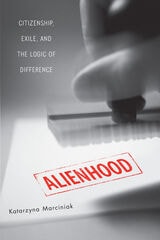
Alienhood
Citizenship, Exile, And The Logic Of DifferenceKatarzyna Marciniak
University of Minnesota Press, 2006
Using examples from exilic literature and cinema, including the works of Julia Alvarez, Eva Hoffman, Gregory Nava, and Roman Polanski, Alienhood theorizes multicultural experiences of liminal characters that belong in the interstices between nations. Investigating gendered, racialized, and ideological formations of “aliens,” Marciniak’s readings put into dialogue narratives from both the second world and the third world in relation to “first worldness.” This dialogue problematizes the meanings of “transnational” and brings the so-called second world into these debates. In doing so, Marciniak reorients the study of immigrant or exile subjects beyond the celebrated notion of transnationalism.
With its unique focus on “aliens” in relation to discourses of immigration, exile, and displacement, Alienhood shows how transnationality is, for many dislocated people, an unattainable privilege.
Katarzyna Marciniak is associate professor of English at Ohio University.
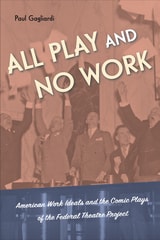
All Play and No Work
American Work Ideals and the Comic Plays of the Federal Theatre ProjectGagliardi, Paul
Temple University Press, 2024
All Play and No Work directly contradicts the promoted ideals of work found in American society, culture, and within the broader New Deal itself. Gagliardi shows how comedies of the Great Depression engaged questions of labor, labor history, and labor ethics. He considers the breadth of the FTP’s production history, staging plays including Ah, Wilderness!, Help Yourself, and Mississippi Rainbow.
Gagliardi examines backstage comedies, middle-class comedies, comedies of chance, and con-artist comedies that employed diverse casts and crew and contained radical economic and labor ideas. He contextualizes these plays within the ideologically complicated New Deal, showing how programs like the Social Security Act straddled progressive ideals and conservative, capitalist norms. Addressing topics including the politicization of theatrical labor and the real dangers of unchecked economic con artists, the comic plays of the FTP reveal acts of political resistance and inequality that reflected the concerns of their audiences.
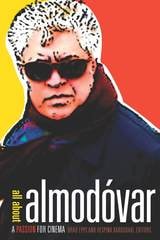
All about Almodóvar
A Passion for CinemaBrad Epps
University of Minnesota Press, 2009
All about Almodóvar offers new perspectives on the filmmaker’s artistic vision and cinematic preoccupations, influences, and techniques. Through overviews of his oeuvre and in-depth analyses of specific films, the essays here explore a diverse range of subjects: Almodóvar’s nuanced use of television and music in his films; his reworkings of traditional film genres such as comedy, horror, and film noir; his penchant for melodrama and its relationship to melancholy, violence, and coincidence; his intricate questioning of sexual and national identities; and his increasingly sophisticated inquiries into visuality and its limits.
Closing with Almodóvar’s own diary account of the making of Volver and featuring never-before-seen photographs from El Deseo production studio, All about Almodóvar both reflects and illuminates its subject’s dazzling eclecticism.
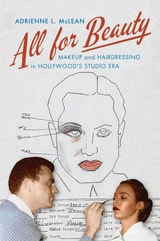
All for Beauty
Makeup and Hairdressing in Hollywood's Studio EraAdrienne L. McLean
Rutgers University Press, 2022
Allegories Of Underdevelopment
Aesthetics and Politics in Modern Brazilian CinemaIsmail Xavier
University of Minnesota Press, 1997
Examines the centrality of Cinema Novo to filmmaking in Brazil.
“A camera in the hand and ideas in the head” was the primary axiom of the young originators of Brazil’s Cinema Novo. This movement of the 1960s and early 1970s overcame technical constraints and produced films on minimal budgets. In Allegories of Underdevelopment, Ismail Xavier examines a number of these films, arguing that they served to represent a nation undergoing a political and social transformation into modernity.
Its best-known voice, filmmaker Glauber Rocha claimed that Cinema Novo was driven by an “aesthetics of hunger.” This scarcity of means demanded new cinematic approaches that eventually gave rise to a legitimate and unique Third World cinema. Xavier stands in the vanguard of scholars presenting and interpreting these revolutionary films—from the masterworks of Rocha to the groundbreaking experiments of Julio Bressane, Rogério Sganzerla, Andrea Tonacci and Arthur Omar—to an English-speaking audience. Focusing on each filmmaker’s use of narrative allegories for the “conservative modernization” Brazil and other nations underwent in the 1960s and 1970s, Xavier asks questions relating to the connection between film and history. He examines the way Cinema Novo transformed Brazil’s cultural memory and charts the controversial roles that Marginal Cinema and Tropicalism played in this process. Among the films he discusses are Black God, White Devil, Land in Anguish, Red Light Bandit, Macunaíma, Antônio das Mortes, The Angel Is Born, and Killed the Family and Went to the Movies.A compelling chronicle of the history of modern Brazilian cinema, Allegories of Underdevelopment brings to light the work of many filmmakers who are virtually unknown in the English-speaking world.
Alternative Realities
Carl Plantinga
Rutgers University Press, 2021
Alternative Realities explores how these distinctions between cinematic fantasy and filmic realism are more porous than we might think. Through a close analysis of CGI-heavy blockbusters like Wonder Woman and Guardians of the Galaxy, it considers how even popular fantasies are grounded in emotional and social realities. Conversely, it examines how mockumentaries like This is Spinal Tap satirically call attention to the highly stylized techniques documentarians use to depict reality.
Alternative Realities takes us on a journey through many different genres of film, from the dream-like and subjective realities depicted in movies like Eternal Sunshine of the Spotless Mind and Memento, to the astonishing twists of movies like Shutter Island and The Matrix, which leave viewers in a state of epistemic uncertainty. Ultimately, it shows us how the power of cinema comes from the unique way it fuses together the objective and the subjective, the fantastical and the everyday.

Alternative Worlds in Hollywood Cinema
James Walters
Intellect Books, 2008
Always More Than One
Individuation's DanceErin Manning
Duke University Press, 2012
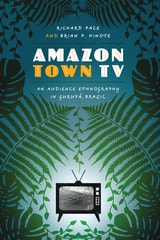
Amazon Town TV
An Audience Ethnography in Gurupá, BrazilBy Richard Pace and Brian P. Hinote
University of Texas Press, 2013
In 1983, anthropologist Richard Pace began his fieldwork in the Amazonian community of Gurupá one year after the first few television sets arrived. On a nightly basis, as the community’s electricity was turned on, he observed crowds of people lining up outside open windows or doors of the few homes possessing TV sets, intent on catching a glimpse of this fascinating novelty. Stoic, mute, and completely absorbed, they stood for hours contemplating every message and image presented. So begins the cultural turning point that is the basis of Amazon Town TV, a rich analysis of Gurupá in the decades during and following the spread of television.
Pace worked with sociologist Brian Hinote to explore the sociocultural implications of television’s introduction in this community long isolated by geographic and communication barriers. They explore how viewers change their daily routines to watch the medium; how viewers accept, miss, ignore, negotiate, and resist media messages; and how television’s influence works within the local cultural context to modify social identities, consumption patterns, and worldviews.

Ambient Television
Visual Culture and Public SpaceAnna McCarthy
Duke University Press, 2001
Discussing the roles television has played in different institutions from 1945 to the present day, McCarthy draws on a wide array of sources. These include retail merchandising literature, TV industry trade journals, and journalistic discussions of public viewing, as well as the work of cultural geographers, architectural theorists, media scholars, and anthropologists. She also uses photography as a research tool, documenting the uses and meanings of television sets in the built environment, and focuses on such locations as the tavern and the department store to show how television is used to support very different ideas about gender, class, and consumption. Turning to contemporary examples, McCarthy discusses practices such as Turner Private Networks’ efforts to transform waiting room populations into advertising audiences and the use of point-of-sale video that influences brand visibility and consumer behavior. Finally, she inquires into the activist potential of out-of-home television through a discussion of the video practices of two contemporary artists in everyday public settings.
Scholars and students of cultural, visual, urban, American, film, and television studies will be interested in this thought-provoking, interdisciplinary book.
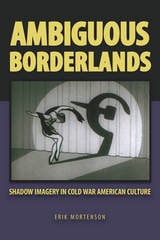
Ambiguous Borderlands
Shadow Imagery in Cold War American CultureErik Mortenson
Southern Illinois University Press, 2016
After contextualizing the postwar use of shadow imagery in the wake of the atomic bomb, Ambiguous Borderlands looks at shadows in print works, detailing the reemergence of the pulp fiction crime fighter the Shadow in the late-1950s writings of Sylvia Plath, Amiri Baraka, and Jack Kerouac. Using Freudian and Jungian conceptions of the unconscious, Mortenson then discusses Kerouac’s and Allen Ginsberg’s shared dream of a “shrouded stranger” and how it shaped their Beat aesthetic. Turning to the visual, Mortenson examines the dehumanizing effect of shadow imagery in the Cold War photography of Robert Frank, William Klein, and Ralph Eugene Meatyard. Mortenson concludes with an investigation of the use of chiaroscuro in 1950s film noir and the popular television series The Twilight Zone, further detailing how the complexities of Cold War society were mirrored across these media in the ubiquitous imagery of light and dark.
From comics to movies, Beats to bombs, Ambiguous Borderlands provides a novel understanding of the Cold War cultural context through its analysis of the image of the shadow in midcentury media. Its interdisciplinary approach, ambitious subject matter, and diverse theoretical framing make it essential reading for anyone interested in American literary and popular culture during the fifties and sixties.
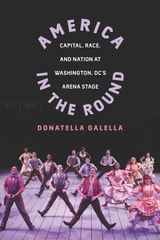
America in the Round
Capital, Race, and Nation at Washington D.C.'s Arena StageDonatella Galella
University of Iowa Press, 2019
Washington D.C.’s Arena Stage was the first professional regional theatre in the nation’s capital to welcome a racially integrated audience; the first to perform behind the Iron Curtain; and the first to win the Tony Award for best regional theatre. This behind-the-scenes look at one of the leading theatres in the United States shows how key financial and artistic decisions were made, using a range of archival materials such as letters and photographs as well as interviews with artists and administrators. Close-ups of major productions from The Great White Hope to Oklahoma! illustrate how Arena Stage navigated cultural trends.
More than a chronicle, America in the Round is a critical history that reveals how far the theatre could go with its budget and racially liberal politics, and how Arena both disputed and duplicated systems of power. With an innovative “in the round” approach, the narrative simulates sitting in different parts of the arena space to see the theatre through different lenses—economics, racial dynamics, and American identity.
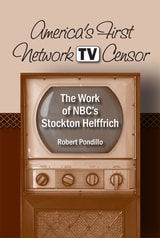
America's First Network TV Censor
The Work of NBC's Stockton HelffrichRobert Pondillo
Southern Illinois University Press, 2010
While other books have cited Helffrich’s reports, none have considered them as a body of work, complemented by the details of Helffrich’s life and the era in which he lived. America’s First Network TV Censor explores the ways in which Helffrich’s personal history and social class influenced his perception of his role as NBC-TV censor and his tendency to ignore certain political and cultural taboos while embracing others.
Author Robert Pondillo considers Helffrich’s life in broadcasting before and after the Second World War, and his censorial work in the context of 1950s American culture and emerging network television. Pondillo discusses the ways that cultural phenomena, including the arrival of the mid-twentieth-century religious boom, McCarthyism, the dawn of the Civil Rights era, and the social upheaval over sex, music, and youth, contributed to a general sense that the country was morally adrift and ripe for communist takeover.
Five often-censored subjects—advertising, language, and depictions of sex, violence, and race—are explored in detail, exposing the surprising complexity and nuance of early media censorship. Questions of whether too many sadistic westerns would coarsen America’s children, how to talk about homosexuality without using the word “homosexuality,” and how best to advertise toilet paper without offending people were on Helffrich’s mind; his answers to these questions helped shape the broadcast media we know today.
America's Japan and Japan's Performing Arts
Cultural Mobility and Exchange in New York, 1952-2011Barbara E. Thornbury
University of Michigan Press, 2013
American Blockbuster
Movies, Technology, and WonderCharles R. Acland
Duke University Press, 2020