Results by title
4127 books match the query 'Science' and 288 start with a
Acoustic Communication in Insects and Anurans
Common Problems and Diverse SolutionsH. Carl Gerhardt and Franz Huber
University of Chicago Press, 2002
H. Carl Gerhardt and Franz Huber address these questions among many others, drawing on research from bioacoustics, behavior, neurobiology, and evolutionary biology to present the first integrated approach to the study of acoustic communication in insects and anurans. They highlight both the common solutions that these very different groups have evolved to shared challenges, such as small size, ectothermy (cold-bloodedness), and noisy environments, as well as the divergences that reflect the many differences in evolutionary history between the groups. Throughout the book Gerhardt and Huber also provide helpful suggestions for future research.
Across the Bridge
Understanding the Origin of the VertebratesHenry Gee
University of Chicago Press, 2018
As Gee shows, even as scientific advances have falsified a variety of theories linking these groups, the extant relatives of vertebrates are too few for effective genetic analysis. Moreover, the more we learn about the species that do remain—from sea-squirts to starfish—the clearer it becomes that they are too far evolved along their own courses to be of much use in reconstructing what the latest invertebrate ancestors of vertebrates looked like. Fossils present yet further problems of interpretation. Tracing both the fast-changing science that has helped illuminate the intricacies of vertebrate evolution as well as the limits of that science, Across the Bridge helps us to see how far the field has come in crossing the invertebrate-to-vertebrate divide—and how far we still have to go.
Acting with the World
Agency in the AnthropoceneAndrew Pickering
Duke University Press, 2025

Active and Passive Protection from Space Radiation
A systems engineering approachCharles J. Baker
The Institution of Engineering and Technology, 2026

Ada Lovelace
The Making of a Computer ScientistChristopher Hollings, Ursula Martin and Adrian Rice
Bodleian Library Publishing, 2018
Although it was an unusual pursuit for women at the time, Ada Lovelace studied science and mathematics from a young age. This book uses previously unpublished archival material to explore her precocious childhood—from her curiosity about the science of rainbows to her design for a steam-powered flying horse—as well as her ambitious young adulthood. Active in Victorian London’s social and scientific elite alongside Mary Somerville, Michael Faraday, and Charles Dickens, Ada Lovelace became fascinated by the computing machines of Charles Babbage, whose ambitious, unbuilt invention known as the “Analytical Engine” inspired Lovelace to devise a table of mathematical formulae which many now refer to as the “first program.”
Ada Lovelace died at just thirty-six, but her work strikes a chord to this day, offering clear explanations of the principles of computing, and exploring ideas about computer music and artificial intelligence that have been realized in modern digital computers. Featuring detailed illustrations of the “first program” alongside mathematical models, correspondence, and contemporary images, this book shows how Ada Lovelace, with astonishing prescience, first investigated the key mathematical questions behind the principles of modern computing.
Adaptation in Metapopulations
How Interaction Changes EvolutionMichael J. Wade
University of Chicago Press, 2016
With Adaptation in Metapopulations, Michael J. Wade explores a key component of this new understanding of evolution: interaction. Synthesizing decades of work in the lab and in the field in a book both empirically grounded and underpinned by a strong conceptual framework, Wade looks at the role of interaction across scales from gene selection to selection at the level of individuals, kin, and groups. In so doing, he integrates molecular and organismal biology to reveal the true complexities of evolutionary dynamics from genes to metapopulations.
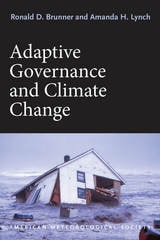
Adaptive Governance and Climate Change
Ronald D. Brunner and Amanda H. Lynch
American Meteorological Society, 2010
While recent years have seen undeniable progress in international acknowledgement both of the dangers of climate change and the importance of working to mitigate it, little has actually been done. Emissions continue to rise, and even the ambitious targets set by international accords would fall far short of the drastic cuts that are needed to prevent catastrophe.
With Adaptive Governance and Climate Change, Ronald D. Brunner and Amanda H. Lynch argue that we need to take a new tack, moving away from reliance on centralized, top-down approaches—the treaties and accords that have proved disappointingly ineffective thus far—and towards a more flexible, multi-level approach. Based in the principles of adaptive governance—which are designed to produce programs that adapt quickly and easily to new information and experimental results—such an approach would encourage diversity and innovation in the search for solutions, while at the same time pointedly recasting the problem as one in which every culture and community around the world has an inherent interest.

Advanced Theoretical and Numerical Electromagnetics
Field representations and the Method of Moments, Volume 2Vito Lancellotti
The Institution of Engineering and Technology, 2022

Advanced Theoretical and Numerical Electromagnetics
Static, stationary and time-varying fields, Volume 1Vito Lancellotti
The Institution of Engineering and Technology, 2022
Advances and Future Capabilities in RFID Technology
Alice Buffi
The Institution of Engineering and Technology, 2026
Advances in Legume Science
R. J. Summerfield and A. H. Bunting
Royal Botanic Gardens, Kew, 2001
Advances in Legume Systematics Part 8
Legumes of Economic ImportanceB. Pickersgill and J. M. Lock
Royal Botanic Gardens, Kew, 1996
Advances in Legume Systematics Part 5. The Nitrogen Factor
J. L. Sprent and D. McKey
Royal Botanic Gardens, Kew, 1994
Advances in Legume Systematics Part 7. Phylogeny
M. D. Crisp and J. J. Doyal
Royal Botanic Gardens, Kew, 1995

Advances in the Zoology of Tapeworms, 1950-1970
Robert A. Wardle
University of Minnesota Press, 0
This volume is a sequel to the comprehensive study by Professors Robert A. Wardle and James A. McLeod, The Zoology of Tapeworms, published by the University of Minnesota Press in 1952. The new book is based on research and publications which have become available since the earlier volume was published.
While much of the information in the earlier book was devoted to the identification, description, and classification of families, genera, and species, research efforts in the last two decades have been focused in new directions. Although some researchers have been engaged in revising the original classification in the light of new findings, others have been exploring specificity, serology, and genetics, and have undertaken studies of host-parasite relationships, pathogenesis, and therapeutics in the treatment of tapeworm infestation. These investigations have been facilitated by laboratory techniques which were not available for earlier studies.Following introductory chapters on the recent expansion of tapeworm research and the phylogeny of tapeworms, the authors devote a chapter each to 21 orders of tapeworms. The material is based on a survey of the literature including more than 2,000 papers on tapeworm zoology published since 1950. Chapters on laboratory propagation and on therapeutics complete the text, and there is an extensive list of references. Many drawings illustrate the text.
Advocacy after Bhopal
Environmentalism, Disaster, New Global OrdersKim Fortun
University of Chicago Press, 2001
Kim Fortun explores these claims by focusing on the dynamics and paradoxes of advocacy in competing power domains. She moves from hospitals in India to meetings with lawyers, corporate executives, and environmental justice activists in the United States to show how the disaster and its effects remain with us. Spiraling outward from the victims' stories, the innovative narrative sheds light on the way advocacy works within a complex global system, calling into question conventional notions of responsibility and ethical conduct. Revealing the hopes and frustrations of advocacy, this moving work also counters the tendency to think of Bhopal as an isolated incident that "can't happen here."
Aerosol Effects on Climate
S. Gerard Jennings
University of Arizona Press, 1993
Aesthesis and Perceptronium
On the Entanglement of Sensation, Cognition, and MatterAlexander Wilson
University of Minnesota Press, 2019
A new speculative ontology of aesthetics
In Aesthesis and Perceptronium, Alexander Wilson presents a theory of materialist and posthumanist aesthetics founded on an original speculative ontology that addresses the interconnections of experience, cognition, organism, and matter. Entering the active fields of contemporary thought known as the new materialisms and realisms, Wilson argues for a rigorous redefining of the criteria that allow us to discriminate between those materials and objects where aesthesis (perception, cognition) takes place and those where it doesn’t.
Aesthesis and Perceptronium negotiates between indiscriminately pluralist views that attribute mentation to all things and eliminative views that deny the existence of mentation even in humans. By recasting aesthetic questions within the framework of “epistemaesthetics,” which considers cognition and aesthetics as belonging to a single category that can neither be fully disentangled nor fully reduced to either of its terms, Wilson forges a theory of nonhuman experience that avoids this untenable dilemma.
Through a novel consideration of the evolutionary origins of cognition and its extension in technological developments, the investigation culminates in a rigorous reevaluation of the status of matter, information, computation, causality, and time in terms of their logical and causal engagement with the activities of human and nonhuman agents.
Aesthetic Science
Representing Nature in the Royal Society of London, 1650-1720Alexander Wragge-Morley
University of Chicago Press, 2020
To show how early modern naturalists conceived of the interplay between sensory experience and the production of knowledge, Aesthetic Science explores natural-historical and anatomical works of the Royal Society through the lens of the aesthetic. By underscoring the importance of subjective experience to the communication of knowledge about nature, Wragge-Morley offers a groundbreaking reconsideration of scientific representation in the early modern period and brings to light the hitherto overlooked role of aesthetic experience in the history of the empirical sciences.

Aesthetics of Discomfort
Conversations on Disquieting ArtFrederick Aldama and Herbert Lindenberger
University of Michigan Press, 2016
Aesthetics, Industry, and Science
Hermann von Helmholtz and the Berlin Physical SocietyM. Norton Wise
University of Chicago Press, 2018
In Aesthetics, Industry, and Science M. Norton Wise answers these questions not simply from a technical perspective of theories and practices but with a broader cultural view of what was happening in Berlin at the time. He emphasizes in particular how rapid industrial development, military modernization, and the neoclassical aesthetics of contemporary art informed the ways in which these young men thought. Wise argues that aesthetic sensibility and material aspiration in this period were intimately linked, and he uses these two themes for a final reappraisal of Helmholtz’s early work. Anyone interested in modern German cultural history, or the history of nineteenth-century German science, will be drawn to this landmark book.
Africa South
Harm J. de Blij
Northwestern University Press, 1962
Africa as a Living Laboratory
Empire, Development, and the Problem of Scientific Knowledge, 1870-1950Helen Tilley
University of Chicago Press, 2011
Tropical Africa was one of the last regions of the world to experience formal European colonialism, a process that coincided with the advent of a range of new scientific specialties and research methods. Africa as a Living Laboratory is a far-reaching study of the thorny relationship between imperialism and the role of scientific expertise—environmental, medical, racial, and anthropological—in the colonization of British Africa.
A key source for Helen Tilley’s analysis is the African Research Survey, a project undertaken in the 1930s to explore how modern science was being applied to African problems. This project both embraced and recommended an interdisciplinary approach to research on Africa that, Tilley argues, underscored the heterogeneity of African environments and the interrelations among the problems being studied. While the aim of British colonialists was unquestionably to transform and modernize Africa, their efforts, Tilley contends, were often unexpectedly subverted by scientific concerns with the local and vernacular. Meticulously researched and gracefully argued, Africa as a Living Laboratory transforms our understanding of imperial history, colonial development, and the role science played in both.
African Philosophy, Culture, and Traditional Medicine
MIS AF#53M. Akin Makinde
Ohio University Press, 1988
African Plants
Biodiversity Taxonomy and UsesJ. Timberlake and S. Kativu
Royal Botanic Gardens, Kew, 1999
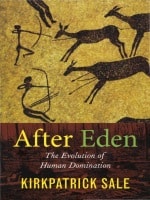
After Eden
The Evolution of Human DominationKirkpatrick Sale
Duke University Press, 2006
In After Eden, Kirkpatrick Sale answers these questions in a radically new way. Integrating research in paleontology, archaeology, and anthropology, he points to the beginning of big-game hunting as the origin of Homo sapiens’ estrangement from the natural world. Sale contends that a new, recognizably modern human culture based on the hunting of large animals developed in Africa some 70,000 years ago in response to a fierce plunge in worldwide temperature triggered by an enormous volcanic explosion in Asia. Tracing the migration of populations and the development of hunting thousands of years forward in time, he shows that hunting became increasingly adversarial in relation to the environment as people fought over scarce prey during Europe’s glacial period between 35,000 and 10,000 years ago. By the end of that era, humans’ idea that they were the superior species on the planet, free to exploit other species toward their own ends, was well established.
After Eden is a sobering tale, but not one without hope. Sale asserts that Homo erectus, the variation of the hominid species that preceded Homo sapiens and survived for nearly two million years, did not attempt to dominate the environment. He contends that vestiges of this more ecologically sound way of life exist today—in some tribal societies, in the central teachings of Hinduism and Buddhism, and in the core principles of the worldwide environmental movement—offering redemptive possibilities for ourselves and for the planet.
After Oil
Imre Szeman
West Virginia University Press, 2016
Energy plays a critical role in determining the shape, form and character of our daily existence, which is why a genuine shift in our energy usage demands a wholesale transformation of the petrocultures in which we live. After Oil provides readers with the resources to make this happen.
After Preservation
Saving American Nature in the Age of HumansEdited by Ben A. Minteer and Stephen J. Pyne
University of Chicago Press, 2015
Ben A. Minteer and Stephen J. Pyne bring together a stunning consortium of voices comprised of renowned scientists, historians, philosophers, environmental writers, activists, policy makers, and land managers to negotiate the incredible challenges that environmentalism faces. Some call for a new, post-preservationist model, one that is far more pragmatic, interventionist, and human-centered. Others push forcefully back, arguing for a more chastened and restrained vision of human action on the earth. Some try to establish a middle ground, while others ruminate more deeply on the meaning and value of wilderness. Some write on species lost, others on species saved, and yet others discuss the enduring practical challenges of managing our land, water, and air.
From spirited optimism to careful prudence to critical skepticism, the resulting range of approaches offers an inspiring contribution to the landscape of modern environmentalism, one driven by serious, sustained engagements with the critical problems we must solve if we—and the wild garden we may now keep—are going to survive the era we have ushered in.
Contributors include: Chelsea K. Batavia, F. Stuart (Terry) Chapin III, Norman L. Christensen, Jamie Rappaport Clark, William Wallace Covington, Erle C. Ellis, Mark Fiege, Dave Foreman, Harry W. Greene, Emma Marris, Michelle Marvier, Bill McKibben, J. R. McNeill, Curt Meine, Ben A. Minteer, Michael Paul Nelson, Bryan Norton, Stephen J. Pyne, Andrew C. Revkin, Holmes Rolston III, Amy Seidl, Jack Ward Thomas, Diane J. Vosick, John A. Vucetich, Hazel Wong, and Donald Worster.
After the Ice Age
The Return of Life to Glaciated North AmericaE. C. Pielou
University of Chicago Press, 1991
After the Map
Cartography, Navigation, and the Transformation of Territory in the Twentieth CenturyWilliam Rankin
University of Chicago Press, 2016
In After the Map, William Rankin argues that although this shift did not render traditional maps obsolete, it did radically change our experience of geographic knowledge, from the God’s-eye view of the map to the embedded subjectivity of GPS. Likewise, older concerns with geographic truth and objectivity have been upstaged by a new emphasis on simplicity, reliability, and convenience. After the Map shows how this change in geographic perspective is ultimately a transformation of the nature of territory, both social and political.
Afterlives of Affect
Science, Religion, and an Edgewalker’s SpiritMatthew C. Watson
Duke University Press, 2020
Against Ecological Sovereignty
Ethics, Biopolitics, and Saving the Natural WorldMick Smith
University of Minnesota Press, 2011
Against Ecological Sovereignty is a passionate defense of radical ecology that speaks directly to current debates concerning the nature, and dangers, of sovereign power. Engaging the work of Bataille, Arendt, Levinas, Nancy, and Agamben, among others, Mick Smith reconnects the political critique of sovereign power with ecological considerations, arguing that ethical and political responsibilities for the consequences of our actions do not end with those defined as human.
Against Ecological Sovereignty is the first book to turn Agamben’s analysis of sovereignty and biopolitics toward an investigation of ecological concerns. In doing so it exposes limits to that thought, maintaining that the increasingly widespread biopolitical management of human populations has an unrecognized ecological analogue—reducing nature to a “resource” for human projects. Smith contends that a radical ecological politics must resist both the depoliticizing exercise of sovereign power and the pervasive spread of biopolitics in order to reveal new possibilities for creating healthy human and nonhuman communities.
Presenting a stinging critique of human claims to sovereignty over the natural world, Smith proposes an alternative way to conceive of posthumanist ecological communities—one that recognizes the utter singularity of the beings in them.
Agaves of Continental North America
Howard Scott Gentry
University of Arizona Press, 1982
Agent Orange
History, Science, and the Politics of UncertaintyEdwin A. Martini
University of Massachusetts Press, 2012
Taking on what one former U.S. ambassador called “the last ghost of the Vietnam War,” this book examines the far-reaching impact of Agent Orange, the most infamous of the dioxin-contaminated herbicides used by American forces in Southeast Asia. Edwin A. Martini's aim is not simply to reconstruct the history of the “chemical war” but to investigate the ongoing controversy over the short- and long-term effects of weaponized defoliants on the environment of Vietnam, on the civilian population, and on the troops who fought on both sides.
Beginning in the early 1960s, when Agent Orange was first deployed in Vietnam, Martini follows the story across geographical and disciplinary boundaries, looking for answers to a host of still unresolved questions. What did chemical manufacturers and American policymakers know about the effects of dioxin on human beings, and when did they know it? How much do scientists and doctors know even today? Should the use of Agent Orange be considered a form of chemical warfare? What can, and should, be done for U.S. veterans, Vietnamese victims, and others around the world who believe they have medical problems caused by Agent Orange?
Martini draws on military records, government reports, scientific research, visits to contaminated sites, and interviews to disentangle conflicting claims and evaluate often ambiguous evidence. He shows that the impact of Agent Orange has been global in its reach affecting individuals and communities in New Zealand, Australia, Korea, and Canada as well as Vietnam and the United States. Yet for all the answers it provides, this book also reveals how much uncertainty—scientific, medical, legal, and political—continues to surround the legacy of Agent Orange.
Agrarian Environments
Resources, Representations, and Rule in IndiaArun Agrawal, ed.
Duke University Press, 2000
Editors Arun Agrawal and K. Sivaramakrishnan claim that rural social change in India cannot be understood without exploring how environmental changes articulate major aspects of agrarian transformations—technological, cultural, and political—in the last two centuries. In order to examine these issues, they have reached beyond the confines of single disciplinary allegiances or methodological loyalties to bring together anthropologists, historians, political scientists, geographers, and environmental scientists who are significantly informed by interdisciplinary research. Drawing on extensive field and archival research, the contributors demonstrate the powerful political implications of blurring the boundaries between dichotomous cultural representations, combine conceptual analyses with specific case studies, and look at why competing powers chose to emphasize particular representations of land use or social relations. By providing a more textured analysis of how categories emerge and change, this work offers the possibility of creating crucial alliances across populations that have historically been assumed to lack mutual goals.
Agrarian Environments will be valuable to those in political science, Asian studies, and environmental studies.
Contributors. Arun Agrawal, Mark Baker, Molly Chattopadhyaya, Vinay Gidwani, Sumit Guha, Shubhra Gururani, Cecile Jackson, David Ludden, Haripriya Rangan, Paul Robbins, Vasant Saberwal, James C. Scott, K. Sivaramakrishnan, Ajay Skaria, Jennifer Springer, Darren Zook

Agricultural Biotechnology and the Environment
Science, Policy, and Social IssuesSheldon Krimsky and Roger Wrubel
University of Illinois Press, 1996
"Extraordinarily well documented . . . remarkably clear. This is
the most comprehensive coverage of these issues to date. It will be required
reading for some time." -- Lawrence Busch, Michigan State University
"Krimsky and Wrubel not only describe the components of agricultural
biotechnology, they address and analyze controversies involving the risks
and benefits of new technologies. Coverage of technical to social components
of agricultural biotechnology is unusually complete and thorough. Their
even-handed and comprehensive approach to these topics is rare and extremely
valuable." -- Richard Weinzierl, University of Illinois
Modern agriculture is being transformed by the genetic alteration of
seeds, animals, and microorganisms, a process that has produced such products
as flavor saver tomatoes and crops resistant to specific insects or herbicides.
Agricultural Biotechnology and the Environment is the first comprehensive
overview of the ongoing transformation of agriculture, exploring the impact
of genetic engineering from scientific, social, ethical, and ecological
perspectives.
Sheldon Krimsky and Roger Wrubel detail the impact the new generation
of products is expected to have on agricultural practice and the environment
and assess the degree to which current trends in biotechnology match earlier
expectations. They also analyze the social and political response to innovations
resulting from genetic technology.
Closely examined in each of three areas--transgenic plants, genetically
engineered microorganisms, and transgenic animals--are technical and scientific
problems, social controversies, and anticipated environmental impacts.
An objective, detailed look at a subject of interest to a broad spectrum
of readers, Agricultural Biotechnology and the Environment will
be of interest to researchers in the new biotechnology fields as well
as to educated general readers and policymakers.
A volume in the series The Environment and the Human Condition
Ahab's Rolling Sea
A Natural History of "Moby-Dick"Richard J. King
University of Chicago Press, 2019
A revelation for Moby-Dick devotees and neophytes alike, Ahab’s Rolling Sea is a chronological journey through the natural history of Melville’s novel. From white whales to whale intelligence, giant squids, barnacles, albatross, and sharks, Richard J. King examines what Melville knew from his own experiences and the sources available to a reader in the mid-1800s, exploring how and why Melville might have twisted what was known to serve his fiction. King then climbs to the crow’s nest, setting Melville in the context of the American perception of the ocean in 1851—at the very start of the Industrial Revolution and just before the publication of On the Origin of Species. King compares Ahab’s and Ishmael’s worldviews to how we see the ocean today: an expanse still immortal and sublime, but also in crisis. And although the concept of stewardship of the sea would have been entirely foreign, if not absurd, to Melville, King argues that Melville’s narrator Ishmael reveals his own tendencies toward what we would now call environmentalism.
Featuring a coffer of illustrations and an array of interviews with contemporary scientists, fishers, and whale watch operators, Ahab’s Rolling Sea offers new insight not only into a cherished masterwork and its author but also into our evolving relationship with the briny deep—from whale hunters to climate refugees.
Air Apparent
How Meteorologists Learned to Map, Predict, and Dramatize WeatherMark Monmonier
University of Chicago Press, 1999
"Clever title, rewarding book. Monmonier . . . offers here a basic course in meteorology, which he presents gracefully by means of a history of weather maps." —Scientific American
"Mark Monmonier is onto a winner with Air Apparent. . . . It is good, accessible science and excellent history. . . . Read it." —Fred Pearce, New Scientist
"[Air Apparent] is a superb first reading for any backyard novice of weather . . . but even the veteran forecaster or researcher will find it engaging and, in some cases, enlightening." —Joe Venuti, Bulletin of the American Meteorological Society
"Monmonier is solid enough in his discussion of geographic and meteorological information to satisfy the experienced weather watcher. But even if this information were not presented in such a lively and engaging manner, it would still hook most any reader who checks the weather map every morning or who sits happily entranced through a full cycle of forecasts on the Weather Channel."—Michael Kennedy, Boston Globe
Air's Appearance
Literary Atmosphere in British Fiction, 1660-1794Jayne Elizabeth Lewis
University of Chicago Press, 2012
Alabama Wildlife, Volume 5
Edited by Ericha Shelton-Nix
University of Alabama Press, 2017
Alabama Wildlife, Volume 5 offers a comprehensive update and provides a wealth of new information concerning changes and developments relative to the conservation status of wild animal populations of the state that have occurred in the decade since publication of the previous four volumes in 2004. Enhancements include the addition of any new or rediscovered taxon, species priority status changes, and taxonomic changes, plus the addition of the crayfishes, which were left out previously because so little was known about these understudied taxa.
A complete taxonomic checklist is included, which lists each imperiled taxon along with its priority designation followed by detailed species accounts. The eighty-four crayfish species accounts are comprised of a physical description (including a photograph, when available), distribution map, habitat summary, key life history, ecological information, basis for its status classification, and specific conservation and management recommendations. This revised expansion of the Alabama Wildlife set will be helpful to those seeking to broaden their knowledge of Alabama’s vast wildlife resources and will greatly influence future studies in the conservation of many of the imperiled species.
Alaska Halibut History
The Story of Alaska's Commercial Halibut FisheryJames Mackovjak
University of Alaska Press, 2027
Alaska Halibut History—the latest installment in James Mackovjak’s Alaska fisheries series—chronicles one of the grandest and most storied fisheries in the region. Author of Alaska Codfish Chronicle and Alaska Herring History, Mackovjak tells the story of the flatfish that has long been a favorite among chefs globally. A staple in the diet of many Native populations, the halibut has also played a key role in Indigenous mythology across the northern Pacific region. Tracing the evolution of Alaska’s halibut fishery over time, Mackovjak reveals the cultural, economic, and environmental impact of halibut fishing in Alaska and the fish’s vital role in commercial, sport, and subsistence fishing within the state.
Mackovjak considers the organization and chronology of halibut fishery as well as the various factors that have affected fishery management over the years, such as bycatch (the portion of commercial fishing catch that includes animals other than the target species), guided sportfishing, fishermen’s unionization, technological and environmental changes, and major world events. Through detailed analysis and exploration of government reports and fisheries publications, Alaska Halibut History offers a glimpse into the development of the modern-day halibut fishery and the nuances of and challenges behind providing the fish so often seen on a menu. It is an indispensable work for anyone interested in the halibut and fishing in the northern Pacific region.
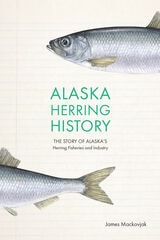
Alaska Herring History
The Story of Alaska’s Herring Fisheries and Industryby James Mackovjak
University of Alaska Press, 2022
The book is divided into three parts based on the purposes for which herring have been harvested. Part I is a history of the reduction (fertilizer/fish meal/fish oil) and cured (salted) herring industries and the
bait-herring fisheries; part II is a history of the roe-herring fisheries in Southeast Alaska, Prince William Sound, Kodiak Island, lower Cook Inlet, Togiak, and Norton Sound; and part III is a history of the herring spawn-on-kelp industry. Historical and contemporary photos and illustrations—as well as graphs and charts that help summarize the development and, in some cases, the demise of the fisheries—augment this detailed look at the evolution of Alaska's herring fisheries.
Balancing scientific details, historical facts, and personal anecdotes from experts in the field, Alaska Herring History will be of interest to historians, social scientists, biologists, and fishery managers and makes an important contribution to Alaska fisheries literature.
Albertus Magnus On Animals V1 2
A Medieval Summa Zoologica Revised EditionKenneth F. Kitchell Jr.and Irven Michael Resnick
The Ohio State University Press, 2018
In his work De animalibus, Albert integrated the vast amount of information on nature that had come down to him in previous centuries: the exposition of Michael Scotus’s translation from the Arabic of Aristotle’s books on the natural world (Books 1–19), Albert’s own revisions to Aristotle’s teachings (Books 20–21), and a “dictionary” of animals appropriated largely from the De natura rerum of Thomas of Cantimpré (Books 22–26). Albert’s comprehensive treatise on living things was acknowledged as the reputable authority in biology for almost five hundred years.
In this translated and annotated edition, Kenneth F. Kitchell Jr. and Irven Michael Resnick illuminate the importance of this work, allowing Albert’s magnum opus to be better understood and more widely appreciated than ever before. Broken into two volumes (Books 1–10 and 11–26),Albertus Magnus On Animals is a veritable medieval scientific encyclopedia, ranging in topics from medicine, embryology, and comparative anatomy to women, hunting and everyday life, commerce, and much more—an essential work for historians, medievalists, scientists, and philosophers alike.
Albertus Magnus On Animals V1
A Medieval Summa Zoologica Revised EditionAlbertus Magnus, Edited by Kenneth F. Kitchell Jr.and Irven Michael Resnick
The Ohio State University Press, 2018
In his work De animalibus, Albert integrated the vast amount of information on nature that had come down to him in previous centuries: the exposition of Michael Scotus’s translation from the Arabic of Aristotle’s books on the natural world (Books 1–19), Albert’s own revisions to Aristotle’s teachings (Books 20–21), and a “dictionary” of animals appropriated largely from the De natura rerum of Thomas of Cantimpré (Books 22–26). Albert’s comprehensive treatise on living things was acknowledged as the reputable authority in biology for almost five hundred years.
In this translated and annotated edition, Kenneth F. Kitchell Jr. and Irven Michael Resnick illuminate the importance of this work, allowing Albert’s magnum opus to be better understood and more widely appreciated than ever before. Broken into two volumes (Books 1–10 and 11–26),Albertus Magnus On Animals is a veritable medieval scientific encyclopedia, ranging in topics from medicine, embryology, and comparative anatomy to women, hunting and everyday life, commerce, and much more—an essential work for historians, medievalists, scientists, and philosophers alike.
Albertus Magnus On Animals V2
A Medieval Summa Zoologica Revised EditionAlbertus Magnus, Edited by Kenneth F. Kitchell Jr.and Irven Michael Resnick
The Ohio State University Press, 2019
In his work De animalibus, Albert integrated the vast amount of information on nature that had come down to him in previous centuries: the exposition of Michael Scotus’s translation from the Arabic of Aristotle’s books on the natural world (Books 1–19), Albert’s own revisions to Aristotle’s teachings (Books 20–21), and a “dictionary” of animals appropriated largely from the De natura rerum of Thomas of Cantimpré (Books 22–26). Albert’s comprehensive treatise on living things was acknowledged as the reputable authority in biology for almost five hundred years.
In this translated and annotated edition, Kenneth F. Kitchell Jr. and Irven Michael Resnick illuminate the importance of this work, allowing Albert’s magnum opus to be better understood and more widely appreciated than ever before. Broken into two volumes (Books 1–10 and 11–26),Albertus Magnus On Animals is a veritable medieval scientific encyclopedia, ranging in topics from medicine, embryology, and comparative anatomy to women, hunting and everyday life, commerce, and much more—an essential work for historians, medievalists, scientists, and philosophers alike.
Alchemical Laboratory Notebooks and Correspondence
George Starkey
University of Chicago Press, 2004
The editors present in this volume transcriptions of Starkey's texts, their translations, and valuable commentary for the modern reader. Dispelling the myth that alchemy was an irrational enterprise, this remarkable collection of laboratory notebooks and correspondence reveals the otherwise hidden methodologies of one of the seventeenth century's most influential alchemists.
Alchemy Tried in the Fire
Starkey, Boyle, and the Fate of Helmontian ChymistryWilliam R. Newman and Lawrence M. Principe
University of Chicago Press, 2002
What actually took place in the private laboratory of a mid-seventeenth century alchemist? How did he direct his quest after the secrets of Nature? What instruments and theoretical principles did he employ?
Using, as their guide, the previously misunderstood interactions between Robert Boyle, widely known as "the father of chemistry," and George Starkey, an alchemist and the most prominent American scientific writer before Benjamin Franklin as their guide, Newman and Principe reveal the hitherto hidden laboratory operations of a famous alchemist and argue that many of the principles and practices characteristic of modern chemistry derive from alchemy. By analyzing Starkey's extraordinary laboratory notebooks, the authors show how this American "chymist" translated the wildly figurative writings of traditional alchemy into quantitative, carefully reasoned laboratory practice—and then encoded his own work in allegorical, secretive treatises under the name of Eirenaeus Philalethes. The intriguing "mystic" Joan Baptista Van Helmont—a favorite of Starkey, Boyle, and even of Lavoisier—emerges from this study as a surprisingly central figure in seventeenth-century "chymistry." A common emphasis on quantification, material production, and analysis/synthesis, the authors argue, illustrates a continuity of goals and practices from late medieval alchemy down to and beyond the Chemical Revolution.
For anyone who wants to understand how alchemy was actually practiced during the Scientific Revolution and what it contributed to the development of modern chemistry, Alchemy Tried in the Fire will be a veritable philosopher's stone.
Alchemy and Authority in the Holy Roman Empire
Tara Nummedal
University of Chicago Press, 2007
Drawing on criminal trial records, contracts, laboratory inventories, satires, and vernacular alchemical treatises, Alchemy and Authority in the Holy Roman Empire situates the everyday alchemists, largely invisible to modern scholars until now, at the center of the development of early modern science and commerce. Reconstructing the workaday world of entrepreneurial alchemists, Tara Nummedal shows how allegations of fraud shaped their practices and prospects. These debates not only reveal enormously diverse understandings of what the “real” alchemy was and who could practice it; they also connect a set of little-known practitioners to the largest questions about commerce, trust, and intellectual authority in early modern Europe.
Alchemy in the Rain Forest
Politics, Ecology, and Resilience in a New Guinea Mining AreaJerry K. Jacka
Duke University Press, 2015
Alcohol, Science and Society Revisited
Edith Lisansky Gomberg, John A. Carpenter, and Helene Raskin White, Editors
University of Michigan Press, 1982