Results by title
18284 books match the query 'United States' and 1653 start with a
Arresting Citizenship
The Democratic Consequences of American Crime ControlAmy E. Lerman and Vesla M. Weaver
University of Chicago Press, 2014
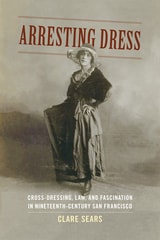
Arresting Dress
Cross-Dressing, Law, and Fascination in Nineteenth-Century San FranciscoClare Sears
Duke University Press, 2015
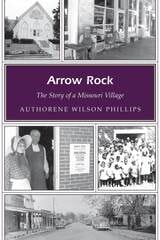
Arrow Rock
The Story of a Missouri VillageAuthorene Wilson Phillips
University of Missouri Press, 2005

Art & Money
Marc Shell
University of Chicago Press, 1995
Unlike traditional approaches to the topic, Art & Money is not a study of money and exchange as an artistic "theme." It is also not a study of economics as a context for the history of art. Rather, it is a path-breaking exploration of the internal logic—the set of meanings and values—common to both money and art.
Art & Money provides striking insight into current matters of art collection, counterfeiting, and problems of attribution, into the general relation between word and image, and into controversies over taxation and crises or scandals in the financial world. Shell's historical range is immense, and he fills this study with amusing anecdotes and insights ranging from the relic of the Holy Foreskin to the state's arrest of J. S. G. Boggs, a conceptual artist who draws money. Illustrated with over one hundred halftones and eight color plates, this stunning volume will force a rethinking of our old presumptions about where money ends and art begins.

Art Education
A CRITICAL NECESSITYAlbert William Levi and Ralph A. Smith
University of Illinois Press, 1991
philosophical rationale for the idea of discipline-based art education.
Levi and Smith discuss topics ranging over both the public and private
aspects of art, the disciplines of artistic creation, art history, art
criticism, and aesthetics, and curriculum proposals featuring five phases
of aesthetic learning.
While there is no consensus on how the various components of aesthetic
learning should be presented in order to accomplish the goals of discipline-based
art education, the authors point out that progress toward those goals
will require that those who design art education programs bring an understanding
of the four disciplines to their work. The introductory volume of a five-volume
series, this book will appeal to elementary and secondary art teachers,
those who prepare teachers at the college level, and museum educators.
Art Making and Education
Maurice Brown and Diana Korzenik
University of Illinois Press, 1993
What is involved in "making art"? In what ways have Americans
introduced art making to students? In Art Making and Education, a
practicing artist and a historian of art education discuss from their
particular perspectives the production of studio and classroom art. Among
those to whom this book will appeal are prospective teachers, school administrators,
university-level art educators, and readers interested in the theory of
discipline-based art education.
"The sources are excellent. The bibliographical material is a must
for any candidate wanting to teach the visual arts and certainly for any
student hoping to become an artist."
-- William Klenk, University of Rhode Island
Art Music Activism
Aesthetics and Politics in 1930s New York CityMaria Cristina Fava
University of Illinois Press, 2024
Maria Cristina Fava explores the rich creative milieu shaped by artists dedicated to using music and theater to advance the promotion, circulation, and acceptance of leftist ideas in 1930s New York City. Despite tensions between aesthetic and pragmatic goals, the people and groups produced works at the center of the decade’s sociopolitical and cultural life. Fava looks at the Composers’ Collective of New York and its work on proletarian music and workers’ songs before turning to the blend of experimentation and vernacular idioms that shaped the political use of music within the American Worker’s Theater Movement. Fava then reveals how composers and theater practitioners from these two groups achieved prominence within endeavors promoted by the Works Project Administration.
Fava’s history teases out fascinating details from performances and offstage activity attached to works by composers such as Marc Blitzstein, Charles Seeger, Ruth Crawford Seeger, Elie Siegmeister, and Harold Rome. Endeavors encouraged avant-garde experimentation while nurturing innovations friendly to modernist approaches and an interest in non-western music. Blitzstein’s The Cradle Will Rock offered a memorable example that found popular success, but while the piece achieved its goals, it became so wrapped up in myths surrounding workers’ theater that critics overlooked Blitzstein’s musical ingenuity.
Provocative and original, Art Music Activism considers how innovative classical composers of the 1930s balanced creative aims with experimentation, accessible content, and a sociopolitical message to create socially meaningful works.
Art and Activism
Jazz Artists and Writers in the Civil Rights VanguardJack Marchbanks
Ohio University Press, 2026
Explore how jazz legends and literary icons united art and activism, shaping the civil rights movement and transforming American culture during the pivotal period between 1955 and 1965.
Art and Activism explores the powerful, symbiotic relationships among artists such as Nina Simone, Abbey Lincoln, and Lena Horne and their literary counterparts—Lorraine Hansberry, Maya Angelou, and Langston Hughes. These creative figures positioned themselves as cultural thought leaders within the evolving civil rights movement. While the Jim Crow South was the movement’s operational front, Jack Marchbanks argues that New York City’s intellectual, cultural, and fundraising communities functioned as its strategic command center.
Readers who admire jazz legends like Duke Ellington, Dave Brubeck, Miles Davis, and Charles Mingus—and those fascinated by prominent African American writers like James Baldwin and Ralph Ellison—will discover how these artists intertwined their work with the civil rights struggle. The book examines their involvement in pivotal confrontations and their connections with key leaders such as the Reverend Dr. Martin Luther King Jr., Daisy Bates, Ella Baker, and Malcolm X.
By illuminating the intersection of art and activism, this study offers a fresh perspective on the pivotal decade from 1955 to 1965. It is an essential resource for undergraduate courses and an engaging read for anyone seeking to understand the civil rights era through a cultural lens.
Art and Freedom of Speech
Randall P. Bezanson
University of Illinois Press, 2009
This book analyzes the broad range of Supreme Court cases that concern the protection of art and free speech under the First Amendment. Finding that debates about free expression (whether in speech or art) swirl around sex and cultural blasphemy, Randall P. Bezanson tracks and interprets the Court's decisions on film, nude dancing, music, painting, and other visual expressions.
Showing how the Court has dealt with judgments of art, quality, meaning, and how to distinguish types of speech and expression, Bezanson explores issues as diverse as homosexuality in the Boy Scouts, gay and lesbian parade floats, 2 Live Crew's alleged copyright infringement, National Endowment for the Arts grants and diversity, dangerous art, and screenings of the film Carnal Knowledge. In considering the transformative meaning of art, the importance of community judgments, and the definition of speech in Court rulings, Bezanson focuses on the fundamental questions underlying the discussion of art as protected free speech: What are the boundaries of art? What are the limits on the government's role as supporter and "patron" of the arts? And what role, if any, may core social values of decency, respect, and equality play in limiting the production or distribution of art?
Accessibly written and evocatively argued, Art and Freedom of Speech explores these questions and concludes with the argument that, for legal purposes, art should be absolutely free under the First Amendment--in fact, even more free than other forms of speech.
Art and Life of Merritt Dana Houghton in the Northern Rockies, 1878-1919
by Michael A. Amundson
University of Wyoming Press, 2022
This lavishly illustrated biography details Houghton’s life and work from his birth in Michigan in 1846 to his death in 1919 in Spokane through extensive genealogical records, newspaper accounts, and his illustrations—including historic ranches and bird’s-eye views of Fort Collins, Colorado; Dillon, Montana; and Spokane, Washington and the only known illustrations of long-lost places like Pearl, Colorado, and Rambler, Wyoming. Also included is reproduction of a four-foot-by-eight-foot view of Sheridan, Wyoming and a sixty-image sample portfolio of his best-preserved illustrations organized by type.
Houghton’s work depicts the infrastructure of the new settler society that was remaking the West in the late nineteenth century and early twentieth century, and Amundson demonstrates how Houghton’s vision of the American West remains active today.

Art and Politics
Psychoanalysis, Ideology, TheatreWalter A. Davis
Pluto Press, 2006
Starting with an analysis of the censorship of the play My Name is Rachel Corrie, which was withdrawn from production by a major New York theater due to a political pressure, Davis shows how all art that challenges the mainstream is either suppressed or distorted to suit the politics of our time---one that will not recognize the truth of human experience and the disorder at the heart of all civilization.
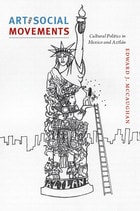
Art and Social Movements
Cultural Politics in Mexico and AztlánEdward J. McCaughan
Duke University Press, 2012
McCaughan argues that the social power of activist artists emanates from their ability to provoke people to see, think, and act in innovative ways. Artists, he claims, help to create visual languages and spaces through which activists can imagine and perform new collective identities and forms of meaningful citizenship. The artists' work that he discusses remains vital today—in movements demanding fuller democratic rights and social justice for working people, women, ethnic communities, immigrants, and sexual minorities throughout Mexico and the United States. Integrating insights from scholarship on the cultural politics of representation with structural analyses of specific historical contexts, McCaughan expands our understanding of social movements.
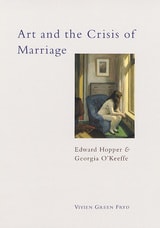
Art and the Crisis of Marriage
Edward Hopper and Georgia O'KeeffeVivien Green Fryd
University of Chicago Press, 2002
Vivien Green Fryd argues that this crisis played a crucial role in the lives and works of two of America's most familiar and beloved artists, Georgia O'Keeffe (1887-1986) and Edward Hopper (1882-1967). Combining biographical study of their marriages with formal and iconographical analysis of their works, Fryd shows how both artists expressed the pleasures and perils of their relationships in their paintings. Hopper's many representations of Victorian homes in sunny, tranquil landscapes, for instance, take on new meanings when viewed in the context of the artist's own tumultuous marriage with Jo and the widespread middle-class fears that the new urban, multidwelling homes would contribute to the breakdown of the family. Fryd also persuasively interprets the many paintings of skulls and crosses that O'Keeffe produced in New Mexico as embodying themes of death and rebirth in response to her husband Alfred Stieglitz's long-term affair with Dorothy Norman.
Art and the Crisis of Marriage provides both a penetrating reappraisal of the interconnections between Georgia O'Keeffe's and Edward Hopper's lives and works, as well as a vivid portrait of how new understandings of family, gender, and sexuality transformed American society between the wars in ways that continue to shape it today.
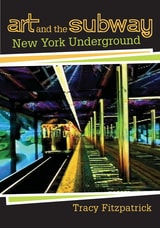
Art and the Subway
New York UndergroundFitzpatrick, Tracy
Rutgers University Press, 2009
Fitzpatrick captures the emotions of artists and riders alike, as she explores paintings, photographs, performance art, graffiti, and public art by artists such as Walker Evans, Bruce Davidson, DONDI, Keith Haring, Yayoi Kusama, Jacob Lawrence, Reginald Marsh, Elizabeth Murray, and many others. She also considers representations of the subway in film, on song sheet covers, and in illustration. By examining the cultural, technological, and social contexts for these creative interpretations, Fitzpatrick illuminates in fresh ways the contradictions and harmonies between public and private space.
Featuring 17 color plates and 80 black-and-white images, Art and the Subway takes readers on a fascinating ride through the visual history of one of the twentieth century's greatest urban planning endeavors as it grew, changed form, and reinvented itself with passion and vitality.
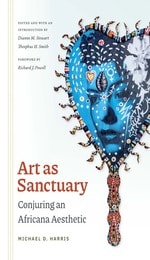
Art as Sanctuary
Conjuring an Africana AestheticMichael D. Harris. Edited and with an introduction by Dianne M. Stewart and Theophus H. Smith. Foreword by Richard J. Powell.
Duke University Press, 2026
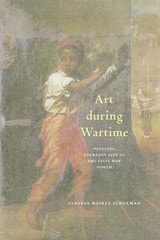
Art during Wartime
Painting Everyday Life in the Civil War NorthVanessa Meikle Schulman
University of Massachusetts Press, 2024
While the Civil War raged on, many northern artists depicted everyday life rather than grand battles or landscapes of noble sacrifice. Amidst a conflict that was upending antebellum social norms, these artists created realistic scenes of mundane events, known as genre paintings. While many of the paintings seem merely to show everyday incidents, Vanessa Meikle Schulman argues that artists connected the visuals to larger concerns.
With attention to how the war shaped new definitions of gender, race, and disability, Art during Wartime uncovers the complexity of these genre paintings. Schulman uses seven case studies of prominent and lesser-known artists who explored how the war instigated social change and shaped northern opinions about current events, including George Cochran Lambdin, Vincent Colyer, and Eastman Johnson. Utilizing detailed visual analysis and extensive historical research, Art during Wartime reframes our narrative of Civil War visual culture, placing genre painting in a central ideological role.
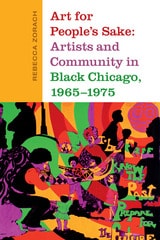
Art for People's Sake
Artists and Community in Black Chicago, 1965-1975Rebecca Zorach
Duke University Press, 2019
Art in Chicago
A History from the Fire to NowEdited by Maggie Taft and Robert Cozzolino
University of Chicago Press, 2018
Now that art is getting its due. Art in Chicago is a magisterial account of the long history of Chicago art, from the rupture of the Great Fire in 1871 to the present, Manierre Dawson, László Moholy-Nagy, and Ivan Albright to Chris Ware, Anne Wilson, and Theaster Gates. The first single-volume history of art and artists in Chicago, the book—in recognition of the complexity of the story it tells—doesn’t follow a single continuous trajectory. Rather, it presents an overlapping sequence of interrelated narratives that together tell a full and nuanced, yet wholly accessible history of visual art in the city. From the temptingly blank canvas left by the Fire, we loop back to the 1830s and on up through the 1860s, tracing the beginnings of the city’s institutional and professional art world and community. From there, we travel in chronological order through the decades to the present. Familiar developments—such as the founding of the Art Institute, the Armory Show, and the arrival of the Bauhaus—are given a fresh look, while less well-known aspects of the story, like the contributions of African American artists dating back to the 1860s or the long history of activist art, finally get suitable recognition. The six chapters, each written by an expert in the period, brilliantly mix narrative and image, weaving in oral histories from artists and critics reflecting on their work in the city, and setting new movements and key works in historical context. The final chapter, comprised of interviews and conversations with contemporary artists, brings the story up to the present, offering a look at the vibrant art being created in the city now and addressing ongoing debates about what it means to identify as—or resist identifying as—a Chicago artist today. The result is an unprecedentedly inclusive and rich tapestry, one that reveals Chicago art in all its variety and vigor—and one that will surprise and enlighten even the most dedicated fan of the city’s artistic heritage.
Part of the Terra Foundation for American Art’s year-long Art Design Chicago initiative, which will bring major arts events to venues throughout Chicago in 2018, Art in Chicago is a landmark publication, a book that will be the standard account of Chicago art for decades to come. No art fan—regardless of their city—will want to miss it.
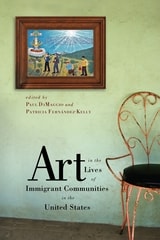
Art in the Lives of Immigrant Communities in the United States
DiMaggio, Paul
Rutgers University Press, 2010
Art of the United States, 1750–2000
John Davis and Michael Leja
Terra Foundation for American Art, 2020
A sourcebook of unprecedented breadth and depth, Art of the United States brings together multiple voices throughout the ages to provide a framework for learning and critical thinking on US art.
Art, Activism, and Oppositionality
Essays from AfterimageGrant Kester, ed.
Duke University Press, 1998
Forging a style of criticism where aesthetic, critical, theoretical, and activist concerns converge, Afterimage has shaped American debates around the politics of visual production and arts education while offering a voice to politically involved artists and scholars. Art, Activism, and Oppositionality insists not only on the continuing relevance of an activist stance to contemporary art practice and criticism, but also on the significance of an engaged art practice that is aligned with social or political activism. With essays that span fifteen years—roughly from Ronald Reagan’s 1980 presidential win to the 1994 Republican victories in Congress, a period marked by waning public support for the arts and growing antagonism toward activist art—Art, Activism, and Oppositionality confronts issues ranging from arts patronage, pedagogy, and the very definitions of art and activism to struggles involving AIDS, reproductive rights, sexuality, and racial identity.
Contributors. Maurice Berger, Richard Bolton, Ann Cvetkovich, Coco Fusco, Brian Goldfarb, Mable Haddock, Grant H. Kester, Ioannis Mookas, Chiquita Mullins Lee, Darrell Moore, Lorraine O’Grady, Michael Renov, Martha Rosler, Patricia Thomson, David Trend, Charles A. Wright Jr., Patricia R. Zimmerman
Artful Lives
The Francis Watts Lee Family and Their TimesPatricia J. Fanning
University of Massachusetts Press, 2016
Francis Watts Lee and his family hold a special place in the history of American photography. F. Holland Day completed a series of remarkable photographs of Lee's daughter Peggy, and the striking portrait of the child and her mother titled Blessed Art Thou among Women is one of Gertrude Käsebier's most iconic compositions. In Artful Lives, Patricia J. Fanning uses these and other significant images as guideposts to explore the Lee family and the art and culture of their age.
A social reform advocate, Francis Watts Lee was an artistic photographer and a talented printer, part of the circle of avant-garde artists and intellectuals who formed Boston's bohemia. He married twice, first Agnes Rand, an award-winning poet and children's book author, and later, after their divorce, Marion Lewis Chamberlain, a librarian and MIT-trained architect. Francis and Agnes's eldest daughter, Peggy, who was so integral to the work of pioneer Pictorialists, died at age seven of juvenile diabetes. Her sister, Alice, who lost her hearing in infancy, became a wood carver and sculptor.
Utilizing previously unknown family archives and institutional sources, Fanning traces the Lee family's story in the context of major artistic, political, social, and religious trends, including the Arts and Crafts movement, Christian Socialism, and Aestheticism, while also showing how their experiences reflected the national culture's evolving conceptions of family, gender, childhood, medicine, deaf education, and mourning. This richly drawn and gracefully written account of one family informs our understanding of this vibrant era, in Boston and well beyond.
Arthur Carhart
Wilderness ProphetTom Wolf
University Press of Colorado, 2025
Arthur Carhart (1892-1978), America's first champion of wilderness, the first Forest Service landscape architect, and the most popular conservation writer of mid-century America, never won the titan status of his contemporary, Aldo Leopold. A political maverick, he refused to side with any major advocacy group and none has made him its saint. Carhart was a grassroots thinker in a top-down era.
Arthur Carhart, the first biography of this Republican environmentalist and major American thinker, writer, and activist, reveals the currency of his ideas. Tom Wolf elucidates Carhart 's vision of conservation as "a job for all of us," with citizens, municipal authorities, and national leaders all responsible for the environmental effects of their decisions. Carhart loved the local and decried interest groups—from stockmens' associations to wilderness lobbies—as cliques attempting blanket control. He pressured land management agencies to base decisions on local ecology and local partnerships. A lifelong wilderness advocate who proposed the first wilderness preserve at Trappers Lake, Colorado, in 1919, Carhart chose to oppose the Wilderness Act, heartsick at its compromises with lobbies.
Because he shifted his stance and changed his views in response to new information, Carhart is not an easy subject for a biography. Wolf traces Carhart's twists and turns to show a man whose voice was distinctive and contrary and who spoke from a passionate concern for the land and couldn't be counted on for anything else. Readers of American history and outdoor writing will enjoy this portrait of a historic era in conservation politics and the man who so often eschewed politics in favor of the land and people he loved.
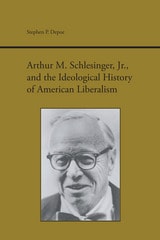
Arthur M. Schlesinger Jr. and the Ideological History of American Liberalism
Stephen P. Depoe
University of Alabama Press, 1994
Arthur M. Schlesinger, Jr., is a historian and political advocate whose ideas and activities have significantly influenced the shape and direction of American liberalism during the past fifty years. A central feature of Schlesinger’s ideological perspective is his belief that American history has been marked by alternating periods of conservative and liberal dominance, which he has termed the “tides of national politics.” Throughout his career, Schlesinger has used the “tides of national politics” to defend the legitimacy and superiority of active liberal government and leadership.
The study investigates how the “tides” concept has functioned in both Schlesinger’s historical scholarship and his partisan political discourse. Depoe also explores the ways in which the “tides” concept has shaped and channeled Schlesinger’s political thought over time, leading him toward certain definitions of situations and away from others. Finally, Depoe offers Schlesinger’s life and work as a case study of the highs and lows of postwar American liberalism. By tracing Schlesinger’s responses to Eisenhower-era conservatism, Kennedy’s New Frontier, and the problems of Vietnam and violence during the 1960s, and the gradual delegitimation of liberalism from the 1970s to the present, this book offers a road map that can guide the reader toward a better understanding of the past, present, and future of liberalism in America.
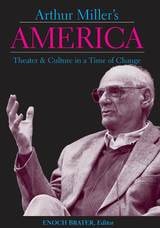
Arthur Miller's America
Theater and Culture in a Time of ChangeEnoch Brater, Editor
University of Michigan Press, 2005
Arthur Miller's America collects new writing by leading international critics and scholars that considers the dramatic world of icon, activist, and playwright Arthur Miller's theater as it reflects the changing moral equations of his time. Written on the occasion of Miller's 85th year, the original essays and interviews in Arthur Miller's America treat the breadth of Miller's work, including his early political writings for the campus newspaper at the University of Michigan, his famous work with John Huston, Clark Gable and Marilyn Monroe on The Misfits, and his signature plays like Death of a Salesman and All My Sons.
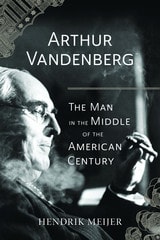
Arthur Vandenberg
The Man in the Middle of the American CenturyHendrik Meijer
University of Chicago Press, 2017
Originally the editor and publisher of the Grand Rapids Herald, Vandenberg was appointed and later elected to the Senate in 1928, where he became an outspoken opponent of the New Deal and a leader among the isolationists who resisted FDR’s efforts to aid European allies at the onset of World War II. But Vandenberg soon recognized the need for unity at the dawn of a new world order; and as a Republican leader, he worked closely with Democratic administrations to build the strong bipartisan consensus that established the Marshall Plan, the United Nations, and NATO. Vandenberg, as Meijer reveals, was instrumental in organizing Congressional support for these monumental twentieth-century foreign policy decisions.
Vandenberg’s life and career offer powerful lessons for today, and Meijer has given us a story that suggests an antidote to our current democratic challenges. After reading this poignant biography, many will ask: Where is the Vandenberg of today?
Artifact
Encounters with the Campus Shooting ArchivesJulija Šukys
West Virginia University Press, 2025
2026 IPPY Awards Bronze Medal Winner, Current Events - Social Issues/Humanitarian
2026 PROSE Award Finalist, Humanities: Literature
Artifact is about the stories we tell ourselves after mass shootings. Each college campus shooting leaves a record: archival collections, monuments to the dead, government-led inquiries, internal university investigations, and lawsuits. Artifact: Encounters with the Campus Shooting Archives seeks to understand university and college campus shootings that involve students and faculty of those institutions. The book examines the aftermaths of such attacks by moving between university archives, memorials to victims, conversations with survivors, and beyond.
Julija Šukys examines a series of five North American university and college campus shootings between 1966 and 2015: the École Polytechnique in Montreal, Concordia University in Montreal, Virginia Tech, University of Alabama–Huntsville, and Umpqua Community College in Roseburg, Oregon. These attacks involved students and faculty as both victims and perpetrators—that is, all the shooters were either faculty members or (in one case, would-be) students of the institution where the killings took place.
Šukys arrives at each site long after the killings have taken place: by now, the teddy bears, flowers, and crosses have been cleared away. Prying journalists are long gone. She sorts through myriad objects left at makeshift memorial sites. She talks for hours with a professor who survived an attack only because her colleague’s gun jammed as it was pointed at her head. She wanders and documents the reconfigured buildings made unrecognizable after the horrors that occurred within them. She reads tedious court transcripts, officious government-commissioned reports, and a troubling memoir written by a shooter’s mother and sifts through the mathematics papers that one campus shooter publishes from his prison cell.
Artifact weighs what it means to live in a place where students and their teachers are gunned down on a seemingly regular basis. It asks how we can continue to learn, teach, and live when nothing changes in response to these deaths. It attempts to speak into silence, to look at the pain of those who have come through trauma, and to meet their gazes without platitudes or triumphalism. The result is a searching book about care, memory, forgiveness, and survival.
Artifacts of Loss
Crafting Survival in Japanese American Concentration CampsDusselier, Jane E
Rutgers University Press, 2008
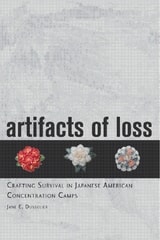
In Artifacts of Loss, Jane E. Dusselier looks at the lives of these internees through the lens of their art. These camp-made creations included flowers made with tissue paper and shells, wood carvings of pets left behind, furniture made from discarded apple crates, gardens grown next to their housingùanything to help alleviate the visual deprivation and isolation caused by their circumstances. Their crafts were also central in sustaining, re-forming, and inspiring new relationships. Creating, exhibiting, consuming, living with, and thinking about art became embedded in the everyday patterns of camp life and helped provide internees with sustenance for mental, emotional, and psychic survival.
Dusselier urges her readers to consider these often overlooked folk crafts as meaningful political statements which are significant as material forms of protest and as representations of loss. She concludes briefly with a discussion of other displaced people around the globe today and the ways in which personal and group identity is reflected in similar creative ways.
Artifacts to Art
Collecting Ancient America in Midcentury L.A.Andrew D. Turner
J. Paul Getty Trust, The, 2026
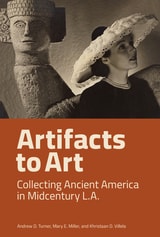
By the mid-twentieth century, ancient Mexican artifacts had undergone a striking transformation. Once dismissed as anthropological curiosities, sought after more for their ethnographic value than aesthetic merit, they had become prized artworks that were prominently displayed in major US museums, featured in advertisements and Hollywood films, and shown adorning the homes of celebrities.
At the center of this shift was Earl Stendahl, a savvy Los Angeles art dealer who played a pivotal role in shaping public and institutional perceptions of these objects. Through strategic marketing and a keen eye for opportunity, he repositioned these artifacts, selling them to an elite clientele that included movie stars, wealthy collectors, and museum curators. In doing so, he helped define a new canon of “ancient American art.”
Beneath this glamorous facade, however, lies a darker narrative of the looting, smuggling, and forgery that fueled this midcentury craze, exposing how the desire for authenticity and prestige often came at the expense of ethical collecting practices and cultural heritage. This book brings together art history, museum studies, and the politics of the antiquities trade, offering both a social history and a critical examination of how ancient Mexico’s past was sold in twentieth-century America.
This volume is published to accompany an exhibition on view at the Getty Research Institute at the Getty Center from June 23 to October 18, 2026.
Artificial Paradise
Science Fiction and American RealitySharona Ben-Tov
University of Michigan Press, 1995
Artisans into Workers
LABOR IN NINETEENTH-CENTURY AMERICABruce Laurie
University of Illinois Press, 1989
history, Bruce Laurie examines the character of working-class factionalism, plebian expectations of government, and relations between the organized few and the unorganized many. Laurie also examines the republican tradition and the movements that drew on it, from the General Trades Unions in the age of Jackson to the Knights of Labor later in the century.
Artist as Author
Action and Intent in Late-Modernist American PaintingChrista Noel Robbins
University of Chicago Press, 2021
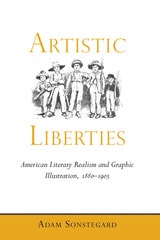
Artistic Liberties
American Literary Realism and Graphic Illustration, 1880-1905Adam Sonstegard
University of Alabama Press, 2013
Though today we commonly read major works of nineteenth-century American literature in unillustrated paperbacks or anthologies, many of them first appeared as magazine serials, accompanied by ample illustrations that sometimes made their way into the serials’ first printings as books. The graphic artists creating these illustrations often visually addressed questions that the authors had left for the reader to interpret, such as the complexions of racially ambiguous characters in Uncle Tom’s Cabin. The artists created illustrations that depicted what outsiders saw in Huck and Jim in Adventures of Huckleberry Finn, rather than what Huck and Jim learned to see in one another. These artists even worked against the texts on occasion—for instance, when the illustrators reinforced the same racial stereotypes that writers such as Paul Laurence Dunbar had intended to subvert in their works.
Authors of American realism commonly submitted their writing to editors who allowed them little control over the aesthetic appearance of their work. In his groundbreaking Artistic Liberties, Adam Sonstegard studies the illustrations from these works in detail and finds that the editors employed illustrators who were often unfamiliar with the authors’ intentions and who themselves selected the literary material they wished to illustrate, thereby taking artistic liberties through the tableaux they created.
Sonstegard examines the key role that the appointed artists played in visually shaping narratives—among them Mark Twain’s Pudd’nhead Wilson, Stephen Crane’s The Monster, and Edith Wharton’s The House of Mirth—as audiences tended to accept their illustrations as guidelines for understanding the texts. In viewing these works as originally published, received, and interpreted, Sonstegard offers a deeper knowledge not only of the works, but also of the realities surrounding publication during this formative period in American literature.
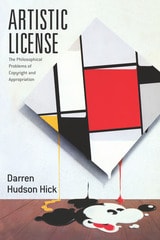
Artistic License
The Philosophical Problems of Copyright and AppropriationDarren Hudson Hick
University of Chicago Press, 2017
Engaging with long-standing debates about the nature of originality, authorship, and artists’ rights, Hick examines the philosophical challenges presented by the role of intellectual property in the artworld and vice versa. Using real-life examples of artists who have incorporated copyrighted works into their art, he explores issues of artistic creation and the nature of infringement as they are informed by analytical aesthetics and legal and critical theory. Ultimately, Artistic License provides a critical and systematic analysis of the key philosophical issues that underlie copyright policy, rethinking the relationship between artist, artwork, and the law.
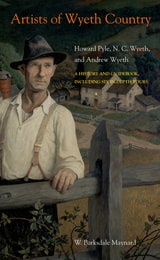
Artists of Wyeth Country
Howard Pyle, N. C. Wyeth, and Andrew WyethW. Barksdale Maynard
Temple University Press, 2021
Few artists have ever been so beloved—or so controversial among art critics—as Andrew Wyeth. The groundbreaking book Artists of Wyeth Country presents an unauthorized and unbiased biographical portrait of Wyeth, based on interviews with family, friends, neighbors—even actress Eva Marie Saint. Journalist W. Barksdale Maynard shines new light on the reclusive artist, emphasizing Wyeth’s artistic debt to Howard Pyle as well as his surprising interest in surrealism. The book is filled with brand-new information and fresh interpretations.
Artists of Wyeth Country also comprises the first-ever guidebook to the artistic world of Chadds Ford, Pennsylvania, center of the Brandywine Tradition begun by Howard Pyle. Six in-depth tours for walking or driving allow the reader to stand exactly where N. C. and Andrew Wyeth stood, as has never been fully possible before.
As Maynard explains, Andrew Wyeth’s artistic process was influenced by Henry David Thoreau’s nature-worship and by his habit of walking daily. Newly commissioned maps, rare aerial photographs, as well as glorious full-color images and artworks of the landscape (many never reproduced before) illustrate the text.
A fascinating exploration of the world of Andrew Wyeth, Artists of Wyeth Country is sure to become an essential new source for those who love American art as well as for admirers of the scenic landscapes of the Mid-Atlantic, of which the Brandywine Valley is an exceptional example. As a rare, unauthorized biography of Andrew Wyeth, it opens the door for an entirely new understanding of the American master.
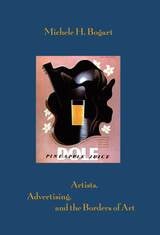
Artists, Advertising, and the Borders of Art
Michele H. Bogart
University of Chicago Press, 1995
From the turn of the century through the 1950s, the explosive growth of popular magazines and national advertising offered artists new sources of income and new opportunities for reaching huge audiences. Bogart shows how, at the same time, this change in the marketplace also forced a rethinking of the purpose of the artistic enterprise itself. She examines how illustrators such as Howard Pyle, Charles Dana Gibson, and Norman Rockwell claimed their identities as artists within a market-oriented framework. She looks at billboard production and the growing schism between "art" posters and billboard advertisements; at the new roles of the art director; at the emergence of photography as the dominant advertising medium; and at the success of painters in producing "fine art" for advertising during the 1930s and 1940s.
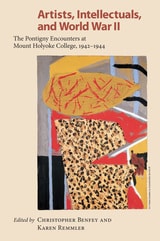
Artists, Intellectuals, and World War II
The Pontigny Encounters at Mount Holyoke College, 1942-1944Christopher E. G. Benfey
University of Massachusetts Press, 2006
Sixty years ago, at the height of World War II, an extraordinary series of gatherings took place at Mount Holyoke College in western Massachusetts. During the summers of 1942–1944, leading European figures in the arts and sciences met at the college with their American counterparts for urgent conversations about the future of human civilization in a precarious world.
Two Sorbonne professors, the distinguished medievalist Gustave Cohen and the existentialist philosopher Jean Wahl, organized these “Pontigny” sessions, named after an abbey in Burgundy where similar symposia had been held in the decades before the war. Among the participants—many of whom were Jewish or had Jewish backgrounds—were the philosophers Hannah Arendt and Rachel Bespaloff, the poets Marianne Moore and Wallace Stevens, the anthropologist Claude Lévi-Strauss and the linguist Roman Jakobson, and the painters Marc Chagall and Robert Motherwell.
In this collection of original essays, Stanley Cavell and Jacques Derrida lead an international group of scholars—including Jed Perl, Mary Ann Caws, Jeffrey Mehlman, and Elisabeth Young-Bruehl—in assessing the lasting impact and contemporary significance of Pontigny-en- Amérique. Rachel Bespaloff, a tragic figure who wrote a major work on the Iliad, is restored to her rightful place beside Arendt and Simone Weil. Anyone interested in the “intellectual resistance” of Francophone intellectuals and artists, and the inspiring support from such American figures as Stevens and Moore, will want to read this pioneering work of scholarship and historical re-creation.
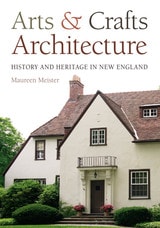
Arts and Crafts Architecture
History and Heritage in New EnglandMaureen Meister
University Press of New England, 2014

Artsy Toddler Storytimes
A Year's Worth of Ready-To-Go ProgrammingCarol Garnett Hopkins
American Library Association, 2013
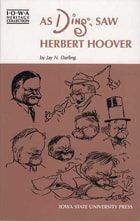
As Ding Saw Herbert Hoover
Jay N. Darling
University of Iowa Press, 1996
Ding Darling was a Pulitzer Prize-winning editorial cartoonist whose work appeared daily on the front page of the Des Moines Register between 1906 and 1949 and also was syndicated in 135 newspapers across the country. A brief encounter with Herbert Hoover during World War I was the beginning of a friendship that lasted until Ding’s death in 1962. After Hoover’s election as president, Ding’s relationship changed somewhat from one of strictly a friend to one of an unofficial advisor. On at least three occasions, the Darlings were overnight guests at the White House. Although their friendship deepened after the years of the presidency, Ding did not agree with Hoover on everything. In As “Ding” Saw Herbert Hoover, Ding interprets the career of Hoover as food administrator, cabinet member, candidate, and president in 57 cartoons, personal recollections, and a running commentary of the times as told in the day-by-day headlines.
As If!
Queer Criticism Across DifferenceChase Gregory
Duke University Press, 2025
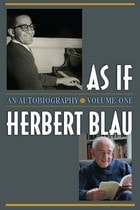
As If
An AutobiographyHerbert Blau
University of Michigan Press, 2012
As If: An Autobiography traces the complex life and career of director, scholar, and theorist Herbert Blau, one of the most innovative voices in the American theater. From his earliest years on the streets of Brooklyn, with gang wars there, to the often embattled, now-legendary Actor's Workshop of San Francisco, the powerfully told story of Blau's first four decades is also a social history, moving from the Great Depression to the cold war, with fallout from "the balance of terror" on what he once described in an incendiary manifesto as The Impossible Theater.
Blau has always forged his own path, from his activist resistance to the McCarthy witch hunts to his emergence as a revolutionary director whose work included the controversial years at The Workshop, which introduced American audiences to major playwrights of the European avant-garde, including Brecht, Beckett, Genet, and Pinter. There is also an account here of that notorious production of Waiting for Godot at the maximum-security prison at San Quentin, which became the insignia of the Theater of the Absurd.
Blau went on from The Workshop to become codirector of the Repertory Theater of Lincoln Center, and then founding provost of California Institute of the Arts, where he developed and became artistic director of the experimental group KRAKEN. Currently Byron W. and Alice L. Lockwood Professor of the Humanities at the University of Washington, Blau has been visionary in the passage from theater to theory, and his many influential and award-winning books include The Dubious Spectacle: Extremities of Theater, 1976–2000; Sails of the Herring Fleet: Essays on Beckett; Nothing in Itself: Complexions of Fashion; To All Appearances: Ideology and Performance; The Audience; The Eye of Prey: Subversions of the Postmodern; and Take Up the Bodies: Theater at the Vanishing Point.
This richly evocative book includes never-before-published photographs of the author, his family and friends, collaborators in the theater, and theater productions.
As Legend Has It
History, Heritage, and the Construction of Swedish American IdentityJennifer Eastman Attebery
University of Wisconsin Press, 2023
The legends Swedish Americans tell about their past are both similar to and distinct from those of others who migrated westward; they participated in settler colonialism while maintaining a sense of their specific, Swedish ethnicity. Unlike racial minority groups, Swedish Americans could claim membership in a majority white community without abandoning their cultural heritage. Their legends and local histories reflect that positioning. Attebery reveals how Swedish American legends are embedded within local history writing, how ostension and rhetoric operate in historical legends, and how vernacular local history writing works in tandem with historical legends to create a common message about a communal past. This impeccably researched study points to ways in which legends about the past possess qualities unique to their subgenre yet can also operate similarly to contemporary legends in their social impact.
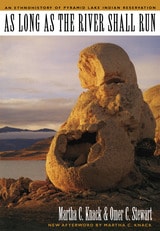
As Long As The River Shall Run
An Ethnohistory Of Pyramid Lake Indian ReservationMartha C. Knack
University of Nevada Press, 1999
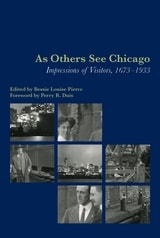
As Others See Chicago
Impressions of Visitors, 1673-1933Bessie Louise Pierce
University of Chicago Press, 2004
First published in 1933 by the University of Chicago Press to mark the occasion of the Century of Progress Exhibition, As Others See Chicago consists of writings culled from over a thousand men and women who visited the city and commented on the best and worst it had to offer, from the skyscrapers to the stockyards. Originally compiled by Bessie Louise Pierce, the first major historian of Chicago, and featuring her own incisive commentary, the volume brings together the impressions of visitors to Chicago over two and a half centuries, from the early years of Westward Expansion to the height of the Great Depression. In addition to writings from better known personalities such as Rudyard Kipling and Waldo Frank, the book collects the opinions of missionaries, aristocrats, journalists, and politicians—observers who were perfectly placed to comment on the development of the city, its inhabitants, and well known events that would one day define Chicago history, such as the Great Fire of 1871 and the 1893 World's Fair.
Taking us back to a time when Chicago was "more astonishing than the wildest visions of the most vagrant imaginations," As Others See Chicago offers an enthralling portrait of an enduring American metropolis.
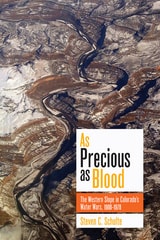
As Precious as Blood
The Western Slope in Colorado's Water Wars, 1900-1970Steven C. Schulte
University Press of Colorado, 2016
The diversion of water from Colorado’s Western Slope to meet the needs of the rest of the state has been a contentious issue throughout Colorado’s history. The source of Colorado’s water is in the snow that accumulates west of the Continental Divide, but the ever-growing population on the Front Range continues to require more municipal water. In As Precious as Blood, Steven C. Schulte examines the water wars between these two regions and how the western part of the state fits into Colorado’s overall water story, expanding the account of water politics he began in Wayne Aspinall and the Shaping of the American West.
Slow to build its necessary water infrastructure and suffering from a small population, little political power, and distance from sources of capital, the Western Slope of Colorado has struggled to maintain its water supply in the face of challenges from the Eastern Slope as well as from surrounding states. Schulte explains in detail the reasons, rationalizations, and resources involved in the multimillion-dollar dams and reclamation projects that divert much-needed water to the Front Range and elsewhere. He draws from archives, newspapers, and oral histories to show the interrelationships among twentieth-century Colorado water law, legislators from across the state, and powerful members of congress from the Western Slope, who have influenced water policy throughout the American West.
As Precious as Blood provides context for one of the most contentious legal, political, and economic periods in the state’s history. Schulte puts a human face on Colorado’s water wars by exploring their social and political dimensions alongside the technical and scientific perspectives.
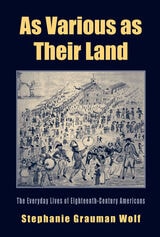
As Various as Their Land
The Everyday Lives of Eighteenth-Century AmericansStephanie Grauman Wolf
University of Arkansas Press, 2000
As if the Future Mattered
Translating Social and Economic Theory into Human BehaviorNeva R. Goodwin, Editor
University of Michigan Press, 1996
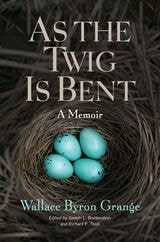
As the Twig Is Bent
A MemoirWallace Byron Grange, Edited by Joseph L. Breitenstein and Richard P. Thiel
University of Wisconsin Press, 2020
Written when Grange was in his sixties, As the Twig Is Bent conveys how a leading conservationist was formed through his early relationship to nature. In beautifully composed vignettes, he details encounters both profound and minute, from the white-footed mice attracted by cookie crumbs in his boyhood clubhouse to the sounds of great horned owls echoing through the wintry woods. As he develops his own understanding of the natural world, he comes to an awareness of the dramatic and devastating role of humankind on ecosystems. Grange’s poignant observations still resonate today amid global conversations about the fate of our natural resources and climate change.
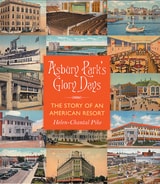
Asbury Park's Glory Days
The Story of an American ResortPike, Helen-Chantal
Rutgers University Press, 2007
In Asbury Park's Glory Days, award-winning author Helen-Chantal Pike chronicles the city's heyday-the ninety-year period between 1890 and 1980. Pike illuminates the historical conditions contributing to the town's cycle of booms and recessions. She investigates the factors that influenced these peaks, such as location, lodging, dining, nightlife, merchandising, and immigration, and how and why millions of people spent their leisure time within this one-square-mile boundary on the northern coast of the state. Pike also includes an epilogue describing recent attempts to resurrect this once-vibrant city.