Results by title
39 books match the query 'Scenes'
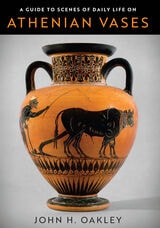
A Guide to Scenes of Daily Life on Athenian Vases
John H. Oakley
University of Wisconsin Press, 2020
John H. Oakley's clear, accessible writing provides sound information with just the right amount of detail. Specialists of Greek art will welcome this book for its text and illustrations. This guide is an essential and much-needed reference for scholars and an ideal sourcebook for classics and art history.
At No Time
Scenes and DialoguesIlse Aichinger
Seagull Books, 2023
A member of the Gruppe 47 writers’ group which sought to renew German-language literature after World War II, Ilse Aichinger (1921–2016) achieved great acclaim as a writer of fiction, poetry, prose, and radio drama. The vignettes in At No Time each begin in recognizable situations, often set in Vienna or other Austrian cities, but immediately swerve into bizarre encounters, supernatural or fantastical situations. Precisely drawn yet disturbingly skewed, they are both naturalistic and disjointed, like the finest surrealist paintings. Created to be experienced on the page or on the radio rather than the stage, they echo the magic realism of her short stories. Even though they frequently take a dark turn, they remain full of humor, agility, and poetic freedom.
Baltimore's Black Arts Then & Now
Behind the Scenes of a Collaborative Public Humanities ProjectMary Rizzo
University of Iowa Press, 2026
Since 2017, a group of former Chicory editors, scholars, librarians, poets, teachers, and young writers have collaborated to use Chicory as a catalyst for intergenerational dialogue on social justice, race, and place. Baltimore’s Black Arts Then & Now documents this joint effort, offering valuable insights for public historians, educators, and humanists.
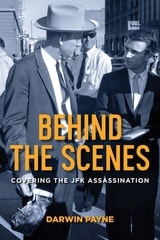
Behind the Scenes
Covering the JFK AssassinationDarwin Payne
University of North Texas Press, 2023
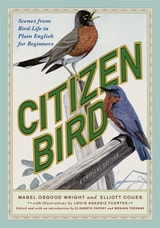
Citizen Bird
Scenes from Bird-Life in Plain English for Beginners, A Critical EditionMabel Osgood Wright
Rutgers University Press, 2025
Born of a collaboration between naturalist Mabel Osgood Wright, ornithologist Elliott Coues, and bird artist Louis Agassiz Fuertes, the book is vital to the history of birding and the broader study of nineteenth-century American culture and literature. This new edition of Citizen Bird preserves the original book’s 111 drawings and adds explanatory footnotes, supplemental historical material, and a new introduction. More than a century and a quarter after its original publication, Elizabeth Cherry and Meghan Freeman contextualize the book in the tradition and history of birding and discuss the roles of its authors and illustrator in birding history. A landmark text in the history of American conservationism, Citizen Bird is a timeless classic that will bring joy to birdwatchers of all ages.

Cumbia!
Scenes of a Migrant Latin American Music GenreHéctor Fernández L Hoeste and Pablo Vila, eds.
Duke University Press, 2013
Contributors. Cristian Alarcón, Jorge Arévalo Mateus, Leonardo D'Amico, Héctor Fernández L'Hoeste, Alejandro L. Madrid, Kathryn Metz, José Juan Olvera Gudiño, Cathy Ragland, Pablo Semán, Joshua Tucker, Matthew J. Van Hoose, Pablo Vila
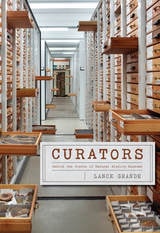
Curators
Behind the Scenes of Natural History MuseumsLance Grande
University of Chicago Press, 2017
At the heart of it all from the very start have been curators. Yet after three decades as a natural history curator, Lance Grande found that he still had to explain to people what he does. This book is the answer—and, oh, what an answer it is: lively, exciting, up-to-date, it offers a portrait of curators and their research like none we’ve seen, one that conveys the intellectual excitement and the educational and social value of curation. Grande uses the personal story of his own career—most of it spent at Chicago’s storied Field Museum—to structure his account as he explores the value of research and collections, the importance of public engagement, changing ecological and ethical considerations, and the impact of rapidly improving technology. Throughout, we are guided by Grande’s keen sense of mission, of a job where the why is always as important as the what.
This beautifully written and richly illustrated book is a clear-eyed but loving account of natural history museums, their curators, and their ever-expanding roles in the twenty-first century.

Delia's Doctors; or, A Glance behind the Scenes
Hannah Gardner Creamer
University of Illinois Press, 2002
This early feminist novel is a wickedly funny slice of mid-nineteenth-century Americana peppered with details of the era’s freakish medical tactics and leavened with a smart and sassy commentary about the societal restraints on women’s physical and intellectual abilities.
First published in 1852, Delia’s Doctors is one of four known novels by Hannah Gardner Creamer, an American writer whose life and career have been all but absent from the annals of American history. In the book, eighteen-year-old Delia Thornton is ill. Her condition, more psychological than physical, worsens during the bitter winter, even as doctor after doctor attempts to cure her.
As Delia typifies the female heroine whose sickness is aggravated by listlessness and inactivity, her brother’s fiancée, Adelaide Wilmot, is Delia’s more robust counterpart. Adelaide thinks she could do anything, if only she were a man, and she dreams of being a physician. Quick to point out the shortcomings of male doctors in treating female illnesses, Adelaide saves Delia and delivers a series of arguments against New England patriarchy.
Emily Dickinson's Open Folios
Scenes of Reading, Surfaces of WritingMarta L. Werner
University of Michigan Press, 1996
Fangirls
Scenes from Modern Music CultureBy Hannah Ewens
University of Texas Press, 2020
"To be a fan is to scream alone together." This is the discovery Hannah Ewens makes in Fangirls: how music fandom is at once a journey of self-definition and a conduit for connection and camaraderie; how it is both complicated and empowering; and how now, more than ever, fandoms composed of girls and young queer people create cultures that shape and change an entire industry.
This book is about what it means to be a fangirl.
Speaking to hundreds of fans from the UK, US, Europe, and Japan, Ewens tells the story of music fandom using its own voices, recounting previously untold or glossed-over scenes from modern pop and rock music history. In doing so, she uncovers the importance of fan devotion: how Ariana Grande represents both tragedy and resilience to her followers, or what it means to meet an artist like Lady Gaga in person. From One Directioners, to members of the Beyhive, to the author's own fandom experiences, this book reclaims the "fangirl" label for its young members, celebrating their purpose, their power, and, most of all, their passion for the music they love.

George Szell's Reign
Behind the Scenes with the Cleveland OrchestraMarcia Hansen Kraus
University of Illinois Press, 2019

Impasse of the Angels
Scenes from a Moroccan Space of MemoryStefania Pandolfo
University of Chicago Press, 1997
Impasse of the Angels explores what it means to be a subject in the historical and poetic imagination of a southern Moroccan society. Passionate and lyrical, ironic and tragic, the book listens to dissonant, often idiosyncratic voices—poetic texts, legends, social spaces, folktales, conversations—which elaborate in their own ways the fractures, wounds, and contradictions of the Maghribî postcolonial present. Moving from concrete details in a traditional ethnographic sense to a creative, experiential literary style, Impasse of the Angels is a tale of life and death compellingly addressing readers from anthropology, literature, philosophy, postcolonial criticism, and Middle Eastern studies.

Light in Germany
Scenes from an Unknown EnlightenmentT. J. Reed
University of Chicago Press, 2015
Reed looks closely at the arguments, achievements, conflicts, and controversies of these major thinkers and how their development of a lucid and active liberal thinking matured in the late eighteenth century into an imaginative branching that ran through philosophy, theology, literature, historiography, science, and politics. He traces the various pathways of their thought and how one engendered another, from the principle of thinking for oneself to the development of a critical epistemology; from literature’s assessment of the past to the formulation of a poetic ideal of human development. Ultimately, Reed shows how the ideas of the German Enlightenment have proven their value in modern secular democracies and are still of great relevance—despite their frequent dismissal—to us in the twenty-first century.
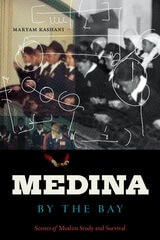
Medina by the Bay
Scenes of Muslim Study and SurvivalMaryam Kashani
Duke University Press, 2023
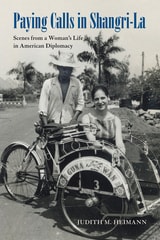
Paying Calls in Shangri-La
Scenes from a Woman’s Life in American DiplomacyJudith M. Heimann
Ohio University Press, 2016
Judith M. Heimann entered the diplomatic life in 1958 to join her husband, John, in Jakarta, Indonesia, at his American Embassy post. This, her first time out of the United States, would set her on a path across the continents as she mastered the fine points of diplomatic culture. She did so first as a spouse, then as a diplomat herself, thus becoming part of one of the Foreign Service’s first tandem couples.
Heimann’s lively recollections of her life in Africa, Asia, and Europe show us that when it comes to reconciling our government’s requirements with the other government’s wants, shuttle diplomacy, Skype, and email cannot match on-the-ground interaction. The ability to gauge and finesse gesture, tone of voice, and unspoken assumptions became her stock-in-trade as she navigated, time and again, remarkably delicate situations.
This insightful and witty memoir gives us a behind-the-scenes look at a rarely explored experience: that of one of the very first married female diplomats, who played an unsung but significant role in some of the important international events of the past fifty years. To those who know something of today’s world of diplomacy, Paying Calls in Shangri-La will be an enlightening tour through the way it used to be—and for aspiring Foreign Service officers and students, it will be an inspiration.
Published in association with ADST-DACOR Diplomats and Diplomacy Series
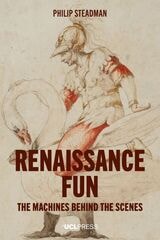
Renaissance Fun
The Machines behind the ScenesPhilip Steadman
University College London, 2021
Renaissance Fun is about the technology of entertainment in the forms of stage machinery, theatrical special effects, gardens, fountains, automata, and self-playing musical instruments from the Renaissance. How did the machines behind these shows work? How exactly were chariots filled with singers let down onto the stage? How were flaming dragons made to fly across the sky? How were seas created on stage? How did mechanical birds imitate real birdsong? What was “artificial music,” three centuries before Edison and the phonograph? How could pipe organs be driven and made to play themselves by waterpower alone? And who were the architects, engineers, and craftsmen who created these wonders? While this book is offered as entertainment in itself, it also offers a more serious scholarly argument centered on the enormous influence of Vitruvius and Hero, two ancient writers who composed on the subject.
Rus–Ukraine–Russia
Scenes from the Cultural History of Russian ReligiosityMartin C. Putna
Karolinum Press, 2018
Examining key points in Russian cultural and spiritual history, Rus–Ukraine–Russia is essential reading for those wishing to understand the current state of Russia and Ukraine—the so-called heir to an “alternative Russia.” Putna uses literary and artistic works to offer a rich analysis of Russia as a cultural and religious phenomenon: tracing its development from the arrival of the Greeks in prehistoric Crimea to its invasion by “little green men” in 2014; explaining the cultural importance in Russ of the Vikings as well as Pussy Riot; exploring central Russian figures from St. Vladimir the Great to Vladimir Putin.
Unique in its postcolonial perspective, this is not merely a history of Russia or of Russian religion. This book presents Russia as a complex mesh of national, religious, and cultural (especially countercultural) traditions—with strong German, Mongol, Jewish, Catholic, Polish, and Lithuanian influences—a force responsible for creating what we identify as Eastern Europe.
Scenes From Postmodern Life
Beatriz Sarlo
University of Minnesota Press, 2001
Scenes and Their Senses
Close Reading as Theory and MethodRobin Wagner-Pacifici
University of Chicago Press, 0
Makes the case for close readings of small scenes appearing in works of literature, scholarship, film, and visual art, showing how close attention to details can reveal the meaningful sociological action that often occurs on the margins.
Why do certain images, stories, and scenes impress upon us so strongly, inviting us to linger over the nuances of their meaning? In Scenes and Their Senses, sociologist Robin Wagner-Pacifici seeks to uncover the deeper meaning behind twenty “scenes” that have captured her theoretical imagination over her lifetime. Some of these come from classics of sociological theory or literature—Geertz, Habermas, Lévi-Strauss, Zola—and some are more contemporary, including the films Good Will Hunting and Luis Buñuel’s The Phantom ofLiberty. She seeks here to understand each scene less as examples of a given condition or conundrum and more as worlds in themselves.
As Wagner-Pacifici shows, close attention to the forms and flows of these minor, often quiet scenes reveals how meaningful action occurs in what might appear to be the margins or interstices of the bigger, noisier story being told. Providing an entry point to larger social conditions, relations, and change, the scenes analyzed here evoke sociological themes of belonging and exile, strength and weakness, cleanliness and pollution, reality and fantasy, courage and cowardice, and vision and obscurity, among others. As an ethnography of texts recalled from previous readings and revisited by the author, the scenes highlight the role of memory in sense-making. Furthermore, the activation of the scenes as a focused point of sustained contemplation functions as a remarkable bridge between method and theory.
Scenes from Bourgeois Life
Nicholas Ridout
University of Michigan Press, 2020
Scenes from Deep Time
Early Pictorial Representations of the Prehistoric WorldMartin J. S. Rudwick
University of Chicago Press, 1992
Scenes from la Cuenca de Los Angeles y otros Natural Disasters
Susana Chávez-Silverman
University of Wisconsin Press, 2010
Scenes from the Bathhouse
And Other Stories of Communist RussiaMikhail Zoshchenko
University of Michigan Press, 1959

Scenes from the Drama of European Literature
Erich AuerbachForeword by Paolo Valesio
University of Minnesota Press, 1984
Scenes from the Drama of European Literature was first published in 1984. Minnesota Archive Editions uses digital technology to make long-unavailable books once again accessible, and are published unaltered from the original University of Minnesota Press editions.
In his foreword to this reprint of Erich Auerbach's major essays, Paolo Valesio pays tribute to the author with an old saying that he feels is still the best metaphor for the genesis of a literary critic: the critic is born of the marriage of Mercury and Philology. The German-born Auerbach was a scholar who specialized in Romance philology, a tradition rooted in German historicism—the conviction that works of art must be judged as products of variable places and times, not from the eye of eternity, nor by a single unchanging aesthetic standard. The mercurial element in Auerbach's work is significant, for in a life of motion—of exile from Hitler's Germany—he came to believe that literary history was evolutionary, ever-changing—a view reflected in the title of his book, which suggests life and literature are historical drama.
Auerbach is best known for his magisterial study Mimesis: The Representation of Reality in Western Literature, written during the war, in Istanbul, when he was far from his own culture and from the books that he normally relied on. In 1957, just before his death, he arranged for the publication in English of his six most important essays, in a volume called Scenes from the Drama of European Literature.As in Mimesis,Auerbach's fresh insights bring to the disparate subjects of the essays a coherence that reflects the unity of Western, humanistic tradition, even while they hint at the deepening pessimism of his later years.
In the first essay, "Figura," Auerbach develops his concept of the figural interpretation of reality; applied here to Dante's Divine Comedy,it also served as groundwork for his treatment of realism in Mimesis. A second essay on Dante's examines the poet's depiction of St. Francis of Assisi. The next three essays deal with the paradoxical nature of Pascal's political thought; the merging of la cour and la ville—the king's entourage and the bourgeoisie—chiefly in relation to the seventeenth-century French theater; and Vico's formulation concepts by the German Romantics. In the final essay Auerbach confers upon Baudelaire's Fleurs du Mal the designation "aesthetic dignity" because, not in spite of, the hideous reality of the peoms.
"A major collection of important essays on European literature, almost all classics, and almost all required reading for their various centuries—thus the book is indispensable for the medieval period,the seventeenth and nineteenth centuries; in addition, the 'Figura' and the Vico essays are very significant theoretical statements. The book is lucid and far more accessible for undergraduates than, say, current high theory. Nor has Auerbach's own work aged . . . All of his varied strengths are evidence in this collection, which is a better way into his work than Mimesis." –Fredric Jameson, University of California, Santa Cruz.

Scenes from the High Desert
JULIAN STEWARD'S LIFE AND THEORYVirginia Kerns
University of Illinois Press, 2002

Scenes from the Revolution
Making Political Theatre 1968-2019Edited by Kim Wiltshire, Billy Cowan and James Harkar
Pluto Press, 2018
Scenes from the Revolution is a celebration of fifty years of radical theater in Britain. Beginning with a short history of pre-1968 political theater—covering Brecht, Joan Littlewood, and Ewan McColl—the editors move on to explore agit-prop, working-class, youth, community, POC, women’s, and LGBTQ theater. Comprehensive in scope, and featuring many of the leading voices in the field today, as well as “lost” scripts from the radical theater companies of the past, Scenes from the Revolution is a must-read for anyone interested in politics in the arts.
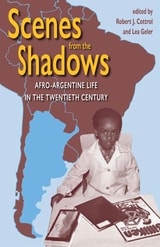
Scenes from the Shadows
Afro-Argentine Life in the Twentieth CenturyRobert J. Cottrol and Lea Geler
Ohio University Press, 2027
Scenes from the Shadows challenges one of the most enduring myths of Argentine history: that Afro-Argentines had disappeared by the twentieth century. Bringing together leading scholars of race, culture, and history, the volume demonstrates that Afro-descendant communities remained a vital part of Argentine society even as official narratives, public institutions, and popular memory rendered them increasingly invisible. Drawing on oral histories, community newspapers, family archives, ethnography, and archival research, the contributors recover the lives, organizations, and cultural worlds that persisted beneath the surface of Argentina’s self-image as a White, European nation.
Focusing on Buenos Aires—home to the country’s largest Afro-descendant population and the epicenter of debates over race and national identity—the book situates Argentina within the broader history of the African diaspora in Latin America and examines how ideologies of Whitening (blanqueamiento), racial classification, urban development, and national identity obscured Afro-descendant presence throughout the twentieth century. The chapters explore Black celebrity and performance culture, tango, Afro-Porteño associational life, community journalism, public employment, migration, gender, and the formation of Afro-descendant social networks, revealing how Afro-Argentines negotiated exclusion while sustaining vibrant traditions of community, creativity, and belonging.
More than a recovery of forgotten histories, Scenes from the Shadows offers a new interpretation of modern Argentina itself. It shows how race continued to shape social life even in a society that denied its importance and how Afro-descendant communities endured despite powerful pressures toward erasure. A major contribution to Afro-Latin American studies, Argentine history, and diaspora scholarship, the volume restores Afro-Argentines to their place in the story of twentieth-century Argentina and provides a powerful framework for understanding the relationship between race, memory, and nationhood.
Contributors
Paulina L. Alberto
Judith M. Anderson
Laura Colabella
Robert J. Cottrol
Alejandra Egido
Alejandro Frigerio
Lea Geler
Lucas Glasman
Miriam Gomes
Chisu Teresa Ko
Eva Lamborghini
Marta Maffia
Carmen Yannone
Scenes of Instruction in Renaissance Romance
Jeff Dolven
University of Chicago Press, 2007
We take it for granted today that the study of poetry belongs in school—but in sixteenth-century England, making Ovid or Virgil into pillars of the curriculum was a revolution. Scenes of Instruction in Renaissance Romance explores how poets reacted to the new authority of humanist pedagogy, and how they transformed a genre to express their most radical doubts.
Jeff Dolven investigates what it meant for a book to teach as he traces the rivalry between poet and schoolmaster in the works of John Lyly, Philip Sydney, Edmund Spenser, and John Milton. Drawing deeply on the era’s pedagogical literature, Dolven explores the links between humanist strategies of instruction and romance narrative, rethinking such concepts as experience, sententiousness, example, method, punishment, lessons, and endings. In scrutinizing this pivotal moment in the ancient, intimate contest between art and education, Scenes of Instruction in Renaissance Romance offers a new view of one of the most unconsidered—yet fundamental—problems in literary criticism: poetry’s power to please and instruct.
Scenes of Instruction
A MemoirMichael Awkward
Duke University Press, 1999
With a recurring focus on how his mother’s tragic weaknesses and her compelling strengths affected his development, Awkward intersperses the chronologically arranged autobiographical sections with ruminations on his own interests in literary and cultural criticism. As a male scholar who has come under fire for describing himself as a feminist critic, he reflects on such issues as identity politics and the politics of academia, affirmative action, and the Million Man March.
By connecting his personal experiences with larger political, cultural, and professional questions, Awkward uses his life as a palette on which to blend equations of race and reading, urbanity and mutilation, alcoholism, pain, gender, learning, sex, literature, and love.
Scenes of Projection
Recasting the Enlightenment SubjectJill H. Casid
University of Minnesota Press, 2015
Theorizing vision and power at the intersections of the histories of psychoanalysis, media, scientific method, and colonization, Scenes of Projection poaches the prized instruments at the heart of the so-called scientific revolution: the projecting telescope, camera obscura, magic lantern, solar microscope, and prism. From the beginnings of what is retrospectively enshrined as the origins of the Enlightenment and in the wake of colonization, the scene of projection has functioned as a contraption for creating a fantasy subject of discarnate vision for the exercise of “reason.”
Jill H. Casid demonstrates across a range of sites that the scene of projection is neither a static diagram of power nor a fixed architecture but rather a pedagogical setup that operates as an influencing machine of persistent training. Thinking with queer and feminist art projects that take up old devices for casting an image to reorient this apparatus of power that produces its subject, Scenes of Projection offers a set of theses on the possibilities for felt embodiment out of the damaged and difficult pasts that haunt our present.
Scenes of the Avant-Garde
Networks, Temporalities and Transformational PowerEdited by Katharina Tchelidze, Julian Volz, and Beate Söntgen
Diaphanes, 2026
The history of the avant-garde, told in a series of non-linear tableaus.
This volume understands “avant-garde” as a constellation of moments, emphasizing its plural developments and its crucial interventionist role in culture and politics. Challenging the narrative of a linear avant-garde, the book sheds light on local scenes shaped by their distance from artistic practices and sociocultural conditions of their time. Scenes of the Avant-Garde brings together papers from a conference held in Tbilisi on the occasion of the centenary of the Futurist and Dadaist group H2SO4 (1924).
The contributions explore networks, relationships, and collaborations in artistic interventions. What transformational power lies in these practices? What are the gendered, social, and spatial structures, within which artistic groups test and create forms of community? And what can we learn from these overlooked or differently read stories?
The book offers new insights into avant-garde histories, drawing on case studies from countries such as Georgia, Algeria, India, Poland, Czechoslovakia, France, and the United Kingdom.
Senator Leahy
A Life in ScenesPhilip Baruth
University Press of New England, 2017
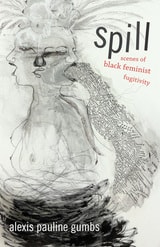
Spill
Scenes of Black Feminist FugitivityAlexis Pauline Gumbs
Duke University Press, 2016

Strange Enemies
Indigenous Agency and Scenes of Encounters in AmazoniaAparecida Vilaça
Duke University Press, 2010
During the 1940s and 1950s, white rubber tappers invading the Wari’ lands raided the native villages, shooting and killing their victims as they slept. These massacres prompted the Wari’ to initiate a period of intense retaliatory warfare. The national government and religious organizations subsequently intervened, seeking to “pacify” the Indians. Aparecida Vilaça was able to interview both Wari’ and non-Wari’ participants in these encounters, and here she shares their firsthand narratives of the dramatic events. Taking the Wari’ perspective as its starting point, Strange Enemies combines a detailed examination of these cross-cultural encounters with analyses of classic ethnological themes such as kinship, shamanism, cannibalism, warfare, and mythology.
The Boom Economy
Or, Scenes from Clerical LifeBrian Bouldrey
University of Wisconsin Press, 2003
Dennis Bacchus is a man who has outlived himself. HIV-positive and prepared to die at any minute, he finds himself in the late 1990s blessed with life-giving drugs, supportive friends, a boom economy, and an era of never-ending celebration—and he doesn’t know what to do with himself.
For ten years he has traveled and celebrated a curtailed life with the similarly infected Jimmy and, though Dennis was never that close to Jimmy, he decided to let the friendship run its course to the end. Now there’s no end in sight. Stuck with leftover friendships, careers, and commitments, what can a man do but become a priest? The Boom Economy covers what was supposed to be the last decade of Dennis Bacchus’ life, but turns out to be the first decade of the rest of it.
The Boom Economy is a novel about conversion—not just seroconversion or religious conversion, but all of the social, spiritual, and emotional problems of changing from one life to another. At once raucous and serious, pagan and saintly, it’s a look at the way we live now. Again.
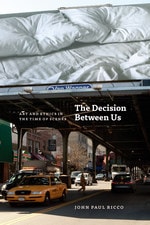
The Decision Between Us
Art and Ethics in the Time of ScenesJohn Paul Ricco
University of Chicago Press, 2014
Laying out this theory of “unbecoming community” in modern and contemporary art, literature, and philosophy, and calling our attention to such things as blank sheets of paper, images of unmade beds, and the spaces around bodies, The Decision Between Us opens in 1953, when Robert Rauschenberg famously erased a drawing by Willem de Kooning, and Roland Barthes published Writing Degree Zero, then moves to 1980 and the “neutral mourning” of Barthes’ Camera Lucida, and ends in the early 1990s with installations by Felix Gonzalez-Torres. Offering surprising new considerations of these and other seminal works of art and theory by Jean Genet, Marguerite Duras, and Catherine Breillat, The Decision Between Us is a highly original and unusually imaginative exploration of the spaces between us, arousing and evoking an infinite and profound sense of sharing in scenes of passionate, erotic pleasure as well as deep loss and mourning.
Three Comedies
Behind the Scenes in Eden, Rigamaroles, and The Other WilliamG Racz
University Press of Colorado, 2004
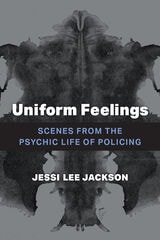
Uniform Feelings
Scenes from the Psychic Life of PolicingJessi Lee Jackson
University of Michigan Press, 2022
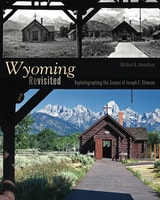
Wyoming Revisited
Rephotographing the Scenes of Joseph E. StimsonMichael A. Amundson
University Press of Colorado, 2014
The 117 locations feature street views of Wyoming towns and cities, as well as views from the state's famous natural landmarks like Yellowstone National Park, Grand Teton National Park, Devil's Tower National Monument, Hot Springs State Park, and Big Horn and Shoshone National Forests. In addition, Amundson provides six in-depth essays that explore the life of Joseph E. Stimson, the rephotographic process and how it has evolved, and how repeat photography can be used to understand history, landscape, historic preservation, and globalization.
Wyoming Revisited highlights the historic evolution of the American West over the past century and showcases the significant changes that have occurred over the past twenty-five years. This book will appeal to photographers, historians of the American West, and anyone interested in Wyoming's history or landscape.
The publication of this book is supported in part by the Wyoming Cultural Trust Fund.