Results by title
5550 books match the query 'Biography & Autobiography' and 577 start with a
A Political Education
A Washington MemoirBy Harry McPherson
University of Texas Press, 1995
This insider's view of Washington in the 1950s and 1960s, of the tumultuous presidency of Lyndon Johnson, and of the conflicts and factions of the president's staff has become a political classic since its original publication in 1972. In this reissue, Harry McPherson adds a new preface in which he reflects on changes in Washington since the Johnson era and on the lessons Bill Clinton could learn from the presidency of Lyndon Johnson.
A Portrait of Abraham Lincoln
Eyewitness AccountsEdited by Jonathan W. White, Lainey Hostetler, and Alanna Griffin, with a foreword by Michael Burlingame
University of Illinois Press, 2027
Deeply researched and accessible, A Portrait of Abraham Lincoln is a valuable collection for anyone interested in a towering historical figure.
A Prairie Populist
The Memoirs of Luna KellieJane Taylor Nelsen
University of Iowa Press, 1992
Kellie actively sought to organize Nebraska into cooperatives and educate rural people about land, transportation, and money reform. Her compelling, often heartbreaking memoirs—written on the backs of ornate red-and-gold Farmers' Alliance certificates in 1925—give us her own description of how she became motivated to join the Alliance and participate in the Populist party. Kellie writes of her homesteading and political life from the age of eighteen to forty, of failed crops, mortgaged fields, intense hardships, and her devastation at the death of her children.
A Private War
An American Code Officer in the Belgian CongoRobert Laxalt
University of Nevada Press, 1998
In this vivid memoir, Laxalt recalls his service during WWII as a code officer in the Belgian Congo. In this remote jungle outpost, a secret war was being fought for control of the world’s future. Deep in the Congo lay a mine that produced a little-known substance called uranium, and for reasons no one then understood, the Allies and the Germans were struggling ferociously to control this mine and its ore. The cloth edition is a limited numbered, signed edition.
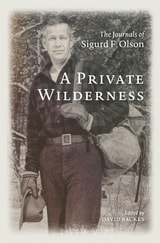
A Private Wilderness
The Journals of Sigurd F. OlsonSigurd F. Olson
University of Minnesota Press, 2024
The personal diaries of one of America’s best-loved naturalists, revealing his difficult and inspiring path to finding his voice and becoming a writer
Few writers are as renowned for their eloquence about the natural world, its power and fragility, as Sigurd F. Olson (1899–1982). Before he could give expression to The Singing Wilderness, however, he had to find his own voice. It is this struggle, the painstaking and often simply painful process of becoming the writer and conservationist now familiar to us, that Olson documented in the journal entries gathered here.
Written mostly during the years from 1930 to 1941, Olson’s journals describe the dreams and frustrations of an aspiring writer honing his skills, pursuing recognition, and facing doubt while following the academic career that allowed him to live and work even as it consumed so much of his time. But even as he speaks with immediacy and intensity about the conditions of his apprenticeship, Olson can be seen developing the singular way of observing and depicting the natural world that would bring him fame—and also, more significantly, alert others to the urgent need to understand and protect that world. Author of Olson’s definitive biography, editor David Backes brings a deep knowledge of the writer to these journals, providing critical context, commentary, and insights along the way.
When Olson wrote, in the spring of 1941, “What I am afraid of now is that the world will blow up just as I am getting it organized to suit me,” he could hardly have known how right he would prove to be. It is propitious that at our present moment, when the world seems once more balanced on the precipice, we have the words of Sigurd F. Olson to remind us of what matters—and of the hard work and the wonder that such a reckoning requires.
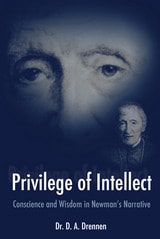
A Privilege of Intellect
Conscience and Wisdom in Newman’s NarrativeD. A. Drennen
University of Scranton Press, 2010
Based on decades of research, A Privilege of Intellect is D. A. Drennen’s portrait of the English cardinal John Henry Newman (1801–90), whose conversion to the Roman Catholic Church in 1845 significantly boosted the presence of the Catholic Church in England and caused many Anglicans to follow his example. Newman—who will be beatified this fall—devoted his life both to the Church and to the university, demonstrating that religious faith and intellectual pursuits could exist in harmony. Drennen’s biography combines theology with psychology and philosophy and will appeal to anyone interested in the history of the Church of England and the Roman Catholic Church.
A Professor at the End of Time
The Work and Future of the ProfessoriateBest, John
Rutgers University Press, 2017
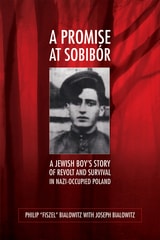
A Promise at Sobibór
A Jewish Boy’s Story of Revolt and Survival in Nazi-Occupied PolandPhilip “Fiszel” Bialowitz, with Joseph Bialowitz; Foreword by Wladyslaw Bartoszewski
University of Wisconsin Press, 2012
A Promise at Sobibór is the story of Fiszel Bialowitz, a teenaged Polish Jew who escaped the Nazi gas chambers. Between April 1942 and October 1943, about 250,000 Jews from European countries and the Soviet Union were sent to the Nazi death camp at Sobibór in occupied Poland. Sobibór was not a transit camp or work camp: its sole purpose was efficient mass murder. On October 14, 1943, approximately half of the 650 or so prisoners still alive at Sobibór undertook a daring and precisely planned revolt, killing SS officers and fleeing through minefields and machine-gun fire into the surrounding forests, farms, and towns. Only about forty-two of them, including Fiszel, are known to have survived to the end of the war.
Philip (Fiszel) Bialowitz, now an American citizen, tells his eyewitness story here in the real-time perspective of his own boyhood, from his childhood before the war and his internment in the brutal Izbica ghetto to his harrowing six months at Sobibór—including his involvement in the revolt and desperate mass escape—and his rescue by courageous Polish farmers. He also recounts the challenges of life following the war as a teenaged displaced person, and his eventual efforts as a witness to the truth of the Holocaust.
In 1943 the heroic leaders of the revolt at Sobibór, Sasha Perchersky and Leon Feldhendler, implored fellow prisoners to promise that anyone who survived would tell the story of Sobibór: not just of the horrific atrocities committed there, but of the courage and humanity of those who fought back. Bialowitz has kept that promise.
Best Books for General Audiences, selected by the American Association for School Libraries
Best Books for High Schools, selected by the American Association for School Libraries
Best Books for Special Interests, selected by the Public Library Association
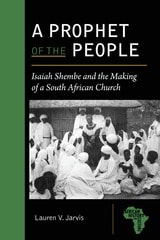
A Prophet of the People
Isaiah Shembe and the Making of a South African ChurchLauren V. Jarvis
Michigan State University Press, 2024

A Pryor Commitment
David Pryor
Butler Center for Arkansas Studies, 2009
A Queen Mother Defiant
Irene Drusilla Namaganda and the Remaking of Power and Gender in Colonial UgandaNakanyike B. Musisi
University of Wisconsin Press, 2026
In 1941, Irene Drusilla Namaganda, the reigning queen mother of British-occupied Buganda, shocked the kingdom when she revealed she was six months pregnant—only fifteen months after the king’s death. The father of her child, a schoolteacher nearly two decades her junior, quickly became the focal point for a scandal that engulfed the monarchy. The ensuing political crisis led to Namaganda’s removal from the office of queen mother (Nnamasole) and her companion’s exile, spurring her own departure.
Drawing from extensive archival research and in-depth oral interviews, this long-awaited biography analyzes Namaganda’s roles as wife, mother, widow, and prominent yet controversial cultural-political icon. Nakanyike Musisi moves beyond the scandal to explore how the monarch’s character and personal choices defied expectations of royal women and redefined motherhood, power, and tradition. She challenges dominant narratives in African political history and gender studies to show how African women navigated competing systems of authority and in doing so reshaped both the institution of monarchy and broader cultural and historical landscapes.
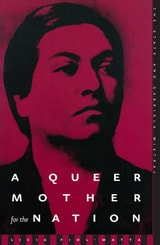
A Queer Mother For The Nation
The State And Gabriela MistralLicia Fiol-Matta
University of Minnesota Press, 2002
Chilean writer Gabriela Mistral (1889-1957), the first Latin American to win theNobel Prize for Literature, was a poetic idol for generations of Latin Americans who viewed her as Womanhood incarnate, the national schoolteacher-mother. How this distinctly masculine woman who never gave birth came to occupy this role, and what Mistral’s image, poetry, and life have to say about the relations-and realities-of race, gender, and sexual politics in her time, are the questions Licia Fiol-Matta pursues in this book, recreating the story of a woman whose misrepresentation is at least as intriguing, and as instructive, as her fame.
A Queer Mother for the Nation weaves a nuanced understanding of how Mistral cooperated with authority and fashioned herself as the figure of Motherhood in collaboration with the state. Drawing on Mistral’s little-known political and social essays, her correspondence and photographs, Fiol-Matta reconstructs Mistral’s relationship to state politics. Her work questions the notion of queer bodies as outlaws, and insists on the many ways in which queer subjects have participated in and sustained the normative discourses they seem to rebel against

A Quiet Challenge
Edward W. Brooke and the Politics of Civil RightsJordan O'Neal Alexander
University of Massachusetts Press, 2026
The first full-length biography of a consequential figure in twentieth-century American politics
In 1962, Edward W. Brooke (1919–2015) upended political convention by becoming the first popularly elected African American attorney general of Massachusetts. His victory was striking not only because Massachusetts was an overwhelmingly white state with a small Black population, but also because Brooke was a Republican and an Episcopalian in a deeply Democratic, Irish Catholic political culture. Navigating these contradictions, Brooke crafted a distinctive political style—measured, pragmatic, and quietly transformative—that reshaped civil rights politics in the North. In A Quiet Challenge, Jordan O’Neal Alexander offers the first full-length biography of Brooke, revealing him as a Black Republican whose carefully calibrated approach to race, law, and governance won broad white support while often distancing him from Boston’s Black community.
As attorney general, Brooke sought to uphold the rule of law while advancing principles of fairness, equality, and public safety, an approach that reflected both political constraint and moral resolve. Brooke again defied expectations in 1966 when he won election to the United States Senate, becoming the first popularly elected African American senator since Reconstruction. Serving two terms during the height of the civil rights movement, he emerged as a powerful national voice on issues of racial justice. He played a key role in blocking two Supreme Court nominees aligned with President Richard Nixon’s “southern strategy,” even as his support for school desegregation and busing during the Boston Busing Crisis contributed to his eventual political decline. Throughout his career, Brooke remained committed to building a society in which Black Americans—and all Americans—could fully participate and prosper. This volume demonstrates how Brooke’s restrained, yet persistent political strategy helped expand the possibilities for Black leadership within mainstream American politics.
A Quiet Foghorn
More Notes from a Deaf Gay LifeRaymond Luczak
Gallaudet University Press, 2022
A Rascal by Nature, A Christian by Yearning
A Mormon AutobiographyPeterson, Levi S
University of Utah Press, 2006
Peterson has won a wide readership for his novels and short stories, his prize-winning biography of historian Juanita Brooks, and the essays that have appeared with regularity in western and Mormon literary and historical journals. In his autobiography, Peterson describes growing up on the Mormon frontier of rural Arizona, his growing skepticism with his Mormon faith, his teaching career at Weber State University, and his struggle to understand and master personal crises of confidence that kept him in therapy for almost two decades. Of particular interest to readers familiar with Peterson’s fiction are the many pages devoted to the creative process.
Winner of the Mormon History Association Turner-Bergera Best Biography Award.
A Recipe for Success
Lizzie Kander and Her CookbookBob Kann
Wisconsin Historical Society Press, 2007
A Red Boyhood
Growing Up Under StalinAnatole Konstantin
University of Missouri Press, 2008
Many children growing up in the Soviet Union before World War II knew the meaning of deprivation and dread. But for the son of an “enemy of the people,” those apprehensions were especially compounded.
When the secret police came for his father in 1938, ten-year-old Anatole Konstantin saw his family plunged into a morass of fear. His memoir of growing up in Stalinist Russia re-creates in vivid detail the daily trials of people trapped in this regime before and during the repressive years of World War II—and the equally horrific struggles of refugees after that conflict.
Evicted from their home, their property confiscated, and eventually forced to leave their town, Anatole’s family experienced the fate of millions of Soviet citizens whose loved ones fell victim to Stalin’s purges. His mother, Raya, resorted to digging peat, stacking bricks, and even bootlegging to support herself and her two children. How she managed to hold her family together in a rapidly deteriorating society—and how young Anatole survived the horrors of marginalization and war—form a story more compelling than any novel.
Looking back on those years from adulthood, Konstantin reflects on both his formal education under harsh conditions and his growing awareness of the contradictions between propaganda and reality. He tells of life in the small Ukrainian town of Khmelnik just before World War II and of how some of its citizens collaborated with the German occupation, lending new insight into the fate of Ukrainian Jews and Nazi corruption of local officials. And in recounting his experiences as a refugee, he offers a new look at everyday life in early postwar Poland and Germany, as well as one of the few firsthand accounts of life in postwar Displaced Persons camps.
A Red Boyhood takes readers inside Stalinist Russia to experience the grim realities of repression—both under a Soviet regime and German occupation. A moving story of desperate people in desperate times, it brings to life the harsh realities of the twentieth century for young and old readers alike.
A Red Family
Junius, Gladys, and Barbara ScalesMickey Friedman. Afterword by Barbara Scales. Historical Essay by Gail O'Brien.
University of Illinois Press, 2008
Through the distinct perspectives of Junius, his wife Gladys, and his daughter Barbara, this book deepens and personalizes the story of American radicalism. Conversational, intimate, and exceptionally accessible, A Red Family offers a unique look at the American communist experience from the inside out.
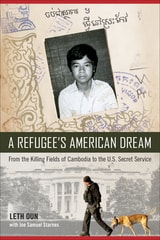
A Refugee's American Dream
From the Killing Fields of Cambodia to the U.S. Secret ServiceLeth Oun with Joe Samuel Starnes
Temple University Press, 2023
“I saw many killed. I almost starved. But I escaped to refugee camps in Thailand and eventually made it to the U.S.” Thus begins Leth Oun’s poignant and vivid memoir. A survivor of the Cambodian Killing Fields—having spent a torturous three years, eight months, and ten days imprisoned by the Khmer Rouge—Oun thrived in America, learning English, becoming a citizen, and working as an officer in the United States Secret Service Uniformed Division.
In A Refugee’s American Dream, Oun shares hard memories of Cambodia, where his father was executed, and his family enslaved in labor camps.
Following the fall of the Khmer Rouge, Oun survived a year of homelessness then nearly four years in refugee camps. Arriving in America, 17 and penniless, Oun struggled, washing dishes at a Chinese restaurant for $3.15 an hour. Still, he persevered, graduating from Widener University and completing thousands of hours of training to pursue a career in the Secret Service.
While on President Obama’s protection team, he returns to Cambodia after 32 years, reunites with family, and bonds with Reik, the Secret Service dog he handles. Through his most difficult moments, Oun displays truly inspiring resilience that ultimately leads to great achievements.
The authors’ proceeds will go to help Cambodians in need
A Reporter At Large
Dateline: Pyramid Lake, NevadaAj Liebling
University of Nevada Press, 1999
Liebling recorded the litigation over the fate of the Pyramid Lake Reservation lands in a series of articles published in The New Yorker in 1955. Reprinted here in their entirety, the essays discuss the affair in detail, following it from the shores of the lake to the halls of Congress, and introducing readers to the colorful world of 1950s Nevada. This is a valuable record of one of Nevada’s most enduring and significant debates over the uses of the land and the precious water that nourishes it. Introduction by Elmer R. Rusco.
A Rescuer's Story
Pastor Pierre-Charles Toureille in Vichy FranceTela Zasloff
University of Wisconsin Press, 2014
This is the story of a Holocaust rescuer, Pierre Toureille, a French Protestant pastor whose efforts resulted in the rescue of hundreds of refugees, most of them Jewish. Inspired by his Huguenot heritage, Pastor Toureille participated in international Protestant church efforts to combat Nazism during the 1930s and headed a major refugee aid organization in Vichy France during World War II. After the war, Pastor Toureille was honored by the Jewish organization Yad Vashem as one of the "Righteous Among the Nations."
In telling Toureille’s story, Tela Zasloff also depicts the wide-ranging network of Protestant pastors and lay people in southern French villages who participated in an aggressive rescue effort. She delves into their motivations, including their heritage as members of a religious minority. Toureille’s rescue work under the Vichy regime, partly official and then increasingly clandestine as the war progrressed. was a crucial part of the French non-violent "spiritual resistance" against Nazism.
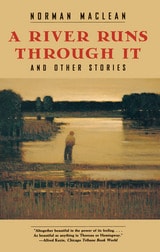
A River Runs Through It, and Other Stories
Norman Maclean
University of Chicago Press, 1976
Based on Norman Maclean's childhood experiences, the title novella has established itself as one of the most moving stories of our time; it captivates readers with vivid descriptions of life along Montana's Big Blackfoot River and its near magical blend of fly fishing with the troubling affections of the heart.
The paperback edition is now available with an evocative new cover by acclaimed Montana painter Russell Chatham.
"A masterpiece. . . . This is more than stunning fiction: It is a lyric record of a time and a life, shining with Maclean's special gift for calling the reader's attention to arts of all kinds—the arts that work in nature, in personality, in social intercourse, in fly-fishing."—Kenneth M. Pierce, Village Voice
Norman Maclean (1902-90), woodsman, scholar, teacher, and storyteller, grew up in the Western Rocky Mountains of Montana and worked for many years in logging camps and for the United States Forestry Service before beginning his academic career. He retired from the University of Chicago in 1973.

A River Runs through It
Norman Maclean
University of Chicago Press, 1989
Based on Norman Maclean's childhood experiences, A River Runs through It has established itself as one of the most moving stories of our time; it captivates readers with vivid descriptions of life along Montana's Big Blackfoot River and its near magical blend of fly fishing with the troubling affections of the heart.
This handsome edition is designed and illustrated by Barry Moser. There are thirteen two-color wood engravings.
A Road Course in Early American Literature
Travel and Teaching from Atzlán to AmherstThomas Hallock
University of Alabama Press, 2021
Essays that fuse literary scholarship and personal travelogue to explore American identity
A Road Course in Early American Literature: Travel and Teaching from Atzlán to Amherst explores a two-part question: what does travel teach us about literature, and how can reading guide us to a deeper understanding of place and identity? Thomas Hallock charts a teacher’s journey to answering these questions, framing personal experiences around the continued need for a survey course covering early American literature up to the mid-nineteenth century.
Hallock approaches literary study from the overlapping perspectives of pedagogue, scholar, unrepentant tourist, husband, father, friend, and son. Building on Ralph Waldo Emerson’s premise that there is “creative reading as well as creative writing,” Hallock turns to the vibrant and accessible tradition of American travel writing, employing the form of biblio-memoir to bridge the impasse between public and academic discourse and reintroduce the dynamic field of early American literature to wider audiences.
Hallock’s own road course begins and ends at the Low country of Georgia and South Carolina, following a circular structure of reflection. He weaves his journey through a wide swath of American literatures and authors: from Native American and African American oral traditions, to Wheatley and Equiano, through Emerson, Poe, and Dickinson, among others. A series of longer, place-oriented narratives explore familiar and lesser-known literary works from the sixteenth-century invasion of Florida through the Mexican War of 1846–1848 and the American Civil War. Shorter chapters bridge the book’s central themes—the mapping of cognitive and physical space, our personal stake in reading, the tensions that follow earlier acts of erasure, and the impossibility of ever fully shutting out the past.
Exploring complex cultural histories and contemporary landscapes filled with ghosts and new voices, this volume draws inspiration from a tradition of travel, place-oriented, and literature-based works ranging from William Carlos Williams’s In the American Grain and Jack Kerouac’s On the Road to Alice Walker’s In Search of Our Mother’s Gardens, Wendy Lesser’s Why I Read: The Serious Pleasure of Books, and Rebecca Mead’s My Life in Middlemarch.
An accompanying bibliographic essay is periodically updated and available at Hallock’s website: www.roadcourse.us.
A Round of Golf with My Father
The New Psychology of Exploring Your Past to Make Peace with Your PresentDamon, William
Templeton Press, 2021
Viewing our past through the eyes of maturity can reveal insights that our younger selves could not see. Lessons that eluded us become apparent. Encounters that once felt like misfortunes now become understood as valued parts of who we are. We realize what we’ve learned and what we have to teach. And we’re encouraged to chart a future that is rich with purpose.
In A Round of Golf with My Father, William Damon introduces us to the “life review.” This is a process of looking with clarity and curiosity at the paths we’ve traveled, examining our pasts in a frank yet positive manner, and using what we’ve learned to write purposeful next chapters for our lives.
For Damon, that process began by uncovering the mysterious life of his father, whom he never met and never gave much thought to. What he discovered surprised him so greatly that he was moved to reassess the events of his own life, including the choices he made, the relationships he forged, and the career he pursued.
Early in his life, Damon was led to believe that his father had been killed in World War II. But the man survived and went on to live a second life abroad. He married a French ballerina, started a new family, and forged a significant Foreign Service career. He also was an excellent golfer, a bittersweet revelation for Damon, who wishes that his father had been around to teach him the game.
We follow Damon as he struggles to make sense of his father’s contradictions and how his father, even though living a world apart, influenced Damon’s own development in crucial ways. In his life review, Damon uses what he learned about his father to enhance his own newly emerging self-knowledge.
Readers of this book may come away inspired to conduct informal life reviews for themselves. By uncovering and assembling the often overlooked puzzle pieces of their pasts, readers can seek present-day contentment and look with growing optimism to the years ahead.
A Salem Witch
The Trial, Execution, and Exoneration of Rebecca NurseDaniel A. Gagnon
Westholme Publishing, 2023
The accusations against Nurse, a well-respected member in the community, seemed unbelievable. Unflinchingly, this ailing elderly woman insisted on her innocence and refused to falsely confess. Supported by many in Salem, Nurse’s family and neighbors challenged her accusers in court and prepared a thorough defense for her, yet nothing could surmount the fear of witchcraft, and she was sentenced to death. Nurse, seen as a martyr for the truth, later became the first person accused of witchcraft to be memorialized in North America.
In A Salem Witch: The Trial, Execution, and Exoneration of Rebecca Nurse, the first full account of Nurse’s life, Daniel A. Gagnon vividly recreates seventeenth-century Salem, and in the process challenges previous interpretations of Nurse’s life and the 1692 witch hunt in general. Through primary source research, he reveals how the Nurse family’s role in several disputes prior to the witch hunt was different than previously thought, as well as how Nurse’s case helps answer the important question of whether the accusations of witchcraft were caused by mental illness or malicious intent. A Salem Witch reveals a remarkable woman whose legacy has transformed how the witch hunt has been remembered and memorialized.
A Season of Singing
Creating Feminist Jewish Music in the United StatesSarah M. Ross
Brandeis University Press, 2016
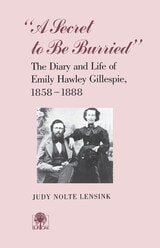
A Secret To Be Burried
Diary Emily Hawley GillespieJudy Nolte Lensink
University of Iowa Press, 1989
The sound of nineteenth-century women, once thought lost to us, is alive because ordinary women like Emily Hawley Gillespie gave voice to their thoughts in diaries. This condensed version of the 2,500-page journals of Emily Gillespie, faithfully written from 1858 to 1888, is a detailed account of rural Iowa life. More than this, it contains the reflections of a woman who dreamed of being a painter and writer and instead became a wife and a mother, a woman whose radical convictions were recorded in her diary, while publicly she conformed to the prescribed life of a Victorian pioneer woman. Through Emily's journals, readers are offered immediate and unmodified contact with settlers in Iowa one hundred years ago. A wealth of facts are included—what produce she harvested and preserved from her garden, how her husband tended his fields and what he raised, the challenges and rewards of family life.
Judy Lensink's skillful analysis shows the larger patterns in Emily Gillespie's life and provides keys that unlock the diary's secrets. Emily's life is revealed as a youth full of promise fading into middle and declining years of lost dreams and eventual tragedy, which caused her to write, "I have written many things in my journal, but the worst is a secret to be burried when I shall cease to be."
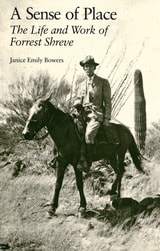
A Sense of Place
The Life and Work of Forrest ShreveJanice Emily Bowers
University of Arizona Press, 1988
Tracing Shreve's development from student to scientist, Bowers evokes the rigors and delights of fieldwork in the first half of this century and shows how Shreve's sense of place informed his scientific thought—making him, in his own words, "not an exile from some better place, but a man at home in an environment to which his life can be adjusted without physical or intellectual loss."
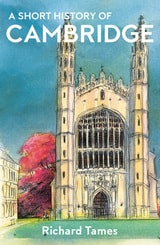
A Short History of Cambridge
Richard Tames
Haus Publishing, 2025
A Short History of Cambridge provides a narrative of the city and university, from the Middle Ages to the present day. Going beyond the world-renowned research attractions of Cambridge University, this revised paperback edition explores the vast cultural output of the town, from art and literature to theater and comedy. Richard Tames sheds light on the very origins of academia in the area, the intricate lives of the students and scholars who studied there, and how this community interacted with the townsfolk over the past eight hundred years.
Cambridge offers the splendor of King's College Chapel and the beauty of “the Backs” as well as outstanding collections of fans and fritillaries, sculpture and stained glass, and medieval coins and oriental manuscripts. Attractions include the world-class Fitzwilliam Museum and Botanic Gardens, quirky Kettle’s Yard, and museums devoted to archaeology, anthropology, zoology, earth sciences, polar research, and the history of science, plus Britain's oldest bookshop. Enter the world of “Bumps and Bedders” and learn why May Week is in June. This joyful history of the town to which more than eight million visitors flock every year will delight both readers familiar with the cobbles of Cambridge and those who have seen no further than the stained-glass windows of King’s College Chapel.
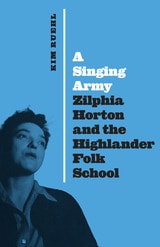
A Singing Army
Zilphia Horton and the Highlander Folk SchoolBy Kim Ruehl
University of Texas Press, 2021
Zilphia Horton was a pioneer of cultural organizing, an activist and musician who taught people how to use the arts as a tool for social change, and a catalyst for anthems of empowerment such as “We Shall Overcome” and “We Shall Not Be Moved.” Her contributions to the Highlander Folk School, a pivotal center of the labor and civil rights movements in the mid-twentieth century, and her work creating the songbook of the labor movement influenced countless figures, from Woody Guthrie to Eleanor Roosevelt to Rosa Parks. Despite her outsized impact, Horton’s story is little known. A Singing Army introduces this overlooked figure to the world.
Drawing on extensive archival and oral history research, as well as numerous interviews with Horton's family and friends, Kim Ruehl chronicles her life from her childhood in Arkansas coal country, through her formative travels and friendship with radical Presbyterian minister Claude C. Williams, and into her instrumental work in desegregation and fostering the music of the civil rights era. Revealing these experiences—as well as her unconventional marriage and controversial death by poisoning—A Singing Army tells the story of an all-but-forgotten woman who inspired thousands of working-class people to stand up and sing for freedom and equality.
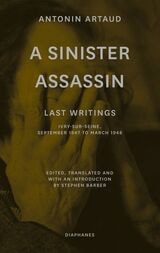
A Sinister Assassin
Last Writings, Ivry-Sur-Seine, September 1947 to March 1948Antonin Artaud
Diaphanes, 2022
A Sinister Assassin presents translations of Antonin Artaud’s largely unknown final work of 1947–48, revealing new insights into his obsessions with human anatomy, sexuality, societal power, creativity, and ill-will—notably, preoccupations of the contemporary world.
Artaud’s last conception of performance is that of a dance-propelled act of autopsy, generating a ”body without organs” which negates malevolent microbial epidemics. This book assembles Artaud’s crucial writings and press interviews from September 1947 to March 1948, undertaken at a decrepit pavilion in the grounds of a convalescence clinic in Ivry-sur-Seine, on the southern edge of Paris, as well as in-transit through Paris’s streets. It also draws extensively on Artaud’s manuscripts and original interviews with his friends, collaborators, and doctors throughout the 1940s, illuminating the many manifestations of Artaud’s final writings: the contents of his last, death-interrupted notebook; his letters; his two final key texts; his glossolalia; the magazine issue which collected his last fragments; and the two extraordinary interviews he gave to national newspaper journalists in the final days of his life, in which he denounces and refuses both his work’s recent censorship and his imminent death.
Edited, translated, and with an introduction by Stephen Barber, A Sinister Assassin illuminates Artaud’s last, most intensive, and terminal work for the first time.
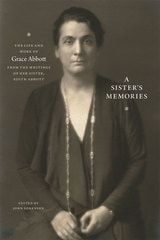
A Sister's Memories
The Life and Work of Grace Abbott from the Writings of Her Sister, Edith AbbottEdited by John Sorensen
University of Chicago Press, 2015
A Sister’s Memories is the inspiring story of Grace Abbott (1878–1939), as told by her sister and social justice comrade, Edith Abbott (1876–1957). Edith recalls in vivid detail the Nebraska childhood, impressive achievements, and struggles of her sister who, as head of the Immigrants’ Protective League and the U.S. Children’s Bureau, championed children’s rights from the slums of Chicago to the villages of Appalachia. Grace’s crusade can perhaps be best summed up in her well-known credo: “Justice for all children is the high ideal in a democracy.” Her efforts saved the lives of thousands of children and immigrants and improved those of millions more. These trailblazing social service works led the way to the creation of the Social Security Act and UNICEF and caused the press to nickname her “The Mother of America’s 43 Million Children.” She was the first woman in American history to be nominated to the presidential cabinet and the first person to represent the United States at a committee of the League of Nations.
Edited by Abbott scholar John Sorensen, A Sister’s Memories is destined to become a classic. It shapes the diverse writings of Edith Abbott into a cohesive narrative for the first time and fills in the gaps of our understanding of Progressive Era reforms. Readers of all backgrounds will find themselves engrossed by this history of the unstoppable, pioneer feminist Abbott sisters.
A Skeleton Plays Violin
Book Three of Our TraklGeorg Trakl
Seagull Books, 2017
A Skeleton Plays Violin comprises the final volume in a trilogy of works by Trakl published by Seagull Books. This selection gathers Trakl’s early, middle, and late work, none of it published in book form during his lifetime. The work here ranges widely, from his haunting prose pieces to his darkly beautiful poems documenting the first bloody weeks of World War I on the Eastern Front.
Book Three of Our Trakl—the series that began with Trakl’s first book Poems and his posthumously published Sebastian Dreaming—also includes translations of unpublished poems and significant variants. Interpolated throughout this comprehensive and chronological selection is a biographical essay that provides more information about Trakl’s gifted and troubled life, especially as it relates to his poetry, as well as the necessary context of his relationship with his favorite sibling, his sister Grete, whose role as a muse to her brother is still highly controversial. Trakl’s life was mysterious and fascinating, a fact reflected in his work. A Skeleton Plays Violin should not be missed.

A Small Door Set in Concrete
One Woman's Story of Challenging Borders in Israel/PalestineIlana Hammerman
University of Chicago Press, 2019
For years, renowned activist and scholar Ilana Hammerman has given the world remarkable translations of Kafka. With A Small Door Set in Concrete, she turns to the actual surreal existence that is life in the West Bank after decades of occupation.
After losing her husband and her sister, Hammerman set out to travel to the end of the world. She began her trip with the hope that it would reveal the right path to take in life. But she soon realized that finding answers was less important than experiencing the freedom to move from place to place without restriction. Hammerman returned to the West Bank with a renewed joie de vivre and a resolution: she would become a regular visitor to the men, women, and children who were on the other side of the wall, unable to move or act freely. She would listen to their dreams and fight to bring some justice into their lives.
A Small Door Set in Concrete is a moving picture of lives filled with destruction and frustration but also infusions of joy. Whether joining Palestinian laborers lining up behind checkpoints hours before the crack of dawn in the hope of crossing into Israel for a day’s work, accompanying a family to military court for their loved one’s hearing, or smuggling Palestinian children across borders for a day at the beach, Hammerman fearlessly ventures into territories where few Israelis dare set foot and challenges her readers not to avert their eyes in the face of injustice.
Hammerman neither preaches nor politicks. Instead, she engages in a much more personal, everyday kind of activism. Hammerman is adept at revealing the absurdities of a land where people are stripped of their humanity. And she is equally skilled at illuminating the humanity of those caught in this political web. To those who have become simply statistics or targets to those in Israel and around the world, she gives names, faces, dreams, desires.
This is not a book that allows us to sit passively. It is a slap in the face, a necessary splash of cold water that will reawaken the humanity inside all of us.
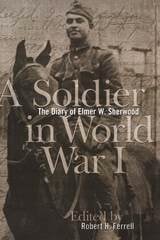
A Soldier in World War I
The Diary of Elmer W. SherwoodRobert H. Ferrell
Indiana Historical Society Press, 2004
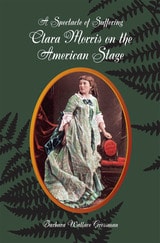
A Spectacle of Suffering
Clara Morris on the American StageBarbara Wallace Grossman
Southern Illinois University Press, 2009
Once called "America's greatest actress," renowned for the passion and power of her performances, Clara Morris (1847-1925) has been largely forgotten. A Spectacle of Suffering: Clara Morris on the American Stage is the first full-length study of the actress's importance as a feminist in the late nineteenth and early twentieth centuries. Detailing her daunting health problems and the changing tastes in entertainment that led to her retirement from the stage, Barbara Wallace Grossman explores Morris's dramatic reinvention as an author. During a second robust career, she published hundreds of newspaper and magazine articles and nine books—six works of fiction and three memoirs.
Grossman draws on the fifty-four-volume diary that Morris kept from 1868 until 1924, as well as on the manuscript fragments and notes of journalist George T. MacAdam, who died in 1929 before completing the actress's biography. Grossman provides a dramatic account of Morris's life and work from her troubled early years, through an unhappy marriage, morphine addiction, and invalidism, to the challenges of touring, the decline of her artistic reputation, and the demands of the writing career she pursued so tenaciously. A Spectacle of Suffering reveals how Morris, even after experiencing blindness and the loss of her home, livelihood, and family, did not succumb to despair and found comfort in the small pleasures of her circumscribed life.
A Spectacle of Suffering recovers an important figure in American theatre and ensures that Morris will be remembered not simply as an actress but as a respected writer and beloved public figure, admired for her courage in dealing with adversity. The book, which is enhanced by twenty-four illustrations, is the only published biography of Clara Morris. It is as much a tribute to the power of the human spirit as it is an effective means of exploring American theatre and society in the Gilded Age.
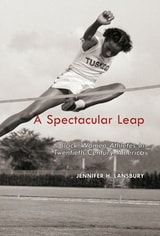
A Spectacular Leap
Black Women Athletes in Twentieth-Century AmericaJennifer H. Lansbury
University of Arkansas Press, 2014
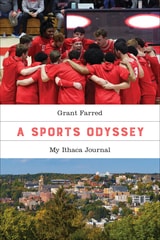
A Sports Odyssey
My Ithaca JournalGrant Farred
Temple University Press, 2025
As readers of his Long Distance Love know, Grant Farred has been a supporter of the English Premier League club, Liverpool Football Club, for decades. His fandom for that team launched an unexpected connection with a world beyond the limits of the apartheid state of his upbringing in South Africa. However, A Sports Odyssey shows that as Farred’s fervor for Liverpool ended, he developed a new set of sports attachments in Ithaca, New York: to his son’s youth basketball career, to the men’s basketball team at Cornell University and its coach, and even to professional teams like the New York Knicks. Farred’s bemusement at finding himself a sports parent, a New Yorker, and a company man, only underline the sincerity of his affections.
In A Sports Odyssey, Farred writes elegantly and eloquently about how sports and sports fandom create a sense of belonging, but also loss. This is a heartfelt examination of how we find “home” in who and what we love.
In the series Sporting
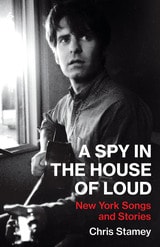
A Spy in the House of Loud
New York Songs and StoriesBy Chris Stamey
University of Texas Press, 2018
Popular music was in a creative upheaval in the late 1970s. As the singer-songwriter and producer Chris Stamey remembers, “the old guard had become bloated, cartoonish, and widely co-opted by a search for maximum corporate profits, and we wanted none of it.” In A Spy in the House of Loud, he takes us back to the auteur explosion happening in New York clubs such as the Bowery’s CBGB as Television, Talking Heads, R.E.M., and other innovative bands were rewriting the rules. Just twenty-two years old and newly arrived from North Carolina, Stamey immersed himself in the action, playing a year with Alex Chilton before forming the dB’s and recording the albums Stands for deciBels and Repercussion, which still have an enthusiastic following.
A Spy in the House of Loud vividly captures the energy that drove the music scene as arena rock gave way to punk and other new streams of electric music. Stamey tells engrossing backstories about creating in the recording studio, describing both the inspiration and the harmonic decisions behind many of his compositions, as well as providing insights into other people’s music and the process of songwriting. Photos, mixer-channel and track assignment notes, and other inside-the-studio materials illustrate the stories. Revealing another side of the CBGB era, which has been stereotyped as punk rock, safety pins, and provocation, A Spy in the House of Loud portrays a southern artist’s coming-of-age in New York’s frontier abandon as he searches for new ways to break the rules and make some noise.
A Story Larger than My Own
Women Writers Look Back on Their Lives and CareersEdited by Janet Burroway
University of Chicago Press, 2014
Kumin, who went on to win the Pulitzer Prize for poetry, was part of a groundbreaking generation of women writers who came of age during the midcentury feminist movement. By challenging the status quo and ultimately finding success for themselves, they paved the way for future generations of writers. In A Story Larger than My Own, Janet Burroway brings together Kumin, Julia Alvarez, Jane Smiley, Erica Jong, and fifteen other accomplished women of this generation to reflect on their writing lives.
The essays and poems featured in this collection illustrate that even writers who achieve critical and commercial success experience a familiar pattern of highs and lows over the course of their careers. Along with success comes the pressure to sustain it, as well as a constant search for subject matter, all too frequent crises of confidence, the challenges of a changing publishing scene, and the difficulty of combining writing with the ordinary stuff of life—family, marriage, jobs. The contributors, all now over the age of sixty, also confront the effects of aging, with its paradoxical duality of new limitations and newfound freedom.
Taken together, these stories offer advice from experience to writers at all stages of their careers and serve as a collective memoir of a truly remarkable generation of women.
A Story Teller's Story
A MemoirSherwood Anderson
University of Michigan Press, 2005
"The voice of the soliloquist . . . amplifies the drama of A Story Teller's Story, as does the persistent theme of escape, from an America of fact and factories, marketing and manufacturing, to the borderless Ohios of imagination and creation."
—From the introduction by Thomas Lynch

A Stranger in the Hague
The Letters of Queen Sophie of the Netherlands to Lady Malet, 1842–1877S. W. Jackman and Hella Haasse, eds.
Duke University Press, 1989
Sophie met her friend and confidant Marina Dora Spading, Lady Malt, when the latter was at the Hague with her diplomat husband in 1842. A lifelong friendship ensued, although they saw each other only infrequently thereafter. Sophie’s letters to Lady Malt are an extraordinary combination of comments on her personal situation and shrewd analyses of the European political arena. This selection of her surviving correspondence is opinionated, frank, and perceptive, and her letters are a unique commentary on the affairs of the Europe of the mid-nineteenth century.
A Stroll with William James
Jacques Barzun
University of Chicago Press, 1983
A Strong and Steady Pulse
Stories from a CardiologistGregory D. Chapman, MD
University of Alabama Press, 2021
A seasoned cardiologist shares his experiences, opinions, and recommendations about heart disease and other cardiac problems.
A Strong and Steady Pulse: Stories from a Cardiologist provides an insider’s perspective on the field of cardiovascular medicine told through vignettes and insights drawn from Gregory D. Chapman’s three decades as a cardiologist and professor of medicine. In twenty-six bite-sized chapters based on real-life patients and experiences, Chapman provides an overview of contemporary cardiovascular diseases and treatments, illuminating the art and science of medical practice for lay audiences and professionals alike.
With A Strong and Steady Pulse, Chapman provides medical students and general readers with a better understanding of cardiac disease and its contributing factors in modern life, and he also provides insights on the diagnostic process, medical decision making, and patient care. Each chapter presents a patient and their initial appearance, described in clear detail as Chapman gently walks us through his evaluation and the steps he and his associates take to determine the underlying problem. Chapman’s stories are about real people dealing with life and death situations—including the physicians, nurses, medical students, and other team members who try to save lives in emergent, confusing conditions.
The sometimes hard-won solutions to these medical challenges combine new technology and cutting-edge research together with insights drawn from Chapman’s past experiences as an intern and resident in Manhattan during the AIDS epidemic, as a postdoctoral fellow at Duke University in the 1990s, and in practice in Nashville, Tennessee, and Birmingham, Alabama. Conditions addressed include the recognition and management of heart attack, heart failure, arrhythmia, valvular heart disease, cardiac transplantation, broken heart syndrome, hypertension, and the depression some people experience after a heart attack, as well as related topics like statin drugs, the Apple Watch ECG feature, and oral anticoagulants. Finally, the emergence of the COVID-19 virus and its disruption of normal hospital routines as the pandemic unfolded is addressed in an epilogue.
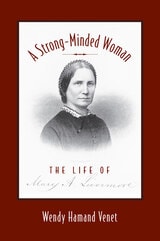
A Strong-Minded Woman
The Life of Mary LivermoreWendy Hamand Venet
University of Massachusetts Press, 2005
When Mary Livermore died in 1905 at age 84, a Boston newspaper praised her as “America's foremost woman.” A leading figure in the struggle for woman's rights as well as in the temperance movement, she was as widely recognized during her lifetime as Susan B. Anthony, and for a time the most popular and highly paid female orator in the country. Yet aside from Civil War historians familiar with her service as a wartime nurse, few today remember even her name.
In this book, Wendy Hamand Venet reconstructs Mary Livermore's remarkable story and explores how and why she became so renowned in her day. Born and raised in Boston, Livermore left home at age eighteen to become the private schoolteacher to a wealthy tobacco planter's children in Virginia, an experience that afforded her an intimate look at slave-based society in the 1840s. Returning to New England, she married and lived a conventional life as the wife of a minister and mother of three daughters. With the coming of the Civil War, however, Livermore's life changed dramatically when she became active with the United States Sanitary Commission, an organization that would propel her into the public limelight and cause her to challenge society's traditional view of the role of women.
After the war Livermore became deeply involved in the woman's rights movement, serving as editor of the newspaper Woman's Journal and later as president of three major suffrage organizations—the American, New England, and Massachusetts Woman Suffrage Associations. She was also founder and president of the Massachusetts Women's Christian Temperance Union, and became active in the Society of Christian Socialists in Boston. Her frequent speaking appearances on behalf of these causes eventually earned her the nickname “Queen of the Platform.” Although she may not have been as radical as some other early feminists, Livermore's ideas resonated with thousands of middle-class women whose experiences paralleled her own. For that reason alone, Venet shows, her life and legacy are worthy of our attention.
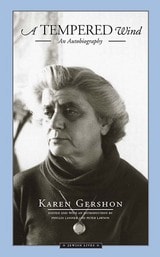
A Tempered Wind
An AutobiographyKaren Gershon
Northwestern University Press, 2010
Poet Karen Gershon opens A Tempered Wind, the sequel to volume 1 of her autobiography A Lesser Child, in 1943. It begins tragically with the death of Karen’s sister Anne in England, where they had escaped from Nazi Germany with their third sister Lise via the Kindertransport mission. A Tempered Wind proceeds to chart the difficult period from 1939 to 1943 as Karen adapts to a new culture and undertakes the complicated passage from adolescence to adulthood in the British Isles.
Now orphans—their parents were murdered by the Nazis—the sisters are separated, and Karen is left haunted by feelings of abandonment by her sister as well as her parents who sent her away from them. Such feelings, along with her struggle with her imperiled Jewish identity, make their way into Karen’s writing, which includes stories, essays, and poems. In writing, she starts to find a home in language. Charting the creative growth of an astonishing Jewish author, A Tempered Wind concludes with Karen making her own urgent way as a writer with a mission to tell the world her archetypal German Jewish story.
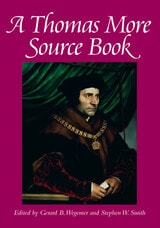
A Thomas More Source Book
Gerard B. Wegemer
Catholic University of America Press, 2004
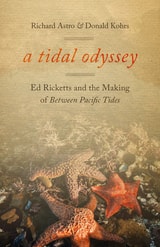
A Tidal Odyssey
Ed Ricketts and the Making of Between Pacific TidesRichard Astro
Oregon State University Press, 2021
In A Tidal Odyssey, literary scholar Richard Astro and archivist Donald Kohrs explore how Between Pacific Tides came to be, covering both the writing process and the long journey to publication. They tell three interwoven stories: the development of ecology as a valuable new approach to the study of marine life in the intertidal zone; a case study of how new and dynamic science is published and reaches a larger audience; and the intellectual development of Ed Ricketts.
Not only a scientist but also an expert in music, philosophy, history, and literature, Ricketts and his work impacted a broad range of writers and scholars. A number of these intellectual figures appear in A Tidal Odyssey, including Ricketts’s co-author, Jack Calvin, and illustrator, Ritch Lovejoy; mythologist Joseph Campbell; novelist Henry Miller; composer John Cage; and of course John Steinbeck. The authors have drawn extensively from Ricketts’s archive, including previously unpublished letters, memoranda, notebooks, and photographs.
A Tidal Odyssey is for anyone interested in the world of Ed Ricketts as well as marine biology, intertidal ecology, and how ecological studies underpin our understanding of the impact of environmental change on the well-being of our planet.
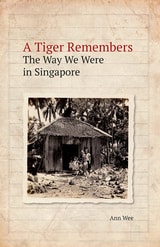
A Tiger Remembers
The Way We Were in SingaporeAnn Wee
National University of Singapore Press, 2017
Wee’s talent is for remembering and paying homage to the things history books often deem insignificant—things that can contain some of the most illuminating details about the day to day inner workings of families from many backgrounds, such as terms of endearment; the emotional nuance in social relations; questions of hygiene; the stories of convicts; tales of ghost wives and changeling babies; anecdotes from rural clan settlements and migrant dormitories; and the migration of families from squatter settlements into public housing. Affectionately observed and wittily narrated, with a deep appreciation of how far Singapore has come, this book brings to life generations of social change through a focus on the institution of the family.