Results by title
3388 books match the query 'Fiction' and 293 start with a
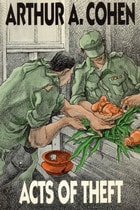
Acts of Theft
Arthur A. Cohen
University of Chicago Press, 1987
This unforgettable novel tells the story of an Austrian nobleman who as a young man at the end of World War I, finds himself irresistibly drawn to thievery. Forty years later, living in Mexico, he has made stealing his trade, pillaging Mayan tombs to illicitly secure pre-Columbian art, which he sells on the black market. At the same time, he creates his own sculptures, which the market refuses to reward. Eventually, his activities catch the eye of a dedicated, solitary Mexican police detective, and a reckoning--one that has its roots in the long history of European plunder of the riches of the New World--is set in violent motion.
Praised on publication by Cynthia Ozick, the Washington Post, and more, this unforgettable novel harks back to the great nineteenth-century social novels while still being fully of its late-twentieth-century time.
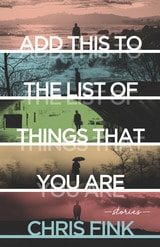
Add This to the List of Things That You Are
Chris Fink
University of Wisconsin Press, 2019
Many of the narratives center on the melancholic dislocations of Midwestern men—dislocations provoked by forces ranging from the unknown terrain of travel to emerging romantic relationships. Fink's gift for voice and keen observation of place display the male psyche against unfamiliar backgrounds in high relief. These quiet, often introspective stories pack an outsized punch.
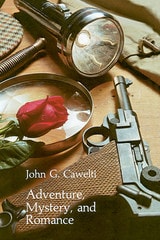
Adventure, Mystery, and Romance
Formula Stories as Art and Popular CultureJohn G. Cawelti
University of Chicago Press, 1976
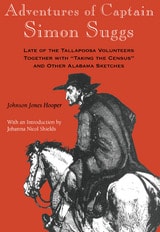
Adventures of Captain Simon Suggs
Late of the Tallapoosa Volunteers; Together with Taking the Census and Other Alabama SketchesJohnson Jones Hooper
University of Alabama Press, 1993
Originally published in 1845, Adventures of Captain Simon Suggs is a series of sketches written in part to parody some the campaign literature of the era. The character, Simon Suggs, with his motto, “it is good to be shifty in a new country,” fully incarnates a backwoods version of the national archetypes now know as the confidence man, the grafter, the professional flim-flam artist supremely skilled in the arts by which a man gets along in the world. This classic volume of good humor is set in the rough-and-tumble world of frontier life and politics.
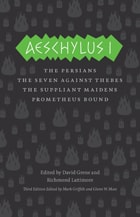
Aeschylus I
The Persians, The Seven Against Thebes, The Suppliant Maidens, Prometheus BoundEdited and Translated by David Grene, Richmond Lattimore, Mark Griffith, and Glenn W. Most
University of Chicago Press, 2013
The most engaging and authoritative translation of some of the foundational works of Western culture
This volume collects careful, readable translations of some of the key works of Aeschylus by experts in the language and culture of the ancient Greek world in which he lived and wrote. Aeschylus I contains “The Persians,” translated by Seth Benardete; “The Seven Against Thebes,” translated by David Grene; “The Suppliant Maidens,” translated by Seth Benardete; and “Prometheus Bound,” translated by David Grene.
For this edition, series editors Mark Griffith and Glenn W. Most have carefully updated the translations to bring them even closer to the ancient Greek while retaining the vibrancy for which our English versions are famous.New introductions for each play offer essential information about its first production, plot, and reception in antiquity and beyond. In addition, each volume includes an introduction to the life and work of its tragedian, as well as notes addressing textual uncertainties and a glossary of names and places mentioned in the plays.
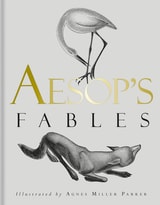
Aesop's Fables
Illustrated by Agnes Miller Parker
Bodleian Library Publishing, 2020
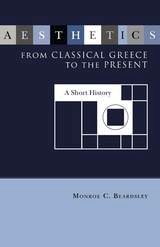
Aesthetics from Classical Greece to the Present
Monroe C. Beardsley
University of Alabama Press, 1975
Before the publication of Aesthetics from Classical Greece to the Present there were three histories of aesthetics in English—Bosanquet's pioneering work, the second part of Croce's Aesthetic in the Ainsle translation, and the comprehensive volume by Gilbert and Kuhn. While each of these is interesting in its own ways, and together they cover a good deal of ground, none of them is very new. Thus none could take advantage of recent work on many important philosophers and periods and bring into a consideration of the past the best concepts and principles that have been developed by present-day philosophy.
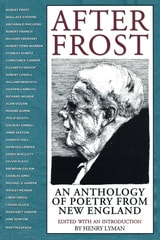
After Frost
An Anthology of Poetry from New EnglandHenry Lyman
University of Massachusetts Press, 1996
After Frost is published in association with the New England Foundation for the Humanities, which has sponsored a program of reading and discussion groups with poets across the region using this anthology.
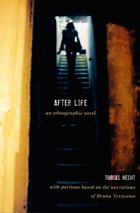
After Life
An Ethnographic NovelTobias Hecht
Duke University Press, 2006
Hecht had originally intended to write a biography of Veríssimo. But with interviews ultimately spanning a decade, he couldn't ignore that much of what he had been told wasn’t, strictly speaking, true. In Veríssimo’s recounting of her life, a sister who had never been born died tragically, while the very same rape that shattered the body and mind of an acquaintance occurred a second time, only with a different victim and several years later. At night, with the anthropologist’s tape recorder in hand, she became her own ethnographer, inventing informants, interviewing herself, and answering in distinct voices.
With truth impossible to disentangle from invention, Hecht followed the lead of Veríssimo, his would-be informant, creating characters, rendering a tale that didn’t happen but that might have, probing at what it means to translate a life into words.
A call and response of truth and invention, mental illness and yearning, After Life is a tribute to and reinterpretation of the Latin American testimonio genre. Desire, melancholy, longing, regret, and the hunger to live beyond the confines of past and future meet in this debut novel by Tobias Hecht.
After Tears
Niq Mhlongo
Ohio University Press, 2011
After the Bombs
Arturo Arias
Northwestern University Press, 1995
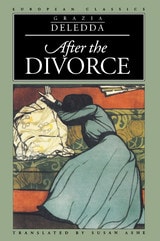
After the Divorce
Grazia Deledda
Northwestern University Press, 1995
Winner of the 1926 Nobel Prize for Literature
The novel begins with Costantino Ledda's conviction and sentencing for the murder of his cruel uncle. Though innocent of the crime, he accepts the guilty verdict as punishment for marrying Giovanna Era through a civil ceremony rather than an expensive church wedding. When her husband is taken away, Giovanna has no way to provide for herself, her mother, and her son, who soon dies of malnutrition. Out of desperation she divorces Costantino, according to a new law for wives of convicts, and marries a wealthy but brutish landowner. When the true murderer confesses and Costantino returns, he and Giovanna begin a forbidden and ultimately destructive affair.
Deleda's tragic story of poverty, passion, and guilt portrays the primitive and remote world of the church, pre-Christian superstitions, and laws dictated from the mainland, in her native Sardinia, where society hangs in a delicate balance. Once this order is disrupted, none of these characters can escape the spiral of destruction dictated by fate, God, and society.
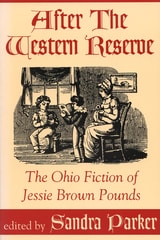
After the Western Reserve
The Ohio Fiction of Jessie Brown PoundsSandra Parker
University of Wisconsin Press, 1999
In her fiction, Jessie Brown Pounds preserved the flavor of Ohio’s rural village culture as the nineteenth century drew to a close. This anthology rediscovers Pounds’s varied works and reminds modern students that Middle-Western culture included women writers as social critics and mythmakers. Included are short stories, sketches, one undated short story published posthumously in 1921, and Rachael Sylvestre, a first-person historical novel written in 1904.
After-Dinner Conversation
The Diary of a DecadentBy José Asunción Silva
University of Texas Press, 2005
Lost in a shipwreck in 1895, rewritten before the author's suicide in 1896, and not published until 1925, José Asunción Silva's After-Dinner Conversation (De sobremesa) is one of Latin America's finest fin de siècle novels and the first one to be translated into English. Perhaps the single best work for understanding turn-of-the-twentieth-century writing in South America, After-Dinner Conversation is also cited as the continent's first psychological novel and an outstanding example of modernista fiction and the Decadent sensibility.
Semi-autobiographical and more important for style than plot, After-Dinner Conversation is the diary of a Decadent sensation-collector in exile in Paris who undertakes a quest to find his beloved Helen, a vision whom his fevered imagination sees as his salvation. Along the way, he struggles with irreconcilable urges and temptations that pull him in every direction while he endures an environment indifferent or hostile to spiritual and intellectual pursuits, as did the modernista writers themselves. Kelly Washbourne's excellent translation preserves Silva's lush prose and experimental style. In the introduction, one of the most wide-ranging in Silva criticism, Washbourne places the life and work of Silva in their literary and historical contexts, including an extended discussion of how After-Dinner Conversation fits within Spanish American modernismo and the Decadent movement. Washbourne's perceptive comments and notes also make the novel accessible to general readers, who will find the work surprisingly fresh more than a century after its composition.
Afterlife
Angela Woodward
University of Alabama Press, 2026
A kaleidoscopic meditation on grief, memory, and the uncanny, where dreams, histories, and forgotten encyclopedias blur the line between life and afterlife.
In this luminous novel, Angela Woodward chronicles the meaning of death, the illusions of truth, and the strange, shimmering persistence of the self beyond the ordinary boundaries of life. Through fictional encyclopedia entries, surreal vignettes, and personal narratives, Afterlife blurs fact and imagination, the material and the ghostly, with poetic precision and biting wit.
Woodward’s speaker journeys through museums of bird art, cults and conformity, environmental chemicals, and lost loves. What emerges is an elegiac, deeply intelligent inquiry into how we continue to haunt the world—and how the world haunts us back.
A work of literary art that will appeal to readers of experimental fiction, creative nonfiction, and lyric essay, Afterlife invites comparison to writers like Jenny Boully, W. G. Sebald, and Anne Carson. This book is ideal for readers drawn to feminist, hybrid, and formally inventive literature; for those fascinated by the interplay between language and grief; and for anyone who has ever felt the uncanny persistence of the past in corners of the present.
Afternoon Men
A NovelAnthony Powell
University of Chicago Press, 1931
More explorations of relationships and vanity than plot-driven narratives, Powell’s early works reveal the stirrings of the unequaled style, ear for dialogue, and eye for irony that would reach their caustic peak in his epic, A Dance to the Music of Time.
In Afternoon Men, the earliest and perhaps most acid of Powell’s novels, we meet the museum clerk William Atwater, a young man stymied in both his professional and romantic endeavors. Immersed in Atwater’s coterie of acquaintances—a similarly unsatisfied cast of rootless, cocktail-swilling London sophisticates—we learn of the conflict between his humdrum work life and louche social scene, of his unrequited love, and, during a trip to the country, of the absurd contrivances of proper manners.
A satire that verges on nihilism and a story touched with sexism and equal doses self-loathing and self-medication, AfternoonMen has a grim edge to it. But its dialogue sparks and its scenes grip, and for aficionados of Powell, this first installment in his literary canon will be a welcome window onto the mind of a great artist learning his craft.
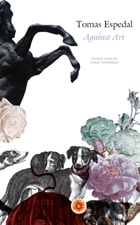
Against Art
(The Notebooks)Tomas Espedal
Seagull Books, 2010
In contemporary Norwegian fiction Tomas Espedal’s work stands out as uniquely personal; it can be difficult to separate the fiction from Espedal’s own experiences. In that vein, his novel Against Art is not just the story of a boy growing up to be a writer, but it is also the story of writing. Specifically, it is about the profession of writing—the routines, responsibility, and obstacles. Yet, Against Art is also about being a father, a son, and a grandson; about a family and a family’s tales, and about how preceding generations mark their successors. It is at once about choices and changes, about motion and rest, about moving to a new place, and about living.
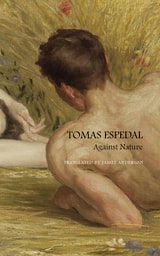
Against Nature
The NotebooksTomas Espedal
Seagull Books, 2015
In contemporary Norwegian fiction Tomas Espedal’s work stands out as uniquely personal; it can be difficult to separate the fiction from Espedal’s own experiences. Against Nature, a companion volume to Espedal's earlier Against Art, is an examination of factory work, love’s labor, and the work of writing. Espedal dwells on the notion that working is required in order to live in compliance with society, but is this natural? And how can it be natural when he is drawn toward impossible things—impossible love, books, myths, and taboos? He is drawn into the stories of Abélard and Héloïse, of young Marguerite Duras and her Chinese lover, and soon realizes that he, too, is turning into a person who must choose to live against nature.
“A masterpiece of literary understatement. Everybody who has recently been thirsting for a new, unexhausted realism, like water in the desert, will love this book.”—Die Zeit, on the Norwegian edition
Against a Darkening Sky
Janet Lewis
Ohio University Press, 1985
Against a Darkening Sky was originally published in 1943. Set in a semirural community south of San Francisco, it is the story of an American mother of the mid-1930s and the sustaining influence she brings, through her own profound strength and faith, to the lives of her four growing children.
Scottish by birth, but long a resident of America, Mary Perrault is married to a Swiss-French gardener. Their life in South Encina, though anything but lavish, is gay, serene, and friendly. As their children mature and the world outside, less peaceful and secure than the Perrault home, begins to threaten the equilibrium of their tranquil lives, Mrs. Perrault becomes increasingly aware of a moral wilderness rising from the physical wilderness which her generation has barely conquered.
Her struggle to influence, while not invading the lives of her children, is the focus of this novel of family life during the Depression years.
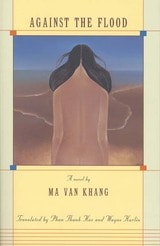
Against the Flood
Ma Van Khang
Northwestern University Press, 2000
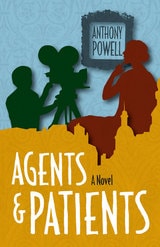
Agents and Patients
A NovelAnthony Powell
University of Chicago Press, 1936
In Agents and Patients, we return to London with the newly wealthy, memorably named Blore-Smith: an innocent, decent enough chap . . . and a drip. Vulnerable to the machinations of those with less money and more lust, Blore-Smith falls victim to two con artists whose ploys carry him through to the art galleries and whorehouses of Paris, Berlin, and beyond.
Written from a vantage point both high and necessarily narrow, Powell’s early novels nevertheless deal in the universal themes that would become a substantial part of his oeuvre: pride, greed, and what makes people behave as they do. Filled with eccentric characters and piercing insights, Powell’s work is achingly hilarious, human, and true.
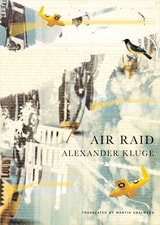
Air Raid
Alexander Kluge
Seagull Books, 2014
A powerful work by the heralded writer, this collection is a touchstone event in German literature of the post-war era.
On April 8, 1945, several American bomber squadrons were informed that their German targets were temporarily unavailable due to cloud cover. As it was too late to turn back, the assembled ordnance of more than two hundred bombers was diverted to nearby Halberstadt. A mid-sized cathedral town of no particular industrial or strategic importance, Halberstadt was almost totally destroyed, and a then-thirteen-year-old Alexander Kluge watched his town burn to the ground.
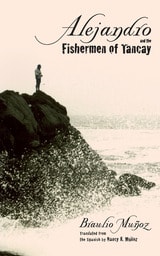
Alejandro and the Fishermen of Tancay
Braulio Muñoz
University of Arizona Press, 2008
Don Morales is a wise man. But he is also a sad man, mourning the loss of the past, of better times, of brotherhood. With his short, evocative stories—told with simplicity and beauty—he pulls his readers closer to him, as if he were speaking directly to us. For the good fishermen of Tancay, life was better yesterday than it is today. It was better to live in harmony with the sea. When they lived in harmony with the natural world, there was harmony in the human world, too.
With a nostalgic feel, yet reflecting Peru’s current political instability, this is a delightful book with an important message. When the natural order is disrupted, it is not only fish that die. When nature dies, so might we all.
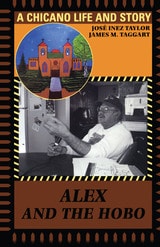
Alex and the Hobo
A Chicano Life and StoryBy José Inez Taylor and James M. Taggart
University of Texas Press, 2003
When a ten-year-old boy befriends a mysterious hobo in his southern Colorado hometown in the early 1940s, he learns about evil in his community and takes his first steps toward manhood by attempting to protect his new friend from corrupt officials. Though a fictional story, Alex and the Hobo is written out of the life experiences of its author, José Inez (Joe) Taylor, and it realistically portrays a boy's coming-of-age as a Spanish-speaking man who must carve out an honorable place for himself in a class-stratified and Anglo-dominated society.
In this innovative ethnography, anthropologist James Taggart collaborates with Joe Taylor to explore how Alex and the Hobo sprang from Taylor's life experiences and how it presents an insider's view of Mexicano culture and its constructions of manhood. They frame the story (included in its entirety) with chapters that discuss how it encapsulates notions that Taylor learned from the Chicano movement, the farmworkers' union, his community, his father, his mother, and his religion. Taggart gives the ethnography a solid theoretical underpinning by discussing how the story and Taylor's account of how he created it represent an act of resistance to the class system that Taylor perceives as destroying his native culture.
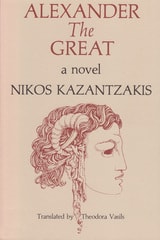
Alexander The Great
A NovelNikos Kazantzakis
Ohio University Press, 1982
Nikos Kazantzakis is no stranger to the heroes of Greek antiquity. In this historical novel based on the life of Alexander the Great, Kazantzakis has drawn on both the rich tradition of Greek legend and the documented manuscripts from the archives of history to recreate an Alexander in all his many-faceted images—Alexander the god; Alexander the descendant of Heracles performing the twelve labors; Alexander the mystic, the daring visionary destined to carry out a divine mission; Alexander the flesh-and-blood mortal who, on occasion, is not above the common soldier’s brawling and drinking.
The novel, which resists the temptation to portray Alexander in the mantle of purely romantic legend, covers his life from age fifteen to his death at age thirty-two. It opens with Alexander’s first exploit, the taming of the horse, Bucephalas, and is seen in great part through the eyes of his young neighbor who eventually becomes an officer in his army and follows him on his campaign to conquer the world.
The book, which was written primarily as an educational adjunct for young readers, is intended for the adult mind as well, and like the legends of old, is entertaining as well as instructive for readers of all ages. It was originally published in Greece in serial form in 1940, and was republished in a complete volume in 1979.
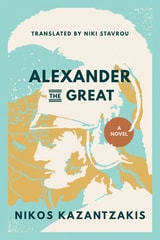
Alexander the Great
A NovelNikos Kazantzakis
Ohio University Press, 2025
Newly translated, this classic novel is sure to delight readers of all ages as it explores the legendary conqueror’s life, ambitions, and humanity.
Nikos Kazantzakis’s Alexander the Great is a biographical novel about one of antiquity’s greatest political and military leaders. In Kazantzakis’s story, Alexander of Macedonia does not conquer for conquest’s sake; instead, he seeks to spread the light of Hellenism to the known world, unite humanity through Greek ideals and culture, and bring together East and West.
The story begins in Pella, the lavish capital of Macedonia, in the fourth century BCE. A teenager named Stefanos rushes to the royal stadium for a remarkable event that has drawn every male citizen of this capital city: the taming of a wild and uniquely powerful horse named Bucephalus. Relying on raw strength and force, even seasoned generals fail to subdue Bucephalus; but through skill, kindness, and insight, the fifteen-year-old Alexander is able to befriend the beast. Alexander’s symbolic taming of chaos foretells his rise to power and demonstrates the qualities he will carry with him throughout his lifelong campaign of conquest.
Through the eyes of Stefanos, who becomes Alexander’s personal attendant and most trusted companion, Kazantzakis follows the Macedonian army through triumphant campaigns across Persia, Egypt, and India, greatly expanding the boundaries of the ancient Hellenic world. Kazantzakis presents Alexander not only as an ingenious military strategist but also as a reflective human being. Alexander oscillates between the human and the divine but will ultimately be betrayed by the former. Kazantzakis narrates Alexander’s struggles and conquests all the way to Babylon, where he meets his untimely death at just thirty-three years of age.
This iconic novel also explores Alexander’s profound relationship with his mentor, Aristotle, who instills in him a lifelong thirst for knowledge. Alexander the Great offers a compelling blend of history, myth, and philosophy and will appeal to readers fascinated by ancient Greece, epic heroes, and humanity’s timeless quest for the meaning of life.

Alien Identities
Exploring Differences in Film and FictionEdited by Deborah Cartmell, Heidi Kaye, I. Q. Hunter, and Imelda Whelehan
Pluto Press, 1999
All Contraries Confounded
The Lyrical FictionKaren Kaivola
University of Iowa Press, 1991
Kaivola has worked out a strikingly original means of reading difference—and reading differently—in order to account for what has been inexplicable in different literary texts by women. All Contraries Confounded seeks to problematize feminist theory that celebrates resistance in fiction by women, for it questions the ability of dominant modes of feminist critical theory to recognize and address fully the forms of contradiction and ambivalence that riddle women's writings—and women's lives.
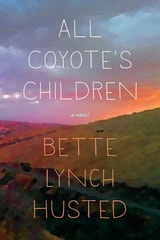
All Coyote's Children
Bette Lynch Husted
Oregon State University Press, 2018
Still fragile, a bereft Annie returns to the ranch, where she is befriended by Leona, a Umatilla-Cayuse neighbor. Leona, as it turns out, has a long connection to the family that even Jack never knew about. At the time of his disappearance, Jack had been grappling with his family’s legacy—with the conflicts and consequences of white settlement of native ground. Three generations before he was born, the family ranch was taken from the Umatilla reservation through the Allotment Act. Jack’s mother died when he was six, but his father’s stern presence still cast a shadow on the land.
“Survival is hard sometimes,” Leona says, but with her help, Annie is able to bring Riley home from rehab and begin the work of healing their small family, learning, season by season, how to go on living without Jack. Leona, Riley’s friends Alex and Mattie, and old neighbors Gus and Audrey become a larger family for Annie as they share the stories that connect them—long-silenced stories from both cultures that could solve the mystery of Jack’s disappearance.
In prose that is lyrical and clear-eyed, All Coyote’s Children weaves an unforgettable tale of cultures and families caught in the inescapable web of who they are and what they have inherited.
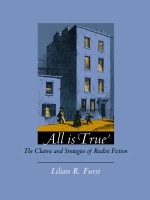
All Is True
The Claims and Strategies of Realist FictionLilian R. Furst
Duke University Press, 1995
In close textual analyses of works ranging across European and American literature, including paradigmatic texts by Balzac, Flaubert, George Eliot, Zola, Henry James, and Thomas Mann, Furst shows how the handling of time, the presentation of place, and certain narrational strategies have served the realists’ claim. She demonstrates how readers today, like those a hundred years ago, are convinced of the authenticity of the created illusion by such means as framing, voice, perspective, and the slippage from metonymy to metaphor. Further, Furst reveals the pains the realists took to conceal these devices, and thus to protect their claim to be employing a simple form. Taking into account both the claims and the covert strategies of these writers, All Is True puts forward an alternative to the conventional polarized reading of the realist text—which emerges here as neither strictly an imitation of an extraneous model nor simply a web of words but a brilliantly complex imbrication of the two.
A major statement on one of the most enduring forms in cultural history, this book promises to alter not only our view of realist fiction but our understanding of how we read it.
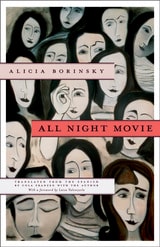
All Night Movie
Alicia Borinsky
Northwestern University Press, 2002
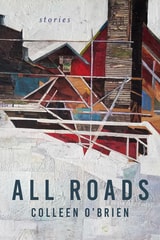
All Roads
StoriesColleen O'Brien
Northwestern University Press, 2022
In “Charlie,” a new mother tells the story of her confusing attachment to a former mentor, uncovering the deep pain that has largely defined her life. In “The Fathers,” an awkward bachelor party leads to an unexpected moment of overdue connection between the bride’s father and brothers. The title story tracks the drunken monologue of a nihilistic middle-aged man attempting to seduce a young woman into a threesome, while “The Deal” alternates perspectives between a cynical divorced woman and her adult son, the only person with whom she’s been able to sustain a lasting relationship. Relentlessly self-revealing, these characters vacillate between vulnerability and self-protection, exposing the necessity of both. Dark, comic, and altogether unforgettable, All Roads introduces an original voice attuned to the docility of the stingray as well as the ancient spear of its tail.
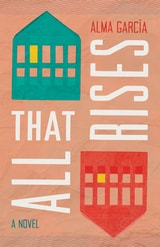
All That Rises
A NovelAlma García
University of Arizona Press, 2023
What follows is a story in which mysteries are unraveled, odd alliances are forged, and the boundaries between lives blur in destiny-changing ways—all in a place where the physical border between two countries is as palpable as it is porous, and the legacies of history are never far away. There are no easy solutions to the issues the characters face in this story, and their various realities—as undocumented workers, Border Patrol agents, the American supervisor of a Mexican factory employing an impoverished workforce—never play out against a black-and-white moral canvas. Instead, they are complex human beings with sometimes messy lives who struggle to create a place for themselves in a part of the world like no other, even as they are forced to confront the lives they have made.
All That Rises is about secrets, lies, border politics, and discovering where you belong—within a family, as well as in the world beyond. It is a novel for the times we live in, set in a place many people know only from the news.
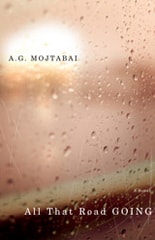
All That Road Going
A NovelA. G. Mojtabai
Northwestern University Press, 2008
In the middle of the night, somewhere in Oklahoma—or is it Missouri?—a bus hurtles down an anonymous American highway. Its passengers, among them two children traveling on their own, a retired salesman, an unwed teenage mother, an unemployed chemist, and the driver who ferries and broods over all of them, are in the middle of their journeys. Soon, two of the passengers will be lost, and then the bus itself will lose its way.
The open road and, before that, the open frontier have long been part of the American romance, cherished features of the nation's traditional vision of itself. In her latest novel, A. G. Mojtabai stands this tradition on its head. Instead of the expansive thrust into unknown territory, the camaraderie of the open road, adventure, and the joys of vagabondage, we witness constriction, isolation, and fear. Instead of freedom, we find people fleeing from coast to coast in search of home and the ever-beckoning, ever-retreating promise of a better life. Richly drawn, evocative, and thought-provoking, All That Road Going is a challenging new departure from the road novel canon.
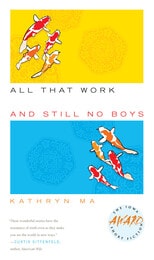
All That Work and Still No Boys
Ma, Kathryn
University of Iowa Press, 2009
How do we survive our family, stay bound to our community, and keep from losing ourselves? In All That Work and Still No Boys, Kathryn Ma exposes the deepest fears and longings that we mask in family life and observes the long shadows cast by history and displacement.
Here are ten stories that wound and satisfy in equal measure. Ma probes the immigrant experience, most particularly among northern California’s Chinese Americans, illuminating for us the confounding nature of duty, transformation, and loss. A boy exposed to racial hatred finds out the true difference between his mother and his father. Two old rivals briefly lay down their weapons, but loneliness and despair won’t let them forget the past. A young Beijing tour guide with a terrible family secret must take an adopted Chinese girl and her American family to visit an orphanage. And in the prize-winning title story, a mother refuses to let her son save her life, insisting instead on a sacrifice by her daughter.
Intimate in detail and universal in theme, these stories give us the compelling voice of an exciting new author whose intelligence, insight, and wit impart a sense of grace to the bitter resentments and enduring ties that comprise family love. Even through the tensions Ma creates so deftly, the peace and security that come from building and belonging to one’s own community shine forth.
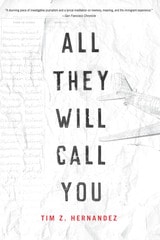
All They Will Call You
Tim Z. Hernandez
University of Arizona Press, 2017
All They Will Call You is the harrowing account of “the worst airplane disaster in California’s history,” which claimed the lives of thirty-two passengers, including twenty-eight Mexican citizens—farmworkers who were being deported by the U.S. government. Outraged that media reports omitted only the names of the Mexican passengers, American folk icon Woody Guthrie penned a poem that went on to become one of the most important protest songs of the twentieth century, “Plane Wreck at Los Gatos (Deportee).” It was an attempt to restore the dignity of the anonymous lives whose unidentified remains were buried in an unmarked mass grave in California’s Central Valley. For nearly seven decades, the song’s message would be carried on by the greatest artists of our time, including Pete Seeger, Dolly Parton, Bruce Springsteen, Bob Dylan, and Joan Baez, yet the question posed in Guthrie’s lyrics, “Who are these friends all scattered like dry leaves?” would remain unanswered—until now.
Combining years of painstaking investigative research and masterful storytelling, award-winning author Tim Z. Hernandez weaves a captivating narrative from testimony, historical records, and eyewitness accounts, reconstructing the incident and the lives behind the legendary song. This singularly original account pushes narrative boundaries, while challenging perceptions of what it means to be an immigrant in America, but more importantly, it renders intimate portraits of the individual souls who, despite social status, race, or nationality, shared a common fate one frigid morning in January 1948.
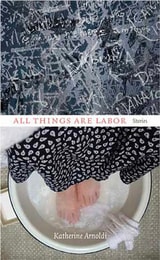
All Things Are Labor
StoriesKatherine Arnoldi
University of Massachusetts Press, 2007
In one story, a Mennonite mother leaves her alcoholic husband and moves with her three children into an abandoned house and back to a life of faith, though a new faith, one of her own making. In another story, a teenager living in the darkness of a failing rust-belt city holds before her the only light she sees, her child, to guide the way as she moves across the border and beyond.
A young artist in New York City pursues a simple life, a passive life, the yielding life of a Mennonite, even as she immerses herself in the gritty urban culture of the East Village. Another woman, given a short time to live, sets up ant farms on her stoop in Alphabet City and is determined to discover how worlds are made by watching the ants and only the ants. A Vietnam veteran finds meaning as a dishwasher at the Catholic Worker, where he circles on his stump of a leg, aware that the thing that is missing, that cannot be seen, is most present.
Many of these stories experiment with the form of writing itself. They reflect the vision of an artist who remains separate—in the world, but not of the world—and whose goal is not to dazzle or entertain, but simply, humbly to be present for each word.
All Things Tending towards the Eternal
A NovelKathleen Lee
Northwestern University Press, 2015
Traveling through China in 1989, not long after the Tiananmen Square massacre, Fanny hopes to make sense of her brother Bruno’s death in a motorcycle accident by finding a woman with whom he had exchanged letters. On her journey Fanny’s fate becomes entwined with a handsome British rogue, an American of Russian-Cuban descent returning to Tashkent, and two Chinese men—one who loves Charles Dickens, the other a budding, entrepreneurial con man—struggling to find their way in a country undergoing tumultuous transformation. Kathleen Lee’s debut novel explores the tension between the allure of the unfamiliar that draws us to distant lands and its unbidden tendency to reveal us to ourselves. With its rollicking sense of humor and slyly lyrical voice, as well as an extraordinary deftness in the rendering of place, All Things Tending towards the Eternal is an unforgettable ride.
All This Belongs to Me
A NovelPetra Hulova
Northwestern University Press, 2009
Winner of the American Literary Translators Association 2010 National Translation Award
Petra Hůlová became an overnight sensation when All This Belongs to Me was originally published in Czech in 2002, when the author was just twenty-three years old. She has since established herself as one of the most exciting young novelists in Europe today. Writings from an Unbound Europe is proud to publish the first translation of her work in English.
All This Belongs to Me chronicles the lives of three generations of women in a Mongolian family. Told from the point of view of a mother, three sisters, and the daughter of one of the sisters, this story of secrets and betrayals takes us from the daily rhythms of nomadic life on the steppe to the harsh realities of urban alcoholism and prostitution in the capital, Ulaanbaatar. All This Belongs to Me is a sweeping family saga that showcases Hůlová's genius.
All about Skin
Short Fiction by Women of ColorEdited by Jina Ortiz and Rochelle Spencer, Foreword by Helena María Viramontes
University of Wisconsin Press, 2014
The stories are by American writers Aracelis González Asendorf, Jacqueline Bishop, Glendaliz Camacho, Learkana Chong, Jennine Capó Crucet, Ramola D., Patricia Engel, Amina Gautier, Manjula Menon, ZZ Packer, Princess Joy L. Perry, Toni Margarita Plummer, Emily Raboteau, Ivelisse Rodriguez, Metta Sáma, Joshunda Sanders, Renee Simms, Mecca Jamilah Sullivan, Hope Wabuke, and Ashley Young; Nigerian writers Unoma Azuah and Chinelo Okparanta; and Chinese writer Xu Xi.
Best Books for General Audiences, selected by the American Association of School Librarians
Best Books for General Audiences, selected by the Public Library Reviewers
All the Lavish in Common
Allan Peterson
University of Massachusetts Press, 2006
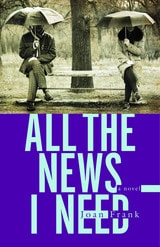
All the News I Need
a novelJoan Frank
University of Massachusetts Press, 2017
Because of course she feels what he feels. . . . People their age natter along not copping to it but the awareness is billboarded all over their faces—a wavering, a hesitation, even those who used to crow and jab the air. The tablecloth of certainty, with all its sparkly settings, has been yanked, and not artfully. It's why people drink.
All The News I Need probes the modern American response to inevitable, ancient riddles—of love and sex and mortality.
Frances Ferguson is a lonely, sharp-tongued widow who lives in the wine country. Oliver Gaffney is a painfully shy gay man who guards a secret and lives out equally lonely days in San Francisco. Friends by default, Fran and Ollie nurse the deep anomie of loss and the creeping, animal betrayal of aging. Each loves routine but is anxious that life might be passing by. To crack open this stalemate, Fran insists the two travel together to Paris. The aftermath of their funny, bittersweet journey suggests those small changes, within our reach, that may help us save ourselves—somewhere toward the end.
All the Old Stories
Jonathan Rovner
University Press of Colorado, 2026
This collection of short fiction explores characters navigating the modest yet significant complexities of life in the recent past, present, and near future. With a recurring focus on platonic love, these stories play with conventions of literary realism and speculative fiction.
From a young woman aching to break free of the prison of her birth to a lonely bachelor visited by the ghost of a toddler; to a returning soldier who becomes obsessed by ancient warfare in the Middle East to a choose-your-own-adventure life story that serves as a love letter to Generation X; to a young studio writer racing to adapt Orwell’s 1984 into a big-budget mass-market thriller, these stories are hilarious or shattering in rapid succession. In settings across America, from Montana, New York, Iowa, eastern Kentucky and more, these stories take place poised between two worlds—the world that raised and shaped the characters and this new world they have been flung into, always with an eye to the past.
All the Tiny Beauties
A NovelJenn Scott
Acre Books, 2022
All the Tiny Beauties begins with a kitchen fire that sends the reclusive Webster Jackson to the home of his new neighbor, Colleen, who discovers him on her doorstep wearing a lacy peignoir, his house in flames. Unwilling to take responsibility for the lonely eccentric, Colleen reaches out to Webb’s estranged daughter, Debra. She also helps him find a live-in companion, a young adult reeling from the loss of her childhood friend.
Moving among perspectives and generations, we see the longings and vulnerabilities that drive and impede these characters as their stories intertwine—Webb’s first love clashing with his last; Colleen embarking on a secret affair with Debra; the older Webb and his young housemate, Hannah, forming a bond over tragedy, guilt, and his passion for baking.
Confronting the many ways they’ve failed others as well as themselves, Webb, Colleen, Hannah, and Debra slowly find ways forward and ways out. While exploring the fragile nature of our connections to one another, All the Tiny Beauties asks larger questions about the constraints society imposes that warp and wound, leading us to deny those things that make us wholly ourselves.
Allegiance
StoriesGurney Norman
Ohio University Press, 2021
Alligators May Be Present
A NovelAndrew Furman
University of Wisconsin Press, 2005
Almonds to Zhoof
Collected StoriesRichard Stern
Northwestern University Press, 2013
Honorable Mention, 2006 The Society of Midland Authors Adult Fiction Award
For decades, Richard Stern has been acclaimed as one of the American masters of the short story. Almonds to Zhoof: Collected Stories brings together for the first time forty-nine of Stern's best short works and novellas-from "Dr. Cahn's Visit," which The New Republic praised as "the very best very short story in the English language," to classics like "Teeth" and "Wanderers."
Stern's stories-witty, moving, always full of energy-never sacrifice storytelling to mere elegance or wandering wisdom. This collection demonstrates Stern's astonishing ability to portray people from all walks of life, their flawed relationships to ideas, their sometimes bizarre relationships with lovers and friends, their often brilliant, if skewed, appraisals of themselves. The stories always reflect an abiding compassion for his characters whoever they are and whatever their origins. All exist within the politics and workplaces and bedrooms of the real world. All are incorrigibly human.
Almost Family
Roy Hoffman
University of Alabama Press, 2000
Nebraska Waters is black. Vivian Gold is Jewish. In an Alabama kitchen where, for nearly thirty years, they share cups of coffee, fret over their children, and watch the civil rights movement unfold out their window, and into their homes, they are like family—almost.
As Nebraska makes her way, day in and out, to Vivian’s house to cook and help tend the Gold children, the “almost” threatens to widen into a great divide. The two women’s husbands affect their relationship, as do their children, Viv Waters and Benjamin Gold, born the same year and coming of age in a changing South. The bond between the women both strengthens and frays.
Winner of the Lillian Smith Book Award and Alabama Library Association Award for fiction, Roy Hoffman’s Almost Family explores the relationship that begins when one person goes to work for another, and their friendship—across lines of race, income, and religion—develops degrees of understanding yet growing misunderstanding.
Almost Family
35th Anniversary EditionRoy Hoffman
University of Alabama Press, 2018
Nebraska Waters is black. Vivian Gold is Jewish. In an Alabama kitchen where, for nearly thirty years, they share cups of coffee, fret over their children, and watch the civil rights movement unfold out their window, and into their homes, they are like family—almost.
As Nebraska makes her way, day in and out, to Vivian’s house to cook and help tend the Gold children, the “almost” threatens to widen into a great divide. The two women’s husbands affect their relationship, as do their children, Viv Waters and Benjamin Gold, born the same year and coming of age in a changing South. The bond between the women both strengthens and frays.
Winner of the Lillian Smith Book Award and Alabama Library Association Award for fiction, Roy Hoffman’s Almost Family explores the relationship that begins when one person goes to work for another, and their friendship—across lines of race, income, and religion—develops degrees of understanding yet growing misunderstanding. This edition commemorates the 35th anniversary of the book’s publication and features a foreword by the author and includes a discussion guide for readers and book clubs.
Almost Gone
Brian Sousa
Tagus Press, 2013