Results by title
3369 books match the query 'Cultural & Social' and 286 start with a
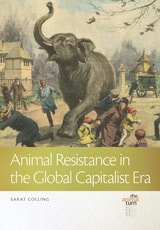
Animal Resistance in the Global Capitalist Era
Sarat Colling
Michigan State University Press, 2020
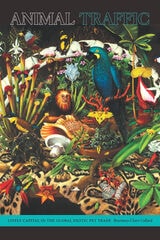
Animal Traffic
Lively Capital in the Global Exotic Pet TradeRosemary-Claire Collard
Duke University Press, 2020

Animals and Death
Hunting, Modernity, and the Crisis of the WildCharles Stépanoff
HAU, 2026

Animals and Race
Jonathan W. Thurston-Torres
Michigan State University Press, 2023
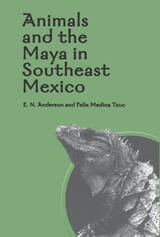
Animals and the Maya in Southeast Mexico
E. N. Anderson and Felix Medina Tzuc
University of Arizona Press, 2005
This book combines the insights of an anthropologist with the hands-on experience of a Maya campesino with the aim of improving the management of Quintana Roo’s wild lands and animal resources. E. N. Anderson and Felix Medina Tzuc pool their knowledge to document Yucatec Maya understanding and use of animals and to address practical matters related to wider conservation issues.
The book reflects a wealth of knowledge gathered from individuals regarded as experts on particular aspects of animal management, whether hunting, herding, or beekeeping. It also offers case studies of conservation successes and failures in various communities, pointing to the need for cooperation by the Mexican government and Maya people to save wildlife. Appendixes provide an extensive animal classification and a complete list of all birds identified in the area.
Even though sustainable forestry has finally come to the Yucatán, sustainable game use is practiced by only a few communities. Animals and the Maya in Southeast Mexico is a complete ethnozoology for the region, offered in the hope that it will encourage the recognition of Quintana Roo’s forests and wildlife as no less deserving of protection than ancient Maya cities.
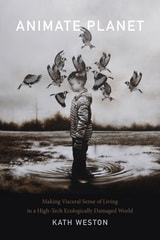
Animate Planet
Making Visceral Sense of Living in a High-Tech Ecologically Damaged WorldKath Weston
Duke University Press, 2017
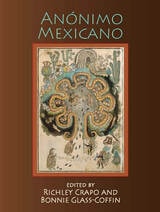
Anonimo Mexicano
Richley Crapo and Bonnie Glass-Coffin
Utah State University Press, 2005
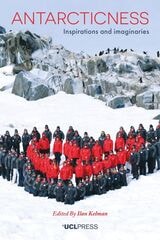
Antarcticness
Inspirations and ImaginariesEdited by Ilan Kelman
University College London, 2022
Antarcticness brings together disciplines, communication approaches, and ideas to explore meanings and depictions of Antarctica. Personal and professional words in poetry and prose, plus images, present and represent Antarctica, as presumed and as imagined, alongside what is experienced around the continent and by those watching from afar. These understandings explain how the Antarctic is viewed and managed while identifying aspects that should be more prominent in policy and practice.
The authors and artists featured in the book place Antarctica, and the perceptions and knowledge through Antarcticness, within inspirations and imaginations, without losing sight of the multiple interests pushing the continent’s governance as it goes through rapid political and environmental changes. Because of the diversity and disparity of the influences and changes the continent faces, the book’s contributions are carefully connected to provide a more coherent and encompassing perspective of how society views Antarctica, scientifically and artistically, and what the continent provides and could provide politically, culturally, and environmentally.
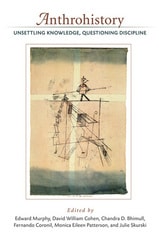
Anthrohistory
Unsettling Knowledge, Questioning DisciplineChandra Bhimull, David William Cohen, Fernando Coronil, Edward L. Murphy, Monica Patterson, and Julie Skurski, Editors
University of Michigan Press, 2011
Stretching back to the 1950s, interdisciplinary work between anthropology and history has taken diverse expressions. Yet it has developed with more coherence since the 1980s, largely in response to the declining promise of global modernity and the rise of poststructuralism and deconstructionism. Through a critical and contemporary engagement with this wave of scholarship, this volume challenges readers to think of work at the crossroads of anthropology and history as transdisciplinary and anthrohistorical, moving beyond a partial integration of the disciplines as it critically evaluates their assumptions and trajectories.
This approach permits Anthrohistory: Unsettling Knowledge, Questioning Discipline to present a broader perspective that unsettles the constraints of existing academic practice. The volume does not offer a blueprint for fulfilling this goal, but rather a variety of positions taken by anthrohistorians who work in diverse contexts. Adopting an innovative and accessible style, Anthrohistory opens a provocative window into broader questions of interdisciplinarity, representation, epistemology, methodology, and social commitment.
Edward Murphy is Assistant Professor of History and Global Urban Studies at Michigan State University.
David William Cohen is Professor Emeritus of Anthropology and Professor Emeritus of History, College of Literature, Science, and the Arts, University of Michigan.
Chandra D. Bhimull is Assistant Professor in the Department of Anthropology and the African-American Studies Program at Colby College.
Fernando Coronil is Presidential Professor at the Graduate Center at the City University of New York and Professor Emeritus of Anthropology and Professor Emeritus of History, College of Literature, Science, and the Arts, University of Michigan.
Monica Eileen Patterson is Postdoctoral Fellow at the Centre for Ethnographic Research and Exhibition in the Aftermath of Violence at Concordia University in Montreal.
Julie Skurski is Distinguished Lecturer in Anthropology at the Graduate Center at the City University of New York.
Cover art: Paul Klee, Tightrope Walker (1923), © Artists Rights Society (ARS), New York / VG Bild-Kunst, Bonn
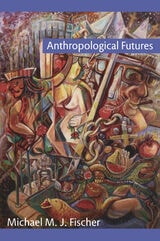
Anthropological Futures
Michael M. J. Fischer
Duke University Press, 2009
Fischer is particularly concerned with cultural anthropology’s interactions with science studies, and throughout the book he investigates how emerging knowledge formations in molecular biology, environmental studies, computer science, and bioengineering are transforming some of anthropology’s key concepts including nature, culture, personhood, and the body. In an essay on culture, he uses the science studies paradigm of “experimental systems” to consider how the social scientific notion of culture has evolved as an analytical tool since the nineteenth century. Charting anthropology’s role in understanding and analyzing the production of knowledge within the sciences since the 1990s, he highlights anthropology’s aptitude for tracing the transnational collaborations and multi-sited networks that constitute contemporary scientific practice. Fischer investigates changing ideas about cultural inscription on the human body in a world where genetic engineering, robotics, and cybernetics are constantly redefining our understanding of biology. In the final essay, Fischer turns to Kant’s philosophical anthropology to reassess the object of study for contemporary anthropology and to reassert the field’s primacy for answering the largest questions about human beings, societies, culture, and our interactions with the world around us. In Anthropological Futures, Fischer continues to advance what Clifford Geertz, in reviewing Fischer’s earlier book Emergent Forms of Life and the Anthropological Voice, called “a broad new agenda for cultural description and political critique.”
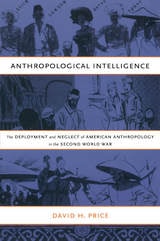
Anthropological Intelligence
The Deployment and Neglect of American Anthropology in the Second World WarDavid H. Price
Duke University Press, 2008
Anthropological Intelligence is based on interviews with anthropologists as well as extensive archival research involving many Freedom of Information Act requests. Price looks at the role played by the two primary U.S. anthropological organizations, the American Anthropological Association and the Society for Applied Anthropology (which was formed in 1941), in facilitating the application of anthropological methods to the problems of war. He chronicles specific projects undertaken on behalf of government agencies, including an analysis of the social effects of postwar migration, the design and implementation of OSS counterinsurgency campaigns, and the study of Japanese social structures to help tailor American propaganda efforts. Price discusses anthropologists’ work in internment camps, their collection of intelligence in Central and South America for the FBI’s Special Intelligence Service, and their help forming foreign language programs to assist soldiers and intelligence agents. Evaluating the ethical implications of anthropological contributions to World War II, Price suggests that by the time the Cold War began, the profession had set a dangerous precedent regarding what it would be willing to do on behalf of the U.S. government.
Anthropological Lives
An Introduction to the Profession of AnthropologyVirginia R Dominguez
Rutgers University Press, 2020
Anthropologists profiled: Leslie Aiello, Lee Baker, João Biehl, Tom Boellstorff, Jacqueline Comito, Shannon Dawdy, Virginia R. Dominguez, T.J. Ferguson, Brigittine French, Agustín Fuentes, Amy Goldenberg, Mary Gray, Sarah Green, Monica Heller, Douglas Hertzler, Ed Liebow, Mariano Perelman, Jeremy Sabloff, Carolyn Sargent, Marilyn Strathern, Nandini Sundar, Alaka Wali.

Anthropological Perspectives on Kinship
Ladislav Holy
Pluto Press, 1996
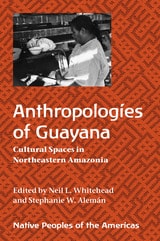
Anthropologies of Guayana
Cultural Spaces in Northeastern AmazoniaEdited by Neil L. Whitehead and Stephanie Alemán
University of Arizona Press, 2009
This is an important collection that brings together the work of scholars from North America, South America, and Europe to reveal the anthropological significance of Guayana, the ancient realm of El Dorado and still the scene of gold and diamond mining. Beginning with the earliest civilizations of the region, the chapters focus on the historical ecology of the rain forest and the archaeological record up to the sixteenth century, as well as ethnography, ethnology, and perceptions of space. The book features extensive discussions of the history of a range of indigenous groups, such as the Waiwai, Trio, Wajãpi, and Palikur. Contributions analyze the emergence of a postcolonial national society, the contrasts between the coastlands and upland regions, and the significance of race and violence in contemporary politics.
A noteworthy study of the prehistory and history of the region, the book also provides a useful survey of the current issues facing northeastern Amazonia. The chapters extend the anthropological agenda beyond the conventional focus on the “indigenous” even as contributors describe how Guayanese languages, mythologies, and social structures have remained resilient in the face of intense outside pressures.
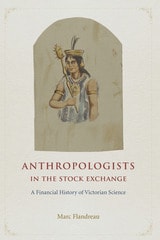
Anthropologists in the Stock Exchange
A Financial History of Victorian ScienceMarc Flandreau
University of Chicago Press, 2016
Flandreau argues that finance and science were at the heart of a new brand of imperialism born during Benjamin Disraeli’s first term as Britain’s prime minister in the 1860s. As anthropologists advocated the study of Miskito Indians or stated their views on a Jamaican rebellion, they were in fact catering to the impulses of the stock exchange—for their own benefit. In this way the very development of the field of anthropology was deeply tied to issues relevant to the financial market—from trust to corruption. Moreover, this book shows how the interplay between anthropology and finance formed the foundational structures of late nineteenth-century British imperialism and helped produce essential technologies of globalization as we know it today.
Anthropology At the Dawn of the Cold War
The Influence of Foundations, Mccarthyism and the CIAEdited by Dustin M. Wax
Pluto Press, 2008
This book breaks new ground in the history of anthropology, opening up an explicit examination of anthropology in the Cold War era. With historical distance, Cold War anthropology has begun to emerge as a distinct field within the discipline. This book brings a number of different approaches to bear on the questions raised by anthropology's Cold War history.
The contributors show how anthropologists became both tools and victims of the Cold War state during the rise of the United States in the post-War period. Examining the intersection between science and power, this book is a compelling read for anthropologists, historians, sociologists, and anyone interested in the way in which colonial and neo-colonial knowledge is produced and constructed.
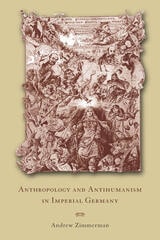
Anthropology and Antihumanism in Imperial Germany
Angela Elisabeth Zimmerman
University of Chicago Press, 2001
Drawing on sources ranging from scientific papers and government correspondence to photographs, pamphlets, and police reports of "freak shows," Zimmerman demonstrates how German imperialism opened the door to antihumanism. As Germans interacted more frequently with peoples and objects from far-flung cultures, they were forced to reevaluate not just those peoples, but also the construction of German identity itself. Anthropologists successfully argued that their discipline addressed these issues more productively—and more accessibly—than humanistic studies.
Scholars of anthropology, European and intellectual history, museum studies, the history of science, popular culture, and colonial studies will welcome this book.
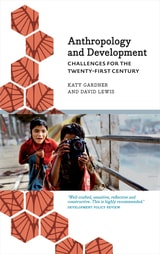
Anthropology and Development
Challenges for the Twenty-First CenturyKaty Gardner and David Lewis
Pluto Press, 2015
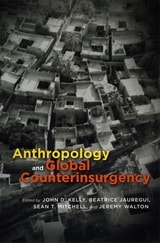
Anthropology and Global Counterinsurgency
Edited by John D. Kelly, Beatrice Jauregui, Sean T. Mitchell, and Jeremy Walton
University of Chicago Press, 2010
Global events of the early twenty-first century have placed new stress on the relationship among anthropology, governance, and war. Facing prolonged insurgency, segments of the U.S. military have taken a new interest in anthropology, prompting intense ethical and scholarly debate. Inspired by these issues, the essays in Anthropology and Global Counterinsurgency consider how anthropologists can, should, and do respond to military overtures, and they articulate anthropological perspectives on global war and power relations.
This book investigates the shifting boundaries between military and civil state violence; perceptions and effects of American power around the globe; the history of counterinsurgency doctrine and practice; and debate over culture, knowledge, and conscience in counterinsurgency. These wide-ranging essays shed new light on the fraught world of Pax Americana and on the ethical and political dilemmas faced by anthropologists and military personnel alike when attempting to understand and intervene in our world.
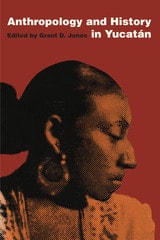
Anthropology and History in Yucatán
Edited by Grant D. Jones
University of Texas Press, 1977
Anthropology and History in Yucatán is a collection of ten essays that offer new evidence and interpretations of the survival and adaptation of lowland Maya culture from its earliest contact with the Spanish to the 1970s. These case studies reflect a growing interest in the use of historical approaches in the development of models of cultural change that will integrate archaeological, historical, and ethnographic data.
The portrait of the Maya emerging from this collection is that of a remarkably vital people who have skillfully resisted total incorporation with their neighbors and who continue even today to emphasize their cultural independence and historical uniqueness. In his introduction, Grant D. Jones synthesizes previous studies of the anthropological history of Yucatán and summarizes the theoretical issues underlying the volume. Section I, which focuses on continuity and change in the boundaries of Maya ethnicity in Yucatán, includes contributions by the late Sir Eric Thompson, France V. Scholes, and O. Nigel Bolland. Section II presents comparative regional perspectives of Maya adaptations to external forces of change and contains essays by D. E. Dumond, Grant D. Jones, James W. Ryder, and Anne C. Collins. In the closing section, three articles, by Victoria Reifler Bricker, Allan F. Burns, and Irwin Press, treat Maya concepts of their own history.
Throughout the book, the authors demonstrate that models far more complex than Robert Redfield’s folk-urban continuum must be developed to account for the great regional variations in responses by the Maya to the pressures of economic, cultural, and political control as exerted by Spanish, Mexican, Guatemalan, and British authorities over the past four centuries. The essays demonstrate a variety of methodological approaches that will be of interest to historians, ethnohistorians, ethnologists, archaeologists, and those who have a general interest in the survival of Maya culture.
Anthropology and Politics
Visions, Traditions, and TrendsJoan Vincent
University of Arizona Press, 1990
Anthropology and Radical Humanism
Native and African American Narratives and the Myth of RaceJack Glazier
Michigan State University Press, 2020
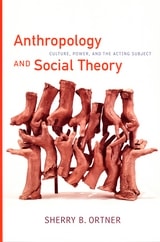
Anthropology and Social Theory
Culture, Power, and the Acting SubjectSherry B. Ortner
Duke University Press, 2006
Some of the essays reflect explicitly on theoretical concerns: the relationship between agency and power, the problematic quality of ethnographic studies of resistance, and the possibility of producing an anthropology of subjectivity. Others are ethnographic studies that apply Ortner’s theoretical framework. In these, she investigates aspects of social class, looking at the relationship between race and middle-class identity in the United States, the often invisible nature of class as a cultural identity and as an analytical category in social inquiry, and the role that public culture and media play in the creation of the class anxieties of Generation X. Written with Ortner’s characteristic lucidity, these essays constitute a major statement about the future of social theory from one of the leading anthropologists of our time.
Anthropology and the Politics of Representation
Gabriela Vargas-Cetina
University of Alabama Press, 2013
In Anthropology and the Politics of Representation volume editor Gabriela Vargas-Cetina brings together a group of international scholars who, through their fieldwork experiences, reflect on the epistemological, political, and personal implications of their own work. To do so, they focus on such topics as ethnography, anthropologists’ engagement in identity politics, representational practices, the contexts of anthropological research and work, and the effects of personal choices regarding self-involvement in local causes that may extend beyond purely ethnographic goals.
Such reflections raise a number of ethnographic questions: What are ethnographic goals? Who sets the agenda for ethnographic writing? How does fieldwork change the anthropologist’s identity? Do ethnography and ethnographers have an impact on local lives and self-representation? How do anthropologists balance long-held respect for cultural diversity with advocacy for local people? How does an author choose what to say and write, and what not to disclose? Should anthropologists support causes that may require going against their informed knowledge of local lives?
Anthropology and the Racial Politics of Culture
Lee D. Baker
Duke University Press, 2010
Baker argues that the concept of culture developed by ethnologists to understand American Indian languages and customs in the nineteenth century formed the basis of the anthropological concept of race eventually used to confront “the Negro problem” in the twentieth century. As he explores the implications of anthropology’s different approaches to African Americans and Native Americans, and the field’s different but overlapping theories of race and culture, Baker delves into the careers of prominent anthropologists and ethnologists, including James Mooney Jr., Frederic W. Putnam, Daniel G. Brinton, and Franz Boas. His analysis takes into account not only scientific societies, journals, museums, and universities, but also the development of sociology in the United States, African American and Native American activists and intellectuals, philanthropy, the media, and government entities from the Bureau of Indian Affairs to the Supreme Court. In Anthropology and the Racial Politics of Culture, Baker tells how anthropology has both responded to and helped shape ideas about race and culture in the United States, and how its ideas have been appropriated (and misappropriated) to wildly different ends.
Anthropology as Cultural Critique
An Experimental Moment in the Human SciencesGeorge E. Marcus and Michael M. J. Fischer
University of Chicago Press, 1999
Anthropology at War
World War I and the Science of Race in GermanyAndrew D. Evans
University of Chicago Press, 2010
Between 1914 and 1918, German anthropologists conducted their work in the midst of full-scale war. The discipline was relatively new in German academia when World War I broke out, and, as Andrew D. Evans reveals in this illuminating book, its development was profoundly altered by the conflict. As the war shaped the institutional, ideological, and physical environment for anthropological work, the discipline turned its back on its liberal roots and became a nationalist endeavor primarily concerned with scientific studies of race.
Combining intellectual and cultural history with the history of science, Anthropology at War examines both the origins and consequences of this shift. Evans locates its roots in the decision to allow scientists access to prisoner-of-war camps, which prompted them to focus their research on racial studies of the captives. Caught up in wartime nationalism, a new generation of anthropologists began to portray the country’s political enemies as racially different. After the war ended, the importance placed on racial conceptions and categories persisted, paving the way for the politicization of scientific inquiry in the years of the ascendancy of National Socialism.
Anthropology from a Pragmatic Point of View
Immanuel Kant. Translated by Victor Lyle Dowdell. Revised and Edited by Hans H. Rudnick
Southern Illinois University Press, 1996
In the fall semester of 1772/73 at the Albertus University of Königsberg, Immanuel Kant, metaphysician and professor of logic and metaphysics, began lectures on anthropology, which he continued until 1776, shortly before his retirement from public life. His lecture notes and papers were first published in 1798, eight years after the publication of the Critique of Judgment, the third of his famous Critiques. The present edition of the Anthropology is a translation of the text found in volume 7 of Kants gesammelte Schriften, edited by Oswald Külpe.
Kant describes the Anthropology as a systematic doctrine of the knowledge of humankind. (He does not yet distinguish between the academic discipline of anthropology as we understand it today and the philosophical.) Kant’s lectures stressed the "pragmatic" approach to the subject because he intended to establish pragmatic anthropology as a regular academic discipline. He differentiates the physiological knowledge of the human race—the investigation of "what Nature makes of man"—from the pragmatic—"what man as a free being makes of himself, what he can make of himself, and what he ought to make of himself." Kant believed that anthropology teaches the knowledge of humankind and makes us familiar with what is pragmatic, not speculative, in relation to humanity. He shows us as world citizens within the context of the cosmos.
Summarizing the cloth edition of the Anthropology, Library Journal concludes: "Kant’s allusions to such issues as sensation, imagination, judgment, (aesthetic) taste, emotion, passion, moral character, and the character of the human species in regard to the ideal of a cosmopolitan society make this work an important resource for English readers who seek to grasp the connections among Kant’s metaphysics of nature, metaphysics of morals, and political theory. The notes of the editor and translator, which incorporate material from Ernst Cassirer’s edition and from Kant’s marginalia in the original manuscript, shed considerable light on the text."
Anthropology in the Meantime
Experimental Ethnography, Theory, and Method for the Twenty-First CenturyMichael M. J. Fischer
Duke University Press, 2018
Anthropology of the Self
The Individual in Cultural PerspectiveBrian Morris
Pluto Press, 1994
Anthropology, Economics, and Choice
By Michael Chibnik
University of Texas Press, 2011
In the midst of global recession, angry citizens and media pundits often offer simplistic theories about how bad decisions lead to crises. Many economists, however, base their analyses on rational choice theory, which assumes that decisions are made by well-informed, intelligent people who weigh risks, costs, and benefits. Taking a more realistic approach, the field of anthropology carefully looks at the underlying causes of choices at different times and places.
Using case studies of choices by farmers, artisans, and bureaucrats drawn from Michael Chibnik's research in Mexico, Peru, Belize, and the United States, Anthropology, Economics, and Choice presents a clear-eyed perspective on human actions and their economic consequences. Five key issues are explored in-depth: choices between paid and unpaid work; ways people deal with risk and uncertainty; how individuals decide whether to cooperate; the extent to which households can be regarded as decision-making units; and the "tragedy of the commons," the theory that social chaos may result from unrestricted access to commonly owned property.
Both an accessible primer and an innovative exploration of economic anthropology, this interdisciplinary work brings fresh insight to a timely topic.
Anthropology, Film Industries, Modularity
Ramyar D. Rossoukh and Steven C. Caton, editors
Duke University Press, 2021
Contributors. Steven C. Caton, Jessica Dickson, Kevin Dwyer, Tejaswini Ganti, Lotte Hoek, Amrita Ibrahim, Sylvia J. Martin, Ramyar D. Rossoukh
Anthropos and the Material
Penny Harvey, Christian Krohn-Hansen, and Knut Nustad, editors
Duke University Press, 2019

Anti-Crisis
Janet Roitman
Duke University Press, 2013
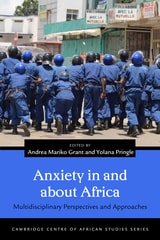
Anxiety in and about Africa
Multidisciplinary Perspectives and ApproachesAndrea Mariko Grant
Ohio University Press, 2021
How does anxiety impact narratives about African history, culture, and society?
This volume demonstrates the richness of anxiety as an analytical lens within African studies. Contributors call attention to ways of thinking about African spaces—physical, visceral, somatic, and imagined—as well as about time and temporality. Through a multidisciplinary approach, the volume also brings histories of anxiety in colonial settings into conversation with work on the so-called negative emotions in disciplines beyond history. While anxiety has long been acknowledged for its ability to unsettle colonial narratives, to reveal the vulnerability of the colonial enterprise, this volume shows it can equally complicate contemporary narratives, such as those of sustainable development, migration, sexuality, and democracy. These essays therefore highlight the need to take emotions seriously as contemporary realities with particular histories that must be carefully mapped out.

Appetites
Food and Sex in Post-Socialist ChinaJudith Farquhar
Duke University Press, 2002
From eating well in improving economic times to memories of the late 1950s famine, from the flavors of traditional Chinese medicine to modernity’s private sexual passions, this book argues that embodiment in all its forms must be invented and sustained in public reflections about personal and national life. As much at home in science studies and social theory as in the details of life in Beijing, this account uses anthropology, cultural studies, and literary criticism to read contemporary Chinese life in a materialist and reflexive mode. For both Maoist and market reform periods, this is a story of high culture in appetites, desire in collective life, and politics in the body and its dispositions.
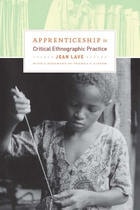
Apprenticeship in Critical Ethnographic Practice
Jean Lave
University of Chicago Press, 2011
In this extended meditation, Jean Lave interweaves analysis of the process of apprenticeship among the Vai and Gola tailors of Liberia with reflections on the evolution of her research on those tailors in the late 1970s. In so doing, she provides both a detailed account of her apprenticeship in the art of sustained fieldwork and an insightful overview of thirty years of changes in the empirical and theoretical facets of ethnographic practice. Examining the issues she confronted in her own work, Lave shows how the critical questions raised by ethnographic research erode conventional assumptions, altering the direction of the work that follows.
As ethnography takes on increasing significance to an ever widening field of thinkers on topics from education to ecology, this erudite but accessible book will be essential to anyone tackling the question of what it means to undertake critical and conceptually challenging fieldwork. Apprenticeship in Critical Ethnographic Practice explains how to seriously explore what it means to be human in a complex world—and why it is so important.
Arc of Interference
Medical Anthropology for Worlds on EdgeJoão Biehl and Vincanne Adams, editors
Duke University Press, 2023
Contributors. Vincanne Adams, João Biehl, Davíd Carrasco, Lawrence Cohen, Jean Comaroff, Robert Desjarlais, Paul Farmer, Marcia Inhorn, Janis H. Jenkins, David S. Jones, Salmaan Keshavjee, Arthur Kleinman, Margaret Lock, Adriana Petryna
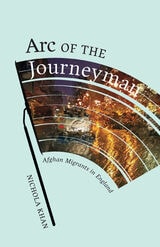
Arc of the Journeyman
Afghan Migrants in EnglandNichola Khan
University of Minnesota Press, 2021
A monumental account of one migrant community’s everyday lives, struggles, and aspirations
Forty years of continuous war and conflict have made Afghans the largest refugee group in the world. In this first full-scale ethnography of Afghan migrants in England, Nichola Khan examines the imprint of violence, displacement, kinship obligations, and mobility on the lives and work of Pashtun journeyman taxi drivers in Britain. Khan’s analysis is centered in the county of Sussex, site of Brighton’s orientalist Royal Pavilion and the former home of colonial propagandist Rudyard Kipling. Her nearly two decades of relationships and fieldwork have given Khan a deep understanding of the everyday lives of Afghan migrants, who face unrelenting pressures to remit money to their struggling relatives in Pakistan and Afghanistan, adhere to traditional values, and resettle the wives and children they have left behind.
This kaleidoscopic narrative is enriched by the migrants’ own stories and dreams, which take on extra significance among sleep-deprived taxi drivers. Khan chronicles the way these men rely on Pashto poems and aphorisms to make sense of what is strange or difficult to bear. She also attests to the pleasures of local family and friends who are less demanding than kin back home—sharing connection and moments of joy in dance, excursions, picnics, and humorous banter. Khan views these men’s lives through the lenses of movement—the arrival of friends and family, return visits to Pakistan, driving customers, even the journey to remit money overseas—and immobility, describing the migrants who experience “stuckness” caused by unresponsive bureaucracies, chronic insecurity, or struggles with depression and other mental health conditions.
Arc of the Journeyman is a deeply humane portrayal that expands and complicates current perceptions of Afghan migrants, offering a finely analyzed description of their lives and communities as a moving, contingent, and fully contemporary force.
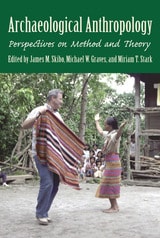
Archaeological Anthropology
Perspectives on Method and TheoryEdited by James M. Skibo, Michael W. Graves, and Miriam T. Stark
University of Arizona Press, 2014
In this collection of twelve new chapters, four generations of Longacre protégés show how they are building upon and developing but also modifying the theoretical paradigm that remains at the core of Americanist archaeology. The contributions focus on six themes prominent in Longacre’s career: the intellectual history of the field in the late twentieth century, archaeological methodology, analogical inference, ethnoarchaeology, cultural evolution, and reconstructing ancient society.
More than a comprehensive overview of the ideas developed by one of the most influential scholars in the field, however, Archaeological Anthropology makes stimulating contributions to contemporary research. The contributors do not unequivocally endorse Longacre’s ideas; they challenge them and expand beyond them, making this volume a fitting tribute to a man whose robust research and teaching career continues to resonate.
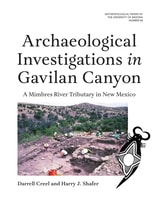
Archaeological Investigations in Gavilan Canyon
A Mimbres River Tributary in New MexicoDarrell Creel and Harry J. Shafer
University of Arizona Press, 2027
In the 1980s, Texas A&M University’s NAN Ranch Project included surveys and excavations in Gavilan Canyon, a major tributary of the Mimbres River. Uniquely, these excavations documented water control systems and their uses. Collected and now made available for the first time, Archaeological Investigations in Gavilan Canyon shares results from the excavations that were conducted primarily at Pueblo Vinegaroon, a Classic Period Mimbres pueblo of about twenty rooms, and at nearby Cholla Village.
During the NAN Ranch Project, researchers conducted extensive surveys of the canyon from its confluence with the Mimbres River and documented numerous sites dating to as early as Early Archaic through Classic Mimbres. The results also document pithouse sites as well as numerous small masonry pueblos. Analysis shows that the ebb and flow of late prehistoric occupation in Gavilan Canyon largely matches the occurrence of wet periods and prolonged droughts.
The book reveals that the changes in occupation in Gavilan Canyon help explain changes seen in the Mimbres River Valley, including the extensively excavated NAN Ranch and Swarts sites.
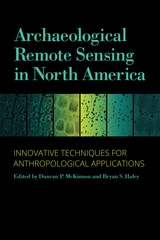
Archaeological Remote Sensing in North America
Innovative Techniques for Anthropological ApplicationsEdited by Duncan P. McKinnon and Bryan S. Haley
University of Alabama Press, 2017
Updating the highly praised 2006 publication Remote Sensing in Archaeology, edited by Jay K. Johnson, Archaeological Remote Sensing in North America: Innovative Techniques for Anthropological Applications is a must-have volume for today’s archaeologist. Targeted to practitioners of archaeological remote sensing as well as students, this suite of current and exemplary applications adheres to high standards for methodology, processing, presentation, and interpretation.
The use of remote sensing technologies to address academic and applied archaeological and anthropological research problems is growing at a tremendous rate in North America. Fueling this growth are new research paradigms using innovative instrumentation technologies and broader-area data collection methods. Increasingly, investigators pursuing these new approaches are integrating remote sensing data collection with theory-based interpretations to address anthropological questions within larger research programs.
In this indispensable volume, case studies from around the country demonstrate the technically diverse and major remote sensing methods and their integration with relevant technologies, such as geographic information systems (GIS) and global positioning systems (GPS), and include various uses of the “big four”: magnetometry, resistivity, ground-penetrating radar (GPR), and electromagnetic induction.
The study explores four major anthropological themes: site structure and community organization; technological transformation and economic change; archaeological landscapes; and earthen mound construction and composition. Concluding commentary from renowned expert Kenneth L. Kvamme overviews the practices, advances, and trends of geophysics and remote sensing in the past decade.
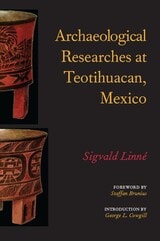
Archaeological Researches at Teotihuacan, Mexico
Sigvald Linne, with a foreword by Staffan Brunius and introduction by George L.
University of Alabama Press, 2003
In 1932, the Ethnographical Museum of Sweden sent an archaeological expedition to Mexico under the direction of Sigvald Linné to determine the full extent of this ancient Teotihuacan occupation and to collect exhibit-quality artifacts. Of an estimated 2,000-plus residential compounds at Teotihuacan, only 20 apartment-like structures were excavated at the time. Yet Linné’s work revealed residential patterns that have been confirmed later in other locations.
Some of the curated objects from the Valley of Mexico and the adjacent state of Puebla are among the most rare and unique artifacts yet found. Another important aspect of this research was that, with the aid of the Museum of Natural History in Washington, Linné’s team conducted ethnographic interviews with remnant native Mexican peoples whose culture had not been entirely destroyed by the Conquest, thereby collecting and preserving valuable information for later research.
Archaeological Structuration
A Critical Engagement for the Twenty-First CenturyMichael T. Searcy
University of Arizona Press, 2025
To illustrate the usefulness of structuration theory, archaeologist Michael T. Searcy deploys it to uncover new understandings of ancient societies, particularly focusing on the Casas Grandes civilization in precolonial northern Mexico. Spanning more than seven hundred years, this society exemplifies the rise of social complexity in the Western Hemisphere. Searcy reexamines previous hypotheses about major structural shifts during the twelfth and thirteenth centuries CE, providing fresh insights and updated perspectives.
This book not only revisits the foundational influence of structuration theory but also introduces new methodologies to study the longue durée, the long-term historical trajectories of ancient societies. Searcy deftly bridges the gap between theoretical frameworks and practical archaeological applications, providing a thorough analysis of how structuration can address real-world problems through the lens of ancient societal transformations.

Archaeology and Its Avatars
Science and Culture in Latin AmericaJorge Coronado, Alexander Herrera Wassilowsky
Northwestern University Press, 2026
Illuminating the impact of archaeology on the culture and politics of Latin America
Since the mid-nineteenth century, archaeology has played a critical role in historicizing space and shaping cultural imaginaries. It has brought modern scientific practices into structured contact with ancient objects and landscapes, on the one hand, and modern Indigenous cultures in their material and historical complexity, on the other. Archaeology has thus served a variety of disciplines and practices, from history and anthropology to literary and social criticism and critical theory, and has actively animated practices quite distinct from itself, such as public policy, tourism, urban planning, art, literature, and nation-building.
This volume provides a unique analysis of a disciplinary formation crucial to the study of cultural history and theory in Latin America. The contributors represent archaeologists and scholars from a variety of disciplines within the humanities, each of whom approaches archaeology as theory and praxis. Collectively, they map the differences and similarities between archaeological interventions and the ways in which the materiality, practice, and discourse of archaeology have been taken up as analytic, metaphor, and discursive strategy.

Archaeology of North Pacific Fisheries
Edited by Madonna L. Moss and Aubrey Cannon
University of Alaska Press, 2011
For thousands of years, fisheries were crucial to the sustenance of the First Peoples of the Pacific Coast. Yet human impact has left us with a woefully incomplete understanding of their histories prior to the industrial era. Covering Alaska, British Columbia, and Puget Sound, The Archaeology of North Pacific Fisheries illustrates how the archaeological record reveals new information about ancient ways of life and the histories of key species. Individual chapters cover salmon, as well as a number of lesser-known species abundant in archaeological sites, including pacific cod, herring, rockfish, eulachon, and hake. In turn, this ecological history informs suggestions for sustainable fishing in today’s rapidly changing environment.
Architecture of Migration
The Dadaab Refugee Camps and Humanitarian SettlementAnooradha Iyer Siddiqi
Duke University Press, 2024
Architectures of Hope
Infrastructural Citizenship and Class Mobility in Brazil's Public HousingMoisés Kopper
University of Michigan Press, 2022
Architectures of Hope examines how communal idealism, electoral politics, and low-income consumer markets made first-time homeownership a reality for millions of low-income Brazilians over the last ten years.
Drawing on a five-year-long ethnography among city planners, architects, street-level bureaucrats, politicians, market and bank representatives, community leaders, and past, present, and future beneficiaries, Moisés Kopper tells the story of how a group of grassroots housing activists rose from oblivion to build a model community. He explores the strategies set forth by housing activists as they waited and hoped for—and eventually secured—homeownership through Minha Casa Minha Vida’s public-private infrastructure. By showing how these efforts coalesced in Porto Alegre—Brazil’s once progressive hotspot—he interrogates the value systems and novel arrangements of power and market that underlie the country’s post-neoliberal project of modern and inclusive development.
By chronicling the making and remaking of material hope in the aftermath of Minha Casa Minha Vida, Architectures of Hope reopens the future as a powerful venue for ethnographic inquiry and urban development.
Archive Matter
A Camera in the Laboratory of the ModernLiliana Gómez
Diaphanes, 2023
A journey through the United Fruit Company’s photo archive and its documentation of corporate expansion into the Caribbean.
The establishment of the United Fruit Company as a global political agent with its banana plantations was met with considerable resistance. Now the company’s photographic records are the focal point of Archive Matter as it examines photography’s historical and political impact through the argument that this overlooked, but important, archive made capitalist expansion into the Caribbean possible.
Author Liliana Gómez examines the images from within their “optical unconscious” and via the archive’s silences and omissions. The implication of these silences, Gómez argues, is the attempt to conceal the violence embedded within the realities of the plantations’ daily operations and corporate efforts to “modernize” the Caribbean.
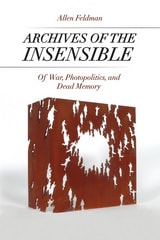
Archives of the Insensible
Of War, Photopolitics, and Dead MemoryAllen Feldman
University of Chicago Press, 2015
Excavating a scenography of trials—formal or covert, orchestrated or improvised, criminalizing or criminal—Feldman shows how the will to truth disappears into the very violence it interrogates. He maps the sensory inscriptions and erasures of war, highlighting war as a media that severs factuality from actuality to render violence just. He proposes that war promotes an anesthesiology that interdicts the witness of a sensory and affective commons that has the capacity to speak truth to war. Feldman uses layered deconstructive description to decelerate the ballistical tempo of war to salvage the embodied actualities and material histories that war reduces to the ashes of collateral damage, the automatism of drones, and the opacities of black sites. The result is a penetrating work that marries critical visual theory, political philosophy, anthropology, and media archeology into a trenchant dissection of emerging forms of sovereignty and state power that war now makes possible.