Results by title
2728 books match the query 'Education' and 268 start with a
An Age of Accountability
How Standardized Testing Came to Dominate American Schools and Compromise EducationJohn L. Rury
Rutgers University Press, 2024
An Alternate Pragmatism for Going Public
Jim Webber
Utah State University Press, 2017
An Alternate Pragmatism for Going Public interrogates composition’s most prominent responses to contemporary K–16 education reform. By “going public,” teachers, scholars, and administrators rightfully reassert their expertise against corporate-political standards and assessments like the Common Core, Complete College America, and the Collegiate Learning Assessment. However, author Jim Webber shows that composition’s professional imperative for self-defense only partly fulfils the broader aims of “going public,” which include fostering public participation that can assess and potentially affirm the public good of professional judgment.
Drawing on the pragmatic/democratic tradition, Webber envisions an alternate rhetoric of professionalism, one that not only reasserts compositionists’ expertise but also expands opportunities for publics to authorize this expertise. While this public inquiry and engagement may not safeguard professional standing against neoliberal reform, it reorients composition toward an equally important goal, enabling publics to gauge the adequacy of the educational standardization so often advocated by contemporary reform.
An Alternate Pragmatism for Going Public shows how public engagement can serve composition’s efforts related to “going public.”
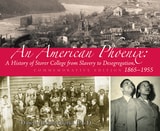
An American Phoenix
A History of Storer College from Slavery to Desegregation 1865-1955, Commemorative EditionDawne Raines Burke
West Virginia University Press, 2015
In the first book-length study of Storer College, Dawne Raines Burke tells the story of the historically black institution from its Reconstruction origins to its demise in 1955. Established by Northern Baptists in the abolitionist flashpoint of Harpers Ferry, Storer was the first college open to African Americans in West Virginia, and it played a central role in regional and national history. In addition to educating generations of students of all races, genders, and creeds, Storer served as the second meeting place (and the first on U.S. soil) for the Niagara Movement, a precursor to the NAACP.
An American Phoenix provides a comprehensive and extensively illustrated history of this historically black college, bringing to life not just the institution but many of the individuals who taught or were educated there. It fills a significant gap in our knowledge of African American history and the struggle for rights in West Virginia and the wider world.
An Arkansas History for Young People
Fourth EditionShay E. Hopper
University of Arkansas Press, 2008
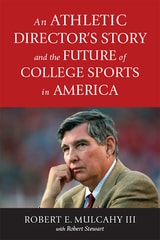
An Athletic Director’s Story and the Future of College Sports in America
Robert E. Mulcahy
Rutgers University Press, 2020
His words and actions were prominent during a nationally-reported incident involving student athletes. When the Rutgers Women’s Basketball team players were slandered by racist remarks from a popular radio talk show host, Mulcahy met it head on. With the coach and players, he set an inspiring example for defending character and values.
Though Mr. Mulcahy left Rutgers in 2009, his memoir reflects continued devotion to intercollegiate athletics and student athletes. His insights for addressing several leading issues confronting Division I sports today offer guidelines for present and future athletic directors to follow.
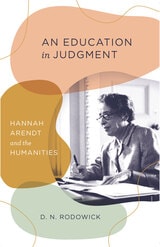
An Education in Judgment
Hannah Arendt and the HumanitiesD. N. Rodowick
University of Chicago Press, 2021
Rodowick takes after the theories of Hannah Arendt and argues that thinking is an art we practice with and for each other in our communities.
In An Education in Judgment, philosopher D. N. Rodowick makes the definitive case for a philosophical humanistic education aimed at the cultivation of a life guided by both self-reflection and interpersonal exchange. Such a life is an education in judgment, the moral capacity to draw conclusions alone and with others, and letting one’s own judgments be answerable to the potentially contrasting judgments of others. Thinking, for Rodowick, is an art we practice with and learn from each other on a daily basis.
In taking this approach, Rodowick follows the lead of Hannah Arendt, who made judgment the cornerstone of her conception of community. What is important for Rodowick, as for Arendt, is the cultivation of “free relations,” in which we allow our judgments to be affected and transformed by those of others, creating “an ever-widening fabric of intersubjective moral consideration.” That is a fragile fabric, certainly, but one that Rodowick argues is worth pursuing, caring for, and preserving. This original work thinks with and beyond Arendt about the importance of the humanities and what “the humanities” amounts to beyond the walls of the university.
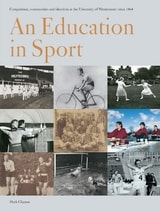
An Education in Sport
Competition, communities and identities at the University of Westminster since 1864Mark Clapson
University of Westminster Press, 2013
The story of sporting communities and individuals at the University of Westminster over 150 years is the second book to explore the institution's diverse history including its role as a pioneer of women's sports. Drawing upon the University's extensive archives this richly illustrated book celebrates its unique, ground-breaking sports heritage.
An Elusive Science
The Troubling History of Education ResearchEllen Condliffe Lagemann
University of Chicago Press, 2000
"[C]andid and incisive. . . . A stark yet enlightening look at American education."—Library Journal
"[A]n account of the search, over the past hundred or so years, to try and discover how educational research might provide reliable prescriptions for the improvement of education. Through extensive use of contemporary reference material, [Lagemann] shows that the search for ways of producing high-quality research has been, in effect, a search for secure disciplinary foundations."—Dylan William, Times Higher Education Supplement
An Illini Place
Building the University of Illinois CampusIncoronata Inserra
University of Illinois Press, 2017
An Illinois Sampler
Teaching and Research on the PrairieEdited by Mary-Ann Winkelmes and Antoinette Burton with Kyle Mays
University of Illinois Press, 2014
Aimed at alumni and prospective students interested in the university's ongoing mission, as well as current faculty and students wishing to stay up to date on the work being done around them, An Illinois Sampler showcases the best, the most ambitious, and the most effective teaching practices developed and nurtured at one of the world's premier research universities.
Contributors are Nancy Abelmann, Flavia C. D. Andrade, Jayadev Athreya, Betty Jo Barrett, Thomas J. Bassett, Hugh Bishop, Antoinette Burton, Lauren A. Denofrio-Corrales, Lizanne DeStefano, Karen Flynn, Bruce W. Fouke, Rebecca Ginsburg, Julie Jordan Gunn, Geoffrey Herman, Laurie Johnson, Kyle T. Mays, Rebecca Nettl-Fiol, Audrey Petty, Anke Pinkert, Raymond Price, Luisa-Maria Rosu, D. Fairchild Ruggles, Carol Spindel, Mark D. Steinberg, William Sullivan, Richard I. Tapping, Bradley Tober, Agniezska Tuszynska, Bryan Wilcox, Kate Williams, Mary-Ann Winkelmes, and Yi Lu.
An Unexpected Minority
White Kids in an Urban SchoolMorris, Edward
Rutgers University Press, 2005
In An Unexpected Minority, sociologist Edward Morris addresses these far-reaching questions by exploring attitudes about white identity in a Texas middle school composed predominantly of African Americans, Latinos, and Asians. Based on his ethnographic research, Morris argues that lower-income white students in urban schools do not necessarily maintain the sort of white privilege documented in other settings. Within the student body, African American students were more frequently the "cool" kids, and white students adopted elements of black culture-including dress, hairstyle, and language-to gain acceptance. Morris observes, however, that racial inequalities were not always reversed. Stereotypes that cast white students as better behaved and more academically gifted were often reinforced, even by African American teachers.
Providing a new and timely perspective to the significant role that non-whites play in the construction of attitudes about whiteness, this book takes an important step in advancing the discussion of racial inequality and its future in this country.
An Unseen Unheard Minority
Asian American Students at the University of IllinoisSharon S. Lee
Rutgers University Press, 2022
Analysis and Argument in First-Year Writing and Beyond
A Functional PerspectiveSilvia Pessoa, Thomas D. Mitchell, & Maria Pía Gómez-Laich
University of Michigan Press, 2024
The authors harness over ten years of research on analyzing, scaffolding, and assessing argumentative writing in university classrooms to offer research-based tools for first-year writing and disciplinary instructors to make their expectations explicit to students. To articulate the linguistic resources of argumentation, the authors rely on genre-based pedagogy, informed by systemic functional linguistics (SFL). By leveraging their expertise , the authors offer practical tools for scaffolding writing in key genres across broader fields, such as writing studies, business administration, and information systems.
Each chapter focuses on a single tool, explaining it with mentor texts, sample texts, and visualizations, and provides guided classroom activities that teachers can adapt to fit their own contexts. With these tools, instructors and students will better understand how to:
- distinguish between descriptive and argumentative writing;
- write argumentative claims;
- apply an analytical framework in a written text;
- maintain a consistent position in an argumentative text while incorporating outside sources;
- argue for one position in favor of viable alternatives.
Analytic Syntax
Otto Jespersen
University of Chicago Press, 1984
Analyzing Syntax & Semantics Textbook
Virginia Heidinger
Gallaudet University Press, 1984
Analyzing Syntax and Semantics features the Personalized System of Instruction (PSI) approach. This method uses student performance objectives, practice, feedback, individualization of pace, and repeatable testing as instructional strategies.
Analyzing Syntax & Semantics Workbook
Virginia Heidinger
Gallaudet University Press, 1984
Analyzing Syntax and Semantics features the Personalized System of Instruction (PSI) approach. This method uses student performance objectives, practice, feedback, individualization of pace, and repeatable testing as instructional strategies.
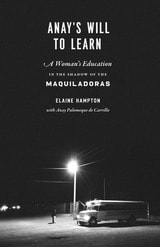
Anay's Will to Learn
A Woman's Education in the Shadow of the MaquiladorasBy Elaine Hampton with Anay Palomeque de Carrillo
University of Texas Press, 2013
The opening of free trade agreements in the 1980s caused major economic changes in Mexico and the United States. These economic activities spawned dramatic social changes in Mexican society. One young Mexican woman, Anay Palomeque de Carrillo, rode the tumultuous wave of these economic activities from her rural home in tropical southern Mexico to the factories in the harsh desert lands of Ciudad Juárez during the early years of the city’s notorious violence.
During her years as an education professor at the University of Texas at El Paso, author Elaine Hampton researched Mexican education in border factory (maquiladora) communities. On one trip across the border into Ciudad Juárez, she met Anay, who became her guide in uncovering the complexities of a factory laborer’s experiences in these turbulent times.
Hampton here provides an exploration of education in an era of dramatic social and economic upheaval in rural and urban Mexico. This critical ethnographic case study presents Anay’s experiences in a series of narrative essays addressing the economic, social, and political context of her world. This young Mexican woman leads us through Ciudad Juárez in its most violent years, into women’s experiences in the factories, around family and religious commitments as well as personal illness, and on to her achievement of an education through perseverance and creativity.
And Sadly Teach
Teacher Education and Professionalization in American CultureJurgen Herbst
University of Wisconsin Press, 1991
To lend weight to his charge that the public school teacher has been betrayed and gravity to his indictment of the educational establishment for that betrayal, Jurgen Herbst goes back to the beginnings of teacher education in America in the 1830s and traces its evolution up to the 1920s, by which time the essential damage had been done.
Initially, attempts were made to upgrade public school teaching to a genuine profession, but that ideal was gradually abandoned. In its stead, with the advent of newly emerging graduate schools of education in the early decades of the twentieth century, came the so-called professionalization of public education. At the expense of the training of elementary school teachers (mostly women), teacher educators shifted their attention to the turning out of educational "specialists" (mostly men)—administrators, faculty members at normal schools and teachers colleges, adult education teachers, and educational researchers.
Ultimately a history of the neglect of the American public school teacher, And Sadly Teach ends with a plea and a message that ring loud and clear. The plea: that the current reform proposals for American teacher education—the Carnegie and the Holmes reports—be heeded. The message: that the key to successful school reform lies in educating teacher’s true professionals and in acknowledging them as such in their classrooms.
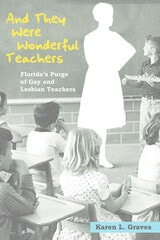
And They Were Wonderful Teachers
Florida's Purge of Gay and Lesbian TeachersKaren L. Graves
University of Illinois Press, 2008
Karen L. Graves details how teachers were targeted, interrogated, and stripped of their professional credentials, and she examines the extent to which these teachers resisted the invasion of their personal lives. She contrasts the experience of three groups--civil rights activists, gay and lesbian teachers, and University of South Florida personnel--called before the committee and looks at the range of response and resistance to the investigations. Based on archival research conducted on a recently opened series of Investigation Committee records in the State Archives of Florida, this work highlights the importance of sexuality in American and education history and argues that Florida's attempt to govern sexuality in schools implies that educators are distinctly positioned to transform dominant ideology in American society.

And Who Will Witness Us?
A Histofuturist Account of Black Literacies on the Rust BeltS. R. Toliver
University of Chicago Press, 2027
An imaginative exploration of the historical narratives that shape Black life today, showing how the past is never truly left behind, but is always alive in the present, shaping the future.
Most people have probably never heard of New Castle, a Rust Belt city in western Pennsylvania. Education scholar S. R. Toliver describes it as “a stop on the road to elsewhere. But as a former resident, New Castle remains the endpoint of my journey, the highway exit I take, the place I go when I say I’m headed home.” Combining an autoethnography of growing up and being educated in New Castle with a remarkable study of Histofuturism, Toliver’s And Who Will Witness Us? reveals the historical erasure of Black people and their literary practices.
First, Toliver turns to the past, presenting a multifaceted portrayal of Black life in New Castle. She draws from personal insights, archival data, and oral histories to uncover historical disinvestment and the violence of anti-Blackness and anti-Indigeneity sown into the soil and soul of a city. At the same time, she highlights how, despite systemic neglect, Black people have used their stories to author themselves into existence, creating counter histories that reflect the richness and depth of Black lives. Toliver explains how these acts of creation, in turn, shape the future, allowing Black people to resist imposed narratives and envision possibilities beyond the limits of traditional ways of thinking, knowing, and doing.
Innovative in both form and style, And Who Will Witness Us? shares how research opens space for Black people to relearn themselves and their communities. It is a reckoning with what it means to call a place, a city, a people, home.

András Visky's Barrack Dramaturgy
Memories of the BodyEdited by Jozefina Komporaly
Intellect Books, 2017
The book includes the first English-language anthology of Visky’s best known plays—Juliet, I Killed My Mother, and Porn—as well as critical analysis and an exploration of Visky’s “Barrack Dramaturgy,” a dramaturgical theory in which he considers the theater as a space for exploring feelings of cultural and personal captivity. Inspired by personal experience of the oppressive communist regime in Romania, Visky’s work explores the themes of gender, justice, and trauma, encouraging shared moments of remembrance and collective memory. This collection makes use of scripts and director’s notes, as well as interviews with creative teams behind the productions, to reveal a holistic, insider’s view of Visky’s artistic vision. Scholars and practitioners alike will benefit from this rare, English-language collection of Visky’s work and dramaturgy.
Anthropologists Wanted
Why Organizations Need AnthropologyLaurens Bakker
Amsterdam University Press, 2021
Anthropologists Wanted includes portraits of anthropologists and their diverse occupations, interviews with employers and academic counsellors' answers to frequently asked questions about degree programmes, anthropological skills, and tips to help you land that job.
Anti-Public
How Elite Discourse Harms Public Education (and What We Can Do About It)Ronald E. Chennault
Rutgers University Press, 2026
Consider this: Restrictions placed by state legislatures on what schools can teach about America's history of conquest and enslavement. Broad bans enacted by local school boards that remove meaningful books from school curricula and the shelves of libraries. Court rulings that muddy the distinction between what counts as private versus public expressions of religion in public school settings and that open the door to publicly funded religious education. All of these recent actions chip away at the foundation of public education in America. But how did we get here? Decades of elite public discourse (talk and text) about public education helped to bring us to this point. Much of this conversation is anti-public. It includes statements by major elected officials, education advocacy organizations, journalists in mainstream press outlets, and other influential actors. Chennault casts light on the cultural and political processes at work and challenges the unquestioned assumptions beneath the surface of this discourse, with the hopes that we can transform and strengthen public education.
Anxious Intellects
Academic Professionals, Public Intellectuals, and Enlightenment ValuesJohn Michael
Duke University Press, 2000
As part of his investigation of intellectuals’ self-conceptions and their roles in society, Michael concentrates on several well-known contemporary African American intellectuals, including Henry Louis Gates Jr. and Cornel West. To illuminate public debates over pedagogy and the role of university, he turns to the work of Todd Gitlin, Michael Bérubé, and Allan Bloom. Stanley Fish’s pragmatic tome, Doing What Comes Naturally, along with a juxtaposition of Fredric Jameson and Samuel Huntington’s work, proves fertile ground for Michael’s argument that democratic politics without intellectuals is not possible. In the second half of Anxious Intellects, Michael relies on three popular conceptions of the intellectual—as critic, scientist, and professional—to discuss the work of scholars Constance Penley, Henry Jenkins, the celebrated physicist Stephen Hawking, and others, insisting that ambivalence, anxiety, projection, identification, hybridity, and various forms of psychosocial complexity constitute the real meaning of Enlightenment intellectuality. As a new and refreshing contribution to the recently emergent culture and science wars, Michael’s take on contemporary intellectuals and their place in society will enliven and redirect these ongoing debates.
Appalachia in the Classroom
Teaching the RegionTheresa L. Burriss
Ohio University Press, 2013
Appalachia in the Classroom contributes to the twenty-first century dialogue about Appalachia by offering topics and teaching strategies that represent the diversity found within the region. Appalachia is a distinctive region with various cultural characteristics that can’t be essentialized or summed up by a single text.
Appalachia in the Classroom offers chapters on teaching Appalachian poetry and fiction as well as discussions of nonfiction, films, and folklore. Educators will find teaching strategies that they can readily implement in their own classrooms; they’ll also be inspired to employ creative ways of teaching marginalized voices and to bring those voices to the fore. In the growing national movement toward place-based education, Appalachia in the Classroom offers a critical resource and model for engaging place in various disciplines and at several different levels in a thoughtful and inspiring way.
Contributors: Emily Satterwhite, Elizabeth S. D. Engelhardt, John C. Inscoe, Erica Abrams Locklear, Jeff Mann, Linda Tate, Tina L. Hanlon, Patricia M. Gantt, Ricky L. Cox, Felicia Mitchell, R. Parks Lanier, Jr., Theresa L. Burriss, Grace Toney Edwards, and Robert M. West.
Applied Drama
A Facilitator’s Handbook for Working in CommunityMonica Prendergast and Juliana Saxton
Intellect Books, 2013

Applied Motor Learning in Physical Education and Sports
Jin Wang
FiT Publishing, 2014
The importance of the study of the scientific principles of learning human motor skills is evident in that motor learning is a required core course as set forth by the NASPE standards. Applied Motor Learning in Physical Education and Sports goes further than simply providing valuable scientific theories. Authors Jin Wang and Shihui Chen transform those theories into practice in an understandable approach by incorporating case studies and practitioners’ implications, making this a comprehensive authority on the topic of motor learning.
Written for undergraduate students, PE teachers, coaches, athletes and practitioners, each chapter includes:
-
an introduction to the imperative theoretical models of motor learning
-
case studies and life examples that illustrate theoretical concepts that can be effectively applied to practical teaching, coaching, or motor learning settings
-
project topics that integrate theory with practice
-
clear illustrations, diagrams, and key components of concepts depicting the main ideas
Applied Theatre
International Case Studies and Challenges for Practice - Second EditionEdited by Monica Prendergast and Juliana Saxton
Intellect Books, 2016
Editors Monica Prendergast and Juliana Saxton have updated the book to reflect shifts in practice over the last few years in the world of applied theater. With their background in drama education and pedagogy, the contributors offer introductory chapters and dozens of case studies on applied theater projects around the globe. This new edition of Applied Theatre will encourage students and practitioners to acquire a deeper, more concrete understanding of the field and its best practice.
Aquamarine Blue 5
Personal Stories of College Students with AutismDawn Prince-Hughes
Ohio University Press, 2002
Rated Outstanding by the American Association of School Libraries
This is the first book to be written by autistic college students about the challenges they face. Aquamarine Blue 5 details the struggle of these highly sensitive students and shows that there are gifts specific to autistic students that enrich the university system, scholarship, and the world as a whole.
Dawn Prince-Hughes presents an array of writings by students who have been diagnosed with Asperger’s Syndrome or High-Functioning Autism, showing their unique ways of looking at and solving problems. In their own words, they portray how their divergent thinking skills could be put to great use if they were given an opportunity. Many such students never get the chance because the same sensitivity that gives them these insights makes the flicker of fluorescent lights and the sound of chalk on the board unbearable For simple—and easily remedied—reasons, we lose these students, who are as gifted as they are challenged.
Aquamarine Blue 5 is a showcase of the strength and resilient character of individuals with Asperger’s Syndrome. It will be an invaluable resource for those touched by this syndrome, their friends and families, and school administrators.
Are You Sure About That?
Discerning Fact from FictionKaren A. Cerulo
Rutgers University Press, 2027
Phone in hand, TV on, we wake up and fall asleep to endless information. There’s no escape—we are drowning in a sea of breaking news, notifications, and popular beliefs and claims. Every day, we encounter hundreds of posts and podcasts on politics, celebrities, or current events. People share links to “expert” recommendations on Instagram or Reddit. YouTube and TikTok bring us those who want to instruct us on the realities of the world or pass on longstanding conventional wisdom, all in the hopes of influencing our decisions and actions.
The information overload of the constant news and information cycle is exhausting and extremely frustrating. You may ask: Just what or whom should we believe? Are You Sure About That? Discerning Fact from Fiction helps readers navigate the perilous informational terrain of contemporary life. We provide a game plan of strategies and guidance for easily and reliably assessing the accuracy of any claim, helping readers to cut through the noise and adjust what they know.
Arguments for Learning
An Intellectual History of the College of Education at the University of IllinoisBill Cope and Walter Feinberg
University of Illinois Press, 2025
Cope and Feinberg draw on conversations, narratives, and archival research that reveal how different generations explored their role in defining and carrying out the College’s multifaceted mission. Their account raises critical questions about the character of learning, the aims of teaching, and the nature of teaching as a profession. At the same time, the authors address issues that range from the role of schools in fostering individual and collective identity to the introduction of computer-mediated and online learning. Cope and Feinberg examine changes in self-understanding about fundamental ideas and chart how the College evolved from its original narrow mission of training children’s schoolteachers to embracing global perspectives.
A wide-ranging portrait of an institution, Arguments for Learning uses the School of Education to tell the stories of thinkers dedicated to the idea that education can change the world for the better.

Aristocratic Inclusion
Hiring the Academic Eliteprabhdeep singh kehal
Duke University Press, 2027
Arkansas
A Concise HistoryJeannie M. Whayne
University of Arkansas Press, 2019
Distilled from Arkansas: A Narrative History, the definitive work on the subject since its original publication in 2002, Arkansas: A Concise History is a succinct one-volume history of the state from the prehistory period to the present. Featuring four historians, each bringing his or her expertise to a range of topics, this volume introduces readers to the major issues that have confronted the state and traces the evolution of those issues across time.
After a brief review of Arkansas’s natural history, readers will learn about the state’s native populations before exploring the colonial and plantation eras, early statehood, Arkansas’s entry into and role in the Civil War, and significant moments in national and global history, including Reconstruction, the Gilded Age, the Progressive Era, the Elaine race massacre, the Great Depression, both world wars, and the Civil Rights Movement. Linking these events together, Arkansas: A Concise History offers both an understanding of the state’s history and a perspective on that history’s implications for the political, economic, and social realities of today.
Arkansas
A Narrative HistoryJeannie M. Whayne
University of Arkansas Press, 2013
Arkansas: A Narrative History is a comprehensive history of the state that has been invaluable to students and the general public since its original publication. Four distinguished scholars cover prehistoric Arkansas, the colonial period, and the nineteenth and twentieth centuries and incorporate the newest historiography to bring the book up to date for 2012.
A new chapter on Arkansas geography, new material on the civil rights movement and the struggle over integration, and an examination of the state’s transition from a colonial economic model to participation in the global political economy are included. Maps are also dramatically enhanced, and supplemental teaching materials are available.
“No less than the first edition, this revision of Arkansas: A Narrative History is a compelling introduction for those who know little about the state and an insightful survey for others who wish to enrich their acquaintance with the Arkansas past.”
—Ben Johnson, from the Foreword
Arousing Sense
Recipes for Workshopping Sensory ExperienceTomie Hahn
University of Illinois Press, 2021
User-friendly and practical, Arousing Sense is a guide to how teaching through sensory experience can lead to positive, transformative impact in the classroom and everyday life.

Art Criticism and Education
Theodore F. Wolff and George Geahigan
University of Illinois Press, 1997
series. In the first section, Theodore Wolff deals with the role of the
art critic in education. He gives a practical overview of how the principles
and practices of art criticism can be applied to the teaching of art (k-12).
In the second, George Geahigan begins with an historical overview of art
criticism in education literature and provides a conceptualized approach
to critical inquiry, asserting that the most effective form of that inquiry
is the pursuit of meaning in works of art. A rare combination of the practical
and theoretical, Art Criticism and Education will be an invaluable
aid to anyone involved in art education.
A volume in the series Disciplines in Art Education: Contexts of Understanding,
edited by Ralph Smith
Supported by the Getty Foundation
Art Education
A CRITICAL NECESSITYAlbert William Levi and Ralph A. Smith
University of Illinois Press, 1991
philosophical rationale for the idea of discipline-based art education.
Levi and Smith discuss topics ranging over both the public and private
aspects of art, the disciplines of artistic creation, art history, art
criticism, and aesthetics, and curriculum proposals featuring five phases
of aesthetic learning.
While there is no consensus on how the various components of aesthetic
learning should be presented in order to accomplish the goals of discipline-based
art education, the authors point out that progress toward those goals
will require that those who design art education programs bring an understanding
of the four disciplines to their work. The introductory volume of a five-volume
series, this book will appeal to elementary and secondary art teachers,
those who prepare teachers at the college level, and museum educators.
Art History and Education
Stephen Addiss and Mary Erickson
University of Illinois Press, 1993
Guided by Stephen Addiss's grounding in art history scholarship and Mary Erickson's expertise in art education theory and practice, this volume approaches the issue of teaching art history from theoretical and philosophical as well as practical and political standpoints. In the first section, Addiss raises issues about the discipline of art history. In the second, Erickson examines proposals about how art history can be incorporated into the general education of children and offers some curriculum guides and lesson plans for art educators.
Art Making and Education
Maurice Brown and Diana Korzenik
University of Illinois Press, 1993
What is involved in "making art"? In what ways have Americans
introduced art making to students? In Art Making and Education, a
practicing artist and a historian of art education discuss from their
particular perspectives the production of studio and classroom art. Among
those to whom this book will appeal are prospective teachers, school administrators,
university-level art educators, and readers interested in the theory of
discipline-based art education.
"The sources are excellent. The bibliographical material is a must
for any candidate wanting to teach the visual arts and certainly for any
student hoping to become an artist."
-- William Klenk, University of Rhode Island
Art, Sustainability and Learning Communities
Call to ActionEdited by Raphael Vella and Victoria Pavlou
Intellect Books, 2024
The main aim of Art, Sustainability and Learning Communities is to show how shared spaces for exchange in the fields of art education and continuous professional development can reflect, inspire, and integrate sustainability principles that are becoming crucial in today’s world. The authors propose the idea that coordinated action can lead to a more sustainable future by promoting a sense of community, lifelong learning, and confidence in the possibility of changing current conditions.
Its three parts combine expertise in visual arts education, education for sustainable development, contemporary art practice, and sustainability activism. While Part I focuses on literature in the field and the interrelation of different disciplines, Part II provides concrete examples of professional learning communities and pedagogies that can be used to enrich the field of art education. Finally, Part III presents brief case studies illustrating international projects by contemporary artists, curators, environmentalists, and others, providing educators with several inspirational models of concrete and creative action.
ArtBreak
A Creative Guide to Joyful and Productive ClassroomsKatherine Ziff
Ohio University Press, 2016
Play is the central, universally significant activity of childhood. Self-directed play in which adults have a supporting rather than directing role is critical to the development and well-being of children. Yet as children have their days and nights increasingly scripted and planned for them, opportunities for play have disappeared over the last half century, especially in schools.
ArtBreak’s innovation lies in its creative framework. Former school counselor, current professor of counseling, and practicing artist Katherine Ziff developed and tested the program over five years, integrating theory and practice from art therapy, counseling, and child-centered education. The result is a choice-based, guided play experience based on the developmental and restorative possibilities of art making.
A detailed how-to guide, this book is the flexible and accessible toolbox that teachers, parents, and counselors need to facilitate relaxing, art-based play that allows children to freely explore, plan, and pursue their own interests with adult support. Easy to implement, ArtBreak can be added to the regular routines of classroom, home, therapy office, or other community setting at whatever scale suits space, time, and budget. No art training is required, only a willingness to embark on a play journey with children.
Artifact
Encounters with the Campus Shooting ArchivesJulija Šukys
West Virginia University Press, 2025
2026 IPPY Awards Bronze Medal Winner, Current Events - Social Issues/Humanitarian
2026 PROSE Award Finalist, Humanities: Literature
Artifact is about the stories we tell ourselves after mass shootings. Each college campus shooting leaves a record: archival collections, monuments to the dead, government-led inquiries, internal university investigations, and lawsuits. Artifact: Encounters with the Campus Shooting Archives seeks to understand university and college campus shootings that involve students and faculty of those institutions. The book examines the aftermaths of such attacks by moving between university archives, memorials to victims, conversations with survivors, and beyond.
Julija Šukys examines a series of five North American university and college campus shootings between 1966 and 2015: the École Polytechnique in Montreal, Concordia University in Montreal, Virginia Tech, University of Alabama–Huntsville, and Umpqua Community College in Roseburg, Oregon. These attacks involved students and faculty as both victims and perpetrators—that is, all the shooters were either faculty members or (in one case, would-be) students of the institution where the killings took place.
Šukys arrives at each site long after the killings have taken place: by now, the teddy bears, flowers, and crosses have been cleared away. Prying journalists are long gone. She sorts through myriad objects left at makeshift memorial sites. She talks for hours with a professor who survived an attack only because her colleague’s gun jammed as it was pointed at her head. She wanders and documents the reconfigured buildings made unrecognizable after the horrors that occurred within them. She reads tedious court transcripts, officious government-commissioned reports, and a troubling memoir written by a shooter’s mother and sifts through the mathematics papers that one campus shooter publishes from his prison cell.
Artifact weighs what it means to live in a place where students and their teachers are gunned down on a seemingly regular basis. It asks how we can continue to learn, teach, and live when nothing changes in response to these deaths. It attempts to speak into silence, to look at the pain of those who have come through trauma, and to meet their gazes without platitudes or triumphalism. The result is a searching book about care, memory, forgiveness, and survival.
Artificial Intelligence, Real Teaching
A Guide to AI in ELTJoshua M. Paiz, Rachel Toncelli, and Ilka Kostka
University of Michigan Press, 2025
Artist Scholar
Reflections on Writing and ResearchG. James Daichendt
Intellect Books, 2012
Artist Scholar: Reflections on Writing and Research is part history, introduction, and discussion for artists and designers entering, graduating, and employed by the contemporary art academy in the United States. The evolution of art education in the university continues to expand in the 21st century as the variables of craft, skill, technique, theory, history and criticism shift and expand as the perspective of arts-based research is introduced into this professionalized environment. Given this context: what can M.F.A. students do to improve their understanding of writing and research without sacrificing their commitment to their studio art process?
Through a series of essays, the text argues for better writing at the M.F.A. level with the purpose of becoming better artists. By contextualizing art practice in the university and providing a foundation for future artist scholarship, it serves as an invitation to artist scholars to push their work further and develop the confidence to situate their art in the university context.
Artistic Research in the Future Academy
Danny Butt
Intellect Books, 2017
Artists, Intellectuals, and World War II
The Pontigny Encounters at Mount Holyoke College, 1942-1944Christopher E. G. Benfey
University of Massachusetts Press, 2006
Sixty years ago, at the height of World War II, an extraordinary series of gatherings took place at Mount Holyoke College in western Massachusetts. During the summers of 1942–1944, leading European figures in the arts and sciences met at the college with their American counterparts for urgent conversations about the future of human civilization in a precarious world.
Two Sorbonne professors, the distinguished medievalist Gustave Cohen and the existentialist philosopher Jean Wahl, organized these “Pontigny” sessions, named after an abbey in Burgundy where similar symposia had been held in the decades before the war. Among the participants—many of whom were Jewish or had Jewish backgrounds—were the philosophers Hannah Arendt and Rachel Bespaloff, the poets Marianne Moore and Wallace Stevens, the anthropologist Claude Lévi-Strauss and the linguist Roman Jakobson, and the painters Marc Chagall and Robert Motherwell.
In this collection of original essays, Stanley Cavell and Jacques Derrida lead an international group of scholars—including Jed Perl, Mary Ann Caws, Jeffrey Mehlman, and Elisabeth Young-Bruehl—in assessing the lasting impact and contemporary significance of Pontigny-en- Amérique. Rachel Bespaloff, a tragic figure who wrote a major work on the Iliad, is restored to her rightful place beside Arendt and Simone Weil. Anyone interested in the “intellectual resistance” of Francophone intellectuals and artists, and the inspiring support from such American figures as Stevens and Moore, will want to read this pioneering work of scholarship and historical re-creation.
Arts Education in Action
Collaborative Pedagogies for Social JusticeEdited by Sarah Travis, Jody Stokes-Casey, and Seoyeon Kim
University of Illinois Press, 2020
This edition of Common Threads investigates the intersection of social justice work with education in the visual arts, music, theatre, dance, and literature. Weaving together resources from a range of University of Illinois Press journals, the editors offer articles on the scholarly inquiry, theory, and practice of social justice arts education. Selections from the past three decades reflect the synergy of the diverse scholars, educators, and artists actively engaged in such projects. Together, the contributors bring awareness to the importance of critically reflective and inclusive pedagogy in arts educational contexts. They also provide pedagogical theory and practical tools for building a social justice orientation through the arts.
Contributors: Joni Boyd Acuff, Seema Bahl, Elizabeth Delacruz, Elizabeth Garber, Elizabeth Gould, Kirstin Hotelling, Tuulikki Laes, Monica Prendergast, Elizabeth Saccá, Alexandra Schulteis, Amritjit Singh, and Stephanie Springgay
Arts Integration in Education
Teachers and Teaching Artists as Agents of ChangeEdited by Gail Humphries Mardirosian and Yvonne Pelletier Lewis
Intellect Books, 2018
Asian American X
An Intersection of Twenty-First Century Asian American VoicesArar Han and John Y. Hsu, Editors
University of Michigan Press, 2004
-Eric Liu, author of The Accidental Asian
"There's fury, dignity, and self-awareness in these essays. I found the voices to be energetic and the ideas exciting."
-Diana Son, playwright (Stop Kiss) and co-producer (Law & Order: Criminal Intent)
This refreshing and timely collection of coming-of-age essays, edited and written by young Asian Americans, powerfully captures the joys and struggles of their evolving identities as one of the fastest-growing groups in the nation and poignantly depicts the many oft-conflicting ties they feel to both American and Asian cultures. The essays also highlight the vast cultural diversity within the category of Asian American, yet ultimately reveal how these young people are truly American in their ideals and dreams.
Asian American X is more than a book on identity; it is required reading both for young Asian Americans who seek to understand themselves and their social group, and for all who are interested in keeping abreast of the changing American social terrain.
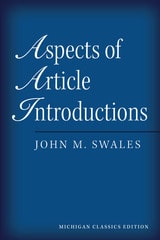
Aspects of Article Introductions, Michigan Classics Ed.
John M. Swales
University of Michigan Press, 2011
Aspects of Article Introductions has bee reissued to make it more easily available than it has ever been, particularly for the use of university libraries and for younger and newer practitioners and researchers in the rapidly expanding and increasingly global field of EAP.
The original Aspects of Article Introductions appeared in fall 1981 as a ring-bound 90-page monograph. The “publisher” was the Language Studies Unit at the University of Aston in Birmingham. Although essentially an “underground” work, it has remained a relevant part of the short intellectual history of English for Academic Purposes, particularly as genre-based or genre-driven approaches to EAP research and pedagogical practice have become more popular. Its longevity is also a testament to the genre analysis work of John Swales, but in addition, the research article has become the most influential genre in most areas of scholarship, and introductions are at least supposed to be read first and to be designed in such a way as to attract as large readership as possible.
“If I were asked to list the most influential texts in applied linguistics over the last 30 years, John Swales' Aspects of Article Introductions would be in the top three or four. This was a seminal work which not only presented a novel way of analysing texts and a commentary on academic discourse, but one which helped to establish a foundation for the massive interest we see today in describing the structure and features of academic articles. This is not just a text which offers us a glimpse of an intellectual history, but it remains full of fascinating insights and observations about texts and the workings of academic discourse. While the ideas may have evolved and the genre it describes moved on, both the style of writing and the methodology it describes are as fresh and as revealing as anything written on the topic since.” ---Ken Hyland, Hong Kong University