Results by title
4030 books match the query 'Language Arts & Disciplines' and 351 start with a

America's War
Talking about the Civil War and Emancipation on Their 150th AnniversariesAmerican Library Association, 2012
American Catastrophe
Fundamentalism, Climate Change, Gun Rights, and the Rhetoric of Donald J. TrumpLuke Winslow
The Ohio State University Press, 2020
Luke Winslow introduces the rhetorical homology as a critical tool useful for understanding how catastrophic appeals unite Americans across disparate religious, ecological, cultural, and political spheres. More specifically, the four case study chapters examining Christian fundamentalism, anti-environmentalism, gun rights messaging, and the administration of Donald Trump reveal a consistent formal pattern oriented toward catastrophe. In teasing out this orientation toward catastrophe, Winslow offers a fresh, provocative, and insightful contribution to our most pressing social challenges.
American Magnitude
Hemispheric Vision and Public Feeling in the United StatesChrista J. Olson
The Ohio State University Press, 2021
Winner, 2023 Rhetoric Society of America Book Award
Winner, 2022 Marie Hochmuth Nichols Award from the National Communication Association
At a moment in US politics when racially motivated nationalism, shifting relations with Latin America, and anxiety over national futures intertwine, understanding the long history of American preoccupation with magnitude and how it underpins national identity is vitally important. In American Magnitude, Christa J. Olson tracks the visual history of US appeals to grandeur, import, and consequence (megethos), focusing on images that use the wider Americas to establish US character. Her sources—including lithographs from the US-Mexican War, pre–Civil War paintings of the Andes, photo essays of Machu Picchu, and WWII-era films promoting hemispheric unity—span from 1845 to 1950 but resonate into the present.
Olson demonstrates how those crafting the appeals that feed the US national imaginary—artists, scientists, journalists, diplomats, and others—have invited US audiences to view Latin America as a foil for the greatness of their own nation and encouraged white US publics in particular to see themselves as especially American among Americans. She reveals how each instance of visual rhetoric relies upon the eyes of others to instantiate its magnitude—and falters as some viewers look askance instead. The result is the possibility of a post-magnitude United States: neither great nor failed, but modest, partial, and imperfect.
American Photojournalism
Motivations and MeaningsClaude Cookman
Northwestern University Press, 2009
Photojournalism has long been the medium of urgency and social change. It has profoundly affected American public opinion, going back at least to Mathew Brady's images from the Civil War. In American Photojournalism: Motivations and Meanings, Claude Cookman explores the history and future of the medium through the work of such exemplary photojournalists as Jacob Riis, Dorothea Lange, Weegee, Margaret Bourke-White, W. Eugene Smith, Gordon Parks, Rich Clarkson, and Carol Guzy, among others. The traditional approach to studying American photojournalism explains the what and who of photojournalism--what events and developments occurred, what notable images were taken, and who took them. Without neglecting these concerns, American Photojournalism emphasizes the why. Cookman argues convincingly that contemporary photojournalism is grounded in the desire to witness and record history, and the embrace of a universal humanism. Unafraid to engage questions of truth and intentionality, American Photojournalism will only become more relevant as the medium evolves.
American Regional Dialects
A Word GeographyCraig M. Carver
University of Michigan Press, 1987
American Sign Language Green Books, A Student Text Units 1-9
Charlotte Baker-Shenk
Gallaudet University Press, 1980
- American Sign Language Green Books, A Student Text, Units 1-9
- American Sign Language Green Books, A Student Text, Units 10-18
- American Sign Language Green Books, A Student Text, Units 19-27
American Sign Language Green Books, A Student Text Units 10-18
Charlotte Baker-Shenk
Gallaudet University Press, 1981
The three Student Texts are designed to help students acquire conversational ability in ASL and an awareness and appreciation of deaf people. Each text contains nine instructional units that present major grammatical features of ASL through dialogues, introduce students to the intricate features of ASL structure, discuss individual grammatical features, and include sample drills.
- American Sign Language Green Books, A Student Text, Units 1-9
- American Sign Language Green Books, A Student Text, Units 10-18
- American Sign Language Green Books, A Student Text, Units 19-27
American Sign Language Green Books, A Student Text Units 19-27
Charlotte Baker-Shenk
Gallaudet University Press, 1981
The three Student Texts are designed to help students acquire conversational ability in ASL and an awareness and appreciation of deaf people. Each text contains nine instructional units that present major grammatical features of ASL through dialogues, introduce students to the intricate features of ASL structure, discuss individual grammatical features, and include sample drills.
- American Sign Language Green Books, A Student Text, Units 1-9
- American Sign Language Green Books, A Student Text, Units 10-18
- American Sign Language Green Books, A Student Text, Units 19-27
American Sign Language Green Books, A Teacher's Resource Text on Curriculum, Methods, and Evaluation
Charlotte Baker-Shenk
Gallaudet University Press, 1980
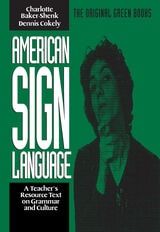
American Sign Language Green Books, A Teacher's Resource Text on Grammar and Culture
Charlotte Baker-Shenk
Gallaudet University Press, 1991
American Sign Language and Early Literacy
A Model Parent-Child ProgramKristin Snoddon
Gallaudet University Press, 2012
The usual definition of the term “literacy” generally corresponds with mastering the reading and writing of a spoken language. This narrow scope often engenders unsubstantiated claims that print literacy alone leads to, among other so-called higher-order thinking skills, logical and rational thinking and the abstract use of language. Thus, the importance of literacy for deaf children in American Sign Language (ASL) is marginalized, asserts author Kristin Snoddon in her new book American Sign Language and Early Literacy: A Model Parent-Child Program. As a contrast, Snoddon describes conducting an ethnographic, action study of the ASL Parent-Child Mother Goose program, provided by a Deaf service agency in Ontario, Canada to teach ASL literacy to deaf children.
According to current scholarship, literacy is achieved through primary discourse shared with parents and other intimates, which establishes a child’s initial sense of identity, culture, and vernacular language. Secondary discourse derives from outside agents and interaction, such as expanding an individual’s literacy to other languages. Snoddon writes that the focus of the ASL Parent-Child Mother Goose program is on teaching ASL through rhymes and stories and some facets of the culture of Deaf ASL users. This focus enabled hearing parents to impart first-language acquisition and socialization to their deaf children in a more natural primary discourse as if the parents were Deaf themselves. At the same time, hearing parents experience secondary discourses through their exposure to ASL and Deaf culture.
Snoddon also comments on current infant hearing screening and early intervention and the gaps in these services. She discusses gatekeeper individuals and institutions that restrict access to ASL for young Deaf children and their families. Finally, she reports on public resources for supporting ASL literacy and the implications of her findings regarding the benefits of early ASL literacy programming for Deaf children and their families.
Amid the Fall, Dreaming of Eden
Du Bois, King, Malcolm X, and Emancipatory CompositionBradford T. Stull
Southern Illinois University Press, 1999
Whom, or what, does composition—defined here as an intentional process of study, either oral or written—serve? Bradford T. Stull contends that composition would do well to articulate, in theory and practice, what could be called "emancipatory composition." He argues that emancipatory composition is radically theopolitical: it roots itself in the foundational theological and political language of the American experience while it subverts this language in order to emancipate the oppressed and, thereby, the oppressors.
To articulate this vision, Stull looks to those who compose from an oppressed place, finding in the works of W. E. B. Du Bois, Martin Luther King Jr., and Malcolm X radical theopolitical practices that can serve as a model for emancipatory composition. While Stull acknowledges that there are many sites of oppression, he focuses on what Du Bois has called the problem of the twentieth century: the color line, positing that the unique and foundational nature of the color line provides a fecund place in which, from which, a theory and practice of emancipatory composition might be elucidated.
By focusing on four key theopolitical tropes—The Fall, The Orient, Africa, and Eden—that inform the work of Du Bois, King, and Malcolm X, Stull discovers the ways in which these civil rights leaders root themselves in the vocabulary of the American experience in order to subvert it so that they might promote emancipation for African Americans, and thus all Americans.
In drawing on the work of Paulo Freire, Kenneth Burke, Edward Said, Christopher Miller, Ernst Bloch, and others, Stull also locates this study within the larger cultural context. By reading Du Bois, King, and Malcolm X together in a way that they have never before been read, Stull presents a new vision of composition practice to the African American studies community and a reading of African American emancipatory composition to the rhetoric and composition community, thus extending the question of emancipatory composition into new territory.
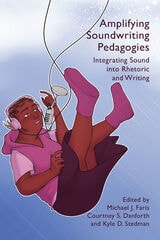
Amplifying Soundwriting Pedagogies
Integrating Sound into Rhetoric and WritingMichael J. Faris
University Press of Colorado, 2022
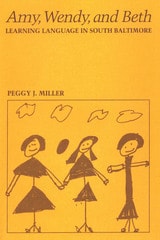
Amy, Wendy, and Beth
Learning Language in South BaltimoreBy Peggy J. Miller
University of Texas Press, 1982
Amy, Wendy, and Beth, the 1980 recipient of the New York Academy of Sciences Edward Sapir Award, is a lively in-depth study of how three young children from an urban working-class community learned language under everyday conditions. It is a sensitive portrayal of the children and their families and offers an innovative approach to the study of language development and social class.
A major conclusion of the study is that the linguistic abilities of working-class children are consistent with previous cross-cultural accounts of the development of communicational skills and, as such, lend no support to past claims that children from the lower classes are linguistically deprived. Instead, Amy, Wendy, and Beth emerge as able and enthusiastic language learners; their families, as caring and competent partners in the language socialization process.
Sound scholarship and original findings about a hitherto neglected population of children lend special value to this work not only for scholars in psychology, linguistics, and anthropology, but for educators and policymakers as well.

An Acoustic Analysis of Vowel Variation in New World English, Volume 76
Erik R. Thomas, ed.
Duke University Press, 0
While the work opens with an introduction on the methods and aims of the study, the following chapter immediately moves to a detailed discussion of distinctive vowel sounds called phonemes, characterizing each variant of sound listed within the cited reference literature. The remaining chapters provide explanatory descriptions of the variants of each dialect, reviewing past research specific to that dialect. While the United States English, Canadian English, and Caribbean varieties are featured in various chapters throughout the work, individual chapters are devoted to African-American, Mexican-American, and Native American English, emphasizing not only ethnic variation but delving into the historical development of each dialect.
This monograph is an essential reference on vowel variation for all sociolinguists, phoneticians, phonologists, creolists, and historical linguists.
An Essay on Contraction
André Fuhrmann
CSLI, 1996
An Essay on Negation
For a Linguistic AnthropologyPaolo Virno
Seagull Books, 2018
As speaking animals, we continuously make use of an unassuming grammatical particle, without suspecting that what is at work in its inconspicuousness is a powerful apparatus, which orchestrates language, signification, and the world at large. What particle might this be? The word not.
In Essay on Negation, Paolo Virno argues that the importance of the not is perhaps comparable only to that of money—that is, the universality of exchange. Negation is what separates verbal thought from silent cognitive operations, such as feelings and mental images. Speaking about what is not happening here and now, or about properties that are not referable to a given object, the human animal deactivates its original neuronal empathy, which is prelinguistic; it distances itself from the prescriptions of its own instinctual endowment and accesses a higher sociality, negotiated and unstable, which establishes the public sphere. In fact, the speaking animal soon learns that the negative statement does not amount to the linguistic double of unpleasant realities or destructive emotions: while it rejects them, negation also names them and thus includes them in social life. Virno sees negation as a crucial effect of civilization, one that is, however, also always exposed to further regressions. Taking his cue from a humble word, the author is capable of unfolding the unexpected phenomenology of the negating consciousness.
An Exaltation of Forms
Contemporary Poets Celebrate the Diversity of Their ArtAnnie Finch and Kathrine Varnes, Editors
University of Michigan Press, 2002
The forms range from hendecasyllabics to prose poetry, haiku to procedural poetry, sonnets to blues, rap to fractal verse. The range of poets included is equally impressive--from Amiri Baraka to John Frederick Nims, from Maxine Kumin to Marilyn Hacker, from Agha Shahid Ali to Pat Mora, from W. D. Snodgrass to Charles Bernstein. Achieving this level of eclecticism is a remarkable feat, especially given the strong opinions held by members of the various camps (e.g., the New Formalists, LANGUAGE poets, feminist and multicultural poets) that exist within today's poetry community. Poets who might never occupy the same room here occupy the same pages, perhaps for the first time. The net effect is a book that will surprise, inform, and delight a wide range of readers, whether as reference book, pleasure reading, or classroom text.
Poet, translator, and critic Annie Finch is director of the Stonecoast low-residency MFA program at the University of Southern Maine. She is author of The Ghost of Meter: Culture and Prosody in American Free Verse, Eve, and Calendars. She is the winner of the eleventh annual Robert Fitzgerald Prosody Award for scholars who have made a lasting contribution to the art and science of versification.
Kathrine Varnes teaches English at the University of Missouri-Columbia. She is the author of the book of poems, The Paragon. Her poems and essays have appeared in many books and journals.
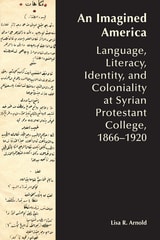
An Imagined America
Language, Literacy, Identity, and Coloniality at Syrian Protestant College, 1866–1920Lisa Arnold
University Press of Colorado, 2026
An Imagined America presents a historical, transnational, translingual, and decolonial perspective on questions of identity, literacy, language, culture, and citizenship. In examining a variety of English- and Arabic-language archival documents from the founding of Syrian Protestant College in 1866 (today the American University of Beirut) until the fall of the Ottoman Empire in 1920, Lisa R. Arnold shows how transnational and translingual negotiations among faculty, students, and administrators, as well as the local and regional community, produced a tenuous and sometimes unsettling vision of America for foreigners and locals alike. As her account shows, transnational and translingual discourses provide the backdrop and motive for the assertion of coloniality in contexts of literacy education such as that of Syrian Protestant College. An Imagined America allows scholars and educators in rhetoric and writing studies, education, and related fields to consider how literacy education in English has, and often continues to, construct an imagined America that is both grounded on and reproduces colonial epistemology. Such constructions work to uphold exclusionary practices that are all too vivid in our world today.
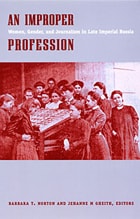
An Improper Profession
Women, Gender, and Journalism in Late Imperial RussiaBarbara T. Norton and Jehanne M Gheith, eds.
Duke University Press, 2001
In this collection, contributors explore how early women journalists contributed to changing cultural understandings of women’s roles, as well as how class and gender politics meshed in the work of particular individuals. They also examine how female journalists adapted to—or challenged—censorship as political structures in Russia shifted. Over the course of this volume, contributors discuss the attitudes of female Russian journalists toward socialism, Russian nationalism, anti-Semitism, women’s rights, and suffrage. Covering the period from the early 1800s to 1917, this collection includes essays that draw from archival as well as published materials and that range from biography to literary and historical analysis of journalistic diaries.
By disrupting conventional ideas about journalism and gender in late Imperial Russia, An Improper Profession should be of vital interest to scholars of women’s history, journalism, and Russian history.
Contributors. Linda Harriet Edmondson, June Pachuta Farris, Jehanne M Gheith, Adele Lindenmeyr, Carolyn Marks, Barbara T. Norton, Miranda Beaven Remnek, Christine Ruane, Rochelle Ruthchild, Mary Zirin
An Index to Reproductions of Paintings by Twentieth-Century Chinese Artists
Ellen Johnston Laing
University of Michigan Press, 1998
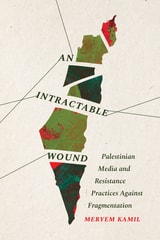
An Intractable Wound
Palestinian Media and Resistance Practices Against FragmentationMeryem Kamil
Rutgers University Press, 2027
An Intractable Wound explores Palestinian resistance to colonial fragmentation that originated as territorial fracture, as proposed through the United Nations partition plan that split the land between the state of Israel and Arab territories. The resulting fragmentation of geography, sovereignty, and populations spurred multiple other schisms that manifest culturally, politically, and developmentally across the West Bank, Gaza, refugee camps, exiled and diasporic Palestinians, and Arab citizens of Israel.
An Intractable Wound considers the various tactics Palestinians deploy to combat these multiple, intersecting iterations of fracture. In particular, this text considers Palestinian media technologies and practices that manage, subvert, and overcome fragmentation. Each chapter centers projects that elaborate on these fractures and combat them, including virtual reality representations, online archives, digital mapping platforms, and video games that imagine and construct an intact Palestinian community. Together, these case studies provide a capacious reading of the Palestinian condition as structured by fragmentation, and Palestinian resistance as struggling in opposition to that geographic, sociopolitical, and cultural disillusion.
An Introduction to Collection Development for School Librarians
Mona Kerby
American Library Association, 2019
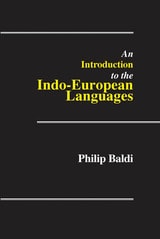
An Introduction to the Indo-European Languages
Philip Baldi
Southern Illinois University Press, 1983
This comprehensive linguistic survey of the Indo-European groups synthesizes the vast amount of information contained in the specialized handbooks of the individual stocks.
The text begins with an introduction to the concept of the Indo-European language family, the history of its discovery, and the techniques of analysis. The introduction also gives a structural sketch of Proto-Indo-European, the parent language from which the others are descended. Baldi then devotes a chapter to each of the 11 major branches of Indo-European (Italic, Celtic, Indo-Iranian, Greek, Armenian, Albanian, Baltic, Slavic, Germanic, Tocharian, and Anatolian).
Each chapter provides an outline of the external history of the branch, its people, dialects, and other relevant history. This outline is followed by a structural sketch of the most important language or languages of the branch (e.g., Old Irish for Celtic, Sanskrit and Avestan for Indo-Iranian, Latin and Osco-Umbrian for Italic). The sketch also contains the phonology, morphology, and syntax of each language. There is lastly a sample text of each language containing both interlinear and free translation. In those branches where there are special issues (e.g., the relation of Italic to Celtic and Baltic to Slavic, or the problem of archaism in Hittite), additional discussions of these issues are provided. Baldi’s final chapter gives a brief outline of the “minor” Indo-European languages such as Illyrian, Thracian, Raetic, and Phrygian. Adding further to the usefulness of the book are extensive bibliographies, an up-to-date map showing the geographical distribution of the Indo-European languages throughout the world, and a detailed family tree diagram of the members of each subgroup within the Indo-European language family and their interrelationships.
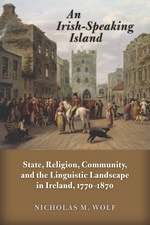
An Irish-Speaking Island
State, Religion, Community, and the Linguistic Landscape in Ireland, 1770–1870Nicholas M. Wolf
University of Wisconsin Press, 2014
As late as 1840, Ireland had as many as four million Irish speakers—a significant proportion of the total population—who could be found in every county of the island and in all social classes and religious persuasions. Their impact on the modern history of Ireland and the United Kingdom cannot be captured by a simple conclusion that they became anglicized. Rather, Nicholas M. Wolf explores the complex ways in which the transition from Irish to English placed a premium on adaptive bilingualism and shaped beliefs and behavior in the domestic sphere, religious life, and oral culture within the community. An Irish-Speaking Island will interest not only historians but also scholars of linguistics, folklore, politics, literature, and religion.
Winner, Michael J. Durkan Prize for Books on Language and Culture, American Conference for Irish Studies
Winner, Donald Murphy Prize for Distinguished First Books, American Conference for Irish Studies
An Other Tongue
Nation and Ethnicity in the Linguistic BorderlandsAlfred Arteaga
Duke University Press, 1994
The Chicanos, the U.S./Mexico borderland polyglots whose sense of history, nationality, and race is as mixed as their language, are the book's prime example. But the authors recognize that border zones, like diasporas and post-colonial relations, occur globally, and their discussion of hybrid or mestizo identities ranges from the United States to the Caribbean to South Asia to Ireland. Drawing on personal experience, readings of poetry and fiction, and cultural theory, the authors detail the politics of being human through the mediation of language. What does "shadow" mean to the Native American Indian, or diaspora to the East Indian immigrant? How does British colonialism yet affect Irish and Indian nationalist literary production? Why is the split between Eastern and Western European language use necessarily schizophrenic? So much of our sense of difference today is constructed as we speak, and An Other Tongue speaks with eloquence to this phenomenon and will be of great interest to those concerned with the discourse of post-colonial studies, critical theory, and the remapping of world literature.
Contributors. Norma Alarcón, Alfred Arteaga, Juan Bruce-Novoa, Cordelia Chávez Candelaria, Michael G. Cooke, Edmundo Desnoes, Eugene C. Eoyang, David Lloyd, Lydie Moudileno, Jean-Luc Nancy, Tejaswini Niranjana, Ada Savin, Gayatri Chakravorty Spivak, Michael Smith, Tzvetan Todorov, Luis A. Torres, Gerald Vizenor
Analytic Syntax
Otto Jespersen
University of Chicago Press, 1984
Analyzing Syntax & Semantics Textbook
Virginia Heidinger
Gallaudet University Press, 1984
Analyzing Syntax and Semantics features the Personalized System of Instruction (PSI) approach. This method uses student performance objectives, practice, feedback, individualization of pace, and repeatable testing as instructional strategies.
Analyzing Syntax & Semantics Workbook
Virginia Heidinger
Gallaudet University Press, 1984
Analyzing Syntax and Semantics features the Personalized System of Instruction (PSI) approach. This method uses student performance objectives, practice, feedback, individualization of pace, and repeatable testing as instructional strategies.
Analyzing the Next-Generation Catalog
Andrew American Library Association
American Library Association, 0
Anaphora and Conceptual Structure
Karen van Hoek
University of Chicago Press, 1997
Integrating the results of previous work, Van Hoek develops a model in which some nominals function as "conceptual reference points" that dominate over stretches defined by the semantic relations among elements. When a full noun is in the domain of a reference point, coreference is ruled out, since the speaker would be sending contradictory messages about the salience of the noun's referent.
With profound implications for the nature of syntax, this book will interest theoretical linguists of all persuasions.
Anatomy of a Trial
Public Loss, Lessons Learned from The People vs. O.J. SimpsonJerrianne Hayslett
University of Missouri Press, 2008
Ancient Rhetorics and Digital Networks
Edited by Michele Kennerly and Damien Smith Pfister
University of Alabama Press, 2018
What can ancient rhetorical theory possibly tell us about the role of new digital media technologies in contemporary public culture? Some central issues we currently deal with—making sense of information abundance, persuading others in our social network, navigating new media ecologies, and shaping broader cultural currents—also pressed upon the ancients.
Ancient Rhetorics and Digital Networks makes this connection explicit, reexamining key figures, texts, concepts, and sensibilities from ancient rhetoric in light of the glow of digital networks, or, ordered conversely, surveying the angles and tangles of digital networks from viewpoints afforded by ancient rhetoric. By providing an orientation grounded in ancient rhetorics, this collection simultaneously historicizes contemporary developments and reenergizes ancient rhetorical vocabularies.
Contributors engage with a variety of digital phenomena including remix, big data, identity and anonymity, memes and virals, visual images, decorum, and networking. Taken together, the essays in Ancient Rhetorics and Digital Networks help us to understand and navigate some of the fundamental communicative issues we deal with today.
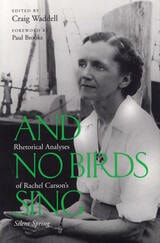
And No Birds Sing
Rhetorical Analyses of Rachel Carson's Silent SpringEdited by Craig Waddell. Foreword by Paul Brooks. Afterword by Linda Lear
Southern Illinois University Press, 2000
Craig Waddell presents essays investigating Rachel Carson’s influential 1962 book, Silent Spring. In his foreword, Paul Brooks, Carson’s editor at Houghton Mifflin, describes the process that resulted in Silent Spring. In an afterword, Linda Lear, Carson’s recent biographer, recalls the end of Carson’s life and outlines the attention that Carson’s book and Carson herself received from scholars and biographers, attention that focused so minutely on her life that it detracted from a focus on her work. The foreword by Brooks and the afterword by Lear frame this exploration within the context of Carson’s life and work.
Contributors are Edward P. J. Corbett, Carol B, Gartner, Cheryll Glotfelty, Randy Harris, M. Jimmie Killingsworth, Linda Lear, Ralph H. Lutts, Christine Oravec, Jacqueline S. Palmer, Markus J. Peterson, Tarla Rai Peterson, and Craig Waddell. Together, these essays explore Silent Spring’seffectiveness in conveying its disturbing message and the rhetorical strategies that helped create its wide influence.

Andy Warhol, Publisher
Lucy Mulroney
University of Chicago Press, 2018
Journeying from the 1950s, when Warhol was starting to make his way through the New York advertising world, through the height of his career in the 1960s, to the last years of his life in the 1980s, Andy Warhol, Publisher unearths fresh archival material that reveals Warhol’s publications as complex projects involving a tantalizing cast of collaborators, shifting technologies, and a wide array of fervent readers.
Lucy Mulroney shows that whether Warhol was creating children’s books, his infamous “boy book” for gay readers, writing works for established houses like Grove Press and Random House, helping found Interview magazine, or compiling a compendium of photography that he worked on to his death, he readily used the elements of publishing to further and disseminate his art. Warhol not only highlighted the impressive variety in our printed culture but also demonstrated how publishing can cement an artistic legacy.
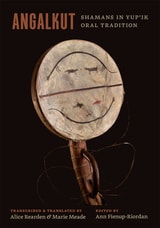
Angalkut/Shamans in Yup'ik Oral Tradition
Ann Fienup-Riordan
University of Alaska Press, 2025
The book begins with an English introduction that places Yup’ik oral traditions in the context of shamanism in Alaska and other parts of the Arctic. Then first-person accounts presented in the original Yup’ik with accompanying English translations discuss the importance of shamans and shamanism in general, good and bad shamans, and shamans as healers. Narratives from Nelson Island, Canineq, Kuskokwim River, Akulmiut, and Yukon River describe shamans as healers, shaman journeys and performances, shamans and masked dances requesting abundance, shamans and the dead, malicious shamans, shaman confrontations, becoming a shaman, and those who have shaman abilities today. A detailed glossary and references are also included.
Today, not only are these angalkut gone, but so are those who witnessed and participated in their activities. Angalkut/Shamans in Yup’ik Oral Tradition is the first book devoted exclusively to Yup’ik angalkut; never before has the variety of angalkut roles been profiled in publication, including the richness of elders’ recollections of these individuals and their roles. There is great value in the stories they left behind. This fine-grained presentation of unique, bilingual first-person narratives is an essential resource for scholars and students interested in Yup’ik heritage, Yugtun language, shaman ethnography, and Alaska Native oral traditions.
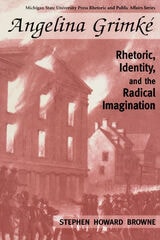
Angelina Grimke
Rhetoric, Identity, and the Radical ImaginationStephen H. Browne
Michigan State University Press, 1999
Abolitionist, women's rights activist, and social reformer, Angelina Grimké (1805-79) was among the first women in American history to seize the public stage in pursuit of radical social reform. "I will lift up my voice like a trumpet," she proclaimed, "and show this people their transgressions." And when she did lift her voice in public, on behalf of the public, she found that, in creating herself, she might transform the world. In the process, Grimké crossed the wires of race, gender, and power, and produced explosions that lit up the world of antebellum reform. Among the most remarkable features of Angelina Grimké's rhetorical career was her ability to stage public contests for the soul of America—bringing opposing ideas together to give them voice, depth, and range to create new and more compelling visions of social change.
Angelina Grimké: Rhetoric, Identity, and the Radical Imagination is the first full-length study to explore the rhetorical legacy of this most unusual advocate for human rights. Stephen Browne examines her epistolary and oratorical art and argues that rhetoric gave Grimké a means to fashion not only her message but her very identity as a moral force.
Anglo-American Feminist Challenges to the Rhetorical Traditions
Virginia Woolf, Mary Daly, Adrienne RichKrista Ratcliffe
Southern Illinois University Press, 1996
Although women and men have different relationships to language and to each other, traditional theories of rhetoric do not foreground such gender differences. Krista Ratcliffe argues that because feminists generally have not conceptualized their language theories from the perspective of rhetoric and composition studies, rhetoric and composition scholars must construct feminist theories of rhetoric by employing a variety of interwoven strategies: recovering lost or marginalized texts; rereading traditional rhetoric texts; extrapolating rhetorical theories from such nonrhetoric texts as letters, diaries, essays, cookbooks, and other sources; and constructing their own theories of rhetoric.
Focusing on the third option, Ratcliffe explores ways in which the rhetorical theories of Virginia Woolf, Mary Daly, and Adrienne Rich may be extrapolated from their Anglo-American feminist texts through examination of the interrelationship between what these authors write and how they write. In other words, she extrapolates feminist theories of rhetoric from interwoven claims and textual strategies. By inviting Woolf, Daly, and Rich into the rhetorical traditions and by modeling the extrapolation strategy/methodology on their writings, Ratcliffe shows how feminist texts about women, language, and culture may be reread from the vantage point of rhetoric to construct feminist theories of rhetoric. She also outlines the pedagogical implications of these three feminist theories of rhetoric, thus contributing to ongoing discussions of feminist pedagogies.
Traditional rhetorical theories are gender-blind, ignoring the reality that women and men occupy different cultural spaces and that these spaces are further complicated by race and class, Ratcliffe explains. Arguing that issues such as who can talk, where one can talk, and how one can talk emerge in daily life but are often disregarded in rhetorical theories, Ratcliffe rereads Roland Barthes’ "The Old Rhetoric" to show the limitations of classical rhetorical theories for women and feminists. Discovering spaces for feminist theories of rhetoric in the rhetorical traditions, Ratcliffe invites readers not only to question how women have been located as a part of— and apart from—these traditions but also to explore the implications for rhetorical history, theory, and pedagogy.
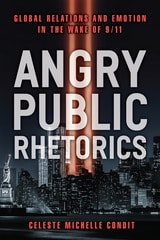
Angry Public Rhetorics
Global Relations and Emotion in the Wake of 9/11Celeste Michelle Condit
University of Michigan Press, 2018
These voices show that anger is more effective for producing some collective actions, such as rallying supporters, reifying existing worldviews, motivating attack, enforcing shared norms, or threatening from positions of power; and less effective for others, like broadening thought, attracting new allies, adjudicating justice across cultural norms, or threatening from positions of weakness. Because social anger requires shared norms, collectivized anger cannot serve social justice. In order for anger to be a force for global justice, the world’s peoples must develop shared norms to direct discussion of international relations. Angry Public Rhetorics provides guidance for such public forums.
Animal Shenanigans
Rob Reid
American Library Association, 2015
Anniversaries and Holidays
Bernard Trawicky
American Library Association, 2000
Annotated Bibliography of Southern American English
James B. McMillan
University of Alabama Press, 1989
The only book-length bibliography on the speech of the American South, this volume focuses on the pronunciation, vocabulary, grammar, naming practices, word play, and other aspects of language that have interested researchers and writers for two centuries. Compiled here are the works of linguists, historians, anthropologists, sociologists, and educators, as well as popular commentators.
With over 3,800 entries, this invaluable resource is a testament to the significance of Southern speech, long recognized as a distinguishing feature of the South, and the abiding interest of Southerners in their speech as a mark of their identity. The entries encompass Southern dialects in all their distinctive varieties—from Appalachian to African American, and sea islander to urbanite.
Annotated Book Lists Teen Reader
The Best from the Experts at YALSA-BKAmerican Library Association, 2011

Anonymity
Alison Macrina
American Library Association, 2019

Anonymous in Their Own Names
Doris E. Fleischman, Ruth Hale, and Jane GrantSusan Henry
Vanderbilt University Press, 2012
Yet these women's achievements have been invisible to countless authors who have written about their husbands. This invisibility is especially ironic given that all three were feminists who kept their birth names when they married as a sign of their equality with their husbands, then battled the government and societal norms to retain their names. Hale and Grant so believed in this cause that in 1921 they founded the Lucy Stone League to help other women keep their names, and Grant and Fleischman revived the league in 1950. This was the same year Grant and her second husband, William Harris, founded White Flower Farm, pioneering at that time and today one of the country's most celebrated commercial nurseries.
Despite strikingly different personalities, the three women were friends and lived in overlapping, immensely stimulating New York City circles. Susan Henry explores their pivotal roles in their husbands' extraordinary success and much more, including their problematic marriages and their strategies for overcoming barriers that thwarted many of their contemporaries.
Answer Key for Grammar Choices for Graduate and Professional Writers, Second Edition
Nigel A. Caplan
University of Michigan Press, 2019
Answering Teens' Tough Questions
mk Eagle
American Library Association, 2012
Answers to the Health Questions People Ask in Libraries
A Medical Library Association GuideAmerican Library Association, 2008
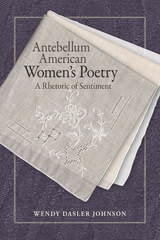
Antebellum American Women's Poetry
A Rhetoric of SentimentWendy Dasler Johnson
Southern Illinois University Press, 2016
Considering the logos, ethos, and pathos—aims, writing personae, and audience appeal—of poems by African American abolitionist Frances Watkins Harper, working-class prophet Lydia Huntley Sigourney, and feminist socialite Julia Ward Howe, Wendy Dasler Johnson demonstrates that sentimental poetry was an inportant component of antebellum social activism. She articulates the ethos of the poems of Harper, who presents herself as a properly domestic black woman, nevertheless stepping boldly into Northern pulpits to insist slavery be abolished; the poetry of Sigourney, whose speaker is a feisty, working-class, ambiguously gendered prophet; and the works of Howe, who juggles her fame as the reformist “Battle Hymn” lyricist and motherhood of five children with an erotic Continental sentimentalism.
Antebellum American Women's Poetry makes a strong case for restoration of a compelling system of persuasion through poetry usually dismissed from studies of rhetoric. This remarkable book will change the way we think about women’s rhetoric in the nineteenth century, inviting readers to hear and respond to urgent, muffled appeals for justice in our own day.
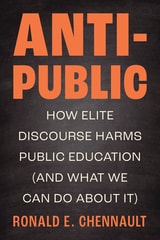
Anti-Public
How Elite Discourse Harms Public Education (and What We Can Do About It)Ronald E. Chennault
Rutgers University Press, 2026
Consider this: Restrictions placed by state legislatures on what schools can teach about America's history of conquest and enslavement. Broad bans enacted by local school boards that remove meaningful books from school curricula and the shelves of libraries. Court rulings that muddy the distinction between what counts as private versus public expressions of religion in public school settings and that open the door to publicly funded religious education. All of these recent actions chip away at the foundation of public education in America. But how did we get here? Decades of elite public discourse (talk and text) about public education helped to bring us to this point. Much of this conversation is anti-public. It includes statements by major elected officials, education advocacy organizations, journalists in mainstream press outlets, and other influential actors. Chennault casts light on the cultural and political processes at work and challenges the unquestioned assumptions beneath the surface of this discourse, with the hopes that we can transform and strengthen public education.