Results by title
3785 books match the query 'Poetry' and 303 start with a
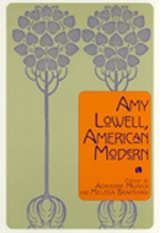
Amy Lowell, American Modern
Bradshaw, Melissa
Rutgers University Press, 2004
For decades, the work of one of America’s most influential poets, 1925 Pulitzer Prize–winner Amy Lowell (1874–1925), has been largely overlooked. This vigorous, courageous poet gave voice to an erotic, thoroughly American sensibility. Cigar-smoker, Boston Brahmin, lesbian, impresario, entrepreneur, and prolific poet, Lowell heralded the rush of an American poetic flowering. A best-selling poet as well as a wildly popular lecturer (autograph-seeking fans were sometimes so boisterous that she required a police escort), she was a respected authority on modern poetry, forging the path that led to the works of Allen Ginsberg, May Sarton, Sylvia Plath, and beyond. Yet, since her death, her work has suffered critical neglect.
This volume presents an essential revaluation of Lowell, and builds a solid critical basis for evaluating her poetry, criticism, politics, and influence. Essays explore the varied contributions of Lowell as a woman poet, a modernist, and a significant force of the literary debates of early twentieth-century poetics. In addition to placing Lowell in her proper historical context, contributors demonstrate her centrality to current critical and theoretical discussions: feminist, gay and lesbian, and postcolonial, in as well as in disability, American, and cultural studies. The book includes a transatlantic group of literary critics and scholars.
Amy Lowell, American Modern offers the most sustained examination of Lowell to date. It returns her to conversation and to literary history where she belongs.
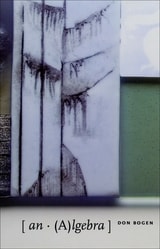
An Algebra
Don Bogen
University of Chicago Press, 2009
from Bagatelles
Bagatelles,
mere gestures
in dry air,
each pluck a dot,
strokes marked on silence
reaching into the dark.
Beauty is strict,
it passes:
an echo, a wedge
of harmony, sudden,
broken—Who goes there?
An Algebra is an interwoven collection of eight sequences and sixteen individual poems, where images and phrases recur in new contexts, connecting and suspending thoughts, emotions and insights. By turns, the poems leap from the public realm of urban decay and outsourcing to the intimacies of family life, from a street mime to a haunting dream, from elegy to lyric evocation. Wholeness and brokenness intertwine in the book; glimpsed patterns and startling disjunctions drive its explorations.
An Algebra is a work of changing equivalents, a search for balance in a world of transformation and loss. It is a brilliantly constructed, moving book by a poet who has achieved a new level of imaginative expression and skill.
Praise for After the Splendid Display
“In his best work . . . conscience and craft fuse seamlessly, and the result is original and arresting."—The Nation

An Anthology of Contemporary Russian Women Poets
Valentina Polukhina
University of Iowa Press, 2005
Focusing on the middle generation, with major figures such as Olga Sedakova, Svetlana Kekova, Vera Pavlova, and Tatyana Shcherbina, the collection also includes work by the youngest generation—born after 1970 and not yet known outside of Russia—as well as senior poets such as Bella Akhmadulina and Natalya Gorbanevskaya. Translators include such poets as Elaine Feinstein, Ruth Fainlight, Carol Rumens, and Daniel Weissbort as well as Russianists and scholars Peter France, Catriona Kelly, Robert Reid, and Stephanie Sandler.
A significant and extensive bibliography lists the major works of prominent Russian women poets. A preface by Stephanie Sandler, a concluding note by Dmitry Kuzmin on the online Vavilon project, a postface by Elena Fanailova, and biographical notes on the poets and translators complete the anthology, which is sure to be of great interest to students and scholars of Russian literature.
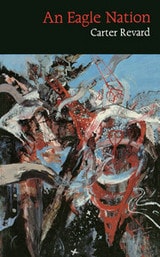
An Eagle Nation
Carter Revard
University of Arizona Press, 1993
Carter Revard, Osage Indian poet, Rhodes scholar, and professor of medieval English literature, shares both this amazement and his amazing command of language in this first retrospective collection of 40 published and unpublished pieces written from 1970 to 1991.

An Errant Eye
Poetry and Topography in Early Modern FranceTom Conley
University of Minnesota Press, 2010
This tension, Conley demonstrates, cuts through literature and graphic matter of various shapes and forms-hybrid genres that include the comic novel, the emblem-book, the eclogue, sonnets, and the personal essay. An Errant Eye differs from historical treatments of spatial invention through Conley's argument that the topographic sensibility is one in which the ocular faculty, vital to the description of locale, is endowed with tact and touch.
Detailed close readings of Apian, Rabelais, Montaigne, and others empower the reader with a lively sense of the topographical impulse, deriving from Conley's own "errant eye," which is singularly discerning in attentiveness to the ambiguities of charted territory, the contours of woodcut images, and the complex combinations of word and figure in French Renaissance poetry, emblem, and politics.
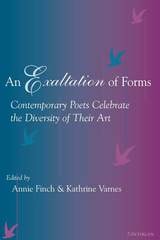
An Exaltation of Forms
Contemporary Poets Celebrate the Diversity of Their ArtAnnie Finch and Kathrine Varnes, Editors
University of Michigan Press, 2002
The forms range from hendecasyllabics to prose poetry, haiku to procedural poetry, sonnets to blues, rap to fractal verse. The range of poets included is equally impressive--from Amiri Baraka to John Frederick Nims, from Maxine Kumin to Marilyn Hacker, from Agha Shahid Ali to Pat Mora, from W. D. Snodgrass to Charles Bernstein. Achieving this level of eclecticism is a remarkable feat, especially given the strong opinions held by members of the various camps (e.g., the New Formalists, LANGUAGE poets, feminist and multicultural poets) that exist within today's poetry community. Poets who might never occupy the same room here occupy the same pages, perhaps for the first time. The net effect is a book that will surprise, inform, and delight a wide range of readers, whether as reference book, pleasure reading, or classroom text.
Poet, translator, and critic Annie Finch is director of the Stonecoast low-residency MFA program at the University of Southern Maine. She is author of The Ghost of Meter: Culture and Prosody in American Free Verse, Eve, and Calendars. She is the winner of the eleventh annual Robert Fitzgerald Prosody Award for scholars who have made a lasting contribution to the art and science of versification.
Kathrine Varnes teaches English at the University of Missouri-Columbia. She is the author of the book of poems, The Paragon. Her poems and essays have appeared in many books and journals.
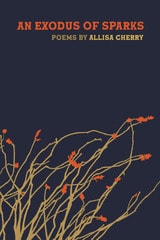
An Exodus of Sparks
Allisa Cherry
Michigan State University Press, 2025
This collection is for anyone exploring how loss reshapes identity. The book is structured around a crown of sonnets in which the speaker assumes the story of Moses and resituates it in the American Southwest. The book itself is an elegy composed of several smaller elegies; a fallible history; and most of all, a love letter to the family, culture, and geography that shaped the poet and her work.
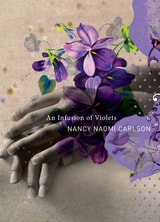
An Infusion of Violets
Nancy Naomi Carlson
Seagull Books, 2019
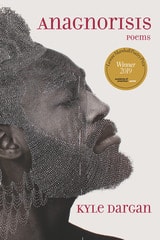
Anagnorisis
PoemsKyle Dargan
Northwestern University Press, 2018
Winner of the 2019 Academy of American Poets Lenore Marshall Poetry Prize
In Anagnorisis, award-winning poet Kyle Dargan ignites a reckoning. From the depths of his rapidly changing home of Washington, D.C., the poet is both enthralled and provoked, having witnessed-on a digital loop running in the background of Barack Obama's unlikely presidency—the rampant state-sanctioned murder of fellow African Americans. He is pushed toward the same recognition articulated by James Baldwin decades earlier: that an African American may never be considered an equal in citizenship or humanity.
This recognition—the moment at which a tragic hero realizes the true nature of his own character, condition, or relationship with an antagonistic entity—is what Aristotle called anagnorisis. Not concerned with placatory gratitude nor with coddling the sensibilities of the country's racial majority, Dargan challenges America: "You, friends- / you peckish for a peek / at my cloistered, incandescent / revelry-were you as earnest / about my frostbite, my burns, / I would have opened / these hands, sated you all."
At a time when U.S. politics are heavily invested in the purported vulnerability of working-class and rural white Americans, these poems allow readers to examine themselves and the nation through the eyes of those who have been burned for centuries.
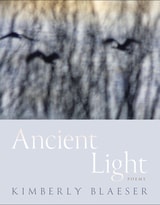
Ancient Light
PoemsKimberly Blaeser
University of Arizona Press, 2024
With vision and resilience, Kimberly Blaeser’s poetry layers together past, present, and futures. Against a backdrop of pandemic loss and injustice, MMIW (Missing and Murdered Indigenous Women), hidden graves at Native American boarding schools, and destructive environmental practices, Blaeser’s innovative poems trace pathways of kinship, healing, and renewal. They celebrate the solace of natural spaces through sense-laden geo-poetry and picto-poems. With an Anishinaabe sensibility, her words and images invoke an ancient belonging and voice the deep relatedness she experiences in her familiar watery regions of Minnesota.
The collection invites readers to see with a new intimacy the worlds they inhabit. Blaeser brings readers to the brink, immerses them in the darkest regions of the Anthropocene, in the dangerous fallacies of capitalism, and then seeds hope. Ultimately, as the poems enact survivance, they reclaim Indigenous stories and lifeways.
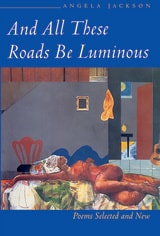
And All These Roads Be Luminous
Poems Selected and NewAngela Jackson
Northwestern University Press, 1997
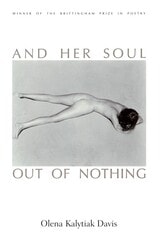
And Her Soul Out Of Nothing
Olena Kalytiak Davis
University of Wisconsin Press, 1997
Both contemporary and other-worldly, Davis's lyrical poetry is a fearless expression of the spirit which defines the very essence of our beings.

And So Wax Was Made & Also Honey
Amy Beeder
Tupelo Press, 2020
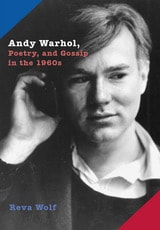
Andy Warhol, Poetry, and Gossip in the 1960s
Reva Wolf
University of Chicago Press, 1997
Wolf investigates the underground culture of poets, artists, and filmmakers who interacted with Warhol regularly. She claims that Warhol understood the literary imagination of his generation and that recognizing Warhol's literary activities is essential to understanding his art. Drawing on a wealth of unpublished material, including interviews, personal and public archives, tape recordings, documentary photographs, and works of art, Wolf offers dramatic evidence that Warhol's interactions with writers functioned like an extended conversation and details how this process impacted his work. This highly original and fascinating study gives us fresh insight into Warhol's art as practice and reformulates the myth that surrounds this popular American artist.
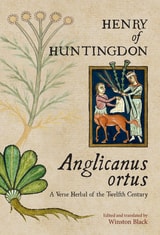
Anglicanus ortus
A Verse Herbal of the Twelfth CenturyHenry of Huntingdon
Bodleian Library Publishing, 2012
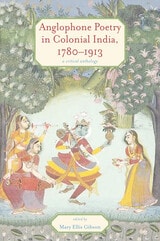
Anglophone Poetry in Colonial India, 1780–1913
A Critical AnthologyMary Ellis Gibson
Ohio University Press, 2011
Anglophone Poetry in Colonial India, 1780–1913: A Critical Anthology makes accessible for the first time the entire range of poems written in English on the subcontinent from their beginnings in 1780 to the watershed moment in 1913 when Rabindranath Tagore won the Nobel Prize in Literature.Mary Ellis Gibson establishes accurate texts for such well-known poets as Toru Dutt and the early nineteenth-century poet Kasiprasad Ghosh. The anthology brings together poets who were in fact colleagues, competitors, and influences on each other. The historical scope of the anthology, beginning with the famous Orientalist Sir William Jones and the anonymous “Anna Maria” and ending with Indian poets publishing in fin-de-siècle London, will enable teachers and students to understand what brought Kipling early fame and why at the same time Tagore’s Gitanjali became a global phenomenon. Anglophone Poetry in Colonial India, 1780–1913 puts all parties to the poetic conversation back together and makes their work accessible to American audiences.With accurate and reliable texts, detailed notes on vocabulary, historical and cultural references, and biographical introductions to more than thirty poets, this collection significantly reshapes the understanding of English language literary culture in India. It allows scholars to experience the diversity of poetic forms created in this period and to understand the complex religious, cultural, political, and gendered divides that shaped them.
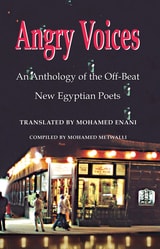
Angry Voices
An Anthology of the Off-Beat New Egyptian PoetsMohamed Enani
University of Arkansas Press, 2003
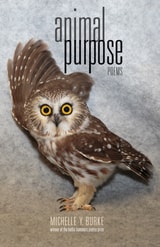
Animal Purpose
PoemsMichelle Y. Burke
Ohio University Press, 2016
In Animal Purpose, Michelle Y. Burke explores the lives of men and women as they stand poised between the desire to love and the compulsion to harm. In one poem, a woman teaches a farmhand the proper way to slaughter a truckload of chickens. In another, a couple confronts the recent loss of a loved one when a stranger makes an unexpected confession in a crowded restaurant. Set in both rural and urban spaces, these poems challenge received ideas about work, gender, and place. Danger blurs into beauty and back again. Burke scours the hard edges of the world to find “fleeting softness,” which she wishes “into the world like pollen that covers everything.”
Animalities
David Dodd Lee
Four Way Books, 2014
Anishinaabe Songs for a New Millennium
Marcie R. Rendon
University of Minnesota Press, 2024
Poem-songs summon the voices of Anishinaabe ancestors and sing to future generations
The ancestors that walk with us, sing us our song. When we get quiet enough, we can hear them sing and make them audible to people today. In Anishinaabe Songs for a New Millennium, Marcie R. Rendon, a member of the White Earth Nation, summons those ancestors’ songs, and so begins the dream singing for generations yet to come. “The Anishinaabe heard stories in their dream songs,” Ojibwe author Gerald Vizenor wrote, and like those stories once inscribed in pictographs on birch-bark scrolls, Rendon’s poem-songs evoke the world still unfolding around us, reflecting our place in time for future generations.
Through dream-songs and poem-songs responding to works of theater, choral music, and opera, Rendon brings memory to life, the senses to attention—to see the moonbeams blossoming on the windowsill, to feel the hold of the earth, to hear the echo of grandmother’s breath, to lie on the bones of ancestors and feel the rhythms of silence running deep. Her singing, breaking the boundaries that time would impose, carries the Anishinaabe way of life and way of seeing forward in the world.
Anne & Alpheus, 1842–1882
Joe Survant
University of Arkansas Press, 1996
Chosen by Rachel Hadas as the winner of the Arkansas Poetry Award, Anne & Alpheus: 1842–1882 is a compelling duet of monologues between a frontier man and woman surviving the hardships and recording the small triumphs of life in rural nineteenth-century Kentucky.
Ambitious in breadth and scope, these poems chart the loves and losses of early marriage, the terrors of civilian life during the Civil War, and the universal sorrows of aging, loneliness, and death. Through the distinct voices of Anne and Alpheus Waters, Joe Survant has fashioned a collection with all the sweep of a novel, all the dramatic intensity, poem by poem, of short fiction, and all the earthy, human lyricism of the dramatic monologue. These poems take us into the tobacco sheds, put us behind the plow, let us smell the soil, and
carry us under the stars where Anne and Alpheus walked.
Anne Carson and the Unknown
Contemporary Perspectives on Poetic ExperimentationEdited by Helena Van Praet and Christine Wiesenthal
University of Michigan Press, 2026
Making art relies on a process of intuitive discovery that begins prior to knowing and overrides intention. Anne Carson and the Unknown delves into the varied ways the contemporary poet and classicist Anne Carson engages with the unknown, both as a philosophical concept and as a method of creative practice. Bringing together various contemporary perspectives, ranging from the world of quantum physics to feminist literary criticism and media studies, this volume considers how contemporary poets like Anne Carson continue to show the relevance of the unknown in our turbulent times of global upheaval.
It covers Carson’s unusual travelogue about the collapse of civilizations and knowledge, positions her oeuvre in the context of a wider debate on post-critique, and reads her work as an engagement with a radically formalist Classics that goes back to ancient Greek’s etymological complexity. Taking an interdisciplinary approach, the volume dives into her work’s ambiguous relationships with trans experience and religion, the centrality of the psychoanalytical concept of the caesura, and her use of figures like Helen of Troy and Herakles. It also discusses the unknown as a visual mechanism in her recent creative collaboration with comics creator Rosanna Bruno. In this way, Carson provides a necessary counter to both Western scientific knowledge’s goals of predictability and rationality, and to the algorithmic certitudes sought by the engineering culture of technologists who prevail today.
Anne Carson
Ecstatic LyreJoshua Marie Wilkinson, editor
University of Michigan Press, 2015
Anne Sexton
Telling the TaleSteven E. Colburn, Editor
University of Michigan Press, 1988
Annulments
Zach Savich
University Press of Colorado, 2010
Published by the Center for Literary Publishing at Colorado State University
Anon
Steven Seidenberg
Omnidawn, 2022
The narrator of Anon opens the sluice gates of embittered confession and philosophical reproach to release a flood of extravagant lyricism. These poems at first submerge readers in the ecstatic rhythms of its music, then they turn to address the tropes of narrative, inviting readers to join in pursuit of major themes of the human condition.
Steven Seidenberg employs a characteristically aphoristic style to manage multiple lines of inquiry at once. The resultant fragments navigate between testament and treatise, storyline and system, and in a manner that echoes the speculative vehemence of Samuel Beckett, Clarice Lispector, and Maurice Blanchot
Another Creature
PoemsPamela Gemin
University of Arkansas Press, 2010
Finalist, Miller Williams Poetry Prize
In Another Creature Pamela Gemin reconciles her generation’s impulse toward personal freedom with its costs as she moves her cast of innocents and outlaws through Midwestern landscapes embroidered with green lawns, blue lakes and raspberry patches eerily wired for sound. Hers are hungry poems, in and of the world, expounding the “flavors and hues, the fragrance and skin / of the merchandise of Earth.”
Another Day on Earth
Timothy Dekin
Northwestern University Press, 2002
Another English
Anglophone Poems from Around the WorldEdited by Catherine Barnett and Tiphanie Yanique
Tupelo Press, 2014
Another Kind of Travel
Paul Lake
University of Chicago Press, 1988
"Lake is not content with simply being precise and original with his descriptions. He possesses another gift of the poetic mind: the ability to make his images, his simple scenes, resonate with meaning."—Wes Ziegler, Arkansas Democrat
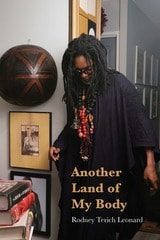
Another Land of My Body
Rodney Terich Leonard
Four Way Books, 2024
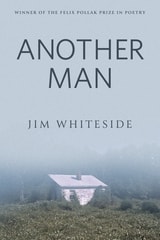
Another Man
Jim Whiteside
University of Wisconsin Press, 2026
Part reckoning with a father’s chronic illness, part coming of age in the Upper South, part meditation on the slow, painful accumulation of adulthood, Another Man considers issues of family, care, and inheritance. These powerful poems capture unexpected moments of lucidity among the desire and heartbreak of becoming oneself.
In his debut collection, Jim Whiteside astonishes with turns of phrases that pinpoint the beauty in the mundane—the “waterfalling bodies” of fish while stocking a pond—and the mundane in the tragic, as with the realization following his father’s death that “in the end so much is paperwork.” In revealing his origin story, Whiteside redefines the queer poem in a more nuanced and contemporary way, acknowledging queer life beyond conventional narratives. Filled with a zeal for life, a yearning for joy, and moments of sublime satisfaction, this collection shimmers with longing and freedom.
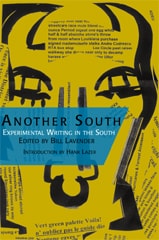
Another South
Experimental Writing in the SouthEdited by Bill Lavender, with an introduction by Hank Lazer
University of Alabama Press, 2002
Another South is an anthology of poetry from contemporary southern writers who are working in forms that are radical, innovative, and visionary. Highly experimental and challenging in nature, the poetry in this volume, with its syntactical disjunctions, formal revolutions, and typographic playfulness, represents the direction of a new breed of southern writing that is at once universal in its appeal and regional in its flavor.
Focusing on poets currently residing in the South, the anthology includes both emerging and established voices in the national and international literary world. From the invocations of Andy Young’s “Vodou Headwashing Ceremony” to the blues-informed poems of Lorenzo Thomas and Honorée Jeffers, from the different voicings of John Lowther and Kalamu ya Salaam to the visual, multi-genre art of Jake Berry, David Thomas Roberts, and Bob Grumman, the poetry in Another South is rich in variety and enthusiastic in its explorations of new ways to embody place and time. These writers have made the South lush with a poetic avant-garde all its own, not only redefining southern identity and voice but also offering new models of what is possible universally through the medium of poetry.
Hank Lazer’s introductory essay about “Kudzu textuality” contextualizes the work by these contemporary innovators. Like the uncontrollable runaway vine that entwines the southern landscape, their poems are hyperfertile, stretching their roots and shoots relentlessly, at once destructive and regenerative. In making a radical departure from nostalgic southern literary voices, these poems of polyvocal abundance are closer in spirit to "speaking in tongues" or apocalyptic southern folk art—primitive, astonishing, and mystic.
Answering the Ruins
PoemsGregory Fraser
Northwestern University Press, 2009
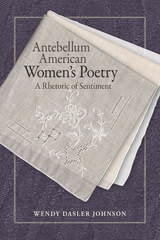
Antebellum American Women's Poetry
A Rhetoric of SentimentWendy Dasler Johnson
Southern Illinois University Press, 2016
Considering the logos, ethos, and pathos—aims, writing personae, and audience appeal—of poems by African American abolitionist Frances Watkins Harper, working-class prophet Lydia Huntley Sigourney, and feminist socialite Julia Ward Howe, Wendy Dasler Johnson demonstrates that sentimental poetry was an inportant component of antebellum social activism. She articulates the ethos of the poems of Harper, who presents herself as a properly domestic black woman, nevertheless stepping boldly into Northern pulpits to insist slavery be abolished; the poetry of Sigourney, whose speaker is a feisty, working-class, ambiguously gendered prophet; and the works of Howe, who juggles her fame as the reformist “Battle Hymn” lyricist and motherhood of five children with an erotic Continental sentimentalism.
Antebellum American Women's Poetry makes a strong case for restoration of a compelling system of persuasion through poetry usually dismissed from studies of rhetoric. This remarkable book will change the way we think about women’s rhetoric in the nineteenth century, inviting readers to hear and respond to urgent, muffled appeals for justice in our own day.
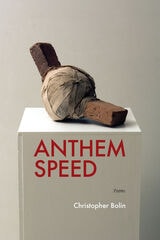
Anthem Speed
Christopher Bolin
University of Iowa Press, 2023
This collection evokes the vividly mysterious remnants of a lost civilization. Its preoccupations are unnervingly familiar: war, injustice, brutalization of land, air, water, and species, technologies of terror and dehumanization. Simultaneously antique and space-age, inhabiting a world of elemental rites and of artificial imaginations, Bolin tests the acoustics of operating rooms, battlefields, courtrooms, and mountainsides, and envisions—with animal acuity—a world imperiled and empowered by its leaders and myths.
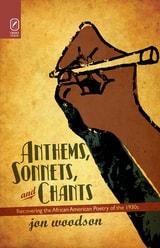
Anthems, Sonnets, and Chants
Recovering the African American Poetry of the 1930sJon Woodson
The Ohio State University Press, 2011
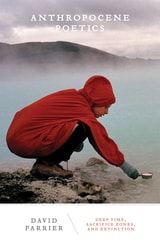
Anthropocene Poetics
Deep Time, Sacrifice Zones, and ExtinctionDavid Farrier
University of Minnesota Press, 2019
How poetry can help us think about and live in the Anthropocene by reframing our intimate relationship with geological time
The Anthropocene describes how humanity has radically intruded into deep time, the vast timescales that shape the Earth system and all life-forms that it supports. The challenge it poses—how to live in our present moment alongside deep pasts and futures—brings into sharp focus the importance of grasping the nature of our intimate relationship with geological time. In Anthropocene Poetics, David Farrier shows how contemporary poetry by Elizabeth Bishop, Seamus Heaney, Evelyn Reilly, and Christian Bök, among others, provides us with frameworks for thinking about this uncanny sense of time.
Looking at a diverse array of lyric and avant-garde poetry from three interrelated perspectives—the Anthropocene and the “material turn” in environmental philosophy; the Plantationocene and the role of global capitalism in environmental crisis; and the emergence of multispecies ethics and extinction studies—Farrier rethinks the environmental humanities from a literary critical perspective. Anthropocene Poetics puts a concern with deep time at the center, defining a new poetics for thinking through humanity’s role as geological agents, the devastation caused by resource extraction, and the looming extinction crisis.
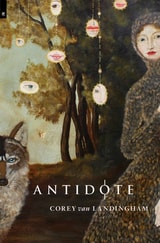
Antidote
Corey Van Landingham
The Ohio State University Press, 2013
In Antidote—the award-winning debut from Guggenheim Fellow and Levis Reading Prize winner Corey Van Landingham—love equates with disease, valediction becomes a contact sport, the moon turns lunatic, and someone is always watching. Here, the uncanny presses up against the intimate, so each poem undergoes a simultaneous making and unmaking, born and bound in exquisite strangeness.
Van Landingham reinvents elegy through a speaker both transgressive and tender, revealing how grief destabilizes the self and reorders perception. She tips the world upside down, shakes loose the debris, and says, I can make something with this.
Wild and surreal, driven by loss, Antidote embraces the beautiful and the brutal in equal measure, offering startling claims about love—its likeness to hibernation, a car crash, a parasite. Time, landscape, and geography dissolve, leaving behind the raw terrains of departure. Ultimately, the book insists there is no cure for heartbreak, that love can mirror violence, and that goodbye never becomes easier.

Antonin Artaud
Man of VisionBettina L. Knapp
Ohio University Press, 1969
The extraordinary actor–director–writer who developed his talent for self-torture into art to become one of the most vital creative forces of the century.
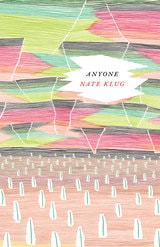
Anyone
Nate Klug
University of Chicago Press, 2015
Where I-95 meets The Pike,
a ponderous thunderhead flowered—
stewed a minute, then flipped
like a flash card, tattered
edges crinkling in, linings so dark
with excessive bright
that, standing, waiting, at the overpass edge,
the onlooker couldn’t decide
until the end, or even then,
what was revealed and what had been hidden.
Using a variety of forms and achieving a range of musical effects, Nate Klug’s Anyone traces the unraveling of astonishment upon small scenes—natural and domestic, political and religious—across America’s East and Midwest. The book’s title foregrounds the anonymity it seeks through several means: first, through close observation (a concrete saw, a goshawk, a bicyclist); and, second, via translation (satires from Horace and Catullus, and excerpts from Virgil’s Aeneid). Uniquely among contemporary poetry volumes, Anyone demonstrates fluency in the paradoxes of a religious existence: “To stand sometime / outside my faith . . . or keep waiting / to be claimed in it.” Engaged with theology and the classics but never abstruse, all the while the poems remain grounded in the phenomenal, physical world of “what it is to feel: / moods, half moods, / swarming, then darting loose.”
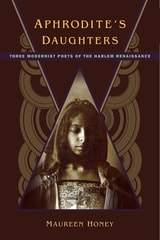
Aphrodite's Daughters
Three Modernist Poets of the Harlem RenaissanceHoney, Maureen
Rutgers University Press, 2016
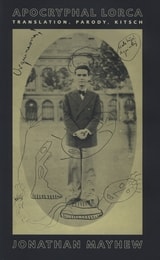
Apocryphal Lorca
Translation, Parody, KitschJonathan Mayhew
University of Chicago Press, 2009
Federico García Lorca (1898–1936) had enormous impact on the generation of American poets who came of age during the cold war, from Robert Duncan and Allen Ginsberg to Robert Creeley and Jerome Rothenberg. In large numbers, these poets have not only translated his works, but written imitations, parodies, and pastiches—along with essays and critical reviews. Jonathan Mayhew’s Apocryphal Lorca is an exploration of the afterlife of this legendary Spanish writer in the poetic culture of the United States.
The book examines how Lorca in English translation has become a specifically American poet, adapted to American cultural and ideological desiderata—one that bears little resemblance to the original corpus, or even to Lorca’s Spanish legacy. As Mayhew assesses Lorca’s considerable influence on the American literary scene of the latter half of the twentieth century, he uncovers fundamental truths about contemporary poetry, the uses and abuses of translation, and Lorca himself.
Apollo Helmet
James Scully
Northwestern University Press, 1995
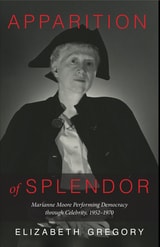
Apparition of Splendor
Marianne Moore Performing Democracy through Celebrity, 1952–1970Elizabeth Gregory
University of Delaware Press, 2021
While the later work of the great Modernist poet Marianne Moore was hugely popular during her final two decades, since her death critics have condemned it as trivial. This book challenges that assessment: with fresh readings of many of the late poems and of the iconic, cross-dressing public persona Moore developed to deliver them, Apparition of Splendor demonstrates that Moore used her late-life celebrity in daring and innovative ways to activate egalitarian principles that had long animated her poetry. Dressed as George Washington in cape and tricorn and writing about accessible topics like sports, TV shows, holidays, love, activism, mortality and celebrity itself, she reached a wide cross-section of Americans, encouraging them to consider what democracy means in their daily lives, particularly around issues of gender, sexuality, racial integration, class, age, and immigration. Moore actively sought out publication in popular venues (like Vogue, The New Yorker, and the Saturday Evening Post, etc.) and wrote on material chosen to directly appeal to the audiences there, influencing younger contemporaries, including poets like Ashbery, O’Hara, and Bishop, and artists like Warhol, Yoko Ono, and Ray Johnson.
Published by the University of Delaware Press. Distributed worldwide by Rutgers University Press.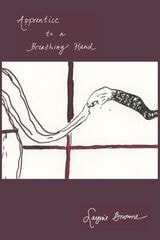
Apprentice to a Breathing Hand
Laynie Browne
Omnidawn, 2025
The poetry of Laynie Browne’s Apprentice to a Breathing Hand explores alchemy, connectivity, and perception. Throughout the collection, Browne considers the formation and limits of personhood, the experience of a body moving through time, and the imperative to continually learn and unlearn. Browne looks to alchemy as a practice for cultivating the impossible, positioning it as a fitting model for our current moment. In the material of language, meaning must be unmade and remade endlessly, and in this continual regeneration, Browne considers the alchemy of how a poem can in turn transform the poet. Moving through methods of making and unmaking, the collection centers on the figure of an apprentice working in a space of indeterminacy, lack, breath, and constant shifting.
April at the Ruins
Lawrence Raab
Tupelo Press, 2022
—Marina Brown, Los Angeles Review
“Every poem in April at the Ruins is a powerhouse: rich, quietly essential, profoundly lucid. Many have flavors of the best parables or folk tales, bringing us into intimate relation with mysteries and transformations abounding around and inside us…. Raab’s sense of irony is unerring. These poems prove that one of the only true forms of consolation is giving darkness its due.”
—Amy Gerstler
“[T]his collection isn’t just nostalgic. Instead, it is full of wonder. Wonder and the ability to step through wonder into a whole new place.”
—Alexis David, Compulsive Reader
Archaeopoetics
Word, Image, HistoryMandy Bloomfield
University of Alabama Press, 2016
Archaeopoetics explores “archaeological poetry,” ground-breaking and experimental writing by innovative poets whose work opens up broad new avenues by which contemporary readers may approach the past, illuminating the dense web of interconnections often lost in traditional historiography.
Critic Mandy Bloomfield traces the emergence of a significant historicist orientation in recent poetry, exemplified by the work of five writers: American poet Susan Howe, Korean-American artist Theresa Hak Kyung Cha, British poet Maggie O’Sullivan, and diasporic African Caribbean writers Kamau Brathwaite and M. NourbeSe Philip. Bloomfield sets the work of these five authors within a vigorous tradition, including earlier work by Ezra Pound and Walter Benjamin, and then shows how these five poets create poems that engender new encounters with pivotal episodes in history, such as the English regicide or Korea’s traumatized twentieth century.
Exploring our shared but imperfectly understood history as well as omissions and blind spots in historiography, Bloomfield outlines the tension between the irretrievability of effaced historical evidence and the hope that poetry may reconstitute such unrecoverable histories. She posits that this tension is fertile, engendering a form of aesthetically enacted epistemological enquiry.
Fascinating and seminal, Archaeopoetics pays special attention to the sensuous materiality of texts and most especially to the visual manifestations of poetry. The poems in this volume employ the visual imagery of the word itself or incorporate imagery into the poetry to propose persuasive alternatives to narrative or discursive frameworks of historical knowledge.
Archaic Greek Poetry
An AnthologySelected and translated by Barbara Hughes Fowler
University of Wisconsin Press, 1992
In addition to its breadth, Archaic Greek Poetry stands alone as the only volume of its kind translated by a contemporary published poet. Perhaps the most elegant translator of ancient Greek poetry into modern English, Barbara Hughes Fowler offers translations true to the original Greek while providing modern readers with superb examples of the beauty of lyric poetry. Students and scholars of classical and comparative literature, ancient history, and art history, as well as lovers of lyric poetry, will enthusiastically welcome this volume.
Archetypal Light
PoemsElizabeth Dodd
University of Nevada Press, 2001