Results by title
3258 books match the query 'Art' and 405 start with a
Art Documentation
Journal of the Art Libraries Society of North America, volume 40 number 2 (Fall 2021)The University of Chicago Press
University of Chicago Press Journals, 2021
Art Documentation
Journal of the Art Libraries Society of North America, volume 41 number 1 (Spring 2022)The University of Chicago Press
University of Chicago Press Journals, 2022
Art Documentation
Journal of the Art Libraries Society of North America, volume 41 number 2 (Fall 2022)The University of Chicago Press
University of Chicago Press Journals, 2022
Art Documentation
Journal of the Art Libraries Society of North America, volume 42 number 1 (Spring 2023)The University of Chicago Press
University of Chicago Press Journals, 2023
Art Documentation
Journal of the Art Libraries Society of North America, volume 42 number 2 (Fall 2023)The University of Chicago Press
University of Chicago Press Journals, 2023
Art Documentation
Journal of the Art Libraries Society of North America, volume 43 number 1 (Spring 2024)The University of Chicago Press
University of Chicago Press Journals, 2024

Art Documentation
Journal of the Art Libraries Society of North America, volume 43 number 2 (Fall 2024)The University of Chicago Press
University of Chicago Press Journals, 2024
Art Documentation
Journal of the Art Libraries Society of North America, volume 44 number 1 (Spring 2025)The University of Chicago Press
University of Chicago Press Journals, 2025
Art Documentation
Journal of the Art Libraries Society of North America, volume 44 number 2 (Fall 2025)The University of Chicago Press
University of Chicago Press Journals, 2025
Art Documentation
Journal of the Art Libraries Society of North America, volume 45 number 1 (Spring 2026)The University of Chicago Press
University of Chicago Press Journals, 2026

Art Education in a Postmodern World
Collected EssaysEdited by Tom Hardy
Intellect Books, 2006
Many of the essays pinpoint the stagnancy of teaching methods today and discuss the reductive parameters enforced by the current curriculum. The radical tone that echoes through the entire series of papers is unmistakable. Throughout the book, postmodern theory informs the polemical debate concerning new directions in educative practice. Contributors shed new light on a postmodern view of art in education with emphasis upon difference, plurality and independence of mind. Ultimately, the paper provides a detailed insight into the various concepts that shape and drive the contemporary art world and expands the debate regarding the impression of postmodern thinking in art education.

Art Education
A CRITICAL NECESSITYAlbert William Levi and Ralph A. Smith
University of Illinois Press, 1991
philosophical rationale for the idea of discipline-based art education.
Levi and Smith discuss topics ranging over both the public and private
aspects of art, the disciplines of artistic creation, art history, art
criticism, and aesthetics, and curriculum proposals featuring five phases
of aesthetic learning.
While there is no consensus on how the various components of aesthetic
learning should be presented in order to accomplish the goals of discipline-based
art education, the authors point out that progress toward those goals
will require that those who design art education programs bring an understanding
of the four disciplines to their work. The introductory volume of a five-volume
series, this book will appeal to elementary and secondary art teachers,
those who prepare teachers at the college level, and museum educators.
Art Essays
A CollectionAlexandra Kingston-Reese
University of Iowa Press, 2021
Contributors: Chloe Aridjis, Tash Aw, Claire-Louise Bennett, Teju Cole, Geoff Dyer, Sheila Heti, Katie Kitamura, Chris Kraus, Jhumpa Lahiri, Ben Lerner, Orhan Pamuk, Ali Smith, Zadie Smith, Heidi Sopinka, Hanya Yanagihara
Art History after Modernism
Hans Belting
University of Chicago Press, 2003
So begins Hans Belting's brilliant, iconoclastic reconsideration of art and art history at the end of the millennium, which builds upon his earlier and highly successful volume, The End of the History of Art?. "Known for his striking and original theories about the nature of art," according to the Economist, Belting here examines how art is made, viewed, and interpreted today. Arguing that contemporary art has burst out of the frame that art history had built for it, Belting calls for an entirely new approach to thinking and writing about art. He moves effortlessly between contemporary issues—the rise of global and minority art and its consequences for Western art history, installation and video art, and the troubled institution of the art museum—and questions central to art history's definition of itself, such as the distinction between high and low culture, art criticism versus art history, and the invention of modernism in art history. Forty-eight black and white images illustrate the text, perfectly reflecting the state of contemporary art.
With Art History after Modernism, Belting retains his place as one of the most original thinkers working in the visual arts today.
Art History and Anthropology
Modern Encounters, 1870–1970Peter Probst
J. Paul Getty Trust, The, 2023
While today we are experiencing a revival of world art and the so-called global turn of art history, encounters between art historians and anthropologists remain rare. Even after a century and a half of interactions between these epistemologies, a skeptical distance prevails with respect to the disciplinary other. This volume is a timely exploration of the roots of this complex dialogue, as it emerged worldwide in the colonial and early postcolonial periods, between 1870 and 1970.
Exploring case studies from Australia, Austria, Brazil, France, Germany, and the United States, this volume addresses connections and rejections between art historians and anthropologists—often in the contested arena of “primitive art.” It examines the roles of a range of figures, including the art historian–anthropologist Aby Warburg, the modernist artist Tarsila do Amaral, the curator-impresario Leo Frobenius, and museum directors such as Alfred Barr and René d’Harnoncourt. Entering the current debates on decolonizing the past, this collection of essays prompts reflection on future relations between these two fields.
Art History and Education
Stephen Addiss and Mary Erickson
University of Illinois Press, 1993
Guided by Stephen Addiss's grounding in art history scholarship and Mary Erickson's expertise in art education theory and practice, this volume approaches the issue of teaching art history from theoretical and philosophical as well as practical and political standpoints. In the first section, Addiss raises issues about the discipline of art history. In the second, Erickson examines proposals about how art history can be incorporated into the general education of children and offers some curriculum guides and lesson plans for art educators.
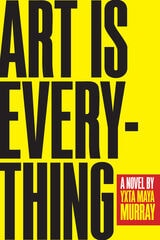
Art Is Everything
A NovelYxta Maya Murray
Northwestern University Press, 2021
In her funny, idiosyncratic, and propulsive new novel, Art Is Everything, Yxta Maya Murray offers us a portrait of a Chicana artist as a woman on the margins. L.A. native Amanda Ruiz is a successful performance artist who is madly in love with her girlfriend, a wealthy and pragmatic actuary named Xōchitl. Everything seems under control: Amanda’s grumpy father is living peacefully in Koreatown; Amanda is about to enjoy a residency at the Guggenheim Museum in New York and, once she gets her NEA, she’s going to film a groundbreaking autocritical documentary in Mexico.
But then everything starts to fall apart when Xōchitl’s biological clock begins beeping, Amanda’s father dies, and she endures a sexual assault. What happens to an artist when her emotional support vanishes along with her feelings of safety and her finances? Written as a series of web posts, Instagram essays, Snapchat freakouts, rejected Yelp reviews, Facebook screeds, and SmugMug streams-of-consciousness that merge volcanic confession with eagle-eyed art criticism, Art Is Everything shows us the painful but joyous development of a mid-career artist whose world implodes just as she has a breakthrough.
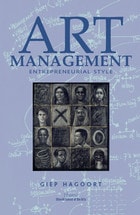
Art Management
Entrepreneurial StyleGiep Hagoort
Eburon Academic Publishers, 2003
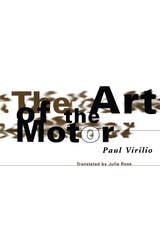
Art Of The Motor
Paul Virilio
University of Minnesota Press, 1995
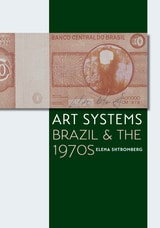
Art Systems
Brazil and the 1970sBy Elena Shtromberg
University of Texas Press, 2016
From currency and maps to heavily censored newspapers and television programming, Art Systems explores visual forms of critique and subversion during the height of Brazilian dictatorship, drawing sometimes surprising connections between artistic production and broader processes of social exchange during a period of authoritarian modernization. Positioning the works beyond the prism of politics, Elena Shtromberg reveals subtle forms of subversion and critique that reinvented the artists’ political terrain.
Analyzing key examples from Cildo Meireles, Antonio Manuel, Artur Barrio, Anna Bella Geiger, Sonia Andrade, Geraldo Mello, and others, the book offers a new framework for theorizing artistic practice. By focusing on the core economic, media, technological, and geographic conditions that circumscribed artistic production during this pivotal era, Shtromberg excavates an array of art systems that played a role in the everyday lives of Brazilians. An examination of the specific historical details of the social systems that were integrated into artistic production, this unique study showcases works that were accessed by audiences far outside the confines of artistic institutions. Proliferating during one of Brazil’s most socially and politically fraught decades, the works—spanning cartography to video art—do not conform to an easily identifiable style, form, material use, or medium. As a result of this breadth, Art Systems gives voice to the multifaceted forces at play in a unique chapter of Latin American cultural history.
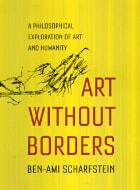
Art Without Borders
A Philosophical Exploration of Art and HumanityBen-Ami Scharfstein
University of Chicago Press, 2009
People all over the world make art and take pleasure in it, and they have done so for millennia. But acknowledging that art is a universal part of human experience leads us to some big questions: Why does it exist? Why do we enjoy it? And how do the world’s different art traditions relate to art and to each other?
Art Without Borders is an extraordinary exploration of those questions, a profound and personal meditation on the human hunger for art and a dazzling synthesis of the whole range of inquiry into its significance. Esteemed thinker Ben-Ami Scharfstein’s encyclopedic erudition is here brought to bear on the full breadth of the world of art. He draws on neuroscience and psychology to understand the way we both perceive and conceive of art, including its resistance to verbal exposition. Through examples of work by Indian, Chinese, European, African, and Australianartists, Art Without Borders probes the distinction between accepting a tradition and defying it through innovation, which leads to a consideration of the notion of artistic genius. Continuing in this comparative vein, Scharfstein examines the mutual influence of European and non-European artists. Then, through a comprehensive evaluation of the world’s major art cultures, he shows how all of these individual traditions are gradually, but haltingly, conjoining into a single current of universal art. Finally, he concludes by looking at the ways empathy and intuition can allow members of one culture to appreciate the art of another.
Lucid, learned, and incomparably rich in thought and detail, Art Without Borders is a monumental accomplishment, on par with the artistic achievements Scharfstein writes about so lovingly in its pages.
Art Works
Part 1, Volume 12Richard Meyer and David Román, eds.
Duke University Press, 0
Arguing for the primacy of the arts in queer life, the contributors show how art and performance can constitute a form of critical theorizing rather than simply an illustration of it. In different ways, each author demonstrates how art works to invigorate queer critique. The first issue includes a special dossier on AIDS activist film and video, marking the twenty-fifth year of the AIDS pandemic, and essays on late-nineteenth-century male nudes, lesbian surrealism, homoerotic photography in the Deep South, and the transnational, transgender contexts of the Pulitzer Prize–winning play I Am My Own Wife. Essays in the second issue focus on a series of queer case studies, including gay power graphics and psychedelia, female duets on the Broadway stage, Keith Haring and racial politics, British Vogue in the 1920s, and lesbian-feminist magazines of the 1970s. The issue concludes with a dossier of three shorter pieces on queer art and performance: an interview with the Chicano drag street performer Robert Legoretta (“Cyclona”), an essay on blogs and the Five Lesbian Brothers, and a discussion of a rarely exhibited work about cruising and public space by the contemporary artist Glenn Ligon.
Contributors. Deborah Bright, Jill Dolan, Jens Giersdorf, Jason Goldman, Scott Herring, Lucas Hilderbrand, Alexandra Juhasz, Tirza Latimer, Glenn Ligon, Richard Meyer, Rachel Middleman, Ricardo Montez, Erica Rand, Christopher Reed, David Román, Jennifer Flores Sternad, Margo Hobbs Thompson, Stacy Wolf
Art Works
Part 2, Volume 12Richard Meyer and David Román, eds.
Duke University Press, 0
Arguing for the primacy of the arts in queer life, the contributors show how art and performance can constitute a form of critical theorizing rather than simply an illustration of it. In different ways, each author demonstrates how art works to invigorate queer critique. The first issue includes a special dossier on AIDS activist film and video, marking the twenty-fifth year of the AIDS pandemic, and essays on late-nineteenth-century male nudes, lesbian surrealism, homoerotic photography in the Deep South, and the transnational, transgender contexts of the Pulitzer Prize–winning play I Am My Own Wife. Essays in the second issue focus on a series of queer case studies, including gay power graphics and psychedelia, female duets on the Broadway stage, Keith Haring and racial politics, British Vogue in the 1920s, and lesbian-feminist magazines of the 1970s. The issue concludes with a dossier of three shorter pieces on queer art and performance: an interview with the Chicano drag street performer Robert Legoretta (“Cyclona”), an essay on blogs and the Five Lesbian Brothers, and a discussion of a rarely exhibited work about cruising and public space by the contemporary artist Glenn Ligon.
Contributors. Deborah Bright, Jill Dolan, Jens Giersdorf, Jason Goldman, Scott Herring, Lucas Hilderbrand, Alexandra Juhasz, Tirza Latimer, Glenn Ligon, Richard Meyer, Rachel Middleman, Ricardo Montez, Erica Rand, Christopher Reed, David Román, Jennifer Flores Sternad, Margo Hobbs Thompson, Stacy Wolf
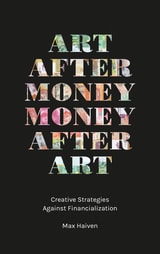
Art after Money, Money after Art
Creative Strategies Against FinancializationMax Haiven
Pluto Press, 2018
Even as he shows how imaginary money and the so-called “creative economy” extract an artist’s potential, Haiven identifies and assesses a range of creative strategies for mocking, decrypting, hacking, sabotaging, and exiting capitalism through art. Focusing on the ways contemporary artists understand, imagine, and contend with material and immaterial forms of cash, debt, and credit, Haiven reveals the potential for creativity and resistance in a world dominated by financialization.
Written for artists, activists, and scholars, this book takes seriously the need to understand and resist capitalism in an age of corporate abuse and exploitation.
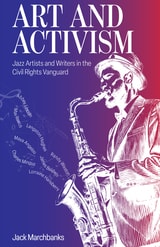
Art and Activism
Jazz Artists and Writers in the Civil Rights VanguardJack Marchbanks
Ohio University Press, 2026
Explore how jazz legends and literary icons united art and activism, shaping the civil rights movement and transforming American culture during the pivotal period between 1955 and 1965.
Art and Activism explores the powerful, symbiotic relationships among artists such as Nina Simone, Abbey Lincoln, and Lena Horne and their literary counterparts—Lorraine Hansberry, Maya Angelou, and Langston Hughes. These creative figures positioned themselves as cultural thought leaders within the evolving civil rights movement. While the Jim Crow South was the movement’s operational front, Jack Marchbanks argues that New York City’s intellectual, cultural, and fundraising communities functioned as its strategic command center.
Readers who admire jazz legends like Duke Ellington, Dave Brubeck, Miles Davis, and Charles Mingus—and those fascinated by prominent African American writers like James Baldwin and Ralph Ellison—will discover how these artists intertwined their work with the civil rights struggle. The book examines their involvement in pivotal confrontations and their connections with key leaders such as the Reverend Dr. Martin Luther King Jr., Daisy Bates, Ella Baker, and Malcolm X.
By illuminating the intersection of art and activism, this study offers a fresh perspective on the pivotal decade from 1955 to 1965. It is an essential resource for undergraduate courses and an engaging read for anyone seeking to understand the civil rights era through a cultural lens.
Art and Anarchy
Edgar Wind
Northwestern University Press, 1985
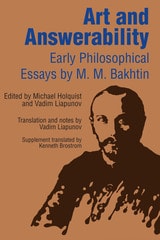
Art and Answerability
Early Philosophical EssaysBy M. M. Bakhtin
University of Texas Press, 1990
Art and Answerability contains three of Mikhail Bakhtin's early essays from the years following the Russian Revolution, when Bakhtin and other intellectuals eagerly participated in the debates, lectures, demonstrations, and manifesto writing of the period. Because they predate works that have already been translated, these essays—"Art and Answerability," "Author and Hero in Aesthetic Activity," and "The Problem of Content, Material, and Form in Verbal Art"—are essential to a comprehensive understanding of Bakhtin's later works. A superb introduction by Michael Holquist sets out the major themes and concerns of the three essays and identifies their place in the canon of Bakhtin's work and in intellectual history. The introduction, together with Vadim Liapunov's scholarly gloss, makes these essays accessible to students as well as scholars.
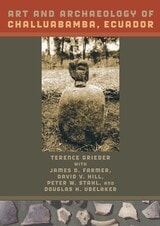
Art and Archaeology of Challuabamba, Ecuador
By Terence Grieder
University of Texas Press, 2009
Challuabamba (chī-wa-bamba)—now a developing suburb of Cuenca, the principal city in the southern highlands of Ecuador—has been known for a century as an ancient site that produced exceptionally fine pottery in great quantities. Suspecting that Challuabamban ceramics might provide a link between earlier, preceramic culture and later, highly developed Formative period art, Terence Grieder led an archaeological investigation of the site between 1995 and 2001. In this book, he and the team of art historians and archaeologists who excavated at Challuabamba present their findings, which establish the community's importance as a center in a network of trade and artistic influence that extended to the Amazon River basin and the Pacific Coast.
Art and Archaeology of Challuabamba, Ecuador presents an extensive analysis of ceramics dating to 2100-1100 BC, along with descriptions of stamps and seals, stone and shell artifacts, burials and their offerings, human remains, and zooarchaeology. Grieder and his coauthors demonstrate that the pottery of Challuabamba fills a gap between early and late Formative styles and also has a definite connection with later highland styles in Peru. They draw on all the material remains to reconstruct the first clear picture of Challuabamba's prehistory, including agriculture and health, interregional contacts and exchange, red-banded incised ware and ceramic production, and shamanism and cosmology.
Because southern Ecuador has received relatively little archaeological study, Art and Archaeology of Challuabamba, Ecuador offers important baseline data for what promises to be a key sector of the prehistoric Andean region.
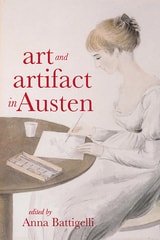
Art and Artifact in Austen
Anna Battigelli
University of Delaware Press, 2020
Published by University of Delaware Press. Distributed worldwide by Rutgers University Press.

Art and Cartography
Six Historical EssaysEdited by David Woodward
University of Chicago Press, 1987
Art and Contemporaneity
Edited by Frank Ruda and Jan Voelker
Diaphanes, 2015
Art and Contemporaneity features contributions from leading scholars, including Alain Badiou and Alexander García Düttmann, who bring theories of aesthetic philosophy to bear on one of the most crucial questions about contemporary art: how do works of art come to exist within and in relation to time? A specific temporality of an artwork emerges from the material and political conditions of its production. But works of art also forge new relationships to time in their reception, which are continually superimposed upon layers of history. With a broad range of perspectives, Art and Contemporaneity offers a sustained reflection on the relationship between art and time, and it will appeal to those interested in both the theory and practice of contemporary art.
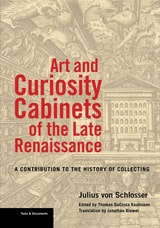
Art and Curiosity Cabinets of the Late Renaissance
A Contribution to the History of CollectingJulius von Schlosser
J. Paul Getty Trust, The, 2021
For the first time, the pioneering book that launched the study of art and curiosity cabinets is available in English.
Julius von Schlosser’s Die Kunst- und Wunderkammern der Spätrenaissance (Art and Curiosity Cabinets of the Late Renaissance) is a seminal work in the history of art and collecting. Originally published in German in 1908, it was the first study to interpret sixteenth- and seventeenth-century cabinets of wonder as precursors to the modern museum, situating them within a history of collecting going back to Greco-Roman antiquity. In its comparative approach and broad geographical scope, Schlosser’s book introduced an interdisciplinary and global perspective to the study of art and material culture, laying the foundation for museum studies and the history of collections. Schlosser was an Austrian professor, curator, museum director, and leading figure of the Vienna School of art history whose work has not achieved the prominence of his contemporaries until now.
This eloquent and informed translation is preceded by Thomas DaCosta Kaufmann’s substantial introduction. Tracing Schlosser’s biography and intellectual formation in Vienna at the turn of the twentieth century, it contextualizes his work among that of his contemporaries, offering a wealth of insights along the way.
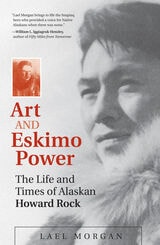
Art and Eskimo Power
The Life and Times of Alaskan Howard RockLael Morgan
University of Alaska Press, 2008
Art and Freedom
E. E. Sleinis
University of Illinois Press, 2002
What does a life with art offer that a life without art does not? Art and Freedom asserts that the fundamental point of the enterprise of art is the creation and delivery of values that are not singularly available in the nonart world.
E. E. Sleinis discusses visual art, literature, music, theater, and other art forms, arguing that as art both liberates and provides new points of focus and awareness, the art enterprise depends on a positive freeing from the nonart world, rather than on mere addition to it.
Art and Freedom introduces a novel classificatory system for representation, expression, and formalist theories of art. Sleinis argues that a characteristic defect of contemporary theories of art is their neglect of the issue of value. Challenging these reductive, formalist notions of art, he emphasizes the potential, and the need, for art to evolve and make progress in ways comparable to the sciences, albeit on a very different model.
A smart blend of incisive commentary and illuminating philosophy, Art and Freedom provides a useful context for transforming a sometimes baffling medium into a means of fostering personal growth and creating and sharing values.
Art and Freedom of Speech
Randall P. Bezanson
University of Illinois Press, 2009
This book analyzes the broad range of Supreme Court cases that concern the protection of art and free speech under the First Amendment. Finding that debates about free expression (whether in speech or art) swirl around sex and cultural blasphemy, Randall P. Bezanson tracks and interprets the Court's decisions on film, nude dancing, music, painting, and other visual expressions.
Showing how the Court has dealt with judgments of art, quality, meaning, and how to distinguish types of speech and expression, Bezanson explores issues as diverse as homosexuality in the Boy Scouts, gay and lesbian parade floats, 2 Live Crew's alleged copyright infringement, National Endowment for the Arts grants and diversity, dangerous art, and screenings of the film Carnal Knowledge. In considering the transformative meaning of art, the importance of community judgments, and the definition of speech in Court rulings, Bezanson focuses on the fundamental questions underlying the discussion of art as protected free speech: What are the boundaries of art? What are the limits on the government's role as supporter and "patron" of the arts? And what role, if any, may core social values of decency, respect, and equality play in limiting the production or distribution of art?
Accessibly written and evocatively argued, Art and Freedom of Speech explores these questions and concludes with the argument that, for legal purposes, art should be absolutely free under the First Amendment--in fact, even more free than other forms of speech.
Art and Imagination
A Study in the Philosophy of MindRoger Scruton
St. Augustine's Press, 2015
Scruton examines and rejects various attempts made by recent philosophers to demarcate the realm of aesthetic judgment. He argues that the logic of aesthetic judgment does not suffice to distinguish what is “aesthetic” from what is not, for aesthetic judgments must be explained in terms of the conditions for their acceptance rather than the conditions for their truth. These “acceptance conditions” can be understood only if we first know what is meant by aesthetic experience. This theory attempts to show how aesthetic experience can be regarded as autonomous, even though it is intimately connected with ordinary experience, and is indeed dependent on ordinary experience for its full description.
Art and Intellect in the Philosophy of Étienne Gilson
Francesca Aran Murphy
University of Missouri Press, 2004
Art and Life of Merritt Dana Houghton in the Northern Rockies, 1878-1919
by Michael A. Amundson
University of Wyoming Press, 2022
This lavishly illustrated biography details Houghton’s life and work from his birth in Michigan in 1846 to his death in 1919 in Spokane through extensive genealogical records, newspaper accounts, and his illustrations—including historic ranches and bird’s-eye views of Fort Collins, Colorado; Dillon, Montana; and Spokane, Washington and the only known illustrations of long-lost places like Pearl, Colorado, and Rambler, Wyoming. Also included is reproduction of a four-foot-by-eight-foot view of Sheridan, Wyoming and a sixty-image sample portfolio of his best-preserved illustrations organized by type.
Houghton’s work depicts the infrastructure of the new settler society that was remaking the West in the late nineteenth century and early twentieth century, and Amundson demonstrates how Houghton’s vision of the American West remains active today.
Art and Objecthood
Essays and ReviewsMichael Fried
University of Chicago Press, 1998
Ranging from brief reviews to extended essays, and including major critiques of Jackson Pollock, Morris Louis, Kenneth Noland, Jules Olitski, Frank Stella, and Anthony Caro, these writings establish a set of basic terms for understanding key issues in high modernism: the viability of Clement Greenberg’s account of the infralogic of modernism, the status of figuration after Pollock, the centrality of the problem of shape, the nature of pictorial and sculptural abstraction, and the relationship between work and beholder. In a number of essays Fried contrasts the modernist enterprise with minimalist or literalist art, and, taking a position that remains provocative to this day, he argues that minimalism is essentially a genre of theater, hence artistically self-defeating.
For this volume Fried has also provided an extensive introductory essay in which he discusses how he became an art critic, clarifies his intentions in his art criticism, and draws crucial distinctions between his art criticism and the art history he went on to write. The result is a book that is simply indispensable for anyone concerned with modernist painting and sculpture and the task of art criticism in our time.
Art and Politics
Between Purity and PropagandaJoes Segal
Amsterdam University Press, 2016
Joes Segal takes you on a journey to the Third Reich, where Emil Nolde supported the regime while being called degenerate; shows us Diego Rivera creating Marxist murals in Mexico and the United States for anti-Marxist governments and clients; ties Jackson Pollock's drip paintings in their Cold War context to both the FBI and the CIA; and considers the countless images of Mao Zedong in China as unlikely witnesses of radical political change.

Art and Politics
Psychoanalysis, Ideology, TheatreWalter A. Davis
Pluto Press, 2006
Starting with an analysis of the censorship of the play My Name is Rachel Corrie, which was withdrawn from production by a major New York theater due to a political pressure, Davis shows how all art that challenges the mainstream is either suppressed or distorted to suit the politics of our time---one that will not recognize the truth of human experience and the disorder at the heart of all civilization.
Art and Postcapitalism
Aesthetic Labour, Automation and Value ProductionDave Beech
Pluto Press, 2019
Art and Postcapitalism
Aesthetic Labour, Automation and Value ProductionDave Beech
Pluto Press, 2019
Art and Posthumanism
Essays, Encounters, ConversationsCary Wolfe
University of Minnesota Press, 2021
A sustained engagement between contemporary art and philosophy relating to our place in, and responsibility to, the nonhuman world
How do contemporary art and theory contemplate the problem of the “bio” of biopolitics and bioart? How do they understand the question of “life” that binds human and nonhuman worlds in their shared travail? In Art and Posthumanism, Cary Wolfe argues for the reconceptualization of nature in art and theory to turn the idea of the relationship between the human and the planet upside down.
Wolfe explores a wide range of contemporary artworks—from Sue Coe’s illustrations of animals in factory farms and Eduardo Kac’s bioart to the famous performance pieces of Joseph Bueys and the video installations of Eija-Liisa Ahtila, among others—examining how posthumanist theory can illuminate, and be illuminated by, artists’ engagement with the more-than-human world. Looking at biological and social systems, the question of the animal, and biopolitics, Art and Posthumanism explores how contemporary art rivets our attention on the empirically thick, emotionally charged questions of “life” and the “living” amid ecological catastrophe.
One of the foremost theorists of posthumanism, Wolfe pushes that philosophy out of the realm of the purely theoretical to show how a posthumanist engagement with particular works and their conceptual underpinnings help to develop more potent ethical and political commitments.
Art and Production
Boris Arvatov
Pluto Press, 2017
Derived from the internal struggles of Soviet Constructivism, as it confronted the massive problems of cultural transformation after 'War Communism', Arvatov's writing is a major force in the split that occurred in the revolutionary horizons of Constructivism in the early 1920s. Critical of early Constructivism's social-aesthetic process of art's transformation of daily life - epitomised in studio-based painting, photography and object making - Arvatov polemicises for the devolution of artistic skills directly into the relations of production and the factory.
Whilst acknowledging the problems of a pure factory-based Productivism, Arvatov remains overwhelmingly committed to a new role and function for art outside the conventional studio and traditional gallery. Addressing issues such as artistic labour and productive labour, the artist as technician, art and multidisciplinarity and a life for art beyond 'art' - finding new relevance amidst the extensive social turn of contemporary participatory art - Art and Production offers a timely and compelling manifesto.
Art and Race
The African (Up) Against the Enlightenment’s EyeAnne Lafont
J. Paul Getty Trust, The, 2026
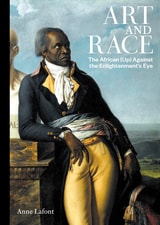
In this text, French art historian Anne Lafont examines the complexities and contradictions in Enlightenment-era ideas about race, focusing on the figurations of Africans and other people of color. Through studies of a wide range of eighteenth-century art, Lafont grounds her analysis in the objects themselves and, by doing so, highlights how visual works can reveal the values of the culture that produced them.
While Lafont locates—unsurprisingly—instances of the marginalization and objectification of Black people, she also draws attention to depictions that present African sitters as subjects in their own right. For example, Anne-Louis Girodet’s Portrait of Jean-Baptiste Belley (1797) offers a dignified, individualized representation of this formerly enslaved French politician from Saint-Domingue; and portraits of anonymous sitters show them as actual persons whose costumes and poses demonstrate their agency.
Ultimately, Lafont moves beyond artworks to consider the broader intellectual context of the Enlightenment, particularly ideas about freedom, equality, and universal human rights, which were anchored in visual culture and indexed by it. She reveals how these ideals often conflicted with the realities of colonialism and the shifting status of Black people during this era.
Art and Social Movements
Cultural Politics in Mexico and AztlánEdward J. McCaughan
Duke University Press, 2012
McCaughan argues that the social power of activist artists emanates from their ability to provoke people to see, think, and act in innovative ways. Artists, he claims, help to create visual languages and spaces through which activists can imagine and perform new collective identities and forms of meaningful citizenship. The artists' work that he discusses remains vital today—in movements demanding fuller democratic rights and social justice for working people, women, ethnic communities, immigrants, and sexual minorities throughout Mexico and the United States. Integrating insights from scholarship on the cultural politics of representation with structural analyses of specific historical contexts, McCaughan expands our understanding of social movements.
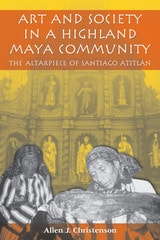
Art and Society in a Highland Maya Community
The Altarpiece of Santiago AtitlánBy Allen J. Christenson
University of Texas Press, 2001
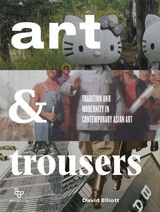
Art and Trousers
Tradition and Modernity in Contemporary Asian ArtDavid Elliott
National University of Singapore Press, 2021
An illustrated collection of more than thirty essays and 640 color images, Art and Trousers moves deftly between regional analysis, portraits of individual artists, and a metaphorical history of trousers. This book presents a panoramic view of modern and contemporary Asian art, varying its focus on the impacts of invention, tradition, exchange, colonization, politics, social development, and gender. David Elliott spotlights the practice of many leading global artists of the early twenty-first century, including Hiroshi Sugimoto, Cai Guo-Qiang, Ai Weiwei, Xu Bing, Rashid Rana, Bharti Kher, Makoto Aida, Chatchai Puipia, and Yeesookyung, among many others. Art and Trousers offers insight into the development of a key curatorial practice for our times, and it will be an essential resource for anyone seeking to understand contemporary art and the way it operates across borders.
Art and Truth after Plato
Tom Rockmore
University of Chicago Press, 2013