4743 books match the query 'Religion' and 371 start with a
cover of An Asian American Theology of Liberation

An Asian American Theology of Liberation

Tian An Wong

Lever Press, 2023

What does liberation mean for Asians at the core of an anti-Black, settler-colonial empire? This landmark book is the first to offer an Asian American theology of liberation for the present and future global crises. The broad scope of contemporary ideas that the book engages with will be of interest to students, activists, clergy, and scholars alike. Readers interested in radical politics, political theology, and Asian American history will find this book an important addition to their bookshelves.

Providing an intersectional frame that considers the breadth and diversity of Asian American experiences alongside those of Black, Indigenous, and Latinx thinkers in the United States and across the globe, An Asian American Theology of Liberation puts Asian American theology in dialogue with theories from psychoanalysis, Afro-pessimism, Black Marxism, postcolonial studies, and queer theology. In this groundbreaking work, Wong Tian An combines archival research uncovering a much overlooked theology of liberation — born in the 1970s out of Asian Americans’ struggles for political recognition and civil rights in the United States — with powerful analyses drawing from the theological, intellectual, and political developments of the last half century.

This wide-ranging study connects urgent themes such as protest movements in Hong Kong, anti-Asian violence in the United States, and Indigenous struggles everywhere, while building on Asian theologies such as Dalit theology in India, theology of struggle in the Philippines, and Minjung theology in Korea. Drawing deeply and broadly across disciplines, the book altogether revives and renews an Asian American theology of liberation for a new generation.
 
[more]
cover of An Epidemic among My People: Religion, Politics, and COVID-19 in the United States

An Epidemic among My People

Religion, Politics, and COVID-19 in the United States

Edited by Paul A. Djupe and Amanda Friesen

Temple University Press, 2023

The pandemic presented religion as a paradox: faith is often crucial for helping people weather life’s troubles and make difficult decisions, but how can religion continue to deliver these benefits and provide societal structure without social contact?  The topical volume, An Epidemic among My People explains how the COVID-19 pandemic stress tested American religious communities and created a new politics of religion centered on public health.

The editors and contributorsconsider how the virus and government policy affected religion in America. Chapters examine the link between the prosperity gospel and conspiracy theories, the increased purchase of firearms by evangelicals, the politics of challenging public health orders as religious freedom claims, and the reactions of Christian nationalists, racial groups, and female clergy to the pandemic (and pandemic politics). As sharp lines were drawn between people and their governments during this uncertain time, An Epidemic among My People provides a comprehensive portrait of religion in American public life.  
[more]
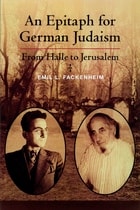
cover of An Epitaph for German Judaism: From Halle to Jerusalem

An Epitaph for German Judaism

From Halle to Jerusalem

Emil Fackenheim

University of Wisconsin Press, 2007

     Emil Fackenheim’s life work was to call upon the world at large—and on philosophers, Christians, Jews, and Germans in particular—to confront the Holocaust as an unprecedented assault on the Jewish people, Judaism, and all humanity. In this memoir, to which he was making final revisions at the time of his death, Fackenheim looks back on his life, at the profound and painful circumstances that shaped him as a philosopher and a committed Jewish thinker.
     Interned for three months in the Sachsenhausen concentration camp after Kristallnacht, Fackenheim was released and escaped to Scotland and then to Canada, where he lived in a refugee internment camp before eventually becoming a congregational rabbi and then, for thirty-five years, a professor of philosophy. He recalls here what it meant to be a German Jew in North America, the desperate need to respond to the crisis in Europe and to cope with its overwhelming implications for Jewish identity and community. His second great turning point came in 1967, as he saw Jews threatened with another Holocaust, this time in Israel. This crisis led him on a pilgrimage to Jerusalem and ultimately back to Germany, where he continued to grapple with the question, How can the Jewish faith—and the Christian faith—exist after the Holocaust?


“An ‘epoch-making’ autobiography.”—Arnold Ages, Jewish Tribune

 
[more]
cover of An Evangelical Adrift: The Making of John Henry Newman's Theology

An Evangelical Adrift

The Making of John Henry Newman's Theology

Geertjan Zuijdwegt

Catholic University of America Press, 2022
An Evangelical Adrift is a theological biography of John Henry Newman (1801-1890) that reconstructs the most formative period in his development: the years between his teenage conversion to evangelicalism in 1816 and the beginning of the Tractarian Movement in 1833. By the early 1830s, Newman had explicitly rejected much of the theology he espoused in the late 1810s and early 1820s, and developed a highly original, deeply personal, and quite radical alternative, whose fundamental notions continued to shape his thought in later life. To date, there is neither a historically accurate nor a theologically sophisticated account of this change: the period in which it occurred is neglected, its significance is overlooked, its nature and content are misrepresented, and its scope is narrowed. Besides being modelled on Newman’s own brief treatment of the period in his autobiographical Apologia pro vita sua (1864), later scholarly accounts are burdened by a persistent assumption that Newman’s catholic sensibility and anti-liberal convictions were constants throughout his life. This assumption was problematized by Frank Turner’s revisionist biography of the Anglican Newman (2002) and the ensuing debate about its reception. Zuijdwegt argues that Turner rightly identified evangelicalism as a key polemical target of the Anglican Newman, but stretched his argument too far by reducing Newman’s self-proclaimed lifelong battle against liberalism as a much later gloss on this earlier history. The present study offers a compelling alternative to both mainline and revisionist interpretations. Based on detailed historical and theological analysis of the whole range of primary sources (including much neglected published and unpublished material), it meticulously reconstructs Newman’s youthful adoption of, gradual departure from, and theological alternative to evangelicalism. Against most mainline studies, it argues that this was a fundamental transformation, affecting nearly every aspect of Newman’s theology. Against Turner and other revisionists, it argues that this change was the product of careful and consistent theological reasoning and reflection, and that anti-liberalism was just as integral to it as anti-evangelicalism.
[more]
cover of An Exemplar of the True: The Tabernacle and the Architecture of Medieval Theology

An Exemplar of the True

The Tabernacle and the Architecture of Medieval Theology

Allison Zbicz Michael

Catholic University of America Press, 2026
Scholarly academics, cloistered monks, and high-ranking prelates once found abundantly fertile material for theological reflection in the Exodus descriptions of Tabernacle and the Ark of the Covenant. Where traditional scholarly accounts of the rise of scholasticism tend to focus almost entirely on the incorporation of Aristotelian thought and the legacy of Peter Lombard’s sententiae, attention to these works illuminates some of the deeply biblical roots of scholastic patterns of thought. The Tabernacle often appealed to these early interpreters because it provided a valuable source for exploring the structural patterns embedded in creation. The first part of this book examines the works of four major twelfth-century figures on this popular interpretive theme. Richard of St. Victor, Stephen Langton, Peter of Poitiers, and Adam of Dryburgh each share the conviction that the details of the Tabernacle’s material structure reflect the structures of immaterial truths. The second part of the book shows the rich inheritance of this tradition, as received by Saint Bonaventure and Saint Thomas Aquinas. In the twelfth-century, the image of the Tabernacle, composed of diverse parts arranged in a coherent whole, provides a divinely-given source for theological method and a model for attempts to systematize and integrate various forms of knowledge. At times, the Tabernacle structure suggests for these interpreters certain correspondences with Aristotelian insights, while elsewhere, the edifice undergirds attempts to offer a rigorous counterbalance to perceived philosophical excesses. In both cases, the Tabernacle is taken as a biblical locus for working through methodological questions prompted by the increasing availability of Aristotle’s corpus. These biblical interpreters bequeathed to the thirteenth-century magistri a structural framework and a confidence that disparate forms of human knowing all fit together.
[more]
cover of An Exposition of the On the Hebdomads of Boethius (Thomas Aquinas in Translation)

An Exposition of the On the Hebdomads of Boethius (Thomas Aquinas in Translation)

Saint Thomas Aquinas

Catholic University of America Press, 2001
The English translation itself, in facing-page format with the 1992 Leonine critical edition of Aquinas's Latin text, remains faithful to the text and at the same time clear and readable.
[more]
cover of An Image of God: The Catholic Struggle with Eugenics

An Image of God

The Catholic Struggle with Eugenics

Sharon M. Leon

University of Chicago Press, 2013
During the first half of the twentieth century, supporters of the eugenics movement offered an image of a racially transformed America by curtailing the reproduction of “unfit” members of society. Through institutionalization, compulsory sterilization, the restriction of immigration and marriages, and other methods, eugenicists promised to improve the population—a policy agenda that was embraced by many leading intellectuals and public figures. But Catholic activists and thinkers across the United States opposed many of these measures, asserting that “every man, even a lunatic, is an image of God, not a mere animal."

In An Image of God, Sharon Leon examines the efforts of American Catholics to thwart eugenic policies, illuminating the ways in which Catholic thought transformed the public conversation about individual rights, the role of the state, and the intersections of race, community, and family. Through an examination of the broader questions raised in this debate, Leon casts new light on major issues that remain central in American political life today: the institution of marriage, the role of government, and the separation of church and state. This is essential reading in the history of religion, science, politics, and human rights.

[more]
cover of An Imperfect Book: What the Book of Mormon Tells Us about Itself

An Imperfect Book

What the Book of Mormon Tells Us about Itself

Earl M. Wunderli

Signature Books, 2013

My first impression in reading this text was that it was rightly named in its title. Indeed the author intends to lead the reader through an exploration of a book that he describes as an imperfect book, and does so in a way that enables the book to speak for itself. Given the fact that so many approach the Book of Mormon through lenses already adjusted to read the text for apologetic purposes, I found the author’s engagement of the Book of Mormon to be respectfully and critically refreshing. Feeling unable to rely on historians, archeologists, self-designated authorities, or others with sure knowledge of the Book of Mormon, the author turns to the book itself for what it might reveal about itself. Rather than turning to external evidences to vindicate the central claims of the Book of Mormon, the author invites the reader to explore internal evidences to be discovered in the book itself. He does this while engaging a broad range of contemporary scholarship.

Dale E. Luffman, Association for Mormon Letters
[more]
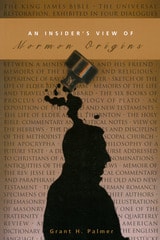
cover of An Insider's View of Mormon Origins

An Insider's View of Mormon Origins

Grant Palmer

Signature Books, 2002

Over the past thirty years, an enormous amount of research has been conducted into Mormon origins—Joseph Smith’s early life, the Book of Mormon, the prophet’s visions, and the restoration of priesthood authority. Longtime LDS educator Grant H. Palmer suggests that most Latter-day Saints remain unaware of the significance of these discoveries, and he gives a brief survey for anyone who has ever wanted to know more about these issues.

He finds that much of what we take for granted as literal history has been tailored over the years—slightly modified, added to, one aspect emphasized over another—to the point that the original narratives have been nearly lost. What was experienced as a spiritual or metaphysical event, something from a different dimension, often has been refashioned as if it were a physical, objective occurrence. This is not how the first Saints interpreted these events. Historians who have looked closer at the foundational stories and source documents have restored elements, including a nineteenth-century world view, that have been misunderstood, if not forgotten.  
[more]
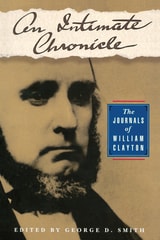
cover of An Intimate Chronicle: The Journals of William Clayton

An Intimate Chronicle

The Journals of William Clayton

George D. Smith

Signature Books, 1995

William Clayton is best remembered today for his hymns, especially “Come, Come Ye Saints.” But as one of the earliest Latter-day Saint scribes, he made intellectual as well as artistic contributions to his church, and his records have been silently incorporated into official Mormon scripture and history. Of equal significance are his personal impressions of day-to-day activities, which describe a social and religious world largely unfamiliar to modern readers.

In ministering to the sick, for instance, Clayton anointed with perfumed oil and rum. He performed baptisms to heal the sick. Church services, held irregularly, were referred to as “going to meeting” and seemed to be elective. He testifies of people speaking in tongues and of others “almost speaking in tongues.” When introduced to plural marriage, he was reluctant but eventually became one of its most enthusiastic proponents, marrying ten women and fathering forty-two children.

Since polygamy was initially secret, Clayton spent much of his time putting out the fires of innuendo and discontent. He caught his first plural wife rendezvousing with her former fiancé; later, when she became pregnant, her mother–his unaware mother-in-law–was so overwrought that she attempted suicide. Joseph Smith reassured him: “Just keep her at home and brook it and if they raise trouble about it and bring you before me I will give you an awful scourging and probably cut you off from the church and then I will set you ahead as good as ever.” Clayton was also the object of Emma Smith’s attentions, allegedly part of a jealous wife’s plan to make a cuckold of her errant husband.
[more]
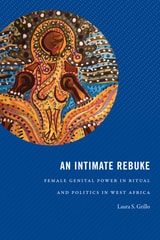
cover of An Intimate Rebuke: Female Genital Power in Ritual and Politics in West Africa

An Intimate Rebuke

Female Genital Power in Ritual and Politics in West Africa

Laura S. Grillo

Duke University Press, 2018

Throughout West African societies, at times of social crises, postmenopausal women—the Mothers—make a ritual appeal to their innate moral authority. The seat of this power is the female genitalia. Wielding branches or pestles, they strip naked and slap their genitals and bare breasts to curse and expel the forces of evil. In An Intimate Rebuke Laura S. Grillo draws on fieldwork in Côte d’Ivoire that spans three decades to illustrate how these rituals of Female Genital Power (FGP) constitute religious and political responses to abuses of power. When deployed in secret, FGP operates as spiritual warfare against witchcraft; in public, it serves as a political activism. During Côte d’Ivoire’s civil wars FGP challenged the immoral forces of both rebels and the state. Grillo shows how the ritual potency of the Mothers’ nudity and the conjuration of their sex embodies a moral power that has been foundational to West African civilization. Highlighting the remarkable continuity of the practice across centuries while foregrounding the timeliness of FGP in contemporary political resistance, Grillo shifts perspectives on West African history, ethnography, comparative religious studies, and postcolonial studies.
[more]
cover of An Introduction to Ancient Iranian Religion: Readings from the Avesta and the Achaemenid Inscriptions

An Introduction to Ancient Iranian Religion

Readings from the Avesta and the Achaemenid Inscriptions

William W. Malandra, EditorTranslated by William W. Malandra

University of Minnesota Press, 1983

An Introduction to Ancient Iranian Religion was first published in 1983. Minnesota Archive Editions uses digital technology to make long-unavailable books once again accessible, and are published unaltered from the original University of Minnesota Press editions.

When Persia fell to Islam in the mid-seventh century, the ancient Iranian religion of Zoroastrianism all but disappeared (although it is still practiced by small groups in India and Iran). As one of the dominant religions of antiquity, it influenced the Judeo- Christian tradition as well as some forms of gnosticism. Despite its age and venerable place in the history of world religions, Zoroastrianism remains little known outside of a few philologists and historians of religion. Because of the difficulty of translation, there is little primary textual material available for nonspecialists; the few translations that do exist are quite old.

In An Introduction to Ancient Iranian Religion, William Malandra provides not only modern English translations of the sacred texts but also a comprehensive introduction to the subject of Zoroastrianism itself. In an introductory essay Malandra outlines the main features of Zoroastrianism in its historical, cultural, and spiritual setting. His new translations of readings from the Avesta, the sacred book of Zoroastrianism, and selections from the Achaemenid inscriptions of the great kings Darius and Xerxes are accompanied by interpretive notes that allow students to make their way through this difficult material. This book is, therefore, not just a collection of texts but a selfcontained introduction to Zoroastrianism that can be used by the nonspecialist without recourse to additional interpretive works.
[more]
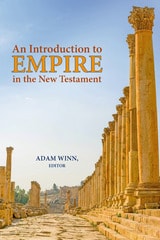
cover of An Introduction to Empire in the New Testament

An Introduction to Empire in the New Testament

Adam Winn

SBL Press, 2016

Explore how empire is a crucial foreground for reading and interpreting the New Testament

In the last three decades, significant attention has been given to the way in which New Testament texts engage and respond to the imperial world in which they were written. The purpose of the present volume is to introduce students and non-specialists to the growing subfield of New Testament studies known as empire studies. Contributors seek to make readers aware of the significant work that has already been produced, while also pointing them to new ways in which this field is moving forward. The contributors are Bruce W. Longenecker, Richard A. Horsley, Warren Carter, Adam Winn, Eric D. Barreto, Beth M. Sheppard, Neil Elliot, James R. Harrison, Harry O. Maier, Deborah Krause, Jason A.Whitlark, Matthew R. Hauge, Kelly D. Liebengood, and Davina C. Lopez.

Features:
  • Essays from a diverse group of interpreters who at times have differing presuppositions, methods, and concerns
  • Articles introduce students and non-specialists to the Roman imperial realities regularly encountered by first and second century Christians
  • Contributions explore the strategies employed by early Christians to respond to the Roman empire
  • [more]
    cover of An Introduction to Personalism

    An Introduction to Personalism

    Juan Manuel Burgos

    Catholic University of America Press, 2018

    Much has been written about the great personalist philosophers of the 20th century – including Jacques Maritain and Emmanuel Mournier, Martin Buber and Emmanuel Levinas, Dietrich von Hildebrand and Edith Stein, Max Scheler and Karol Wojtyla (later Pope John Paul II) – but few books cover the personalist movement as a whole. An Introduction to Personalism fills that gap.

    Juan Manuel Burgos shows the reader how personalist philosophy was born in response to the tragedies of two World Wars, the Great Depression, and the totalitarian regimes of the 1930s. Through a revitalization of the concept of the person, an array of thinkers developed a philosophy both rooted in the best of the intellectual tradition and capable of dialoguing with contemporary concerns.

    Burgos then delves into the potent ideas of more than twenty thinkers who have contributed to the growth of personalism, including Romano Guardini, Gabriel Marcel, Xavier Zubiri, and Michael Polanyi. Burgos’s encyclopedic knowledge of the movement allows for a concise and well-rounded perspective on each of the personalists studied.

    An Introduction to Personalism concludes with a synthesis of personalist thought, bringing together the brightest insights of each personalist philosopher into an organic whole. Burgos argues that personalism is not an eclectic hodge-podge, but a full-fledged school of philosophy, and gives a dynamic and rigorous exposition of the key features of the personalist position.

    Our times are marked by numerous and often contradictory ideas about the human person. An Introduction to Personalism presents an engaging anthropological vision capable of taking the lead in the debate about the meaning of human existence and of winning hearts and minds for the cause of the dignity of every person in the 21st century and beyond.
    [more]
    cover of An Introduction to Vatican II as an Ongoing Theological Event

    An Introduction to Vatican II as an Ongoing Theological Event

    Matthew Levering

    Catholic University of America Press, 2017

    Contemporary scholars often refer to “the event of Vatican II,” but what kind of an event was it? In this first book of the new CUA Press series Sacra Doctrina, Matthew Levering leads his readers to see the Council as a “theological event”—a period of confirming and continuing God’s self-revelation in Christ into a new historical era for the Church.

    This is an introduction to Vatican II with a detailed summary of each of its four central documents—the dogmatic constitutions—followed by explanations of how to interpret them. In contrast to other introductions, which pay little attention to the theological soil in which the documents of Vatican II germinated, Levering o­ffers a reading of each conciliar Constitution in light of a key theological author from the era: René Latourelle, SJ for Dei Verbum (persons and propositions); Louis Bouyer, CO for Sacrosanctum Concilium (active participation); Yves Congar, OP for Lumen Gentium (true and false reform); and Henri de Lubac, SJ for Gaudium et Spes (nature and grace).

    This theological event is “ongoing,” Levering demonstrates, by tracing in each chapter the theological debates that have stretched from the close of the council till the present, and the difficulties the Church continues to encounter in encouraging an ever deeper participation in Jesus Christ on the part of all believers. In this light, the book’s final chapter compares the historicist (Massimo Faggioli) and Christological (Robert Imbelli) interpretations of Vatican II, arguing that historicism can undermine the Council’s fundamental desire for a reform and renewal rooted in Christ. The conclusion addresses the concerns about secularization and loss of faith raised after the Council by Henri de Lubac, Joseph Ratzinger, and Yves Congar, arguing that contemporary Vatican II scholarship needs to take these concerns more seriously.

    [more]
    cover of An Islamic Alliance: Ali Dinar and the Sanusiyya, 1906-1916

    An Islamic Alliance

    Ali Dinar and the Sanusiyya, 1906-1916

    Jay Spaulding and Lidwien Kapteijns

    Northwestern University Press, 2011
    An Islamic Alliance uses non-European sources to portray the defense, by devoutly Islamic leaders, of some of the last parts of the African continent to be conquered during the imperial European "scramble for Africa" that ended with the First World War. These surviving pieces of diplomatic correspondence concentrate on the alliance between Ali Dinar, prince of the sultanate of Dar Fur in the western Sudan, and the leaders of the Sanusi brotherhood then based in southern Libya. In contrast to the European view of the alliance as ephemeral, the documents indicate a sincere, passionate attempt to join--despite immense physical difficulties--an ancient monarchist tradition to a more modern, trade-based sociopolitical organization.
    [more]
    cover of Analogies of Transcendence

    Analogies of Transcendence

    Stephen M. Fields

    Catholic University of America Press, 2016

    The problem of nature and grace lies at the heart of Christian theology. No dimension of divine revelation can be addressed without implicitly drawing reference to this issue.Analogies of Transcendence focuses on the central role that the analogies of being and faith play in developing a solution to the problem. These link God, as self-manifesting transcendence, to the human person as both fallen and justified, and to the material cosmos. Although the proposed solution draws on the work of Maréchal, de Lubac, Balthasar, and Rahner, it criticizes their approach for its underdeveloped analogies that diminish nature in grace's engagement with it. In redressing this weakness, Fr. Fields adapts its solution to the intellectual struggle of our time. This volume examines the origins and structure of modernity, which, it asserts, has not been superseded and is therefore critical of'‘postmodernism,' as well as of some ambiguous legacies of Thomism.
    [more]
    cover of Anatomy of a Massacre: The Destruction of Gnadenhutten, 1782

    Anatomy of a Massacre

    The Destruction of Gnadenhutten, 1782

    Eric Sterner

    Westholme Publishing, 2027

    An Act of Unfathomable Cruelty that Presaged Post-Revolutionary America’s Treatment of Native Americans 
    On March 8, 1782, a group of western settlers killed nearly one hundred unarmed and peaceful Indians who had converted to Christianity under the tutelage of missionaries from the Church of the United Brethren. The murders were cold-blooded and heartless; roughly two-thirds of those executed were women and children. Its brutality stunned Benjamin Franklin in far-away France. He wrote: “the abominable Murders committed by some of the frontier People on the poor Moravian Indians, has given me infinite Pain and Vexation. The Dispensations of Providence in this World puzzle my weak Reason. I cannot comprehend why cruel Men should have been permitted thus to destroy their Fellow Creatures.” Since that maelstrom of violence struck the small Indian village of Gnadenhutten, history has treated the episode as a simple morality tale. While there were ample incidents of good and evil on March 8, that summation does not explain what brought murderers and victims together on the banks of the Muskingum River in today’s Ohio. It was actually the culmination of a series of events among different Indian tribes, the British, Congressional authorities at Pittsburgh, the Pennsylvania militia, and key individuals, all of which are lost in contemporary explanations of the massacre.
        Anatomy of a Massacre: The Destruction of Gnadenhutten, 1782 fills that void by examining the political maneuvering among white settlers, Continental officials, British officers, western Indian tribes, missionaries, and the Indians practicing Christianity that culminated in the massacre. Uniquely, it follows the developing story from each perspective, using first-person accounts from each group to understand how they saw and experienced the changes on the American frontier. Along the way it profiles some of the key individuals responsible for the way the war unfolded. It is a fresh look at an often mentioned, but seldom understood, episode in the American Revolution.
    [more]
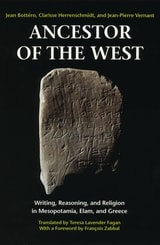
    cover of Ancestor of the West: Writing, Reasoning, and Religion in Mesopotamia, Elam, and Greece

    Ancestor of the West

    Writing, Reasoning, and Religion in Mesopotamia, Elam, and Greece

    Jean Bottéro, Clarisse Herrenschmidt, and Jean-Pierre Vernant

    University of Chicago Press, 2000

    With Ancestor of the West, three distinguished French historians reveal the story of the birth of writing and reason, demonstrating how the logical religious structures of Near Eastern and Mesopotamian cultures served as precursors to those of the West.

    "Full of matter for anyone interested in language, religion, and politics in the ancient world."—R. T. Ridley, Journal of Religious History

    "In this accessible introduction to the ancient world, three leading French scholars explore the emergence of rationality and writing in the West, tracing its development and its survival in our own traditions. . . . Jean Bottero focuses on writing and religion in ancient Mesopotamia, Clarisse Herrenschmidt considers a broader history of ancient writing, and Jean-Pierre Vernant examines classical Greek civilization in the context of Near Eastern history."—Translation Review
    [more]
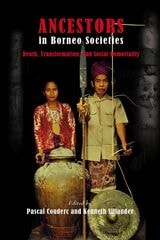
    cover of Ancestors in Borneo Societies: Death, Transformation, and Social Immortality

    Ancestors in Borneo Societies

    Death, Transformation, and Social Immortality

    Edited by Pascal Coudrec and Kenneth Sillander

    National University of Singapore Press, 2012

    Death, eschatology and exotic indigenous deathways have long held a privileged position in the ethnographic and popular literature on Borneo. Until the publication of this study, however, ancestors have remained a strangely neglected topic. Differing from classic ethnographic representations of ancestor worship based on Sino-African material, this volume will be not just of interest to regional specialists; it will also enrich the general anthropological theory of ancestors, kinship and religion.
    [more]
    cover of Ancestral Voices: Religion and Nationalism in Ireland

    Ancestral Voices

    Religion and Nationalism in Ireland

    Conor Cruise O'Brien

    University of Chicago Press, 1995

    Scholar and statesman Conor Cruise O'Brien illuminates why peace has been so elusive in Northern Ireland. He explains the conflation of religion and nation through Irish history into our own time. Using his life as a prism through which he interprets Ireland's past and present, O'Brien identifies case after case of the lethal mixing of God with country that has spilled oceans of blood throughout this century of nationalism and that, from Bosnia to Northern Ireland, still curses the world.

    "O'Brien's bravura performance [is] seductive in its intellectual sweep and literary assurance."—Toby Barnard, Times Literary Supplement

    "Has the magical insistence which Conor Cruise O'Brien can produce at his best. . . . Where he looks back to his own childhood the book shines. He writes of his mother and father with effortless grace and candor, with a marvelous, elegant mix of affection and detachment."—Observer
    [more]
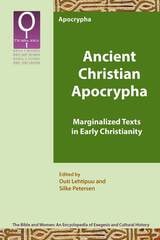
    cover of Ancient Christian Apocrypha: Marginalized Texts in Early Christianity

    Ancient Christian Apocrypha

    Marginalized Texts in Early Christianity

    Outi Lehtipuu

    SBL Press, 2022

    This latest volume in the Bible and Women series examines ancient noncanonical Christian texts for what they reveal about women, their engagement with Scripture, and attitudes toward them in texts dating to the second to eighth century. Three sections include once-forgotten texts rediscovered in locations such as Nag Hammadi, those that have been in continuous use through the centuries, and works written by women that are traditionally excluded from discussions of noncanonical texts. Contributors Bernadette J. Brooten, María José Cabezas Cabello, Anna Carfora, Ute E. Eisen, Judith Hartenstein, Ursula Ulrike Kaiser, Karen L. King, Outi Lehtipuu, Heidrun Mader, Antti Marjanen, Silvia Pellegrini, Silke Petersen, Uwe-Karsten Plisch, Cristina Simonelli, Anna Rebecca Solevåg, M. Dolores Martin Trutet, and Carmen Bernabé Ubieta examine a range of texts, including noncanonical gospels and acts, poems, prophecy, and grave inscriptions.
    [more]
    cover of Ancient Egypt: Cradle of Early Christianity

    Ancient Egypt

    Cradle of Early Christianity

    Tjeu van den Berk

    Eburon Academic Publishers, 2021

    Traces the sources of the Christian religion to ancient Egypt.

    The earliest Christian myths emerged in the melting pot of gnostic Alexandria—not in orthodox Jerusalem, classical Athens, or legalistic Rome. In this book, Tjeu van den Berk traces the sources of the Christian faith to the banks of the river Nile. Focusing on ancient archetypes, van den Berk underscores the striking similarities between the Egyptian and Christian religions. In this fascinating study, he explores the symbolism of the Trinity, the cross, and the myths of a god born of a virgin. He also traces the origins of the stories of Lazarus and Saint George, and he finds stunning parallels between Egyptian mythology and the Book of Revelation. 
     
    [more]
    cover of Ancient Pathways and Hidden Pursuits: Religion, Morals, and Magic in the Ancient World

    Ancient Pathways and Hidden Pursuits

    Religion, Morals, and Magic in the Ancient World

    Georg Luck

    University of Michigan Press, 2000

    Among the most thoughtful students of the ancient world, Georg Luck has offered subtle and nuanced interpretations of a broad range of classical subjects. Ancient Pathways, Hidden Pursuits brings together the best of Georg Luck's many papers and articles on Graeco-Roman life and thought in the realm of religious beliefs, occult practices, psychology, and morals. The collection complements Luck's Arcana Mundi, an introduction to magic and the occult in antiquity, which has been published in several languages.
    The present volume includes the author's thoughts on Greek and Roman religions, early Christianity, Greek and Roman psychology and morals, and magic and the occult. Luck's main findings explore generally neglected areas of ancient civilization, locating magic and philosophy with religion as vehicles for moral and psychological guidance. Throughout this study, one finds meaning in "superstitious" and conflicting patterns of behavior and learns much about the nature of the human soul. This collection will serve as a valuable reference for those interested in the driving motivations of ancient man.
    "The topics of the individual articles in this volume are very central and of great humanistic appeal, and they indeed form a thematic unity concerning man and religion in Greek and Roman society." --Ludwig Koenen, Herbert C. Youtie Distinguished University Professor of Papyrology, University of Michigan
    Georg Luck is Professor of Classics, emeritus, The Johns Hopkins University.
    [more]
    cover of Ancient Sisterhood: The Lost Traditions of Hagar and Sarah

    Ancient Sisterhood

    The Lost Traditions of Hagar and Sarah

    Savina J. Teubal

    Ohio University Press, 1997

    In this fascinating piece of scholarly detective work, biblical scholar Savina J. Teubal peels away millenia of patriarchal distortion to reveal the lost tradition of biblical matriarchs. In Ancient Sisterhood: The Lost Traditions of Hagar and Sarah (originally published as Hagar the Egyptian), she shows that Hagar, the mother of Ishmael, was actually lady-in-waiting to the priestess Sarah and participated in an ancient Near Eastern custom of surrogate motherhood.

    Ancient Sisterhood cites evidence that Hebrew women actually enjoyed the privileges and sanctity of their own religious practices. These practices, however, were gradually eroded and usurped by the establishment of patriarchal monarchies that were based on militaristic conquest and power. Teubal examines the figures of Hagar and Sarah from a feminist perspective that combines thorough scholarship with an informed and detailed understanding of the cultural and religious influences from which the mysterious biblical figure of Hagar emerged. She looks at Hagar's important role in the genesis of Hebrew culture, her role as mother of the Islamic nations, and her power as a matriarch as opposed to her apparent status as a concubine.

    Teubal posits two distinct sources for the Hagar episodes: Hagar as companion to Sarah and an unknown woman whom she refers to as the desert matriarch. She explores whether Hagar was a slave to Abraham or Sarah, the differences between Hagar and the desert matriarch, and the obscurantism of these important elements in biblical texts. Teubal sheds considerable light on two central figures of these world religions and “the disassociation of woman from her own female religious experience.”
    [more]
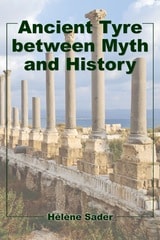
    cover of Ancient Tyre between Myth and History

    Ancient Tyre between Myth and History

    Hélène Sader

    SBL Press, 2026
    Hélène Sader gathers and synthesizes the archaeological and textual evidence from excavations conducted during the past fifty years at Tyre and its far-flung settlements. By incorporating the results obtained from western Tyrian sites rich in metals, Sader confirms that Tyre and its colonies, which stretched to the Atlantic coast of Spain, held incredible wealth. In addition to her analysis of the material remains, soundings, and surveys, Sader includes a thorough discussion of the main Tyrian gods and the practice of cremation introduced at the beginning of the Iron Age. More than seventy-five images and maps illuminate the development of Tyre and its cultural heritage. The result is a more complex picture of the history of Tyre than that known from its description in the Hebrew Bible, ancient Near Eastern sources, and classical histories. Tyre emerges from the shadows of myth as the main protagonist of the Phoenician maritime expansion.
    [more]
    cover of Ancient Zapotec Religion: An Ethnohistorical and Archaeological Perspective

    Ancient Zapotec Religion

    An Ethnohistorical and Archaeological Perspective

    Michael Lind

    University Press of Colorado, 2015

    Ancient Zapotec Religion is the first comprehensive study of Zapotec religion as it existed in the southern Mexican state of Oaxaca on the eve of the Spanish Conquest. Author Michael Lind brings a new perspective, focusing not on underlying theological principles but on the material and spatial expressions of religious practice.

    Using sixteenth- and seventeenth-century Spanish colonial documents and archaeological findings related to the time period leading up to the Spanish Conquest, he presents new information on deities, ancestor worship and sacred bundles, the Zapotec cosmos, the priesthood, religious ceremonies and rituals, the nature of temples, the distinctive features of the sacred and solar calendars, and the religious significance of the murals of Mitla—the most sacred and holy center. He also shows how Zapotec religion served to integrate Zapotec city-state structure throughout the valley of Oaxaca, neighboring mountain regions, and the Isthmus of Tehuantepec.

    Ancient Zapotec Religion is the first in-depth and interdisciplinary book on the Zapotecs and their religious practices and will be of great interest to archaeologists, epigraphers, historians, and specialists in Native American, Latin American, and religious studies. 
    [more]
    cover of Ancoratus

    Ancoratus

    Epiphanius of Cyprus

    Catholic University of America Press, 2014
    Epiphanius of Cyprus was lead bishop of the island from 367 until his death in 403, and he was a contemporary of several of the great church fathers of the patristic era, including Athanasius, Basil, and Jerome. He is well known among modern scholars for his monumental heresiology, the Panarion, as well as for his involvement in several ecclesiastical and theological controversies. Before he began to write his magnum opus, however, he had already completed the Ancoratus, an important theological treatise, written in the form of a letter to Christians in southern Anatolia. The Ancoratus addressed numerous theological issues, particularly in response to the continuous disputes about the divinity of the Son, the developing arguments over the divinity of the Holy Spirit, and the early quarrels over the Incarnation of Christ. In addition, he included his thoughts on proper biblical exegesis, the problematic theology of Origen, and the relationship of the Christian faith with Hellenistic culture. Epiphanius's convictions on these issues represented important contributions to the ongoing theological and cultural controversies of the late fourth century, but he has often been overshadowed in modern scholarship by the work of his more illustrious contemporaries. Because there has been no complete English translation of the Ancoratus to date, this volume adds significantly to the resources available for patristic studies.
    [more]
    cover of Angels and Demons

    Angels and Demons

    Serge-Thomas Bonino

    Catholic University of America Press, 2016
    Angels occupy a significant space in contemporary popular spirituality. Yet, today more than ever, the belief in the existence of intermediary spirits between the human and divine realms needs to be evangelized and Christianized. Angels and Demons offers a detailed synthesis of the givens of the Christian tradition concerning the angels and demons, as systematized in its essential principles by St. Thomas Aquinas. Certainly, the doctrine of angels and demons is not at the heart of Christian faith, but its place is far from negligible. On the one hand, as part of faith seeking understanding, angelology has been and can continue to be a source of enrichment for philosophy. Thus, reflection on the ontological constitution of the angel, on the modes of angelic knowledge, and on the nature of the sin of Satan can engage and shed light on the most fundamental areas of metaphysics, epistemology, and ethics. On the other hand, angelology, insofar as it is inseparable from the ensemble of the Christian mystery (from the doctrine of creation to the Christian understanding of the spiritual life), can be envisioned from an original and fruitful perspective.
    [more]
    cover of Angels, Devils: The Supernatural and Its Visual Representation

    Angels, Devils

    The Supernatural and Its Visual Representation

    Gerhard Jaritz

    Central European University Press, 2011
    Supernatural phenomena and causalities played an important role in medieval society. Religious practice was relying upon a set of cult images and the sacral status of these depictions of divine or supernatural persons became the object of heated debates and provoked iconoclastic reactions.The miraculous intervention of saints or other divine agents, the wondrous realities beyond understanding, or the manifestations of magic attributed to diabolic forces, were contained by a variety of discourses, described and discussed in religion, philosophy, chronicles, literature and fiction, and also in a large number of pictures and material objects. The nine essays in this collection discusses how supernatural phenomena – especially angels and devils – found visual manifestation in Latin and Eastern Christianity as well as Judaism in the late medieval, early renaissance period.
    [more]
    cover of Anglicans in Canada: Controversies and Identity in Historical Perspective

    Anglicans in Canada

    Controversies and Identity in Historical Perspective

    Alan L. Hayes

    University of Illinois Press, 2004

    From the first worship services onboard English ships during the sixteenth century to the contentious toughmindedness of early clergymen to current debates about sexuality, Alan L. Hayes provides a comprehensive survey of the history of the Canadian Anglican Church. Unprecedented in the annals of Canadian religious history, it examines whether something like an Anglican identity emerged from within the changing forms of doctrine, worship, ministry, and institutions.
     
    With writing that conveys a strong sense of place and people, Hayes ultimately finds such an identity not in the relatively few agreements within Anglicanism but within the disagreements themselves. Including hard-to-find historical documents, Anglicans in Canada is ideal for research, classroom use, and as a resource for church groups.
     
    [more]
    cover of Animal Theology

    Animal Theology

    Andrew Linzey

    University of Illinois Press, 1995

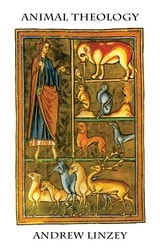
    “What are we to say of a theology which has so proceeded on the basis of a moral neglet of God’s creatures?” asks Andrew Linzey. In Animal Theology, he seeks ways in which doctrine can help morally motivated Christians to perceive meaning in animal suffering.

    In Linzey’s view, animal rights is synonymous with animal theology. Linzey argues that historical theology, creatively defined, must reject humanocentricity. Questioning the assumption that if theology is to speak on this issue, “it must only do so on the side of the oppressors,” Linzey investigates not only the abstractions of theory, but also the realities of hunting, animal experimentation, and genetic engineering. His is a pioneering, vital, and unequivocally Christian voice advocating on behalf of the countless creatures who share our world and our lives but cannot speak for themselves.
    [more]
    cover of Animals and the Law in Antiquity

    Animals and the Law in Antiquity

    Saul M. Olyan

    SBL Press, 2021

    Animal law has become a topic of growing importance internationally, with animal welfare and animal rights often assuming center stage in contemporary debates about the legal status of animals. While nonspecialists routinely decontextualize ancient texts to support or deny rights to animals, experts in fields such as classics, biblical studies, Assyriology, Egyptology, rabbinics, and late antique Christianity have only just begun to engage the topic of animals and the law in their respective areas. This volume consists of original studies by scholars from a range of Mediterranean and West Asian fields on a variety of topics at the intersection of animals and the law in antiquity. Contributors include Rozenn Bailleul-LeSuer, Beth Berkowitz, Andrew McGowan, F. S. Naiden, Saul M. Olyan, Seth Richardson, Jordan D. Rosenblum, Andreas Schüle, Miira Tuominen, and Daniel Ullucci. The volume is essential reading for scholars and students of both the ancient world and contemporary law.

    [more]
    cover of Animals on the Agenda: Questions about Animals for Theology and Ethics

    Animals on the Agenda

    Questions about Animals for Theology and Ethics

    Edited by Andrew Linzey and Dorothy Yamamoto

    University of Illinois Press, 1998

    Do animals have immortal souls? Does Christ's work include animals? How does God value animals?

    Renowned animal rights intellectual Andrew Linzey and Dorothy Yamamoto edit the now-classic collection of works examining religious and ethical thought on humanity's relationship to animals. The contributors address issues within the context of scriptural perspectives, the Christian tradition, historical disputes, and our obligations to animals. In addition, many of the authors provide guidance on how to put humane, progressive ideas into practice. Throughout, the contributors challenge mainstream Christianity's propagation of ideas that negative impact animals' lives and well-being.
    [more]
    cover of Anna Trapnel’s Report and Plea; or, A Narrative of Her Journey from London into Cornwall

    Anna Trapnel’s Report and Plea; or, A Narrative of Her Journey from London into Cornwall

    Anna Trapnel

    Iter Press, 2016

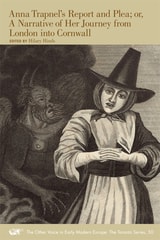
    In 1654, Anna Trapnel — a Baptist, Fifth Monarchist, millenarian, and visionary from London — fell into a trance during which she prophesied passionately and at length against Oliver Cromwell and his government. The prophecies attracted widespread public attention, and resulted in an invitation to travel to Cornwall. Her Report and Plea, republished here for the first time, is a lively and engaging firsthand account of the visit, which concluded in her arrest, a court hearing, and imprisonment. Part memoir, part travelogue, and part impassioned defense of her beliefs and actions, the Report and Plea offers vivid and fascinating insight into the life and times of an early modern woman claiming her place at the center of the tumultuous political events of mid-seventeenth-century England.
    [more]
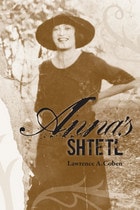
    cover of Anna's Shtetl

    Anna's Shtetl

    Lawrence A. Coben

    University of Alabama Press, 2007
    A rare view of a childhood in a European ghetto
     
    Anna Spector was born in 1905 in Korsun, a Ukrainian town on the Ros River, eighty miles south of Kiev. Held by Poland until 1768 and annexed by the Tsar in 1793 Korsun and its fluid ethnic population were characteristic of the Pale of Settlement in Eastern Europe: comprised of Ukrainians, Cossacks, Jews and other groups living uneasily together in relationships punctuated by violence. Anna’s father left Korsun in 1912 to immigrate to America, and Anna left in 1919, having lived through the Great War, the Bolshevik Revolution, and part of the ensuing civil war, as well as several episodes of more or less organized pogroms—deadly anti-Jewish riots begun by various invading military detachments during the Russian Civil War and joined by some of Korsun’s peasants.
     
    In the early 1990s Anna met Lawrence A. Coben, a medical doctor seeking information about the shtetls to recapture a sense of his own heritage. Anna had near-perfect recall of her daily life as a girl and young woman in the last days in one of those historic but doomed communities. Her rare account, the product of some 300 interviews, is valuable because most personal memoirs of ghetto life are written by men. Also, very often, Christian neighbors appear in ghetto accounts as a stolid peasant mass assembled on market days, as destructive mobs, or as an arrogant and distant collection of government officials and nobility. Anna’s story is exceptionally rich in a sense of the Korsun Christians as friends, neighbors, and individuals.
     
    Although the Jewish communities in Eastern Europe are now virtually gone, less than 100 years ago they counted a population of millions. The firsthand records we have from that lost world are therefore important, and this view from the underrecorded lives of women and the young is particularly welcome.  


    [more]
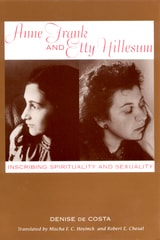
    cover of Anne Frank and Etty Hillesum: Inscribing Spirituality and Sexuality

    Anne Frank and Etty Hillesum

    Inscribing Spirituality and Sexuality

    de Costa, Denise

    Rutgers University Press, 1998

    Studies of Nazi persecution and destruction of Jews have to date largely been based on the accounts of men. And yet gender difference in Western society is so profound that women and men seem to have divergent experiences, speak different languages, and see and hear in dissimilar ways. Denise de Costa's book explores the significance of sex and gender differences in the construction of history and society-specifically, the Nazi genocide of Jews in World War II-by focusing on the writing of two Jewish women, Anne Frank and Etty Hillesum.

    De Costa argues that although both of these writers have received much attention, little has been done to understand how the significant difference occasioned by both gender and Jewishness helps to define cultural or personal identity in relation to the Holocaust. De Costa uses a variety of psychoanalytic and feminist theories to approach the writing of Frank and Hillesum. Critiquing as well as employing the concepts of Julia Kristeva, Hélène Cixous, Luce Irigaray, and Simone de Beauvoir among others, she presents a detailed and rich discussion of each writer.

    De Costa approaches Anne Frank largely from a psychoanalytical perspective that emphasizes the function of writing itself in the development of self-identity. For Etty Hillesum, she is more concerned with how writing establishes a philosophy, and a faith, that can entertain and is indeed based in doubleness and paradox. Her assessment of these two writers makes a significant contribution to our understanding of the Holocaust as a cultural and historical phenomenon, of the role of writing in the production and expression of gendered identity, and of the complex relation between women, writing, and culture.
    [more]
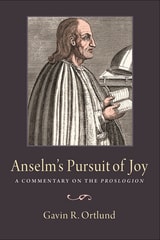
    cover of Anselm's Pursuit of Joy: A Commentary on the Proslogion

    Anselm's Pursuit of Joy

    A Commentary on the Proslogion

    Gavin R. Ortlund

    Catholic University of America Press, 2020
    The interpretation of Anselm of Canterbury’s Proslogion has a long and rich tradition. However, its study is often narrowly focused on its so-called “ontological argument.” As a result, engagement with the text of this work tends to be lopsided, and the prayerful purpose that undergirds the whole book is often completely ignored. Even the most rigorous engagements with the Proslogion often have little to say, for instance, about how the prayers of Proslogion 1, 14, and 18 contribute materially to Anselm’s argument, or how his doctrine of God develops organically from the divine formula in the early chapters to the doctrines of eternity, simplicity, and Trinity in later chapters. There are very few works that offer a sustained analysis to Anselm’s flow of thought throughout the entire Proslogion, and no one has explored how Anselm’s doctrine of creaturely joy in heaven in Proslogion 24-26 is a fitting climax and resolution to the book. Anselm’s Pursuit of Joy attempts a sustained, chapter-by-chapter textual analysis of the Proslogion, and offers the first effort to situate Anselm’s doctrine of heaven in Proslogion 24-26 as the climax of the earlier themes of Anselm’s work. Gavin Ortlund suggests that the basic purpose of Anselm’s argument in the Proslogion is to seek the visio Dei that he articulates as his soul’s deepest desire (Proslogion 1). While Anselm’s argument for God’s existence (Proslogion 2-4) is an important piece of this effort, it is only one step of a larger trajectory of thought that leads Anselm to meditate further on God’s nature as the highest good of the human soul (Proslogion 5-23), and then to anticipate the joy of possessing God in heaven (Proslogion 24-26). In other words, the establishment of God’s existence is only the penultimate consequence of Anselm’s famous formula “that than which nothing greater can be thought”—his ultimate concern is with the infinite creaturely joy that is entailed by his existence. The Proslogion is, far more than an argument for God’s existence, a meditation on God as the chief happiness of the human soul.
    [more]
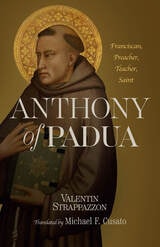
    cover of Anthony of Padua: Franciscan, Preacher, Teacher, Saint

    Anthony of Padua

    Franciscan, Preacher, Teacher, Saint

    Valentin Strappazzon, Valentin

    Catholic University of America Press, 2024
    Anthony of Padua: Franciscan, Preacher, Teacher, Saint represents the culmination of a lifetime of scholarly work by Valentin Strappazzon (d. 2023) on Anthony of Padua and especially on his sermons and spirituality. About 20 years prior to this volume, he had penned a short overview of his life in the popular "Petites Vies" series in the French language. A few years before the publication of the book in question, he edited and published three significant volumes on the sermons of the saint. Although the present volume has been written in a less rigorous and erudite manner, it is intended to be a solid historical and analytical treatment for a wider reading public interested in the life and preaching of this fascinating medieval friar. Particular attention is given to explaining how and why Anthony, once he became a Franciscan living in France and Italy, became the focus of intense waves of popular devotion to whom numerous miracles and wonders came to be attributed both in the Middle Ages and even in our own time. Being the penultimate work of this author, written in French and lucidly translated by Michael F. Cusato, Anthony of Padua is a work of intelligence and reflection on a medieval figure who has too often only been the subject of piety rather than an assessment of the towering spiritual person that he was.
    [more]
    cover of Anti-Apollinarian Writings

    Anti-Apollinarian Writings

    Catholic University of America Press, 2016
    The translation is interweaved with a commentary to provide the reader with some guidance through the complexities of Gregory's arguments. The introduction includes an overview of the history of Apollinarianism and discusses the extent to which it is possible to reconstruct, from the fragments quoted by Gregory, the arguments of Apolinarius's Apodeixis to which he is responding. It also examines the background to and the chronology of both of Gregory's anti-Apollinarian works, and looks critically at the arguments that they deploy.
    [more]
    cover of Anti-Catholicism in Arkansas: How Politicians, the Press, the Klan, and Religious Leaders Imagined an Enemy, 1910–1960

    Anti-Catholicism in Arkansas

    How Politicians, the Press, the Klan, and Religious Leaders Imagined an Enemy, 1910–1960

    Kenneth C. Barnes

    University of Arkansas Press, 2016

    Winner, 2017 Ragsdale Award

    A timely study that puts current issues—religious intolerance, immigration, the separation of church and state, race relations, and politics—in historical context.

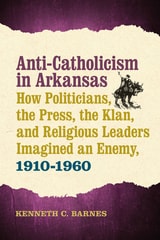
    The masthead of the Liberator, an anti-Catholic newspaper published in Magnolia, Arkansas, displayed from 1912 to 1915 an image of the Whore of Babylon. She was an immoral woman sitting on a seven-headed beast, holding a golden cup “full of her abominations,” and intended to represent the Catholic Church.

    Propaganda of this type was common during a nationwide surge in antipathy to Catholicism in the early twentieth century. This hostility was especially intense in largely Protestant Arkansas, where for example a 1915 law required the inspection of convents to ensure that priests could not keep nuns as sexual slaves.

    Later in the decade, anti-Catholic prejudice attached itself to the campaign against liquor, and when the United States went to war in 1917, suspicion arose against German speakers—most of whom, in Arkansas, were Roman Catholics.

    In the 1920s the Ku Klux Klan portrayed Catholics as “inauthentic” Americans and claimed that the Roman church was trying to take over the country’s public schools, institutions, and the government itself. In 1928 a Methodist senator from Arkansas, Joe T. Robinson, was chosen as the running mate to balance the ticket in the presidential campaign of Al Smith, a Catholic, which brought further attention.

    Although public expressions of anti-Catholicism eventually lessened, prejudice was once again visible with the 1960 presidential campaign, won by John F. Kennedy.

    Anti-Catholicism in Arkansas illustrates how the dominant Protestant majority portrayed Catholics as a feared or despised “other,” a phenomenon that was particularly strong in Arkansas.
    [more]
    cover of Anti-Judaism and Christian Orthodoxy: Ephrem's Hymns in Fourth-century Syria (Patristic Monograph Series)

    Anti-Judaism and Christian Orthodoxy

    Ephrem's Hymns in Fourth-century Syria (Patristic Monograph Series)

    Christine Shepardson

    Catholic University of America Press, 2008

    This book investigates the complex anti-Jewish and anti-Judaizing rhetoric of Ephrem, a fourth-century poet, deacon, and theologian from eastern Roman Syria whose Syriac-language writings remain unfamiliar and linguistically inaccessible to centuries of scholars who study the well-known Greek and Latin writings of his contemporaries.
    [more]
    cover of Apocalypse of Truth: Heideggerian Meditations

    Apocalypse of Truth

    Heideggerian Meditations

    Jean Vioulac

    University of Chicago Press, 2021

    We inhabit a time of crisis—totalitarianism, environmental collapse, and the unquestioned rule of neoliberal capitalism. Philosopher Jean Vioulac is invested in and worried by all of this, but his main concern lies with how these phenomena all represent a crisis within—and a threat to—thinking itself.         
    In his first book to be translated into English, Vioulac radicalizes Heidegger’s understanding of truth as disclosure through the notion of truth as apocalypse. This “apocalypse of truth” works as an unveiling that reveals both the finitude and mystery of truth, allowing a full confrontation with truth-as-absence. Engaging with Heidegger, Marx, and St. Paul, as well as contemporary figures including Giorgio Agamben, Alain Badiou, and Slavoj Žižek, Vioulac’s book presents a subtle, masterful exposition of his analysis before culminating in a powerful vision of “the abyss of the deity.” Here, Vioulac articulates a portrait of Christianity as a religion of mourning, waiting for a god who has already passed by, a form of ever-present eschatology whose end has always already taken place. With a preface by Jean-Luc Marion, Apocalypse of Truth presents a major contemporary French thinker to English-speaking audiences for the first time.
     
    [more]
    cover of Apocalyptic Anxiety: Religion, Science, and America's Obsession with the End of the World

    Apocalyptic Anxiety

    Religion, Science, and America's Obsession with the End of the World

    Anthony Aveni

    University Press of Colorado, 2016

    Apocalyptic Anxiety traces the sources of American culture’s obsession with predicting and preparing for the apocalypse. Author Anthony Aveni explores why Americans take millennial claims seriously, where and how end-of-the-world predictions emerge, how they develop within a broader historical framework, and what we can learn from doomsday predictions of the past.

    The book begins with the Millerites, the nineteenth-century religious sect of Pastor William Miller, who used biblical calculations to predict October 22, 1844 as the date for the Second Advent of Christ. Aveni also examines several other religious and philosophical movements that have centered on apocalyptic themes—Christian millennialism, the New Age movement and the Age of Aquarius, and various other nineteenth- and early twentieth-century religious sects, concluding with a focus on the Maya mystery of 2012 and the contemporary prophets who connected the end of the world as we know it with the overturning of the Maya calendar.

    Apocalyptic Anxiety places these seemingly never-ending stories of the world’s end in the context of American history. This fascinating exploration of the deep historical and cultural roots of America’s voracious appetite for apocalypse will appeal to students of American history and the histories of religion and science, as well as lay readers interested in American culture and doomsday prophecies.
    [more]
    cover of Apocalyptic Sheep and Goats in Matthew and 1 Enoch

    Apocalyptic Sheep and Goats in Matthew and 1 Enoch

    Elekosi F. Lafitaga

    SBL Press, 2022

    An alternative understanding of apocalyptic eschatology in the Gospel of Matthew

    Matthew’s eschatological imageries of judgment are often identified as apocalyptic and referred to as Matthew’s apocalyptic discourses. In this volume Elekosi F. Lafitaga reexamines Matthew’s vision of the sheep and goats in the judgment of the nations, which are often interpreted as metaphors for the saved and the condemned. Lafitaga views these images in the wider context of the rhetoric of apocalyptic communication stretching back to Matthew 3. This broader context reveals that the vision of Matthew 25 serves to exhort Israel in the here and now according to the torah, with salvation for Israel involving an indispensable responsibility to love and serve humanity. Central to Lafitaga’s analysis is the highly probable scenario that the material in Matthew is dependent on the Book of Dreams (1 Enoch 83–90).

    [more]
    cover of Apocalyptic Sheep and Goats in Matthew and 1 Enoch

    Apocalyptic Sheep and Goats in Matthew and 1 Enoch

    Elekosi F. Lafitaga

    SBL Press, 2022
    [more]
    cover of Apologetical Works; Octavius

    Apologetical Works; Octavius

    Minucius Tertullian

    Catholic University of America Press, 2008
    No description available
    [more]
    cover of Apologist

    Apologist

    Saint John Chrysostom

    Catholic University of America Press, 1985
    Apologist is the English translation of two of Chrysostom's treatises, written about 378 and 382, aimed at provoking the divinity of Jesus Christ.
    [more]
    cover of Apology for Origen; On the Falsification of the Books of Origen

    Apology for Origen; On the Falsification of the Books of Origen

    Catholic University of America Press, 2010
    Presented here for the first time in English translation (from Rufinus's Latin version) is the Apology for Origen, the sole surviving work of St. Pamphilus of Caesarea (d. 310 AD), who was one of the most celebrated priest-martyrs of the ancient Church
    [more]
    cover of Apostolic Religious Life in America Today: A Response to the Crisis

    Apostolic Religious Life in America Today

    A Response to the Crisis

    Richard Gribble

    Catholic University of America Press, 2011

    Divided into two parts, this volume first presents an analysis of the problem and secondly a solution to place apostolic religious life on a positive trajectory in the 21st century.
    [more]