Results by title
4038 books match the query 'Social aspects' and 296 start with a

Archives Power
Randall C. Jimerson
American Library Association, 2009
Archives and Justice
Verne Harris
Society of American Archivists, 2007
Archives and the Public Interest
Selected Essays by Ernest PosnerKen Munden
Society of American Archivists, 2006
Archives, Documentation, and Institutions of Social Memory
Essays from the Sawyer SeminarFrancis X. Blouin, Jr. and William G. Rosenberg, Editors
University of Michigan Press, 2011
Archiving Medical Violence
Consent and the Carceral StateChristopher Perreira
University of Minnesota Press, 2023
A major new reading of a U.S. public health system shaped by fraught perceptions of culture, race, and criminality
At the heart of Archiving Medical Violence is an interrogation of the notions of national and scientific progress, marking an advance in scholarship that shows how such violence is both an engine of medical progress and, more broadly, the production of empire. It reads the medical archive through a lens that centers how it is produced, remembered, and contested within cultural production and critical memory.
In this innovative and interdisciplinary book, Christopher Perreira argues that it is in the contradictions of settler colonialism and racial capitalism that we find how medical violence is narrated as a public good. He presents case studies from across a range of locations—Hawai‘i, California, Louisiana, Guatemala—and historical periods from the nineteenth century on. Examining national and scientific conceptions of progress through the lens of medicine and public health, he places official archives in dialogue with visual and literary works, patient writing, and more.
Archiving Medical Violence explores the contested public terrains for narrating value and vulnerabilities, bodies and geographical locations. Ultimately, Perreira reveals for us a medical imaginary built on racialized criminality driving contemporary politics of citizenship, memory, and identity.
Retail e-book files for this title are screen-reader friendly with images accompanied by short alt text and/or extended descriptions.
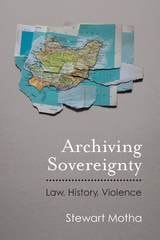
Archiving Sovereignty
Law, History, ViolenceStewart Motha
University of Michigan Press, 2018
Sovereignty is often cast as a limit-concept, constituent force, determining the boundary of law. Archiving Sovereignty reverses this to explain how judicial pronouncements inscribe and sustain extravagant claims to exceptionality and sovereign solitude. This wide-ranging, critical work distinguishes between myths that sustain neocolonial orders and fictions that generate new forms of political and ethical life.
Are We There Yet?
The Myths and Realities of Autonomous VehiclesEdited by Michael A. Pagano
University of Illinois Press, 2020
The new volume in the Urban Agenda series examines the technological questions still surrounding autonomous vehicles and the uncertain societal and legislative impact of widespread AV adoption. Assessing both short- and long-term concerns, the authors probe how autonomous vehicles might change transportation but also land use, energy consumption, mass transit, commuter habits, traffic safety, job markets, the freight industry, and supply chains. At the same time, the essays discuss opportunities for industry, researchers, and policymakers to make the autonomous future safer, more efficient, and more mobile.
Contributors: Austin Brown, Stan Caldwell, Chris Hendrickson, Kazuya Kawamura, Taylor Long, and P. S. Srira.

Arguing it Out
Discussion in Twelfth-Century ByzantiumAveril Cameron
Central European University Press, 2016

Arguments Against G8
Edited by Gill Hubbard and David Miller
Pluto Press, 2005
Chapters cover G8 attitudes to the key issues: war, corporate power, climate change, immigration, trade, debt, food. Ideal for anyone who is troubled by the current direction set by our world leaders, this book is also a great tool for activists.
Arms and the People
Popular Movements and the Military from the Paris Commune to the Arab SpringEdited by Mike Gonzalez and Houman Barekat
Pluto Press, 2012
Arms and the People explores the impact of profound social polarisation on the internal cohesion of the state’s ‘armed bodies of men’ and on the contested loyalties of soldiers. The different contributors examine a series of historical moments in which a crisis in the military institution has reflected a deeper social crisis which has penetrated that institution and threatened to disable it.
With a range of international contributors who have either studied or been directly involved in such social upheavals, Arms and the People is a pioneering contribution to the study of revolutionary change and will appeal to students and academics in history, politics and sociology.
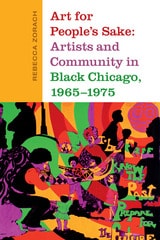
Art for People's Sake
Artists and Community in Black Chicago, 1965-1975Rebecca Zorach
Duke University Press, 2019
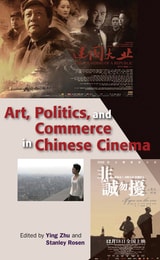
Art, Politics, and Commerce in Chinese Cinema
Edited by Ying Zhu and Stanley Rosen
Hong Kong University Press, 2010
Arte Programmata
Freedom, Control, and the Computer in 1960s ItalyLindsay Caplan
University of Minnesota Press, 2022
Tracing the evolution of the Italian avant-garde’s pioneering experiments with art and technology and their subversion of freedom and control
In postwar Italy, a group of visionary artists used emergent computer technologies as both tools of artistic production and a means to reconceptualize the dynamic interrelation between individual freedom and collectivity. Working contrary to assumptions that the rigid, structural nature of programming limits subjectivity, this book traces the multifaceted practices of these groundbreaking artists and their conviction that technology could provide the conditions for a liberated social life.
Situating their developments within the context of the Cold War and the ensuing crisis among the Italian left, Arte Programmata describes how Italy’s distinctive political climate fueled the group’s engagement with computers, cybernetics, and information theory. Creating a broad range of immersive environments, kinetic sculptures, domestic home goods, and other multimedia art and design works, artists such as Bruno Munari, Enzo Mari, and others looked to the conceptual frameworks provided by this new technology to envision a way out of the ideological impasses of the age.
Showcasing the ingenuity of Italy’s earliest computer-based art, this study highlights its distinguishing characteristics while also exploring concurrent developments across the globe. Centered on the relationships between art, technology, and politics, Arte Programmata considers an important antecedent to the digital age.

Artery
Racial Ecologies on Colombia's Magdalena RiverAustin Zeiderman
Duke University Press, 2025

Artifactual
Forensic and Documentary KnowingElizabeth Anne Davis
Duke University Press, 2023

Artist Animal
Steve Baker
University of Minnesota Press, 2013
Animals have always been compelling subjects for artists, but the rise of animal advocacy and posthumanist thought has prompted a reconsideration of the relationship between artist and animal. In this book, Steve Baker examines the work of contemporary artists who directly confront questions of animal life, treating animals not for their aesthetic qualities or as symbols of the human condition but rather as beings who actively share the world with humanity.
The concerns of the artists presented in this book—Sue Coe, Eduardo Kac, Lucy Kimbell, Catherine Chalmers, Olly and Suzi, Angela Singer, Catherine Bell, and others—range widely, from the ecological to the philosophical and from those engaging with the modification of animal bodies to those seeking to further the cause of animal rights. Drawing on extensive interviews he conducted with the artists under consideration, Baker explores the vital contribution that contemporary art can make to a broader conception of animal life, emphasizing the importance of creativity and trust in both the making and understanding of these artworks.
Throughout, Baker is attentive to issues of practice, form, and medium. He asks, for example, whether the animal itself could be said to be the medium in which these artists are working, and he highlights the tensions between creative practice and certain kinds of ethical demands or expectations. Featuring full-color, vivid examples of their work, Artist Animal situates contemporary artists within the wider project of thinking beyond the human, asserting art’s power to open up new ways of thinking about animals.

As French as Everyone Else?
A Survey of French Citizens of Maghrebin, African, and Turkish OriginAuthored by Sylvain Brouard and Vincent Tiberj
Temple University Press, 2011
France is often depicted as the model of assimilationist or republican integration in the international literature on immigration. However, rarely have surveys drilled down to provide individual responses from a double representative sample. In As French as Everyone Else?, Sylvain Brouard and Vincent Tiberj provide a comprehensive assessment of the state of integration in France and challenge the usual crisis of integration by systematically comparing the "new French" immigrants, as well as their children and grandchildren born in France, with a sample of the French general population.
The authors' survey considers a wide range of topics, including religious affiliation and religiosity, political attitudes and political efficacy, value systems (including gender roles, work ethics, and anti-Semitism), patterns of integration, multiple identities and national belongings, and affirmative action. As the authors show, despite existing differences, immigrants of Maghrebin, African, and Turkish origin share a wide scope of commonality with other French citizens.
As Goes Bethlehem
Steelworkers and the Restructuring of an Industrial Working ClassJill A. Schennum
Vanderbilt University Press, 2023
Through the experiences and reflections of steelworkers, Jill A. Schennum demonstrates the significance of work, and particularly of industrial work, in giving meaning to people’s lives, identities, and sense of worth. She uses workers’ narratives and voices to show the importance of work space, time, and social relations, rejecting dominant interpretations of blue-collar workers as alienated from their work but well-paid and co-opted by a middle-class standard of living. Schennum covers thirty-five years of investment and disinvestment, managerial initiatives, transfer decisions, layoffs and downsizings, external transfers, the eventual bankruptcy of the Bethlehem Steel Corporation, and movement into retirement, unemployment, and new postindustrial jobs.
The very solidarities, rights of citizenship, and rule of law forged in the mill and built on by the union were constructed, in part, through exclusions based on race, ethnicity, gender, and region. These lines of fracture were mobilized to undermine working-class strength in the postindustrial period. Through the experiences of African American, Puerto Rican, coal country, and women workers in the steel mills, this book explores these issues of fracture and solidarity.
As for Protocols
Edited by Re'al Christian, Carin Kuoni, and Eriola Pira
Amherst College Press, 2025
Edited by Re’al Christian, Carin Kuoni, and Eriola Pira, an opening score by Raven Chacon and contributions by Salome Asega, Carolina Caycedo with Lupita Limón Corrales, Raven Chacon, Jesse Chun, Asia Dorsey, Taraneh Fazeli and Cannach MacBride, Pablo Helguera, Emmanuel Iduma, Mary Maggic, Shannon Mattern, V. Mitch McEwen with Nadir Jeevanjee, Rashaun Mitchell with Silas Riener, Romy Opperman, Rasheedah Phillips, Leanne Betasamosake Simpson with Maria Hupfield, Ultra-red with Robert Sember, and Underground Resistance.
Ashes of Immortality
Widow-Burning in IndiaCatherine Weinberger-Thomas
University of Chicago Press, 1999
Ashes of Immortality attempts to see the satis through Hindu eyes, providing an extensive experiential and psychoanalytic account of ritual self-sacrifice and self-mutilation in South Asia. Based on fifteen years of fieldwork in northern India, where the state-banned practice of sati reemerged in the 1970s, as well as extensive textual analysis, Weinberger-Thomas constructs a radically new interpretation of satis. She shows that their self-immolation transcends gender, caste and class, region and history, representing for the Hindus a path to immortality.
Asian Celebrity Cultures in the Digital Age
Edited by Jian Xu, Glen Donnar, and Divya Garg
Hong Kong University Press, 2025
Asian Celebrity Cultures in the Digital Age represents the first comprehensive study on the transformations of celebrity cultures in increasingly globalized and digitalized Asian societies. It discusses relations between Asian celebrities and digital media across emerging phenomena in celebrity practices, cultures, politics, fandom, and economies. Highlighting original case studies from prominent Asian societies, including India, China, Hong Kong, the Philippines, Singapore, Vietnam, Indonesia, Thailand, South Korea, and Japan, this book sheds much-needed light on the de-Westernization and internationalization of celebrity studies and is essential reading for scholars and students in celebrity, fandom, digital media and communication, and cultural studies.
Asian Video Cultures
In the Penumbra of the GlobalJoshua Neves and Bhaskar Sarkar, editors
Duke University Press, 2017
Contributors. Conerly Casey, Jenny Chio, Michelle Cho, Kay Dickinson, Bishnupriya Ghosh, Feng-Mei Heberer, Tzu-hui Celina Hung, Rahul Mukherjee, Joshua Neves, Bhaskar Sarkar, Nishant Shah, Abhigyan Singh, SV Srinivas, Marc Steinberg, Chia-chi Wu, Patricia Zimmerman
Asians Wear Clothes on the Internet
Race, Gender, and the Work of Personal Style BloggingMinh-ha T. Pham
Duke University Press, 2015
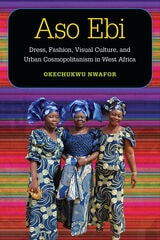
Aso Ebi
Dress, Fashion, Visual Culture, and Urban Cosmopolitanism in West AfricaOkechukwu Nwafor
University of Michigan Press, 2021
The Nigerian and West African practice of aso ebi fashion invokes notions of wealth and group dynamics in social gatherings. Okechukwu Nwafor’s volume Aso ebi investigates the practice in the cosmopolitan urban setting of Lagos, and argues that the visual and consumerist hype typical of the late capitalist system feeds this unique fashion practice. The book suggests that dress, fashion, aso ebi, and photography engender a new visual culture that largely reflects the economics of mundane living. Nwafor examines the practice’s societal dilemma, whereby the solidarity of aso ebi is dismissed by many as an ephemeral transaction. A circuitous transaction among photographers, fashion magazine producers, textile merchants, tailors, and individual fashionistas reinvents aso ebi as a product of cosmopolitan urban modernity. The results are a fetishization of various forms of commodity culture, personality cults through mass followership, the negotiation of symbolic power through mass-produced images, exchange value in human relationships through gifts, and a form of exclusion achieved through digital photo editing. Aso ebi has become an essential part of Lagos cosmopolitanism: as a rising form of a unique visual culture it is central to the unprecedented spread of a unique West African fashion style that revels in excessive textile overflow. This extreme dress style is what an individual requires to transcend the lack imposed by the chaos of the postcolonial city.
Aspiring Adults Adrift
Tentative Transitions of College GraduatesRichard Arum and Josipa Roksa
University of Chicago Press, 2014
Assembly Codes
The Logistics of MediaMatthew Hockenberry, Nicole Starosielski, and Susan Zieger, editors
Duke University Press, 2021
Contributors
Ebony Coletu, Kay Dickinson, Stefano Harney, Matthew Hockenberry, Tung-Hui Hu, Shannon Mattern, Fred Moten, Michael Palm, Ned Rossiter, Nicole Starosielski, Liam Cole Young, Susan Zieger
Assessing Public Journalism
Edited by Edmund B. Lambeth, Philip Meyer, & Esther Thorson
University of Missouri Press, 1998
In response to increasingly negative attitudes toward journalism and its coverage of public affairs, many newspapers and television stations across the United States have experimented with novel approaches to reporting to better meet the public's demand for news. Known as "civic" or "public" journalism, this new movement seeks to improve the news media's ability to supply the information and insights needed by citizens of a democratic society. Critics of public journalism say it contradicts some principles of traditional reporting. As a result, the new movement has spurred great controversy among journalists. Assessing Public Journalism is the first book to evaluate this movement.
Public journalists use a variety of innovative methods to achieve their goals. To connect more closely with citizens, they may listen to their readers and viewers in neighborhood settings and public forums. To frame stories more accurately, they sometimes conduct focus groups and opinions polls. To maximize the reach of their work, print and electronic journalists have experimented with coordinated coverage of key elections and major public issues. Their goal is a form of journalism that improves the quality of citizen deliberation and participation in public life.
By collecting and focusing a wide range of original research and selected professional commentary, Assessing Public Journalism provides the necessary framework for examining the issues surrounding public journalism and for determining what must be done to enable it to meet its full potential. Scholars, journalists, and concerned citizens will benefit from this vital study.
At Home Among Strangers
Exploring the Deaf Community in the United StatesJerome D. Schein
Gallaudet University Press, 1989
At Home Among Strangers presents an engrossing portrait of the Deaf community as a complex, nationwide social network that offers unique kinship to deaf people across the country. Schein depicts in striking detail the history and culture of the Deaf community, its structural underpinnings, the intricacies of family life, issues of education and rehabilitation, economic factors, and interaction with the medical and legal professions. This book is a fascinating, provocative exploration of the Deaf community in the United States for scholars and lay people alike.
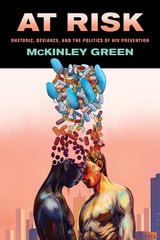
At Risk
Rhetoric, Deviance, and the Politics of HIV PreventionMcKinley Green
The Ohio State University Press, 2026
At Risk explores how young people living with HIV have developed risk-reduction practices that seem to contradict public health recommendations for HIV prevention. Putting forward a rhetoric of deviance to frame these instances, McKinley Green argues that they represent intentional healthcare decisions that help young people mitigate the health risks that are most pressing in their daily lives. While current HIV risk-reduction priorities in the US are framed around a finite spectrum of sexual behaviors and medical technologies, those living with HIV often encounter a broader spectrum of risks shaped by structural inequities like racism, housing insecurity, queer and transphobia, HIV stigma, trauma in medical settings, and addiction, all of which create conditions that increase the risk of HIV transmission and present other threats to safety and autonomy.
Drawing from more than sixty hours of interviews with young people living with HIV, frontline healthcare workers, and HIV activists, Green highlights how those living with HIV have developed agency and expertise in navigating, mitigating, and communicating about risk. In doing so, he offers alternative epistemologies of sexual health risk that point toward more patient-centered HIV prevention frameworks.

At the Edge of Sight
Photography and the UnseenShawn Michelle Smith
Duke University Press, 2013
Atmospheric Things
On the Allure of Elemental EnvelopmentDerek P. McCormack
Duke University Press, 2018
Atomic Culture
How We Learned to Stop Worrying and Love the BombMichael A. Amundson
University Press of Colorado, 2004
Despite the growing interest in atomic culture and history, the body of relevant scholarship is relatively sparse. Atomic Culture opens new doors into the field by providing a substantive, engaging, and historically based consideration of the topic that will appeal to students and scholars of the Atomic Age as well as general readers.
Contributors include Michael A. Amundson, Mick Broderick, Peter Goin, John Hunner, Ferenc M. Szasz, A. Costandina Titus, Peter C. van Wyck, and Scott C. Zeman.
Audible Empire
Music, Global Politics, CritiqueRonald Radano and Tejumola Olaniyan, editors
Duke University Press, 2016
Contributors: Kofi Agawu, Philip V. Bohlman. Michael Denning, Brent Hayes Edwards, Nan Enstad, Andrew Jones, Josh Kun, Morgan Luker, Jairo Moreno, Tejumola Olaniyan, Marc Perry, Ronald Radano, Nitasha Sharma, Micol Seigel, Gavin Steingo, Penny Von Eschen, Amanda Weidman.

Audiences and Publics
When Cultural Engagement Matters for the Public SphereEdited by Sonia Livingstone
Intellect Books, 2005
Augmented Exploitation
Artificial Intelligence, Automation and WorkPhoebe Moore
Pluto Press, 2021
Aurality
Listening and Knowledge in Nineteenth-Century ColombiaAna María Ochoa Gautier
Duke University Press, 2014
Authenticity Guaranteed
Masculinity and the Rhetoric of Anti-Consumerism in American CultureSally Robinson
University of Massachusetts Press, 2018
Americans love to hate consumerism. Scholars, intellectuals, musicians, and writers of all kinds take pleasure in complaining that consumer culture endangers the “real” things in life, including self-determination and individualism. In Authenticity Guaranteed, Sally Robinson brings to light the unacknowledged gender and class assumptions of anti-consumerist critique in the second half of the twentieth century. American anti-consumerism, despite its apparent complexity, takes a remarkably consistent and predictable narrative form. From the mid-century Organization Man to the millennial No Logo, anti-consumerist critique reinforces the gender order by insisting that authenticity is threatened, and masculine agency curtailed, by the feminizing forces of consumer culture.
Robinson identifies a tradition of masculine protest and rebellion against feminization in iconic texts such as The Catcher in the Rye and Fight Club, as well as in critiques of postmodernism, academic denunciations of shopping, and a variety of other discourses that aim to diagnose what ails American consumer culture. This fresh and timely argument enters into conversation with a wide range of existing scholarship and opens up new questions for scholarly and political discussion.

Authorized Heritage
Place, Memory, and Historic Sites in Prairie CanadaRobert Coutts
University of Manitoba Press, 2021
Authors of the Storm
Meteorologists and the Culture of PredictionGary Alan Fine
University of Chicago Press, 2007
Whether it is used as an icebreaker in conversation or as the subject of serious inquiry, “the weather” is one of the few subjects that everyone talks about. And though we recognize the faces that bring us the weather on television, how government meteorologists and forecasters go about their jobs is rarely scrutinized. Given recent weather-related disasters, it’s time we find out more. In Authors of the Storm, Gary Alan Fine offers an inside look at how meteorologists and forecasters predict the weather.
Based on field observation and interviews at the Storm Prediction Center in Oklahoma, the National Weather Service in Washington, D.C., and a handful of midwestern outlets, Fine finds a supremely hard-working, insular clique of professionals who often refer to themselves as a “band of brothers.” In Fine’s skilled hands, we learn their lingo, how they “read” weather conditions, how forecasts are written, and, of course, how those messages are conveyed to the public. Weather forecasts, he shows, are often shaped as much by social and cultural factors inside local offices as they are by approaching cumulus clouds. By opening up this unique world to us, Authors of the Storm offers a valuable and fascinating glimpse of a crucial profession.
Autism in Film and Television
On the IslandEdited by Murray Pomerance and R. Barton Palmer
University of Texas Press, 2022
Global awareness of autism has skyrocketed since the 1980s, and popular culture has caught on, with film and television producers developing ever more material featuring autistic characters. Autism in Film and Television brings together more than a dozen essays on depictions of autism, exploring how autistic characters are signified in media and how the reception of these characters informs societal understandings of autism.
Editors Murray Pomerance and R. Barton Palmer have assembled a pioneering examination of autism’s portrayal in film and television. Contributors consider the various means by which autism has been expressed in films such as Phantom Thread, Mercury Rising, and Life Animated and in television and streaming programs including Atypical, The Bridge, Stranger Things, Star Trek: The Next Generation, and Community. Across media, the figure of the brilliant, accomplished, and “quirky” autist has proven especially appealing. Film and television have thus staked out a progressive position on neurodiversity by insisting on screen time for autism but have done so while frequently ignoring the true diversity of autistic experience. As a result, this volume is a welcome celebration of nonjudgmental approaches to disability, albeit one that is still freighted with stereotypes and elisions.
Autoaffection
Unconscious Thought in the Age of TechnologyPatricia Ticineto Clough
University of Minnesota Press, 2000
Explores the connection between new theories, new technologies, and new ways of thinking.
In this book, Patricia Ticineto Clough reenergizes critical theory by viewing poststructuralist thought through the lens of "teletechnology," using television as a recurring case study to illuminate the changing relationships between subjectivity, technology, and mass media.
Autoaffection links diverse forms of cultural criticism-feminist theory, queer theory, film theory, postcolonial theory, Marxist cultural studies and literary criticism, the cultural studies of science and the criticism of ethnographic writing—to the transformation and expansion of teletechnology in the late twentieth century. These theoretical approaches, Clough suggests, have become the vehicles of unconscious thought in our time.In individual chapters, Clough juxtaposes the likes of Derridean deconstruction, Deleuzian philosophy, and Lacanian psychoanalysis. She works through the writings of Fredric Jameson, Donna Haraway, Judith Butler, Bruno Latour, Nancy Fraser, Elizabeth Grosz—to name only a few—placing all in dialogue with a teletechnological framework. Clough shows how these cultural criticisms have raised questions about the foundation of thought, allowing us to reenvision the relationship of nature and technology, the human and the machine, the virtual and the real, the living and the inert.
Automobile and American Culture
David L. Lewis and Laurence Goldstein, Editors
University of Michigan Press, 1983
Autophobia
Love and Hate in the Automotive AgeBrian Ladd
University of Chicago Press, 2008

Avocado Dreams
Remaking Salvadoran Life and Art in the Washington, D.C. Metro AreaAna Patricia Rodríguez
University of Arizona Press, 2025
In Avocado Dreams, Ana Patricia Rodríguez draws from her own positionality as a Salvadoran transplant to examine the construction of the unique Salvadoran cultural imaginary made in the greater D.C. area. Through a careful reading of the creative works of local writers, performers, artists, and artivists, Rodríguez demonstrates how the people have remade themselves in relation to the cultural, ethnoracial, and sociolinguistic diversity of the area. She discusses how Salvadoran people have developed unique, intergenerational Salvadoreñidades, manifested in particular speech and symbolic acts, ethnoracial embodiments, and local identity formations in relation to the diverse communities, most notably Black Washingtonians, who co-inhabit the region.
This timely and relevant work not only enriches our understanding of Salvadoran diasporic experiences but also contributes significantly to broader discussions on migration, identity, and cultural production in the United States.
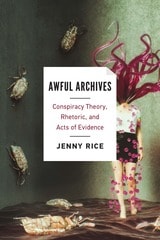
Awful Archives
Conspiracy Theory, Rhetoric, and Acts of EvidenceJenny Rice
The Ohio State University Press, 2020
After sketching a broader framework for understanding what evidence is, Awful Archives then asks how we can practice more ethical and productive forms of debate, especially when we’re faced with arguments that feel like a dead end. Thorough, engaging, and deeply insightful, Awful Archives:Conspiracy Theory, Rhetoric, and Acts of Evidence introduces an entirely new perspective on evidence—one that will impact the field for years to come.
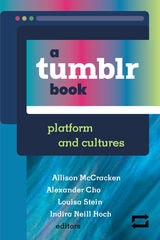
a tumblr book
platform and culturesAllison McCracken, Alexander Cho, Louisa Stein, and Indira Neill Hoch, editors
University of Michigan Press, 2020
Perfect for those unfamiliar with the platform as well as those who grew up on it, this volume contains essays and artwork that span many different topics: fandom; platform structure and design; race, gender and sexuality, including queer and trans identities; aesthetics; disability and mental health; and social media privacy and ethics. An entire generation of young people that is now beginning to influence mass culture and politics came of age on Tumblr, and this volume is an indispensable guide to the many ways this platform works.