Results by title
18284 books match the query 'United States' and 1653 start with a
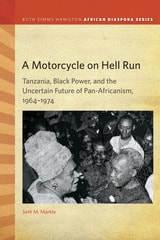
A Motorcycle on Hell Run
Tanzania, Black Power, and the Uncertain Future of Pan-Africanism, 1964–1974Seth M. Markle
Michigan State University Press, 2017
A Mountain of Paper
The Extraordinary Diary of Leonard James ArringtonCarl Arrington and Susan Arrington Madsen
Utah State University Press, 2012
The series, established by one of the twentieth-century West's most distinguished historians, Leonard Arrington, has become a leading forum for prominent historians to address topics related to Mormon history. The first lecturer was Arrington himself. He was followed by Richard Lyman Bushman, Richard E. Bennett, Howard R. Lamar, Claudia L. Bushman, Kenneth W. Godfrey, Jan Shipps, Donald Worster, Laurel Thatcher Ulrich, and F. Ross Peterson. Utah State University hosts the Leonard J. Arrington Mormon History Lecture Series. The University Libraries' Special Collections and Archives houses the Arrington collection. The state's land grant university began collecting records very early, and in the 1960s became a major depository for Utah and Mormon records. Leonard and his wife Grace joined the USU faculty and family in 1946, and the Arringtons and their colleagues worked to collect original diaries, journals, letters, and photographs.
Although trained as an economist at the University of North Carolina, Arrington became a Mormon historian of international repute. Working with numerous colleagues, the Twin Falls, Idaho, native produced the classic Great Basin Kingdom: An Economic History of the Latter-day Saints in 1958. Utilizing available collections at USU, Arrington embarked on a prolific publishing and editing career. He and his close ally, Dr. S. George Ellsworth helped organize the Western History Association, and they created the Western Historical Quarterly as the scholarly voice of the WHA. While serving with Ellsworth as editor of the new journal, Arr ington also helped both the Mormon History Association and the independent journal Dialogue get established.
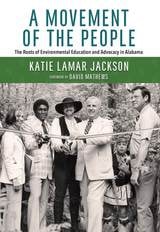
A Movement of the People
The Roots of Environmental Education and Advocacy in AlabamaKatie Lamar Jackson, Foreword by David Mathews
University of Alabama Press, 2017
A Movement of the People: The Roots of Environmental Education and Advocacy in Alabama is a detailed history of the Alabama Environmental Quality Association (AEQA). The AEQA helped to establish groundbreaking environmental protection and natural resource preservation policies for the state and the region and grew into one of the nation’s most progressive environmental education efforts.
The AEQA began in 1966 with the relatively simple political action agenda of cleaning up unsightly and unsanitary roadside trash. These inspired citizens collaborated with civic leaders to identify and remove illegal rural dumps and create more regulated landfills statewide. Eventually they became involved in the “Keep America Beautiful” campaign and with the US Public Health Service in its attempt to rid the state of the yellow-fever mosquito vector, Aedes aegypti, which breeds in standing, fetid water. The acme of these early efforts was the passage of Alabama’s Solid Waste Disposal Law of 1969, one of the nation’s first such bills.
The AEQA’s dedicated staff and supporters spearheaded other environmental projects, many of which remain active today, such as recycling programs with industry giants throughout the Southeast and the founding of the Bartram Trail Conference, a multistate initiative to identify and preserve the path that Quaker botanist William Bartram took through the territory before its formation into states.
Using recorded interviews with Martha McInnis, executive vice president of the AEQA, and full access to a meticulously preserved archive of the organization’s papers and artifacts, Katie Lamar Jackson relates this previously untold story of remarkable “citizen activism.” A Movementof the People is a valuable account of the organization’s growth and advancement, both economically and societally, which serves as a blueprint for successful civic activism and grassroots organizing.
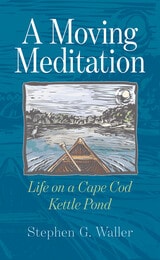
A Moving Meditation
Life on a Cape Cod Kettle PondStephen G. Waller
University of Massachusetts Press, 2023
Cape Cod is known for its beaches, throngs of summer visitors, and the activities that accompany seaside living, but it is also home to many kettle ponds, which offer a more tranquil setting. Formed from glaciers breaking apart and so named due to a rounded shape that appears like a kettle, these waterways are home to a diverse array of wildlife, while remaining peaceful and even a bit hidden.
Big enough for a canoeist to feel solitude and serenity, small enough to not appear on large-scale maps, Centerville’s Long Pond (one of seven on the Cape that share this name), consists of fifty-one acres of crystal clear waters, fresh air, and the fish, turtles, waterfowl, ospreys, and otters that call this special place home. In A Moving Meditation, Stephen G. Waller offers an intimate look at the pond’s intriguing natural and human history; its abundant animal life, across the seasons; and the encroaching effects of climate change.
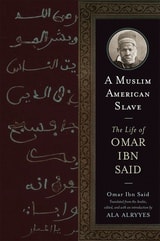
A Muslim American Slave
The Life of Omar Ibn SaidOmar Ibn Said; translated from the Arabic, edited, and with an introduction by Ala Alryyes
University of Wisconsin Press, 2011
Born to a wealthy family in West Africa around 1770, Omar Ibn Said was abducted and sold into slavery in the United States, where he came to the attention of a prominent North Carolina family after filling “the walls of his room with piteous petitions to be released, all written in the Arabic language,” as one local newspaper reported. Ibn Said soon became a local celebrity, and in 1831 he was asked to write his life story, producing the only known surviving American slave narrative written in Arabic.
In A Muslim American Slave, scholar and translator Ala Alryyes offers both a definitive translation and an authoritative edition of this singularly important work, lending new insights into the early history of Islam in America and exploring the multiple, shifting interpretations of Ibn Said’s narrative by the nineteenth-century missionaries, ethnographers, and intellectuals who championed it.
This edition presents the English translation on pages facing facsimile pages of Ibn Said’s Arabic narrative, augmented by Alryyes’s comprehensive introduction, contextual essays and historical commentary by leading literary critics and scholars of Islam and the African diaspora, photographs, maps, and other writings by Omar Ibn Said. The result is an invaluable addition to our understanding of writings by enslaved Americans and a timely reminder that “Islam” and “America” are not mutually exclusive terms.
This edition presents the English translation on pages facing facsimile pages of Ibn Said’s Arabic narrative, augmented by Alryyes’s comprehensive introduction and by photographs, maps, and other writings by Omar Ibn Said. The volume also includes contextual essays and historical commentary by literary critics and scholars of Islam and the African diaspora: Michael A. Gomez, Allan D. Austin, Robert J. Allison, Sylviane A. Diouf, Ghada Osman, and Camille F. Forbes. The result is an invaluable addition to our understanding of writings by enslaved Americans and a timely reminder that “Islam” and “America” are not mutually exclusive terms.
Best Books for General Audiences, selected by the American Association of School Librarians
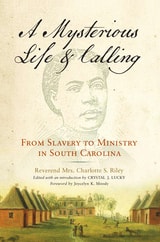
A Mysterious Life and Calling
From Slavery to Ministry in South CarolinaReverend Mrs. Charlotte S. Riley, Edited with an introduction by Crystal J. Lucky, Foreword by Joycelyn K. Moody
University of Wisconsin Press, 2016
Born in 1839 in Charleston, South Carolina, Riley was taught to read, write, and sew despite laws forbidding black literacy. Raised a Presbyterian, she writes of her conversion at age fourteen to the African Methodist Episcopal (AME) church, embracing its ecstatic worship and led by her own spiritual visions. Her memoir is revelatory on many counts, including life in urban Charleston before and after emancipation, her work as a preacher at multiracial revivals, the rise of African American civil servants in the Reconstruction era, and her education and development as a licensed female minister in a patriarchal church.
Crystal J. Lucky, who discovered Riley’s forgotten book in the library archives at Wilberforce University in Ohio, provides an introduction and notes on events, society, and religious practice in the antebellum era and during the Civil War and Reconstruction, and places A Mysterious Life and Calling in the context of other spiritual autobiographies and slave narratives.
A Narrative Compass
Stories that Guide Women's LivesEdited by Betsy Hearne and Roberta Seelinger Trites
University of Illinois Press, 2008
Each of us has a narrative compass, a story that has guided our lifework. In this extraordinary collection, women scholars from a variety of disciplines identify and examine the stories that have inspired them, haunted them, and shaped their research, from Little House on the Prairie to Little Women, from the fairy tales of Hans Christian Andersen and Alice's Adventures in Wonderland to Nancy Drew, Mary Jane, and even the Chinese memoir Jottings from the Transcendant's Abode at Mt. Youtai. Telling the "story of her story" leads each of the essayists to insights about her own approach to studying narratives and to a deeper, often surprising, understanding of the power of imagination.
Contributors are Deyonne Bryant, Minjie Chen, Cindy L. Christiansen, Beverly Lyon Clark, Karen Coats, Wendy Doniger, Bonnie Glass-Coffin, Betsy Hearne, Joanna Hearne, Ann Hendricks, Rania Huntington, Christine Jenkins, Kimberly Lau, Pamela Riney-Kehrberg, Maria Tatar, Ebony Elizabeth Thomas, Roberta Seelinger Trites, Claudia Quintero Ulloa, and Ofelia Zepeda.

A Nation Fragmented
The Public Agenda in the Information AgeJill Edy
Temple University Press, 2019
The transformation from an undifferentiated public to a surfeit of interest groups has become yet another distinguishing feature of the increasing polarization of American politics. Jill Edy and Patrick Meirick contend that the media has played a key role in this splintering. A Nation Fragmented reveals how the content and character of the public agenda has transformed as the media environment evolved from network television and daily newspapers in the late 1960s to today’s saturated social media world with 200 cable channels.
The authors seek to understand what happened as the public’s sense of shared priorities deteriorated. They consider to what extent our public agenda has “fallen apart” as attention to news has declined, and to what extent we have been “driven apart” by changes in the issue agendas of news. Edy and Meirick also show how public attention is limited and spread too thin except in cases where a highly consistent news agenda can provoke a more focused public agenda.
A Nation Fragmented explores the media’s influence and political power and, ultimately, how contemporary democracy works.
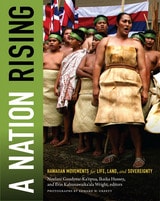
A Nation Rising
Hawaiian Movements for Life, Land, and SovereigntyNoelani Goodyear-Ka'opua, Ikaika Hussey, and Erin Kahunawaika'ala Wright, eds.
Duke University Press, 2014
Contributors. Noa Emmett Aluli, Ibrahim G. Aoudé, Kekuni Blaisdell, Joan Conrow, Noelani Goodyear-Ka'opua, Edward W. Greevy, Ulla Hasager, Pauahi Ho'okano, Micky Huihui, Ikaika Hussey, Manu Ka‘iama, Le‘a Malia Kanehe, J. Kehaulani Kauanui, Anne Keala Kelly, Jacqueline Lasky, Davianna Pomaika'i McGregor, Nalani Minton, Kalamaoka'aina Niheu, Katrina-Ann R. Kapa'anaokalaokeola Nakoa Oliveira, Jonathan Kamakawiwo'ole Osorio, Leon No'eau Peralto, Kekailoa Perry, Puhipau, Noenoe K. Silva, D. Kapua‘ala Sproat, Ty P. Kawika Tengan, Mehana Blaich Vaughan, Kuhio Vogeler, Erin Kahunawaika’ala Wright
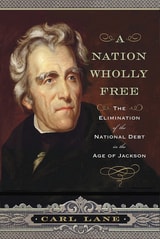
A Nation Wholly Free
The Elimination of the National Debt in the Age of JacksonCarl Lane
Westholme Publishing, 2014
“An engaging treatment of a topic of perennial concern and frequent misunderstanding, this lucid tale of the brief moment when the United States was debt-free should be on every Congress member’s bedside table.”—Peter J.Woolley, Professor of Comparative Politics, Fairleigh Dickinson University
When President James Monroe announced in his 1824 message to Congress that, barring an emergency, the large public debt inherited from the War for Independence, the Louisiana Purchase, and the War of 1812 would be extinguished on January 1, 1835, Congress responded by crafting legislation to transform that prediction into reality. Yet John Quincy Adams,Monroe’s successor, seemed not to share the commitment to debt freedom, resulting in the rise of opposition to his administration and his defeat for reelection in the bitter presidential campaign of 1828. The new president, Andrew Jackson, was thoroughly committed to debt freedom, and when it was achieved, it became the only time in American history when the country carried no national debt. In A Nation Wholly Free: The Elimination of the National Debt in the Age of Jackson, award-winning economic historian Carl Lane shows that the great and disparate issues that confronted Jackson, such as internal improvements, the “war” against the Second Bank of the United States, and the crisis surrounding South Carolina’s refusal to pay federal tariffs, become unified when debt freedom is understood as a core element of Jacksonian Democracy.
The era of debt freedom lasted only two years and ten months. As the government accumulated a surplus, a fully developed opposition party emerged—the beginning of our familiar two-party system—over rancor about how to allocate the newfound money. Not only did government move into an oppositional party system at this time, the debate about the size and role of government distinguished the parties in a pattern that has become familiar to Americans. The partisan debate over national debt and expenditures led to poorly thought out legislation, forcing the government to resume borrowing. As a result, after Jackson left office in 1837, the country fell into a major depression. Today we confront a debt that exceeds $17 trillion. Indeed, we have been borrowing ever since that brief time we freed ourselves from an oversized debt. A thoughtful, engaging account with strong relevance to today, A Nation Wholly Free is the fascinating story of an achievement that now seems fanciful.
A Nation at Work
The Heldrich Guide to the American WorkforceVan Horn, Carl E
Rutgers University Press, 2003
A Nation at Work addresses the fundamental economic, demographic, policy, and business facts about how the workforce and workplace are changing in the early twenty-first century. Illustrated with over thirty-five graphs, Part I covers essential topics about the American workforce and workers. Part II gathers essays and speeches from the nation's outstanding journalists and workplace analysts. The book incorporates facts and data, including invaluable tables and listings for useful Internet sites, books, and organizations.
Comprehensive in scope, A Nation at Work will help readers reach a better understanding about their own work and the world of work around them.

A Nation of Behavers
Martin E. Marty
University of Chicago Press, 1980
"This is a book for everyone, more than for the scholar of American religion. . . . Its value is in breadth of vision and new interpretation."—Dean R. Hoge, Theology Today
"As a means of making sense out of the potpourri of competing groups that compose religious America today, A Nation of Behavers is a first-rate tool."—Edward A. Fiske, New York Times
A Nation of Immigrants Reconsidered
US Society in an Age of Restriction, 1924-1965Maddalena Marinari, Madeline Hsu, Maria Garcia
University of Illinois Press, 2019
Contributors: Eiichiro Azuma, David Cook-Martín, David FitzGerald, Monique Laney, Heather Lee, Kathleen López, Laura Madokoro, Ronald L. Mize, Arissa H. Oh, Ana Elizabeth Rosas, Lorrin Thomas, Ruth Ellen Wasem, and Elliott Young
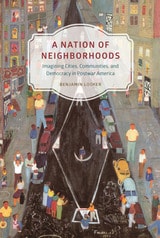
A Nation of Neighborhoods
Imagining Cities, Communities, and Democracy in Postwar AmericaBenjamin Looker
University of Chicago Press, 2015
Looker investigates the cultural, social, and political complexities of the idea of “neighborhood” in postwar America and how Americans grappled with vast changes in their urban spaces from World War II to the Reagan era. In the face of urban decline, competing visions of the city neighborhood’s significance and purpose became proxies for broader debates over the meaning and limits of American democracy. By studying the way these contests unfolded across a startling variety of genres—Broadway shows, radio plays, urban ethnographies, real estate documents, and even children’s programming—Looker shows that the neighborhood ideal has functioned as a central symbolic site for advancing and debating theories about American national identity and democratic practice.
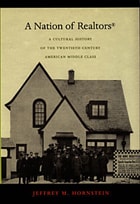
A Nation of Realtors®
A Cultural History of the Twentieth-Century American Middle ClassJeffrey M. Hornstein
Duke University Press, 2005
Hornstein draws on trade journals, government documents on housing policy, material from the archives of the National Association of Realtors and local real estate boards, demographic data, and fictional accounts of real estate agents. He chronicles the early efforts of real estate brokers to establish their profession by creating local and national boards, business practices, ethical codes, and educational programs and by working to influence laws from local zoning ordinances to national housing policy. A rich and original work of American history, A Nation of Realtors® illuminates class, gender, and business through a look at the development of a profession and its enormously successful effort to make the owner-occupied, single-family home a key element of twentieth-century American identity.
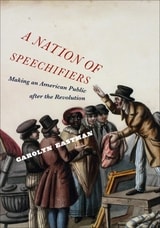
A Nation of Speechifiers
Making an American Public after the RevolutionCarolyn Eastman
University of Chicago Press, 2009
In the decades after the American Revolution, inhabitants of the United States began to shape a new national identity. Telling the story of this messy yet formative process, Carolyn Eastman argues that ordinary men and women gave meaning to American nationhood and national belonging by first learning to imagine themselves as members of a shared public.
She reveals that the creation of this American public—which only gradually developed nationalistic qualities—took place as men and women engaged with oratory and print media not only as readers and listeners but also as writers and speakers. Eastman paints vibrant portraits of the arenas where this engagement played out, from the schools that instructed children in elocution to the debating societies, newspapers, and presses through which different groups jostled to define themselves—sometimes against each other. Demonstrating the previously unrecognized extent to which nonelites participated in the formation of our ideas about politics, manners, and gender and race relations, A Nation of Speechifiers provides an unparalleled genealogy of early American identity.

A Nation of Takers
America’s Entitlement EpidemicNicholas Eberstadt
Templeton Press, 2012

A Nation of Widening Opportunities
The Civil Rights Act at 50Ellen D. Katz and Samuel R. Bagenstos, editors
Michigan Publishing Services, 2015
A Nation within a Nation
Voices of the Oneidas in WisconsinL. Gordon McLester III
Wisconsin Historical Society Press, 2010
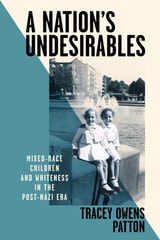
A Nation’s Undesirables
Mixed-Race Children and Whiteness in the Post-Nazi EraTracey Owens Patton
The Ohio State University Press, 2024
An innovative investigation of the entangled histories of race, transnational adoption, and post-Nazi Germany.
In a moving blend of family history and cutting-edge scholarship, Tracey Owens Patton’s A Nation’s Undesirables synthesizes work in rhetorical postmemory studies, critical adoption studies, Afrofuturism, and more to tell the story of her mother and aunt, Lore and Lilli. Two of thousands of children born to white German women and Black American men after World War II, the twins moved to the United States at age seven, where their mother renounced her parental rights and put them into the adoption system. They did not see her again for fifty-two years.Patton takes up the twins’ story and their reckoning with their mixed-race, Black German identity to disrupt standard narratives around World War II, Black experiences in Germany, and race and adoption. Combining family interviews, historical artifacts, and autoethnographic reflection, Patton composes a new narrative of women and Black German children in the postwar era. In examining the systemic racism of Germany’s efforts to move children like Lore and Lilli out of the country—and the suppression of German women’s bodily autonomy—Patton amplifies the once unacknowledged identities of these Black German children to broaden our understanding of citizenship, racism, and sexism after World War II.
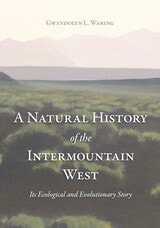
A Natural History of the Intermountain West
Its Ecological and Evolutionary StoryGwendolyn L Waring
University of Utah Press, 2010
A Natural History of the Intermountain West was written to inform people about the wild world around us, with the idea that we all crave a connection to the natural world to ground us and give us a sense of place. It is also a book about change. While species are described throughout the chapters, the text is focused more on the profound processes that have shaped western ecosystems, based on a belief that understanding those processes is more meaningful than a list of names. The ways and the rapidity with which enormous ecosystems replace one another and sometimes even return as climates change are a magnificent testament to the tenacity of life.
The first book of its kind for this region, A Natural History of the Intermountain West takes a fresh look at the natural history of the southern Rockies and the Intermountain Region based on cutting-edge research, interviews with numerous scientists, and the author’s personal experience. Drawing together many disparate fields, the book integrates the evolution of western ecosystems with the geological and climatic history of the region. It is a passionate, humanistic, and scientific treatment of this area’s ecosystems, how they function, and how they came to be through time; it is a wonderful guide for the general public and scientists alike.
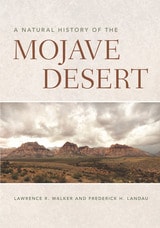
A Natural History of the Mojave Desert
Lawrence R. Walker and Frederick H. Landau
University of Arizona Press, 2018
A Natural History of the Mojave Desert explores how a combination of complex geology, varied geography, and changing climate has given rise to intriguing flora and fauna—including almost 3,000 plant species and about 380 terrestrial vertebrate animal species. Of these, one quarter of the plants and one sixth of the animals are endemic.
The authors, who, combined, have spent more than six decades living in and observing the Mojave Desert, offer a scientifically insightful and personally observed understanding of the desert. They invite readers to understand how the Mojave Desert looks, sounds, feels, tastes, and smells. They prompt us to understand how humans have lived in this desert where scant vegetation and water have challenged humans, past and present.
A Natural History of the Mojave Desert provides a lively and informed guide to understanding how life has adapted to the hidden riverbeds, huge salt flats, tiny wetlands, and windswept hills that characterize this iconic desert.

A Naturalist in Alaska
Adolph Murie
University of Arizona Press, 1990
"A fascinating study of the life cycles of the animals of Alaska and their inter-relationships. One venturing to capture something of the true beauty of Alaska and its fauna will probably find it in this book."—Journal of the West
"This book should be considerable aid to those who wish to preserve some of the great natural treasures still remaining in Alaska in the face of the inevitable pressures of a growing population. The writing is absolutely first rate. Highly recommended."—Library Journal

A Neighborhood That Never Changes
Gentrification, Social Preservation, and the Search for AuthenticityJaponica Brown-Saracino
University of Chicago Press, 2009
Newcomers to older neighborhoods are usually perceived as destructive, tearing down everything that made the place special and attractive. But as A Neighborhood That Never Changes demonstrates, many gentrifiers seek to preserve the authentic local flavor of their new homes, rather than ruthlessly remake them. Drawing on ethnographic research in four distinct communities—the Chicago neighborhoods of Andersonville and Argyle and the New England towns of Provincetown and Dresden—Japonica Brown-Saracino paints a colorful portrait of how residents new and old, from wealthy gay homeowners to Portuguese fishermen, think about gentrification.
The new breed of gentrifiers, Brown-Saracino finds, exhibits an acute self-consciousness about their role in the process and works to minimize gentrification’s risks for certain longtime residents. In an era of rapid change, they cherish the unique and fragile, whether a dilapidated house, a two-hundred-year-old landscape, or the presence of people deeply rooted in the place they live. Contesting many long-standing assumptions about gentrification, Brown-Saracino’s absorbing study reveals the unexpected ways beliefs about authenticity, place, and change play out in the social, political, and economic lives of very different neighborhoods.
A Nest Of Hooks
Lon Otto
University of Iowa Press, 1978

A New American Family
A Love StoryPeter Likins
University of Arizona Press, 2011
This poignant but ultimately empowering memoir tells the story of Peter Likins, his wife Patricia, and the six children they adopted in the 1960s, building a family beset by challenges that ultimately strengthened all bonds. With issues such as inter-racial adoption, mental illness, drug addiction, unwed pregnancy, and homosexuality entwined in their lives, the Likins’ tale isn’t just a family memoir—it’s a story of the American experience, a memoir with a message. With circumstances of race, age, and health making all of their children virtually unadoptable by 1960s standards, Pat and Pete never strayed from the belief that loyalty and love could build a strong family.
Both Pete and Pat have served as teachers. and Pete’s long academic career—holding positions as a professor, dean, provost, and then president—illuminates more than just his personal success. Pete’s professional attainments produce a context for his family story, wherein high achievements in educational, athletic, and financial terms coexist with the joys and sorrows of this exceptional family.
A frank, open account of the difficulties his family faced, this is a brave story, told with unflinching honesty and remarkable compassion. A New American Family is a wonderful narrative of the genesis of a family and a journey to the deepest parts of a father’s heart.
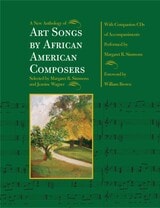
A New Anthology of Art Songs by African American Composers
Selected by Margaret R. Simmons and Jeanine Wagner. Foreword by William Brown
Southern Illinois University Press, 2004
A diverse repertoire of art songs for piano and voice
The art song—a delicate and inspiring blend of music and poetry—has been performed by singers and pianists and appreciated by audiences around the world for more than two hundred years. While collections of art songs abound, this welcome volume and its accompanying compact discs make readily available the contributions of contemporary African American composers to the popular genre. Including thirty-nine pieces for voice and piano created since 1968 by eighteen artists, ANew Anthology of Art Songs by African American Composers navigates a varied musical terrain from classical European traditions to jazz and spirituals. With nearly half of the featured songs composed by women and with others by lesser-known and emerging composers, this important collection offers a diverse, representative sampling of African American art songs and works to secure the places of these songs and artists in the canon of contemporary American music.
Selected by Jeanine Wagner and Margaret R. Simmons, prolific and celebrated performers who have presented recitals throughout the world featuring the art songs of African American composers, this dazzling new repertoire of twentieth-century music is cogently framed by a thorough introduction and substantial biographies of each composer. The compact discs feature piano tracks of all thirty-nine compositions.
The featured composers are H. Leslie Adams, Mable Bailey, Charles S. Brown, Wallace McClain Cheatham, Adolphus Hailstork, Jacqueline B. Hairston, William H. Henderson, Jeraldine Saunders Herbison, Betty Jackson King, William Foster
McDaniel, Undine Smith Moore, Byron Motley, Barbara Sherrill, Robert Owens, Nadine Shanti, Frederick Tillis, Dolores White, and Julius P. Williams.
A New Architecture for the U.S. National Accounts
Edited by Dale W. Jorgenson, J. Steven Landefeld, and William D. Nordhaus
University of Chicago Press, 2006
Since the United States economy accounts for almost thirty percent of the world economy, it is not surprising that accounting for this huge and diverse set of economic activities requires a decentralized statistical system. This volume outlines the major assignments among institutions that include the Bureau of Economic Analysis, the Bureau of Labor Statistics, the Department of Labor, the Census Bureau, and the Governors of the Federal Reserve System.
An important part of the motivation for the new architecture is to integrate the different components and make them consistent. This volume is the first step toward achieving that goal.
A New Brand of Business
Charles Coolidge Parlin, Curtis Publishing Company, and the Origins of Market ResearchDouglas B. Ward
Temple University Press, 2009
Charles Coolidge Parlin was considered by many to be the founder of market research. Working for the dominant Curtis Publishing Company, he revolutionized the industry by providing added value to advertisers through information about the racial, ethnic, and regional biases of readers and consumers. By maintaining contact with both businesses and customers, Parlin and Curtis publications were able to turn consumer wants into corporate profits.
In A New Brand of Business, Douglas Ward provides an intriguing business history that explains how and why Curtis developed its market research division. He reveals the evolution and impact of Parlin’s work, which understood how readers and advertisers in the emerging consumer economy looked at magazines and advertisements. Ward also examines the cultural and social reasons for the development and use of market research—particularly in regard to Curtis' readership of upper-income elites. The result weaves the stories of Parlin and Curtis into the changes taking place in American business and advertising in the early twentieth century.
A New Day in the Delta
Inventing School Desegregation As You GoDavid W. Beckwith
University of Alabama Press, 2009
Explores Mississippi’s school desegregation from the viewpoint of a white teacher
A New Day in the Delta is a fresh and appealing memoir of the experience of a young white college graduate in need of a job as the Vietnam War reached its zenith. David Beckwith applied and was accepted for a teaching position in the Mississippi Delta in the summer of 1969. Although it seemed to him a bit strange that he was accepted so quickly for this job while his other applications went nowhere, he was grateful for the opportunity. Beckwith reported for work to learn that he was to be assigned to an all-black school as the first step in Mississippi’s long-deferred school desegregation.
The nation and Mississippi alike were being transformed by war and evolving racial relations, and Beckwith found himself on the cutting edge of the transformation of American education and society in one of the most resistant (and poor) corners of the country. Beckwith’s revealing and often amusing story of the year of mutual incomprehension between an inexperienced white teacher and a classroom full of black children who had had minimal contact with any whites. This is history as it was experienced by those who were thrust into another sort of “front line.”
A New Deal for All?
Race and Class Struggles in Depression-Era BaltimoreAndor Skotnes
Duke University Press, 2012
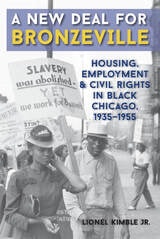
A New Deal for Bronzeville
Housing, Employment, and Civil Rights in Black Chicago, 1935-1955Lionel Kimble Jr.
Southern Illinois University Press, 2015
During the Great Migration of the 1920s and 1930s, southern African Americans flocked to the South Side Chicago community of Bronzeville, the cultural, political, social, and economic hub of African American life in the city, if not the Midwest. The area soon became the epicenter of community activism as working-class African Americans struggled for equality in housing and employment. In this study, Lionel Kimble Jr. demonstrates how these struggles led to much of the civil rights activism that occurred from 1935 to 1955 in Chicago and shows how this working-class activism and culture helped to ground the early civil rights movement. Despite the obstacles posed by the Depression, blue-collar African Americans worked with leftist organizations to counter job discrimination and made strong appeals to New Deal allies for access to public housing. Kimble details how growing federal intervention in local issues during World War II helped African Americans make significant inroads into Chicago’s war economy and how returning African American World War II veterans helped to continue the fight against discrimination in housing and employment after the war. The activism that appeared in Bronzeville was not simply motivated by the “class consciousness” rhetoric of the organized labor movement but instead grew out of everyday struggles for racial justice, citizenship rights, and improved economic and material conditions. With its focus on the role of working-class African Americans—as opposed to the middle-class leaders who have received the most attention from civil rights historians in the past—A New Deal for Bronzeville makes a significant contribution to the study of civil rights work in the Windy City and enriches our understanding of African American life in mid-twentieth-century Chicago.
This publication is partially funded by a grant from Furthermore: a program of the J.M. Kaplan fund.
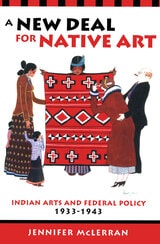
A New Deal for Native Art
Indian Arts and Federal Policy, 1933-1943Jennifer McLerran
University of Arizona Press, 2009
In A New Deal for Native Art, Jennifer McLerran reveals how positioning the native artist as a pre-modern Other served the goals of New Deal programs—and how this sometimes worked at cross-purposes with promoting native self-sufficiency. She describes federal policies of the 1930s and early 1940s that sought to generate an upscale market for Native American arts and crafts. And by unraveling the complex ways in which commodification was negotiated and the roles that producers, consumers, and New Deal administrators played in that process, she sheds new light on native art’s commodity status and the artist’s position as colonial subject.
In this first book to address the ways in which New Deal Indian policy specifically advanced commodification and colonization, McLerran reviews its multi-pronged effort to improve the market for Indian art through the Indian Arts and Crafts Board, arts and crafts cooperatives, murals, museum exhibits, and Civilian Conservation Corps projects. Presenting nationwide case studies that demonstrate transcultural dynamics of production and reception, she argues for viewing Indian art as a commodity, as part of the national economy, and as part of national political trends and reform efforts.
McLerran marks the contributions of key individuals, from John Collier and Rene d’Harnoncourt to Navajo artist Gerald Nailor, whose mural in the Navajo Nation Council House conveyed distinctly different messages to outsiders and tribal members. Featuring dozens of illustrations, A New Deal for Native Art offers a new look at the complexities of folk art “revivals” as it opens a new window on the Indian New Deal.
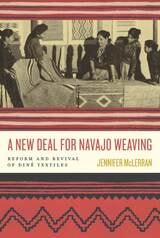
A New Deal for Navajo Weaving
Reform and Revival of Diné TextilesJennifer McLerran
University of Arizona Press, 2022
By the 1920s the durability and market value of Diné weavings had declined dramatically. Indian welfare advocates established projects aimed at improving the materials and techniques. Private efforts served as models for federal programs instituted by New Deal administrators. Historian Jennifer McLerran details how federal officials developed programs such as the Southwest Range and Sheep Breeding Laboratory at Fort Wingate in New Mexico and the Navajo Arts and Crafts Guild. Other federal efforts included the publication of Native natural dye recipes; the publication of portfolios of weaving designs to guide artisans; and the education of consumers through the exhibition of weavings, aiding them in their purchases and cultivating an upscale market. McLerran details how government officials sought to use these programs to bring the Diné into the national economy; instead, these federal tactics were ineffective because they marginalized Navajo women and ignored the important role weaving plays in the resilience and endurance of wider Diné culture.
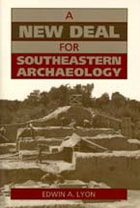
A New Deal for Southeastern Archaeology
Edwin A. Lyon
University of Alabama Press, 1996
Recipient of the 1994 Anne B. and James B. McMillan Prize
This comprehensive study provides a history of New Deal archaeology in the Southeast in the 1930s and early 1940s and focuses on the projects of the Federal Emergency Relief Administration, the Civil Works Administration, the Works Progress Administration, the Tennessee Valley Authority, the National Park Service, and the Smithsonian Institution.
Utilizing primary sources including correspondence and unpublished reports, Lyon demonstrates the great importance of the New Deal projects in the history of southeastern and North American archaeology. New Deal archaeology transformed the practice of archaeology in the Southeast and created the basis for the discipline that exists today. With the current emphasis on curation and repatriation, archaeologists and historians will find this volume invaluable in reconstructing the history of the projects that generated the many collections that now fill our museums.
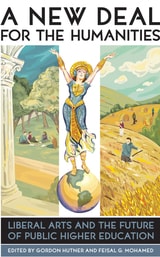
A New Deal for the Humanities
Liberal Arts and the Future of Public Higher EducationHutner, Gordon
Rutgers University Press, 2015
The contributors offer spirited and thought-provoking debates on a diverse range of topics. For instance, they deplore the push by administrations to narrow learning into quantifiable outcomes as well as the demands of state governments for more practical, usable training. Indeed, for those who suggest that a college education should be “practical”—that it should lean toward the sciences and engineering, where the high-paying jobs are—this book points out that while a few nations produce as many technicians as the United States does, America is still renowned worldwide for its innovation and creativity, skills taught most effectively in the humanities. Most importantly, the essays in this collection examine ways to make the humanities even more effective, such as offering a broader array of options than the traditional major/minor scheme, options that combine a student’s professional and intellectual interests, like the new medical humanities programs.
A democracy can only be as energetic as the minds of its citizens, and the questions fundamental to the humanities are also fundamental to a thoughtful life. A New Deal for the Humanities takes an intrepid step in making the humanities—and our citizens—even stronger in the future.
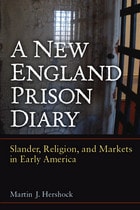
A New England Prison Diary
Slander, Religion, and Markets in Early AmericaMartin J. Hershock
University of Michigan Press, 2012
In 1812, New Hampshire shopkeeper Timothy M. Joy abandoned his young family, fleeing the creditors who threatened to imprison him. Within days, he found himself in a Massachusetts jailhouse, charged with defamation of a prominent politician. During the months of his incarceration, Joy kept a remarkable journal that recounts his personal, anguished path toward spiritual redemption. Martin J. Hershock situates Joy's account in the context of the pugnacious politics of the early republic, giving context to a common citizen's perspective on partisanship and the fate of an unfortunate shopkeeper swept along in the transition to market capitalism.
In addition to this close-up view of an ordinary person's experience of a transformative period, Hershock reflects on his own work as a historian. In the final chapter, he discusses the value of diaries as historical sources, the choices he made in telling Joy's story, alternative interpretations of the diary, and other contexts in which he might have placed Joy's experiences. The appendix reproduces Joy's original journal so that readers can develop their own skills using a primary source.

A New Geography of Poets
Edward Field
University of Arkansas Press, 1993
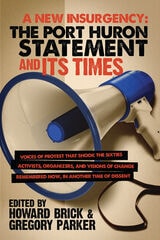
A New Insurgency
The Port Huron Statement and Its TimesHoward Brick and Gregory Parker, eds.
Michigan Publishing Services, 2018
This volume features three never-before-published “manifesto drafts” written by Tom Hayden in early 1962 that generated the discussion leading to the Port Huron meeting. Other highlights include recollections from leading women in the Port Huron deliberations who, three years later, protested the subordination of women within the radical movements, thus setting the stage for the rise of women’s liberation. A New Insurgency is based on the University of Michigan’s conference commemorating the fiftieth anniversary of the Port Huron Statement in 2012.
“The fiftieth anniversary of the Port Huron Statement has drawn a great number of reflections and commemorations, but this carefully conceived volume offers an account of unrivaled ambition, exceptional breadth, and surprising insight. It both excavates the event itself—vividly, perceptively, exhaustively—and gives it the largest and most illuminating of contexts. A New Insurgency is as close to definitive as any volume of this kind can become.”
—Geoff Eley, Karl Pohrt Distinguished University Professor of Contemporary History, University of Michigan
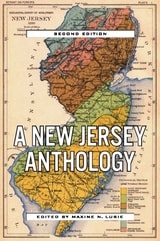
A New Jersey Anthology
Lurie, Maxine N
Rutgers University Press, 2010
A New Language, A New World
Italian Immigrants in the United States, 1890-1945Nancy C. Carnevale
University of Illinois Press, 2012
A New Type of Womanhood
Discursive Politics and Social Change in Antebellum AmericaNatasha Kirsten Kraus
Duke University Press, 2008
Enabling Kraus’s retelling of the 1850s woman’s rights movement is her theory of “structural aporias,” which takes the institutional structures of any particular society as fully imbricated with the force of language. Kraus reads the antebellum relations of womanhood, contract, property, the economy, and the nation as a fruitful site for analysis of the interconnected power of language, culture, and the law. She combines poststructural theory, particularly deconstructive approaches to discourse analysis; the political economic history of the antebellum era; and the interpretation of archival documents, including woman’s rights speeches, petitions, pamphlets, and convention proceedings, as well as state legislative debates, reports, and constitutional convention proceedings. Arguing that her method provides critical insight not only into social movements and cultural changes of the past but also of the present and future, Kraus concludes A New Type of Womanhood by considering the implications of her theory for contemporary feminist and queer politics.
A New Vision of Southern Jewish History
Studies in Institution Building, Leadership, Interaction, and MobilityMark K. Bauman, Foreword by Ronald H. Bayor
University of Alabama Press, 2019
Essays from a prolific career that challenge and overturn traditional narratives of southern Jewish history
Mark K. Bauman, one of the foremost scholars of southern Jewish history working today, has spent much of his career, as he puts it, “rewriting southern Jewish history” in ways that its earliest historians could not have envisioned or anticipated, and doing so by specifically targeting themes and trends that might not have been readily apparent to those scholars. A New Vision of Southern Jewish History: Studies in Institution Building, Leadership, Interaction, and Mobility features essays collected from over a forty-year career, including a never-before-published article.
The prevailing narrative in southern Jewish history tends to emphasize the role of immigrant Jews as merchants in small southern towns and their subsequent struggles and successes in making a place for themselves in the fabric of those communities. Bauman offers assessments that go far beyond these simplified frameworks and draws upon varieties of subject matter, time periods, locations, tools, and perspectives over three decades of writing and scholarship.
A New Vision of Southern Jewish History contains Bauman’s studies of Jewish urbanization, acculturation and migration, intra- and inter-group relations, economics and business, government, civic affairs, transnational diplomacy, social services, and gender—all complicating traditional notions of southern Jewish identity. Drawing on role theory as informed by sociology, psychology, demographics, and the nature and dynamics of leadership, Bauman traverses a broad swath—often urban—of the southern landscape, from Savannah, Charleston, and Baltimore through Atlanta, New Orleans, Galveston, and beyond the country to Europe and Israel.
Bauman’s retrospective volume gives readers the opportunity to review a lifetime of work in a single publication as well as peruse newly penned introductions to his essays. The book also features an “Additional Readings” section designed to update the historiography in the essays.
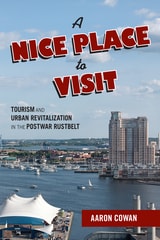
A Nice Place to Visit
Tourism and Urban Revitalization in the Postwar RustbeltAaron Cowan
Temple University Press, 2016
How did tourism gain a central role in the postwar American Rustbelt city? And how did tourism development reshape the meaning and function of these cities? These are the questions at the heart of Aaron Cowan’s groundbreaking book, A Nice Place to Visit.
Cowan provides an insightful, comparative look at the historical development of Cincinnati, St. Louis, Pittsburgh, and Baltimore in the post–World War II period to show how urban tourism provided a potential solution to the economic woes of deindustrialization. A Nice Place to Visit chronicles the visions of urban leaders who planned hotels, convention centers, stadiums, and festival marketplaces to remake these cities as tourist destinations. Cowan also addresses the ever-present tensions between tourist development and the needs and demands of residents in urban communities.
A Nice Place to Visit charts how these Rustbelt cities adapted to urban decline and struggled to meet the challenge of becoming an appealing place to visit, as well as good and just communities in which to live.
A Nickel and a Prayer
Rhondda Robinson Thomas
University of Delaware Press, 0
Virtually unknown outside of her adopted hometown of Cleveland, Ohio, Jane Edna Hunter was one of the most influential African American social workers and progressive activists of the early to mid-twentieth century.
In her autobiography A Nickel and a Prayer, Hunter presents an enlightening two-part narrative that recollects her formative years in the post–Civil War South and her activist years in Cleveland. Published in 1940, Hunter’s autobiography recalls a childhood filled with the pleasures and pains of family life on the former plantation where her ancestors had toiled, adventures and achievements in schools for African American children, tests and trials during her brief marriage, and recognition and respect while completing nursing training and law school. When sharing the story of her life as an activist, Hunter describes the immense obstacles she overcame while developing an interracial coalition to support the establishment of the Working Girls Home Association (later, the Phillis Wheatley Association), a progressive institution intended to house and help unmarried African American women and girls, and nurture its growth from a rented home that provided accommodations for twenty-two women to a nine-story building that featured 135 rooms.
This new and annotated edition of A Nickel and a Prayer includes the final chapter, “Fireside Musings,” that Hunter added to the second, limited printing of her autobiography and an introduction that lauds her as a multifaceted social activist who not only engaged in racial uplift work, but impacted African American cultural production, increased higher education opportunities for women, and invigorated African American philanthropy. This important text restores Jane Edna Hunter to her rightful place among prominent African American leaders of the twentieth century.
A Nickel's Worth of Skim Milk
A Boy's View of the Great DepressionRobert J. Hastings
Southern Illinois University Press, 1986
Told from the point of view of a young boy, this account shows how a family “faced the 1930s head on and lived to tell the story.” It is the story of growing up in southern Illinois, specifically the Marion, area during the Great Depression. But when it was first published in 1972 the book proved to be more than one writer’s memories of depression-era southern Illinois.
“People started writing me from all over the country,” Hastings notes. “And all said much the same: ‘You were writing about my family, as much as your own. That’s how I remember the 1930s, too.’”
As he proves time and again in this book, Hastings is a natural storyteller who can touch upon the detail that makes the tale both poignant and universal. He brings to life a period that marked every man, woman, and child who lived through it even as that national experience fades into the past.

A Nimble Arc
James Van Der Zee and PhotographyEmilie Boone
Duke University Press, 2023
A Noble and Independent Course
The Life of the Reverend Edward MitchellForrester A. Lee and James S. Pringle
Dartmouth College Press, 2018
A North Country Almanac
Reflections of an Old-School Conservationist in a Modern WorldThomas C Bailey
Michigan State University Press, 2018

A Paddler's Guide to the Delaware River
Kayaking, Canoeing, Rafting, TubingLetcher, Gary
Rutgers University Press, 2012
When Henry Hudson explored the Delaware River in 1609, he dubbed it “one of the finest, best, and pleasantest rivers in the world.” Today, those same qualities make the Delaware one of the most popular rivers for recreational use in the United States. Although in places a near-wilderness, the Delaware is easily accessible to millions of residents. On any summer day there may be thousands of people rushing down its exciting rapids or lazing through its serene eddies.
A Paddler’s Guide to the Delaware River is an indispensable resource for anyone who wants to experience the Delaware River in a kayak, canoe, raft, or tube—or, for that matter, an automobile or an armchair. Reading the book is like travelling down the river with an experienced guide. It charts the non-tidal Delaware 200 miles from Hancock, New York, to Trenton, New Jersey, describing access points, rapids, natural features, villages, historical sites, campgrounds, outfitters, and restaurants. The Delaware comes alive as the author introduces some of the people, places, events, and controversies that have marked the river from earliest times to the present day.
Completely revised, the third edition offers:
- An overview of the river including watershed, history, place names, paddlecraft, safety, and fishing.
- The River Guide: ten sections that can each be paddled in one day (about 20 miles), with a mile-by-mile account of rapids, access, natural features, historic sites, and other features.
- All new maps, with names for virtually every rapid, eddy, and other river feature, plus detailed diagrams for routes through even the most severe rapids.
- Features in the River Guide highlight the people, events, natural history, and communities that define the river experience, such as Tom Quick, the infamous “avenger of the Delaware”; the mysterious migration of eels, the battle over Tocks Island Dam; and many others.
- Appendices of Important Contacts, Outfitters and Campgrounds, River Trip Checklists, and more.
Whether you are a novice out for an afternoon float, a seasoned adventurer on an overnight expedition, or a resident fascinated by the lore of the Delaware Valley, this book is an invaluable guide.