Results by title
3258 books match the query 'Art' and 405 start with a
ArtBreak
A Creative Guide to Joyful and Productive ClassroomsKatherine Ziff
Ohio University Press, 2016
Play is the central, universally significant activity of childhood. Self-directed play in which adults have a supporting rather than directing role is critical to the development and well-being of children. Yet as children have their days and nights increasingly scripted and planned for them, opportunities for play have disappeared over the last half century, especially in schools.
ArtBreak’s innovation lies in its creative framework. Former school counselor, current professor of counseling, and practicing artist Katherine Ziff developed and tested the program over five years, integrating theory and practice from art therapy, counseling, and child-centered education. The result is a choice-based, guided play experience based on the developmental and restorative possibilities of art making.
A detailed how-to guide, this book is the flexible and accessible toolbox that teachers, parents, and counselors need to facilitate relaxing, art-based play that allows children to freely explore, plan, and pursue their own interests with adult support. Easy to implement, ArtBreak can be added to the regular routines of classroom, home, therapy office, or other community setting at whatever scale suits space, time, and budget. No art training is required, only a willingness to embark on a play journey with children.
Arte Programmata
Freedom, Control, and the Computer in 1960s ItalyLindsay Caplan
University of Minnesota Press, 2022
Tracing the evolution of the Italian avant-garde’s pioneering experiments with art and technology and their subversion of freedom and control
In postwar Italy, a group of visionary artists used emergent computer technologies as both tools of artistic production and a means to reconceptualize the dynamic interrelation between individual freedom and collectivity. Working contrary to assumptions that the rigid, structural nature of programming limits subjectivity, this book traces the multifaceted practices of these groundbreaking artists and their conviction that technology could provide the conditions for a liberated social life.
Situating their developments within the context of the Cold War and the ensuing crisis among the Italian left, Arte Programmata describes how Italy’s distinctive political climate fueled the group’s engagement with computers, cybernetics, and information theory. Creating a broad range of immersive environments, kinetic sculptures, domestic home goods, and other multimedia art and design works, artists such as Bruno Munari, Enzo Mari, and others looked to the conceptual frameworks provided by this new technology to envision a way out of the ideological impasses of the age.
Showcasing the ingenuity of Italy’s earliest computer-based art, this study highlights its distinguishing characteristics while also exploring concurrent developments across the globe. Centered on the relationships between art, technology, and politics, Arte Programmata considers an important antecedent to the digital age.
Artful Assassins
Murder as Art in Modern MexicoFernando Fabio Sanchez
Vanderbilt University Press, 2010
Sanchez argues that the seemingly hopeless cycle of violence experienced by Mexico in the 20th century, as reflected in its "crime genre," reveals a broader intrinsic cultural and political failure that suggests grave implications for the current state of crisis. Tracing the development of a national Mexican identity from the 1910 Mexican Revolution onward, Sanchez focuses on the indelible presence of violence and crime underlying the major works that contributed to a larger communal narrative.
Artful Assassins ultimately offers a panoramic overview of the evolution of Mexican arts and letters, as well as nationalism, by claiming murder and assassination as literary and cinematic motifs. The collapse of post-revolutionary political unity was presaged all along in Mexican culture, Sanchez argues. It need only to have been sought in the art of the nation.
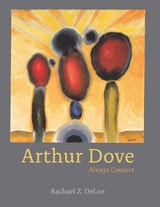
Arthur Dove
Always ConnectRachael Z. DeLue
University of Chicago Press, 2016
Rachael Z. DeLue rejects the traditional assumption that Dove can only be understood in terms of his nature paintings and association with photographer and gallerist Alfred Stieglitz and his circle. Instead, she uncovers deep and complex connections between Dove’s work and his world, including avant-garde literature, popular music, meteorology, mathematics, aviation, and World War II. Arthur Dove also offers the first sustained account of Dove’s Dadaesque multimedia projects and the first explorations of his animal imagery and the role of humor in his art. Beautifully illustrated with works from all periods of Dove’s career, this book presents a new vision of one of America’s most innovative and captivating artists—and reimagines how the story of modern art in the United States might be told.
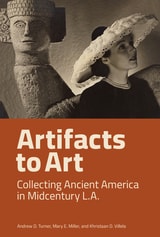
Artifacts to Art
Collecting Ancient America in Midcentury L.A.Andrew D. Turner
J. Paul Getty Trust, The, 2026
By the mid-twentieth century, ancient Mexican artifacts had undergone a striking transformation. Once dismissed as anthropological curiosities, sought after more for their ethnographic value than aesthetic merit, they had become prized artworks that were prominently displayed in major US museums, featured in advertisements and Hollywood films, and shown adorning the homes of celebrities.
At the center of this shift was Earl Stendahl, a savvy Los Angeles art dealer who played a pivotal role in shaping public and institutional perceptions of these objects. Through strategic marketing and a keen eye for opportunity, he repositioned these artifacts, selling them to an elite clientele that included movie stars, wealthy collectors, and museum curators. In doing so, he helped define a new canon of “ancient American art.”
Beneath this glamorous facade, however, lies a darker narrative of the looting, smuggling, and forgery that fueled this midcentury craze, exposing how the desire for authenticity and prestige often came at the expense of ethical collecting practices and cultural heritage. This book brings together art history, museum studies, and the politics of the antiquities trade, offering both a social history and a critical examination of how ancient Mexico’s past was sold in twentieth-century America.
This volume is published to accompany an exhibition on view at the Getty Research Institute at the Getty Center from June 23 to October 18, 2026.
Artifactual
Forensic and Documentary KnowingElizabeth Anne Davis
Duke University Press, 2023

Artifice and Illusion
The Art and Writing of Samuel van HoogstratenCeleste Brusati
University of Chicago Press, 1995
Analyzing van Hoogstraten's painting treatise, illusionistic pictures, ingenious perspective boxes, and witty trompe-l'oeil images, Brusati reveals the crucial role these endeavors played in the forging of van Hoogstraten's professional and social identity. Brusati looks at the historical circumstances of van Hoogstraten's career, which he fashioned from a convergence of Dutch cultural practices, family genealogy, and his considerable entrepreneurial acumen. She shows how Van Hoogstraten exploited the court patronage system to secure the worth of his work in the newer market culture of the Dutch Republic.
Brusati explores Van Hoogstraten's use of illusionistic artifice in his art and writing to shed new light on the much-disputed nature of Dutch "realism", and she discusses how a notion of "experimental artistry", which linked representational craft to the production of knowledge, informed Van Hoogstraten's many projects and framed the terms within which he and his colleagues understood artistic achievement during this period.
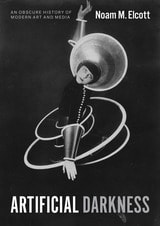
Artificial Darkness
An Obscure History of Modern Art and MediaNoam M. Elcott
University of Chicago Press, 2016
In exploring how artificial darkness shaped modern art, film, and media, Noam M. Elcott addresses seminal and obscure works alongside their sites of production—such as photography darkrooms, film studios, and laboratories—and their sites of reception, including theaters, cinemas, and exhibitions. He argues that artists, scientists, and entertainers like Étienne-Jules Marey, Richard Wagner, Georges Méliès, and Oskar Schlemmer revolutionized not only images but also everything surrounding them: the screen, the darkness, and the experience of bodies and space. At the heart of the book is “the black screen,” a technology of darkness that spawned today’s blue and green screens and has undergirded numerous advanced art and film practices to this day.
Turning familiar art and film narratives on their heads, Artificial Darkness is a revolutionary treatment of an elusive, yet fundamental, aspect of art and media history.

Artificial Intelligence, Art and Indigeneity
Between Dreams and HallucinationsEdited by Thea Pitman, Sandra De Berduccy, and Andreas Rauh
University of London Press, 2026
This book explores the cultural and ethical implications of generative AI through the lens of Indigenous visual culture in Latin America.
Responding to the rise of tools like DALL·E 2 and Midjourney, this groundbreaking volume documents the AIAI project (2023–), which invited a group of Indigenous artists and writers from Argentina, Bolivia, Brazil, Chile, and Peru to critically engage with image generation technologies. Through collaborative experimentation with a range of both commercial and bespoke tools, contributors reflect on the promises and pitfalls of AI—from its potential for ‘dreaming,’ for imagining Indigenous futures, to the frustration of its ability to ‘hallucinate,’ to distort, and misrepresent Indigenous cultures.
Bringing together artists, writers, and scholars, the book challenges dominant narratives around AI and representation, using a decolonial framework rooted in Indigenous epistemologies. Structured in three parts—context and theory, creative reflections, and generative critique—it foregrounds multivocal and multilingual perspectives, resisting homogenization and reframing participatory research. This is the first book-length study of generative AI’s impact on Indigenous visual culture in Latin America, making a timely and vital contribution to global debates on AI, art, and cultural sovereignty.

Artificial Women
The 1970s, Mass Culture, and FeminismVictoria Hesford
Duke University Press, 2027

Artist Animal
Steve Baker
University of Minnesota Press, 2013
Animals have always been compelling subjects for artists, but the rise of animal advocacy and posthumanist thought has prompted a reconsideration of the relationship between artist and animal. In this book, Steve Baker examines the work of contemporary artists who directly confront questions of animal life, treating animals not for their aesthetic qualities or as symbols of the human condition but rather as beings who actively share the world with humanity.
The concerns of the artists presented in this book—Sue Coe, Eduardo Kac, Lucy Kimbell, Catherine Chalmers, Olly and Suzi, Angela Singer, Catherine Bell, and others—range widely, from the ecological to the philosophical and from those engaging with the modification of animal bodies to those seeking to further the cause of animal rights. Drawing on extensive interviews he conducted with the artists under consideration, Baker explores the vital contribution that contemporary art can make to a broader conception of animal life, emphasizing the importance of creativity and trust in both the making and understanding of these artworks.
Throughout, Baker is attentive to issues of practice, form, and medium. He asks, for example, whether the animal itself could be said to be the medium in which these artists are working, and he highlights the tensions between creative practice and certain kinds of ethical demands or expectations. Featuring full-color, vivid examples of their work, Artist Animal situates contemporary artists within the wider project of thinking beyond the human, asserting art’s power to open up new ways of thinking about animals.

Artist Scholar
Reflections on Writing and ResearchG. James Daichendt
Intellect Books, 2012
Artist Scholar: Reflections on Writing and Research is part history, introduction, and discussion for artists and designers entering, graduating, and employed by the contemporary art academy in the United States. The evolution of art education in the university continues to expand in the 21st century as the variables of craft, skill, technique, theory, history and criticism shift and expand as the perspective of arts-based research is introduced into this professionalized environment. Given this context: what can M.F.A. students do to improve their understanding of writing and research without sacrificing their commitment to their studio art process?
Through a series of essays, the text argues for better writing at the M.F.A. level with the purpose of becoming better artists. By contextualizing art practice in the university and providing a foundation for future artist scholarship, it serves as an invitation to artist scholars to push their work further and develop the confidence to situate their art in the university context.
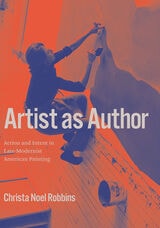
Artist as Author
Action and Intent in Late-Modernist American PaintingChrista Noel Robbins
University of Chicago Press, 2021
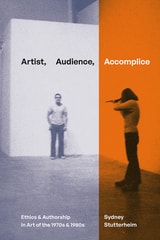
Artist, Audience, Accomplice
Ethics and Authorship in Art of the 1970s and 1980sSydney Stutterheim
Duke University Press, 2024
Artist-Teacher
A Philosophy for Creating and TeachingG. James Daichendt
Intellect Books, 2010
Is an artist-teacher a mere professional who balances a career—or does the duality of making and teaching art merit a more profound investigation? Rejecting a conventional understanding of the artist-teacher, this book sets out to present a robust history from the classical era to the twenty-first century. Particular pedagogical portraits—featuring George Wallis, Walter Gropius, Johannes Itten, Victor Pashmore, Richard Hamilton, Arthur Wesley Dow, and Hans Hofmann—illustrate the artist-teacher in various contexts. This book offers a revelation of the complex thinking processes artists utilize when teaching, and a reconciliation of the artistic and educational enterprises as complimentary partners.
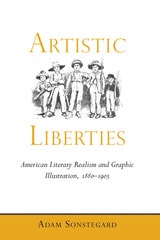
Artistic Liberties
American Literary Realism and Graphic Illustration, 1880-1905Adam Sonstegard
University of Alabama Press, 2013
Though today we commonly read major works of nineteenth-century American literature in unillustrated paperbacks or anthologies, many of them first appeared as magazine serials, accompanied by ample illustrations that sometimes made their way into the serials’ first printings as books. The graphic artists creating these illustrations often visually addressed questions that the authors had left for the reader to interpret, such as the complexions of racially ambiguous characters in Uncle Tom’s Cabin. The artists created illustrations that depicted what outsiders saw in Huck and Jim in Adventures of Huckleberry Finn, rather than what Huck and Jim learned to see in one another. These artists even worked against the texts on occasion—for instance, when the illustrators reinforced the same racial stereotypes that writers such as Paul Laurence Dunbar had intended to subvert in their works.
Authors of American realism commonly submitted their writing to editors who allowed them little control over the aesthetic appearance of their work. In his groundbreaking Artistic Liberties, Adam Sonstegard studies the illustrations from these works in detail and finds that the editors employed illustrators who were often unfamiliar with the authors’ intentions and who themselves selected the literary material they wished to illustrate, thereby taking artistic liberties through the tableaux they created.
Sonstegard examines the key role that the appointed artists played in visually shaping narratives—among them Mark Twain’s Pudd’nhead Wilson, Stephen Crane’s The Monster, and Edith Wharton’s The House of Mirth—as audiences tended to accept their illustrations as guidelines for understanding the texts. In viewing these works as originally published, received, and interpreted, Sonstegard offers a deeper knowledge not only of the works, but also of the realities surrounding publication during this formative period in American literature.
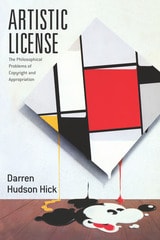
Artistic License
The Philosophical Problems of Copyright and AppropriationDarren Hudson Hick
University of Chicago Press, 2017
Engaging with long-standing debates about the nature of originality, authorship, and artists’ rights, Hick examines the philosophical challenges presented by the role of intellectual property in the artworld and vice versa. Using real-life examples of artists who have incorporated copyrighted works into their art, he explores issues of artistic creation and the nature of infringement as they are informed by analytical aesthetics and legal and critical theory. Ultimately, Artistic License provides a critical and systematic analysis of the key philosophical issues that underlie copyright policy, rethinking the relationship between artist, artwork, and the law.
Artistic Research in the Future Academy
Danny Butt
Intellect Books, 2017
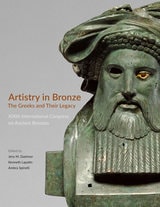
Artistry in Bronze
The Greeks and Their Legacy XIXth International Congress on Ancient BronzesJens M Daehner
J. Paul Getty Trust, The, 2017
www.getty.edu/publications/artistryinbronze
Artists and the People
Ideologies of Art in IndonesiaElly Kent
National University of Singapore Press, 2022
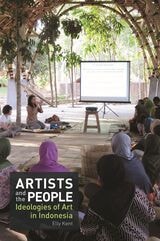
Exploring the work of established and emerging artists in Indonesia’s vibrant art world, this book examines why so many artists in the world’s largest archipelagic nation choose to work directly with people in their art practices. While the social dimension of Indonesian art makes it distinctive in the globalized world of contemporary art, Elly Kent is the first to explore this engagement in Indonesian terms. What are the historical, political, and social conditions that lie beneath these polyvalent practices? How do formal and informal institutions, communities, and artist-run initiatives contribute to the practices and discourses behind socially engaged art in Indonesia? Drawing on interviews with artists, translations of archival material, visual analyses, and participation in artists’ projects, this book presents a unique, interdisciplinary examination of ideologies of art in Indonesia.
Artists of Wyeth Country
Howard Pyle, N. C. Wyeth, and Andrew WyethW. Barksdale Maynard
Temple University Press, 2021
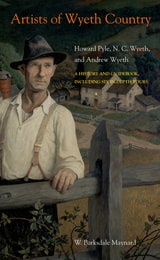
Few artists have ever been so beloved—or so controversial among art critics—as Andrew Wyeth. The groundbreaking book Artists of Wyeth Country presents an unauthorized and unbiased biographical portrait of Wyeth, based on interviews with family, friends, neighbors—even actress Eva Marie Saint. Journalist W. Barksdale Maynard shines new light on the reclusive artist, emphasizing Wyeth’s artistic debt to Howard Pyle as well as his surprising interest in surrealism. The book is filled with brand-new information and fresh interpretations.
Artists of Wyeth Country also comprises the first-ever guidebook to the artistic world of Chadds Ford, Pennsylvania, center of the Brandywine Tradition begun by Howard Pyle. Six in-depth tours for walking or driving allow the reader to stand exactly where N. C. and Andrew Wyeth stood, as has never been fully possible before.
As Maynard explains, Andrew Wyeth’s artistic process was influenced by Henry David Thoreau’s nature-worship and by his habit of walking daily. Newly commissioned maps, rare aerial photographs, as well as glorious full-color images and artworks of the landscape (many never reproduced before) illustrate the text.
A fascinating exploration of the world of Andrew Wyeth, Artists of Wyeth Country is sure to become an essential new source for those who love American art as well as for admirers of the scenic landscapes of the Mid-Atlantic, of which the Brandywine Valley is an exceptional example. As a rare, unauthorized biography of Andrew Wyeth, it opens the door for an entirely new understanding of the American master.
Artists' Things
Rediscovering Lost Property from Eighteenth-Century FranceKatie Scott
J. Paul Getty Trust, The, 2024
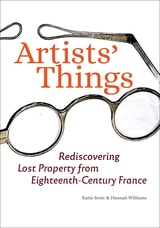
Artists are makers of things. Yet it is a measure of the disembodied manner in which we generally think about artists that we rarely consider the everyday items they own. This innovative book looks at objects that once belonged to artists, revealing not only the fabric of the eighteenth-century art world in France but also unfamiliar—and sometimes unexpected—insights into the individuals who populated it, including Jean-Antoine Watteau, François Boucher, Jean-Baptiste Greuze, and Elisabeth Vigée-LeBrun.
From the curious to the mundane, from the useful to the symbolic, these items have one thing in common: they have all been eclipsed from historical view. Some of the objects still exist, like Jean-Honoré Fragonard’s color box and Jacques-Louis David’s table. Others survive only in paintings, such as Jean-Siméon Chardin’s cistern in his Copper Drinking Fountain, or in documents, like François Lemoyne’s sword, the instrument of his suicide. Several were literally lost, including pastelist Jean-Baptiste Perronneau’s pencil case. In this fascinating book, the authors engage with fundamental historical debates about production, consumption, and sociability through the lens of material goods owned by artists.
The free online edition of this open-access publication is at www.getty.edu/publications/artists-things/ and includes zoomable illustrations. Free PDF and EPUB downloads of the book are also available.
Artists, Advertising, and the Borders of Art
Michele H. Bogart
University of Chicago Press, 1995
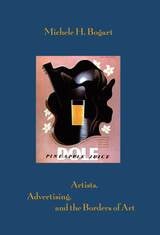
From the turn of the century through the 1950s, the explosive growth of popular magazines and national advertising offered artists new sources of income and new opportunities for reaching huge audiences. Bogart shows how, at the same time, this change in the marketplace also forced a rethinking of the purpose of the artistic enterprise itself. She examines how illustrators such as Howard Pyle, Charles Dana Gibson, and Norman Rockwell claimed their identities as artists within a market-oriented framework. She looks at billboard production and the growing schism between "art" posters and billboard advertisements; at the new roles of the art director; at the emergence of photography as the dominant advertising medium; and at the success of painters in producing "fine art" for advertising during the 1930s and 1940s.
Artivate 11.3
Adrienne Callander
University of Arkansas Press, 2024
In this special edition of Artivate built around the expanded field of arts entrepreneurship, guest editors Adrienne Callander and Johanna K. Taylor collect scholars’ research on ideas they see as both central and pivotal in driving the field forward. In a futurecasting glossary, past, present, and future Artivate editors gather their thinking around such ideas, exploring where and how arts entrepreneurship currently happens beyond expected models. The three articles contained in this issue explore arts entrepreneurship’s overlaps from policy to activism to philanthropy through new adaptable organizational modeling. Starting with an in-depth analysis of hybrid practice as a mode of institutional entrepreneurship, the conversation turns to a view on artist activism as a form of arts entrepreneurship, followed by a case study of the Maniobra program of cultural employment supporting artists. To culminate in this issue’s galleries, an artist showcase profiles participating artists in the Maniobra program.
Arts Education in Action
Collaborative Pedagogies for Social JusticeEdited by Sarah Travis, Jody Stokes-Casey, and Seoyeon Kim
University of Illinois Press, 2020
This edition of Common Threads investigates the intersection of social justice work with education in the visual arts, music, theatre, dance, and literature. Weaving together resources from a range of University of Illinois Press journals, the editors offer articles on the scholarly inquiry, theory, and practice of social justice arts education. Selections from the past three decades reflect the synergy of the diverse scholars, educators, and artists actively engaged in such projects. Together, the contributors bring awareness to the importance of critically reflective and inclusive pedagogy in arts educational contexts. They also provide pedagogical theory and practical tools for building a social justice orientation through the arts.
Contributors: Joni Boyd Acuff, Seema Bahl, Elizabeth Delacruz, Elizabeth Garber, Elizabeth Gould, Kirstin Hotelling, Tuulikki Laes, Monica Prendergast, Elizabeth Saccá, Alexandra Schulteis, Amritjit Singh, and Stephanie Springgay
Arts of Wonder
Enchanting Secularity - Walter De Maria, Diller + Scofidio, James Turrell, Andy GoldsworthyJeffrey L. Kosky
University of Chicago Press, 2012
Artwash
Big Oil and the ArtsMel Evans
Pluto Press, 2015
Reflecting on the role and function of art galleries, Artwash considers how the association with oil money might impede these institutions in their cultural endeavors. Outside the gallery space, Mel Evans examines how corporate sponsorship of the arts can obscure the strategies of corporate executives to maintain brand identity and promote their public image through cultural philanthropy. Ultimately, Evans sounds a note of hope, presenting ways artists themselves have challenged the ethics of contemporary art galleries and examining how cultural institutions might change.
As for Protocols
Edited by Re'al Christian, Carin Kuoni, and Eriola Pira
Amherst College Press, 2025
Edited by Re’al Christian, Carin Kuoni, and Eriola Pira, an opening score by Raven Chacon and contributions by Salome Asega, Carolina Caycedo with Lupita Limón Corrales, Raven Chacon, Jesse Chun, Asia Dorsey, Taraneh Fazeli and Cannach MacBride, Pablo Helguera, Emmanuel Iduma, Mary Maggic, Shannon Mattern, V. Mitch McEwen with Nadir Jeevanjee, Rashaun Mitchell with Silas Riener, Romy Opperman, Rasheedah Phillips, Leanne Betasamosake Simpson with Maria Hupfield, Ultra-red with Robert Sember, and Underground Resistance.
Ash
Catastrophe, Performance, & the CraftDan O'Brien
Acre Books, 2027
In this collection of essays, an acclaimed poet and playwright searches for meaning amid catastrophe.
The twenty candid essays in Ash: Catastrophe, Performance, & the Craft are the culmination of a ten-year project by acclaimed poet and playwright Dan O’Brien. Divided into three parts, this volume—portions of which originally appeared in The New York Times, Esquire, and The Times Literary Supplement—combines the deeply personal with the artistic and professional, coalescing around the experience of trauma (physical, mental, moral) and the challenges presented by catastrophe and its aftermath.
In the title essay, O'Brien links the smoke and debris of the Los Angeles wildfires to the toxic legacy of September 11, tracing the lasting repercussions of collective disaster. In “Dear Brother,” he revisits a sibling’s suicide attempt and the family silences that shaped both his life and his writing. Elsewhere, in reflections on documentary theater, political violence, and a long collaboration with Pulitzer Prize–winning war reporter Paul Watson, he weighs the responsibility and the cost of bearing witness to suffering.
Running through the book, and indeed through O’Brien’s career as poet, playwright, essayist, and memoirist, is a search for meaning in the midst of calamity, whether it results from terrorism, from conflagration, from cancer, or from victimhood and abuse. Written over a decade marked by devastating illness, profound cultural upheaval, and hard-won hope, Ash is both an intimate record of survival and a searching meditation on the resilience and reinvention to be found in the creative act.
Asian Aesthetics
Ken-ichi Sasaki
National University of Singapore Press, 2011
The book is divided into five sections, dealing with Japanese, Korean, Chinese, Indian and Southeast Asian aesthetics. Individual chapters provide in-depth investigations of specific traditions, embracing both classical as well as modern aesthetic forms. The author suggest that Japanese culture is characterized by an openness to diverse cultural influences, Korean culture by "peninsularity," Chinese culture by parallels with the West, Indian culture by "rasa" (a kind of "cosmic" feeling that is distinct from one who feels), and Southeast Asian culture by dilemmas of modernization. The volume as a whole integrates these studies, clarifying essential elements of each aesthetic culture and drawing on this material to characterize an Asian civilization that transcends individual countries and cultures.
Aspects
Fred Sandback's SculptureEdward A. Vazquez
University of Chicago Press, 2017
Drawing on Sandback’s substantial archive, Edward A. Vazquez demonstrates that the artist’s work—with all its physical slightness and attentiveness to place, as well as its relationship to minimal and conceptual art of the 1960s—creates a link between viewers and space that is best understood as sculptural even as it almost surpasses physical form. At the same time, the economy of Sandback’s site-determined practice draws viewers’ focus to their connection to space and others sharing it. As Vazquez shows, Sandback’s art aims for nothing less than a total recalibration of the senses, as the spectator is caught on neither one side nor the other of an object or space, but powerfully within it.
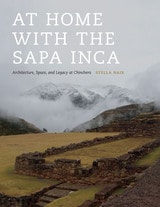
At Home with the Sapa Inca
Architecture, Space, and Legacy at ChincheroBy Stella Nair
University of Texas Press, 2015
By examining the stunning stone buildings and dynamic spaces of the royal estate of Chinchero, Nair brings to light the rich complexity of Inca architecture. This investigation ranges from the paradigms of Inca scholarship and a summary of Inca cultural practices to the key events of Topa Inca’s reign and the many individual elements of Chinchero’s extraordinary built environment.
What emerges are the subtle, often sophisticated ways in which the Inca manipulated space and architecture in order to impose their authority, identity, and agenda. The remains of grand buildings, as well as a series of deft architectural gestures in the landscape, reveal the unique places that were created within the royal estate and how one space deeply informed the other. These dynamic settings created private places for an aging ruler to spend time with a preferred wife and son, while also providing impressive spaces for imperial theatrics that reiterated the power of Topa Inca, the choice of his preferred heir, and the ruler’s close relationship with sacred forces.
This careful study of architectural details also exposes several false paradigms that have profoundly misguided how we understand Inca architecture, including the belief that it ended with the arrival of Spaniards in the Andes. Instead, Nair reveals how, amidst the entanglement and violence of the European encounter, an indigenous town emerged that was rooted in Inca ways of understanding space, place, and architecture and that paid homage to a landscape that defined home for Topa Inca.
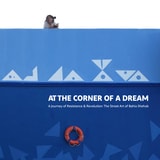
At the Corner of a Dream
A Journey of Resistance and Revolution: The Street Art of Bahia ShehabBahia Shehab
Gingko, 2019
At the Corner of a Dream offers extensive documentation of Shehab’s powerful street paintings. It also chronicles the stories of the people she meets along her journeys and includes her observations from the streets of each new city she visits. Shehab’s work is a manifesto, a cry for freedom and dignity, and a call to never stop dreaming.
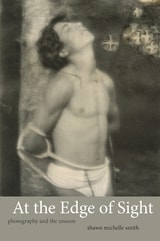
At the Edge of Sight
Photography and the UnseenShawn Michelle Smith
Duke University Press, 2013
At the Movies, Film Reviewing, and Screenwriting
Selective Affinities and Cultural MediationSteven Maras
Intellect Books, 2025
At the Movies, Film Reviewing, and Screenwriting discusses the interplay between film criticism and screenwriting, providing a different view on how reviewers engage with story and dialogue. Steven Maras draws on Pierre Bourdieu’s theories of cultural taste to examine film reviewing as a key site of cultural production, analyzing ten years of television scripts from At the Movies (2004–2014). Hosted by Australia’s most influential film critics Margaret Pomeranz and David Stratton, this long-running program shaped public discourse on cinema and left an indelible mark on Australian screen culture.
Studying the program’s broadcast scripts, this book addresses how film reviewing operates as both critique and storytelling. Of particular interest to media scholars, screenwriting researchers, and cinephiles alike, it provides fresh insights into the evolving role of criticism in contemporary screen culture. Engaging and deeply researched, this work rightfully emphasizes the cultural significance of movie criticism in film culture in Australia and beyond.
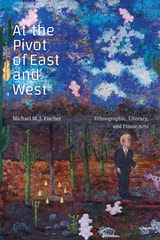
At the Pivot of East and West
Ethnographic, Literary, and Filmic ArtsMichael M. J. Fischer
Duke University Press, 2023
Athenian White Lekythoi
With Outline Drawing in Matt Color on a White GroundArthur Fairbanks
University of Michigan Press, 1914
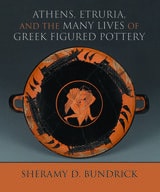
Athens, Etruria, and the Many Lives of Greek Figured Pottery
Sheramy D. Bundrick
University of Wisconsin Press, 2021
Thousands of Greek painted vases have emerged from excavations of tombs, sanctuaries, and settlements throughout Etruria, from southern coastal centers to northern communities in the Po Valley. Using documented archaeological assemblages, especially from tombs in southern Etruria, Bundrick challenges the widely held assumption that Etruscans were hellenized through Greek imports. She marshals evidence to show that Etruscan consumers purposefully selected figured pottery that harmonized with their own local needs and customs, so much so that the vases are better described as etruscanized. Athenian ceramic workers, she contends, learned from traders which shapes and imagery sold best to the Etruscans and employed a variety of strategies to maximize artistry, output, and profit.
Atlas, or the Anxious Gay Science
Georges Didi-Huberman
University of Chicago Press, 2018
In this illustrated exploration of Warburg and his great work, Georges Didi-Huberman leaps from Mnemosyne Atlas into a set of musings on the relation between suffering and knowledge in Western thought, and on the creative results of associative thinking. Deploying writing that delights in dramatic jump cuts reminiscent of Warburg’s idiosyncratic juxtapositions, and drawing on a set of sources that ranges from ancient Babylon to Walter Benjamin, Atlas, or the Anxious Gay Science is rich in Didi-Huberman’s trademark combination of elan and insight.
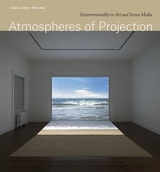
Atmospheres of Projection
Environmentality in Art and Screen MediaGiuliana Bruno
University of Chicago Press, 2022
Projection has long been transforming space, from shadow plays to camera obscuras and magic lantern shows. Our fascination with projection is alive on the walls of museums and galleries and woven into our daily lives. Giuliana Bruno explores the histories of projection and atmosphere in visual culture and their continued importance to contemporary artists who are reinventing the projective imagination with atmospheric thinking and the use of elemental media.
To explain our fascination with projection and atmosphere, Bruno traverses psychoanalysis, environmental philosophy, architecture, the history of science, visual art, and moving image culture to see how projective mechanisms and their environments have developed over time. She reveals how atmosphere is formed and mediated, how it can change, and what projection can do to modify a site. In so doing, she gives new life to the alchemic possibilities of transformative projective atmospheres. Showing how their “environmentality” produces sites of exchange and relationality, this book binds art to the ecology of atmosphere.
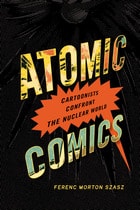
Atomic Comics
Cartoonists Confront the Nuclear WorldFerenc Morton Szasz
University of Nevada Press, 2013
The advent of the Atomic Age challenged purveyors of popular culture to explain to the general public the complex scientific and social issues of atomic power. Atomic Comics examines how comic books, comic strips, and other cartoon media represented the Atomic Age from the early 1920s to the present. Through the exploits of superhero figures such as Atomic Man and Spiderman, as well as an array of nuclear adversaries and atomic-themed adventures, the public acquired a new scientific vocabulary and discovered the major controversies surrounding nuclear science. Ferenc Morton Szasz’s thoughtful analysis of the themes, content, and imagery of scores of comics that appeared largely in the United States and Japan offers a fascinating perspective on the way popular culture shaped American comprehension of the fissioned atom for more than three generations.

Audience, Words, and Art
Studies in Seventeenth-Century French RhetoricHugh M. Davidson
The Ohio State University Press, 1900

Auftritt Schweiz
Das LesebuchEdited by Franziska Schläpfer
Scheidegger and Spiess, 2014
Australian Film Theory and Criticism
Volume 1: Critical PositionsNoel King, Constantine Verevis, and Deane Williams
Intellect Books, 2013
Australian Film Theory and Criticism
Volume 2: InterviewsEdited by Noel King and Deane Williams
Intellect Books, 2014
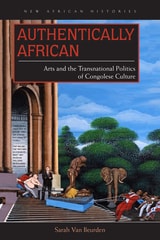
Authentically African
Arts and the Transnational Politics of Congolese CultureSarah Van Beurden
Ohio University Press, 2015
Together, the Royal Museum for Central Africa in Tervuren, Belgium, and the Institut des Musées Nationaux du Zaire (IMNZ) in the Congo have defined and marketed Congolese art and culture. In Authentically African, Sarah Van Beurden traces the relationship between the possession, definition, and display of art and the construction of cultural authenticity and political legitimacy from the late colonial until the postcolonial era. Her study of the interconnected histories of these two institutions is the first history of an art museum in Africa, and the only work of its kind in English.
Drawing on Flemish-language sources other scholars have been unable to access, Van Beurden illuminates the politics of museum collections, showing how the IMNZ became a showpiece in Mobutu’s effort to revive “authentic” African culture. She reconstructs debates between Belgian and Congolese museum professionals, revealing how the dynamics of decolonization played out in the fields of the museum and international heritage conservation. Finally, she casts light on the art market, showing how the traveling displays put on by the IMNZ helped intensify collectors’ interest and generate an international market for Congolese art.
The book contributes to the fields of history, art history, museum studies, and anthropology and challenges existing narratives of Congo’s decolonization. It tells a new history of decolonization as a struggle over cultural categories, the possession of cultural heritage, and the right to define and represent cultural identities.
Authorizing Superhero Comics
On the Evolution of a Popular Serial GenreDaniel Stein
The Ohio State University Press, 2021
Autistic Disturbances
Theorizing Autism Poetics from the DSM to Robinson CrusoeJulia Miele Rodas
University of Michigan Press, 2018
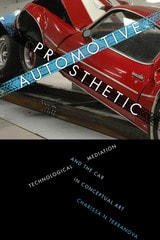
Automotive Prosthetic
Technological Mediation and the Car in Conceptual ArtBy Charissa Terranova
University of Texas Press, 2014
In the twenty-first century, we are continually confronted with the existential side of technology—the relationships between identity and the mechanizations that have become extensions of the self. Focusing on one of humanity’s most ubiquitous machines, Automotive Prosthetic: Technological Mediation and the Car in Conceptual Art combines critical theory and new media theory to form the first philosophical analysis of the car within works of conceptual art. These works are broadly defined to encompass a wide range of creative expressions, particularly in car-based conceptual art by both older, established artists and younger, emerging artists, including Ed Ruscha, Martha Rosler, Richard Prince, Sylvie Fleury, Yael Bartana, Jeremy Deller, and Jonathan Schipper.
At its core, the book offers an alternative formation of conceptual art understood according to technology, the body moving through space, and what art historian, curator, and artist Jack Burnham calls “relations.” This thought-provoking study illuminates the ways in which the automobile becomes a naturalized extension of the human body, incarnating new forms of “car art” and spurring a technological reframing of conceptual art. Steeped in a sophisticated take on the image and semiotics of the car, the chapters probe the politics of materialism as well as high/low debates about taste, culture, and art. The result is a highly innovative approach to contemporary intersections of art and technology.
Autonomy
The Social Ontology of Art under CapitalismNicholas Brown
Duke University Press, 2019