Results by title
1116 books match the query 'Africa' and 47 start with b
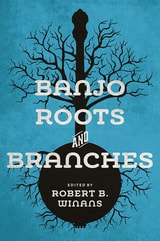
Banjo Roots and Branches
Edited by Robert B. Winans
University of Illinois Press, 2018
Wide-ranging and illustrated with twenty color images, Banjo Roots and Branches offers a wealth of new information to scholars of African American and folk musics as well as the worldwide community of banjo aficionados.
Contributors: Greg C. Adams, Nick Bamber, Jim Dalton, George R. Gibson, Chuck Levy, Shlomo Pestcoe, Pete Ross, Tony Thomas, Saskia Willaert, and Robert B. Winans.
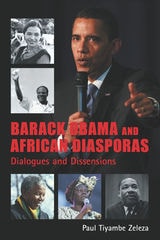
Barack Obama and African Diasporas
Dialogues and DissensionsPaul Tiyambe Zeleza
Ohio University Press, 2009
In the title essay, Zeleza analyzes the significance of the election of a member of the African diaspora to the presidency of the United States. He also addresses Africa’s urgent political concerns: China’s role in Africa, South Africa's difficulties in making the transition to a postapartheid society, the agony of Zimbabwe, and a discussion of Pan-Africanism, its history and contemporary challenges. Other posts introduce the reader to the rhythms of daily life, including football and other leisure activities, in capturing the different aspects of Africa.
An original and respected voice, Zeleza engages the reader in a series of passionate public conversations on issues and events of utmost importance to the globalized world. He deserves a wide readership.
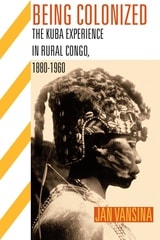
Being Colonized
The Kuba Experience in Rural Congo, 1880–1960Jan Vansina
University of Wisconsin Press, 2010
Vansina’s case study of the colonial experience is the realm of Kuba, a kingdom in Congo about the size of New Jersey—and two-thirds the size of its colonial master, Belgium. The experience of its inhabitants is the story of colonialism, from its earliest manifestations to its tumultuous end. What happened in Kuba happened to varying degrees throughout Africa and other colonized regions: racism, economic exploitation, indirect rule, Christian conversion, modernization, disease and healing, and transformations in gender relations. The Kuba, like others, took their own active part in history, responding to the changes and calamities that colonization set in motion. Vansina follows the region’s inhabitants from the late nineteenth century to the middle of the twentieth century, when a new elite emerged on the eve of Congo’s dramatic passage to independence.
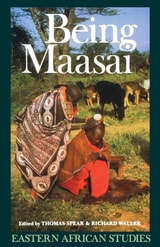
Being Maasai
Ethnicity and Identity In East AfricaThomas Spear
Ohio University Press, 1993
Everyone “knows” the Maasai as proud pastoralists who once dominated the Rift Valley from northern Kenya to central Tanzania.
But many people who identity themselves as Maasai, or who speak Maa, are not pastoralist at all, but farmers and hunters. Over time many different people have “become” something else. And what it means to be Maasai has changed radically over the past several centuries and is still changing today.
This collection by historians, archaeologists, anthropologists and linguists examines how Maasai identity has been created, evoked, contested, and transformed from the time of their earliest settlement in Kenya to the present, as well as raising questions about the nature of ethnicity generally.
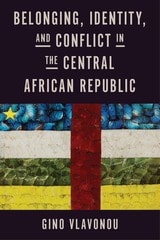
Belonging, Identity, and Conflict in the Central African Republic
Gino Vlavonou
University of Wisconsin Press, 2023
Focusing on violent struggles in the Central African Republic between 2012 and 2019, Gino Vlavonou explores the social practices, discursive strategies, and government policies that emerged in the relentless project of African state building. Conflict pitted Christian-animist communities, loosely organized as vigilante groups under the name anti-Balaka, against Muslim rebels known as the Séléka. Fighters of the anti-Balaka claimed that they were autochthonous, the “true Central Africans,” reframing their Muslim neighbors as foreigners to be expelled. While the country had previously witnessed episodes of violence, both peoples had lived together relatively peacefully and intermarried. The speed and ferocity with which identity was weaponized puzzled many observers. To understand this phenomenon, Vlavonou probes autochthony as a category of identity that differs from ethnicity in important ways. He argues that elites and ordinary citizens alike mobilize the language of original belonging as “identity capital,” a resource to be deployed. The value of that capital is lodged in what people say and do every day to give meaning to their identity, and its content changes across time and space.
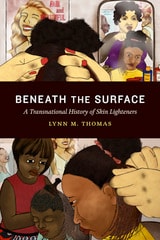
Beneath the Surface
A Transnational History of Skin LightenersLynn M. Thomas
Duke University Press, 2020
Benedict XVI Rethinking Africa
Tasks for TodayKizito Forbi
St. Augustine's Press, 2024
Best Laid Plans
Cultural Entropy and the Unraveling of AIDS Media CampaignsTerence E. McDonnell
University of Chicago Press, 2016
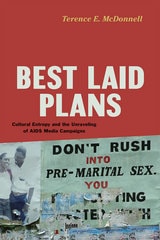
McDonnell argues that these well-designed campaigns are undergoing “cultural entropy”: the process through which the intended meanings and uses of cultural objects fracture into alternative meanings, new practices, failed interactions, and blatant disregard. Using AIDS media campaigns in Accra, Ghana, as its central case study, the book walks readers through best-practice, evidence-based media campaigns that fall totally flat. Female condoms are turned into bracelets, AIDS posters become home decorations, red ribbons fade into pink under the sun—to name a few failures. These damaging cultural misfires are not random. Rather, McDonnell makes the case that these disruptions are patterned, widespread, and inevitable—indicative of a broader process of cultural entropy.
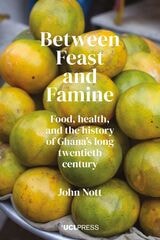
Between Feast and Famine
Food, Health, and the History of Ghana's Long Twentieth CenturyJohn Nott
University College London, 2025
Between Feast and Famine unravels the intertwined histories of food, health, and capitalism in Ghana, charting the country’s shifting nutritional landscape from colonial-era hunger crises to contemporary epidemics of obesity and diabetes. Moving between Ghana’s diverse ecological and economic zones, John Nott excavates how uneven capitalist transformation reshaped diets and childhood nutrition across the twentieth century. At the heart of this story is the evolving science of nutrition itself, from its colonial-era applications to its role in shaping modern health policies.
Using a new historical approach, Between Feast and Famine exposes how global scientific debates and local lived realities co-produced the country’s shifting nutritional conditions. A necessary contribution to African history and medical humanities, this book debunks preconceived notions about hunger and public health, suggesting crucial insights into the complex relationship between food systems and human well-being.
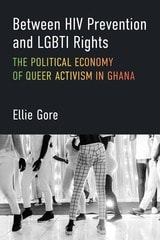
Between HIV Prevention and LGBTI Rights
The Political Economy of Queer Activism in GhanaEllie Gore
University of Michigan Press, 2024
Gore combines original ethnography, documentary analysis, and the examination of development and global health data to connect the struggle for queer liberation in Ghana to broader trajectories of capitalist transformation and crisis and the afterlives of colonialism. In doing so, Between HIV Prevention and LGBTI Rights offers fascinating insights into the political economy of sexuality and global development for scholars, activists, and policymakers seeking to understand and address sexual injustice and oppression, both in Africa and beyond.
The open access edition of this book was made possible through the support of the Economic and Social Research Council (UK).
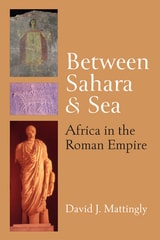
Between Sahara and Sea
Africa in the Roman EmpireDavid J. Mattingly
University of Michigan Press, 2023
Winner of the 2024 Association of American Publishers PROSE Award for Classics
- Winner of the 2025 Vinson Sutlive Book Prize and Lecture
Between Sahara and Sea: Africa in the Roman Empire challenges orthodox views of the story of Africa under Roman domination. It presents a new framework for understanding this and other territories incorporated in the Roman Empire. Based on decades of research in North Africa, David Mattingly’s book is a cleverly constructed and innovative account of the history and archaeology of ancient North Africa (roughly equivalent to Morocco, Algeria, Tunisia, and Libya) from the first century BCE to the third century CE. He charts a new path toward a bottom-up understanding of North African archaeology, exploring in turn the differing material cultures and experiences of the Roman communities of the military and the urban and rural areas. Regional and societal differences emerge as significant and of long duration in the fascinating story of one of the most important sectors of the Roman Empire.
This important book is the most comprehensive in English on Roman North Africa. It is remarkably rich, with up-to-date references and a host of new ideas and perspectives. Well written and illustrated, with a plethora of maps, it will be required reading for anyone interested in the subject. Rather than emphasizing the role of external actors, as studies of “Roman Africa” have traditionally done, Between Sahara and Sea focuses on local contributions to the making of Africa in the Roman Empire. The author demonstrates that the multiple populations encountered by Rome were not an indistinct bloc, but had different identities and cultures.

Between Sea and Sahara
An Algerian JournalEugene Fromentin
Ohio University Press, 1999
Between Sea and Sahara gives us Algeria in the third decade of colonization. Written in the 1850s by the gifted painter and extraordinary writer Eugene Fromentin, the many-faceted work is travelogue, fiction, stylized memoir, and essay on art. Fromentin paints a compelling word picture of Algeria and its people, questioning France’s—and his own—role there. He shows French dynamism tending to arrogance, tinged with malaise, as well as the complexity of the Algerians and their canny survival tactics. In his efforts to capture the non-Western world on paper as well as on canvas, Fromentin reveals much about the roots of a colonial relationship that continues to affect the Algeria of today. He also reveals his own development as painter, writer—and human being.
Now available for the first time in English, Between Sea and Sahara appeals to today’s reader on many levels—as a story of color, romance, and dramatic tension; as an eywitness account of the colonial experience in Algeria; as a study in trans-genre text, foreshadowing Fromentin’s psychological masterpiece, the novel Dominique. And, as Valérie Orlando points out in her introduction, Fromentin opens a window on the ethos informing the fashion of Orientalism that flourished with colonialism.
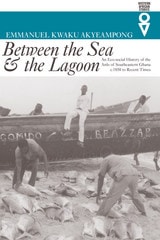
Between the Sea and the Lagoon
An Eco-social History of the Anlo of Southeastern Ghana c. 1850 to Recent TimesEmmanuel Kwaku Akyeampong
Ohio University Press, 2002
This study offers a “social interpretation of environmental process” for the coastal lowlands of southeastern Ghana. The Anlo-Ewe, sometimes hailed as the quintessential sea fishermen of the West African coast, are a previously non-maritime people who developed a maritime tradition. As a fishing community the Anlo have a strong attachment to their land. In the twentieth century coastal erosion has brought about a collapse of the balance between nature and culture. The Anlo have sought spiritual explanations but at the same time have responded politically by developing broader ties with Ewe-speaking peoples along the coast.

Beverley Ditsie's Fearless Speech
A Dialogue on the Pitfalls of Queer StruggleSharad Chari with Beverley Palesa Ditsie
Temple University Press, 2027
Beverley Palesa Ditsie is a key South African Black lesbian activist, part of a world of queer activism during South Africa’s decade of transition from apartheid, when sexuality was crucial to recircuiting post-apartheid power and possibility. Part of the Gay and Lesbian Organization of the Witwatersrand (GLOW) which organized the continent’s first Pride March, she has stood steadfastly for Black lesbian self-determination and African queer representation.
Beverley Ditsie’s Fearless Speech enters this recent history of sexuality politics through an activist and a critical theorist in conversation. This book bends an account of Ditsie’s life and work in the critique of racial and sexual capitalism. Grounded in South Africa, the conversation is cut through with radical queer, materialist, and feminist critique in an internationalist frame.
Through this dialogic form, Beverley Ditsie emerges alongside other figures of fearless speech willing to stand for Black and African queer liberation, yet aware of pitfalls in these struggles that point to work that remains to be done. Beverley Ditsie’s Fearless Speech is a cautionary tale of hope for radical change in a world of deepening injustice and political homophobia.
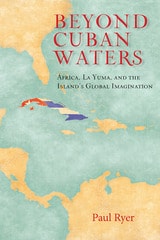
Beyond Cuban Waters
Africa, La Yuma, and the Island's Global ImaginationPaul Ryer
Vanderbilt University Press, 2016
This pursuit of Western status symbols represents a uniquely Cuban experience, set apart from other cultures pursuing the same things. In the Cuban case, this represents neither an acceptance nor rejection of the American cultural influence, but rather a co-opting or "Yumanizing" of these influences.
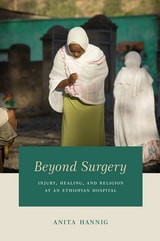
Beyond Surgery
Injury, Healing, and Religion at an Ethiopian HospitalAnita Hannig
University of Chicago Press, 2017
Through her in-depth ethnography of two repair and rehabilitation centers operating in Ethiopia, Hannig takes the reader deep into a world inside hospital walls, where women recount stories of loss and belonging, shame and delight. As she chronicles the lived experiences of fistula patients in clinical treatment, Hannig explores the danger of labeling “culture” the culprit, showing how this common argument ignores the larger problem of insufficient medical access in rural Africa. Beyond Surgery portrays the complex social outcomes of surgery in an effort to deepen our understanding of medical missions in Africa, expose cultural biases, and clear the path toward more effective ways of delivering care to those who need it most.
Beyond Words
Discourse and Critical Agency in AfricaAndrew Apter
University of Chicago Press, 2007
Even within anthropology, a discipline that strives to overcome misrepresentations of peoples and cultures, colonialist depictions of the so-called Dark Continent run deep. The grand narratives, tribal tropes, distorted images, and “natural” histories that forged the foundations of discourse about Africa remain firmly entrenched. In Beyond Words, Andrew Apter explores how anthropology can come to terms with the “colonial library” and begin to develop an ethnographic practice that transcends the politics of Africa’s imperial past.
The way out of the colonial library, Apter argues, is by listening to critical discourses in Africa that reframe the social and political contexts in which they are embedded. Apter develops a model of critical agency, focusing on a variety of language genres in Africa situated in rituals that transform sociopolitical relations by self-consciously deploying the power of language itself. To break the cycle of Western illusions in discursive constructions of Africa, he shows, we must listen to African voices in ways that are culturally and locally informed. In doing so, Apter brings forth what promises to be a powerful and influential theory in contemporary anthropology.

Beyond the Body
The Boundaries of Medicine and English Renaissance DramaWilliam Kerwin
University of Massachusetts Press, 2005
Drawing on research in the social history of medicine as well as a wide-ranging collection of primary narratives of medical encounters, Kerwin pursues the stories of several medical groups. Specifically, he examines women healers in terms of the changing place of women in the public sphere; the connections between drug sellers—apothecaries and alchemists—and an emerging modern economy; the role barbers and surgeons played in early modern concerns for protecting a new sense of privacy and interiority; the ways physicians defined their professional primacy through the language of theaters and actors; and the ways individual patients employed rhetorics of diagnosis as a way of participating in sectarian religious battles. The study moves from the dynamics of medical politics to the work drama does in exposing those dynamics. In addition to offering astute readings of works by Shakespeare and Ben Jonson, the book pays substantial attention to plays by Samuel Daniel, John Fletcher, John Ford, Thomas Heywood, John Lyly, Philip Massinger, and John Webster.
Beyond the Body complements the wealth of recent critical attention given to the body. Kerwin attends to a different sort of material politics; as the book's title suggests, he asks a reader interested in the politics of medicine to look not at the practitioner treating the body but at the social forces influencing the practitioner. Beyond the Body works to erode a widespread cultural bias toward giving medicine deference as a self-defining profession.
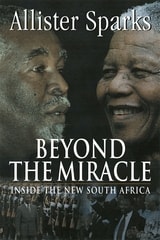
Beyond the Miracle
Inside the New South AfricaAllister Sparks
University of Chicago Press, 2003
Sparks sees South Africa as facing many of the same challenges as the rest of the world, especially a widening gap between rich and poor, exacerbated by the forces of globalization. While the transition government has done much to establish democracy and racial equality in a short time, as well as bring basic services such as clean water to millions who did not have them before, many blacks feel it has not done enough to redress the continuing imbalance of wealth in the country. Many whites, meanwhile, feel disempowered and confused about what role they have to play as a racial minority in a country they used to rule and regard as theirs by divine right. Sparks also covers other burning issues, such as the HIV/AIDS epidemic, high crime rates, the diamond wars, the Congo conflict, and the Zimbabwean land crisis.
Writing vividly and often quite movingly, Sparks draws on his decades of journalistic experience and his recent insider access to key figures in the liberation government to take stock of where South Africa has been, where it's going, and why the rest of the world should not turn away from this country where the First and Third Worlds meet. As Sparks persuasively argues, the success of Mandela's vision of a peaceful "rainbow nation" is crucial not just for the salvation of Africa, but also for the world.
“It is as good a guide to the new South Africa as any.”—Economist
Biographies in the Global South
Life Stories Embedded in Figurations and DiscoursesEdited by Gabriele Rosenthal and Artur Bogner
Campus Verlag, 2017

Bitter Roots
The Search for Healing Plants in AfricaAbena Dove Osseo-Asare
University of Chicago Press, 2013
Black Cultural Life in South Africa
Reception, Apartheid, and EthicsLily Saint
University of Michigan Press, 2018
This study provocatively posits that states of oppression, including colonial and postcolonial rule, can elicit ethical responses to imaginative identification through encounters with popular culture, and it asks whether and how they carry over into ethical action. Its consideration of how globalized popular culture “travels” not just in material form, but also through the circuits of the imaginary, opens a new window for exploring the ethical and liberatory stakes of popular culture. Each chapter focuses on a separate genre, yet the overall interdisciplinary approach to the study of genre and argument for an expansion of ethical theory that draws on texts beyond the Western canon speak to growing concerns about studying genres and disciplines in isolation. Freed from oversimplified treatments of popular forms—common to cultural studies and ethical theory alike—this book demonstrates that people can do things with mass culture that reinvigorate ethical life.
Lily Saint’s new volume will interest Africanists across the humanities and the social sciences, and scholars of Anglophone literary, globalization, and cultural studies; race; ethical theories and philosophies; film studies; book history and material cultures; and the burgeoning field of comics and graphic novels.
Black Lawyers, White Courts
The Soul of South African LawKenneth S. Broun
Ohio University Press, 2000
In the struggle against apartheid, one often overlooked group of crusaders was the coterie of black lawyers who overcame the Byzantine system that the government established oftentimes explicitly to block the paths of its black citizens from achieving justice.
Now, in their own voices, we have the narratives of many of those lawyers as recounted in a series of oral interviews. Black Lawyers, White Courts is their story and the anti-apartheid story that has before now gone untold.
Professor Kenneth Broun conducted interviews with twenty-seven black South African lawyers. They were asked to tell about their lives, including their family backgrounds, education, careers, and their visions for the future. In many instances they also discussed their years in prison or exile, or under house arrest. Most told of both education and careers interrupted because of the ongoing struggle.
The story of the professional achievements of black lawyers in South Africa—indeed their very survival—provides an example of the triumph of individuals and, ultimately, of the law. Black Lawyers, White Courts is about South Africa, and about black professionals in that country, but the lessons its protagonists teach extend far beyond circumstances, geography, or race.
Black Poachers, White Hunters
A Social History of Hunting in Colonial KenyaEdward I. Steinhart
Ohio University Press, 2006
Black Skin, White Coats
Nigerian Psychiatrists, Decolonization, and the Globalization of PsychiatryMatthew M. Heaton
Ohio University Press, 2013
Black Skin, White Coats is a history of psychiatry in Nigeria from the 1950s to the 1980s. Working in the contexts of decolonization and anticolonial nationalism, Nigerian psychiatrists sought to replace racist colonial psychiatric theories about the psychological inferiority of Africans with a universal and egalitarian model focusing on broad psychological similarities across cultural and racial boundaries. Particular emphasis is placed on Dr. T. Adeoye Lambo, the first indigenous Nigerian to earn a specialty degree in psychiatry in the United Kingdom in 1954. Lambo returned to Nigeria to become the medical superintendent of the newly founded Aro Mental Hospital in Abeokuta, Nigeria’s first “modern” mental hospital. At Aro, Lambo began to revolutionize psychiatric research and clinical practice in Nigeria, working to integrate “modern” western medical theory and technologies with “traditional” cultural understandings of mental illness. Lambo’s research focused on deracializing psychiatric thinking and redefining mental illness in terms of a model of universal human similarities that crossed racial and cultural divides.
Black Skin, White Coats is the first work to focus primarily on black Africans as producers of psychiatric knowledge and as definers of mental illness in their own right. By examining the ways that Nigerian psychiatrists worked to integrate their psychiatric training with their indigenous backgrounds and cultural and civic nationalisms, Black Skin, White Coats provides a foil to Frantz Fanon’s widely publicized reactionary articulations of the relationship between colonialism and psychiatry. Black Skin, White Coats is also on the cutting edge of histories of psychiatry that are increasingly drawing connections between local and national developments in late-colonial and postcolonial settings and international scientific networks. Heaton argues that Nigerian psychiatrists were intimately aware of the need to engage in international discourses as part and parcel of the transformation of psychiatry at home.
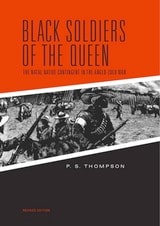
Black Soldiers of the Queen
The Natal Native Contingent in the Anglo-Zulu WarP. S. Thompson
University of Alabama Press, 2006
Africans who fought alongside the British against the Zulu king
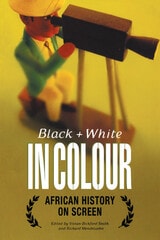
Black and White in Colour
African History on ScreenVivian Bickford-Smith
Ohio University Press, 2007
Black and White in Colour: African History on Screen considers how the African past has been represented in a wide range of historical films. Written by a team of eminent international scholars, the volume provides extensive coverage of both place and time and deals with major issues in the written history of Africa. Themes include the slave trade, imperialism and colonialism, racism, and anticolonial resistance. Many of the films will be familiar to readers: they include Out of Africa, Hotel Rwanda, Breaker Morant, Cry Freedom, The Battle of Algiers, and Chocolat.
This collection of essays is a highly original and useful contribution to African historiography, as well as a significant addition to the growing body of work within the emerging subdiscipline of “film and history.” It will appeal to those interested in African history and the ways in which films use the past to raise questions about the present.
Contributors: Mahir Saul, Ralph A. Austen, Robert Baum, Robert Harms, Nigel Worden, Carolyn Hamilton and Litheko Modisane, Richard Mendelsohn, Shamil Jeppie, Bill Nasson, Nigel Penn, Ruth Watson, Patrick Harries, David Moore, Teresa Barnes, Vivian Bickford-Smith, Mohamed Adhikari, and David Philips.
Black, Brown, & Beige
Surrealist Writings from Africa and the DiasporaEdited by Franklin Rosemont and Robin D.G. Kelley
University of Texas Press, 2009
Surrealism as a movement has always resisted the efforts of critics to confine it to any static definition—surrealists themselves have always preferred to speak of it in terms of dynamics, dialectics, goals, and struggles. Accordingly, surrealist groups have always encouraged and exemplified the widest diversity—from its start the movement was emphatically opposed to racism and colonialism, and it embraced thinkers from every race and nation.
Yet in the vast critical literature on surrealism, all but a few black poets have been invisible. Academic histories and anthologies typically, but very wrongly, persist in conveying surrealism as an all-white movement, like other "artistic schools" of European origin. In glaring contrast, the many publications of the international surrealist movement have regularly featured texts and reproductions of works by comrades from Martinique, Haiti, Cuba, Puerto Rico, South America, the United States, and other lands. Some of these publications are readily available to researchers; others are not, and a few fall outside academia's narrow definition of surrealism.
This collection is the first to document the extensive participation of people of African descent in the international surrealist movement over the past seventy-five years. Editors Franklin Rosemont and Robin D. G. Kelley aim to introduce readers to the black, brown, and beige surrealists of the world—to provide sketches of their overlooked lives and deeds as well as their important place in history, especially the history of surrealism.
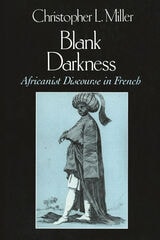
Blank Darkness
Africanist Discourse in FrenchChristopher L. Miller
University of Chicago Press, 1986
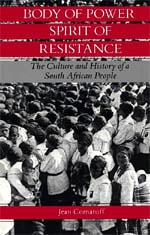
Body of Power, Spirit of Resistance
The Culture and History of a South African PeopleJean Comaroff
University of Chicago Press, 1985
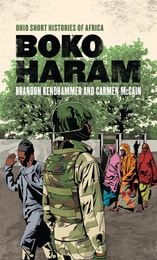
Boko Haram
Brandon Kendhammer
Ohio University Press, 2018
From its small-time origins in the early 2000s to its transformation into one of the world’s most-recognized terrorist groups, this remarkable short book tells the story of Boko Haram’s bloody, decade-long war in northeastern Nigeria. Going beyond the headlines, including the group’s 2014 abduction of 276 girls in Chibok and the international outrage it inspired, Boko Haram provides readers new to the conflict with a clearly written and comprehensive history of how the group came to be, the Nigerian government’s failed efforts to end it, and its enormous impact on ordinary citizens.
Drawing on years of research, Boko Haram is a timely addition to the acclaimed Ohio Short Histories of Africa. Brandon Kendhammer and Carmen McCain—two leading specialists on northern Nigeria—separate fact from fiction within one of the world’s least-understood conflicts. Most distinctively, it is a social history, one that tells the story of Boko Haram’s violence through the journalism, literature, film, and music made by people close to it.
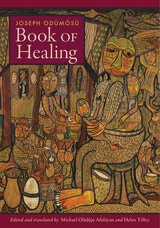
Book of Healing
Joseph Odùmósù
University of Wisconsin Press, 2026
While the existence of Odùmósù’s massive work is well-known in southwestern Nigeria, it has not previously been available in English. Michael Ọládẹ̀jọ Afọláyan and Helen Tilley have translated the volume in its entirety, and here use it as an entrée into greater understandings of Yorùbá medicine, spirituality, and print culture during a time of rapid change under British colonialism and the spread of Christianity.
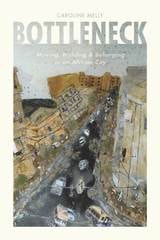
Bottleneck
Moving, Building, and Belonging in an African CityCaroline Melly
University of Chicago Press, 2017
Melly opens with an account of the generation of urban men who came of age on the heels of the era of structural adjustment, a diverse cohort with great dreams of building, moving, and belonging, but frustratingly few opportunities to do so. From there, she moves to a close study of taxi drivers and state workers, and shows how bottlenecks—physical and institutional—affect both. The third section of the book covers a seemingly stalled state effort to solve housing problems by building large numbers of concrete houses, while the fourth takes up the thousands of migrants who attempt, sometimes with tragic results, to cross the Mediterranean on rickety boats in search of new opportunities. The resulting book offers a remarkable portrait of contemporary Senegal and a means of theorizing mobility and its impossibilities far beyond the African continent.
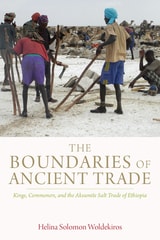
Boundaries of Ancient Trade
Kings, Commoners, and the Aksumite Salt Trade of EthiopiaHelina Solomon Woldekiros
University Press of Colorado, 2023
trade routes in the world.
For thousands of years, farmers in the Tigray, Amhara, and Afar regions of Ethiopia and Eritrea have run caravans of nearly 250,000 people and pack animals annually along an eighty-mile route through both cold, high-altitude farmlands and some of the hottest volcanic desert terrain on earth. In her fieldwork, archaeologist Helina Solomon Woldekiros followed the route with her own donkey and camel caravan, observing and interviewing over 150 Arho (caravaners), salt miners, salt cutters, warehouse owners, brokers, shop owners, and salt village residents to model the political economy of the ancient Aksumite state. The first integrated ethnoarchaeological and archaeological research on this legendary route, this volume provides evidence that informal economies and local participation have played a critical role in regional trade and, ultimately, in maintaining the considerable power of the Aksumite state. Woldekiros also contributes new insights into the logistics of pack animal–based trade and variability in the central and regional organization of global ancient trade.
Using a culturally informed framework for understanding the organization of the ancient salt route and its role in linking the Aksumite state to rural highland agricultural and lowland mobile pastoralist populations, The Boundaries of Ancient Trade makes a key contribution to theoretical discussions of hierarchy and more diffuse power structures in ancient states. This work generates new interest in the region as an area of global relevance in archaeological and anthropological debates on landscape, social interaction, and practice theories.
Braided Worlds
Alma Gottlieb and Philip Graham
University of Chicago Press, 2012
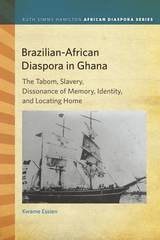
Brazilian-African Diaspora in Ghana
The Tabom, Slavery, Dissonance of Memory, Identity, and Locating HomeKwame Essien
Michigan State University Press, 2016
Breaking the Chains
Slavery, Bondage, and Emancipation in Modern Africa and AsiaMartin A. Klein
University of Wisconsin Press, 1993
“Martin Klein has brought together recent work on the abolition of slavery, from Ottoman Turkey to Thailand and from South India to West Africa. This anthology builds on the recent scholarship on both slavery in Asia and Africa and the end of slavery as a world-wide historical phenomenon. Whereas other anthologies have tended to focus on either Africa or Asia, this project brings together in one volume case studies and methodological approaches concerning both regions. Breaking the Chains will be an important part of the relatively sparse literature on emancipation in comparative and global context.”—Richard Roberts, Stanford University
Because the American history of slavery and emancipation tends to be foremost in Western minds, few realize that traditional forms of servitude still exist in a variety of places around the world: children are sold on the streets of Bangkok, bondage persists in India despite official efforts to abolish it, and until 1980 slavery was legal in Mauritania.
Breaking the Chains deals with emancipation in African and Asian societies which were either colonized or came under the domination of European powers in the nineteenth century. In these societies, emancipation involved the imposition on non-European societies of an explicitly European discourse on slavery, and, in most cases, a free labor ideology. Most of the slave masters described in these essays were not European and found European ideas on emancipation difficult to accept.
Against this backdrop, the essayists (many of whom contribute their own non-Western perspective) focus on the transition from slavery (or other forms of bondage) to emancipation. They show that in each case the process involved pressure from European abolition movements, the extension of capitalist relations of production, the concerns and perceptions of the colonial state, and the efforts of non-Western elites to modernize their cultures.
Martin A. Klein argues that the Asian and African experience has much in common with the American experience, particularly in efforts to control labor and family life. The struggle to control the labor of former slaves has often been intense and, he suggests, has had a continuing impact on the social order in former slave societies.

Breakout
Profiles in African RhythmGary Stewart
University of Chicago Press, 1992
Amid Africa's deepening economic and political crises of the last two decades, African musicians who developed these genres faced the need to cross cultural boundaries, or "break out," and achieve a hit in the international marketplace. Challenging conventional assumptions, Gary Stewart demonstrates for the first time the true dimensions of this struggle to create music that will qualify as both an authentic cultural expression and an export commodity. From accounts of the outrageous Fela, who snipes at African leaders and recounts his days with Isis in ancient Egypt, to S. E. Rogie, who lurches from the pinnacle of stardom in West Africa to delivering pizzas in California, to Olatunji, who finds new life with the Grateful Dead, these are the stories of Africans straddling traditional life and an encroaching modernity—and also the stories of third world musicians surmounting political and economic chaos at home and carrying their music to a world dominated by Western cultural and economic power.
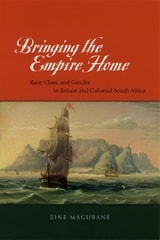
Bringing the Empire Home
Race, Class, and Gender in Britain and Colonial South AfricaZine Magubane
University of Chicago Press, 2003
Bringing the Empire Home tracks colonial images of blackness from South Africa to England and back again to answer questions such as these. Before the mid-1800s, black Africans were considered savage to the extent that their plight mirrored England's internal Others—women, the poor, and the Irish. By the 1900s, England's minority groups were being defined in relation to stereotypes of black South Africans. These stereotypes, in turn, were used to justify both new capitalist class and gender hierarchies in England and the subhuman treatment of blacks in South Africa. Bearing this in mind, Zine Magubane considers how marginalized groups in both countries responded to these racialized representations.
Revealing the often overlooked links among ideologies of race, class, and gender, Bringing the Empire Home demonstrates how much black Africans taught the English about what it meant to be white, poor, or female.
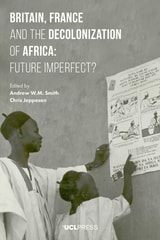
Britain, France and the Decolonization of Africa
Future Imperfect?Edited by Andrew W.M. Smith and Chris Jeppesen
University College London, 2017
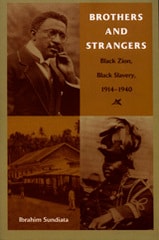
Brothers and Strangers
Black Zion, Black Slavery, 1914–1940Ibrahim Sundiata
Duke University Press, 2003
In an account based on extensive archival research, including work in the Liberian National Archives, Sundiata explains how Garvey’s plan collapsed when faced with opposition from the Liberian elite, opposition that belied his vision of a unified Black World. In 1930 the League of Nations investigated labor conditions and, damningly, the United States, land of lynching and Jim Crow, accused Liberia of promoting “conditions analogous to slavery.” Subsequently various plans were put forward for a League Mandate or an American administration to put down slavery and “modernize” the country. Threatened with a loss of its independence, the Liberian government turned to its “brothers beyond the sea” for support. A varied group of white and black anti-imperialists, among them W. E. B. Du Bois, took up the country’s cause. In revealing the struggle of conscience that bedeviled many in the black world in the past, Sundiata casts light on a human rights predicament which, he points out, continues in twenty-first-century African nations as disparate as Sudan, Mauritania, and the Ivory Coast.
Brothers at War
Making Sense of the Eritrean-Ethiopian WarTekaste Negash
Ohio University Press, 2001
The war between Eritrea and Ethiopia, which began in May 1998, took the world by surprise. During the war, both sides mobilized huge forces along their common borders and spent several hundred million dollars on military equipment. Outside observers found it difficult to evaluate the highly polarized official statements and proclamations issued by the two governments in conflict.
Brothers at War presents important, contextual aspects to explain the growing discord between the two formerly friendly governments. It looks at the historical relations between the two countries since the late nineteenth century, the historical border issues from local perspectives, and the complicated relations between the former liberation fronts that subsequently formed the current governments of the two countries.
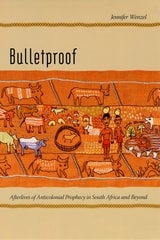
Bulletproof
Afterlives of Anticolonial Prophecy in South Africa and BeyondJennifer Wenzel
University of Chicago Press, 2009
In 1856 and 1857, in response to a prophet’s command, the Xhosa people of southern Africa killed their cattle and ceased planting crops; the resulting famine cost tens of thousands of lives. Much like other millenarian, anticolonial movements—such as the Ghost Dance in North America and the Birsa Munda uprising in India—these actions were meant to transform the world and liberate the Xhosa from oppression. Despite the movement’s momentous failure to achieve that goal, the event has continued to exert a powerful pull on the South African imagination ever since. It is these afterlives of the prophecy that Jennifer Wenzel explores in Bulletproof.
Wenzel examines literary and historical texts to show how writers have manipulated images and ideas associated with the cattle killing—harvest, sacrifice, rebirth, devastation—to speak to their contemporary predicaments. Widening her lens, Wenzel also looks at how past failure can both inspire and constrain movements for justice in the present, and her brilliant insights into the cultural implications of prophecy will fascinate readers across a wide variety of disciplines.
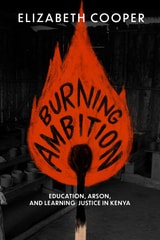
Burning Ambition
Education, Arson, and Learning Justice in KenyaElizabeth Cooper
University of Wisconsin Press, 2022
Drawing from years of research and a rich array of sources, Cooper accounts for how school fires stoke a national conversation about the limited means for ordinary Kenyans, and especially youth, to peacefully influence the governance of their own lives. Further, Cooper argues that Kenyan students’ actions challenge the existing complacency with the globalized agenda of “education for all,” demonstrating that submissive despondency is not the only possible response to the failed promises of education to transform material and social inequalities.
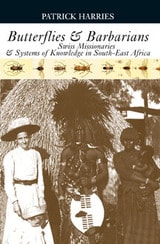
Butterflies & Barbarians
Swiss Missionaries and Systems of Knowledge in South-East AfricaPatrick Harries
Ohio University Press, 2007
Central to this group was Junod, who became a pioneering collector in the fields of entomology and botany. He would later examine African society with the methodology, theories, and confidence of the natural sciences. On the way he came to depend on the skills of African observers and collectors. Out of this work emerged, in three stages between 1898 and 1927, an influential classic in the field of South African anthropology, Life of a South African Tribe.
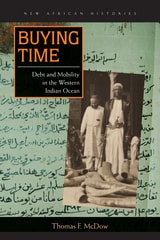
Buying Time
Debt and Mobility in the Western Indian OceanThomas F. McDow
Ohio University Press, 2018
In Buying Time, Thomas F. McDow synthesizes Indian Ocean, Middle Eastern, and East African studies as well as economic and social history to explain how, in the nineteenth century, credit, mobility, and kinship knit together a vast interconnected Indian Ocean region. That vibrant and enormously influential swath extended from the desert fringes of Arabia to Zanzibar and the Swahili coast and on to the Congo River watershed.
In the half century before European colonization, Africans and Arabs from coasts and hinterlands used newfound sources of credit to seek out opportunities, establish new outposts in distant places, and maintain families in a rapidly changing economy. They used temporizing strategies to escape drought in Oman, join ivory caravans in the African interior, and build new settlements.
The key to McDow’s analysis is a previously unstudied trove of Arabic business deeds that show complex variations on the financial transactions that underwrote the trade economy across the region. The documents list names, genealogies, statuses, and clan names of a wide variety of people—Africans, Indians, and Arabs; men and women; free and slave—who bought, sold, and mortgaged property. Through unprecedented use of these sources, McDow moves the historical analysis of the Indian Ocean beyond connected port cities to reveal the roles of previously invisible people.

By Fire
Writings on the Arab SpringTahar Ben Jelloun, translated and with an introduction by Rita Nezami
Northwestern University Press, 2016
Tahar Ben Jelloun’s By Fire, the first fictional account published on the Arab Spring, reimagines the true-life self-immolation of Mohamed Bouazizi in Tunisia, an event that has been credited with setting off the Tunisian revolt. The novella depicts the days leading up to Bouazizi’s self-immolation. Ben Jelloun’s deliberate ambiguity about the location of the story, set in an unnamed Islamic country, allows the reader to imagine the experiences and frustrations of other young men who have endured physical violence and persecution in places beyond Tunisia. The tale begins and ends in fire, and the imagery of burning frames the political accounts in The Spark, Ben Jelloun’s nonfiction writings on the Tunisian events that provide insight into the despotic regimes that drove Bouazizi to such despair. Rita S. Nezami’s elegant translations and critical introduction provide the reader with multiple strategies for approaching these potent texts.