Results by title
788 books match the query 'Caribbean & Latin American' and 36 start with b
Bandits, Peasants, and Politics
The Case of "La Violencia" in ColombiaBy Gonzalo Sánchez and Donny Meertens
University of Texas Press, 2001
The years 1945-1965 saw heavy partisan conflict in the rural areas of Colombia, with at least 200,000 people killed. This virtual civil war began as a sectarian conflict between the Liberal and Conservative parties, with rural workers (campesinos) constituting the majority of combatants and casualties. Yet La Violencia resists classification as a social uprising, since calls for social reform were largely absent during this phase of the struggle. In fact, once the elite leadership settled on a power-sharing agreement in 1958, the conflict appeared to subside.
This book focuses on the second phase (1958-1965) of the struggle, in which the social dimensions of the conflict emerged in a uniquely Colombian form: the campesinos, shaped by the earlier violence, became social and political bandits, no longer acting exclusively for powerful men above them but more in defense of the peasantry. In comparing them with other regional expressions of bandolerismo, the authors weigh the limited prospects for the evolution of Colombian banditry into full-scale social revolution.
Published originally in 1983 as Bandoleros, gamonales y campesinos and now updated with a new epilogue, this book makes a timely contribution to the discourse on social banditry and the Colombian violencia. Its importance rests in the insights it provides not only on the period in question but also on Colombia's present situation.
Becoming Julia de Burgos
The Making of a Puerto Rican IconVanessa Perez Rosario
University of Illinois Press, 2014
In the first book-length study written in English, Vanessa Pérez-Rosario examines poet and political activist Julia de Burgos's development as a writer, her experience of migration, and her legacy in New York City, the poet's home after 1940. Pérez-Rosario situates Julia de Burgos as part of a transitional generation that helps to bridge the historical divide between Puerto Rican nationalist writers of the 1930s and the Nuyorican writers of the 1970s. Becoming Julia de Burgos departs from the prevailing emphasis on the poet and intellectual as a nationalist writer to focus on her contributions to New York Latino/a literary and visual culture. It moves beyond the standard tragedy-centered narratives of de Burgos's life to place her within a nuanced historical understanding of Puerto Rico's peoples and culture to consider more carefully the complex history of the island and the diaspora. Pérez-Rosario unravels the cultural and political dynamics at work when contemporary Latina/o writers and artists in New York revise, reinvent, and riff off of Julia de Burgos as they imagine new possibilities for themselves and their communities.
Becoming Reinaldo Arenas
Family, Sexuality, and The Cuban RevolutionJorge Olivares
Duke University Press, 2013
Through insightful close readings of a selection of Arenas's works, including unpublished manuscripts and correspondence, Olivares examines the writer's personal, political, and artistic trajectory, focusing on his portrayals of family, sexuality, exile, and nostalgia. He documents Arenas's critical engagement with cultural and political developments in revolutionary Cuba and investigates the ways in which Arenas challenged literary and national norms. Olivares's analysis shows how Arenas drew on his life experiences to offer revealing perspectives on the Cuban Revolution, the struggles of Cuban exiles, and the politics of sexuality.
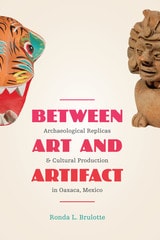
Between Art and Artifact
Archaeological Replicas and Cultural Production in Oaxaca, MexicoBy Ronda L. Brulotte
University of Texas Press, 2012
Oaxaca is internationally renowned for its marketplaces and archaeological sites where tourists can buy inexpensive folk art, including replicas of archaeological treasures. Archaeologists, art historians, and museum professionals sometimes discredit this trade in “fakes” that occasionally make their way to the auction block as antiquities. Others argue that these souvenirs represent a long cultural tradition of woodcarving or clay sculpting and are “genuine” artifacts of artisanal practices that have been passed from generation to generation, allowing community members to preserve their cultural practices and make a living. Exploring the intriguing question of authenticity and its relationship to cultural forms in Oaxaca and throughout southern Mexico, Between Art and Artifact confronts an important issue that has implications well beyond the commercial realm.
Demonstrating that identity politics lies at the heart of the controversy, Ronda Brulotte provides a nuanced inquiry into what it means to present “authentic” cultural production in a state where indigenous ethnicity is part of an awkward social and racial classification system. Emphasizing the world-famous woodcarvers of Arrazola and the replica purveyors who come from the same community, Brulotte presents the ironies of an ideology that extols regional identity but shuns its artifacts as “forgeries.” Her work makes us question the authority of archaeological discourse in the face of local communities who may often see things differently. A departure from the dialogue that seeks to prove or disprove “authenticity,” Between Art and Artifact reveals itself as a commentary on the arguments themselves, and what the controversy can teach us about our shifting definitions of authority and authorship.
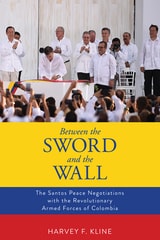
Between the Sword and the Wall
The Santos Peace Negotiations with the Revolutionary Armed Forces of ColombiaHarvey F. Kline
University of Alabama Press, 2020
Chronicles the peace process negotiations between Colombian president Juan Manuel Santos and the Marxist Revolutionary Armed Forces of Colombia
In Between the Sword and the Wall: The Santos Peace Negotiations with the Revolutionary Armed Forces of Colombia, Harvey Kline, a noted expert on contemporary Colombian politics, brings to a close his multivolume chronicle of the incessant violence that has devastated Colombia’s population, politics, and military for decades. This, his newest work on the subject, recounts and analyzes the negotiations between Colombian president Juan Manuel Santos and the Marxist Revolutionary Armed Forces of Colombia (FARC), which ended with a peace agreement in 2016.
The FARC insurgency began in 1964, and every Colombian president after 1980 unsuccessfully tried to negotiate a peace agreement with the group. Kline analyzes how the Santos administration was ultimately able to negotiate peace with the FARC. The agreement failed to receive the approval of the Colombian people in an October 2016 plebiscite, but a renegotiated version was later approved by the congress in the same year. Afterward, more than 7,000 rebels turned over their weapons to the UN mission in Colombia. The former combatants were then to be judged by a special court empowered to punish but not imprison those who had violated human rights. Throughout the book, Kline emphasizes the dual nature of the Santos negotiations, first with the FARC and second with the democratic opposition to the agreement led by former president Álvaro Uribe Vélez.
Kline provides readers with a well-researched analysis based on a variety of resources, including media articles and primary documents from the government, international organizations, and the FARC. He also conducted extensive interviews with twenty-eight government officials and Colombian experts from all ideological persuasions.
Beyond Boundaries
The Intellectual tradition of Trinidad and Tobago in the Nineteenth CenturySelwyn R. Cudjoe
University of Massachusetts Press, 2003
When V. S. Naipaul received the Nobel Prize for Literature in 2001, the award marked the culmination of a literary tradition that was almost two hundred years in the making. The island nation of Trinidad and Tobago has produced such important writers and thinkers as C. L. R. James, J. J. Thomas, Eric Williams, Oliver Cromwell Cox, Sylvester Williams, George Padmore, Earl Lovelace, Arnold Rampersad, and Merle Hodge. Yet this literary legacy is not well known, particularly with respect to works dating from the nineteenth century.
Beyond Boundaries traces the development of the country's literary and intellectual history from the “Narrative of Louisa Calderon” (1803) to Stephen Cobham's Rupert Gray: A Tale of Black and White (1907). Selwyn R. Cudjoe examines a wide range of narratives by and about the people of Trinidad and Tobago, from treatises in the natural sciences, to journals and memoirs, histories, slave narratives, travelers' accounts, poems, stories, novels, theatrical works, and writings in the popular press. Along the way, he discusses such seminal works as Jean Baptiste Philippe's Free Mulatto (1824) and Maxwell Philip's Emmanuel Appadocca (1854), the first indigenous novel. He explores books that shed light on ideological processes, such as J. J. Thomas's The Theory and Practice of Creole Grammar (1869) and Froudacity (1899). He examines how notions of savagery and civilization were deployed in the writings of the dominant class to stymie the growing self-awareness of the colonized. And he traces the rise of racial pride and nationalist sentiments among Indo- and Afro-Trinidadians.
Cudjoe demonstrates how Enlightenment concepts, English literature, African philosophy, Hindu theology, Islamic passion plays, and the culture of carnival all contributed to this body of ideas to create a vibrant literature, which in turn helped to shape a national identity.
Beyond Individualism
Portraying Collective Selfhood in Latin American Literature and ArtLois Parkinson Zamora
University of Chicago Press, 2025
Beyond Individualism examines the portrayal of collective identities over two centuries in Latin American literature and visual art. Lois Parkinson Zamora shows that many authors and artists are less concerned with singular selves than with selves-in-relation: less with individual autonomy than with communal affiliation. Their works—sometimes situated under the labels Neobaroque, magical realism, Surrealism, Expressionism, and idealism—resist the kind of psychological realism typical of European and North American novels, moving instead toward a wholly new kind of fiction.
Zamora calls this new Latin American form “archetypal realism” because its characters represent entities larger than themselves. They may embody entire communities, cultures, families, religious orders, or ideal planets. Through deft readings of collective characters in fiction by Gabriel García Márquez, Isabel Allende, Jorge Luis Borges, and more alongside the art of Diego Rivera, Remedios Varo, and Xul Solar, Zamora reveals a modernity based not on Enlightenment conceptions of selfhood but on community, collectivity, and kinship.
Beyond Mestizaje
Contemporary Debates on Race in MexicoTania Islas Weinstein and Milena Ang, editors
Amherst College Press, 2024
Beyond Representation in Contemporary Caribbean Art
Space, Politics, and the Public SphereCarlos Garrido Castellano
Rutgers University Press, 2019
Beyond Tordesillas
New Approaches to Comparative Luso-Hispanic StudiesEdited by Robert Patrick Newcomb and Richard A. Gordon
The Ohio State University Press, 2017
The jumping-off point for Beyond Tordesillas is the critic Jorge Schwartz’s evocative call to arms, “Down with Tordesillas!” In this groundbreaking essay, Schwartz looks to the imaginary line created by the Treaty of Tordesillas (1494), which divided the known world into Spanish and Portuguese spheres of influence, to stand in for generations of literary and cultural noncommunication between the Spanish- and Portuguese-speaking spheres, and their attendant academic disciplines. This volume’s contributions range topically across continents, from the Iberian Peninsula to Latin American countries. They also range across genres, with studies that analyze fictional narrative, music, performance, and visual culture. Beyond Tordesillas forcefully challenges the disciplinary—and indeed, arbitrary—boundaries that for too long have separated Hispanic and Luso-Brazilian studies.
Beyond the Page
Poetry and Performance in Spanish AmericaJill S. Kuhnheim
University of Arizona Press, 2014
Jill S. Kuhnheim, looking at poetry and performance in Spanish America over time, has organized the book to begin with the early twentieth century and arrive at the present day. She includes noteworthy poets and artists such as José Martí, Luis Palés Matos, Eusebia Cosme, Nicomedes Santa Cruz, Pablo Neruda, César Vallejo, and Nicolás Guillén, as well as very recent artists whose performance work is not as well known. Offering fresh historical material and analysis, the author illuminates the relationship between popular and elite cultural activity in Spanish America and reshapes our awareness of the cultural work poetry has done in the past and may do in the future, particularly given the wide array of technological possibilities. The author takes a broad view of American cultural production and creates a dialogue with events and criticism from the United States as well as from Spanish American traditions.
Oral and written elements in poetry are complementary, says Kuhnheim, not in opposition, and they may reach different audiences. As poetry enjoys a revival with modern media, performance is part of the new platform it spans, widening the kind of audience and expanding potential meanings.
Beyond the Page will appeal to readers with an interest in poetry and performance, and in how poetry circulates beyond the page. With an international perspective and dynamic synthesis, the book offers an innovative methodology and theoretical model for humanists beyond the immediate field, reaching out to readers interested in the intersection between poetry and identity or the juncture of popular-elite and oral-written cultures.
Black Bodies, Black Rights
The Politics of Quilombolismo in Contemporary BrazilBy Elizabeth Farfán-Santos
University of Texas Press, 2016
Under a provision in the Brazilian constitution, rural black communities identified as the modern descendants of quilombos—runaway slave communities—are promised land rights as a form of reparations for the historic exclusion of blacks from land ownership. The quilombo provision has been hailed as a success for black rights; however, rights for quilombolas are highly controversial and, in many cases, have led to violent land conflicts. Although thousands of rural black communities have been legally recognized, only a handful have received the rights they were promised. Conflict over quilombola rights is widespread and carries important consequences for race relations and political representations of blackness in twenty-first century Brazil.
Drawing on a year of field research in a quilombola community, Elizabeth Farfán-Santos explores how quilombo recognition has significantly affected the everyday lives of those who experience the often-complicated political process. Questions of identity, race, and entitlement play out against a community’s struggle to prove its historical authenticity—and to gain the land and rights they need to survive. This work not only demonstrates the lived experience of a new, particular form of blackness in Brazil, but also shows how blackness is being mobilized and reimagined to gain social rights and political recognition. Black Bodies, Black Rights thus represents an important contribution to the rapidly growing interdisciplinary field of Afro-Latino studies.
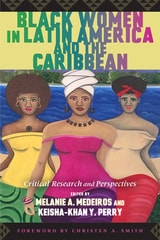
Black Women in Latin America and the Caribbean
Critical Research and PerspectivesMelanie A. Medeiros
Rutgers University Press, 2023
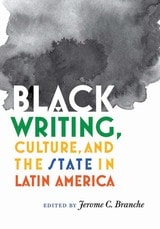
Black Writing, Culture, and the State in Latin America
Jerome C. Branche
Vanderbilt University Press, 2015
All too often, the disciplines of film studies, literary criticism, and art history ignore the opportunity to collaborate in a dialogue. Branche and his contributors present a unified approach, however, suggesting that cultural production should not be viewed narrowly, especially when studying the achievements of the Afro-Latin world.
Blood Pact and Other Stories
Mario Benedetti
Northwestern University Press, 1997
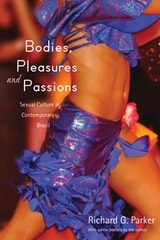
Bodies, Pleasures, and Passions
Sexual Culture in Contemporary Brazil, Second EditionRichard G. Parker
Vanderbilt University Press, 2009
Originally published in the early 1990s, Bodies, Pleasures, and Passions quickly became a classic ethnographic study of the social, cultural and historical construction of sexuality and sexual diversity. Drawing on extensive field research and interviews, together with the analysis of historical and literary texts, anthropologist Richard Parker mapped out the multiple cultural systems that structure gender, sexuality, and erotic practices in Brazil, and helped to open up a new wave of social science research on sexuality.
Using ethnographic methods focusing on sexual meanings as an alternative to traditional surveys of sexual behavior, Parker argues that sexual life can only be fully understood through an analysis of the cultural logics that shape experience. Drawing on the tradition of interpretive anthropology, he focuses on the diverse sexual scripts that have been articulated in Brazilian culture and examines the often contradictory ways in which these scripts shape the sexual experience of different individuals. He highlights the sexual socialization of children and young people, and the changing sexual realities of adults living in a rapidly changing world. He underlines the ways in which complex cultural forms such as carnaval can be understood as stories that Brazilians tell themselves about themselves and about the meaning of sexuality in contemporary Brazilian life.
Bolsonarismo
The Global Origins and Future of Brazil’s Far RightFernando Brancoli
Rutgers University Press, 2024
Through interviews, archival research, and newly available public documents, this book presents a comprehensive and compelling portrait of the neo-evangelical pastors, military personnel, and meritocratic ideologues who are the actors behind the far-right movement. Adding to our understanding of Bolsonarismo's growth in Brazilian politics and the contributing factors behind it, the book also sheds light on the impact of Bolsonarismo on world politics. As a prominent leader of the far-right movement, Jair Bolsonaro's political views and policies have reverberated beyond Brazil's borders, influencing the discourse on issues such as climate change, democracy, and human rights around the world.
Border Killers
Neoliberalism, Necropolitics, and Mexican MasculinityElizabeth Villalobos
University of Arizona Press, 2024
Villalobos focuses on representations of “border killers” in literature, film, and theater. The author develops a metaphor of “maquilization” to describe the mass-production of masculine violence as a result of neoliberalism. The author demonstrates that the killer is an interchangeable cog in a societal factory of violence whose work is to produce dead bodies. By turning to cultural narratives, Villalobos seeks to counter the sensationalistic and stereotyped media depictions of border residents as criminals. The cultural works she examines instead indict the Mexican state and the global economic system for producing agents of violence.
Focusing on both Mexico’s northern and southern borders, Border Killers uses Achille Mbembe’s concept of necropolitics and various theories of masculinity to argue that contemporary Mexico is home to a form of necropolitical masculinity that has flourished in the neoliberal era and made the exercise of death both profitable and necessary for the functioning of Mexico’s state-cartel-corporate governance matrix.

Borges and Europe Revisited
Edited by Evelyn Fishburn
University of London Press, 1998
Borges and His Fiction
A Guide to His Mind and ArtBy Gene H. Bell-Villada
University of Texas Press, 2000
From reviews of the first edition:
"A compulsively readable account of the life and works of our greatest...writer of fantasy. With a keen appreciation of Borges himself and a pleasant disregard for the critical clichés, Bell-Villada tells us all we really want to know about the modern master-from pronouncing his name to understanding the stories." —New York Daily News
"Of the scores of Borges studies by now published in English, Bell-Villada's excellent book stands out as one of the freshest and most generally helpful.... Lay readers and specialists alike will find his book a valuable and highly readable companion to Ficciones and El Aleph." —Choice
Since its first publication in 1981, Borges and His Fiction has introduced the life and works of this Argentinian master-writer to an entire generation of students, high school and college teachers, and general readers. Responding to a steady demand for an updated edition, Gene H. Bell-Villada has significantly revised and expanded the book to incorporate new information that has become available since Borges' death in 1986. In particular, he offers a more complete look at Borges and Peronism and Borges' personal experiences of love and mysticism, as well as revised interpretations of some of Borges' stories. As before, the book is divided into three sections that examine Borges' life, his stories in Ficciones and El Aleph, and his place in world literature.
Borges and Kafka, Bolaño and Bloom
Latin American Authors and the Western CanonJuan E. De Castro
Vanderbilt University Press, 2022
Borges and Kafka, Bolaño and Bloom is a parsing not simply of these authors' reactions to a canon, but of the notion of canon writ large and the inequities and erasures therein. It concludes with a look at the testimonial and autobiographical writings of Rigoberta Menchú and Lurgio Gavilán, who arguably represent the trajectory of Indigenous testimonial and autobiographical writing during the last forty years, noting how their texts represent alternative ways of relating to national and, on occasion, Western cultures. This study is a new attempt to map writers' diverse ways of thinking about locality and universality from within and without what is known as the canon.
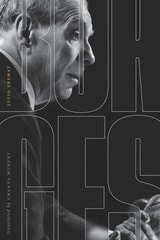
Borges
An IntroductionJulio Premat
Vanderbilt University Press, 2021
Originally published in French by an Argentine ex-pat living in Paris, Borges includes the Argentine specificities of Borges’s work—specificities that are often unrecognized or glossed over in Anglophone readings.
This book is a boon for university students of philosophy and literature, teachers and researchers in these fields who are looking to better understand this complex author, and anyone interested in the advanced study of literature. Somewhere between a guidebook and an exhaustive work of advanced research, Borges is the ultimate stepping-stone into the deeper Borgesian world.
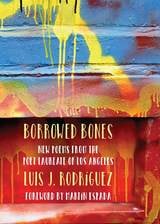
Borrowed Bones
New Poems from the Poet Laureate of Los AngelesLuis J. Rodriguez
Northwestern University Press, 2016
Foreword by Martín Espada
This chapbook collection offers new poems from the prolific career of a community leader, activist, and healer. Luis J. Rodríguez’s work asks profound questions of us as readers and fellow humans, such as, "If society cooperates, can we nurture the full / and healthy development of everyone?" In his introductory remarks, Martín Espada describes the poet as a man engaged in people and places: "Luis Rodríguez is a poet of many tongues, befitting a city of many tongues. He speaks English, Spanish, ‘Hip Hop,’ ‘the Blues,’ and ‘cool jazz.’ He speaks in ‘mad solos.’ He speaks in ‘People’s Sonnets.’ He speaks in the language of protest. He speaks in the language of praise."
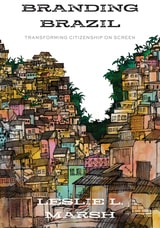
Branding Brazil
Transforming Citizenship on ScreenLeslie L. Marsh
Rutgers University Press, 2021
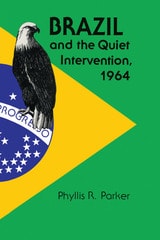
Brazil and the Quiet Intervention, 1964
By Phyllis R. Parker
University of Texas Press, 1979
When the Brazilian military overthrew President João Goulart in 1964, American diplomats characterized the coup as a "100 percent Brazilian movement." It has since become apparent, largely through government documents declassified during the course of research for this book, that the United States had an invisible but pervasive part in the coup.
Relying principally on documents from the Johnson and Kennedy presidential libraries, Phyllis Parker unravels the events of the coup in fascinating detail. The evidence she presents is corroborated by interviews with key participants.
U.S. interference in the Goulart regime began when normal diplomatic pressure failed to produce the desired enthusiasm from him for the Alliance of Progress. Political and economic manipulations also proving ineffective, the United States stood ready to back a military takeover of Brazil's constitutional democracy.
U.S. operation "Brother Sam" involved shipments of petroleum, a naval task force, and tons of arms and ammunition in preparation for intervention during the 1964 coup. When the Brazilian military gained control without calling on the ready assistance, U.S. policy makers immediately accorded recognition to the new government and set in motion plans for economic support.
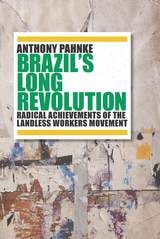
Brazil's Long Revolution
Radical Achievements of the Landless Workers MovementAnthony Pahnke
University of Arizona Press, 2018
Brazil’s Long Revolution shows how the Movimento dos Trabalhadores Rurais Sem Terra (the Brazilian Landless Workers Movement, or MST) positioned itself to take advantage of challenging economic times to improve its members’ lives. Pahnke analyzes the origins and development of the movement, one of the largest and most innovative social movements currently active. Over the last three decades, the MST has mobilized more than a million Brazilians through grassroots initiatives, addressing political and economic inequalities.
The MST and its allies—together known as the Landless Movement—confront inequality by constructing democratic ways of governing economic, political, and social life in collectivized production cooperatives, movement-run schools, and decentralized agrarian reform encampments and settlements. Their strategies for organizing political, economic, and social life challenge the current neoliberal orthodoxy that privileges individualized, market-oriented practices.
Based on research conducted over five years, Pahnke’s book places the Landless Movement squarely within the tradition of Latin American revolutionary struggles, while at the same time showing the potential for similar forms of radical resistance to develop in the United States and elsewhere in the Global North.
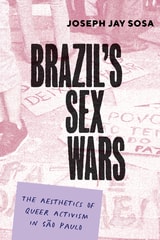
Brazil's Sex Wars
The Aesthetics of Queer Activism in São PauloJoseph Jay Sosa
University of Texas Press, 2024
An ethnography and media analysis of LGBT+ activism in São Paulo during Brazil’s conservative turn from 2010 to 2018.
For decades, LGBT+ activists across the globe have secured victories by persuasively articulating rights to sexual autonomy. Brazilian activists, some of the world’s most energetic, have kept pace. But since 2010, a backlash has set in, as defenders of “tradition” and “family” have countered LGBT+ rights discourses using a rights-based language of their own.
To understand this shifting ground, Joseph Jay Sosa collaborated with Brazilian LGBT+ activists, who use the language of rights while knowing that rights are not what they seem. Drawing on the symbolic and affective qualities of rights, activists mobilize slogans, bodies, and media to articulate an alternative democratic sensorium. Beyond conventional notions of rights as tools for managing the obligations of states vis-à-vis citizens, activists show how rights operate aesthetically—enjoining the public to see and feel as activists do. Sosa tracks the fate of LGBT+ rights in a growing authoritarian climate that demands “human rights for the right humans.” Interpreting conflicts between advocates and opponents over LGBT+ autonomy as not just an ideological struggle but an aesthetic one, Brazil’s Sex Wars rethinks a style of politics that seems both utterly familiar and counterintuitive.
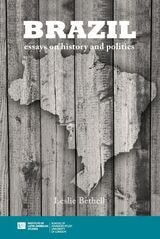
Brazil
Essays on History and PoliticsLeslie Bethell
University of London Press, 2018
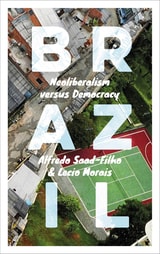
Brazil
Neoliberalism versus DemocracyAlfredo Saad-Filho and Lecio Morais
Pluto Press, 2017
In Brazil: Neoliberalism Versus Democracy, Alfredo Saad-Filho and Lecio Morais review the complex paradox that is modern Brazil. Focusing on 1980 to the present, they analyze the tensions between the two dominant systemic political transitions from military rule to first democracy, then neoliberalism. A groundbreaking interpretation of this intricate relationship, Brazil examines how the contradictory dynamics of these transitions eventually became symbiotic as they unfolded and intertwined.
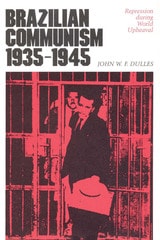
Brazilian Communism, 1935-1945
Repression during World UpheavalBy John W. F. Dulles
University of Texas Press, 1983
The Brazilian Communist Party was one of the largest Communist parties in Latin America until its split and dissolution in the 1990s. Although not granted legal status as a political party of Brazil until 1985, the Partido Comunista Brasileiro (PCB) has been tolerated by that country's regime.
Such governmental tolerance of the PCB was not always the case. In the past, the regime of Getúlio Vargas practiced savage forms of repression against Brazilian leftists, whose "Red extremism" was cited by both government leaders and the press as sufficient cause for Vargas' adoption of the most extreme measures.
Brazilian Communism, 1935–1945 is an objective and remarkably comprehensive account of the Brazilian Communist Party's struggle to survive those days of repression.
From his prison cell, PCB leader Luís Carlos Prestes guided the Party's quarreling factions. All who were associated with the Left shared a common enemy: the police, who used the most brutal forms of torture to extract information about leftist activities. Young Elza Fernandes, companion of the PCB's secretary general, was one whom the police interrogated. Suspecting that she had betrayed them, the Party itself arranged her murder.
Dulles' vivid account of this violent chapter in Latin American history is based on exclusive interviews with leading activists of the period and exhaustive research in the archives of both the PCB and the Brazilian police. The results make fascinating reading for Latin Americanists, historians of World War II, and students of international Communism alike.
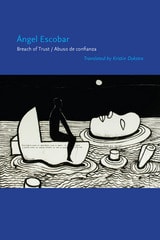
Breach of Trust/Abuso de confianza
Ángel Escobar with Translation by Kristin Dykstra
University of Alabama Press, 2016
The best-known work by acclaimed Cuban poet Ángel Escobar
Ángel Escobar’s Breach of Trust / Abuso de confianza is known by many as the most devastating book of his poetic generation. It is his first to be offered to an English-speaking audience. Merging personal and collective meditations, these twenty-three poems perform an indictment of violence. Escobar’s poetry delineates lacerations etched on bodies and minds by the sanguinary twentieth century, which unfolded out of a longer modernity spanning the Americas.
Breach of Trust / Abuso de confianza outlived its author, who took his own life in 1997. Brief and implicit appeals for justice and love offset the book’s abject theatricality. Escobar’s tragic masterpiece deftly interweaves themes into a striking synthesis offered in the spirit of survival.
Award-winning translator Kristin Dykstra introduces this collection with a comprehensive examination of Escobar’s life, work, and the times within which he wrote. Dykstra situates Escobar’s poetic abjection as his drive to confront thingification face to (non)face.
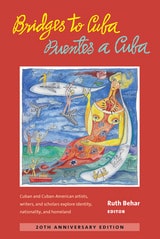
Bridges to Cuba/Puentes a Cuba
Ruth Behar, Editor
University of Michigan Press, 2015
Broken Souths
Latina/o Poetic Responses to Neoliberalism and GlobalizationMichael Dowdy
University of Arizona Press, 2013
Dowdy argues that a transnational Latina/o imaginary has emerged in response to neoliberalism—the free-market philosophy that underpins what many in the northern hemisphere refer to as “globalization.” His work examines how poets represent the places that have been “broken” by globalization’s political, economic, and environmental upheavals. Broken Souths locates the roots of the new imaginary in 1968, when the Mexican student movement crested and the Chicano and Nuyorican movements emerged in the United States. It theorizes that Latina/o poetics negotiates tensions between the late 1960s’ oppositional, collective identities and the present day’s radical individualisms and discourses of assimilation, including the “post-colonial,” “post-national,” and “post-revolutionary.” Dowdy is particularly interested in how Latina/o poetics reframes debates in cultural studies and critical geography on the relation between place, space, and nature.
Broken Souths features discussions of Latina/o writers such as Victor Hernández Cruz, Martín Espada, Juan Felipe Herrera, Guillermo Verdecchia, Marcos McPeek Villatoro, Maurice Kilwein Guevara, Judith Ortiz Cofer, Jack Agüeros, Marjorie Agosín, Valerie Martínez, and Ariel Dorfman, alongside discussions of influential Latin American writers, including Roberto Bolaño, Ernesto Cardenal, David Huerta, José Emilio Pacheco, and Raúl Zurita.
Bruna and Her Sisters in the Sleeping City
Alicia Yánez Cossío, Translated from the Spanish by Kenneth J. A. Wishnia
Northwestern University Press, 1999
Bureaucrats, Planters, and Workers
The Making of the Tobacco Monopoly in Bourbon MexicoBy Susan Deans-Smith
University of Texas Press, 1992
Honorable Mention, Bolton Memorial Prize, Conference on Latin American History
A government monopoly provides an excellent case study of state-society relationships. This is especially true of the tobacco monopoly in colonial Mexico, whose revenues in the later half of the eighteenth century were second only to the silver tithe as the most valuable source of government income. This comprehensive study of the tobacco monopoly illuminates many of the most important themes of eighteenth-century Mexican social and economic history, from issues of economic growth and the supply of agricultural credit to rural relations, labor markets, urban protest and urban workers, class formation, work discipline, and late colonial political culture.
Drawing on exhaustive research of previously unused archival sources, Susan Deans-Smith examines a wide range of new questions. Who were the bureaucrats who managed this colonial state enterprise and what policies did they adopt to develop it? How profitable were the tobacco manufactories, and how rational was their organization? What impact did the reorganization of the tobacco trade have upon those people it affected most—the tobacco planters and tobacco workers?
This research uncovers much that was not previously known about the Bourbon government's management of the tobacco monopoly and the problems and limitations it faced. Deans-Smith finds that there was as much continuity as change after the monopoly's establishment, and that the popular response was characterized by accommodation, as well as defiance and resistance. She argues that the problems experienced by the monopoly at the beginning of the nineteenth century did not originate from any simmering, entrenched opposition. Rather, an emphasis upon political stability and short-term profits prevented any innovative reforms that might have improved the monopoly's long-term performance and productivity.
With detailed quantitative data and rare material on the urban working poor of colonial Mexico, Bureaucrats, Planters, and Workers will be important reading for all students of social, economic, and labor history, especially of Mexico and Latin America.

boy
Consuelo Wise
Omnidawn, 2024
In this hybrid of lyric poetry and essay, Consuelo Wise utilizes repetition, fragmentation, and syntax to construct a form that repeatedly falls apart. Breaks in lines and fragmented stanzas are followed by accumulative rushes, slashes, brackets, and words pushed together.
Throughout this book-length poem, Wise composes a meditation and an investigation into loss and identity. Moving between sound and image, aggression and subtlety, b o y pries open memories that resist understanding but also refuse to be forgotten. Wise peels back layers of mourning, considering how it can be experienced as a personal, inherited, environmental, social, and historical phenomenon. Throughout, the protagonist in b o y reenvisions ways to process a great loss, listening closely and searching for words while “the earth is shaking and the silence pressing down.”