Results by title
744 books match the query 'Culture' and 32 start with b

Bad Marxism
Capitalism and Cultural StudiesJohn Hutnyk
Pluto Press, 2004
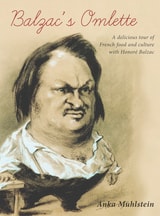
Balzac's Omelette
A Delicious Tour of French Food and Culture with Honore de BalzacAnkha Muhlstein
Haus Publishing, 2012
It is not a coincidence that Balzac was the first in French literature to tackle this appetizing topic. Before the French Revolution, a traveller in France was apt to find local food scarce, tasteless and of dubious appearance. Restaurants did not even exist! Just as the art of the table became a centrepiece of French mores, Balzac used it as a connecting thread in his novels, showing how food can evoke character, atmosphere, class and social pretensions. Full of insights, Balzac’s Omelette invites you to taste anew French literature and cuisine.
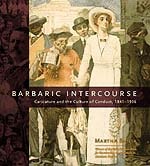
Barbaric Intercourse
Caricature and the Culture of Conduct, 1841-1936Martha Banta
University of Chicago Press, 2003
Banta also deals extensively with London's Punch, a sharp critic of American nationalism, and draws from images and writings in magazines as diverse as Puck,The Crisis,Harper's Weekly, and The International Socialist Review. Orchestrating a wealth of material, including reproductions of rarely seen political cartoons, she offers a richly layered account of the cultural struggles of the age, from contests over immigration and the role of the New Negro in American society, to debates over Wall Street greed, women's suffrage, and the moral consequences of Western expansionism.
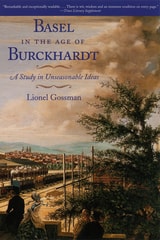
Basel in the Age of Burckhardt
A Study in Unseasonable IdeasLionel Gossman
University of Chicago Press, 2000
"Remarkable and exceptionally readable . . . There is wit, wisdom and an immense erudition on every page."—Jonathan Steinberg, Times Literary Supplement
"Gossman's book, a product of many years of active contemplation, is a tour de force. It is at once an intellectual history, a cultural history of Basel and Europe, and an important contribution to the study of nineteenth-century historiography. Written with a grace and elegance that many aspire to, few seldom achieve, this is model scholarship."—John R. Hinde, American Historical Review

Bearing the Bad News
Contemporary American Literature and CultureSanford Pinsker
University of Iowa Press, 1990
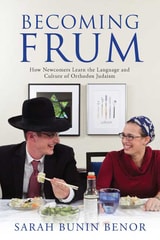
Becoming Frum
How Newcomers Learn the Language and Culture of Orthodox JudaismSarah Bunin Benor
Rutgers University Press, 2012
Winner, 2013 Sami Rohr Choice Award for Jewish Literature
When non-Orthodox Jews become frum (religious), they encounter much more than dietary laws and Sabbath prohibitions. They find themselves in the midst of a whole new culture, involving matchmakers, homemade gefilte fish, and Yiddish-influenced grammar. Becoming Frum explains how these newcomers learn Orthodox language and culture through their interactions with community veterans and other newcomers. Some take on as much as they can as quickly as they can, going beyond the norms of those raised in the community. Others maintain aspects of their pre-Orthodox selves, yielding unique combinations, like Matisyahu’s reggae music or Hebrew words and sing-song intonation used with American slang, as in “mamish (really) keepin’ it real.”
Sarah Bunin Benor brings insight into the phenomenon of adopting a new identity based on ethnographic and sociolinguistic research among men and women in an American Orthodox community. Her analysis is applicable to other situations of adult language socialization, such as students learning medical jargon or Canadians moving to Australia. Becoming Frum offers a scholarly and accessible look at the linguistic and cultural process of “becoming.”
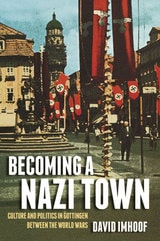
Becoming a Nazi Town
Culture and Politics in Göttingen between the World WarsDavid Imhoof
University of Michigan Press, 2013
Becoming a Nazi Townreveals the ways in which ordinary Germans changed their cultural lives and their politics from the mid-1920s to the mid-1930s. Casting the origins of Nazism in a new light, David Imhoof charts the process by which Weimar and Nazi culture flowed into each other. He analyzes this dramatic transition by looking closely at three examples of everyday cultural life in the mid-sized German city of Göttingen: sharpshooting, an opera festival, and cinema.
Imhoof draws on individual and community experiences over a series of interwar periods to highlight and connect shifts in culture, politics, and everyday life. He demonstrates how Nazi leaders crafted cultural policies based in part on homegrown cultural practices of the 1920s and argues that overdrawn distinctions between “Weimar” and “Nazi” culture did not always conform to most Germans’ daily lives. Further, Imhoof presents experiences in Göttingen as a reflection of the common reality of many German towns beyond the capital city of Berlin.

Being after Rousseau
Philosophy and Culture in QuestionRichard L. Velkley
University of Chicago Press, 2002
The Rousseauian tradition begins, for Velkley, with Rousseau's criticism of modern political philosophy. Although the German Idealists such as Schelling accepted much of Rousseau's critique, they believed, unlike Rousseau, that human wholeness could be attained at the level of society and history. Heidegger and Nietzsche questioned this claim, but followed both Rousseau and the Idealists in their vision of the philosopher-poet striving to recover an original wholeness that the history of reason has distorted.
Bengal in Global Concept History
Culturalism in the Age of CapitalAndrew Sartori
University of Chicago Press, 2008
Sartori weaves the narrative of Bengal’s embrace of culturalism into a worldwide history of the concept, from its origins in eighteenth-century Germany, through its adoption in England in the early 1800s, to its appearance in distinct local guises across the non-Western world. The impetus for the concept’s dissemination was capitalism, Sartori argues, as its spread across the globe initiated the need to celebrate the local and the communal. Therefore, Sartori concludes, the use of the culture concept in non-Western sites was driven not by slavish imitation of colonizing powers, but by the same problems that repeatedly followed the advance of modern capitalism. This remarkable interdisciplinary study will be of significant interest to historians and anthropologists, as well as scholars of South Asia and colonialism.
Berlin
Culture and MetropolisCharles Haxthausen
University of Minnesota Press, 1991
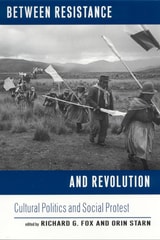
Between Resistance and Revolution
Cultural Politics and Social ProtestFox, Richard G.
Rutgers University Press, 1997
Peasants in India hugging trees to protest logging, Brazilian feminists marching to impeach a president, Okinawan television comedians joke-starting ethnic activity. All are instances of social protest that exist in the charged territory between the cataclysmic upheaval of revolutionary war and the everyday acts of private resistance. Yet these movements "in between" resistance and revolution have remained invisible to scholars of politics, culture, and society. Leading scholars in anthropology, political science, history, sociology, and ethnomusicology examine dissent and direct action in Australia, Brazil, Germany, Colombia, India, Korea, Peru, and the United States and demonstrate the importance of looking beyond these poles of protest to the midways of mobilization.
The contributors are Nancy Abelmann, Sonia Alvarez, Arturo Escobar, Richard Fox, Faye Ginsburg, Ramachandra Guha, Ingrid Monson, Yoshinobu Ota, Orin Starn, and Nathan Stoltzfus.
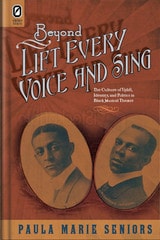
Beyond Lift Every Voice and Sing
The Culture of Uplift, Identity, and Politics in Black Musical TheaterPaula Marie Seniors
The Ohio State University Press, 2009
Beyond Nature and Culture
Philippe Descola
University of Chicago Press, 2013
Culture—as a collective human making, of art, language, and so forth—is often seen as essentially different from nature, which is portrayed as a collective of the nonhuman world, of plants, animals, geology, and natural forces. Descola shows this essential difference to be, however, not only a specifically Western notion, but also a very recent one. Drawing on ethnographic examples from around the world and theoretical understandings from cognitive science, structural analysis, and phenomenology, he formulates a sophisticated new framework, the “four ontologies”— animism, totemism, naturalism, and analogism—to account for all the ways we relate ourselves to nature. By thinking beyond nature and culture as a simple dichotomy, Descola offers nothing short of a fundamental reformulation by which anthropologists and philosophers can see the world afresh.

Beyond Words
Discourse and Critical Agency in AfricaAndrew Apter
University of Chicago Press, 2007
Even within anthropology, a discipline that strives to overcome misrepresentations of peoples and cultures, colonialist depictions of the so-called Dark Continent run deep. The grand narratives, tribal tropes, distorted images, and “natural” histories that forged the foundations of discourse about Africa remain firmly entrenched. In Beyond Words, Andrew Apter explores how anthropology can come to terms with the “colonial library” and begin to develop an ethnographic practice that transcends the politics of Africa’s imperial past.
The way out of the colonial library, Apter argues, is by listening to critical discourses in Africa that reframe the social and political contexts in which they are embedded. Apter develops a model of critical agency, focusing on a variety of language genres in Africa situated in rituals that transform sociopolitical relations by self-consciously deploying the power of language itself. To break the cycle of Western illusions in discursive constructions of Africa, he shows, we must listen to African voices in ways that are culturally and locally informed. In doing so, Apter brings forth what promises to be a powerful and influential theory in contemporary anthropology.
Black Arts West
Culture and Struggle in Postwar Los AngelesDaniel Widener
Duke University Press, 2010
Along with the politicization of black culture, Widener explores the rise of a distinctive regional Black Arts Movement. Originating in the efforts of wartime cultural activists, the movement was rooted in the black working class and characterized by struggles for artistic autonomy and improved living and working conditions for local black artists. As new ideas concerning art, racial identity, and the institutional position of African American artists emerged, dozens of new collectives appeared, from the Watts Writers Workshop, to the Inner City Cultural Center, to the New Art Jazz Ensemble. Spread across generations of artists, the Black Arts Movement in Southern California was more than the artistic affiliate of the local civil-rights or black-power efforts: it was a social movement itself. Illuminating the fundamental connections between expressive culture and political struggle, Black Arts West is a major contribution to the histories of Los Angeles, black radicalism, and avant-garde art.
Black Bostonians and the Politics of Culture, 1920-1940
Lorraine Elena Roses
University of Massachusetts Press, 2017
In the 1920s and 1930s Boston became a rich and distinctive site of African American artistic production, unfolding at the same time as the Harlem Renaissance and encompassing literature, theater, music, and visual art. Owing to the ephemeral nature of much of this work, many of the era's primary sources have been lost.
In this book, Lorraine Elena Roses employs archival sources and personal interviews to recover this artistic output, examining the work of celebrated figures such as Dorothy West, Helene Johnson, Meta Warrick Fuller, and Allan Rohan Crite, as well as lesser-known artists including Eugene Gordon, Ralf Coleman, Gertrude “Toki” Schalk, and Alvira Hazzard. Black Bostonians and the Politics of Culture, 1920–1940 demonstrates how this creative community militated against the color line not solely through powerful acts of civil disobedience but also by way of a strong repertoire of artistic projects.
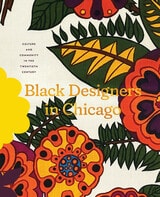
Black Designers in Chicago
Culture and Community in the Twentieth CenturyEdited by Chris Dingwall, David Hartt, and Daniel Schulman
University of Chicago Press, 2026
In twentieth-century Chicago, generations of Black artisans, craftspeople, art educators, clothing makers, commercial illustrators, sign painters, furniture makers, beauticians, graphic designers, art directors, and screen printers made and remade the city into an energetic center for modern design. Ambitious, enterprising, and resolutely modern, these Black designers were workers and intellectuals, activists and entrepreneurs. They created works for commercial and everyday use and helped to build community institutions such as the South Side Community Art Center and businesses like the Johnson Publishing Company. Their works ranged from branding and housewares for major corporations to pamphlets and posters made in the name of civil rights and Black Power. Together, they made Black Chicago into a dynamic design scene, working against racism in their professions while embracing the possibilities of design as a medium of social change.
This book is the first to chronicle their collective history while also celebrating their influence on design as well as African American culture more broadly. Based on extensive archival research and building on a major 2018 exhibition, Black Designers in Chicago presents essays by experts in African American history and design. The book features illustrations of a stunning variety of works—from graphic design to screenprints to textiles and household wares—placing African Americans at the center of modern design history, while highlighting the role of design in the cultural history of Black Chicago.
Black Sexual Economies
Race and Sex in a Culture of CapitalEdited by Adrienne D. Davis and the BSE Collective
University of Illinois Press, 2019
Black Writing, Culture, and the State in Latin America
Jerome C. Branche
Vanderbilt University Press, 2015
All too often, the disciplines of film studies, literary criticism, and art history ignore the opportunity to collaborate in a dialogue. Branche and his contributors present a unified approach, however, suggesting that cultural production should not be viewed narrowly, especially when studying the achievements of the Afro-Latin world.

Blackland Prairies of the Gulf Coastal Plain
Nature, Culture, and SustainabilityEdited by Evan Peacock and Timothy Schauwecker
University of Alabama Press, 2003
Underscores the relevance of archaeological research in understanding long-term cultural change
Taking a holistic approach, this compilation gathers ecological, historical, and archaeological research written on the distinctive region of the Southeast called the Gulf coast blackland prairie. Ranging from the last glacial period to the present day, the case studies provide a broad picture of how the area has changed through time and been modified by humans, first with nomadic bands of Indians trailing the grazing animals and then by Euro-American settlers who farmed the rich agricultural area. Contemporary impacts include industrialization, aquaculture, population growth, land reclamation, and wildlife management.
It is believed that the Black Belt and the Great Plains were contiguous in the past and shared the same prairie vegetation, insects, and large fauna, such as bison. Swaths and patches of limestone-based soils still weave a biological corridor through what is now Alabama, Mississippi, Arkansas, Louisiana, and Texas. In analyzing this distinct grassland ecosystem, the essays compare both the mega and minute flora and fauna sustained by the land in the past and present; reveal what foods were harvested by early inhabitants, their gathering techniques, and diet changes over the 10,000-year period of native occupancy; survey the documents of early explorers for descriptions of the landform, its use, and the lives of inhabitants at the time of contact; and look at contemporary efforts to halt abuse and reverse damage to this unique and shrinking biome.
This book demonstrates that the blackland prairie has always been an important refuge for a teeming array of biological species, including humans. It will have wide scholarly appeal as well as general interest and will be welcomed by archaeologists, biologists, botanists, ecologists, historians, librarians, politicians, land managers, and national, state, and local administrators.
Blood Talk
American Race Melodrama and the Culture of the OccultSusan Gillman
University of Chicago Press, 2003
Blood Talk shows how race melodrama emerged from abolitionist works such as Uncle Tom's Cabin and surprisingly manifested itself in a set of more aesthetically and politically varied works, such as historical romances, sentimental novels, the travel literature of Mark Twain, the regional fiction of Kate Chopin and George Washington Cable, and the work of W. E. B. Du Bois. Gillman then uses the race melodrama to show how racial discourses in the United States have been entangled with occultist phenomena, from the rituals of the Ku Klux Klan and the concept of messianic second-sight to the production of conspiracy theories and studies of dreams and trances.
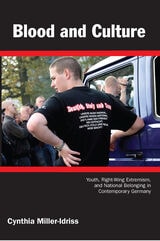
Blood and Culture
Youth, Right-Wing Extremism, and National Belonging in Contemporary GermanyCynthia Miller-Idriss
Duke University Press, 2009
Miller-Idriss describes a new understanding of national belonging emerging among young Germans—one in which cultural assimilation takes precedence over blood or ethnic heritage. Moreover, she argues that teachers’ well-intentioned, state-sanctioned efforts to counter nationalist pride often create a backlash, making radical right-wing groups more appealing to their students. Miller-Idriss argues that the state’s efforts to shape national identity are always tempered and potentially transformed as each generation reacts to the official conception of what the nation “ought” to be.
Blood, Ink, and Culture
Miseries and Splendors of the Post-Mexican ConditionRoger Bartra
Duke University Press, 2002
Written with verve over a period of twenty years, these essays—most translated into English here for the first time—suggest why Bartra has become one of Latin America’s leading public intellectuals. The essays cover a broad range of topics, from the canonical forms of Mexican culture to the meaning of postnational identity in a globalizing age, from the repercussions of the 1994 Zapatista uprising to the 2000 election of Vicente Fox and the end of the PRI’s seven-decade rule. Across this range of topics, Bartra imparts astute insights into a critical period of transition in Mexican history, stressing throughout the importance of democracy, the complexity of identity, and the vibrancy of the Left. In Blood, Ink, and Culture, he provides a stimulating inside look at political and intellectual life in the southern reaches of North America.

Bodies at War
Genealogies of Militarism in Chicana Literature and CultureBelinda Linn Rincón
University of Arizona Press, 2017
Bodies at War examines the rise of neoliberal militarism from the early 1970s to the present and its transformation of political, economic, and social relations. It charts neoliberal militarism’s impact on democratic practices, economic policies, notions of citizenship, race relations, and gender norms by focusing on how these changes affect the Chicana/o community and, more specifically, on how it shapes and is shaped by Chicana bodies. The book raises important questions about the cultural legacies of war and the gendering of violence—topics that reach across multiple disciplinary fields of inquiry, including cultural and media studies. It draws attention to the relationship between war and society, to neoliberal militarism’s destructive social impact, and to the future of Latina soldiering. Through Chicana art, activism, and writing, Rincón offers a visionary foundation for an antiwar feminist politic.
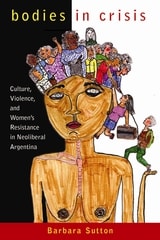
Bodies in Crisis
Culture, Violence, and Women's Resistance in Neoliberal ArgentinaSutton, Barbara
Rutgers University Press, 2010
Through the lens of women's body consciousness in a Global South country, and drawing on multifaceted stories and a politically embedded approach, Bodies in Crisis suggests that social policy, economic systems, cultural ideologies, and political resistance are ultimately fleshly matters.
Bodies of Resistance
New Phenomenologies of Politics, Agency, and CultureLaura Doyle
Northwestern University Press, 2001
Body of Power, Spirit of Resistance
The Culture and History of a South African PeopleJean Comaroff
University of Chicago Press, 1985
Borderland on the Isthmus
Race, Culture, and the Struggle for the Canal ZoneMichael E. Donoghue
Duke University Press, 2014
Borrowed Power
Essays on Cultural AppropriationEdited by Bruce Ziff
Rutgers University Press, 1997
Boston Mass-Mediated
Urban Space and Culture in the Digital AgeStanley Corkin
University of Massachusetts Press, 2024
In the mid-nineteenth century, Boston fashioned itself as a global hub. By the early 1970s, it was barely a dot on the national picture. It had gained a reputation as a decaying city rife with crime and dysfunctional politics, as well as decidedly retrograde race relations, prominently exemplified by white resistance to school integration. Despite this historical ebb in its national and international presence, it still possessed the infrastructure—superb educational institutions such as Harvard and MIT, world-class sports teams like the Celtics and Red Sox, powerful media outlets like The Boston Globe, and extensive shipping capacity—required to eventually thrive in an age of global trade and mass communication.
In Boston Mass-Mediated, Stanley Corkin explores the power of mass media to define a place. He examines the tensions between the emergent and prosperous city of the late twentieth and early twenty-first centuries and its representation in a range of media genres such as news journalism, professional sports broadcasting, and popular films like Mystic River and The Departed. This mass media, with its ever-increasing digital reach, has emphasized a city restricted by tropes suggestive of an earlier Boston—racism, white ethnic crime, Catholicism, and a pre-modern insularity—even as it becomes increasingly international and multicultural. These tropes mediate our understanding and experience of the city. Using Boston as a case study, Corkin contends that our contemporary sense of place occurs through a media saturated world, a world created by the explosion of digital technology that is steeped in preconceptions.

Boxed In
The Culture of TVMark Crispin Miller
Northwestern University Press, 1988
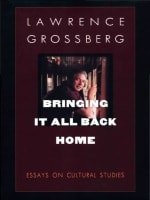
Bringing It All Back Home
Essays on Cultural StudiesLawrence Grossberg
Duke University Press, 1997
The essays collected here recognize both the specificity of cultural studies, by locating it in a range of alternative critical perspectives and practices, and its breadth, by mapping the extent of its diversity. By discussing American scholars’ initial reception of cultural studies, its relation to communication studies, and its origins in leftist politics, Grossberg grounds the development of cultural studies in the United States in specific historical and theoretical context. His criticism of "easy" identification of cultural studies with the theories, models, and issues of communications and his challenge to some of cultural studies’ current directions and preoccupations indicates what may lie ahead for this dynamic field of study. Bringing together the Gramscian tradition of British cultural studies with the antimodernist philosophical positions of Foucault, Deleuze, and Guattari, Grossberg articulates an original and important vision of the role of the political intellectual in the contemporary world and offers an essential overview of the emerging field of cultural studies by one of its leading practitioners and theorists.