Results by title
808 books match the query 'Drama' and 23 start with b
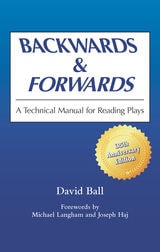
Backwards & Forwards
A Technical Manual for Reading PlaysDavid Ball. Forewords by Michael Langham and Joseph Haj
Southern Illinois University Press, 1983
The best-selling script analysis book for thirty-five years
Considered an essential text since its publication thirty-five years ago, this guide for students and practitioners of both theater and literature complements, rather than contradicts or repeats, traditional methods of literary analysis of scripts.
Ball developed his method during his work as literary director at the Guthrie Theater, building his guide on the crafts playwrights of every period and style use to make their plays stageworthy. The text is full of tools for students and practitioners to use as they investigate plot, character, theme, exposition, imagery, conflict, theatricality, and the other crucial parts of the superstructure of a play. Also included are guides for discovering what the playwright considers a play’ s most important elements, thus permitting interpretation based on the foundation of the play rather than its details.
Using Shakespeare’s Hamlet as illustration, Ball assures a familiar base for clarifying script-reading techniques as well as exemplifying the kinds of misinterpretation readers can fall prey to by ignoring the craft of the playwright. Of immense utility to those who want to put plays on the stage (actors, directors, designers, production specialists) Backwards & Forwards is also a fine playwriting manual because the structures it describes are the primary tools of the playwright.

Barricade
Utpal Dutt
Seagull Books, 2022
Although Utpal Dutt is acknowledged as a trailblazer of post-Independence Indian theater, English readers have not had access to the range and wealth of his drama. Barricade is a political play that stages the Nazi takeover of Germany in 1933 with an eye on India. Today, the surge to power of far-right parties and fundamentalist fanaticism across the world means that the co-option of democracy and civil society that led to Nazi fascism can happen again—or indeed has already happened—granting Barricade its immediate urgency. Equipped with an introduction analyzing its historical context, this translation of Barricade is also a very rare product in dramatic literature, collating both the printed original as well as a documented performance of the production directed by Dutt.

Barrio Dreams
Selected PlaysSilviana Wood; Edited by Norma E. Cantú and Rita E. Urquijo-Ruiz
University of Arizona Press, 2016
Barrio Dreams is the first book to collect the work of one of Arizona’s foremost teatristas, playwright Silviana Wood. During her decades-long involvement in theater, Wood forged a reputation as a playwright, actor, director, and activist. Her works form a testimonio of Chicana life, steeped in art, politics, and the borderlands. Wood’s plays challenge, question, and incite women to consider their lot in life. She ruptures stereotypes and raises awareness of social issues via humor and with an emphasis on the use of the physical body on stage.
The play Una vez, en un barrio de sueños . . . offers a glimpse into familiar terrain—the barrio and its dwellers—in three actos. In Amor de hija, a fraught mother-daughter relationship in contemporary working-class Arizona is dealt an additional blow as the family faces Alzheimer’s disease. In the tragedy A Drunkard’s Tale of Melted Wings and Memories, and in the trilingual (Spanish, English, and Yaqui) tragicomedy Yo, Casimiro Flores, characters love, live, die, travel through time and space, and visit the afterlife. And in Anhelos por Oaxaca, a grandfather travels back in time through flashbacks, as he and his grandson travel through homelands from Arizona to Oaxaca.
Part of Wood’s genius is the way she portrays life in what Gloria Anzaldúa called “el mundo zurdo,” that space inhabited by the people of color, the poor, the female, and the outsiders. It is a place for the atravesados, the odd, the different, those who do not fit the mainstream. The people who inhabit Wood’s plays are common folk—janitors, mothers, grandmothers, and teenagers—hardworking people who, in one way or another, have made their way in life and who embody life in the barrio.
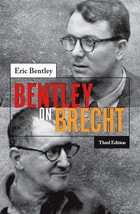
Bentley on Brecht
Eric Bentley
Northwestern University Press, 2008
Winner of 2006 International Association of Theatre Critics Thalia Prize
Winner of 2006 Village Voice OBIE Awards Lifetime Achievement Award
Since their first meeting in Santa Monica, California in 1942, Eric Bentley has been Bertolt Brecht's other, offstage voice. Just as Brecht reshaped modern theater, Bentley's writings on Brecht helped shape his reputation in the United States and the rest of the world. Bentley on Brecht represents a lifetime of critical and personal thoughts on both Brecht as friend and Brecht as influential literary figure. Brought together in this volume are Brecht-Bentley correspondence, Bentley's personal recollections of his years with Brecht, including Charles Laughton's production of Galileo, Brecht's testimony before the House Un-American Activities Committee, and Bentley's analysis of Brecht's plays.
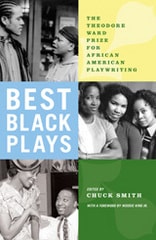
Best Black Plays
The Theodore Ward Prize for African American PlaywritingChuck Smith
Northwestern University Press, 2007
Carefully selected by a director and educator who has been affiliated with the contest for eighteen of its twenty years, these three works have themes that range from the sordid shenanigans of a Depression-era "South Side Burial Society" (Leslie Lee's Sundown Names and Night-Gone Things) to a single mother's heartbreaking battle to save her children's souls (Mark Clayton Southers' Ma Noah) to a poignant and achingly funny reunion of three sisters after their parents' death (Kim Euell's The Diva Daughters DuPree). Their publication answers a growing demand for the work of African American playwrights even as it affords deep and varied insights into African American culture in our era.

Bethany
A PlayLaura Marks
Northwestern University Press, 2014
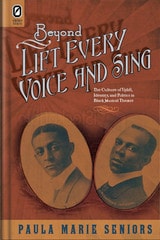
Beyond Lift Every Voice and Sing
The Culture of Uplift, Identity, and Politics in Black Musical TheaterPaula Marie Seniors
The Ohio State University Press, 2009

Beyond the Body
The Boundaries of Medicine and English Renaissance DramaWilliam Kerwin
University of Massachusetts Press, 2005
Drawing on research in the social history of medicine as well as a wide-ranging collection of primary narratives of medical encounters, Kerwin pursues the stories of several medical groups. Specifically, he examines women healers in terms of the changing place of women in the public sphere; the connections between drug sellers—apothecaries and alchemists—and an emerging modern economy; the role barbers and surgeons played in early modern concerns for protecting a new sense of privacy and interiority; the ways physicians defined their professional primacy through the language of theaters and actors; and the ways individual patients employed rhetorics of diagnosis as a way of participating in sectarian religious battles. The study moves from the dynamics of medical politics to the work drama does in exposing those dynamics. In addition to offering astute readings of works by Shakespeare and Ben Jonson, the book pays substantial attention to plays by Samuel Daniel, John Fletcher, John Ford, Thomas Heywood, John Lyly, Philip Massinger, and John Webster.
Beyond the Body complements the wealth of recent critical attention given to the body. Kerwin attends to a different sort of material politics; as the book's title suggests, he asks a reader interested in the politics of medicine to look not at the practitioner treating the body but at the social forces influencing the practitioner. Beyond the Body works to erode a widespread cultural bias toward giving medicine deference as a self-defining profession.
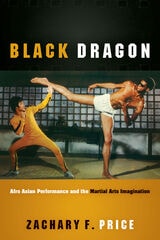
Black Dragon
Afro Asian Performance and the Martial Arts ImaginationZachary F. Price
The Ohio State University Press, 2022
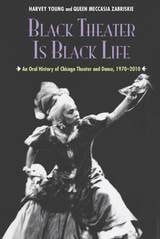
Black Theater Is Black Life
An Oral History of Chicago Theater and Dance, 1970-2010Harvey Young and Queen Meccasia Zabriskie
Northwestern University Press, 2013
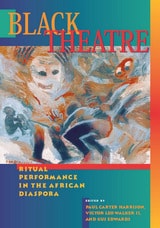
Black Theatre
Ritual Performance In The African Diasporaedited by Paul Carter Harrison, Victor Leo Walker II and Gus Edwards
Temple University Press, 2002
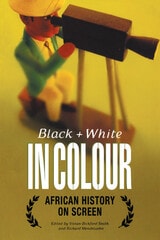
Black and White in Colour
African History on ScreenVivian Bickford-Smith
Ohio University Press, 2007
Black and White in Colour: African History on Screen considers how the African past has been represented in a wide range of historical films. Written by a team of eminent international scholars, the volume provides extensive coverage of both place and time and deals with major issues in the written history of Africa. Themes include the slave trade, imperialism and colonialism, racism, and anticolonial resistance. Many of the films will be familiar to readers: they include Out of Africa, Hotel Rwanda, Breaker Morant, Cry Freedom, The Battle of Algiers, and Chocolat.
This collection of essays is a highly original and useful contribution to African historiography, as well as a significant addition to the growing body of work within the emerging subdiscipline of “film and history.” It will appeal to those interested in African history and the ways in which films use the past to raise questions about the present.
Contributors: Mahir Saul, Ralph A. Austen, Robert Baum, Robert Harms, Nigel Worden, Carolyn Hamilton and Litheko Modisane, Richard Mendelsohn, Shamil Jeppie, Bill Nasson, Nigel Penn, Ruth Watson, Patrick Harries, David Moore, Teresa Barnes, Vivian Bickford-Smith, Mohamed Adhikari, and David Philips.
Blue Roses
Tennessee Williams, Memory, and the Queer ArchiveDaniel Ciba
University of Iowa Press, 2026
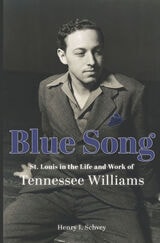
Blue Song
St. Louis in the Life and Work of Tennessee WilliamsHenry I. Schvey
University of Missouri Press, 2022
The question of this paradox lies at the heart of this book, an attempt not so much to correct the record about Williams’s well-chronicled dislike of the city, but rather to reveal how the city was absolutely indispensable to his formation and development both as a person and artist. Unlike the prevailing scholarly narrative that suggests that Williams discovered himself artistically and sexually in the deep South and New Orleans, Blue Song reveals that Williams remained emotionally tethered to St. Louis for a host of reasons for the rest of his life.
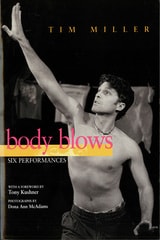
Body Blows
Six PerformancesTim Miller
University of Wisconsin Press, 2002
Hailed for his humor and passion, the internationally acclaimed performance artist Tim Miller has delighted, shocked, and emboldened audiences all over the world. Body Blows gathers six of Miller’s best-known performances that chart the sexual, spiritual, and political topography of his identity as a gay man: Some Golden States, Stretch Marks, My Queer Body, Naked Breath, Fruit Cocktail, and Glory Box. In Body Blows, Tim Miller leaps from the stage to the page, as each performance script is illustrated with striking photographs and accompanied by Miller’s notes and comment.
This book explores the tangible body blows—taken and given—of Miller’s life and times as explored in his performances: the queer-basher’s blow, the sweet blowing breath of a lover, the below-the-belt blow of HIV/AIDS, the psychic blows from a society that disrespects the humanity of lesbian and gay relationships. Miller’s performances are full of the put-up-your-dukes and stand-your-ground of such day-to-day blows that make up being gay in America
Branding Texas
Performing Culture in the Lone Star StateBy Leigh Clemons
University of Texas Press, 2008
Ask anyone to name an archetypal Texan, and you're likely to get a larger-than-life character from film or television (say John Wayne's Davy Crockett or J. R. Ewing of TV's Dallas) or a politician with that certain swagger (think LBJ or George W. Bush). That all of these figures are white and male and bursting with self-confidence is no accident, asserts Leigh Clemons. In this thoughtful study of what makes a "Texan," she reveals how Texan identity grew out of the history—and, even more, the myth—of the heroic deeds performed by Anglo men during the Texas Revolution and the years of the Republic and how this identity is constructed and maintained by theatre and other representational practices.
Clemons looks at a wide range of venues in which "Texanness" is performed, including historic sites such as the Alamo, the battlefield at Goliad, and the San Jacinto Monument; museums such as the Bob Bullock Texas State History Museum; seasonal outdoor dramas such as Texas! at Palo Duro Canyon; films such as John Wayne's The Alamo and the IMAX's Alamo: The Price of Freedom; plays and TV shows such as the Tuna trilogy, Dallas, and King of the Hill; and the Cavalcade of Texas performance at the 1936 Texas Centennial. She persuasively demonstrates that these performances have created a Texan identity that has become a brand, a commodity that can be sold to the public and even manipulated for political purposes.

Brecht in L.A.
Rick Mitchell
Intellect Books, 1995
Additionally, Brecht in L.A., winner of the 2002 SWTA National New Play Contest (US), is already a critically acclaimed play, which suggests that the work has the potential to be widely (and successfully) produced. And such productions will enhance the marketability of the book. A play influenced by Brecht is, in itself, not unique, since many leading, contemporary dramatists--such as Caryl Churchill, Edward Bond, Tony Kushner, Heiner Muller, and Howard Barker--have been affected by Brechtian dramaturgy. But a Brechtian-influenced play with Brecht as the lead character is unique. The play represents the only dramatic work in English which features Brecht himself as the title character.
Brecht in L.A., centering on Brecht while adapting/critiquing Brechtian dramatic form, also provides a unique opportunity for the instructor who is teaching Brechtian theatre since--with just one text (which will includes endnotes and appendices)--the instructor can cover epic theatre, the "Brecht debate," Brecht's biography, and contradictions between Brecht's theatrical practices and his everyday life.
The book's wide-ranging audience will include theatre artists; playgoers; students of drama, theatre, English, and performance studies; scholars; and readers interested in Brecht, Hollywood, and/or biography. Brecht in L.A. will also be an important addition to the considerable collections of books about Brecht which are carried by countless libraries.
British and French Television Drama
Innovation and Change in the 1950s and 1960sJoy Leman
Intellect Books, 2026
The era after World War II marked a formative moment for television drama in France and Britain—a time of technological change, social transformation, and new possibilities for innovation in communication systems. Although the two countries developed distinct broadcasting cultures, this book reveals striking similarities in the intentions and achievements of socially conscious communication practitioners.
Drawing on cross-boundary comparison, the book uncovers the internal struggles within the French and British institutions that controlled broadcasting. It shows how creative initiatives with a social class perspective were able to break through the dense fabric of institutional control before bureaucratic structures fully solidified. The study offers a unique view of the active engagement and political judgment of writers, editors, producers, and directors who, though facing managerial skepticism and at times direct interference, persisted in reaching rapidly expanding audiences.
Combining historical contextual research, detailed case studies, and first-hand practitioner insights, the book illuminates the personal and political dimensions of television drama production in both nations. In doing so, it also speaks to contemporary debates, addressing current threats to public broadcasting from political and commercial pressures worldwide.
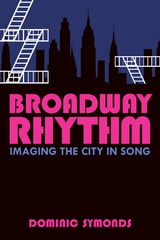
Broadway Rhythm
Imaging the City in SongDominic Symonds
University of Michigan Press, 2017
Through musicological analyses of works by Gershwin, Bernstein, Copland, Sondheim and others, the author proposes that performance cartography is a versatile methodology for urban theory, and establishes a methodological approach that uses the idea of the map in three ways: as an impetus, a metaphor, and a tool for exploring the city.
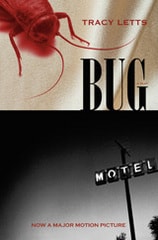
Bug
A PlayTracy Letts
Northwestern University Press, 2007
Tracy Letts's tale of love, paranoia, and government conspiracy is a thought-provoking psycho-thriller that mixes terror and laughter at a fever pitch.
This dark comedy takes place in a seedy motel room outside Oklahoma City, where Agnes, a drug-addled cocktail waitress, is hiding from her ex-con ex-husband. Her lesbian biker friend R.C. introduces her to Peter, a handsome drifter who might be an AWOL Gulf War veteran. They soon begin a relationship that takes place almost entirely within the increasingly claustrophobic confines of her motel room. Peter begins to rant about the war in Iraq, UFOs, the Oklahoma City bombings, cult suicides, and then secret government experiment on soldiers, of which he believes he is a victim. His delusions infect Agnes and the tension mounts as mysterious strangers appear at their door, past events haunt them at every turn and they are attacked by real bugs.
Building Your Play
Theory and Practice for the Beginning PlaywrightDavid Rush
Southern Illinois University Press, 2010
David Rush takes beginning playwrights through the first draft of a play and deep into the revision process. Drawing on examples from such classics as Othello and The Glass Menagerie, Rush provides detailed models for writers to evaluate their work for weaknesses and focus on the in-depth development of their plays.
Rush encourages writers to make sure their plays are clear and focused. He shows how to keep plays dramatically compelling and offers ways to avoid common mistakes that make them dull, confusing, or ineffective. He then distills the essence of traditional revision into key questions and discusses frequently overlooked tools, terms, and strategies that go beyond established methods of evaluation.
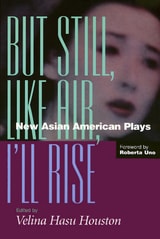
But Still Like Air
edited by Velina Hasu Houston, foreword by Roberta Uno
Temple University Press, 1997
What are Asian American plays about? Family conflicts, sexuality, social upheaval, betrayal ... the stuff of all drama. Whether the characters are a middle-aged Taiwanese woman who is married to an Irish American and who dreams of opening a Chinese restaurant, a Chinese American female bond trader trying to survive a corporate takeover, or an ABC (American Born Chinese) gay man whose lover has AIDS, their Asian-ness is only a part of their story.
As a playwright, Houston is keenly aware of the rigid formulas that often exclude writers of color and women women writers from mainstream theater. But Still, Like air, I'll Rise brings forth vibrant new work that challenges producers and audiences to broaden their expectations, to attend to the unfamiliar voices that expresses the universal and particular vision of Asian American playwrights.

Butterfly sleep
Kim Kyung Ju
Tupelo Press, 2019