Results by title
681 books match the query 'English language' and 18 start with b
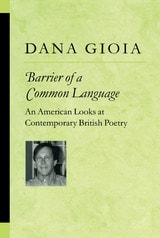
Barrier of a Common Language
An American Looks at Contemporary British PoetryDana Gioia
University of Michigan Press, 2003
Basque-English, English-Basque Dictionary
Gorka Aulestia
University of Nevada Press, 1992
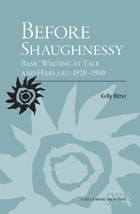
Before Shaughnessy
Basic Writing at Yale and Harvard, 1920-1960Kelly Ritter
Southern Illinois University Press, 2009
In Before Shaughnessy: Basic Writing at Yale and Harvard, 1920–1960, Kelly Ritter uses materials from the archives at Harvard and Yale and contemporary theories of writing instruction to reconsider the definition of basic writing and basic writers within a socio-historical context. Ritter challenges the association of basic writing with only poorly funded institutions and poorly prepared students.
Using Yale and Harvard as two sample case studies, Ritter shows that basic writing courses were alive and well, even in the Ivy League, in the early twentieth century. She argues not only that basic writers exist across institutional types and diverse student populations, but that the prevalence of these writers has existed far more historically than we generally acknowledge.
Uncovering this forgotten history of basic writing at elite institutions, Ritter contends that the politics and problems of the identification and the definition of basic writers and basic writing began long before the work of Mina Shaughnessy in Errors and Expectations and the rise of open admissions. Indeed, she illustrates how the problems and politics have been with us since the advent of English A at Harvard and the heightened consumer-based policies that resulted in the new admissions criteria of the early twentieth-century American university. In order to recognize this long-standing reality of basic writing, we must now reconsider whether the nearly standardized, nationalized definition of “basic” is any longer a beneficial one for the positive growth and democratic development of our first-year writing programs and students.
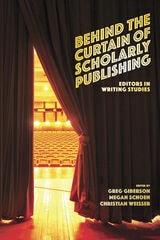
Behind the Curtain of Scholarly Publishing
Editors in Writing StudiesGreg Giberson
Utah State University Press, 2022
Each chapter in the collection examines the unique experiences and individual contributions of its authors during their time as editors, offering advice to scholars and potential editors on how to navigate the publication process and understand editorial roles. The contributors provide multiple perspectives on the growth, transformation, and, in some cases, founding of some of the most influential publishing venues in writing studies.
The personal and historical narratives, along with the unique perspectives and insightful analyses of the individual authors in Behind the Curtain of Scholarly Publishing, offer needed transparency and context to what has historically been an opaque, yet inevitable and consequential, part of academic life. This volume will help researchers in the field understand the publishing process.
Contributors: Cheryl Ball, David Bartholomae, Charles Bazerman, Jean Ferguson Carr, Douglas Eyman, Muriel Harris, Byron Hawk, Alice Horning, Paul Kei Matsuda, Laura Micciche, Mike Palmquist, Michael Pemberton, Malea Powell, Kelly Ritter, Victor Villanueva, Victor Vitanza, Kathleen Blake Yancey
Better Practices
Exploring the Teaching of Writing in Online and Hybrid SpacesAmy Cicchino
University Press of Colorado, 2024
Between Talk And Teaching
Reconsidering the Writing ConferenceLaurel Johnson Black
Utah State University Press, 1998
The teacher-student conference is standard in the repertoire of teachers at all levels. Because it's a one-to-one encounter, teachers work hard to make it comfortable; but because it's a pedagogical moment, they hope that learning occurs in the encounter, too. The literature in this area often suggests that a conference is a conversation, but this doesn't account for a teacher's need to use it pedagogically. Laurel Johnson Black's new book explores the conflicting meanings and relations embedded in conferencing and offers a new theoretical understanding of the conference along with practical approaches to conferencing more effectively with students.
Analyzing taped conferences of several different teachers and students, Black considers the influence that power, gender, and culture can have on a conference. She draws on sociolinguistic theory, as well as critical theory in composition and rhetoric, to build an understanding of the writing conference as an encounter somewhere between conversation and the classroom. She finds neither the conversation model nor versions of the master-apprentice model satisfactory. Her approach is humane, student-centered, and progressive, but it does not ignore the valid pedagogical purposes a teacher might have in conferencing. Between Talk and Teaching will be a valuable addition to the professional library of writing teachers and writing program administrators.
Beyond Postprocess
Sidney I. Dobrin, J.A. Rice, and Michael Vastola
Utah State University Press, 2011
Beyond Postprocess offers a vigorous, provocative discussion of postprocess theory in its contemporary profile. Fueled by something like a fundamental refusal to see writing as self-evident, reducible, and easily explicable, the contributors rethink postprocess, suggesting that there is no easily defined moment or method that could be called postprocess. Instead, each contribution to this collection provides a unique and important example of what work beyond postprocess could be.
Since postprocess theory in writing studies first challenged traditional conceptions of writing and the subject who writes, developments there have continued to push theorists of writing in a number of promising theoretical directions. Spaces for writing have arisen that radically alter ideological notions of space, rational thinking, intellectual property and politics, and epistemologies; and new media, digital, and visual rhetorics have increasingly complicated the scene, as well.
Contributors to Beyond Postprocess reconsider writing and writing studies through posthumanism, ecology, new media, materiality, multimodal and digital writing, institutional critique, and postpedagogy. Through the lively and provocative character of these essays, Beyond Postprocess aims to provide a critical site for nothing less than the broad reevaluation of what it means to study writing today. Its polyvocal considerations and conclusions invest the volume with a unique potential to describe not what that field of study should be, but what it has the capacity to create. The central purpose of Beyond Postprocess is to unleash this creative potential.
Beyond the Archives
Research as a Lived ProcessEdited by Gesa E. Kirsch and Liz Rohan Foreword by Lucille M. Schultz
Southern Illinois University Press, 2008
This collection of highly readable essays reveals that research is not restricted to library archives. When researchers pursue information and perspectives from sources beyond the archives—from existing people and places— they are often rewarded with unexpected discoveries that enrich their research and their lives.
Beyond the Archives: Research as a Lived Process presents narratives that demystify and illuminate the research process by showing how personal experiences, family history, and scholarly research intersect. Editors Gesa E. Kirsch and Liz Rohan emphasize how important it is for researchers to tap into their passions, pursuing research subjects that attract their attention with creativity and intuition without limiting themselves to traditional archival sources and research methods.
Eighteen contributors from a number of disciplines detail inspiring research opportunities that led to recently published works, while offering insights on such topics as starting and finishing research projects, using a wide range of types of sources and methods, and taking advantage of unexpected leads, chance encounters and simple clues. In addition, the narratives trace the importance of place in archival research, the parallels between the lives of research subjects and researchers, and explore archives as sites that resurrect personal, cultural, and historical memory.
Beyond the Archives sheds light on the creative, joyful, and serendipitous nature of research, addressing what attracts researchers to their subjects, as well as what inspires them to produce the most thorough, complete, and engaged scholarly work. This timely and essential volume supplements traditional-method textbooks and effectively models concrete practices of retrieving and synthesizing information by professional researchers.
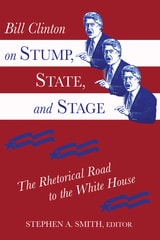
Bill Clinton on Stump, State, and Stage
The Rhetorical Road to the White HouseStephen A. Smith
University of Arkansas Press, 1994
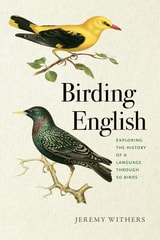
Birding English
Exploring the History of a Language Through 50 BirdsJeremy Withers
University of Iowa Press, 2026
Black Identity
Rhetoric, Ideology, and Nineteenth-Century Black NationalismDexter B. Gordon
Southern Illinois University Press, 2006
Exploring the role of rhetoric in African American identity and political discourse
Dexter B. Gordon’s Black Identity: Rhetoric, Ideology, and Nineteenth-Century Black Nationalism explores the problem of racial alienation and the importance of rhetoric in the formation of black identity in the United States. Faced with alienation and disenfranchisement as a part of their daily experience, African Americans developed collective practices of empowerment that cohere as a constitutive rhetoric of black ideology. Exploring the origins of that rhetoric, Gordon reveals how the ideology of black nationalism functions in contemporary African American political discourse.
Rooting his study in the words and works of nineteenth-century black abolitionists such as Maria Stewart, David Walker, and Henry Garnet, Gordon explores the rapprochement between rhetorical theory, race, alienation, and the role of public memory in identity formation. He argues that abolitionists used language in their speeches, pamphlets, letters, petitions, and broadsides that established black identity in ways that would foster liberation and empowerment. The arguments presented here constitute the only sustained treatment of nineteenth-century black activists from a rhetorical perspective.
Gordon demonstrates the pivotal role of rhetoric in African American efforts to create a viable public voice. Understanding nineteenth-century black alienation—and its intersection with twentieth-century racism—is crucial to understanding the continued sense of alienation that African Americans express about their American experience. Gordon explains how the ideology of black nationalism disciplines and describes African American life for its own ends, exposing a central piece of the ideological struggle for the soul of America. The book is both a platform for further discussion and an invitation for more voices to join the discourse as we search for ways to comprehend the sense of alienation experienced and expressed by African Americans in contemporary society.

Black Street Speech
Its History, Structure, and SurvivalBy John Baugh
University of Texas Press, 1983
In the minds of many, black street speech—the urban dialect of black Americans—bespeaks illiteracy, poverty, and ignorance. John Baugh challenges those prejudices in this brilliant new inquiry into the history, linguistic structure, and survival within white society of black street speech. In doing so, he successfully integrates a scholarly respect for black English with a humanistic approach to language differences that weds rigor of research with a keen sense of social responsibility.
Baugh's is the first book on black English that is based on a long-term study of adult speakers. Beginning in 1972, black men and women in Los Angeles, Philadelphia, Chicago, Austin, and Houston were repeatedly interviewed, in varied social settings, in order to determine the nature of their linguistic styles and the social circumstances where subtle changes in their speech appear. Baugh's work uncovered a far wider breadth of speaking styles among black Americans than among standard English speakers. Having detailed his findings, he explores their serious implications for the employability and education of black Americans.
Black Street Speech is a work of enduring importance for educators, linguists, sociologists, scholars of black and urban studies, and all concerned with black English and its social consequences.
Book Of The Incipit
Beginnings in the Fourteenth CenturyD. Vance Smith
University of Minnesota Press, 2001
An intriguing evaluation of the concept of beginnings in the medieval period.
Medieval Studies/Literary Theory
An intriguing evaluation of the concept of beginnings in the medieval period. In the first book to examine one of the most peculiar features of one of the greatest and most perplexing poems of England’s late Middle Ages-the successive attempts of Piers Plowman to begin, and to keep beginning-D. Vance Smith compels us to rethink beginning, as concept and practice, in both medieval and contemporary terms.The problem of beginning was invested with increasing urgency in the fourteenth century, imagined and grappled with in the courts, the churches, the universities, the workshops, the fields, and the streets of England. The Book of the Incipit reveals how Langland’s poem exemplifies a widespread interest in beginning in the thirteenth and fourteenth centuries, an interest that appears in such divergent fields as the physics of motion, the measurement of time, logic, grammar, rhetoric, theology, book production, and insurrection. Smith offers a theoretical understanding of beginning that departs from the structuralisms of Edward Said and the traditional formalisms of A. D. Nuttall and most medievalist and modernist treatments of closure. Instead, he conceives a work’s beginning as a figure of the beginning of the work itself, the inception of language as the problem of beginning to which we continue to return.ISBN 0-8166-3760-1 Cloth/jacket £24.50 $34.95x296 Pages 5 7/8 x 9 MayMedieval Cultures Series, volume 28Translation Inquiries: University of Minnesota Press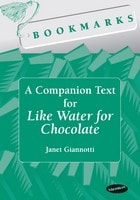
Bookmarks
A Companion Text for Like Water for ChocolateJanet Giannotti
University of Michigan Press, 1999
A Companion TextforLike Water for Chocolate is made up of six units, each covering two chapters in the novel. Every unit contains a preview section, free writing exercises, a short glossary (to help with Spanish words), comprehension quizzes, vocabulary exercises and summarizing exercises, a section devoted to response journals, and topics for discussion. The "Beyond the Novel" section includes facts about U.S. and Mexican history and folk tales. Illustrations throughout the book help to engage students and offer visual support for reading comprehension.
Breaking Up (at) Totality
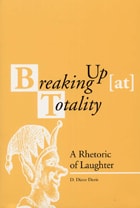
A Rhetoric of LaughterD. Diane Davis
Southern Illinois University Press, 2000
Rhetoric and composition theory has shown a renewed interest in sophistic countertraditions, as seen in the work of such "postphilosophers" as Jacques Derrida, Michel Foucault, and Hélène Cixous, and of such rhetoricians as Susan Jarratt and Steven Mailloux. As D. Diane Davis traces today’s theoretical interest to those countertraditions, she also sets her sights beyond them.
Davis takes a “third sophistics” approach, one that focuses on the play of language that perpetually disrupts the “either/or” binary construction of dialectic. She concentrates on the nonsequential third—excess—that overflows language’s dichotomies. In this work, laughter operates as a trope for disruption or breaking up, which is, from Davis’s perspective, a joyfully destructive shattering of our confining conceptual frameworks.
Bridging the Multimodal Gap
From Theory to PracticeSantosh Khadka
Utah State University Press, 2018
After an introductory section reviewing the theory literature, chapters present research on implementing multimodal composition in diverse contexts. Contributors address starter subjects like using comics, blogs, or multimodal journals; more ambitious topics such as multimodal assignments in online instruction or digital story telling; and complex issues like assessment, transfer, and rhetorical awareness.
Bridging the Multimodal Gap translates theory into practice and will encourage teachers, including WPAs, TAs, and contingent faculty, to experiment with multiple modes of communication in their projects.
Contributors: Sara P. Alvarez, Steven Alvarez, Michael Baumann, Joel Bloch, Aaron Block, Jessie C. Borgman, Andrew Bourelle, Tiffany Bourelle, Kara Mae Brown, Jennifer J. Buckner, Angela Clark-Oates, Michelle Day, Susan DeRosa, Dànielle Nicole DeVoss, Stephen Ferruci, Layne M. P. Gordon, Bruce Horner, Matthew Irwin, Elizabeth Kleinfeld, Ashanka Kumari, Laura Sceniak Matravers, Jessica S. B. Newman, Mark Pedretti, Adam Perzynski, Breanne Potter, Caitlin E. Ray, Areti Sakellaris, Khirsten L. Scott, Rebecca Thorndike-Breeze, Jon Udelson, Shane A. Wood, Rick Wysocki, Kathleen Blake Yancey
Building Writing Center Assessments That Matter
Ellen Schendel and William J. Macauley, Jr.
Utah State University Press, 2012
No less than other divisions of the college or university, contemporary writing centers find themselves within a galaxy of competing questions and demands that relate to assessment—questions and demands that usually embed priorities from outside the purview of the writing center itself. Writing centers are used to certain kinds of assessment, both quantitative and qualitative, but are often unprepared to address larger institutional or societal issues. In Building Writing Center Assessments that Matter, Schendel and Macauley start from the kinds of assessment strengths already in place in writing centers, and they build a framework that can help writing centers satisfy local needs and put them in useful dialogue with the larger needs of their institutions, while staying rooted in writing assessment theory.
The authors begin from the position that tutoring writers is already an assessment activity, and that good assessment practice (rooted in the work of Adler-Kassner, O'Neill, Moore, and Huot) already reflects the values of writing center theory and practice. They offer examples of assessments developed in local contexts, and of how assessment data built within those contexts can powerfully inform decisions and shape the futures of local writing centers. With additional contributions by Neal Lerner, Brian Huot and Nicole Caswell, and with a strong commitment to honoring on-site local needs, the volume does not advocate a one-size-fits-all answer. But, like the modeling often used in a writing consultation, examples here illustrate how important assessment principles have been applied in a range of local contexts. Ultimately, Building Writing Assessments that Matter describes a theory stance toward assessment for writing centers that honors the uniqueness of the writing center context, and examples of assessment in action that are concrete, manageable, portable, and adaptable.
Burnin' Daylight
Building a Principle-Driven Writing ProgramRyan J. Dippre
Utah State University Press, 2024
WPAs face a range of challenges on a regular basis: organizing class schedules, leading professional learning events, conducting program assessments, responding to student needs, meeting with deans and provosts, and more. Additionally, WPAs need to learn about and direct their programs strategically when considering the kind of program they currently have, the sort of program they envision, and how they can transition from one to another. Burnin’ Daylight acts as a roadmap for IRB-approved research and provides WPAs—specifically, new and returning WPAs—with a detailed yet flexible plan for understanding the inner workings of a writing program and how to develop a future trajectory for it.
Burnin’ Daylight is for writing program administrators of all experience levels and other administrators interested in taking a “principled practices” approach to their work.