Results by title
438 books match the query 'Hispanic & Latino' and 31 start with b
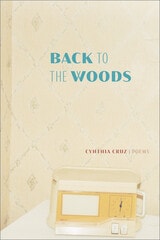
Back to the Woods
Cynthia Cruz
Four Way Books, 0
National Book Critics Circle Award Winner Cynthia Cruz reevaluates the paradox of the death drive in her eighth collection of poetry, Back to the Woods. Could it be that in ceaselessly snuffing ourselves out we are, in fact, trying to survive? In “Shine,” Cruz’s speaker attests that “if [she] had a home, it would be // a still in a film / where the sound / got jammed.” This book inhabits the silence of the empty orchestra pit, facing “dread, and its many / instruments of sorrow.” The quiet asks, “Did you love this world / and did this world / not love you?” We return to the site of our suffering, we perform the symphony of all our old injuries, to master what has broken us. To make possible the future, we retreat into the past. “I don’t know / the ending. // I don’t know anything,” our speaker insists, but she follows the wind’s off-kilter song of “winter / in the pines” and “the dissonance / of siskins.” Cruz heeds the urgency of our wandering, the mandate that we must get back to the woods, not simply for the forest to devour us — she recognizes in the oblivion “flooding out / from its spiral branches” an impossible promise. At the tree line, we might vanish to begin again.
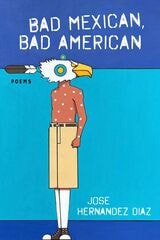
Bad Mexican, Bad American
PoemsJose Hernandez Diaz
Acre Books, 2024
In Bad Mexican, Bad American, the minimalist, working-class aesthetic of a “disadvantaged Brown kid” takes wing in prose poems that recall and celebrate that form’s ties to Surrealism. With influences like Alberto Ríos and Ray Gonzalez on one hand, and James Tate and Charles Baudelaire on the other, the collection spectacularly combines “high” art and folk art in a way that collapses those distinctions, as in the poem “My Date with Frida Kahlo”: “Frida and I had Cuban coffee and then vegetarian tacos. We sipped on mescal and black tea. At the end of the night, following an awkward silence during a conversation on Cubism, we kissed for about thirty minutes beneath a protest mural by David Alfaro Siqueiros.”
Bad Mexican, Bad American demonstrates how having roots in more than one culture can be both unsettling and rich: van Gogh and Beethoven share the page with tattoos, graffiti, and rancheras; Quetzalcoatl shows up at Panda Express; a Mexican American child who has never had a Mexican American teacher may become that teacher; a parent’s “broken” English is beautiful and masterful. Blending reality with dream and humility with hope, Hernandez Diaz contributes a singing strand to the complex cultural weave that is twenty-first-century poetry.
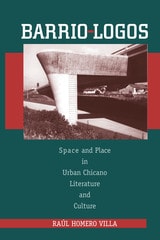
Barrio-Logos
Space and Place in Urban Chicano Literature and CultureBy Raúl Homero Villa
University of Texas Press, 2000
Struggles over space and resistance to geographic displacement gave birth to much of Chicano history and culture. In this pathfinding book, Raúl Villa explores how California Chicano/a activists, journalists, writers, artists, and musicians have used expressive culture to oppose the community-destroying forces of urban renewal programs and massive freeway development and to create and defend a sense of Chicano place-identity.
Villa opens with a historical overview that shows how Chicano communities and culture have grown in response to conflicts over space ever since the United States' annexation of Mexican territory in the 1840s. Then, turning to the work of contemporary members of the Chicano intelligentsia such as Helena Maria Viramontes, Ron Arias, and Lorna Dee Cervantes, Villa demonstrates how their expressive practices re-imagine and re-create the dominant urban space as a community enabling place. In doing so, he illuminates the endless interplay in which cultural texts and practices are shaped by and act upon their social and political contexts.
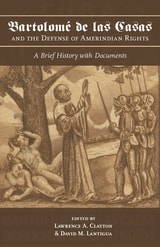
Bartolomé de las Casas and the Defense of Amerindian Rights
A Brief History with DocumentsEdited by Lawrence A. Clayton and David M. Lantigua
University of Alabama Press, 2020
The writings of a sixteenth-century advocate who challenged empire in defense of Indigenous peoples.
With the exception of Christopher Columbus, Bartolomé de las Casas is arguably the most notable figure of the Encounter Age. He is remembered principally as the creator of the Black Legend, as well as the protector of American Indians. He was one of the pioneers of the human rights movement, and a Christian activist who invoked law and Biblical scripture to challenge European colonialism in the great age of the Encounter. He was also one of the first and most thorough chroniclers of the conquest, and a biographer who saved the diary of Columbus’s first voyage for posterity by transcribing it in his History of the Indies before the diary was lost.
Bartolomé de las Casas and the Defense of Amerindian Rights: A Brief History with Documents provides the most wide-ranging and concise anthology of Las Casas’s writings, in translation, ever made available. It contains not only excerpts from his most well-known texts, but also his largely unavailable writings on political philosophy and law, and addresses the underappreciated aspects of his thought. Fifteen of the twenty-six documents are entirely new translations of Las Casas’s writings, a number of them appearing in English for the first time.
This volume focuses on his historical, political, and legal writings that address the deeply conflicted and violent sixteenth-century encounter between Europeans and indigenous peoples of the Americas. It also presents Las Casas as a more comprehensive and systematic philosophical and legal thinker than he is typically given credit for. The introduction by Lawrence A. Clayton and David M. Lantigua places these writings into a synthetic whole, tracing his advocacy for indigenous peoples throughout his career. By considering Las Casas’s ideas, actions, and even regrets in tandem, readers will understand the historical dynamics of Spanish imperialism more acutely within the social-political context of the times.
Big Familia
A NovelTomas Moniz
Acre Books, 2019
Upon the unexpected death of one of the bar’s regulars, Juan is sent reeling, and a series of upheavals follow as he both seeks and spurns intimacy, pondering the legacy of distant parents and a failed marriage and grappling with his sexuality—all the while cycling and dating, drinking at Nicks Lounge, and parenting a determined and defiant child-become-woman.
When his incarcerated father dies and Stella reveals she’s pregnant, Juan is forced to examine the emotional bonds that both hold and hinder him, to reassess his ideas of commitment, of friendship, of love. His encounters with various characters—his mother, his ex-wife, a middle-aged punker, an aspiring acupuncturist, a dapper veteran—lead Juan to the realization that he himself must change to thrive.
This is a story of making family and making mistakes, of rending and of mending. As a Latinx queer father with a mixed-race daughter, Juan exemplifies the ways identity connects and divides us. With wit, insight, and tenderness, Big Familia explores the complexities of desire, devotion, and the mysteries of the heart.
Black Box Syndrome
Jose-Luis Moctezuma
Omnidawn, 2023
Jose-Luis Moctezuma’s Black Box Syndrome is a series of poems—or “black boxes”—based on black hexagrams in the I Ching, an ancient Chinese divination text. Following the aleatoric tradition popularized by the surrealists and extended by the work of John Cage and Jackson Maclow, these poems cast their lenses on the hazards of the incessant financialization of everyday life. Synthesizing chance-operational aesthetics with Aztec anatomical science, conspiracy theory with systems theory, and the black box model with the concept of the “influencing machine,” Black Box Syndrome explores tensions between lyric excess and digital compaction in the age of pandemic. Over and against the corrosive world-shrinking effects of Wall Street risk management and futures trading, the black boxes in this book propose a counter-divination that distorts, deranges, and decolonizes the logic of empire.
Bless Me, Papi
A NovelAyendy Bonifacio
Northwestern University Press, 2026
A coming-of-age tale of a young Dominican American boy facing a grave loss and a feathered phantom
Between the looming buildings of Brooklyn, a young Dominican American boy only ever called mijo by his family has just lost his father to brain cancer. In the wake of his grief, he begins to see his deceased father take the form of a pigeon and ghost, acting as protector and advisor in moments of duress and confusion. Determined to find out the truth behind his father’s appearances, he sets out on the streets of Brooklyn with his outspoken friend Naño, and in the hills of the Dominican Republic with his cousin Matias, in search of answers, only to discover more ghostly apparitions and inexplicable occurrences. In a world of lost things and in-betweens, the grief-stricken son must choose whether he can bear to let go of his father or accept the consequences of what we let haunt us.
Blood Lines
Myth, Indigenism, and Chicana/o LiteratureBy Sheila Marie Contreras
University of Texas Press, 2008
2009 — Runner-up, Modern Language Association Prize in United States Latina and Latino and Chicana and Chicano Literary and Cultural Studies
Blood Lines: Myth, Indigenism, and Chicana/o Literature examines a broad array of texts that have contributed to the formation of an indigenous strand of Chicano cultural politics. In particular, this book exposes the ethnographic and poetic discourses that shaped the aesthetics and stylistics of Chicano nationalism and Chicana feminism. Contreras offers original perspectives on writers ranging from Alurista and Gloria Anzaldúa to Lorna Dee Cervantes and Alma Luz Villanueva, effectively marking the invocation of a Chicano indigeneity whose foundations and formulations can be linked to U.S. and British modernist writing.
By highlighting intertextualities such as those between Anzaldúa and D. H. Lawrence, Contreras critiques the resilience of primitivism in the Mexican borderlands. She questions established cultural perspectives on "the native," which paradoxically challenge and reaffirm racialized representations of Indians in the Americas. In doing so, Blood Lines brings a new understanding to the contradictory and richly textured literary relationship that links the projects of European modernism and Anglo-American authors, on the one hand, and the imaginary of the post-revolutionary Mexican state and Chicano/a writers, on the other hand.
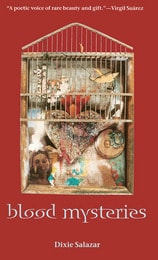
Blood Mysteries
Dixie Salazar
University of Arizona Press, 2003
Through images brutally honest and disarmingly off-center, Dixie Salazar explores the hidden lives of everyday people, objects, and experiences—and their transformation in the hidden realms of the heart. Charting furious descents into the darkest crevices of our souls, Salazar paints for us a lost city that exists below our mundane consciousness. Blood Mysteries is a tribute to lost souls, from a suicidal mental patient who doesn't believe she exists—"melting out of a landscape spotted with shadows, washing her hands in an empty basin of light"—to Marilyn Monroe, victim even in the morgue. In finely tuned lyricism showing an uncanny grasp of frayed lives, she gives flesh and vitality to women normally encountered only as statistics. The incarcerated, the homeless, the hopeless. Missing young girls who turn up violated and murdered.
Salazar presents us with blood mysteries not only of women, but of family as well. In poems invoking her dual heritage, she explores the identity crises brought on by having a Spanish father and a mother from the deep South, leaving her a product of American meltdown with a predisposition to check "other" for race on applications. "Other can be a place," she reminds us, "a residence for those of us without / papers, where halos of lightning bugs / swarm the rickety family tree." Salazar writes with toughness and grit "for all the shipwrecked saints / and wretches among us." But beneath the surface of words sometimes gritty, sometimes playful, lies a testament to the power of empathy, giving voice to those whose voices have been stifled and offering hope for those who have found none. Blood Mysteries is a forceful prayer for the disenfranchised that offers not merely hope, but transcendence.
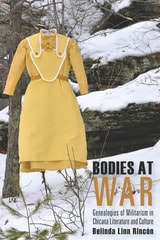
Bodies at War
Genealogies of Militarism in Chicana Literature and CultureBelinda Linn Rincón
University of Arizona Press, 2017
Bodies at War examines the rise of neoliberal militarism from the early 1970s to the present and its transformation of political, economic, and social relations. It charts neoliberal militarism’s impact on democratic practices, economic policies, notions of citizenship, race relations, and gender norms by focusing on how these changes affect the Chicana/o community and, more specifically, on how it shapes and is shaped by Chicana bodies. The book raises important questions about the cultural legacies of war and the gendering of violence—topics that reach across multiple disciplinary fields of inquiry, including cultural and media studies. It draws attention to the relationship between war and society, to neoliberal militarism’s destructive social impact, and to the future of Latina soldiering. Through Chicana art, activism, and writing, Rincón offers a visionary foundation for an antiwar feminist politic.
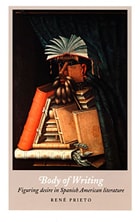
Body of Writing
Figuring Desire in Spanish American LiteratureRené Prieto
Duke University Press, 2000
Healthy, invalid, lustful, and confined bodies—as portrayed by Julio Cortázar, Guillermo Cabrera Infante, Gabriel García Márquez, Severo Sarduy, Rosario Castellanos, and Tununa Mercado—become evidence for Roland Barthes’s contention that works of fiction are “anagrams of the body.” Claiming that an author’s intentions can be uncovered by analyzing “the topography of a text,” Prieto pays particular attention not to the actions or plots of these writers’ fiction but rather to their settings and characterizations. In the belief that bodily traces left on the page reveal the motivating force behind a writer’s creative act, he explores such fictional themes as camouflage, deterioration, defilement, entrapment, and subordination. Along the way, Prieto reaches unexpected conclusions regarding topics that include the relationship of the female body to power, male and female transgressive impulses, and the connection between aggression, the idealization of women, and anal eroticism in men.
This study of how authors’ longings and fears become embodied in literature will interest students and scholars of literary and psychoanalytic criticism, gender studies, and twentieth-century and Latin American literature.
Border Biomes
Ecological Imaginaries of Mexico's EdgesEmily Celeste Vázquez Enríquez
Vanderbilt University Press, 2025
This book is freely available in an open-access edition thanks to the generous support by the University of California Davis Library.
What effect do heavily fortified national borders have on the natural environments that surround them? In Border Biomes, Emily Celeste Vázquez Enríquez explores this question by analyzing contemporary Mexican, Latinx, and Indigenous literature that has tried to highlight the human and ecological toll of Mexico’s borders with the United States and Guatemala. By challenging the very premise of borders as permanent, immovable boundaries, she shows how novelists and poets in Mexico and the United States have tried to represent and understand the vast social, political, and ecological harm caused by these constructions. She argues that the environmental destruction that borders create is inseparable from state‑sanctioned, anti‑immigrant racial violence. To do this, she structures the book around three main biomes: rivers, deserts, and forests. Within each chapter, Vázquez Enríquez considers how authors such as Dolores Dorantes, Natalie Diaz, and Ofelia Zepeda have drawn upon alternative Indigenous epistemologies and forms of representation to register the sweeping damage of bordering regimes on the Colorado River, the Southwest Desert, and the Selva El Petén, and other biomes. By critically analyzing the work of these US and Mexican writers, she contests traditional interpretations of Mexican literature as nationally bounded and instead proposes an expansive view of “Mexican literature.” More fundamentally, Border Biomes suggests literature's potential to create new ecological realities and challenge the naturalization of borders and the ecological violence that they provoke.
Border Confluences
Borderland Narratives from the Mexican War to the PresentRosemary A. King
University of Arizona Press, 2004
Border Renaissance
The Texas Centennial and the Emergence of Mexican American LiteratureBy John Morán González
University of Texas Press, 2009
The Texas Centennial of 1936, commemorated by statewide celebrations of independence from Mexico, proved to be a powerful catalyst for the formation of a distinctly Mexican American identity. Confronted by a media frenzy that vilified "Meskins" as the antithesis of Texan liberty, Mexican Americans created literary responses that critiqued these racialized representations while forging a new bilingual, bicultural community within the United States. The development of a modern Tejana identity, controversies surrounding bicultural nationalism, and other conflictual aspects of the transformation from mexicano to Mexican American are explored in this study. Capturing this fascinating aesthetic and political rebirth, Border Renaissance presents innovative readings of important novels by María Elena Zamora O'Shea, Américo Paredes, and Jovita González. In addition, the previously overlooked literary texts by members of the League of United Latin American Citizens (LULAC) are given their first detailed consideration in this compelling work of intellectual and literary history.
Drawing on extensive archival research in the English and Spanish languages, John Morán González revisits the 1930s as a crucial decade for the vibrant Mexican American reclamation of Texas history. Border Renaissance pays tribute to this vital turning point in the Mexican American struggle for civil rights.
Border-Crosser with a Lamborghini Dream
Juan Felipe Herrera
University of Arizona Press, 1999
To the rhythm of “The Blue Eyed Mambo that Unveils My Lover’s Belly”and the sounds of the Last Mayan Acid rock band, Herrera races through the hallucinations of a nation that remains just outside of paradise. With dazzling poems that roar from the darkest corners of our minds toward an ecstatic celebration of the lushness of language, Border-Crosser with a Lamborghini Dream is a celebration of a world that is both sacred and cruel, a world of “Poesy Chicano style undone wild” by one of the most daring poets of our time.
Borderland Apocrypha
Anthony Cody
Omnidawn, 2019
Rather than a proposal for re-imagining the US/Mexico border, Cody’s collection is an avant-garde examination of how borderlands have remained occupied spaces, and of the necessity of liberation to usher the earth and its people toward healing. Part auto-historia, part docu-poetic, part visual monument, part myth-making, Borderland Apocrypha unearths history in order to work toward survival, reckoning, and the building of a future that both acknowledges and moves on from tragedies of the past.
Borderland Apocrypha won Omnidawn's 2018 1st/2nd Book Prize.
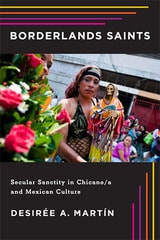
Borderlands Saints
Secular Sanctity in Chicano/a and Mexican CultureMartín, Desirée A
Rutgers University Press, 2013
Winner of the 2014 Latina/o Studies Section - LASA Outstanding Book Award
In Borderlands Saints, Desirée A. Martín examines the rise and fall of popular saints and saint-like figures in the borderlands of the United States and Mexico. Focusing specifically on Teresa Urrea (La Santa de Cabora), Pancho Villa, César Chávez, Subcomandante Marcos, and Santa Muerte, she traces the intersections of these figures, their devotees, artistic representations, and dominant institutions with an eye for the ways in which such unofficial saints mirror traditional spiritual practices and serve specific cultural needs.
Popular spirituality of this kind engages the use and exchange of relics, faith healing, pilgrimages, and spirit possession, exemplifying the contradictions between high and popular culture, human and divine, and secular and sacred. Martín focuses upon a wide range of Mexican and Chicano/a cultural works drawn from the nineteenth century to the present, covering such diverse genres as the novel, the communiqué, drama, the essay or crónica, film, and contemporary digital media. She argues that spiritual practice is often represented as narrative, while narrative—whether literary, historical, visual, or oral—may modify or even function as devotional practice.
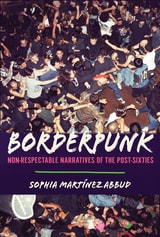
Borderpunk
Non-Respectable Narratives of the Post-SixtiesSophia Martínez Abbud
University of Arizona Press, 2027
The U.S.-Mexico border has long been a home to artists, poets, emos, and punks. In the clandestine undergrounds of borderlands cultural production, there lies an impulse to live below and beyond border surveillance technologies. This book is about the utopic stories that narrate this impulse and the punk literary scenes that facilitate these fabulations.
Using an innovative methodology of “scene-work”—a blend of literary analysis, queer theory, critical regionalism, and auto-ethnography—Borderpunk identifies, aggregates, and outlines the emergent genre of borderpunk cultural productions. Beginning with the post-1960s through the present, author Sophia Martínez Abbud examines how music, playlists, literature, art, and performance borderpunk narratives teach us to elide, undermine, and work against the border’s presumed authority. Through these narratives, readers become attuned to the anarchic sense of abjection that permeates the border regions and the kinds of punk subjectivities emerging from these sites of re-mediation.
Borderpunk offers scenes that refuse notions of respectability at different time periods, geographies, and scales. Following the mechanics of other narrative punk genres, such as cyberpunk or solarpunk, it sketches out the uses of “punk” as a way of being in border spaces—where abjection, relajo, and illegibility become useful tools that encourage us to divest from the norm, participate in horizontal community building, and imagine borders in radical new ways.
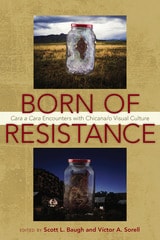
Born of Resistance
Cara a Cara Encounters with Chicana/o Visual CultureEdited by Scott L. Baugh and Víctor A. Sorell
University of Arizona Press, 2015
If Chicana/o culture was born of resistance amid assimilation and nationalistic forces, how has it evolved into the twenty-first century? This groundbreaking volume redresses the central idea of resistance in Chicana/o visual cultural expression through nine clustered discussions, each coordinating scholarly, critical, curatorial, and historical contextualizations alongside artist statements and interviews. Landmark artistic works—illustrations, paintings, sculpture, photography, film, and television—anchor each section. Contributors include David Avalos, Mel Casas, Ester Hernández, Nicholas Herrera, Luis Jiménez, Ellen Landis, Yolanda López, Richard Lou, Delilah Montoya, Laura Pérez, Lourdes Portillo, Luis Tapia, Chuy Treviño, Willie Varela, Kathy Vargas, René Yañez, Yvonne Yarbro-Bejarano, and more. Cara a cara, face-to-face, encounters across the collection reveal the varied richness of resistant strategies, movidas, as they position crucial terms of debate surrounding resistance, including subversion, oppression, affirmation, and identification.
The essays in the collection represent a wide array of perspectives on Chicana/o visual culture. Editors Scott L. Baugh and Víctor A. Sorell have curated a dialog among the many voices, creating an important new volume that redefines the role of resistance in Chicana/o visual arts and cultural expression.
Breathing Between the Lines
PoemsDemetria Martínez
University of Arizona Press, 1997
Weaving together threads of love and family, social conviction and activism, loss and renewal, Breathing between the Lines carries the reader deep inside the head and heart of a talented Chicana writer. Page by page, the journey is an exhilarating one. What we find at the end is up to us.
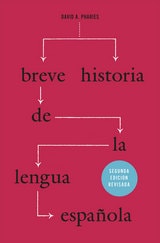
Breve historia de la lengua española
Segunda edición revisadaDavid A. Pharies
University of Chicago Press, 2015
La Breve historia de la lengua española se concentra en los cambios más importantes de la evolución de la lengua, evitando la jerga académica ininteligible y favoreciendo la claridad en las explicaciones. Por el camino, intenta dar respuesta a muchas de las preguntas que con frecuencia desconciertan a los hablantes nativos y no nativos: ¿Por qué se utiliza tú en algunos lugares y vos en otros? ¿Cómo surgió la pronunciación como fricativa interdental de la zeta castellana? ¿Por qué se dice la mesa pero el agua con un artículo que parece masculino?
David A. Pharies es un experto en el estudio de la historia y evolución del español, que goza de un reconocido prestigio en la escena internacional. Para actualizar esta segunda edición ha revisado en profundidad todos los aspectos de la evolución del español, incluido su desarrollo demográfico. El libro va dirigido a quienes tienen un conocimiento básico del español y desean aprender más sobre sus orígenes. También constituye una base ideal para emprender el estudio de cualquier aspecto de la lingüística histórica española y de la literatura medieval. Entretenida y accesible, la Breve historia de la lengua española es un gran viaje de descubrimiento en una presentación amena y sucinta.
Since its publication in 2007, A Brief History of the Spanish Language has become the leading introduction to the history of one of the world’s most widely spoken languages. Moving from the language’s Latin roots to its present-day forms, this concise book offers readers insights into the origin and evolution of Spanish, the historical and cultural changes that shaped it, and its spread around the world.
A Brief History of the Spanish Language focuses on the most important aspects of the development of the Spanish language, eschewing technical jargon in favor of straightforward explanations. Along the way, it answers many of the common questions that puzzle native and nonnative speakers alike, such as: Why do some regions use tú while others use vos? How did the th sound develop in Castilian? And why is it la mesa but el agua?
David A. Pharies, an internationally recognized expert on the history and development of Spanish, has updated this edition with new research on all aspects of the evolution of Spanish while adding current demographic information as well. This book is perfect for anyone with a basic understanding of Spanish and a desire to further explore its roots. It also provides an ideal foundation for further study in any area of historical Spanish linguistics and early Spanish literature. Both absorbing and accessible, A Brief History of the Spanish Language is a grand journey of discovery in a beautifully compact format.
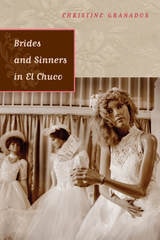
Brides and Sinners in El Chuco
Christine Granados
University of Arizona Press, 2006
In the border town of El Paso—better known to its Mexican American residents as El Chuco—dramas unfold in humdrum households every day as working-class men come home from their jobs and as their wives and children do their best to cope with life. Christine Granados now plumbs the heart of this community in fourteen startling stories, uncovering the dreams and secrets in which ordinary people sometimes lose themselves. Many fictional accounts of barrio life play up tradition and nostalgia; Brides and Sinners in El Chuco is a trip to the darker side. Here are memories of growing up in a place where innocence is always tempered by reality—true-to-life stories, told in authentic language, of young women, from preteens to twenty-somethings, learning to negotiate their way through troubled times and troubled families. In the award-winning story “The Bride,” a young girl recalls her sister as a perennial bride on Halloween, planning for her eventual big day in a pink notebook with lists of potential husbands, only to see her dream thwarted at the junior prom. In another, we meet Bobbi, the class slut, whose D-cup chest astounds the other girls and entices everyone—even those who shouldn’t be tempted.
Granados’ tales boldly portray women’s struggle for solidarity in the face of male abuse, and as these characters come to grips with self-discovery, sibling rivalry, and dysfunctional relationships, she shows what it means for Chicanas to grow up in protective families while learning to survive in the steamy border environment. Brides and Sinners in El Chuco is an uncompromising look at life with all its hard edges—told with enough softness to make readers come back for more.
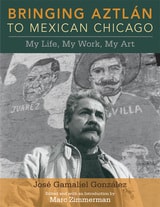
Bringing Aztlan to Mexican Chicago
My Life, My Work, My ArtJose Gamaliel Gonzalez, Edited and with an Introduction by Marc Zimmerman
University of Illinois Press, 2010
Broken Souths
Latina/o Poetic Responses to Neoliberalism and GlobalizationMichael Dowdy
University of Arizona Press, 2013
Dowdy argues that a transnational Latina/o imaginary has emerged in response to neoliberalism—the free-market philosophy that underpins what many in the northern hemisphere refer to as “globalization.” His work examines how poets represent the places that have been “broken” by globalization’s political, economic, and environmental upheavals. Broken Souths locates the roots of the new imaginary in 1968, when the Mexican student movement crested and the Chicano and Nuyorican movements emerged in the United States. It theorizes that Latina/o poetics negotiates tensions between the late 1960s’ oppositional, collective identities and the present day’s radical individualisms and discourses of assimilation, including the “post-colonial,” “post-national,” and “post-revolutionary.” Dowdy is particularly interested in how Latina/o poetics reframes debates in cultural studies and critical geography on the relation between place, space, and nature.
Broken Souths features discussions of Latina/o writers such as Victor Hernández Cruz, Martín Espada, Juan Felipe Herrera, Guillermo Verdecchia, Marcos McPeek Villatoro, Maurice Kilwein Guevara, Judith Ortiz Cofer, Jack Agüeros, Marjorie Agosín, Valerie Martínez, and Ariel Dorfman, alongside discussions of influential Latin American writers, including Roberto Bolaño, Ernesto Cardenal, David Huerta, José Emilio Pacheco, and Raúl Zurita.
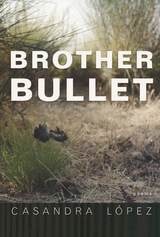
Brother Bullet
PoemsCasandra López
University of Arizona Press, 2019
Drawing on migratory experiences, López transports the reader to the Inland Empire, Baja California, New Mexico, and Arizona to create a frame for memory, filled with imagery, through the cyclical but changing essence of sorrow. This is paralleled with surrounding environments, our sense of belonging—on her family’s porch, or in her grandfather’s orange grove, or in the darkest desert. López’s landscapes are geographical markers and borders, connecting shared experiences and memories.
Brother Bullet tugs and pulls, drawing us into a consciousness—a story—we all bear.
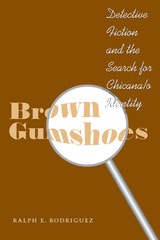
Brown Gumshoes
Detective Fiction and the Search for Chicana/o IdentityBy Ralph E. Rodriguez
University of Texas Press, 2005
Winner, Modern Language Association Prize in United States Latina and Latino and Chicana and Chicano Literary and Cultural Studies, 2006
Popular fiction, with its capacity for diversion, can mask important cultural observations within a framework that is often overlooked in the academic world. Works thought to be merely "escapist" can often be more seriously mined for revelations regarding the worlds they portray, especially those of the disenfranchised. As detective fiction has slowly earned critical respect, more authors from minority groups have chosen it as their medium. Chicana/o authors, previously reluctant to write in an underestimated genre that might further marginalize them, have only entered the world of detective fiction in the past two decades.
In this book, the first comprehensive study of Chicano/a detective fiction, Ralph E. Rodriguez examines the recent contributions to the genre by writers such as Rudolfo Anaya, Lucha Corpi, Rolando Hinojosa, Michael Nava, and Manuel Ramos. Their works reveal the struggles of Chicanas/os with feminism, homosexuality, familia, masculinity, mysticism, the nationalist subject, and U.S.-Mexico border relations. He maintains that their novels register crucial new discourses of identity, politics, and cultural citizenship that cannot be understood apart from the historical instability following the demise of the nationalist politics of the Chicana/o movement of the 1960s and 1970s. In contrast to that time, when Chicanas/os sought a unified Chicano identity in order to effect social change, the 1980s, 1990s, and 2000s have seen a disengagement from these nationalist politics and a new trend toward a heterogeneous sense of self. The detective novel and its traditional focus on questions of knowledge and identity turned out to be the perfect medium in which to examine this new self.
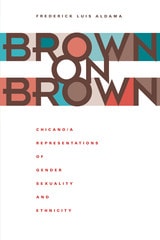
Brown on Brown
Chicano/a Representations of Gender, Sexuality, and EthnicityBy Frederick Luis Aldama
University of Texas Press, 2005
Common conceptions permeating U.S. ethnic queer theory tend to confuse aesthetics with real-world acts and politics. Often Chicano/a representations of gay and lesbian experiences in literature and film are analyzed simply as propaganda. The cognitive, emotional, and narrational ingredients (that is, the subject matter and the formal traits) of those representations are frequently reduced to a priori agendas that emphasize a politics of difference.
In this book, Frederick Luis Aldama follows an entirely different approach. He investigates the ways in which race and gay/lesbian sexuality intersect and operate in Chicano/a literature and film while taking into full account their imaginative nature and therefore the specific kind of work invested in them. Also, Aldama frames his analyses within today's larger (globalized) context of postcolonial literary and filmic canons that seek to normalize heterosexual identity and experience. Throughout the book, Aldama applies his innovative approach to throw new light on the work of authors Arturo Islas, Richard Rodriguez, John Rechy, Ana Castillo, and Sheila Ortiz Taylor, as well as that of film director Edward James Olmos. In doing so, Aldama aims to integrate and deepen Chicano literary and filmic studies within a comparative perspective. Aldama's unusual juxtapositions of narrative materials and cultural personae, and his premise that literature and film produce fictional examples of a social and historical reality concerned with ethnic and sexual issues largely unresolved, make this book relevant to a wide range of readers.
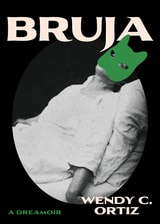
Bruja
A DreamoirWendy C. Ortiz
Northwestern University Press, 2025
Dubbed a “dreamoir,” Bruja is a bold and harrowing journey through the dream worlds of Wendy C. Ortiz. Sister memoir to Hollywood Notebook, it catalogs the happenings of the night: strange visions of the past warped by present-day inklings; animals running loose, never where they should be; familiar nature and architecture made malleable and new. Ortiz’s subconscious is bared in full on these pages as the author interrogates her histories. We bravely adventure into new literary form, walking the parallel plane of Ortiz’s waking life alongside her. Where the self is anchored in the deepest recesses of the mind, Ortiz invites us to push the boundaries of the subconscious and enter into the dreamoir.

Building the Perfect Animal
New and Selected PoemsC. Dale Young
Four Way Books, 2025
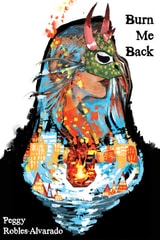
Burn Me Back
Peggy Robles-Alvarado
Four Way Books, 2025
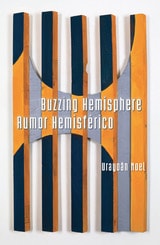
Buzzing Hemisphere / Rumor Hemisférico
Urayoán Noel
University of Arizona Press, 2015
In this expansive collection, we hear the noise of cities such as New York, San Juan, and São Paulo abuzz with flickering bodies and the rush of vernaculars as untranslatable as the murmur in the Spanish rumor. Oscillating between baroque textuality and vernacular performance, Noel’s bilingual poems experiment with eccentric self-translation, often blurring the line between original and translation as a way to question language hierarchies and allow for translingual experiences.
A number of the poems and self-translations here were composed on a smartphone, or else de- and re-composed with a variety of smartphone apps and tools, in an effort to investigate the promise and pitfalls of digital vernaculars. Noel’s poetics of performative self-translation operates not only across languages and cultures but also across forms: from the décima and the “staircase sonnet” to the collage, the abecedarian poem, and the performance poem.
In its playful and irreverent mash-up of voices and poetic traditions from across the Americas, Buzzing Hemisphere / Rumor Hemisférico imagines an alternative to the monolingualism of the U.S. literary and political landscape, and proposes a geo-neuro-political performance attuned to damaged or marginalized forms of knowledge, perception, and identity.