Results by title
732 books match the query 'Indigenous' and 35 start with b

Babimose
The WandererPeter Razor
Michigan State University Press, 2025

Badger and Coyote Were Neighbors
Melville Jacobs on Northwest Indian Myths and TalesWilliam R. Seaburg
Oregon State University Press, 2000
Baking, Bourbon, and Black Drink
Foodways Archaeology in the American SoutheastEdited by Tanya M. Peres and Aaron Deter-Wolf
University of Alabama Press, 2018
Discover the deep cultural roots of Southern cuisine through archaeology.
Understanding and explaining societal rules surrounding food and foodways have been the foci of anthropological studies since the early days of the discipline. Baking, Bourbon, and Black Drink: Foodways Archaeology in the American Southeast, however, is the first collection devoted exclusively to southeastern foodways analyzed through archaeological perspectives. These essays examine which foods were eaten and move the discussion of foodstuffs into the sociocultural realm of why, how, and when they were eaten.
Editors Tanya M. Peres and Aaron Deter-Wolf present a volume that moves beyond basic understandings, applying new methods or focusing on subjects not widely discussed in the Southeast to date. Chapters are arranged using the dominant research themes of feasting, social and political status, food security and persistent places, and foodways histories. Contributors provide in-depth examination of specific food topics such as bone marrow, turkey, Black Drink, bourbon, earth ovens, and hominy.
Contributors bring a broad range of expertise to the collection, resulting in an expansive look at all of the steps taken from field to table, including procurement, production, cooking, and consumption, all of which have embedded cultural meanings and traditions. The scope of the volume includes the diversity of research specialties brought to bear on the topic of foodways as well as the temporal and regional breadth and depth, the integration of multiple lines of evidence, and, in some cases, the reinvestigation of well-known sites with new questions and new data.
Bartolomé de las Casas and the Defense of Amerindian Rights
A Brief History with DocumentsEdited by Lawrence A. Clayton and David M. Lantigua
University of Alabama Press, 2020
The writings of a sixteenth-century advocate who challenged empire in defense of Indigenous peoples.
With the exception of Christopher Columbus, Bartolomé de las Casas is arguably the most notable figure of the Encounter Age. He is remembered principally as the creator of the Black Legend, as well as the protector of American Indians. He was one of the pioneers of the human rights movement, and a Christian activist who invoked law and Biblical scripture to challenge European colonialism in the great age of the Encounter. He was also one of the first and most thorough chroniclers of the conquest, and a biographer who saved the diary of Columbus’s first voyage for posterity by transcribing it in his History of the Indies before the diary was lost.
Bartolomé de las Casas and the Defense of Amerindian Rights: A Brief History with Documents provides the most wide-ranging and concise anthology of Las Casas’s writings, in translation, ever made available. It contains not only excerpts from his most well-known texts, but also his largely unavailable writings on political philosophy and law, and addresses the underappreciated aspects of his thought. Fifteen of the twenty-six documents are entirely new translations of Las Casas’s writings, a number of them appearing in English for the first time.
This volume focuses on his historical, political, and legal writings that address the deeply conflicted and violent sixteenth-century encounter between Europeans and indigenous peoples of the Americas. It also presents Las Casas as a more comprehensive and systematic philosophical and legal thinker than he is typically given credit for. The introduction by Lawrence A. Clayton and David M. Lantigua places these writings into a synthetic whole, tracing his advocacy for indigenous peoples throughout his career. By considering Las Casas’s ideas, actions, and even regrets in tandem, readers will understand the historical dynamics of Spanish imperialism more acutely within the social-political context of the times.
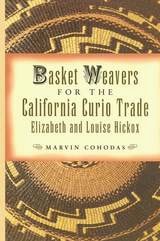
Basket Weavers for the California Curio Trade
Elizabeth and Louise HickoxMarvin Cohodas
University of Arizona Press, 1997
Marvin Cohodas now explores the various forces that influenced Elizabeth Hickox, analyzing her relationship with the curio trade, and specifically with dealer Grace Nicholson, to show how those associations affected the development and marketing of baskets. He explains the techniques and patterns that Hickox created to meet the challenge of weaving design into changig three-dimensional forms. In addition to explicating the Hickoxes' basketry, Cohodas interprets its uniqueness as a form of intersocietal art, showing how Elizabeth first designed her distinctive trinket basket to convey a particular view of the curio trade and its effect on status within her community.
Through its close examination of these superb practitioners of basketry, Basket Weavers for the California Curio Trade addresses many of today's most pressing questions in Native American art studies concerning individuality, patronage, and issues of authenticity. Graced with historic photographs and full-color plates, it reveals the challenges faced by early-twentieth-century Native weavers.
Published with the assistance of The Southwest Museum, Los Angeles.
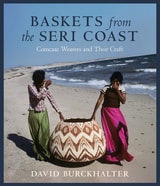
Baskets from the Seri Coast
Comcaac Weavers and Their CraftDavid Burckhalter
University of Arizona Press, 2026
Blending striking photography with reflections from years as a trader and observer of Seri culture, Burckhalter traces the evolution of Seri basketry from a utilitarian craft to a celebrated art form. The book examines how Seri weavers have navigated the influences of the craft economy, outside forces like anthropologists, and changing traditions, while preserving their unique oral history and spiritual connections. With detailed insights into the artistry, labor, and legends surrounding Seri baskets, this work is a tribute to the resilience and creativity of Seri women, whose weaving continues to be passed on to future generations.
Featuring more than two hundred color photographs and historic images, Baskets from the Seri Coast: Comcaac Weavers and Their Craft offers readers a visual feast that celebrates the intricate craftsmanship and cultural significance of a timeless art and the people who make it.

Battle for the BIA
G. E. E. Lindquist and the Missionary Crusade against John CollierDavid W. Daily
University of Arizona Press, 2004
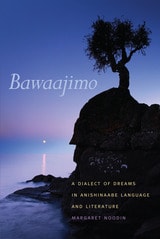
Bawaajimo
A Dialect of Dreams in Anishinaabe Language and LiteratureMargaret Noodin
Michigan State University Press, 2014

Bear Tracks
Memories of a Ho-Chunk ElderSherman Funmaker
Wisconsin Historical Society Press, 2026
“For me, writing is a form of therapy. I write thoughts down and send them out to the universe. I miss the ones I loved, and when I write about them it feels good to put these stories onto paper. It allows me to visit them when I need to.”
Sherman Funmaker—poet and musician, designer and teacher, son and brother—shares his life story in his intensely personal debut, Bear Tracks: Memories of a Ho-Chunk Elder. In this collection of poems and short essays, Funmaker explores themes of childhood and familial ties, finding and leaving home, coming of age, experiencing love and loss, creating art, and seeking belonging.
A Ho-Chunk Nation Bear Clan elder and grandson of renowned Ho-Chunk storyteller Xéhachiwinga (Mountain Wolf Woman), Funmaker illuminates how his Ho-Chunk culture has had a lasting impact on his life, self-expression, and point of view. With emotional depth and clarity, Bear Tracks confronts hard topics, such as poverty, racism, and personal loss, leavening them with optimism and a wry sense of humor.
Family photos from across generations accompany Funmaker’s reflections on the people and places that have shaped his life and art. Bear Tracks concludes with a reader’s guide offering additional topics for discussion and reflection.
With a voice both distinct and entirely relatable, Funmaker creates space for readers to find resilience and hope for the future while reckoning with the struggles of their past.
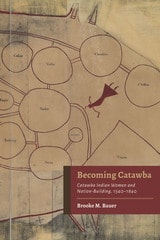
Becoming Catawba
Catawba Indian Women and Nation-Building, 1540–1840Brooke M. Bauer
University of Alabama Press, 2023
WINNER OF THE ANNE B. & JAMES B. MCMILLAN PRIZE IN SOUTHERN HISTORY
WINNER OF THE ERMINIE WHEELER-VOEGELIN BOOK AWARD
WINNER OF THE BERSHIRE CONFERENCE OF WOMEN HISTORIANS BOOK AWARD
WINNER OF THE GEORGE C. ROGERS, JR. AWARD FROM THE SOUTH CAROLINA HISTORICAL SOCIETY
The story of Catawba women who experienced sweeping changes to their world but held onto traditional customs to create and preserve a Catawba identity and build a nation.
Brooke M. Bauer’s Becoming Catawba: Catawba Indian Women and Nation-Building, 1540–1840 is the first book-length study of the role Catawba women played in creating and preserving a cohesive tribal identity over three centuries of colonization and cultural turmoil. Bauer, a citizen of the Catawba Indian Nation of South Carolina, weaves ethnohistorical methodologies, family history, cultural context, and the Catawba language together to generate an internal perspective on the Catawbas’ history and heritage in the area now known as the Carolina Piedmont.
This unique and important study examines the lives and legacies of women who executed complex decision-making and diplomacy to navigate shifting frameworks of kinship, land ownership, and cultural production in dealings with colonial encroachments, white settlers, and Euro-American legal systems and governments from the mid-sixteenth century to the early nineteenth century. Personified in the figure of Sally New River, a Catawba cultural leader to whom 500 remaining acres of occupied tribal lands were deeded on behalf of the community in 1796 and which she managed until her death in 1821, Bauer reveals how women worked to ensure the survival of the Catawba people and their Catawba identity, an effort that resulted in a unified nation.
Bauer’s approach is primarily ethnohistorical, although it draws on a number of interdisciplinary strategies. In particular, Bauer uses “upstreaming,” a critical strategy that moves toward the period under study by using present-day community members’ connections to historical knowledge—for example, family histories and oral traditions—to interpret primary-source data. Additionally, Bauer employs archaeological data and material culture as a means of performing feminist recuperation, filling the gaps and silences left by the records, newspapers, and historical accounts as primarily written by and for white men. Ultimately, Becoming Catawba effects a welcome intervention at the intersections of Native, women’s, and Southern history, expanding the diversity and modes of experience in the fraught, multifaceted cultural environment of the early American South.
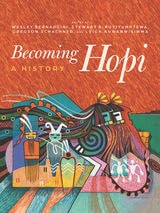
Becoming Hopi
A HistoryEdited by Wesley Bernardini, Stewart B. Koyiyumptewa, Gregson Schachner, and Leigh Kuwanwisiwma
University of Arizona Press, 2021
The Hopi and their ancestors have lived on the Hopi Mesas for more than two thousand years, a testimony to sustainable agricultural practices that supported one of the largest populations in the Pueblo world. Becoming Hopi is a truly collaborative volume that integrates Indigenous voices with more than fifteen years of archaeological and ethnographic fieldwork. Accessible and colorful, this volume presents groundbreaking information about Ancestral Pueblo villages in the greater Hopi Mesas region, making it a fascinating resource for anyone who wants to learn about the rich and diverse history of the Hopi people and their enduring connection to the American Southwest.
Contributors: Lyle Balenquah, Wesley Bernardini, Katelyn J. Bishop, R. Kyle Bocinsky, T. J. Ferguson, Saul L. Hedquist, Maren P. Hopkins, Stewart B. Koyiyumptewa, Leigh Kuwanwisiwma, Mowana Lomaomvaya, Lee Wayne Lomayestewa, Joel Nicholas, Matthew Peeples, Gregson Schachner, R. J. Sinensky, Julie Solometo, Kellam Throgmorton, Trent Tu’tsi
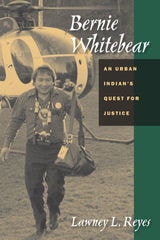
Bernie Whitebear
An Urban Indian's Quest for JusticeLawney L. Reyes
University of Arizona Press, 2006
Bernie Whitebear’s story takes readers from an impoverished youth—including a rare account of life on the Colville Reservation during the 1930s—to the “Red Power” movement as it traces Bernie’s emergence as an activist influenced by contemporaries such as Bob Satiacum, Vine DeLoria, and Joe Delacruz. By choosing this course, Bernie was clearly making a break with his past, but with an eye toward a better future, whether staging the successful protest at Fort Lawton or acting on behalf of Native fishing rights in Puget Sound. When he died in July 2000, Bernie Whitebear had left an inestimable legacy, accomplishing things that no other Indian seemed able to do. His biography is an inspiring story for readers at many levels, an account of how one American Indian overcame hardships and obstacles to make a difference in the lives of his people—and an entire community.

Betrayal at the Buffalo Ranch
Sara Sue Hoklotubbe
University of Arizona Press, 2018
Even though Deputy Sheriff Lance Smith, Sadie’s love interest, suspects a link to the Buffalo Ranch, he can find little evidence to make an arrest. And when a rare white buffalo calf is born on the ranch and immediately disappears, Sadie’s instincts tell her something is wrong—and she sets out to prove it. Her suspicions—and fears of more violence—escalate when a former schoolmate returns to Oklahoma to visit her ailing father and finds employment at the ranch. Will she be the next victim?
Drawn deeper and deeper into danger, Sadie uncovers an unparalleled web of greed and corruption. It will take all of her investigative skill to set things straight—assuming she and her wolfdog can stay alive long enough to succeed.
Between Desert and River
Hohokam Settlement and Land Use in the Los Robles CommunityChristian E. Downum
University of Arizona Press, 1993
"Downum's carefully done volume is an important contribution to Hohokam archaeology. . . . Clearly written and illustrated."—AM Indian Quarterly
Beyond Pontiac's Shadow
Michilimackinac and the Anglo-Indian War of 1763Keith R. Widder
Michigan State University Press, 2013
On June 2, 1763, the Ojibwe captured Michigan’s Fort Michilimackinac from the British. Ojibwe warriors from villages on Mackinac Island and along the Cheboygan River had surprised the unsuspecting garrison while playing a game of baggatiway. On the heels of the capture, Odawa from nearby L’Arbre Croche arrived to rescue British prisoners, setting into motion a complicated series of negotiations among Ojibwe, Odawa, and Menominee and other Indians from Wisconsin. Because nearly all Native people in the Michilimackinac borderland had allied themselves with the British before the attack, they refused to join the Michilimackinac Ojibwe in their effort to oust the British from the upper country; the turmoil effectively halted the fur trade. Beyond Pontiac’s Shadow examines the circumstances leading up to the attack and the course of events in the aftermath that resulted in the regarrisoning of the fort and the restoration of the fur trade. At the heart of this discussion is an analysis of French-Canadian and Indian communities at the Straits of Mackinac and throughout the pays d’en haut. An accessible guide to this important period in Michigan, American, and Canadian history, Beyond Pontiac’s Shadow sheds invaluable light on a political and cultural crisis.
Beyond the Reach of Time and Change
Native American Reflections on the Frank A. Rinehart Photograph CollectionEdited by Simon J. Ortiz
University of Arizona Press, 2004
This book provides an unusual perspective on the Rinehart collection. It features one hundred outstanding images printed from the original negatives made by Rinehart and Muhr at the Congress and over the course of the next two years. It also includes 14 essays by modern Native American writers, artists, and educators—some of them descendants of the individuals photographed—reflecting on the place of these images in their heritage.
Beyond the Reach of Time and Change is not another coffee-table book of historical Indian photographs but rather a conversation between Indian people of a century ago and today. Just as the Rinehart collection offers today's Native Americans a unique connection to the past, this book offers all readers a positive understanding of continuity and endurance within the American Indian community.
Birding While Indian
A Mixed-Blood MemoirThomas C. Gannon
The Ohio State University Press, 2023
Bitter Water
Diné Oral Histories of the Navajo-Hopi Land DisputeEdited and Translated by Malcolm D. Benally; Foreword by Jennifer Nez Denetdale
University of Arizona Press, 2011
Bitter Water presents the narratives of four Diné women who have resisted removal but who have watched as their communities and lifeways have changed dramatically. The book, based on 25 hours of filmed personal testimony, features the women’s candid discussions of their efforts to carry on a traditional way of life in a contemporary world that includes relocation and partitioned lands; encroaching Western values and culture; and devastating mineral extraction and development in the Black Mesa region of Arizona. Though their accounts are framed by insightful writings by both Benally and Diné historian Jennifer Nez Denetdale, Benally lets the stories of the four women elders speak for themselves.
Scholars, media, and other outsiders have all told their versions of this story, but this is the first book that centers on the stories of women who have lived it—in their own words in Navajo as well as the English translation. The result is a living history of a contested cultural landscape and the unique worldview of women determined to maintain their traditions and lifeways, which are so intimately connected to the land. This book is more than a collection of stories, poetry, and prose. It is a chronicle of resistance as spoken from the hearts of those who have lived it.
Black Hawk
An AutobiographyBlack Hawk
University of Illinois Press, 1955
A foundational document, Black Hawk: An Autobiography is both an unsparing record of America's genocide against Native American peoples and the moving self-portrait of an extraordinary man.

Black and Indigenous
Garifuna Activism and Consumer Culture in HondurasMark Anderson
University of Minnesota Press, 2009
Garifuna live in Central America, primarily Honduras, and the United States. Identified as Black by others and by themselves, they also claim indigenous status and rights in Latin America. Examining this set of paradoxes, Mark Anderson shows how, on the one hand, Garifuna embrace discourses of tradition, roots, and a paradigm of ethnic political struggle. On the other hand, Garifuna often affirm blackness through assertions of African roots and affiliations with Blacks elsewhere, drawing particularly on popular images of U.S. blackness embodied by hip-hop music and culture.
Black and Indigenous explores the politics of race and culture among Garifuna in Honduras as a window into the active relations among multiculturalism, consumption, and neoliberalism in the Americas. Based on ethnographic work, Anderson questions perspectives that view indigeneity and blackness, nativist attachments and diasporic affiliations, as mutually exclusive paradigms of representation, being, and belonging.
As Anderson reveals, within contemporary struggles of race, ethnicity, and culture, indigeneity serves as a normative model for collective rights, while blackness confers a status of subaltern cosmopolitanism. Indigeneity and blackness, he concludes, operate as unstable, often ambivalent, and sometimes overlapping modes through which people both represent themselves and negotiate oppression.
Blackbird's Song
Andrew J. Blackbird and the Odawa PeopleTheodore J. Karamanski
Michigan State University Press, 2012
For much of U.S. history, the story of native people has been written by historians and anthropologists relying on the often biased accounts of European-American observers. Though we have become well acquainted with war chiefs like Pontiac and Crazy Horse, it has been at the expense of better knowing civic-minded intellectuals like Andrew J. Blackbird, who sought in 1887 to give a voice to his people through his landmark book History of the Ottawa and Chippewa People. Blackbird chronicled the numerous ways in which these Great Lakes people fought to retain their land and culture, first with military resistance and later by claiming the tools of citizenship. This stirring account reflects on the lived experience of the Odawa people and the work of one of their greatest advocates.
Blanket Weaving in the Southwest
Joe Ben Wheat; edited by Ann Lane Hedlund
University of Arizona Press, 2003
During much of his career, anthropologist Joe Ben Wheat (1916-1997) earned a reputation as a preeminent authority on southwestern and plains prehistory. Beginning in 1972, he turned his scientific methods and considerable talents to historical questions as well. He visited dozens of museums to study thousands of nineteenth-century textiles, oversaw chemical tests of dyes from hundreds of yarns, and sought out obscure archives to research the material and documentary basis for textile development. His goal was to establish a key for southwestern textile identification based on the traits that distinguish the Pueblo, Navajo, and Spanish American blanket weaving traditions—and thereby provide a better way of identifying and dating pieces of unknown origin.
Wheat's years of research resulted in a masterful classification scheme for southwestern textiles—and a book that establishes an essential baseline for understanding craft production. Nearly completed before Wheat's death, Blanket Weaving in the Southwest describes the evolution of southwestern textiles from the early historic period to the late nineteenth century, establishes a revised chronology for its development, and traces significant changes in materials, techniques, and designs.
Wheat first relates what Spanish observers learned about the state of native weaving in the region—a historical review that reveals the impact of new technologies and economies on a traditional craft. Subsequent chapters deal with fibers, yarns, dyes, and fabric structures—including an unprecedented examination of the nature, variety, and origins of bayeta yarns—and with tools, weaves, and finishing techniques.
A final chapter, constructed by editor Ann Hedlund from Wheat's notes, provides clues to his evolving ideas about the development of textile design. Hedlund—herself a respected textile scholar and a protégée of Wheat's—is uniquely qualified to interpret the many notes he left behind and brings her own understanding of weaving to every facet of the text. She has ensured that Wheat's research is applicable to the needs of scholars, collectors, and general readers alike. Throughout the text, Wheat discusses and evaluates the distinct traits of the three textile traditions. More than 200 photos demonstrate these features, including 191 color plates depicting a vast array of chief blankets, shoulder blankets, ponchos, sarapes, diyugi, mantas, and dresses from museum collections nationwide. In addition, dozens of line drawings demonstrate the fine points of technique concerning weaves, edge finishes, and corner tassels. Through his groundbreaking and painstaking research, Wheat created a new view of southwestern textile history that goes beyond any other book on the subject. Blanket Weaving in the Southwest addresses a host of unresolved issues in textile research and provides critical tools for resolving them. It is an essential resource for anyone who appreciates the intricacy of these outstanding creations.
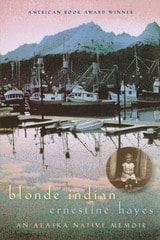
Blonde Indian
An Alaska Native MemoirErnestine Hayes
University of Arizona Press, 2006
Told in eloquent layers that blend Native stories and metaphor with social and spiritual journeys, this enchanting memoir traces the author’s life from her difficult childhood growing up in the Tlingit community, through her adulthood, during which she lived for some time in Seattle and San Francisco, and eventually to her return home. Neither fully Native American nor Euro-American, Hayes encounters a unique sense of alienation from both her Native community and the dominant culture. We witness her struggles alongside other Tlingit men and women—many of whom never left their Native community but wrestle with their own challenges, including unemployment, prejudice, alcoholism, and poverty.
The author’s personal journey, the symbolic stories of contemporary Natives, and the tales and legends that have circulated among the Tlingit people for centuries are all woven together, making Blonde Indian much more than the story of one woman’s life. Filled with anecdotes, descriptions, and histories that are unique to the Tlingit community, this book is a document of cultural heritage, a tribute to the Alaskan landscape, and a moving testament to how going back—in nature and in life—allows movement forward.
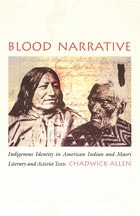
Blood Narrative
Indigenous Identity in American Indian and Maori Literary and Activist TextsChadwick Allen
Duke University Press, 2002
Allen shows how both Maori and Native Americans resisted the assimilationist tide rising out of World War II and how, in the 1960s and 1970s, they each experienced a renaissance of political and cultural activism and literary production that culminated in the formation of the first general assembly of the World Council of Indigenous Peoples. He focuses his comparison on two fronts: first, the blood/land/memory complex that refers to these groups' struggles to define indigeneity and to be freed from the definitions of authenticity imposed by dominant settler cultures. Allen's second focus is on the discourse of treaties between American Indians and the U.S. government and between Maori and Great Britain, which he contends offers strong legal and moral bases from which these indigenous minorities can argue land and resource rights as well as cultural and identity politics.
With its implicit critique of multiculturalism and of postcolonial studies that have tended to neglect the colonized status of indigenous First World minorities, Blood Narrative will appeal to students and scholars of literature, American and European history, multiculturalism, postcolonialism, and comparative cultural studies.
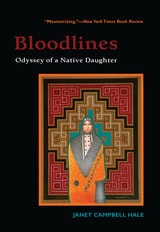
Bloodlines
Odyssey of a Native DaughterJanet Campbell Hale
University of Arizona Press, 1998
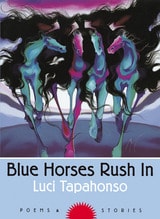
Blue Horses Rush In
Poems and StoriesLuci Tapahonso
University of Arizona Press, 1997
Blue Horses Rush In takes its title from a poem about the birth of her granddaughter Chamisa, whose heart "pounded quickly and we recognized / the sound of horses running: / the thundering of hooves on the desert floor." Through such personal insights, this collection follows the cycle of a woman's life and underlines what it means to be Navajo in the late twentieth century. The book marks a major accomplishment in American literature for its successful blending of Navajo cultural values and forms with the English language, while at the same time retaining the Navajo character. Here, Luci Tapahonso walks slowly through an ancient Hohokam village, recalling stories passed down from generation to generation. Later in the book, she may tell a funny story about a friend, then, within a few pages, describe family rituals like roasting green chiles or baking bread in an outside oven. Throughout, Tapahonso shares with readers her belief in the power of pollen and prayer feathers and sacred songs.
Many of these stories were originally told in Navajo, taking no longer than ten minutes in the telling. "Yet, in recreating them, it is necessary to describe the land, the sky, the light, and other details of time and place," writes Tapahonso. "In this way, I attempt to create and convey the setting for the oral text. In writing, I revisit the place or places concerned and try to bring the reader to them, thereby enabling myself and other Navajos to sojourn mentally and emotionally in our home, Dinétah."

Book Anatomy
Body Politics and the Materiality of Indigenous Book HistoryAmy Gore
University of Massachusetts Press, 2023
Winner of the Beatrice Medicine Award for Scholarship in American Indian Studies
From the marginalia of their readers to the social and cultural means of their production, books bear the imprint of our humanity. Embodying the marks, traces, and scars of colonial survival, Indigenous books are contested spaces. A constellation of nontextual components surrounded Native American–authored publications of the long nineteenth century, shaping how these books were read and understood—including illustrations, typefaces, explanatory prefaces, appendices, copyright statements, author portraits, and more.
Centering Indigenous writers, Book Anatomy explores works from John Rollin Ridge, Sarah Winnemucca Hopkins, Pretty Shield, and D’Arcy McNickle published between 1854 and 1936. In examining critical moments of junction between Indigenous books and a mainstream literary marketplace, Amy Gore argues that the reprints, editions, and paratextual elements of Indigenous books matter: they embody a frontline of colonization in which Native authors battle the public perception and reception of Indigenous books, negotiate representations of Indigenous bodies, and fight for authority and ownership over their literary work.
Born a Chief
The Nineteenth Century Hopi Boyhood of Edmund Nequatewa, as told to Alfred F. WhitingEdmund Nequatewa
University of Arizona Press, 1993
"This story was fascinating. . . . One worth the telling and one which will stay with the reader."—American Desert Magazine
"Recommended."—Choice
Bountiful Deserts
Sustaining Indigenous Worlds in Northern New SpainCynthia Radding
University of Arizona Press, 2022
Common understandings drawn from biblical references, literature, and art portray deserts as barren places that are far from God and spiritual sustenance. In our own time, attention focuses on the rigors of climate change in arid lands and the perils of the desert in the northern Mexican borderlands for migrants seeking shelter and a new life.
Bountiful Deserts foregrounds the knowledge of Indigenous peoples in the arid lands of northwestern Mexico, for whom the desert was anything but barren or empty. Instead, they nurtured and harvested the desert as a bountiful and sacred space. Drawing together historical texts and oral testimonies, archaeology, and natural history, author Cynthia Radding develops the relationships between people and plants and the ways that Indigenous people sustained their worlds before European contact through the changes set in motion by Spanish encounters, highlighting the long process of colonial conflicts and adaptations over more than two centuries. This work reveals the spiritual power of deserts by weaving together the cultural practices of historical peoples and contemporary living communities, centered especially on the Yaqui/Yoeme and Mayo/Yoreme.
Radding uses the tools of history, anthropology, geography, and ecology to paint an expansive picture of Indigenous worlds before and during colonial encounters. She re-creates the Indigenous worlds in both their spiritual and material realms, bringing together the analytical dimension of scientific research and the wisdom of oral traditions in its exploration of different kinds of knowledge about the natural world.
Published in cooperation with the William P. Clements Center for Southwest Studies, Southern Methodist University

Brave Are My People
Indian Heroes Not ForgottenFrank Waters
Ohio University Press, 1998
Pontiac, Sequoyah, Geronimo, Sitting Bull, Chief Joseph, and Chief Seattle. These legendary names are familiar even to the uninitiated in Native American history, yet the life stories of these great spiritual leaders have been largely unknown.
In this, his last book, internationally celebrated author Frank Waters makes vivid the poignant, humorous, and tragic stories of these neglected and heroic Native Americans. From the brilliant tactical abilities of famed warriors to the eloquent oratory of indigenous philosophers, poets, and statesmen, the profiles in Brave Are My People help correct this error of omission.
Now in paperback, Brave Are My People represents a major contribution to Water’s remarkable literary work.
Building an Archaeology of Maya Urbanism
Planning and Flexibility in the American TropicsDamien B. Marken and M. Charlotte Arnauld
University Press of Colorado, 2023
Integrating recent lidar survey data with more traditional excavation and artifact-based archaeological practices, chapters in this volume offer broadened perspectives on the patterns of Maya urban design and planning by viewing bottom-up and self-organizing processes as integral to the form, development, and dissolution of Classic lowland cities alongside potentially centralized civic designs. Full of innovative examples of how to build an archaeology of urbanism that can be applied not just to the lowland Maya and across the region, Building an Archaeology of Maya Urbanism simultaneously improves interpretations of lowland Maya culture history and contributes to empirical and comparative discussions of tropical, non-Western cities worldwide.
Contributors: Divina Perla Barrera, Arianna Campiani, Cyril Castanet, Adrian S. Z. Chase, Lydie Dussol, Sara Dzul Góngora, Keith Eppich, Thomas Garrison, María Rocio González de la Mata, Timothy Hare, Julien Hiquet, Takeshi Inomata, Eva Lemonnier, José Francisco Osorio León, Marilyn Masson, Elsa Damaris Menéndez, Timothy Murtha, Philippe Nondédéo, Keith M. Prufer, Louise Purdue, Francisco Pérez Ruíz, Julien Sion, Travis Stanton, Rodrigo Liendo Stuardo, Karl A. Taube, Marc Testé, Amy E. Thompson, Daniela Triadan
Building on a Borrowed Past
Place and Identity in Pipestone, MinnesotaSally J. Southwick
Ohio University Press, 2005
Why is there a national monument near a small town on the Minnesota prairie? Why do the town’s residents dress as Indians each summer and perform a historical pageant based on a Victorian-era poem? To answer such questions, Building on a Borrowed Past: Place and Identity in Pipestone, Minnesota shows what happens when one culture absorbs the heritage of another for civic advantage.
Founded in 1874, Pipestone was named for the quarries where regional tribes excavated soft stone for making pipes. George Catlin and Henry Wadsworth Longfellow described the place and its tribal history. Promotion by white residents of the quarries as central to America’s Indian heritage helped Pipestone obtain a federal Indian boarding school in the 1890s and a national monument in the 1930s. The annual “Song of Hiawatha” pageant attracted tourists after World War II. Sally J. Southwick’s prizewinning study demonstrates how average, small–town citizens contributed to the generic image of “the Indian” in American culture.
Examining oral histories, memoirs, newspapers, federal documents, civic group records, and promotional literature, Southwick focuses on the role of middle–class individuals in establishing a historical, place–based identity. Building on a Borrowed Past reveals how identities are formed through adaptation of cultural, spiritual, racial, and historical symbols.

Bundle
Life, Stories, and Hope Across Díne WorldsJ. Jeffery Clark
University of Arizona Press, 2027
The stories colonizers tell about Diné people represent them as adaptors, uncontrollable, and unruly. These wounding narratives justify the displacement and dispossession of Diné people, masking the ongoing violence of settler colonialism.
Bundle: Life, Stories, and Hope Across Diné Worlds challenges and dismantles these harmful depictions. By shifting the paradigm away from anthropological lenses, this book offers an exploration of bundling: the active, physical, spiritual, and ideological practice through which Diné people assemble stories, tools, and knowledge. From world shifts detailed in oral narratives to the present deadly structures of colonization, Diné people have long relied on their bundled knowledge systems to sustain their presence across worlds and time.
Bundle is a must-read for anyone seeking to understand Diné resistance, hope, and worlding. Rather than studying Diné life from the outside, it prioritizes Diné ways of knowing and being to develop bundling as a theory of continuance. For readers invested in decolonization, place-making, and storytelling, Bundle provides an indispensable roadmap for how Diné people continue even in the face of domination.
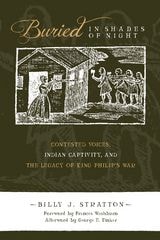
Buried in Shades of Night
Contested Voices, Indian Captivity, and the Legacy of King Philip's WarBilly J. Stratton, Foreword by Frances Washburn, Afterword by George E. Tinker
University of Arizona Press, 2013
In this groundbreaking new book, Billy J. Stratton offers a critical examination of the narrative of Mary Rowlandson. Although it has long been thought that the book’s preface was written by the influential Puritan minister Increase Mather, Stratton’s research suggests that Mather was also deeply involved in the production of the narrative itself, which bears strong traces of a literary form that was already well established in Europe. As Stratton notes, the portrayal of Indian people as animalistic “savages” and of Rowlandson’s solace in Biblical exegesis served as a convenient alibi for the colonial aspirations of the Puritan leadership.
Stratton calls into question much that has been accepted as fact by scholars and historians over the last century, and re-centers the focus on the marginalized perspective of Native American people, including those whose land had been occupied by the Puritan settlers. In doing so, Stratton demands a careful reconsideration of the role that the captivity narrative—which was instrumental in shaping conceptions of “frontier warfare”—has played in the development of both American literary history and national identity.
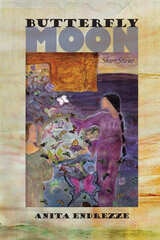
Butterfly Moon
Short StoriesAnita Endrezze
University of Arizona Press, 2012
Anita Endrezze has deep memories. Her father was a Yaqui Indian. Her mother traced her heritage to Slovenia, Germany, Romania, and Italy. And her stories seem to bubble up from this ancestral cauldron. Butterfly Moon is a collection of short stories based on folk tales from around the world. But its stories are set in the contemporary, everyday world. Or are they?
Endrezze tells these stories in a distinctive and poetic voice. Fantasy often intrudes into reality. Alternate “realities” and shifting perspectives lead us to question our own perceptions. Endrezze is especially interested in how humans hide feelings or repress thoughts by developing shadow selves. In “Raven’s Moon,” she introduces the shadow concept with a Black Moon, the “unseen reflection of the known.” (Of course the story is about a witch couple who seem very much in love.) The title character in “The Wife Who Lived on Wind” is an ogress who lives in a world somewhat similar to our own, but only somewhat. “The Vampire and the Moth Woman” reveals shape-shifters living among us.
Not surprisingly, Trickster appears in these tales. As in Native American stories, Trickster might be a fox or a coyote or a raven or a human—or something in between. “White Butterflies” and “Where the Bones Are” both deal with devastating diseases that swept through Yaqui country in the 1530s. Underneath their surfaces are old Yaqui folktales that feature the greatest Trickster of all: Death (and his little brother Fate).
Enjoyably disturbing, these stories linger—deep in our memory.