Results by title
1107 books match the query 'Memoirs' and 53 start with b
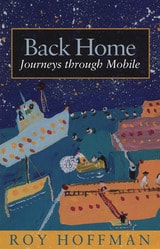
Back Home
Journeys through MobileRoy Hoffman
University of Alabama Press, 2007
After twenty years in New York City, a prize-winning writer takes a "long look back" at his hometown of Mobile, Alabama.
In Back Home: Journeys through Mobile, Roy Hoffman tells stories—through essays, feature articles, and memoir—of one of the South's oldest and most colorful port cities. Many of the pieces here grew out of Hoffman's work as Writer-in-Residence for his hometown newspaper, the Mobile Register, a position he took after working in New York City for twenty years as a journalist, fiction writer, book critic, teacher, and speech writer. Other pieces were first published in the New York Times, Southern Living, Preservation, and other publications. Together, this collection comprises a long, second look at the Mobile of Hoffman's childhood and the city it has since become.
Like a photo album, Back Home presents close-up portraits of everyday places and ordinary people. There are meditations on downtown Mobile, where Hoffman's grandparents arrived as immigrants a century ago; the waterfront where longshoremen labor and shrimpers work their nets; the back roads leading to obscure but intriguing destinations. Hoffman records local people telling their own tales of race relations, sports, agriculture, and Mardi Gras celebrations. Fishermen, baseball players, bakers, authors, political figures--a strikingly diverse population walks across the stage of Back Home.
Throughout, Hoffman is concerned with stories and their enduring nature. As he writes, "When buildings are leveled, when land is developed, when money is spent, when our loved ones pass on, when we take our places a little farther back every year on the historical time-line, what we have still are stories."
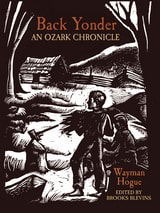
Back Yonder
An Ozark ChronicleCharles Wayman Hogue
University of Arkansas Press, 2016
Wayman Hogue’s stories of growing up in the Ozarks, according to a 1932 review in the New York Times, “brilliantly illuminate mountain life to its very heart and in its most profound aspects.” A standout among the Ozarks literature that was popular during the Great Depression, this memoir of life in rural Arkansas in the decades following the Civil War has since been forgotten by all but a few students of Arkansas history and folklore.
Back Yonder is a special book. Hogue, like his contemporary Laura Ingalls Wilder, weaves a narrative of a family making its way in rugged, impoverished, and sometimes violent places. From one-room schoolhouses to moonshiners, the details in this story capture the essence of a particular time and place, even as the characters reflect a universal quality that will endear them to modern readers.
Historian Brooks Blevins’s new introduction explores the life of Charles Wayman Hogue, analyzes the people and events that inspired the book, and places the volume in the context of America’s discovery of the Ozarks in the years between the World Wars. The University of Arkansas Press is proud to reissue Back Yonder as the first book in the Chronicles of the Ozarks series, making this Arkansas classic available again, ready to be discovered and rediscovered by readers sure to find the book as interesting and entertaining as ever.

Back to Bizkaia
A Basque-American MemoirVince J. Juaristi
University of Nevada Press, 2011
Nevada sheep rancher Joe Juaristi spoke for years about making a trip back to the Spanish Basque Country that he left sixty years earlier, but each time the subject came up the discussion evolved into a family debate about the scope and members of the journey. Finally Joe's son, Vince, secretly resolved to organize the trip that his father wanted and needed--the two of them, traveling alone, making a quiet reunion with Joe's twin sister, who suffers from Alzheimer's, visiting other aging siblings and friends, and recounting the places that formed Joe's memories of his youth.
Back to Bizkaia is part travel book, part memoir of two men exploring their mutual roots and their unique father-son bond. The narrative intertwines an engaging account of the contemporary Basque Country with Joe's experiences as an immigrant making his way in a new country and Vince's memories of growing up in a close Basque-American community in the American West. This is a book about Basques and their American families, but on another level it is every immigrant's story of return to a beloved homeland.
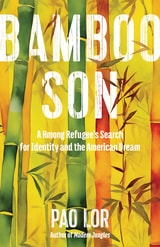
Bamboo Son
A Hmong Refugee’s Search for Identity and the American DreamPao Lor
Wisconsin Historical Society Press, 2026
“In Hmong, the word bamboo or ntsuag has two meanings. It refers to the bamboo plant, which has many significant cultural and practical uses in Hmong life. The word also means orphan. Therefore, bamboo son, in Hmong, means tub ntsuag or orphan son. To survive and succeed as a Hmong orphan, like bamboo, one must be resilient and adaptable, bend without breaking, and stand tall against enormous odds.”
In this follow-up to his acclaimed memoir, Modern Jungles, Pao Lor picks up his story as a young Hmong immigrant building a new life in a new home and shares the narrative of his ensuing journey into adulthood. Lor emerged from war and tragedies in the jungles of Laos and refugee camps of Thailand in the 1970s to pursue a vision of the American dream in Green Bay, Wisconsin, in the 1980s. The distance between his humble beginnings and that dream life was littered with challenges as well as possibilities.
Lor’s transformation from an insecure but determined high school student to a husband, father, teacher, administrator, and author is marked by triumph and defeat, trauma and joy, and always hope and optimism. As he navigates school, first loves, family relationships, and a career, Lor must contend with language barriers, discrimination, and his own inner demons stemming from feelings of inferiority. Threads of his identity—Hmong, American, and Wisconsinite—intersect and occasionally come into conflict.
Lor’s search for belonging comes full circle when he travels to Laos and Thailand with his wife, Maya, in 2022. Seeing his birthplace for the first time in forty-five years, he revisits the isolated mountain villages where he spent his early childhood; the places where his parents and sister died as the family fled the region in the violent aftermath of the Vietnam War; and the two refugee camps where Pao and his siblings lived before being relocated to the United States when he was seven. As he reexamines these memories and reconciles his past, Lor finds peace and the freedom to move forward with his soul renewed.
Lor’s story is an uplifting journey of resilience, adaptation, love, and forgiveness, inspiring readers to reflect on the meaning and accessibility of the American dream.
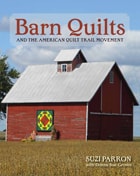
Barn Quilts and the American Quilt Trail Movement
Suzi Parron
Ohio University Press, 2012
The story of the American Quilt Trail, featuring the colorful patterns of quilt squares painted large on barns throughout North America, is the story of one of the fastest-growing grassroots public arts movements in the United States and Canada. In Barn Quilts and the American Quilt Trail Movement Suzi Parron takes us to twenty-five states as well as Canada to visit the people and places that have put this movement on America’s tourist and folk art map.
Through dozens of interviews with barn quilt artists, committee members, and barn owners, Parron documents a journey that began in 2001 with the founder of the movement, Donna Sue Groves. Groves’s desire to honor her mother with a quilt square painted on their barn became a group effort that eventually grew into a county-wide project. Today, quilt squares form a long imaginary clothesline, appearing on more than three thousand barns scattered along one hundred and twenty driving trails.
With more than eighty full-color photographs, Parron documents here a movement that combines rural economic development with an American folk art phenomenon.
Barriers and Belonging
Personal Narratives of DisabilityMichelle Jarman
Temple University Press, 2017
What is the direct impact that disability studies has on the lives of disabled people today? The editors and contributors to this essential anthology, Barriers and Belonging, provide thirty-seven personal narratives thatexplore what it means to be disabled and why the field of disability studies matters.
The editors frame the volume by introducing foundational themes of disability studies. They provide a context of how institutions—including the family, schools, government, and disability peer organizations—shape and transform ideas about disability. They explore how disability informs personal identity, interpersonal and community relationships, and political commitments. In addition, there are heartfelt reflections on living with mobility disabilities, blindness, deafness, pain, autism, psychological disabilities, and other issues. Other essays articulate activist and pride orientations toward disability, demonstrating the importance of reframing traditional narratives of sorrow and medicalization.
The critical, self-reflective essays in Barriers and Belonging provide unique insights into the range and complexity of disability experience.
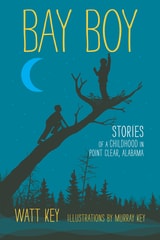
Bay Boy
Stories of a Childhood in Point Clear, AlabamaWatt Key, Illustrations by Murray Key
University of Alabama Press, 2019
Bay Boy is a collection of essays by award-winning young adult author Watt Key, chronicling his boyhood in Point Clear, Alabama. During his childhood, Point Clear was not the tony enclave of today with its spas, art galleries, and multimillion dollar waterfront properties. Rather, it was a sleepy resort community, practically deserted in the winter, with a considerable population of working-class residents.
As Key notes in his introduction, “Life in Point Clear is really about being outside. . . . I have never found a place so perfectly suited to exercise a young boy’s imagination.” Key and his brother filled their days collecting driftwood to make forts, scooting around the bay in a sturdy Stauter boat, and making art and writing stories when it rained.
In a tone that is simple and direct, punctuated by truly hilarious moments. Key writes about Gulf Coast traditions including Mardi Gras, shrimping, fishing, dove hunting, jubilees, camping out, and bracing for hurricanes. These stories are full of colorful characters— Nasty Bill Dickson, a curmudgeonly tow-truck driver; I’llNeeda, a middle-aged homeless woman encamped in a shack across the road; and the Ghost of Zundel’s Wharf, “the restless soul of a long-dead construction worker.” The stories are illustrated by charming and evocative artwork by the author’s brother Murray Key.
Be Not Afraid
A Southern Journey Through Law, Liberty, and Civil RightsJack Drake
University of Alabama Press, 2026
A civil rights attorney’s unflinching memoir about the fight against segregation and systemic racism through landmark legal battles in Alabama
Be Not Afraid: A Southern Journey Through Law, Liberty, and Civil Rights is a timely and unflinching memoir from civil rights attorney Jack Drake, who has spent decades on the front lines of Alabama’s legal battles for racial justice. Raised in a segregated community in Gardendale, Alabama, Drake came of age during the civil rights movement and became a pivotal figure in cases that reshaped the state’s legal and moral landscape.
Drake helped reform Alabama’s grossly inadequate mental health system and supported voting rights efforts throughout Alabama. His career underscores the crucial role private attorneys and grassroots advocates played in enforcing civil rights laws long after their passage.
Through vivid recollections of courtroom battles, civil rights alliances, and personal transformation, Be Not Afraid offers an intimate view into the persistence and courage required to challenge systemic injustice. At a time when debates over equity and democracy remain pressing, Drake’s story is both a powerful reflection on the past and a call to action for the present. It speaks to the enduring importance of legal advocacy and community solidarity in the fight for a more just society, making it essential reading for those engaged in civil rights history, law, or social change.
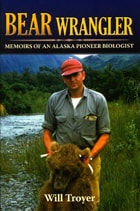
Bear Wrangler
Memoirs of an Alaska Pioneer BiologistWill Troyer
University of Alaska Press, 2008
Beautiful Mystery
Living in a Wordless WorldDanilyn Rutherford
Duke University Press, 2025
Now in her twenties, Millie has never been able to express herself verbally, but she has a thriving social environment rooted in the people around her and in things her companions and family can see, hear, smell, and feel. Life in Millie’s world is far richer than might be immediately evident to those who think and communicate in conventional ways.
Beautiful Mystery explores what it means to be a person in the spaces between what we can and cannot say, and how we can fight to care for those we love when they don’t have the language to fight for themselves. Through her unique lens as a mother and an anthropologist, Rutherford tells the story of arriving in Millie’s world, what she found there, and how Millie showed her that words aren’t always what makes us human. Enlightening and deeply felt, Beautiful Mystery proves that you don’t have to understand someone to love them—a lesson that, if we all learned it, might allow us to live together in a fractured world.
Because I'd Hate to Just Disappear
My Cancer, My Self, Our StoryDon Hardy
University of Nevada Press, 2018
Because I’d Hate to Just Disappear is a portrait of a husband and wife, Don and Heather Hardy, thrown into the physical and emotional machinery of Don being diagnosed with leukemia and going through chemotherapy and treatment over a period of close to two years.
In this thoughtful and exquisite account, Don and Heather narrate Don’s struggle in real-time. Disarmingly honest, they recount each intimate stage of a couple living through cancer together, the mental and physical struggles, the humor and visceral emotion to reveal how two very different personalities shape—and are shaped by—the experience of cancer and its treatment. Through these moments emerge a constant flow of human kindness and discovery that lifts them each day.
Because We Must
A MemoirTracy Youngblom
University of Massachusetts Press, 2025
A breathtaking memoir navigating caregiving, motherhood, and letting go after a tragic accident
On March 16th, 2015, Tracy Youngblom was rushing to finish last-minute preparations for a class she would teach the next day when there was an unexpected knock at her door. Grudgingly, she answered it to find a uniformed officer standing on her front porch. Youngblom realized then that her youngest son Elias should have been arriving home from a trip to Fargo where he was visiting friends at North Dakota State University. The officer told her that Elias had been in an accident and was in the hospital. Later, she learned that his car had been struck nearly head on by a drunk driver going 70 miles per hour. Denial and shock took over as she made the long drive from their home in Coon Rapids, Minnesota. When she saw Elias in the ICU—swollen beyond recognition, covered in stitches, with a myriad of tubes attached to him—the full gravity of the situation descended.
On the day of the crash, Elias had been driving back to Coon Rapids to celebrate National Ice Cream Day with friends. An avid lover of music, he’d been working as a conductor while wrapping up his degree, moving toward his dream of becoming a marching band director. After the accident, Elias begins his long journey of recovery, which is set back when doctors announce that his optic nerves are dead. Despite it all, Elias never wavers, approaching each challenge with resilience, grace, and humor.
Alongside Elias, Youngblom faces her own challenges, staying by his side in the ICU for weeks, coordinating with other family members and friends, and never flagging in her care of her severely injured son, yet all the while coping with her own emotions, fears, and trauma. She struggles to support Elias, heal her self, and let him go on with his life. In this riveting memoir, Youngblom traverses her family’s lives before and after the accident, capturing the complications of grief, recovery, and the strength it takes to move forward—because we must.
Because the Light Will Not Forgive Me
Essays from a PoetShaun T, Griffin
University of Nevada Press, 2019
In this luminous and moving book of essays, award-winning author Shaun Griffin weaves together a poetic meditation on living meaningfully in this world. Anchored in the American West but reaching well beyond, he recounts his discoveries as a poet and devoted reader of poetry, a teacher of the disadvantaged, a friend of poets and artists, and a responsible member of the human family.
Always grounded in place, be it Nevada, South Africa, North Dakota, Spain, Zimbabwe, or Mexico, Griffin confronts the world with an openness that allows him to learn and grow from the people he meets. This is a meditation on how all of us can confront our own influences to achieve wholeness in our lives. Along with Griffin, readers will reflect on how they might respond to a homeless man walking through central Nevada, viewing the open desert as Thoreau might have viewed Walden, seeing the US-Mexico border as a region of lost identity, reconciling how poets who live west of the Hudson River find anonymity to be their laurel, and experiencing how writing poetry in prison becomes lifesaving.
Whether poets or places in the West or beyond, experiences with other cultures, or an acute awareness that poetry is the refuge of redress—all have influenced Griffin’s writing and thinking as a poet and activist in the Great Basin. The mindfulness of Because the Light Will Not Forgive Me demonstrates that even though the light does not forgive, it still reveals.
Before the Manifesto
The Life Writings of Mary Lois Walker MorrisMelissa Lambert Milewski
Utah State University Press, 2007
Mary Morris's memoir frames her 1879 to 1887 diary with both reflections on earlier years and passages that parallel entries in the day book, giving readers a better understanding of how she retrospectively saw her life. The thoroughly annotated diary offers the daily experience of a woman who kept a largely self-sufficient household, had a wide social network, ran her own business, wrote poetry, and was intellectually curious. The years of "the Raid" (federal prosecution of polygamists) led Mary and Elias Morris to hide their marriage on "the underground," and her to perjury in court during Elias's trial for unlawful cohabitation. The book ends with Mary Lois's arrival at the Salt Lake Depot after three years in exile in Mexico with a polygamist colony.
Beginner's Luck
Dispatches from the Klamath MountainsMalcolm Terence
Oregon State University Press, 2018
In the late 1960s, Malcolm Terence left his job as a reporter for the Los Angeles Times to look for adventure and may have found more than he bargained for. The era had triggered unprecedented social and political changes in America, tectonic shifts that challenged war and the social order that oppressed people along lines of class, gender, and race. One branch was a back-to-the-land movement, and Terence, who had just traveled for a year managing a rock band, strayed into Black Bear Ranch, a commune just starting in a remote corner of the Klamath Mountains near the California-Oregon border.
Black Bear Ranch still exists, but many of its early residents eventually returned to urban civilization. A few, Terence among them, stayed on in neighboring river towns. Some tried logging, others gold mining, and some tried growing marijuana, all with mixed success. The local mining and timber communities had a checkered opinion of their new hippie neighbors, as did the Native tribes, but it was the kind of place where people helped each other out, even if they didn’t always agree.
When wildfires grew large, Terence and other veterans of the commune joined the fire crews run by the US Forest Service. In between, the Black Bear expats built homesteads, planted gardens, delivered babies, and raised their children. They gradually overcame the skepticism of the locals and joined them in political battles against the use of herbicides in the forest and the Forest Service’s campaign to close all the mining claims. As in the best of organizing efforts, the organizers learned as much as they led.
Beginner’s Luck will appeal to anyone who experienced life on a commune in the 1960s–1970s or who wants to learn about this chapter in modern American history. Terence offers insight into environmental activism and the long history of conflict between resource exploitation and Native American rights without lecturing or pontificating. With wit, humor, and humility, his anecdotal essays chronicle a time and place where disparate people came together to form an unlikely community.
Being Somebody and Black Besides
An Untold Memoir of Midcentury Black LifeGeorge B. Nesbitt
University of Chicago Press, 2021
The late Chicagoan George Nesbitt could perhaps best be described as an ordinary man with an extraordinary gift for storytelling. In his newly uncovered memoir—written fifty years ago, yet never published—he chronicles in vivid and captivating detail the story of how his upwardly mobile Midwestern Black family lived through the tumultuous twentieth century.
Spanning three generations, Nesbitt’s tale starts in 1906 with the Great Migration and ends with the Freedom Struggle in the 1960s. He describes his parents’ journey out of the South, his struggle against racist military authorities in World War II, the promise and peril of Cold War America, the educational and professional accomplishments he strove for and achieved, the lost faith in integration, and, despite every hardship, the unwavering commitment by three generations of Black Americans to fight for a better world. Through all of it—with his sharp insights, nuance, and often humor—we see a family striving to lift themselves up in a country that is working to hold them down.
Nesbitt’s memoir includes two insightful forewords: one by John Gibbs St. Clair Drake (1911–90), a pioneer in the study of African American life, the other a contemporary rumination by noted Black studies scholar Imani Perry. A rare first-person, long-form narrative about Black life in the twentieth century, Being Somebody and Black Besides is a remarkable literary-historical time capsule that will delight modern readers.
Best of Times, Worst of Times
Memoirs of a Political EducationWalter Laqueur
Brandeis University Press, 2009
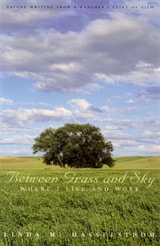
Between Grass And Sky
Where I Live And WorkLinda M. Hasselstrom
University of Nevada Press, 2005
An important collection of personal essays from one of the most widely published American environmental writers addresses the effects of ranching on the environment. Acclaimed nature writer Linda M. Hasselstrom sees herself as a rancher who writes—a definition that shapes the tone and content of her writing. Now owner of the South Dakota cattle ranch where she grew up, Hasselstrom lives in intimate contact with the natural world. "Nature is to me both home and office. Nature is my boss, manager of the branch office—or ranch office—where I toil to convert native grass into meat. . . . If I want to keep my job as well as my home, I pay attention not only to Nature's orders, but to her moods and whims." She writes knowingly of the rancher's toil and of the intelligence and dignity of the wild and domesticated creatures that share the prairie grassland she calls home. As one who knows and loves the land, Hasselstrom appreciates the concerns of environmental activists and understands that responsible ranchers can play a role in nurturing a healthy rural ecosystem. Rich in detail, humor, and pathos, these essays offer wry commentary on the scope of human folly and the even greater human potential for community and empathy. "Only people who live in the country," she writes, "could form a relationship with nature so intimate that they feel concern for one lonely duck. People who live in cities . . . only glimpse nature from high windows or speeding vehicles. Even wilderness lovers who probe deeply are only passing through. We who live on the land truly live within the land, each of our lives only one among the other inhabitants of the place." These are essays to read with wonder and delight, to relish and ponder. Available in hardcover and paperback.
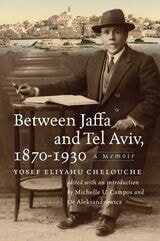
Between Jaffa and Tel Aviv, 1870–1930
A MemoirYosef Eliyahu Chelouche
Brandeis University Press, 2025
Born in Jaffa in 1870, Yosef Eliyahu Chelouche grew up within a notable Sephardi family in the local Jewish community. He went on to become a prominent entrepreneur; a founder of Tel Aviv; and a fierce critic of the Ashkenazi Zionist leadership, Arab nationalism, and British colonial sectarianism; before emerging, in the last decade of his life, as an anguished public figure struggling to repair Arab-Jewish relations.
His memoir paints an intimate portrait of life in Palestine at the turn of the twentieth century, told from the perspective of a Middle Eastern Jew deeply embedded in local society. By centering on the world and experiences of a native Jew who was an eyewitness to and participant in the unfolding conflict in Palestine, this book shows how the course of Zionist politics and Jewish-Arab relations in pre-state Palestine might have taken alternative pathways. A comprehensive introduction sets the scene in late nineteenth- and early twentieth-century Jaffa and thoughtful annotations contextualize Chelouche’s story within the modern history of Palestine and Israel. Between Jaffa and Tel Aviv, 1870–1930 tells the fascinating story of a civic leader—and offers a complex view of the various cultural, social, and political forces that forged multilayered Jewish identities in the Middle East. The book includes a family tree and is illustrated with photographs of the family and scenes of Jaffa and early Tel Aviv.
Between Two Worlds
My Life as a Child of Deaf AdultsDavid Sorensen
Gallaudet University Press, 2019
Sorensen relays the dynamics of his family life; he had a strained relationship with his father, who was an active leader and role model in the Deaf community and the Mormon Church, yet struggled to bond with his own son. Sorensen rebelled as a youth and left home as a teenager, completely detaching from the Deaf community. After struggling to establish himself as an independent adult, he discovered that he wanted to return to the Deaf world and use his ASL fluency and cultural understanding as a mental health therapist and community advocate. Now he considers himself an ambassador between the Deaf and hearing worlds, as well as between the older and younger generations of Deaf people. Between Two Worlds: My Life as a Child of Deaf Adults shares the unique experiences of a coda and passes on the rich cultural past shared by the American Deaf community.
Between What Was and What Is
EssaysAdriana Páramo
University of Massachusetts Press, 2027
A collection that explores the space between personal loss and collective crisis
The essays in Between What Was and What Is address timely questions of power, identity, history, and resilience. Ranging from intimate personal reflection to global crisis, Adriana Páramo examines the contradictions and tensions that define how we live—and how we make sense of what we’ve lived through.
Grounded in the present moment, Páramo engages directly with current events: the death of Pope Francis and the debates about reform his passing has reopened, and the ongoing devastation of the war in Ukraine. She grapples with the lasting weight of colonial, familial, and national trauma, and with the experience of returning to a homeland that no longer matches memory. These essays enter a broader conversation about the liberation of brown and Latina women—voices frequently pushed to the margins of predominantly white feminist spaces. She asks what drives people to persist in the face of systemic inequality. An encounter with a Kumari Devi in Nepal becomes an occasion to examine faith, ritual, and the assumptions we bring to spiritual experience. Throughout, Páramo moves between the everyday and the sacred to interrogate how culture and identity are lived and inherited.
From personal reflections on age, feminism, and rebuilding after failure to larger examinations of race and systemic oppression, Between What Was and What Is asks readers to engage seriously with difficult realities. It takes stock of what we inherit, what we survive, and what we carry forward.
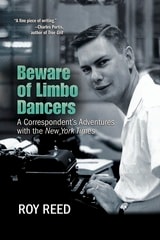
Beware of Limbo Dancers
A Correspondent’s Adventures with the New York TimesRoy Reed
University of Arkansas Press, 2012

Beyond Market Value
A Memoir of Book Collecting and the World of Venture CapitalBy Annette Campbell-White
University of Texas Press, 2019
Beyond Market Value chronicles Annette Campbell-White’s remarkable life, from a childhood spent in remote mining camps throughout the British Commonwealth, where books created an imaginary home; to her early adulthood in London, where she first discovered a vocation as a book collector; to Silicon Valley, where she built a pioneering career as a formidable venture capitalist. She recalls the impulsive purchase of the first book in her collection, T. S. Eliot’s A Song for Simeon, and her pursuit of rare editions of all one hundred titles listed in Cyril Connolly’s The Modern Movement. Campbell-White’s collecting and career peaked in 2005, when she acquired the last of the Connolly titles and was first named to Forbes’ Midas List, the annual ranking of the most successful dealmakers in venture capital.
In 2007, out of concern for their preservation, Campbell-White rashly sold the Connolly titles she had spent more than twenty years assembling, leading to a new appreciation of what remained of her collection and, going forward, a broader focus on collecting modernist letters, manuscripts, and ephemera. Beyond Market Value is both a loving tribute to literary collecting and a telling account of the challenges of being a woman in the male-dominated world of finance.
Beyond the Whiteness of Whiteness
Memoir of a White Mother of Black SonsJane Lazarre
Duke University Press, 1996
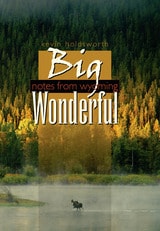
Big Wonderful
Notes from WyomingKevin Holdsworth
University Press of Colorado, 2006
Growing up in Utah, Holdsworth couldn't wait to move away. Once ensconced on the East Coast, however, he found himself writing westerns and dreaming of the mountains he'd skied and climbed. Fed up with city life, he moved to a small Wyoming town.
In Big Wonderful, he writes of a mountaineering companion's death, the difficult birth of his son, and his father's terminal illness - encounters with mortality that sharpened his ideas about risk, care, and commitment. He puts a new spin on mountaineering literature, telling wild tales from his reunion with the mountains but also relating the surprising willpower it took to turn back from risks he would have taken before he became a father. He found he needed courage to protect and engage deeply with his family, his community, and the wild places he loves.
Holdsworth's essays and poems are rich with anecdotes, characters, and vivid images. Readers will feel as if they themselves watched a bear destroy an entire expedition's food, walked with his great-great-grandmother along the icy Mormon Trail, and tried to plant a garden in Wyoming's infamous wind.
Readers who love the outdoors will enjoy this funny and touching take on settling down and adventuring in the West's most isolated country.
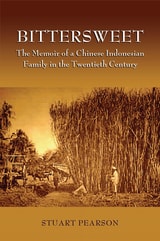
BitterSweet
The Memoir of a Chinese Indonesian Family in the Twentieth CenturyStuart Pearson
National University of Singapore Press, 2013
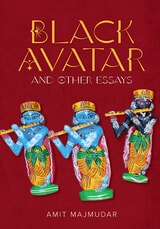
Black Avatar
and Other EssaysAmit Majmudar
Acre Books, 2023
The eight pieces in this deeply engaging volume reflect author Amit Majmudar’s comprehensive studies of American, European, and Indian traditions, as well as his experiences in both suburban Ohio and the western Indian state of Gujarat. The volume begins with the title piece, a fifteen-part examination of “How Colorism Came to India.” Tracing the evolution of India’s bias in favor of light skin, Majmudar reflects on the effects of colonialism, drawing upon sources ranging from early Sanskrit texts to contemporary film and television.
Other essays illuminate subjects both timely and timeless. “The Ramayana and the Birth of Poetry” discusses how suffering is portrayed in art and literature (“The spectrum of suffering: slapstick on one end, scripture on the other, with fiction and poetry . . . in the vastness between them”), while in “Five Famous Asian War Photographs”—a 2018 Best American Essays selection—Majmudar analyzes why these iconic images of atrocity have such emotional resonance. In “Nature/Worship,” another multi-part piece, the author turns his attention to climate change, linking notions of environmentalism to his ancestral tradition of finding divinity within the natural world, connections that form the basis of religious belief.
Perhaps the greatest achievement of these wide-ranging essays is the prose itself—learned yet lively, erudite yet accessible—nimbly revealing the workings of a wonderfully original mind.
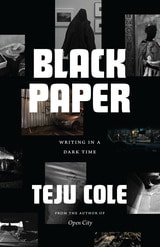
Black Paper
Writing in a Dark TimeTeju Cole
University of Chicago Press, 2021
“Darkness is not empty,” writes Teju Cole in Black Paper, a book that meditates on what it means to sustain our humanity—and witness the humanity of others—in a time of darkness. One of the most celebrated essayists of his generation, Cole here plays variations on the essay form, modeling ways to attend to experience—not just to take in but to think critically about what we sense and what we don’t.
Wide-ranging but thematically unified, the essays address ethical questions about what it means to be human and what it means to bear witness, recognizing how our individual present is informed by a collective past. Cole’s writings in Black Paper approach the fractured moment of our history through a constellation of interrelated concerns: confrontation with unsettling art, elegies both public and private, the defense of writing in a time of political upheaval, the role of the color black in the visual arts, the use of shadow in photography, and the links between literature and activism. Throughout, Cole gives us intriguing new ways of thinking about blackness and its numerous connotations. As he describes the carbon-copy process in his epilogue: “Writing on the top white sheet would transfer the carbon from the black paper onto the bottom white sheet. Black transported the meaning.”
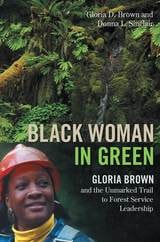
Black Woman in Green
Gloria Brown and the Unmarked Trail to Forest Service LeadershipGloria D. Brown
Oregon State University Press, 2020
As scholars awaken to the racist history of public land management and the ways that people of color have been excluded from contemporary notions of nature and wilderness, Brown’s story provides valuable insight into the roles that African Americans have carved out in the outdoors generally and in the field of environmental policy and public lands management specifically. Drawing on her powerful communication and listening skills, her sense of humor, and her willingness to believe in the basic goodness of humanity, Brown conducted civil rights trainings and shattered glass ceilings, all while raising her children alone.
Written in an engaging and accessible style with historian Donna Sinclair, Brown’s story provides a fascinating case study for public administration and contributes to a deeper understanding of the environmental and civil rights movements of the twentieth century, particularly the role that racial discrimination has played in national forests, parks, and other wilderness spaces. It also highlights issues of representation in the federal government, women’s history, the history of the American West, and literature associated with African American experiences in predominately white societies.

Bleeder
A MemoirShelby Smoak
Michigan State University Press, 2013
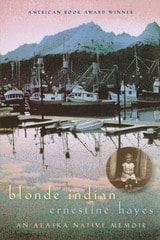
Blonde Indian
An Alaska Native MemoirErnestine Hayes
University of Arizona Press, 2006
Told in eloquent layers that blend Native stories and metaphor with social and spiritual journeys, this enchanting memoir traces the author’s life from her difficult childhood growing up in the Tlingit community, through her adulthood, during which she lived for some time in Seattle and San Francisco, and eventually to her return home. Neither fully Native American nor Euro-American, Hayes encounters a unique sense of alienation from both her Native community and the dominant culture. We witness her struggles alongside other Tlingit men and women—many of whom never left their Native community but wrestle with their own challenges, including unemployment, prejudice, alcoholism, and poverty.
The author’s personal journey, the symbolic stories of contemporary Natives, and the tales and legends that have circulated among the Tlingit people for centuries are all woven together, making Blonde Indian much more than the story of one woman’s life. Filled with anecdotes, descriptions, and histories that are unique to the Tlingit community, this book is a document of cultural heritage, a tribute to the Alaskan landscape, and a moving testament to how going back—in nature and in life—allows movement forward.
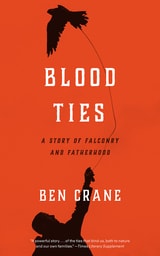
Blood Ties
A Story of Falconry and FatherhoodBen Crane
University of Chicago Press, 2020
In this artful and moving memoir, we follow Crane on his remarkable journey of flight and return. Traveling from the United Kingdom to Pakistan, we learn first about the history and practice of falconry, a beautiful and brutal partnership between humans and birds that has persisted for thousands of years. And as Crane’s personal story unfolds, we come to understand how he found solace and insight through his relationships with these animals. “I saw that my feelings toward nature, and birds of prey in particular, ran in parallel with my feelings for my son,” Crane writes. “I worked out that they were, in fact, two sides of the same coin—the deep love of one could, with gentle observation, inform and unlock the deep love for the other. . . . Perhaps this then is the central theme of my story.”
Many of us rely upon animal companions to provide a sense of joy, compassion, and empathy. But as Blood Ties teaches us, our relationships with the creatures among us can also transform us, illuminating what it means both to be human and to be part of the greater wild—what it means to be alive.
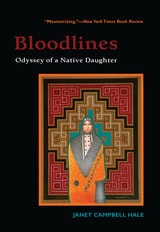
Bloodlines
Odyssey of a Native DaughterJanet Campbell Hale
University of Arizona Press, 1998

Bloom
A Transgender MemoirShane A. McCammon
University of Utah Press, 2027

Body Story
Julia K. De Pree
Ohio University Press, 2004
For De Pree, between being a girl and being a woman, there was starvation. Body Story is her intimate account of girlhood, virginity, anorexia, and motherhood. De Pree's prose is spare and unguarded, revealing in vivid flashbacks and poignant vignettes the sources of her inner pain.
In high school, the five-foot-ten De Pree weighed as little as 114 pounds. She was too weak to raise her arms above her head. “In a paradoxical way, I starved my body in order to understand my life,” she writes. “I had to place my body in suspension before I could move physically into sexuality. Starving allowed me to create an interim space between innocence and experience.”
De Pree renders the starkness of anorexia along with the process of recovery, relapse, and, ultimately, redemption. She also tells the story of the physical landscape, from her origins in the Midwest to the American South, Paris, and the vast New Mexican desert, as well as the psychic landscape of her body as it encounters the joys and challenges of maturation, childbirth, and motherhood.
De Pree offers readers a new way of understanding women¿s bodily experience, as she writes about the mystery and the meaning of her illness. As many as eight million Americans suffer from eating disorders. Body Story, unlike clinical reports or news accounts, illuminates the complexity of anorexia as the narrative moves toward a subjective and deeply personal truth.
This evocative and often radiant vision is a unique window into womanhood and selfhood in middle-class, contemporary America.

Bond
The Nature of UsJill Sission Quinn
University of Iowa Press, 2027
Bonelight
Ruin And Grace In The New SouthwestMary Sojourner
University of Nevada Press, 2004
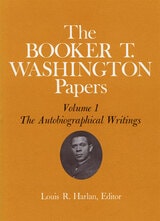
Booker T. Washington Papers Volume 1
The Autobiographical WritingsBooker T. Washington
University of Illinois Press, 1972
Volume 1 contains Washington's Up from Slavery, one of the most widely read American autobiographies, in addition to The Story of My Life and Work, and six other autobiographical writings. Together, the selections provide readers with a first step toward understanding Washington and his immense impact. These writings reveal the moral values he absorbed from his mid-nineteenth-century experiences and teachers. As importantly, they present him to the world as he wished to be seen: as the black version of the American success hero and an exemplar of the Puritan work ethic that he believed to be the secret of his success. These works, along with so much of Washington's writing, served as a model for many black Americans striving to overcome poverty and prejudice.
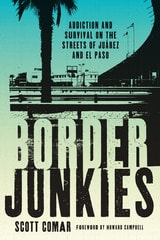
Border Junkies
Addiction and Survival on the Streets of Juárez and El PasoBy Scott Comar
University of Texas Press, 2011
The drug war that has turned Juárez, Mexico, into a killing field that has claimed more than 7,000 lives since 2008 captures headlines almost daily. But few accounts go all the way down to the streets to investigate the lives of individual drug users. One of those users, Scott Comar, survived years of heroin addiction and failed attempts at detox and finally cleaned up in 2003. Now a graduate student at the University of Texas at El Paso in the history department's borderlands doctoral program, Comar has written Border Junkies, a searingly honest account of his spiraling descent into heroin addiction, surrender, change, and recovery on the U.S.-Mexico border.
Border Junkies is the first book ever written about the lifestyle of active addiction on the streets of Juárez. Comar vividly describes living between the disparate Mexican and American cultures and among the fellow junkies, drug dealers, hookers, coyote smugglers, thieves, and killers who were his friends and neighbors in addiction—and the social workers, missionaries, shelter workers, and doctors who tried to help him escape. With the perspective of his anthropological training, he shows how homelessness, poverty, and addiction all fuel the use of narcotics and the rise in their consumption on the streets of Juárez and contribute to the societal decay of this Mexican urban landscape. Comar also offers significant insights into the U.S.-Mexico borderland's underground and peripheral economy and the ways in which the region's inhabitants adapt to the local economic terrain.
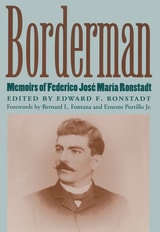
Borderman
Memoirs of Federico José María RonstadtEdited by Edward F. Ronstadt; Forewords by Bernard L. Fontana and Ernesto Portillo, Jr.
University of Arizona Press, 2003
Writing proudly of his Mexican and American heritages, Ronstadt offers readers an extraordinary portrait of the Arizona-Mexico borderlands during the late nineteenth century. His memoirs provide a richness of detail and insight unmatched by traditional histories, relating such scenarios as the hardships of Yaqui hardrock miners working under primitive conditions, the travails of pearl divers in the Gulf of California, and the insurrection of Francisco Serna in 1875 Sonora. They also depict the simple activities of childhood, with its schooling and musical training, its games and mischief. Ronstadt relates his apprenticeship to a wagon- and carriage-maker in Tucson, recalling labor relations in the shop, the establishment of his own business, and the joys and anguish of his personal life. He tells of how he drew on talents nurtured in childhood to become a musician and bandleader, playing weekly concerts with Club Filarmónica Tucsonense for nine years—musical talents that were eventually passed on to his children, his grandchildren (including Linda), and great-grandchildren.
Through Ronstadt's memories, we are better able to understand the sense of independence and self-reliance found today among many lifelong residents of Sonora and Baja California—people isolated from major supply sources and centers of power—and to appreciate a different view of Tucson's past. Enhanced by 22 historical photos, Borderman is a treasure trove of historical source material that will enlighten all readers interested in borderlands history.

Borges in Sicily
Journey with a Blind GuideAlejandro Luque
Haus Publishing, 2017
This winding journey features literati both past and present, indigenous and foreign. These characters live alongside Luque’s own comments and observations in a narrative that is rich in historical and personal detail. The writer who inspired this great journey, Borges himself, becomes a character in this narrative that is infused with extracts and reflections from his essays and poetry. Borges in Sicily acts as a travel diary, a guide to the most fascinating places in Sicily, a recounting of Borges’s journey around the island, and a deeply poetic story of Luque’s own adventures. The book also includes twenty-three photographs from the renowned Magnum photographer Ferdinando Scianna, and it won the 1st Premio International del Libros de Viajes.
Born in the Delta
Reflections on the Making of a Southern White SensibilityMargaret Bolsterli
University of Arkansas Press, 2000
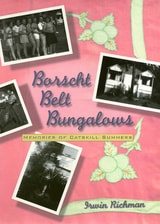
Borscht Belt Bungalows
Memoirs Of Catskill SummersIrwin Richman
Temple University Press, 2003
These were not glamorous places, and middle-class Jews today remember the colonies with either aversion or fondness. Irwin Richman's narrative, anecdotes, and photos recapture everything from the traffic jams leaving the city to the strategies for sneaking into the casinos of the big hotels. He brings to life the attitudes of the renters and the owners, the differences between the social activities and swimming pools advertised and what people actually received. He reminisces about the changing fashion of the guests and owners—everything that made summers memorable.
The author remembers his boyhood: what it was like to spend summers outside the city, swimming in the Neversink, "noodling around," and helping with the bungalow operation, while Grandpa charged the tenants and acted as president of Congregation B'nai Israel of Woodbourne, N.Y. He also traces the changes in the Catskills, including the influx of Hasidic families. Richman talks about what it's like to go back and to see the ghosts of resorts along the roads he once traveled.
Bread
A Memoir of HungerLisa Knopp
University of Missouri Press, 2025
When she was 54, Lisa Knopp’s weight dropped to a number on the scale that she hadn’t seen since seventh grade. The severe food restricting that left her thin and sick when she was 15 and 25 had returned. This time, she was determined to understand the causes of her malady and how she could heal from a condition that is caused by a tangle of genetic, biological, familial, psychological, cultural, and spiritual factors. This compelling memoir, at once a food and illness narrative, explores the forces that cause eating disorders and disordered eating, including the link between those conditions in women, middle-aged and older, and the fear of aging and ageism.
Winner of the 2017 Nebraska Book Award for Memoir
2017 Choice Outstanding Academic Title
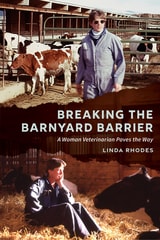
Breaking the Barnyard Barrier
A Woman Veterinarian Paves the WayLinda Rhodes
University of Nevada Press, 2026
In Breaking the Barnyard Barrier, Linda Rhodes tells the story of how a woman, through grit and tears, made her way in a man’s world and blazed a path that prevailed against career stereotypes.
Brewtown Tales
More Stories from Milwaukee and BeyondJohn Gurda
Wisconsin Historical Society Press, 2022
Brief Interviews with the Romantic Past
Kathryn Nuernberger
The Ohio State University Press, 2017
With all the astonishments of history and the intimacy of memoir, Kathryn Nuernberger’s collection juxtaposes peripheral figures from the French Revolution—the assassin, the executioner, the mistress, the spy, the son of a slave, the transgender swordfighter—with the oral histories of poachers, prophets, well witches, and ghosts of the Ozarks a century later. In essays that are equal parts historical and personal, Nuernberger brings the marvelous strangeness of the past into our present moment with wry wit and insight. Nuernberger has an eye for salvaging overlooked snapshots of human decency and moments of moral courage—the memories of which we might just want to save for later.
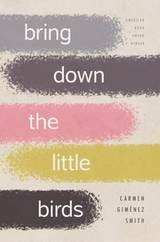
Bring Down the Little Birds
On Mothering, Art, Work, and Everything ElseCarmen Giménez Smith
University of Arizona Press, 2010
Writing in fragmented yet coherent sections, the author shares with us her interior monologue, affording the reader a uniquely honest, insightful, and deeply personal glimpse into a woman’s first and second journeys into motherhood. Giménez Smith begins Bring Down the Little Birds by detailing the relationship with her own mother, from whom her own concept of motherhood originated, a conception the author continually reevaluates and questions over the course of the book.
Combining fragments of thought, daydreams, entries from notebooks both real and imaginary, and real-life experiences, Giménez Smith interrogates everything involved in becoming and being a mother for both the first and second times. She wonders what her children will one day know about her own “secret life,” meditates on the physical effects of pregnancy, and questions the myths about, nostalgia for, and glorification of motherhood.
While Giménez Smith incorporates universal experiences of motherhood that other authors have detailed throughout literature, what separates her book from these many others is that her reflections are captured in a style that establishes an intimacy and immediacy between author and reader through which we come to know the secret life of a mother and are made to question our own conception of what motherhood really means.
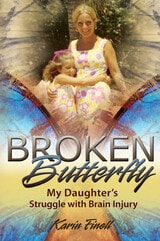
Broken Butterfly
My Daughter's Struggle with Brain InjuryKarin Finell
University of Missouri Press, 2012
“It all began with the bite of a mosquito. Yes, with a bite of this pesky, but seemingly so innocuous little insect that had been sucking her blood. Not just one, but hundreds had punctured her arms and legs with red marks which later swelled to small welts. Who would ever have thought that our family's life would become derailed, that its tightly woven fabric would eventually fray and break—all from the bite of a mosquito?”
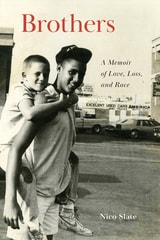
Brothers
A Memoir of Love, Loss, and RaceNico Slate
Temple University Press, 2023
Brothers is Nico Slate’s poignant memoir about Peter Slate, aka XL, a Black rapper and screenwriter whose life was tragically cut short. Nico and Peter shared the same White American mother but had different fathers. Nico’s was White; Peter’s was Black. Growing up in California in the 1980s and 1990s, Nico often forgot about their racial differences until one night in March 1994 when Peter was attacked by a White man in a nightclub in Los Angeles.
Nico began writing Brothers with the hope that investigating the attack would bring him closer to Peter. He could not understand that night, however, without grappling with the many ways race had long separated him from his brother.
This is a memoir of loss—the loss of a life and the loss at the heart of our racial divide—but it is also a memoir of love. The love between Nico and Peter permeates every page of Brothers. This achingly beautiful memoir presents one family’s resilience on the fault lines of race in contemporary America.