491 books match the query 'Moral and ethical aspects' and 21 start with b

cover of Banking for a Better World: Nanno Kleiterp in Conversation with Marijn Wiersma

Banking for a Better World

Nanno Kleiterp in Conversation with Marijn Wiersma

Nanno Kleiterp

Amsterdam University Press, 2017

When we look at all the challenges facing the world, including inequality, population migration, and climate change, we can see a role for development banking in nearly all of them. But will that role be played for good or ill? This book brings together two people who collectively draw on their forty-five years of experience in that world to argue that development banking can-and must-play a constructive role. We only need to read the news to find public outrage at tales of short-sighted greed in the financial world. But what happens when banks invest in long-term sustainability? Readers will find a fascinating example in the journey of the Dutch development bank FMO. At times global in perspective, at other moments intimately personal, Banking for a Better World interweaves candid anecdotes with development history, as well as banking lessons with client interviews, to deliver a powerful argument for a business model that generates profit through impact, and impact through profit. This is an important and accessible must-read for anyone involved in banking, business, policy making, and civil society as a whole. Banking for a Better World challenges us to start finding overlaps between our own lives and global issues and to bridge the distance between our personal needs and those of our planet.
[more]
cover of Before the Law: Humans and Other Animals in a Biopolitical Frame

Before the Law

Humans and Other Animals in a Biopolitical Frame

Cary Wolfe

University of Chicago Press, 2012

Animal studies and biopolitics are two of the most dynamic areas of interdisciplinary scholarship, but until now, they have had little to say to each other. Bringing these two emergent areas of thought into direct conversation in Before the Law, Cary Wolfe fosters a new discussion about the status of nonhuman animals and the shared plight of humans and animals under biopolitics.
 
Wolfe argues that the human­­­-animal distinction must be supplemented with the central distinction of biopolitics: the difference between those animals that are members of a community and those that are deemed killable but not murderable. From this understanding, we can begin to make sense of the fact that this distinction prevails within both the human and animal domains and address such difficult issues as why we afford some animals unprecedented levels of care and recognition while subjecting others to unparalleled forms of brutality and exploitation. Engaging with many major figures in biopolitical thought—from Heidegger, Arendt, and Foucault to Agamben, Esposito, and Derrida—Wolfe explores how biopolitics can help us understand both the ethical and political dimensions of the current questions surrounding the rights of animals.
[more]
cover of Behind Closed Doors: IRBs and the Making of Ethical Research

Behind Closed Doors

IRBs and the Making of Ethical Research

Laura Stark

University of Chicago Press, 2011
Although the subject of federally mandated Institutional Review Boards (IRBs) has been extensively debated, we actually do not know much about what takes place when they convene. The story of how IRBs work today is a story about their past as well as their present, and Behind Closed Doors is the first book to meld firsthand observations of IRB meetings with the history of how rules for the treatment of human subjects were formalized in the United States in the decades after World War II.
 
Drawing on extensive archival sources, Laura Stark reconstructs the daily lives of scientists, lawyers, administrators, and research subjects working—and “warring”—on the campus of the National Institutes of Health, where they first wrote the rules for the treatment of human subjects. Stark argues that the model of group deliberation that gradually crystallized during this period reflected contemporary legal and medical conceptions of what it meant to be human, what political rights human subjects deserved, and which stakeholders were best suited to decide. She then explains how the historical contingencies that shaped rules for the treatment of human subjects in the postwar era guide decision making today—within hospitals, universities, health departments, and other institutions in the United States and across the globe. Meticulously researched and gracefully argued, Behind Closed Doors will be essential reading for sociologists and historians of science and medicine, as well as policy makers and IRB administrators.
[more]
cover of Best Practice: Management Consulting and the Ethics of Financialization in China

Best Practice

Management Consulting and the Ethics of Financialization in China

Kimberly Chong

Duke University Press, 2018
In Best Practice Kimberly Chong provides an ethnography of a global management consultancy that has been hired by Chinese companies, including Chinese state-owned enterprises. She shows how consulting emerges as a crucial site for considering how corporate organization, employee performance, business ethics, and labor have been transformed under financialization. To date financialization has been examined using top-down approaches that portray the rise of finance as a new logic of economic accumulation. Best Practice, by contrast, focuses on the everyday practices and narratives through which companies become financialized. Effective management consultants, Chong finds, incorporate local workplace norms and assert their expertise in the particular terms of China's national project of modernization, while at the same time framing their work in terms of global “best practices.” Providing insight into how global management consultancies refashion Chinese state-owned enterprises in preparation for stock market flotation, Chong demonstrates both the dynamic, fragmented character of financialization and the ways in which Chinese state capitalism enables this process.
[more]
cover of Bettering Humanomics: A New, and Old, Approach to Economic Science

Bettering Humanomics

A New, and Old, Approach to Economic Science

Deirdre Nansen McCloskey

University of Chicago Press, 2021

Deirdre Nansen McCloskey's latest meticulous work examines how economics can become a more "human" science.

Economic historian Deirdre Nansen McCloskey has distinguished herself through her writing on the Great Enrichment and the betterment of the poor—not just materially but spiritually. In Bettering Humanomics she continues her intellectually playful yet rigorous analysis with a focus on humans rather than the institutions. Going against the grain of contemporary neo-institutional and behavioral economics which privilege observation over understanding, she asserts her vision of “humanomics,” which draws on the work of Bart Wilson, Vernon Smith, and most prominently, Adam Smith. She argues for an economics that uses a comprehensive understanding of human action beyond behaviorism.
 
McCloskey clearly articulates her points of contention with believers in “imperfections,” from Samuelson to Stiglitz, claiming that they have neglected scientific analysis in their haste to diagnose the ills of the system. In an engaging and erudite manner, she reaffirms the global successes of market-tested betterment and calls for empirical investigation that advances from material incentives to an awareness of the human within historical and ethical frameworks. Bettering Humanomics offers a critique of contemporary economics and a proposal for an economics as a better human science.

[more]
cover of Between Jew and Arab: The Lost Voice of Simon Rawidowicz

Between Jew and Arab

The Lost Voice of Simon Rawidowicz

David N. Myers

Brandeis University Press, 2009

This book brings new attention to Simon Rawidowicz (1897–1957), the wide-ranging Jewish thinker and scholar who taught at Brandeis University in the 1950s. At the heart of Myers’ book is a chapter that Rawidowicz wrote as a coda to his Hebrew tome Babylon and Jerusalem (1957) but never published. In it, Rawidowicz shifted his decades-long preoccupation with the “Jewish Question” to what he called the “Arab Question.” Asserting that the “Arab Question” had become a most urgent political and moral matter for Jews after 1948, Rawidowicz called for an end to discrimination against Arabs resident in Israel—and more provocatively, for the repatriation of Arab refugees from 1948. Myers’ book is divided into two main sections. Part I introduces the life and intellectual development of Rawidowicz. It traces the evolution of his thinking about the “Jewish Question,” namely, the status of Jews as a national minority in the Diaspora. Part II concentrates on the shift occasioned by the creation of the State of Israel, when Jews assumed political sovereignty and entered into a new relationship with the native Arab population. Myers analyzes the structure, content, and context of Rawidowicz’s unpublished chapter on the “Arab Question,” paying particular attention to Rawidowicz’s calls for an end to discrimination against Arabs in Israel, on the one hand, and for the repatriation of those refugees who left Palestine in 1948, on the other. The volume also includes a full English translation of “Between Jew and Arab,” a timeline of significant events, and an appendix of official legal documents from Israel and the international community pertaining to the conflict.
[more]
cover of Between Politics and Ethics: Toward a Vocative History of English Studies

Between Politics and Ethics

Toward a Vocative History of English Studies

James N. Comas

Southern Illinois University Press, 2006

For nearly twenty-five years, English studies has been focused on two terms: politics and ethics. However, the institutional emergence, development, and relationship of these two concepts have yet to be examined. Between Politics and Ethics: Toward a Vocative History of English Studies traces the development of politics and ethics in contemporary English studies, questions the current political orientation of the discipline, and proposes a rethinking of the history of English studies based on a “vocative” dimension of writing—the idea that writers form a virtual community by “calling to” and listening to other writers.

In a series of interrelated discussions, James Comas examines the historical trends leading to recent confusion regarding ethics and its relation to the politics of English studies. Through close, rhetorical readings of texts by Judith Butler, Stephen Greenblatt, Edward Said, and others, Comas argues that this confusion is largely the result of a “political turn” that resists theorizing itself. In addition, he argues that work on ethics by Wayne Booth, Geoffrey Harpham, and J. Hillis Miller reflects an uneasy dialectic between the ethics and politics of reading and writing. In response to this discord, Comas turns to the theories of Emmanuel Levinas and Maurice Blanchot, as well as to the examples of Georges Bataille and Kenneth Burke, and proposes a vocative approach to assessing English studies and its history. In doing so, this volume offers a thoughtful reassessment of English studies that affects our understanding of the rhetoric of disciplinary histories.

[more]
cover of Beyond Caring: Hospitals, Nurses, and the Social Organization of Ethics

Beyond Caring

Hospitals, Nurses, and the Social Organization of Ethics

Daniel F. Chambliss

University of Chicago Press, 1996

A powerful account of the everyday experiences and challenges of nursing in American hospitals

Vividly documenting the real world of the contemporary hospital, its nurses, and their moral and ethical crises, Dan Chambliss offers a sobering revelation of the forces shaping moral decisions in our hospitals.

Based on more than ten years' field research, Beyond Caring is filled with eyewitness accounts and personal stories demonstrating how nurses turn the awesome into the routine. It shows how patients, many weak and helpless, too often become objects of the bureaucratic machinery of the health care system and how ethics decisions, once the dilemmas of troubled individuals, become the setting for political turf battles between occupational interest groups. The result is a compelling combination of realism and a powerful theoretical argument about moral life in large organizations.
[more]
cover of Beyond Complementary Medicine: Legal and Ethical Perspectives on Health Care and Human Evolution

Beyond Complementary Medicine

Legal and Ethical Perspectives on Health Care and Human Evolution

Michael H. Cohen

University of Michigan Press, 2000

Consumers increasingly are turning to complementary medicine, such as acupuncture, chiropractic, naturopathy, massage therapy, dietary supplements and herbs, energy healing, meditation and yoga, and mind-body therapies. This book addresses the growing interest in the legal, ethical, and regulatory aspects of integrating such care into conventional clinical settings.
Integration of divergent philosophies, paradigms, and practices requires responsible investigation, informed judgment, and open-minded yet critical study and analysis of various systems of healing. Michael H. Cohen offers providers and policymakers vitally important information by addressing questions such as credentialing, malpractice, informed consent, and liability for referrals. He describes both practical strategies for minimizing liability, as well as the necessary future evolution of the legal and regulatory structure.
Cohen also probes uncharted ethical and bioethical issues in complementary medicine and integrative health care. He further explores the connection between law, medicine, and spirituality and the role of this connection in human evolution. The book's range mirrors the integrative process itself, a process of grappling with, and meaningfully assimilating, disparate traditions and unfamiliar ways of thinking about the significance of health, body, and being.
Beyond Complementary Medicine is required reading for anyone involved in health care, including executives, insurers, managed care organizations, attorneys, ethicists, and lawmakers; physicians integrating complementary and alternative therapies; complementary and alternative medicine practitioners; medical schools, law schools, and educational institutions offering programs in health care, public health, and complementary therapies; companies manufacturing herbs and dietary supplements; and most of all, patients and their families.
Michael H. Cohen is President of the Institute for Integrative and Energy Medicine, a nonprofit organization in health care policy, ethics, and legal and regulatory affairs, and an attorney with an international practice in integrative health care.
[more]
cover of Beyond Money: A Postcapitalist Strategy

Beyond Money

A Postcapitalist Strategy

Anitra Nelson

Pluto Press, 2022

'A fascinating portal into arguments about why we need to get beyond money' - Harry Cleaver

What would a world without money look like? This book is a lively thought experiment that deepens our understanding of how money is the driver of political power, environmental destruction and social inequality today, arguing that it has to be abolished rather than repurposed to achieve a postcapitalist future.

Grounded in historical debates about money, Anitra Nelson draws on a spectrum of political and economic thought and activism, including feminism, ecoanarchism, degrowth, permaculture, autonomism, Marxism and ecosocialism. Looking to Indigenous rights activism and the defense of commons, an international network of activists engaged in a fight for a money-free society emerges.

Beyond Money shows that, by organizing around post-money versions of the future, activists have a hope of creating a world that embodies their radical values and visions.

[more]
cover of Beyond Self-Interest

Beyond Self-Interest

Edited by Jane J. Mansbridge

University of Chicago Press, 1990

A dramatic transformation has begun in the way scholars think about human nature. Political scientists, psychologists, economists, and evolutionary biologists are beginning to reject the view that human affairs are shaped almost exclusively by self-interest—a view that came to dominate social science in the last three decades.

In Beyond Self-Interest, leading social scientists argue for a view of individuals behavior and social organization that takes into account the powerful motivations of duty, love, and malevolence. Economists who go beyond "economic man," psychologists who go beyond stimulus-response, evolutionary biologists who go beyond the "selfish gene," and political scientists who go beyond the quest for power come together in this provocative and important manifesto.

The essays trace, from the ancient Greeks to the present, the use of self-interest to explain political life. They investigate the differences between self-interest and the motivations of duty and love, showing how these motivations affect behavior in "prisoners' dilemma" interactions. They generate evolutionary models that explain how altruistic motivations escape extinction.

They suggest ways to model within one individual the separate motivations of public spirit and self-interest, investigate public spirit and self-interest, investigate public spirit in citizen and legislative behavior, and demonstrate that the view of democracy in existing Constitutional interpretations is not based on self-interest. They advance both human evil and mothering as alternatives to self-interest, this last in a penetrating feminist critique of the "contract" model of human interaction.
[more]
cover of Beyond Solidarity: Pragmatism and Difference in a Globalized World

Beyond Solidarity

Pragmatism and Difference in a Globalized World

Giles Gunn

University of Chicago Press, 2001

Beyond Solidarity is an impassioned argument for a sharable morality in a world increasingly fractured along lines of difference. Giles Gunn asks how human solidarity can be reconceived when its expressions have become increasingly exceptionalist and outmoded, and when the pressures of globalization divide as much as they unify.
He finds the terms for answering these questions in a more inclusive, cosmopolitan pragmatism—one willing to explore fundamental values without recourse to absolutist arguments. Drawing on the work of William and Henry James, John Dewey, Primo Levi, Richard Rorty, and many others, as well as postcolonial writing, Jewish literature of the Holocaust, and the cultural and religious experience of African Americans in slavery, Gunn points pragmatism in a transnational direction and shows how it can better account for the consequences of diversity. Beyond Solidarity, then, is a study of the difference that difference makes in a globalized world.
[more]
cover of Bioethics In Social Context

Bioethics In Social Context

edited by Barry Hoffmaster

Temple University Press, 2001

The problems of bioethics are embedded in people's lives and social worlds. They are shaped by individual biographies and relationships, by the ethos and institutions of health care, by economic and political pressures, by media depictions, and by the assumptions, beliefs, and values that permeate cultures and times. Yet these forces are largely ignored by a professional bioethics that concentrates on the theoretical justification of decisions.

The original essays in this volume use qualitative research methods to expose the multiple contexts within which the problems of bioethics arise, are defined and debated, and ultimately resolved. In a provocative concluding essay, one contributor asks his fellow ethnographers to reflect on the ethical problems of ethnography.

[more]
cover of Biotechnology and Society: An Introduction

Biotechnology and Society

An Introduction

Hallam Stevens

University of Chicago Press, 2016

With Biotechnology and Society, Hallam Stevens offers an up-to-date primer to help us understand the interactions of biotechnology and society and the debates, controversies, fears, and hopes that have shaped how we think about bodies, organisms, and life in the twenty-first century. Stevens addresses such topics as genetically modified foods, cloning, and stem cells; genetic testing and the potential for discrimination; fears of (and, in some cases, hopes for) designer babies; personal genomics; biosecurity; and biotech art. Taken as a whole, the book presents a clear, authoritative picture of the relationship between biotechnology and society today, and how our conceptions (and misconceptions) of it could shape future developments. It is an essential volume for students and scholars working with biotechnology, while still being accessible to the general reader interested in the truth behind breathless media accounts about biotech’s promise and perils.
[more]
cover of Black Cultural Life in South Africa: Reception, Apartheid, and Ethics

Black Cultural Life in South Africa

Reception, Apartheid, and Ethics

Lily Saint

University of Michigan Press, 2018

Under apartheid, black South Africans experienced severe material and social disadvantages occasioned by the government’s policies, and they had limited time for entertainment. Still, they closely engaged with an array of textual and visual cultures in ways that shaped their responses to this period of ethical crisis. Marshaling forms of historical evidence that include passbooks, memoirs, American “B” movies, literary and genre fiction, magazines, and photocomics, Black Cultural Life in South Africa considers the importance of popular genres and audiences in the relationship between ethical consciousness and aesthetic engagement.

This study provocatively posits that states of oppression, including colonial and postcolonial rule, can elicit ethical responses to imaginative identification through encounters with popular culture, and it asks whether and how they carry over into ethical action. Its consideration of how globalized popular culture “travels” not just in material form, but also through the circuits of the imaginary, opens a new window for exploring the ethical and liberatory stakes of popular culture. Each chapter focuses on a separate genre, yet the overall interdisciplinary approach to the study of genre and argument for an expansion of ethical theory that draws on texts beyond the Western canon speak to growing concerns about studying genres and disciplines in isolation. Freed from oversimplified treatments of popular forms—common to cultural studies and ethical theory alike—this book demonstrates that people can do things with mass culture that reinvigorate ethical life.

Lily Saint’s new volume will interest Africanists across the humanities and the social sciences, and scholars of Anglophone literary, globalization, and cultural studies; race; ethical theories and philosophies; film studies; book history and material cultures; and the burgeoning field of comics and graphic novels.

[more]
cover of Black Paper: Writing in a Dark Time

Black Paper

Writing in a Dark Time

Teju Cole

University of Chicago Press, 2021

A profound book of essays from a celebrated master of the form.

“Darkness is not empty,” writes Teju Cole in Black Paper, a book that meditates on what it means to sustain our humanity—and witness the humanity of others—in a time of darkness. One of the most celebrated essayists of his generation, Cole here plays variations on the essay form, modeling ways to attend to experience—not just to take in but to think critically about what we sense and what we don’t.

Wide-ranging but thematically unified, the essays address ethical questions about what it means to be human and what it means to bear witness, recognizing how our individual present is informed by a collective past. Cole’s writings in Black Paper approach the fractured moment of our history through a constellation of interrelated concerns: confrontation with unsettling art, elegies both public and private, the defense of writing in a time of political upheaval, the role of the color black in the visual arts, the use of shadow in photography, and the links between literature and activism. Throughout, Cole gives us intriguing new ways of thinking about blackness and its numerous connotations. As he describes the carbon-copy process in his epilogue: “Writing on the top white sheet would transfer the carbon from the black paper onto the bottom white sheet. Black transported the meaning.”

 
[more]
cover of Black, Quare, and Then to Where: Theories of Justice and Black Sexual Ethics

Black, Quare, and Then to Where

Theories of Justice and Black Sexual Ethics

jennifer susanne leath

Duke University Press, 2023
In Black, Quare, and Then to Where jennifer susanne leath explores the relationship between Afrodiasporic theories of justice and Black sexual ethics through a womanist engagement with Maât the ancient Egyptian deity of justice and truth. Maât took into account the historical and cultural context of each human’s life, thus encompassing nuances of politics, race, gender, and sexuality. Arguing that Maât should serve as a foundation for reconfiguring Black sexual ethics, leath applies ancient Egyptian moral codes to quare ethics of the erotic, expanding what relationships and democratic practices might look like from a contemporary Maâtian perspective. She also draws on Pan-Africanism and examines the work of Alice Walker, E. Patrick Johnson, Cheikh Anta Diop, Sylvia Wynter, Sun Ra, and others. She shows that together these thinkers and traditions inform and expand the possibilities of Maâtian justice with respect to Black sexual experiences. As a moral force, leath contends, Maât opens new possibilities for mapping ethical frameworks to understand, redefine, and imagine justices in the United States.
[more]
cover of Bombing Pompeii: World Heritage and Military Necessity

Bombing Pompeii

World Heritage and Military Necessity

Nigel Pollard

University of Michigan Press, 2020
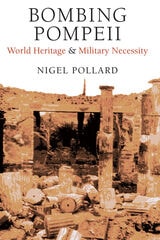
Bombing Pompeii examines the circumstances under which over 160 Allied bombs hit the archaeological site of Pompeii in August and September 1943, and the wider significance of this event in the history of efforts to protect cultural heritage in conflict zones, a broader issue which is still of great importance. From detailed examinations of contemporary archival document, Nigel Pollard shows that the bomb damage to ancient Pompeii was accidental, and the bombs were aimed at road and rail routes close to the site in an urgent attempt to slow down the reinforcement and supply of German counter- attacks that threatened to defeat the Allied landings in the Gulf of Salerno. The book sets this event, along with other instances of damage and risk to cultural heritage in Italy in the Second World War, in the context of the development of the Allied Monuments, Fine Arts, and Archives – the “Monuments Men.”
[more]
cover of Brown Saviors and Their Others: Race, Caste, Labor, and the Global Politics of Help in India

Brown Saviors and Their Others

Race, Caste, Labor, and the Global Politics of Help in India

Arjun Shankar

Duke University Press, 2023

In Brown Saviors and Their Others Arjun Shankar draws from his ethnographic work with an educational NGO to investigate the practices of “brown saviors”—globally mobile, dominant-caste, liberal Indian and Indian diasporic technocrats who drive India’s help economy. Shankar argues that these brown saviors actually reproduce many of the racialized values and ideologies associated with who and how to help that have been passed down from the colonial period, while masking other operations of power behind the racial politics of global brownness. In India, these operations of power center largely on the transnational labor politics of caste. Ever attentive to moments of discomfort and complicity, Shankar develops a method of “nervous ethnography” to uncover the global racial hierarchies, graded caste stratifications, urban/rural distinctions, and digital panaceas that shape the politics of help in India. Through nervous critique, Shankar introduces a framework for the study of the global help economies that reckons with the ongoing legacies of racial and caste capitalism.
[more]
cover of Brutes or Angels: Human Possibility in the Age of Biotechnology

Brutes or Angels

Human Possibility in the Age of Biotechnology

James T. Bradley

University of Alabama Press, 2013

A guide to the rapidly progressing Age of Biotechnology, Brutes or Angels provides basic information on a wide array of new technologies in the life sciences, along with the ethical issues raised by each

With stem cell research, Dolly the cloned sheep, in vitro fertilization, age retardation, and pharmaceutical mind enhancement, humankind is now faced with decisions that it has never before had to consider. The thoughtfulness, or lack of it, that we bring to those decisions will largely determine the future character of the living world.
 
Brutes or Angels will facilitate informed choice making about the personal use of biotechnologies and the formulation of public policies governing their development and use. Ten biotechnologies that impact humans are considered: stem cell research, embryo selection, human genomics, gene therapies, human reproductive cloning, age retardation, cognition enhancement, the engineering of nonhuman organisms, nanobiology, and synthetic biology.
 
With deft and assured use of metaphors, analogies, diagrams, and photographs, James T. Bradley introduces important biological principles and the basic procedures used in biotechnology. Various ethical issues--personhood, personal identity, privacy, ethnic discrimination, distributive justice, authenticity and human nature, and the significance of mortality in the human life cycle--are presented in a clear and unbiased manner. Personal reflection and group dialogue are encouraged by questions at the end of each chapter, making this book not only a general guide to better informed and nuanced thinking on these complex and challenging topics but also an appropriate text for bioethics courses in university science departments and for adult education classes.
 
Standing at the beginning of the twenty-first century, with burgeoning abilities to enhance and even create life in ways unimaginable just a few decades ago, humans have an awesome responsibility to themselves and other species. Brutes or Angels invites us to engage each other in meaningful dialogue by listening, gathering information, formulating thoughtful views, and remaining open to new knowledge and ethical argumentation.
[more]