Results by title
637 books match the query 'Political activity' and 48 start with b

Bacardi
The Hidden WarHernando Calvo Ospina
Pluto Press, 2002

Batman Saves the Congo
How Celebrities Disrupt the Politics of DevelopmentAlexandra Cosima Budabin
University of Minnesota Press, 2021
How celebrity strategic partnerships are disrupting humanitarian space
Can a celebrity be a “disrupter,” promoting strategic partnerships to bring new ideas and funding to revitalize the development field—or are celebrities just charismatic ambassadors for big business? Examining the role of the rich and famous in development and humanitarianism, Batman Saves the Congo argues that celebrities do both, and that understanding why and how yields insight into the realities of neoliberal development.
In 2010, entertainer Ben Affleck, known for his superhero performance as Batman, launched the Eastern Congo Initiative to bring a new approach to the region’s development. This case study is central to Batman Saves the Congo. Affleck’s organization operates with special access, diversified funding, and significant support of elites within political, philanthropic, development, and humanitarian circuits. This sets it apart from other development organizations. With his convening power, Affleck has built partnerships with those inside and outside development, staking bipartisan political ground that is neither charity nor aid but “good business.” Such visible and recognizable celebrity humanitarians are occupying the public domain yet not engaging meaningfully with any public, argues Batman Saves the Congo. They are an unruly bunch of new players in development who amplify business solutions.
As elite political participants, celebrities shape development practices through strategic partnerships that are both an innovative way to raise awareness and funding for neglected causes and a troubling trend of unaccountable elite leadership in North–South relations. Batman Saves the Congo helps illuminate the power of celebritized business solutions and the development contexts they create.
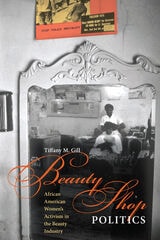
Beauty Shop Politics
African American Women's Activism in the Beauty IndustryTiffany M. Gill
University of Illinois Press, 2010
Looking through the lens of black business history, Beauty Shop Politics shows how black beauticians in the Jim Crow era parlayed their economic independence and access to a public community space into platforms for activism. Tiffany M. Gill argues that the beauty industry played a crucial role in the creation of the modern black female identity and that the seemingly frivolous space of a beauty salon actually has stimulated social, political, and economic change.
From the founding of the National Negro Business League in 1900 and onward, African Americans have embraced the entrepreneurial spirit by starting their own businesses, but black women's forays into the business world were overshadowed by those of black men. With a broad scope that encompasses the role of gossip in salons, ethnic beauty products, and the social meanings of African American hair textures, Gill shows how African American beauty entrepreneurs built and sustained a vibrant culture of activism in beauty salons and schools. Enhanced by lucid portrayals of black beauticians and drawing on archival research and oral histories, Beauty Shop Politics conveys the everyday operations and rich culture of black beauty salons as well as their role in building community.
Beauvoir and Her Sisters
The Politics of Women's Bodies in FranceSandra Reineke
University of Illinois Press, 2011
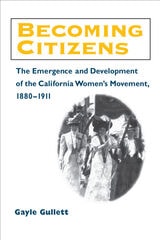
Becoming Citizens
The Emergence and Development of the California Women's Movement, 1880-1911Gayle Gullett
University of Illinois Press, 2000
In 1880, Californians believed a woman safeguarded the Republic by maintaining a morally sound home. Scarcely forty years later, women in the state won full-fledged citizenship and voting rights by stepping outside the home to engage in robust activism.
Gayle Gullett reveals how this enormous transformation came about and the ways women's search for a larger public life led to a flourishing women's movement in California. Though voters rejected women's radical demand for citizenship in 1896, women rebuilt the movement in the early years of the twentieth century and forged critical bonds between activist women and the men involved in the urban Good Government movement. This alliance formed the basis of progressivism, with male Progressives helping to legitimize women's new public work by supporting their civic campaigns, appointing women to public office, and placing a suffrage referendum before the male electorate in 1911.
Placing local developments in a national context, Becoming Citizens illuminates the links between women's reform movements and progressivism in the American West.

Behind the Bamboo Hedge
The Impact of the Homeland Politics in the Parisian Vietnamese CommunityGisele L. Bousquet
University of Michigan Press, 1991
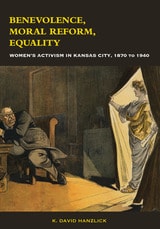
Benevolence, Moral Reform, Equality
Women's Activism in Kansas City, 1870 to 1940K. David Hanzlick
University of Missouri Press, 2018

Benjamin Franklin's Printing Network
Disseminating Virtue in Early AmericaRalph Frasca
University of Missouri Press, 2005
Between Brown and Black
Anti-Racist Activism in BrazilAntonio José Bacelar da Silva
Rutgers University Press, 2022

Between Feminism and Islam
Human Rights and Sharia Law in MoroccoZakia Salime
University of Minnesota Press, 2011
There are two major women’s movements in Morocco: the Islamists who hold shari’a as the platform for building a culture of women’s rights, and the feminists who use the United Nations’ framework to amend shari’a law. Between Feminism and Islam shows how the interactions of these movements over the past two decades have transformed the debates, the organization, and the strategies of each other.
In Between Feminism and Islam, Zakia Salime looks at three key movement moments: the 1992 feminist One Million Signature Campaign, the 2000 Islamist mass rally opposing the reform of family law, and the 2003 Casablanca attacks by a group of Islamist radicals. At the core of these moments are disputes over legitimacy, national identity, gender representations, and political negotiations for shaping state gender policies. Located at the intersection of feminism and Islam, these conflicts have led to the Islamization of feminists on the one hand and the feminization of Islamists on the other.
Documenting the synergistic relationship between these movements, Salime reveals how the boundaries of feminism and Islamism have been radically reconfigured. She offers a new conceptual framework for studying social movements, one that allows us to understand how Islamic feminism is influencing global debates on human rights.
Between Mao and McCarthy
Chinese American Politics in the Cold War YearsCharlotte Brooks
University of Chicago Press, 2014
Between Mao and McCarthy looks at the divergent ways that Chinese Americans in these two cities balanced domestic and international pressures during the tense Cold War era. On both coasts, Chinese Americans sought to gain political power and defend their civil rights, yet only the San Franciscans succeeded. Forging multiracial coalitions and encouraging voting and moderate activism, they avoided the deep divisions and factionalism that consumed their counterparts in New York. Drawing on extensive research in both Chinese- and English-language sources, Charlotte Brooks uncovers the complex, diverse, and surprisingly vibrant politics of an ethnic group trying to find its voice and flex its political muscle in Cold War America.
Between National Socialism and Soviet Communism
Displaced Persons in Postwar GermanyAnna Holian
University of Michigan Press, 2015
"Though its primary focus is on the immediate postwar, Between National Socialism and Soviet Communism will surely illuminate the contemporary crisis around citizenship and definitions of Germanness in the context of European Union and globalization."
---Geoff Eley, University of Michigan
In May of 1945, there were more than eight million "displaced persons" (or DPs) in Germany---recently liberated foreign workers, concentration camp prisoners, and prisoners of war from all of Nazi-occupied Europe, as well as eastern Europeans who had fled west before the advancing Red Army. Although most of them quickly returned home, it soon became clear that large numbers of eastern European DPs could or would not do so. In the aftermath of National Socialism, Germany thus ironically became a temporary home for a large population of "foreigners." Focusing on Bavaria, in the heart of the American occupation zone, Between National Socialism and Soviet Communism examines the cultural and political worlds that four groups of displaced persons---Polish, Ukrainian, Russian, and Jewish---created in Germany during the late 1940s and early 1950s. The volume investigates the development of refugee communities and how divergent interpretations of National Socialism and Soviet Communism defined these displaced groups.
Combining German and eastern European history, Anna Holian draws on a rich array of sources in cultural and political history and engages the broader literature on displacement in the fields of anthropology, sociology, political theory, and cultural studies. Her book will interest students and scholars of German, eastern European, and Jewish history; migration and refugees; and human rights.
Beyond Equality
Labor and the Radical Republicans, 1862-1872David Montgomery
University of Illinois Press, 1981
"Beyond Equality is a masterpiece. . . . A book of bold and brilliant originality, it is now shaping the perspective of a new generation of graduate students." -- David Brion Davis, author of The Problem of Slavery in Western Culture
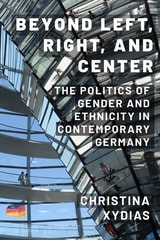
Beyond Left, Right, and Center
The Politics of Gender and Ethnicity in Contemporary GermanyChristina Xydias
Temple University Press, 2024
Christina Xydias shows that some right-leaning parties advocate for women’s rights and interests, while left- and right-leaning parties can be equally indifferent to lack of representation for women from marginalized groups. These findings follow from analyses of election results, transcripts from debates and speeches, and personal interviews, as well as from a close reading of intertwined military and citizenship policies that illustrate how women’s and ethnic minority groups’ rights are constructed.
Beyond Left, Right, and Center concludes with an analysis of women’s representation across OECD countries, showing that right-leaning parties are more likely to support women’s rights and interests in societies that are more egalitarian.

Beyond Monopoly
Lawyers, State Crises, and Professional EmpowermentTerence C. Halliday
University of Chicago Press, 1987
In this pathbreaking study of the legal profession, Terence Halliday raises and addresses these questions combining extensive data from the rich archives o the Chicago Bar Association, one of the nation's largest and wealthiest bar organizations, with data from a national survey of bar legislative and judicial action. Beyond Monopoly demonstrates that the primary commitment of lawyers to economic monopoly has long been complemented by "civic professionalism" as the legal profession takes on more responsibility in the American democratic system when state capabilities diminish.
Through his examination of three types of state crises in the 1950s and 1960s—the challenges to legitimacy in the legal system, the crisis of individual rights during McCarthyism and the civil rights eras, and the fiscal crises of various state governments—Halliday shows that large bar associations can have extensive influence on any institution that is regulated by law. He argues that lawyers have the capability of turning social and political issues into technical legal matters in what he calls an "idiom of legalism." Under technical guise, lawyers come to exercise moral authority.
Halliday maintains that the American legal profession over the past century has gone from a formative stage, when controlling its market in the delivery of legal services was paramount, to an established phase in the past two decades, when it has committed extensive resources to the complex needs of the modern state. A de facto bargain has been struck: if the state leaves the profession's monopoly fairly intact, the profession can use its expert resources to help the state adapt to strain and crisis. It can do so not only in the legal system, where it has been championing "autonomous" law, but in other spheres as well—from the economy to the private sphere of individual rights.
Halliday confirms that the legal profession deploys its expertise not merely to attain professional dominance, to control a market, or to purvey an ideology, but to increase the viability of democratic institutions. Beyond Monopoly introduces a pioneering approach to a historical and comparative sociology of the professions that will be of vital interest not only to sociologists, but to political scientists and lawyers as well.

Beyond The Good Earth
Transnational Perspectives on Pearl S. BuckJay Cole
West Virginia University Press, 2019
How well do we really know Pearl S. Buck? Many think of Buck solely as the Nobel laureate and Pulitzer Prize–winning author of The Good Earth, the novel that explained China to Americans in the 1930s. But Buck was more than a novelist and interpreter of China. As the essays in Beyond The Good Earth show, she possessed other passions and projects, some of which are just now coming into focus.
Who knew, for example, that Buck imagined and helped define multiculturalism long before it became a widely known concept? Or that she founded an adoption agency to locate homes for biracial children from Asia? Indeed, few are aware that she advocated successfully for a genocide convention after World War II and was ahead of her time in envisioning a place for human rights in American foreign policy. Buck’s literary works, often dismissed as simple portrayals of Chinese life, carried a surprising degree of innovation as she experimented with the styles and strategies of modernist artists.
In Beyond The Good Earth, scholars and writers from the United States and China explore these and other often overlooked topics from the life of Pearl S. Buck, positioning her career in the context of recent scholarship on transnational humanitarian activism, women’s rights activism, and civil rights activism.
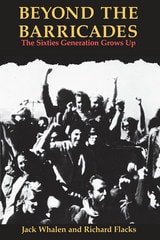
Beyond the Barricades
The Sixties Generation Grows UpJack Whalen
Temple University Press, 1990

Beyond the European Left
Ideology and Political Action in the Belgian EcologyHerbert Kitschelt and Staf Hellemans
Duke University Press, 1990
The authors employ a new research methodology—surveying party militants—that is better adapted to the study of micropolitics than are expert interviews. Herbert Kitschelt and Staf Hallemans show that European Green party activists express an egalitarian and libertarian vision of a desirable social order that builds on, but radically transforms, ideas of the traditional socialist European left. The authors then examine the debates and disagreements among militants on political objectives and the consequences of conflicting views for party organization and strategy. Their findings illuminate the unique dynamics of left-libertarian politics in a number of Western European countries with obvious relevance to current developments in Eastern Europe.

Beyond the Gender Gap in Japan
Gill Steel, Editor
University of Michigan Press, 2019
Beyond the Laboratory
Scientists as Political Activists in 1930s AmericaPeter J. Kuznick
University of Chicago Press, 1987

Beyond the Laboratory
Scientists as Political Activists in 1930s AmericaPeter J. Kuznick
University of Chicago Press, 1987
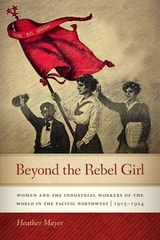
Beyond the Rebel Girl
Women and the Industrial Workers of the World in the Pacific Northwest, 1905-1924Heather Mayer
Oregon State University Press, 2018
In Beyond the Rebel Girl, historian Heather Mayer questions the well-worn vision of Wobblies as young, single, male, itinerant workers. While such workers formed a large portion of the membership, they weren’t the whole picture. In small towns across the Northwest, and in the larger cities of Seattle, Portland, and Spokane, women played an integral role in Wobbly life. Single women, but also families—husband and wife Wobbly teams—played important roles in some of the biggest fights for justice. IWW halls in these Northwest cities often functioned as community centers, with family-friendly events and entertainment.
Women were drawn to the IWW for its radical vision, inclusionary policies, birth control advocacy, and emphasis on freedom of choice in marriage. The IWW also offered women an avenue for activism that wasn’t focused primarily on the fight for suffrage. Beyond the Rebel Girl deepens our understanding of how the IWW functioned and how the union supported women in their fight for birth control, sexual emancipation, and better labor conditions, all while facing persecution at the local, state, and federal levels.

Beyond the Veil of Knowledge
Triangulating Security, Democracy, and Academic ScholarshipPiki Ish-Shalom
University of Michigan Press, 2019
Beyond the Wire
Former Prisoners and Conflict Transformation in Northern IrelandPeter Shirlow and Kieran McEvoy
Pluto Press, 2008
This book provides the first detailed examination of the role played by former loyalist and republican prisoners in grass roots conflict transformation work in the Northern Ireland peace process. It challenges the assumed passivity of former prisoners and ex-combatants. Instead, it suggests that such individuals and the groups which they formed have been key agents of conflict transformation. They have provided leadership in challenging cultures of violence, developed practical methods of resolving inter-communal conflict and found ways for communities to explore their troubled past. In analysing this, the authors challenge the sterile demonisation of former prisoners and the processes that maintain their exclusion from normal civic and social life.
The book is a constructive reminder of the need for full participation of both former combatants and victims in post-conflict transformation. It also lays out a new agenda for reconciliation which suggests that conflict transformation can and should begin ‘from the extremes’.
The book will be of interest to students of criminology, peace and conflict studies, law and politics, geography and sociology as well as those with a particular interest in the Northern Ireland conflict.

Billionaires and Stealth Politics
Benjamin I. Page, Jason Seawright, and Matthew J. Lacombe
University of Chicago Press, 2018
Page, Seawright, and Lacombe argue that while political contributions offer a window onto billionaires’ influence, especially on economic policy, they do not present a full picture of policy preferences and political actions. That is because on some of the most important issues, including taxation, immigration, and Social Security, billionaires have chosen to engage in “stealth politics.” They try hard to influence public policy, making large contributions to political parties and policy-focused causes, leading policy-advocacy organizations, holding political fundraisers, and bundling others’ contributions—all while rarely talking about public policy to the media. This means that their influence is not only unequal but also largely unaccountable to and unchallengeable by the American people. Stealth politics makes it difficult for ordinary citizens to know what billionaires are doing or mobilize against it. The book closes with remedies citizens can pursue if they wish to make wealthy Americans more politically accountable, such as public financing of political campaigns and easier voting procedures, and notes the broader types of reforms, such as a more progressive income tax system, that would be needed to increase political equality and reinvigorate majoritarian democracy in the United States.
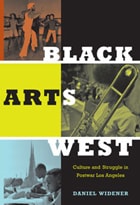
Black Arts West
Culture and Struggle in Postwar Los AngelesDaniel Widener
Duke University Press, 2010
Along with the politicization of black culture, Widener explores the rise of a distinctive regional Black Arts Movement. Originating in the efforts of wartime cultural activists, the movement was rooted in the black working class and characterized by struggles for artistic autonomy and improved living and working conditions for local black artists. As new ideas concerning art, racial identity, and the institutional position of African American artists emerged, dozens of new collectives appeared, from the Watts Writers Workshop, to the Inner City Cultural Center, to the New Art Jazz Ensemble. Spread across generations of artists, the Black Arts Movement in Southern California was more than the artistic affiliate of the local civil-rights or black-power efforts: it was a social movement itself. Illuminating the fundamental connections between expressive culture and political struggle, Black Arts West is a major contribution to the histories of Los Angeles, black radicalism, and avant-garde art.
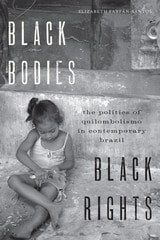
Black Bodies, Black Rights
The Politics of Quilombolismo in Contemporary BrazilBy Elizabeth Farfán-Santos
University of Texas Press, 2016
Under a provision in the Brazilian constitution, rural black communities identified as the modern descendants of quilombos—runaway slave communities—are promised land rights as a form of reparations for the historic exclusion of blacks from land ownership. The quilombo provision has been hailed as a success for black rights; however, rights for quilombolas are highly controversial and, in many cases, have led to violent land conflicts. Although thousands of rural black communities have been legally recognized, only a handful have received the rights they were promised. Conflict over quilombola rights is widespread and carries important consequences for race relations and political representations of blackness in twenty-first century Brazil.
Drawing on a year of field research in a quilombola community, Elizabeth Farfán-Santos explores how quilombo recognition has significantly affected the everyday lives of those who experience the often-complicated political process. Questions of identity, race, and entitlement play out against a community’s struggle to prove its historical authenticity—and to gain the land and rights they need to survive. This work not only demonstrates the lived experience of a new, particular form of blackness in Brazil, but also shows how blackness is being mobilized and reimagined to gain social rights and political recognition. Black Bodies, Black Rights thus represents an important contribution to the rapidly growing interdisciplinary field of Afro-Latino studies.
Black Disability Politics
Sami Schalk
Duke University Press, 2022
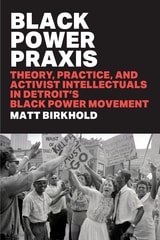
Black Power Praxis
Theory, Practice, and Activist Intellectuals in Detroit's Black Power MovementMatt Birkhold
University of Michigan Press, 2026
Black Power Praxis shows how four groups of activist-intellectuals—James and Grace Lee Boggs, Richard and Milton Henry, Reverend Albert Cleage, and a group of college students called Uhuru—shifted the consciousness and political perspectives of Black Detroiters in the 1960s and 1970s. By developing theories that they could unite with community-organizing practices, these activist-intellectuals turned the focus of the grassroots movement for racial equality from Civil Rights to Black Power. Following the 1967 Detroit Rebellion, these Black Power activist-intellectuals were already positioned to harness the energy that emerged from the uprising and directed it into the city’s first citywide Black Power organization, the Citywide Citizens Action Committee.
Even as Black Power theories became dominant over Detroit’s grassroots movement, their influence faltered when they failed to develop community organizing practices corresponding to the lived experiences of Black Detroiters. Black Power Praxis reveals how the relationships between ideas, practices, leadership, material reality, and consciousness drove the historical development of Black Power. Ideal for readers curious about social movements, Detroit history, African American history, and African American Studies, the book sheds light on how, why, and when Detroit’s activist-intellectual leaders successfully showed everyday people how their power might be used in transformative ways.
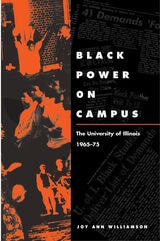
Black Power on Campus
The University of Illinois, 1965-75Joy Ann Williamson
University of Illinois Press, 2003
Drawing on student publications of the late 1960s and early 1970s, as well as interviews with student activists, former administrators, and faculty, Williamson discusses the emergence of Black Power ideology, what constituted "blackness," and notions of self-advancement versus racial solidarity. Promoting an understanding of the role of black youth in protest movements, Black Power on Campus is an important contribution to the literature on African American liberation movements and the reform of American higher education.
Black Sporting Resistance
Diaspora, Transnationalism, and InternationalismJoseph N. Cooper
Rutgers University Press, 2025
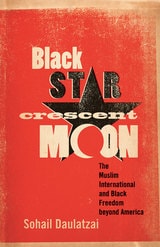
Black Star, Crescent Moon
The Muslim International and Black Freedom beyond AmericaSohail Daulatzai
University of Minnesota Press, 2012
“The same rebellion, the same impatience, the same anger that exists in the hearts of the dark people in Africa and Asia,” Malcolm X declared in a 1962 speech, “is existing in the hearts and minds of 20 million black people in this country who have been just as thoroughly colonized as the people in Africa and Asia.” Four decades later, the hip-hop artist Talib Kweli gave voice to a similar Pan-African sentiment in the song “K.O.S. (Determination)”: “The African diaspora represents strength in numbers, a giant can't slumber forever.”
Linking discontent and unrest in Harlem and Los Angeles to anticolonial revolution in Algeria, Egypt, and elsewhere, Black leaders in the United States have frequently looked to the anti-imperialist movements and antiracist rhetoric of the Muslim Third World for inspiration. In Black Star, Crescent Moon, Sohail Daulatzai maps the rich, shared history between Black Muslims, Black radicals, and the Muslim Third World, showing how Black artists and activists imagined themselves not as national minorities but as part of a global majority, connected to larger communities of resistance. Daulatzai traces these interactions and alliances from the Civil Rights movement and the Black Power era to the “War on Terror,” placing them within a broader framework of American imperialism, Black identity, and the global nature of white oppression.
From Malcolm X and Muhammad Ali to contemporary artists and activists like Rakim and Mos Def, Black Star, Crescent Moon reveals how Muslim resistance to imperialism came to occupy a central position within the Black radical imagination, offering a new perspective on the political and cultural history of Black internationalism from the 1950s to the present.
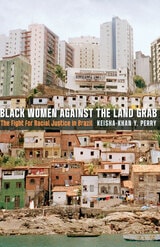
Black Women against the Land Grab
The Fight for Racial Justice in BrazilKeisha-Khan Y. Perry
University of Minnesota Press, 2013
In Brazil and throughout the African diaspora, black women, especially poor black women, are rarely considered leaders of social movements let alone political theorists. But in the northeastern city of Salvador, Brazil, it is these very women who determine how urban policies are established. Focusing on the Gamboa de Baixo neighborhood in Salvador’s city center, Black Women against the Land Grab explores how black women’s views on development have radicalized local communities to demand justice and social change.
In Black Women against the Land Grab, Keisha-Khan Y. Perry describes the key role of local women activists in the citywide movement for land and housing rights. She reveals the importance of geographic location for understanding the gendered aspects of urban renewal and the formation of black women–led social movements. How have black women shaped the politics of urban redevelopment, Perry asks, and what does this kind of political intervention tell us about black women’s agency? Her work uncovers the ways in which political labor at the neighborhood level is central to the mass mobilization of black people against institutional racism and for citizenship rights and resources in Brazil.
Highlighting the political life of black communities, specifically those in urban contexts often represented as socially pathological and politically bankrupt, Black Women against the Land Grab offers a valuable corrective to how we think about politics and about black women, particularly poor black women, as a political force.
Black Women and Politics in New York City
Julie A. Gallagher
University of Illinois Press, 2014
Historian and human rights activist Julie A. Gallagher deftly examines how race, gender, and the structure of the state itself shape outcomes, and exposes the layers of power and discrimination at work in American society. She combines her analysis with a look at the career of Shirley Chisholm, the first black woman elected to Congress and the first to run for president on a national party ticket. In so doing, she rewrites twentieth-century women's history and the dominant narrative arcs of feminist history that hitherto ignored African American women and their accomplishments.
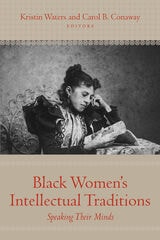
Black Women’s Intellectual Traditions
Speaking Their MindsEdited by Kristin B. Waters and Carol B. Conaway
University Press of New England, 2007

Black Women’s Intellectual Traditions
Speaking Their MindsEdited by Kristin Waters and Carol B. Conaway
Brandeis University Press, 2022
An astonishing wealth of literary and intellectual work by nineteenth-century Black women is being rediscovered and restored to print in scholarly and popular editions. In Kristin Waters’s and Carol B. Conaway’s landmark edited collection, Black Women’s Intellectual Traditions: Speaking Their Minds, sophisticated commentary on this rich body of work chronicles a powerful and interwoven legacy of activism based in social and political theories that helped shape the history of North America. The book meticulously reclaims this American legacy, providing a collection of critical analyses of the primary sources and their vital traditions. Written by leading scholars, Black Women’s Intellectual Traditions is particularly powerful in its exploration of the pioneering thought and action of the nineteenth-century Black woman lecturer and essayist Maria W. Stewart, abolitionist Sojourner Truth, novelist and poet Frances Ellen Watkins Harper, educator Anna Julia Cooper, newspaper editor Mary Ann Shadd Cary, and activist Ida B. Wells. The distinguished contributors are Hazel V. Carby, Patricia Hill Collins, Karen Baker-Fletcher, Kristin Waters, R. Dianne Bartlow, Carol B. Conaway, Olga Idriss Davis, Vanessa Holford Diana, Evelyn Simien, Janice W. Fernheimer, Michelle N. Garfield, Joy James, Valerie Palmer-Mehta, Carla L. Peterson, Marilyn Richardson, Evelyn M. Simien, Ebony A. Utley, Mary Helen Washington, Melina Abdullah, and Lena Ampadu. The volume will interest scholars and readers of African-American and women’s studies, history, rhetoric, literature, poetry, sociology, political science, and philosophy. This updated edition features a new preface by the editors in the light of new developments in current scholarship.
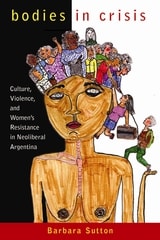
Bodies in Crisis
Culture, Violence, and Women's Resistance in Neoliberal ArgentinaSutton, Barbara
Rutgers University Press, 2010
Through the lens of women's body consciousness in a Global South country, and drawing on multifaceted stories and a politically embedded approach, Bodies in Crisis suggests that social policy, economic systems, cultural ideologies, and political resistance are ultimately fleshly matters.
Body Problems
What Intersex Priest Sally Gross Teaches Us About Embodiment, Justice, and BelongingM. Wolff
Duke University Press, 2025
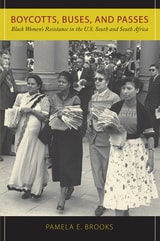
Boycotts, Buses, and Passes
Black Women's Resistance in the U.S. South and South AfricaPamela E. Brooks
University of Massachusetts Press, 2008
In the mid-1950s, as many developing nations sought independence from colonial rule, black women in the American South and in South Africa launched parallel campaigns to end racial injustice within their respective communities. Just as the dignified obstinacy of Mrs. Rosa Parks sparked the Montgomery bus boycott in 1955, the 20,000 South African women who marched in Pretoria a year later to protest the pass laws signaled a new wave of resistance to the system of apartheid. In both places women who had previously been consigned to subordinate roles brought fresh leadership to the struggle for political freedom and social equality.
In this book, Pamela E. Brooks tells their story, documenting the extraordinary achievements of otherwise ordinary women. In comparing the experiences of black women activists in two different parts of the African diaspora, Brooks draws heavily on oral histories that provide clear, and often painful, insight into their backgrounds, their motives, their hopes, and their fears. We learn how black women from all walks of life—domestic and factory workers, householders, teachers, union organizers, churchwomen, clubwomen, rural and urban dwellers alike—had to overcome their class differences and work through the often difficult gender relations within their families and communities. Yet eventually they came together to forge their own political organizations, such as the Women's Political Council and the Federation of South African Women, or joined orga-nizations of women and men, such as the Montgomery Improvement Association and the African National Congress, to advance the common agenda of black liberation.By tracing the dual rise of political consciousness and activism among the black women of the U.S. South and South Africa, Brooks not only illuminates patterns that have long been overlooked but places that shared history within the context of a larger global struggle to bring an end to the vestiges of European colonialism.
Breaking the Gender Code
Women and Urban Public Space in the Twentieth-Century United StatesGeorgina Hickey
University of Texas Press, 2023
A history of the activism that made public spaces in American cities more accessible to women.
From the closing years of the nineteenth century, women received subtle—and not so subtle—messages that they shouldn’t be in public. Or, if they were, that they were not safe. Breaking the Gender Code tells the story of both this danger narrative and the resistance to it.
Historian Georgina Hickey investigates challenges to the code of urban gender segregation in the twentieth century, focusing on organized advocacy to make the public spaces of American cities accessible to women. She traces waves of activism from the Progressive Era, with its calls for public restrooms, safe and accessible transportation, and public accommodations, through and beyond second-wave feminism, and its focus on the creation of alternative, women-only spaces and extensive anti-violence efforts. In doing so, Hickey explores how gender segregation intertwined with other systems of social control, as well as how class, race, and sexuality shaped activists' agendas and women's experiences of urban space. Drawing connections between the vulnerability of women in public spaces, real and presumed, and contemporary debates surrounding rape culture, bathroom bills, and domestic violence, Hickey unveils both the strikingly successful and the incomplete initiatives of activists who worked to open up public space to women.
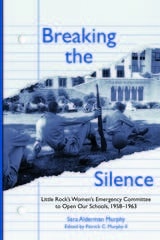
Breaking the Silence
The Little Rock Women's Emergency Committee to Open Our Schools, 1958–1963Sara Murphy
University of Arkansas Press, 1997
The Little Rock Central High School integration crisis did not end in1957 when President Eisenhower sent a portion of the first Airborne Division to protect nine black students. The turmoil was entering its second year in 1958 when Arkansas governor Orval Faubus invoked a hastily passed state law to close the high schools rather than obey the federal court orders that would integrate them.
A group of respectable, middle-class white women, faced with the prospect of no schools as well as the further loss of their city’s good name, turned militant. Led by Adolphine Fletcher Terry, a prominent, “old family” civic leader in her seventies, the women quickly put together the Women’s Emergency Committee to Open Our Schools (WEC), a highly effective organization that bombarded the city with ads, fliers, and statements challenging Faubus’s action. At peak membership, the WEC mustered two thousand to their cause. Largely inexperienced in politics when they joined the WEC, these women became articulate, confident promoters of public schools and helped others to understand that those schools must be fully integrated.
Forty years later, Sara Murphy, a key member of the WEC, recounts the rarely told sto1y of these courageous women who formed a resistance movement. With passion and sensitivity, she reconstructs the challenges and triumphs of that battle, which issued from the mutual link Southern white women shared with disfranchised African Americans in their common goal for full citizenship.
Breaks in the Chain
What Immigrant Workers Can Teach America about DemocracyPaul Apostolidis
University of Minnesota Press, 2010
Breaks in the Chain shows how immigrant workers-individually and sometimes collectively-both reinforce and contest a tacit but lethal form of biopolitics that differentiates the life chances of racial groups. Examining their personal narratives, Apostolidis recasts our understanding of the ways immigrants construct and transform social power.
Apostolidis uses empirical inquiry to spark new reflections in critical theory as he analyzes how immigrant workers' local practices confront structural power within and beyond America's borders. Linking stories of immigration to stories about working on the meat production line-the chain-he reveals the surprising power of activism by immigrant workers and their allies and demonstrates how it can-and should-promote social and political democracy in America.

Bridgeport's Socialist New Deal, 1915-36
Cecelia Bucki
University of Illinois Press, 2001
In November 1933, the Socialist Party of Bridgeport, Connecticut put slate roofer Jasper McLevy in the mayor's seat and nearly won control of the city council. Cecelia Bucki explores how labor gained first a foothold and then a stronghold in local politics as broad debates pitted previously unengaged working-class citizens against local business leaders and traditional party elites.
In the heat of the Great Depression, the skilled union craftsmen who made up the bulk of the city's Socialist Party filled a political void created by the crumbling of mainstream parties, the disintegration of traditional modes of ethnic politics, and the city's acute fiscal crisis. In time, however, legislative measures and compromise politics blunted the progressive agenda. The local party split from the Socialist Party of America and became narrowly focused and reformist while still serving as the voice of the working class.
A portrait of a stunning moment in American politics, Bridgeport's Socialist New Deal, 1915-36 offers a fascinating look at the volatility of politics in the early years of the Great Depression.
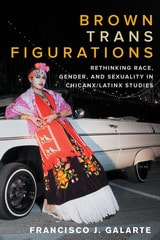
Brown Trans Figurations
Rethinking Race, Gender, and Sexuality in Chicanx/Latinx StudiesBy Francisco J. Galarte
University of Texas Press, 2021
Honorable Mention for the National Women’s Studies Association's 2021 Gloria E. Anzaldúa Book Prize
2021 Finalist Best LGBTQ+ Themed Book, International Latino Book Awards
2022 John Leo & Dana Heller Award for Best Single Work, Anthology, Multi-Authored, or Edited Book in LGBTQ Studies, Popular Culture Association
The Alan Bray Memorial Book Prize, GL/Q Caucus, Modern Language Association (MLA)
2022 AAHHE Book of the Year Award, American Association of Hispanics in Higher Education
Within queer, transgender, and Latinx and Chicanx cultural politics, brown transgender narratives are frequently silenced and erased. Brown trans subjects are treated as deceptive, unnatural, nonexistent, or impossible, their bodies, lives, and material circumstances represented through tropes and used as metaphors. Restoring personhood and agency to these subjects, Francisco J. Galarte advances “brown trans figuration” as a theoretical framework to describe how transness and brownness coexist within the larger queer, trans, and Latinx historical experiences.
Brown Trans Figurations presents a collection of representations that reveal the repression of brown trans narratives and make that repression visible and palpable. Galarte examines the violent deaths of two transgender Latinas and the corresponding narratives that emerged about their lives, analyzes the invisibility of brown transmasculinity in Chicana feminist works, and explores how issues such as transgender politics can be imagined as part of Chicanx and Latinx political movements. This book considers the contexts in which brown trans narratives appear, how they circulate, and how they are reproduced in politics, sexual cultures, and racialized economies.
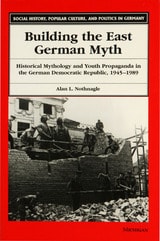
Building the East German Myth
Historical Mythology and Youth Propaganda in the German Democratic Republic, 1945-1989Alan L. Nothnagle
University of Michigan Press, 1999

Bullets in Envelopes
Iraqi Academics in ExileLouis Yako
Pluto Press, 2021
Burning Ambition
Education, Arson, and Learning Justice in KenyaElizabeth Cooper
University of Wisconsin Press, 2022
Drawing from years of research and a rich array of sources, Cooper accounts for how school fires stoke a national conversation about the limited means for ordinary Kenyans, and especially youth, to peacefully influence the governance of their own lives. Further, Cooper argues that Kenyan students’ actions challenge the existing complacency with the globalized agenda of “education for all,” demonstrating that submissive despondency is not the only possible response to the failed promises of education to transform material and social inequalities.
Buying Power
A History of Consumer Activism in AmericaLawrence B. Glickman
University of Chicago Press, 2009
A definitive history of consumer activism, Buying Power traces the lineage of this political tradition back to our nation’s founding, revealing that Americans used purchasing power to support causes and punish enemies long before the word boycott even entered our lexicon. Taking the Boston Tea Party as his starting point, Lawrence Glickman argues that the rejection of British imports by revolutionary patriots inaugurated a continuous series of consumer boycotts, campaigns for safe and ethical consumption, and efforts to make goods more broadly accessible. He explores abolitionist-led efforts to eschew slave-made goods, African American consumer campaigns against Jim Crow, a 1930s refusal of silk from fascist Japan, and emerging contemporary movements like slow food. Uncovering previously unknown episodes and analyzing famous events from a fresh perspective, Glickman illuminates moments when consumer activism intersected with political and civil rights movements. He also sheds new light on activists’ relationship with the consumer movement, which gave rise to lobbies like the National Consumers League and Consumers Union as well as ill-fated legislation to create a federal Consumer Protection Agency.