Results by title
1761 books match the query 'Public Policy' and 57 start with b
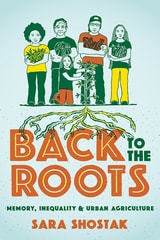
Back to the Roots
Memory, Inequality, and Urban AgricultureSara Shostak
Rutgers University Press, 2021
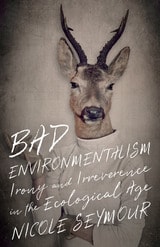
Bad Environmentalism
Irony and Irreverence in the Ecological AgeNicole Seymour
University of Minnesota Press, 2018
Traces a tradition of ironic and irreverent environmentalism, asking us to rethink the movement’s reputation for gloom and doom
Activists today strive to educate the public about climate change, but sociologists have found that the more we know about alarming issues, the less likely we are to act. Meanwhile, environmentalists have acquired a reputation as gloom-and-doom killjoys. Bad Environmentalism identifies contemporary texts that respond to these absurdities and ironies through absurdity and irony—as well as camp, frivolity, irreverence, perversity, and playfulness.
Nicole Seymour develops the concept of “bad environmentalism”: cultural thought that employs dissident affects and sensibilities to reflect critically on our current moment and on mainstream environmental activism. From the television show Wildboyz to the short film series Green Porno, Seymour shows that this tradition of thought is widespread—spanning animation, documentary, fiction film, performance art, poetry, prose fiction, social media, and stand-up comedy since at least 1975. Seymour argues that these texts reject self-righteousness and sentimentality, undercutting public negativity toward activism and questioning basic environmentalist assumptions: that love and reverence are required for ethical relationships with the nonhuman and that knowledge is key to addressing problems like climate change.
Funny and original, Bad Environmentalism champions the practice of alternative green politics. From drag performance to Indigenous comedy, Seymour expands our understanding of how environmental art and activism can be pleasurable, even in a time of undeniable crisis.
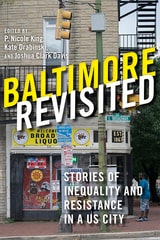
Baltimore Revisited
Stories of Inequality and Resistance in a U.S. CityEdited by P. Nicole King, Kate Drabinski, and Joshua Clark Davis
Rutgers University Press, 2019
To help untangle these apparent paradoxes, the editors of Baltimore Revisited have assembled a collection of over thirty experts from inside and outside academia. Together, they reveal that Baltimore has been ground zero for a slew of neoliberal policies, a place where inequality has increased as corporate interests have eagerly privatized public goods and services to maximize profits. But they also uncover how community members resist and reveal a long tradition of Baltimoreans who have fought for social justice.
The essays in this collection take readers on a tour through the city’s diverse neighborhoods, from the Lumbee Indian community in East Baltimore to the crusade for environmental justice in South Baltimore. Baltimore Revisited examines the city’s past, reflects upon the city’s present, and envisions the city’s future.
Banking on Reform
Political Parties and Central Bank Independence in the Industrial DemocraciesWilliam Bernhard
University of Michigan Press, 2002

Banking on Stability
Japan and the Cross-Pacific Dynamics of International Financial Crisis ManagementSaori N. Katada
University of Michigan Press, 2001
Banking on Stability looks at Japan's willingness to cooperate financially with the United States--its most important trade partner--in cases where such compliance yields an improvement in relations. Katada argues that the Japanese government carefully weighs the benefits arising in international and domestic realms when taking on the role of collective crisis manager and concludes that Japan is no exception in having private gain as a central motivation during international financial crises.
Saori Katada is Assistant Professor, School of International Relations, University of Southern California.
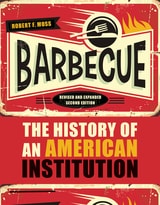
Barbecue
The History of an American Institution, Revised and Expanded Second EditionRobert F. Moss
University of Alabama Press, 2020
The definitive history of an iconic American food, with new chapters, sidebars, and updated historical accounts.
Expert Robert F. Moss researched hundreds of sources—newspapers, letters, journals, diaries, and travel narratives—to document the origins and evolution of barbecue from its origins among Native Americans to its present status as an icon of American culture. In this definitive guide, he maps out the development of the rich array of regional barbecue styles, chronicles the rise of barbecue restaurants, and profiles the famed pitmasters who made the tradition what it is today.
Barbecue is the story not just of a dish but also of a social institution that helped shape many regional cultures of the United States. The history begins with British colonists’ adoption of barbecuing techniques from Native Americans in the 17th and 18th centuries, moves to barbecue’s establishment as the preeminent form of public celebration in the 19th century, and is carried through to barbecue’s ubiquitous standing today.
From the very beginning, barbecues were powerful social magnets, drawing together people from a wide range of classes and geographic backgrounds. Barbecue played a key role in three centuries of American history, both reflecting and influencing the direction of an evolving society. By tracing the story of barbecue from its origins to today, Barbecue: The History of an American Institution traces the very thread of American social history.
Moss has made significant updates in this new edition, offering a wealth of new historical research, sources, illustrations, and anecdotes.
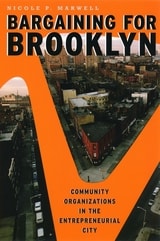
Bargaining for Brooklyn
Community Organizations in the Entrepreneurial CityNicole P. Marwell
University of Chicago Press, 2007
Through ethnographic fieldwork at eight CBOs in the Brooklyn neighborhoods of Williamsburg and Bushwick, Nicole P. Marwell discovered that the complex and contentious relationships these groups form with larger economic and political institutions outside the neighborhood have a huge and unexamined impact on the lives of the poor. Most studies of urban poverty focus on individuals or families, but Bargaining for Brooklyn widens the lens, examining the organizations whose actions and decisions collectively drive urban life.
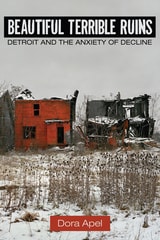
Beautiful Terrible Ruins
Detroit and the Anxiety of DeclineApel, Dora
Rutgers University Press, 2015
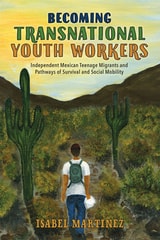
Becoming Transnational Youth Workers
Independent Mexican Teenage Migrants and Pathways of Survival and Social MobilityIsabel Martinez
Rutgers University Press, 2018
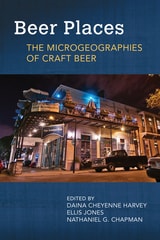
Beer Places
The Microgeographies of Craft BeerDaina Cheyenne Harvey
University of Arkansas Press, 2023
With insight from social scientists, beer bloggers, travel writers, and food entrepreneurs who recount their experiences of taprooms, breweries, and bottle shops from North Carolina to Zimbabwe, Beer Places reveals differences in the craft beer scene across multiple geographies. Situating craft beer as an emerging and important component of food studies, the essays in this volume attest to the singular power of craft beer to connect people and places.
Before Roe
Abortion Policy in the StatesRosemary Nossiff
Temple University Press, 2000
In this groundbreaking book, Rosemary Nossiff examines the force that shaped abortion policy during those years, and the ways in which states responded to them. To provide in-depth analysis while still looking broadly at the picture, she studies New York, which passed the most permissive abortion bill in the country, and Pennsylvania, which passed one of the most restrictive. That these two states, which share similar demographic, political, and economic characteristics, should reach two such different outcomes provides a perfect case study for observing political dynamics at the state level.
Nossiff examines the medical, religious, and legal discourses employed on both sides of the debate, as well as the role played by feminist discourse. She looks at the role of the political parties in the campaigns, as well as such interest groups as the National Council of Catholic Bishops, the Clergy Consultation Service, the National Organization for Women, and the National Association for the Repeal of Abortion Laws. In addition, she analyzes the strategies used by both sides, as well as partisan and institutionalized developments that facilitated success or failure. Finally, in the Epilogue, she assesses the Roe decision and its aftermath, including an analysis of the pro-life movement in Pennsylvania.
As the author remarks, "Without question people's positions on abortion are shaped by a myriad of social, moral, and economic factors. But ultimately abortion policy is shaped in the political arena. This book examines how one of the most intimate decisions a woman makes, whether to continue or terminate a pregnancy, has become one of the most politicized issues in contemporary American politics.
Beginning to End the Climate Crisis
A History of Our FutureLuisa Neubauer and Alexander Repenning
Brandeis University Press, 2023
“Act as though your house is on fire. Because it is.” Following Greta Thunberg, millions of young climate activists have been taking to the streets around the globe as part of the Fridays For Future movement. They demand that we “unite behind the science,” as, for too long, climate scientists have been ringing the alarm bells about rising temperatures, tipping points, and the devastating consequences of extreme weather—but politicians do nothing.
So how do you begin to end the climate crisis? Luisa Neubauer and Alexander Repenning begin by telling stories. Neubauer cofounded the youth climate activist group in Germany and has become its most prominent voice. In this book she and Repenning weave in personal accounts of their evolution as climate activists with a thorough analysis of how climate change impacts their generation, and what every one of us can and must do about it. The young and old in the United States and around the world can learn valuable lessons from their European counterparts.
Behavioral Public Finance
Edward J. McCaffery
Russell Sage Foundation, 2006
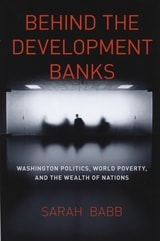
Behind the Development Banks
Washington Politics, World Poverty, and the Wealth of NationsSarah Babb
University of Chicago Press, 2009
The World Bank and other multilateral development banks (MDBs) carry out their mission to alleviate poverty and promote economic growth based on the advice of professional economists. But as Sarah Babb argues in Behind the Development Banks, these organizations have also been indelibly shaped by Washington politics—particularly by the legislative branch and its power of the purse.
Tracing American influence on MDBs over three decades, this volume assesses increased congressional activism and the perpetual “selling” of banks to Congress by the executive branch. Babb contends that congressional reluctance to fund the MDBs has enhanced the influence of the United States on them by making credible America’s threat to abandon the banks if its policy preferences are not followed. At a time when the United States’ role in world affairs is being closely scrutinized, Behind the Development Banks will be necessary reading for anyone interested in how American politics helps determine the fate of developing countries.
Being Interdisciplinary
Adventures in Urban Science and BeyondAlan Wilson
University College London, 2022
In Being Interdisciplinary, Alan Wilson draws on five decades as a leading figure in urban science to set out a systems approach to interdisciplinarity for those conducting research in this and other fields. He argues that most research is interdisciplinary at its base and that a systems perspective is particularly appropriate for collaboration because it fosters an outlook that sees beyond disciplines. A systems approach enables researchers to identify the game-changers of the past as a basis for thinking outside of convention, for learning how to do something new and how to be ambitious.
Building on this systems focus, the book first establishes the basics of interdisciplinarity. Then, by drawing on the author’s wide experience in interdisciplinary research—as a researcher in urban science, a university professor and vice-chancellor, a civil servant, and an institute director, it illustrates general principles and a framework from which researchers can build their own interdisciplinary approach. In the last section, the book tackles questions of managing and organizing research from individual to institutional scales.

Believing in Cleveland
Managing Decline in “The Best Location in the Nation”J. Mark Souther
Temple University Press, 2017
Detractors have called it "The Mistake on the Lake." It was once America’s "Comeback City." According to author J. Mark Souther, Cleveland has long sought to defeat its perceived civic malaise. Believing in Cleveland chronicles how city leaders used imagery and rhetoric to combat and, at times, accommodate urban and economic decline.
Souther explores Cleveland's downtown revitalization efforts, its neighborhood renewal and restoration projects, and its fight against deindustrialization. He shows how the city reshaped its image when it was bolstered by sports team victories. But Cleveland was not always on the upswing. Souther places the city's history in the postwar context when the city and metropolitan area were divided by uneven growth. In the 1970s, the city-suburb division was wider than ever.
Believing in Cleveland recounts the long, difficult history of a city that entered the postwar period as America's sixth largest, then lost ground during a period of robust national growth. But rather than tell a tale of decline, Souther provides a fascinating story of resilience for what some folks called "The Best Location in the Nation."
Bending the Rules
Procedural Politicking in the BureaucracyRachel Augustine Potter
University of Chicago Press, 2019
With Bending the Rules, Rachel Augustine Potter shows that rulemaking is not the rote administrative activity it is commonly imagined to be but rather an intensely political activity in its own right. Because rulemaking occurs in a separation of powers system, bureaucrats are not free to implement their preferred policies unimpeded: the president, Congress, and the courts can all get involved in the process, often at the bidding of affected interest groups. However, rather than capitulating to demands, bureaucrats routinely employ “procedural politicking,” using their deep knowledge of the process to strategically insulate their proposals from political scrutiny and interference. Tracing the rulemaking process from when an agency first begins working on a rule to when it completes that regulatory action, Potter shows how bureaucrats use procedures to resist interference from Congress, the President, and the courts at each stage of the process. This exercise reveals that unelected bureaucrats wield considerable influence over the direction of public policy in the United States.
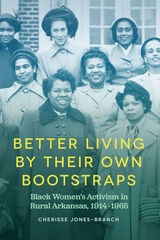
Better Living by Their Own Bootstraps
Black Women's Activism in Rural Arkansas, 1914-1965Cherisse Jones-Branch
University of Arkansas Press, 2021
The first major study to consider Black women’s activism in rural Arkansas, Better Living by Their Own Bootstraps foregrounds activists’ quest to improve Black communities through language and foodways as well as politics and community organizing. In reexamining these efforts, Cherisse Jones-Branch lifts many important figures out of obscurity, positioning them squarely within Arkansas’s agrarian history.
The Black women activists highlighted here include home demonstration agents employed by the Arkansas Agricultural Cooperative Extension Service and Jeanes Supervising Industrial Teachers, all of whom possessed an acute understanding of the difficulties that African Americans faced in rural spaces. Examining these activists through a historical lens, Jones-Branch reveals how educated, middle-class Black women worked with their less-educated rural sisters to create all-female spaces where they confronted economic, educational, public health, political, and theological concerns free from white regulation and interference.
Centered on the period between 1914 and 1965, Better Living by Their Own Bootstraps brings long-overdue attention to an important chapter in Arkansas history, spotlighting a group of Black women activists who uplifted their communities while subverting the formidable structures of white supremacy.

Betting the Earth
How We Can Still Win the Biggest Gamble of all TimeJohn Charles Kunich
Parkhurst Brothers, Inc., 2010
"Betting the Earth explores the uneasy parallels between our contemporary environmental challenges and our national fascination with gambling. How much should we bet on preserving biodiversity? Should we bet more on responding to climate change? where should we place each bet: on federal or state laws, on acquiring public or private preserves, on preventing environmental harms or saving places of special environmental significance? Like it or not, we must make such choices every day, and Betting the Earth helps us to understand how we do so."
Professor John Copeland Nagle, John N. Matthews Chair in Law, University of Notre Dame Law School
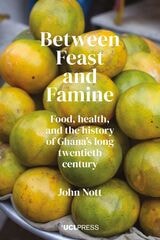
Between Feast and Famine
Food, Health, and the History of Ghana's Long Twentieth CenturyJohn Nott
University College London, 2025
Between Feast and Famine unravels the intertwined histories of food, health, and capitalism in Ghana, charting the country’s shifting nutritional landscape from colonial-era hunger crises to contemporary epidemics of obesity and diabetes. Moving between Ghana’s diverse ecological and economic zones, John Nott excavates how uneven capitalist transformation reshaped diets and childhood nutrition across the twentieth century. At the heart of this story is the evolving science of nutrition itself, from its colonial-era applications to its role in shaping modern health policies.
Using a new historical approach, Between Feast and Famine exposes how global scientific debates and local lived realities co-produced the country’s shifting nutritional conditions. A necessary contribution to African history and medical humanities, this book debunks preconceived notions about hunger and public health, suggesting crucial insights into the complex relationship between food systems and human well-being.
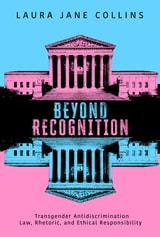
Beyond Recognition
Transgender Antidiscrimination Law, Rhetoric, and Ethical ResponsibilityCollins, Laura Jane
University of Alabama Press, 2026
A bold and original analysis of how the complexity of legal struggles over transgender rights is shaped not only by politics but by a deeper cultural anxiety about the meaning of sex itself.
Beyond Recognition: Transgender Antidiscrimination Law, Rhetoric, and Ethical Responsibility is a timely analysis that challenges the idea of transgender antidiscrimination law as a simple matter of inclusion or exclusion. Far from treating the law as a straightforward recognition project, Laura Jane Collins employs a rhetorically responsive approach that reveals how legal systems both reflect and shape our deepest uncertainties about sex, identity, and justice.
Through close readings of Title VII case law, state-level legislation such as California’s Fair Employment and Housing Act, and legislative debates surrounding bathroom access and trans rights, Collins exposes the deep-seated anxieties driving contemporary legal debates. While courts, policymakers, and advocates struggle to construct legal protections, the very act of defining sex within the law exposes law’s limitations.
Rather than condemning the law’s failures or romanticizing its liberatory potential, Collins calls for a more self-reflective, ethically engaged response. She argues that our demand for legal clarity often conceals a broader discomfort with ambiguity—and that the law’s so-called shortcomings may in fact reflect our own refusal to confront the complexity of sex as a category and system of power.
A vital contribution to scholarship in law and rhetoric, gender studies, and critical legal theory, Beyond Recognition invites a deeper reckoning with both legal frameworks and personal responsibility. It offers a compelling perspective on the evolving landscape of transgender rights and the cultural anxieties that continue to shape it.
Beyond Sputnik
U.S. Science Policy in the Twenty-First CenturyHomer A. Neal, Tobin L. Smith, and Jennifer B. McCormick
University of Michigan Press, 2008
Science and technology are responsible for almost every advance in our modern quality of life. Yet science isn't just about laboratories, telescopes and particle accelerators. Public policy exerts a huge impact on how the scientific community conducts its work. Beyond Sputnik is a comprehensive survey of the field for use as an introductory textbook in courses and a reference guide for legislators, scientists, journalists, and advocates seeking to understand the science policy-making process. Detailed case studies---on topics from cloning and stem cell research to homeland security and science education---offer readers the opportunity to study real instances of policymaking at work. Authors and experts Homer A. Neal, Tobin L. Smith, and Jennifer B. McCormick propose practical ways to implement sound public policy in science and technology and highlight how these policies will guide the results of scientific discovery for years to come.
Homer A. Neal is the Samuel A. Goudsmit Distinguished University Professor of Physics, Interim President Emeritus, and Vice President for Research Emeritus at the University of Michigan, and is a former member of the U.S. National Science Board.
Tobin L. Smith is Associate Vice President for Federal Relations at the Association of American Universities. He was formerly Assistant Director of the University of Michigan and MIT Washington, DC, offices.
Jennifer B. McCormick is an Assistant Professor of Biomedical Ethics in the Division of General Internal Medicine at the Mayo College of Medicine in Rochester, Minnesota, and is the Associate Director of the Research Ethics Resource, part of the Mayo Clinic's NIH Clinical Translational Science Award research programs.
GO BEYOND SPUTNIK ONLINE--Visit www.science-policy.net for the latest news, teaching resources, learning guides, and internship opportunities in the 21st-Century field of science policy.

Beyond Wolves
The Politics Of Wolf Recovery And ManagementMartin A. Nie
University of Minnesota Press, 2003
Looks at the next stages of the controversy over wolf recovery
Since 1995, when the U.S. Fish and Wildlife Service released Canadian gray wolves into Yellowstone National Park as part of its wolf recovery program, reintroduction has been widely challenged in public forums and sensationalized in the media. This conflict has pitted western ranchers and property rights activists against environmental groups, highlighting starkly contrasting political perspectives. In this informed account, Martin A. Nie examines not only the future of wolf recovery but also the issues that will define debates around the politics of wildlife management, animal rights issues, and other flash points. The result is a revelatory look at the way the democratic process works when the subject is an environmental hot-button issue.
Examining the wolf recovery program from a policy-making perspective, Nie looks at programs in Alaska, the Lake Superior region, the Northern Rockies, the Southwest, and New England and upstate New York. He analyzes the social, political, and cultural backdrop in the areas in which wolves have been reintroduced and explores such contentious issues as the role of science in public policy; the struggle between wilderness protection, resource management, and private property; and the use of stakeholders in environmental conflicts.For Nie, the debate over wolf recovery is above all a value-based political conflict that should take place in a more inclusive, participatory, and representative democratic arena. Wolves, Nie writes, are an important indicator species both biologically and politically, and in Beyond Wolves, he tells an important story of wolves and people, place and politics, that resonates far beyond the fate of America’s most misunderstood inhabitants.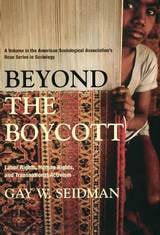
Beyond the Boycott
Labor Rights, Human Rights, and Transnational ActivismGay W. Seidman
Russell Sage Foundation, 2007
Beyond the City and the Bridge
East Asian Immigration in a New Jersey SuburbMatsumoto, Noriko
Rutgers University Press, 2018
Winner of the Richard P. McCormick Prize from the New Jersey Historical Association
Honorable Mention, 2019 American Sociological Association Book Award - Asia/Asian American Section
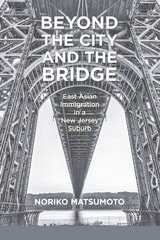
In recent decades, the American suburbs have become an important site for immigrant settlement. Beyond the City and the Bridge presents a case study of Fort Lee, Bergen County, on the west side of the George Washington Bridge connecting Manhattan and New Jersey. Since the 1970s, successive waves of immigrants from East Asia have transformed this formerly white community into one of the most diverse suburbs in the greater New York region. Fort Lee today has one of the largest concentrations of East Asians of any suburb on the East Coast, with Chinese, Japanese, and Koreans forming distinct communities while influencing the structure and everyday life of the borough. Noriko Matsumoto explores the rise of this multiethnic suburb—the complex processes of assimilation and reproduction of ethnicities, the changing social relationships, and the conditions under which such transformations have occurred.

Beyond the European Left
Ideology and Political Action in the Belgian EcologyHerbert Kitschelt and Staf Hellemans
Duke University Press, 1990
The authors employ a new research methodology—surveying party militants—that is better adapted to the study of micropolitics than are expert interviews. Herbert Kitschelt and Staf Hallemans show that European Green party activists express an egalitarian and libertarian vision of a desirable social order that builds on, but radically transforms, ideas of the traditional socialist European left. The authors then examine the debates and disagreements among militants on political objectives and the consequences of conflicting views for party organization and strategy. Their findings illuminate the unique dynamics of left-libertarian politics in a number of Western European countries with obvious relevance to current developments in Eastern Europe.
Black Baltimore
A New Theory of CommunityHarold Mcdougall
Temple University Press, 1993
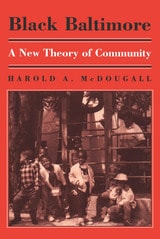
Through extensive neighborhood interviews and a compelling assessment of the problems of unraveling communities in urban America, Harold McDougall reveals how, in sections of Baltimore, a "New Community" is developing. Relying more on vernacular culture, personal networking, and mutual support than on private wealth or public subsidy, the communities of black Baltimore provide an example of self-help and civic action that could and should be occurring in other inner-city areas. In this political history of Old West Baltimore, McDougall describes how "base communities"—small peer groups that share similar views, circumstances, and objectives—have helped neighborhoods respond to the failure of both government and the market to create conditions for a decent quality of life for all.
Arguing for the primacy of church leadership within the black community, the author describes how these small, flexible groups are creating the foundation of what he calls a New Community, where community-spirited organizers, clergy, public interest advocates, business people, and government workers interact and build relationships through which Baltimore's urban agenda is being developed.

Black Earth, White Bread
A Technopolitical History of Russian Agriculture and FoodSusanne A. Wengle
University of Wisconsin Press, 2023
Examining governance, production, consumption, nature, and the ensuing vulnerabilities of the agrifood system, Wengle reveals the intended and unintended consequences of Russian agricultural policies since 1917. Ultimately, Black Earth, White Bread calls attention to Russian technopolitics and how macro systems of government impact life on a daily, quotidian level.
Black Fathers in Contemporary American Society
Strengths, Weaknesses, and Strategies for ChangeObie Clayton
Russell Sage Foundation, 2003
Black Food Matters
Racial Justice in the Wake of Food JusticeHanna Garth
University of Minnesota Press, 2020
An in-depth look at Black food and the challenges it faces today
For Black Americans, the food system is broken. When it comes to nutrition, Black consumers experience an unjust and inequitable distribution of resources. Black Food Matters examines these issues through in-depth essays that analyze how Blackness is contested through food, differing ideas of what makes our sustenance “healthy,” and Black individuals’ own beliefs about what their cuisine should be.
Primarily written by nonwhite scholars, and framed through a focus on Black agency instead of deprivation, the essays here showcase Black communities fighting for the survival of their food culture. The book takes readers into the real world of Black sustenance, examining animal husbandry practices in South Carolina, the work done by the Black Panthers to ensure food equality, and Black women who are pioneering urban agriculture. These essays also explore individual and community values, the influence of history, and the ongoing struggle to meet needs and affirm Black life.
A comprehensive look at Black food culture and the various forms of violence that threaten the future of this cuisine, Black Food Matters centers Blackness in a field that has too often framed Black issues through a white-centric lens, offering new ways to think about access, privilege, equity, and justice.
Contributors: Adam Bledsoe, U of Minnesota; Billy Hall; Analena Hope Hassberg, California State Polytechnic U, Pomona; Yuson Jung, Wayne State U; Kimberly Kasper, Rhodes College; Tyler McCreary, Florida State U; Andrew Newman, Wayne State U; Gillian Richards-Greaves, Coastal Carolina U; Monica M. White, U of Wisconsin–Madison; Brian Williams, Mississippi State U; Judith Williams, Florida International U; Psyche Williams-Forson, U of Maryland, College Park; Willie J. Wright, Rutgers U.
Blaming the Poor
The Long Shadow of the Moynihan Report on Cruel Images about PovertyGreenbaum, Susan D
Rutgers University Press, 2015
Block by Block
Neighborhoods and Public Policy on Chicago's West SideAmanda I. Seligman
University of Chicago Press, 2005
Seligman's study reveals that the responses of white West Siders to racial changes occurring in their neighborhoods were both multifaceted and extensive. She shows that, despite rehabilitation efforts, deterioration in these areas began long before the color of their inhabitants changed from white to black. And ultimately, the riots that erupted on Chicago's West Side and across the country in the mid-1960s stemmed not only from the tribulations specific to blacks in urban centers but also from the legacy of accumulated neglect after decades of white occupancy. Seligman's careful and evenhanded account will be essential to understanding that the "flight" of whites to the suburbs was the eventual result of a series of responses to transformations in Chicago's physical and social landscape, occurring one block at a time.

Bombs in the Backyard
Atomic Testing and American PoliticsA. Constandina Titus
University of Nevada Press, 2001
Boomtown Columbus
Ohio’s Sunbelt City and How Developers Got Their WayKevin R. Cox
The Ohio State University Press, 2021
How have development interests become entwined with government? How has a policy of annexation reformed the city’s map? Why have airline service and major league prestige lagged behind its status as a regional center? And what, if anything, makes this city with a reputation for being average stand apart? In Boomtown Columbus, Cox applies both scholarly expertise and his personal experience as a long-time resident of the city to look at the real-life costs of policy. The resulting narrative will fascinate not only locals but anyone with a stake in understanding American cities and a path toward urban livability for all.

Border Air
A History of US-Mexico Environmental CooperationLaura M. Uribarri
University of Texas Press, 0
Tracing a century of pollution and transnational collaboration in the Paso del Norte air basin.
The air knows no borders, which makes atmospheric pollution a devilish legal and environmental challenge. The problem is especially dangerous in the Paso del Norte, where the industry and urbanization of Juárez-El Paso stretch across the international boundary, and surrounding mountains trap airborne pollutants. Laura Uribarri traces the nineteenth- and twentieth-century transformations of the region, uncovering the sources of pollution and analyzing transnational efforts to regulate and improve the air.
Border Air shows how a favorable location, rail expansion, and numerous trade and labor agreements made Juárez-El Paso a global manufacturing hub, leading to unfettered growth and declining air quality. By the mid-1990s, El Paso and Juárez ranked among the most polluted cities on the continent. Environmental treaties crafted in Washington and Mexico City made little difference. But fronterizos themselves had an impact. Uribarri focuses on the Paso del Norte Air Quality Task Force, a citizen group that pioneered successful mitigation projects such as working with emitters to design cleaner production methods without disrupting workers’ livelihoods. This history shows what can be accomplished at the grassroots and offers lessons on how border communities can collaborate to address complex environmental problems.
Border Economies
Cities Bridging the U.S.-Mexico DivideJames Gerber
University of Arizona Press, 2024
Enormous legal cross-border flows of people, goods, and finance are embedded in the region’s history and prompted by the need to respond to new opportunities and challenges that originate on the other side. In Border Economies James Gerber examines how the interactivity and sensitivity of communities to conditions across the border differentiates them from communities in the interiors of Mexico and the United States. Gerber explains what makes the region not only unique but uniquely interesting.
In Border Economies readers who want to understand the conditions that make the border controversial but also want to go beyond shallow political narratives will find an in-depth exploration of the economic forces shaping the region and an antidote to common prejudices and misunderstandings.
Border Water
The Politics of U.S.-Mexico Transboundary Water Management, 1945–2015Stephen Paul Mumme
University of Arizona Press, 2023
The international boundary between the United States and Mexico spans more than 1,900 miles. Along much of this international border, water is what separates one country from the other. Border Water provides a historical account of the development of governance related to transboundary and border water resources between the United States and Mexico in the last seventy years.
This work examines the phases and pivot points in the development of U.S.-Mexico border water resources and reviews the theoretical approaches and explanation that impart a better understanding of these events. Author Stephen Paul Mumme, a leading expert in water policy and border studies, describes three important periods in the chronology of transboundary water management. First, Mumme examines the 1944 Water Treaty, the establishment of the International Boundary and Water Commission (IBWC) in 1945, and early transborder politics between the two governments. Next, he describes the early 1970s and the rise of environmentalism. In this period, pollution and salinization of the Colorado River Delta come into focus. Mumme shows how new actors, now including environmentalists and municipalities, broadened and strengthened the treaty’s applications in transboundary water management. The third period of transborder interaction described covers the opening and restricting of borders due to NAFTA and then 9/11.
Border Water places transboundary water management in the frame of the larger binational relationship, offering a comprehensive history of transnational water management between the United States and Mexico. As we move into the next century of transnational water management, this important work offers critical insights into lessons learned and charts a path for the future.
Borders of Care
Immigrants, Migrants, and the Fight for Health Care in the United StatesBeatrix Hoffman
University of Chicago Press, 2025
For the roughly ten million undocumented immigrants living in the United States, federal health care coverage is out of reach. Barred from Medicare, Medicaid, and the Affordable Care Act, most rely on hospital emergency rooms when they get sick, or clinics that don’t inquire about immigration status. Further obstacles to health care, including discrimination and the fear of deportation, mean that immigrants, undocumented or not, seek and receive less medical attention than any other population in the country. Yet immigrants haven’t always been ostracized from health care in the United States—providers and activists have for over a century worked to make medical services available to newcomers and migrants, including, at times, the undocumented.
Drawing together stories from diverse communities from the mid-nineteenth century to the present, Borders of Care examines how health care in the United States has both included and excluded immigrants. Beatrix Hoffman analyzes both the health and immigration systems, adding to our understanding of why these structures, and the policies that support them, have resisted reform. Moreover, she shows that immigrants, often scapegoated as burdens on the health-care system, have strengthened it through their responses to systemic exclusion. By creating hospitals and clinics, serving as practitioners, fighting for safer workplaces, filing lawsuits, organizing and protesting, immigrants and migrants have improved medical access for everybody and advanced the idea of health care as a universal right. As accessible as it is authoritative, Hoffman’s survey could not be more timely.
Borders of Care
Immigrants, Migrants, and the Fight for Health Care in the United StatesBeatrix Hoffman
University of Chicago Press, 2025
Probes the relationship between the immigration and health care systems in the United States.
For the roughly ten million undocumented immigrants living in the United States, federal health care coverage is out of reach. Barred from Medicare, Medicaid, and the Affordable Care Act, most rely on hospital emergency rooms when they get sick, or clinics that don’t inquire about immigration status. Further obstacles to health care, including discrimination and the fear of deportation, mean that immigrants, undocumented or not, seek and receive less medical attention than any other population in the country. Yet immigrants haven’t always been ostracized from health care in the United States—providers and activists have for over a century worked to make medical services available to newcomers and migrants, including, at times, the undocumented.
Drawing together stories from diverse communities from the mid-nineteenth century to the present, Borders of Care examines how health care in the United States has both included and excluded immigrants. Beatrix Hoffman analyzes both the health and immigration systems, adding to our understanding of why these structures, and the policies that support them, have resisted reform. Moreover, she shows that immigrants, often scapegoated as burdens on the health-care system, have strengthened it through their responses to systemic exclusion. By creating hospitals and clinics, serving as practitioners, fighting for safer workplaces, filing lawsuits, organizing and protesting, immigrants and migrants have improved medical access for everybody and advanced the idea of health care as a universal right. As accessible as it is authoritative, Hoffman’s survey could not be more timely.

Boss Cox’s Cincinnati
Urban Politics in the Progressive EraZane L. Miller
The Ohio State University Press, 2000
In documenting the changes Cincinnati experienced during the Progressive Era, Zane L. Miller provides a clear perspective on the processes of urbanization that transformed the American city. His focus is political because politics provided continuity amid the diversity of city life. The most important aspect of political continuity in Cincinnati and in other cities was "bossism," often depicted as an example of corruption, but which was in many cities part of the quest for a new urban order. In Cincinnati, Boss George B. Cox's machine was a response to the disorder of the times; interestingly, the machine actually helped to control disorder, paving the way for later reforms. Miller carefully explores both the nature and the significance of bossism, showing how it and municipal reform were both essential components of the modern urban political system.
Originally published in 1968, Boss Cox's Cincinnati is considered a classic in the field of urban studies.

Boundaries of Repair
Memory, Emotion, and Mobility across Timor-Leste and IndonesiaVictoria Sakti
National University of Singapore Press, 2026
A study of Timorese communities that offers a human perspective on post-conflict reconciliation.
Violent conflict may end in a kind of peace. But reconciliation processes do not always work, let alone bring healing. How are families and communities to rebuild their lives when old divisions, pain, and memories still linger? Centering on social repair, this beautifully crafted study explores how families and communities in Timor-Leste and exile communities in Indonesia live with the enduring consequences of political violence, forced separation, and displacement after twenty-four years of Indonesian occupation.
Following relationships across borders and between generations, Boundaries of Repair shows how ruptures in kinship and community life reverberate across time and space, and even between the living and the dead. Rather than treating repair as a state-driven undertaking, the book reveals social repair as an uneven, fragile, and ongoing process, sustained through everyday care practices, memory work, emotional labor, and creative acts of negotiation in contexts marked by impunity and unresolved loss.
By foregrounding what it means to live with damage that cannot be fully repaired, the book challenges dominant assumptions about justice, healing, and closure. It offers a powerful account of how people renegotiate relationships, boundaries, and belonging amid traces of violence, contributing new insights to debates on post-conflict recovery, memory, displacement, and the limits of reconciliation.

Braking the Special Interests
Trucking Deregulation and the Politics of Policy ReformDorothy Robyn
University of Chicago Press, 1987
Robyn focuses her analysis on four elements of strategy responsible for the deregulator's victory—elements that are essential, she argues, to any successful policy battle against entrenched special interests: the effective use of economic data and analysis to make a strong case for the merits of reform; the formation and management of a diverse lobbying coalition of firms and interest groups; presidential bargaining to gain political leverage; and transition schemes to reduce uncertainty and cushion the blow to losers.
Drawing on political and economic theory, Braking the Special Interests is an immensely rich and readable study of political strategy and skill, with general insights relevant to current political battles surrounding trade, agriculture, and tax policies. Robyn's interdisciplinary work will be of great value to scholars and practitioners of politics, economics, and public policy.
Bridging a Great Divide
The Battle for the Columbia River GorgeKathie Durbin
Oregon State University Press, 2013
In Bridging a Great Divide, award-winning environmental journalist Kathie Durbin draws on interviews, correspondence, and extensive research to tell the story of the major shifts in the Gorge since the Act’s passage. Sweeping change has altered the Gorge’s landscape: upscale tourism and outdoor recreation, gentrification, the end of logging in national forests, the closing of aluminum plants, wind farms, and a population explosion in the metropolitan area to its west. Yet, to the casual observer, the Gorge looks much the same as it did twenty-five years ago.
How can we measure the success of the Columbia River Gorge National Scenic Area Act? In this insightful and revealing history, Durbin suggests that the answer depends on who you are: a small business owner, an environmental watchdog group, a chamber of commerce. The story of the Columbia River Gorge National Scenic Area is the story of the Pacific Northwest in microcosm, as the region shifts from a natural-resource-based economy to one based on recreation, technology, and quality of life.

Britain's War on Poverty
Jane Waldfogel
Russell Sage Foundation, 2010

Broken Ballots
Will Your Vote Count?Douglas E. Jones and Barbara Simons
CSLI, 2012
For many of us, the presidential election of 2000 was a wake-up call. The controversy following the vote count led to demands for election reform. But the new voting systems that were subsequently introduced to the market have serious security flaws, and many are confusing and difficult to use. Moreover, legislation has not kept up with the constantly evolving voting technology, leaving little to no legal recourse when votes are improperly counted. How did we come to acquire the complex technology we now depend on to count votes? Douglas Jones and Barbara Simons probe this question, along with public policy and regulatory issues raised by our voting technologies. Broken Ballots is a thorough and incisive analysis of the current voting climate that approaches American elections from technological, legal, and historical perspectives. The authors examine the ways in which Americans vote today, gauging how inaccurate, unreliable, and insecure our voting systems are. An important book for election administrators, political scientists, and students of government and technology policy, Broken Ballots is also a vital tool for any voting American.
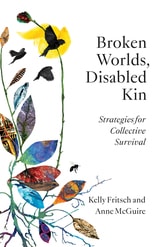
Broken Worlds, Disabled Kin
Strategies for Collective SurvivalKelly Fritsch
University of Minnesota Press, 2026
A call to remake our world through a new politics of disabled kin-making
We live in a world broken by design: a web of systems that debilitate and kill through racist and ableist infrastructural neglect, socioeconomic abandonment, and ecological negligence. Fixes for these forms of breakage often conceal and amplify harm—but what happens if we refuse to rehabilitate this inhospitable world? In Broken Worlds, Disabled Kin, Kelly Fritsch and Anne McGuire urge an alternative response through abolition, access, care, and interdependence.
Bringing a much-needed disability studies lens to discussions of public policy, legal reform, and social change, Fritsch and McGuire show how hostile social and economic structures such as racial capitalism, neoliberalism, and settler colonialism unevenly target certain populations and environments. As they trace how everyday encounters with broken infrastructures like inaccessible transit, fragmented mental health care, and crumbling educational institutions reflect broader patterns of structural abandonment and slow violence, they pose a radical means of response: the making of disabled kin. Ranging from mundane disruptions to global crises like pandemics, wars, genocides, and climate collapse, they demonstrate how disabled kin-making nurtures connection and support between people, ecologies, infrastructures, and objects, cultivating a collective “we” that can contest systems broken by design.
Urgent and passionate, Broken Worlds, Disabled Kin asks readers to reexamine conceptions of breakage, maintenance, and repair, viewing them as tools of abolition and justice. Against relentless fragmentation and atomization, this book equips us with a politics of solidarity and collectivity with which to begin making a more life-supporting world.
Retail e-book files for this title are screen-reader friendly with images accompanied by short alt text and/or extended descriptions.
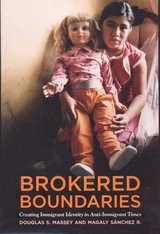
Brokered Boundaries
Immigrant Identity in Anti-Immigrant TimesDouglas S. Massey
Russell Sage Foundation, 2010
Brokers and Bureaucrats
Building Market Institutions in RussiaTimothy Frye
University of Michigan Press, 2000

Brokers of Power
The Financialization of the US Electricity SystemConor Harrison
University of Minnesota Press, 2026
A detailed look at the financial interests impacting the energy transition
The twenty-first century has seen major transformations in the US electricity sector—but while the use of coal power wanes and the need for renewable energy becomes more urgent, financial actors maintain a complicating influence on the trajectory of energy transition. Brokers of Power identifies changing patterns of investment intertwined with the shift from state-regulated electricity monopolies to a market-driven price model and the embrace of wind and solar hookups to the grid.
Drawing from case studies such as catastrophic Winter Storm Uri that hit Texas in 2021 and in-depth interviews with people working in the electricity and financial sectors, Conor Harrison reveals how the various entanglements of private equity, investment banking, and financial modeling are shaping the future and raising the costs of this vital infrastructure. Today’s financial firms, he shows, are engaged in the electricity industry beyond matters of investment: they own electricity generation infrastructure, trade electricity on markets, capture federal renewable energy tax credits, and advise on electricity firm operating strategy.
Looking beyond technology and policy, Harrison interrogates what it means to have powerful financial institutions as the primary agents of change in the fraught and ongoing energy transition. A timely and invaluable contribution to the fields of geography, environmental studies, and the energy social sciences, Brokers of Power is a cautionary account delving into the complexities surrounding the push for decarbonization.
Retail e-book files for this title are screen-reader friendly with images accompanied by short alt text and/or extended descriptions.
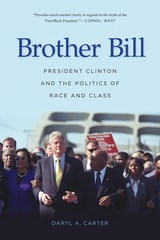
Brother Bill
President Clinton and the Politics of Race and ClassDaryl A Carter
University of Arkansas Press, 2016
“This book is a fascinating analysis of race and class in the age of President Bill Clinton. It provides much-needed clarity in regards to the myth of the ‘First Black President.’ It contributes much to our understanding of the history that informs our present moment!”
—Cornel West
As President Barack Obama was sworn into office on January 20, 2009, the United States was abuzz with talk of the first African American president. At this historic moment, one man standing on the inaugural platform, seemingly a relic of the past, had actually been called by the moniker the “first black president” for years.
President William Jefferson Clinton had long enjoyed the support of African Americans during his political career, but the man from Hope also had a complex and tenuous relationship with this faction of his political base. Clinton stood at the nexus of intense political battles between conservatives’ demands for a return to the past and African Americans’ demands for change and fuller equality. He also struggled with the class dynamics dividing the American electorate, especially African Americans. Those with financial means seized newfound opportunities to go to college, enter the professions, pursue entrepreneurial ambitions, and engage in mainstream politics, while those without financial means were essentially left behind. The former became key to Clinton’s political success as he skillfully negotiated the African American class structure while at the same time maintaining the support of white Americans. The results were tremendously positive for some African Americans. For others, the Clinton presidency was devastating.
Brother Bill examines President Clinton’s political relationship with African Americans and illuminates the nuances of race and class at the end of the twentieth century, an era of technological, political, and social upheaval.