Results by title
991 books match the query 'Writing' and 37 start with b
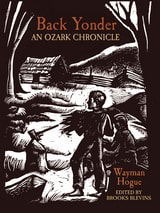
Back Yonder
An Ozark ChronicleCharles Wayman Hogue
University of Arkansas Press, 2016
Wayman Hogue’s stories of growing up in the Ozarks, according to a 1932 review in the New York Times, “brilliantly illuminate mountain life to its very heart and in its most profound aspects.” A standout among the Ozarks literature that was popular during the Great Depression, this memoir of life in rural Arkansas in the decades following the Civil War has since been forgotten by all but a few students of Arkansas history and folklore.
Back Yonder is a special book. Hogue, like his contemporary Laura Ingalls Wilder, weaves a narrative of a family making its way in rugged, impoverished, and sometimes violent places. From one-room schoolhouses to moonshiners, the details in this story capture the essence of a particular time and place, even as the characters reflect a universal quality that will endear them to modern readers.
Historian Brooks Blevins’s new introduction explores the life of Charles Wayman Hogue, analyzes the people and events that inspired the book, and places the volume in the context of America’s discovery of the Ozarks in the years between the World Wars. The University of Arkansas Press is proud to reissue Back Yonder as the first book in the Chronicles of the Ozarks series, making this Arkansas classic available again, ready to be discovered and rediscovered by readers sure to find the book as interesting and entertaining as ever.
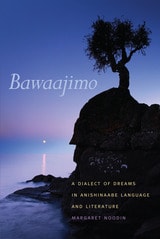
Bawaajimo
A Dialect of Dreams in Anishinaabe Language and LiteratureMargaret Noodin
Michigan State University Press, 2014
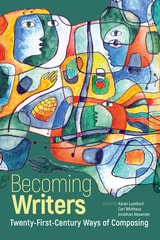
Becoming Writers
Twenty-First-Century Ways of ComposingKaren Lunsford
Utah State University Press, 2026
Becoming Writers draws on phenomenological and lifespan approaches to writing research, reframing writing as a lived process shaped by social contexts, evolving technologies, and a writer’s own sense of self and agency. It moves beyond familiar binaries and offers a more holistic account of what it means to become a writer today.
Bringing together scholars from across the fields of writing studies and rhetoric/composition to consider the ways “writing” is changing in the twenty-first century, this collection tracks how and why people talk about the various forms of writing they do. Contributors address how younger generations understand the role and place of writing in their lives, particularly amid increasing and dramatic economic, social, and political change, as well as the ever-evolving role of writing in what it means to be human.
Becoming Writers builds on the Wayfinding Project (https://thewayfindingproject.com), a multiyear study of writing development focused on college graduates. Rather than focusing solely on the classroom, Becoming Writers investigates how writing functions in people’s professional, civic, personal, and digital lives. By centering lived experiences across domains, it provides a model of the empirical depth and different methodological approaches being used by scholars interested in writing development across the lifespan.
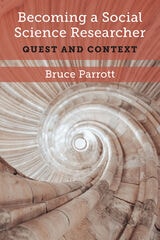
Becoming a Social Science Researcher
Quest and ContextBruce Parrott
University of Michigan Press, 2023
Becoming a Social Science Researcher is designed to help aspiring social scientists, including credentialed scholars, understand the formidable complexities of the research process. Instead of explaining specific research techniques, it concentrates on the philosophical, sociological, and psychological dimensions of social research. These dimensions have received little coverage in guides written for social science researchers, but they are arguably even more important than particular analytical techniques. Truly sophisticated social science scholarship requires that the researcher understand the intellectual and social contexts in which they collect and interpret information. While social science training in US graduate schools has become more systematic over the past two decades with numerous publications aimed at instruction, training and guidance still fall short in addressing the fundamental needs of this field.
Becoming an Expert Writer
A Holistic Guide to Writing for PublicationDana Lynn Driscoll
University Press of Colorado, 2026
In Becoming an Expert Writer, Dana Lynn Driscoll explores the core concepts that create publication expertise. Informed by groundbreaking studies of successful emerging and expert writers as they seek to publish their work, this research-based guide illuminates the often-invisible dimensions of writing for publication. Driscoll describes strategies that move beyond conventional advice, allowing writers to craft a holistic process and relationship with their work. Each chapter integrates empirical research with reflective and practical activities, guiding writers from idea generation and flow to identity development and mentoring. The result is a transformative resource for developing sustainable, meaningful, and expert writing practices.
Before Shaughnessy
Basic Writing at Yale and Harvard, 1920-1960Kelly Ritter
Southern Illinois University Press, 2009
In Before Shaughnessy: Basic Writing at Yale and Harvard, 1920–1960, Kelly Ritter uses materials from the archives at Harvard and Yale and contemporary theories of writing instruction to reconsider the definition of basic writing and basic writers within a socio-historical context. Ritter challenges the association of basic writing with only poorly funded institutions and poorly prepared students.
Using Yale and Harvard as two sample case studies, Ritter shows that basic writing courses were alive and well, even in the Ivy League, in the early twentieth century. She argues not only that basic writers exist across institutional types and diverse student populations, but that the prevalence of these writers has existed far more historically than we generally acknowledge.
Uncovering this forgotten history of basic writing at elite institutions, Ritter contends that the politics and problems of the identification and the definition of basic writers and basic writing began long before the work of Mina Shaughnessy in Errors and Expectations and the rise of open admissions. Indeed, she illustrates how the problems and politics have been with us since the advent of English A at Harvard and the heightened consumer-based policies that resulted in the new admissions criteria of the early twentieth-century American university. In order to recognize this long-standing reality of basic writing, we must now reconsider whether the nearly standardized, nationalized definition of “basic” is any longer a beneficial one for the positive growth and democratic development of our first-year writing programs and students.
Before Writing, Vol. I
From Counting to CuneiformBy Denise Schmandt-Besserat
University of Texas Press, 1992
A fascinating book on the origins of writing.
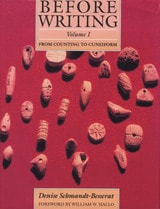
Before Writing gives a new perspective on the evolution of communication. It points out that when writing began in Mesopotamia it was not, as previously thought, a sudden and spontaneous invention. Instead, it was the outgrowth of many thousands of years' worth of experience at manipulating symbols.
In Volume I: From Counting to Cuneiform, Denise Schmandt-Besserat describes how in about 8000 B.C., coinciding with the rise of agriculture, a system of counters, or tokens, appeared in the Near East. These tokens—small, geometrically shaped objects made of clay—represented various units of goods and were used to count and account for them. The token system was a breakthrough in data processing and communication that ultimately led to the invention of writing about 3100 B.C. Through a study of archaeological and epigraphic evidence, Schmandt-Besserat traces how the Sumerian cuneiform script, the first writing system, emerged from a counting device.
In Volume II: A Catalog of Near Eastern Tokens, Schmandt-Besserat presents the primary data on which she bases her theories. These data consist of several thousand tokens, catalogued by country, archaeological site, and token types and subtypes. The information also includes the chronology, stratigraphy, museum ownership, accession or field number, references to previous publications, material, and size of the artifacts. Line drawings and photographs illustrate the various token types.
Before Writing, Vol. II
A Catalog of Near Eastern TokensBy Denise Schmandt-Besserat
University of Texas Press, 1992
Before Writing gives a new perspective on the evolution of communication. It points out that when writing began in Mesopotamia it was not, as previously thought, a sudden and spontaneous invention. Instead, it was the outgrowth of many thousands of years' worth of experience at manipulating symbols.
In Volume I: From Counting to Cuneiform, Denise Schmandt-Besserat describes how in about 8000 B.C., coinciding with the rise of agriculture, a system of counters, or tokens, appeared in the Near East. These tokens—small, geometrically shaped objects made of clay—represented various units of goods and were used to count and account for them. The token system was a breakthrough in data processing and communication that ultimately led to the invention of writing about 3100 B.C. Through a study of archaeological and epigraphic evidence, Schmandt-Besserat traces how the Sumerian cuneiform script, the first writing system, emerged from a counting device.
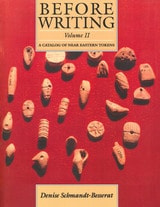
In Volume II: A Catalog of Near Eastern Tokens, Schmandt-Besserat presents the primary data on which she bases her theories. These data consist of several thousand tokens, catalogued by country, archaeological site, and token types and subtypes. The information also includes the chronology, stratigraphy, museum ownership, accession or field number, references to previous publications, material, and size of the artifacts. Line drawings and photographs illustrate the various token types.
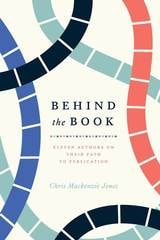
Behind the Book
Eleven Authors on Their Path to PublicationChris Mackenzie Jones
University of Chicago Press, 2018
Behind the Book explores how eleven contemporary first-time authors, in genres ranging from post-apocalyptic fiction to young adult fantasy to travel memoir, navigated these pathways with their debut works. Based on extensive interviews with the authors, it covers the process of writing and publishing a book from beginning to end, including idea generation, developing a process, building a support network, revising the manuscript, finding the right approach to publication, building awareness, and ultimately moving on to the next project. It also includes insights from editors, agents, publishers, and others who helped to bring these projects to life.
Unlike other books on writing craft, Behind the Book looks at the larger picture of how an author’s work and choices can affect the outcome of a project. The authors profiled in each story open up about their challenges, mistakes, and successes. While their paths to publication may be unique, together they offer important lessons that authors of all types can apply to their own writing journeys.
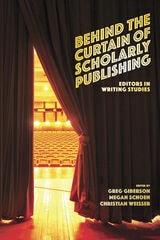
Behind the Curtain of Scholarly Publishing
Editors in Writing StudiesGreg Giberson
Utah State University Press, 2022
Each chapter in the collection examines the unique experiences and individual contributions of its authors during their time as editors, offering advice to scholars and potential editors on how to navigate the publication process and understand editorial roles. The contributors provide multiple perspectives on the growth, transformation, and, in some cases, founding of some of the most influential publishing venues in writing studies.
The personal and historical narratives, along with the unique perspectives and insightful analyses of the individual authors in Behind the Curtain of Scholarly Publishing, offer needed transparency and context to what has historically been an opaque, yet inevitable and consequential, part of academic life. This volume will help researchers in the field understand the publishing process.
Contributors: Cheryl Ball, David Bartholomae, Charles Bazerman, Jean Ferguson Carr, Douglas Eyman, Muriel Harris, Byron Hawk, Alice Horning, Paul Kei Matsuda, Laura Micciche, Mike Palmquist, Michael Pemberton, Malea Powell, Kelly Ritter, Victor Villanueva, Victor Vitanza, Kathleen Blake Yancey
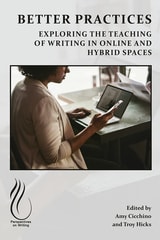
Better Practices
Exploring the Teaching of Writing in Online and Hybrid SpacesAmy Cicchino
University Press of Colorado, 2024
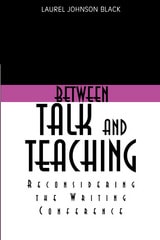
Between Talk And Teaching
Reconsidering the Writing ConferenceLaurel Johnson Black
Utah State University Press, 1998
The teacher-student conference is standard in the repertoire of teachers at all levels. Because it's a one-to-one encounter, teachers work hard to make it comfortable; but because it's a pedagogical moment, they hope that learning occurs in the encounter, too. The literature in this area often suggests that a conference is a conversation, but this doesn't account for a teacher's need to use it pedagogically. Laurel Johnson Black's new book explores the conflicting meanings and relations embedded in conferencing and offers a new theoretical understanding of the conference along with practical approaches to conferencing more effectively with students.
Analyzing taped conferences of several different teachers and students, Black considers the influence that power, gender, and culture can have on a conference. She draws on sociolinguistic theory, as well as critical theory in composition and rhetoric, to build an understanding of the writing conference as an encounter somewhere between conversation and the classroom. She finds neither the conversation model nor versions of the master-apprentice model satisfactory. Her approach is humane, student-centered, and progressive, but it does not ignore the valid pedagogical purposes a teacher might have in conferencing. Between Talk and Teaching will be a valuable addition to the professional library of writing teachers and writing program administrators.
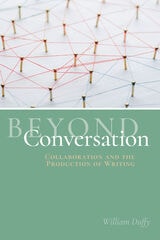
Beyond Conversation
Collaboration and the Production of WritingWilliam Duffy
Utah State University Press, 2020
While interrogating the institutional politics that circulate around debates about collaboration, this book offers a concise history of collaborative writing theory while proposing a new set of commonplaces for understanding the labor of coauthorship. Specifically, Beyond Conversation outlines an interactionist theory that explains collaboration as the rhetorical capacity that manifests in the discursive engagements coauthors enter into with the objects of their writing.
Drawing on new materialist philosophies, post-qualitative inquiry, and interactionist rhetorical theory, Beyond Conversation challenges writing and literacy educators to recognize the pedagogical benefits of collaborative writing in the work they do both as writers and as teachers of writing. The book will reinvigorate how teachers, scholars, and administrators advocate for the importance of collaborative writing in their work.
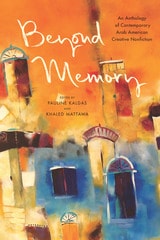
Beyond Memory
An Anthology of Contemporary Arab American Creative NonfictionPauline Kaldas
University of Arkansas Press, 2020
Beyond Postprocess
Sidney I. Dobrin, J.A. Rice, and Michael Vastola
Utah State University Press, 2011
Beyond Postprocess offers a vigorous, provocative discussion of postprocess theory in its contemporary profile. Fueled by something like a fundamental refusal to see writing as self-evident, reducible, and easily explicable, the contributors rethink postprocess, suggesting that there is no easily defined moment or method that could be called postprocess. Instead, each contribution to this collection provides a unique and important example of what work beyond postprocess could be.
Since postprocess theory in writing studies first challenged traditional conceptions of writing and the subject who writes, developments there have continued to push theorists of writing in a number of promising theoretical directions. Spaces for writing have arisen that radically alter ideological notions of space, rational thinking, intellectual property and politics, and epistemologies; and new media, digital, and visual rhetorics have increasingly complicated the scene, as well.
Contributors to Beyond Postprocess reconsider writing and writing studies through posthumanism, ecology, new media, materiality, multimodal and digital writing, institutional critique, and postpedagogy. Through the lively and provocative character of these essays, Beyond Postprocess aims to provide a critical site for nothing less than the broad reevaluation of what it means to study writing today. Its polyvocal considerations and conclusions invest the volume with a unique potential to describe not what that field of study should be, but what it has the capacity to create. The central purpose of Beyond Postprocess is to unleash this creative potential.
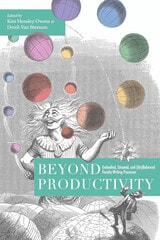
Beyond Productivity
Embodied, Situated, and (Un)Balanced Faculty Writing ProcessesKim Hensley Owens
Utah State University Press, 2023
This collection positions scholarly writers' ways of writing as a form of flexible, evolving knowledge. By exhibiting what is lost and gained through successive rounds of transformation and adaptation over time, the contributors offer a sustainable understanding and practice of process—one that looks beyond productivity as the primary measure of success. Each presents a fluid understanding of the writing process, illustrating its deeply personal nature and revealing how fragmented and disjointed methods and experiences can highlight what is precious about writing.
Beyond Productivity determines anew the use and value of scholarly writing and the processes that produce it, both within and beyond the context of the losses, constraints, and adaptations associated with the COVID-19 pandemic.
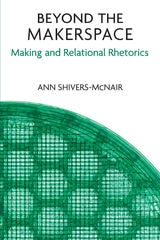
Beyond the Makerspace
Making and Relational RhetoricsAnn Shivers-McNair
University of Michigan Press, 2021
Beyond the Makerspace contributes not only to our understanding of making and makerspaces, but also to our understanding of how to study making—and meaning making, more broadly—in ways that examine and intervene in the marking of difference. Thus, the book examines what (and whose) values and practices we are taking up when we identify as makers or when we turn a writing classroom or a library space into a makerspace.
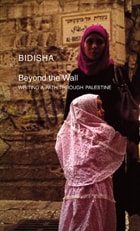
Beyond the Wall
Writing a Path through PalestineBidisha
Seagull Books, 2012
Beyond the Wall
Writing a Path through PalestineBidisha
Seagull Books, 2025
Their voices come from Bethlehem and Hebron. You can hear them from Jerusalem to Nazareth, and witness their protests in Gaza and Ramallah. From the refugee camps in the West Bank, you can hear the voices of the Palestinian people call out to demand self-determination and a better quality of life. But outside of Israel and the occupied territories, these individual voices are rarely heard—until now.
In Beyond the Wall: Writing a Path through Palestine, internationally renowned feminist critic and writer Bidisha collects the testimonies of an occupied people—ordinary citizens, activists, and children—alongside those of international aid workers and foreign visitors for a revelatory look at a population on the margins.
Called “beautifully belligerent, [and] fiercely intelligent” by The Independent and a “dazzlingly creative writer” by the London Times, Bidisha amplifies the voices of the Palestinian people in this book and lends them her own considerable strength.
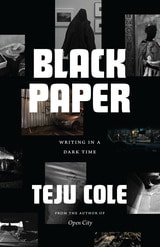
Black Paper
Writing in a Dark TimeTeju Cole
University of Chicago Press, 2021
“Darkness is not empty,” writes Teju Cole in Black Paper, a book that meditates on what it means to sustain our humanity—and witness the humanity of others—in a time of darkness. One of the most celebrated essayists of his generation, Cole here plays variations on the essay form, modeling ways to attend to experience—not just to take in but to think critically about what we sense and what we don’t.
Wide-ranging but thematically unified, the essays address ethical questions about what it means to be human and what it means to bear witness, recognizing how our individual present is informed by a collective past. Cole’s writings in Black Paper approach the fractured moment of our history through a constellation of interrelated concerns: confrontation with unsettling art, elegies both public and private, the defense of writing in a time of political upheaval, the role of the color black in the visual arts, the use of shadow in photography, and the links between literature and activism. Throughout, Cole gives us intriguing new ways of thinking about blackness and its numerous connotations. As he describes the carbon-copy process in his epilogue: “Writing on the top white sheet would transfer the carbon from the black paper onto the bottom white sheet. Black transported the meaning.”
Black or Right
Anti/Racist Campus RhetoricsLouis M. Maraj
Utah State University Press, 2020
Offering four Black rhetorics as antiracist means for rhetorical reclamation—autoethnography, hashtagging, inter(con)textual reading, and reconceptualized disruption—the book uses Black feminist relationality via an African indigenous approach. Maraj examines fluid, quotidian ways Black folk engage anti/racism at historically white institutions in the United States in response to violent campus spaces, educational structures, protest movements, and policy practice. Black or Right’s experimental, creative style strives to undiscipline knowledge from academic confinement. Exercising different vantage points in each chapter—autoethnographer, digital media scholar/pedagogue, cultural rhetorician, and critical discourse analyst—Maraj challenges readers to ecologically understand shifting, multiple meanings of Blackness in knowledge-making. Black or Right’s expressive form, organization, narratives, and poetics intimately interweave with its argument that Black folk must continuously invent “otherwise” in reiterative escape from oppressive white spaces.
In centering Black experiences, Black theory, and diasporic Blackness, Black or Right mobilizes generative approaches to destabilizing institutional whiteness, as opposed to reparative attempts to “fix racism,” which often paradoxically center whiteness. It will be of interest to both academic and general readers and significant for specialists in cultural rhetorics, Black studies, and critical theory.
Blank Verse
A Guide to Its History and UseRobert B. Shaw
Ohio University Press, 2007
With its compact but inclusive survey of more than four centuries of poetry, Blank Verse is filled with practical advice for poets of our own day who may wish to attempt the form or enhance their mastery of it. Enriched with numerous examples, Shaw’s discussions of verse technique are lively and accessible, inviting not only to apprentice poets but to all readers of poetry.
Shaw’s approach should reassure those who find prosody intimidating, while encouraging specialists to think more broadly about how traditional poetic forms can be taught, learned, practiced, and appreciated in the twenty-first century. Besides filling a conspicuous gap in literary history, Blank Verse points the way ahead for poets interested in exploring blank verse and its multitude of uses.
Blessed Are the Peacemakers
Small Histories during World War II, Letter Writing, and Family History MethodologySuzanne Kesler Rumsey
University of Alabama Press, 2021
Where family letters become history, and ordinary lives reveal the untold story of World War II.
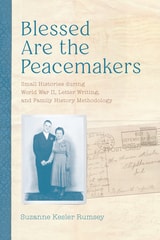
In the summer of 2013, Suzanne Kesler Rumsey discovered hundreds of letters exchanged between her late grandparents, Miriam and Benjamin Kesler. The letters, written between 1941 and 1946, were filled with typical wartime sentiments: love and longing, anguish at being apart, uncertainty about the war and the country’s future, and attempts at humor to keep their spirits up. What is unusual about their story is that Ben Kesler was not writing from a theater of war. Instead, Ben, a member of the Dunkard Brethren Church, was a conscientious objector. He, along with about 12,000 other men, opted to join the Civilian Public Service (CPS) and contribute to “work of national importance” at one of the 218 CPS camps around the country.
In Blessed Are the Peacemakers: Small Histories during World War II, Letter Writing, and Family History Methodology, Rumsey has mined not only her grandparents’ letters but also archival research on CPS camps and historical data from several Mennonite and Brethren archives to recapture the narrative of Ben’s service at two different camps and of Miriam’s struggle to support herself and her husband financially at the young age of seventeen. Ben and Miriam’s life during the war was extraordinarily ordinary, spanning six years of unrecognized and humble work for their country. Ben was not compensated for his work in the camps, and Miriam stayed home and worked as a day laborer, as a live-in maid, as a farmhand, and in the family butcher shop in order to earn enough money to support them both. Small histories like that of her grandparents, Rumsey argues, provide a unique perspective on significant political and historical moments.
Blessed Are the Peacemakers also explores the rhetorical functions of letter writing as well as the methodology of family history writing. Ben and Miriam’s letters provide an apt backdrop to examine the genre, a relatively understudied mode of literacy. Rumsey situates the young couple’s correspondence within ars dictaminis, the art of letter writing, granting new insights into the genre and how personal accounts shape our understanding of historical events.
Bodies of Knowledge
Embodied Rhetorics in Theory and PracticeA. Abby Knoblauch
Utah State University Press, 2021
The pieces in Bodies of Knowledge draw explicit attention to the impact of the body on text, the impact of the body in text, the impact of the body as text, and the impact of the body upon textual production. The contributors investigate embodied rhetorics through the lenses of race and ethnicity, gender and sexuality, disability and pain, technologies and ecologies, clothing and performance, and scent, silence, and touch. In doing so, they challenge the (false) notion that academic knowledge—that is, “real” knowledge—is disembodied and therefore presumed white, middle class, cis-het, able-bodied, and male. This collection lays bare how myriad bodies invent, construct, deliver, and experience the processes of knowledge building.
Experts in the field of writing studies provide the necessary theoretical frameworks to better understand productive (and unproductive) uses of embodied rhetorics within the academy and in the larger social realm. To help meet the theoretical and pedagogical needs of the discipline, Bodies of Knowledge addresses embodied rhetorics and embodied writing more broadly though a rich, varied, and intersectional approach. These authors address larger questions around embodiment while considering the various impacts of the body on theories and practices of rhetoric and composition.
Contributors: Scot Barnett, Margaret Booker, Katherine Bridgman, Sara DiCaglio, Kristie S. Fleckenstein, Vyshali Manivannan, Temptaous Mckoy, Julie Myatt, Julie Nelson, Ruth Osorio, Kate Pantelides, Caleb Pendygraft, Nadya Pittendrigh, Kellie Sharp-Hoskins, Anthony Stagliano, Megan Strom
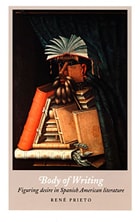
Body of Writing
Figuring Desire in Spanish American LiteratureRené Prieto
Duke University Press, 2000
Healthy, invalid, lustful, and confined bodies—as portrayed by Julio Cortázar, Guillermo Cabrera Infante, Gabriel García Márquez, Severo Sarduy, Rosario Castellanos, and Tununa Mercado—become evidence for Roland Barthes’s contention that works of fiction are “anagrams of the body.” Claiming that an author’s intentions can be uncovered by analyzing “the topography of a text,” Prieto pays particular attention not to the actions or plots of these writers’ fiction but rather to their settings and characterizations. In the belief that bodily traces left on the page reveal the motivating force behind a writer’s creative act, he explores such fictional themes as camouflage, deterioration, defilement, entrapment, and subordination. Along the way, Prieto reaches unexpected conclusions regarding topics that include the relationship of the female body to power, male and female transgressive impulses, and the connection between aggression, the idealization of women, and anal eroticism in men.
This study of how authors’ longings and fears become embodied in literature will interest students and scholars of literary and psychoanalytic criticism, gender studies, and twentieth-century and Latin American literature.
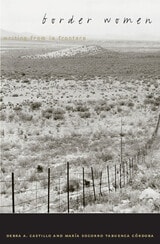
Border Women
Writing From La FronteraDebra A. Castillo
University of Minnesota Press, 2002
The first study to foreground writing by women who live at the U.S.-Mexico Border.
It is a peculiar fact that U.S.-Mexico border theory is dominated by those who write about, not from, the border. By looking at the work of women writers from both sides of the border, Debra A. Castillo and María-Socorro Tabuenca Córdoba open border studies to a truly transnational analysis while bringing questions of gender to the fore.
Border Women rethinks border theory by emphasizing women writers whose work—in Spanish, English, or a mixture of the two languages—calls into question accepted notions of border identities. These writers include those who are already well recognized internationally (Helena María Viramontes, Sheila and Sandra Ortiz Taylor, and María Novaro); those who have become part of the Chicano canon (Norma Cantú, Alicia Gaspar de Alba, and Demetria Martínez); along with some of the lesser-known, yet most exciting, women’s voices from the Mexican border (Rosario Sanmiguel, Rosina Conde, and Regina Swain).
Borrowed Voices
Writing and Racial Ventriloquism in the Jewish American ImaginationGlaser, Jennifer
Rutgers University Press, 2016
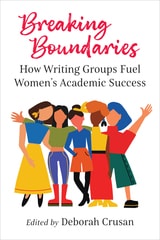
Breaking Boundaries
How Writing Groups Fuel Women's Academic SuccessEdited by Deborah Crusan
University of Michigan Press, 2026
Writing groups often fly under the radar in academia, but they can make a big difference. Faculty are under constant pressure to publish while juggling teaching, research, and service. Add packed schedules and limited time, and writing can easily get sidelined—especially for women balancing work and family. Breaking Boundaries: How Writing Groups Fuel Women’s Academic Success explores how writing groups offer support, structure, and community to help navigate these challenges.
Whether you’re a grad student trying to finish a dissertation, a stuck faculty member, or someone newly tenured wondering what’s next—you’re in the right place. This book shares honest stories, insights, and encouragement from women who have found strength in writing together. Each chapter highlights real experiences with writing groups—what helped, what didn’t, and how these groups shaped the authors’ scholarly identities. They discuss topics such as overcoming imposter syndrome, access to writing resources, navigating the stress of tenure, making academic contributions outside traditional paths, and creating sustainable writing habits. The contributors come from diverse disciplines and deliver practical advice for making writing fit into a hectic academic life. Their message is clear: when scholars support each other in writing, they not only grow their own careers, but also become mentors, leaders, and role models in the academic world.
Breaking Up (at) Totality
A Rhetoric of LaughterD. Diane Davis
Southern Illinois University Press, 2000
Rhetoric and composition theory has shown a renewed interest in sophistic countertraditions, as seen in the work of such "postphilosophers" as Jacques Derrida, Michel Foucault, and Hélène Cixous, and of such rhetoricians as Susan Jarratt and Steven Mailloux. As D. Diane Davis traces today’s theoretical interest to those countertraditions, she also sets her sights beyond them.
Davis takes a “third sophistics” approach, one that focuses on the play of language that perpetually disrupts the “either/or” binary construction of dialectic. She concentrates on the nonsequential third—excess—that overflows language’s dichotomies. In this work, laughter operates as a trope for disruption or breaking up, which is, from Davis’s perspective, a joyfully destructive shattering of our confining conceptual frameworks.

Breaking the Chains
Gender, Context, and the Politics of Writing in Modern ChinaDong Limin
Seagull Books, 2025
How has literature shaped gender politics in modern China? How has the concept of “woman” evolved within the shifting sociopolitical landscape? Old Chains and New delves into these questions by examining the dynamic interplay between literature, gender, and historical change. Drawing from literary studies, history, and sociology, this book reveals how women’s writing has not only reflected but also actively shaped cultural and national transformations.
From the late Qing era, when the “woman question” emerged as part of China’s response to imperialist pressures, to the ongoing evolution of feminist literary scholarship, this study argues that gender and literature are deeply interwoven. Women’s liberation in modern China was never solely about gender equality—it became a driving force for broader social change and national identity formation. Engaging with the complexities of women’s literature through a cultural-political lens, this book challenges static definitions and calls for a reevaluation of women’s literature not just as a literary category but as a key component in shaping China’s modern intellectual and cultural history.
By adopting the framework of “China as method,” Old Chains and New reimagines the role of literature in ideological and cultural shifts. It highlights women’s writing as a unique form of aesthetic politics—one with the power to intervene in and transform reality.
Bridging the Multimodal Gap
From Theory to PracticeSantosh Khadka
Utah State University Press, 2018
After an introductory section reviewing the theory literature, chapters present research on implementing multimodal composition in diverse contexts. Contributors address starter subjects like using comics, blogs, or multimodal journals; more ambitious topics such as multimodal assignments in online instruction or digital story telling; and complex issues like assessment, transfer, and rhetorical awareness.
Bridging the Multimodal Gap translates theory into practice and will encourage teachers, including WPAs, TAs, and contingent faculty, to experiment with multiple modes of communication in their projects.
Contributors: Sara P. Alvarez, Steven Alvarez, Michael Baumann, Joel Bloch, Aaron Block, Jessie C. Borgman, Andrew Bourelle, Tiffany Bourelle, Kara Mae Brown, Jennifer J. Buckner, Angela Clark-Oates, Michelle Day, Susan DeRosa, Dànielle Nicole DeVoss, Stephen Ferruci, Layne M. P. Gordon, Bruce Horner, Matthew Irwin, Elizabeth Kleinfeld, Ashanka Kumari, Laura Sceniak Matravers, Jessica S. B. Newman, Mark Pedretti, Adam Perzynski, Breanne Potter, Caitlin E. Ray, Areti Sakellaris, Khirsten L. Scott, Rebecca Thorndike-Breeze, Jon Udelson, Shane A. Wood, Rick Wysocki, Kathleen Blake Yancey
Bringing the Devil to His Knees
The Craft of Fiction and the Writing LifeCharles Baxter and Peter Turchi, Editors
University of Michigan Press, 2001
Each of the contributors is a current or former lecturer at the Warren Wilson College MFA Program for Writers, one of the most highly respected writing programs in the country. Included are essays by Charles Baxter, Robert Boswell, Karen Brennan, Judith Grossman, Ehud Havazelet, C. J. Hribal, Margot Livesey, Michael Martone, Kevin McIlvoy, Pablo Medina, Antonya Nelson, Susan Neville, Richard Russo, Steven Schwartz, Jim Shepard, Joan Silber, Debra Spark, Peter Turchi, and Chuck Wachtel.
Rich with masterful examples and personal anecdotes, these imaginative essays provide hard-earned insight into a writer's work. The book will interest not only those seeking inspiration and guidance to become stronger writers, but also readers of contemporary literary fiction, who will find a number of surprising and original approaches to the writer's work by award-winning practitioners adept at teaching others what they know.
Charles Baxter is author of several novels, including The Feast of Love, Shadow Play, and First Light. and collections of stories including Believers and A Relative Stranger. He teaches writing at the University of Michigan. Peter Turchi is author of the novel The Girls Next Door, a collection of stories, Magician, and a book of non-fiction, The Pirate Prince. He is Director of the MFA Program for Writers, Warren Wilson College.
Building Fiction
How to Develop Plot and StructureJesse Lee Kercheval
University of Wisconsin Press, 2003
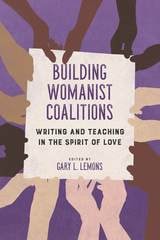
Building Womanist Coalitions
Writing and Teaching in the Spirit of LoveEdited by Gary L. Lemons
University of Illinois Press, 2019
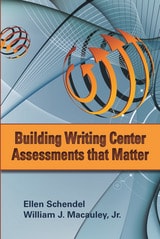
Building Writing Center Assessments That Matter
Ellen Schendel and William J. Macauley, Jr.
Utah State University Press, 2012
No less than other divisions of the college or university, contemporary writing centers find themselves within a galaxy of competing questions and demands that relate to assessment—questions and demands that usually embed priorities from outside the purview of the writing center itself. Writing centers are used to certain kinds of assessment, both quantitative and qualitative, but are often unprepared to address larger institutional or societal issues. In Building Writing Center Assessments that Matter, Schendel and Macauley start from the kinds of assessment strengths already in place in writing centers, and they build a framework that can help writing centers satisfy local needs and put them in useful dialogue with the larger needs of their institutions, while staying rooted in writing assessment theory.
The authors begin from the position that tutoring writers is already an assessment activity, and that good assessment practice (rooted in the work of Adler-Kassner, O'Neill, Moore, and Huot) already reflects the values of writing center theory and practice. They offer examples of assessments developed in local contexts, and of how assessment data built within those contexts can powerfully inform decisions and shape the futures of local writing centers. With additional contributions by Neal Lerner, Brian Huot and Nicole Caswell, and with a strong commitment to honoring on-site local needs, the volume does not advocate a one-size-fits-all answer. But, like the modeling often used in a writing consultation, examples here illustrate how important assessment principles have been applied in a range of local contexts. Ultimately, Building Writing Assessments that Matter describes a theory stance toward assessment for writing centers that honors the uniqueness of the writing center context, and examples of assessment in action that are concrete, manageable, portable, and adaptable.
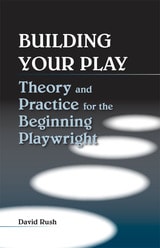
Building Your Play
Theory and Practice for the Beginning PlaywrightDavid Rush
Southern Illinois University Press, 2010
David Rush takes beginning playwrights through the first draft of a play and deep into the revision process. Drawing on examples from such classics as Othello and The Glass Menagerie, Rush provides detailed models for writers to evaluate their work for weaknesses and focus on the in-depth development of their plays.
Rush encourages writers to make sure their plays are clear and focused. He shows how to keep plays dramatically compelling and offers ways to avoid common mistakes that make them dull, confusing, or ineffective. He then distills the essence of traditional revision into key questions and discusses frequently overlooked tools, terms, and strategies that go beyond established methods of evaluation.
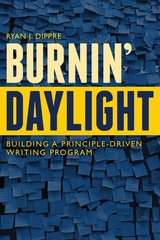
Burnin' Daylight
Building a Principle-Driven Writing ProgramRyan J. Dippre
Utah State University Press, 2024
WPAs face a range of challenges on a regular basis: organizing class schedules, leading professional learning events, conducting program assessments, responding to student needs, meeting with deans and provosts, and more. Additionally, WPAs need to learn about and direct their programs strategically when considering the kind of program they currently have, the sort of program they envision, and how they can transition from one to another. Burnin’ Daylight acts as a roadmap for IRB-approved research and provides WPAs—specifically, new and returning WPAs—with a detailed yet flexible plan for understanding the inner workings of a writing program and how to develop a future trajectory for it.
Burnin’ Daylight is for writing program administrators of all experience levels and other administrators interested in taking a “principled practices” approach to their work.