Results by title
18284 books match the query 'United States' and 902 start with b
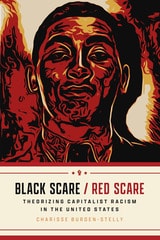
Black Scare / Red Scare
Theorizing Capitalist Racism in the United StatesCharisse Burden-Stelly
University of Chicago Press, 2023
In the early twentieth century, two panics emerged in the United States. The Black Scare was rooted in white Americans’ fear of Black Nationalism and dread at what social, economic, and political equality of Black people might entail. The Red Scare, sparked by communist uprisings abroad and subversion at home, established anticapitalism as a force capable of infiltrating and disrupting the American order. In Black Scare / Red Scare, Charisse Burden-Stelly meticulously outlines the conjoined nature of these state-sanctioned panics, revealing how they unfolded together as the United States pursued capitalist domination. Antiradical repression, she shows, is inseparable from anti-Black oppression, and vice versa.
Beginning her account in 1917—the year of the Bolshevik Revolution, the East St. Louis Race Riot, and the Espionage Act—Burden-Stelly traces the long duration of these intertwined and mutually reinforcing phenomena. She theorizes two bases of the Black Scare / Red Scare: US Capitalist Racist Society, a racially hierarchical political economy built on exploitative labor relationships, and Wall Street Imperialism, the violent processes by which businesses and the US government structured domestic and foreign policies to consolidate capital and racial domination. In opposition, Radical Blackness embodied the government’s fear of both Black insurrection and Red instigation. The state’s actions and rhetoric therefore characterized Black anticapitalists as foreign, alien, and undesirable. This reactionary response led to an ideology that Burden-Stelly calls True Americanism, the belief that the best things about America were absolutely not Red and not Black, which were interchangeable threats.
Black Scare / Red Scare illuminates the anticommunist nature of the US and its governance, but also shines a light on a misunderstood tradition of struggle for Black liberation. Burden-Stelly highlights the Black anticapitalist organizers working within and alongside the international communist movement and analyzes the ways the Black Scare/Red Scare reverberates through ongoing suppression of Black radical activism today. Drawing on a range of administrative, legal, and archival sources, Burden-Stelly incorporates emancipatory ideas from several disciplines to uncover novel insights into Black political minorities and their legacy.
Black Scholars Matter
Visions, Struggles, and Hopes in Africana Biblical StudiesGay L. Byron
SBL Press, 2022
Distinctive, Powerful, Transformational
This book collects the presentations of twelve leading Africana scholars who participated in the groundbreaking #Black Scholars Matter virtual symposium held in August 2020 that was organized by the Society of Biblical Literature's Black Scholars Matter Task Force in coordination with the SBL’s Committee on Underrepresented Racial and Ethnic Minorities in the Profession. These scholars share their perspectives on biblical studies and their experiences in the discipline on a range of topics, including blatant and subtle forms of bias and racism; mentoring; lessons of struggle, sacrifice, and lack of support; reflections on the obstacles of national tragedies, geographical locations, and academic disciplines; and the challenges of creating a more welcoming environment for the next generation of Black biblical scholars. Eight additional contributors and stakeholders that have administrative and decision-making responsibilities within theological and other settings address the need for institutional and personal accountability. Contributors include Efraín Agosto, Cheryl B. Anderson, Randall C. Bailey, Gay L. Byron, Ronald Charles, Stephanie Buckhanon Crowder, Steed Vernyl Davidson, Sharon Watson Fluker, John F. Kutsko, Vanessa Lovelace, Madipoane Masenya (Ngwan'a Mphahlele), Raj Nadella, Hugh R. Page Jr., Adele Reinhartz, Kimberly D. Russaw, Abraham Smith, Shively T. J. Smith, Mai-Anh Le Tran, Renita J. Weems, and Vincent L. Wimbush.
Black Sexual Economies
Race and Sex in a Culture of CapitalEdited by Adrienne D. Davis and the BSE Collective
University of Illinois Press, 2019

Black Sexualities
Probing Powers, Passions, Practices, and PoliciesEdited and with an Introduction by Juan Battle and Sandra L. Barnes
Rutgers University Press, 2009
From questioning forces that have constrained sexual choices to examining how Blacks have forged healthy sexual identities in an oppressive environment, Black Sexualities acknowledges the diversity of the Black experience and the shared legacy of racism. Contributors seek resolution to Blacks' understanding of their lives as sexual beings through stories of empowerment, healing, self-awareness, victories, and other historic and contemporary life-course panoramas and provide practical information to foster more culturally relative research, tolerance, and acceptance.
Black Star, Crescent Moon
The Muslim International and Black Freedom beyond AmericaSohail Daulatzai
University of Minnesota Press, 2012
“The same rebellion, the same impatience, the same anger that exists in the hearts of the dark people in Africa and Asia,” Malcolm X declared in a 1962 speech, “is existing in the hearts and minds of 20 million black people in this country who have been just as thoroughly colonized as the people in Africa and Asia.” Four decades later, the hip-hop artist Talib Kweli gave voice to a similar Pan-African sentiment in the song “K.O.S. (Determination)”: “The African diaspora represents strength in numbers, a giant can't slumber forever.”
Linking discontent and unrest in Harlem and Los Angeles to anticolonial revolution in Algeria, Egypt, and elsewhere, Black leaders in the United States have frequently looked to the anti-imperialist movements and antiracist rhetoric of the Muslim Third World for inspiration. In Black Star, Crescent Moon, Sohail Daulatzai maps the rich, shared history between Black Muslims, Black radicals, and the Muslim Third World, showing how Black artists and activists imagined themselves not as national minorities but as part of a global majority, connected to larger communities of resistance. Daulatzai traces these interactions and alliances from the Civil Rights movement and the Black Power era to the “War on Terror,” placing them within a broader framework of American imperialism, Black identity, and the global nature of white oppression.
From Malcolm X and Muhammad Ali to contemporary artists and activists like Rakim and Mos Def, Black Star, Crescent Moon reveals how Muslim resistance to imperialism came to occupy a central position within the Black radical imagination, offering a new perspective on the political and cultural history of Black internationalism from the 1950s to the present.

Black Street Speech
Its History, Structure, and SurvivalBy John Baugh
University of Texas Press, 1983
In the minds of many, black street speech—the urban dialect of black Americans—bespeaks illiteracy, poverty, and ignorance. John Baugh challenges those prejudices in this brilliant new inquiry into the history, linguistic structure, and survival within white society of black street speech. In doing so, he successfully integrates a scholarly respect for black English with a humanistic approach to language differences that weds rigor of research with a keen sense of social responsibility.
Baugh's is the first book on black English that is based on a long-term study of adult speakers. Beginning in 1972, black men and women in Los Angeles, Philadelphia, Chicago, Austin, and Houston were repeatedly interviewed, in varied social settings, in order to determine the nature of their linguistic styles and the social circumstances where subtle changes in their speech appear. Baugh's work uncovered a far wider breadth of speaking styles among black Americans than among standard English speakers. Having detailed his findings, he explores their serious implications for the employability and education of black Americans.
Black Street Speech is a work of enduring importance for educators, linguists, sociologists, scholars of black and urban studies, and all concerned with black English and its social consequences.
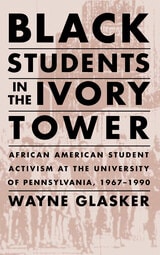
Black Students in the Ivory Tower
African American Student Activism at the University of Pennsylvania, 1967-1990Wayne C. Glasker
University of Massachusetts Press, 2002
Glasker begins his study in the late 1960s, when the university's expansion into a predominantly black Philadelphia neighborhood precipitated a massive sit-in and protest. In response, Penn accelerated the process of admitting more black students, doubling the number of black matriculants by September 1969. Many came from inner city public high schools with backgrounds, ideas, and interests far different from those of the affluent middle- and upper-class white students who constituted the majority of the undergraduate population. As a result, the next decade was marked by recurrent tension and conflict, as black students at Penn rejected assimilation and agitated successfully for the creation of a variety of institutions that recognized their needs. These included an Afro-American studies program, a residence for students interested in black culture, and a Black Student League. Following a 1978 sit-in, they won a demand for an Inter-cultural Center and formed the United Minorities Council, and in 1986 they joined with white activists to press the university to divest its holdings from companies doing business in South Africa.
Throughout the book Glasker interweaves two parallel stories: that of an Ivy League university wrestling with questions of diversity, compensatory education, and the meaning of merit and qualification; and that of black students grappling with issues of assimilation, separatism, and cultural pluralism. In the end, he argues, the students sought to preserve their own distinctive ethnic culture, identity, and heritage while pursuing economic upward mobility. Rather than separatism, they aspired to a form of biculturalism that involved economic empowerment without cultural assimilation.
Black Studies, Rap, and the Academy
Houston A. Baker Jr.
University of Chicago Press, 1993
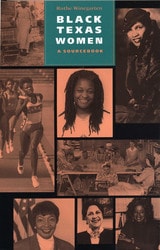
Black Texas Women
A SourcebookBy Ruthe Winegarten
University of Texas Press, 1994
When Black Texas Women: 150 Years of Trial and Triumph was published in 1995, it was acclaimed as the first comprehensive history of black women's struggles and achievements. This companion volume contains the original source materials that Ruthe Winegarten uncovered during her extensive research.
Like a time capsule of black women's history, A Sourcebook includes petitions from free women of color, lawsuits, slave testimonies, wills, plantation journals, club minutes, autobiographies, ads, congressional reports, contracts, prison records, college catalogues, newspaper clippings, protest letters, and much more.
In addition to the documents, a biographical section highlights the lives of women from various walks of life. The book concludes with a timeline that begins in 1777 and reaches to 1992. This wealth of original material will be a treasure trove for scholars and general readers interested in the emerging field of black women's history.
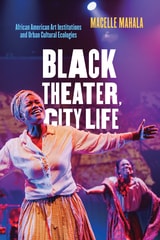
Black Theater, City Life
African American Art Institutions and Urban Cultural EcologiesMacelle Mahala
Northwestern University Press, 2022
Black Theater, City Life looks at Karamu House Theatre, the August Wilson African American Cultural Center, Pittsburgh Playwrights’ Theatre Company, the Lorraine Hansberry Theatre, the African American Shakespeare Company, the Atlanta Black Theatre Festival, and Kenny Leon’s True Colors Theatre Company to demonstrate how each organization articulates the cultural specificities, sociopolitical realities, and histories of African Americans. These companies have faced challenges that mirror the larger racial and economic disparities in arts funding and social practice in America, while their achievements exemplify such institutions’ vital role in enacting an artistic practice that reflects the cultural backgrounds of their local communities. Timely, significant, and deeply researched, this book spotlights the artistic and civic import of Black theaters in American cities.

Black Trans Feminism
Marquis Bey
Duke University Press, 2022
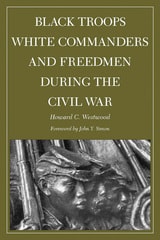
Black Troops, White Commanders and Freedmen during the Civil War
Howard C. Westwood
Southern Illinois University Press, 2008
Recounting the experiences of black soldiers in the Civil War
In the ten probing essays collected in this volume, Howard C. Westwood recounts the often bitter experiences of black men who were admitted to military service and the wrenching problems associated with the shifting status of African Americans during the Civil War.
Black Troops, White Commanders and Freedmen during the Civil War covers topics ranging from the roles played by Lincoln and Grant in beginning black soldiery to the sensitive issues that arose when black soldiers (and their white officers) were captured by the Confederates. The essays relate the exploits of black heroes such as Robert Smalls, who single-handedly captured a Confederate steamer, as well as the experiences of the ignoble Reverend Fountain Brown, who became the first person charged with violating the Emancipation Proclamation.
Although many thousands were enlisted as soldiers, blacks were barred from becoming commissioned officers and for a long time they were paid far less than their white counterparts. These and other blatant forms of discrimination understandably provoked discontent among black troops which, in turn, sparked friction with their white commanders. Westwood's fascinating account of the artillery company from Rhode Island amply demonstrates how frustrations among black soldiers came to be seen as "mutiny" by some white officers.
Black Utopias
Speculative Life and the Music of Other WorldsJayna Brown
Duke University Press, 2021
Black Visions
The Roots of Contemporary African-American Political IdeologiesMichael C. Dawson
University of Chicago Press, 2001
Black Visual Cultures of the Midwest
Freda L. Fair
University of Minnesota Press, 2027
Recentering black creativity and resistance in the history of the Midwest
African American creators have unsettled and upended racism in the Midwest region since as far back as 1787, and Black Visual Cultures of the Midwest examines the work of many such innovators, presenting an unruly, transgressive, and defiant vision of queer blackness that complicates fundamental American ideals of liberty, progress, life, and property.
Spanning the nineteenth century to the present, Freda L. Fair draws from a broad array of sources, including film, visual art, and even arrest records to examine concepts of freedom and resistance grounded in black cultural production in the Midwest. Through subjects such as Joshua Glover, who escaped slavery in Missouri and relocated to Wisconsin; sex workers in the Twin Cities; Ruth Ellis, a black lesbian elder in Detroit; and Nick Cave, who created Soundsuits in response to the police beating of Rodney King, Fair challenges monolithic formulations of blackness and black culture. Fair also queers Midwest history, engaging an LGBTQ lens to reexamine Wisconsin’s 1854 decision to declare the Fugitive Slave Act of 1850 unconstitutional, the Springfield Race Riot of 1908, and other historic moments.
Revealing how black visual cultures in the Midwest both illuminate black gendered and sexual difference and actively resist antiblackness, Fair shows that the region is a site that can advance freedom and social change.
Retail e-book files for this title are screen-reader friendly with images accompanied by short alt text and/or extended descriptions.
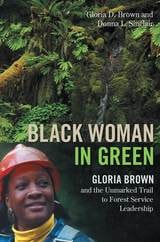
Black Woman in Green
Gloria Brown and the Unmarked Trail to Forest Service LeadershipGloria D. Brown
Oregon State University Press, 2020
As scholars awaken to the racist history of public land management and the ways that people of color have been excluded from contemporary notions of nature and wilderness, Brown’s story provides valuable insight into the roles that African Americans have carved out in the outdoors generally and in the field of environmental policy and public lands management specifically. Drawing on her powerful communication and listening skills, her sense of humor, and her willingness to believe in the basic goodness of humanity, Brown conducted civil rights trainings and shattered glass ceilings, all while raising her children alone.
Written in an engaging and accessible style with historian Donna Sinclair, Brown’s story provides a fascinating case study for public administration and contributes to a deeper understanding of the environmental and civil rights movements of the twentieth century, particularly the role that racial discrimination has played in national forests, parks, and other wilderness spaces. It also highlights issues of representation in the federal government, women’s history, the history of the American West, and literature associated with African American experiences in predominately white societies.
Black Women Directors
Christina N. Baker
Rutgers University Press, 2022
Black women have long recognized the power of film for storytelling. For far too long, however, the cultural and historical narratives about film have not accounted for the contributions of Black women directors. This book remedies this omission by highlighting the trajectory of the culturally significant work of Black women directors in the United States, from the under-examined pioneers of the silent era, to the documentarians who sought to highlight the voices and struggles of Black women, and the contemporary Black women directors in Hollywood. Applying a Black feminist perspective, this book examines the ways that Black women filmmakers have made a way for themselves and their work by resisting the dominant cultural expectations for Black women and for the medium of film, as a whole.
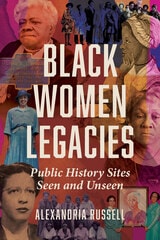
Black Women Legacies
Public History Sites Seen and UnseenAlexandria Russell
University of Illinois Press, 2024
Intersectional and original, Black Women Legacies explores the memorialization of African American women and its distinctive impact on physical and cultural landscapes throughout the United States.
Black Women Writing Autobiography
A Tradition Within a TraditionJoanne Braxton
Temple University Press, 1990
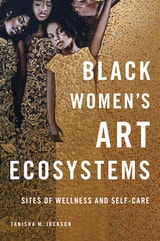
Black Women's Art Ecosystems
Sites of Wellness and Self-CareTanisha M. Jackson
University of Illinois Press, 2025
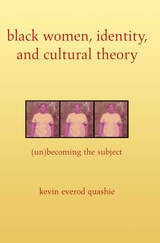
Black Women, Identity, and Cultural Theory
(Un)Becoming the SubjectKevin Everod Quashie
Rutgers University Press, 2004
In Black Women, Identity, and Cultural Theory, Kevin Everod Quashie explores the metaphor of the “girlfriend” as a new way of understanding three central concepts of cultural studies: self, memory, and language. He considers how the work of writers such as Toni Morrison, Ama Ata Aidoo, Dionne Brand, photographer Lorna Simpson, and many others, inform debates over the concept of identity. Quashie argues that these authors and artists replace the notion of a stable, singular identity with the concept of the self developing in a process both communal and perpetually fluid, a relationship that functions in much the same way that an adult woman negotiates with her girlfriend(s). He suggests that memory itself is corporeal, a literal body that is crucial to the process of becoming. Quashie also explores the problem language poses for the black woman artist and her commitment to a mastery that neither colonizes nor excludes.
The analysis throughout interacts with schools of thought such as psychoanalysis, postmodernism, and post-colonialism, but ultimately moves beyond these to propose a new cultural aesthetic, one that ultimately aims to center black women and their philosophies.
Black Women’s Intellectual Traditions
Speaking Their MindsEdited by Kristin B. Waters and Carol B. Conaway
University Press of New England, 2007
Black Women’s Intellectual Traditions
Speaking Their MindsEdited by Kristin Waters and Carol B. Conaway
Brandeis University Press, 2022
An astonishing wealth of literary and intellectual work by nineteenth-century Black women is being rediscovered and restored to print in scholarly and popular editions. In Kristin Waters’s and Carol B. Conaway’s landmark edited collection, Black Women’s Intellectual Traditions: Speaking Their Minds, sophisticated commentary on this rich body of work chronicles a powerful and interwoven legacy of activism based in social and political theories that helped shape the history of North America. The book meticulously reclaims this American legacy, providing a collection of critical analyses of the primary sources and their vital traditions. Written by leading scholars, Black Women’s Intellectual Traditions is particularly powerful in its exploration of the pioneering thought and action of the nineteenth-century Black woman lecturer and essayist Maria W. Stewart, abolitionist Sojourner Truth, novelist and poet Frances Ellen Watkins Harper, educator Anna Julia Cooper, newspaper editor Mary Ann Shadd Cary, and activist Ida B. Wells. The distinguished contributors are Hazel V. Carby, Patricia Hill Collins, Karen Baker-Fletcher, Kristin Waters, R. Dianne Bartlow, Carol B. Conaway, Olga Idriss Davis, Vanessa Holford Diana, Evelyn Simien, Janice W. Fernheimer, Michelle N. Garfield, Joy James, Valerie Palmer-Mehta, Carla L. Peterson, Marilyn Richardson, Evelyn M. Simien, Ebony A. Utley, Mary Helen Washington, Melina Abdullah, and Lena Ampadu. The volume will interest scholars and readers of African-American and women’s studies, history, rhetoric, literature, poetry, sociology, political science, and philosophy. This updated edition features a new preface by the editors in the light of new developments in current scholarship.

Black Workers' Struggle for Equality in Birmingham
Edited by Horace Huntley and David Montgomery
University of Illinois Press, 2004
Horace Huntley and David Montgomery curate a collection of annotated oral interviews of black workers who served on the front lines of the Civil Rights Movement in Birmingham, Alabama. As the interviewees recount their struggles against discrimination, they show how collective action--whether through unions, the Movement, or networks of workplace activists--sought to gain access to better jobs, municipal services, housing, and less restrictive voter registration.
Powerful and honest, Black Workers' Struggle for Equality in Birmingham draws on work by the Birmingham Civil Rights Institute to offer readers vivid eyewitness accounts of American history in the making.
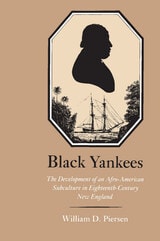
Black Yankees
The Development of an Afro-American Subculture in Eighteenth-Century New EnglandWilliam D. Piersen
University of Massachusetts Press, 1988
On the face of it, the master class called the tunes and slaves danced the beat. Blacks who were taken into New England's bondage were clearly engulfed in a pervasive, narrow-minded Euro-American society that had no interest in fostering Afro-American autonomy. The New England experience was often cruel, and the numbers alone suggest it was among the most unequal of black/white cultural contacts in the New World. Nonetheless, despite the strictures of bondage, the black Yankees of eighteenth-century New England created a sustaining folk culture of their own.

Black and Blur
Fred Moten
Duke University Press, 2017
In Black and Blur—the first volume in his sublime and compelling trilogy consent not to be a single being—Fred Moten engages in a capacious consideration of the place and force of blackness in African diaspora arts, politics, and life. In these interrelated essays, Moten attends to entanglement, the blurring of borders, and other practices that trouble notions of self-determination and sovereignty within political and aesthetic realms. Black and Blur is marked by unlikely juxtapositions: Althusser informs analyses of rappers Pras and Ol' Dirty Bastard; Shakespeare encounters Stokely Carmichael; thinkers like Kant, Adorno, and José Esteban Muñoz and artists and musicians including Thornton Dial and Cecil Taylor play off each other. Moten holds that blackness encompasses a range of social, aesthetic, and theoretical insurgencies that respond to a shared modernity founded upon the sociological catastrophe of the transatlantic slave trade and settler colonialism. In so doing, he unsettles normative ways of reading, hearing, and seeing, thereby reordering the senses to create new means of knowing.

Black and Green
The Fight For Civil Rights in Northern Ireland & Black AmericaBrian Dooley
Pluto Press, 1998
'Focusing on the period from the 1960s onward, Brian Dooley suggests that the black rights struggle in the US had a formative influence on Northern Ireland's civil rights movement which adopted similar tactics of protest marches and sit-ins ... A well researched book, written from an unusual angle that illuminates this understudied international influence on the Ulster conflict' Political Studies
Ties between political activists in Black America and Ireland span several centuries, from the days of the slave trade to the close links between Frederick Douglass and Daniel O’Connell, and between Marcus Garvey and Eamon de Valera. This timely book traces those historic links and examines how the struggle for black civil rights in America in the 1960s helped shape the campaign against discrimination in Northern Ireland. The author includes interviews with key figures such as Angela Davis, Bernadette McAliskey and Eamonn McCann.
Black and Smart
How Black High-Achieving Women Experience CollegeAdrianne Musu Davis
Rutgers University Press, 2023

Black and White Strangers
Race and American Literary RealismKenneth W. Warren
University of Chicago Press, 1993
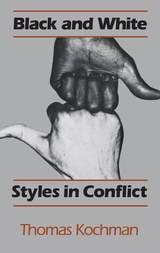
Black and White Styles in Conflict
Thomas Kochman
University of Chicago Press, 1981

Black behind the Ears
Dominican Racial Identity from Museums to Beauty ShopsGinetta E. B. Candelario
Duke University Press, 2007
Candelario draws on her participant observation in a Dominican beauty shop in Washington Heights, a New York City neighborhood with the oldest and largest Dominican community outside the Republic, and on interviews with Dominicans in New York City, Washington, D.C., and Santo Domingo. She also analyzes museum archives and displays in the Museo del Hombre Dominicano and the Smithsonian Institution as well as nineteenth- and early-twentieth-century European and American travel narratives.
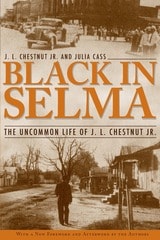
Black in Selma
The Uncommon Life of J. L. Chestnut Jr.J. L. Chestnut
University of Alabama Press, 2007
One man’s fight for justice. One town’s reckoning with history.
Born in Selma in 1930, J. L. Chestnut left home to study law at Howard University in Washington, DC. Returning to Selma, Chestnut was the town’s first and only African American attorney in the late 1950s. As the turbulent struggle for civil rights spread across the South, Chestnut became an active and ardent promoter of social and legal equality in his hometown. A key player on the local and state fronts, Chestnut accrued deep insights into the racial tensions in his community and deftly opened paths toward a more equitable future.
Though intimately involved in many events that took place in Selma, Chestnut was nevertheless often identified in history books simply as “a local attorney.” Black in Selma reveals his powerful yet little-known story.
In the 2014 film Selma, director Ava DuVernay takes audiences to the climactic confrontation between civil rights advocates and the state’s security forces of March 1965. Readers looking for a deeper understanding of the events that preceded that epic moment, as well as how racial integration unfolded in Selma in the decades that followed, will find Chestnut’s story and memories both a vital primary source and an inspiration.

Black in White Space
The Enduring Impact of Color in Everyday LifeElijah Anderson
University of Chicago Press, 2021
A birder strolling in Central Park. A college student lounging on a university quad. Two men sitting in a coffee shop. Perfectly ordinary actions in ordinary settings—and yet, they sparked jarring and inflammatory responses that involved the police and attracted national media coverage. Why? In essence, Elijah Anderson would argue, because these were Black people existing in white spaces.
In Black in White Space, Anderson brings his immense knowledge and ethnography to bear in this timely study of the racial barriers that are still firmly entrenched in our society at every class level. He focuses in on symbolic racism, a new form of racism in America caused by the stubbornly powerful stereotype of the ghetto embedded in the white imagination, which subconsciously connects all Black people with crime and poverty regardless of their social or economic position. White people typically avoid Black space, but Black people are required to navigate the “white space” as a condition of their existence. From Philadelphia street-corner conversations to Anderson’s own morning jogs through a Cape Cod vacation town, he probes a wealth of experiences to shed new light on how symbolic racism makes all Black people uniquely vulnerable to implicit bias in police stops and racial discrimination in our country.
An unwavering truthteller in our national conversation on race, Anderson has shared intimate and sharp insights into Black life for decades. Vital and eye-opening, Black in White Space will be a must-read for anyone hoping to understand the lived realities of Black people and the structural underpinnings of racism in America.
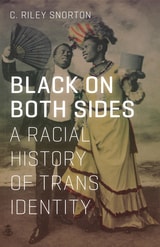
Black on Both Sides
A Racial History of Trans IdentityC. Riley Snorton
University of Minnesota Press, 2017
Winner of the John Boswell Prize from the American Historical Association 2018
Winner of the William Sanders Scarborough Prize from the Modern Language Association 2018
Winner of an American Library Association Stonewall Honor 2018
Winner of Lambda Literary Award for Transgender Nonfiction 2018
Winner of the Sylvia Rivera Award in Transgender Studies from the Center for Lesbian and Gay Studies
The story of Christine Jorgensen, America’s first prominent transsexual, famously narrated trans embodiment in the postwar era. Her celebrity, however, has obscured other mid-century trans narratives—ones lived by African Americans such as Lucy Hicks Anderson and James McHarris. Their erasure from trans history masks the profound ways race has figured prominently in the construction and representation of transgender subjects. In Black on Both Sides, C. Riley Snorton identifies multiple intersections between blackness and transness from the mid-nineteenth century to present-day anti-black and anti-trans legislation and violence.
Drawing on a deep and varied archive of materials—early sexological texts, fugitive slave narratives, Afro-modernist literature, sensationalist journalism, Hollywood films—Snorton attends to how slavery and the production of racialized gender provided the foundations for an understanding of gender as mutable. In tracing the twinned genealogies of blackness and transness, Snorton follows multiple trajectories, from the medical experiments conducted on enslaved black women by J. Marion Sims, the “father of American gynecology,” to the negation of blackness that makes transnormativity possible.
Revealing instances of personal sovereignty among blacks living in the antebellum North that were mapped in terms of “cross dressing” and canonical black literary works that express black men’s access to the “female within,” Black on Both Sides concludes with a reading of the fate of Phillip DeVine, who was murdered alongside Brandon Teena in 1993, a fact omitted from the film Boys Don’t Cry out of narrative convenience. Reconstructing these theoretical and historical trajectories furthers our imaginative capacities to conceive more livable black and trans worlds.
Black on the Block
The Politics of Race and Class in the CityMary Pattillo
University of Chicago Press, 2007
“To see how diversity creates strange and sometimes awkward bedfellows . . . turn to Mary Pattillo's Black on the Block.”—Boston Globe
Black or Right
Anti/Racist Campus RhetoricsLouis M. Maraj
Utah State University Press, 2020
Offering four Black rhetorics as antiracist means for rhetorical reclamation—autoethnography, hashtagging, inter(con)textual reading, and reconceptualized disruption—the book uses Black feminist relationality via an African indigenous approach. Maraj examines fluid, quotidian ways Black folk engage anti/racism at historically white institutions in the United States in response to violent campus spaces, educational structures, protest movements, and policy practice. Black or Right’s experimental, creative style strives to undiscipline knowledge from academic confinement. Exercising different vantage points in each chapter—autoethnographer, digital media scholar/pedagogue, cultural rhetorician, and critical discourse analyst—Maraj challenges readers to ecologically understand shifting, multiple meanings of Blackness in knowledge-making. Black or Right’s expressive form, organization, narratives, and poetics intimately interweave with its argument that Black folk must continuously invent “otherwise” in reiterative escape from oppressive white spaces.
In centering Black experiences, Black theory, and diasporic Blackness, Black or Right mobilizes generative approaches to destabilizing institutional whiteness, as opposed to reparative attempts to “fix racism,” which often paradoxically center whiteness. It will be of interest to both academic and general readers and significant for specialists in cultural rhetorics, Black studies, and critical theory.
Black, Jewish, and Interracial
It’s Not the Color of Your Skin, but the Race of Your Kin, and Other Myths of IdentityKatya Gibel Azoulay
Duke University Press, 1997
Beginning with an examination of the concept of identity as it figures in philosophical and political thought, Gibel Azoulay moves on to consider and compare the politics and traditions of the Black and Jewish experience in America. Her inquiry draws together such diverse subjects as Plessy v. Ferguson, the Leo Frank case, "passing," intermarriage, civil rights, and anti-Semitism. The paradoxical presence of being both Black and Jewish, she argues, leads questions of identity, identity politics, and diversity in a new direction as it challenges distinct notions of whiteness and blackness. Rising above familiar notions of identity crisis and cultural confrontation, she offers new insights into the discourse of race and multiculturalism as she suggests that identity can be a more encompassing concept than is usually thought. Gibel Azoulay adds her own personal history and interviews with eight other Black and Jewish individuals to reveal various ways in which interracial identities are being lived, experienced, and understood in contemporary America.
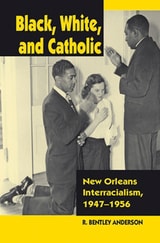
Black, White, and Catholic
New Orleans Interracialism, 1947-1956R. Bentley Anderson
Vanderbilt University Press, 2005
Anderson leads readers through the tumultuous years just after World War II when the Roman Catholic Church in the American South struggled to reconcile its commitment to social justice with the legal and social heritage of Jim Crow society. Though these early efforts at reform, by and large, failed, they did serve to galvanize Catholic supporters and opponents of the Civil Rights Movement and provided a model for more successful efforts at desegregation in the '60s.
As a Jesuit himself, Anderson has access to archives that remain off-limits to other scholars. His deep knowledge of the history of the Catholic Church also allows him to draw connections between this historical period and the present. In the resistance to desegregation, Anderson finds expression of a distinctly American form of Catholicism, in which lay people expect Church authorities to ratify their ideas and beliefs in an almost democratic fashion. The conflict he describes is as much between popular and hierarchical models of the Church as between segregation and integration.
This book has been made possible through a grant from the Louisiana Endowment for the Humanities, a state affiliate of the National Endowment for the Humanities.
Black, White, and Huckleberry Finn
Re-imagining the American DreamElaine Mensh
University of Alabama Press, 2001
Takes a hard, systematic look at the depiction of blacks, whites, and race relations in Mark Twain's classic novel, raising questions about its canonical status in American literature
Huckleberry Finn, one of the most widely taught novels in American literature, has long been the subject of ongoing debates over issues ranging from immorality to racism. Here, Elaine Mensh and Harry Mensh enter the debate with a careful and thoughtful examination of racial messages imbedded in the tale of Huck and Jim.Using as a gauge for analysis the historical record left by both slaves and slaveholders, the Menshes compare Twain's depiction with historical reality, attempting to determine where the book either undermines or upholds traditional racial attitudes. Surveying the opinions of fellow critics, they challenge the current consensus that Huckleberry Finn fosters rapport between blacks and whites, arguing that the book does not subvert ingrained beliefs about race, and demonstrating that the argument over black-white relations in the novel is also an argument over non-fictional racial relations and conflicting perceptions of racial harmony.
Reading the novel in its historical context, the Menshes conclude that Twain, in the character of Huck, never questions the institution of slavery, and even supports it in both thought and action. In response to student and parent challenges to the inclusion of the book in literature classes, they suggest that it should remain in school libraries but not be required reading.Of importance to scholars of Mark Twain and American literature, African American cultural studies, or anyone interested in issues of literature and race, this book adds a strong voice to the long-ranging debate over Huckleberry Finn.
Black-Brown Relations and Stereotypes
By Tatcho Mindiola, Jr., Yolanda Flores Niemann, and Nestor Rodriguez
University of Texas Press, 2002
Race relations in twenty-first-century America will not be just a black-and-white issue. The 2000 census revealed that Hispanics already slightly outnumber African Americans as the largest ethnic group, while together Blacks and Hispanics constitute the majority population in the five largest U.S. cities. Given these facts, black-brown relations could be a more significant racial issue in the decades to come than relations between minority groups and Whites.
Offering some of the first in-depth analyses of how African Americans and Hispanics perceive and interact with each other, this pathfinding study looks at black-brown relations in Houston, Texas, one of the largest U.S. cities with a majority ethnic population and one in which Hispanics outnumber African Americans. Drawing on the results of several sociological studies, the authors focus on four key issues: how each group forms and maintains stereotypes of the other, areas in which the two groups conflict and disagree, the crucial role of women in shaping their communities' racial attitudes, and areas in which Hispanics and African Americans agree and can cooperate to achieve greater political power and social justice.
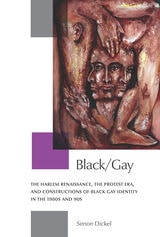
Black/Gay
The Harlem Renaissance, the Protest Era, and the Constructions of Black Gay Identity in the 1980s and 90sSimon Dickel
Michigan State University Press, 2011
This book explores key texts of the black gay culture of the 1980s and ’90s. Starting with an analysis of the political discourse in anthologies such as In the Life and Brother to Brother, it identifies the references to the Harlem Renaissance and the Protest Era as common elements of black gay discourse. This connection to African American cultural and political traditions legitimizes black gay identity and criticizes the construction of gay identity as white. Readings of Isaac Julien’s Looking for Langston, Samuel R. Delany’s “Atlantis: Model 1924” and The Motion of Light in Water, Melvin Dixon’s Vanishing Rooms, Randall Kenan’s A Visitation of Spirits, and Steven Corbin’s No Easy Place to Be demonstrate how these strategies of signifying are used in affirmative, humorous, and ironic ways.
Blacked Out
Dilemmas of Race, Identity, and Success at Capital HighSignithia Fordham
University of Chicago Press, 1996
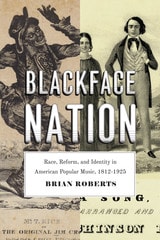
Blackface Nation
Race, Reform, and Identity in American Popular Music, 1812-1925Brian Roberts
University of Chicago Press, 2017
The Hutchinson Family Singers, the Northeast’s most popular middle-class singing group during the mid-nineteenth century, is perhaps the best example of the first strain of music. The group’s songs expressed an American identity rooted in communal values, with lyrics focusing on abolition, women’s rights, and socialism. Blackface minstrelsy, on the other hand, emerged out of an audience-based coalition of Northern business elites, Southern slaveholders, and young, white, working-class men, for whom blackface expressed an identity rooted in individual self-expression, anti-intellectualism, and white superiority. Its performers embodied the love-crime version of racism, in which vast swaths of the white public adored African Americans who fit blackface stereotypes even as they used those stereotypes to rationalize white supremacy. By the early twentieth century, the blackface version of the American identity had become a part of America’s consumer culture while the Hutchinsons’ songs were increasingly regarded as old-fashioned. Blackface Nation elucidates the central irony in America’s musical history: much of the music that has been interpreted as black, authentic, and expressive was invented, performed, and enjoyed by people who believed strongly in white superiority. At the same time, the music often depicted as white, repressed, and boringly bourgeois was often socially and racially inclusive, committed to reform, and devoted to challenging the immoralities at the heart of America’s capitalist order.
Blackhood Against the Police Power
Punishment and Disavowal in the "Post-Racial" EraTryon P. Woods
Michigan State University Press, 2019
Blackness and Disability
Critical Examinations and Cultural InterventionsChristopher M. Bell
Michigan State University Press, 2012
Disability Studies diverge from the medical model of disability (which argues that disabled subjects can and should be “fixed”) to view disability as socially constructed, much in the same way other identities are. The work of reading black and disabled bodies is not only recovery work, but work that requires a willingness to deconstruct the systems that would keep those bodies in separate spheres. This pivotal volume uncovers the misrepresentations of black disabled bodies and demonstrates how those bodies transform systems and culture. Drawing on key themes in Disability Studies and African American Studies, these collected essays complement one another in interesting and dynamic ways, to forge connections across genres and chronotopes, an invitation to keep blackness and disability in conversation. With an analysis of disability as a result of war, studies of cognitive impairment and slavery in fiction, representations of slavery and violence in photography, deconstructions of illness (cancer and AIDS) narratives, comparative analyses of black and Latina/o and black and African subjects, analysis of treatments of disability in hip-hop, and commentary on disability, blackness, and war, this volume shows that the historical lines of demarcation in this field are permeable and should be challenged.

Blacks on the Border
The Black Refugees in British North America, 1815–1860Harvey Whitfield
University Press of New England, 2006

Blacks, Reds, and Russians
Sojourners in Search of the Soviet PromiseJoy Gleason Carew
Rutgers University Press, 2010
In Blacks, Reds, and Russians, Joy Gleason Carew offers insight into the political strategies that often underlie relationships between different peoples and countries. She draws on the autobiographies of key sojourners, including Harry Haywood and Robert Robinson, in addition to the writings of Claude McKay, W.E.B. Du Bois, and Langston Hughes. Interviews with the descendents of figures such as Paul Robeson and Oliver Golden offer rare personal insights into the story of a group of emigrants who, confronted by the daunting challenges of making a life for themselves in a racist United States, found unprecedented opportunities in communist Russia.
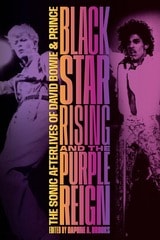
Blackstar Rising and the Purple Reign
The Sonic Afterlives of David Bowie and PrinceDaphne A. Brooks, editor
Duke University Press, 2026
Contributors: Christine Bacareza Balance, Emma Balázs, Victoria Broackes, Daphne A. Brooks, Daphne Carr, Andreana Clay, Ashon Crawley, Jonathan Flatley, Nicole R. Fleetwood, Lynell George, Farah Jasmine Griffin, Michelle Habell-Pallán, Jack Halberstam, Matthew Frye Jacobson, Kara Keeling, Jason King, Josh Kun, Kathryn Lofton, Emily J. Lordi, Eric Lott, Maureen Mahon, Greil Marcus, Geoffrey Marsh, Michaelangelo Matos, Tiffany Naiman, Tavia Nyong'o, Ann Powers, Sonnet Retman, Morgan Rhodes, Francesca T. Royster, Gustavus Stadler, Jacqueline Stewart, Greg Tate, Karen Tongson, Van My Truong, Alexandra T. Vazquez, Michael E. Veal, Shane Vogel, Gayle Wald, Oliver Wang, Alexander G. Weheliye, Richard Yarborough, Kristen Zschomler
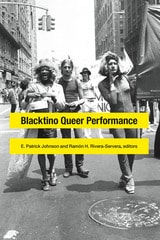
Blacktino Queer Performance
E. Patrick Johnson and Ramón H. Rivera-Servera, editors
Duke University Press, 2016
Blaming Teachers
Professionalization Policies and the Failure of Reform in American HistoryDiana D'Amico Pawlewicz
Rutgers University Press, 2020
Historically, Americans of all stripes have concurred that teachers were essential to the success of the public schools and nation. However, they have also concurred that public school teachers were to blame for the failures of the schools and identified professionalization as a panacea.
In Blaming Teachers, Diana D'Amico Pawlewicz reveals that historical professionalization reforms subverted public school teachers’ professional legitimacy. Superficially, professionalism connotes authority, expertise, and status. Professionalization for teachers never unfolded this way; rather, it was a policy process fueled by blame where others identified teachers’ shortcomings. Policymakers, school leaders, and others understood professionalization measures for teachers as efficient ways to bolster the growing bureaucratic order of the public schools through regulation and standardization. Beginning in the mid-nineteenth century with the rise of municipal public school systems and reaching into the 1980s, Blaming Teachers traces the history of professionalization policies and the discourses of blame that sustained them.